Category Archives: United States

Thought of the Day 9.27.12 Clementine Paddleford

“Beer is the Danish national drink, and the Danish national weakness is another beer. ”

“Never grow a wishbone, daughter, where you backbone ought to be.”
Clementine Paddleford

Clementine Paddleford was born on this day in Stockdale (near Manhattan), Kansas in 1898. She grew up with a strong connection to the land and people who tilled it.
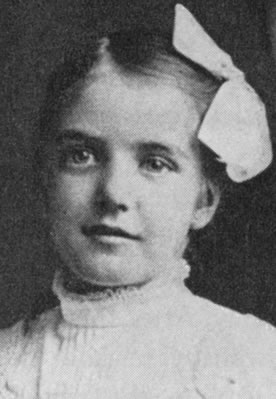
Clementine Paddleford as a girl. [Image courtesy: K-State Libraries]

She rode a horse to school, where she learned to love writing at an early age. She loved food too. She learned to cook by her mother’s side in their Kansas kitchen.

In a memoir called “A Flower for My Mother,” she wrote of fresh-picked corn and strawberries, ice cream made from new-fallen snow. [A Life in the Culinary Front Lines, by R.W. Apple, Jr, 11/30/05 The New York Times]

At 15 she worked for the Manhattan (Kansas) Daily Chronicle writing “personals” — She would borrow the family car and go down to the meet the 4 A.M. train for Kansas City and report  on which locals got on the train. It wasn’t journalism at its finest, but it was her first paid gig. She went to Kansas State Agriculture College and graduated in 1921 with a degree in Industrial Journalism. Industrial Journalism was a “boys club,” most women took home economics, and Paddleford was a trailblazer.

She moved from Manhattan, Kansas to Manhattan, New York and attended the Columbia School of Journalism at night while she worked reviewing books for Administration (a business magazine) and the New York Sun during the day. She specifically requested lengthy, more difficult, scientific books because, although she only earned $3 or $4 for a review, she could usually sell the book for $5 to a dealer. She also wrote women’s features for the New York Sun and the New  York Telegram

Later Paddleford became the woman’s editor for Fame and Fireside working there until 1929. When a change of management led to her leaving the publication she began to write on a freelance basis, mostly about food.

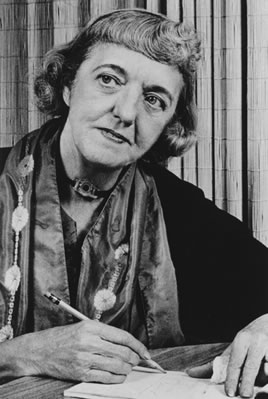
At home writing. [Image courtesy: The New School]

At 34 she was hospitalized for a malignant tumor on her larynx. She had the growth removed, along with her vocal chords. The operation left her with a breathing tube, and she had to re-learn how to talk. Her voice was never the same and she declined to speak in public after the operation. As for the breathing tube? She took it in stride.

She disguised the tube with a velvet choker that became part of her trademarked look and continued with her work. [the Found Recipe Box]

She worked as a food editor at the New York Herald-Tribune for 30 years from 1935-1966 bringing her signature editorial point of view to reviews and recipes. She made…

forty dollars a week to write six half-columns of advice to New York housewives on buying and eating. The job sounded like a cinch to Paddleford. Half a column a day shouldn’t take more than a couple of hours. And forty dollars was bread and butter. But what with her conscientiousness and her growing interest in the job, it wasn’t long before she was putting in as much as twelve hours a day combing food markets and writing the column. [Clementine Paddleford: her Passion is Food, by Josef Israels II, K-State Libraries; ]

She also did a weekly column at This Week Magazine and a monthly column for Gourmet Magazine. At her peak in the 1950’s and 1960’s she had 12 million readers.

Prior to Paddleford, food was treated in a dry academic manner. A recipe was just a list of numbers… x amount of flour… z amount of time in the oven… Paddleford brought the  food life. She told a story around the recipe.

Before Paddleford, newspaper food sections were dull primers on home economy. But she changed all of that, composing her own brand of sassy, unerringly authoritative prose designed to celebrate regional home cooking…[from the book description of Hometown Appetites: The Story of Clementine Paddleford]

She did the same when reviewing a restaurant or exploring the local cuisine …

We opened the mail one morning to learn a barrel of frogs’ legs… was coming our way. They came. We gave half of them away and cooked the rest for an important little dinner for three. The very thought of frogs’ legs sent memories reaching back to our first interest in the “greenies”—as we used to call frogs. Then we children were the hunters along the banks of a creek out Kansas way. We were small savages with clubs who caught froggies with a wallop over their noggins, took them home, and ate the shanks, a choice morsel. We’d wind up with only a few mouthfuls after a couple of hours’ work, but it seemed worth the effort. [Food Flashes, Clementine Paddleford, March 1951, Gourmet Magazine]

Paddleford was a food explorer too. She loved to go to remote places and discover the local cuisine. She learned to fly so she could get to places more quickly. She even had dinner on a nuclear submarine to see what the sailors had in the mess hall. (She came away from the encounter with a recipe for hamburger pie for 100 and one for brownies for 80.)

Well, I couldn’t write about Clementine Paddleford without sharing one of her recipes. Here is Hurry-Up Marble Cake

Hurry-Up Marble Cake

Here’s an old-time marble cake with a new-time trick, one double quick–no splitting the batter. Use your spatula as a wand–marbleize by magic. Pour the batter into layer-cake pans, drizzle over syrup made without cooking, using a ready-prepared cocoa. Swirl the spatula through the layers and dark chocolate spirals will show when the cake’s cut. The same method can be used to marbleize the frosting. Another day bake the marble loaf.

Double Marble Cake

1/2 cup instant sweet milk cocoa
2 tablespoons boiling water
2 1/2 cups sifted cake flour
2 teaspoons baking powder
1 teaspoon salt
1/2 cup shortening
1 1/2 teaspoons vanilla
1 cup sugar
2 egg yolks
1 egg
1 cup milk

Combine cocoa and water; stir until smooth. Set aside. Sift together flour, baking powder and salt. Combine shortening and vanilla. Gradually add sugar and cream well. Add egg yolks and egg, one at a time, and beat well. Add flour mixture alternately with milk. Pour into 2 9-inch round cake pans lined with wax paper. Drizzle cocoa mixture back and forth over both layers. With a spatula or knife, “swirl” through batter to marbleize. Bake at 325°F. 25 to 30 minutes. Cool in pans 10 minutes. Remove from pans, peel off paper. Cool thoroughly. Frost with marble frosting. Yield: 1 9-inch layer cake.

Marble Frosting

Combine 1/2 cup instant sweet milk cocoa with 2 tablespoons boiling water and stir until smooth; set aside. Combine 2 egg whites, 1/3 cup water, 1 1/2 cups sugar and 2 teaspoons white corn syrup (or substitute 1/8 teaspoon cream of tartar) and beat constantly over boiling water with rotary beater for 7 minutes, or until frosting holds its shape. Remove from water and beat for 2 minutes. Pour cocoa mixture over top of frosting in double boiler; do not stir. Spread between layers and on top and sides of cake. Frosting will become marbleized when spread.

Quick Marble Loaf Cake

Combine 1/2 cup instant sweet milk cocoa with 1 1/2 tablespoons milk; stir until smooth, set aside. Sift together 2 cups sifted cake flour, 1 tablespoon baking powder and 1/2 teaspoon salt. Combine 1/2 cup shortening and 1 1/2 teaspoons vanilla. Gradually add 3/4 cup sugar and cream well. Add 2 eggs, one at a time, and beat well. Add dry ingredients alternately with 3/4 cup milk. Fold in chocolate mixture gently several times to marbleize batter. Pour into a 10x5x3-inch pan lined with wax paper. Bake at 350°F. for 1 hour. Cool in pan 10 minutes. Remove from pan, peel off paper and cool cake thoroughly. Yield: 1 loaf cake. [recipecurio.com]

Thought of the Day 9.25.12 Shel Silverstein

“Listen to the mustn’ts, child. Listen to the don’ts. Listen to the shouldn’ts, the impossibles, the won’ts. Listen to the never haves, then listen close to me… Anything can happen, child. Anything can be.”

–Shel Silverstein

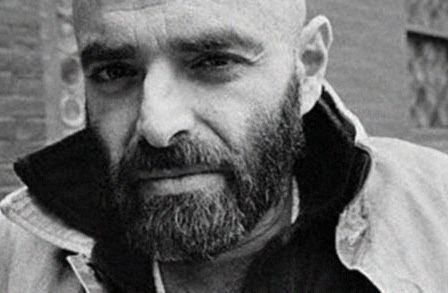
[Image courtesy: Poetry Foundation]

Sheldon Allan Silverstein was born on this day in Chicago, Illinois in 1930. Today is the  82nd anniversary of his birth.

Shel grew up in the Logan Square area of Chicago. He was notoriously private and seldom gave interviews so there is not much know about his early life. In one of the rare interviews he gave he said:

“When I was a kid—12 to 14, around there—I would much rather have been a good baseball player or a hit with the girls, but I couldn’t play ball. I couldn’t dance. Luckily, the girls didn’t want me. Not much I could do about that. So I started to draw and to write. I was also lucky that I didn’t have anybody to copy, be impressed by. I had developed my own style…” [Publishers Weekly, February 24, 1975.]

At 12 he became interested in cartooning and would practice his drawing by tracing comics, including Al Capp, from the “funny papers.” He attended the University of Illinois (for “One useless semester”), and the Art Institute of Chicago (for a summer session) before landing at Roosevelt University. It was a Roosevelt that he was first published, his cartoons appeared in the Roosevelt Torch.

In 1953 he was drafted into the US Army. He served from 1953-1955 and worked as a cartoonist for Stars and Stripes Newspaper. He said in a later Stars and Stripes interview that the Army  helped his art work because he didn’t have to worry about selling the cartoons anywhere. He was guaranteed 3 square meals a day. The Army also gave him the structure of a daily deadline. [To read the entire Stars and Stripes interview go to Off On a Tangent: Shel Silverstein Stars & Stripes Interview] His book Take Ten is a compilation of the cartoons he drew for Stars and Stripes.

Take Ten cover art. (Image courtesy: Amazon.com]

When he got out of the Army he found it difficult to sell his work on a regular basis. He freelanced for Sports Illustrated and Playboy and in 1956 he became a staff cartoonist for Playboy. He contributed poems and published several collections of his cartoons through the magazine.

Then in 1963 things took a turn.

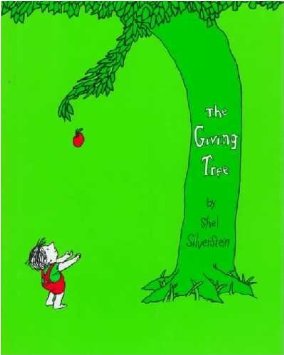
“…at the suggestion of fellow illustrator Tomi Ungerer, he was introduced to Ursula Nordstrom who convinced him to begin writing for children. One of Silverstein’s most popular books, The Giving Tree, was published in 1964.” [Shel Silverstein, Introduction by Meghan Ung. Humanities on the Internet]

Cover art for The Giving Tree [Image courtesy: Amazon.com]
No on had wanted to publish the book. They thought it was too sad for a children’s book. They thought it was too short. They couldn’t pigeonhole it as either for adults or children. But they all agreed it was wonderful. Then Harper and Row gave it a chance and it became a classic in children’s literature.

Here’s the 1973 animated movie of The Giving Tree narrated by Silverstein:

1974’s Where the Sidewalk Ends, a collection of poetry for children, won the New York Times Outstanding Book Award. The collection has been republished several times with Silverstein added poems at the 25th and 30th anniversary.  Here’s one of my favorite poems from the book, Hug o’ War:

Hug o’ War

I will not play at tug o’ war.

I’d rather play at hug o’war.

Where everyone hugs

instead of tugs,

Where everyone giggles

and rolls on the rug,

Where everyone kisses,

And everyone grins,

And everyone cuddles,

And everyone wins.

Next up was The Missing Piece is a beautifully written story about a circle who is looking for its soul mate. The nontraditional ending is both truthful and bittersweet.

A Light In the Attic brought more wonderful poems and illustrations. [Backward Bill always cracked us up at our house…]

…Backward Bill’s got a backward pup.

They eat their supper when the sun comes up…

Silverstein’s illustration of Backward Bill. [Image courtesy: Amazon.com]

Silverstein wrote a sequel to The Missing Piece called The Missing Piece Meets the Big O (see below) which won the 1982 International Reading Association’s Children’s Choice Award.

The Shel Silverstein collection  — “borrowed” from the shelves of an obliging independent brick and mortar bookstore, Greetings and Readings, Hunt Valley, Maryland.

Silverstein also had a musical side. He played guitar and wrote songs, including the Johnny Cash hit A Boy Named Sue, the Irish Rovers “Unicorn Song” and the Dr. Hook song “The Cover of the Rolling Stone.” He performed on several albums (both his own and others.)

He was also a playwright. He had a hit with The Lady or the Tiger Show a play where contestants in a game show have to choose between two doors. Behind one door is a beautiful woman, behind the other door is a man-eating tiger. He co-wrote Oh, Hell! with David Mamet for Lincoln Center. The two worked together again on the film Things Change.

Silverstein died of a heart attack on May 10th, 1999 in Key West.

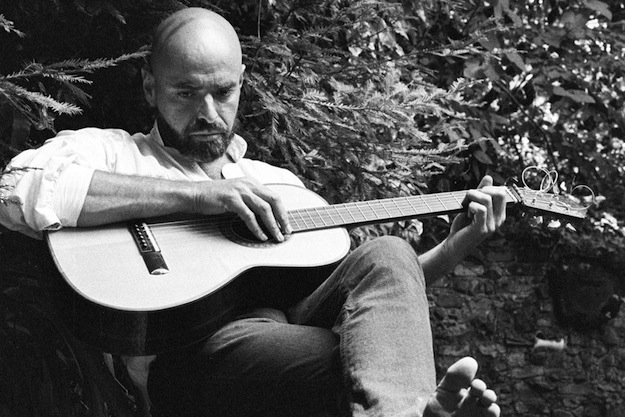
Shel playing his guitar. [Image courtesy: 105.7 Hawk]

Here’s the YouTube video for The Missing Piece Meets the Big O, I’d never read this book, or seen this video, but I just loved the message and had to share it…


Thought of the Day 9.22.12 Louise Nevelson

“I never feel age…If you have creative work, you don’t have age or time.”

–Louise Nevelson

Leah Berliaswsky was born on this day in Perislav, Russia in 1899. This is the 113th anniversary of her birth.

Her family lived in Czarist Russia until 1905 when they emigrated to Rockland, Maine in the United States. Her father worked as a woodcutter, owned a junkyard, a lumberyard and became a realtor.

When Leah saw a bust of Joan of Arc at the local library she knew she wanted to become an artist. She started to take art lessons, and experimented in drawing & watercolors.

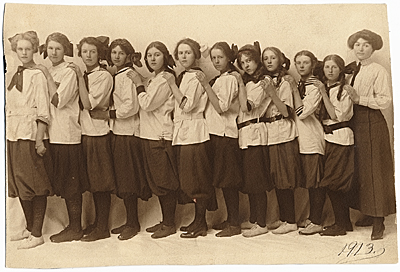
Nevelson in a 1913 class picture. (She is fourth from the left) [Image is courtesy Wikimedia Commons.]

Upon graduating high school she began to work as a stenographer in New York. She met Charles Nevelson of the Nevelson Brothers shipping company. The two married in 1920. She began to study art in earnest adding singing, acting and dancing to the mix. In 1922 she gave birth to Myron (Mike) Nevelson. Two years later the family moved to Mount Vernon, NY. Louise felt stifled by the small town environment and role she was expected to play as dutiful wife. She longed for the artistic life she knew in New York City.

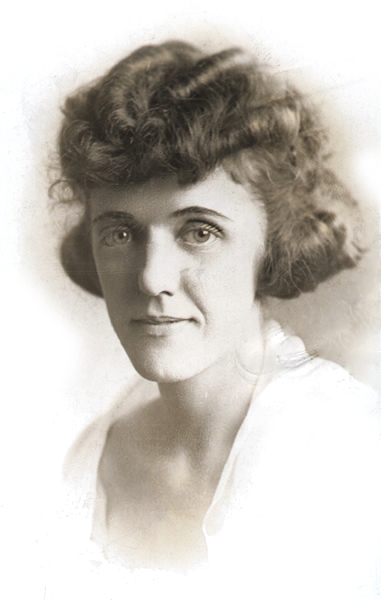
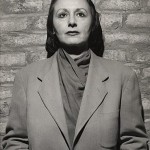
Louise Nevelson as a young woman. [Image courtesy: Abstract Artist.org]

In 1931 she left both her husband and her son and took a trip to Europe. She studied with cubist Hans Hofmann in Munich, but as the NAZIs began their stranglehold on the city she left for Italy and France.  In 1932 she came back to the United States, where she continued to work with Hofmann (he was now teaching at the Art Students League) and she officially separated from her husband. In 1933 she worked with Diego Rivera on his Man at the Crossroads mural at Rockefeller Plaza. Shortly after that she took a sculpture class at the Education Alliance, and decided to focus on sculpture as her medium of choice.

At first she produced…

primarily cubist figure studies made from bronze, plaster and clay… It wasn’t until 1943 that the art-world got their first glimpse of what would become Nevelson’s signature style of assembling wood.  [Abstract Artist.org]

In the 1940s she began to make pieces from reclaimed materials and scraps of wood.

Nevelson… crafted surreal, totemic monuments that served loosely as maps to the artist’s mind. … Nevelson also cultivated her extravagant personal style, which included long dresses and false eyelashes, to dovetail with her desire to express emotion through art. [The Art Story.org]

One of her most famous sculptures is Dawn’s Wedding Feast, a room size installation created in 1959 made of wood and white paint. The installation has four chapels, a bride, groom, wedding cake, various other pieces and hanging columns that represent the wedding guests. It was too big and too expensive for one buyer to purchase so Nevelson broke the installation into sixteen stand alone pieces.


Dawn’s Wedding Feast, 1959-60 [Image Courtesy

In her “Late Period” she abandoned “typical carpentry” and “Her process became purely additive, wherein she stacked and balanced objects before nailing together and painting them…” [The Art Story.org]  She selected small scaled pieces that worked together to form a larger installation.

Black Zag Z — 1969 [Image courtesy: Abstract Artist.org]

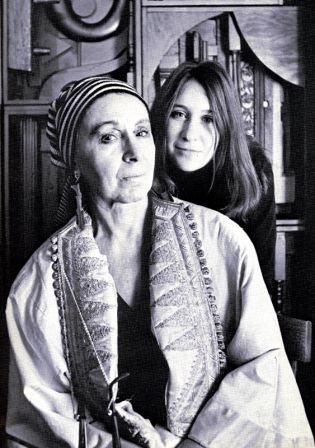
Nevelson and her granddaughter Neith in 1967. Photo by Ugo Mullas. [Image Courtesy Amazon.com]
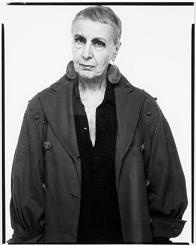
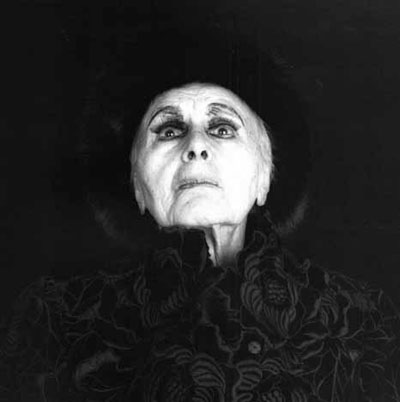
Nevelson toward the end of her life. [Abstract Artist.org]
By the time she died in on April 17,1988, Louise Nevelson was considered by many to be one of the most important American sculptors of the twentieth century and one of the world’s best-known woman artists.  [Abstract Artist.org]


Thought of the Day 9.12.12 H.L.Mencken

“Love is the triumph of imagination over intelligence.”

— H. L. Mencken

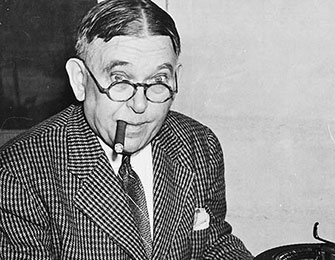
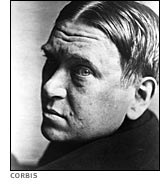
The Sage of Baltimore. [Image courtesy: The American Mercury]

Henry Louis Mencken was born on this day  in Baltimore, Maryland in 1880. Today is the 132nd anniversary of his birth.

Mencken lived in the same house in the Union Square neighborhood of the city for all but 5 years of his life. At 9 he read Huckleberry Finn by Mark Twain and knew he wanted to become a writer. His family had other ideas.

His grandfather had prospered in the tobacco business and his father, August, continued the family tradition. Mencken studied at the Baltimore Polytechnic Institute (1892-96) and then worked at his father’s cigar factory. [Books and Writers]

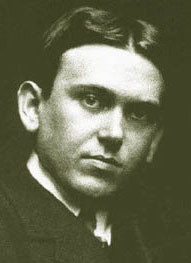
[Image Courtesy: Wikimedia Commons]

He worked for 3 years at the family owned business and would have stayed indefinitely, but upon his father’s death in 1899  Mencken was “free to choose his own trade in the world.”

Within a week, Mencken “invaded” the city room of the old Baltimore Morning Herald to face down the city editor and ask for a job…There were no jobs that day, but Mencken, persistent, returned daily for two weeks. “Finally I was sent out on a small assignment — it was a stable robbery at Govans — and a few days later I was on the staff,” [H.L. Mencken, Pioneer Journalist, By Jacques Kelly The Baltimore Sun]

His skill as a writer and his reputation for being able to turn a phrase grew. So 6 years later when the Herald closed its doors Mencken applied for a position at the larger Baltimore Sun.  He started at “The Sun as its Sunday editor, became an editorial writer, and in 1911 started writing his own column, the Free Lance Mencken.”  He worked at The Sun until 1948, bring his unflinching wit and critical eye to everything he saw.

“I believe that a young newspaper reporter in a big city… led a live that has never been matched… for romance and interest.” [Mencken from his only known audio interview. Courtesy of: The American Mercury.com]/

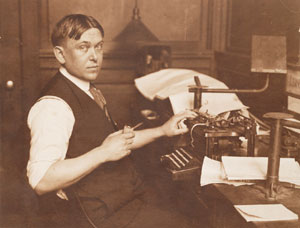
Mencken at work. [Image Courtesy: Enoch Pratt free Library Digital Collections.]

He was a war correspondent in Germany and Russia from 1916 to 1918. During WWI Mencken was pro-German (a very unpopular thing to be in patriotic Baltimore of 1917).

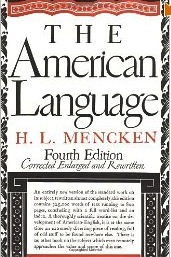
In 1919 he published The American Language, a guide to American expressions and idioms.

From 1914 to 1923 Mencken co-edited with drama critic George Jean Nathan (1882-1958) the Smart Set, which mocked everything from politics to art, universities to the Bible…[Books and Writers]

He preferred realism to modernism and he helped the careers of Sinclair Lewis, Dorothy Parker and Eugene O’Neill.

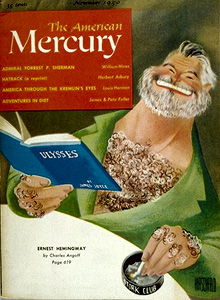
Cover of the American Mercury [Image Courtesy: Wikipedia]

He started The American Mercury monthly magazine, working on the magazine from 1924 t0 1933.

A stroke in 1948 left him nearly unable to read or write. Speaking took a lot of effort, and he grew easily frustrated. He spent his remaining days organizing his papers and letters (which can now be found in H.L. Mencken Room and Collection at the Central Branch of the Enoch Pratt Free Library on Cathedral Street in Baltimore.

[Image courtesy: MPT]

Here are a few more quips from the Sage of Baltimore:

  • “A cynic is a man who, when he smells flowers, looks around for a coffin.”
  • “Nature abhors a moron”
  • “Do not overestimate the decency of the human race”
  • “A man loses his sense of direction after four drinks; a woman loses hers after four kisses”
  • “Love is like war; easy to begin but very hard to stop”
  • “It is a sin to believe evil of others, but it is seldom a mistake.”
  • “Conscience is the inner voice that warns us somebody may be looking.”
  • “You come into the world with nothing, and the purpose of your life is to make something out of nothing”
  • “Most people are unable to write because they are unable to think, and they are unable to think because they congenitally lack the equipment to do so, just as they congenitally lack the equipment to fly over the moon.”
  • “I believe that it is better to tell the truth than a lie. I believe it is better to be free than to be a slave. And I believe it is better to know than to be ignorant.”

Thought of the Day 9.11.12 Harry Connick Jr.

“hard to sit in silence, to watch one’s youth wash away.”

–Harry Connick Jr.

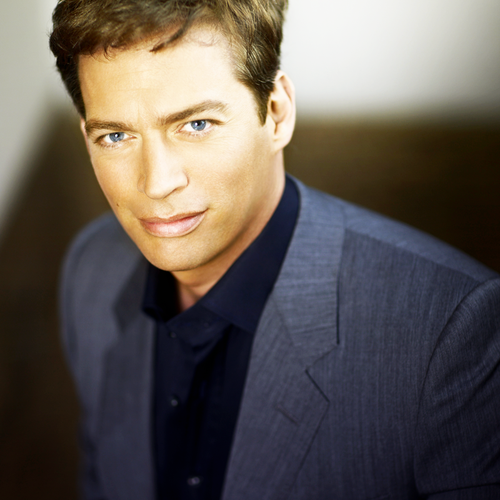
[Image courtesy: Last.fm]

Joseph Harry Fowler Connick Jr. was born on this day in New Orleans, Louisiana, USA in 1967. He is 45 years old.

Connick’s mother, Anita, was a lawer and judge, she rose through the ranks to become  a Louisiana Supreme Court justice. Harry’s first concert was at a campaign event when his father, Joseph, was running for district attorney. Harry was 5 and had been taking piano lessons for two years, The little boy sang the national anthem. (His dad won the election.) At 9 he performed  Beethoven’s Piano Concerto No. 3 Opus 37 with the New Orleans Symphony Orchestra and joined the musician’s union. He took lessons at the New Orleans Center for  the Creative Arts from Ellis Marsalis and James Booker.

After high school Connick moved to New York City. He played at various jazz clubs,  and caught the attention of singer Tony Bennet (who claimed the youngster could be the next Sinatra) and Columbia Record exec George Butler (who signed Connick to the label.)

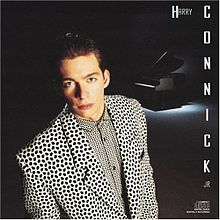
Connick’s first album. [Image Courtesy: Wikipedia]

His first, self titled, album was largely instrumental, but  he added vocals to his second album, 20. Harry Connick, Jr. sings like a Delta summer evening — his voice is warm and boozy and smooth all at the same time. He pulls you in and dances you around a song. At 20 he was singing standards that belonged to a generation (or two generations) his senior, and he did it with style. To date Connick has put out 27 albums.  From Jazz to Funk to Ballads to Big Band to the songs he loved from childhood he makes it sound easy… and has sold over 25 million recordings.

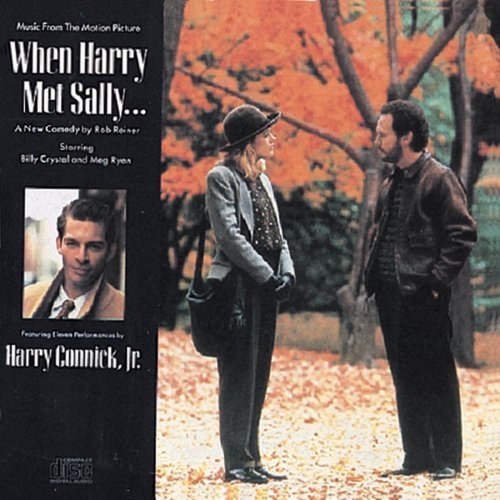
Cover for When Harry Met Sally… [Image Courtesy: Amazon.com]

Rob Reiner signed Connick for the soundtrack of When Harry Met Sallyin 1989. The soundtrack is lush with Big Band standards like “It Had to Be You,” “Don’t Get Around Much Anymore,” “Let’s Call the Whole Thing Off,”  “But Not for Me,” “Where or When” and (a personal favorite) “I Could Write A Book,” and went to #1 on the Jazz Charts  while reaching double-platinum.  Connick won a Grammy for his effort.

The film’s success led to Harry’s first multi-platinum album, an accomplishment made even more impressive by the fact that it was also Harry’s first Big Band recording. [Harry Connick, Jr official web page]

Reiner agreed with Bennet’s assertion that Connick had a certain Sinatra-esque style, and Connick followed up his success scoring Harry Met Sally by going ON camera in the WWII film Memphis Belle. Next he played Eddie in Jodie Foster’s Little Man Tate.

Harry changed tunes for his next film role, portraying a homicidal sociopath in 1995’s Copycat. The critics took notice, with the New York Times dubbing him, “…scarily effective,” and the Tampa Tribune naming him “most memorable” in a cast that included Holly Hunter and Sigourney Weaver. [Harry Connick, Jr official web page]

He played a fighter pilot / side kick in Independence Day where the actors, writers and directors were too busy blowing things up and saving the world to bother with science, logic or character development. [Too harsh?] He was the romantic good guy to Sandra Bullock in Hope Floats. In 2001 he co-starred with Sarah Jessica Parker  in Life Without Dick.  He was in the horror movie BUG with Ashley Judd.  He  narrator The Happy Elf (which was based on a song he wrote for his Harry for the Holidays 2003 album.) and My Dog Skip and he gave his voice to the animated role of Dean McCoppin in The Iron Giant.  He co-starred with Renee Zellweger in the 2009 rom-com New In Town. And his character heads a team of marine veteranarians who help an injured bottlenosed dolphin in Dolphin Tale. (Ashley Judd co-stars in Dolphin Tale as well, but sans bugs.)

On the small screen he worked with Glen Close in the ABC special South Pacific, and had a recurring role as Grace’s husband Leo Markus on Will and Grace. He was the lead in bio-pic Living Proof about Dr. Dennis Slamon, the man who developed the breast cancer drug Herceptin. He was the host for the Weather Channel’s 2007 documentary 100 Biggest Weather Moments (The Weather Channel donated $75,000 to Musician’s Village, a project Connick and Branford Marsalis devollped with Habitat for Humanity to aid the victims of Hurricane Katrina. His latest television role is a recurring spot on Law & Order: Special Victims Unit as A.D.A. David Haden.

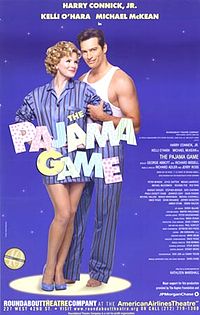
Poster for The Pajama Game [Image courtesy: Wikipedia]

He has appeared in several Broadway shows including the 2006 revival of The Pajama Game,  and the 2011 revival of On a Clear Day You Can See Forever, as well as two special concert tours, An Evening with Harry Connick Jr. and His Orchestra in 1990 and Harry Connick Jr.: In Concert on Broadway in 2010. He also composed the music and lyrics for Thou Shalt Not.

After Hurricane Katrina devisated New Orleans and the Gulf region Connick joined forces with other musicians and civic leaders to help rebuild the city. Portions of the royalties from Oh, My NOLA  and Chanson duVieux Carre along with the concert tours promoting the albums went to Musician’s Villiage.


Thought of the Day 9.9.12 “Colonel” Sanders

“There’s no reason to be the richest man in the cemetery. You can’t do any business from there.

— “Colonel” Harland Sanders

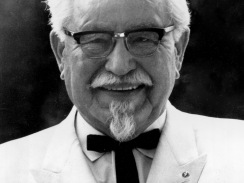
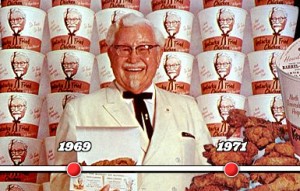
Col. Harland Sanders, 77, head of the multimilion-dollar Kentucky Fried Chicken chain, is shown in 1968. (AP Photo) [Image Courtesy: CBS News]

Harland David Sanders was born on this day  near Henryville, Indiana in 1890. Today is the 122nd anniversary of his birth.

He lived in poverty in rural Indiana sharing a four room shack with his father, mother, brother and sister. His father, a farmer and a butcher, died when Harland was 6 and his mother went to work in a tomato-canning factory to help support the family. Harland took on many of the household chores including taking care of his younger siblings and doing the cooking.

He dropped out of school at 12. At 15 he lied about his age and joined the US Army. He spent most of his Army career in Cuba as a mule driver. When he was honorably discharged and returned to the States where…

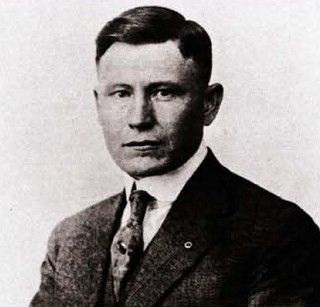
As a young businessman before he became “Colonel”. (Image courtesy: Wikipedia)

he worked as an insurance salesman, steamboat pilot, and farmer. It wasn’t until he reached the ripe age of 40… that his famous success with chicken began. [The Corner Office.]

During the Depression Sanders opened a service station in Corbin, Kentucky and began to sell chicken, ham and steak dinners on the side. Eventually the meals, which he actually sold out of his living quarters next door to the service station, became so popular that he moved to Sanders Cafe a 142 seat restaurant at a nearby motel. He slowly perfected his recipe for fried chicken. Some estimates say it took over 1,000 tries to get the proper mix of herbs and spices  for his “special recipe.” Sanders used a pressure fryer instead of frying pan to speed up the cooking process and seal in the meat’s juices.

In 1935 Kentucky governor Ruby Laffoon gave him the honorary title of “Kentucky Colonel”.  By 1950 he had grown his trademark mustache and goatee — which he bleached white to match his hair — and took to wearing a white suit and black string tie at all public appearances.

Photo promoting the (real) Sanders’ visit to Santa Ana KFC on May 26, 2011 — 29 plus years after the Colonel’s death. But don’t worry Southern CA, it wasn’t some Zombie in a white suit and string tie. It was the Second Generation Colonel. The man in the photo above, however, is the real deal. [Image courtesy: New Santa Ana]

When an interstate reduced the traffic to his restaurant he started to look at the franchising model as a way to grow his business.

In 1955, confident of the quality of his fried chicken, the Colonel devoted himself to developing his chicken franchising business. Less than 10 years later, Sanders had more than 600 KFC franchises in the U.S. and Canada, and in 1964 he sold his interest in the U.S. company for $2 million [KFC, History]

He moved to Mississauga, Ontario and concentrated on building his Canadian chain while continuing to make appearances on both sides of the 49th parallel.

Sander’s image has been modernized over the years for use as Kentucky Fried Chicken’s icon. [Image courtesy: USA Today.]

Sanders didn’t always get along with the mega corporation that took over KFC America, Heublein, Inc. He sued the organization when it used his image to promote products he didn’t develop. Heublein, for their part, sued the Colonel for libel when he said of  their gravy:

“My God, that gravy is horrible… They buy water for 15 to 20 cents per thousand gallons and then they mix it with flour and starch and end up with pure wallpaper paste…To the wallpaper paste they add some sludge and sell it for 65 or 75 cents a pint. There’s no nutrition in it and they ought not to be allow to sell it.” [The Colonel’s Kitchen]

The Colonel had a philanthropic side as well and he funded many charities and scholarships. He diagnosed with leukemia in June of 1980, Colonel Sanders died of pneumonia the following december.

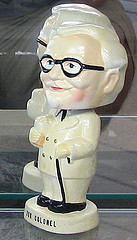
Bobble head of the Colonel at the Colonel Sanders Museum (Image Courtesy: Brent K. Moore.)

There is now a museum honoring the Colonel and all things KFC in Corbin Kentucky at the site of the original restaurant. To learn more about the museum go here (for a link to the Corbin County tourism link) or here (for a personal take on the museum by Brent Moore).


Thought of the Day 9.8.12 Patsy Cline

“Here’s to those who wish us well and those who don’t can go to hell”

–Patsy Cline

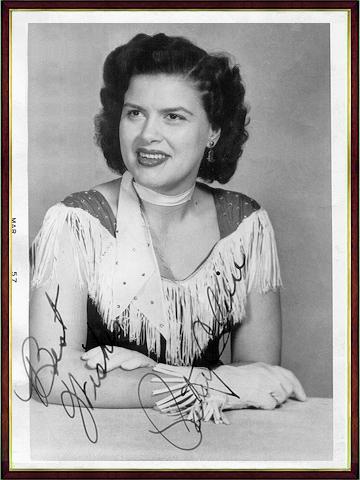
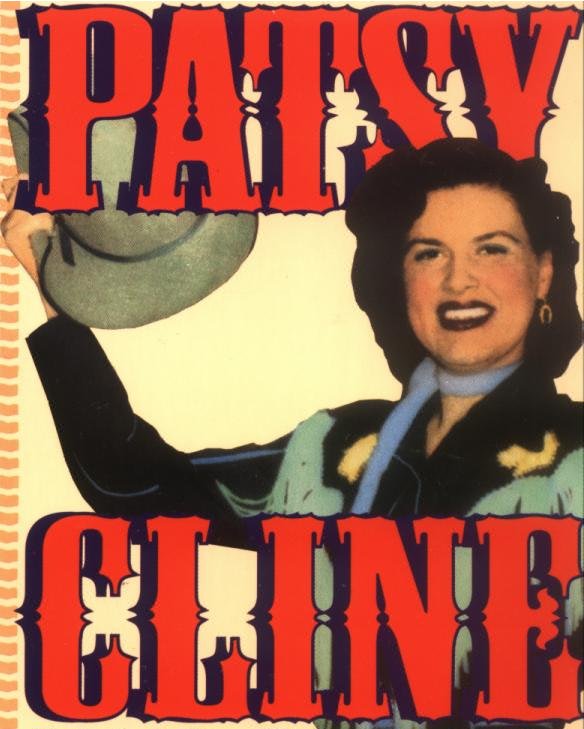
Patsy Cline early in her career. [Image courtesy: Patsy Cline, A Fan’s Tribute]

Virginia Patterson Hensley was born on this day in Winchester, Virginia in 1932. It is the 80th anniversary of her birth.

At 4 she won a dance contest for tap dancing. Her mother gave her a piano for her 8th birthday and Patsy taught herself to play.  She sang with her church choir and at 14 was a regular on WINC Radio. At 15 her parents divorced and Patsy sang in clubs at night and worked in a drug store during the day to help pay the bills.

She married Gerald Cline in 1952 and continued to sing in clubs as well as with Bill Peer’s Melody Playboys in Maryland and as a regular on “Town and Country Jamboree” on a radio station out of Washington DC. She got a recording contract with Four Star Records in 1954 and she won first place on the TV variety show “Talent Scouts” with Arthur Godfrey where she sang “Walkin’ After Midnight.” The song became a hit and on both the country and pop charts.

Cline made her debut on the stage of the Grad Old Opry in 1960 and continued her rise to stardom with her second hit “I Fall to Pieces.” She is also known for her songs “Sweet Dreams,” “Crazy” and “She’s Got You.”

A country music legend, Patsy Cline helped break down the gender barrier in this musical genre. [Patsy Cline. biography profile, bio.TRUE STORY]

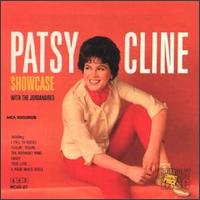
[This is one of the Patsy Cline albums that was in my parent’s record collection. Image courtesy: Decca Records]

She helped  the careers of other up and coming female singers, especially Loretta Lynn.

Cline died in a plane crash returning from a benefit concert in 1963.

In 1973 she was the first female soloist to be honored in the Country Music Hall of Fame.

[Image courtesy: blog.zap2it.com]


Thought of the Day 9.4.12 Paul Harvey

“In times like these, it helps to recall that there have always been times like these.”

–Paul Harvey

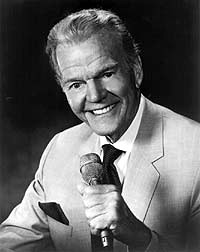
Broadcaster Paul Harvey (Image courtesy of: Arcane Radio Trivia.)

Paul Harvey Aurandt was born on this day in Tulsa, Oklahoma in 1918. Today is the 94th anniversary of his birth.

He was the son of a police officer and was interested in radio early on. He made radio receivers as a child and when he was in high school his smooth voice and distinctive reading style attracted the attention of a teacher who suggested to audition for the local radio station, KVOO.

He was hired at KVOO, but, the road to on air personality began humbly with Harvey starting out by sweeping the floor. Eventually he began to read the news and do commercials. He continued to work as KVOO, both as an announcer and a program director, while he attended the University of Tulsa. He had stints as Salina Kansas’ KFBI, Oklahoma City’s KOMA and St. Louis’ KXOK before he moved to Hawaii. He enlisted in the US Army Air Corps  in December of 1943, but he only served for 14 weeks at which time he was given a medical discharge for a cut on his heel. (Some sources say it was a Section 8 discharge and that Harvey changed his orders to make himself a ranking officer,  stole a plane and inflicted the wound himself during a psychotic dream. Harvey denied all those charges saying:

“It was an honorable medical discharge… There was a little training accident…a minor cut on the obstacle course…I don’t recall seeing anyone I knew who was a psychaitrist…I cannot tell you the exact wording of my discharge.” [The Washington Examiner])

Harvey moved to Chicago and he worked for the ABC affiliate WENR-AM.

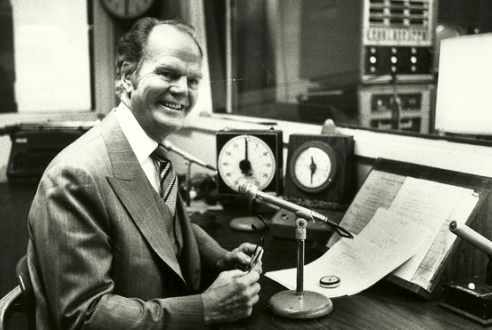
Paul Harvey at the broadcasting counsel in Chicago (image courtesy Time Out Chicago)

He had a run-in with national security when he attempted to infiltrate the Argonne National Laboratory outside of Chicago. The Lab was a favorite target of Harvey’s for it’s “lack of security” and the radio host wanted to prove it.

Shortly past 1 a.m. on February 6, 1951, Argonne guards discovered reporter Paul Harvey near the 10-foot (3.0 m) perimeter fence, his coat tangled in the barbed wire. Searching his car, guards found a previously prepared four-page broadcast detailing the saga of his unauthorized entrance into a classified “hot zone”. He was brought before a federal grand jury on charges of conspiracy to obtain information on national security and transmit it to the public, but was not indicted. [Argonne National Laboratory; History]

Harvey had friends in high places, most notably Senator Joseph McCarthy and FBI Director J. Edgar Hoover, and the charges against him were dropped. Of the incident Harvey later went on air to say  “Though my methods may be questioned, my accuracy and my loyalty never will be.”

In 1951, while the grand jury was still out in the Argonne case, Harvey debuted a new program on ABC,  Paul Harvey News and Comment. The show came on weekdays at noon and ran  for 58 years — the longest running radio show in history — until Harvey’s death in 2009. It was:

an idiosyncratic mix of headlines, comments, quips and advertisements, all voiced by Harvey — …syndicated at its peak to more than 1200 radio stations around the country each day. Harvey … wrote and recorded his shows six days a week from studios in Chicago. His brisk, quirky delivery and signature greeting “Hello, Americans!” were widely (if fondly) parodied. In 1976 Harvey began a companion radio feature, The Rest of the Story, telling little-known tales from the lives of famous people.  [Who 2 Biographies]

The Rest of the Story, while broadcast by Harvey, were written and produced by his son, Paul Harvey, Jr.. According to the production team the stories were completely true, but, in reality were either poorly researched or simply skewed to represent Harvey’s (Sr. and Jr) point of view.

He is the author of 7 books including: Autumn of Liberty; Our Lives, Our Fortunes, Our Sacred Honor; Paul Harvey’s For What It’s Worth; and several collections of The Rest of the Story. His biography Good Day! The Paul Harvey Story was published in 2009.

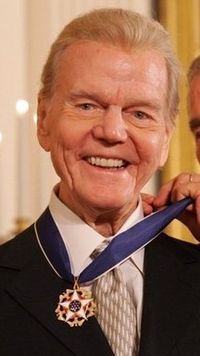
Harvey was inducted into the Radio Hall of Fame in 1990. In 2005 he received the Presidential Medal of Freedom.

Other Paul Harvey quotes include:

“Golf is a game in which you yell ‘fore!’ shoot six, and write down five.”

“If there is a 50-50 chance that something can go wrong, then 9 times out of ten it will.”

“Like what you do, if you don’t like it, do something else.”

Radios at the Vintage Radio and Communications Museum of Connecticut (Image courtesy Arcane Radio Trivia)

[This is one of those Thought of the Day birthday nods that I have a sentimental link to. I’m not a big fan of Paul Harvey and his conservative, folksy style, but there is a touchstone here.

I clearly remember listening to his gravely voice and pregnant pauses while in the car with my dad. He’d sign off with ‘good day’ and we’d echo back a ‘good day’ to each other.

The A&E Biography page links Harvey with Joseph McCarthy, J. Edgar Hoover and Billy Graham as “friends”, not three people I’d hope to see as the top three friends in my bio. And it is pretty clear that Harvey was less than diligent in his research. But I guess when you have to put out 5 days worth of “Story” to 23 MILLION fans facts can take a back seat.

…Still anytime I can spend a few hours remember my dad is worth the effort. And THAT’s the REST of the story. ‘Good day!’]


Thought of the Day 8.22.12 Dorothy Parker

“Beauty is only skin deep, but ugly goes clean to the bone”

–Dorothy Parker

Dorothy Rothschild was born on this day in West End, New Jersey in 1893. Today is the 119th anniversary of her birth.

She said she was “a late unexpected arrival in a loveless family.” Dottie’s mother, Annie, died when the little girl was only five. Her father, Jacob, remarried two years later. But Dottie hated his new wife, Eleanor. Instead of calling Eleanor ‘Mother’ or ‘Stepmother’ Dorothy would refer to her as ‘the housekeeper.’  Annie was Protestant and Jacob was Jewish, but Eleanor was a strict Roman Catholic, and little Dottie thought she was a religious fantastic. Dottie was sent to elementary school at the Convent of the Blessed Sacrament, something else she loathed. She got into trouble when she refered to the Immaculate Conception as “spontaneous combustion.” Of her education there she later remarked…

…as for helping me in the outside world, the Convent taught me only that if you spit on a pencil eraser, it will erase ink.

She went to Miss Dana’s School for Young Ladies, a private boarding and finishing school in Morristown, New Jersey.  Shortly after graduating finishing school she learned that her brother, Henry, died aboard the Titanic. A year later her father passed away.

Dorothy moved to New York where she wrote during the day and played piano at a dancing school at night until her career took off. In 1914 she sold her poem “Any Porch” to Vanity Fair for $12.  She worked for Vogue (a sister Conde Nast publication) writing fashion captions including such quips as “Brevity is the soul of lingerie.” Later she moved over to Vanity Fair where her managing editor, Frank Crowinshield said she had

 “the quickest tongue imaginable, and I need not to say the keenest sense of mockery.” [Poetry Hunter.com]

In 1917 she married a wall street stockbroker, Edwin Pond Parker II.  Edwin went off to serve in World War I. He was wounded in the War and came back an alcoholic and morphine addict. The marriage didn’t last long, but she kept his name for the rest of her life.

Dorothy took over as Theatre Critic for P.G. Woodhouse. She was the only female drama critic in New York at the time.  Her acerbic wit was evident in such reviews as “if you don’t knit, bring a book.” Parker was

“a firecracker who was aggressively proud of being tough, quirky, fiesty…and she managed to carry it off with style and humor.” [ Marion Meade, What Fresh Hell Is This]

the readers loved her, but the theater owners and producers were less than pleased. She crossed the line once too often and when she panned a big production she got fired from the drama desk.

The Algonquin Round Table in caricature by Al ...

The Algonquin Round Table in caricature by Al Hirschfeld. Seated at the table, clockwise from left: Dorothy Parker, Robert Benchley, Alexander Woollcott, Heywood Broun, Marc Connelly, Franklin P. Adams, Edna Ferber, George S. Kaufman, Robert Sherwood. In back from left to right: frequent Algonquin guests Lynn Fontanne and Alfred Lunt, Vanity Fair editor Frank Crowninshield and Frank Case. (Photo credit: Wikipedia)

In the 1920’s Dorothy was a founding member of the Algonquin Round Table, a group of  — mostly male — writers and friends known for their quick-witted quips. During this period she wrote her poem “News Item” which contains the iconic Parker line “Men seldom make passes at girls who wear glasses.”  She worked for various publications most notably The New Yorker. At the New Yorker she wrote book reviews (just as funny and acerbic as her drama reviews) from 1927-1933 under the pseudonym the “Constant Reader.” She continued to write poetry and short stories,a nd in 1929 her story “The Big Blonde” won the prestigious O. Henry award.

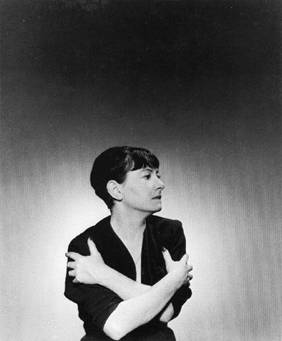
Also in 1929 she began to write screenplays. She was hired by MGM and moved to Hollywood.  In 1933 Parker met husband #2, Alan Campbell, another screenwriter and the two became both professional and romantic partners. They signed on with Paramount Pictures in 1935 and Parker got an Academy Award nomination as part of the screenwriting team that penned “A Star Is Born.”

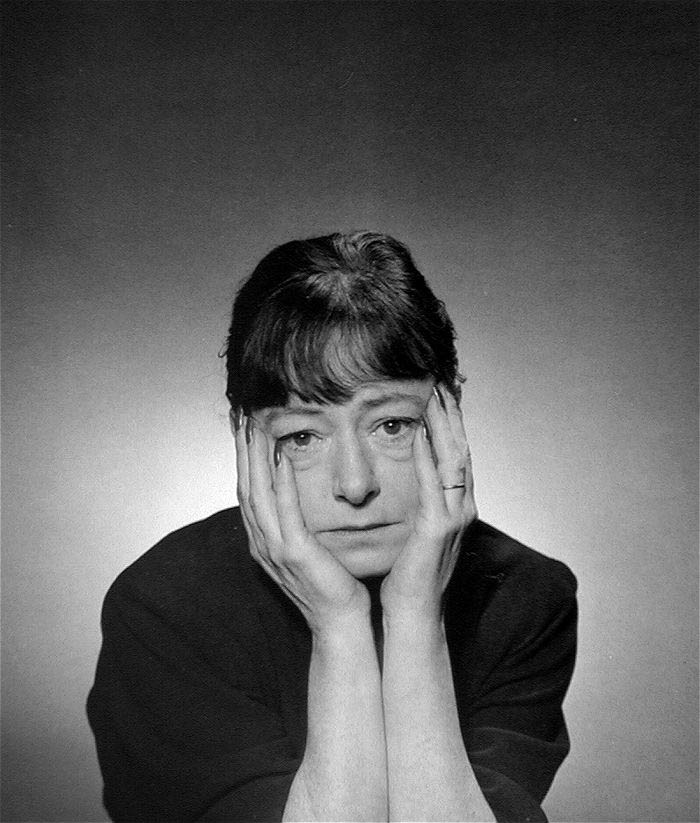
George Platt Lynes took this portrait in 1943. [ courtesy Dorothy Parker’s World Online. ]

Parker used her pen to fight for social justice. She championed feminism, racial equity, and the fight against Fascism. She supported the International Brigade (along with Earnest Hemingway) in their fight against Franco in the Spanish Civil War. In 1936 she helped found the Anti Nazi League. She also joined the Communist Party, an act that got her black listed in the 1950’s.Starting in 1957 she wrote book reviews for Esquire magazine, and in 1959 she was inducted into the American Academy of Arts and Letters.

Parker had a dark side. She was an alcoholic and she attempted suicide on several occasions. In her poem Resume she wrote about suicide:

Razors pain you;
Rivers are damp;
Acids stain you;
And drugs cause cramp.
Guns aren't lawful;
Nooses give;
Gas smells awful;
You might as well live.

On June 7, 1967 Parker died of a heart attack in New York City.

————————————————————-

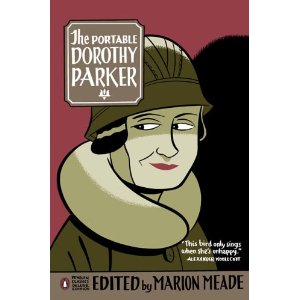
The Portable Dorothy Parker is available on Amazon.com.

Here are some more Dorothy Parker quotes: 

“She runs the gamut of emotions from A to B.”

The only ‘-ism’ Hollywood believes in is plagiarism.

Time wounds all heels.

I’d like to have money. And I’d like to be a good writer. These two can come together, and I hope they will, but if that’s too adorable, I’d rather have money.

Sorrow is tranquility remembered in emotion.

(In 1955) “Hollywood money isn’t money. It’s congealed snow, melts in your hand, and there you are.”

The best way to keep children at home is to make the home atmosphere pleasant, and let the air out of the tires.

One more drink and I’ll be under the the table, two more drinks and I’ll be under the host.

Scratch an actor – and you’ll find an actress.

Upon being told that former US President Calvin Coolidge (known as “Silent Cal” for being very tight-lipped) had died, she quipped, “How can they tell?”

He and I had an office so tiny that an inch smaller and it would have been adultery.

Excuse me, I have to use the toilet. Actually, I have to use the telephone, but I’m too embarrassed to say so.

People ought to be one of two things, young or dead.

On truth: Wit has truth in it; wisecracking is simply calisthenics with words.

“I’d rather have a bottle in front of me, than a frontal lobotomy.”

“This is not a novel to be tossed aside lightly. It should be thrown with great force.”

“You can drag a horticulture, but you can’t make her think.”

“Look at him, a rhinestone in the rough.”

“They sicken of the calm, who know the storm”

“This wasn’t just plain terrible, this was fancy terrible. This was terrible with raisins in it.”