Category Archives: Thought of the Day

SUMMER Writing Challenge; Day 1

Beautiful tropical beach with the word summer written on the san


The Summer Writing Challenge is back on ritaLOVEStoWRITE.


For the month of June I will post a writing prompt each day and those of you who wish to play along are encouraged to do something creative with it.


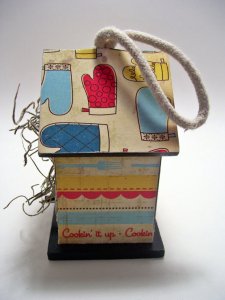
Ideally, since this a WRITING challenge this means you’ll put pen to paper or finger to keyboard and WRITE something. However, should your muse whisper to you  in song, by all means compose a song. If she leads you to paints make a pictures. If your thing is decoupaging miniature bird houses… who am I to judge? Go for it.


The thing is, this challenge is an excuse to do what you’ve been MEANING /WANTING to do but just haven’t found the time to do what with life and all.


Bonus, since you can play along every day, you have the option of exercising your creative skill on a daily basis. Exercise that muscle enough and it will get stronger. I promise you.


Ed Fury

Exercising your creative muscle: retro style. [Ed Fury (Photo credit: The Pie Shops Collection)]

And hopefully the practice of doing something everyday will stick and become a habit (the good kind), and we’ll end the month with a whole bunch of new / renewed dedicated writers, composers, artist and birdhouse makers.


Who’s in?


If you want to share what you’ve created (and you don’t have to share every day) just pop me some feedback or send me an email at  ritaLOVEStoWRITE@gmail.com  But keep it clean, OK? The kid’s are watching!


Beautiful tropical beach with the word summer written on the san

Today’s Creative Prompt is… SAND.

Do with it what you will.

Cheers, Rita


————————–and YES people really do decoupage miniature birdhouses, would I lie about something like that?…


Enhanced by Zemanta

Muffin? Monday: You Butter, You Butter, You Bet Biscuits!

Good evening, people of blogland! This is your guest blogger, Maggie (Rita’s daughter), as mum has broken a toe and is a bit disposed to slaving away in the kitchen. In comparison to my mother, I am no master of muffins or Mondays, so I decided to take my own spin on the idea: biscuits. I am a sucker biscuits. They are extremely versatile and can be pared with breakfast, lunch, dinner, or desert! Of course the key to this variety is normally the topping or spread you choose to garnish the biscuit ( butter and cheese, vrs jelly and powdered sugar, vrs bacon or vodka… you get the idea), but a good biscuit base is a must!

The “You Butter, You Butter, You Bet” biscuit contains:

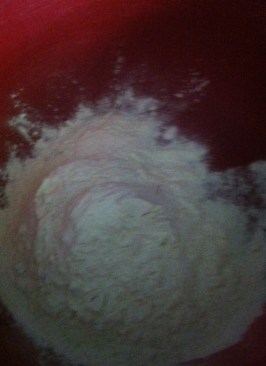
1 1/2 cup of flourphoto

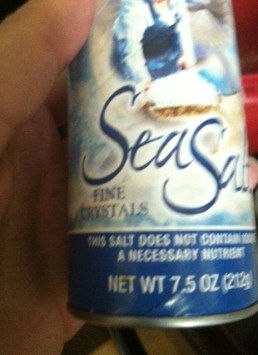
1/2 teaspoon of saltphoto copy 3

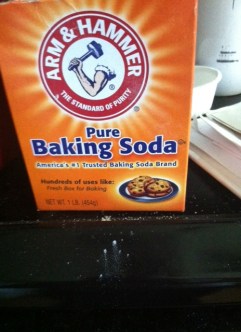
1/4 teaspoon (or just a pinch will do) of baking sodaphoto copy

oh yeah, and butter! 8 glorious ounces of butter! creamy dreamy wonderful… again, you get the picture.

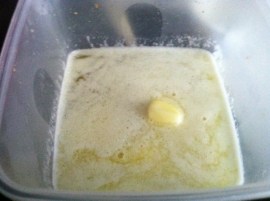
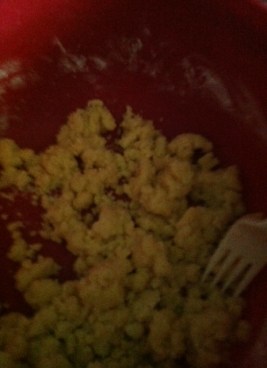
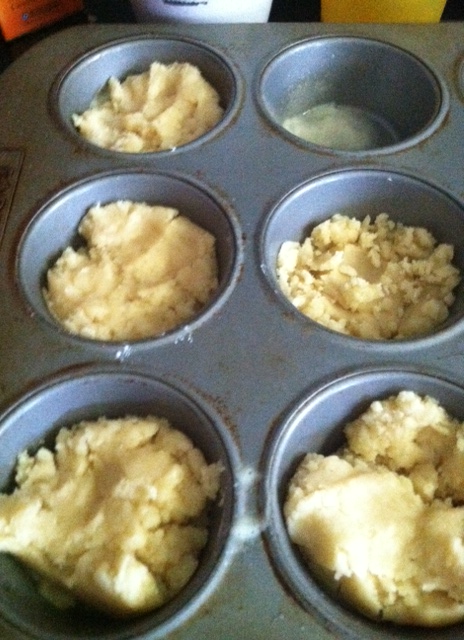
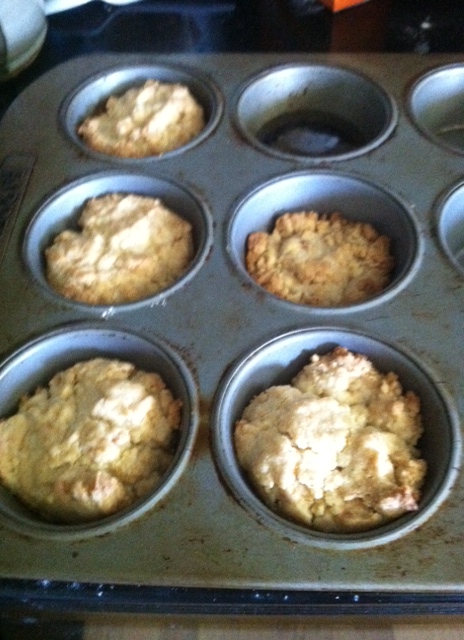
Pre-heat the oven to 45o degrees. In a bowl, combine the dry ingredients. Melt the butter until it is soft or liquid. photo copy 2Add it gradually to the dry mixture until the result resembles crumbs, or the surface of the moon Calisto.photo copy 4th       Try to squash it together. Like Jupiter’s gravitational pull on Calisto. Grease a muffin pan ( 6 pit is best, as this recipe only makes 5 or 6 biscuits), and scoop your compressed crumbs into each pit. photo copy 5Bake for 11-15 minutes, or until the tops are light golden brown. Let them rest for about 5 minutes, then serve. They hold up before serving for at least 12 hours, but after that I’d refrigerate. They are particularly delicious with orange marmalade. Make 5-6.

Enhanced by Zemantaphoto copy 6As far as commentary goes: be sure not to use too much baking soda, or they taste gross. If you do, however, it can be fixed by eating the biscuit with liberal amounts of orange marmalade (kudos to mum for the idea). And that has been your brief biscuit break! Happy Monday!!!!!

Muffin Monday : Kathy’s Vegan Banana Muffins

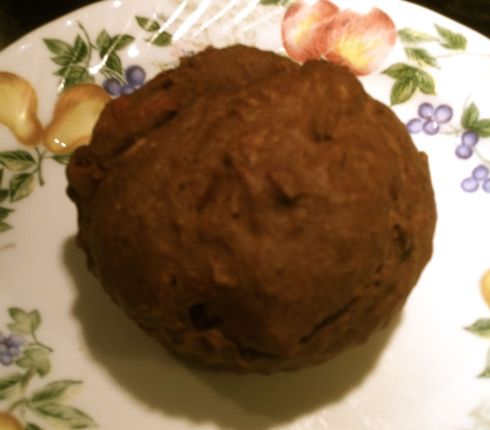
IMG_8055


My friend Kathy gave me this gem of a Vegan Banana Muffin recipe that I thought I’d pass along. (Thank’s Kathy!)

I like that you can add just about anything to the base recipe to create your own special version. Enjoy!


INGREDIENTS:

  • 3 Mashed Bananas
  • 1/4 cup Oil
  • 1 cup Sugar
  • 2 cup Flour
  • 1 tsp Salt
  • 1 tsp Baking Soda


Add Ins:

  • 1/4 cup Cocoa Powder
  • 1/2 cup Chopped Pecans
  • 1/2 cup Raisins
  • 1/2 cup Chopped Dates
  • (You can also add Oatmeal, Chocolate Chips and Dried Cherries)


IMG_8059

DIRECTIONS:
1. Preheat the oven to 350 degrees. Prep 12 muffin cups with baking spray (I actually needed 13 so… bonus ME!)

2. In a large bowl mash the Bananas and mix with the Oil and Sugar.

3. Mix the Flour, Salt and Baking Soda in a separate bowl then add to Banana mixture.

4. Throw in your Add Ins (Cocoa Powder, Chopped Pecans, Raisins, and Chopped Dates for me) all at once and mix until well incorporated.

5. Divide evenly into the muffin cups and bake for 20 minutes until the muffins pass the toothpick test.

6. Cool for 5 minutes before enjoying.


IMG_8057

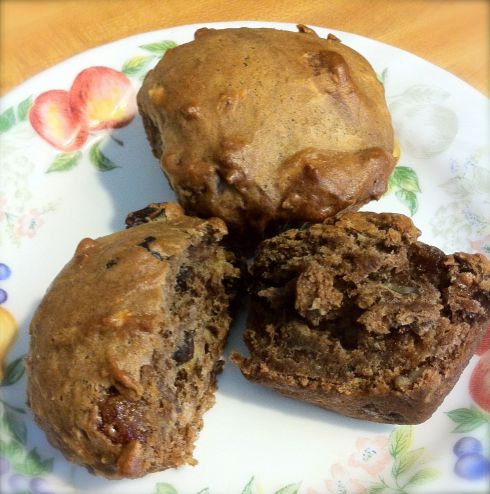
My delightful taster Maggie said these were “Delicious and the perfect combo of crunchy and soft. ” She also liked that they are booth sweet and healthy. They reminded her of banana bread.


Enhanced by Zemanta

Johannes Brahms 5.7.14 Thought of the Day

Johannes Brahms

Johannes Brahms (Photo credit: Wikipedia)


“Without craftsmanship, inspiration is a mere reed shaken in the wind”


“It is not hard to compose, but what is fabulously hard is to leave the superfluous notes under the table.”


“If there is anyone here whom I have not insulted, I beg his pardon.”


–Johannes Brahms


Johannes Brahms was born on this day in Hamburg, Germany in 1833. Today is the 181st anniversary of his birth.


The second of three children born to Johanna Henrika Christiane Nissen and Johann Jakob Brahms, Johannes’ love of music came from his father who played horn and double bass. Little Johannes was playing piano by age seven and earning money as a musician “at local inns, in brothels and along the city’s docks” [Biography.com] by the time he was a teenager.At age 20 he met German composer Robert Schumann. Schumann help his career, and Brahms quickly became friends with Schumann and his wife Clara, a pianist and composer in her own right.  When Schumann attempted suicide  and had to be confined to a sanitarium, Brahms helped out the desperate (and very pregnant) Clara, by moving into the apartment above the family and acting as go between from the Schumann household and  the hospital. Schumann died in the sanitarium a few years later, but Brahm’s friendship with Clara continued. He relied on her to review his compositions and valued her opinions.


Brahms in 1853

Brahms in 1853 (Photo credit: Wikipedia)

While in Hamburg he “held several different posts, including conductor of a women’s choir in Hamburg” [Ibid]. His compositions from this period include:


  • String Sextet in B-flat Major
  • Piano Concerto No. 1 in D Minor

Here’s his String Sextet in B-Flat Major as performed by the Berlin Philharmonic:


He moved to Vienna in 1850 and in 1863 took the post of Director of the Singakademie, an a cappella group that focused on historical and modern works.


Brahms, for the most part, enjoyed steady success in Vienna. By the early 1870s he was principal conductor of the Society of Friends of Music. He also directed the Vienna Philharmonic Orchestra for three seasons…. In 1868, following the death of his mother, he finished “A German Requiem,” a composition based on Biblical texts and often cited as one of the most important pieces of choral music created in the 19th century. The multi-layered piece brings together mixed chorus, solo voices and a complete orchestra. [Ibid]


He’d found his home in Vienna and lived there for the rest of his life. He traveled in summer, touring Europe for concerts and for pleasure.


These later years for the composer saw him living a comfortable life. His music, since 1860 anyway, had sold well, and Brahms, far from flamboyant or excessive, lived a frugal life in his simple apartment. A shrewd investor, Brahms did well in the stock market. His wealth, however, was rivaled by his generosity, as Brahms often gave money to friends and young musical students. [Ibid]


Brahms was rather famous in his old age for being sarcastic and rude to adults, but he loved children (and would often give them candy when he saw them in the street.) His music was popular and sold well, and he lived comfortably and with in his means. He was generous to his friends and his students.


English: Johannes Brahms (1833–1897), German c...


Brahms contracted Liver (or perhaps Pancreatic) Cancer and died at the age of 63 on April 3, 1897.


He wrote in a variety of genres for a number of instruments, and his works include:


  • Fugues
  • Cadenzas
  • Choral Pieces
  • Folk Dances
  • Folk Songs
  • Symphonies
  • Concertos
  • Canons
  • Sonatas
  • Masses


Enhanced by Zemanta

Audrey Hepburn 5.4.14 Thought of the Day

“For beautiful eyes, look for the good in others;
for beautiful lips, speak only words of kindness; and
for poise, walk with the knowledge that you are never alone.”
— Audrey Hepburn.


English: Cropped screenshot of Audrey Hepburn ...

English: Cropped screenshot of Audrey Hepburn from the trailer for the film Breakfast at Tiffany’s (Photo credit: Wikipedia)


Audrey Kathleen Ruston was born on this day  in Brussels, Belgium in 1929. Today is the 85 anniversary of her birth.


Her mother was a member of the Dutch aristocracy. Her father was banker. She had two older half brothers.


She grew up in Belgium, England and the Netherlands. She attended a small boarding school in Elham England (there were only 14 students) before the outbreak of WWII. Her parents divorced and her mother, Ella took Audrey back to Arnhem hoping that the Netherlands would remain neutral. There she attended the Arnhem Conservatory and continued to study ballet. She used the pseudonym Edda van Heemstra during the war because Audrey sounded too English. “Hepburn and her mother struggled to survive. She reportedly helped the resistance movement by delivering messages.” [Biograph.com] She carried messages in the toes of her ballet slippers and performed in a dance troupe that gave concerts to raise money for the Dutch resistance. She survived starvation by eating cakes made of flour made of ground tulip bulbs.  She suffered from anemia and malnutrition. She never forgot the hardships of her war-time youth and devoted herself to the humanitarian organization UNICEF in her later years.


After the war, Hepburn continued to pursue an interest in dance. She studied ballet in Amsterdam and later in London. In 1948, Hepburn made her stage debut as a chorus girl in the musical High Button Shoes in London. [Ibid]


Her first film role was an untitled one in 1951’s One Wild Oat. She met the French writer Colette who insisted that Hepburn play the lead in the Broadway play version of her book Gigi. So at 22 Hepburn found herself the star of major Broadway production.


Cropped screenshot of Audrey Hepburn and Grego...

Cropped screenshot of Audrey Hepburn and Gregory Peck from the trailer for the film Roman Holiday. (Photo credit: Wikipedia)


Soon she was making movies and at 24 she starred opposite Gregory Peck in Roman Holiday. She won an Academy Award for her performance as the elegant, spunky,  yet somehow fragile Princess Ann.


The following year, in 1954 she won a Tony for her role in the Broadway play Ondine opposite Mel Ferrer. She played a water nymph who falls in love with a human. In real life Hepburn and Ferrer fell in love off stage. They married in September of that year.


Also in 1954 Hepburn starred in Sabrina opposite Humphrey Bogart and William Holden. She got an Oscar nom. for this bittersweet  romantic comedy.


English: Screenshot of Audrey Hepburn and Hump...

English: Screenshot of Audrey Hepburn and Humphrey Bogart from the trailer for the film en:Sabrina (1954 film) (Photo credit: Wikipedia) Rita’s note: Can some one please tell Hollywood… THIS is how you make a romantic comedy!


Hepburn turned to dramatic costume drama in 1956 co-starring with her husband, Ferrer, and Henry Fonda in War and Peace.


She teamed up with Fred Astaire for 1957’s Funny Face. The film allowed Hepburn to show off her dancing skills.


In 1959 she received another Oscar nom. for her role as Sister Luke in The Nun’s Story, which Variety called “her most demanding film role.”   [Ibid]


Then in 1960 she went Western starring in John Huston’s classic The Unforgiven with Burt Lancaster.


In 1961 she went back to rom/coms in Truman Copote’s Breakfast at Tiffany’s. Her Holly Golightly earned her a fourth Oscar nom.


For the rest of the 1960s, Hepburn took on a variety of roles. She starred with Cary Grant in the romantic thriller Charade (1963). Playing the lead in the film version of the popular musical My Fair Lady (1964)… Taking on more dramatic fare, she starred a blind woman in the suspenseful tale Wait Until Dark (1967) opposite Alan Arkin. …This film brought her a fifth Academy Award nomination. That same year, Hepburn and her husband separated and later divorced. She married Italian psychiatrist Andrea Dotti in 1969, and the couple had a son, Luca, in 1970. [Ibid]


Hepburn as Eliza Doolittle in My Fair Lady (1964)

Hepburn as Eliza Doolittle in My Fair Lady (1964) (Photo credit: Wikipedia)


The roles slowed down in the 1970’s and 80s. She worked with Sean Connery, playing an aging Marian in Robin and Marian in 1976. She brought sophisticated grace to the crime thrilled Bloodline with Ben Gazzara in 1979. The two switched gears to comedy and starred again in They All Laughed in 1981. Steven Spielberg had the honor of directing her last film, when she took on a cameo role as an angel in Always.


Hepburn died on January 20, 1993 of appendiceal cancer.


... Audrey Hepburn

… Audrey Hepburn (Photo credit: x-ray delta one)


You may be interested in my previous blog post on

Secondary Character Saturday: Mr. Roat (Wait Until Dark)

Gregory Peck 4.5.13 Thought of the Day


Enhanced by Zemanta

Muffin Monday — Chocolate Goji Sesame (Vegan)

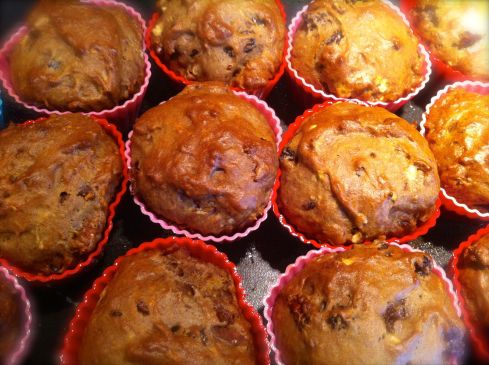
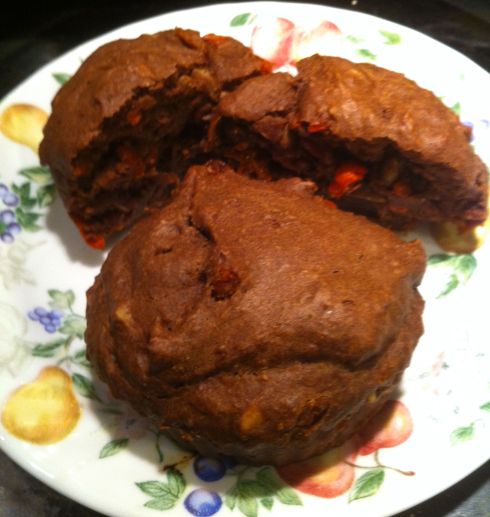
Felt like using my big muffin cups today. Here are the Choc. Goji Sesame muffins right out of the oven.

Felt like using my big muffin cups today. Here are the Choc. Goji Sesame muffins right out of the oven.

INGREDIENTS:

1 C dehydrated Goji Berries

2 Tablespoons Hot Water

2 C White Whole Wheat Flour

1/2 C Sugar (Vegan)

1 Tablespoon Baking Powder

1 Teaspoon Salt

4 Tablespoons Cocoa Powder

3 Tablespoons Wheat Germ

1/2 C Sunflower Seeds

1/2 C Vegetable Oil

1 1/2 C Coconut Milk

1 teaspoon Vanilla Extract


IMG_7975


DIRECTIONS:

1. Preheat the oven 350 degrees. Prep 8 large muffin cups (or 12 regular muffin cups) with cooking spray.

2. in a small bowl place the dehydrated Goji Berries and the Hot Water and let soak.

3. Mix the Flour, Sugar, Baking Powder, Salt, Cocoa Powder, Wheat Germ and Sunflower Seeds in a large bowl.

4. In a large measuring cup combine the Vegetable Oil, Coconut MIlk and Vanilla Extract.

5. Combine the liquid and the dry and mix until well incorporated.

6. Drain the Goji Berries and add to the batter.

7. Divide evenly into the muffin cups and bake for 20 to  30 minutes until muffins pass the toothpick test.

Let cool 5 minutes before enjoying.


No one is around to taste test so you’ll have to take my word for it… these are good. You get the crunch from the sesame and there is a nice brightness from the goji. I like ’em.


IMG_7977 b


Enhanced by Zemanta

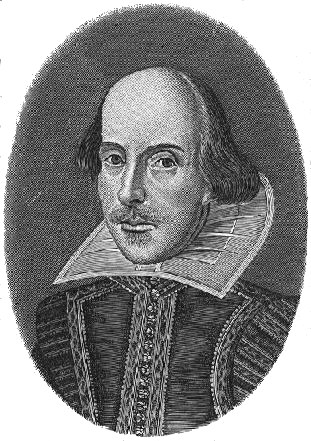
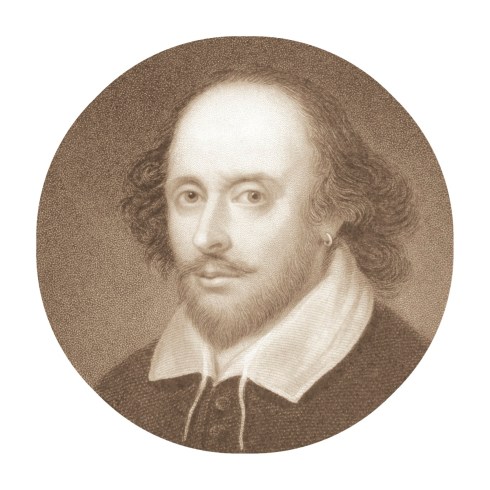
Happy 450th Birthday Big Guy! (William Shakespeare 4.23.14)

pictures-william-shakespeare-5

A quick post to wish William Shakespeare a Happy 450th birthday.

Raise a glass to the Bard tonight and, perhaps read a sonnet in his honor.


William Shakespeare was born on this day in Stratford-upon-Avon, in 1564. Today is the 450th anniversary of his birth

Although no official records of birth exist, the Holy Trinity Church in Stratford-upon-Avon has his baptism date listed as April 26, 1564, and the 23rd is generally agreed to be his birth date.  He was the third of eight children born to John Shakespeare and Mary Arden Shakespeare.

William learned Latin, Greek and the Classics in grammar school, but never attended university.

At 18 he married Anne Hathaway (she was 8 years his senior and pregnant with their daughter Susanna). Two years later the couple had twins, Hamnet and Judith.

By 1592 he was in London acting and…


By 1594, he was not only acting and writing for the Lord Chamberlain’s Men (called the King’s Men after the ascension of James I in 1603), but was a managing partner in the operation as well. With Will Kempe, a master comedian, and Richard Burbage, a leading tragic actor of the day, the Lord Chamberlain’s Men became a favorite London troupe, patronized by royalty and made popular by the theatre-going public. … He had plays published and sold in octavo editions, or “penny-copies” to the more literate of his audiences. Never before had a playwright enjoyed sufficient acclaim to see his works published and sold as popular literature in the midst of his career. [Shakespeare Resource Center]


He retired back to Stratford-upon-Avon in 1610 and lived the largest house in town. He died at home on his 52nd birthday (although the day of his death is also not officially known.) He was buried on April 25, 1616.

william_shakespeare2


Here are Shakespeare’s Plays: [Courtesy Shakespeare On-Line]

Tragedies

 Antony and Cleopatra (1607-1608)
The story of Mark Antony, Roman military leader and triumvir, who is madly in love with Cleopatra, Queen of Egypt.
Earliest known text: First Folio (1623).

 Coriolanus (1607-1608)
The last of Shakespeare’s great political tragedies, chronicling the life of the mighty warrior Caius Marcius Coriolanus.
Earliest known text: First Folio (1623).

 Hamlet (1600-1601)
Since its first recorded production, Hamlet has engrossed playgoers, thrilled readers, and challenged actors more so than any other play in the Western canon. No other single work of fiction has produced more commonly used expressions.
Earliest known text: Quarto (1603).

 Julius Caesar (1599-1600)
Although there were earlier Elizabethan plays on the subject of Julius Caesar and his turbulent rule, Shakespeare’s penetrating study of political life in ancient Rome is the only version to recount the demise of Brutus and the other conspirators.
Earliest known text: First Folio (1623).

 King Lear (1605-1606)
The story of King Lear, an aging monarch who decides to divide his kingdom amongst his three daughters, according to which one recites the best declaration of love.
Earliest known text: Quarto (1608).

 Macbeth (1605-1606)
Macbeth is one of Shakespeare’s most stimulating and popular dramas. Renaissance records of Shakespeare’s plays in performance are scarce, but a detailed account of an original production of Macbeth has survived, thanks to Dr. Simon Forman.
Earliest known text: First Folio (1623).

 Othello (1604-1605)
Othello, a valiant Moorish general in the service of Venice, falls prey to the devious schemes of his false friend, Iago.
Earliest known text: Quarto (1622).

 Romeo and Juliet (1594-1595)
Celebrated for the radiance of its lyric poetry, Romeo and Juliet was tremendously popular from its first performance. The sweet whispers shared by young Tudor lovers throughout the realm were often referred to as “naught but pure Romeo and Juliet.”
Earliest known text: Quarto (1597).

 Timon of Athens (1607-1608)
Written late in Shakespeare’s career, Timon of Athens is criticized as an underdeveloped tragedy, likely co-written by George Wilkins or Cyril Tourneur. Read the play and see if you agree.
Earliest known text: First Folio (1623).

 Titus Andronicus (1593-1594)
A sordid tale of revenge and political turmoil, overflowing with bloodshed and unthinkable brutality. The play was not printed with Shakespeare credited as author during his lifetime, and critics are divided between whether it is the product of another dramatist or simply Shakespeare’s first attempt at the genre.
Earliest known text: Quarto (1594).
william-shakespeare

Histories

 Henry IV, Part I (1597-1598)
One of Shakespeare’s most popular plays, featuring the opportunistic miscreant, Sir John Falstaff.
Earliest known text: Quarto (1598).

 Henry IV, Part II (1597-1598)
This is the third play in the second tetralogy of history plays, along with Richard II, Henry IV, Part 1, and Henry V.
Earliest known text: Quarto (1600).

 Henry V (1598-1599)
Henry V is the last in the second tetralogy sequence. King Henry is considered Shakespeare’s ideal monarch.
Earliest known text: Quarto (1600).

 Henry VI, Part I (1591-1592)
The first in Shakespeare’s trilogy about the War of the Roses between the houses of Lancaster and York.
Earliest known text: First Folio (1623).

 Henry VI, Part II (1590-1591)
Part two of Shakespeare’s chronicle play. Based on Hall’s work, the play contains some historical inaccuracies.
Earliest known text: Quarto (1594).

 Henry VI, Part III (1590-1591)
Part three begins in medias res, with the duke of Suffolk dead and the duke of York being named Henry VI’s heir.
Earliest known text: Quarto (1595).

 Henry VIII (1612-1613)
Many believe Henry VIII to be Shakespeare’s last play, but others firmly believe that he had little, if anything, to do with its creation.
Earliest known text: First Folio (1623).

 King John (1596-1597)
In the shadow of Shakespeare’s second tetralogy of history plays lies the neglected masterpiece, King John. Although seldom read or performed today, King John was once one of Shakespeare’s most popular histories, praised for its poetic brilliance.
Earliest known text: First Folio (1623).

 Richard II (1595-1596)
More so than Shakespeare’s earlier history plays, Richard II is notable for its well-rounded characters.
Earliest known text: Quarto (1597).

 Richard III (1592-1593)  The devious machinations of the deformed villain, Richard, duke of Gloucester, made this play an Elizabethan favorite.
Earliest known text: Quarto (1597).

shakespeare

Comedies

 All’s Well That Ends Well (1602-1603)
In 1767, a scholar named Richard Farmer concluded that this play is really the revision of Shakespeare’s missing Love’s Labour’s Won, which was likely written around 1592. It is considered a problem play, due primarily to the character Helena and her ambiguous nature. Is she a virtuous lady or a crafty temptress?
Earliest known text: First Folio (1623).

 As You Like It (1599-1600)
As You Like It is considered by many to be one of Shakespeare’s greatest comedies, and the heroine, Rosalind, is praised as one of his most inspiring characters.
Earliest known text: First Folio (1623).

 The Comedy of Errors (1592-1593)
This is Shakespeare’s shortest play, which he based on Menaechmi by Plautus.
Earliest known text: First Folio (1623).

 Cymbeline (1609-1610)
This play, modeled after Boccaccio’s Decameron, is often classified as a romance. It features the beautiful Imogen, considered by many to be Shakespeare’s most admirable female character.
Earliest known text: First Folio (1623).

 Love’s Labour’s Lost (1594-1595)
Love’s Labour’s Lost is a play of witty banter and little plot, written during the early part of Shakespeare’s literary career, when his focus was on fancy conceits and the playful nature of love.
Earliest known text: Quarto (1598).

 Measure for Measure (1604-1605)
Considered a “dark” comedy, Measure for Measure was inspired by Cinthio’s Epitia and Whetstone’s Promos and Cassandra.
Earliest known text: First Folio (1623).

 The Merchant of Venice (1596-1597)
The character of Shylock has raised a debate over whether the play should be condemned as anti-Semitic, and this controversy has overshadowed many other aspects of the play.
Earliest known text: Quarto (1600).

 The Merry Wives of Windsor (1600-1601)
The Merry Wives is unique amongst Shakespeare’s plays because it is set in Shakespeare’s England. It features the Bard’s beloved character, Falstaff.
Earliest known text: Quarto (1602).

 A Midsummer Night’s Dream (1595-1596)
A magical exploration of the mysteries of love, and one of Shakespeare’s best-known comedies.
Earliest known text: Quarto (1600).

 Much Ado About Nothing (1598-1599)
The story of two very different sets of lovers, Beatrice and Benedick and Claudio and Hero. The witty banter between Beatrice and Benedick is the highlight of the play.
Earliest known text: Quarto (1600).

 Pericles, Prince of Tyre (1608-1609)
Portions of Pericles are ripe with imagery and symbolism but the first three acts and scenes v and vi (the notorious brothel scenes) of Act IV are considered inadequate and likely the work of two other dramatists. The play was not included in the First Folio of 1623. In Shakespeare’s sources, Pericles is named Apollonius.
Earliest known text: Quarto (1609).

 The Taming of the Shrew (1593-1594)
The Taming of the Shrew revolves around the troubled relationship between Katharina and her suitor, Petruchio, who is determined to mold Katharina into a suitable wife.
Earliest known text: First Folio (1623).

 The Tempest (1611-1612)
Hailed as a stunning climax to the career of England’s favorite dramatist, The Tempest is a play praising the glories of reconciliation and forgiveness. Some believe that Prospero’s final speeches signify Shakespeare’s personal adieu from the stage.
Earliest known text: First Folio (1623).

 Troilus and Cressida (1601-1602)
Troilus and Cressida is difficult to categorize because it lacks elements vital to both comedies and tragedies. But, for now, it is classified as a comedy.
Earliest known text: Quarto (1609).

 Twelfth Night (1599-1600)
Shakespeare loved to use the device of mistaken identity, and nowhere does he use this convention more skillfully than in Twelfth Night.
Earliest known text: First Folio (1623).

 Two Gentlemen of Verona (1594-1595)
The tale of two friends who travel to Milan and learn about the chaotic world of courting.
Earliest known text: First Folio (1623).

 The Winter’s Tale (1610-1611)
The Winter’s Tale is considered a romantic comedy, but tragic elements are woven throughout the play. We have a first-hand account of a production of the play at the Globe in 1611. It is one of Shakespeare’s final plays.
Earliest known text: First Folio (1623).
ShakespeareCircle

For previous ritaLOVEStoWRITE.com Shakespeare posts click

Here for Insults

More Insults

Or just go to the search field on the right and type in Shakespeare (I’ve got a lot of Shakespeare on here.)

Enhanced by Zemanta

Muffin “Monday” Chia Pomegranate Almond (Vegan)

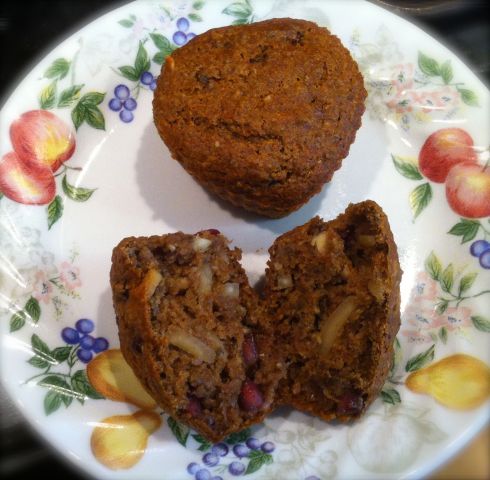
The beauty of chai in and out.

The beauty of Chia in and out.


INGREDIENTS:

  • 1 1/4 cup Almond Milk
  • 1 tablespoon Apple Cider Vinegar
  • 1 1/3 cups Whole Wheat Flour
  • 1/2 teaspoon Baking Soda
  • 1/2 teaspoon Baking Powder
  • 1 tablespoon cornstarch
  • 1/2 teaspoon salt
  • 3/4 teaspoon ground cardamom
  • 3/4 teaspoon ground cinnamon
  • 1/4 teaspoon Ground ginger
  • 1/8 teaspoon Ground Nutmeg
  • 1/3 cup Chia Seeds
  • 3/4 cup Sugar
  • 1/4 cup Applesauce
  • 2/3 cup Pomegranates
  • 2/3 cup Slivered Almonds
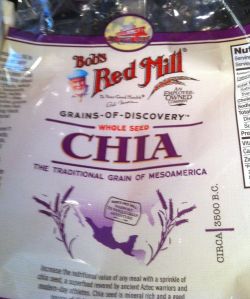
I picked up my package of Chia seeds at the Red MIll display of my local grocery store. The fresh pomegranates were in the produce aisle at Trader Joe's.

I picked up my package of Chia seeds at the Red MIll display of my local grocery store. The fresh pomegranates were in the produce aisle at Trader Joe’s.

DIRECTIONS:

1. Preheat oven to 350 degrees. Prep 12 muffin cups with baking spray.

2. Put Almond Milk into the measuring cup and add the Apple Cider Vinegar. Let sit for 5 minutes.

3. In a medium bowl mix together the Flour, Baking Soda, Baking Powder, Cornstarch, Salt, Cardamom, Cinnamon, Ginger, Nutmeg, Chia Seeds, and Sugar.

4. Add Applesauce to the Almond Milk and stir.

5. Add the wet to the dry and mix until incorporated.

6. Fold in the Pomegranates and Almonds.

7. Divide the batter evenly into the muffin cups and bake for 25 to 30 minutes until muffins pass the tooth pick test. Let stand for 10 minutes before transferring to a wire rack.

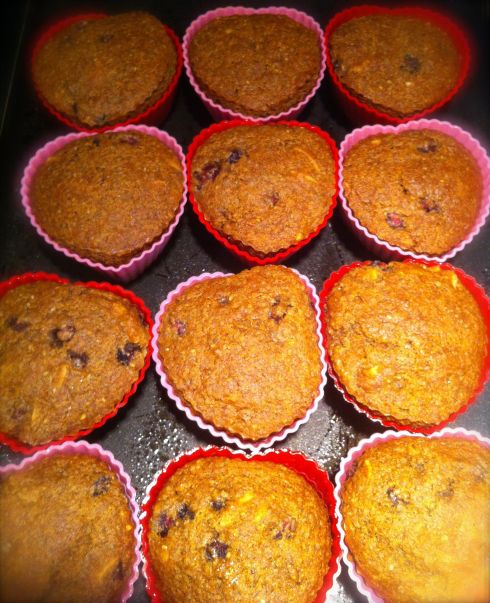
The muffins ready to go in the oven.

The muffins ready to go in the oven.


These muffins a super flavorful and yummy. I loved the pop of the Pomegranate and the crunch of the Chia Seeds and Almond. The spices definitely give these muffins the taste of a warm mug of Chia Tea on a cold winter morning. Taster Kathy thought they were delicious. She gave them thumbs up for being unusual and added that she loved them. (Me too!)


Golden perfection, the muffins fresh from the oven.

I ❤ the golden perfection of Chia Pomegranate Almond muffins fresh from the oven.

Enhanced by Zemanta

Sean Bean 4.17.14

[Image courtesy jccastses.com]

[Image courtesy jccasses.com]

“Listen to people and treat people as you find them. There’s an inherent goodness in most people. Don’t pre-judge people – that was me Mam’s advice anyway.” — Sean Bean

“Winter is Coming”

Shaun Mark Bean was born in Handsworth, Sheffield, England in 1959. He is 55 years old.

His father owned a welding firm. After high school Bean learned the trade at  Rotherham College of Arts and Technology and worked at the firm while taking occasional courses at college. He came across and art course that ignited his interest.  Then he took a drama course and was hooked.

In 1981 He started at London’s Royal Academy of Dramatic Art on scholarship. He graduated from the seven-term course in 1983 and began to work in the theatre. By 1986 he was in the Royal Shakespeare Company and had appeared in his first film, Caravaggio. Over the next decade he built his CV with roles on stage, on film and on British TV. (It was about at this time that he changed his first name to the Irish spelling “Sean”.)

Then came Richard Sharpe, Bernard Cornwall’s rogue who brought Bean to world-wide attention. He played the character in 16 episodes as the riffle man crossed Europe and Asia in his iconic (and sometimes tattered) red coat and boots.

Bean is equally comfortable in the role of hero or villain and he usually plays something in between. Alas he often ends up dead at the end of a movie.  (Besides Sharpe I’m not sure that I can think of a Bean role that DIDN’T end in a death scene). There’s even a YouTube video devoted to Sean Bean’s Death  Scenes. He can also slip easily from classical or modern roles. Like wise fantasy or realistic. Give him an oversized shield or sword and he’s in a sci-fi epic, give him a flannel shirt and he disappears into the role of Kyle, a loving, supportive husband in North Country.  (Oh! he doesn’t die in North  Country! Yeah for him!)
Besides Sharpe,  you’ll know him as Boromir from Peter Jackson’s epic Lord of the Rings trilogy and more recently as Ned Stark in Game of Thrones.  (And of course you’ll remember that I featured him last year in my first month-long Secondary Character Saturday series for his roles as Boromir, Stark, Odysseus, &  Ian Howe.)

I think the Sean Bean role I’m most looking forward to is his take on Macbeth in the upcoming Enemy of Man (which is in post production.)

[Image courtesy www.poptower.com]

[Image courtesy www.poptower.com]