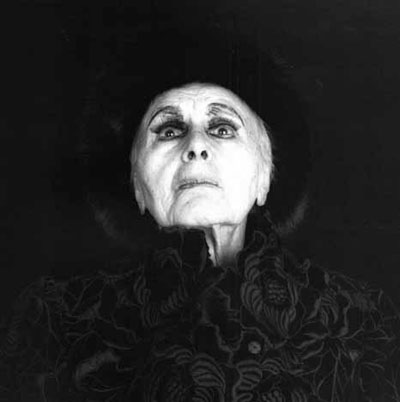
“I never feel age…If you have creative work, you don’t have age or time.”
–Louise Nevelson
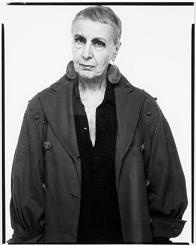
Leah Berliaswsky was born on this day in Perislav, Russia in 1899. This is the 113th anniversary of her birth.
Her family lived in Czarist Russia until 1905 when they emigrated to Rockland, Maine in the United States. Her father worked as a woodcutter, owned a junkyard, a lumberyard and became a realtor.
When Leah saw a bust of Joan of Arc at the local library she knew she wanted to become an artist. She started to take art lessons, and experimented in drawing & watercolors.
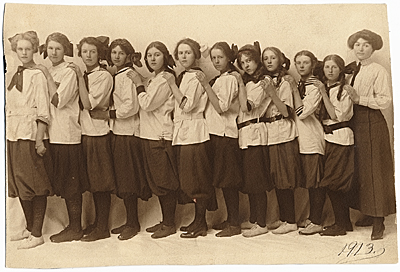
Nevelson in a 1913 class picture. (She is fourth from the left) [Image is courtesy Wikimedia Commons.]
Upon graduating high school she began to work as a stenographer in New York. She met Charles Nevelson of the Nevelson Brothers shipping company. The two married in 1920. She began to study art in earnest adding singing, acting and dancing to the mix. In 1922 she gave birth to Myron (Mike) Nevelson. Two years later the family moved to Mount Vernon, NY. Louise felt stifled by the small town environment and role she was expected to play as dutiful wife. She longed for the artistic life she knew in New York City.
In 1931 she left both her husband and her son and took a trip to Europe. She studied with cubist Hans Hofmann in Munich, but as the NAZIs began their stranglehold on the city she left for Italy and France. In 1932 she came back to the United States, where she continued to work with Hofmann (he was now teaching at the Art Students League) and she officially separated from her husband. In 1933 she worked with Diego Rivera on his Man at the Crossroads mural at Rockefeller Plaza. Shortly after that she took a sculpture class at the Education Alliance, and decided to focus on sculpture as her medium of choice.
At first she produced…
primarily cubist figure studies made from bronze, plaster and clay… It wasn’t until 1943 that the art-world got their first glimpse of what would become Nevelson’s signature style of assembling wood. [Abstract Artist.org]
In the 1940s she began to make pieces from reclaimed materials and scraps of wood.
Nevelson… crafted surreal, totemic monuments that served loosely as maps to the artist’s mind. … Nevelson also cultivated her extravagant personal style, which included long dresses and false eyelashes, to dovetail with her desire to express emotion through art. [The Art Story.org]
One of her most famous sculptures is Dawn’s Wedding Feast, a room size installation created in 1959 made of wood and white paint. The installation has four chapels, a bride, groom, wedding cake, various other pieces and hanging columns that represent the wedding guests. It was too big and too expensive for one buyer to purchase so Nevelson broke the installation into sixteen stand alone pieces.
Dawn’s Wedding Feast, 1959-60 [Image Courtesy
In her “Late Period” she abandoned “typical carpentry” and “Her process became purely additive, wherein she stacked and balanced objects before nailing together and painting them…” [The Art Story.org] She selected small scaled pieces that worked together to form a larger installation.
Black Zag Z — 1969 [Image courtesy: Abstract Artist.org]
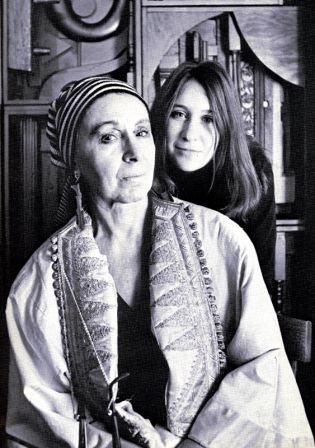
Nevelson and her granddaughter Neith in 1967. Photo by Ugo Mullas. [Image Courtesy Amazon.com]
By the time she died in on April 17,1988, Louise Nevelson was considered by many to be one of the most important American sculptors of the twentieth century and one of the world’s best-known woman artists. [Abstract Artist.org]
“I don’t know half of you half as well as I should like; and I like less than half of you, half as well as you deserve.”
— Bilbo Baggins
“I will take the Ring…though I do not know the way.”
–Frodo Baggins
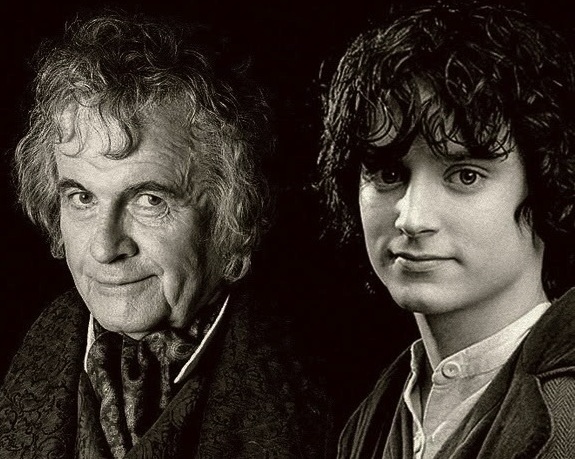
Bilbo and Frodo (from the Peter Jackson LotR movie) [Image courtesy: Mechtild’s]
Bilbo and Frodo Baggins were both born on this day in The Shire, Middle Earth. Bilbo was born in 2890 T.A., Frodo was born in 2968 T.A..
[Bilbo and Frodo Baggins are fictional characters in JRR Tolkien’s Middle Earth fantasies The Hobbit and The Lord of the Rings. The T.A. after the date stands for Third Age]
As a child Bilbo…
“loved to listen to Gandalf‘s stories about dragons, goblins and princesses and was impressed by the Wizard’s fireworks. After the death of his parents… he inherited Bag End. In the eyes of his neighbors, he originally seemed just like his father – a solid, sensible, unadventurous and respectable hobbit. But when becoming older he started to become “strange”… [Tolkien Gateway]
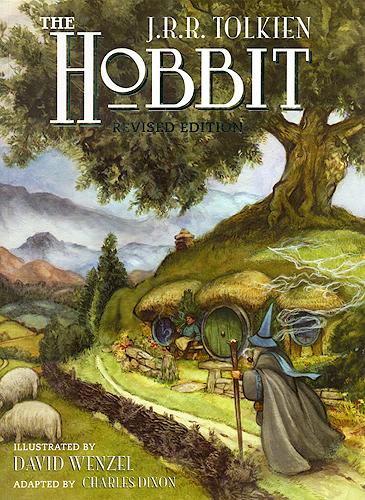
Cover art for The Hobbit, revised edition [Image courtesy: Amazon.com]
But, when we meet him, at the beginning of The Hobbit, he is middle-aged and living a comfortable life, in his comfortable Hobbit hole (Bag End). Then in walks Gandalf and a bunch of dwarfs and all sorts of adventure, danger and even a little fun ensue. By the end of the book he has out smarted trolls, escaped dragons and found a magic ring that will change the destiny of Middle Earth.
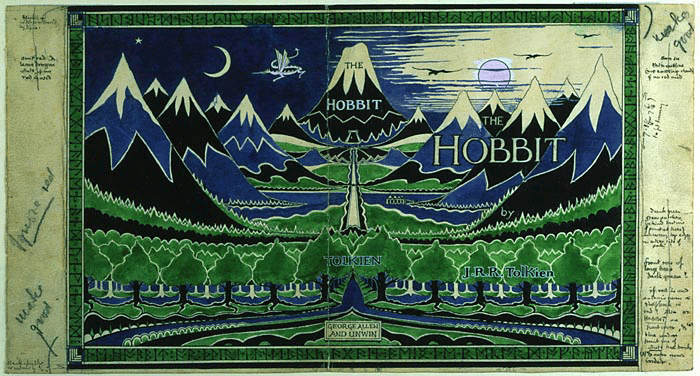
Original cover design for The Hobbit. [ Image courtesy: TheOneRing.net]
His nephew Frodo was born to respectable parents, Drogo and Primula Baggins. Sadly they died in a boating accident and Frodo was sent to live with Primula’s relatives the Brandybucks. Frodo earned a reputation as a mischief-maker and eventually was taken in by his uncle Bilbo.
Bilbo taught Frodo to read both Hobbit (English?) and Elvish and filled his head with tales of adventure.
At the beginning of the Fellowship of the Ring Bilbo and Frodo celebrate their birthdays with a lavish party. For Bilbo it is his eleventy-first (111th). Frodo is 33. The year is 3001 T.A.. Bilbo surprises Frodo and the guest by disappearing at the end of the party. He had used his magic ring to do so. He leaves the Shire and travels to Rivendell to write his memoir, There and Back Again (aka The Hobbit) and Translations from the Elvish (which became the basis of The Silmarillion).
The Fellowship of the Ring, 1st Edition 1st Impression, 1954, with original dust jacket and original cloth bindings. Offered at the Tolkien Library Store for $6,500. [Image courtesy: Tolkien Library Store]
Frodo inherited Bag End and the Ring. Gandalf advised Frodo not to use the ring but to keep it secret. The wizard then went off to discover more about the ring. The young Hobbit heeded his advice and lived respectably for 17 years. Until one night Gandalf returned to tell him the ring is the ONE RING, a thousand year old, evil ring of power that belonged to the dark lord Sauron. Sauron is now looking for the Ring and it must be destroyed.
So Frodo, along with his relatives Merry and Pippin and his faithful gardener Sam head east. Later a human Ranger named Strider (aka Aragorn) joins the group. And, after some terrible encounters with Sauron’s nine Black Riders the little group makes it to Rivendell, a stronghold of Elves.
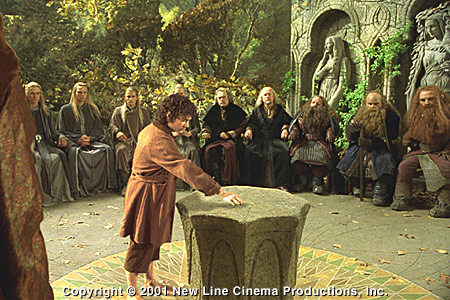
Council of Elrond (from the Peter Jackson LotR movie)[Image courtesy New Line Cinema]
There they meet up with Bilbo. The Council of Elrond is called to discuss what should be done with the ring. After Frodo bravely volunteers to throw the Ring into the fires of Mount Doom a fellowship of nine is formed. Frodo, Sam, Merry , Pippin, Aragorn, Gandalf, Legolas (an Elf) and Gimli (a Dwarf) set out to fight The War of the Ring.
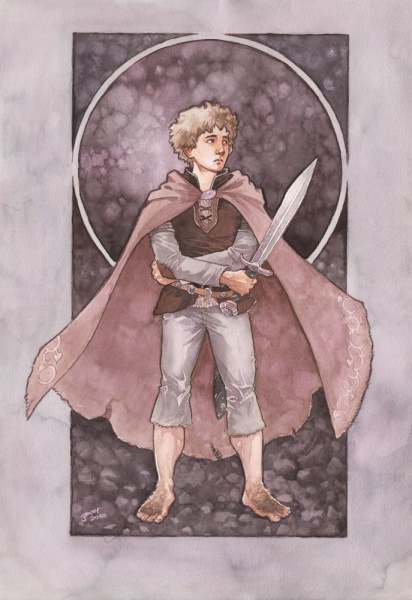
Artist Jenny Dolfen’s vision for Frodo. Go see more of Jenny’s beautiful art work at www.goldseven.de. [This work is copyrighted and owned by Jenny Dolfen. However, permission has kindly been granted, by the copyright holder, to use this file on this blog post.]
[I won’t ruin it by telling you the ending. Go read the books == or see the Peter Jackson trilogy and then re-read the books. Then come back here and discuss who is better hero: Bilbo, Frodo, Aragorn or Sam — or Gollum!]
Bilbo’s Last Song:
Day is ended, dim my eyes,
but journey long before me lies. Farewell, friends! I hear the call. The ship’s beside the stony wall. Foam is white and waves are grey; beyond the sunset leads my way. Foam is salt, the wind is free; I hear the rising of the Sea.
Farewell, friends! The sails are set, the wind is east, the moorings fret. Shadows long before me lie, beneath the ever-bending sky, but islands lie behind the Sun that I shall raise ere all is done; lands there are to west of West, where night is quiet and sleep is rest.
Guided by the Lonely Star, beyond the utmost harbour-bar, I’ll find the heavens fair and free, and beaches of the Starlit Sea. Ship, my ship! I seek the West, and fields and mountains ever blest. Farewell to Middle-earth at last. I see the Star above my mast!
“I still don’t like this ship . . . I have a queer feeling about it.”
–Henry Tingle Wilde
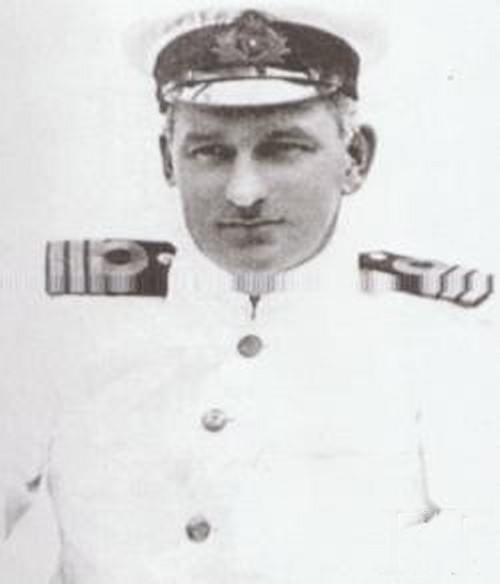
Henry Tingle Wilde, Jr was the Chief Officer of the Titanic. [Image courtesy: Wikipedia]
Henry Tingle Wilde was born on this day in Walton, Liverpool, England in 1872. Today is the 140th anniversary of his birth.
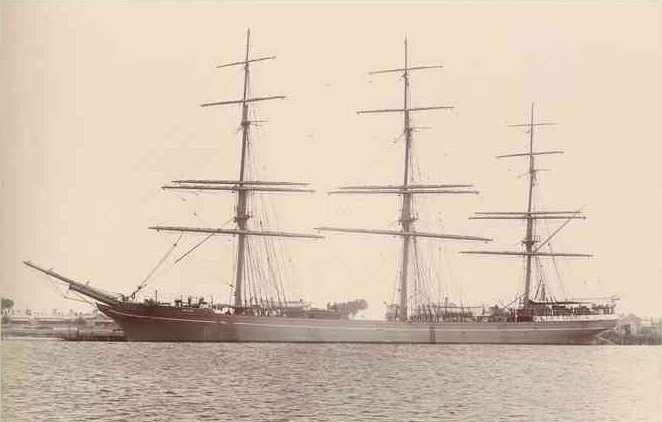
Wilde was drawn to the sea at an early age. At 17 he left his home for an apprenticeship on the iron sailing ship the Greystoke Castle — a three mast, square sail vessel– as a third mate. He served on the Greystoke’s sister ship the Hornby Castle, also as third mate. He was posted to the steamships the S.S. Brunswick and the S.S. Europa before joining the White Star Line in 1897. He was a Lieutenant in the Royal Naval Reserve, and held ordinary and extra masters certificates.
The Hornby Castle, a sailing ship that Wilde trained on. He worked on both sail and steam vessels. [Image Courtesy Wreck Site]
Starting in 1905 he transferred to the White Star passenger line, working mostly on the Liverpool to New York, and Australian routes. He rose in the ranks aboard The Arabic, The Covic, The Cufic, The Tauric, the Celtic, the Medic, The Delphic, the Cymric and The Olympic until he reached the rank of Chief Officer under Captain Edward John Smith on The Olympic.
Smith transferred to the White Star’s newest vessel, The Titanic as her Captain. Wilde was due to ship out with The Olympicbut White Star officials sent word for him to stay in Southampton and await further orders. At 39 and with years of experience he was certainly seasoned enough to get his own ship. But Captain Smith wanted to add experience to his senior staff and he requested that Wilde join the crew as Chief Officer. Wilde debated the move. His family urged him to take the position, but, as he wrote in a letter to his sister…
“I still don’t like this ship…I have a queer feeling about it…” [Henry Tingle Wilde, Chief Officer by Christine Ehren, Titanic-lore.info]
He officially joined The Titanic crew on April 9th, the day before she sailed. The post was for the great ship’s maiden voyage only. And it meant that the other senior officers would be shifted down in rank. William Murdoch became first officer, Charles Lightoller became second officer. The man originally slated to be second officer, David Blair, did not make the journey. The junior officers retained their positions.
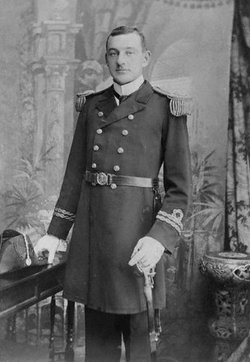
Henry Tingle Wilde in his summer white uniform, that he wore on the Olympia. [Image courtesy: Encyclopedia Titanica]
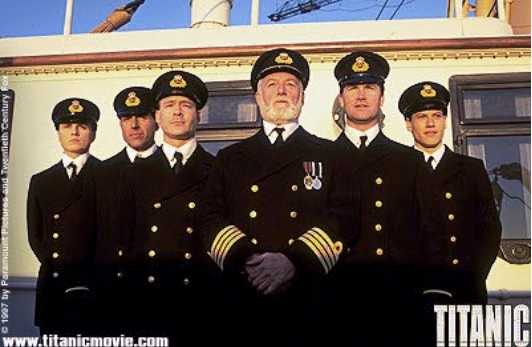
Publicity still from the Movie Titanic. Mark Lindsay Chapman, third from the left, plays Chief Officer Henry Tingle. He stands just to the left of Bernard Hill who is playing Captain Smith. [Image courtesy: William Murdoch.org]
The Titanicleft Southampton, England on April 10th, 1912 with stops at Cherbourg, France and Queenstown, Ireland before heading west across the Atlantic toward New York. Wilde had the 2-6 AM and the 2-6 PM shifts as “Officer of the Watch.” So he was not on the bridge when the ship hit an iceberg at 11:40 PM on April 14th.
Wilde was in charge of the loading the even-numbered lifeboats on the port side of the ship. (He also distributed firearms to the senior officers.) He adhered strictly to Captain Smith’s order to “put women and children in and lower away…” so the boats from that side of the ship only contained women, children and two crew members (to work the boats). When all the boats on his side of the ship were launched he went to starboard side of the ship. Some survivors recall seeing him attempting to release Boat A or B from the roof the Officers’ Quarters when the Titanic’s deck flooded.
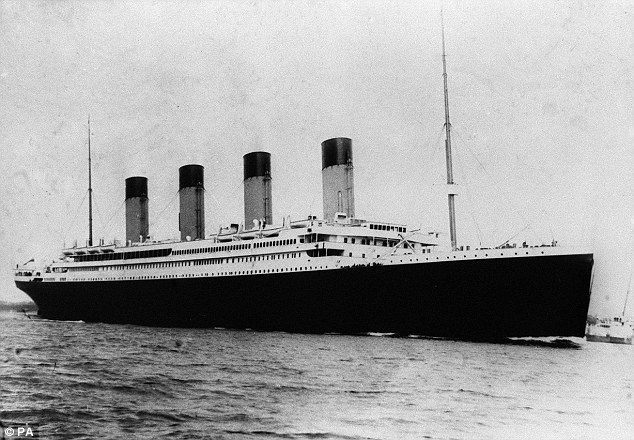
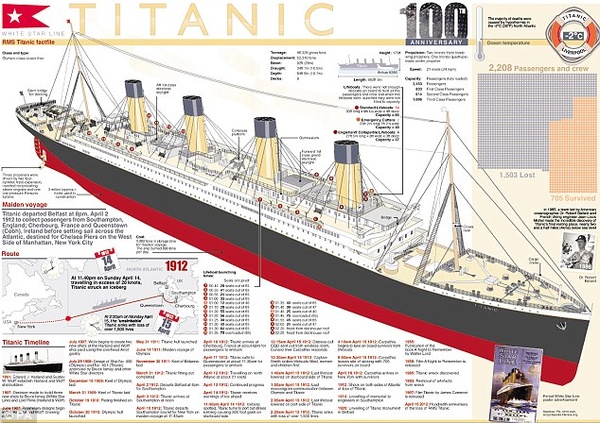
Schematic of Titanic. [Image courtesy: Mail Online]
Survivor George Rheims wrote in a letter dated just days after the sinking:
“While the last boat was leaving, I saw an officer with a revolver fire a shot and kill a man who was trying to climb into it. As there remained nothing else for him to, the officer told us, “Gentlemen, each man for himself. Good bye.” He gave a military salute and then fired a bullet into his head. That’s what I call a man!” [Henry Tingle Wilde, Chief Officer by Christine Ehren, Titanic-lore.info]
But it isn’t known if that officer was Wilde or First Officer Murdoch. It doesn’t matter. If he didn’t die of a self-inflicted gunshot wound he died a few minutes later in the freezing waters of the North Atlantic. His body was never found. He was 39 years old.
In 1998 the newspaper Liverpool Echo wrote about Wilde’s role on the Titanic as follows:
Liverpool’s forgotten hero, Chief Officer Henry Wilde… from Walton, flits through the enquiry evidence but witnesses have described how Wilde supervised the loading of the lifeboats and stopped 100 people rushing them by the sheer force of his personality….He is believed to have prevented a panic which would have led to even greater losses. [Henry Tingle Wilde, Chief Officer by Christine Ehren, Titanic-lore.info]
He was survived by four children (he had recently lost his wife and twin boys.)
——————————–
Thanks to J.G.Burnette at jgburdette.wordpress.com for suggesting Henry Wilde as the Thought of the Day Birthday Bio for today. J.G. is a big Titanic fan and was able to give me both the name and birthdate so I could start my research.–I hope I found some new nugget for your Titanic files! — IF YOU have some one you’d like to see profiled on Thought of the Day please let me know. Cheers, Rita
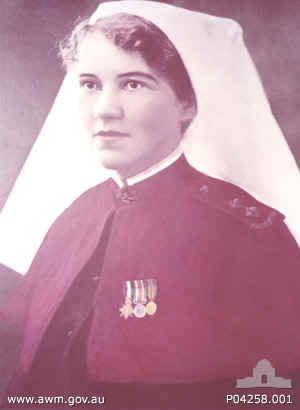
“Sister” Kenny [Image courtesy: Australian War Memorial; AWM.Gov.au]
Elizabeth Kenny was born on this day in Warialda, New South Wales, Australia in 1880. Today is the 132nd anniversary of her birth.
Because her father was an itinerant farmer the family moved often when Elizabeth was growing up. Her education was limited to home-schooling and a variety of small town primary schools. When she was 17 she fell off her horse and broke her wrist. Her father, Michael, took her to the town of Toowoomba to see Dr. Aeneas McDonnell. Kenny remained in Toowoomba to recover from the injury and grew fascinated with Dr. McDonnell’s medical books, especially those on anatomy, and his model skeleton. It started Kenny on her life long journey in medicine. She made her own model skeleton to study how muscles and bone worked together in the human body.
At 18 she became an unaccredited, unpaid bush nurse. She later (probably) volunteered at the maternity hospital at Guyra in New South Wales.
There is no official record of formal training or registration as a nurse. She probably learned by voluntary assistance at a small maternity hospital at Guyra, New South Wales. About 1910 Kenny was a self-appointed nurse, working from the family home at Nobby on the Darling Downs, riding on horseback to give her services, without pay, to any who called her. [Elizabeth Kenny, by Ross Patrick, Australian Dictionary of Biography]
Kenny opened St. Canice’s Cottage Hospital in Clifton. She kept in contact with Dr. McDonnell and would often telegraph him when a case stymied her.
In 1911 one such case presented itself. She contacted McDonnell about a new case that stymied her.. a young girl who was crippled, but not from a fall or external trauma. McDonnell replied that it was probably “It sounds like Infantile Paralysis. There’s no known treatment, so do the best you can.” [Sister Elizabeth Kenny. Australians Documentary Series. 1998. from Teachspace.org] Kenny used a common sense approach. She applied hot compresses to the little girl’s spasming muscles. Hot, heavy woolen blankets were applied that help loosen the muscles and relieve the pain. Then she stretched the little girls legs and strengthened the muscles. It worked. The pain abated, the girl (allegedly) asked “Please, I want them rags that well my leg.”
Of the twenty children in the district, the six that Kenny treated survived without complications. [Sister Elizabeth Kenny. Australians Documentary Series. 1998. from Teachspace.org]
With the outbreak of World War I Kenny, with a letter of recommendation from Dr. McDonnell, joined the Australian Medical Corps. She worked on hospital ships bringing the wounded home from Europe. She was received a shrapnel wound to the leg while at the front.
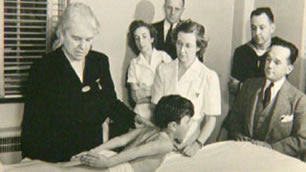
She patented her invention of a stretcher that immobilized shock patients during transport, the Sylvia Stretcher, and used the royalties open a clinic for polio patients in Townsville, Queensland. Here she treated long-term polio and cerebral palsy patients, tossing aside the braces and concentrating on hot baths, passive movements and foments.
Her “homespun” methods for polio treatment, though effective, were controversial as the accepted practice was to splint the affected limbs to keep them rigid. That way the stronger muscles wouldn’t pull on the weaker/paralyzed muscles and create deformities. Kenny thought that splinting the limbs would actually produce deformities and increase paralysis. She alternately dismissed, ridiculed or vilified by the medical establishment. Kenny soldiered on, buoyed by the support of parents who witnessed first hand the results her methods were having on their children. Kenny opened clinics in Brisbane and through out Queensland.
The controversy over her methods followed her to England and the US. Kenny worked in the Minneapolis General Hospital where…
Her methods became widely accepted. She began courses for doctors and physiotherapists from many parts of the world. The Sister Kenny Institute was built in Minneapolis in 1942 and other Kenny clinics were established. [Elizabeth Kenny, by Ross Patrick, Australian Dictionary of Biography]
Kenny in 1950. {Image courtesy: Wikipedia]
She developed Parkinson’s disease and retired to Toowoomba in 1951. Kenny died there of cerebrovascular disease on 30 November 1952.
Sister Kenny’s pioneering principles of muscle rehabilitation became the foundation of physical therapy. Today, Sister Kenny Rehabilitation Services is one of the premier rehabilitation centers in the country, known for its progressive and innovative vision. [Nurses for nurse everywhere.info]
“It’s always great to play a man who sets himself up to be punctured.”
–Jeremy Irons
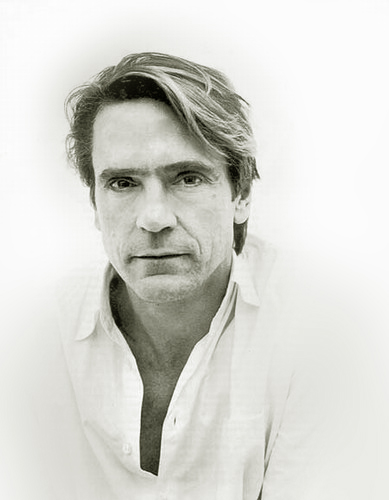
Jeremy John Irons was born on this day in Cowes on the Isle of Wight, England in 1948. He is 64 years old.
He grew up on the island, and didn’t have much connection with the professional performing arts. The family only ventured to the mainland once a year. But when he was an adolescent the family moved to Hertfordshire and, at 13, Jeremy was sent to the Sherborne School in Dorset. There he took part in a four-man school band called the Four Pillars of Wisdom. The group played for their mates on Sunday afternoons, with Jeremy on drums and harmonica (including stand out harmonica solos in “Moon River” and “Stairway to Heaven.” — because when you think of Stairway to Heaven you think ‘harmonica solo!’) He also performed comedy skits and was in the school’s production of My Fair Lady (he played Professor Higgins.)
Irons trained at the Bristol Old Vic Theatre School. There he “gained much experience working in everything from Shakespeare to contemporary dramas.” [IMDB biography] He supported himself with a number of odd jobs and by busking on the streets of Bristol.
In 1971 he moved to London and landed the role dual role of John the Baptist/Judas in Godspell at the Round House.
He did a lot of television work in the 1970’s including: The Pallisers; Love of Lydia; Churchill’s People; Langrishe, Go Down; The Voysey Inheritance; and as Franz Liszt in Notorious Woman,
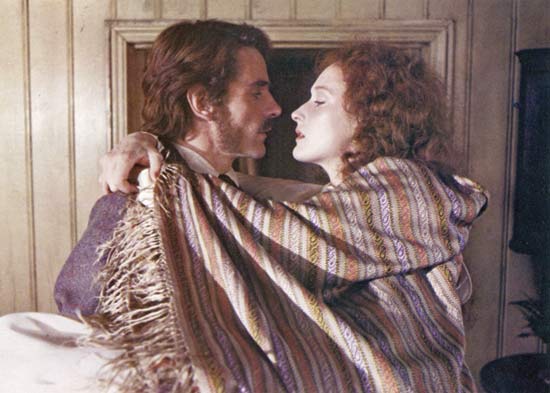
His film debut was in the 1980 film Nijinsky,but his break out role was opposite Meryl Streep in the French Lieutenant’s Woman. The film, based on the John Fowles novel, follows two parallel love stories — one between Victorian palaeontologist Charles and “the French Lieutenant’s Whore” Sarah; the other between Mike and Anna, the actors who play the Victorian couple in a movie they are making on the novel. Irons was nominated for a BAFTA Award for best Actor (Streep won one for Best Actress.)
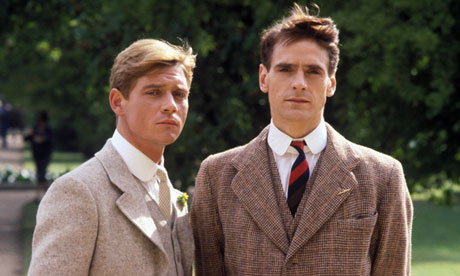
Back on television he played another Charles, Charles Ryder, opposite Anthony Andrew’s Sebastian Flyte in the hugely successful Brideshead Revisited based on the Evelyn Waugh novel. Irons got another BAFTA Nomination (Andrews won), both men were nominated for Emmy Awards.
Anthony Andrews and Jeremy Irons in Brideshead Revisited (Image Courtesy The Guardian.)
He followed those two high profile projects with an independent film about Polish guest workers in London, Moonlighting.
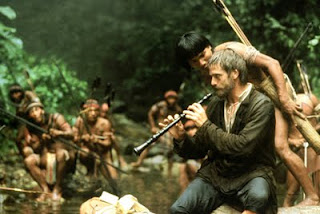
Irons played Father Gabriel in Roland Joffe’s The Mission. Father Gabriel is a Spanish Missionary who is sent into the jungles of South America. He builds a sanctuary for the Guarani Indians. Robert DeNiro, a reformed slave hunter joins him at the mission. Together they must defend both the mission and the people who live there from the encroaching Portuguese It is all set to Ennio Morricone’s beautiful music.
Father Gabriel’s (Irons) first encounter with the Guarani Indians. [Image courtesy: Mostly Movies]
David Cronenberg’s psychological thriller Dead Ringerssaw Iron’s playing identical twin gynecologist. The movie brought the word “co-dependant” to a whole new level. Iron’s is cool (maybe even icy) and creepy in the movie. (It is a total departure from his Father Gabriel. So if you are planning a Jeremy fest, don’t book these two back to back.)
Reversal of Fortune finally brought Irons the Gold. He won both an Academy Award and a Golden Globe Award for his portrayal of Claus von Bulow.
Irons took on the role of Rene Gallimard when Cronenberg brought M. Butterfly from stage to screen.
You might recognize his growling voice from Disney’s the Lion King. He played Simba’s uncle Scar.
When Bruce Willis brought his Die Hardfranchise to New York for Die Hard with a Vengeance, Irons played his foil, psychopath Simon Gruber.
He pulled on some tights when he took on Aramis in The Man in the Iron Mask; Antonio, to Al Pacino’s Shylock, in Michael Radford’s 2004 movie of Shakepeare’s The Merchant of Venice; suited up as Tiberias, a Knight Templar, in Kingdom of Heaven; and starred in the tv mini-series Elizabeth I, the Virgin Queen, as the Earl of Leicester/Lord Dudley, opposite Helen Mirren’s Bess.
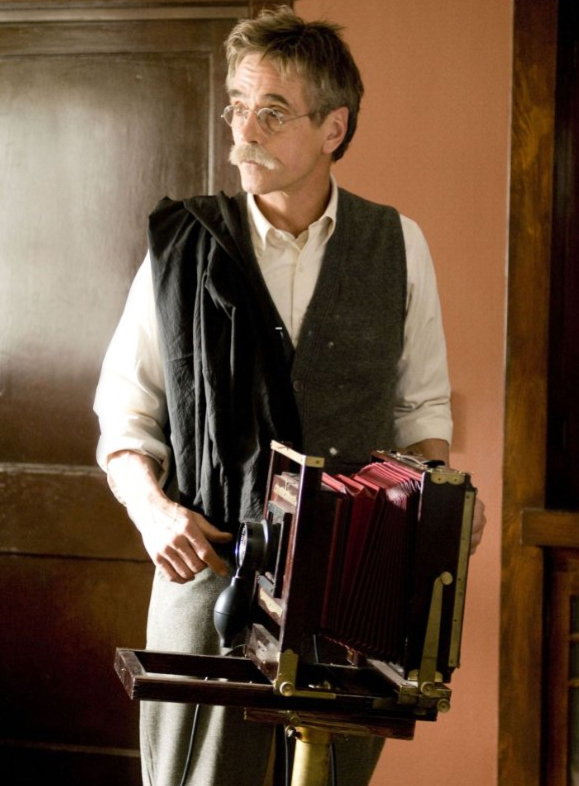
He played photographer Alfred Stieglitz in the made for TV biopic Georgia O’Keefe in 2009.
Still from Georgia O’Keefe. (Image Courtesy: IMDB)
Heck, he’s even voiced the part of Moe’s Bar Rag in the Simpsons!
Irons currently can be seen in Showtime’s sweeping TV mini series The Borgias, a crime drama set in 1492 Italy.
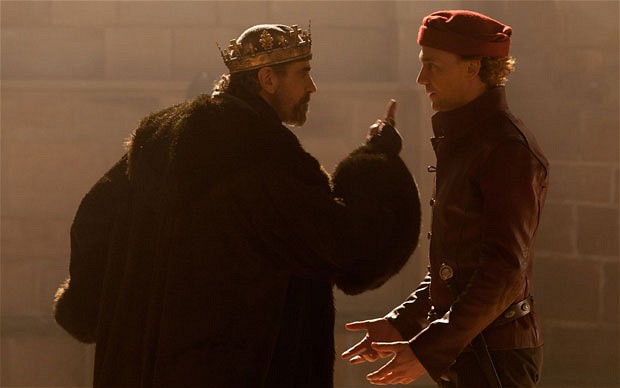
And he plays Henry IV in Shakespeare’s Henry IV, Part 1 & 2 in the BBC’s the Hallow Crown series.
Still from Henry IV, Part 1 with Irons and Tom Hiddleston as Prince Hal (Image Courtesy: The Telegraph)
Here’s Ennio Morricone’s BAFTA Award winning song Gabriel’s Oboe from the film The Mission. [The soundtrack holds a very special place in my heart because we used parts of it, including Gabriel’s Oboe at our wedding. I wrote the publisher to see if I could get the sheet music, but it wasn’t published yet. They contacted Mr. Morricone and they supplied us with a copy of the hand written piano score. How’s that for romantic? This was played on a pipe organ as I walked up the aisle with my dad. ]
“My world, your world, one world” collage. [copyright: ritaLOVEStoWRITE]
“Love one another as I have loved you.”
— Jesus
Jesus of Nazareth was born in Bethlehem on December 25th in the year O*. We’ll celebrate his 2012th birthday soon.
[So, you may be wondering why am I bumping up Jesus in the usual chronological birthday list of Thought of the Day and featuring Him today? I did it because I was looking for a good quote that reflected how I felt about current events, and this quote says it all. Let me explain…]
I’m dumb.
I must be.
Certainly I’m naive.
Absolutely I’m a fool.
Because… no matter how often I am presented with it…I just don’t understand hate.
This week has been a good one for hate and the haters. The bullies and the manipulators have been out in force. Frankly, people, I just don’t get it and I’m telling you to stop.
Please stop making (or rather manipulating**) movies so they are purposefully incendiary to an entire religion. While you are at it, stop sanctioning that movie in some misguided blessing from my God (as one Florida preacher did). Don’t speak for Jesus unless it is a direct quote. Jesus, as I recall, said “Love one another as I have loved you.” ONE ANOTHER — meaning everybody, not just the people who look, think, love, vote, or pray the way you do.
I’m a writer. (The word “write” is in the NAME of my BLOG). Obviously I believe in FREE SPEECH, but I also believe that Freedom of Speech comes with responsibility. You can’t yell “fire” in a crowded theatre and then, after people stampede out, shrug and say “Free Speech.” You can’t liable someone and evoke the right. And you shouldn’t knowingly spew hatred. Is it your free speech right to make any movie you want? Yes, but it is wrong, and you know it.
Hatred hurts. In this case it killed.
That brings me to the other side of this crisis, and the other side of the world. To those of you in Muslim countries and of the Muslim faith, PLEASE know that most of us in the U.S. are just as revolted by that movie as you are. In fact most of us didn’t know anything about it until the protest started in Egypt.
That movie in no way represents America.
But, it is also wrong that this stupid little movie is being used to insight violence through out the Middle East and in other Muslim countries. What happened in Libya was horribly wrong and senseless, and the only agenda it promoted is one of hate.
To my Muslim brothers and sisters I ask you to consider a more peaceful response.
I hope we can all dial back the rhetoric, the name calling, the stone throwing and resentment and redirect our efforts towards building peaceful relationships… large and small.
I know I’m not a genius, but I do know that hate begets nothing but hate, whereas a hand held out in peace can build a better world.
Peace be with you, my friends.
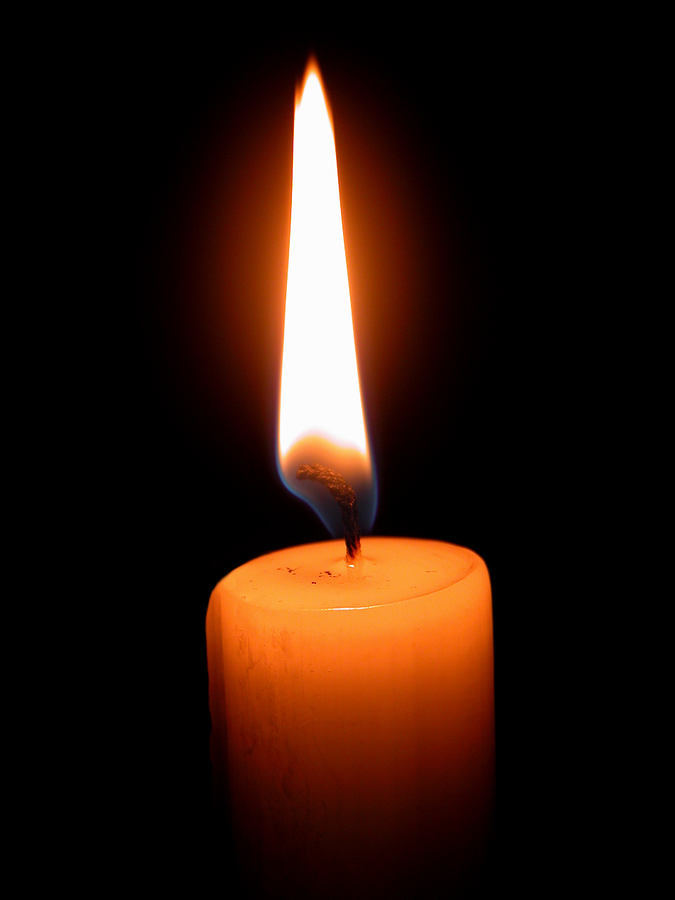
Holding a virtual candle, and saying a prayer for peace, love and understanding.
—————————————-
(*Jesus’ birth is either on year O 0r the year 6 or 4 BC depending on which scholar you read)
(**The actors and crew for that movie didn’t know that their work would be over dubbed to become an anti-Muslim film btw. They thought it was just a low budget sci-fi movie about a astroid falling to the desert.)
n”I only achieve about 60 per cent of what I’ve dreamed of. Perhaps that’s a good thing – if I did ever get the whole way with anything, I think I’d probably want to destroy it.”
— Baz Luhrmann
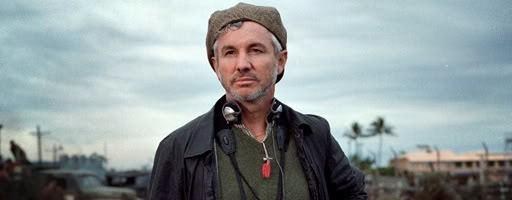
On the set of Australia [Image Courtesy: The Play List]
Mark Anthony Luhrmann was born on this day in Sydney, Australia in 1962. He is 50 years old.
His mother, Barbara, owned a dress shop. His father, Leonard, was a farmer and owned a gas station and movie theater in the small town of Herons Creek near where they lived. Barbara and Leonard competed in ballroom dance competitions and Barbara taught ballroom dance at a local studio.
“What kind of kid was I? …Extremely busy. My father was a bit mad, you see. He thought that we had to be the renaissance kids of Herons Creek. We had to learn commando training as well as photography, how to grow corn as well as how to play a musical instrument. We were up at 5 in the morning, and then we just went until we dropped. The town consisted of a gas station, a pig farm, a dress shop and a movie theatre – and we ran them all.” [Baz Luhrmann, as quoted on Baz the Great! fansite]
Growing up the Luhrmann kids helped run the various family businesses. In their free time they rode horses, learned to ballroom dance (of course), and made amateur movies. As a gas jockey at the service station Mark saw a stream of people pass through. He was invisible to them, and so was able to observe their stories unfiltered and unedited for the 5 minutes it took to fill up their tank. Later, after his parents divorced he eventually found himself in Sydney. Prior to the move he (and his brothers) had to keep their hair closely cropped in a buzz cut, but once in Sydney he was allowed grow it out. When he was teased that his new hair do made him look like a puppet fox on TV, Basil Bush, he embraced the taunting and officially changed his first name to Bazmark. In high school he acted in Henry IV, Part 1. And at 17 he got a role in the Judy Davis, Bryan Brown film The Winter of Our Dreams.
He worked with the Australian Opera to bring in a younger audience and directed and performed in a number of stage productions for the company.
In 1987, while working on an experimental opera, Lake Lost, He met Catherine Martin, a production designer. She became his exclusive production designer and his wife. (They now have two children.)
Luhrmann mounted productions of La Boheme, A Midsummer’s Night’s Dream and other classics in modern or unusual settings.
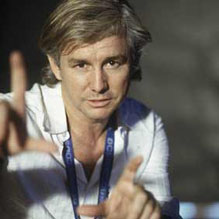
[Image Courtesy: NNDB]
His break out film was Strictly Ballroom. The project began as a 30-minute play, but Luhrmann developed it into a full blown motion picture in 1992. The story centers around handsome, spoiled, Scott. He’s a leading ballroom dancer who’s set to win the Pan-Pacific Ballroom Championships. But Scott wants to break the rules and dance his own steps. Enter Fran, a shy, ugly duckling of a girl from the beginner class at his mother’s studio. He teaches her how to dance and along the way she teaches him a thing or two as well. It’s quirky, funny, over the top, and wonderful. Here’s a scene about mid-way through the movie:
It is the first of his Red Curtain Trilogy. Romeo + Juliet and Moulin Rouge! round out the trio. Luhrmann describes a Red Curtain film as having the following attributes:
the audience knows how it will end right from the start;
the storyline is thin and simple;
the world created in the film is one of heightened reality; and
there is to be a specific device driving the story. For Strictly Ballroom it was dance, for Romeo + Juliet it was iambic pentameter, and for Moulin Rouge! it was characters breaking into song.
The success of Strictly Ballroom brought Luhrmann to the attention of 20th Century Fox who signed him to a 3-year deal. For second movie Luhrmann gave Romeo + Julieta modern jump. It starred Leonardo DiCaprio and Claire Danes and is both fast paced and action packed. In both style and weirdness factors there is a 15% increase from Ballroom, but still, it works.
The third movie of the set was Moulin Rouge!, a highly stylized musical love story starring Nicole Kidman and Ewan McGregor.
“. . . if you make a film full of risk, studios don’t run towards you to give you $50,000,000 in order to reinvent the post-modern musical, I can tell you. If you do manage to cajole them into doing it and you want to maintain the flag of creative freedom, you better make sure that it pays its bill.”[Baz Luhrmann, IMDB]
It was somehow even bigger and stranger than J + R and Ballroom put together. With an odd combination of modern songs (with modified lyrics) that should not have fit in the 1900 Paris setting, this musical had no business becoming a hit. But it did. Frankly, once Ewan McGregor opened his mouth to sing… nothing else seemed to matter. (As is evidenced by the bizarre beginning of this clip… Here McGregor’s Christian has snuck into courtesan Satine’s room. He is a penniless writer and he tries to win her over with the strength of his prose [well, in this case it’s Elton John’s lyrics] Kidman feign’s over excitement, hoping to get the shy wordsmith to leave, but then he starts to sing and the movie, and their attraction, takes off.)
For his next project he brought La Boheme to Broadway. The show opened on December 8, 2002 and was declared a “brilliant reworking of Puccini’s masterpiece that appealed to all. [Baz the Great! fansite]
In 2008 he teamed with Kidman again, this time pairing her with Hugh Jackman, in the epic WWII Aussie drama, Australia. It’s beautifully shot. From a cattle drive worthy any Western… to the Japanese attack on Darwin… to the love story, Australia has a lot going for it. (But be warned it is a bit preachy too.)
His eclectic mix of images and music can make even the every day seem extrordinary…
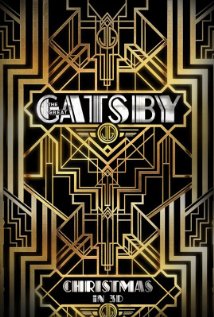
Luhrmann’s latest project is Gatsby. This time he re-teams with DiCaprio. This stylish take on the Fitzgerald’s classic, The Great Gatsby is due out on Christmas Day. [Don’t buy your tickets just yet… seems like the release date has been pushed back to Summer 2013 — thanks to John for the heads up. ]
“Once more unto the breach, dear friends, once more;
Or close the wall with our English dead.”
― William Shakespeare, Henry V
Henry the Fifth of England was born in the tower above Monmouth Castle in Wales on this day in 1386. Today is the 626th anniversary of his birth.
Illustration of Henry V from Cassell’s History of England [Image Courtesy: Wiki Commons]
Henry’s birthday was not officially recorded but it is believed to be either September 16 or August 9, and in either 1386 or 1387. He was born into one of the most important families in England. As such, he had the best education and upbringing available at the time. He learned to ride, fight and hunt. In the class room he learned history, literature, and music (he could play the harp) and he could speak English, French and Latin fluently. Because he was born in Monmouth Castle he was referred to as Henry Monmouth during his early life.
His grandfather, John of Gaunt was the son of Edward III, his parents were Henry Bolingbroke, the Earl of Derby and Mary Bonhun. At the time of Monmouth’s birth Richard II sat on the English throne. John of Gaunt, the King’s uncle, was an ardent support, Bolingbroke had a less steadfast relationship with the King. Although the two had been childhood friends Bolingbroke took part in the Lords Appellant’s rebellion against Richard in 1387. Richard forgave him and even promoted him to Duke of Hereford. But in 1397…
“Henry Bolingbroke reported treasonous comments made by the Duke of Norfolk; a court was convened but, as it was one Duke’s word against another, trial by battle was arranged. It never took place. Instead, Richard II intervened in 1398 by exiling Bolingbroke for ten years…
[Henry V, of England by Robert Wilde, About.com Guide]
At that time Richard “invited” 12-year-old Henry Monmouth to be his “guest” at court. Essentially Monmouth was a hostage. If the father returned to England to cause any trouble, the son would be forfeit. Things were not so grim in the Royal castle, however, Richard treated Monmouth kindly. The two became friends. The King even knighted Monmouth.
But in 1399 Monmouth’s grandfather, John of Gaunt died. Instead of Bolingbroke automatically inheriting his father’s lands Richard II “kept them for himself and extended Bolingbroke’s exile to life. ”
In 1399, whilst Richard was in Ireland, Henry of Bolingbroke returned to claim his father’s inheritance. … Henry captured and deposed Richard. Bolingbroke was crowned King as Henry IV. [The Official website of The British Monarchy]
Richard was thrown in jail, and, on October 13th 1399 Henry Bolingbroke became Henry the Fourth of England, his son, was named
“heir to the throne, Prince of Wales, Duke of Cornwall and Earl of Chester. Two months later he was given the further titles Duke of Lancaster and Duke of Aquitaine.” [Henry V, of England by Robert Wilde, About.com Guide]
Detail of miniature of Henry, Prince of Wales, receiving a book from Thomas Hoccleve. [Image Courtesy: Wiki Commons]
So… Henry Monmouth becomes Prince Hal. He was at his father’s side in battle at the Battle of Shrewsbury. He also fought bravely (and effectively) in Wales, Scotland and France. As his father’s health began to fail the Prince took on more and more responsiblity at court. He became a major political player. Shakespeare’s portrayal of him laughing it up with Falstaff was more dramatic fiction than historic truth.
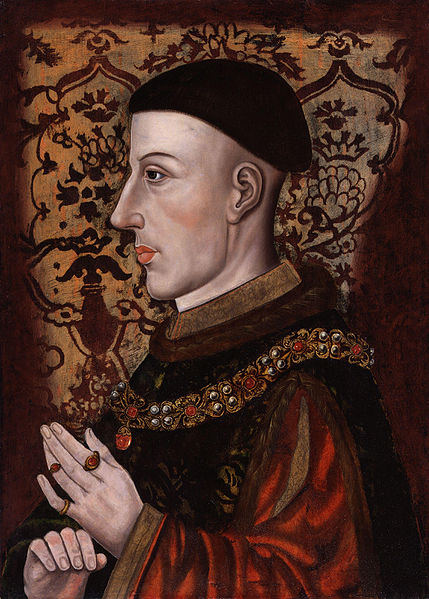
Henry as King. [Image Courtesy: Wiki Commons]
He ascended to the throne upon his father’s death on March 21st, 1413 and was crowned Henry V on April 9th. He transferred the remains of Richard II — who died of starvation in Pontefract Castle tower to Winchester Cathedral and gave him an honorable burial. He prepared the nation for a war with France. He straighten out the royal finances by editing royal budgets. He decreed that all government documents be written in English. He tackled the lawless no-man’s-lands and reduced the number of roving bandits (mostly by funneling them into the army.) He crushed the religiously “deviant” Lollards. And he united the people — noble and common alike — behind him.
“And Crispin Crispian shall ne’er go by,
From this day to the ending of the world,
But we in it shall be remembered-
We few, we happy few, we band of brothers;
For he to-day that sheds his blood with me
Shall be my brother”
― William Shakespeare, Henry V
“In August 1415, after dealing with a conspiracy to remove him from the throne, he led an army of 20,000 foot soldiers and 9,000 horsemen to attack Harfleur and, after sending a large part of his army home due to illness, marched to Calais to secure a base for further operations. On the way, unable to avoid a vastly superior French army, he gave battle at Agincourt on Oct. 25, 1415, gaining a great victory and capturing the constable of France and the Duke of Orléans.” [Henry V Biography, Your Dictionary.com]
In May 1420 the Treaty of Troyes was signed. Under the treaty Charles VI remained King of France, Henry married his daughter Katherine, was named heir, and ruled the country in all but name.
Alas, Henry took ill in 1422 while laying siege to one of the last French hold outs. He lingered for three weeks before dying at Vincennes on August 31st. He was 35 years old.
“I see you stand like greyhounds in the slips,
Straining upon the start. The game’s afoot;
Follow your spirit: and upon this charge,
Cry — God for Harry! England and Saint George!”
― William Shakespeare, Henry V
So… Maybe I should re-name the this blog ritaMAKESaMISTAKE.com…because I made one. A big one. I got somebody’s birthday wrong.
The site where I get those nifty quotes? Well, they had Sept 6 as Lauren Bacall’s birthday. But today when I checked my stats I got a bunch of Bacall hits, and then, when I looked for a new birthday boy or girl for TODAY’s post there was Lauren Bacall’s again. I looked on some other sources… YEP. Her birthday is today. My apologies, Ms. Bacall. I think you all should re-read her birthday bio while drinking a glass of champagne in her honor.







![Kenneth Branagh as Henry V [Image Courtesy: Renaissance Films PLC 1989]](https://ritalovestowrite.com/wp-content/uploads/2012/09/henry.jpg "henry")


 ritaLOVEStoWRITE