Thought of the Day 9.26.12 George Gershwin

Life is a lot like jazz.. it’s best when you improvise.
 –George Gershwin
English: George Gershwin, 28 March 1937 Azərba...

English: George Gershwin, 28 March 1937 Azərbaycan: Corc Gerşvin, ABŞ bəstəkarı, 28 mart 1937 Español: George Gershwin, 28 marzo 1937 (Photo credit: Wikipedia)

Jacob Gershvin was  born on this day in Brooklyn, New York in 1898. Today is the 114th anniversary of his birth.

His parents were Russian Jewish emigrants. He had three siblings, Ira, Arthur and Frances. His parents bought a piano and paid for lesson for Ira, but it was George who took up the instrument. At 15 he left school and began to work at New York’s Tin Pan Alley. (He changed his name George Gershwin when he entered the professional music world.) He sold his first song, “When You Want ‘Em, You Can’t Get ‘Em; When You Have ‘Em, You Don’t Want ‘Em,” for $5.

Music theatre folk-lore has it that one day Gershwin was performing his composition “Swanee” at a party when Broadway star Al Jolson heard it. Jolson added the song to his show in 1919 and it became his signature song. Gershwin rose in the ranks of New York City song composers.

Gershwin collaborated with Arthur L. Jackson and Buddy De Sylva on his first complete Broadway musical, “La, La Lucille” [American Masters; George Gershwin]

He worked in Vaudeville for a bit, and in 1920 he teamed up with lyricist Buddy DeSylva for a one-act jazz opera, Blue Monday.

opening bars rhapsody in blue - gershwin

opening bars rhapsody in blue – gershwin (Photo credit: Wikipedia)

At 25 his Rhapsody in Blue for solo piano and orchestra debuted in New York. It combined Gershwin’s twin musical loves a jazz and classical. Bandleader Paul Whiteman commissioned the piece  and it was premiered in a concert titled “An Experiment in Modern Music on February 12th with Gershwin at the piano. His other “serious music” includes Concerto in F, An American Paris and his Second Rhapsody (originally New York Rhapsody.)

In 1924, when George teamed up with his older brother Ira, “the Gershwins” became the dominant Broadway songwriters, creating infectious rhythm numbers and poignant ballads, fashioning the words to fit the melodies with a “glove-like” fidelity. [Gershwin.com]

George and his brother Ira worked together in 1924 on the musical Lady Be Good. The show opened at the Liberty Theatre and starred  Fred Astaire and his sister Adele and featured the songs “Fascinating Rhythm, “O Lady Be Good” and,  “The Half of It, Dearie, Blues.”  You can hear Gershwin’s complicated rhythms and the jazz chords that he would build on in later compositions like Rhapsody and Blue in this  early recording of “The Half Of It, Dearie, Blues“…

Oh, Kay! a musical about an English Duke and his sister turned American bootleggers opened at the Princess Theatre in 1926. It featured the dance number”Clap Yo’ Hands,” the love duet “Maybe” and “Someone To Watch Over Me“.

Funny Face opened in 1927, again with the Astaires in the lead. Songs included “S’Wonderful”, “My One and Only,” He Loves and She Loves” and “Let’s Kiss and Make Up.” An updated of Funny Face opened on Broadway as “My One and Only” in 1983 and ran for over 700 shows. And Hollywood made a move starring Fred Astaire and Audrey Hepburn in 1957 called Funny Face and using four of the songs, but with a different plot.

In Strike Up the Band America declares war on Switzerland. The original production only made it to previews in Philadelphia in 1927, but the Gershwins revised it and brought it to Broadway in 1930.  The songs “The Man I Love,Strike Up the Band,” “Soon,” and “I’ve Got a Crush on You  were added to the Gershwin Song Book from the show. [If you ignore all the other links in this post, do yourself a favor and click on I’ve Got a Crush on You — I pulled the incomparable Ella Fitzgerald’s smooth as silk rendition of the Gershwin classic… and no matter how crazy / busy your day is… you deserve this 3min. 18sec. piece of musical heaven.]

True to its name, Show Girl, is all about show business. It starred Ruby Keeler as an up and coming show girl Dixie Dugan. Other “A list” performers like Jimmy Durante and Eddie Foy, Jr. filled out the bill.  It  was produced by Florenz Ziegfeld. Songs includeHarlem Serenade,” andLiza (All the Clouds’ll Roll Away)” [– Ruby Keeler was married to Al Jolson and he used to come see the show several times a week and sing this, the last song, out loud from the audience, lovingly, to her. ]

In 1929 he wrote the score for the Fox film Delicious. His “New York Rhapsody” (which later became his “Second Rhapsody”) and a five-minute dream sequence was all that the producers chose to use of his score. Gershwin was disgusted.

In 1930 Girl Crazy hit the stage. It starred Ethel Merman, and made a star out of Ginger Rogers [to read the Thought of the Day Ginger Roger’s profile click HERE.]. The show was made into 3 movies,  and while the films shared many of the stage show’s  most popular songs — like “Embraceable You,”But Not For Me” and “I’ve Got Rhythm” — the plots lines deviated from the original.

Of Thee I Sing premiered in 1931 and became the first musical to win a Pulitzer Prize in 1932.
This all-American political satire focuses on the election campaign and Presidency of John P. Wintergreen, whose party, lacking a viable platform, runs on love, promising that if elected he will marry the partner chosen for him at an Atlantic City beauty pageant. When he falls for Mary Turner (a campaign secretary who bakes a mean corn muffin) instead of Diana Deveraux (the fairest flower of the South and winner of the pageant), trouble begins! [MTI Music theatre International]

His ground breaking, genre defying Porgy and Bess came out in September of 1935. George wrote the music, DeBose Heyward wrote the libretto, and Heyward and Ira Gershwin wrote the lyrics. It was based on Heyward’s novel Porgy  Gershwin intended it to be a folk opera.  Although it is considered a modern masterpiece now, the show flopped when it premiered on Broadway. It had revivals in 1942 and 1952, but it and didn’t get the recognition it deserved in the  opera world until the Huston Grand Opera staged it in 40 years later (1976). Songs include “It Ain’t Necessarily So,” “Bess You Is My Woman Now,” and “Summertime.”

Disappointed in the reception that Porgy and Bess received on Broadway he moved to Hollywood. He and Ira worked with RKO movies to score Shall We Dance, Fred Astaire and Ginger Rogers’s 10th film. He won an Academy Award for his song “They Can’t Take That Away from Me” from the film.
Starting in early 1937 George Gershwin began to have blinding headaches and the sensation of smelling burned rubber. He was diagnosed with a brain tumor. He died  on July 11, 1937.

Congratulations to ritaLOVEStoWRITE faithful follower, and fabulous writer, Kate Shrewsbury for having her blog post “My Battered Roman Eagle” selected as Freshly Pressed on WordPress. I’ve reposted it here, but you should go check out her blog too! Way to go Kate!!!

kateshrewsday's avatarKate Shrewsday

The heavens opened.

And duty called, even on a Sunday. For school, a display on the Victorians, ready for a public event on Monday evening, was necessary. And I needed Victorian artefacts.

I trawled the sources of Victorian wooden toys in my mind and decided wistfully that a trip into our local market town was going to be a must. I must make a wet, crowded, expensive drive, alone because everyone else in the house had colds.

I braced myself. I got in the car. And I turned the ignition key, backed out of the drive and got on the road.

I found a parking place in a great shopping cathedral and scuttled off through the fat drops of rain to the museum, a worthy red-brick building. I walked through the doors into a museum which, with the gloom outside, looked as if the caretaker had already turned half the…

View original post 437 more words

Continue reading

Thought of the Day 9.25.12 Shel Silverstein

“Listen to the mustn’ts, child. Listen to the don’ts. Listen to the shouldn’ts, the impossibles, the won’ts. Listen to the never haves, then listen close to me… Anything can happen, child. Anything can be.”

–Shel Silverstein

[Image courtesy: Poetry Foundation]

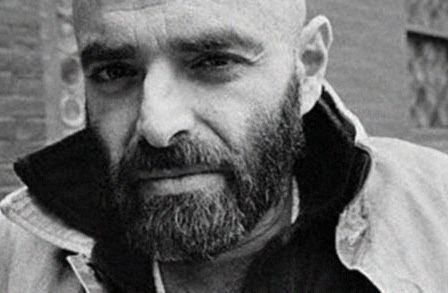
Sheldon Allan Silverstein was born on this day in Chicago, Illinois in 1930. Today is the  82nd anniversary of his birth.

Shel grew up in the Logan Square area of Chicago. He was notoriously private and seldom gave interviews so there is not much know about his early life. In one of the rare interviews he gave he said:

“When I was a kid—12 to 14, around there—I would much rather have been a good baseball player or a hit with the girls, but I couldn’t play ball. I couldn’t dance. Luckily, the girls didn’t want me. Not much I could do about that. So I started to draw and to write. I was also lucky that I didn’t have anybody to copy, be impressed by. I had developed my own style…” [Publishers Weekly, February 24, 1975.]

At 12 he became interested in cartooning and would practice his drawing by tracing comics, including Al Capp, from the “funny papers.” He attended the University of Illinois (for “One useless semester”), and the Art Institute of Chicago (for a summer session) before landing at Roosevelt University. It was a Roosevelt that he was first published, his cartoons appeared in the Roosevelt Torch.

In 1953 he was drafted into the US Army. He served from 1953-1955 and worked as a cartoonist for Stars and Stripes Newspaper. He said in a later Stars and Stripes interview that the Army  helped his art work because he didn’t have to worry about selling the cartoons anywhere. He was guaranteed 3 square meals a day. The Army also gave him the structure of a daily deadline. [To read the entire Stars and Stripes interview go to Off On a Tangent: Shel Silverstein Stars & Stripes Interview] His book Take Ten is a compilation of the cartoons he drew for Stars and Stripes.

Take Ten cover art. (Image courtesy: Amazon.com]

When he got out of the Army he found it difficult to sell his work on a regular basis. He freelanced for Sports Illustrated and Playboy and in 1956 he became a staff cartoonist for Playboy. He contributed poems and published several collections of his cartoons through the magazine.

Then in 1963 things took a turn.

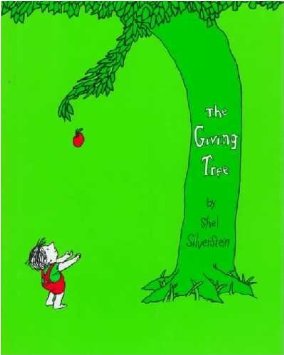
“…at the suggestion of fellow illustrator Tomi Ungerer, he was introduced to Ursula Nordstrom who convinced him to begin writing for children. One of Silverstein’s most popular books, The Giving Tree, was published in 1964.” [Shel Silverstein, Introduction by Meghan Ung. Humanities on the Internet]

Cover art for The Giving Tree [Image courtesy: Amazon.com]

No on had wanted to publish the book. They thought it was too sad for a children’s book. They thought it was too short. They couldn’t pigeonhole it as either for adults or children. But they all agreed it was wonderful. Then Harper and Row gave it a chance and it became a classic in children’s literature.

Here’s the 1973 animated movie of The Giving Tree narrated by Silverstein:

1974’s Where the Sidewalk Ends, a collection of poetry for children, won the New York Times Outstanding Book Award. The collection has been republished several times with Silverstein added poems at the 25th and 30th anniversary.  Here’s one of my favorite poems from the book, Hug o’ War:

Hug o’ War

I will not play at tug o’ war.

I’d rather play at hug o’war.

Where everyone hugs

instead of tugs,

Where everyone giggles

and rolls on the rug,

Where everyone kisses,

And everyone grins,

And everyone cuddles,

And everyone wins.

Next up was The Missing Piece is a beautifully written story about a circle who is looking for its soul mate. The nontraditional ending is both truthful and bittersweet.

A Light In the Attic brought more wonderful poems and illustrations. [Backward Bill always cracked us up at our house…]

…Backward Bill’s got a backward pup.

They eat their supper when the sun comes up…

Silverstein’s illustration of Backward Bill. [Image courtesy: Amazon.com]

Silverstein wrote a sequel to The Missing Piece called The Missing Piece Meets the Big O (see below) which won the 1982 International Reading Association’s Children’s Choice Award.

The Shel Silverstein collection  — “borrowed” from the shelves of an obliging independent brick and mortar bookstore, Greetings and Readings, Hunt Valley, Maryland.

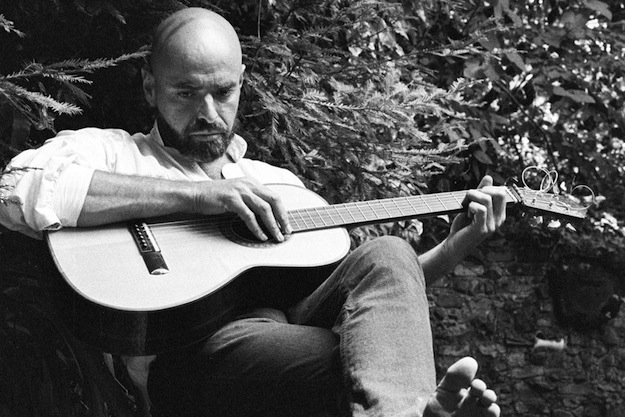
Silverstein also had a musical side. He played guitar and wrote songs, including the Johnny Cash hit A Boy Named Sue, the Irish Rovers “Unicorn Song” and the Dr. Hook song “The Cover of the Rolling Stone.” He performed on several albums (both his own and others.)

He was also a playwright. He had a hit with The Lady or the Tiger Show a play where contestants in a game show have to choose between two doors. Behind one door is a beautiful woman, behind the other door is a man-eating tiger. He co-wrote Oh, Hell! with David Mamet for Lincoln Center. The two worked together again on the film Things Change.

Silverstein died of a heart attack on May 10th, 1999 in Key West.

Shel playing his guitar. [Image courtesy: 105.7 Hawk]

Here’s the YouTube video for The Missing Piece Meets the Big O, I’d never read this book, or seen this video, but I just loved the message and had to share it…


Everybody loves a frog (and my plan for world domination)

A quick note to thank every one for stopping by today.

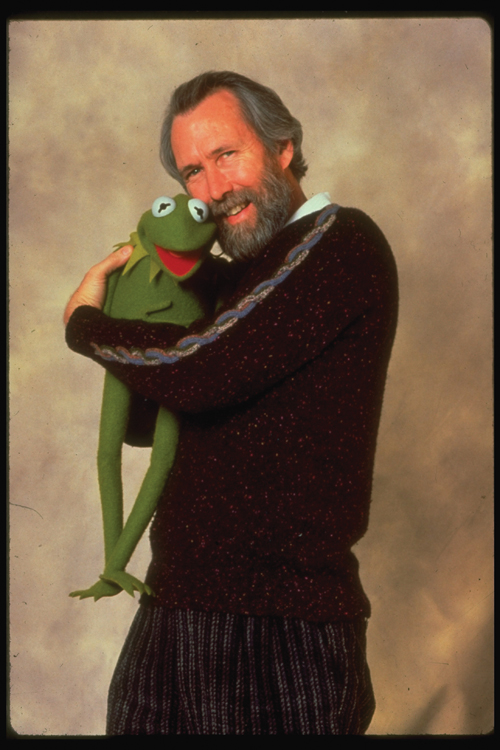
I should have known that a Thought of the Day about Jim Henson and Kermie  would do well, but I was pleasantly surprised to log on this evening and see the spikes in today’s stats. [Drumroll please…] I’m happy to report that today ritaLOVEStoWRITE had its very best day ever! By 7:40pm the site had reached a whopping 153 hits, for an all time total of over 5,000 hits! Whoot!

Here’s a map showing where all those hits are coming from…

Map reflecting all time hits.

Actually this is about a week old. Ghana, El Salvador,  Suriname, Algeria, Oman, Kuwait and Reunion have joined since then. I’m learning a lot about geography. (Reunion is an island nation off the east coast of Madagascar, btw.)

Personally, I would love to see a few more of the countries on this map get filled in. Not just because it is cool to see the continents fill up, or because it would give me a RISK (game) sense of satisfaction to pick up Greenland so I would have all of “North America,” but because I have something to say.

If I could actually send a message to the world it would be similar to the advice Kermit gave in a Men’s Health interview in November of last year.

  1. Challenge yourself to help others.
  2. Accept people for who they are.
  3. Roll with life’s ups and downs.

I would add

4. Live peacefully and with joy in your heart. And
5. Do something (small or large) to help save the planet every day.

So, thanks for stopping by the blog, and if you happen to know some one who might like ritaLOVEStoWRITE please send them a link and invite them to stop by (especially if they’re in Greenland.)

Cheers,
Rita


Thought of the Day 9/24/12 Jim Henson

“My hope still is to leave the world a bit better than when I got here.”
–Jim Henson

James Maury Hensonwas born on this day in Greenville, Mississippi in 1936. Today is the 76th anniversary of his birth.

He grew up  near Leland,  Mississippi exploring the countryside around his home. He was encouraged to pursue his artistic side, but he didn’t see a puppet show until the family moved to Washington, D.C. in the late 40’s. Henson recalled the family getting their first television as “the biggest event of his adolescence.” He enjoyed watching early puppet shows like Kukla, Fran and Ollie, Edgar Bergen and Charlie McCarthy, and Bil Baird and Charlemagne the lion. While still at Northwestern High School he got his first TV experience on WTOP-TV where he created and performed puppets for The Junior Morning Show on Saturday mornings. At the University of Maryland  Henson  was a studio arts major with hopes of working that into a career in stage or television design.

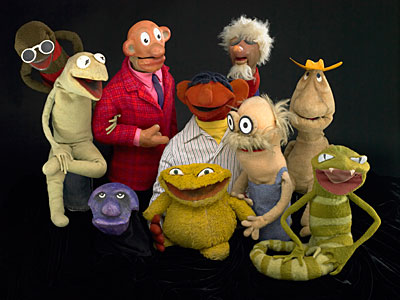
As a freshman he worked for WRC-TV on a five-minute long program that ran nightly at 6:40 pm called Sam and Friends. For the show he created a cross-breed of a marionettes and hand puppets  which he called “muppets.” Muppets were more flexible and could express more emotion than traditional puppets. Instead of painted wood he used foam rubber-covered with fabric which gave the creatures soft bodies. He gave them large mouths “that allowed them to convey a wide range of emotions.” [The Mississippi Writers Page]

The Sam and Friends characters were donated to the National Museum of American History in Washington, DC [Image courtesy: National Museum of American History]

Here’s a sketch from Sam and Friends

He asked fellow UofM freshman Jane Nebel to help him on the show. Hensen and Nebel married in 1959 and had five children together.

Sam and Friends ran for six seasons and…

proved the stepping stone for a series of commercials that brought him nationwide fame. Soon, he was making guest appearances on such national network programs as The Steve Allen ShowThe Jack Paar ShowThe Tonight ShowEd Sullivan, and The Jimmy Dean Show, and weekly appearances on The Today Show …[The Mississippi Writers Page]

Muppets, Inc. grew. Jim and Jane added puppeteer and writer Jerry Juhl, puppet builder Don Sahlin and puppeteer Frank Oz to the fold. In 1968 they created a special for National Education Television “Muppets on Puppets” a 9 minute mini documentary on the world of puppeteering.

<iframe width=”420″ height=”315″ src=”http://www.youtube.com/embed/MUdJVsDpGTI&#8221; frameborder=”0″ allowfullscreen>

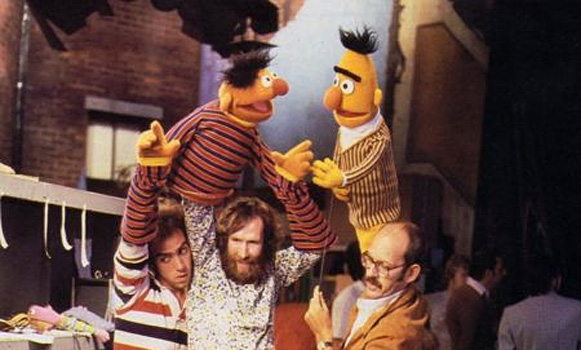
The next year Sesame Street premiered. Children’s Television Workshop asked Henson and his creative team to develop a family of muppets to populate Sesame Street. They came up with Bert and Ernie, Big Bird, Oscar the Grouch, Grover, the Cookie Monster and others.

Hensen, center, works on Sesame Street. [Image courtesy: Jedimouseketeer.com]

Next came  the weekly syndicated variety show, The Muppet Show, starring Kermit. The show included an expanded cast of muppets (like Miss Piggy, Gonzo, the Count, and Elmo) and featured a human guest star. It ran from 1976 to 1981.

Here’s a clip from the show featuring John Cleese…

<iframe width=”420″ height=”315″ src=”http://www.youtube.com/embed/EyMCG0dWeQA&#8221; frameborder=”0″ allowfullscreen>

Movies followed. Henson found success with both Muppet productions and other puppet enhanced movies like The Dark Crystal and Labyrinth.

Henson won 18 Emmy Awards, 7 Grammy Awards and 4 Peabody Awards in his 30 year career and touched millions of lives. He died from complications of pneumonia in New York on May 16, 1990. Here’s “Just One Person” (one of my favorite Muppet songs) performed at Henson’s tribute.

<iframe width=”420″ height=”315″ src=”http://www.youtube.com/embed/0Zzfdlxjx4Y&#8221; frameborder=”0″ allowfullscreen>


Thought of the Day 9.22.12 Louise Nevelson

“I never feel age…If you have creative work, you don’t have age or time.”
–Louise Nevelson

Leah Berliaswsky was born on this day in Perislav, Russia in 1899. This is the 113th anniversary of her birth.

Her family lived in Czarist Russia until 1905 when they emigrated to Rockland, Maine in the United States. Her father worked as a woodcutter, owned a junkyard, a lumberyard and became a realtor.

When Leah saw a bust of Joan of Arc at the local library she knew she wanted to become an artist. She started to take art lessons, and experimented in drawing & watercolors.

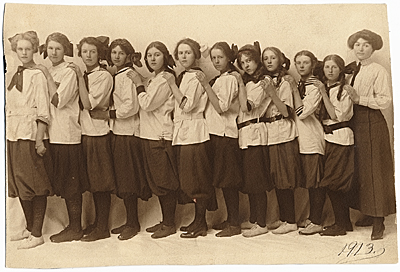
Nevelson in a 1913 class picture. (She is fourth from the left) [Image is courtesy Wikimedia Commons.]

Upon graduating high school she began to work as a stenographer in New York. She met Charles Nevelson of the Nevelson Brothers shipping company. The two married in 1920. She began to study art in earnest adding singing, acting and dancing to the mix. In 1922 she gave birth to Myron (Mike) Nevelson. Two years later the family moved to Mount Vernon, NY. Louise felt stifled by the small town environment and role she was expected to play as dutiful wife. She longed for the artistic life she knew in New York City.

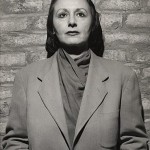
Louise Nevelson as a young woman. [Image courtesy: Abstract Artist.org]

In 1931 she left both her husband and her son and took a trip to Europe. She studied with cubist Hans Hofmann in Munich, but as the NAZIs began their stranglehold on the city she left for Italy and France.  In 1932 she came back to the United States, where she continued to work with Hofmann (he was now teaching at the Art Students League) and she officially separated from her husband. In 1933 she worked with Diego Rivera on his Man at the Crossroads mural at Rockefeller Plaza. Shortly after that she took a sculpture class at the Education Alliance, and decided to focus on sculpture as her medium of choice.

At first she produced…

primarily cubist figure studies made from bronze, plaster and clay… It wasn’t until 1943 that the art-world got their first glimpse of what would become Nevelson’s signature style of assembling wood.  [Abstract Artist.org]

In the 1940s she began to make pieces from reclaimed materials and scraps of wood.

Nevelson… crafted surreal, totemic monuments that served loosely as maps to the artist’s mind. … Nevelson also cultivated her extravagant personal style, which included long dresses and false eyelashes, to dovetail with her desire to express emotion through art. [The Art Story.org]

One of her most famous sculptures is Dawn’s Wedding Feast, a room size installation created in 1959 made of wood and white paint. The installation has four chapels, a bride, groom, wedding cake, various other pieces and hanging columns that represent the wedding guests. It was too big and too expensive for one buyer to purchase so Nevelson broke the installation into sixteen stand alone pieces.


Dawn’s Wedding Feast, 1959-60 [Image Courtesy

In her “Late Period” she abandoned “typical carpentry” and “Her process became purely additive, wherein she stacked and balanced objects before nailing together and painting them…” [The Art Story.org]  She selected small scaled pieces that worked together to form a larger installation.

Black Zag Z — 1969 [Image courtesy: Abstract Artist.org]

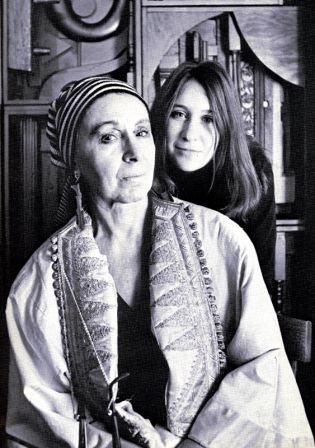
Nevelson and her granddaughter Neith in 1967. Photo by Ugo Mullas. [Image Courtesy Amazon.com]

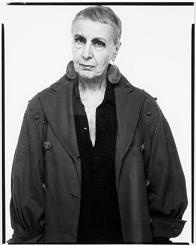
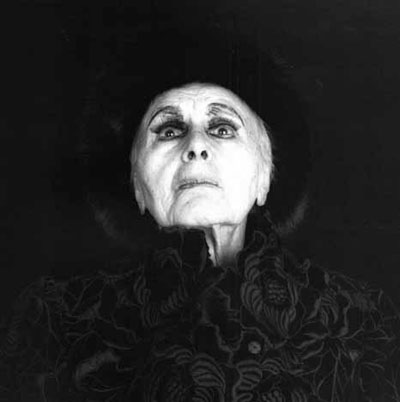
Nevelson toward the end of her life. [Abstract Artist.org]

By the time she died in on April 17,1988, Louise Nevelson was considered by many to be one of the most important American sculptors of the twentieth century and one of the world’s best-known woman artists.  [Abstract Artist.org]


Thought of the Day 9/22/12 Bilbo and Frodo Baggins

“I don’t know half of you half as well as I should like; and I like less than half of you, half as well as you deserve.”
— Bilbo Baggins

“I will take the Ring…though I do not know the way.”
–Frodo Baggins

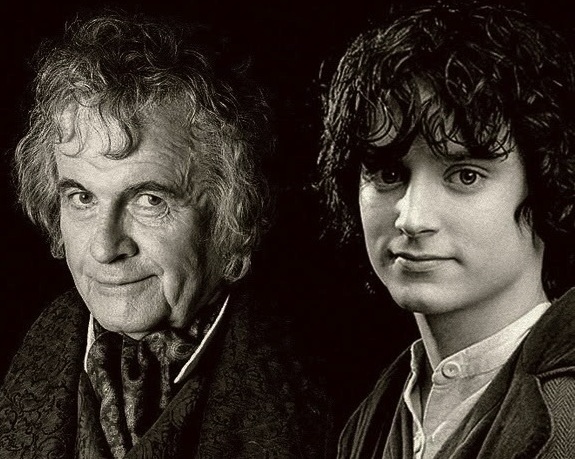
Bilbo and Frodo (from the Peter Jackson LotR movie) [Image courtesy: Mechtild’s]

Bilbo and Frodo Baggins were both born on this day  in The Shire, Middle Earth. Bilbo was born in 2890 T.A., Frodo was born in 2968 T.A..

[Bilbo and Frodo Baggins are fictional characters in JRR Tolkien’s Middle Earth fantasies The Hobbit and The Lord of the Rings. The T.A. after the date stands for Third Age]

As a child Bilbo…

“loved to listen to Gandalf‘s stories about dragons, goblins and princesses and was impressed by the Wizard’s fireworks. After the death of his parents… he inherited Bag End. In the eyes of his neighbors, he originally seemed just like his father – a solid, sensible, unadventurous and respectable hobbit. But when becoming older he started to become “strange”… [Tolkien Gateway]

Cover art for The Hobbit, revised edition [Image courtesy: Amazon.com]

But, when we meet him, at the beginning of The Hobbit, he is middle-aged and living a comfortable life, in his comfortable Hobbit hole (Bag End). Then in walks Gandalf and a bunch of dwarfs and all sorts of adventure, danger and even a little fun ensue. By the end of the book he has  out smarted  trolls, escaped dragons and found a magic ring that will change the destiny of Middle Earth.

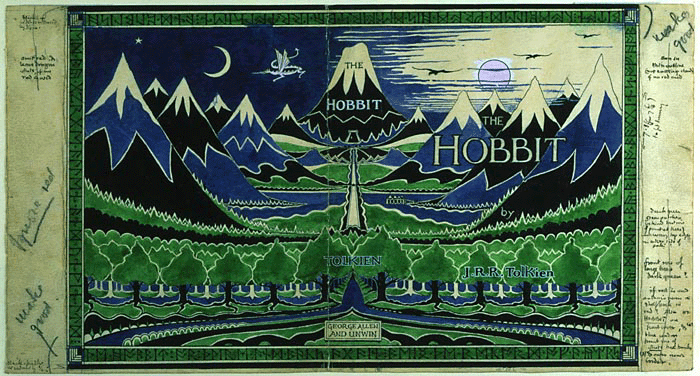
Original cover design for The Hobbit. [ Image courtesy: TheOneRing.net]

His nephew Frodo was born to respectable parents, Drogo and Primula Baggins. Sadly they died in a boating accident and Frodo was sent to live with Primula’s relatives the Brandybucks. Frodo earned a reputation as a mischief-maker and eventually was taken in by his uncle Bilbo.

Bilbo taught Frodo to read both Hobbit (English?) and Elvish and filled his head with tales of adventure.

At the beginning of the Fellowship of the Ring Bilbo and Frodo celebrate their birthdays with a lavish party. For Bilbo it is his eleventy-first (111th). Frodo is 33. The year is 3001 T.A.. Bilbo surprises Frodo and the guest by disappearing at the end of the party. He had used his magic ring to do so. He leaves the Shire and travels to Rivendell to write his memoir, There and Back Again (aka The Hobbit) and Translations from the Elvish (which became the basis of The Silmarillion).

The Fellowship of the Ring, 1st Edition 1st Impression, 1954, with original dust jacket and original cloth bindings. Offered at the Tolkien Library Store for $6,500. [Image courtesy: Tolkien Library Store]

Frodo inherited Bag End and the Ring. Gandalf advised Frodo not to use the ring but to keep it secret. The wizard then went off to discover more about the ring. The young Hobbit heeded his advice and lived respectably for 17 years. Until one night Gandalf returned to tell him the ring is the ONE RING, a thousand year old, evil ring of power that belonged to the dark lord Sauron. Sauron is now looking for the Ring and it must be destroyed.

So Frodo, along with his relatives Merry and Pippin and his faithful gardener Sam  head east. Later a human Ranger named Strider (aka Aragorn) joins the group. And, after some terrible encounters with Sauron’s nine Black Riders the little group makes it to Rivendell, a stronghold of Elves.

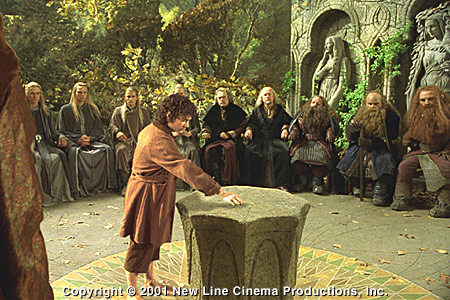
Council of Elrond (from the Peter Jackson LotR movie)[Image courtesy New Line Cinema]

There they meet up with Bilbo. The Council of Elrond is called  to discuss what should be done with the ring. After Frodo bravely volunteers to throw the Ring into the fires of Mount Doom a fellowship of nine  is formed. Frodo, Sam, Merry , Pippin, Aragorn, Gandalf, Legolas (an Elf) and Gimli (a Dwarf) set out to fight The War of the Ring.

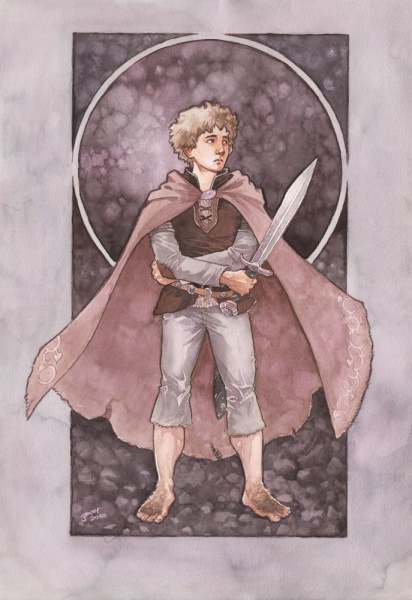
Artist Jenny Dolfen’s vision for Frodo. Go see more of Jenny’s beautiful art work at www.goldseven.de. [This work is copyrighted and owned by Jenny Dolfen. However, permission has kindly been granted, by the copyright holder, to use this file on this blog post.]

[I won’t ruin it by telling you the ending. Go read the books == or see the Peter Jackson trilogy  and then re-read the books. Then come back here and discuss who is better hero: Bilbo, Frodo, Aragorn or Sam — or Gollum!]

Bilbo’s Last Song:
Day is ended, dim my eyes,

but journey long before me lies.
Farewell, friends! I hear the call.
The ship’s beside the stony wall.
Foam is white and waves are grey;
beyond the sunset leads my way.
Foam is salt, the wind is free;
I hear the rising of the Sea.

Farewell, friends! The sails are set,
the wind is east, the moorings fret.
Shadows long before me lie,
beneath the ever-bending sky,
but islands lie behind the Sun
that I shall raise ere all is done;
lands there are to west of West,
where night is quiet and sleep is rest.

Guided by the Lonely Star,
beyond the utmost harbour-bar,
I’ll find the heavens fair and free,
and beaches of the Starlit Sea.
Ship, my ship! I seek the West,
and fields and mountains ever blest.
Farewell to Middle-earth at last.
I see the Star above my mast!

[Bilbo’s Last Song; Tolkien Gateway]

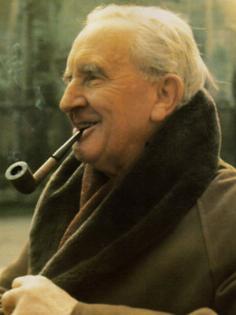
JRR Tolkien [Image courtesy: Amazon.com]


Thought of the Day 9.21.12 Henry Tingle Wilde

“I still don’t like this ship . . . I have a queer feeling about it.”

–Henry Tingle Wilde

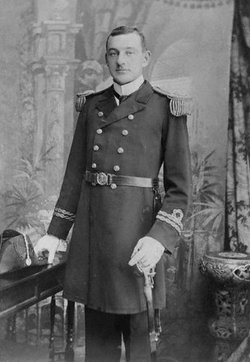
Henry Tingle Wilde, Jr was the Chief Officer of the Titanic. [Image courtesy: Wikipedia]

Henry Tingle Wilde was born on this day in Walton, Liverpool, England in 1872. Today is the 140th anniversary of his birth.

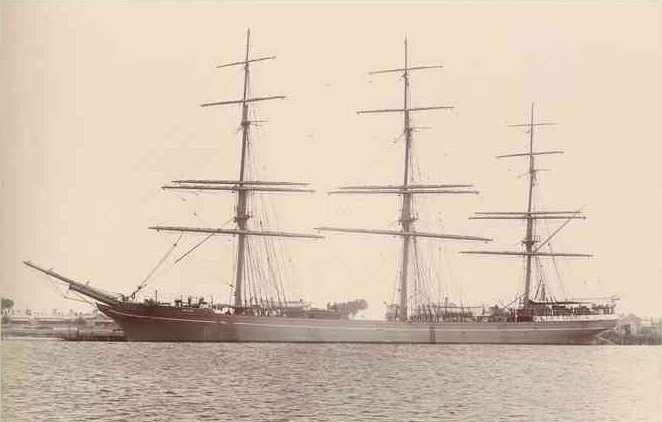
Wilde was drawn to the sea at an early age. At 17 he left his home for an apprenticeship on the iron sailing ship the Greystoke Castle — a three mast, square sail vessel– as a third mate. He served on the Greystoke’s sister ship the Hornby Castle, also as third mate. He was posted to the steamships the S.S. Brunswick and the S.S. Europa before joining the White Star Line in 1897. He was a Lieutenant in the Royal Naval Reserve, and held ordinary and extra masters certificates.

The Hornby Castle, a sailing ship that Wilde trained on. He worked on both sail and steam vessels.  [Image Courtesy Wreck Site]

Starting in 1905 he transferred to the White Star passenger line, working mostly on the Liverpool to New York, and Australian routes. He rose in the ranks aboard The Arabic, The Covic, The Cufic, The Tauric, the Celtic, the Medic, The Delphic, the Cymric and The Olympic until he reached the rank of Chief Officer under Captain Edward John Smith on The Olympic.

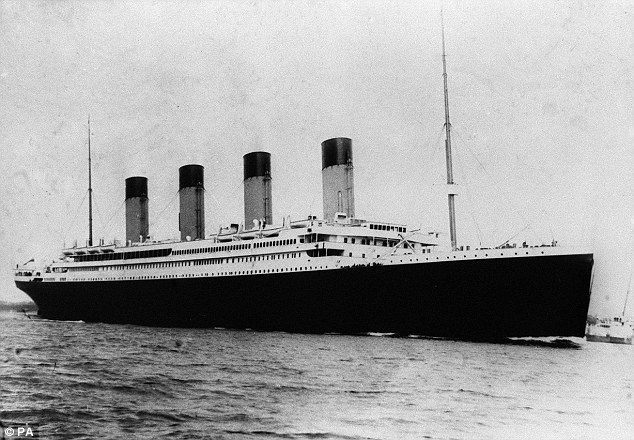
The Titanic [Image courtesy: Mail Online]

Smith transferred to the White Star’s newest vessel, The Titanic as her Captain. Wilde was due to ship out with The Olympicbut White Star officials sent word for him to stay in Southampton and await further orders. At 39 and with years of experience he was certainly seasoned enough to get his own ship. But Captain Smith wanted to add experience to his senior staff and he requested that Wilde join the crew as Chief Officer. Wilde debated the move. His family urged him to take the position, but, as he wrote in a letter to his sister…

“I still don’t like this ship…I have a queer feeling about it…” [Henry Tingle Wilde, Chief Officer by Christine Ehren, Titanic-lore.info]

He officially joined The Titanic crew on April 9th, the day before she sailed. The post was for the great ship’s maiden voyage only. And it meant that the other senior officers would be shifted down in rank. William Murdoch became first officer, Charles Lightoller became second officer. The man originally slated to be second officer, David Blair, did not make the journey. The junior officers retained their positions.

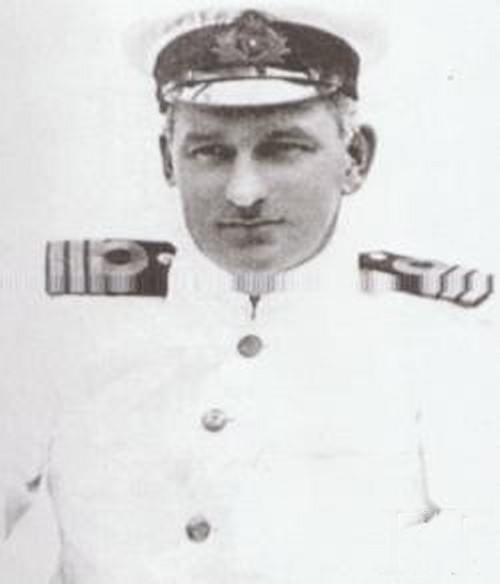
Henry Tingle Wilde in his summer white uniform, that he wore on the Olympia. [Image courtesy: Encyclopedia Titanica]

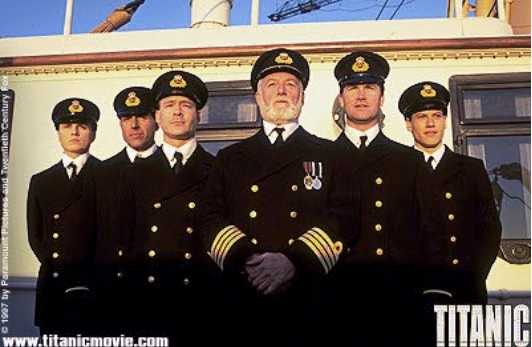
Publicity still from the Movie Titanic. Mark Lindsay Chapman, third from the left, plays Chief Officer Henry Tingle. He stands just to the left of Bernard Hill who is playing Captain Smith. [Image courtesy: William Murdoch.org]


The Titanicleft Southampton, England on April 10th, 1912 with stops at Cherbourg, France and Queenstown, Ireland before heading west across the Atlantic toward New York. Wilde had the 2-6 AM and the 2-6 PM shifts as “Officer of the Watch.” So he was not on the bridge when the ship hit an iceberg at 11:40 PM on April 14th.

Wilde was in charge of the loading the even-numbered lifeboats on the port side of the ship. (He also distributed firearms to the senior officers.) He adhered strictly to Captain Smith’s order to “put women and children in and lower away…” so the boats from that side of the ship only contained women, children and two crew members (to work the boats). When all the boats on his side of the ship were launched he went to starboard side of the ship. Some survivors recall seeing him attempting to release Boat A or B from the roof the Officers’ Quarters when the Titanic’s deck flooded.

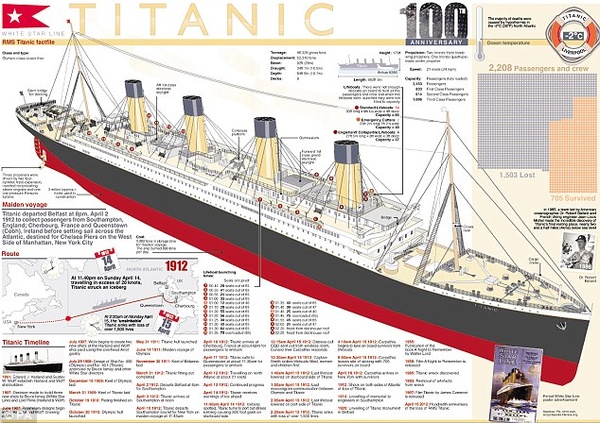
Schematic of Titanic. [Image courtesy: Mail Online]

Survivor George Rheims wrote in a letter dated just days after the sinking:

“While the last boat was leaving, I saw an officer with a revolver fire a shot and kill a man who was trying to climb into it. As there remained nothing else for him to, the officer told us, “Gentlemen, each man for himself. Good bye.” He gave a military salute and then fired a bullet into his head. That’s what I call a man!” [Henry Tingle Wilde, Chief Officer by Christine Ehren, Titanic-lore.info]

But it isn’t known if that officer was Wilde or First Officer Murdoch. It doesn’t matter. If he didn’t die of a self-inflicted gunshot wound he died a few minutes later in the freezing waters of the North Atlantic. His body was never found. He was 39 years old.

In 1998 the newspaper Liverpool Echo wrote about Wilde’s role on the Titanic as follows:

Liverpool’s forgotten hero, Chief Officer Henry Wilde… from Walton, flits through the enquiry evidence but witnesses have described how Wilde supervised the loading of the lifeboats and stopped 100 people rushing them by the sheer force of his personality….He is believed to have prevented a panic which would have led to even greater losses. [Henry Tingle Wilde, Chief Officer by Christine Ehren, Titanic-lore.info]

 He was survived by four children (he had recently lost his wife and twin boys.)

——————————–

Thanks to J.G.Burnette at jgburdette.wordpress.com for suggesting Henry Wilde as the Thought of the Day Birthday Bio for today. J.G. is a big Titanic fan and was able to give me both the name and birthdate so I could start my research.–I hope I found some new nugget for your Titanic files! — IF YOU have some one you’d like to see profiled on Thought of the Day please let me know. Cheers, Rita


Thought of the Day 9.20.12 Elizabeth Kenny

“He who angers you conquers you.”

–Elizabeth Kenny

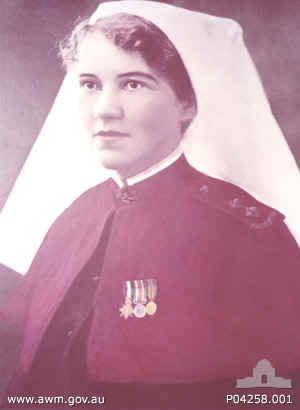
“Sister” Kenny [Image courtesy: Australian War Memorial; AWM.Gov.au]

Elizabeth Kenny was born on this day in Warialda, New South Wales, Australia in 1880. Today is the 132nd anniversary of her birth.

Because her father was an itinerant farmer the family moved often when Elizabeth was growing up. Her education was limited to home-schooling and a variety of small town primary schools. When she was 17 she fell off her horse and broke her wrist. Her father, Michael, took her to the town of  Toowoomba to see Dr. Aeneas McDonnell. Kenny remained in Toowoomba to recover from the injury and grew fascinated with Dr. McDonnell’s medical books, especially those on anatomy, and his model skeleton. It started Kenny on her life long journey in medicine. She made her own model skeleton to study how muscles and bone worked together in the human body.

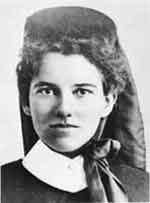
Elizabeth Kenny as a young woman. [Image courtesy: Minnesota Public Radio.org]

At 18 she became an unaccredited,  unpaid bush nurse. She later (probably) volunteered at the maternity hospital at Guyra in New South Wales.

There is no official record of formal training or registration as a nurse. She probably learned by voluntary assistance at a small maternity hospital at Guyra, New South Wales. About 1910 Kenny was a self-appointed nurse, working from the family home at Nobby on the Darling Downs, riding on horseback to give her services, without pay, to any who called her. [Elizabeth Kenny, by Ross Patrick, Australian Dictionary of Biography]

Kenny opened St. Canice’s Cottage Hospital in Clifton. She kept in contact with Dr. McDonnell and would often telegraph him when a case stymied her.

In 1911 one such case presented itself. She contacted McDonnell about a new case that stymied her.. a young girl who was crippled, but not from a fall or external trauma. McDonnell replied that it was probably “It sounds like Infantile Paralysis.  There’s no known treatment, so do the best you can.” [Sister Elizabeth Kenny. Australians Documentary Series. 1998. from Teachspace.org] Kenny used a common sense approach. She applied hot compresses to the little girl’s spasming muscles. Hot, heavy woolen blankets were applied that help loosen the muscles and relieve the pain. Then she stretched the little girls legs and strengthened the muscles. It worked. The pain abated, the girl (allegedly) asked “Please, I want them rags that well my leg.”

Of the twenty children in the district, the six that Kenny treated survived without complications. [Sister Elizabeth Kenny. Australians Documentary Series. 1998. from Teachspace.org]

With the outbreak of World War I Kenny, with a letter of recommendation from Dr. McDonnell, joined the Australian Medical Corps. She worked on hospital ships bringing the wounded home from Europe. She was received a shrapnel wound to the leg while at the front.

She patented her invention of a stretcher that immobilized shock patients during transport, the Sylvia Stretcher, and used the royalties  open a clinic for polio patients in Townsville, Queensland. Here she treated long-term polio and cerebral palsy patients, tossing aside the braces and concentrating on hot baths, passive movements and foments.

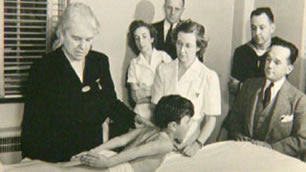
Sister Kenny works with a young patient as other doctors, nurses and physiotherapist observe. [Image courtesy: Sister Elizabeth Kenny: Medical Pioneer]

Her “homespun” methods for polio treatment, though effective, were controversial as the  accepted practice was to splint the affected limbs to keep them rigid. That way the stronger muscles wouldn’t pull on the weaker/paralyzed muscles and create deformities. Kenny thought that splinting the limbs would actually produce deformities and increase paralysis. She alternately dismissed, ridiculed or vilified by the medical establishment. Kenny soldiered on, buoyed by the support of parents who witnessed first hand the results her methods were having on their children. Kenny opened clinics in Brisbane and through out Queensland.

The controversy over her methods followed her to England  and the US. Kenny worked in the Minneapolis General Hospital where…

Her methods became widely accepted. She began courses for doctors and physiotherapists from many parts of the world. The Sister Kenny Institute was built in Minneapolis in 1942 and other Kenny clinics were established. [Elizabeth Kenny, by Ross Patrick, Australian Dictionary of Biography]

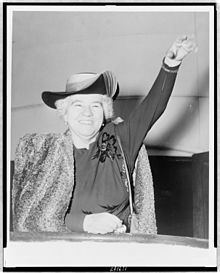
Kenny in 1950. {Image courtesy: Wikipedia]

She developed Parkinson’s disease and retired to Toowoomba in 1951. Kenny died there of cerebrovascular disease on 30 November 1952.

Sister Kenny’s pioneering principles of muscle rehabilitation became the foundation of physical therapy. Today, Sister Kenny Rehabilitation Services is one of the premier rehabilitation centers in the country, known for its progressive and innovative vision. [Nurses for nurse everywhere.info]