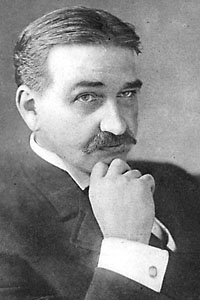
Studs Terkel 5.16.13 Thought of the Day

“Most of us have jobs that are too small for our spirits.”–Studs Terkel

[Image courtesy: NPR.org]

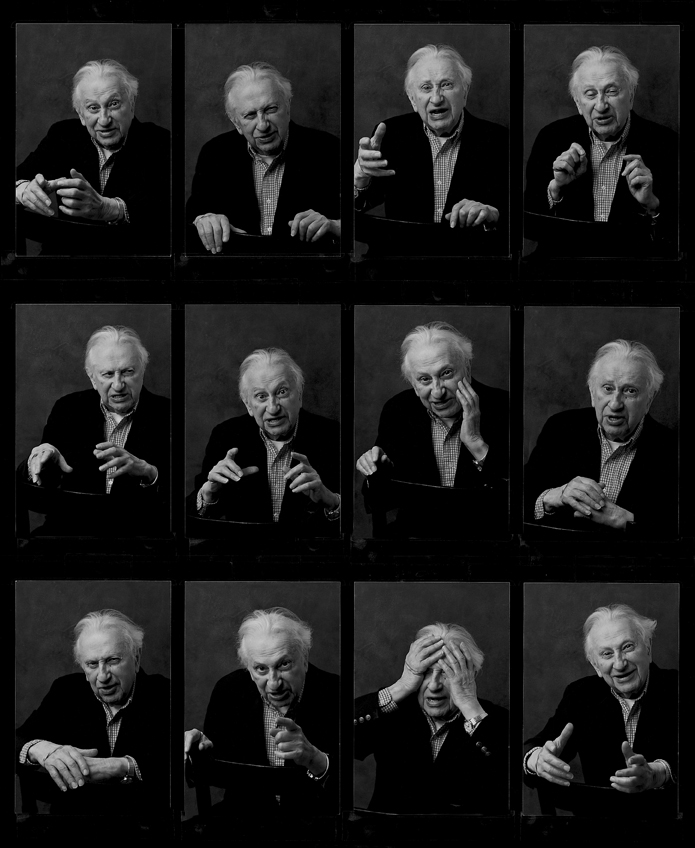
[Image courtesy: NPR.org]

Louis “Studs” Terkel was born on this day in New York City, New York, USA in 1912. Today is the 101st anniversary of his birth.

Studs was the youngest of three boys born to Samuel and Anna Terkel. Both his parents worked in the clothing industry. His father was a tailor and his mother was a seamstress. The family moved to Chicago in 1922 and the Terkels opened a boarding house. There Studs met people from all over the world and listened to their stories.

Terkel later credited his curiosity and comfort with the world’s people to the many tenants he met there. “The thing I’m able to do, I guess, is break down walls,” he once told an interviewer. “If they think you’re listening, they’ll talk. It’s more of a conversation than an interview.” [Biography.com]

He went to the University of Chicago  and in 1934 he earned his law degree. But Studs’ talents lie else where and he didn’t take the Bar exam.

It was the middle of the Great Depression and he joined the WPA working in the radio division of the Writers Project. He found himself both writing and performing on air. He did both scripted work and read the news. Terkel did a stint in the Air Force then came back to radio. He covered the news, sports and eventually got his own interview and music show (he could play what ever he liked, so the show was an eclectic mix of folk, opera, jazz and blues.) In 1945 he made the leap to TV and hosted Stud’s Place.

His first book was Giants of Jazz published in 1956.

In 1966 he published …

his first book of oral history interviews, Division Street: America, … It was followed by a succession of oral history books on the 1930s Depression, World War Two, race relations, working, the American dream, and aging. His last oral history book, Will the Circle Be Unbroken: Reflections on Death, Rebirth, and Hunger for a Faith, was published in 2001.  [Studs Terkel.org]

He says in the preface of Division Street:

I realized quite early in this adventure that interviews, conventionally conducted, were meaningless. Conditioned clichés were certain to come. The question-and-answer technique may be of some value in determining favored detergents, toothpaste and deodorants, but not in the discovery of men and women. [Division Street]

It was better to just turn on the tape recorder and talk — as if your were sitting down to have a drink  at the bar in Stud’s Place.

His 1974 book Working became a Broadway play a few years later and we got to know The Housewife, The Cleaning Women, The Long Distance Trucker, Joe, and a dozen or so other every day characters that had never made it to the stage before.

In 1988 Terkel appeared as Hugh Fullerton in the John Sayles movie 8 Men Out about the Chicago Black Sox scandal.

He was still writing into the 21st Century, his last book, P.S.: Further Thoughts from a Lifetime of Listening, was released in 2008, but open heart surgery in 2005 (at 93) slowed him down — and forced him to stop his habit of smoking two cigars a day.

Studs died on Halloween Day of 2008. He was 96 years old.


Recommended Links:


L. Frank Baum 5.15.13 Thought of the Day

“Imagination has brought mankind through the dark ages to its present state of civilization. Imagination led Columbus to discover America. Imagination led Franklin to discover electricity.”– L. Frank Baum

[Image courtesy: xyz
[Image courtesy: QOTD.org]

Lyman Frank Baum was born on this day in Chittenango, New York, USA in 1856. today is the 157th anniversary of his birth.

Frank was the seventh of nine children born to Benjamin and Cynthia Baum. The Baums were wealthy. Benjamin made his fortune in the oil fields of Pennsylvania. And Frank grew up happy at the family estate of Rose Lawn. He was a shy child, and, because of a “weak heart,”  he was home schooled for most of his life. He loved to read and spent hours in his father’s library. He didn’t like classical fairy tales — their goblins and villains were too scary — so he made up his own stories and shared them with his brothers and sisters.

When he was twelve his father… hoping to toughen Frank up and cure him of his ‘daydreaming,’ sent him to the Peekskill Military Academy. Baum was miserable there for over a year, and the only results of the experiment were a physical (and possibly also psychological) breakdown, and a lifelong aversion to both formal education and the military. [The Oddness of Oz]

Once home he turned to creative writing. His father bought him a small printing press and, along with his little brother Harry, “he started his own newspaper, the Rose Lawn Home Journal” [the Literary Network]. Frank filled the pages, honing his craft by cranking out articles, fiction and poetry. Other publications included Baum’s Complete Stamp Dealers’ Directory an 11 page  booklet for amateur philatelist and The Poultry Record in which Baum wrote about Hamburg chickens. “He would also write about the raising and breeding of chickens in The Book of Hamburgs. (1896)” [Ibid]

He became fascinated with acting and the theater.

He developed an intense and enduring fascination with the theater. In 1878, he began to work as a professional actor. Four years later his father bought him a small dramatic company, and Baum was soon adapting and starring in a romantic melodrama, The Maid of Arran [The Oddness of Oz]

Baum as Hugh Holcomb in Maid from Arran. [Image courtesy: Hungry Tiger Press.com]

But Baum had bad luck in almost every business endeavor he put his hand to. The Maid of Arran was a moderate success, but while he was touring with the play his theater back home (the one his father bought him) burned down. The company lost the building, all the sets and costumes, and all of the scripts (except those they were traveling with). Ironically the Baum play that was running at the time was called “Matches.”

Other short-lived opportunities soon soured. And he struggled for long-term success. In 1882 he married Maud Gage. Now he had a family to provide for. The time of being a daydreamer were over.

The family moved Aberdeen, South Dakota where he opened a department store, Baum’s Bazaar. The store failed — Frank let people have too much store credit. He became an editor of The Aberdeen Saturday Pioneer, where, after the Massacre at Wounded Knee, he wrote (what one hopes was) a Swiftian inspired modest proposal that all Native Americans be exterminated…

“Having wronged them for centuries, we had better, in order to protect our civilization, follow it up by one more wrong and wipe these untamed and untamable creatures from the face of the earth.”

He tried his hand at managing a baseball club and worked as a buyer for a department store. Nothing seemed to stick.

Baum moved the family to the Humboldt Park neighborhood of  Chicago in 1891. He worked as a reported for the Evening Post, edited a magazine on window displays and worked as traveling salesman.

In 1897, he finally started to have some success with his writing.   Mother Goose in Prose, stories based on traditional Mother Goose poems paired with lovely Maxfield Parrish illustrations, sold well enough that he could quit his door-to-door salesman job. Two years later Baum published Father Goose, His Book this time with W.W. Denslow as his illustrator and had even greater success.

Cover of the first edition of the Wonderful Wizard of Oz [Image courtesy: Loc.gov]

Cover of the first edition of the Wonderful Wizard of Oz [Image courtesy: Loc.gov]

In 1989 he wrote the Wizard of Oz. It was published in 1900, again with Denslow as illustrator, and cost $1.50 a copy.

Unlike other books for children, The Wizard of Oz was pleasingly informal; characters were defined by their actions rather than authorial discourse; and morality was a subtext rather than a juggernaut rolling through the text. [SmithsonianMag.org]

Baum wrote 13 more Oz books (some coming as frequently as one a year.) He had done more than write a best seller, he had created a new genre of fiction… The American Fairy Tale.

He wrote dozens of other books, from Dot and Tot of Merryland to The Life and Adventures of Santa Claus to his last book Phoebe Daring: A Story for Young Folk, but the Oz books were his bread a butter best sellers.

The family moved to Hollywood, California and Baum tried his hand at making silent films with the creation of the Oz Film Manufacturing Company. He wrote, directed and acted with the company which used experimental film effects to capture some of Baum’s fantastic themes. He also  worked with the Uplifters theatre troupe.

L. Frank Baum died of a stroke on May  6th, 1919.

“To please a child is a sweet and lovely thing

that warms one’s heart and brings its own reward.”

–L. Frank Baum

An illustration by W. W. Denslow from The Wond...
An illustration by W. W. Denslow from The Wonderful Wizard of Oz, also known as The Wizard of Oz, a 1900 children’s novel by L. Frank Baum. (Photo credit: Wikipedia)

Cate Blanchett 5.14.13 Thought of the Day

“If you know you are going to fail, then fail gloriously.”– Cate Blanchett

English: Actress Cate Blanchett at the 2011 Sy...

English: Actress Cate Blanchett at the 2011 Sydney Film Festival. (Photo credit: Wikipedia)

Catherine Élise Blanchett was born on this day in Melbourne, Victoria, Australia  in 1969. She is 44 years old.

She is the middle child born to Bob and June Blanchett. Her parents met by chance when her father — a Petty Officer in the US Navy —  was on leave in Melbourne (his ship, The USS Arneb was docked in the harbor for repairs.)

She grew up in the  Ivanhoe neighborhood where she went to Ivanhoe Girl’s Grammar School and Methodist Ladies College (secondary school). She attended the University of Melbourne where she studied economics and fine arts. She continued her education at the National Institute of Dramatic Art.

Her professional acting career started on the Sydney stage  and she landed her first big role in Oleanna by David Mamet in 1992.

For her … performance, Blanchett won the Sydney Theatre Critics Circle Newcomer Award in 1993. She also received critical acclaim for roles in the theater productions of Hamlet, The Tempest and The Seagull. [Biography.com]

She made her film debut in 1997’s fabulous Paradise Road with Glenn Close and Frances McDormand. She plays a nurse, Susan, in an internment camp on Sumatra during World War II. The women of the camp form a vocal orchestra to keep their spirits up in the face of harsh conditions and cruel punishments.

Blanchett and McDormat in Paradise Road [Image courtesy: FanPop.com]

Blanchett and McDormand in Paradise Road [Image courtesy: FanPop.com]

Also in 1997 she made the period drama Oscar and Lucinda with Ralph Fiennes. The following year she starred as Queen Elizabeth I  in Elizabeth. She won a BAFTA and Golden Globe for the role (and was nabbed her first Academy Award nomination). She mixed additional movie roles  (An Ideal Husband,  The Talented Mr. Ripley, The Gift) with a starring role in Plenty on London’s West End.

Middle Earth came calling in 2001 when Peter Jackson cast her as Galadriel in the film adaptation of  J.R.R. Tolkien‘s The Lord of the Rings, The Fellowship of the Ring. Her performance as the beautiful, powerful Elf Queen was reprised in The Two Towers, The Return of the King and The Hobbit.

Cate Blanchett portrays Galadriel in The Lord ...

Cate Blanchett portrays Galadriel in The Lord of the Rings film trilogy. (Photo credit: Wikipedia)

In the Aviator Blanchett took on the role of film icon Katharine Hepburn. She won an Oscar for her performance opposite Leonardo DiCapro in the 2005 film. The following year she continued her run of roles in which she starred opposite A list actors, incluidng Brad Pitt in Babel, George Clooney in The Good German and Dame Judi Dench in Notes on a Scandal.

She rounded out the decade by:

  • getting rave reviews as one of six actor embodying the persona of Bob Dylan in I’m Not Here
  • repeating her performance as Elizabeth Rex in Elizabeth: The Golden Age (The first one was much better than this sequel.)
  • playing a KGB agent, Irna Spalko, in Indian Jones and the Kingdom of the Crystal Skull
  • starring opposite Pitt again, this time in The Curious Case of Benjamin Button

In 2010 Blanchett donned another long gown, this time for her role as Marion Loxley in Ridley Scott’s action packed version of Robin Hood. The following year she showed her very nasty side in Hanna.

Coming up for Blanchett is a Woody Allen film, Blue Jasmine, due out this July,  and a duo of Terrance Malick  films that are currently in post-production, Lawless and Knight of Cups.

The Curious Case of Benjamin Button (film)

The Curious Case of Benjamin Button (film) (Photo credit: Wikipedia)


Muffin Monday: Bread Pudding Muffins

Bread Pudding Muffins

IMG_0148

Ingredients:

  • 1 cup Chopped Dry Dates
  • 1 cup Water

IMG_0119

  • 1/2 cup Slivered Almonds

IMG_0137

  • 6 cups Bread Cubes (you can use any kind of “bread” you have around the kitchen, including cake or muffins that are past their prime.)

IMG_0126

  •  2 Eggs

IMG_0131

  •  2/3 cup Dry Milk
  • 1 cup Warm Water
  • 1/4 cup Butter

IMG_0128

  • 1/4 c Demerara Sugar (or Brown Sugar)

IMG_0132

  • 1/4 c Maple Syrup

IMG_0129

  • 1/2 teaspoon Nutmeg
  •  1/2 teaspoon Cinnamon
  •  1/2 teaspoon Salt

IMG_0134

You’ll need a 12 count muffin tin and a roasting pan that is about the same size.

Directions

1. Preheat the oven to 350 degrees. Thoroughly butter the bottoms and sides of the muffin cups in the muffin tin.

2. Combine the Dates and the warm water and set aside for 5 minutes.

IMG_0121

3. Grind the Almond Slivers in a blender, food processor or nut mill until you get an almond meal.

4. Shred the bread into 1/4″ chunks. You don’t want the bread cubes to be too big.

5. In a 2 cup liquid measuring container add 1 cup of warm water to 2/3 cups of dry milk. Stir until the dry milk is liquified. Drain the juice from the dates into the milk. Top off with additional water (so you have 2 cups of liquid) and stir.

6. Transfer the milk mixture to a large bowl.

7. Put the butter in the measuring cup and melt the butter in the microwave.

8. Add the butter into the milk mixture.

9. Add the sugar, maple syrup to the liquid.

10. Crack the eggs one at time into the measuring cup and beat slightly then add to the liquid.

11. Add the softened dates, nutmeg, cinnamon, salt and ground almonds to the liquid and mix thoroughly.

12. Slowly incorporate the bread cubes until they are completely saturated.

13. Prepare a water bath for the muffin tin. To do this place a couple of cups of water in the roasting pan and test by putting the muffin tin inside. When the water comes about 2/3rd’s the way up the sides of the muffin cups you have enough water in the pan. The muffin tin should sit on top of the roasting pan, so there is water at the bottom and sides of the muffin cups.

14. Fill the muffin cups with the bread pudding mixture. Using a spoon press down on the mixture to compress it into the muffin cups. (I had more than enough for 12 muffins.)

15. Carefully put the muffin pan into the water bath and place both into the center of your hot oven.

16. Bake for 25 minutes. The Bread Pudding Muffins will start to pull away from the sides of the pan when ready.

17. VERY CAREFULLY remove both pans from the oven and let rest 5 minutes. Remove the Muffin Tin from the water bath and let rest another 5 minutes.

IMG_0145

18. Place a tray over the muffin tin and invert to release the muffins. If they stick run a knife around the edge of the muffin cups and try again.

19. Let cool an additional 5 to 10 minutes before enjoying. These are moist and dense so refrigerate any leftover Bread Pudding Muffins. (Reheat for 30 seconds in the microwave to rewarm when you’re ready to eat them.)

These are great for breakfast instead of french toast of pancakes or as a dessert. You can serve plain or with a touch of whipped cream or a splash of maple syrup.

IMG_0150


Katharine Hepburn 5.11.13 Thought of the Day

“. . . as one goes through life one learns that if you don’t paddle your own canoe, you don’t move.”–Katharine Hepburn

From Woman of the Year [Image courtesy: Wikimedia]

From Woman of the Year [Image courtesy: Wikimedia]

Katharine Houghton Hepburn was born on this day in Hartford, Connecticut, USA in 1907. Today is the 106th anniversary of her birth.

She was the second of six children born to Thomas and Katharine Hepburn. Her father was a urologist, her mother was a suffragette. Her parents “encouraged her to speak her mind, develop it fully, and exercise her body to its full potential.” [IMDb] She decided to become an actress while attending Bryn Mawr College.

Upon graduation  in 1928 (she got her degree in history and philosophy) she went to Broadway  where she got a number of small roles before starring as Antiope, the Amazon princess, in A Warrior’s Husband in 1932. The same year she made her first film A Bill of Divorce with John Barrymore. She won her first Academy Award for 1933’s Morning Glory.

Hepburn was always her own woman. She wore pants, but didn’t wear makeup. She spoke her mind and she certainly didn’t fit into the Hollywood starlet mold. That made for a difficult road for the actress in the mid to late 1930’s. Although she had a few stage and screen successes  she struggled until she starred in The Philadelphia Story on Broadway in 1938.

Cropped screenshot of the film The Philadelphi...

Cropped screenshot of the film The Philadelphia Story (Photo credit: Wikipedia)

She quickly bought the film rights, and so was able to negotiate her way back to Hollywood on her own terms, including her choice of director and co-stars. The film version of The Philadelphia Story (1940), was a box-office hit, and Hepburn, who won her third Oscar nomination for the film, was bankable again. For her next film, Woman of the Year (1942), she was paired with Spencer Tracy, and the chemistry between them lasted for eight more films, spanning the course of 25 years, and a romance that lasted that long off-screen. (She received her fourth Oscar nomination for the film.) Their films included the very successful Adam’s Rib (1949), Pat and Mike (1952), and Desk Set (1957). [Ibid]

Cover of "The Hepburn & Tracy Signature C...

Cover via Amazon

By the 1950’s she was pegged for more mature roles like Oscar nominated role opposite Humphrey Bogart in The African Queen.

She won her second Oscar opposite Spencer Tracy in Guess Who’s Coming to Dinner (Tracy’s last movie) in 1967. And repeated the walk down the red carpet to pick up Oscar #3 the following year for The Lion In Winter.

Hepburn added more TV work to she schedule in the 1970s, but still found some plum film work  including Rooster Cogburn and On Golden Pond. She won her 4th Oscar for Golden Pond.

From On Golden Pond [Image courtesy: The Hairpin.com]

From On Golden Pond [Image courtesy: The Hairpin.com]

Katharine Hepburn died on June 29, 2003. She was 96 years old.


Secondary Character Saturday: Sean Bean: Ian Howe

————–

Today we celebrate the second saturday in the merry month of May, AKA Sean Bean month. Click HERE  to see last week’s blog on Boromir
————–

[Image courtesy: Wikipedia]

Bean as Ian Howe [Image courtesy: Wikipedia]

WHO: Ian Howe

FROM: National Treasure

BY:  Jim Kouf, Ted Elliott, Terry Rossio, Cormac Wibberley, and Marianne Wibberley

RELEASED: 2004

PROS: Ian has nearly unlimited resources, and he’s smart.  He can be charming. He’s crafty. Oh, and he looks great in a white parka.

[Image courtesy: Ponderings]

[Nick Cage and Sean Bean look at map on the back of the Declaration of Independence. Image courtesy: Ponderings]

CONS: Cunning, ruthless, greedy, driven, sociopath.

QUOTE: “You know the key to running a convincing bluff? Every once in a while you have to be holding all the cards”

MOST SHINING MOMENT:Well, he is a villain, so it is tough to find a “shining moment” for Ian Howe. I’d like to think he feels remorse when his side kick Shaw dies. But…hmmm… not so much.

LEAST SHINING MOMENT: Kidnapping the heroes and stranding them beneath Old North Church in Boston (essential burying them alive).

WHY SEAN BEAN IS SO GOOD IN THE ROLE: For the record if I’m every going to go on a treasure hunt with a sociopath I’d really prefer it be with Sean Bean. Sure he’ll step over your dead cold body to get what he wants, but he probably wont kill you if he doesn’t have to.

Bean straddles  the line between being charming and being creepy all through this movie. And he’s a ton of fun to watch. You never root for him, but it sure is fun to root against him.

I like how the movie takes a history field trip and turns it on its ear. Even though the whole thing is fiction it is fun to think that some one might have left all those clues and that they (the clues) are still out there waiting to be discovered.

(Thanks to my buddy Tom B. for contributing tho his blog.)

Related links


Bono 5.10.13. Thought of the Day

“Music can change the world because it can change people.” — Bono

Bono [Image courtesy: Club Fashionista.com]

Bono [Image courtesy: Club Fashionista.com]

Paul David Hewson (aka Bono) was born on this day in Ballymun, Dublin, Ireland in 1960. He is 53 years old.

Paul was born to Bobby Hewson and Iris Rankin. He is the second of their children, his brother Norman is eight years his senior. His parents were unusual in their Dublin neighborhood as his father was Catholic and his mother was Church of Ireland (Protestant). He walked the fence between the two religions, attending services with his mother and brother and starting his education at The Inkwell (a Protestant school) before transferring to the Catholic St. Patrick’s Cathedral Choir School. His tenure in the Catholic school was not long as the “precocious, outspoken” [atu2.com] boy acted up once too often and was asked to leave after “throwing dog feces at his Spanish teacher.” [Ibid] He found his feet at a non-denominational, co-ed high school, Mount Temple Comprehensive.

At 14 Paul’s mother died of a brain hemorrhage. Life with his father was difficult.

Despite his father’s attempts to hold the family together, Bono claims that he and Bob Hewson “didn’t get on very well.” As a result, father and son never enjoyed a particularly close relationship. In fact, Bono would later claim that the inarticulate Bob Hewson’s unspoken message to his children was “to dream is to be disappointed.”[Ibid]

Paul rebelled against his father by dreaming big and trying everything.

At Mount Temple “he had a flair for history and art, and became a keen and expert chess player” [Ibid]. It is there that he met his wife to be Alison Stewart, his eventual U2 band mates, Larry Mullen, Dave Evans (aka The Edge), and Adam Clayton, and picked up the name Bono.

At first the group did covers, but then they started to write and perform their own music. Their first album was 1980’s Boy. The LP featured the post-punk Twilight and I Will Follow.

October  came out  in 1981 and touched on the band’s spiritual side, especially with Gloria, Tomorrow and With a Shout (Jerusalem).

1983’s WAR reached #1 in England and  #12 on the US charts. Bono said of the recording: “‘More than any other record, ‘War‘ is right for its time. It is a slap in the face against the snap, crackle and pop. Everyone else is getting more and more style-orientated, more and more slick.” [U2.com Discography]  Stand out tracks (on a very strong album) include 40, New Year’s Day, and Sunday Bloody Sunday.

U2’s fourth album, The Unforgettable Fire was produced by Brian Eno and Daniel Lanois. Pride (In the Name of Love), one of the groups biggest hits, came from The Unforgettable Fire.

[As much as I love the bass and drums on the earlier stuff — and I do — the guitar on this one just kills.]

If you STILL haven’t found what you’re looking for… maybe you need to pull out 1987’s The Joshua Tree. [Because, frankly, I’m about to give up being an objective blogger and just gush with fan girl admiration…With OR Without You.] Here’s Where The Streets Have No Name…

Rattle and Hum came out in 1988. It combines covers, new original music and concert recordings of some of their most famous songs. A documentary film directed by Phil Joanou  was released at the same time as the album.  Here’s All I want is You [My personal favorite U2 song.]

Achtung Baby was the band’s 7th release. It saw a shift to a more industrial rock and electronic dance music. Zooropa (1993) and Pop (1997) followed.

2000’s All That You Can’t Leave Behind marked a return to a lyric/melody driven style. It boasted successful singles Beautiful Day, Elevation, Walk On and Stuck in a Moment You Can’t Get Out Of.

Bono said of How To Dismantle an Atom Bomb  “‘It’s just such a personal record. It may just be our best.'” [Um yeah!] This time Vertigo, All Because of You, Sometimes You Can’t Make It on Your Own, City of Blinding Lights, and Yahweh stood out.

No Line on the Horizon came out in February of 2009 along with the companion film Linear. Get on Your Boots and Magnificent both charted in the US (Boots, with its awesome bass and guitar riffs, was #1 in Ireland) Here’s the band playing  Magnificent on Letterman:

Bono is still writing, recording and performing. If you are in the New York area and have a cool $3000 to donate to a good cause you can see him on Monday (May 13)  as part of the Robin Hood Foundation Gala at the Javits Center.  A more affordable option may be a trip your local movie theatre to see U2-3D, a concert film that comes out May 30th.


I could write another 500 words on Bono’s charitable works, but that would put me over the limit.


Billy Joel 5.9.13 Thought of the Day

“If you are not doing what you love, you are wasting your time.”– Billy Joel

Piano Man: The Very Best of Billy Joel

Piano Man: The Very Best of Billy Joel (Photo credit: Wikipedia)

William Martin Joel was born on this day in The Bronx, New York City, New York, USA in 1949. Today is his 64th birthday.

Billy Joel is the oldest child of Karl and Rosalind Joel. He was raised in the Levittown neighborhood of Hicksville, Long Island. Karl was a classical pianist and both parents insisted that Billy take lessons on the instrument. For his part he would have much rather been playing sports. He was bullied for playing piano rather than playing a sport. As a teen he remedied that situation by taking up boxing. Joel was an amateur Gold Glove winner — winning 22 bouts — before giving up the ring when his nose was broken.

He went to Hicksville High School, but by then his parents had divorced and Joel was playing piano at bars to help make ends meet at home. So he didn’t always make it to school the next day. The results being he didn’t have enough credits to graduate.

Instead he followed his dream and began his musical career in earnest. He started with the cover band the Echoes. Then through the mid to late 60s he worked with a number of bands (or reworking of bands) including: the Emeralds, the Lost Souls, The Hassles and Hour of the Wolf . In 1969 Joel and Wolf drummer Joe Small broke away to form Attila. Attila  focused on a heavy metal sound  and had some traction in the music scene. They and pressed an album in 1970 before Joel launched his solo career a year later.

His first solo album, Cold Spring Harbor  came out in 1971. The album had problems, not the least of which was it was recorded at the wrong speed so his voice seems shaky, strange and too high. The record contract also heavily benefited the producer, Ripp’s Family Productions, and Joel got little of the money made from the record.  But regardless of the problems there are some lovely songs on this freshman offering, like She’s Got A Way and Tomorrow is Today.

He toured and landed on the West Coast. (Where he played at the piano bar in The Executive Room and met the real life inspiration behind the song Piano Man.)  But it was a Philadelphia radio interview and in-studio recording of Captain Jack that  really launched his career. The radio station promoted the song (and singer) and Joel suddenly had an underground following. Columbia Records came calling at The Executive Room and signed him  to a contract.

His first album with Columbia was Piano Man. The title song became his signature song, and the song he ends almost all his live performances with. The LP was his first gold album.

He’s won six Grammy Awards (including 5 on a hot streak from 1978 -1980) and has 16 Platinum records.  An Innocent Man, Glass Houses and 52nd Street garnered  7x Platinum status. The Stranger nabbed 9 Platinums. His Greatest Hits Volume I and II  earned a whopping 20 x Platinum rating.

Rolling Stone calls him the  “bard of everyday suburban dream and disappointment” adding that “his forte is the romantic ballad, epitomized by his signature tune, Just the Way You Are.” [Rolling Stone.com]

He now writes both jazz and classical music as well as rock and roll, and was most recently in featured at April’s  New Orleans Jazz Fest.

Billy Joel performing in Jacksonville, Florida...

Billy Joel performing in Jacksonville, Florida, United States (Photo credit: Wikipedia)

And so it goes (on)…

Related sites:

http://www.billyjoel.com/news


Harry S. Truman 5.8.13 Thought of the Day

“If you can’t convince them, confuse them.”” Harry Truman

Harry S. Truman (1884 – 1972), 1945 – 1953 the...

Harry S. Truman (1884 – 1972), 1945 – 1953 the thirty-third President of the United States Deutsch: Harry S. Truman (1884–1972), 1945 bis 1953 33. Präsident der Vereinigten Staaten (Photo credit: Wikipedia)

Harry S. Truman was born on this day in Lamar, Missouri, in 1884. today is the 129th anniversary of his birth.

He was the eldest of three children born to John Anderson Truman and Martha Ellen Young Truman. Father was a farmer and his family was of modest means. The family moved to Independence Missouri when Harry was six.

When he was eight he began his formal schooling. He liked music and took piano lessons. He also loved to read and enjoyed history. Truman was always interested in politics, and was a page for the Democratic National Convention in 1900. He graduated from Independence High School in 1901.

The Trumans didn’t have the money to send their children to College — Harry Truman is the only US President in the 20th Century with out a college degree — so Harry worked after graduating from high school.

“He worked a variety of jobs after high school, first as a timekeeper for a railroad construction company, and then as a clerk and a bookkeeper at two separate banks in Kansas City. After five years, he returned to farming and joined the National Guard.” [Biography.com]

In 1905 he joined the Missouri Army National Guard. He served in the Guard until 1911. After a few years break he rejoined the Guard to fight in World War One. He served as an Captain in the 129th Field Artillery.

At the end of the War Truman came home to Independence, and married Elizabeth (Bess) Virginia Wallace and opened a haberdashery with his fellow soldier, Edward Jacobson. Although the clothing shop failed his relationship with Jacobson lasted for decades.

“Active in the Democratic Party, Truman was elected a judge of the Jackson County Court (an administrative position) in 1922. He became a Senator in 1934. During World War II he headed the Senate war investigating committee, checking into waste and corruption and saving perhaps as much as 15 billion dollars.” [White House.org]

Franklin Roosevelt choose Truman as his running mate in 1944. Truman served as Vice President less than 12 weeks before Roosevelt died of a massive stroke. Roosevelt had kept him largely in the dark. He didn’t even know about the Manhattan Project.

Presidential portrait of Harry Truman. Officia...

Presidential portrait of Harry Truman. Official Presidential Portrait painted by Greta Kempton. (Photo credit: Wikipedia)

He said when he assumed office “I felt like the moon, the stars and all the planets had fallen on me.”

While the war in Europe was winding down — he proclaimed “V-E Day” on his 61st birthday — there seemed no end in sight with the war with Japan.

“An urgent plea to Japan to surrender was rejected. Truman… ordered atomic bombs dropped on cities devoted to war work. Two were Hiroshima and Nagasaki. Japanese surrender quickly followed.” [White House.org]

Post war accomplishments included:

  • Witnessing the signing of the charter of the United Nations
  • Expanding the Social Security system (the Fair Deal),
  • The Truman Doctrine  (aimed at thwarting Soviet aggression)
  • The Marshall Plan (helping to rebuild the European economy)
  • The Berlin Airlift
  • NATO
  • Recognition of Israel
  • Integration of the Armed Forces

Challenges included:

  • Demobilizing the military while maintaining a healthy economy
  • The cold War
  • Labor disputes, especially with the Steel industry
  • Korean War
  • McCarthyism

Truman survived an assassination attempt on November 1, 1950. The first family was staying in Blair House — the White House was undergoing major renovations — when two Puerto Rican nationals attempted to enter the house and shoot him. There was gun battle outside Blair House, resulting in the death of a White House police man and one of the conspirators.

In 1952 he decided not to run for a second term (He has served most of Roosevelt’s’ final term and one full term of his own.) He supported Democrat Adlai Stevenson against Dwight Eisenhower.

He wrote his memoirs back in Independence. He worked to establish a presidential library. He toured the country with Bess in his Chrysler New Yorker.

Harry Truman died at the age of 88 the day after Christmas, 1972.

“My choice early in life was either to be a piano-player in a whorehouse or a politician. And to tell the truth, there’s hardly any difference.”

English: US Postage stamp: Harry. S. Truman, I...

English: US Postage stamp: Harry. S. Truman, Issue of 1973, 8c (Photo credit: Wikipedia)