Category Archives: postaday

Muffin Monday: Berry White Chocolate Muffins

Berry White Chocolate Muffins*

IMG_4920

Ingredients:

  • 3 cups White Whole Wheat Flour

IMG_4908

  • 1 cup Granulated Sugar or Demerara Raw Sugar

IMG_4697

  • 2 teaspoons Baking Powder
  • 2 Teaspoons Baking Soda
  • 1/2 Teaspoon Salt

IMG_4910

  • 1 cup Skim Milk

IMG_4906

  • 1/2 cup Yogurt

yogurt

  • 2/3 cup Canola or Vegetable Oil

IMG_4907

  • 2 teaspoons of Vanilla Extract

IMG_4540

  • 1 cup of White Chocolate Chips

IMG_4911

  • 1 cup Blackberries

IMG_4901

  • 1 Cup Blueberries

IMG_4904

Directions:

1. Pre-heat the oven  to 375 f. Spray muffin tins lightly. (This is a large batch so either prepare two 12 muffin pans — for smaller muffins — or one 12 and one 6 muffin pan for larger muffins.)

2. Place the Berries in a blender and process. Add the Sugar, Milk, Yogurt, Vegetable Oil and Vanilla Extract and blend completely, creating a pretty Superbowl Winning BALTIMORE RAVENS purple berry slurry.

Berry Slurry

3. In a large bowl combine the Flour, Baking Powder, Baking Soda and Salt.

4. Pour the berry slurry into the dry ingredients and mix.

The Berry Slurry and the dry ingredients just as I start to hand mix the two together (and remember that I wanted to take a picture.)

The Berry Slurry and the dry ingredients just as I start to hand mix the two together (and remember that I wanted to take a picture.)

What the mixed batter looks like.

What the mostly mixed batter looks like.

5. Fill the muffin tins with the batter (divide evenly into 12 muffin cups if you want smaller muffins, divide evenly into 18 muffin cups if you want larger muffins — I went for larger muffins).

6. Top with 6 to 8 White Chocolate Chips per muffin.

7. Bake for 15 to 20 minutes. Test with the toothpick test. Remove and let cool for 5 minutes in the pan before turning them out onto a cool surface. Let sit at least 5 more minutes before enjoying.

IMG_4917

These muffins were delicious and not too sweet. They were moist, but not gooey.  Muffin taster Andrew S. liked the way the White Chocolate complimented the berries. My other tasters (fellow members of the contemporary band at my church) were too busy scarfing them down to give me a comment — which I take as a good sign.

IMG_4919

————————————————–

UPDATE: Jenny B. (one of the other members of the  Contemporary Band at my church) has weighed in to say of the muffins that “THEY WERE AMAZING!!!!!!”  Thanks for the endorsement Jenny!

—————————————————-

*I know there should be a comma in the name of this muffin recipe, but I just couldn’t resist. I’m guessing that should Soul/Funk/Disco pioneer Barry White eat one of these muffins he’d probably comment … “I’ve heard people say that too much of a good thing can’t be good for you, baby, but I don’t know about that… I can’t get enough of  these muffins babe.”

Yeah, you’re going to be humming that all day. You can thank me later.


James Beard 5.5.13 Thought of the Day

“Food is our common ground, a universal experience.” — James Beard

[Image courtesy: Three Three Five and the James Beard Foundation]

[Image courtesy: Three Three Five. com ]

James Andrew Beard was born on this day in Portland, Oregon, USA in 1903. Today is the 110th anniversary of his birth.

His mother, Elizabeth, was a foodie who ran a boarding house. His father, John, worked at the Customs House. James spent summers fishing, and gathering shellfish at a beach near Gearhart, Oregon. He cooked what ever he harvested from the sea and on  jaunts though near by wild berry patches.

After briefly attending Reed College, Beard wanted to be an actor. From 1923 to 1927 he worked on his craft, he went abroad to study theater and voice, and tried to make a go of the acting biz, but found it difficult to pay the bills, so he turned to he other love, food and opened a catering business. “With the opening of a small food shop called Hors d’Oeuvre, Inc., in 1937, he finally realized that his future lay in the world of food and cooking.” [worldculinaryinstitute.com]

Hors Doeuvre & Canapes [Image courtesy: Amazon.com]

Hors Doeuvre & Canapes [Image courtesy: Amazon.com]

In 1940 the publication of Hors d’Oeuvres & Canapés, his first cookbook, put him on the culinary map. His sophomore publication,  1942’s Cooking it Outdoors,  was “the first serious work on outdoor cooking.” [worldculinaryinstitute.com]

Now based in New York, Beard continued to delight food lovers and crank out cookbooks. He embraced the new media of Television in 1946 when he  hosted TV’s first cooking show.  He wrote prolifically and contributed to countless magazines. By 1954 he’d earned the title “Dean of American cookery” by the New York Times.

In 1955 he established The James Beard Cooking School. He continued to teach cooking to men and women for the next 30 years, both at his own schools (in New York City and Seaside, Oregon), and around the country at women’s clubs, other cooking schools, and civic groups. He was a tireless traveler, bringing his message of good food, honestly prepared with fresh, wholesome, American ingredients, to a country just becoming aware of its own culinary heritage. [worldculinaryinstitute.com]

The James Beard Cookbook (revised) [Image courtesy: Amazon.com]

The James Beard Cookbook (revised) [Image courtesy: Amazon.com]

In all he wrote more than two dozen cookbooks, most notably:

  • Fowl and Game Cookery 1944
  • The Fireside Cook Book: A Complete Guide to Fine Cooking for Beginner and Expert 1949
  • Paris Cuisine 1952
  • Complete Cookbook for Entertaining 1954
  • How to Eat Better for Less Money 1954
  • James Beard’s Fish Cookery 1954
  • Casserole Cookbook 1955
  • The James Beard Cookbook 1959
  • Delights & Prejudices: A Memoir with Recipes 1964
  • James Beard’s Menus for Entertaining 1965
  • How to Eat (and Drink) Your Way through a French (or Italian)
  • Beard on Bread 1973


James Beard died  in January of 1985. “He was hailed as “The Father of American Gastronomy” and his name remains synonymous with American food.” [worldculinaryinstitute.com]

[Image courtesy the James Beard Foundation]

[Image courtesy the James Beard Foundation]

One of his lasting legacies is the Award named in his honor. Since 1986 the James Beard Foundation, an NPO started by former student Peter Kump, has honored outstanding chefs, cookbook authors, wine specialists and food writers.


Secondary Character Saturday: Sean Bean; Boromir

Those of you who have been reading this blog for a bit will recall that March featured Secondary Characters played by the wonderful Alan Rickman. This month I thought I’d focus on another terrific secondary character (mostly) player, Sean Bean.

Secondary Character Saturday: Sean Bean; Boromir

———————————————–

Sean Bean as Boromir in Peter Jackson's live-a...
Sean Bean as Boromir in Peter Jackson’s live-action version of The Lord of the Rings. (Photo credit: Wikipedia)

WHO: Boromir; Son of the Steward of Gonor, Captain of the White Tower

FROM: The Lord of the Rings

J.R.R. Tolkien's The Fellowship of the Ring is...
J.R.R. Tolkien’s The Fellowship of the Ring is by a Christian author, and contains Christian themes, Matthew T. Dickerson, Following Gandalf: Epic Battles and Moral Victory in The Lord of the Rings, Brazos Press, 2003, though its wide popularity means that many would not consider it a specifically Christian novel. (Photo credit: Wikipedia)

BY: J.R.R. Tolkien

PUBLISHED: July 29, 1954

PROS: Boromir is honorable, noble, strong, brave, couragous , a natural leader, loyal to Gondor and a great big brother.

CONS: His single minded desire to protect his homeland blinds him to the dangers of the Ring. He questions Gandalf’s leadership of the Fellowship and Frodo‘s ability to carry out the task of destroying the Ring. He is stubborn, proud, arrogant. He’s afraid of the Elves of Lothlorien and things start to sour in his relationship with the Fellowship after they’ve passed through the forest.

MOST SHINING MOMENT: Fights to the death in an attempt to keep Merry and Pippin safe from the Orcs.

LEAST SHINING MOMENT: His attempt to take the RING from Frodo. His motive — to take the Ring to protect Gondor — may have been noble, but it is misguided. And he breaks the trust and the bond of friendship of the Fellowship when he tries to take the Ring from Frodo. At first he tries to cajole the hobbit into turning the Ring over, but when that doesn’t work he attempts to seize it physically. Frodo has to put the Ring on to escape (he disappears, but it also alerts the Orcs to his location.) Boromir recovers his senses, but the hobbit knows he can’t trust him anymore. Frodo must go forward on the quest alone. (Until, of course, his faithful servant/friend Sam tags along too.)

WHY SEAN BEAN IS SO GOOD IN THE ROLE: Despite the fact that Boromir dies a third of the way through The Lord of the Rings Trilogy he is still one of the most interesting characters. He’s a leader of men, but Tolkien hasn’t seemed to decide if MAN is really a redeemable species. If the battle for Middle Earth was between Hobbits / Elves  and  Orcs … things would be so much neater. The battles would be black and white. You’d know who to cheer for. But Tolkien throws in Dwarves and Men — greed, pride,  doubt, all kinds of deadly sins — and suddenly the lines are not so pristine. When Peter Jackson made is epic 2001 (yes it was 12 years ago!!!) movie of the book he couldn’t have picked a better actor to play Boromir.  Sean Bean has a look of tired conflict written all over his face. He’s not a  man to be messed with. He’s a soldier who has been fighting for decades to keep his country safe, and he will do anything to further that goal.

But Bean’s performance is multi layered too. He’s gentle, playful, and protective of  the hobbits as they take their long journey.

But there’s heart ache there too…

The perfect flawed hero. And a  truly human performance.

—————————————————–

What other Sean Bean roles do you think we should discuss? Drop me a line and let me know.


Jacob Riis 5.3.13 Thought of the Day

“Bad boys and bad girls are not born, but made…They are made bad by environment and training. The children must have room to play.” –-Jacob Riis

English: Jacob Riis, American journalist.

English: Jacob Riis, American journalist. (Photo credit: Wikipedia)

Jacob August Riis was born on this day in Ribe, Denmark, on 3rd May, 1849. Today is the 164th anniversary of his birth.

Jacob was the third of fifteen children born to Niels and Carolina Riis.  His father was a schoolteacher who occasionally wrote for a local newspaper. Jacob read as much as he could. He tried to sharpen his English skills by reading James Fenimore Cooper and Charles Dickens.

Although Niels had hopes of his eldest son becoming a writer, Jacob wanted to be a carpenter. After completing his apprenticeship in Copenhagen Riis returned to Ribe but found it difficult to find a job. So, in 1870, with help from some friends he decided to emigrate to America.

The job market in America was no better than it was in Copenhagen. Riis lived hand to mouth (at best) spending his nights at police station lodging houses, in a graveyard, and when he could afford it in one of New York’s overcrowded, dark, airless, tenements.  He took on any  odd job he could find from day laborer, to farmhand, to bricklayer, and, occasionally as carpenter or writer.  When his money ran out he begged, scavenged, ate handouts from restaurants and stole fallen apples from orchards.

France had declared war on Germany in 1870 (the Franco–Prussian War) and he wanted to volunteer for the French side to avenge earlier Prussian aggression  in Denmark. But he was never able to hook up with a group traveling back to Europe to fight.

“After three years of doing odd jobs, Riis landed a job as a police reporter with the New York Evening Sun. He worked in the poorest, most crime – ridden areas of the city. These were generally neighborhoods where immigrants lived in deplorable tenement houses” [Gateway NPS.Gov]

He developed a writing style that was expressive, dramatic and to the point.

“Aware of what it was like to live in poverty, Riis was determined to use this opportunity to employ his journalistic skills to communicate this to the public. He constantly argued that the “poor were the victims rather than the makers of their fate”.” [Spartacus Educational]

although his writing was raising awareness of the plight of the poor,  he didn’t think it went far enough in illustrating  the dire conditions of the slums of New York. He needed to SHOW the upper and middle class what was going on in the tenements. His first attempt was through sketching, but he quickly realized he didn’t have the artistic skills  for that, so he switched to photography.

English: "Bandit's Roost, 1890, New York ...

English: “Bandit’s Roost, 1890, New York City.” Photograph by Jacob Riis, featured in his book How the Other Half Lives (1890) (Photo credit: Wikipedia)

He embraced the use of flash powder photography and brought his camera into the dark tenement buildings and the alleys at night.

“He began to bring a camera with him to document what he found in these neighborhoods, and the conditions in which these people lived. For this, Riis is considered to be one of the fathers of modern photojournalism. “ [Gateway NPS.Gov]

He partnered with W.L. Craig and went on a Magic Lantern tour with the photographs. During his lectures he pointed out that in Dicken’s London there were 175,00 plus people per square mile, while in the Lower East Side there were 290,000 plus people per square mile.”making it perhaps the worst slum in the history of the Western world.” [Spartacus Educational]

The lecture tours lead to a an article in the 1889 Christmas edition of Scribner’s Magazine. The 18 page article, titled “How the Other Half Lives” turned into a book by the same name, published in 1890.

“His book How the Other Half Lives inspired then police commissioner Theodore Roosevelt to close the police lodging houses. It also brought about many needed reforms in housing laws. So important was Riis’s work, that Roosevelt called him “New York’s most useful citizen.” [Gateway NPS.Gov]

Riis spent the rest of his life advocating for the poor. He went on to write over a dozen books, noteably:

  • Children of the Poor (1892)
  • Out of Mulberry Street (1898)
  • The Making of An American (1901)
  • The Battle With the Slum (1902)
  • Children of the Tenement (1903).

Riis died on May 26, 1914. Seaside Park in Rockaway, New York  was renamed “Jacob Riis Park” in his honor.

"Minding Baby" [Image Courtesy: The Old Photo Album]

“Minding Baby” [Image Courtesy: The Old Photo Album]

——————————————————

A nod of thanks to my fabulous hubby who pointed out Riis as a possible Thought of the Day candidate. Good pick, hon.


Manfred von Richthofen “The Red Baron” 5.2.13 Thought of the Day

“Of course, with the increasing number of aeroplanes one gains increased opportunities for shooting down one’s enemies, but at the same time, the possibility of being shot down one’s self increases.” — Manfred von Richthofen

English: Photograph of Manfred von Richthofen,...

English: Photograph of Manfred von Richthofen, the Red Baron. Willi Sanke postcard #503 (cropped). (Photo credit: Wikipedia)

Manfred Albrecht Freiherr von Richthofen was born on this day in Kleinburg, Breslau, Germany in 1892. today is the 121st anniversary of his birth.

He was the second child and the eldest son born to Major Albrecht Phillip Karl Julius Freiherr von Richthofen and Kunigunde von Schickfuss und Neudorff. The family was part of the Prussian aristocracy and lived a life of privilege. Manfred enjoyed horse back riding, hunting and gymnastics. He was home schooled until 11 when he entered the  Royal Military Academy at Lichterfelde.

“He was a better athlete than he was a scholar, and applied his horseback riding skills to become a cavalry officer.  He was commissioned in April 1911 in the 1st Regiment of Uhlans Kaiser Alexander III, and promoted to Lieutenant in 1912.” [First World War.com]

When World War One began he served as a reconnaissance officer for the cavalry. In May of 1915, after brief service as a dispatch runner in the trenches, he switched to the newly formed German Air Force. He was a natural aviator and “took his first solo flight after only 24 hours of flight training.” [Ibid] Richthofen flew an Albatross for a while, then he switched to the Fokker DR-1 Dridecker, a tri-plane with a  “Spandau” lMG 08 machine gun. His plane was painted red.

Deutsch: Nachbau der Fokker DR1 auf der ILA 20...

Deutsch: Nachbau der Fokker DR1 auf der ILA 2006. Manfred von Richthofen, genannt “Der Rote Baron”, flog dieses Modell im 1. Weltkrieg. (Photo credit: Wikipedia)

“His success in the air led to his being named der Rote Kampfflieger by the Germans, le petit rouge by the French, and the Red Baron by the British.” [ Ibid]

In 1917 he was award the Pour Le Merite (aka “The Blue Max”) and was put in charge of an elite unit of German pilots nicknamed the Flying Circus. He personally racked up over 80 kills along the Western Front.

On July 6, 1917 He received a serious head wound. He passed out, but regained consciousness before the airplane hit the ground and was able to make a safe, if rough, landing in a farmer’s field. While recovering from the wound the German Airforce Press and Intelligence unit had him “write” an autobiography (that they promptly censored, polishing the image of the flying ace.) He was a national treasure and they didn’t want him to go up again (neither did the doctors), but The Red Baron ignored them, rationalizing that other German soldiers didn’t have the option of staying away from combat, and neither should he.

Manfred von Richthofen from Sanke card #450. T...

Manfred von Richthofen from Sanke card #450. The caption is Unser erfolgreichster Kampf-Flieger: Freiherr von Richthofen, which means “Our most successful fighter pilot: Baron von Richthofen”. (Photo credit: Wikipedia)

He went back to active service at the end of July. On April 21 1918  he was shot down over Morlancourt Ridge near the Somme.

“A British pilot flew over the German aerodrome at Cappy and dropped a note informing the Germans of Richthofen’s death.  Buried in France by the British with full military honours, Richthofen’s body was later exhumed and reburied in the family cemetery at Wiesbaden.” [Ibid]


Judy Collins 5.1.13 Thought of the Day

“I think people who are creative are the luckiest people on earth. I know that there are no shortcuts, but you must keep your faith in something Greater than You, and keep doing what you love. Do what you love, and you will find the way to get it out to the world.” — Judy Collins

Portrait of an American Girl

Portrait of an American Girl (Photo credit: Wikipedia)

Judith Marjorie Collins was born on this day in Seattle, Washington in 1939. She is 74 years old.

She grew up the oldest of five siblings in Denver, Colorado.

Her father had a great influence on her. He was a musician, singer and  radio broadcaster and he introduced the family to a variety of music. “Collins credited her father for teaching her how to pick good songs.” [Biography.com] At first Judy thought she would be a classical pianist. “She began studying classical piano with conductor Antonia Brico. At the age of 13, Collins made her debut with a local orchestra.” [Ibid]  But as talented as she was at the piano, she found that the softer sounds of the acoustic guitar better suited her. She followed… “her passion for folk music, especially the songs of Woody Guthrie and Pete Seeger.” [Ibid]

By 1959 she was playing clubs. A year later she’d moved to New York City and was at the heart of the Greenwich Village folk scene playing at the Village Vanguard and the Gaslight. Her debut album A Maid of Constant Sorrow came out in 1961.

Collins had a knack for choosing her songs that both fit her voice and told an intreguing story.

She interpreted the songs of fellow artists – particularly the social poets of the time such as Bob Dylan, Phil Ochs and Tom Paxton.  Judy was instrumental in bringing other singer-songwriters to a wider audience including poet/musician Leonard Cohen – and musicians Joni Mitchell and Randy Newman. [Judy Collins. com]

In 1967 she sang Joni Mitchell’sBoth Sides Now” for her album Wildflowers. It became her signature song. The song won Collins a Grammy Award for Best Folk Performance in 1968 and charted at #8 on the US pop singles chart and #3 on Billboard’s Easy Listening survey.

She followed that up with another impressive collection of covers in Who Knows Where the Time Goes. It reached #29 on the Billboards Pop Album chart. Here’s the title song off that album:

In 1970 she broadened the scope of her song book adding traditional (Amazing Grace) and Broadway tunes t0 the mix. She also began to include original songs.  Her rendition of  Send In the Clowns from Stephen Sondheim’s 1973 musical A Little Night Music became a Top 20 hit.

Collins has put out over 35 albums in her 50 year music career, the latest of which is Bohemian.

In 1999, Judy founded her own record label, Wildflower Records – a grass roots artist driven label committed to nurturing fresh talentThe aim of the label is to develop long-term relationships with artists and their representatives in a way that Judy’s own career was nurtured by major labels.[Judy Collins. com]

She has written several books most notably the memoirs Sanity and Grace: A Journey of Suicide, Survival, and Strength (2006)– about the death of her son —  and Sweet Judy Blue Eyes: My Life in Music (2011), and her novel,  Shameless.

Collins continues to produce music, tour and lecture on mental health and suicide prevention.


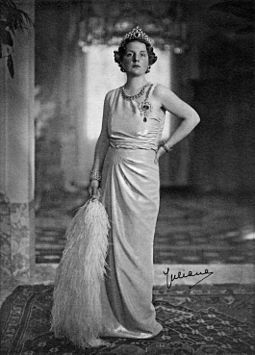
Queen Juliana 4.30.13 Thought of the Day

“It must be wonderful sport to contradict each other.” — Queen Juliana

Juliana in 1933. [Image courtesy: Wikipedia

Juliana in 1933. [Image courtesy: Wikipedia

Juliana Louise Emma Marie Wilhelmina was born on this day in The Hague, Netherlands, in 1909. Today is the 104th anniversary of her birth.

She is the only child of Queen Wilhelmina and Duke Henry of the House of Orange-Nassau. As a child she lived at the HetLoo, Noordeine and the Huis ten Bosch Palaces. A class room was built in the palace, and Juliana and three other royal children were educated there.

Queen Wilhelmina & Juliana

Queen Wilhelmina & Juliana (Photo credit: Wikipedia)

At 18 she was named Council of State.

She attended the University of Leiden where she studied international law. She graduated three years later in 1930.

She met her husband to be, a German, Prince Bernhard of Lippe-Biesterfeld at the 1936 Winter Olympics. Bernhard became a Dutch citizen, changed his name to Bernard, and the couple were married on January 7, 1937.

Princess Juliana on her wedding day (January 7...

Princess Juliana on her wedding day (January 7, 1937) (Photo credit: Empoor)

They had two daughters with in two years, Princess Beatrix in January of 1938 and Princess Irene in 1939.

As World War II loomed and Germany invaded the Netherlands (on May 12, 1940) the Royal family left the country for England. Bernard and Queen Wilhelmina stayed in Great Britain — the official Dutch Government in exile, Juliana and the children went to Ottawa,Canada. There she had her third daughter Margriet in 1943.

She returned to the Netherlands in August of 1945. As president of the Dutch Red Cross she worked tirelessly to help with post-war relief.

English: Standard of the Princesses of the Net...

English: Standard of the Princesses of the Netherlands – Daughters of Queen Juliana. Nederlands: Prinses Margiet, Prinses Irene, Prinses Christina vlag (Photo credit: Wikipedia)

She had her last child, Marijke Christina in 1947. Juliana had contracted German measles during the pregnancy and the baby was partially blind when born.

Queen Wilhelmina abdicated the throne to Juliana on September 6, 1948.  One of Juliana’s first acts as queen was to recognise Indonesia, a former Dutch colony, as a sovereign country.

Queen Juliana related to the every day Dutch people on many levels. She dressed  like an ordinary Dutch woman, rode a bicycle (a Dutch obsession) and prefered to be addressed as Mrs as opposed to Majesty.

Juliana showed her metal  in 1953 when a 100 year storm ravished the country. It flooded towns, killedtwo thousand and stranded thousands more. She pulled on her boots and an old coat and toured the effected area, comforting the victims of the disaster.

On her 71st birthday, Queen Juliana abdicated the throne to her eldest daughter Beatrix.  For a decade and a half after her abdication she was active throughout the country in charitable activities, but by 1995 her health began to fail. Juliana had Alzheimer’s and became more and more reclusive.  She died in her sleep  on Marcy 20, 2004. She had been suffering from pneumonia.

English: Statue of Juliana of the Netherlands ...

English: Statue of Juliana of the Netherlands and het husband Bernhard zur Lippe-Biesterfeld in the garden of Soestdijk Palace (Photo credit: Wikipedia)

Today, April 30, 2013, Queen’s Day,  her daughter Queen Beatrix abdicated to her eldest son, Prince Willem-Alexander.

King of the Netherlands

King of the Netherlands (Photo credit: HereIsTom)


Muffin Monday Banana Granola Chocolate Chip

Bananna Granola Chocolate Chip

Muffin inside

Ingredients:

  • 2 Bananas

Banannas

  • 1 cup of Granola

Granola

  • 1/2 cup of Milk

milk

  • 1 Egg
  • 1/4 cup Peanut Oil

egg and oil

  • 3 tablespoons Demerara Sugar (or raw or brown sugar)

3 tbls Demarcaced sugar

  • 1 cup White Whole Wheat Flour
  • 1/4 cup Buckwheat Flour
  • 2 teaspoons Baking Powder

flour baking powder

  • 1/2 cup Chocolate Chips

Choc Chips

Part 1: Pre-heat the oven  to 425 f. Put muffin pants into the muffin tin and spray lightly.

preheat to 425

Part 2: Mash Bananas in a large bowl. Mix in Granola and Milk and let sit for 5 minutes.

Mash banannas

Part 3: Mix Oil and Egg in a measuring cup. Add the Sugar.

Part 4: Add the Whole Wheat and Buck Wheat Flour and the Baking Powder.

Mix well

Part 5: Fold in Chocolate Chips.

all 12 muffins done

Part 6: Bake for 25 minutes until golden brown. Let cool for 5 minutes before enjoying. (Makes 12).

Single muffin

Related Posts:


James Monroe 4.28.13 Thought of the Day

“The best form of government is that which is most likely to prevent the greatest sum of evil.”–James Monroe

James Madison, Hamilton's major collaborator, ...

James Madison, Hamilton’s major collaborator, later President of the United States and “Father of the Constitution” (Photo credit: Wikipedia)

James Monroe was born on this day in Westmoreland County, Virginia, USA in 1758. Today is the 258th anniversary of his birth.
Monroe’s was born to Spence and Elizabeth Monroe a moderately well to do couple of Scottish, Welsh and French Huguenot descent. His father was a planter and carpenter. Elizabeth tutored her children at home, and James didn’t start school until he was 11, when he went to “Campbelltown Academy between 1769 and 1774,” [Biography.com]

In 1774 his father died and Monroe inherited the family’s plantation and slaves.  His mother passed soon after. James and his brothers  be came ward of uncle.  the same  year he entered the College of William and Mary. William and Mary is in Williamsburg, Virginia, which was then the capital of the colony of the State. It was quiet an interesting time to be studying in the city. The Royal Governor  and his family had fled the city, the arsenal and Governor’s Palace had been looted and ‘revolution’ was in the air. Monroe was part of a group of men who raided the Governor’s Palace and liberated its cash of weapons. They used the weapons to form the Williamsburg Militia.

In Winter of 1776 he left school and volunteered with the Continental Army.  He was shot in the shoulder at the Battle of Trenton, New Jersey.  And he fought with distinction throughout the war.

He met Thomas Jefferson during the war, and Monroe studied law under the Virginia statesman when the Revolution drew to a close. After passing the bar he was quickly elected to the Virginia Assembly  (probably through Jefferson’s influence.)

Elected to the Continental Congress in 1783, Monroe worked for expanding the power of Congress, organizing government for the western country, and protecting American navigation on the Mississippi River. [Mille Center.org]

He was initially opposed to the ratification of the Constitution and fought to have senators and the President directly elected. He also fought for the inclusion of a Bill of Rights.

As a youthful politician, he joined the anti-Federalists in the Virginia Convention which ratified the Constitution, and in 1790, an advocate of Jeffersonian policies, was elected United States Senator. [Whitehouse.gov]

He lost the 1790 race for the US House of Representatives to James Madison, but “was quickly elected by the Virginia legislature as a United States senator.” [Biography.com] Jefferson, Madision and Monroe joined forces to oppose Federalist policies of Vice President John Adams and Secretary of Treasury Alexander Hamilton.

James Monroe, fifth President of the United States

James Monroe, fifth President of the United States (Photo credit: Wikipedia)

Monroe served as Minister to France from 1794-1796 and he helped negotiate the Louisiana Purchase.

In 1816 he ran for  president with the blessing of his friend and  outgoing POTUS Madison. He won, becoming the 5th president of the United States. (4 of the first 5 US presidents were from Virginia, Monroe is the last of the “Virginia Dynasty”.)

His term started with a honeymoon dubbed the “Era of Good Feelings.” However, Economic depression and slavery disputes meant that the honeymoon didn’t last long.

The Monroe Doctorine is his legacy in foreign affairs. Foreign powers  must leave the American continents alone and “henceforth not to be considered as subjects for future colonization by any European Power.”[Whitehouse.gov]

During his presidence five states were admitted to the Union: Mississippi (1817), Illinois (1818), Alabama (1819), Main (1820), and Missouri (1821).

Monroe died on the Fourth of July, 1831.

James Monroe County (New York)