Category Archives: Film

Thought of the Day 9.19.12 Jeremy Irons

“It’s always great to play a man who sets himself up to be punctured.”

–Jeremy Irons
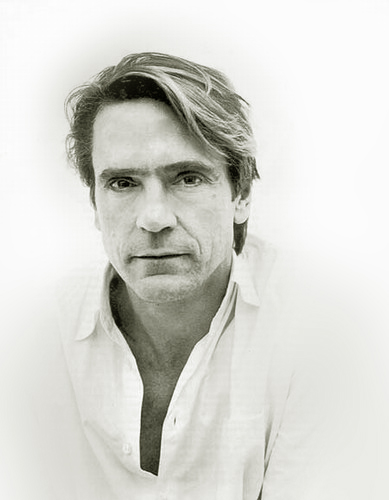
Jeremy John Irons was born on this day in Cowes on the Isle of Wight, England in 1948. He is 64 years old.

He grew up on the island, and didn’t have much connection with the professional performing arts. The family only ventured to the mainland once a year. But when he was an adolescent the family moved to Hertfordshire and, at 13, Jeremy was sent to the Sherborne School in Dorset. There he took part in a four-man school band called the Four Pillars of Wisdom. The group played for their mates on Sunday afternoons, with Jeremy on drums and harmonica (including stand out harmonica solos in “Moon River” and “Stairway to Heaven.” — because when you think of Stairway to Heaven you think ‘harmonica solo!’) He also performed comedy skits and was in the school’s production of My Fair Lady (he played Professor Higgins.)

Irons trained at the Bristol Old Vic Theatre School. There he “gained much experience working in everything from Shakespeare to contemporary dramas.” [IMDB biography] He supported himself with a number of odd jobs and by busking on the streets of Bristol.

In 1971 he moved to London and landed the role dual role of John the Baptist/Judas in Godspell at the Round House.

He did a lot of television work in the 1970’s including: The Pallisers;  Love of Lydia; Churchill’s People; Langrishe, Go Down; The Voysey Inheritance; and as Franz Liszt in Notorious Woman,

His film debut was in the 1980 film Nijinsky, but his break out role was opposite Meryl Streep in the French Lieutenant’s Woman. The film, based on the John Fowles novel, follows two parallel love stories — one between Victorian palaeontologist Charles and “the French Lieutenant’s Whore” Sarah; the other between Mike and Anna, the actors who play the Victorian couple in a movie they are making on the novel. Irons was nominated for a BAFTA Award for best Actor (Streep won one for Best Actress.)
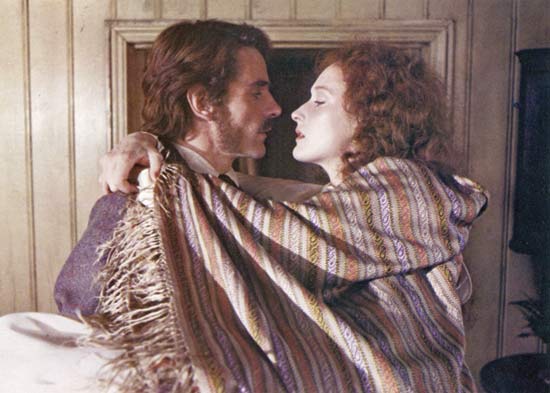
Still from The French Lieutenant’s Woman [Image Courtesy: Encyclopedia Britannica]
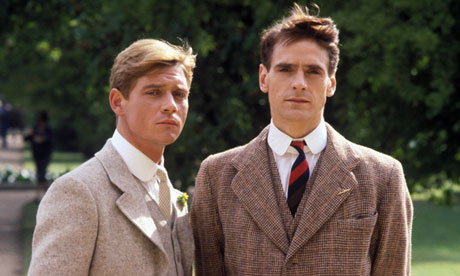
Back on television he played another Charles, Charles Ryder, opposite Anthony Andrew’s Sebastian Flyte in the hugely successful Brideshead Revisited  based on the Evelyn Waugh novel.  Irons got another BAFTA Nomination (Andrews won), both men were nominated for Emmy Awards.

Anthony Andrews and Jeremy Irons in Brideshead Revisited (Image Courtesy The Guardian.)

He followed those two high profile projects with an independent film about Polish guest workers in London, Moonlighting.

Irons played Father Gabriel in Roland Joffe’s The Mission. Father Gabriel is a Spanish Missionary who is sent into the jungles of South America. He builds a sanctuary for the Guarani Indians. Robert DeNiro, a reformed slave hunter joins him at the mission. Together they must defend both the mission and the people who live there from the encroaching Portuguese It is all set to Ennio Morricone’s beautiful music.
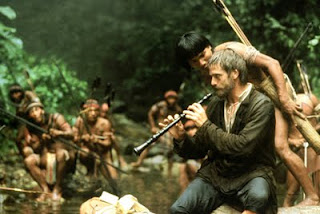
Father Gabriel’s (Irons) first encounter with the Guarani Indians. [Image courtesy: Mostly Movies]

David Cronenberg’s psychological thriller Dead Ringers saw Iron’s playing identical twin gynecologist. The movie brought the word “co-dependant” to a whole new level. Iron’s is cool (maybe even icy) and creepy in the movie. (It is a total departure from his Father Gabriel. So if you are planning a Jeremy fest, don’t book these two back to back.)

Reversal of Fortune finally brought Irons the Gold. He won both an Academy Award  and a Golden Globe Award for his portrayal of Claus von Bulow.

Irons took on the role of Rene Gallimard when Cronenberg brought M. Butterfly from stage to screen.

You might recognize his growling voice from Disney’s the Lion King. He played Simba’s uncle Scar.

When Bruce Willis brought his Die Hard franchise to New York for Die Hard with a Vengeance, Irons played his foil, psychopath Simon Gruber.

He pulled on some tights when he took on Aramis in The Man in the Iron Mask; Antonio, to Al Pacino’s Shylock, in Michael Radford’s 2004 movie of Shakepeare’s The Merchant of Venice;  suited up as Tiberias, a Knight Templar, in Kingdom of Heaven; and starred in the tv mini-series Elizabeth I, the Virgin Queen, as the Earl of Leicester/Lord Dudley, opposite Helen Mirren’s Bess.

He played photographer Alfred Stieglitz in the made for TV biopic Georgia O’Keefe in 2009.
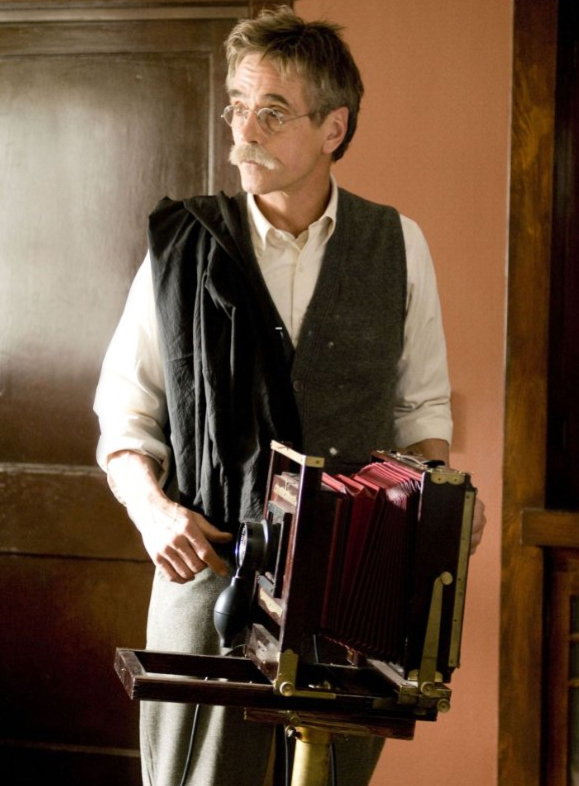
Still from Georgia O’Keefe. (Image Courtesy: IMDB)

Heck, he’s even voiced the part of Moe’s Bar Rag in the Simpsons!

Irons currently can be seen in Showtime’s sweeping TV mini series The Borgias, a crime drama set in 1492 Italy.

And he plays Henry IV in Shakespeare’s Henry IV, Part 1 & 2  in the BBC’s the Hallow Crown series.
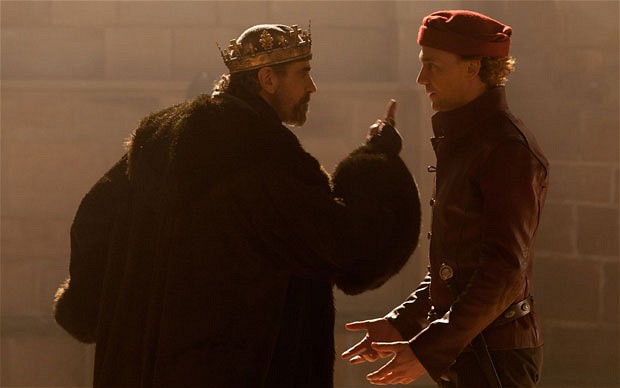
Still from Henry IV, Part 1 with Irons and Tom Hiddleston as Prince Hal (Image Courtesy: The Telegraph)

Here’s Ennio Morricone’s BAFTA Award winning song Gabriel’s Oboe from the film The Mission. [The soundtrack holds a very special place in my heart because we used parts of it, including Gabriel’s Oboe at our wedding. I wrote the publisher to see if I could get the sheet music, but it wasn’t published yet. They contacted Mr. Morricone and they supplied us with a copy of the hand written piano score. How’s that for romantic? This was played on a pipe organ as I walked up the aisle with my dad. ]
Thought of the Day 9.17.12 Baz Luhrmann

n”I only achieve about 60 per cent of what I’ve dreamed of. Perhaps that’s a good thing – if I did ever get the whole way with anything, I think I’d probably want to destroy it.”

 Baz Luhrmann

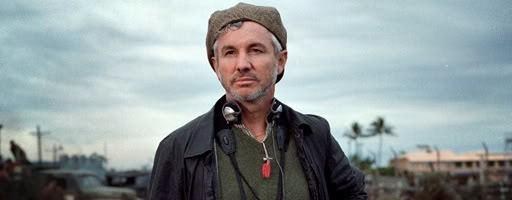
On the set of Australia [Image Courtesy: The Play List]

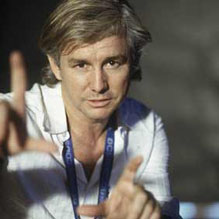
Mark Anthony Luhrmann was born on this day in Sydney, Australia in 1962. He is 50 years old.

His mother, Barbara, owned a dress shop. His father, Leonard, was a farmer and owned a gas station and movie theater in the small town of Herons Creek near where they lived. Barbara and Leonard competed in ballroom dance competitions and Barbara taught ballroom dance at a local studio.

“What kind of kid was I? …Extremely busy. My father was a bit mad, you see. He thought that we had to be the renaissance kids of Herons Creek. We had to learn commando training as well as photography, how to grow corn as well as how to play a musical instrument. We were up at 5 in the morning, and then we just went until we dropped. The town consisted of a gas station, a pig farm, a dress shop and a movie theatre – and we ran them all.” [Baz Luhrmann, as quoted on Baz the Great! fansite]

Growing up the Luhrmann kids helped run the various family businesses. In their free time they rode horses, learned to ballroom dance (of course), and made amateur movies. As a gas jockey at the service station Mark saw a stream of people  pass through. He was invisible to them, and  so was able to observe  their stories unfiltered and unedited for the 5 minutes it took to fill up their tank.  Later, after his parents divorced he eventually found himself in Sydney. Prior to the move he (and his brothers) had to keep their hair closely cropped in a buzz cut, but once in Sydney he was allowed grow it out. When he was teased that his new hair do made him look like a puppet fox on TV, Basil Bush, he embraced the  taunting and officially changed his first name to Bazmark.  In high school he acted in Henry IV, Part 1.  And at 17 he got a role in the Judy Davis, Bryan Brown film The Winter of Our Dreams.

He worked with the Australian Opera to bring in a younger audience and directed and performed in a number of stage productions for the company.

In 1987, while working on an experimental opera, Lake Lost, He met Catherine Martin, a production designer. She became his exclusive production designer and his wife.  (They now have two children.)

Luhrmann mounted productions of La Boheme, A Midsummer’s Night’s Dream and other classics in modern or unusual settings.

[Image Courtesy: NNDB]

His break out film was Strictly Ballroom. The project began as a 30-minute play, but Luhrmann developed it into a full blown motion picture in 1992. The story centers around handsome, spoiled, Scott. He’s a leading ballroom dancer who’s set to win the Pan-Pacific Ballroom Championships. But Scott wants to break the rules and dance his own steps. Enter Fran, a shy, ugly duckling of a girl from the beginner class at his mother’s studio. He teaches her how to dance and along the way she teaches him a thing or two as well. It’s quirky, funny, over the top, and wonderful. Here’s a scene about mid-way through the movie:

It is the first of his Red Curtain Trilogy.  Romeo + Juliet and Moulin Rouge! round out the trio. Luhrmann describes a Red Curtain film as having the following attributes:

  1. the audience knows how it will end right from the start;
  2. the storyline is thin and simple;
  3. the world created in the film is one of heightened reality; and
  4. there is to be a specific device driving the story. For Strictly Ballroom it was dance, for Romeo + Juliet it was iambic pentameter, and for Moulin Rouge! it was characters breaking into song.

The success of Strictly Ballroom  brought Luhrmann to the attention of 20th Century Fox  who signed him to a 3-year deal. For second movie Luhrmann gave Romeo + Juliet a modern jump. It starred Leonardo DiCaprio and Claire Danes and is both fast paced and action packed.  In both style and weirdness factors there is a 15% increase from Ballroom, but still, it works.

The third movie of the set was Moulin Rouge!, a highly stylized musical love story starring Nicole Kidman and Ewan McGregor.

“. . . if you make a film full of risk, studios don’t run towards you to give you $50,000,000 in order to reinvent the post-modern musical, I can tell you. If you do manage to cajole them into doing it and you want to maintain the flag of creative freedom, you better make sure that it pays its bill.”[Baz Luhrmann, IMDB]

It was somehow even bigger and stranger than J + R and Ballroom put together. With an odd combination of modern songs (with modified lyrics) that should not have fit in the 1900 Paris setting, this musical had no business becoming a hit. But it did. Frankly, once Ewan McGregor opened his mouth to sing… nothing else seemed to matter.  (As is evidenced by the bizarre beginning of this clip… Here McGregor’s Christian has snuck into courtesan Satine’s room. He is a penniless writer and he tries to win her over with the strength of his prose [well, in this case it’s Elton John’s lyrics] Kidman feign’s over excitement, hoping to get the shy wordsmith to leave, but then he starts to sing and the movie, and their attraction,  takes off.)

For his next project he brought  La Boheme to Broadway.  The show opened on December 8, 2002 and was declared a “brilliant reworking of Puccini’s masterpiece that appealed to all. [Baz the Great! fansite]

In 2008 he teamed with Kidman again, this time pairing her with Hugh Jackman, in the epic WWII Aussie drama, Australia. It’s beautifully shot. From a cattle drive worthy any Western… to the Japanese attack on Darwin… to the love story, Australia has a lot going for it. (But be warned it is a bit preachy too.)

<iframe width=”420″ height=”315″ src=”http://www.youtube.com/embed/p447zpUmbxw&#8221; frameborder=”0″ allowfullscreen>

His eclectic mix of images and music can make even the every day seem extrordinary…


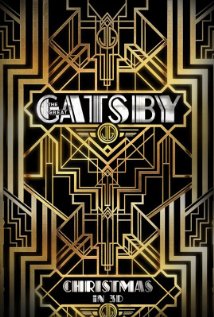
Luhrmann’s latest project is Gatsby. This time he re-teams with DiCaprio. This stylish take on the Fitzgerald’s classic, The Great Gatsby is due out on Christmas Day. [Don’t buy your tickets just yet… seems like the release date has been pushed back to Summer 2013 — thanks to John for the heads up. ]


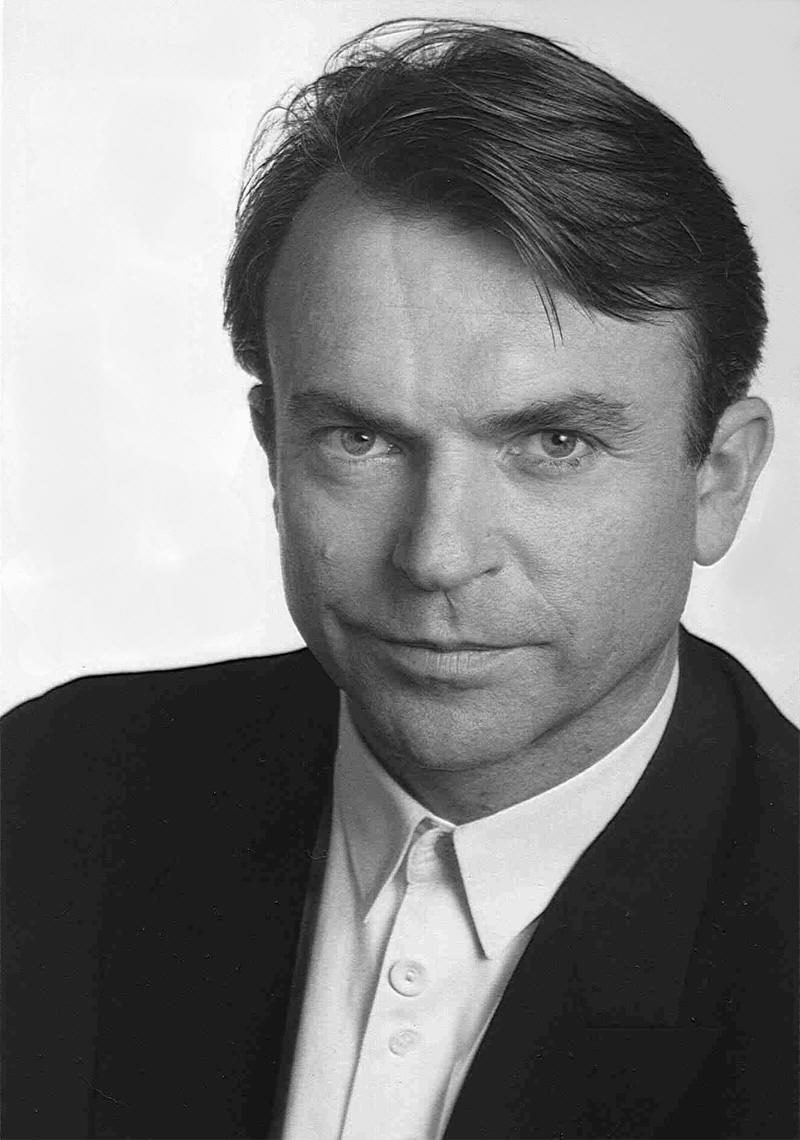
Thought of the Day 9.14.12 Sam Neill


“As much as possible, I try to encourage people to use stunt men because that is really their job.”


-Sam Neill


Nigel John Dermot “Sam”  Neill was born on this day in Omagh, County Tyrone, Northern Ireland in 1947. He is 65 years old today.

His father, a New Zealander, was stationed in Northern Ireland when Sam was born. The family lived there until Sam was six when they returned to Christ Church.

Sam stuttered badly as a child, and shied away from talking to people. He would refrain from raising his hand because he was afraid that he wouldn’t be able to say anything if he was call on.

“My fear was nothing would come out at all … and I would just be left with a face that was going redder and redder and more purple. The upside of that was I probably learned to listen better than most of my contemporaries… I’m still fairly economic with words and I think that’s a good thing.” [ The British Stammering Association]

He says his stammer gradually became less pronounced. As he  became involved in debate and acting, at University of Canterbury, he gained  self-confidence. The more self-confidence he had, the less he stuttered. Occasionally you can still hear a snippet of it. Neill actively supports several stammering support associations like the British Stammering Association and the Australian Speak Easy Association.

After graduating from university he worked with the New Zealand National Film Unit directing, editing and writing documentaries. He also worked on stage with the New Zealand Players at that time.

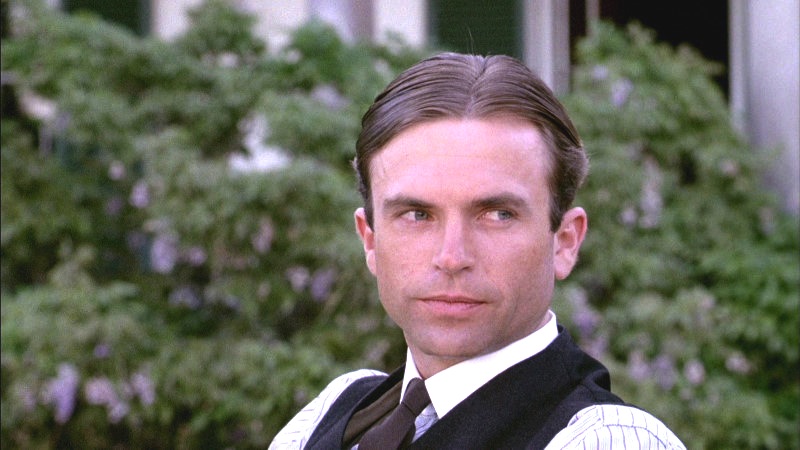
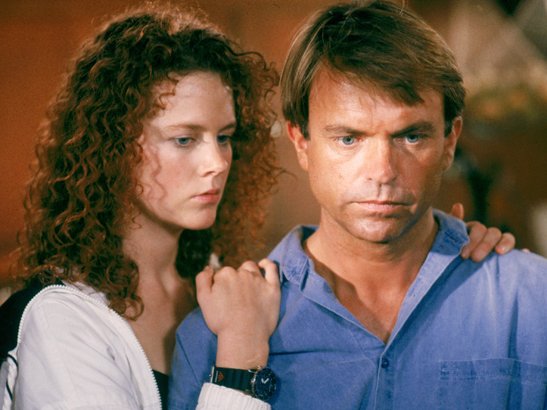
His first real film role was in 1977’s Sleeping Dogs, a N.Z. based drama. He got a much wider audience as Harry, the romantic lead in the period drama My Brilliant Career opposite Judy Davis.

Neill in My Brilliant Career [Image Courtesy: HD-Sensei]

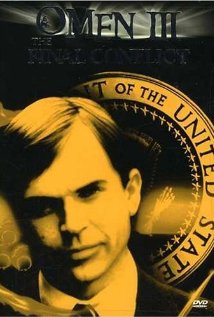
After a few television roles he landed quite a different kind of leading role in Omen III: The Final Conflict. Sure, Neill always had a bit of a devilish grin, but …. On a scale of 1 to 10, with My Brilliant Career as a strong 10… I’d give Omen III a weak 6.66.  The Omen brought Neill to the London film making scene under the mentorship of James Mason.

DVD cover for Omen III. Cute little devil, isn’t he? [Image Courtesy: IMBD Movie Database]

For a New Zealander, he played a lot of Soviets. Some were good Russians, like Vassili in Hunt for Red October. Other times he played “A strict Eastern European autocrat” [TalkTalk] as he did in Enigma and Amerika.

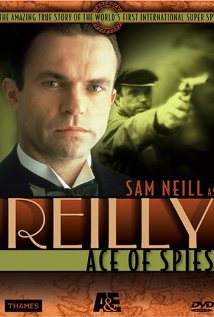
While in England he took on the title role in the BBC mini-series Reilly: Ace of Spies, ” The epic adventures of Britain’s greatest spy” [IMDB: Movie Database — Reilly: Ace of Spies]

He teamed up with Academy Award winner Merle Streep for the drama A Cry in the Dark (it was released originally as Evil Angels in Australia and New Zealand.)

Next he starred in the taunt (essentially) three person horror film Dead Calm with newcomer Nicole Kidman and Billy Zane…

“Here Neill played her distressed husband, desperately trying to save the day when nut-job Billy Zane kidnaps both Kidman AND Neill’s boat. It was a superb thriller, boosting its stars big-time…” [TalkTalk]

I don’t know that I’d go so far as to call it “superb”, but…the scene where Neill is stuck inside the quickly sinking second boat (the one Billy Zane was on)  is more than worth the price of a Netflix rental.

Still from Dead Calm. [Image Courtesy: Turner Classic Movies]

In 1993 he was the, angry, odd-man-out in a love triangle between mute Holly Hunter and Harvey Keitel the beautiful made The Piano.

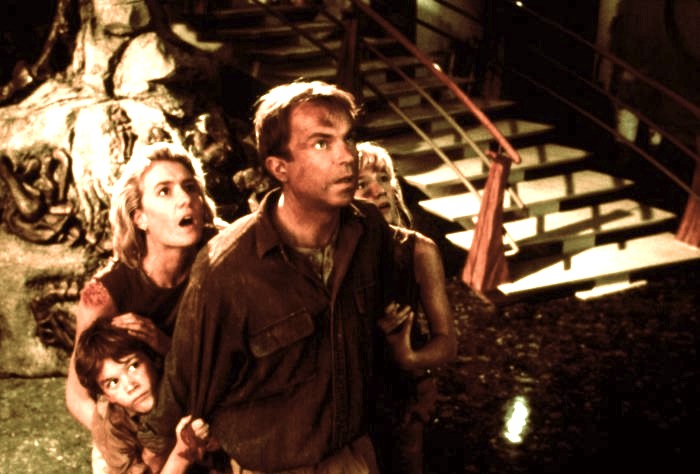
So… if you’ve never heard of any of the movies I’ve written about so far in this blog, I’m betting your heard of this one…Neill played Dr. Alan Grant the Jurassic Park franchise. I thought J.P. the book was wonderful, the movie? Not so much. The dinosaurs were cool, REALLY cool, but the acting, script, and direction was flat — except for my boy Sam. I thought he pulled off the requisite wonder and reluctance needed for the role.

Still from Jurassic Park [Image Courtesy: Cineplex.com]

Back on the small screen he’s played  Merlin, Komarovski in Doctor Zhivago, and Cardinal Wolsey in The Tudors.

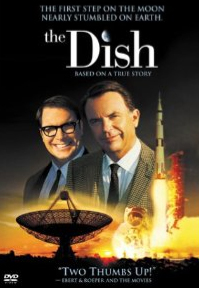
One of my favorite Sam Neill movies is The Dish. In it “A remote Australian antenna, populated by quirky characters, plays a key role in the first Apollo moon landing.” [IMDB: Movie Data Base]

DVD Cover for The Dish. [Image Courtesy: Amazon.com]

Neill currently  he enjoys relaxing by making wine at his Two Paddocks Winery on New Zealand’s South Island. Here he shows a bit of his trademark deadpan humor in a promotional video for the vineyard.


Thought of the Day 9.13.12 Roald Dahl

“We are the music makers, and we are the dreamers of dreams.”

–Roald Dahl

My Roald Dahl collage featuring some of his most popular characters (as drawn by the amazing Quentin Blake). Surrounding Mr. Dahl and his pups are: at the top left The BFG & Sophie, The Enormous Crocodile, Mr. Fox, James (inside the Peach,) the Grand High Witch, Willy Wonka, Danny (Champion of the World) and Matilda.

[I gave a little inward squeak of delight when I saw that it was Roald Dahl’s birthday today. I can’t think of a better way to spend a few hours than to reminisce with my old friends Charlie, Matilda, Sophie, James and the rest. What joy!]

Roald Dahl was born on this day in Llandaff, Cardiff, Wales, in 1916. Today is the 96th anniversary of this birth.

Although Dahl grew up in Wales his parents were from Norway and the family spoke Norwegian at home. His older sister, Astrid, and his father,Harald, died within weeks of each other when Roald was a toddler. Sophie, his mother, was pressured to bring the family home and live with relatives, but she knew Harald had wanted the children to have a proper English education. So she split the difference.  Summers were spent visiting relatives across the North Sea. Roald and his sisters enjoyed long, sun drenched days on the water and beaches of the Norwegian coast and the family visited with their grandparents in Oslo.

Roald Dahl aged 8. [Image courtesy: The Telegraph]

It was a lovely break for the dreary days at English public school that Dahl described as  being filled with “rules, rules and still more rules to be obeyed.”  His biography Boy: Tales Childhooddetails his exploits, dramas, and adventures growing up… like the time he mixed goat droppings into his older sister’s fiance’s pipe tobacco or the when he and his friend were given Cadbury chocolate samples to taste test at school.

After school Roald wanted adventure…

Though not a good student, his mother nevertheless offered him the option of attending Oxford or Cambridge University …. His reply, …was, “No, thank you. I want to go straight from school to work for a company that will send me to wonderful faraway places like Africa or China.”…Dahl took a position with the Shell Oil Company in Tanganyika (now Tanzania)

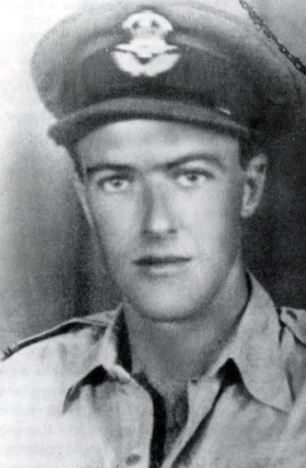
He worked for Shell in Mombasa, Kenya and Dar-es-Salaam, Tanganyika and had a famous encounter with a black mamba and some lions. At the outbreak of WWII Dahl joined the British Royal Air Force as a pilot — not an easy thing for him to do as he was 6’6″ and the open cockpit of his De Havilland Tiger Moth was built for men who were considerably smaller.  His head stuck up above the windshield.

Dahl in his RAF uniform. [Image Courtesy: Mail Online]

In September 1940 while flying the last leg of a trip across the top of Africa he found himself  running out fuel and was lost. He couldn’t find the target airstrip near Mersa Matruh, Egypt, and had to make a desert landing. He cracked his skull, broke his nose, and was temporarily blinded in the crash. When he woke up he found out that the coordinates he’d been given for the airstrip had been all wrong. HQ had sent him by mistake into a no man’s land between Allied and Axis forces.

He flew other missions — bravely flying with the 80th Squadron  in the Greek Campaign. He described the “Battle of Athens” as “an endless blur of enemy fighters whizzing towards me from every side.” [Going Solo, Scholastic] After that he was sent back to Egypt and flew sorties over the Mediterranean against Vichy France, but he’d begun to have severe headaches — a result of the earlier crash. When the headaches got so bad that he began to black out he was grounded.  He writes about his adventures in Africa and in the War in his second, equally wonderful biography, Going Solo.

Dahl was sent to Washington DC as an assistant air attaché. While in Washington he stepped briefly into the role of a spy. He passed information to MI6 and worked on propoganda to promote the British agenda within the US. It was in DC that he began to write. The Saturday Evening Post published his first piece, “A Piece of Cake” (which it retitled to the more sensational, if less accurate “Shot Down Over Libya,”) in 1942. He also wrote his first book, a novel for adults about  the mythical creatures gremlins. Walt Disney optioned the story for a potential animated film.

The Gremlins is the story of Gus, a British World War II fighter pilot, who during the Battle of Britain turned to look out on the wing of his plane only to see an amazing sight: a little man, no more than six inches tall with horns growing from his head, drilling a hole in the plane’s wing. [Amazon.com]

Although the film was never made a companion book was released on a limited run. The book was re-released in 2006. (The classic Twilight Zone episode “Nightmare at 20,000 Feet” is an homage to the story.)

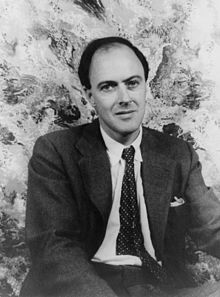
Dahl in 1954 [Image Courtesy Wikipedia]

He began to write for children when his own family came along. ( He was married to actress Patricia Neal and had five children with her.)

…Dahl began making up stories for them each night before they went to bed. These stories became the basis for his career as a children’s writer, which began seriously with the publication of James and the Giant Peach in 1961. …Dahl insisted that having to invent stories night after night was perfect practice for his trade… [Roald Dahl Biography]

His other childrens’ books include: Charlie and the Chocolate Factory 1964; The Fantastic Mr. Fox 1970, Danny, the Champion of the World 1975;  The BFG 1982; The Witches 1983;  Matilda 1988 and others. He also wrote books of verse for children including the hilarious Revolting Rhymes and Dirty Beasts.  Most of his books have nasty adults who mistreat children, those adults do not fare well in the end. The justification that “Beastly people must be punished,” made Dahl very popular with children of all ages.

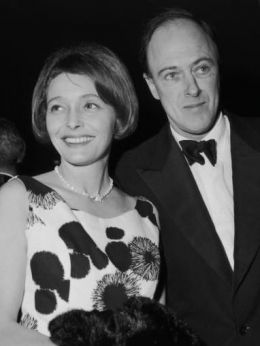
Neal and Dahl prior to their marriage. [HubPages.com]

He wrote fiction for adults as well, though it is much more difficult to find. Roald Dahl: Collected Stories is a good place to start and it contains dozens of the writer’s short stories. As does The Best of Roald Dahl.

“Dahl has the mastery of plot and characters possessed by great writers of the past, along with the wildness and wryness of his own. One of his trademarks is writing beautifully about the ugly, even the horrible.” [– The Los Angeles Times on the back of The Best of Roald Dahl]

He also wrote screen plays. He wrote a full script for The Gremlins for Disney, as well as the screenplay for Chitty Chitty Bang Bang (1968)– that creepy child catcher  who trolls the streets of Vulgaria with his candy festooned wagon is 100% Dahl– and the 1971 version of Willy Wonka & the Chocolate Factory.  For the small screen he penned  6 episodes of Alfred Hitchcock Presents  and several other suspense shows.

Dahl died at the age of 74 from Leukemia.

[Image courtesy: Wikipedia]


Thought of the Day 9.11.12 Harry Connick Jr.

“hard to sit in silence, to watch one’s youth wash away.”

–Harry Connick Jr.

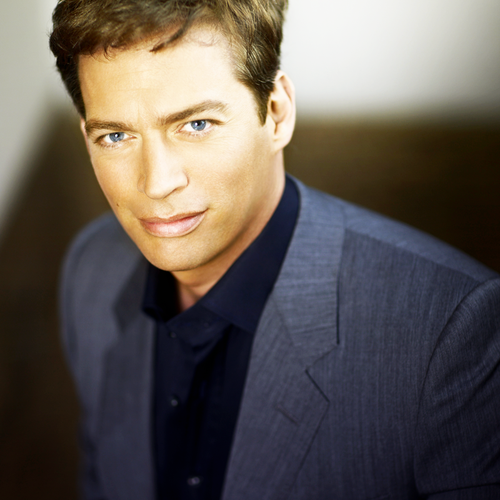
[Image courtesy: Last.fm]

Joseph Harry Fowler Connick Jr. was born on this day in New Orleans, Louisiana, USA in 1967. He is 45 years old.

Connick’s mother, Anita, was a lawer and judge, she rose through the ranks to become  a Louisiana Supreme Court justice. Harry’s first concert was at a campaign event when his father, Joseph, was running for district attorney. Harry was 5 and had been taking piano lessons for two years, The little boy sang the national anthem. (His dad won the election.) At 9 he performed  Beethoven’s Piano Concerto No. 3 Opus 37 with the New Orleans Symphony Orchestra and joined the musician’s union. He took lessons at the New Orleans Center for  the Creative Arts from Ellis Marsalis and James Booker.

After high school Connick moved to New York City. He played at various jazz clubs,  and caught the attention of singer Tony Bennet (who claimed the youngster could be the next Sinatra) and Columbia Record exec George Butler (who signed Connick to the label.)

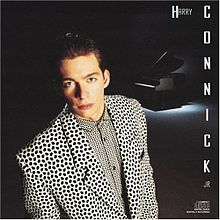
Connick’s first album. [Image Courtesy: Wikipedia]

His first, self titled, album was largely instrumental, but  he added vocals to his second album, 20. Harry Connick, Jr. sings like a Delta summer evening — his voice is warm and boozy and smooth all at the same time. He pulls you in and dances you around a song. At 20 he was singing standards that belonged to a generation (or two generations) his senior, and he did it with style. To date Connick has put out 27 albums.  From Jazz to Funk to Ballads to Big Band to the songs he loved from childhood he makes it sound easy… and has sold over 25 million recordings.

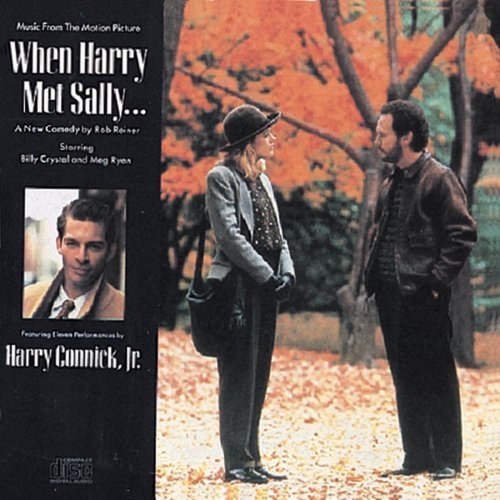
Cover for When Harry Met Sally… [Image Courtesy: Amazon.com]

Rob Reiner signed Connick for the soundtrack of When Harry Met Sallyin 1989. The soundtrack is lush with Big Band standards like “It Had to Be You,” “Don’t Get Around Much Anymore,” “Let’s Call the Whole Thing Off,”  “But Not for Me,” “Where or When” and (a personal favorite) “I Could Write A Book,” and went to #1 on the Jazz Charts  while reaching double-platinum.  Connick won a Grammy for his effort.

The film’s success led to Harry’s first multi-platinum album, an accomplishment made even more impressive by the fact that it was also Harry’s first Big Band recording. [Harry Connick, Jr official web page]

Reiner agreed with Bennet’s assertion that Connick had a certain Sinatra-esque style, and Connick followed up his success scoring Harry Met Sally by going ON camera in the WWII film Memphis Belle. Next he played Eddie in Jodie Foster’s Little Man Tate.

Harry changed tunes for his next film role, portraying a homicidal sociopath in 1995’s Copycat. The critics took notice, with the New York Times dubbing him, “…scarily effective,” and the Tampa Tribune naming him “most memorable” in a cast that included Holly Hunter and Sigourney Weaver. [Harry Connick, Jr official web page]

He played a fighter pilot / side kick in Independence Day where the actors, writers and directors were too busy blowing things up and saving the world to bother with science, logic or character development. [Too harsh?] He was the romantic good guy to Sandra Bullock in Hope Floats. In 2001 he co-starred with Sarah Jessica Parker  in Life Without Dick.  He was in the horror movie BUG with Ashley Judd.  He  narrator The Happy Elf (which was based on a song he wrote for his Harry for the Holidays 2003 album.) and My Dog Skip and he gave his voice to the animated role of Dean McCoppin in The Iron Giant.  He co-starred with Renee Zellweger in the 2009 rom-com New In Town. And his character heads a team of marine veteranarians who help an injured bottlenosed dolphin in Dolphin Tale. (Ashley Judd co-stars in Dolphin Tale as well, but sans bugs.)

On the small screen he worked with Glen Close in the ABC special South Pacific, and had a recurring role as Grace’s husband Leo Markus on Will and Grace. He was the lead in bio-pic Living Proof about Dr. Dennis Slamon, the man who developed the breast cancer drug Herceptin. He was the host for the Weather Channel’s 2007 documentary 100 Biggest Weather Moments (The Weather Channel donated $75,000 to Musician’s Village, a project Connick and Branford Marsalis devollped with Habitat for Humanity to aid the victims of Hurricane Katrina. His latest television role is a recurring spot on Law & Order: Special Victims Unit as A.D.A. David Haden.

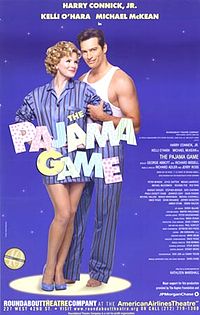
Poster for The Pajama Game [Image courtesy: Wikipedia]

He has appeared in several Broadway shows including the 2006 revival of The Pajama Game,  and the 2011 revival of On a Clear Day You Can See Forever, as well as two special concert tours, An Evening with Harry Connick Jr. and His Orchestra in 1990 and Harry Connick Jr.: In Concert on Broadway in 2010. He also composed the music and lyrics for Thou Shalt Not.

After Hurricane Katrina devisated New Orleans and the Gulf region Connick joined forces with other musicians and civic leaders to help rebuild the city. Portions of the royalties from Oh, My NOLA  and Chanson duVieux Carre along with the concert tours promoting the albums went to Musician’s Villiage.


Thought of the Day 9.10.12 Colin Firth

“Colin is the sort of name you give your goldfish for a joke.”

Colin Firth

Colin Andrew Firth was born on this day in Grayshott, Hampshire, England in 1960. He is 52 years old.

He spent much of his first four years in Nigeria where his parents, Shirley and David Firth, were missionaries.They returned to England where his parents took up University posts and Colin and his younger  siblings, Kate and Jonathan grew up. In 1972 the family moved to St. Louis, MO,for a year. The transition did not go well and, he says, he reacted badly, becoming rude and defensive.

The family settled in Winchester when they returned to England with David at King Alfred’s College lecturing on History, and Shirley at the Open University teaching comparative religion. Colin’s rebellion streak continued.

He was a troubled teen, scruffy and cocky, and often railing against a middle class whose children progressed via academia while the working class were pushed towards carpentry and other manual skills. [TalkTalk, Colin Firth-Biography]

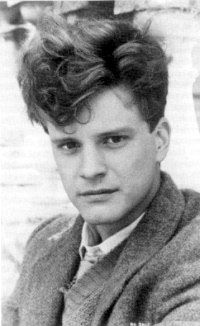
At 14 he declared that he wanted to become an actor, and by 18 he had joined the National Youth Theatre in London. S-L-O-W-L-Y he built his career, at first doing grunt work, like fetching tea and answering phones, then enrolling in more acting classes — this time at the London Drama Center and learning the Stanislavski method. After 3 years of study he started to see lead roles — including Hamlet — come his way at the school.

[Image Courtesy Probert Encyclopaedia]

In 1983 a talent scout saw his portrayal of the great Dane and offered him a spot replacing Daniel Day-Lewis in the West End production of Another Country. He went on to play another role in the movie production of the play, his first film. Though the movie was a success, and his role it was critically acclaimed, he went back to the theatre  — working at the Churchill Theatre and  the Old Vic. He also did some television, including Camille with John Gielgud and Ben Kingsley, and the mini-series Lost Empireswith Laurence Olivier.

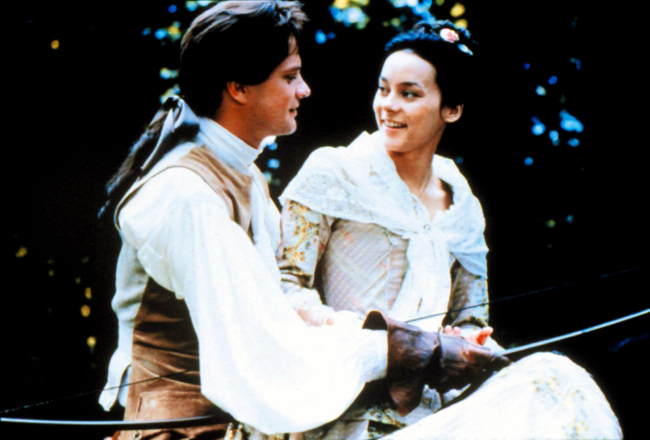
Firth and Tilly in Valmont [Image Courtesy: Pure Cine]

He stepped easily from stage to screen (small and large). Another film of note from his early career is Valmont, “An earthy, physical take on the novel Les Liaisons Dangereuses…” [TalkTalk]He co-starred here was Annette Bening, as

 ‘Lustful, manipulative aristocrats in 18th Century France, they would toy with the affections and bodies of others, until real emotions leads to the downfall of them both.’ [TalkTalk]

During the film ing of Liaisons he fell in love with actress Meg Tilly who played Madame de Tourvel. They dropped out the acting world, moving to a cabin in  the wilds of British Columbia. The two had a son William.   After the two-year hiatus he returned to the stage, Almedia, the small screen Hostages, and the indie film circuit, The Hour of the Pig (aka The Advocate).

If you want to see Firth as a creepy bad guy you can rent Playmaker (a film not even he likes) or The Deep Blue Sea (in which he plays a no-good cad.) He also plays a bit of a cad in Circle of Friends.

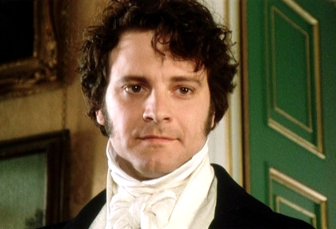
But nobody wants to see Colin Firth play a cad…am I right? In 1995 he was offered, and REFUSED, the role of Fitzwilliam Darcy in Andrew Davies’ adaptation of Jane Austen’s Pride and Prejudice.  There is a certain Darcy-esque story behind Firth’s refusal of the role. For a serious actor trying to build a serious career — an actor who was NOT trying to make it on his pretty face — the role “seemed tiresome and predictable.” [Talk Talk] He was as aloof about the role as Darcy is about  society in Meryton. He just wasn’t looking for a role that simply required that he throw on a Waist coat, snarl in a period costume, and pick up a pay check. He also didn’t think that Austen’s story was too female centric, and that just wouldn’t be enough for him to do. But Sue Birtwistle, the show’s producer, was persistent. She got him look at the script and rethink what he could bring to Darcy.

Firth as Darcy [Image Courtesy: Period Dramas.com]

Filming began in June 1994.

“As Mr. Darcy in the acclaimed 1995 television adaptation of Pride and PrejudiceColin Firth induced record increases in estrogen levels on both sides of the Atlantic. Imbuing his role as one of literature’s most obstinate lovers with surly, understated charisma, Firthcaused many a viewer to wonder where he had been for so long, even though he had in fact been appearing in television and film for years.” [New York Times, Movies & TV]

The series was wildly popular and is THE standard against which all other Jane Austen adaptations are judged. Firth’s stock as both movie star and sex symbol sky rocketed. But instead of taking on another leading role, his next turn on the silver screen was a relatively minor role as Kristen Scott Thomas’ lightweight husband in The English Patient. He looses Scott Thomas to Ralph Fiennes in that movie. He played an even bigger cuckold (and a less amiable one) in Shakespeare in Love, where he looses his screen love — it’s Gwyneth Paltrow this time — to another Fiennes brother, Joseph. Speaking of Shakespeare…He’s an American farmer in A Thousand Acres which is an adaptation of Shakespeare’s King Lear, then does a comic turn AS Shakespeare in Blackadder: Back and Forth. 

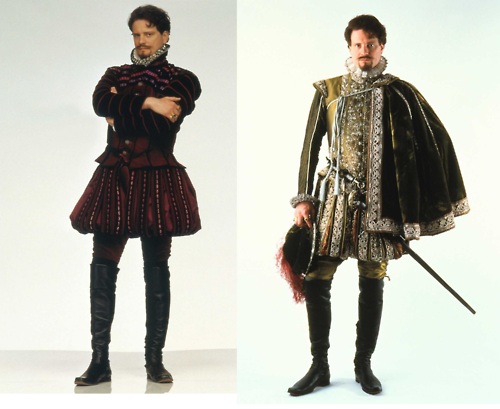
From Shakespeare in Love [Image Courtesy: My Favorite Things]

It must have felt like he was looking in a mirror when he took on another Mr. Darcy in Bridget Jones’s Diary and Bridget Jones: the Edge of Reason, (especially as the former loosely echos the plot of P&P.)

Here’s a rundown of most of his other post Pride and Prejudice work:

  • Other Rom-Com work includes… Hope Springs, Fever Pitch, Love Actually, The Accidental Husband, Relative Values, Four Play, Then She Found Me and Easy Virtue.  I suppose you can add Mamma Mia to that list as well. (I can vouch for Firth’s performances in the first three. I think Hope Springs is his best Romantic Comedy, Fever Pitch is funny if a bit too sporty for me, and he was the best thing in Love Actually, actually.)
  • For period pieces you can choose from… Girl with a Pearl Earring, The Importance of Being Earnest, Nostromo, The Turn of the Screw (briefly) and Dorian Gray. (Pearl Earring was excellent, if a little slow-moving — in a beautiful kind of way. Earnest was funny — but it’s Wilde, so, you know, that’s kind of a given. Dorian Gray was based on a Wilde novel too… but I didn’t like that one nearly as much.)
  • Looking for more modern drama? Try… My Life So Far, Conspiracy, Born Equal, Trauma, Where Lies The Truth, Main Street, And When Did You Last See Your Father? and Genova. (Of this lot I’ve only seen Conspiracy, which is a chilling drama about a Nazi conference where officials discuss the “Final Solution.” It is a beautifully acted film all around with Firth in a lessor role.)
  • He seemed a little out-of-place in the family films What a Girl Wants and Nanny McPhee  and the historical action flick The Last Legion. 

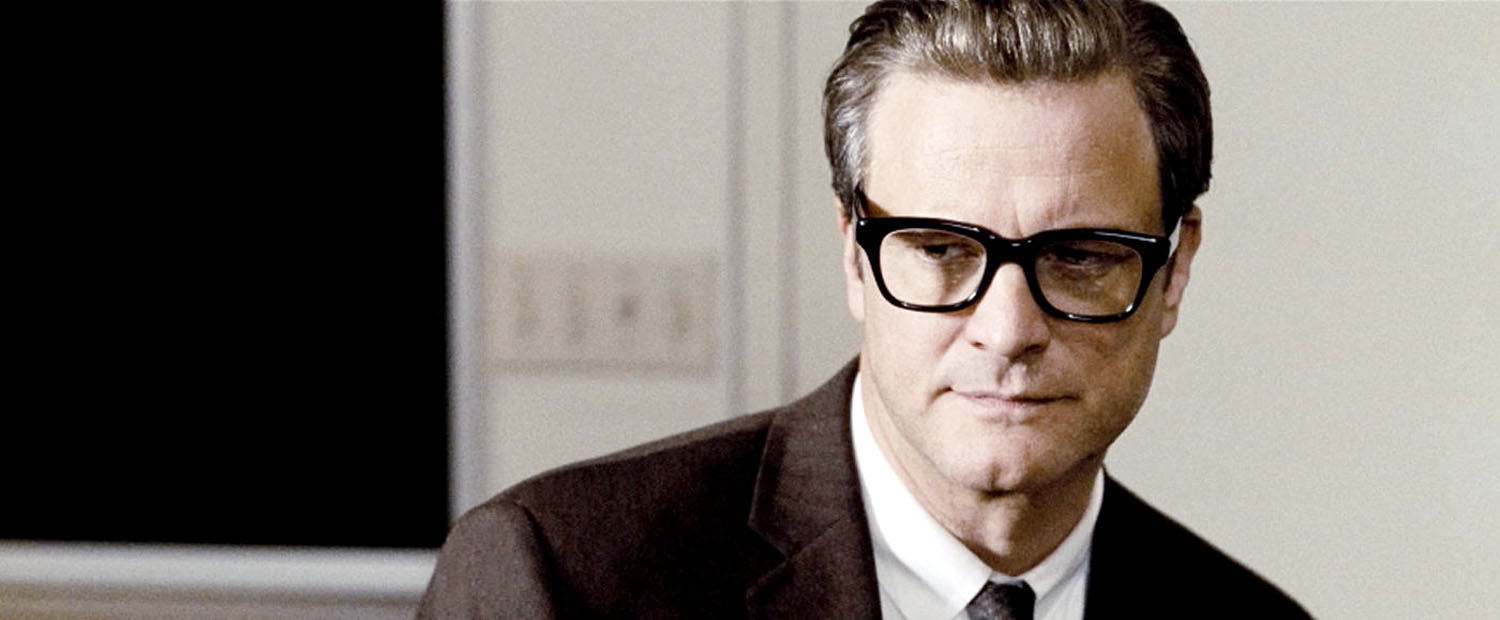
Then came A Singe Man in 2009, and suddenly Colin Firth went from being movie star (small caps) to MOVIE STAR (big caps) all over again. His performance as George Falconer (in the movie based on the Christopher Usherwood  novel of the same name) was understated and amazing. It’s 1962 and Firth’s George plays a university professor who is in mourning after the accidental death of his long time partner, Jim. Firth was nominated for an Academy Award, and won a Golden Globe and Screen Actors Guild Award for Best Actor.

Firth in A Single Man [Image Courtesy: Talking Movies]

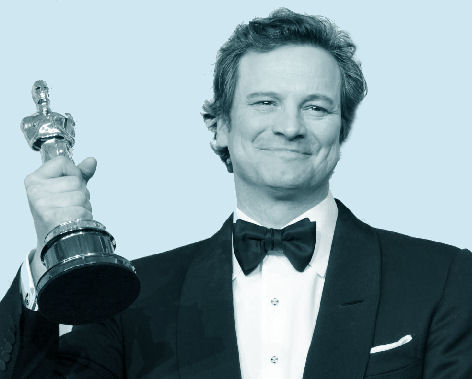
The next year, 2010, was golden, and Firth finally got his Oscar for The Kings Speech. On the brink of WWII King Edward VIII abdicates the throne of England, leaving the job to his ill prepared brother “Bertie” (Firth). Bertie must overcome a terrific stammer and self-doubt to lead his country in its time of greatest need.

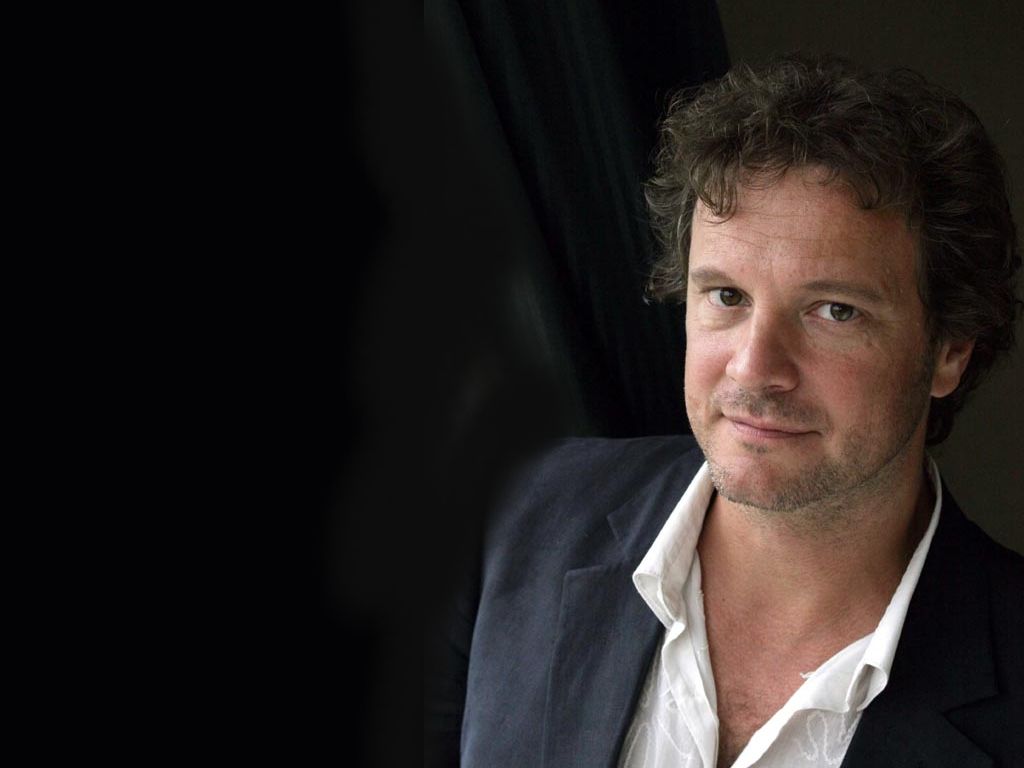
Satisfaction! [ColinFirth.com]

In 2011 he took a supporting role in Tinker Tailor Soldier Spyas Bill Haydon (the “Tailor”) to Gary Oldman’s George Smiley.

Next month Gambit co-starring Alan Rickman, Stanley Tucci and Cameron Diaz will hit theaters. This remake of the 1966 Shirley MacLaine/Michael Caine comedy caper is a Joel and Ethan Coen project.

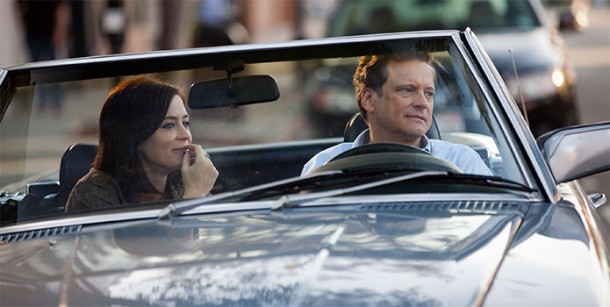
Firth also hasArthur Newman, Golf Pro, The Railway Man, Bridget Jones’ Baby and Devil’s Knot on the way. 

Still from the upcoming Arthur Newman, Golf Pro with Emily Blunt [Image Courtesy: Best Movies Ever]

The actor has rather famously down played his sex appeal.

“I think it’s quite extraordinary that people cast me as if I’m Warren Beatty: until I met my present wife, at the age of 35, you could name two girlfriends.” [Colin Firth  on Brainyquote.com]

Besides his romance with Tilly, he had an affair with Jennifer Ehle (Elizabeth in Pride and Prejudice) and has been married to Italian film producer/director Livia Giuggioli  since 1997. The couple has two sons, Luca and Matteo.


Thought of the Day 9.16.12 Lauren Bacall

“You know how to whistle, don’t you, Steve? You just put your lips together and blow.”

— Lauren Bacall

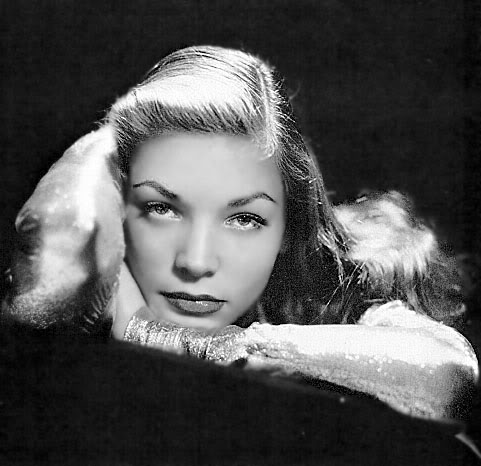
(Photo courtesy: Tweedland)

Betty Joan Perske was born on this day in the Bronx, New York in 1924. She is 88 years old.

She grew up in a middle class family. Her father, William Perske, was a salesman and her mother, Natalie Weinstein-Bacal Perske, was a secretary. Betty’s father, an alcoholic, left when she was six. Her mother changed their last name to Bacall. (The Romanian form of her mother’s maiden name.)

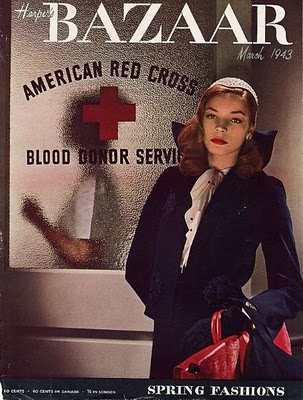
Bacall loved to dance but was smitten by the acting bug too. She studied at the American Academy of Dramatic Arts in New York. And got some work in off-Broadway productions. She had her first paid acting gig in Johnny 2×4 it was a walk on role, she was 17. She ushered at theatres to make money. She also modeled and it was a modeling gig on a Harper’s Bazaar cover in 1943 that brought her to the attention of director Howard Hawks’ wife Nancy. Nancy convinced Hawks to give Bacall a screen test. Hawks liked what he saw. He offered her a seven-year contract starting at $100 a week.  He  got her to modulate her voice (so she spoke in a lower, more sultry, register) and to  her to change her first name to Lauren. Nancy Hawks befriended Bacall and helped her with matters of dress “elegance, manner, and taste.” [ Original Old Radio ]

The Harper’s Bazaar cover that started it all. (Image courtesy Noir and Chick Flicks)

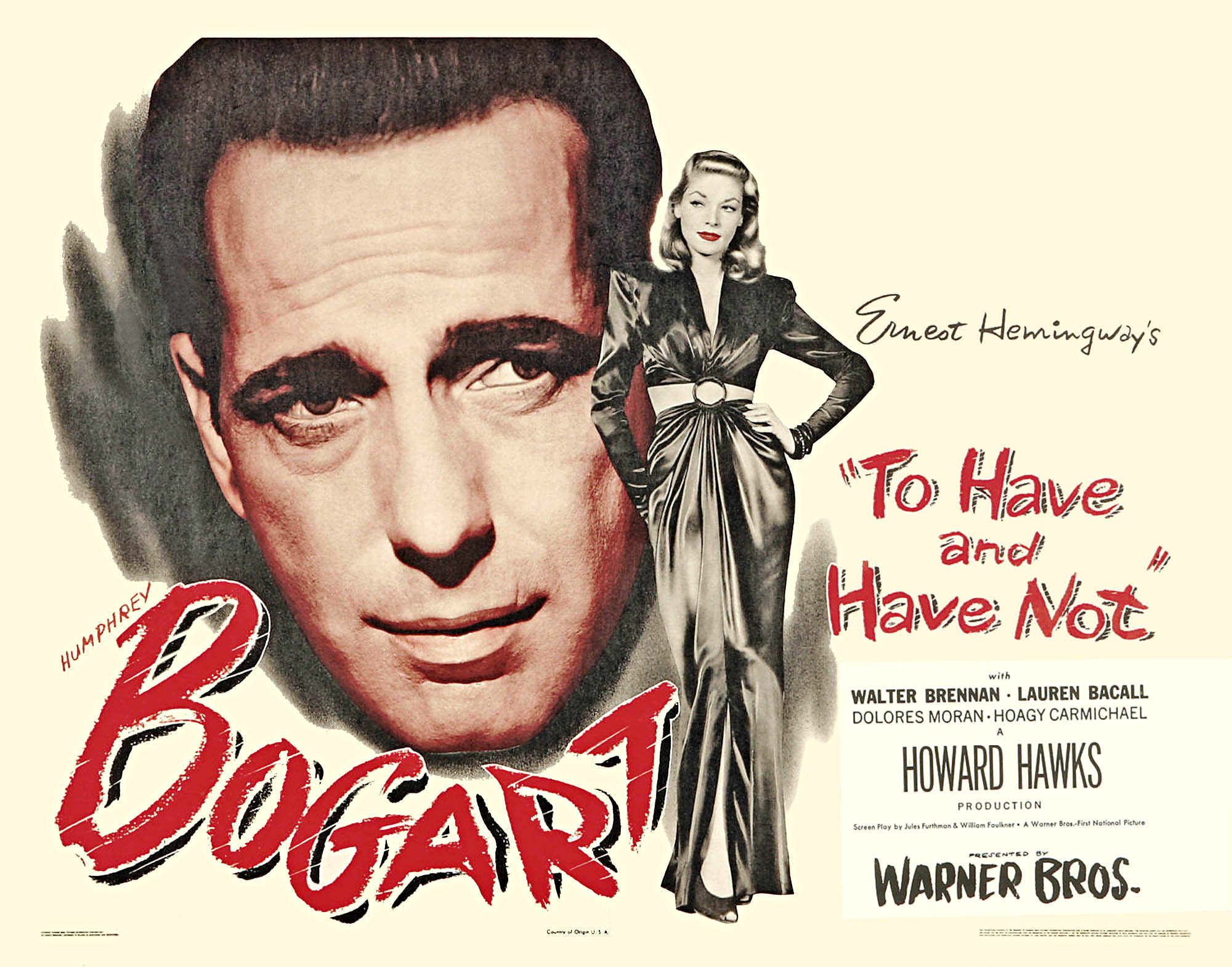
Her first role was in To Have and Have Not with Humphrey Bogart in 1944. The movie is loosely based on a book by Earnest Hemingway, the screenplay was by William Faulkner, but the famous “whistle” line was written by Hawks for Bacall’s screen test. After seeing the test, he not only offered her the role, but he asked Faulkner to work the scene into the script. Bogart’s Harry addresses Bacall’s Marie as ‘Slim’, she calls him ‘Steve’ — the same nicknames Howard and Nancy Hawks used for each other. Her  famous “Look” was the result of nerves.

“I used to tremble from nerves so badly that the only way I could hold my head steady was to lower my chin practically to my chest and look up at Bogie. That was the beginning of The Look.” [Lauren Bacall as quoted on Brainy Quotes]

Movie poster for To Have and Have Not. (Image courtesy of: Dr.Marco’s High Quality Movie Scans)

Bacall was only 19. Bogie, who was a quarter century her senior, fell in love with the beautiful, talented, strong woman, and she fell in love with him. The two married in 1945.

The duo made The Big Sleep, Dark Passage and Key Largo together. By limiting the number of films she made she could choose her roles carefully. She’d made one flop, Confidential Agent following To Have and have Not, and  she thought her career never fully recovered from it. With her reputation as a solid actress — and  the security of being married to one of Hollywood’s leading men — she was able to turn down roles that she didn’t find interesting. Bacall averaged one film a year while she was married to Bogart.

She and Bogey had two children, Stephen and Leslie Bogart and enjoyed 12 years of marriage before Bogart died of Lung cancer.

Bacall returned to New York and  started the second phase of her career, this time focusing on Broadway.

“I finally felt that I came into my own when I went on the stage,” [bio.TRUE STORY]

In 1961 Bacall married again, this time to actor Jason Robards, Jr., and had third child, Sam Robards.

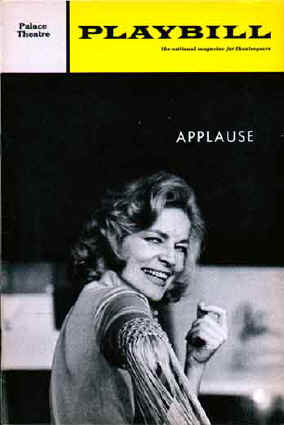
Applause Playbill (Image courtesy of: www.musicals101.com)

Bacall starred in Goodbye, Charlie (1959), Cactus Flower (1965) and had the lead in the musical adaptation of the 1952 movie All About Eve, Applause. The show earned Bacall her first Tony. Her second Tony came in 1981 for Woman of the Year.

She wrote two autobiographies, part one, Lauren Bacall By Myself, came out in 1978, the second part, Now, was published in 1994.

Both volumes openly discussed difficult parts of her life, including the alcoholism of both of her husbands, despite the fact that some of the topics were relatively controversial for the time. [bio.TRUE STORY]

She also tells about a time in her teens when she met actress Bette Davis in Davis’ hotel. Davis returned the favor when Bacall was giving new life to Margo Channing, the roll Davis’ originated in All About Eve.  Davis came backstage at the Palace Theatre after a showing of Applause  and congratulated Bacall on her performance.

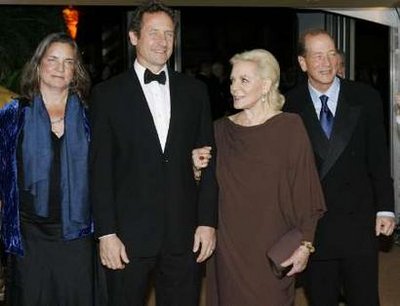
Bacall was honored with a Governor’s Award for Screen Legends from the Academy of Motion Picture Arts and Sciences in 2009.

Lauren Bacall and her children, Leslie Bogart, Sam Robards and Stephen Bogart at The Academy of Motion Picture Arts and Sciences 2009 Governors Awards. Lauren Bacall was presented with the Governor’s Award.

Other Lauren Bacall quotes:

“I think your whole life shows in your face and you should be proud of that.”

“Find me a man who’s interesting enough to have dinner with and I’ll be happy.”

“I am not a has-been. I am a will be.”

“I wish Frank Sinatra would just shut up and sing.” (They were briefly engaged. Sinatra abruptly broke it off when he found out that news about the engagement had been leaked.)

(Photo courtesy of: Doctor Marco’s High Quality Movie Scans)


Thought of the Day 9.2.12 Salma Hayek

“I’ve stolen a couple of hearts and they are in my private collection!”

Salma Hayek

English: Salma Hayek at the Cannes film festival

English: Salma Hayek at the Cannes film festival (Photo credit: Wikipedia)

Salma Hayek was born on this day in Coatzacoalcos, Mexico in 1966. She is 46 years old.

Hayek admits that she and her brother were both a bit spoiled growing up. Her parents, Sami Hayek Dominguez an oil company executive and one time mayoral candidate for Coatzacoalcoa, and Diana Jimenez Median, an opera singer and talent scout raised the children Catholic. At 12  Salma was sent to the Academy of the Sacred Heart in New Orleans but she was expelled for pulling pranks on the sisters. She studied International Relations at Mexico City’s Universidad Iberoamericana, and decided to take on acting full time.

She won the title role in the telenovela Teresa in 1989, and  became an overnight sensation in Mexico.

Looking for bigger roles and a wider audience Hayek moved to Hollywood. But Hollywood didn’t know what to do with the 5’2″ Latino firecracker who suffered from dyslexia and had trouble speaking English. She managed to get some bit parts, but she felt under-appreciated and she let her feelings be known on a Spanish-language late night talk show.

Producer Robert Rodiguez saw the show and took notice. He cast her opposite Antonio Banderas in Desperado (1995) and as a vampire queen in From Dusk Till Dawn (1996). 1997 brought a starring role in the rom-com Fools Rush In and Breaking Up. She followed that up with Wild Wild West and Dogma. 

She took up producing and directing through her production company Ventanarosa. The company’s first film was El Coronel No Tiene Quien le Escriba (No One Writes to the Colonel). It was Mexico’s pick for Best foreign Film Oscar entry.  Hayek has directed music videos for Prince and was the executive producer (and occasional guest star) for Ugly Betty. But her dream role was Frida Kahlo and she both starred in and produced Frida in 2002. The movie received 6 Oscar nominations, including best actress for Hayek.

Promotional poster for the movie Frida (Photo Credit: Wikipedia)

In 2003 she filmed the last in the “El Mariachi” trilogy with Banderas with Once Upon a Time in Mexico.

In 2010 she co-starred in the Adam Sandler flick Grown Ups. And she turned in a sassy animated performance as Kitty Softpaws in Puss in Boots (again with Banderas.


Thought of the Day 9.1.12 Edgar Rice Burroughs

“I write to escape…to escape poverty.”

Edgar Rice Burroughs

Русский: Эдгар Райс Берроуз

Edgar Rice Burroughs (Photo credit: Wikipedia)

Edgar Rice Burroughs was born on this day in Chicago, Illinois in 1875. Today is the 137th anniversary of his birth.

He was the middle child Major George Burroughs and his wife Mary Evaline. His younger siblings died of childhood diseases, leaving him the baby of the family. He bounced around several different local schools. Whenever there was an outbreak of a disease his parents took him out of one school and put him in another.  Since schools taught Latin and Greek as well as English he later …

“his erratic schooling… resulted in his … learning little English while taking the same Greek and Latin courses over and over again. Despite his claims to the contrary, this early exposure to Classical literature and mythology would serve Burroughs well in his future writing career.” [The Official Edgar Rice Burroughs Mini-Bio]

When a flu epidemic swept through Chicago his parents sent a teenaged Edgar to his brothers’ cattle ranch in Idaho. He love the rough and tumble “wild west”  with its range wars and saloon shoot outs and he lived there for six months before his parents realized the danger of  frontier life was on par with the danger of getting influenza. They called him home and enrolled him in Phillips Academy in Andover, Massachusetts. He didn’t last long there and was soon transferred to the more structured  Michigan Military Academy. He failed the West Point entrance exam  and signed up for the Army  as a private where he served with the 7th US Cavalry at Fort Grant, Arizona Territory. He was discharged from the Army for a heart condition in 1897.

In 1899 he was back in Chicago working for his father ‘s company, and the next year he married his childhood sweetheart, Emma Hulbert. After a few years he and Emma travelled west to Idaho so he could try his luck with his brothers again, this time at gold mining. But that venture soon went bust and Burroughs went through a number of jobs from railway policeman to peddler for quack medicine.

One of his jobs was as a pencil sharpener wholesaler. He placed ads for the pencil sharpeners in pulp fiction magazines and he would read through the magazines to check the placement of the ads.

“After reading several thousand words of breathless pulp fiction Burroughs determined … that ‘if people were paid for writing rot such as I read in some of those magazines that I could write stories just as rotten. As a matter of fact, although I had never written a story, I knew absolutely that I could write stories just as entertaining and probably a whole lot more so than any I chanced to read in those magazines.'” [The Official Edgar Rice Burroughs Mini-Bio]

Cover of "Under the Moons of Mars: A Prin...

Cover via Amazon

In fact he had already written stories, but his introduction into the pulp fiction market with Under the Moons of Mars,  for which he received a whopping $400 from All-Story magazine, was a turning point in his career. The story was serialized  in the magazine and produced as a novel under its original name of A Princess of Mars. By the time the last installment was published in July of 1912 Burroughs had completed two more novels. The Outlaw of Torn and Tarzan of the Apes. Outlaw was not picked up by the publisher, but Tarzan was an immediate hit. Burroughs got $700 for the book. He wrote a number of sequels for both Mars (11, including John Carter of Mars) and Tarzan (26).

Dustjacket by Armstrong Sperry for the first e...

Dustjacket by Armstrong Sperry for the first edition of Tarzan and the Lost Empire by Edgar Rice Burroughs (Photo credit: Wikipedia)

Other book series by Burroughs includes:

  • The Pellucidar series, which takes place in the hollow shell of the Earth (7 books, including one featuring a cross over appearance from Tarzan).
  • The Venus series, where Carson Napier, who is attempting a solo flight to Mars, crash lands instead on the watery planet of Venus. — look for a film made from the series coming out next year. (5 books)
  • The Caspak series, a prehistoric series, including The Land That Time Forgot (3 books)

He crossed writing genres at will penning social realism, horror stories, and westerns (and more).

Burroughs was living in Honolulu,  Hawaii when the Japanese bombed Pearl Harbor on December 7, 1941. He volunteered  to serve the war effort as a war correspondent  (the oldest in the Pacific theatre).

He died on March 19, 1950.

English: Bookplate of American writer Edgar Ri...

English: Bookplate of American writer Edgar Rice Burroughs (1875-1950) showing Tarzan holding the planet Mars, surrounded by other characters from Burroughs’ stories and symbols relating to the author’s personal interests and career. Associated media: File:Letter from Edgar Rice Burroughs to Ruthven Deane 1922.jpg explaining the design of his bookplate. (Photo credit: Wikipedia)