Thought of the Day 8.28.12 Shania Twain

Man! I Feel Like a Woman!

–Shania Twain

Greatest Hits (Shania Twain album)

Greatest Hits (Shania Twain album) (Photo credit: Wikipedia)

Eilleen Regina Edwards was born on this day in Windsor, Ontario, Canada in 1965. She is 47 years old.

She is the eldest of five siblings and grew up about 500 miles north of Toronto with her mother Sharon and her adoptive father Jerry Twain.

According to the biography on her official web site she …

“grew up listening to Waylon, Willie, Dolly, Tammy, all of them…But we also listened to the Mamas and the Papas, The Carpenters, The Supremes and Stevie Wonder. The many different styles of music I was exposed to as a child not only influenced my vocal style, but even more so, my writing style.” [ShaniaTwain.com]

Impressed by the girl’s singing, guitar playing and song writing skills, her mother became her defacto agent and  began to book the 8-year-old Twain at local venues and radio and TV spots. Twain says she would be awaken after midnight and taken to local clubs to sing with house bands — bar stopped selling alcohol at midnight.

The “b” side of Twain’s rural Canadian upbringing was summers spent on reforestation crews with her stepfather where she “learned to wield” a different kind of axe (and “handle a chain saw as well as any man.”)

An automobile accident took the lives of  both Sharon and Jerry Twain, and 21-year-old Eilleen took over raising her little brothers. She got a job at the Deerhurst Resort in Ontario which not only allowed her to pay the bills but also introduced her to musical theatre.

At 24 Twain recorded a demo of original music and changed her first name to Shania (Ojibway Indian for “I’m on my way” in honor of Jerry Twain’s Ojibway’s ancestry.) She signed on with Mercury Records and put out Shania Twain in 1993. The CD included the hits “Dance With The One That Brought You” and “What Made You Say That.”

She joined forces with rock producer Robert John “Mutt” Lange  (both professionally and personally — the two married  in 1993.) Her single Whose Bed Have Your Boots Been Under came out in 1995 and went to #11 on the  country charts. Woman In Me, her second album made “Twain the best-selling country female artist of all time. “ “Any Man of Mine,” “(If You’re Not In It for Love) I’m Outta Here!” “You Win My Love and “No One Needs to Know” all went to number 1, and the project won Country Album of the Year at the Grammies.

She released Come On Over in 1997 and listeners from pop and rock stations took her invitation seriously. She became a crossover artist with “You’re Still the One”  (which was #1 in Country and #2 on Billboard’s Hot 100 pop chart) and “Man! I Feel Like A Woman.” The album sold over 11 million copies.

<iframe width=”420″ height=”315″ src=”http://www.youtube.com/embed/KNZH-emehxA&#8221; frameborder=”0″ allowfullscreen>

In 2002 she continued in a more pop vain with the release of  UP.  In the music video  for the single I’m Gonna Getcha Good she leaves behind her trademark bare midriff and  jeans and opts for a futuristic Tron style leather get up as she takes a motorcycle ride through a dystopian landscape.

In 2011 she did a six part documentary on the OWN network and released her memoirs. To date she has sold over 75 million cds and has earned the moniker “The Queen of Country Pop.”


Celebrate Good Times, Come ON! 100 post!!!


Wordpress Button Closeup

WordPress Button Closeup (Photo credit: Titanas)

Instead of my usual Thought of the Day I wanted to share the exciting news that ritaLOVEStoWRITE has hit a milestone.  This is my 100th post on WordPress!

Thank you to all of the readers who have hit the blog 2,700 plus times in the last three months. And especially to my 57 dedicated followers (plus those 300 plus of you on Facebook and Twitter who follow that way.) Your LIKES, feedback and support have made these lonely hours in front of my computer well worth it.

Of course the act of researching, writing, adding the photos and editing the posts  has been its own reward. How else would I have found out about Mata Hari?

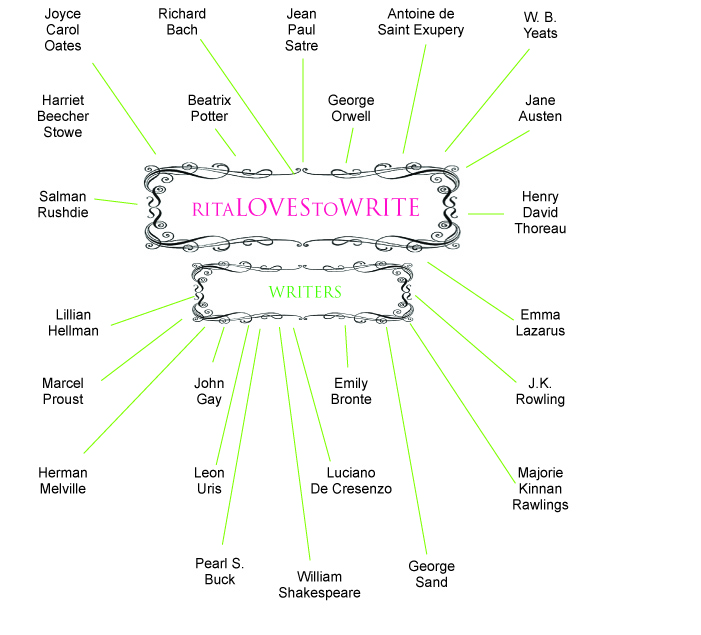
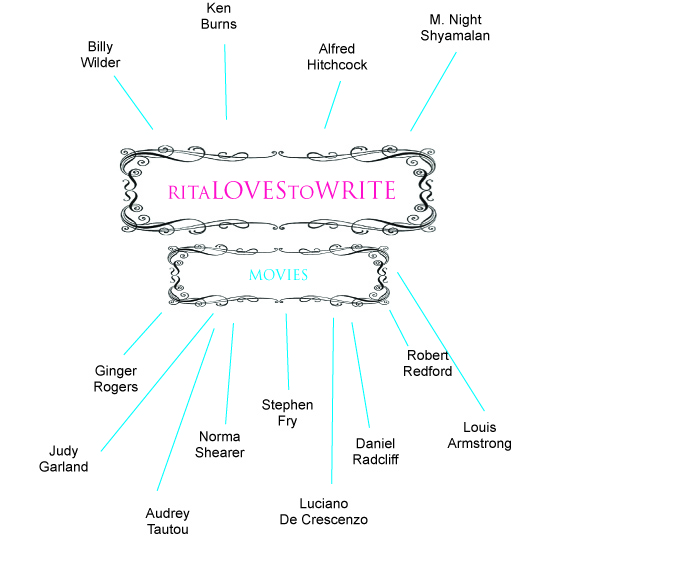
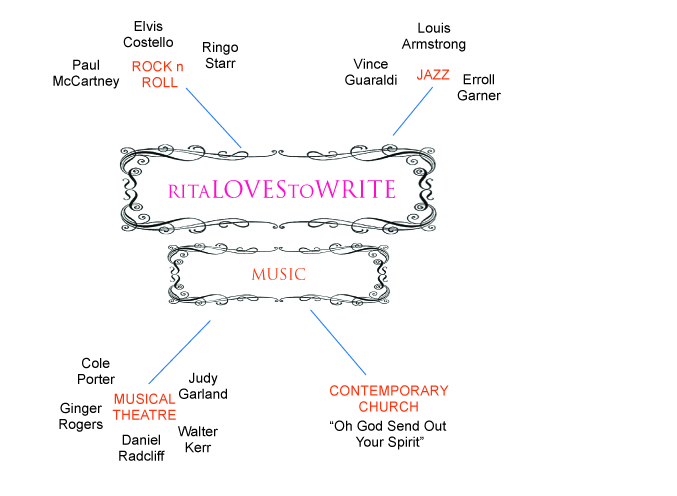
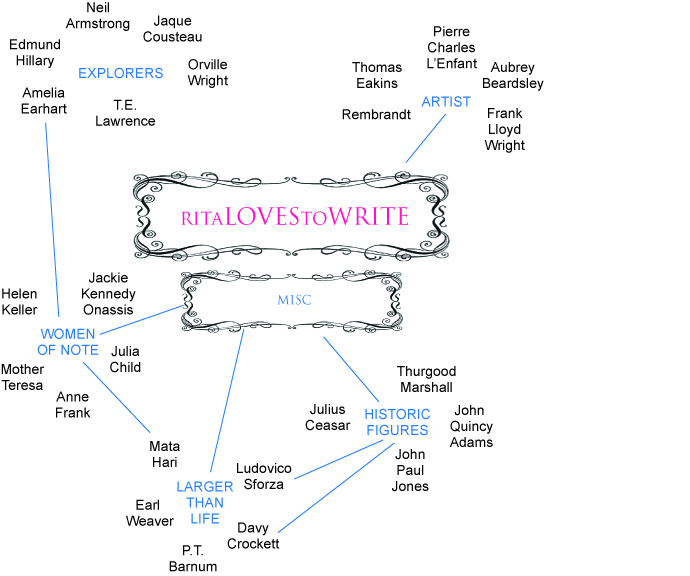
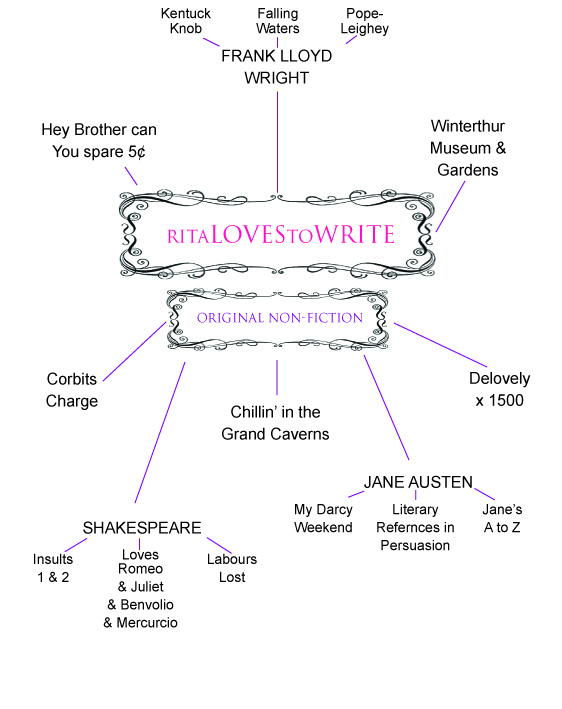
So, incase any one asks, here’s what rita WRITES about: 


I was somewhat surprised at how that broke down. While in the trenches of writing the blog I thought it weighed way to heavily on the celebrity and was too light on the cerebral, but actually I had more WRITERS than anyone else.


There was some nice cross over between Movies and Music (in Musical Theatre)…


The bulk of my 100 posts are in the Thought of the Day category, and the MISC. chart gives a who’s who of folks who didn’t fit nicely into Writing, Movies or Music. I liked the cross referencing here too.


The last chart is for post that didn’t appear as a Thought of the Day entry, “Original Non-Fiction.” Hmmm. Well everything on my blog is my original work (except one repost from my friend Lynn Reynolds about Books and How to Sell Them) and so far it has been all non-fiction. So I guess EVERYTHING could be on this chart.

In the future I hope to add some fiction to the site. Would you like that?

Please know that I love to get feedback, but I’m pretty fierce about SPAM. If there is any chance something is SPAM I throw it in the trash. So if I have inadvertently trashed your perfectly legitimate comment, I apologize. It was thrown into my SPAM folder and I probably couldn’t see your website to check. PLEASE write something referring back to “ritaLOVEStoWRITE” in your comment then I’ll know it is the real deal and not some bot trolling for unsuspecting bloggers.

I’ll leave you with a Thought for Today from Australian politician Arthur Calwell who was born on this day in 1896…

“It is better to be defeated on principle than to win on lies.”

Hmmm something to think about as the (American) political season goes super nova.


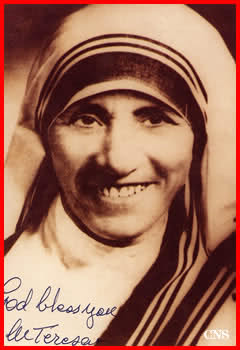
thought of the Day 8.26.12 Mother Theresa

“We cannot do great things on this Earth, only small things with great love.”

Mother Teresa

Mother Teresa

Mother Teresa (Photo credit: Wikipedia)

————————————–

[True confessions of a blogger: I have always chaffed a bit when spoon fed hyper goodness. I am a skeptic. A Catholic skeptic at that. I graduated from an all-girl Catholic high school the year after Mother Teresa won her Nobel Peace price in 1979. It was a time when the mere mention of the good nun’s name brought a gleam of zealous holiness to some folk’s eyes. The words “Mother Teresa” still bring an (imagined) soundtrack of angels singing “ahhhh” in the background. The publicity wagon behind this gal was in full tilt boogie in 1979 and frankly, it was (is) a bit much to take, especially given her dogged adherence to church doctrine on things like abortion and divorce. 

I know I would have been much more receptive to Mother Teresa if the ‘holy bus’ would have pulled over for a while and she would have been presented as what she was… a mere moral doing some pretty extraordinary good works in some pretty nasty areas of the world.  So when I read about Rev. Brian Kolodiejchuk’s book Come Be My Light  I was moved to find out that Mother Teresa had struggled for over 60 years because Jesus has stopped talking to her. The fact that she soldiered on, day by day, decade by decade, caring for the sick and discarded and continuing to pray to a God who no longer answered kept up his side of a conversation makes her a lot more heroic in my book.  

It continues to gall me when her name and image are co-opted for things and statements that are not her own. While researching this “Thought,” for instance I found a poem by Mother Teresa called “Do It Anyway.” It’s a lovely poem about going beyond adversity and doing the right thing “anyway.” The problem is… despite dozens of websites and placards for sale on Ebay that attribute the poem to Mother Teresa it was written by Kent M. Keith. So why shine on? Isn’t her goodness good enough?  Do we have to fake stuff or steal stuff from other people to make her sound wiser or holier? Another example is the long-held belief that Mother Teresa was ardently anti-gay. I found some of that hate mongering rhetoric in my research too, but not from the woman herself. And closer inspection — and a bit of logic — shows it’s not true. Mother Teresa, of course, worked tireless with the victims of AIDS, she didn’t discriminate by sexual orientation in the clinic. And when “some reporters asked Mother Teresa about the homosexuals in Calcutta, she said she didn’t like the word ‘homosexuals’ and went on to insist that they use the term ‘friends of Jesus’ instead.”[Lina Lamont blog post ] I’m not so naive to think she’d be voting for same-sex marriage any time soon — as she’d be likely to tow that Church line too– but  she certainly didn’t demonize homosexuals as some people would have you believe.

She’s a much more complex and human individual than the cartoon saint the ‘holy bus’ presents.]

————————————————-

Agnes Gnoxha Bojaxhiu was born on this day in Skopj, Yugoslavia in 1910. This is the 102nd anniversary of her birth.

She was the youngest of five children (three of whom lived to adulthood.) According to her brother, Lazar, and despite myths to the contrary, the family did not live like peasants, but lacked for nothing. They owned two houses, living in one and renting out the other. The children were raised as Catholics and Agnes loved to listen to stories about missionaries from far away places.

She was called to religious life as an early teen, and made her final decision while praying at the Black Madonna of Letnice when she was 18.

She joined the Sisters of Loreto. Her missionary training began in Ireland where she learned English (the sisters use English in their missionary work.) At 19 she traveled to Darjeeling to begin her novitiate in the shadows of the Himalayas. She learned the native Bengalese language and taught school to the wealthy girls who attended St.Teresa’s School where she was assigned. She took her  first vows at 21 and became Sister Teresa in honor of St. Therese de Lisieux (the patron saint of missionaries). In 1937 she was sent to Entally (near Calcutta) to another school where she taught History and Geography for another 20 years. She was made headmistress in 1944.

In 1946 while the nun was taking a 400-mile long train trip to a retreat in Darjeeling she heard Christ speak to her.  “Come, come carry Me into the holes of the poor,” He told her, “ Come be My light.” It was her “call within the call” and one she took seriously. Teresa gave up her relatively comfortable life at the school and headed toward the slums that had been devastated both famine and Hindu/Muslim violence.
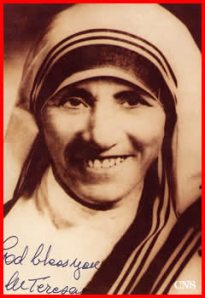
She sought permission from the church to begin on her path. She took a course in basic medical training at Holy Family Hospital, and she exchanged her Loreto habit for a white sari with a blue border. In January of 1948 she started a school in Motijhil, Calcutta teaching the poorest children in the slums. She had no classroom equipment so she used what was available. Instead of a chalkboard she wrote in the dirt. She worked to teach the children both how to read and the basics of hygiene. As she got to know them she gained the trust of their families and got to know their needs as well.

In 1950 she started (with Vatican permission) The Missionaries of Charity to care for “The hungry, the naked, the homeless, the crippled the blind, the lepers, and all those people who feel  unwanted, unloved, uncared for though out society, people that have become a burden to the society and are shunned by everyone.” [Mother Teresa]

The little congregation of 13 women had grown to over 4,000 sisters by 1997.

They opened a Home for the Dying, a place offering free hospice care for the poor , in Calcutta in 1952. Next they opened a home for people with Hansen’s disease (leprosy) called City of Peace. They also started outreach clinics in the city where those suffering from the disease could get medicine,clean bandages and food. The Children’s Home of the Immaculate Heart, an orphanage for the city’s many homeless youth and orphans was opened in 1955.

Throughout the 1960s similar houses of care were opened by the Missionaries of Charity throughout the world. In 1963 the Missionaries of Charity Brothers was founded for men who wanted to follow Mother Teresa’s leadership in feeding, clothing, housing and caring for the poor. Branches of the organization for contemplative Sisters, Lay workers (both Catholic and non-Catholic) and Priests followed. Today there are more than 4,500 Missionaries of Charity and over a million Co-Workers working at 610 mission in 133 countries around the world.

She was awarded the first Pope John XXIII Peace Prize. Mother Teresa won the Nobel Peace Price in 1979. (She gave the prize money to the poor in India). She thought that earthly rewards were important only if they helped her help the world’s needy. When asked what we can do to promote world peace she answered “Go home and love your family.”

The Myth of Mother Teresa

The Myth of Mother Teresa (Photo credit: Chris Yarzab)

The “Saint of the Gutters” suffered a heart attack in rome in 1983, and a second in 1989. In 1996 she fell and broke her collar bone, suffered from malaria and had heart failure. On March 13, 1997 she died.


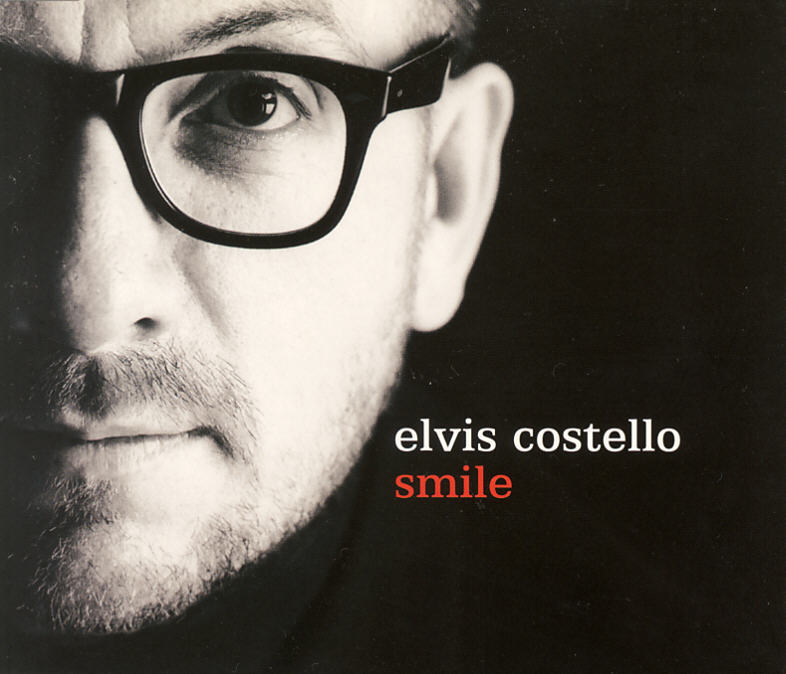
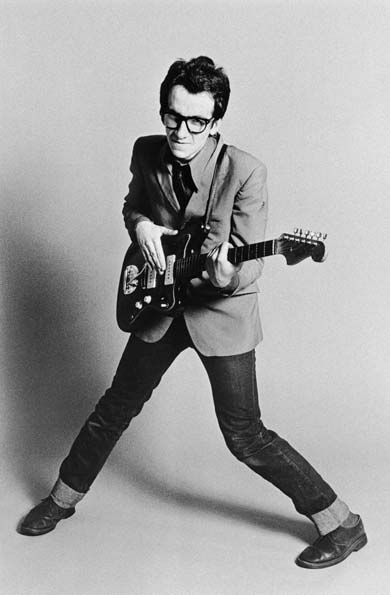
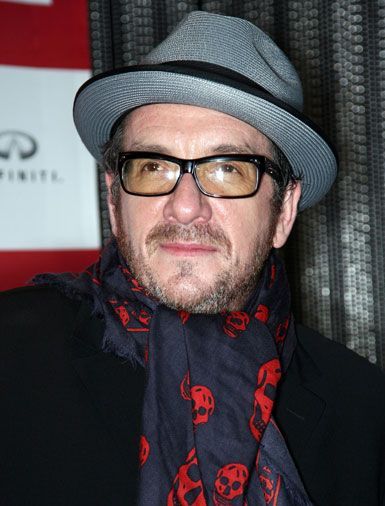
Thought of the Day 8.25.12 Elvis Costello

I used to be disgusted; now I try to be amused.

–Elvis Costello

Declan Patrick MacManus was born on this day in Paddington, London, England in 1954. He is 58 years old.

Declan grew up around music. His father, Ross MacManus, was a singer for The Joe Loss Orchestra, a dance band with it’s own popular BBC Radio Show. Ross, who had to learn a new song every week for the show, brought home demo tapes to practice, and young Declan absorbed the tunes. His first recording was with his dad, the two sang for a commercial for R. White’s Lemonade.

When he was 17 he moved to Birkenhead (opposite Liverpool on the Mersey River) and started a folk duo with Allan Mayes. He formed the country rock band Flip City when he moved back to London in 1974. It was then that he took the stage name D.P. Costello. He supported himself as a computer operator and an office clerk while continuing to hone his skills as a singer, song writer and musician.

He signed with Stiff Records, and independent label out of London and changed his pseudonym to Elvis Costello.

When Elvis Costello‘s first record was released in 1977, his bristling cynicism and anger linked him with the punk and new wave explosion. …he tore through rock’s back pages taking whatever he wanted, as well as borrowing from country, Tin Pan Alley pop, reggae, and many other musical genres. Over his career, that musical eclecticism distinguished Costello‘s records as much as his fiercely literate lyrics. [Allmusic by Rovi]

The first lp, My Aim Is True had two singles, “Less Than Zero” and “Alison.” While neither initially charted “Alison” has become a classic and the album reached number 14 on the British charts.

His backing band, The Attractions, was firmly in place for his next lp, This Year’s Model. Bruce Thomas played bass, Steve Nieve played Keyboards, and Pete Thomas was the drummer, while Costello sang lead and played guitar for the group. The lp reached #4 in Brittain and #30 in the US. Armed Forces did even better with its catchy single “Oliver’s Army.”  That was followed by Get Happy!!  (1980) and Trust (1981).

He put on some country western boots and recorded with Billy Sherrill, a Nashville producer for his next lb, Almost Blue with the single “A Good Year for the Roses.” 1982 brought Imperial Bedroom, 1983 , Punch the Clock and “Every Day I Write the Book.” In 1984 he went on a solo tour with Goodbye Cruel World, and in 1985 he did King of America (sans the Attractions.) He briefly reunited with the Attractions with Nick Lowe as producer for Blood and Chocolate.

He teamed up with Paul McCartney in 1987  for Spike with the single “Veronica.” Mighty Like a Rose followed in 1989.

Costello switched gears again in 1993, this time  going classical. He wrote a song cycle called the Juliet Letters which he performed with the Brodsky Quartet.

Back with The Attractions and to rock and rol  he put out Brutal Youth in 1994. All This Useless Beauty is a cover album of sorts, he penned all the songs, but they were originally done by other artists.

He wrote theme songs for Austin Powers and Notting Hill (his achingly beautiful “She” is almost as lovely as Julia Roberts.)

In 2001 he worked with Steve Nieve and Pete Thomas  on When I Was Cruel, with the amazing single “Dust.”

Next up was his interpretation of the Great American Song Book with North “falling halfway between Gershwin and Sondheim.” [Allmusic by rovi], and the live jazz album Flame Burns Blue — with Costello in front of The Metropole Orkest, a 52-piece orchestra.

After Hurricane Katrina devastated New Orleans Costello joined forces with Allen Toussaint (they had worked together on Spike) for The River in Reverse

Momofuku (2008), Secret, Profane & Sugarcane (2009) and National Ransom (2010) round out his impressive discography.

Whew! Another LONG bio. They always look so easy when I start. But I just bet I forgot your favorite album or single, didn’t I? Come on… let me have it… what’s your Elvis Costello favorite [leave me a comment.]


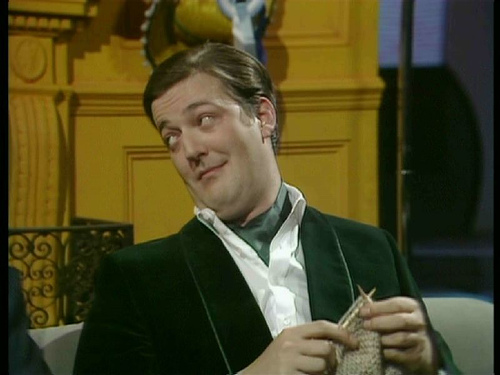
Thought of the Day 8.24.12 Stephen Fry

“It is a cliche that most cliches are true, but then like most cliches, that cliche is untrue”

Stephen Fry

Stephen John Fry was born on this day in Hampstead, London, England in 1957. He is 55 years old.

He grew up in Norfolk. He was expelled from several schools and got into trouble with the law as a teen. He served three months in Pucklechurch Prison after stealing a credit card from a family friend. But the stint in prison seemed enough to straighten him out. He went back to school, this time at City College of Norwith and promised to apply himself to his studies. He scored well enough in his Cambridge entrance exams to get a scholarship at Queens’ College in 1979. At Queens he joined the Cambridge Footlights Dramatic Club and met Emma Thompson and Hugh Laurie. He won a Fringe First Award for  Latin! or Tobacco and Boys  a play he wrote for Footlights.

He teamed up with Laurie  to for the comedy act A Bit of Fry & Laurie. The Duo turned the act into a television sketch comedy series that premiered on December 26, 1987 with a 36 minute pilot. It ran for four seasons (1-3 on BBC2; season 4 on the more mainstream BBC1). The show’s combination of satire, wordplay and innuendo made it very popular. The complete series is available on DVD and selected sketches have been collected in book form.

In 1984  Fry adapted Noel Gay’s Me and My Gal. It had an eight year, 3,303 performance run at the Adelphi Theatre in London’s West End (with Robert Lindsay and Emma Thompson in the cast.)  It hopped the pond and opened at Broadway’s Marquis Theatre  in 1986 where it ran for 1,420 shows and was nominated for 13 Tony Awards. It also made him rich.

Fry considers himself a writer first and a  comedian/ actor second. He has published four novels: Liar (1991), The Hippopotamus (1994), Making History:  A Novel (1997) and The Stars’ Tennis Balls (200). His biography, Moab is My Washpot came out in 1997.

Other television work include Lord Melchett  in Black-Adder II and Reginald Jeeves in  Jeeves and Wooster. On the Radio he worked on Loose Ends, Delve Special, This is David Lander, Saturday Night Fry, Absolute Power and was the voice of Winnie the Pooh. He also presented The Incomplete and Utter History of Classical Music, a 20 part review of music over the past millennium.

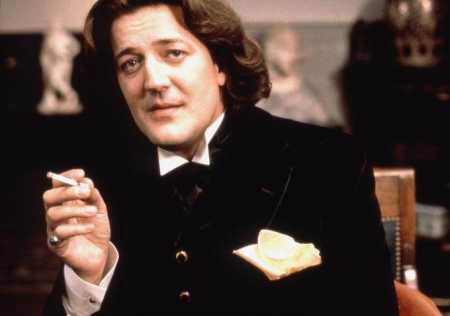
His film work goes back to 1985. He had was in the ensemble cast of Peter’s Friends (with Laurie and Thompson). He played Oscar Wilde in Wilde (1997). In Gosford Park he is the clueless Inspector Thompson. He’s the Cheshire Cat in Tim Burton’s 2010 Alice in Wonderland. You can catch him as the Master of Laketown in the upcoming The Hobbit: There and Back Again and as Sir Simon De Canterville in The Canterville Ghost. [The list of Fry’s television and film roles is quite long.  See his IMBD site for a more comprehensive look at this side of his career.)

Fry also has lent his talents to audio books. He read the film tie-in version of  Douglas Adam’s The Hitchhiker’s Guide To The Galaxy (he also dubbed the voice of the Book and was the narrator for the movie ) in 2005. He’s recorded his own novels and works by A.A. Milne, Anthony Buckeridge and Roald Dahl. Most famously he is the voice for the English audio books for the Harry Potter novels by J.K.Rowling.

He embraces technology with both hands, and has said he’s never met a smart phone he didn’t buy. He is “deeply dippy for all things digital” and says he bought the third Macintosh computer sold in the UK (Douglas Adams beat him to the first two.) His Twitter account has passed the four million mark .

He is actively involved in a number of social issue (often promoting them with his Twitter account and on his website.)

[All images courtesy Last.fm where you can find lots more great photos of Stephen Fry.]


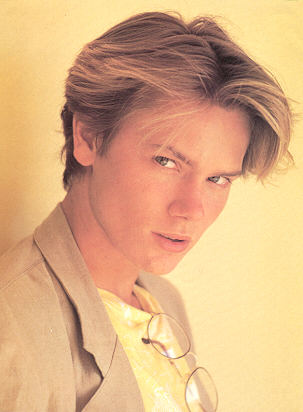
Thought of the Day 8.23.12 River Phoenix

“Acting is like a Halloween mask that you put on.”

River Phoenix

River Jude Bottom  was born on this day in Madras, Oregon in 1970. He would have been 42.

River’s parents, John and Arlyn met while hitchhiking in northern California. The family moved often as John and Arlyn were itinerant fruit pickers. When River was 3 they joined the Children of God religious cult and became missionaries. They moved through out the southern US, the Caribbean and South America, and siblings Rain, Joaquin, and Libertad were welcomed to the family.

The church sent them Caracas, Venezuela in 1976. Although John was the Church of God’s Archbishop to Venezuela and the Caribbean he did not get a salary and the family had to fend for themselves financially. Occasionally finances got so strained that young River and Rain performed music on street corners to raise money for food (River played guitar).  Eventually the Bottoms became disillusioned with Church of God leader, David Berg, and the direction the  religious group was taking. They left the group, living in a beach hut and at a church until they stowed away in a cargo ship bound for Florida.

Once they made it to Florida (they were discovered by the crew of the cargo ship, but they were treated well,) the family stayed with Arlyn’s parents in Winter Park. The last of the Bottom siblings, Summer was born in 1978 and the entire family changed their last name to Phoenix to symbolize the new beginning in their life.

River, Rain and Summer performed in talent shows in Florida, and got an invitation to come out to Hollywood and audition for Paramount studio. The family jumped at the chance, but when they arrived in California the audition fell through. Arlyn got a job in casting for NBC and arranged for a meeting between the kids and agent Iris Burton.

At 10 River started his acting career.  His first break came as the youngest brother, Guthrie, in the TV Series Seven Brides for Seven Brothers in 1982. And he made several made-for-television movies and had  guest spots on network shows.

River Phoenix

River Phoenix and Wil Wheaton in Stand By Me (Photo credit: One From RM)

In 1984 he was cast in his first big screen picture Explorers along side another newcomer, Ethan Hawke.  He was in Rob Reiner’s  Stand By Me (1986) with Wil Wheaton, Richard Dreyfuss, Jerry O’Connel and Corey Feldman.   Next up was Peter Weir’s The Mosquito Coast with Harrison Ford. The two work together again in Indiana Jones and the Last Crusade with River taking on the role of young Indy.  Running on Empty (which had some simularities to Phoenix’s youth — consent moving, musical prodegy) was also a big hit. He received an Academy Award nomination for his work in Running. He worked with his friend Keanu Reeves in My Own Private Idaho by Gus Van Sant.

Young Indiana Jones in The Last Crusade

Young Indiana Jones in The Last Crusade (Photo credit: Wikipedia)

Phoenix was a vegetarian, and later vegan because he strong opposition to how the meat and dairy industries treated animals. He was a member of PeTA. He was also an ardent environmentalist and worked with Earth Save and Earth Trust and he personally purchased  several hundred acres of rain forest in South America to keep it from being cut down.

He continued to play guitar and sing even as his acting career rocketed skyward. He performed with his sister Rain’s band Aleka’s Attic and, occasionally, on screen.

Phoenix died of an overdose at the age of 23 in Los Angeles.


Thought of the Day 8.22.12 Dorothy Parker

“Beauty is only skin deep, but ugly goes clean to the bone”

–Dorothy Parker

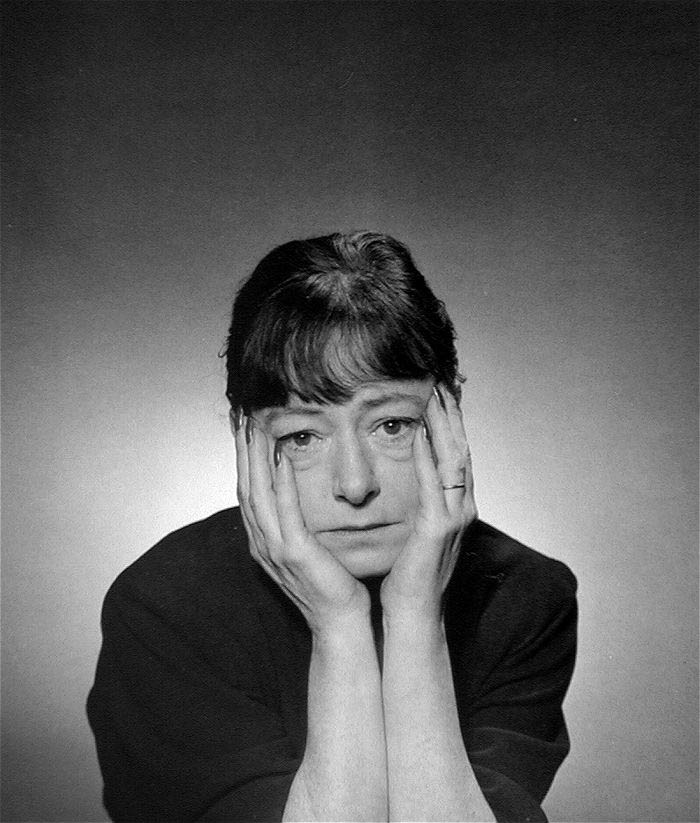
Dorothy Rothschild was born on this day in West End, New Jersey in 1893. Today is the 119th anniversary of her birth.

She said she was “a late unexpected arrival in a loveless family.” Dottie’s mother, Annie, died when the little girl was only five. Her father, Jacob, remarried two years later. But Dottie hated his new wife, Eleanor. Instead of calling Eleanor ‘Mother’ or ‘Stepmother’ Dorothy would refer to her as ‘the housekeeper.’  Annie was Protestant and Jacob was Jewish, but Eleanor was a strict Roman Catholic, and little Dottie thought she was a religious fantastic. Dottie was sent to elementary school at the Convent of the Blessed Sacrament, something else she loathed. She got into trouble when she refered to the Immaculate Conception as “spontaneous combustion.” Of her education there she later remarked…

…as for helping me in the outside world, the Convent taught me only that if you spit on a pencil eraser, it will erase ink.

She went to Miss Dana’s School for Young Ladies, a private boarding and finishing school in Morristown, New Jersey.  Shortly after graduating finishing school she learned that her brother, Henry, died aboard the Titanic. A year later her father passed away.

Dorothy moved to New York where she wrote during the day and played piano at a dancing school at night until her career took off. In 1914 she sold her poem “Any Porch” to Vanity Fair for $12.  She worked for Vogue (a sister Conde Nast publication) writing fashion captions including such quips as “Brevity is the soul of lingerie.” Later she moved over to Vanity Fair where her managing editor, Frank Crowinshield said she had

 “the quickest tongue imaginable, and I need not to say the keenest sense of mockery.” [Poetry Hunter.com]

In 1917 she married a wall street stockbroker, Edwin Pond Parker II.  Edwin went off to serve in World War I. He was wounded in the War and came back an alcoholic and morphine addict. The marriage didn’t last long, but she kept his name for the rest of her life.

Dorothy took over as Theatre Critic for P.G. Woodhouse. She was the only female drama critic in New York at the time.  Her acerbic wit was evident in such reviews as “if you don’t knit, bring a book.” Parker was

“a firecracker who was aggressively proud of being tough, quirky, fiesty…and she managed to carry it off with style and humor.” [ Marion Meade, What Fresh Hell Is This]

the readers loved her, but the theater owners and producers were less than pleased. She crossed the line once too often and when she panned a big production she got fired from the drama desk.

The Algonquin Round Table in caricature by Al ...

The Algonquin Round Table in caricature by Al Hirschfeld. Seated at the table, clockwise from left: Dorothy Parker, Robert Benchley, Alexander Woollcott, Heywood Broun, Marc Connelly, Franklin P. Adams, Edna Ferber, George S. Kaufman, Robert Sherwood. In back from left to right: frequent Algonquin guests Lynn Fontanne and Alfred Lunt, Vanity Fair editor Frank Crowninshield and Frank Case. (Photo credit: Wikipedia)

In the 1920’s Dorothy was a founding member of the Algonquin Round Table, a group of  — mostly male — writers and friends known for their quick-witted quips. During this period she wrote her poem “News Item” which contains the iconic Parker line “Men seldom make passes at girls who wear glasses.”  She worked for various publications most notably The New Yorker. At the New Yorker she wrote book reviews (just as funny and acerbic as her drama reviews) from 1927-1933 under the pseudonym the “Constant Reader.” She continued to write poetry and short stories,a nd in 1929 her story “The Big Blonde” won the prestigious O. Henry award.

Also in 1929 she began to write screenplays. She was hired by MGM and moved to Hollywood.  In 1933 Parker met husband #2, Alan Campbell, another screenwriter and the two became both professional and romantic partners. They signed on with Paramount Pictures in 1935 and Parker got an Academy Award nomination as part of the screenwriting team that penned “A Star Is Born.”

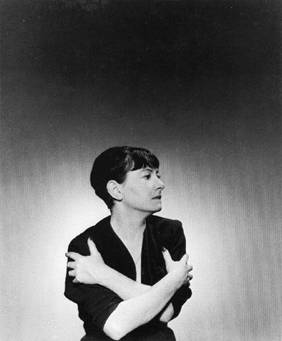
George Platt Lynes took this portrait in 1943. [ courtesy Dorothy Parker’s World Online. ]

Parker used her pen to fight for social justice. She championed feminism, racial equity, and the fight against Fascism. She supported the International Brigade (along with Earnest Hemingway) in their fight against Franco in the Spanish Civil War. In 1936 she helped found the Anti Nazi League. She also joined the Communist Party, an act that got her black listed in the 1950’s.Starting in 1957 she wrote book reviews for Esquire magazine, and in 1959 she was inducted into the American Academy of Arts and Letters.

Parker had a dark side. She was an alcoholic and she attempted suicide on several occasions. In her poem Resume she wrote about suicide:

Razors pain you;
Rivers are damp;
Acids stain you;
And drugs cause cramp.
Guns aren't lawful;
Nooses give;
Gas smells awful;
You might as well live.

On June 7, 1967 Parker died of a heart attack in New York City.

————————————————————-

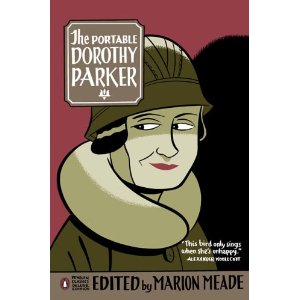
The Portable Dorothy Parker is available on Amazon.com.

Here are some more Dorothy Parker quotes: 

“She runs the gamut of emotions from A to B.”

The only ‘-ism’ Hollywood believes in is plagiarism.

Time wounds all heels.

I’d like to have money. And I’d like to be a good writer. These two can come together, and I hope they will, but if that’s too adorable, I’d rather have money.

Sorrow is tranquility remembered in emotion.

(In 1955) “Hollywood money isn’t money. It’s congealed snow, melts in your hand, and there you are.”

The best way to keep children at home is to make the home atmosphere pleasant, and let the air out of the tires.

One more drink and I’ll be under the the table, two more drinks and I’ll be under the host.

Scratch an actor – and you’ll find an actress.

Upon being told that former US President Calvin Coolidge (known as “Silent Cal” for being very tight-lipped) had died, she quipped, “How can they tell?”

He and I had an office so tiny that an inch smaller and it would have been adultery.

Excuse me, I have to use the toilet. Actually, I have to use the telephone, but I’m too embarrassed to say so.

People ought to be one of two things, young or dead.

On truth: Wit has truth in it; wisecracking is simply calisthenics with words.

“I’d rather have a bottle in front of me, than a frontal lobotomy.”

“This is not a novel to be tossed aside lightly. It should be thrown with great force.”

“You can drag a horticulture, but you can’t make her think.”

“Look at him, a rhinestone in the rough.”

“They sicken of the calm, who know the storm”

“This wasn’t just plain terrible, this was fancy terrible. This was terrible with raisins in it.”


Thought of the Day 8.21.12 Aubrey Beardsley

“No language is rude that can boast polite writers.”

Aubrey Beardsley

[ E ] Frederick Henry Evans - Aubrey Beardsley...

[ E ] Frederick Henry Evans – Aubrey Beardsley (1895) (Photo credit: Cea.)

Aubrey Vincent Beardsley was born on this day in Brighton, England in 1872. Today is the 140th anniversary of his birth.

Beardsley grew up in a middle class family. His paternal grandfather was in trade, but his father, Vincent,  lived on the income from an inheritance from his maternal grandfather (Aubrey’s great-grandfather). As the money from that fund began to run out Vincent worked in London Breweries. Aubrey’s mother, Ellen, gave piano lessons.  Both Aubrey and his sister, Mabel, showed a talent for music as children. The two were displayed as “infant musical phenomenons” in 1884.

He went to Bristol Grammar School and developed a talent for drawing caricatures of his teachers. He had drawing and cartoons published in the school newspaper. He set about illustrating all his favorite books. He illustrated “The Pay of the Pied Piper” for the school’s Christmas show in 1888.

At 17 he started entered the workforce as a clerk  for Guardian Life and Fire Insurance Company, but he found the job unfulfilling. Beardsley wanted a full-time employment as an artist.  With Mabel in tow he made an unannounced visit  Edward Burne-Jones’ studio. Beardsley impressed the famous Pre-Raphaelite painter with his portfolio (which he just happened to have with him,) and Burne-Jones recommended that he attend Westminster School of Art at night. The older man also introduced him to Oscar Wilde, something he later regretted.

English: How Sir Bedivere Cast the Sword Excal...

English: How Sir Bedivere Cast the Sword Excalibur into the Water. Illustration from: Sir Thomas Malory, Le Morte d’Arthur. London: Dent, 1894. Français : How Sir Bedivere Cast the Sword Excalibur into the Water (littéralement « Comment Sir Bedivere jeta l’Epée Excalibur dans l’eau). Illustration tirée de Le Morte d’Arthur par Sir Thomas Malory, London: Dent, 1894. (Photo credit: Wikipedia)

Beardsley was busy in 1893 and 94. He worked steadily on covers and book illustrations (for both books and periodicals) and worked on J.M. Dent’s version of Malory’s Morte Darthur — a 12 volume work that contained over 300 illustrations.  Burne-Jones, his mentor, wasn’t pleased with the work he completed for ‘Arthur’, finding some of the borders filled with vulgar  phallic flowers  and some of the illustrations sloppily done.  In truth, Beardsley had lost interest in the massive project and told Burne-Jones that he had come to hate King Arthur ‘and all mediaeval things’.

The Climax

The Climax (Photo credit: Wikipedia)

"The Peacock Skirt", illustration by...

“The Peacock Skirt”, illustration by Aubrey Beardsley for Oscar Wilde’s play Salomé (1892) (Photo credit: Wikipedia)

Wilde commissioned Beardsley to illustrate the English edition of his play Salome. Beardsley also translated it from the original French.

The cover of the Yellow Book periodical 1890s ...

The cover of the Yellow Book periodical 1890s Downloaded from http://www.library.unt.edu/rarebooks/exhibits/binding/images/yellows.jpg (The cover is by Aubrey Beardsley, d. 1898.) (Photo credit: Wikipedia)

He worked with Henry Harland on the art and literature quarterly The Yellow Book (Beardsley was Art Editor) the same year.

It was Beardsley’s starling black-and-white drawings, title-pages, and covers which, combined with the writings of the so-called “decadents,” a unique format, and publisher John Lane’s remarkable marketing strategies, made the journal an overnight sensation. Although well received by much of the public, The Yellow Book was attacked by critics as indecent. [Victorianweb.org]

In 1895 the Oscar Wilde sodomy scandal errupted, and Beardsley (was one of the many friends) who officially severed ties with the writer. None the less, even though Wilde’s work never appeared in The Yellow Book, there was a ‘perceived link’ between the two men and the publication dismissed the illustrator lest it be similarly  tainted.

Beardsley went to work for a rival publisher of Victorian erotica, Leonard Smithers. The two created a new magazine, The Savoy,  for which Beardsley both illustrated and wrote.  When the Savoy ran until December 1896. Beardsley and Smithers continued to work together with Beardsley illustrating books for other authors in the publisher’s stable, most famously Pope’s The Rape of the Lock and (very explicit) Jonson’s The Lysistrata of AristophanesHe also saw the publication of his own book of illustrations A book of Fifty Drawings.

"The New Star," Illustration by Aubr...

“The New Star,” Illustration by Aubrey Beardsley for The Rape of the Lock (Photo credit: Wikipedia)

His black and white, highly stylized, Art Nouveau illustrations challenged the Victorian notions of what was proper.

Beardsley was only 25 was he died of tuberculosis in 1898.


Thought of the Day 8.20.12 Luciano De Crescenzo

“We are, each of us angels with only one wing; and we can only fly by embracing one another.”

–Luciano De Crescenzo

Luciano De Crescenzo - foto di Augusto De Luca

Luciano De Crescenzo – foto di Augusto De Luca (Photo credit: AUGUSTO DE LUCA)

——————

Confession: I spend way too much time on this guilty pleasure I like to call blogging. The “Thought of the Day”– which started as a single inspirational quote to an email list of friends —  takes waaaaaaay too much time too research and write. Sometimes, like yesterday, I’m so anxious to get-it-finished that I click the PUBLISH button before remembering to proof read it. (sorry about that,Orville! The edited version is now on up.)

I moved “Thought of the Day” over to ritaLOVEStoWRITE in mid June and I decided to make it my Summer Writing Challenge. I switched up the format a little to focus on a quote from someone who is having a birthday, added some biographical information, and (about two weeks in) discovered that WordPress offers copyright free images if you write long enough, so I put those in too (if I don’t like the images I do more research.)

It DOES get me writing. Unfortunately for the characters in the many notebooks on my desk (and for my bank account) it also takes away time from REAL work.

The trick is to [QUICKLY] find an interesting quote from an interesting person who is having a birthday on a given day. Hopefully that person will have some interesting art associated with him/her. Then I go to two or three websites and read about the person, write and edit the post, add the links, tags and categories, and put in the artwork. Grab the”quick link” code, PUBLISH, and go on Facebook and Twitter and let folks know that the new blog post is… errr… posted.

WHY am I telling you all this? Well I’ve been meaning to explain my process for awhile, and… Luciano De Crescenzo dropped this little gift of a quote into my lap.

Luciano is the prefect subject for me. Great quote (lots of great quotes actually, but this one! Bellissimo!)  There’s not a ton of information for me to slog through in the research stage (like there was for good ole Orville — yesterday’s subject.) And I know next to nothing about him, so I’m sure to learn a lot.

So, basically, if I hadn’t written this confessional I’d be done already. 🙂

——————

Luciano De Crescenzo was born on this day  in Naples, Italy in 1928. He is 84 years old.

He has a degree in engineering and worked for IBM before shifting gears and writing about his beloved Naples. His first book was published in 1977 and was titled Cosi Parlo Bellavista (Thus Spake Bellavista.) He has written 20 more books, been translated into 19 languages. His books have sold over 20 million copies.

His natural charm and Italian good looks led him to film in 1980. De Crescenzo has added screenwriter, actor and director to his CV as he  has worked with Italian movie legends from Teo Teocoli and  Isabella Rossellini  to Roberto Benigni.


[For a full list of his his books and movies click here.]

Luciano De Crescenzo, filosofo

Luciano De Crescenzo, filosofo (Photo credit: Wikipedia)