Thought of the Day 9.12.12 H.L.Mencken

“Love is the triumph of imagination over intelligence.”

— H. L. Mencken

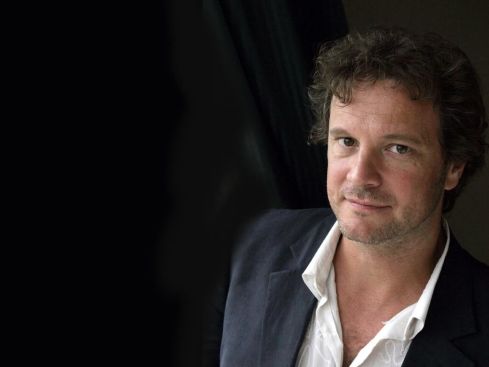
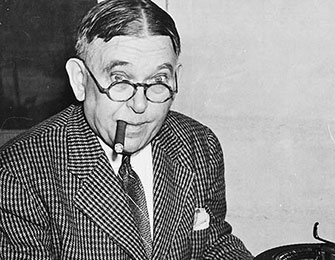
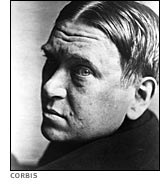
The Sage of Baltimore. [Image courtesy: The American Mercury]

Henry Louis Mencken was born on this day  in Baltimore, Maryland in 1880. Today is the 132nd anniversary of his birth.

Mencken lived in the same house in the Union Square neighborhood of the city for all but 5 years of his life. At 9 he read Huckleberry Finn by Mark Twain and knew he wanted to become a writer. His family had other ideas.

His grandfather had prospered in the tobacco business and his father, August, continued the family tradition. Mencken studied at the Baltimore Polytechnic Institute (1892-96) and then worked at his father’s cigar factory. [Books and Writers]

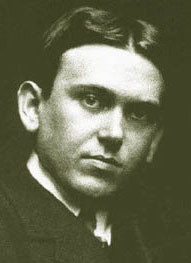
[Image Courtesy: Wikimedia Commons]

He worked for 3 years at the family owned business and would have stayed indefinitely, but upon his father’s death in 1899  Mencken was “free to choose his own trade in the world.”

Within a week, Mencken “invaded” the city room of the old Baltimore Morning Herald to face down the city editor and ask for a job…There were no jobs that day, but Mencken, persistent, returned daily for two weeks. “Finally I was sent out on a small assignment — it was a stable robbery at Govans — and a few days later I was on the staff,” [H.L. Mencken, Pioneer Journalist, By Jacques Kelly The Baltimore Sun]

His skill as a writer and his reputation for being able to turn a phrase grew. So 6 years later when the Herald closed its doors Mencken applied for a position at the larger Baltimore Sun.  He started at “The Sun as its Sunday editor, became an editorial writer, and in 1911 started writing his own column, the Free Lance Mencken.”  He worked at The Sun until 1948, bring his unflinching wit and critical eye to everything he saw.

“I believe that a young newspaper reporter in a big city… led a live that has never been matched… for romance and interest.” [Mencken from his only known audio interview. Courtesy of: The American Mercury.com]/

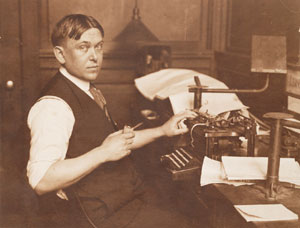
Mencken at work. [Image Courtesy: Enoch Pratt free Library Digital Collections.]

He was a war correspondent in Germany and Russia from 1916 to 1918. During WWI Mencken was pro-German (a very unpopular thing to be in patriotic Baltimore of 1917).

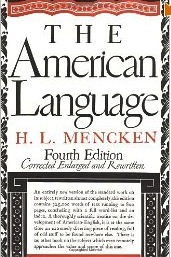
In 1919 he published The American Language, a guide to American expressions and idioms.

From 1914 to 1923 Mencken co-edited with drama critic George Jean Nathan (1882-1958) the Smart Set, which mocked everything from politics to art, universities to the Bible…[Books and Writers]

He preferred realism to modernism and he helped the careers of Sinclair Lewis, Dorothy Parker and Eugene O’Neill.

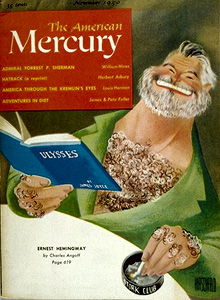
Cover of the American Mercury [Image Courtesy: Wikipedia]

He started The American Mercury monthly magazine, working on the magazine from 1924 t0 1933.

A stroke in 1948 left him nearly unable to read or write. Speaking took a lot of effort, and he grew easily frustrated. He spent his remaining days organizing his papers and letters (which can now be found in H.L. Mencken Room and Collection at the Central Branch of the Enoch Pratt Free Library on Cathedral Street in Baltimore.

[Image courtesy: MPT]

Here are a few more quips from the Sage of Baltimore:

  • “A cynic is a man who, when he smells flowers, looks around for a coffin.”
  • “Nature abhors a moron”
  • “Do not overestimate the decency of the human race”
  • “A man loses his sense of direction after four drinks; a woman loses hers after four kisses”
  • “Love is like war; easy to begin but very hard to stop”
  • “It is a sin to believe evil of others, but it is seldom a mistake.”
  • “Conscience is the inner voice that warns us somebody may be looking.”
  • “You come into the world with nothing, and the purpose of your life is to make something out of nothing”
  • “Most people are unable to write because they are unable to think, and they are unable to think because they congenitally lack the equipment to do so, just as they congenitally lack the equipment to fly over the moon.”
  • “I believe that it is better to tell the truth than a lie. I believe it is better to be free than to be a slave. And I believe it is better to know than to be ignorant.”

Thought of the Day 9.11.12 Harry Connick Jr.

“hard to sit in silence, to watch one’s youth wash away.”

–Harry Connick Jr.

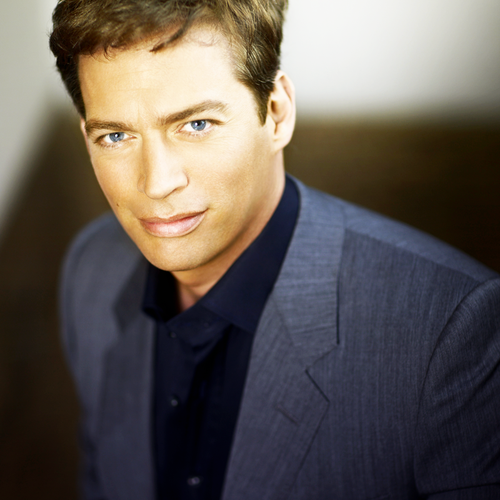
[Image courtesy: Last.fm]

Joseph Harry Fowler Connick Jr. was born on this day in New Orleans, Louisiana, USA in 1967. He is 45 years old.

Connick’s mother, Anita, was a lawer and judge, she rose through the ranks to become  a Louisiana Supreme Court justice. Harry’s first concert was at a campaign event when his father, Joseph, was running for district attorney. Harry was 5 and had been taking piano lessons for two years, The little boy sang the national anthem. (His dad won the election.) At 9 he performed  Beethoven’s Piano Concerto No. 3 Opus 37 with the New Orleans Symphony Orchestra and joined the musician’s union. He took lessons at the New Orleans Center for  the Creative Arts from Ellis Marsalis and James Booker.

After high school Connick moved to New York City. He played at various jazz clubs,  and caught the attention of singer Tony Bennet (who claimed the youngster could be the next Sinatra) and Columbia Record exec George Butler (who signed Connick to the label.)

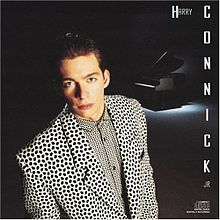
Connick’s first album. [Image Courtesy: Wikipedia]

His first, self titled, album was largely instrumental, but  he added vocals to his second album, 20. Harry Connick, Jr. sings like a Delta summer evening — his voice is warm and boozy and smooth all at the same time. He pulls you in and dances you around a song. At 20 he was singing standards that belonged to a generation (or two generations) his senior, and he did it with style. To date Connick has put out 27 albums.  From Jazz to Funk to Ballads to Big Band to the songs he loved from childhood he makes it sound easy… and has sold over 25 million recordings.

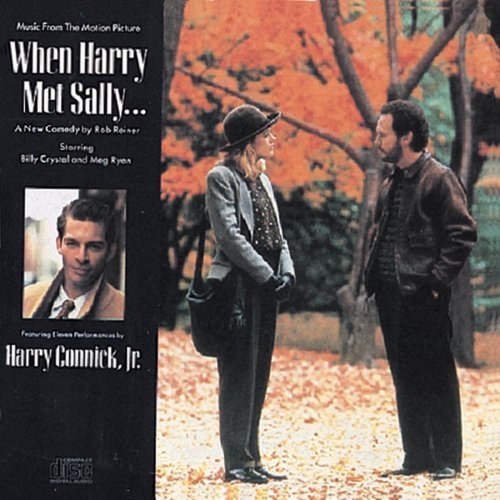
Cover for When Harry Met Sally… [Image Courtesy: Amazon.com]

Rob Reiner signed Connick for the soundtrack of When Harry Met Sallyin 1989. The soundtrack is lush with Big Band standards like “It Had to Be You,” “Don’t Get Around Much Anymore,” “Let’s Call the Whole Thing Off,”  “But Not for Me,” “Where or When” and (a personal favorite) “I Could Write A Book,” and went to #1 on the Jazz Charts  while reaching double-platinum.  Connick won a Grammy for his effort.

The film’s success led to Harry’s first multi-platinum album, an accomplishment made even more impressive by the fact that it was also Harry’s first Big Band recording. [Harry Connick, Jr official web page]

Reiner agreed with Bennet’s assertion that Connick had a certain Sinatra-esque style, and Connick followed up his success scoring Harry Met Sally by going ON camera in the WWII film Memphis Belle. Next he played Eddie in Jodie Foster’s Little Man Tate.

Harry changed tunes for his next film role, portraying a homicidal sociopath in 1995’s Copycat. The critics took notice, with the New York Times dubbing him, “…scarily effective,” and the Tampa Tribune naming him “most memorable” in a cast that included Holly Hunter and Sigourney Weaver. [Harry Connick, Jr official web page]

He played a fighter pilot / side kick in Independence Day where the actors, writers and directors were too busy blowing things up and saving the world to bother with science, logic or character development. [Too harsh?] He was the romantic good guy to Sandra Bullock in Hope Floats. In 2001 he co-starred with Sarah Jessica Parker  in Life Without Dick.  He was in the horror movie BUG with Ashley Judd.  He  narrator The Happy Elf (which was based on a song he wrote for his Harry for the Holidays 2003 album.) and My Dog Skip and he gave his voice to the animated role of Dean McCoppin in The Iron Giant.  He co-starred with Renee Zellweger in the 2009 rom-com New In Town. And his character heads a team of marine veteranarians who help an injured bottlenosed dolphin in Dolphin Tale. (Ashley Judd co-stars in Dolphin Tale as well, but sans bugs.)

On the small screen he worked with Glen Close in the ABC special South Pacific, and had a recurring role as Grace’s husband Leo Markus on Will and Grace. He was the lead in bio-pic Living Proof about Dr. Dennis Slamon, the man who developed the breast cancer drug Herceptin. He was the host for the Weather Channel’s 2007 documentary 100 Biggest Weather Moments (The Weather Channel donated $75,000 to Musician’s Village, a project Connick and Branford Marsalis devollped with Habitat for Humanity to aid the victims of Hurricane Katrina. His latest television role is a recurring spot on Law & Order: Special Victims Unit as A.D.A. David Haden.

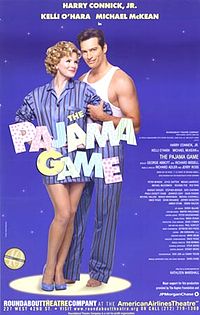
Poster for The Pajama Game [Image courtesy: Wikipedia]

He has appeared in several Broadway shows including the 2006 revival of The Pajama Game,  and the 2011 revival of On a Clear Day You Can See Forever, as well as two special concert tours, An Evening with Harry Connick Jr. and His Orchestra in 1990 and Harry Connick Jr.: In Concert on Broadway in 2010. He also composed the music and lyrics for Thou Shalt Not.

After Hurricane Katrina devisated New Orleans and the Gulf region Connick joined forces with other musicians and civic leaders to help rebuild the city. Portions of the royalties from Oh, My NOLA  and Chanson duVieux Carre along with the concert tours promoting the albums went to Musician’s Villiage.


Thought of the Day 9.10.12 Colin Firth

“Colin is the sort of name you give your goldfish for a joke.”

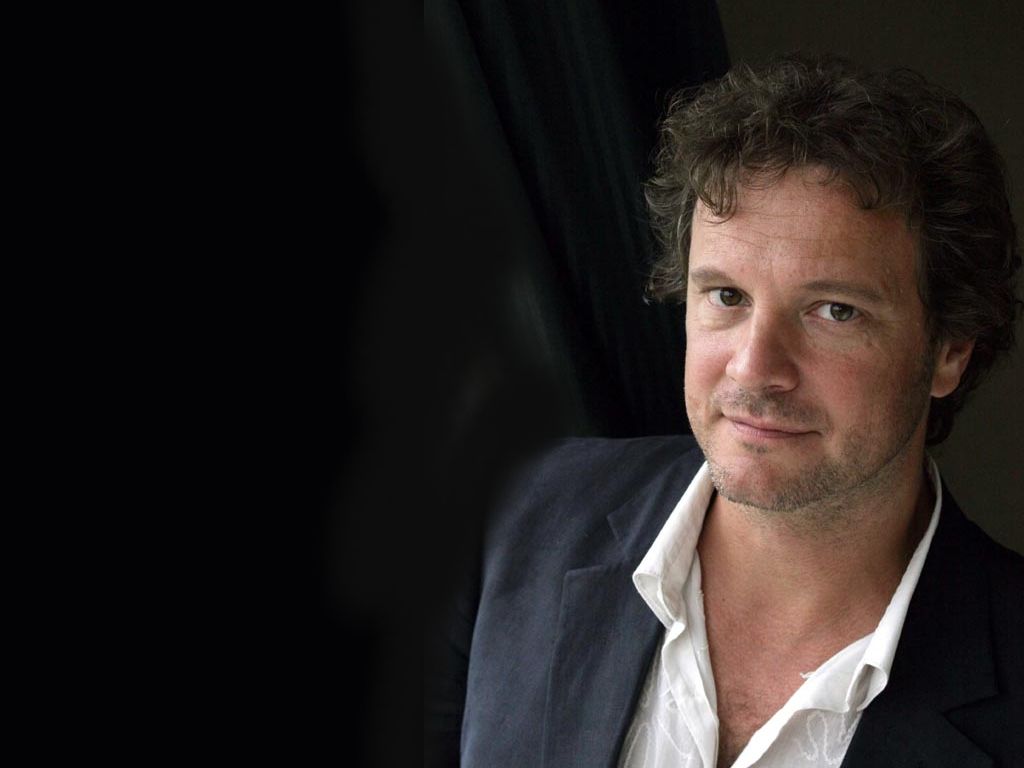
Colin Firth

Colin Andrew Firth was born on this day in Grayshott, Hampshire, England in 1960. He is 52 years old.

He spent much of his first four years in Nigeria where his parents, Shirley and David Firth, were missionaries.They returned to England where his parents took up University posts and Colin and his younger  siblings, Kate and Jonathan grew up. In 1972 the family moved to St. Louis, MO,for a year. The transition did not go well and, he says, he reacted badly, becoming rude and defensive.

The family settled in Winchester when they returned to England with David at King Alfred’s College lecturing on History, and Shirley at the Open University teaching comparative religion. Colin’s rebellion streak continued.

He was a troubled teen, scruffy and cocky, and often railing against a middle class whose children progressed via academia while the working class were pushed towards carpentry and other manual skills. [TalkTalk, Colin Firth-Biography]

At 14 he declared that he wanted to become an actor, and by 18 he had joined the National Youth Theatre in London. S-L-O-W-L-Y he built his career, at first doing grunt work, like fetching tea and answering phones, then enrolling in more acting classes — this time at the London Drama Center and learning the Stanislavski method. After 3 years of study he started to see lead roles — including Hamlet — come his way at the school.

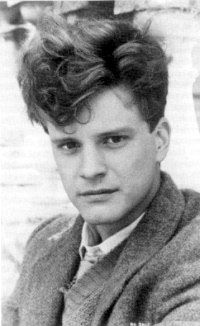
[Image Courtesy Probert Encyclopaedia]

In 1983 a talent scout saw his portrayal of the great Dane and offered him a spot replacing Daniel Day-Lewis in the West End production of Another Country. He went on to play another role in the movie production of the play, his first film. Though the movie was a success, and his role it was critically acclaimed, he went back to the theatre  — working at the Churchill Theatre and  the Old Vic. He also did some television, including Camille with John Gielgud and Ben Kingsley, and the mini-series Lost Empireswith Laurence Olivier.
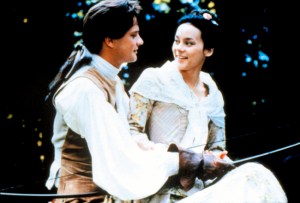
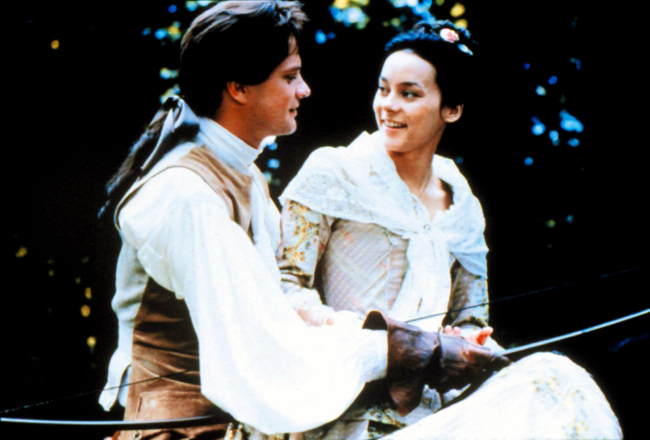
Firth and Tilly in Valmont [Image Courtesy: Pure Cine]

He stepped easily from stage to screen (small and large). Another film of note from his early career is Valmont, “An earthy, physical take on the novel Les Liaisons Dangereuses…” [TalkTalk]He co-starred here was Annette Bening, as

 ‘Lustful, manipulative aristocrats in 18th Century France, they would toy with the affections and bodies of others, until real emotions leads to the downfall of them both.’ [TalkTalk]

During the film ing of Liaisons he fell in love with actress Meg Tilly who played Madame de Tourvel. They dropped out the acting world, moving to a cabin in  the wilds of British Columbia. The two had a son William.   After the two-year hiatus he returned to the stage, Almedia, the small screen Hostages, and the indie film circuit, The Hour of the Pig (aka The Advocate).

If you want to see Firth as a creepy bad guy you can rent Playmaker (a film not even he likes) or The Deep Blue Sea (in which he plays a no-good cad.) He also plays a bit of a cad in Circle of Friends.

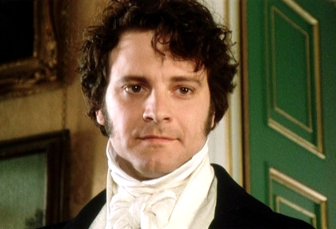
But nobody wants to see Colin Firth play a cad…am I right? In 1995 he was offered, and REFUSED, the role of Fitzwilliam Darcy in Andrew Davies’ adaptation of Jane Austen’s Pride and Prejudice.  There is a certain Darcy-esque story behind Firth’s refusal of the role. For a serious actor trying to build a serious career — an actor who was NOT trying to make it on his pretty face — the role “seemed tiresome and predictable.” [Talk Talk] He was as aloof about the role as Darcy is about  society in Meryton. He just wasn’t looking for a role that simply required that he throw on a Waist coat, snarl in a period costume, and pick up a pay check. He also didn’t think that Austen’s story was too female centric, and that just wouldn’t be enough for him to do. But Sue Birtwistle, the show’s producer, was persistent. She got him look at the script and rethink what he could bring to Darcy.

Firth as Darcy [Image Courtesy: Period Dramas.com]

Filming began in June 1994.

“As Mr. Darcy in the acclaimed 1995 television adaptation of Pride and PrejudiceColin Firth induced record increases in estrogen levels on both sides of the Atlantic. Imbuing his role as one of literature’s most obstinate lovers with surly, understated charisma, Firthcaused many a viewer to wonder where he had been for so long, even though he had in fact been appearing in television and film for years.” [New York Times, Movies & TV]

The series was wildly popular and is THE standard against which all other Jane Austen adaptations are judged. Firth’s stock as both movie star and sex symbol sky rocketed. But instead of taking on another leading role, his next turn on the silver screen was a relatively minor role as Kristen Scott Thomas’ lightweight husband in The English Patient. He looses Scott Thomas to Ralph Fiennes in that movie. He played an even bigger cuckold (and a less amiable one) in Shakespeare in Love, where he looses his screen love — it’s Gwyneth Paltrow this time — to another Fiennes brother, Joseph. Speaking of Shakespeare…He’s an American farmer in A Thousand Acres which is an adaptation of Shakespeare’s King Lear, then does a comic turn AS Shakespeare in Blackadder: Back and Forth. 

From Shakespeare in Love [Image Courtesy: My Favorite Things]

It must have felt like he was looking in a mirror when he took on another Mr. Darcy in Bridget Jones’s Diary and Bridget Jones: the Edge of Reason, (especially as the former loosely echos the plot of P&P.)

Here’s a rundown of most of his other post Pride and Prejudice work:

  • Other Rom-Com work includes… Hope Springs, Fever Pitch, Love Actually, The Accidental Husband, Relative Values, Four Play, Then She Found Me and Easy Virtue.  I suppose you can add Mamma Mia to that list as well. (I can vouch for Firth’s performances in the first three. I think Hope Springs is his best Romantic Comedy, Fever Pitch is funny if a bit too sporty for me, and he was the best thing in Love Actually, actually.)
  • For period pieces you can choose from… Girl with a Pearl Earring, The Importance of Being Earnest, Nostromo, The Turn of the Screw (briefly) and Dorian Gray. (Pearl Earring was excellent, if a little slow-moving — in a beautiful kind of way. Earnest was funny — but it’s Wilde, so, you know, that’s kind of a given. Dorian Gray was based on a Wilde novel too… but I didn’t like that one nearly as much.)
  • Looking for more modern drama? Try… My Life So Far, Conspiracy, Born Equal, Trauma, Where Lies The Truth, Main Street, And When Did You Last See Your Father? and Genova. (Of this lot I’ve only seen Conspiracy, which is a chilling drama about a Nazi conference where officials discuss the “Final Solution.” It is a beautifully acted film all around with Firth in a lessor role.)
  • He seemed a little out-of-place in the family films What a Girl Wants and Nanny McPhee  and the historical action flick The Last Legion. 

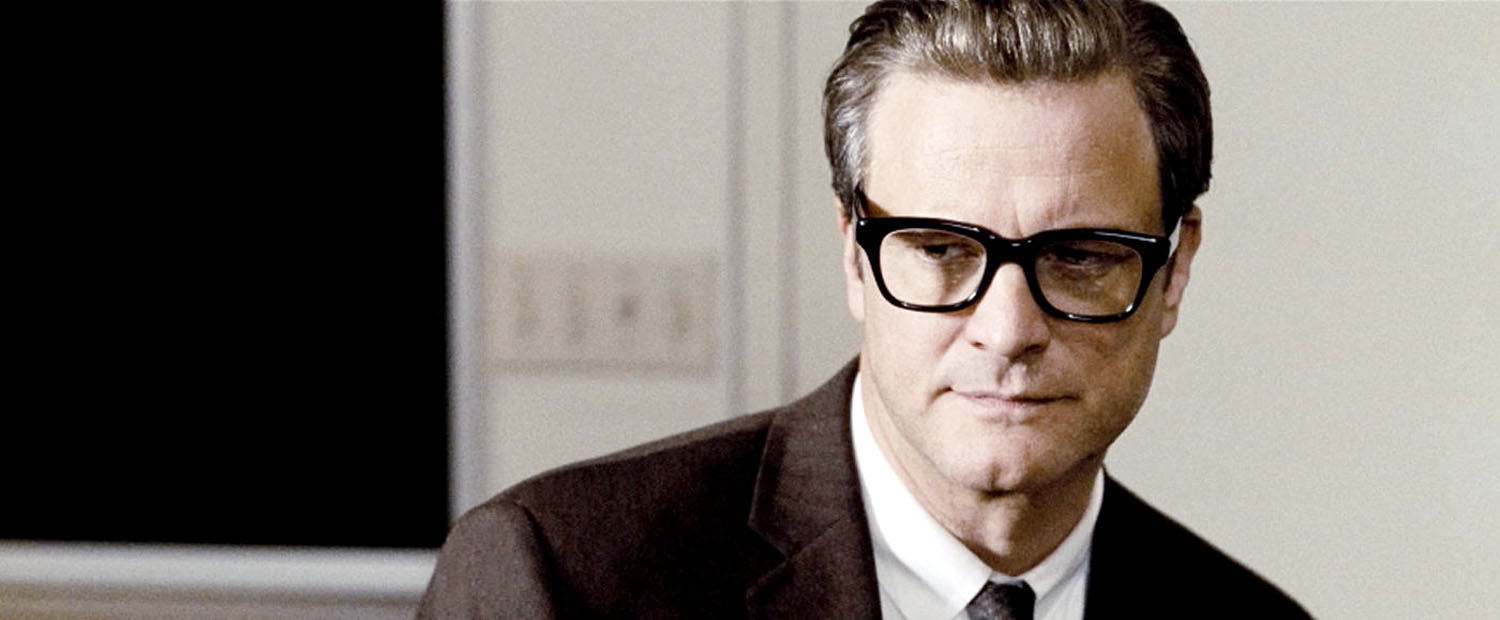
Then came A Singe Man in 2009, and suddenly Colin Firth went from being movie star (small caps) to MOVIE STAR (big caps) all over again. His performance as George Falconer (in the movie based on the Christopher Usherwood  novel of the same name) was understated and amazing. It’s 1962 and Firth’s George plays a university professor who is in mourning after the accidental death of his long time partner, Jim. Firth was nominated for an Academy Award, and won a Golden Globe and Screen Actors Guild Award for Best Actor.

Firth in A Single Man [Image Courtesy: Talking Movies]

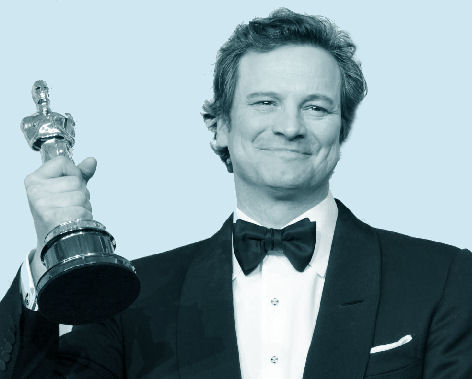
The next year, 2010, was golden, and Firth finally got his Oscar for The Kings Speech. On the brink of WWII King Edward VIII abdicates the throne of England, leaving the job to his ill prepared brother “Bertie” (Firth). Bertie must overcome a terrific stammer and self-doubt to lead his country in its time of greatest need.

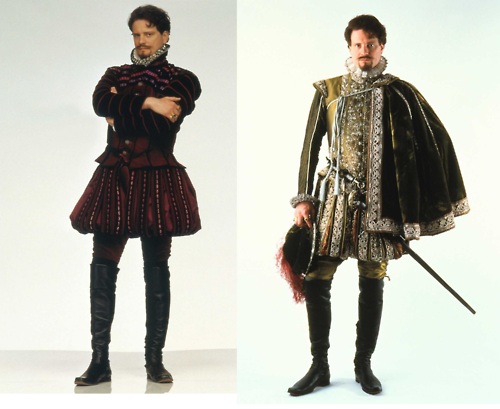
Satisfaction! [ColinFirth.com]

In 2011 he took a supporting role in Tinker Tailor Soldier Spyas Bill Haydon (the “Tailor”) to Gary Oldman’s George Smiley.

Next month Gambit co-starring Alan Rickman, Stanley Tucci and Cameron Diaz will hit theaters. This remake of the 1966 Shirley MacLaine/Michael Caine comedy caper is a Joel and Ethan Coen project.

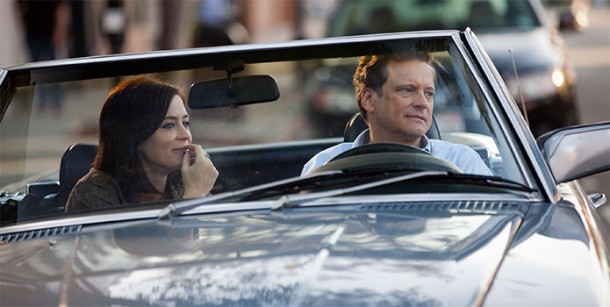
Firth also hasArthur Newman, Golf Pro, The Railway Man, Bridget Jones’ Baby and Devil’s Knot on the way. 

Still from the upcoming Arthur Newman, Golf Pro with Emily Blunt [Image Courtesy: Best Movies Ever]

The actor has rather famously down played his sex appeal.

“I think it’s quite extraordinary that people cast me as if I’m Warren Beatty: until I met my present wife, at the age of 35, you could name two girlfriends.” [Colin Firth  on Brainyquote.com]

Besides his romance with Tilly, he had an affair with Jennifer Ehle (Elizabeth in Pride and Prejudice) and has been married to Italian film producer/director Livia Giuggioli  since 1997. The couple has two sons, Luca and Matteo.


ritaLOVEStoWRITE just won a BLOgcean Award!

To quote one of my favorite people in the world… “Awesome Sauce!”

BLOgcean just gave ritaLOVEStoWRITE a Grade 4 BLOgcean Award! (as in blog ocean)

So if you’ve been reading the blog thinking “you know this isn’t half bad” congratulations, YOU WERE RIGHT! And  now there’s proof!  So I’d like to share this award with you, my faithful readers.

And as a bonus reward… I can promise you a delightful Thought of the Day tomorrow. I don’t want to ruin the surprise, as that would defeat the object. But, I believe, it will be most  satisfactory.


Thought of the Day 9.9.12 “Colonel” Sanders

“There’s no reason to be the richest man in the cemetery. You can’t do any business from there.

— “Colonel” Harland Sanders

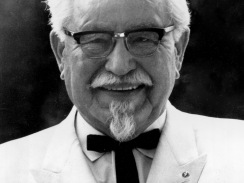
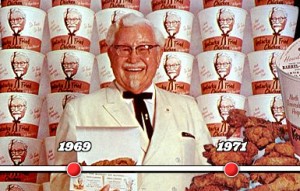
Col. Harland Sanders, 77, head of the multimilion-dollar Kentucky Fried Chicken chain, is shown in 1968. (AP Photo) [Image Courtesy: CBS News]

Harland David Sanders was born on this day  near Henryville, Indiana in 1890. Today is the 122nd anniversary of his birth.

He lived in poverty in rural Indiana sharing a four room shack with his father, mother, brother and sister. His father, a farmer and a butcher, died when Harland was 6 and his mother went to work in a tomato-canning factory to help support the family. Harland took on many of the household chores including taking care of his younger siblings and doing the cooking.

He dropped out of school at 12. At 15 he lied about his age and joined the US Army. He spent most of his Army career in Cuba as a mule driver. When he was honorably discharged and returned to the States where…

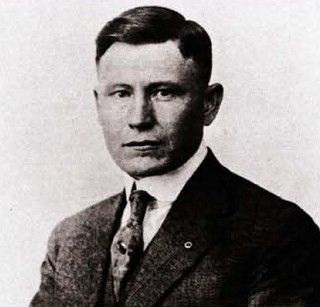
As a young businessman before he became “Colonel”. (Image courtesy: Wikipedia)

he worked as an insurance salesman, steamboat pilot, and farmer. It wasn’t until he reached the ripe age of 40… that his famous success with chicken began. [The Corner Office.]

During the Depression Sanders opened a service station in Corbin, Kentucky and began to sell chicken, ham and steak dinners on the side. Eventually the meals, which he actually sold out of his living quarters next door to the service station, became so popular that he moved to Sanders Cafe a 142 seat restaurant at a nearby motel. He slowly perfected his recipe for fried chicken. Some estimates say it took over 1,000 tries to get the proper mix of herbs and spices  for his “special recipe.” Sanders used a pressure fryer instead of frying pan to speed up the cooking process and seal in the meat’s juices.

In 1935 Kentucky governor Ruby Laffoon gave him the honorary title of “Kentucky Colonel”.  By 1950 he had grown his trademark mustache and goatee — which he bleached white to match his hair — and took to wearing a white suit and black string tie at all public appearances.

Photo promoting the (real) Sanders’ visit to Santa Ana KFC on May 26, 2011 — 29 plus years after the Colonel’s death. But don’t worry Southern CA, it wasn’t some Zombie in a white suit and string tie. It was the Second Generation Colonel. The man in the photo above, however, is the real deal. [Image courtesy: New Santa Ana]

When an interstate reduced the traffic to his restaurant he started to look at the franchising model as a way to grow his business.

In 1955, confident of the quality of his fried chicken, the Colonel devoted himself to developing his chicken franchising business. Less than 10 years later, Sanders had more than 600 KFC franchises in the U.S. and Canada, and in 1964 he sold his interest in the U.S. company for $2 million [KFC, History]

He moved to Mississauga, Ontario and concentrated on building his Canadian chain while continuing to make appearances on both sides of the 49th parallel.

Sander’s image has been modernized over the years for use as Kentucky Fried Chicken’s icon. [Image courtesy: USA Today.]

Sanders didn’t always get along with the mega corporation that took over KFC America, Heublein, Inc. He sued the organization when it used his image to promote products he didn’t develop. Heublein, for their part, sued the Colonel for libel when he said of  their gravy:

“My God, that gravy is horrible… They buy water for 15 to 20 cents per thousand gallons and then they mix it with flour and starch and end up with pure wallpaper paste…To the wallpaper paste they add some sludge and sell it for 65 or 75 cents a pint. There’s no nutrition in it and they ought not to be allow to sell it.” [The Colonel’s Kitchen]

The Colonel had a philanthropic side as well and he funded many charities and scholarships. He diagnosed with leukemia in June of 1980, Colonel Sanders died of pneumonia the following december.

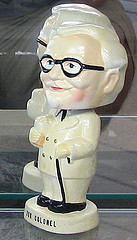
Bobble head of the Colonel at the Colonel Sanders Museum (Image Courtesy: Brent K. Moore.)

There is now a museum honoring the Colonel and all things KFC in Corbin Kentucky at the site of the original restaurant. To learn more about the museum go here (for a link to the Corbin County tourism link) or here (for a personal take on the museum by Brent Moore).


Thought of the Day 9.8.12 Patsy Cline

“Here’s to those who wish us well and those who don’t can go to hell”

–Patsy Cline

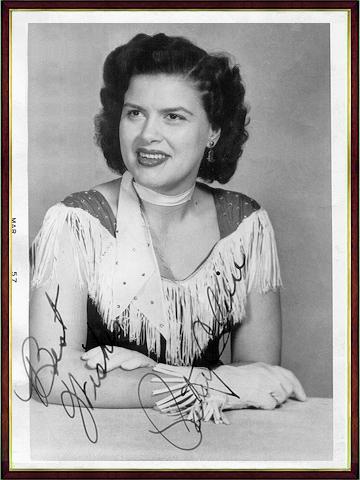
Patsy Cline early in her career. [Image courtesy: Patsy Cline, A Fan’s Tribute]

Virginia Patterson Hensley was born on this day in Winchester, Virginia in 1932. It is the 80th anniversary of her birth.

At 4 she won a dance contest for tap dancing. Her mother gave her a piano for her 8th birthday and Patsy taught herself to play.  She sang with her church choir and at 14 was a regular on WINC Radio. At 15 her parents divorced and Patsy sang in clubs at night and worked in a drug store during the day to help pay the bills.
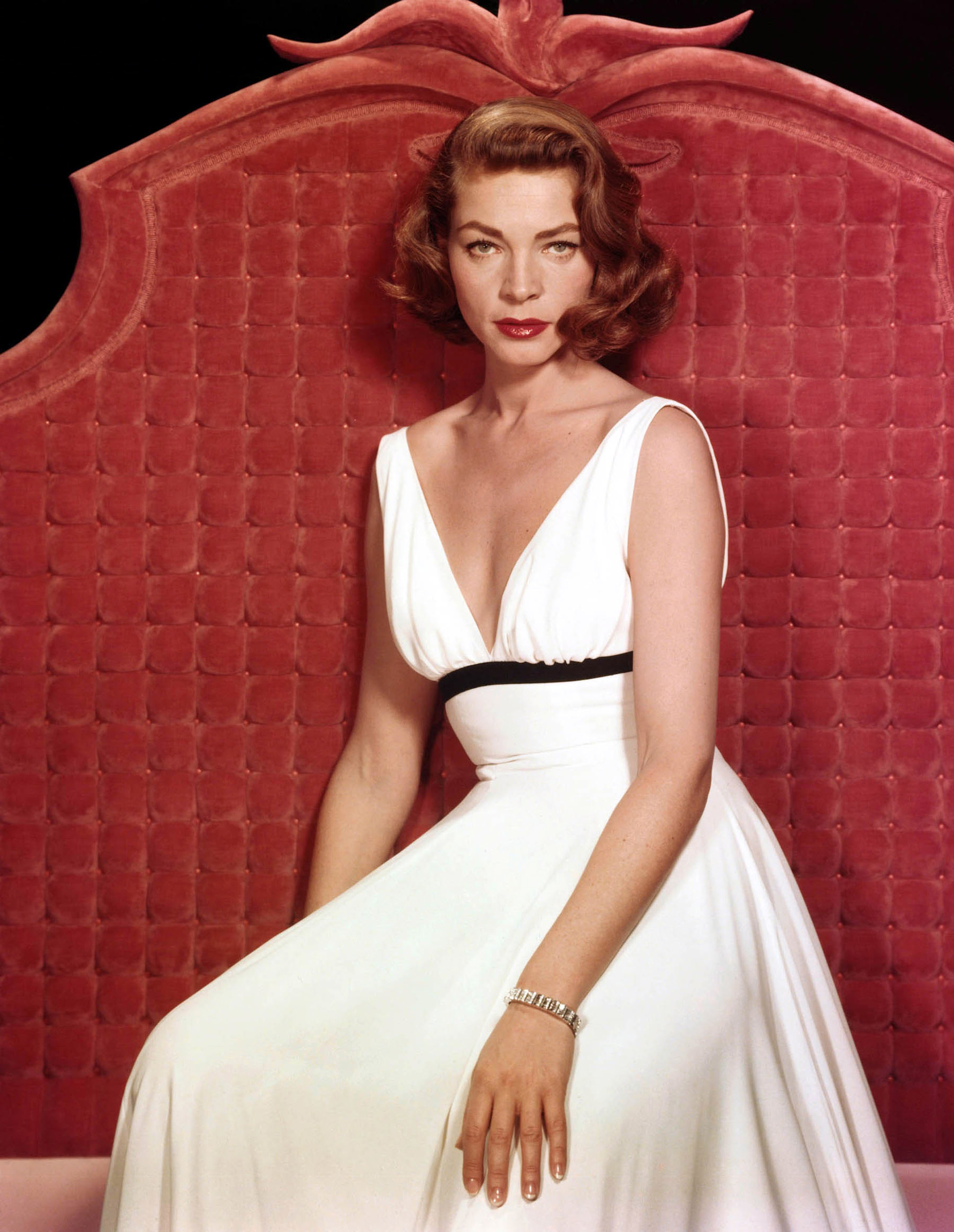
She married Gerald Cline in 1952 and continued to sing in clubs as well as with Bill Peer’s Melody Playboys in Maryland and as a regular on “Town and Country Jamboree” on a radio station out of Washington DC. She got a recording contract with Four Star Records in 1954 and she won first place on the TV variety show “Talent Scouts” with Arthur Godfrey where she sang “Walkin’ After Midnight.” The song became a hit and on both the country and pop charts.

Cline made her debut on the stage of the Grad Old Opry in 1960 and continued her rise to stardom with her second hit “I Fall to Pieces.” She is also known for her songs “Sweet Dreams,” “Crazy” and “She’s Got You.”

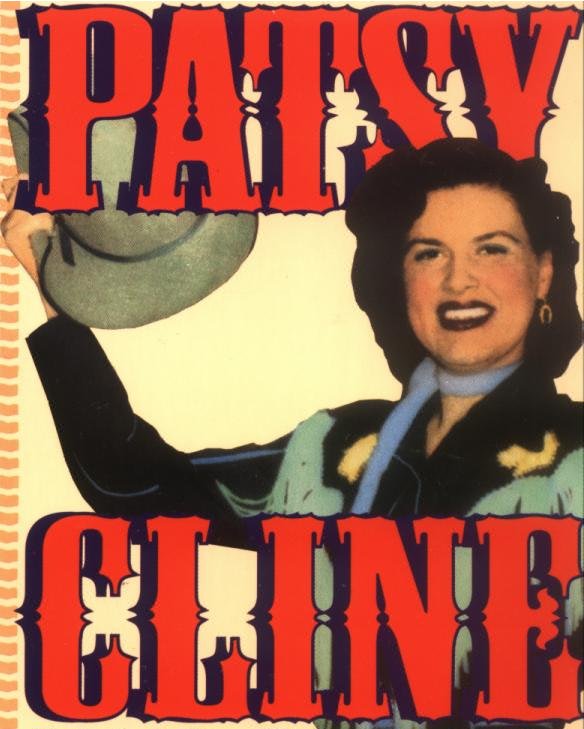
A country music legend, Patsy Cline helped break down the gender barrier in this musical genre. [Patsy Cline. biography profile, bio.TRUE STORY]

[This is one of the Patsy Cline albums that was in my parent’s record collection. Image courtesy: Decca Records]

She helped  the careers of other up and coming female singers, especially Loretta Lynn.

Cline died in a plane crash returning from a benefit concert in 1963.

In 1973 she was the first female soloist to be honored in the Country Music Hall of Fame.

[Image courtesy: blog.zap2it.com]


Thought of the Day 9.7.12 Elizabeth R.

“I may not be a lion, but I am a lion’s cub, and I have a lion’s heart.”

–Elizabeth I of England

[In honoring QUEEN ELIZABETH REGINA GLORIANA’s birthday I decided to concentrate on her time before she took the throne. Frankly this blog would be enormous if I chronicled her entire life — the post is pretty long as is — and I opted to retell the earlier, slightly less well-known, period. I hope I’ve given you enough to whet your whistle and have no doubt that you’ll be able to find tons of additional material on her life either on-line and at your local library or book store.]

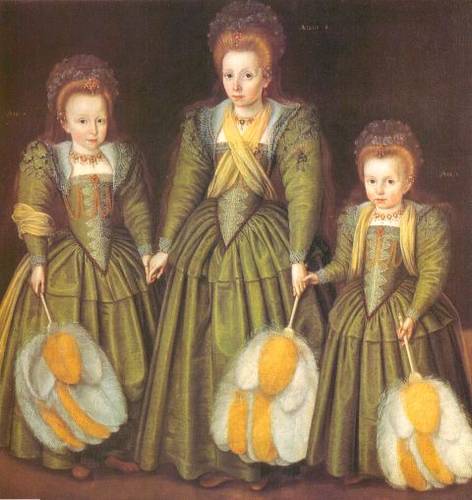
Seventeenth century painting by an unknown artist depicts the later Queen Elizabeth I of England as a (left to right) five-year-old, six-year-old, and three-year-old. The dress is anachronistic. (Image courtesy of: Wikipedia).

Elizabeth Tudor was born on this day in Greenwich Palace, England in 1533. Today is the 479th anniversary of her birth.

She was the daughter of King Henry the VIII of England and his second wife, Anne Boleyn. Henry had divorced his first wife, Katherine of Aragon — with whom he already had one daughter, Mary — and invented a new religion — the Church of England — in order to marry Boleyn. He had great hopes that she would provide him with a male heir. When their only living offspring was a girl, Henry grew disenchanted with Boleyn. His eye soon wandered to pretty (and more docile) Jane Seymour.  But, fearing what would become of herself and Elizabeth, Boleyn refused to divorce the King. On May 19, 1536, Anne Boleyn was executed on charges of treason, incest and adultery.  The marriage was nullified and Elizabeth, like Mary, was declared illegitimate.

Henry, ever the charmer, married four more times before he died. Wife number three, Jane Seymour managed to give Henry his male heir, Prince Edward, but she died nine days later. Elizabeth was seven when her father married Anne of Cleves for political reasons. Henry found her German manners ill-suited  for the English Court, and her face ill-suited for his taste.  Wife number 5 was Catherine Howard, a cousin of Anne Boleyn, and like Boleyn she was arrested for treason and adultery and was beheaded. Unlike Elizabeth’s mother, Catherine was guilty as charged.

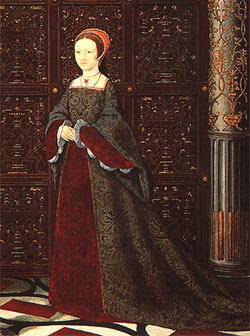
Princess Elizabeth, c. 1543-1547.
‘The Family of Henry VIII’, detail.
Anon. Hampton Court Palace. © The Royal Collection.    (Image courtesy: the Faces of Elizabeth I)

Elizabeth was a precocious ten-year old when Henry married his last wife, Catherine Parr. Catherine brought all of Henry’s children back to court. She was Elizabeth’s ‘second mother’ and she saw to it that the girl was well-educated in the Greek and Latin. By the time she was queen Elizabeth could speak five languages fluently.

Perhaps Catherine‘s most significant achievement was Henry‘s passing of an act that confirmed both Princess Mary‘s and Elizabeth‘s line in succession for the throne, despite the fact that they had both been made illegitimate by divorce or remarriage. [Tudorplace.com]

At Henry’s death in 1547 the throne went to Edward, with Mary and then Elizabeth next in line. Elizabeth lived with Catherine at Whitehall in Chelsea. Catherine  and Admiral Thomas Seymour (Jane Seymour’s brother) married just four months after Henry’s death. Thomas, Catherine and 14-year-old Elizabeth moved to Sudeley Castle.

Thomas was reported to have paid morning visits to Elizabeth, in her bedchamber…There was romping, laughing and giggling… no one knows how far these romps went… [Elizabethan Era Index]

Although Catherine and the servants were present during such tom foolery and “Elizabeth denied any scandal or bad behaviour” she left  Sudeley. No ill will seemed to fall between her and Catherine and they wrote to each other affectionately after her departure. But Thomas wasn’t through with the princess yet. After Catherine’s death in childbirth he applied to become Elizabeth’s suitor. He was rejected. He continued to plot for power, even attempting to kidnap the King, and was arrested for treason. And, because of their former friendship, the Princess was implicated . Despite serious interrogation the 15-year-old maintained her innocence.

In 1553 Edward died of tuberculosis. Edward named his cousin, Lady Jane Grey as his heir. Unlike his sisters, Jane had the advantage of being legitimate and the support of the manipulative Lord Protector John Dudley. Unfortunately for her it wasn’t enough. Elizabeth was smart enough to steer clear of Dudley’s power play. She feigned sickness,  kept to her bed, and away from the palace, as the drama played out. Mary took her rightful throne and Elizabeth kept her head. After a brief stay in Queen Mary’s court Elizabeth retreated to Hatfield.

When news of Queen Mary’s intended marriage to King Philip II of Spain surfaced in 1553 protestants in England worried that he’d bring the Spanish Inquisition with him. Nobles who had supported Dudley and Jane Grey now hatched the Wyatt Rebellion. Wyatt implicated Elizabeth in the rebellion by sending her a letter about it before hand. The conspirators wished to make her queen once Mary was dethroned. Elizabeth never got the letter — it was intercepted by Mary’s government agents. The rebellion failed, Wyatt was sentenced to be hung, drawn and quartered. Elizabeth was summed to London for questioning. She asked to see her sister, but was denied. She was allowed to write to Mary and sent her a long letter protesting her innocence and loyalty (and wisely drawling lines through the unused parts of the paper so no forged additions could be made.) She was sent to the Tower of London, and made to enter through the Traitor’s Gate where she said:

“Here landeth as true a subject, being prisoner, as ever landed at these stairs. Before Thee, O God, do I speak it, having no other friend but Thee alone. Oh Lord, I never thought to have come in here as a prisoner, and I pray you all bear me witness that I come in as no traitor but as true a woman to the Queen’s Majesty as any as is now living.” [Elizabeth I from Elizabethan Era Index]

She lived in fear the entire time she was locked up, and was in real danger of being killed when a warrant for her execution came to Bell Tower. But the warrant lacked Mary’s signature and Sir John Brydges, the Lieutenant of the Tower refused to carry out the order unless it was complete.

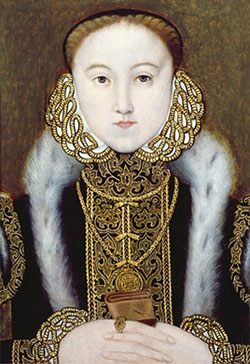
Elizabeth I as Princess, c.1555.
Artist Unknown. Private Collection. (Image Courtesy: The Faces of Elizabeth I)

After two long months Elizabeth was released  on May 19, 1554. Phillip, it seems, was wise enough to know that the English would harbor some ill will over the execution of their beloved Princess, and that that ill will would be turned toward him.

He advised Mary to release Elizabeth from the Tower. And Mary, who was besotted with Phillip, obeyed…. Elizabeth was released… but was … placed under the equivalent of house arrest at the palace at Woodstock. [Elizabeth I from Elizabethan Era Index]

She was under constant surveillance at Woodstock. Her writing materials were restricted, her books censored,  and activities limited. After almost a year in the virtual prison at Woodstock Elizabeth was freed. She traveled, under heavy guard, to Hampton Court where she was allowed to meet with Phillip. He was instrumental in a reconciliation between the sisters (frosty though it may be). He would rather have Elizabeth next in line to the English throne than Mary Queen of Scotts — who supported his enemy France.

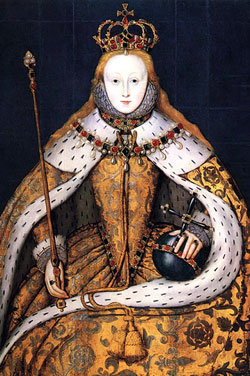
The Coronation Portrait, c. 1600.
Copy of 1559 lost original.
Artist Unknown.
Previously attr. to William Stretes. © National Portrait Gallery.
(Image courtesy: The Faces of Elizabeth I)

Elizabeth went home to Hatfield. On November 17th 1558 Mary died and Elizabeth became Queen of England. She was crowned on Sunday January 15th 1559. She died on March 24th 1603 having ruled for 45 years.

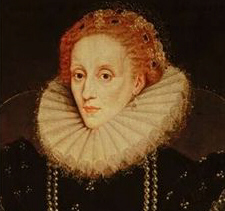
Elizabeth in later life. (Image courtesy: Elizabeth I Biography.)


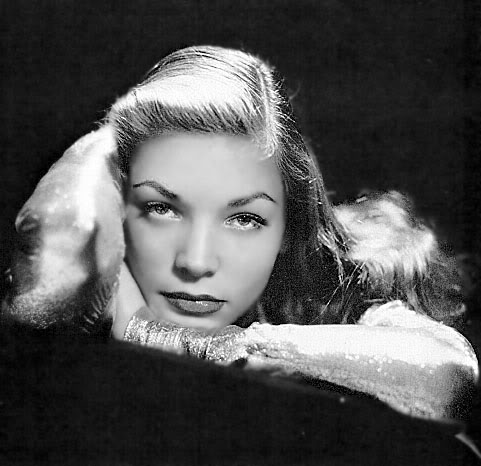
Thought of the Day 9.16.12 Lauren Bacall

“You know how to whistle, don’t you, Steve? You just put your lips together and blow.”

— Lauren Bacall

(Photo courtesy: Tweedland)

Betty Joan Perske was born on this day in the Bronx, New York in 1924. She is 88 years old.

She grew up in a middle class family. Her father, William Perske, was a salesman and her mother, Natalie Weinstein-Bacal Perske, was a secretary. Betty’s father, an alcoholic, left when she was six. Her mother changed their last name to Bacall. (The Romanian form of her mother’s maiden name.)

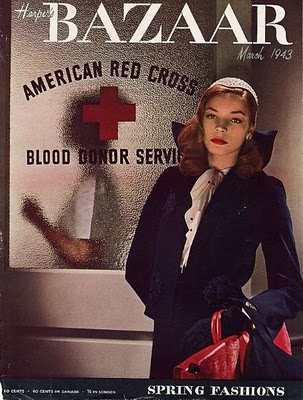
Bacall loved to dance but was smitten by the acting bug too. She studied at the American Academy of Dramatic Arts in New York. And got some work in off-Broadway productions. She had her first paid acting gig in Johnny 2×4 it was a walk on role, she was 17. She ushered at theatres to make money. She also modeled and it was a modeling gig on a Harper’s Bazaar cover in 1943 that brought her to the attention of director Howard Hawks’ wife Nancy. Nancy convinced Hawks to give Bacall a screen test. Hawks liked what he saw. He offered her a seven-year contract starting at $100 a week.  He  got her to modulate her voice (so she spoke in a lower, more sultry, register) and to  her to change her first name to Lauren. Nancy Hawks befriended Bacall and helped her with matters of dress “elegance, manner, and taste.” [ Original Old Radio ]

The Harper’s Bazaar cover that started it all. (Image courtesy Noir and Chick Flicks)

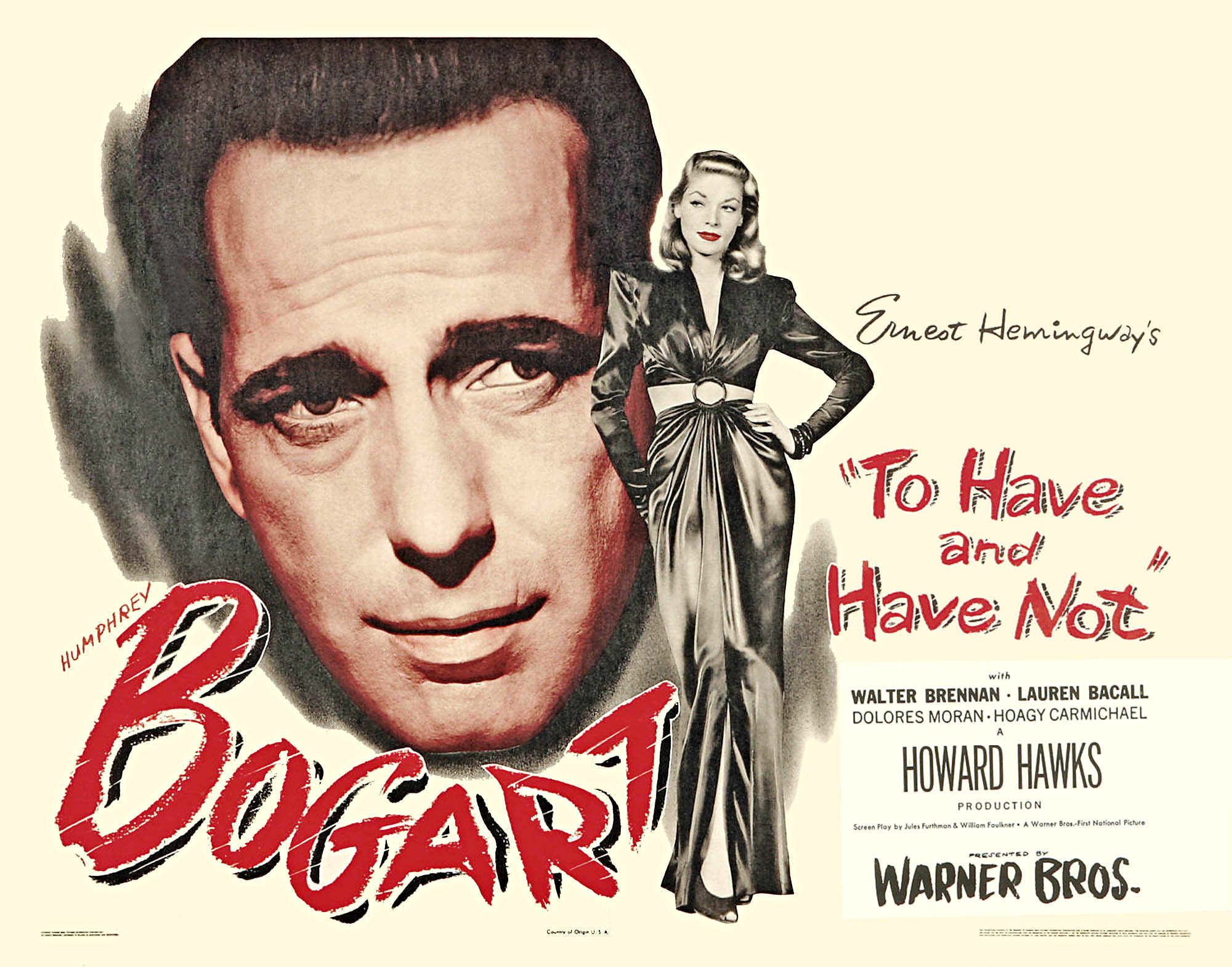
Her first role was in To Have and Have Not with Humphrey Bogart in 1944. The movie is loosely based on a book by Earnest Hemingway, the screenplay was by William Faulkner, but the famous “whistle” line was written by Hawks for Bacall’s screen test. After seeing the test, he not only offered her the role, but he asked Faulkner to work the scene into the script. Bogart’s Harry addresses Bacall’s Marie as ‘Slim’, she calls him ‘Steve’ — the same nicknames Howard and Nancy Hawks used for each other. Her  famous “Look” was the result of nerves.

“I used to tremble from nerves so badly that the only way I could hold my head steady was to lower my chin practically to my chest and look up at Bogie. That was the beginning of The Look.” [Lauren Bacall as quoted on Brainy Quotes]

Movie poster for To Have and Have Not. (Image courtesy of: Dr.Marco’s High Quality Movie Scans)

Bacall was only 19. Bogie, who was a quarter century her senior, fell in love with the beautiful, talented, strong woman, and she fell in love with him. The two married in 1945.

The duo made The Big Sleep, Dark Passage and Key Largo together. By limiting the number of films she made she could choose her roles carefully. She’d made one flop, Confidential Agent following To Have and have Not, and  she thought her career never fully recovered from it. With her reputation as a solid actress — and  the security of being married to one of Hollywood’s leading men — she was able to turn down roles that she didn’t find interesting. Bacall averaged one film a year while she was married to Bogart.

She and Bogey had two children, Stephen and Leslie Bogart and enjoyed 12 years of marriage before Bogart died of Lung cancer.

Bacall returned to New York and  started the second phase of her career, this time focusing on Broadway.

“I finally felt that I came into my own when I went on the stage,” [bio.TRUE STORY]

In 1961 Bacall married again, this time to actor Jason Robards, Jr., and had third child, Sam Robards.

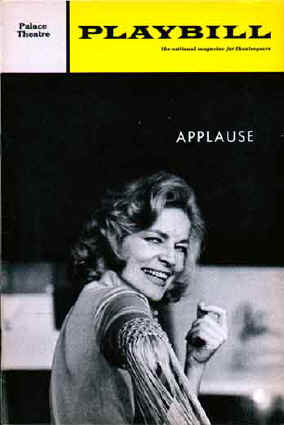
Applause Playbill (Image courtesy of: www.musicals101.com)

Bacall starred in Goodbye, Charlie (1959), Cactus Flower (1965) and had the lead in the musical adaptation of the 1952 movie All About Eve, Applause. The show earned Bacall her first Tony. Her second Tony came in 1981 for Woman of the Year.

She wrote two autobiographies, part one, Lauren Bacall By Myself, came out in 1978, the second part, Now, was published in 1994.

Both volumes openly discussed difficult parts of her life, including the alcoholism of both of her husbands, despite the fact that some of the topics were relatively controversial for the time. [bio.TRUE STORY]

She also tells about a time in her teens when she met actress Bette Davis in Davis’ hotel. Davis returned the favor when Bacall was giving new life to Margo Channing, the roll Davis’ originated in All About Eve.  Davis came backstage at the Palace Theatre after a showing of Applause  and congratulated Bacall on her performance.

Bacall was honored with a Governor’s Award for Screen Legends from the Academy of Motion Picture Arts and Sciences in 2009.

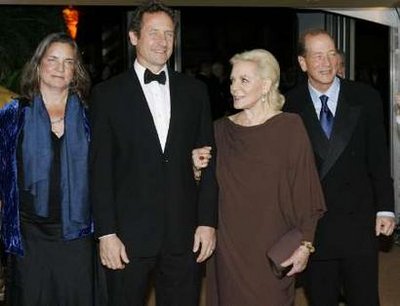
Lauren Bacall and her children, Leslie Bogart, Sam Robards and Stephen Bogart at The Academy of Motion Picture Arts and Sciences 2009 Governors Awards. Lauren Bacall was presented with the Governor’s Award.

Other Lauren Bacall quotes:

“I think your whole life shows in your face and you should be proud of that.”

“Find me a man who’s interesting enough to have dinner with and I’ll be happy.”

“I am not a has-been. I am a will be.”

“I wish Frank Sinatra would just shut up and sing.” (They were briefly engaged. Sinatra abruptly broke it off when he found out that news about the engagement had been leaked.)

(Photo courtesy of: Doctor Marco’s High Quality Movie Scans)


Thought of the Day 9.5.12 Freddie Mercury

“F*ck today, it’s tomorrow.”

“What will I be doing in twenty years’ time? I’ll be dead, darling! Are you crazy?”

— Freddie Mercury

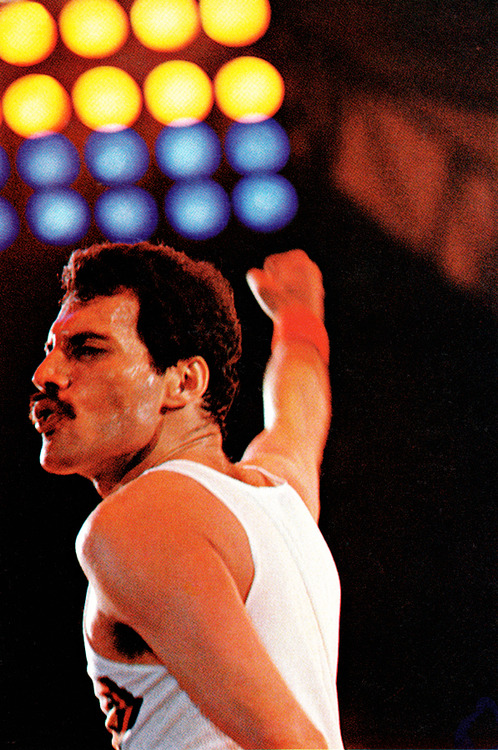
(Image courtesy of Fan Pop)

Farrokh Bulsara was born on this day in British Zanzibar, East Africa in 1946. He would have been 66 years old.

He grew up in Zanzibar and India. He attended St. Peter’s School, a British-style boarding school in Panchgani. The students at St. Peter’s anglicized his name to Freddie. Although he hated some of the school’s sports — running and cricket — he like others — hockey & boxing, and he became the school champion at table tennis at 10. He preferred art and music. He took private piano lessons and enjoyed Bollywood musicals. At school he formed a cover band that performed rock and roll. He also joined the school choir and participated in several theatre productions.

In 1964 when Freddie was 17 there was a great deal of unrest in Zanzibar, most of it directed at the British and Indian ex-pats. So Freddie and his family moved to Feltham, Middlesex, England. There he received a Diploma in Art and Graphic Design from the Ealing Art College. All the while he performed in bands. He also worked part-time selling second-hand clothes at Kensington Market and worked in a catering department at  nearby Heathrow Airport.

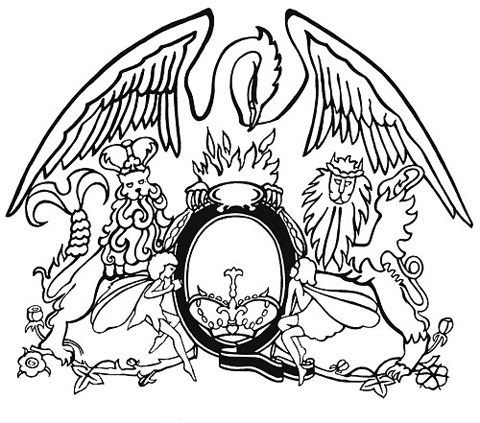
After stints with the bands Ibex and Sour Milk Sea he, Brian May (guitar) and Roger Taylor (drums) formed Queen. John Deacon rounded out the group in 1971.

Mercury designed Queen’s logo. (Image courtesy of Lost at E Minor.com)

Freddie changed his last name to Mercury when he started Queen.  As lead singer for the group Mercury’s range went from a low bass F to a high tenor F, 3  full octaves. He wrote the lion share of the group’s songs including Bohemian Rhapsody, Killer Queen, Somebody to Love, We Are the Champions and Crazy Little Thing Called Love.

He hated to do the same thing twice so he borrowed from a variety of genres when writing. So from the opera inspired Bohemian Rhapsody to the rockabilly Crazy Little Thing Called Love, Mercury proved just how mercurial he could be.

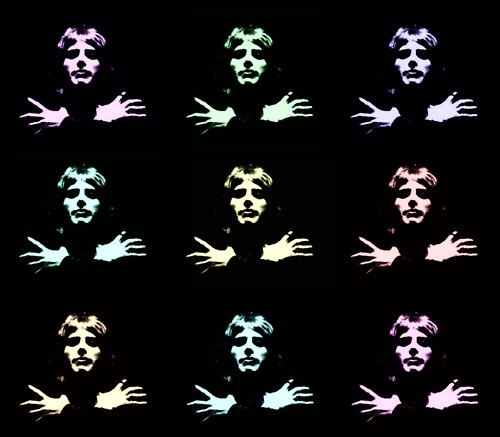
(Image courtesy of Fan Pop)

He was an amazing show man on stage. Queen gave over 700 concerts worldwide.

It wasn’t anything that could be developed. It was his charisma, his pure natural gift that was in perfect harmony with his voice, his appearance, his delicate taste and his musicianship in the wide sense of the word. The fact that he realized it himself made him absolutely fascinating! [Freddie Mercury: biography by Jacky Gunn & Jim Jenkins]

Their 20 minute set at Live Aid at Wembley Stadium stole the show. Freddie sings, struts, dances, plays piano and guitar, gives 110%,  and has a hell of a good time. (Plus, how much fun is it to hear 72,000 people singing along to a Queen song?)

He  produced two solo albums, Mr. Bad Guy and Barcelona and several singles. And he did solo side gigs including a performance with the Royal Ballet where he danced  in font of a packed audience of ballet enthusiasts to orchestral versions of Bohemian Rhapsody and Crazy Little Thing Called Love. He received  a standing ovation. Freddie co-wrote Love Kills for the re-release of Fritz Lang’s 1926 classic film Metropolis.

Freddie Mercury died of AIDS in 1991 at the age of 45.