Open Letter to the Residents of WuHu Island

This blog relates to Wii Fit Plus. If you don’t know anything about that ‘verse you may not understand what I’m writing about. My apologies.

——————————-
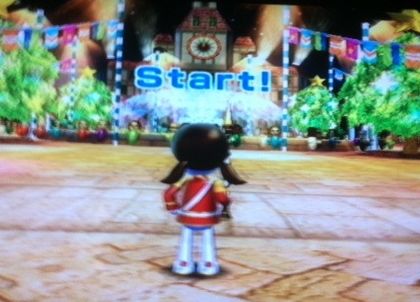
Parade

Dear Residents of WuHu Island,

Thank you for allowing me to use your excellent sports facilities for the last two years. I truly appreciate your enthusiasm for my fitness program. With the exception of a certain boxing instructor I have always found you to be 100% supportive in my training efforts. And I  appreciate your ever cheering, ever smiling faces.

So I want to sincerely apologize for a couple of things…

  1. I’m  sorry for monopolizing the Island’s only bike. On an island so obsessed with fitness I’m kinda surprised that there IS only one bike, but really I SHOULD be more considerate about the amount of time I spend on it.
  2. I’m really sorry about the number of times I’ve crashed said bike. But, I’m a push-the-boundaries kind of Mii, I want to see if nudging the bike off a cliff will kill me or take me to a short cut  to another path. Also some times I’m not that good at riding the bike.
  3. O.K. … You know how some times I’m not really good at riding the bike? That is especially true when I’m ride up a hill at full tilt. I do the ole zig-zag maneuver and some times, when one of you fine people are in the way, you, um, fall off the road. So I’m really sorry about that.
  4. And I’m really, really sorry that I keep killing all your dogs. They are such wonderful, intelligent creatures. They are so helpful in my quest for flags and giant balloon/balls. But when I make a dangerous maneuver (like taking a ramp over water)… well… Fido doesn’t make it. I’m a Mii dog killer, and I’m not proud.

Look out little doggie.

Look out little doggie.

Now that I’ve gotten that off my chest I have a few things I want to ask.

1. Why do you have protective railings on about 25% of roadways but not on the other 75%? Did you just run out of money?

2. If you can mow the grass on  a mountain side into the fancy pattern worthy of a major league ball park, why can’t I bike or hike up the same mountainside?

Beautifully manicured grass is NOT always greener on WuHu Island.

The beautifully manicured grass is NOT always greener on WuHu Island.

3. When I do a long run around the back of the Island a pack of little dogs jump off a cliff and land happily on the tarmac in front on me then scamper away. But when I’m on the bike and try jumping off the same cliff I plunge to my death. Why does gravity work differently for dogs than it does for girls on bikes?

4. Why does a jumps from one cliff result in a short cut while jump/fall from another, much shorter, cliff result in death? Who are you Mii gods? Why  do you mess with my Mii mind?

5. What is the purpose of the PIT at the ancient ruins? Is it just to trip me up? If so, well played, sir, well played.

4. And most importantly where the heck did this van come from? And what is it doing in the WuHu village? (Yes, some times I play this game just to make sure the van is still there.)
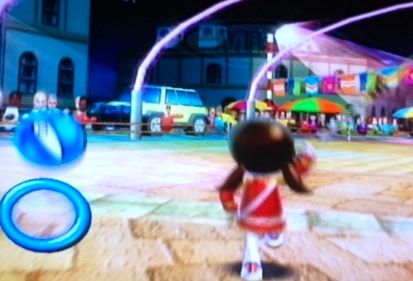
Car

See you tomorrow,

Sincerely,

Your friend

Mii Rita

——————————————————————————————————-

Nintendo is coming out with Wii Fit U next month! It promises a bunch of new games and a new  Wii Fit Meter.

[All the above images are courtesy Nintendo, taken from my screen]

Wii Mii

Wii Mii (Photo credit: jayneandd)


Muffin Monday: Pumpkin Muffins

I’ve been thinking about Pumpkin Muffins since the magical orange orbs started to appear at the Farmer’s Market. The other day I gave in and bought a can of pumpkin puree.

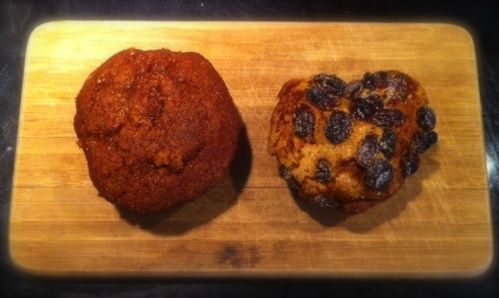
Plain Pumpkin muffins and Raisin enhanced Pumpkin muffins sit side by side in harmony on my mini cutting board.

Plain Pumpkin muffins and Raisin enhanced Pumpkin muffins sit side by side in harmony on my mini cutting board.

INGREDIENTS:

  • 3 cups White Whole Wheat Flour
  • 1 teaspoon Nutmeg
  • 1 teaspoon Garam masala
  • 2 teaspoons Cinnamon
  • 2 teaspoons Baking Soda
  • 2 teaspoons Salt
  • 3 Cups Sugar
  • 1 can Pumpkin Puree
  • 4 Eggs
  • 1/2 cup Vegetable Oil
  • 1/2 cup Apple Cider
  • 1/2 raisins (optional)
  • 1 tablespoon Sugar (for topping optional)

DIRECTIONS

1.  Preheat the oven to 350 degrees. Prep 24 muffin cups by spraying with baking spray

2. In a medium bowl combine the Flour, spices, Baking Soda and Salt.

3. In a large bowl mix Pumpkin, Sugar, Eggs, Oil and Apple Cider.

4. Add the dry ingredients to the Pumpkin mixture. Beat until well combined.

5. Divide evenly into the 24 muffin cups.

This recipe makes 24 muffins. (Please admire my new heart shaped silicone muffin cups.)

This recipe makes 24 muffins. (Please admire my new heart shaped silicone muffin cups.)

6. If you want a special treat you can add Raisins — Toss the Raisins and the tablespoon of sugar together in the dry ingredient bowl. Spoon onto the tops of the muffins. (I did half and half).

7. Bake for 25  to 30 minutes or until muffins pass the toothpick test. Cool 10 minutes then remove from muffin cups.

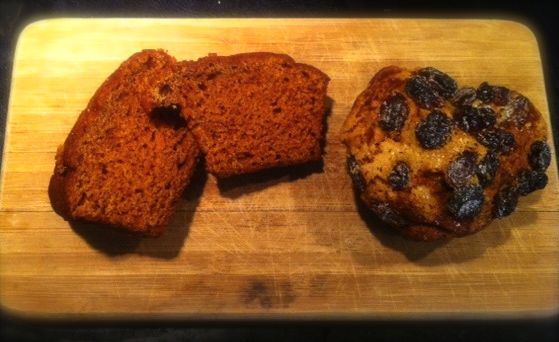
And here's what they looked like when they came out of the oven.

And here’s what they looked like when they came out of the oven.

Enjoy!

2 muffins


Theodore Roosevelt 10.27.13 Thought of the Day

President of the United States Theodore Roosev...

President of the United States Theodore Roosevelt, head-and-shoulders portrait, facing front. Deutsch: Theodore Roosevelt (1858–1919), Präsident der Vereinigten Staaten von 1901 bis 1909, Friedensnobelpreisträger des Jahres 1906. (Photo credit: Wikipedia)

“Far and away the best prize that life has to offer is the chance to work hard at work worth doing.”

Theodore Roosevelt, Jr. was  born on this day in New York City, New York, USA in 1858. Today is the 155th Anniversary of his birth.
He was the second of four children born to Martha “Mittie” and Theodore “Thee” Roosevelt, Sr. The wealthy family lived in a fashionable brownstone in the Gramercy neighborhood of New York.
Young Teddy or “Teedie” was a sickly boy. He had severe asthma and had to sleep propped up on pillows. He was…
homeschooled due to his illnesses and asthma. This gave him the opportunity to nurse his passion for animal life, but by his teens, with the encouragement of his father, whom he revered, Theodore developed a rigorous physical routine that included weightlifting and boxing. [Biography.com]
He was always fascinated by animals. Once, when he was 7,  he saw a dead seal at the market. He managed to get the seal’s head and it became the founding exhibit in the “Roosevelt Museum of Natural History”, an institution the boy started with two of his cousins. He took to taxidermy and collected other specimens for the museum.
Teedie collected everything within his reach and range of vision, and begged friends and family to bring him any specimens they found. He even paid other children to collect specimens for him. Yet he generously shared his collection. In 1871, he donated several specimens to another fledgling museum — the American Museum of Natural History, which had been co-founded by his father. [PBS.org]
He was a good student especially in geography, history, biology, French and German. But he did not do as well in Latin, Greek and math.
Roosevelt entered Harvard in 1876. He studied natural history. His father died when Teddy was a sophomore. While the tragedy broke his heart, it also spurred him on to work harder than ever before, both physically and academically.
After graduating magna cum laude in 1880, he enrolled at Columbia Law School and got married to Alice Hathaway Lee of Massachusetts. [Biography.com]
He dropped out of Columbia the following year when he had the chance to run for the New York State Assembly. He won the election…
becoming the youngest to serve in that position. Not long after, Roosevelt was speeding through various public service positions, including captain of the National Guard and minority leader of the New York Assembly. [Ibid]
His meteoric  rise to fame came to a halt on Valentine’s Day 1884. Both Roosevelt’s wife and his beloved mother died on the same day in his house. His wife died of undiagnosed Bright’s disease (kidney failure), his mother or Typhoid Fever. Roosevelt escaped the city and headed west. He worked for two years as a cowboy and rancher in the Dakota Territory before returning to New York.
NYPD Commissioner Theodore Roosevelt in 1895

NYPD Commissioner Theodore Roosevelt in 1895 (Photo credit: Wikipedia)

In 1886 he ran for unsuccessfully for mayor of New York. He married again, this time to Edith Kermit Carow (a life long friend.)

Roosevelt soon resumed his career trajectory, first as a civil service commissioner, then as a New York City police commissioner and U.S. Navy assistant secretary under President William McKinley…in the Spanish-American War… He organized a volunteer cavalry known as the Rough Riders, which he led in a bold charge up San Juan Hill in the Battle of San Juan Heights, in 1898. A war hero, and nominated for the Congressional Medal of Honor, Roosevelt was elected governor of New York in 1898.. [Ibid]

He ran with President McKinley on the Republican ticket during the 1900 national elections. They won and McKinley began his second term in the White House. But then an anarchist shot McKinley on September 6, 1901  at the Pan-American Exposition. Although McKinley seemed to recover for a while he eventually died of his injuries and Theodore Roosevelt became the 26th, and youngest, President of the United States of America.

As President, Roosevelt held the ideal that the Government should be the great arbiter of the conflicting economic forces in the Nation, especially between capital and labor, guaranteeing justice to each and dispensing favors to none… Roosevelt emerged spectacularly as a “trust buster” by forcing the dissolution of a great railroad combination in the Northwest. Other antitrust suits under the Sherman Act followed….Roosevelt steered the United States more actively into world politics. He liked to quote a favorite proverb, “Speak softly and carry a big stick. . . . ” [WhiteHouse.gov]

Theodore Roosevelt, President of the United St...

Theodore Roosevelt, President of the United States of America. (Photo credit: Wikipedia)

Highlights of Teddy Roosevelt’s presidency include:

  • Completed the Panama Canal
  • Won the Nobel Peace Prize for mediating the Russo-Japanese War.
  • Established (or added to) National Forest and parks for public use.
  • Other conservation projects

He left the White House in 1909 when his friend and former Secretary of War William Howard Taft became President. Roosevelt went on Safari in Africa for two years. When he returned to the States he was unhappy with the job Taft was doing and he decided to run again for office. Since Taft had the Republican ticket, Roosevelt started his own party, the  Bull Moose Party.

While delivering a speech on the campaign trail, Roosevelt was shot in the chest in an assassination attempt by John Nepomuk Schrank. Shockingly, he continued his speech for 90 minutes before seeing a doctor, later chalking up the incident to the hazards of the business. Roosevelt lost to Woodrow Wilson in the 1912 election, in a rather close popular vote. [Biography.com]

Roosevelt retired from politics again. He traveled to South America. He wrote books (25). And when the US entered World War I he volunteered to head a “division for service in France” [Ibid] (Wilson declined.)

Roosevelt died in his sleep on January 6, 1919, at his Long Island estate, Sagamore Hill.

Theodore Roosevelt, President of the United St...

Theodore Roosevelt, President of the United States of America. (Photo credit: Wikipedia)


Pop-Up Bookstores

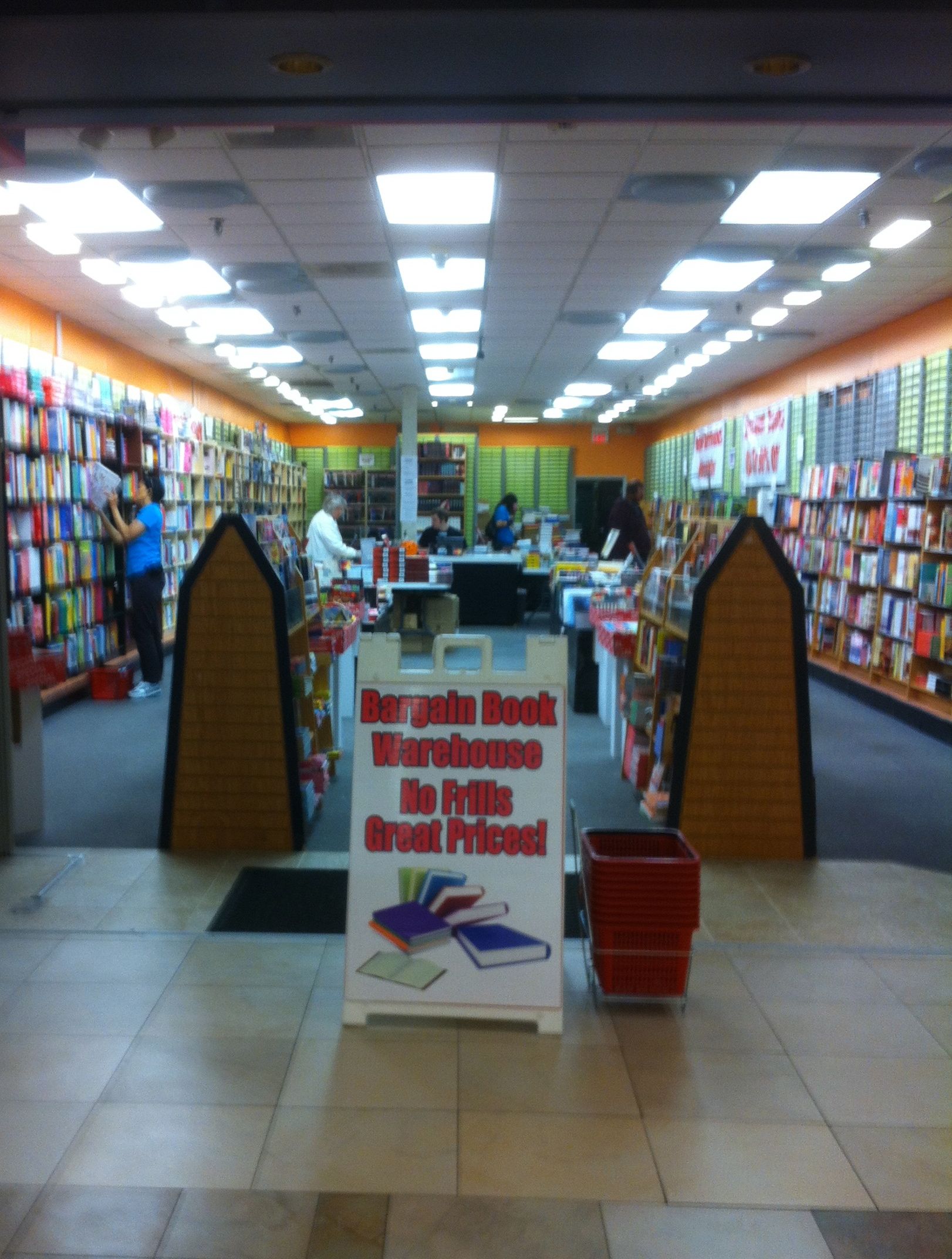
The Bargain Book Warehouse in Harford Mall

The Bargain Book Warehouse in Harford Mall

Once upon a time there was a mall. It was a fine mall. Not too big. Not too small. The mall was just right. It had a place to buy food…and a place to buy Yankee Candles…and a place to buy clothing and fancy soap and shoes and cards for every holiday. But the mall didn’t have a book store. So the mall was sad.

Then one day some one put up portable shelving in an empty store. They opened long  sturdy tables. They hung vinyl banners announcing “Cookbooks” and “Children’s” and “Mystery.” Then they filled the shelves and the tables with discounted books and the Bargain Book Warehouse pop-up store was born.

There is no fancy neon sign above the entrance, just a simple fold up easel to tell folks that books reside inside. BARGAIN BOOKS.

As a writer I have a bit of a problem with the concept of Bargain Books. When the prices are slashed surely that means that the poor author is the one getting the shaft.

But as my mom (my companion, and my reason for being in the mall) eased into her second quarter-hour in the Hallmark Store I excused myself and slipped into the B.B.W. to “look.”

Frankly, I didn’t expect much. Usually these places are such a jumble of  cast-off you can’t find anything specific on your “to read” list. It’s best to approach with a “browse only” policy. Trying to find an individual author or title will only lead to tears.

So I headed over to the ART table. Low and behold they had some Graphic Design books. Some pretty decent Graphic Design books. I actually had my choice of books on Logo Design. Cool.

I brought my selection up the humble check out counter (another wooden table). The cash register shared space with more books and JOURNALS!

Jackpot! I picked up a  selection of lined and unlined journals. Things were looking up.

Then I went just a little too far. Thinking I might be able to pick up a few books for the upcoming JASNA (Jane Austen Society of North America) meeting I asked the guy behind the cash register this question: “Could you point me towards your Jane Austen, please?”

He looked back at me, thinking hard. “Um?”  Thinking harder. “Do you know what kind of books she wrote?”

“Yes I do.” I answered, closing my mouth with a tight smile before he rest of my sentence — “and, as you work in a BOOKSTORE, you should know what kinds of books she wrote too” — came spilling out. I smiled. “She wrote novels in the Regency Period.”  Nothing. “About 200 years ago.”

“She wrote History?” He nodded to a vinyl banner with the letters HISTORY on it.

History

“No she didn’t write History, she wrote romantic fiction.”

“Oh, Romances.” He looked the other way at a banner emblazoned with a loopy typeface.

Romance

“No. She wrote Pride and Prejudice.” I tried again.

His face shifted with slow recognition. “Oh, yeah. I saw that movie.” GAR!  “Yeah all that old stuff is over there.”

I handed him my Journals and Graphic Design books. “That’s OK. If you don’t recognize her name you probably don’t carry her books.”

I smiled and handed over my money.

He smiled and handed me my receipt.

So, Pop-Up Bookstore guy I apologize for going all Jane-Austen-snobby on you.

My bad, I shouldn’t have broken the  golden rule about asking for a specific author.

I wont make the same mistake again.

English: "Protested that he never read no...

English: “Protested that he never read novels” – Mr. Collins claims that he never reads novels. Austen, Jane. Pride and Prejudice. London: George Allen, 1894, page 87. (Photo credit: Wikipedia)


St. Crispin’s Day — This story shall a good man teach his son

It is a day to be remember-ed. The story starts with two third century shoe making saints and peaks on the fields of Agincourt (or the stage of  the Globe Theatre) with Shakespeare’s Henry V.

Martyrdom of SS Crispin and Crispinian.

Martyrdom of SS Crispin and Crispinian. (Photo credit: Wikipedia)

The Saints… October 25th is the feast day of Saints Crispin and Crispinian.  Two noble born Romans (they might have been brothers, they might even have been twins …when it comes to Christian mythology from the 3rd Century  things get a bit iffy — which is why the feast day was down graded to a  little “f” and it  is no longer formally  celebrated post Vatican 2). They also happened to be Christians. The boys (who either lived in Rome or Britain) fled to Soissans (France) to avoid persecution.  Along the way they picked up the shoe making trade.

The legend relates that they were Romans of distinguished descent who went as missionaries of the Christian Faith to Gaul and chose Soissons as their field of labour. In imitation of St. Paul they worked with their hands, making shoes, and earned enough by their trade to support themselves and also to aid the poor. [Catholic Encyclopedia.com]

Unfortunately for the Crispin and Crispinian the long arm of the Roman Empire reached well into France and their work did not go unnoticed by the authorities. They were cajoled, threatened, and ultimately tortured (the usual stuff, “stretched on the rack, thongs were cut from their flesh, …awls …driven under their finger-nails,” [Ibid] thrown in the river with a millstone around their the neck, thrown in a fire– all of which they survived  –it was a miracle! How do you think they got to be saints?) But in the end the Emperor, Diocletian had them beheaded. Canonization followed and the brothers became the patron saints of cobblers, tanners and saddler’s.

The Battles … Three major historical battle have taken place on St. Crispin’s Day:

  • The Battle of Agincourt (1415)
  • The Battle of Balaklava (1854) (with it’s famous Charge of the Light Brigade)
  • and the Battle of Lyte Gulf (1944)

Agincourt had Shakespeare. (More on that in a moment.) Balaklava had Tennyson.

English: The Charge of the Light Brigade by Ca...

English: The Charge of the Light Brigade by Caton Woodville (Photo credit: Wikipedia)

In reality it was an ill-fated tactical mistake but   on paper, under Tennyson’s pen, it was immortal glory.

Half a league half a league,
Half a league onward,
All in the valley of Death
Rode the six hundred:
‘Forward, the Light Brigade!
Charge for the guns’ he said:
Into the valley of Death
Rode the six hundred.

You can almost hear the hoof beats.

The Battle of Lyte Gulf is just as epic — it was the biggest naval battle of World War II, perhaps the largest in history. But, except for a pretty awesome Victory At Sea episode, Lyte Gulf has yet to receive its literary due.

Fifteenth-century miniature depicting the Engl...

Fifteenth-century miniature depicting the English victory over France at the Battle of Agincourt. (Photo credit: Wikipedia)

Shakespeare’s King Henry the Fifth’s St. Crispin’s Day speech that seeps the day into popular culture. We’ve watched Prince Hal grow from rambunctious rebel rouser to earnest King. His metal has been tested at the breach, but now, NOW his outnumbered, sick, weary English troops face the vanguard of the French army. Hal could have snuck away in the night, he could have randsomed himself to the French but he stands to fight. And before the fight he pulls his troops up with a speech to end all speeches.

Here’s Kenneth Branagh‘s 1989 version (the souring music is by Patrick Doyle) …

You can read along here:

WESTMORELAND. O that we now had here
But one ten thousand of those men in England
That do no work to-day!

KING. What’s he that wishes so?
My cousin Westmoreland? No, my fair cousin;
If we are mark’d to die, we are enow
To do our country loss; and if to live,
The fewer men, the greater share of honour.
God’s will! I pray thee, wish not one man more.
By Jove, I am not covetous for gold,
Nor care I who doth feed upon my cost;
It yearns me not if men my garments wear;
Such outward things dwell not in my desires.
But if it be a sin to covet honour,
I am the most offending soul alive.
No, faith, my coz, wish not a man from England.
God’s peace! I would not lose so great an honour
As one man more methinks would share from me
For the best hope I have. O, do not wish one more!
Rather proclaim it, Westmoreland, through my host,
That he which hath no stomach to this fight,
Let him depart; his passport shall be made,
And crowns for convoy put into his purse;
We would not die in that man’s company
That fears his fellowship to die with us.
This day is call’d the feast of Crispian.
He that outlives this day, and comes safe home,
Will stand a tip-toe when this day is nam’d,
And rouse him at the name of Crispian.
He that shall live this day, and see old age,
Will yearly on the vigil feast his neighbours,
And say “To-morrow is Saint Crispian.”
Then will he strip his sleeve and show his scars,
And say “These wounds I had on Crispian’s day.”
Old men forget; yet all shall be forgot,
But he’ll remember, with advantages,
What feats he did that day. Then shall our names,
Familiar in his mouth as household words-
Harry the King, Bedford and Exeter,
Warwick and Talbot, Salisbury and Gloucester-
Be in their flowing cups freshly rememb’red.
This story shall the good man teach his son;
And Crispin Crispian shall ne’er go by,
From this day to the ending of the world,
But we in it shall be remembered-
We few, we happy few, we band of brothers;
For he to-day that sheds his blood with me
Shall be my brother; be he ne’er so vile,
This day shall gentle his condition;
And gentlemen in England now-a-bed
Shall think themselves accurs’d they were not here,
And hold their manhoods cheap whiles any speaks
That fought with us upon Saint Crispin’s day.

You should also check out Tom Hiddleston and Lawrence Olivier’s take’s on Henry V and their St. Crispin’s Day speech.  It is worth listening to more than once.

This story shall a good man teach his son.


Farm Fresh Challenge: Sweet Potato and Leeks

Our weekly bounty from Calverts Gift Farm is coming to a close. My pick up yesterday was the penultimate box. Soon I shall have to re-acquaint myself with the produce aisle at the grocery store and Chopped Parkton will be a thing of the past. But today is not that day. Today I make Sweet Potato and Leeks!

INGREDIENTS:

From the Box:

  • Three cups of chopped Sweet Potatoes (about a half-inch )
  • One Leek (diced fine)
  • 2 cloves of Garlic (diced fine)
  • 2 Mushrooms (diced fine) (from previous box)
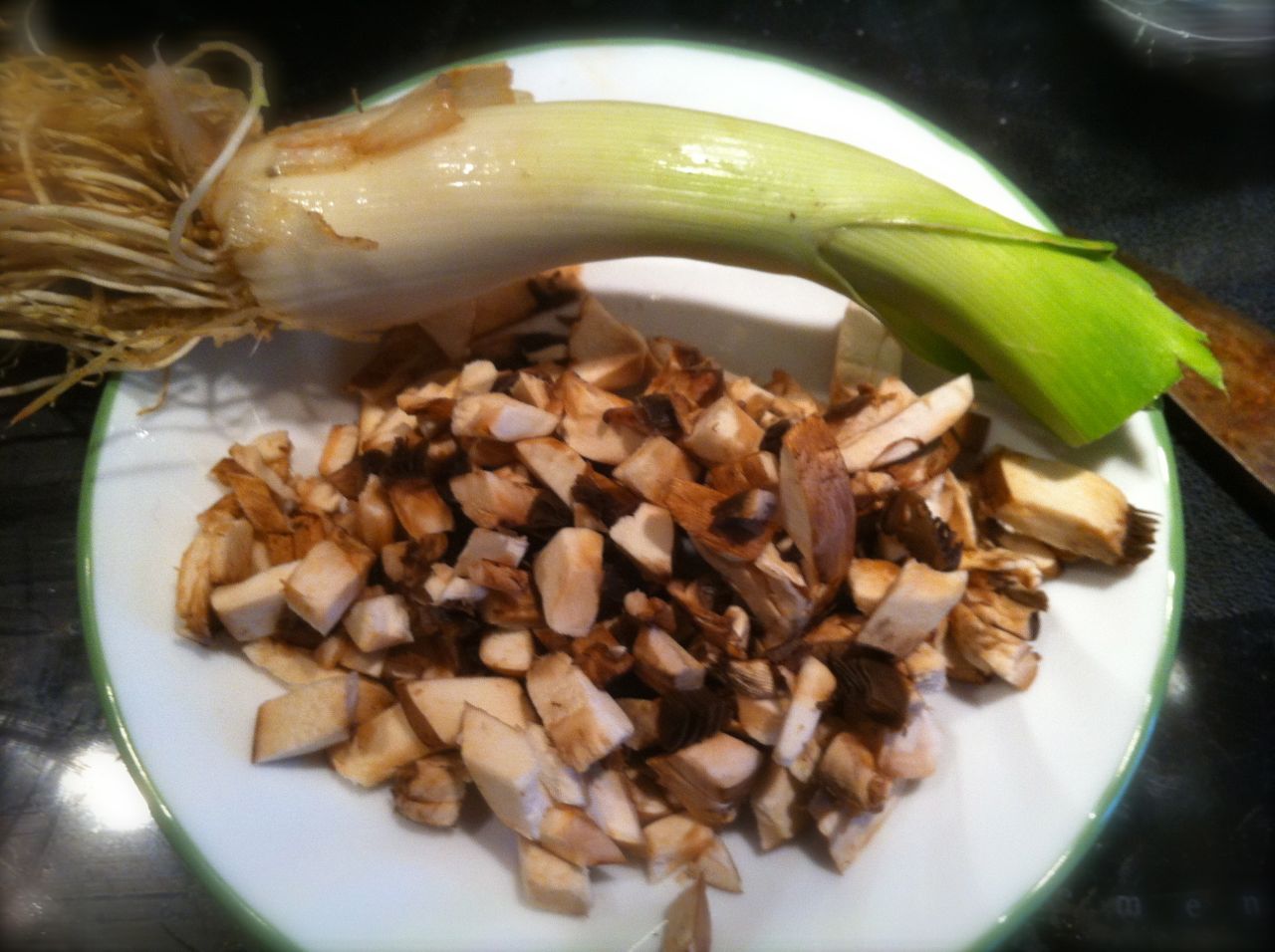
Leak (top) waits to be diced on a plate with prepared mushrooms.

Leak (top) waits to be diced on a plate with prepared mushrooms.

From the Pantry:

  • 2 tablespoons of Butter
  • Salt and Pepper to taste
  • Water to boil the Sweet Potatoes

DIRECTIONS:

1. Put the Sweet Potatoes in a large pot and cover with 2″ of water. Bring to a steady boil. Continue to cook until Sweet Potatoes are soft. Drain in a colander and set aside.

2. In the same pot add the Butter and put back on the stove. Once Butter is melted added the diced Leek and Garlic. Saute until the Leak is translucent.

3. Add the Mushrooms and cook until they are soft. Add the Sweet Potatoes back into the pot and toss. Season to taste.

Sweet Potato Leak side dish. Ready to eat.

Sweet Potato Leak side dish. Ready to eat.

If you think Sweet Potatoes should be whipped up and served with mini marshmallows just move along,  this isn’t the dish you’re looking for.


Neil Gaiman on Libraries and Books

Neil Gaiman

Neil Gaiman (Photo credit: Wikipedia)

On October 14th Neil Gaiman was the featured speaker at the annual Reading Agency Lecture in London, England.  The forum is

as a platform for leading writers and thinkers to share original, challenging ideas about reading and libraries as we explore how to create a reading culture in a radically changed 21st century landscape. [readingagency.org.uk]

As a writer, reader and lover of libraries and all things books (paper, audio, electronic and otherwise) I found myself tearing up and cheering at the screen as I listened to the roughly 26 minute lecture on You Tube. [You can find it on the Reading Agency link, above and in the You Tube link,  below]  And since you read my blog, which is so often about writing and authors (and Gaiman), I thought I’d share some highlights with you for today’s Thought of the Day.

Neil Gaiman (2005)

Neil Gaiman (2005) (Photo credit: Wikipedia)

Gaiman admits his bias at the beginning of the talk. He wants libraries to thrive and he wants kids to learn the love of reading. Specifically he’d like to encourage kids to read fiction, because, he says “Its the gateway  drug to reading.”

It is obviously in my interest for people to read, for them to read fiction, for libraries and librarians to exist and help foster a love of reading and places in which reading can occur…So I’m biased as a writer. But I am much, much more biased as a reader. And I am even more biased as a British citizen. [Gaiman’s speech as reprinted in The Guardian.com]

But what he says goes for this side of the pond too. (And elsewhere, I dare say.) To have a thriving society one must have a reading society and that starts early, by teaching our children to read and showing “them that reading is a pleasurable activity.” [Ibid] Finding books they’ll want to read and not being judgemental  about their choices.

Fiction you do not like is a route to other books you may prefer. And not everyone has the same taste as you…Well-meaning adults can easily destroy a child’s love of reading: stop them reading what they enjoy, or give them worthy-but-dull books that you like, the 21st-century equivalents of Victorian “improving” literature. You’ll wind up with a generation convinced that reading is uncool and worse, unpleasant. [Ibid]

Fiction is the first rung on the ladder of literacy. It also builds Empathy.

Prose fiction is something you build up from 26 letters and a handful of punctuation marks, and you, and you alone, using your imagination, create a world and people it and look out through other eyes. You get to feel things, visit places and worlds you would never otherwise know. You learn that everyone else out there is a me, as well. You’re being someone else, and when you return to your own world, you’re going to be slightly changed. [Ibid]

It can change how you view the world and show you new worlds whole cloth. And “Once you’ve visited other worlds, like those who ate fairy fruit, you can never be entirely content with the world that you grew up in.” [Ibid] You’ll want to change it for the better. You’ll BELIEVE it can be better.

English: The main reading romm of Graz Univers...

English: The main reading romm of Graz University Library (19th century) on 2 Sep 2003. Picture taken and uploaded by Dr. Marcus Gossler. (Photo credit: Wikipedia)

Gaiman talks about the need for libraries. Libraries, he says, are about freedom.

  • Freedom to read
  • Freedom of ideas
  • Freedom of communication
  • Education
  • Entertainment
  • and INFORMATION

He worries that people “Misunderstand libraries” nowadays. Perhaps they think the institutions are  “antiquated or outdated”

If you perceive a library as a shelf of books, it may seem antiquated or outdated in a world in which most, but not all, books in print exist digitally. But that is to miss the point fundamentally.I think it has to do with nature of information. Information has value, and the right information has enormous value. …Libraries are places that people go to for information. Books are only the tip of the information iceberg: they are there, and libraries can provide you freely and legally with books. More children are borrowing books from libraries than ever before – books of all kinds: paper and digital and audio. But libraries are also, for example, places that people, who may not have computers, who may not have internet connections, can go online without paying anything… Librarians can help these people navigate that world.[Ibid]

A library is a people’s place, a safe haven where anyone can come to find information, gather for a meeting, and, yes, READ — something Gaiman thinks people will continue to do with actual paper books (along with their audio and electronic counterparts).

…as Douglas Adams once pointed out to me…  a physical book is like a shark. Sharks are old: there were sharks in the ocean before the dinosaurs. And the reason there are still sharks around is that sharks are better at being sharks than anything else is. Physical books are tough, hard to destroy, bath-resistant, solar-operated, feel good in your hand: they are good at being books, and there will always be a place for them. [Ibid]

He closed his talk by quoting Albert Einstein. When Einstein …

was asked once how we could make our children intelligent. His reply was both simple and wise. “If you want your children to be intelligent,” he said, “read them fairy tales. If you want them to be more intelligent, read them more fairy tales.” He understood the value of reading, and of imagining. [Ibid]

Here’s the You Tube video so you can hear Gaiman in his own words….


Muffin Monday: Hearty Harvest Muffins

Squeezing Muffin Monday in under the wire again this week. Darn that LIFE. Doesn’t it know I’ve got blogging to do?

Enjoy the muffins…

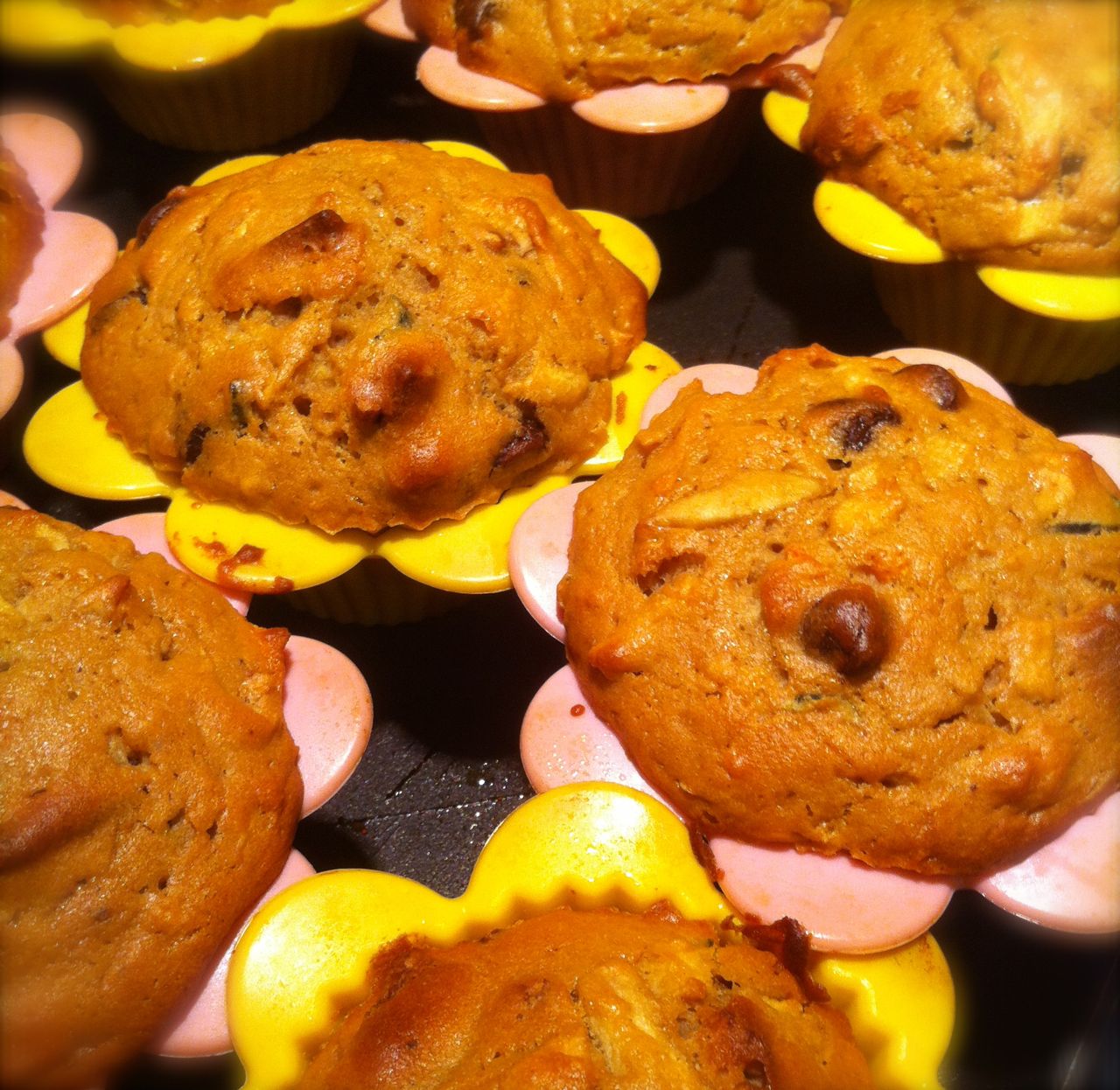
Fresh from the oven

Fresh from the oven

Hearty Harvest Muffins

INGREDIENTS:

  • 2 tsp softened  Butter
  • 1 cup Brown Sugar
  • 2 Eggs
  • 1 tsp Vanilla extract
  • 1 cup Milk
  • 1/3 cup Apple Cider
  • 2 cups White Whole Wheat Flour
  • 4 tsp Baking Powder
  • 1 tsp Salt
  • 1/4 tsp Ginger
  • 1/4 tsp Nutmeg
  • 1 cup grated Zucchini
  • 1 Cup grated Apple
  • 1 cup grated Carrots
  • 1 cup Semi Sweet Chocolate Chips
  • 1 cup roughly chopped Pecans

DIRECTIONS

1. Pre-Heat the oven to 400 degrees. Prepare muffin cups. This recipe makes 18 large muffins.

2. In a large bowl mix the Butter and Brown Sugar.

3. In a liquid measuring cup beat the eggs. Then add them to the Butter and Sugar.

4. Add the Milk , Apple Cider and Vanilla to the wet ingredients.

5. In a smaller bowl combine the Flour, Baking Powder, Salt, Ginger and Nutmeg.

6. Mix the dry ingredients in with the wet to form the base batter.

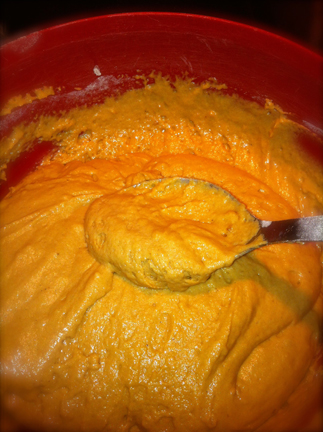
This batter can be used as the base for any number of muffins. The nutmeg and ginger give it a Fall feel.

This batter can be used as the base for any number of muffins. The nutmeg and ginger give it a Fall feel.

7. Add the Zucchini, Apple, Carrot, Chocolate Chips and Pecans and stir gently until incorporated.

8. Divide evenly into 18 muffin cups.

Ready for the oven.

Ready for the oven.

9. Bake in hot oven for 25 to 30 minutes until golden brown at the top. Muffins should pass the toothpick test.

10. Let cool a few minutes before enjoying.

The apples and apple cider in this recipe are from Manor Produce in Monkton, Maryland. But instead of picking them up at the Farmer’s Market I got these at the Hereford Fall Festival.  You can find out more about them at http://www.manorproduce.com

I think I’m going to brave a pumpkin from Manor Produce next week.   I’ve a hankering for some pumpkin muffins. Hmmm I’ll have to see how the spirit moves me.

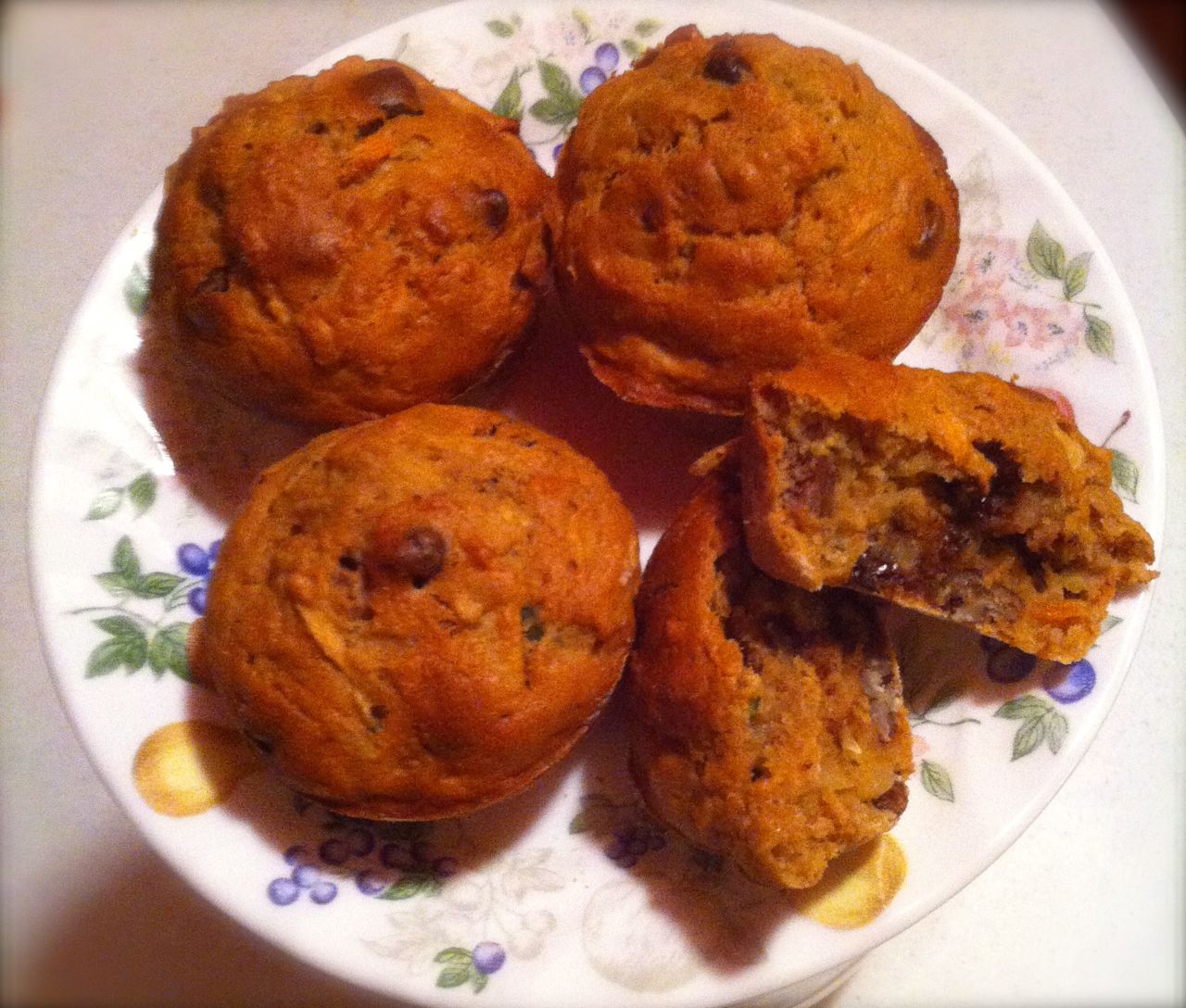
As for today’s muffins… Well, what do you think?

The final product

The final product


Viggo Mortensen 10.20.13 Thought of the Day

Reblogging this  from last year’s ritaLOVEStoWRITE bioBLOG backfile. I’ve updated it where necessary.

————————————————————————————————————————-

“There’s no excuse to be bored. Sad, yes. Angry, yes. Depressed, yes. Crazy, yes. But there’s no excuse for boredom, ever.”
Viggo Mortensen

Viggo Mortensen was born on this day in New York City, New York, USA  in 1958. He is 55 years old.

His family lived in Venezuela, Denmark and Argentina where his father managed farms and ranches.   He learned to speak fluent Danish, Spanish and English growing up. His parents divorced when he was 11 and he moved with his mother back to New York. After graduating St. Lawrence University he moved to Europe and lived in Spain, England and Denmark making his way as a truck driver and flower seller. Eventually he returned to the US ready to try his hand at acting.

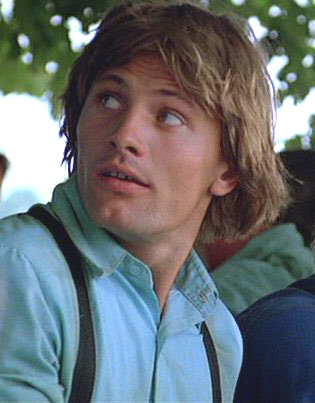
Viggo Mortensen in a still from Witness [Image courtesy: Brego.net]

He did some theatre then expanded to film. His footage in 1984’s Swing Shift and  Woody Allen’s The Purple Rose of Cairo ended up on the cutting room floor, but he had more luck in Peter Weir’s Witness. Mortensen played Moses Hochleitner, the younger brother to Alexander Godunov’s Daniel Hochleitner. He didn’t have a lot of lines in the Harrison Ford flick, but some how he stood out from the sea of blond-haired Amish men in blue shirts.

His next step was to Television where he was cast as Bragg on Search for Tomorrow [BRAGG, what a great soap opera name, right?]

In 1987 he played a crooked cop on Miami Vice. There was more theatre too, this time in LA’s Coast Playhouse’s production of Bent, for which he earned a Dramalogue Critics’ Award.

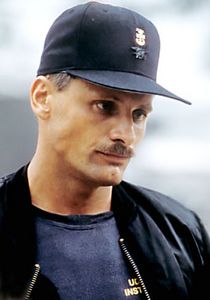
Movie still from G.I. Jane [Brego.net]

A splay of supporting roles in the 1990s saw him acting in some good movies (The Portrait of a Lady directed by Jane Campion) and some not so good movies (Leatherface: The Texas Chainsaw Massacre III)  Critics started to take notice when he starred opposite Demi Moore as brutal Master Chief John Urgayle in G.I. Jane (some critics said he stole the movie from Moore) and as the other man in A Walk on the Moon with Diane Lane. He played another ‘other’ man in A Perfect Murder, a reboot of Hitchcock’s Dial M for Murder with Michael Douglas and Gwyneth Paltrow. He was Eddie Boone, a major league baseball player with a trifecta of additions in rehab with Sandra Bullock in 28 Days. And rounded out the decade by playing the devil in The Prophecy.

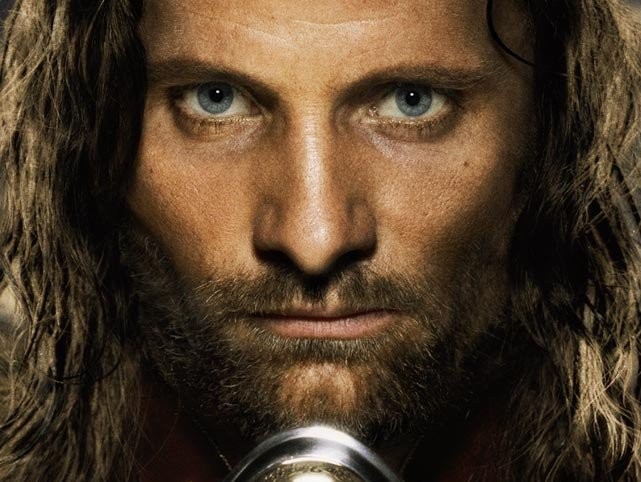
Movie poster from Lord of the Rings [Image courtesy: Beyond Hollywood.com]

2001 saw the release of The Lord of the Rings: The Fellowship of the Rings, the first in Peter Jackson’s epic Tolkien cycle. With his role as the heroic Aragorn “Mortensen was established as a major leading man among Hollywood’s A-list ranks.” [Viggo Mortensen — Biography, Movies. yahoo.com ]  The Two Towers followed in 2002 and The Return of the King premiered in 2003. He brought quiet strength, “commanding good looks”[ibid] and a rye sense of humor to Aragorn. He embraced the role whole heartedly. He did all his own stunts in the movies (and took quiet a few knocks in the process). He wore his sword and costume for days on end so they would have an authentic lived in look. And he became so attached to his equine co-stars, Uraeus and Kenny, that he purchased the horses after the film wrapped and took them home.

After his success in the Lord of the Rings Mortensen managed to keep himself centered…

Exceedingly humble about success and uncharacteristically un-Hollywood, Mortensen managed to stay somewhat reclusive and focused on other interests outside of acting, namely painting and writing poetry, despite becoming one of the most recognizable stars in the world. [Viggo Mortensen — Biography, Movies. yahoo.com ]

He used some of his earnings from playing Aragorn to start Perceval Press publishing house in Santa Monica, California.

Perceval Press is a small, independent publisher specializing in art, critical writing, and poetry. The intention of the press is to publish texts, images, and recordings that otherwise might not be presented. [Percival Press]

Mortensen’s own artistic, musical and written works are available through Perceval Press. He writes poetry, essays, and companion pieces for his paintings and photographic work in English, Spanish and Danish. Musically he has completed 16 albums, working almost exclusively with the guitarist Buckethead.

Back on the silver screen was Hidalgo in 2007.  It is the true story of American Frank T. Hopkins who participation in a 3,000-mile race across the Najd desert called the “Ocean of Fire”.

He gave “his most compelling and carefully drawn performance to date” [ibid] as an everyday man who’s violent past catches up to him in A History of Violence a film directed by David Cronenberg. He worked with Cronenberg again in 2007 for Eastern Promises, where he played a Russian gangster. He was nominated for an Academy Award for his role in the film.

In 2008 he was Ed Harris’ sidekick in the Western Appaloosa. He also starred in Good which takes place in the 1930s. Mortensen is a professor struggling to decide if he should join the Nazi party.

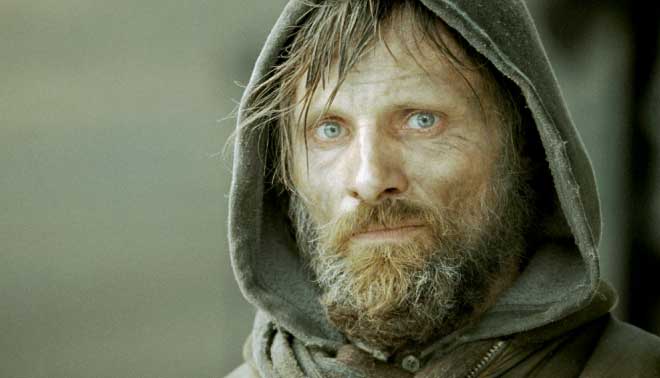
Movie still from The Road. [Image courtesy: Wired.com]

The grim Cormac McCarthy novel was the basis for Mortensen’s next movie, The Road. It is a post-apocalyptic story of a father and son trying to survive in a bleak wasteland.

Once again teaming up with Cronenberg, Mortensen plays Dr. Sigmund Freud in his the 2011 film,  A Dangerous Method.

Coming up Mortensen has several film ready for release including: On The Road and Everybody Has a Plan; and in 2013 The Faces of January and The Last Voyage of Demeter.

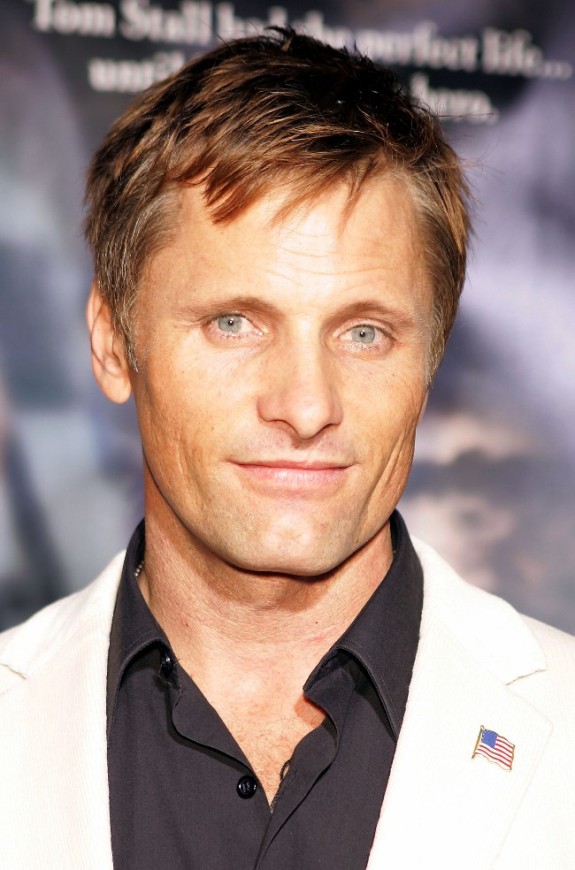
Publicity shot. [Image courtesy: TheReelist]


Found this on Facebook and had to share.