Category Archives: Writing

Jacob Riis 5.3.13 Thought of the Day

“Bad boys and bad girls are not born, but made…They are made bad by environment and training. The children must have room to play.” –-Jacob Riis

English: Jacob Riis, American journalist.

English: Jacob Riis, American journalist. (Photo credit: Wikipedia)

Jacob August Riis was born on this day in Ribe, Denmark, on 3rd May, 1849. Today is the 164th anniversary of his birth.

Jacob was the third of fifteen children born to Niels and Carolina Riis.  His father was a schoolteacher who occasionally wrote for a local newspaper. Jacob read as much as he could. He tried to sharpen his English skills by reading James Fenimore Cooper and Charles Dickens.

Although Niels had hopes of his eldest son becoming a writer, Jacob wanted to be a carpenter. After completing his apprenticeship in Copenhagen Riis returned to Ribe but found it difficult to find a job. So, in 1870, with help from some friends he decided to emigrate to America.

The job market in America was no better than it was in Copenhagen. Riis lived hand to mouth (at best) spending his nights at police station lodging houses, in a graveyard, and when he could afford it in one of New York’s overcrowded, dark, airless, tenements.  He took on any  odd job he could find from day laborer, to farmhand, to bricklayer, and, occasionally as carpenter or writer.  When his money ran out he begged, scavenged, ate handouts from restaurants and stole fallen apples from orchards.

France had declared war on Germany in 1870 (the Franco–Prussian War) and he wanted to volunteer for the French side to avenge earlier Prussian aggression  in Denmark. But he was never able to hook up with a group traveling back to Europe to fight.

“After three years of doing odd jobs, Riis landed a job as a police reporter with the New York Evening Sun. He worked in the poorest, most crime – ridden areas of the city. These were generally neighborhoods where immigrants lived in deplorable tenement houses” [Gateway NPS.Gov]

He developed a writing style that was expressive, dramatic and to the point.

“Aware of what it was like to live in poverty, Riis was determined to use this opportunity to employ his journalistic skills to communicate this to the public. He constantly argued that the “poor were the victims rather than the makers of their fate”.” [Spartacus Educational]

although his writing was raising awareness of the plight of the poor,  he didn’t think it went far enough in illustrating  the dire conditions of the slums of New York. He needed to SHOW the upper and middle class what was going on in the tenements. His first attempt was through sketching, but he quickly realized he didn’t have the artistic skills  for that, so he switched to photography.

English: "Bandit's Roost, 1890, New York ...

English: “Bandit’s Roost, 1890, New York City.” Photograph by Jacob Riis, featured in his book How the Other Half Lives (1890) (Photo credit: Wikipedia)

He embraced the use of flash powder photography and brought his camera into the dark tenement buildings and the alleys at night.

“He began to bring a camera with him to document what he found in these neighborhoods, and the conditions in which these people lived. For this, Riis is considered to be one of the fathers of modern photojournalism. “ [Gateway NPS.Gov]

He partnered with W.L. Craig and went on a Magic Lantern tour with the photographs. During his lectures he pointed out that in Dicken’s London there were 175,00 plus people per square mile, while in the Lower East Side there were 290,000 plus people per square mile.”making it perhaps the worst slum in the history of the Western world.” [Spartacus Educational]

The lecture tours lead to a an article in the 1889 Christmas edition of Scribner’s Magazine. The 18 page article, titled “How the Other Half Lives” turned into a book by the same name, published in 1890.

“His book How the Other Half Lives inspired then police commissioner Theodore Roosevelt to close the police lodging houses. It also brought about many needed reforms in housing laws. So important was Riis’s work, that Roosevelt called him “New York’s most useful citizen.” [Gateway NPS.Gov]

Riis spent the rest of his life advocating for the poor. He went on to write over a dozen books, noteably:

  • Children of the Poor (1892)
  • Out of Mulberry Street (1898)
  • The Making of An American (1901)
  • The Battle With the Slum (1902)
  • Children of the Tenement (1903).

Riis died on May 26, 1914. Seaside Park in Rockaway, New York  was renamed “Jacob Riis Park” in his honor.

"Minding Baby" [Image Courtesy: The Old Photo Album]

“Minding Baby” [Image Courtesy: The Old Photo Album]

——————————————————

A nod of thanks to my fabulous hubby who pointed out Riis as a possible Thought of the Day candidate. Good pick, hon.


Gabriela Mistral 4.7.13 Thought of the Day

“At this moment, by an undeserved stroke of fortune, I am the direct voice of the poets of my race and the indirect voice for the noble Spanish and Portuguese tongues.”–Gabriela Mistral

Gabriela Mistral

Gabriela Mistral (Photo credit: Wikipedia)

Lucila Goday y Alcayaga was born one this day in Vicuña , Chile in 1889.

Daughter of a poet and school teacher, Juan Gerónimo Godoy Villanueva, and a seamstress, Petronila Alcayaga, she was raised in a small Andean village. The family lived in poverty, a situation that worsened when her father left when Lucila was three. She was close to her older sister, Emelina Molina, who was also her teacher.

Despite having only a few years of formal education, she became a teacher’s aide at 15 to help support her family. As a teacher she had a number of positions in rural Chilean towns. By 1912 she was teaching at the high school level. Her star as an educator continued to rise,  in 1921, she became the director of Santiago’s Liceo (high school) #6, the best girls’ school in Chile. She went on to help reform the Mexican education and library system.

English: Gabriela Mistral, Chilean poet, educa...

English: Gabriela Mistral, Chilean poet, educator, diplomat, and feminist (Photo credit: Wikipedia)

A poet all her life…

“At age sixteen she moved to La Cantera to take a job and fell in love with a young railway worker. The relationship didn’t last and two years later the young man committed suicide. The only item found in his possession was a postcard from Mistral. This affected her deeply and she wrote Sonetas de la Muerte (Sonnets of Death) to express her feelings.” [Distinguished Women.com]

Lucila took the pen name Gabiela Mistral. Her poems reflected her experiences in life. When she “…was appointed director of a secondary school for girls located in rural Punta Arenas. The rough terrain of Punta Arenas became an inspiration for a series of poems entitled Patagonian Landscapes.“[ Ibid]

Her time in Mexican inspired   Readings for Women

“The dominant themes in her poetry were love, death, childhood, maternity, religion and the beauty of nature and of her native land. She also had a burning desire for justice.”[Ibid]

Major works include:

  • Sonetos de la muerte (1914)
  • Desolación  1922
  • Ternura 1924
  • Tala 1938
English: Gabriela Mistral, Nobel laureate in L...

English: Gabriela Mistral, Nobel laureate in Literature 1945 Deutsch: Gabriela Mistral, Nobelpreisträgerin für Literatur 1945 (Photo credit: Wikipedia)

She was the first Latin American and (so far is) the only Latin American woman to receive the Nobel Prize for Literature.

At the time of her death in 1957, her poems had been translated into English, French, German, Swedish and Italian.

The Rose

by Gabriela Mistral

The treasure at the heart of the rose
is your own heart’s treasure.
Scatter it as the rose does:
your pain becomes hers to measure.

Scatter it in a song,
or in one great love’s desire.
Do not resist the rose
lest you burn in its fire.

Click HERE to go to Poem Hunter.com and read more of Mistral’s works.


Top 100 Books proves that Jane Austen is the Teacher’s Pet

CLASS lets get reading…

TES (Think, Educate, Share) a website dedicated to bringing the latest teaching news and strategies to educators and the public asked 500 primary and secondary teachers what their top 10 books were. They crunched the numbers and came up with the following list of 100 top books.

It is an interesting list and it ranges nicely from early-ish chapter books — the kind that got us all hooked on reading in the first place, like Dahl and Lewis — to more mature novels like Atonement.

I was glad to see that my girl Jane made the grade (#1, 32, 52, 58). And you’ll recognize lots of other Thought of the Day authors on here too (I put them in italics — if you  are interested in reading the bioBlogs go to the search box to the right and type in their name.)

1. Pride and Prejudice Jane Austen

Jane Austen, Watercolour and pencil portrait b...

Jane Austen, Watercolour and pencil portrait by her sister Cassandra, 1810 (Photo credit: Wikipedia)


2. To Kill a Mockingbird Harper Lee

3. Harry Potter (series) J.K. Rowling

4. Wuthering Heights Emily Bronte

5. Jane Eyre Charlotte Bronte

6. Nineteen Eighty-Four George Orwell

7. The Lord of the Rings (series) J.R.R. Tolkien

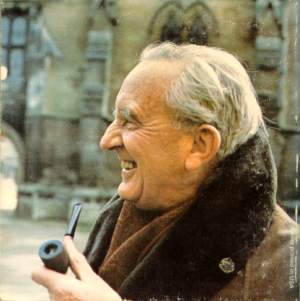
[Image courtesy Biography online

[Image courtesy Biography online

8. The Book Thief Markus Zusak9. The Hobbit J.R.R. Tolkien10. The Great Gatsby F. Scott Fitzgerald11. The Kite Runner Khaled Hosseini12. The Hunger Games (series) Suzanne Collins13. The Time Traveller’s Wife Audrey Niffenegger

14. The Chronicles of Narnia (series) C.S. Lewis

15. Of Mice and Men John Steinbeck

16. Birdsong Sebastian Faulks

17. His Dark Materials (series) Philip Pullman

18. The Gruffalo Julia Donaldson and Axel Scheffler

19. The Catcher in the Rye J.D. Salinger

20. Life of Pi Yann Martel

21. Tess of the d’Urbervilles Thomas Hardy

22. Rebecca Daphne du Maurier

23. The Curious Incident of the Dog in the Night-Time Mark Haddon

24. Lord of the Flies William Golding

25. Matilda Roald Dahl

My Roald Dahl collage featuring some of his most popular characters (as drawn by the amazing Quentin Blake).  Surrounding Mr. Dahl and his pups are: at the top left are: The BFG, Sophie, Dahl with his pups, The Enormous Crocodile, Mr. Fox, James, the Grand High Witch, Willy Wonka, and Matilda.

My Roald Dahl collage featuring some of his most popular characters (as drawn by the amazing Quentin Blake).


26. Catch-22 Joseph Heller

27. Millennium (series) Stieg Larsson

28. Animal Farm George Orwell

29. The Handmaid’s Tale Margaret Atwood

30. Persuasion Jane Austen

31. One Hundred Years of Solitude Gabriel Garcia Marquez

32. Kensuke’s Kingdom Michael Morpurgo

33. Goodnight Mister Tom Michelle Magorian

34. The Grapes of Wrath John Steinbeck

35. Charlie and the Chocolate Factory Roald Dahl

36. The Boy in the Striped Pyjamas John Boyne

37. Little Women Louisa May Alcott

English: Bust of Louisa May Alcott

English: Bust of Louisa May Alcott (Photo credit: Wikipedia)

38. One Day David Nicholls

39. We Need to Talk About Kevin Lionel Shriver

40. The Twits Roald Dahl

41. Wolf Hall Hilary Mantel

42. A Thousand Splendid Suns Khaled Hosseini

43. The Wind in the Willows Kenneth Grahame

44. Frankenstein Mary Shelley

45. Great Expectations Charles Dickens

46. Captain Corelli’s Mandolin Louis de Bernieres

47. George’s Marvellous Medicine Roald Dahl

48. The Hitchhiker’s Guide to the Galaxy Douglas Adams

douglas adams inspired "Hitch hikers guid...

douglas adams inspired “Hitch hikers guide to the galaxy” H2G2 http://www.hughes-photography.eu (Photo credit: Wikipedia)

49. Room Emma Donoghue

50. Anna Karenina Leo Tolstoy

51. Atonement Ian McEwan

52. Emma Jane Austen

53. Middlemarch George Eliot

54. The Shadow of the Wind Carlos Ruiz Zafon

55. The Color Purple Alice Walker

56. The Very Hungry Caterpillar Eric Carle

57. Brave New World Aldous Huxley

58. Sense and Sensibility Jane Austen

59. The Bell Jar Sylvia Plath

60. Alice’s Adventures in Wonderland Lewis Carroll

61. Charlotte’s Web E.B. White

62. Dracula Bram Stoker

63. We’re Going on a Bear Hunt Michael Rosen and Helen Oxenbury

64. A Prayer for Owen Meany John Irving

65. The Secret History Donna Tartt

66. The Little Prince Antoine de Saint-Exupery.

Antoine de Saint-Exupery. Scanned drawing.

Antoine de Saint-Exupery. Scanned drawing. (Photo credit: Wikipedia)

67. Crime and Punishment Fyodor Dostoevsky

68. The Poisonwood Bible Barbara Kingsolver

69. Jude the Obscure Thomas Hardy

70. Skellig David Almond

71. The Woman in White Wilkie Collins

72. Gone with the Wind Margaret Mitchell

73. Game of Thrones (series) George R.R. Martin

74. David Copperfield Charles Dickens

Charles Dickens, a former resident of Lant Street.

Charles Dickens, a former resident of Lant Street. (Photo credit: Wikipedia)

75. Never Let Me Go Kazuo Ishiguro

76. Where the Wild Things Are Maurice Sendak

77. Twilight (series) Stephenie Meyer

78. Beloved Toni Morrison

79. The Help Kathryn Stockett

80. Sherlock Holmes (series) Arthur Conan Doyle

81. Half of a Yellow Sun Chimamanda Ngozi Adichie

82. Moneyball Michael Lewis

83. My Family and Other Animals Gerald Durrell

84. Memoirs of a Geisha Arthur Golden

85. On the Road Jack Kerouac

86. Cloud Atlas David Mitchell

87. Wild Swans Jung Chang

88. Anne of Green Gables L.M. Montgomery

89. Les Miserables Victor Hugo

90. Room on the Broom Julia Donaldson and Axel Scheffler

91. Private Peaceful Michael Morpurgo

92. Noughts and Crosses Malorie Blackman

93. Cider with Rosie Laurie Lee

94. Danny the Champion of the World Roald Dahl

95. Down and Out in Paris and London George Orwell

English: George Orwell in Hampstead On the cor...

English: George Orwell in Hampstead On the corner of Pond Street and South End Road, opposite the Royal Free Hospital. The bookshop has long gone. (Photo credit: Wikipedia)

96. The Magic Faraway Tree Enid Blyton

97. The Witches Roald Dahl

98. The God of Small Things Arundhati Roy

99. Holes Louis Sachar

100. The Picture of Dorian Gray Oscar Wilde.

English: Oscar Wilde, three-quarter length por...

English: Oscar Wilde, three-quarter length portrait, facing front, seated, leaning forward, left elbow resting on knee, hand to chin, holding walking stick in right hand, wearing coat. (Photo credit: Wikipedia)

So… what do you think? Did the teachers get an A+ for their list?  Are there any other books that you treasure that didn’t make the top 100?

If you were asked to list your top 10 books what would you include?


Hans Christian Andersen 4.2.13 Thought of the Day

“Where words fail, music speaks.” — Hans Christian Andersen

Painting of Andersen, 1836, by Christian Albre...
Painting of Andersen, 1836, by Christian Albrecht Jensen (Photo credit: Wikipedia)

Hans Christian Andersen was born on this day in Odense, Denmark in 1805. This is the 208th anniversary of his birth.

Andersen was the only son of Anna Maria and Hans Andersen. She was a washerwoman and he was a shoemaker. The family was very poor, and Hans senior made all his son’s toys. He inspired Hans’ love of reading (he read to the boy from 1,001 Arabian Nights) and theater (by taking him to the local playhouse.)

The house he grew up in was shared by 11 other people, (his mother and a father and 2 other families were all crowded into the little house.) “since he was unable to have any real physical privacy … he was forced to escape into the privacy of his mind.” [DanishNet.com] “Young Hans grew to be tall and lanky, awkward and effeminate, but he loved to sing and dance, and he had a vivid imagination that would soon find its voice.” [Online-Literature.com] Hans was educated in the basics, and trained as both a weaver’s and tailor’s apprentice. But what he really wanted to do was act.

After his father’s death he moved to Copenhagen where he worked as a boy soprano in a choir. But when his voice changed, so did his job. He left the choir to try his luck as a ballet dancer, but that didn’t work out either. At 17  he met Jonas Collin, the Director of Royal Danish Theatre. Collins became his patron and sent the boy to school.

Hans Christian did not excel as a student, he was alienated by his fellow students, and he was continually mocked by his teachers for his ambition to become a writer. Andersen has described his time in school as the bitterest time of his life. Today it is believed that he suffered from dyslexia …. [DanishNet.com]

Collins pulled Andersen from school in 1827 and had him privately tutored. Hans began to write again. He had success in 1829 with A Journey on Foot from Homen’s Canal to the East Point of Amager and his play Love on St. Nicholas Church Tower and then again in 1835, with his first novel, The Improvisatore.

He went on to write plays, poems, prose, travelogues,  and, of course, fairy tales.

In the poet’s lifetime 156 “fairy tales and stories” were published. But if other texts of his in the nature of fairy tales and those which were printed only after his death are included, it makes a total of 212….he had the special knack of turning ideas into tales – in a particularly Nordic, melancholy and, at the same time, witty way. His fairy tales are philosophical, told with amazing narrative joy and sparkling imagination in beautiful, elegant language. [Odense.dk]

He is probably the most read author in the World today, his stories have been translated into hundreds of languages and have an international appeal. Some of his best known fairy tales include:

HCA statue in New York City's Central Park
HCA statue in New York City’s Central Park (Photo credit: Wikipedia)
  • The Princess and the Pea
  • Thumbellina
  • The Little Mermaid
  • The Emperor’s New Suit
  • The Brave Tin Soldier
  • The Ugly Duckling
  • The Snow Queen
  • The Red Shoes
  • The Little Match Seller

Click here to read The Beetle Who Went on His Travels and The Conceited Apple Branch

Want to read some of Hans Christian Andersen’s fairy tales? Click Here for a link to a free Kindle book.

Hans Christian Andersen
Hans Christian Andersen (Photo credit: Wikipedia)

Edward Albee 3.12.13 Thought of the Day

“If you’re willing to fail interestingly, you tend to succeed interestingly.”–Edward Albee
[Image courtesy: The Modern World.com]

[Image courtesy: The Modern World.com]

Edward Harvey was born on this day in Washington, DC in 1928. He is 85 years old.
When he was 2 weeks old he was adopted by Reed and Frances Albee. The family moved to Larchmont, New York soon afterward. The Albees had a theatre pedigree. Grandfather Edward Franklin Albee II  was the owner of several theaters, part of the Keith-Albee chain. With its roots in vaudeville the theatres hosted touring companies and eventually made the leap to movies. The company merged with two other companies and became RKO pictures….and the Albees were set for life.
Albee grew up in an affluent family. He had access to the stage from a young age and his love of theatre and art was well founded from his childhood. He did not do well at school. He was rebellious, and he was expelled from a number of public, private and military schools.
Almost from the beginning he clashed with the strong-minded Mrs. Albee, rebelling against her attempts to make him a success as well as a sportsman and a member of the Larchmont, New York, social set. Instead, young Albee pursued his interest in the arts, writing macabre and bitter stories and poetry, while associating with artists and intellectuals considered objectionable by Mrs. Albee. [The Kennedy Center. org]

After he dropped out of Trinity College in his sophomore year he had a rift with his family. (He never saw his father again.) He moved to New York’s Greenwich Village and lived on a small inheritance and by doing odd jobs — like delivering telegrams — while honing his writing skills. Albee tried his hand at poetry and fiction before finding his groove as a playwright.

Edward Albee [Image courtesy: Academy Achievement.]

Edward Albee [Image courtesy: Academy Achievement.]

In 1959 his first play, The Zoo Story was produced in Berlin, Germany. I came to New York, Off-Broadway in 1960. The Zoo Story is a one-act play “in which a loquacious drifter meets a conventional family man on a park bench and provokes him to violence” [Academy of Achievement]  Other one acts and short dramas followed including : The Sandbox, The American Dream and The Death of Bessie Smith.

By 1962, he was ready to storm Broadway, the bastion of commercial theater in America. His first Broadway production, Who’s Afraid of Virginia Woolf?, was a runaway success and a critical sensation. The play received a Tony Award, and Albee was enshrined in the pantheon of American dramatists alongside Eugene O’Neill, Arthur Miller and Tennessee Williams. [Academy of Achievement] 

Elizabeth Taylor and Richard Burton in the movie version of Who's Afraid of Virginia Woolf (Image courtesy: The Movie Jerk]

Elizabeth Taylor and Richard Burton in the movie version of Who’s Afraid of Virginia Woolf (Image courtesy: The Movie Jerk]

His first Pulitzer Prize came for the 1966 drama A Delicate Balance.  Albee won his second Pulitzer in 1975 with Seascape, “which combined theatrical experiment and social commentary in a story about a retired vacationing couple who meet a pair of sea lizards at the beach.” [The Kennedy Center. org] “As bizarre as the idea sounded on first hearing, the result was both humorous and moving. The play charmed audiences and critics…” [Academy of Achievement] 

After Seascape the theater critics, unexpectedly, fell out of love with Albee. For nearly two decades he struggled to get the audiences and critical praise he deserved.

In an era of Hollywood-style “play development” by committee, Albee has remained an uncompromising defender of the integrity of his own texts, and a champion of the work of younger authors. Over the years, he has scrupulously reserved part of his time for the training of younger writers. He has conducted regular writing workshops in New York, and … taught playwriting at the University of Houston. He has persistently asked young writers to hold themselves to the highest artistic standards, and to resist what he sees as the encroachment of commercialism on the dramatic imagination.  [Academy of Achievement] 

In 1994 he was back with Three Tall Women. The play won Albee his third Pulitzer. “In 1996, Albee was one of the recipients of the Kennedy Center Honors and was awarded the National Medal of Arts.” [Ibid] The triumph of Three Tall Women launched the second act for the playwright who saw The Play About the Baby, The Goat or Who Is Sylvia? (Tony Award / Drama Desk Award) and  Occupant (the story of artist Louise Nevelson*), hit the Great White Way within a decade.  Next Albee reworked The Zoo Story in Homelife and presented both plays as Peter and Jerry.

Cover of "The Play About The Baby"

Cover of The Play About The Baby

He was honored with a Special Lifetime Achievement Tony Award  in 2005.

At 85 Albee continues to write for the stage.

—————————————————


Leibster Award

liebster

Thanks to Random Dorkness who has nominated ritaLOVEStoWRITE for the Leibster Award.

The award is a “blogger to blogger award” that both allows us to show our appreciation to other worthy  bloggers and  lets us get to know some one new.

Here are the rules:

1. Each person must post 11 things about themselves.
2. Answer the questions that the tagger set for you plus create 11 questions for the people you’ve tagged to answer.
3. Choose 11 people and link them in your post.
4. Go to their page and tell them.
5. No tag backs!

11 Things About Me:

  1. I’m a wife, mother and dog owner who lives in Northern Baltimore County, Maryland, USA
  2. I’m a writer and graphic designer.
  3. I support the ARTS.
  4. I like all the colors in the crayon box, but the color that likes me best is probably dark red. However, given a choice, the color I wear the most is black.
  5. I need to clean my office and walk the dog.
  6. I like an eclectic range of music (as you probably have guessed from my blog posts.)
  7. Jane Austen IS my homegirl.
  8. I am surprised when people don’t know who Jane Austen is. Just as they are surprised that I like to read novels by a 200 year old author.
  9. I love to bake and am seriously thinking of making Mondays “Muffin Mondays”  where I post a muffin recipe, make the recipe, and show the results. I might even SHARE the results.  What do you think?
  10. I sing, play guitar and bass guitar (acoustic) and do a little song writing.
  11. My goal for this blog is to do at least one post entry every day for a year. I started in late May 20112 and  I haven’t missed a day… YET!

Answers to Random Dorkness‘ 11 Questions:

1.  What is the answer to the great question of Life, the Universe, and Everything? Well, since it IS Douglas Adams’ birthday I’m going with “42”.
2.  In your opinion, is the climbing hydrangea or the bougainvillea more evil? Bougainvillea, because you can spell ” Big evil” with letters if you mix them up (and leave out a bunch.
3.  Can you hula-hoop? Not really. But I can on the Wii Fit, does that count?
4.  Even if you could hula-hoop, why the heck would you want to? To obtain a rockin’ mid section, and gain Wii points.I also like the sound of the marble going around the hoop.
5.  What’s the magic word? Well, in my house it’s “Please.” Of course the magic phrase is “Thank you.”
6.  Rock, paper, scissors, lizard, or Spock? SPOCK.
7.  What sort of punishment should a blogger be subjected to, who recycles his or her old ideas and just hopes against hope that no one will notice? Wait… you can do that???  I’ve got to get in on the game. I don’t know… Make them read their own boring stuff?
8.  If I gave you a bucket of water balloons and let you loose, who would you splosh first, and why? Is it a hot day outside? Hmmm my friends. To cool them off.
9.  What is the first thing that pops into your head when you cross your eyes, stick out your tongue, and hop up and down on one foot? “Do not bite tongue!”
10.  What is your superpower? I hope it is finding the good in people/things/life. And I hope everyone knows that they have that power inside them and that they just need to ignore the Kryptonite of negativity around us and use it to make our lives (and the world) a little bit better. 11.  Do you have a secret identity? I can’t tell you. Its a SECRET.

The 11 Blogs I’ve picked to Nominate (in no particular order):

  1. Kate Shrewsday
  2. Lynn Reynolds
  3. Austenprose
  4. Bell Grove Plantation
  5. Peter Galan Massey
  6. Writer Vs. the World
  7. The Roaming Gastronome
  8. J.G. Burdette
  9. retireediary (photo challenge of the week)
  10. Seth Snap
  11. Irevue

Holy SPAM Batman!

Dear Readers,

Every day before I start ritaLOVEStoWRITE  I check my spam folder. And every day I say a little prayer of thanks for the invisible minions who have kept the offers of dumpster rentals, sexual encounters,  cheap travel deals and casino bargains off my blog. But yesterday a higher power intervened.

Undeniably consider who sent me this gem…

Holy cow! I hit the jackpot of all spammers with this one.

Holy cow! I say to you... I hit the jackpot of all spammers with this one.

I’m not sure what the Mother of God was doing on the internet, or what she is selling on her blog, but, if her comment is to be believed*  she will likely be at it again, so I can find out later.

I can just imagine her up in heaven typing away on her Powerbook.

Perhaps she’s already influenced other bloggers… like the young man who sent me this missive:

“Truly

no matter if someone doesn’t be aware of afterward

its up to other people that they will help,

so here it takes place.”

miss Mary mac

Madonna of the Macs.

With all the admonitions on Facebook to LIKE a particular scripture passage to prove my worth as a Christian or to send this or that prayer on to 10 people in the next 30 seconds lest something bad happen me or mine… I guess blogs from the Holy Family are the next logical step in our hyper-modernization of  the religious experience.

But until Jesus, Mary or Joseph really DO write a blog might I suggest that spammers and scammers leave their names out of it?

Because (although I tried to be sarcastic and light here) as a person who already has a special “cloud” connection to the Blessed Virgin I really found the spam highly offensive.

* And this IS Mary if you can’t believe her… who can you believe?
———————————————————————–

Of course there is a Lego version of Mary (You know my Lego obsession…)

The Holy Family, Lego style

The Holy Family, Lego style [Image Courtesy: Mocpages

OK I made up the Madonna of the Mac mass card, but the Blessed Virgin Spam, the “prayer” and the Lego Holy Family are really out there.


Michel de Montaigne 2.28.13 Thought of the Day

“Stubborn and ardent clinging to one’s opinion is the best proof of stupidity.” –Michel de Montaigne

Painting by Thomas de Leu (Franco-Flemish pain...

Painting by Thomas de Leu (Franco-Flemish painter and engraver, 1560–1612, active 1580-1610). An engraving of this painting was published in the first edition of Montaigne’s Essais, 1617. (Photo credit: Wikipedia)

Michel Eyquem de Montaigne was born on this day in Château de Montaigne,  near Bordeaux, France  in 1533. Today is the 460th anniversary of his birth.

He was born into a very wealthy French family, but as a toddler he lived with a peasant family for three years. This, his father thought, would give him an appreciation for the conditions of the poor.

The fourteenth-century château, in which Miche...

The fourteenth-century château, in which Michel de Montaigne was born and died, was burnt down in 1885. But soon after rebuilt in a similar style by the Montaign family. Michel Eyquem de Montaigne (February 28, 1533 – September 13, 1592) was an influential French Renaissance writer, generally considered to be the inventor of the personal essay. Michel de Montaigne Another view: Flickr (Photo credit: Wikipedia)

When he returned to the Chateau he was taught by a German tutor and only spoken to in Latin and (eventually) in Greek. So Latin, not French, was his first language. “So the young Montaigne grew up speaking Latin and reading Vergil, Ovid, and Horace on his own. At the age of six, he was sent to board at the Collège de Guyenne in Bordeaux, which he later praised as the best humanist college in France.” [Stanford.edu] In 1546 he went to the University of Toulouse. He studied law and became a counselor of the Court des Aides of Périgueux before being appointed counselor to Parlement and serving as a courtier to Charles IX.

Michel Eyquem de Montaigne, statue sur l'Espla...

Michel Eyquem de Montaigne, statue sur l’Esplanade des Quinconces, Bordeaux (Photo credit: Wikipedia)

While at Parlement he became close friends with the  humanist poet Etienne de La Boëtie whose early death greatly effected Montaigne. “the void left by La Botie’s death in 1563 likely led Montaigne to begin his writing career.” [Answers.com] He retired to the Château de Montaigne to study and write. Although he traveled a bit and served as Mayor of Bordeaux, but his primary office was as a writer.

He was…

one of the most influential writers of the French Renaissance. … He became famous for his effortless ability to merge serious intellectual speculation with casual anecdotes and autobiography — and his massive volume Essais (translated literally as “Attempts”) contains, to this day, some of the most widely influential essays ever written. Montaigne had a direct influence on writers the world over, from William Shakespeare to René Descartes, from Ralph Waldo Emerson to Stephan Zweig, from Friedrich Nietzsche to Jean-Jacques Rousseau. [Goodreads.com]

He died in his home in Montaigne of quinsy, a  complication of tonsillitis at the age of 59, in 1592.

Français : Essais, éd de Bordeaux.

Français : Essais, éd de Bordeaux. (Photo credit: Wikipedia)


Charles Dickens 2.7.13 Thought of the Day

“A loving heart is the truest wisdom.”–Charles Dickons

English: Detail from photographic portrait of ...

English: Detail from photographic portrait of Charles Dickens (Photo credit: Wikipedia)

Charles John Huffam Dickens was born on this day in Landport, Portsmouth, Hampshire, England in 1812. Today is 201st anniversary of his birth.

He was the second eldest child in a family of eight. His parents were of modest means but dreamed of a bigger, better life. His father, John, was a clerk, Elizabeth wanted to be a teacher — but with 8 children afoot never made it to the head of the classroom. The family was always poor, sometimes destitute.

When Dickens was four the family moved to Chatham, Kent. Dickens and his brothers and sisters roamed “he countryside and explore(d) the old castle at Rochester.” [Biography.com] They were happy years, and Dickens attended school and read ferociously. But the good times did not last. John outspent his income and was sent to debtor’s prison at the Marshalsea debtors’ prison in London in 1824. Elizabeth and the younger children moved in with  the father, but Frances, the eldest and Charles were sent to live with family friends.

Dickens at the Blacking Warehouse. Charles Dic...

Dickens at the Blacking Warehouse. Charles Dickens is here shown as a boy of twelve years of age, working in a factory. (Photo credit: Wikipedia)

So at 12 years old Charles Dickens was…

forced to leave school to work at a boot-blacking factory alongside the River Thames. At the rundown, rodent-ridden factory, Dickens earned six shillings a week labeling pots of “blacking,” a substance used to clean fireplaces. [Ibid]

John Dickens came into some money when his paternal grandmother died and he was released from the Marshalsea, but  Charles’ mother didn’t let him quit the boot-black factory right away. The family had grown accustomed to his six shillings a week. He never forgave her for making him go back to dirt and rats of the factory. Eventually he was able to go back to school, this time to The Wellington House Academy. Unfortunately the experience was anything but pleasant. The headmaster was sadistic, the teaching haphazard and fellow students undisciplined.

Charles Dickens described the second Marshalse...

Charles Dickens described the second Marshalsea in Little Dorrit. (Photo credit: Wikipedia)

At 15 he got a job as an office boy at a law office.

As it turned out, the job became an early launching point for his writing career. Within a year of being hired, Dickens began freelance reporting at the law courts of London. Just a few years later, he was reporting for two major London newspapers. [Ibid]

Dickens, who had a near photographic memory, stored all the experiences, the injustices, the cruelties, and the people he met in his head. They came out later on the pages of his novels. (Amy and her family live in the Marshalsea in Little Dorrit. David, Pip and Oliver relive some of his worst experiences in David Copperfield, Great Expectations, and Oliver Twist.)

Copy of Sketch of Charles Dickens

Copy of Sketch of Charles Dickens (Photo credit: Wikipedia)

By 1833 he was being published under a pseudonym, “Boz,” in magazines and three years later his first book, a collection of articles, Sketches by Boz, was published.

He wrote often wrote serialization for magazines (sometimes magazines in which he had a financial interest) and then published the finished story in the form of a book.

Charles Dickens (1812-1870)

Charles Dickens (1812-1870) (Photo credit: Wikipedia)

Here’s a list of his books:

  • The Posthumous Papers of the Pickwick Club
  • The Adventures of Oliver Twist
  • The Life and Adventures of Nicholas Nickleby
  • The Old Curiosity Shop
  • Barnaby Rudge: A Tale of the Riots of ‘Eighty
  • The Life and Adventures of Martin Chuzzlewit
  • Dombey and Son
  • David Copperfield
  • Bleak House
  • Hard Times: For These Times    
  • Little Dorrit     
  • A Tale of Two Cities
  • Great Expectations     
  • Our Mutual Friend
  • The Mystery of Edwin Drood

The Christmas books:

  •         A Christmas Carol (1843)
  •         The Chimes (1844)
  •         The Cricket on the Hearth (1845)
  •         The Battle of Life (1846)
  •         The Haunted Man and the Ghost’s Bargain (1848)

————————————————————————————————-

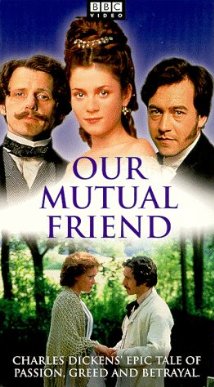
If you are looking for a good Dicken’s dvd to watch during the snow storm we are promised this weekend I can recommend both Little Dorrit with Clair Foy and Matthew MacFayden or Our Mutual Friend with Keely Hawes and Steven Mackintosh.

Our Mutual Friend DVD (Image courtesy IMDB)

Our Mutual Friend DVD (Image courtesy IMDB)

Little Dorrit dvd  (Image courtesy Amazon.com)

Little Dorrit dvd (Image courtesy Amazon.com)