Category Archives: Music

Thought of the Day 9.26.12 George Gershwin

Life is a lot like jazz.. it’s best when you improvise.
 –George Gershwin
English: George Gershwin, 28 March 1937 Azərba...

English: George Gershwin, 28 March 1937 Azərbaycan: Corc Gerşvin, ABŞ bəstəkarı, 28 mart 1937 Español: George Gershwin, 28 marzo 1937 (Photo credit: Wikipedia)

Jacob Gershvin was  born on this day in Brooklyn, New York in 1898. Today is the 114th anniversary of his birth.

His parents were Russian Jewish emigrants. He had three siblings, Ira, Arthur and Frances. His parents bought a piano and paid for lesson for Ira, but it was George who took up the instrument. At 15 he left school and began to work at New York’s Tin Pan Alley. (He changed his name George Gershwin when he entered the professional music world.) He sold his first song, “When You Want ‘Em, You Can’t Get ‘Em; When You Have ‘Em, You Don’t Want ‘Em,” for $5.

Music theatre folk-lore has it that one day Gershwin was performing his composition “Swanee” at a party when Broadway star Al Jolson heard it. Jolson added the song to his show in 1919 and it became his signature song. Gershwin rose in the ranks of New York City song composers.

Gershwin collaborated with Arthur L. Jackson and Buddy De Sylva on his first complete Broadway musical, “La, La Lucille” [American Masters; George Gershwin]

He worked in Vaudeville for a bit, and in 1920 he teamed up with lyricist Buddy DeSylva for a one-act jazz opera, Blue Monday.

opening bars rhapsody in blue - gershwin

opening bars rhapsody in blue – gershwin (Photo credit: Wikipedia)

At 25 his Rhapsody in Blue for solo piano and orchestra debuted in New York. It combined Gershwin’s twin musical loves a jazz and classical. Bandleader Paul Whiteman commissioned the piece  and it was premiered in a concert titled “An Experiment in Modern Music on February 12th with Gershwin at the piano. His other “serious music” includes Concerto in F, An American Paris and his Second Rhapsody (originally New York Rhapsody.)

In 1924, when George teamed up with his older brother Ira, “the Gershwins” became the dominant Broadway songwriters, creating infectious rhythm numbers and poignant ballads, fashioning the words to fit the melodies with a “glove-like” fidelity. [Gershwin.com]

George and his brother Ira worked together in 1924 on the musical Lady Be Good. The show opened at the Liberty Theatre and starred  Fred Astaire and his sister Adele and featured the songs “Fascinating Rhythm, “O Lady Be Good” and,  “The Half of It, Dearie, Blues.”  You can hear Gershwin’s complicated rhythms and the jazz chords that he would build on in later compositions like Rhapsody and Blue in this  early recording of “The Half Of It, Dearie, Blues“…

Oh, Kay! a musical about an English Duke and his sister turned American bootleggers opened at the Princess Theatre in 1926. It featured the dance number”Clap Yo’ Hands,” the love duet “Maybe” and “Someone To Watch Over Me“.

Funny Face opened in 1927, again with the Astaires in the lead. Songs included “S’Wonderful”, “My One and Only,” He Loves and She Loves” and “Let’s Kiss and Make Up.” An updated of Funny Face opened on Broadway as “My One and Only” in 1983 and ran for over 700 shows. And Hollywood made a move starring Fred Astaire and Audrey Hepburn in 1957 called Funny Face and using four of the songs, but with a different plot.

In Strike Up the Band America declares war on Switzerland. The original production only made it to previews in Philadelphia in 1927, but the Gershwins revised it and brought it to Broadway in 1930.  The songs “The Man I Love,Strike Up the Band,” “Soon,” and “I’ve Got a Crush on You  were added to the Gershwin Song Book from the show. [If you ignore all the other links in this post, do yourself a favor and click on I’ve Got a Crush on You — I pulled the incomparable Ella Fitzgerald’s smooth as silk rendition of the Gershwin classic… and no matter how crazy / busy your day is… you deserve this 3min. 18sec. piece of musical heaven.]

True to its name, Show Girl, is all about show business. It starred Ruby Keeler as an up and coming show girl Dixie Dugan. Other “A list” performers like Jimmy Durante and Eddie Foy, Jr. filled out the bill.  It  was produced by Florenz Ziegfeld. Songs includeHarlem Serenade,” andLiza (All the Clouds’ll Roll Away)” [– Ruby Keeler was married to Al Jolson and he used to come see the show several times a week and sing this, the last song, out loud from the audience, lovingly, to her. ]

In 1929 he wrote the score for the Fox film Delicious. His “New York Rhapsody” (which later became his “Second Rhapsody”) and a five-minute dream sequence was all that the producers chose to use of his score. Gershwin was disgusted.

In 1930 Girl Crazy hit the stage. It starred Ethel Merman, and made a star out of Ginger Rogers [to read the Thought of the Day Ginger Roger’s profile click HERE.]. The show was made into 3 movies,  and while the films shared many of the stage show’s  most popular songs — like “Embraceable You,”But Not For Me” and “I’ve Got Rhythm” — the plots lines deviated from the original.

Of Thee I Sing premiered in 1931 and became the first musical to win a Pulitzer Prize in 1932.
This all-American political satire focuses on the election campaign and Presidency of John P. Wintergreen, whose party, lacking a viable platform, runs on love, promising that if elected he will marry the partner chosen for him at an Atlantic City beauty pageant. When he falls for Mary Turner (a campaign secretary who bakes a mean corn muffin) instead of Diana Deveraux (the fairest flower of the South and winner of the pageant), trouble begins! [MTI Music theatre International]

His ground breaking, genre defying Porgy and Bess came out in September of 1935. George wrote the music, DeBose Heyward wrote the libretto, and Heyward and Ira Gershwin wrote the lyrics. It was based on Heyward’s novel Porgy  Gershwin intended it to be a folk opera.  Although it is considered a modern masterpiece now, the show flopped when it premiered on Broadway. It had revivals in 1942 and 1952, but it and didn’t get the recognition it deserved in the  opera world until the Huston Grand Opera staged it in 40 years later (1976). Songs include “It Ain’t Necessarily So,” “Bess You Is My Woman Now,” and “Summertime.”
Disappointed in the reception that Porgy and Bess received on Broadway he moved to Hollywood. He and Ira worked with RKO movies to score Shall We Dance, Fred Astaire and Ginger Rogers’s 10th film. He won an Academy Award for his song “They Can’t Take That Away from Me” from the film.
Starting in early 1937 George Gershwin began to have blinding headaches and the sensation of smelling burned rubber. He was diagnosed with a brain tumor. He died  on July 11, 1937.

Thought of the Day 9.11.12 Harry Connick Jr.

“hard to sit in silence, to watch one’s youth wash away.”

–Harry Connick Jr.

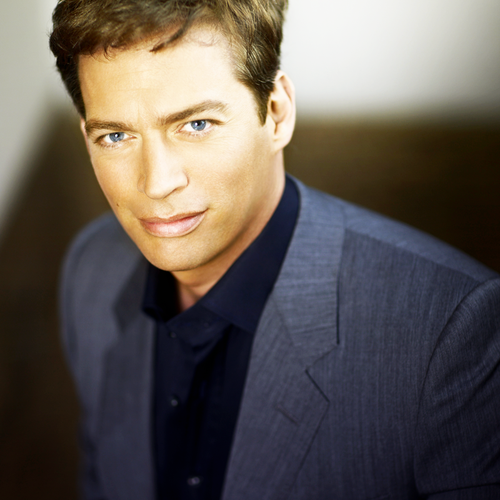
[Image courtesy: Last.fm]

Joseph Harry Fowler Connick Jr. was born on this day in New Orleans, Louisiana, USA in 1967. He is 45 years old.

Connick’s mother, Anita, was a lawer and judge, she rose through the ranks to become  a Louisiana Supreme Court justice. Harry’s first concert was at a campaign event when his father, Joseph, was running for district attorney. Harry was 5 and had been taking piano lessons for two years, The little boy sang the national anthem. (His dad won the election.) At 9 he performed  Beethoven’s Piano Concerto No. 3 Opus 37 with the New Orleans Symphony Orchestra and joined the musician’s union. He took lessons at the New Orleans Center for  the Creative Arts from Ellis Marsalis and James Booker.

After high school Connick moved to New York City. He played at various jazz clubs,  and caught the attention of singer Tony Bennet (who claimed the youngster could be the next Sinatra) and Columbia Record exec George Butler (who signed Connick to the label.)

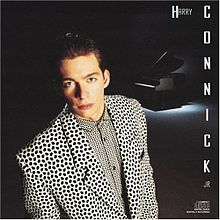
Connick’s first album. [Image Courtesy: Wikipedia]

His first, self titled, album was largely instrumental, but  he added vocals to his second album, 20. Harry Connick, Jr. sings like a Delta summer evening — his voice is warm and boozy and smooth all at the same time. He pulls you in and dances you around a song. At 20 he was singing standards that belonged to a generation (or two generations) his senior, and he did it with style. To date Connick has put out 27 albums.  From Jazz to Funk to Ballads to Big Band to the songs he loved from childhood he makes it sound easy… and has sold over 25 million recordings.

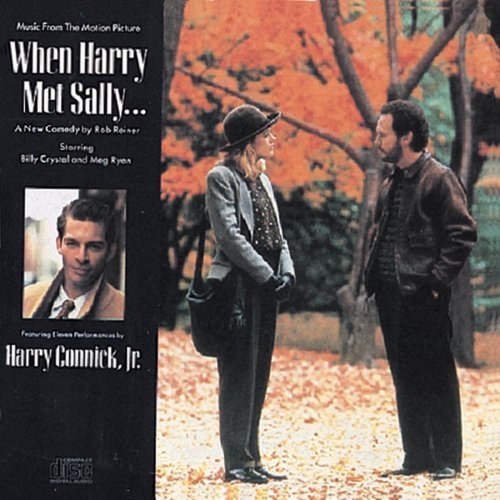
Cover for When Harry Met Sally… [Image Courtesy: Amazon.com]

Rob Reiner signed Connick for the soundtrack of When Harry Met Sallyin 1989. The soundtrack is lush with Big Band standards like “It Had to Be You,” “Don’t Get Around Much Anymore,” “Let’s Call the Whole Thing Off,”  “But Not for Me,” “Where or When” and (a personal favorite) “I Could Write A Book,” and went to #1 on the Jazz Charts  while reaching double-platinum.  Connick won a Grammy for his effort.

The film’s success led to Harry’s first multi-platinum album, an accomplishment made even more impressive by the fact that it was also Harry’s first Big Band recording. [Harry Connick, Jr official web page]

Reiner agreed with Bennet’s assertion that Connick had a certain Sinatra-esque style, and Connick followed up his success scoring Harry Met Sally by going ON camera in the WWII film Memphis Belle. Next he played Eddie in Jodie Foster’s Little Man Tate.

Harry changed tunes for his next film role, portraying a homicidal sociopath in 1995’s Copycat. The critics took notice, with the New York Times dubbing him, “…scarily effective,” and the Tampa Tribune naming him “most memorable” in a cast that included Holly Hunter and Sigourney Weaver. [Harry Connick, Jr official web page]

He played a fighter pilot / side kick in Independence Day where the actors, writers and directors were too busy blowing things up and saving the world to bother with science, logic or character development. [Too harsh?] He was the romantic good guy to Sandra Bullock in Hope Floats. In 2001 he co-starred with Sarah Jessica Parker  in Life Without Dick.  He was in the horror movie BUG with Ashley Judd.  He  narrator The Happy Elf (which was based on a song he wrote for his Harry for the Holidays 2003 album.) and My Dog Skip and he gave his voice to the animated role of Dean McCoppin in The Iron Giant.  He co-starred with Renee Zellweger in the 2009 rom-com New In Town. And his character heads a team of marine veteranarians who help an injured bottlenosed dolphin in Dolphin Tale. (Ashley Judd co-stars in Dolphin Tale as well, but sans bugs.)

On the small screen he worked with Glen Close in the ABC special South Pacific, and had a recurring role as Grace’s husband Leo Markus on Will and Grace. He was the lead in bio-pic Living Proof about Dr. Dennis Slamon, the man who developed the breast cancer drug Herceptin. He was the host for the Weather Channel’s 2007 documentary 100 Biggest Weather Moments (The Weather Channel donated $75,000 to Musician’s Village, a project Connick and Branford Marsalis devollped with Habitat for Humanity to aid the victims of Hurricane Katrina. His latest television role is a recurring spot on Law & Order: Special Victims Unit as A.D.A. David Haden.

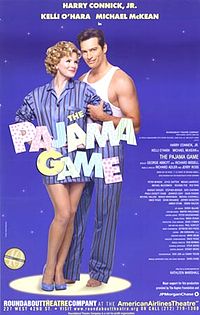
Poster for The Pajama Game [Image courtesy: Wikipedia]

He has appeared in several Broadway shows including the 2006 revival of The Pajama Game,  and the 2011 revival of On a Clear Day You Can See Forever, as well as two special concert tours, An Evening with Harry Connick Jr. and His Orchestra in 1990 and Harry Connick Jr.: In Concert on Broadway in 2010. He also composed the music and lyrics for Thou Shalt Not.

After Hurricane Katrina devisated New Orleans and the Gulf region Connick joined forces with other musicians and civic leaders to help rebuild the city. Portions of the royalties from Oh, My NOLA  and Chanson duVieux Carre along with the concert tours promoting the albums went to Musician’s Villiage.


Thought of the Day 9.8.12 Patsy Cline

“Here’s to those who wish us well and those who don’t can go to hell”

–Patsy Cline

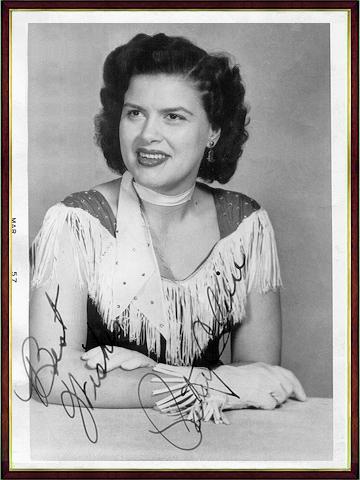
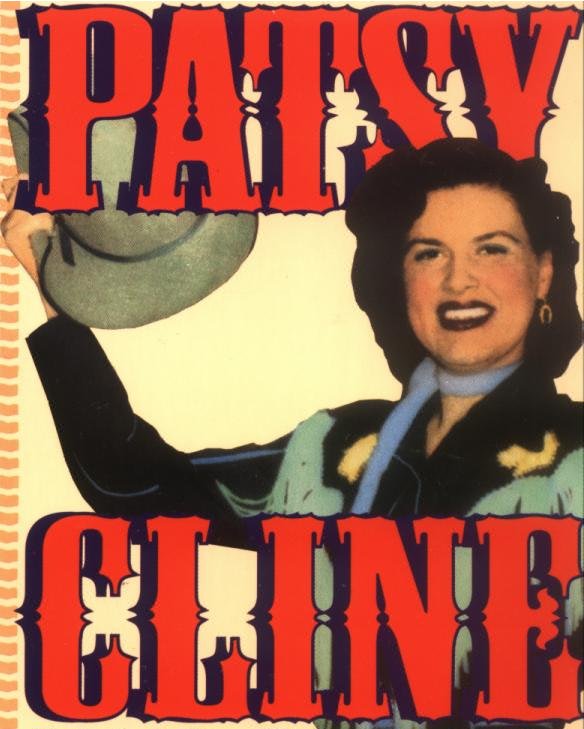
Patsy Cline early in her career. [Image courtesy: Patsy Cline, A Fan’s Tribute]

Virginia Patterson Hensley was born on this day in Winchester, Virginia in 1932. It is the 80th anniversary of her birth.

At 4 she won a dance contest for tap dancing. Her mother gave her a piano for her 8th birthday and Patsy taught herself to play.  She sang with her church choir and at 14 was a regular on WINC Radio. At 15 her parents divorced and Patsy sang in clubs at night and worked in a drug store during the day to help pay the bills.

She married Gerald Cline in 1952 and continued to sing in clubs as well as with Bill Peer’s Melody Playboys in Maryland and as a regular on “Town and Country Jamboree” on a radio station out of Washington DC. She got a recording contract with Four Star Records in 1954 and she won first place on the TV variety show “Talent Scouts” with Arthur Godfrey where she sang “Walkin’ After Midnight.” The song became a hit and on both the country and pop charts.

Cline made her debut on the stage of the Grad Old Opry in 1960 and continued her rise to stardom with her second hit “I Fall to Pieces.” She is also known for her songs “Sweet Dreams,” “Crazy” and “She’s Got You.”

A country music legend, Patsy Cline helped break down the gender barrier in this musical genre. [Patsy Cline. biography profile, bio.TRUE STORY]

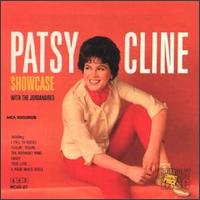
[This is one of the Patsy Cline albums that was in my parent’s record collection. Image courtesy: Decca Records]

She helped  the careers of other up and coming female singers, especially Loretta Lynn.

Cline died in a plane crash returning from a benefit concert in 1963.

In 1973 she was the first female soloist to be honored in the Country Music Hall of Fame.

[Image courtesy: blog.zap2it.com]


Thought of the Day 9.5.12 Freddie Mercury

“F*ck today, it’s tomorrow.”

“What will I be doing in twenty years’ time? I’ll be dead, darling! Are you crazy?”

— Freddie Mercury

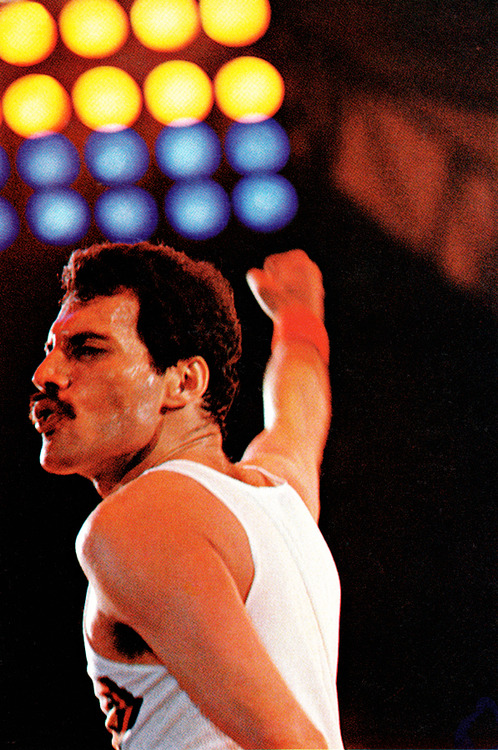
(Image courtesy of Fan Pop)

Farrokh Bulsara was born on this day in British Zanzibar, East Africa in 1946. He would have been 66 years old.

He grew up in Zanzibar and India. He attended St. Peter’s School, a British-style boarding school in Panchgani. The students at St. Peter’s anglicized his name to Freddie. Although he hated some of the school’s sports — running and cricket — he like others — hockey & boxing, and he became the school champion at table tennis at 10. He preferred art and music. He took private piano lessons and enjoyed Bollywood musicals. At school he formed a cover band that performed rock and roll. He also joined the school choir and participated in several theatre productions.

In 1964 when Freddie was 17 there was a great deal of unrest in Zanzibar, most of it directed at the British and Indian ex-pats. So Freddie and his family moved to Feltham, Middlesex, England. There he received a Diploma in Art and Graphic Design from the Ealing Art College. All the while he performed in bands. He also worked part-time selling second-hand clothes at Kensington Market and worked in a catering department at  nearby Heathrow Airport.

After stints with the bands Ibex and Sour Milk Sea he, Brian May (guitar) and Roger Taylor (drums) formed Queen. John Deacon rounded out the group in 1971.

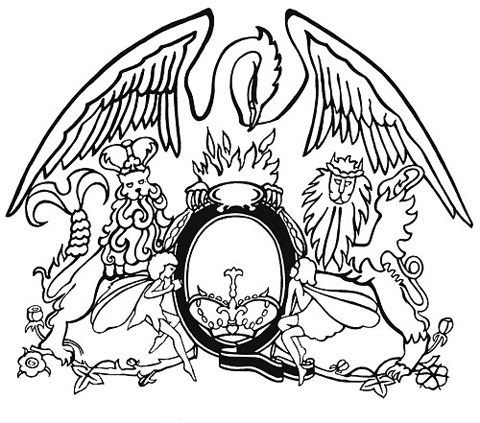
Mercury designed Queen’s logo. (Image courtesy of Lost at E Minor.com)

Freddie changed his last name to Mercury when he started Queen.  As lead singer for the group Mercury’s range went from a low bass F to a high tenor F, 3  full octaves. He wrote the lion share of the group’s songs including Bohemian Rhapsody, Killer Queen, Somebody to Love, We Are the Champions and Crazy Little Thing Called Love.

He hated to do the same thing twice so he borrowed from a variety of genres when writing. So from the opera inspired Bohemian Rhapsody to the rockabilly Crazy Little Thing Called Love, Mercury proved just how mercurial he could be.

(Image courtesy of Fan Pop)

He was an amazing show man on stage. Queen gave over 700 concerts worldwide.

It wasn’t anything that could be developed. It was his charisma, his pure natural gift that was in perfect harmony with his voice, his appearance, his delicate taste and his musicianship in the wide sense of the word. The fact that he realized it himself made him absolutely fascinating! [Freddie Mercury: biography by Jacky Gunn & Jim Jenkins]

Their 20 minute set at Live Aid at Wembley Stadium stole the show. Freddie sings, struts, dances, plays piano and guitar, gives 110%,  and has a hell of a good time. (Plus, how much fun is it to hear 72,000 people singing along to a Queen song?)

He  produced two solo albums, Mr. Bad Guy and Barcelona and several singles. And he did solo side gigs including a performance with the Royal Ballet where he danced  in font of a packed audience of ballet enthusiasts to orchestral versions of Bohemian Rhapsody and Crazy Little Thing Called Love. He received  a standing ovation. Freddie co-wrote Love Kills for the re-release of Fritz Lang’s 1926 classic film Metropolis.

Freddie Mercury died of AIDS in 1991 at the age of 45.


Thought of the Day 8.28.12 Shania Twain

Man! I Feel Like a Woman!

–Shania Twain

Greatest Hits (Shania Twain album)

Greatest Hits (Shania Twain album) (Photo credit: Wikipedia)

Eilleen Regina Edwards was born on this day in Windsor, Ontario, Canada in 1965. She is 47 years old.

She is the eldest of five siblings and grew up about 500 miles north of Toronto with her mother Sharon and her adoptive father Jerry Twain.

According to the biography on her official web site she …

“grew up listening to Waylon, Willie, Dolly, Tammy, all of them…But we also listened to the Mamas and the Papas, The Carpenters, The Supremes and Stevie Wonder. The many different styles of music I was exposed to as a child not only influenced my vocal style, but even more so, my writing style.” [ShaniaTwain.com]

Impressed by the girl’s singing, guitar playing and song writing skills, her mother became her defacto agent and  began to book the 8-year-old Twain at local venues and radio and TV spots. Twain says she would be awaken after midnight and taken to local clubs to sing with house bands — bar stopped selling alcohol at midnight.

The “b” side of Twain’s rural Canadian upbringing was summers spent on reforestation crews with her stepfather where she “learned to wield” a different kind of axe (and “handle a chain saw as well as any man.”)

An automobile accident took the lives of  both Sharon and Jerry Twain, and 21-year-old Eilleen took over raising her little brothers. She got a job at the Deerhurst Resort in Ontario which not only allowed her to pay the bills but also introduced her to musical theatre.

At 24 Twain recorded a demo of original music and changed her first name to Shania (Ojibway Indian for “I’m on my way” in honor of Jerry Twain’s Ojibway’s ancestry.) She signed on with Mercury Records and put out Shania Twain in 1993. The CD included the hits “Dance With The One That Brought You” and “What Made You Say That.”

She joined forces with rock producer Robert John “Mutt” Lange  (both professionally and personally — the two married  in 1993.) Her single Whose Bed Have Your Boots Been Under came out in 1995 and went to #11 on the  country charts. Woman In Me, her second album made “Twain the best-selling country female artist of all time. “ “Any Man of Mine,” “(If You’re Not In It for Love) I’m Outta Here!” “You Win My Love and “No One Needs to Know” all went to number 1, and the project won Country Album of the Year at the Grammies.

She released Come On Over in 1997 and listeners from pop and rock stations took her invitation seriously. She became a crossover artist with “You’re Still the One”  (which was #1 in Country and #2 on Billboard’s Hot 100 pop chart) and “Man! I Feel Like A Woman.” The album sold over 11 million copies.

<iframe width=”420″ height=”315″ src=”http://www.youtube.com/embed/KNZH-emehxA&#8221; frameborder=”0″ allowfullscreen>

In 2002 she continued in a more pop vain with the release of  UP.  In the music video  for the single I’m Gonna Getcha Good she leaves behind her trademark bare midriff and  jeans and opts for a futuristic Tron style leather get up as she takes a motorcycle ride through a dystopian landscape.

In 2011 she did a six part documentary on the OWN network and released her memoirs. To date she has sold over 75 million cds and has earned the moniker “The Queen of Country Pop.”


Celebrate Good Times, Come ON! 100 post!!!


Wordpress Button Closeup

WordPress Button Closeup (Photo credit: Titanas)

Instead of my usual Thought of the Day I wanted to share the exciting news that ritaLOVEStoWRITE has hit a milestone.  This is my 100th post on WordPress!

Thank you to all of the readers who have hit the blog 2,700 plus times in the last three months. And especially to my 57 dedicated followers (plus those 300 plus of you on Facebook and Twitter who follow that way.) Your LIKES, feedback and support have made these lonely hours in front of my computer well worth it.

Of course the act of researching, writing, adding the photos and editing the posts  has been its own reward. How else would I have found out about Mata Hari?

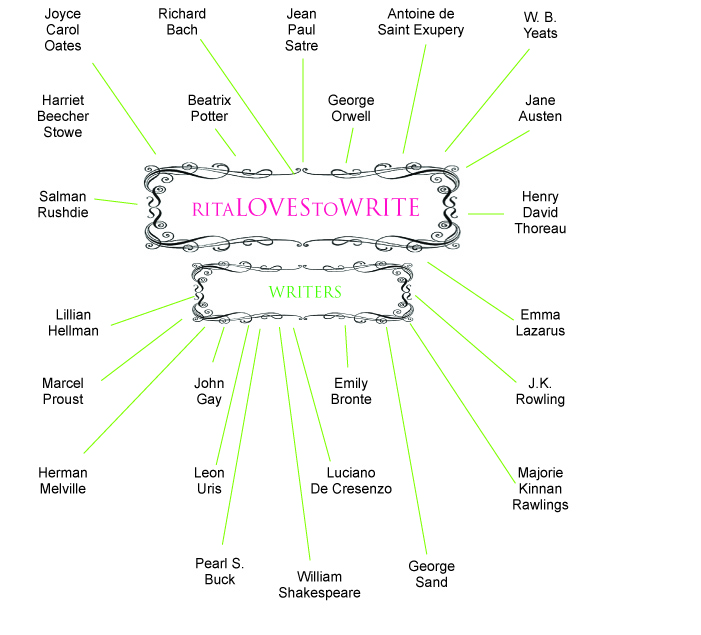
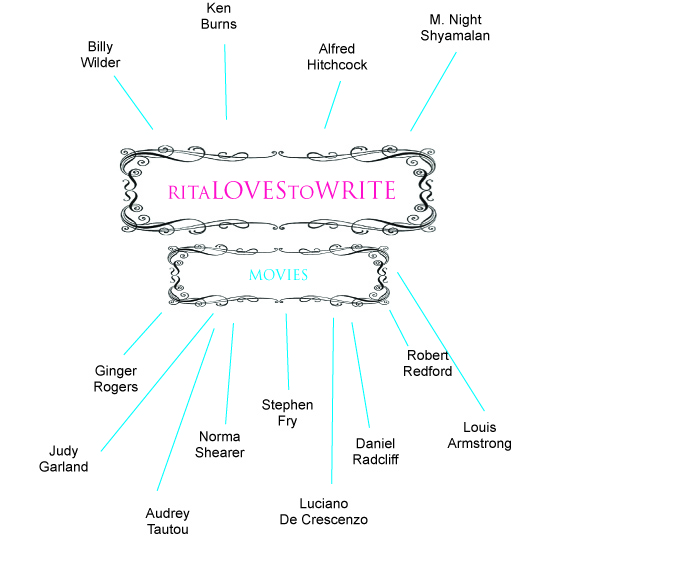
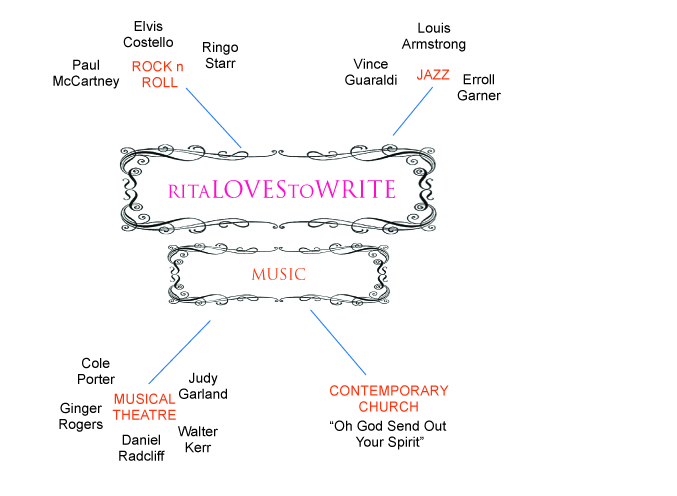
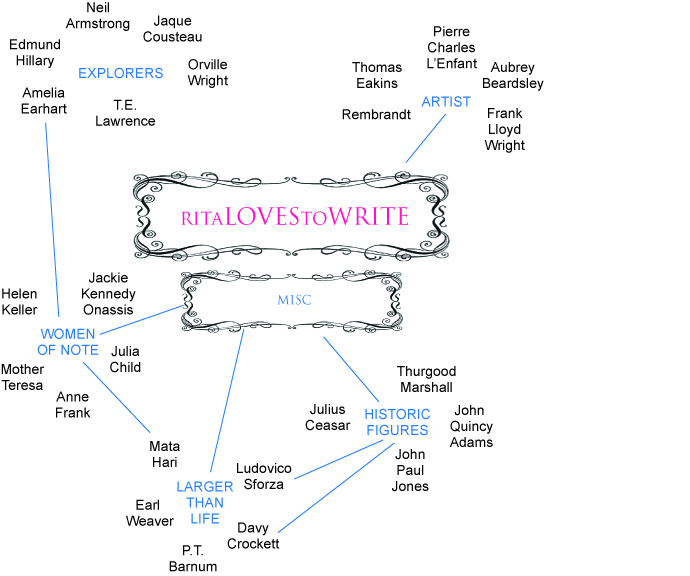
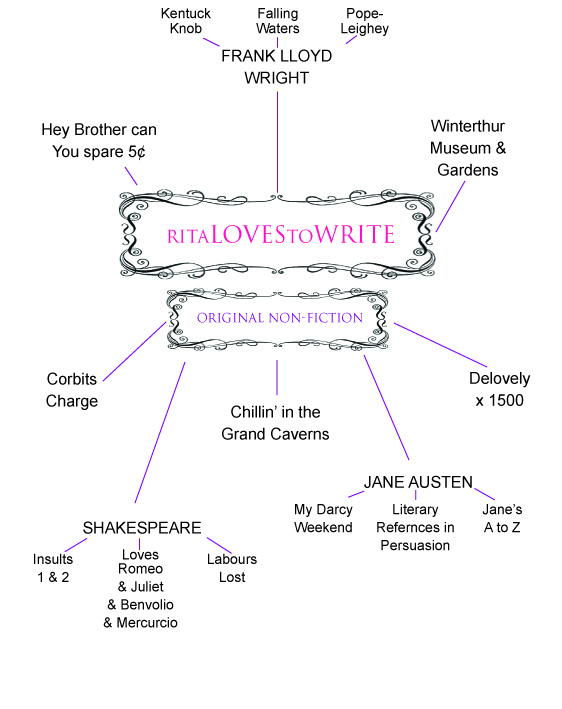
So, incase any one asks, here’s what rita WRITES about: 


I was somewhat surprised at how that broke down. While in the trenches of writing the blog I thought it weighed way to heavily on the celebrity and was too light on the cerebral, but actually I had more WRITERS than anyone else.


There was some nice cross over between Movies and Music (in Musical Theatre)…


The bulk of my 100 posts are in the Thought of the Day category, and the MISC. chart gives a who’s who of folks who didn’t fit nicely into Writing, Movies or Music. I liked the cross referencing here too.


The last chart is for post that didn’t appear as a Thought of the Day entry, “Original Non-Fiction.” Hmmm. Well everything on my blog is my original work (except one repost from my friend Lynn Reynolds about Books and How to Sell Them) and so far it has been all non-fiction. So I guess EVERYTHING could be on this chart.

In the future I hope to add some fiction to the site. Would you like that?

Please know that I love to get feedback, but I’m pretty fierce about SPAM. If there is any chance something is SPAM I throw it in the trash. So if I have inadvertently trashed your perfectly legitimate comment, I apologize. It was thrown into my SPAM folder and I probably couldn’t see your website to check. PLEASE write something referring back to “ritaLOVEStoWRITE” in your comment then I’ll know it is the real deal and not some bot trolling for unsuspecting bloggers.

I’ll leave you with a Thought for Today from Australian politician Arthur Calwell who was born on this day in 1896…

“It is better to be defeated on principle than to win on lies.”

Hmmm something to think about as the (American) political season goes super nova.


Thought of the Day 8.25.12 Elvis Costello

I used to be disgusted; now I try to be amused.

–Elvis Costello

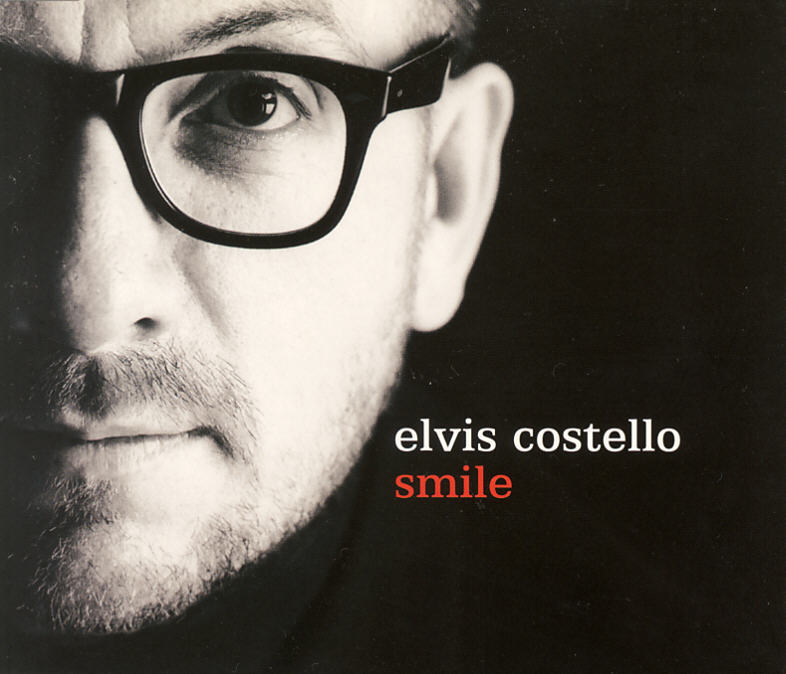
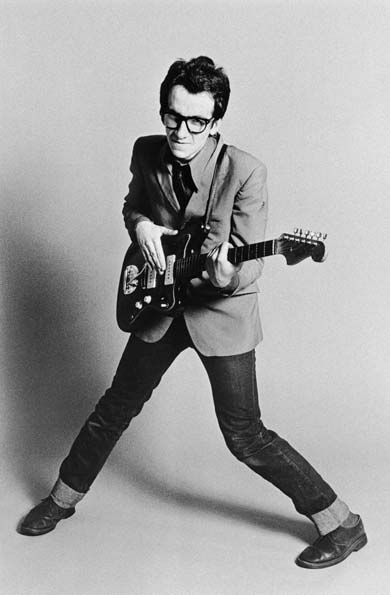
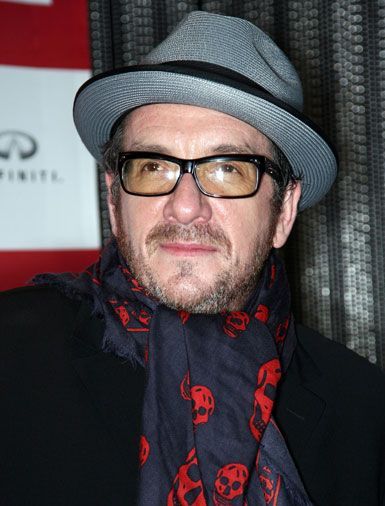
Declan Patrick MacManus was born on this day in Paddington, London, England in 1954. He is 58 years old.

Declan grew up around music. His father, Ross MacManus, was a singer for The Joe Loss Orchestra, a dance band with it’s own popular BBC Radio Show. Ross, who had to learn a new song every week for the show, brought home demo tapes to practice, and young Declan absorbed the tunes. His first recording was with his dad, the two sang for a commercial for R. White’s Lemonade.

When he was 17 he moved to Birkenhead (opposite Liverpool on the Mersey River) and started a folk duo with Allan Mayes. He formed the country rock band Flip City when he moved back to London in 1974. It was then that he took the stage name D.P. Costello. He supported himself as a computer operator and an office clerk while continuing to hone his skills as a singer, song writer and musician.

He signed with Stiff Records, and independent label out of London and changed his pseudonym to Elvis Costello.

When Elvis Costello‘s first record was released in 1977, his bristling cynicism and anger linked him with the punk and new wave explosion. …he tore through rock’s back pages taking whatever he wanted, as well as borrowing from country, Tin Pan Alley pop, reggae, and many other musical genres. Over his career, that musical eclecticism distinguished Costello‘s records as much as his fiercely literate lyrics. [Allmusic by Rovi]

The first lp, My Aim Is True had two singles, “Less Than Zero” and “Alison.” While neither initially charted “Alison” has become a classic and the album reached number 14 on the British charts.

His backing band, The Attractions, was firmly in place for his next lp, This Year’s Model. Bruce Thomas played bass, Steve Nieve played Keyboards, and Pete Thomas was the drummer, while Costello sang lead and played guitar for the group. The lp reached #4 in Brittain and #30 in the US. Armed Forces did even better with its catchy single “Oliver’s Army.”  That was followed by Get Happy!!  (1980) and Trust (1981).

He put on some country western boots and recorded with Billy Sherrill, a Nashville producer for his next lb, Almost Blue with the single “A Good Year for the Roses.” 1982 brought Imperial Bedroom, 1983 , Punch the Clock and “Every Day I Write the Book.” In 1984 he went on a solo tour with Goodbye Cruel World, and in 1985 he did King of America (sans the Attractions.) He briefly reunited with the Attractions with Nick Lowe as producer for Blood and Chocolate.

He teamed up with Paul McCartney in 1987  for Spike with the single “Veronica.” Mighty Like a Rose followed in 1989.

Costello switched gears again in 1993, this time  going classical. He wrote a song cycle called the Juliet Letters which he performed with the Brodsky Quartet.

Back with The Attractions and to rock and rol  he put out Brutal Youth in 1994. All This Useless Beauty is a cover album of sorts, he penned all the songs, but they were originally done by other artists.

He wrote theme songs for Austin Powers and Notting Hill (his achingly beautiful “She” is almost as lovely as Julia Roberts.)

In 2001 he worked with Steve Nieve and Pete Thomas  on When I Was Cruel, with the amazing single “Dust.”

Next up was his interpretation of the Great American Song Book with North “falling halfway between Gershwin and Sondheim.” [Allmusic by rovi], and the live jazz album Flame Burns Blue — with Costello in front of The Metropole Orkest, a 52-piece orchestra.

After Hurricane Katrina devastated New Orleans Costello joined forces with Allen Toussaint (they had worked together on Spike) for The River in Reverse

Momofuku (2008), Secret, Profane & Sugarcane (2009) and National Ransom (2010) round out his impressive discography.

Whew! Another LONG bio. They always look so easy when I start. But I just bet I forgot your favorite album or single, didn’t I? Come on… let me have it… what’s your Elvis Costello favorite [leave me a comment.]


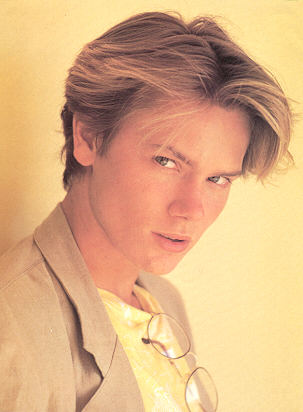
Thought of the Day 8.23.12 River Phoenix

“Acting is like a Halloween mask that you put on.”

River Phoenix

River Jude Bottom  was born on this day in Madras, Oregon in 1970. He would have been 42.

River’s parents, John and Arlyn met while hitchhiking in northern California. The family moved often as John and Arlyn were itinerant fruit pickers. When River was 3 they joined the Children of God religious cult and became missionaries. They moved through out the southern US, the Caribbean and South America, and siblings Rain, Joaquin, and Libertad were welcomed to the family.

The church sent them Caracas, Venezuela in 1976. Although John was the Church of God’s Archbishop to Venezuela and the Caribbean he did not get a salary and the family had to fend for themselves financially. Occasionally finances got so strained that young River and Rain performed music on street corners to raise money for food (River played guitar).  Eventually the Bottoms became disillusioned with Church of God leader, David Berg, and the direction the  religious group was taking. They left the group, living in a beach hut and at a church until they stowed away in a cargo ship bound for Florida.

Once they made it to Florida (they were discovered by the crew of the cargo ship, but they were treated well,) the family stayed with Arlyn’s parents in Winter Park. The last of the Bottom siblings, Summer was born in 1978 and the entire family changed their last name to Phoenix to symbolize the new beginning in their life.

River, Rain and Summer performed in talent shows in Florida, and got an invitation to come out to Hollywood and audition for Paramount studio. The family jumped at the chance, but when they arrived in California the audition fell through. Arlyn got a job in casting for NBC and arranged for a meeting between the kids and agent Iris Burton.

At 10 River started his acting career.  His first break came as the youngest brother, Guthrie, in the TV Series Seven Brides for Seven Brothers in 1982. And he made several made-for-television movies and had  guest spots on network shows.

River Phoenix

River Phoenix and Wil Wheaton in Stand By Me (Photo credit: One From RM)

In 1984 he was cast in his first big screen picture Explorers along side another newcomer, Ethan Hawke.  He was in Rob Reiner’s  Stand By Me (1986) with Wil Wheaton, Richard Dreyfuss, Jerry O’Connel and Corey Feldman.   Next up was Peter Weir’s The Mosquito Coast with Harrison Ford. The two work together again in Indiana Jones and the Last Crusade with River taking on the role of young Indy.  Running on Empty (which had some simularities to Phoenix’s youth — consent moving, musical prodegy) was also a big hit. He received an Academy Award nomination for his work in Running. He worked with his friend Keanu Reeves in My Own Private Idaho by Gus Van Sant.

Young Indiana Jones in The Last Crusade

Young Indiana Jones in The Last Crusade (Photo credit: Wikipedia)

Phoenix was a vegetarian, and later vegan because he strong opposition to how the meat and dairy industries treated animals. He was a member of PeTA. He was also an ardent environmentalist and worked with Earth Save and Earth Trust and he personally purchased  several hundred acres of rain forest in South America to keep it from being cut down.

He continued to play guitar and sing even as his acting career rocketed skyward. He performed with his sister Rain’s band Aleka’s Attic and, occasionally, on screen.

Phoenix died of an overdose at the age of 23 in Los Angeles.


Thought of the Day 8.4.12 Louis Armstrong

“I got a simple rule about everybody. If you don’t treat me right / shame on you!”

–Louis Armstrong

Louis Armstrong

Louis Armstrong (Photo credit: late night movie)

Louis “Satchmo” Armstrong was born this day in New Orleans, Louisiana in 1901. Today would be his 111th birthday.

The grandson of slaves, his family was very poor. His father, William Armstrong, abandoned the family when Louis was a baby. His mother, Mayann often turned to prostitution to make ends meet and she left Louis and his little sister Beatrice with their grandmother Josephine Armstrong. The little boy did what he could to earn money. He worked as a  paper boy. He hauled coal to the red-light district — and lingered around the clubs to listen to the music. In 1907 he sang in a street quartet for change.  He did odd jobs for the Karnofsky family, a Lithuanian-Jewish family who took him in and treated him well. The Karnofskys lent Armstrong the money buy his first cornet.

b/w line drawing of cornet

b/w line drawing of cornet (Photo credit: Wikipedia)

When he was 11 years old he was sent to the New Orleans Home for Colored Waifs, a reform school, for firing his a pistol into the air on New Year’s Eve. While at the home Armstrong really learned to play the cornet (he had been self taught and could play by ear prior to the lessons he had at the home).

He was released from the home at 14. He worked hauling coal and unloading barges during the day and brought out his horn at night. He went to honky tonk clubs like “the Funky Butt Hall” to listen to established musicians and learn from them. Joe “King” Oliver mentored the young man. By 17 he was playing professionally.

By the 1920’s he was playing on riverboats and traveled up to St. Louis. His jazz trumpet solos and vocals became his signature style. In 1922 “King” Oliver invited him to join his Creole Jazz Band in Chicago. The money was good enough that Armstrong no longer had to work the menial labor day jobs to make ends meet. By 1925 he was headlining his own band and playing with artist like Bessie Smith and Ma Rainey. He was billed as “The World’s Greatest Jazz Cornetist” for a gig at the Dreamland Cafe, and cut his debut record with his own group Louis Armstrong and His Hot Five. By the 1930s his act had gone international.

[Portrait of Louis Armstrong, Carnegie Hall, N...

[Portrait of Louis Armstrong, Carnegie Hall, New York, N.Y., ca. Apr. 1947] (LOC) (Photo credit: The Library of Congress)

According to the Louis Armstrong House Museum Site he:

  • developed a way of playing jazz, as an instrumentalist and a vocalist, which has had an impact on all musicians to follow;
  • recorded hit songs for five decades, and his music is still heard today on television and radio and in films;
  • wrote two autobiographies, more than ten magazine articles, hundreds of pages of memoirs, and thousands of letters;
  • appeared in more than thirty films (over twenty were full-length features) as a gifted actor with superb comic timing and an unabashed joy of life;
  • composed dozens of songs that have become jazz standards;
  • performed an average of 300 concerts each year, with his frequent tours to all parts of the world earning him the nickname “Ambassador Satch,” and became one of the first great celebrities of the twentieth century.

Here’s Louis Armstrong (Trumpet), Trummy Young (Trombone), Peanuts Hucko (Clarinet), Billy Kyle (Piano), Mort Herbert (Bass), and Danny Barcelona (Drums) in Stutttgart Germany in 1959.

[note to self: MUST sing more jazz so I can play in a band with some one named Trummy and Peanuts.]