Category Archives: History

Thought of the Day 10.29.12 Marie of Romania

Love, Faith, Courage with these three we can win the world..”

–Marie of Romania

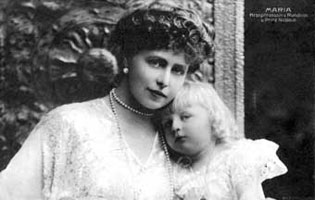
Marie Alexandra Victoria, Princess Marie of Edinburgh, was born on this day at Eastwell Park in Kent, England in 1875. Today is the 137th anniversary of her birth.

She was the eldest daughter of Prince Alfred of England and Grand Duchess Maria Alexandrovna of Russia and the granddaughter of Queen Victoria  on her father’s side and of Tsar Alexander II on her mother’s side. Because of  her double royal lineage she was considered highly suitable for a Royal match of her own.

When Marie was 17 she was married to Prince Ferdinand of Romania, a German raised nephew of King Carol I of Romania in Sigmaringen German in 1893. Ferdinand was 27 at the time. They had 6 children. Three boys and three girls. However, the marriage was not a happy one and The Princess took a lover, Barbu Stirbey. It is likely that Mircea (and possibly Mignon and Ileana) were Stirbey’s.

In 1914 King Carol I died and Ferdinand took the throne. Marie became Her Majesty the Queen of Romania but the couple were delayed in becoming the King and Queen until after World War 1.

During the War Princess Marie influenced the country to side with the Allies (and away from the Germans), she volunteered with the Red Cross  and nursed the sick and wounded. Her book My Country raised money for the Red Cross.

When WWI was over and the Allies were trying to figure out how to partition Europe and scold Germany, Marie herself went to Versailles and represented Romania. She wooed the ministers so much that they gave back territory that Romania had lost and promised not to partition her. [GEH — Queen Marie of Romania Study Notes]

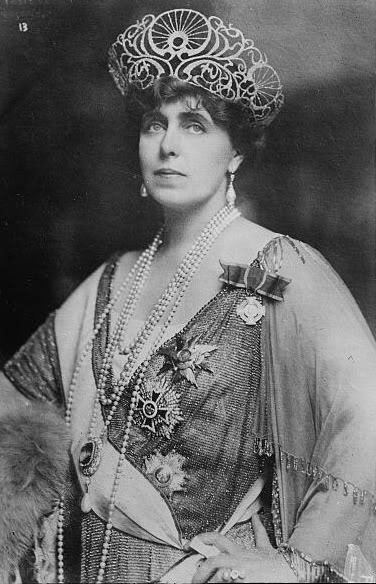
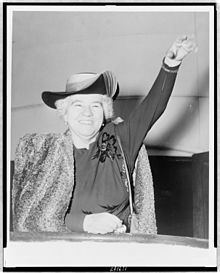
Queen Marie [Image courtesy Alexanderpalace.org]

Ferdinand and Marie were finally crowned in 1922. She was determined to be a modern queen.

A Queen who was not stuck in the Victorian time warp like Queen Mary of England, and a Queen who listened to her people and made herself available to her people. [Ibid]

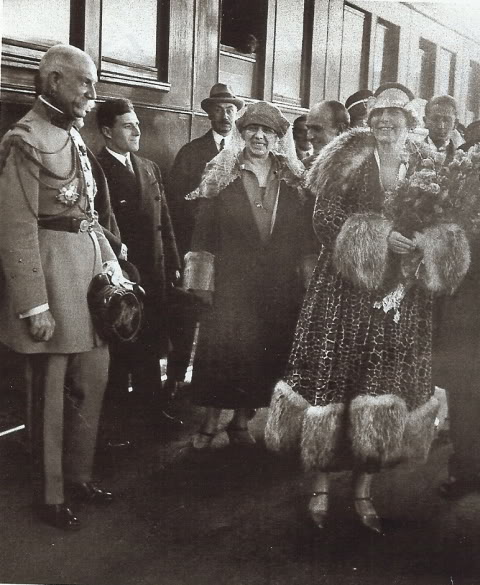
Queen Marie was very popular and travelled through out Europe and the US.

The Queen, on the right, traveling in Europe. [Image courtesy Alexanderpalace.org]

Although she was close with her younger children she was never on good terms with Crown Prince Carol (who became King Carol II after Ferdinand’s death in 1927). After Carol’s coronation he excluded his mother. She remained the Romania and wrote her two-part memoir, The Story of My Life. 

She died after a sudden illness in 1938. Following the Queen’s instructions her heart was removed from her body and kept at a cloister at Balchik Palace. The rest of her remains were interred with her husband.


Thought of the Day 10.22.12 Sarah Bernhardt

Your words are my food, your breath my wine. You are everything to me.
–Sarah Bernhardt

English: Sarah Bernhardt, portrait by Nadar (d...

English: Sarah Bernhardt, portrait by Nadar (d. 1910) Português: Sarah Bernhardt, fotografia de Nadar (d. 1910) (Photo credit: Wikipedia)

Henriette-Rosine Bernard was born on this day in Paris, France in 1844. Today is the 168th anniversary of her birth.

The illegitimate daughter of a Julie Bernardt, a Dutch courtesan working in Paris. She was sent to Grandchamp, a Augustine convent school. She was greatly influenced by her time at the religious school and showed a desire to become a nun herself. Her first role was as the Angel Raphael in Tobais Regains His Sight, a show performed for the Archbishop of Paris when he visited the convent.

When one of her mother’s lovers, the Duke of Monry (Napoleon III’s half-brother) took an interest in young Sarah’s acting abilities, he arranged for her to go to the Paris Conservatoire at age 16 in 1862. She was forced to forget her dreams of becoming a Bride of Christ and took up a life on stage instead.

With the Duke as her patron she moved from the Conservatoire to France’s national theatre company, Comedie-Francaise where she starred in Iphigene. She left Comedie-Francaise after she slapped another actress and had a two year run at Theatre du gymnase-Dramatique.

English: Sarah Bernhardt as Joan of Arc holdin...

English: Sarah Bernhardt as Joan of Arc holding banner (Photo credit: Wikipedia)

At about that time she had an affair with  Charles-Joseph Eugène Henri Georges Lamoral de Ligne (Belgium) and gave birth to her son Maurice in 1864. Although the prince proposed the royal family rejected the idea of his marrying an illegitimate actress. They forbade the union and Bernhardt was left to raise Maurine on her own. [See side bar below]

In 1866 she got a contract with Theatre de L’Odeon. During her six year run at the L’Odeon she had her first big success in the French version of King Lear as Cordelia and as the Queen in Ruy Blas by Victor Hugo. Perhaps her most memorable star making role was Zanetto in Le Passant (The Passerby), a role she played in a command performance for Napoleon III.

In 1870, in the midst of the Franco-German War, Bernhardt organized a military hospital in the Odéon, and by the late 1870s, when the war was over, she resumed acting and had reached the heights of her acting career, propelled in part by her quirky behavior both on and off the stage.” [biography.com]

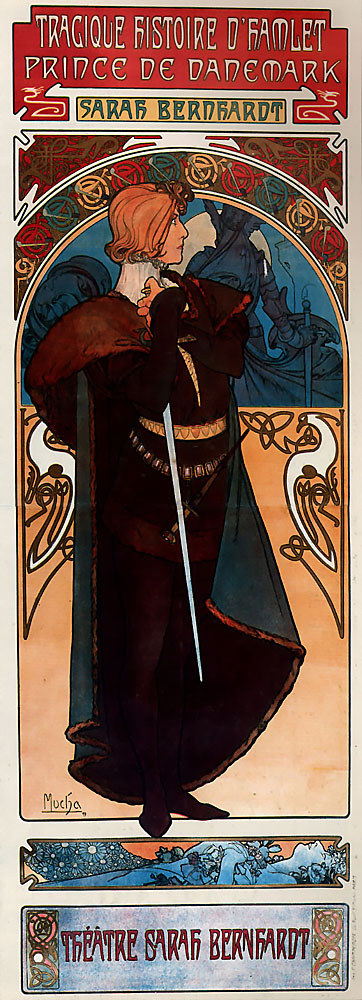
In 1899 she took over the Theatre de Nations and renamed it the Theatre Sarah-Bernhardt. In May she premiered a prose adaptation of Hamlet in which she played the great Dane.

At 61 the actress was in Rio de Janeiro starring in La Tosca.

She… injured herself in a leap off the parapet at the end of … the stage play that later became a Puccini opera, and she was in constant pain.  [Sarah Bernhardt’s leg, 02.02.09 NYTimes.com]

a decade later she take the pain no longer and she ordered doctors at Bordeaux University to amputate it above the knee. She was wheelchair bound for a while, but eventually she retuned to acting (with or with out the wooden leg which she found cumbersome.) Her last three movies were filmed after the leg was amputated.

English: Portrait of Sarah Bernhardt as Hamlet.

English: Portrait of Sarah Bernhardt as Hamlet. (Photo credit: Wikipedia)

With the advent of film Bernhardt became the first classical actress to lend her talents to the new medium. She filmed her version of Hamlet (Le Duel d’Hamlet — which she thought was abysmal); La Tosca; La Dame aux Camelias; Adrienne Lecouvreur; Elisabeth Reine d’Angleterre; Meres Francaise; Jeanne Dore and La Voyante.

She’s alleged to have had over 1,000 lovers. When she was 15 she bought a rosewood coffin. She some times slept in it — allegedly it helped her prepare for her dramatic roles. The coffin was lined with letters from her lovers.

Bernhardt died of kidney failure in 1923.

Side Bar — The Importance of Being Sarah:
[Prince Henri was not completely out of the picture. When Maurice was about to be married Henri offered to “officially recognize him and offered him his name and a substantial fortune.” [IMDB.com] Maruice refused saying his mother had sacrificed so much to raise him that he would remain a Bernhardt. Later when the two were traveling by train Henri was frustrated at having to wait in a long line. He went to the man in charge and demanded to be let in front saying “I am the Prince de Ligne” The man had never heard of him and told him to take his place in the back. So Maurice came forward and said he was the son of Sarah Bernhardt. They were immediately brought through. [ibid]

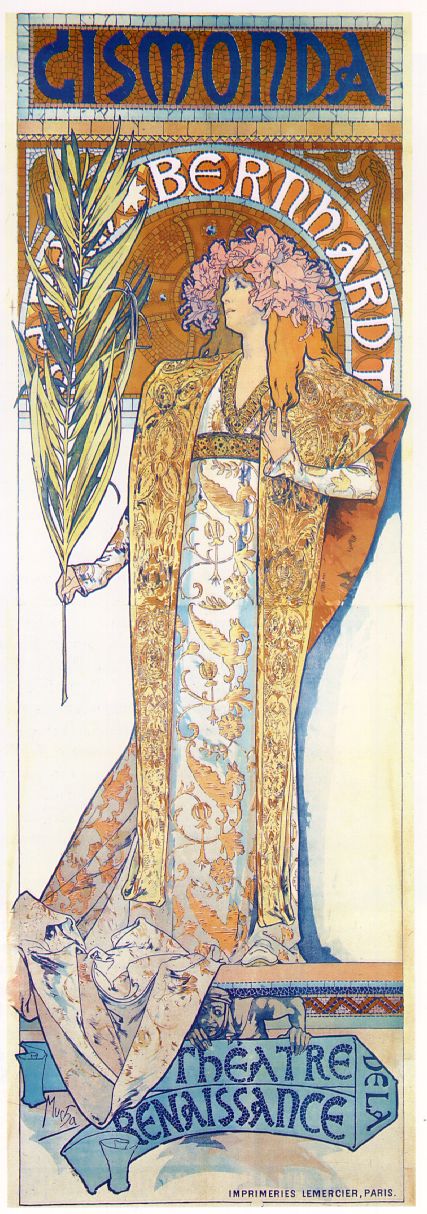
Alphonse Mucha’s poster for Bernhardt in as Gismonda [Image courtesy: Art Dish]
Mucha’s poster for Bernhardt’s Hamlet [Image Courtesy: Art Renewal]

Thought of the Day 10.21.12 Richard the Third

Blog Note: Today is NOT Richard the Third’s Birthday, that’s Oct 3 1452.

——————————————————————————–

Richard III Royal Collection

Richard III Royal Collection (Photo credit: Wikipedia)

Today I’m thinking about Richard the Third of England.

We just saw the terrific Moveable Shakespeare production of Richard III at Chesapeake Shakespeare Company in the ruins of the Patapsco Female Institute in Ellicott City Maryland.

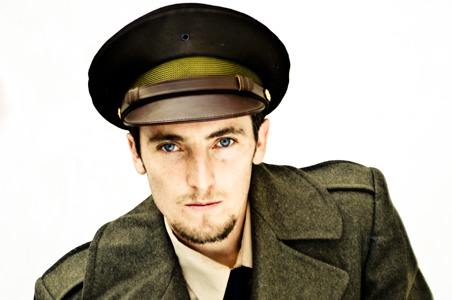
Director Ian Gallanar chose to pick the characters up from the 15th century and time warp them  to something resembling War War One. Clever, especially considering the Patapsco Female Institute was used as a war hospital during the Great War. In his director’s notes he says:

“The production really uses the visual palate and the historic technology of the World War One era as a way to clarify the relationships of the characters….[The audience] might also recognize the futility and wastefulness of a war that, much like the English “Wars of the Roses,” seemed more about resolving who would inherit power rather than who ought to inherit power.” [Chesapeake Shakespeare Company, Richard III: Program Notes]

So on a cold October night we got to see one of Shakespeare’s bloodiest plays in and around the shell of a burned out 19th Century building that some people claim is haunted. The occasional gas-masked actors quietly playing cards in a dimly lit corner or typing away orders on an antique typewriter upped the creep factor. As did the lighting effects, the period music and wonderful costumes.

Vince Eisenson as Richard III. Photo by Teresa Castracane. [Image courtesy: Chesapeake Shakespeare Company]

This version of Richard really worked. I really liked the “Moveable” aspect too. It added to the length of the play (instead of quick scene changes the audience literally did a scene change by moving to a new part of the building or grounds, and that took a while.) My only problem was that there was a scene or two where I couldn’t see the action because I had the bad luck of standing behind some one tall.)  Still, I liked that we kept moving through the building, and “discovering” new rooms. It really put the audience DEAD center into the action of the play (and moving about  kept us warm.)

Richard III runs for one more weekend at Chesapeake Shakespeare. So if you are local to Maryland jump on their website and grab some tickets before they sell out. http://chesapeakeshakespeare.com/

————————————

Scrap for a Shakespeare character card: Richar...

Scrap for a Shakespeare character card: Richard III., c. 1890; Printer: Siegmund Hildesheimer & Co. Victoria and Albert Museum, London, Museum number: S.63-2008, Link (Photo credit: Wikipedia)

Of course they didn’t have instant fact checkers in Shakespeare’s day, and history, as they say is written by the winners. So it comes as no surprise that the Richard the Third we met last night was a real piece of work. Shakespeare was writing for an Elizabethan audience. Elizabeth, a Tudor, was the granddaughter of the man who finally brought about Richard’s undoing on Bosworth Field in Leicestershire, Henry VII. It was in his interest to make Richard as loathsome as possible.

Henry VII’s claim to the thrown was weak at best. So he took…

“every opportunity of enhancing his own reputation at the expense of his predecessor. Richard’s actions and behaviour were the subject of attention and scrutiny and were presented, in the weeks and years after his death, as those of a wicked and unscrupulous tyrant.” [The Richard III Society]

While he was alive Richard was well thought of.

  • He was loyal to his brother Edward.
  • He was effective in his administration of the North.
  • He defended the country against the Scots.
  • He handled the premature death of Edward with out plunging the country into crisis.

Shakespeare wasn’t the first writer to take up the thread of anti- Richard-ism. (Yes, I just made that up.)

By the time the Elizabethan playwright William Shakespeare penned what was to become one of his most popular and frequently performed plays, The Tragedy of King Richard III, the works of the anonymous Croyland Chronicler, John Rous, Bernard André, Polydore Vergil, Sir Thomas More, Edward Hall, Richard Grafton and Raphael Holinshed had been written. [Ibid]

So, as Chesapeake Shakespeare Managing  Director and Richard III Dramaturge says in her note… The Bard’s “fictitious villainous Richard has triumphed over the historic Richard for centuries now.” [CSC Program]

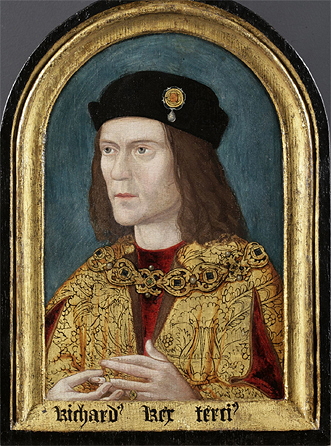
Richard III earliest surviving portrait. [Image courtesy: Wikipedia]

In a timely twist of history archeologists digging up a parking lot in Leicester have found the remains of  the Greyfriars Church that might be those of Richard, the last King of England to die on the battlefield. They have found a skeleton in the choir area (Richard was buried in the choir of Friars Minor at Leicester), that had a skull injury caused by a bladed implement, an arrowhead was found between its vertebrae and upper back, and it had spinal abnormalities.

“the individual would have had severe scoliosis – which is a form of spinal curvature. This would have made his right shoulder appear visibly higher than the left shoulder.” [University of Leicester Press Release : The Leicester Greyfriars Dig]


——————————————————————————-

Bonus Material:

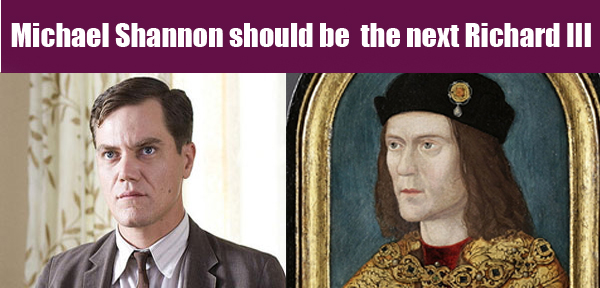
Not sure how many of you watch HBO’s Boardwalk Empire… but I couldn’t stop thinking how much Michael Shannon  (who plays messed up Treasury agent turned iron salesman Nelson Van Alden) looks like our boy Richard.  I think they ought to do a new film version of Richard cubed with Shannon in the lead. He certainly has the intensity to play the role.


Thought of the Day 10.19.12 Empress Myeongseong

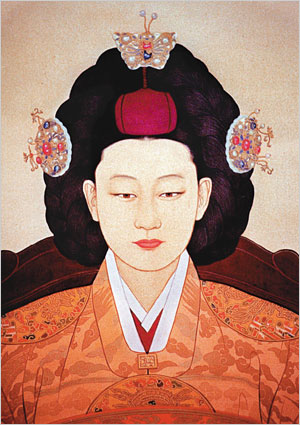
Queen Min was born on this day in Yeoju County, in the province of Gyeonggi Province, Korea in 1851. Today is the 161st anniversary of her birth.

Her name was not recorded at her birth. Neither was the name of her mother. Her father’s name was Min Chi-rok, and he was a member of the wealthy and influential Min family.

She was orphaned by the time she was 8-years old, which was actually something of a benefit to her in terms of marriage as when the future Emperor Gojong went looking for a wife (when he was 15-years old) the preference was for a girl without many relatives who would be seeking favor at court and be inclined toward corruption. [Mad Monarchist. blogspot.com]

She was smart, pretty, from a good family, healthy, appropriately educated (for a woman), and (most likely) fertile. So, at 16, after a lengthy vetting period she was married to 15-year-old King Gojong and became Queen Min.

Typically, queen consorts concerned themselves with setting fashions for the noble women of the realm, hosting tea parties, and gossiping. Queen Min, however, had no interest in these pastimes. Instead, she read widely on history, science, politics, philosophy, and religion, giving herself the kind of education ordinarily reserved for men. [Asian History/About.com]

Her father-in-law, Taewongun, the regent and puppet master over the young king, was having none of it. He moved to weaken her influence on the king by giving him a royal consort. While Queen Min had difficulty in conceiving, the consort soon produced a little boy. Taewongun said Queen Min was infertile, but the Queen had a baby of her own with in the year, again a boy. Sadly the little boy died after just four days. She claimed her father-in-law had poisoned the baby with ginseng, and vowed revenge.

She went to the council. Her husband was now 22, surely he was old enough to run the country on his own. He no longer needed a regent. The counsel agreed and Taewongun was sent away to his property in the country. (But it would not be the last Queen Min heard from him.)

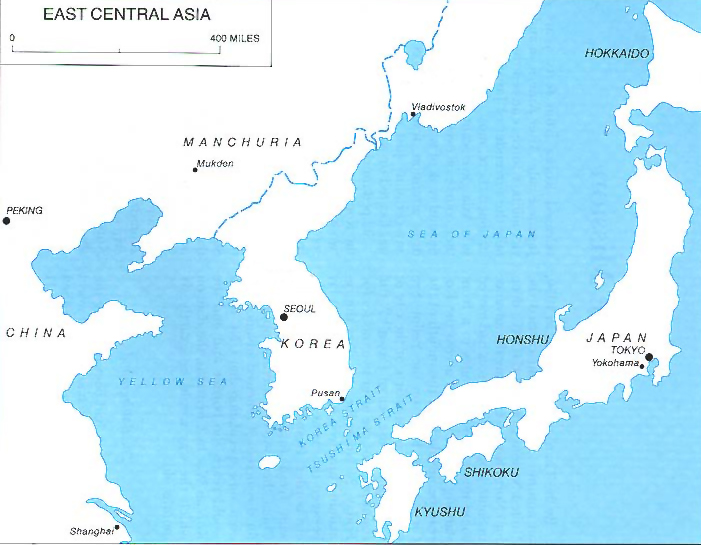
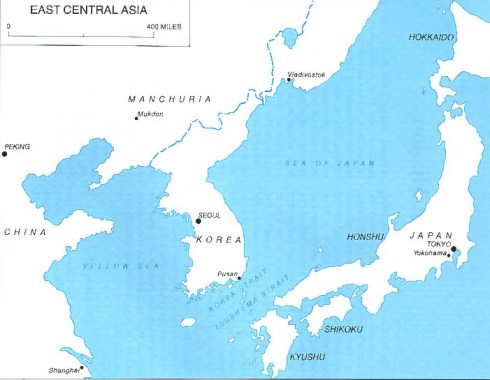
Traditionally Korea had been a tributary of Qing China, but when King Gojong took the throne Japan came seeking trade access and demanding tribute. Queen Lin encouraged the King to show strength and to send them packing. But in 1874 Japan came calling again. Although Queen Min counseled her husband to stand firm again and expel the dignitaries, he signed a trade treaty. When Japan sent a gunship, the Unyo, into restricted waters to ‘survey sea routes’ the Koreans fired on it. The ship retreated. But Japan retaliated when they…

sent a fleet of six naval vessels into Korean waters. Under the threat of force, Gojong once again folded rather than fighting back; Queen Min was unable to prevent this capitulation. The king’s representatives signed the Ganghwa Treaty. [Asian History/About.com]

According to the Ganghwa Treaty:

  • Japan had free access to some Korean ports and all Korean waters,
  • Japan gained special trading status
  • Japanese accused of crimes in Korea could only be tried under Japanese law – they were immune to local laws.

Koreans gained absolutely nothing from this treaty, which signaled the beginning of the end of Korean independence. Despite Queen Min’s best efforts, the Japanese would dominate Korea until 1945. [ibid]

Hwangwonsam: everyday clothes for queen/empress

Hwangwonsam: everyday clothes for queen/empress (Photo credit: Wikipedia)

The Queen commissioned fact finding missions to study Japanese westernization. It seemed that the Japanese had leap-frogged over Korea in their ability to Westernize. Where Seoul and Busan had been major commerce centers, they were now overshadowed by Tokyo and Osaka.  Korea needed to change with the times. The country and the military needed to modernize.

Queen Min knew Korea would have to tread carefully and she favored a plan by which Korea would continue to deal with Japan in order to modernize and, once that was sufficiently completed, would then ally with the United States or some other or more western powers to drive the Japanese influence out of Korea.  [Mad Monarchist. blogspot.com]

She reorganized the government, creating twelve new bureaus to handle foreign relations, commerce and update the military. In general she was determined to bring Korea into a more modern, technological age.
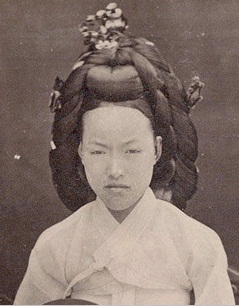
[Image courtesy: Wikipedia]

Needless to say all that modernization didn’t make the traditionalist very happy. In 1882 there was a rebellion seeking to over throw Queen Min and King Gojong and replace them with Gojong’s third brother. The Imo Incident was backed by their old nemesis (and Gojong’s father) Taewongun. “The uprising temporarily ousted Gojong and Min from the palace, returning the Taewongun to power.” [ibid] With the help of 4,500 Chinese soldiers the rebellion was foiled and the King and Queen were restored to power. The Japanese took advantage of the incident to strengthen their growing hold on the peninsula. They…

strong-armed Gojong into signing the Japan-Korea Treaty of 1882. Korea agreed to pay restitution for the Japanese lives and property lost in the Imo Incident, and also to allow Japanese troops into Seoul so that they could guard the Japanese Embassy. [Asian History/About.com]

The Queen countered by granting China access to ports that the Japanese were not privy to.  She also asked that Chinese and German officers to head up improvements in the army.

English: Purportedly a photo of Queen Min of K...

English: Purportedly a photo of Queen Min of Korea, from an old Japanese travel book. (Photo credit: Wikipedia)

In 1894 The Tonghak Rebellion — a week-long popular rebellion against taxes and foreign influence ended with China sending 2,500 troops (invited) and Japan sending 4,500 troops (uninvited) to help quell the insurrection. The peasants quickly went home. The troops remained.

On July 23, Japanese troops marched in to Seoul and captured King Gojong and Queen Min. On August 1, China and Japan declared war on one another, fighting for control of Korea. [ibid]

The Sino-Japanese War ensued. Although China sent 390,000 more troops to Korea, the better prepared and more modern Japanese Meiji military easily won. China withdrew leaving Korea and other Asian  allies to deal with the much stronger Japanese.

As many as 100,000 of Korea’s peasants had risen up late in 1894 to attack the Japanese as well, but they were slaughtered. Internationally, Korea was no longer a vassal state of the failing Qing; its ancient enemy, Japan, was now fully in charge. Queen Min was devastated. [ibid]

The queen did not give up she sent emissaries to Russia, hoping they would come to Korea’s aid.
The new caretaker government knew what she was up to. They aligned themselves with Taewongun  (her father-in-law). He had no love for the Japanese, but he saw this as a way to get rid of Queen Lin once and for all and he took it.

In 1895 Operation Fox Hunt was put into place.  A mixed group of Japanese and Korean assassins attacked Gyeongbokgung Palace. They found the King, but did not hurt him. They came upon the Queen’s sleeping quarters and dragged her out into the courtyard along with four of her attendants.

They brutally killed Queen Min, displayed her body to foreigners so there could be no doubt that she was dead, then took her outside the palace walls and burned her.

For two years Taewongun was in charge, but he lacked the desired “commitment…for modernizing Korea.” [ibid] and the Japanese ousted him.

Gojong took the throne back (with Russian support). He…

declared himself emperor of Korea. He also ordered a careful search of the woods where his queen’s body had been burned, which turned up a single finger bone. Emperor Gojong organized an elaborate funeral for this relic of his wife… The queen consort also received the posthumous title of Empress Myeongseong. [ibid]

The march of the National Funeral of the decea...

The power-struggle over the Korean peninsula continued with Russia and Japan  fighting the Russo-Japanese War in 1904-1905. Japan won again. In 1910 they formally annexed Korea. The country did not regain independence until after World War II.

Empress Myeongseong Shrine

Empress Myeongseong Shrine (Photo credit: jonwick04)


Thought of the Day 10.11.12 Eleanor Roosevelt

  [Eleanor Roosevelt is such a hero of mine, I’m thrilled to write this bio.]

“Great minds discuss ideas, average minds discuss events, small minds discuss people”

“Do what you feel in your heart to be right, for you’ll be criticized anyway.”

“No one can make you fell inferior without your consent.”

“Remember always: That you not only have the right to be an individual, you have an obligation to be one.”

“You must do the thing you think you can not do.”

–Eleanor Roosevelt

Eleanor Roosevelt at Waldorf Astoria Hotel in ...

Eleanor Roosevelt at Waldorf Astoria Hotel in New York City – NARA – 195324 (Photo credit: Wikipedia)

Anna Eleanor Roosevelt was born on this day in New York City, New York, USA in 1884. Today is the 128th anniversary of her birth.

She was the niece of one US president and the wife of another. She grew up with immense wealth and great personal sorrow. She was a quiet, shy child, so serious that she was nicknamed “Granny”. Her mother died when she was eight of diphtheria. Just months later both her brothers contracted Scarlet fever, one, Elliot, died. Her father died two years later.  Orphaned she went to live with her grandmother Mary Ludlow Hall. She was privately tutored until 15. Then she was sent to a finishing school near London, England called Allenswood. It was a progressive school where Eleanor was said to be studious but popular. At Allenswood she learned self-confidence.

“During her time at Allenswood, Roosevelt came out of her shell of childhood loneliness and isolation. She thrived both academically and emotionally. ” [New World Encyclopedia]

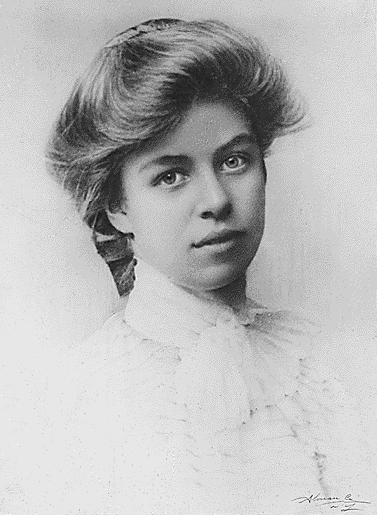
Eleanor in 1898 at school in England. [Image courtesy: New World Encyclopedia.]

Eleanor (she always preferred to be called by her middle name) was presented to society on December 14, 1902 at the Waldorf-Astoria hotel in New York City. As a young woman she volunteered with the New York Junior League and worked in the city’s slums. She taught dancing and calisthenics to children and was a member of the Consumers League (a group that investigated sweatshop conditions in the city.) It was a connection with the poor that she would continue through her life.

She met Franklin D. Roosevelt later that year. He was her fifth cousin, they got engaged in 1904 and married on St. Patrick’s Day of 1905. President Theodore Roosevelt gave away his niece.

When Franklin entered politics Eleanor became his partner in “it” as well. Her role shifted, “I simply knew that what we had to do we did, and that my job was to make it easy.”  During World War I she “threw herself into wartime relief.” She worked for the Red Cross and helped with Navy Relief. Her work was outside the scope of what she had done to promote her husband’s career, and, she later noted “I … gained certain assurance as to my ability to run things, and the knowledge that there is joy in accomplishing good.”  [The Eleanor Roosevelt Papers Project]

Franklin D. Roosevelt and Eleanor Roosevelt wi...

She had an infamously difficult relationship with her mother-in-law Sara Delano Roosevelt. Franklin was very attached to his mother and the lived in one of her houses. The tide turned when Franklin contracted Polio, Eleanor realized that she had to “stand on her own two feet in regards to her husband’s life, her own life and the rearing of her children. ” [Franklin d. Roosevelt Presidential Library and Museum]

Together she and Franklin had six children: Anna Eleanor, Jr. ; James (after Franklin’s father James); Franklin Delano, Jr (who died as an infant); Elliott (after Eleanor’s father); Franklin Delano, Jr (the second son named for Franklin); and John Aspinwall.

Franklin D. Roosevelt, Eleanor Roosevelt, Sara...

Franklin D. Roosevelt, Eleanor Roosevelt, Sara Delano Roosevelt, and Mr. and Mrs. James Roosevelt in New York City… – NARA – 197052 (Photo credit: Wikipedia)

Although Eleanor never sought elected office she was surely America’s FIRST LADY.

“While she neither drafted legislation nor held elective office, she worked with other reformers outside and inside the administration to shape the contours of the New Deal.” [Franklin d. Roosevelt Presidential Library and Museum]

She also wrote  a syndicated column “My Day” six days a week  from 1935 til her death. It was her bully pulpit for social issues.

English: Franklin D. Roosevelt Presidential Li...

After Franklin’s death she was

“…Selected to be a delegate to the United Nations General Assembly, serving from 1945 to 1953. She also became the chair of the UN’s Human Rights Commission. As a part of this commission, she helped to write the Universal Declaration of Human Rights.” [Biography]

English: Former U.S. First Lady Eleanor Roosev...

English: Former U.S. First Lady Eleanor Roosevelt with the English version of the United Nations Universal Declaration of Human Rights Italiano: Mrs. Eleanor Roosevelt, moglie del presidente degli Stati Uniti, mostra la Dichiarazione in formato poster (1949) (Photo credit: Wikipedia)

She wrote about her experiences in 1937’s This Is My Story;  1949’s  This I Remember;  1958’s On My Own; and 1961’s Autobiography.

President Kennedy asked her to serve as chair of the Commission on the Status of Women and made her delegate to the UN in 1961.

Eleanor Roosevelt


Thought of the Day 9.21.12 Henry Tingle Wilde

“I still don’t like this ship . . . I have a queer feeling about it.”

–Henry Tingle Wilde

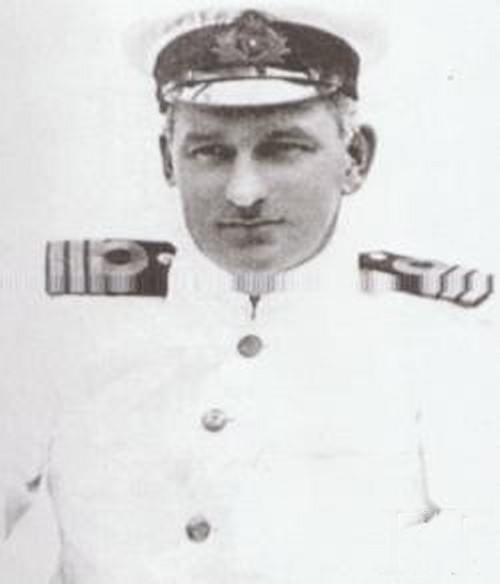
Henry Tingle Wilde, Jr was the Chief Officer of the Titanic. [Image courtesy: Wikipedia]

Henry Tingle Wilde was born on this day in Walton, Liverpool, England in 1872. Today is the 140th anniversary of his birth.

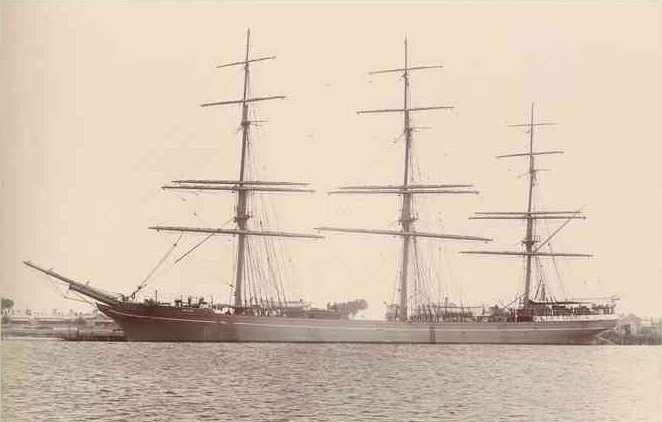
Wilde was drawn to the sea at an early age. At 17 he left his home for an apprenticeship on the iron sailing ship the Greystoke Castle — a three mast, square sail vessel– as a third mate. He served on the Greystoke’s sister ship the Hornby Castle, also as third mate. He was posted to the steamships the S.S. Brunswick and the S.S. Europa before joining the White Star Line in 1897. He was a Lieutenant in the Royal Naval Reserve, and held ordinary and extra masters certificates.

The Hornby Castle, a sailing ship that Wilde trained on. He worked on both sail and steam vessels.  [Image Courtesy Wreck Site]

Starting in 1905 he transferred to the White Star passenger line, working mostly on the Liverpool to New York, and Australian routes. He rose in the ranks aboard The Arabic, The Covic, The Cufic, The Tauric, the Celtic, the Medic, The Delphic, the Cymric and The Olympic until he reached the rank of Chief Officer under Captain Edward John Smith on The Olympic.

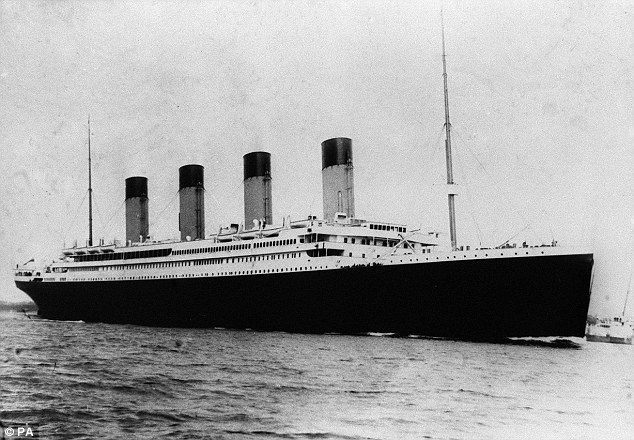
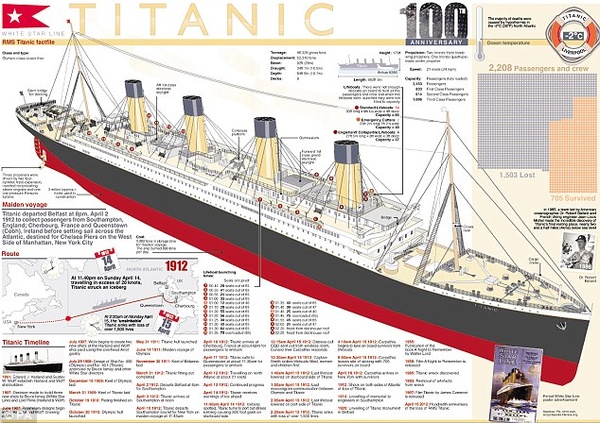
The Titanic [Image courtesy: Mail Online]

Smith transferred to the White Star’s newest vessel, The Titanic as her Captain. Wilde was due to ship out with The Olympicbut White Star officials sent word for him to stay in Southampton and await further orders. At 39 and with years of experience he was certainly seasoned enough to get his own ship. But Captain Smith wanted to add experience to his senior staff and he requested that Wilde join the crew as Chief Officer. Wilde debated the move. His family urged him to take the position, but, as he wrote in a letter to his sister…

“I still don’t like this ship…I have a queer feeling about it…” [Henry Tingle Wilde, Chief Officer by Christine Ehren, Titanic-lore.info]

He officially joined The Titanic crew on April 9th, the day before she sailed. The post was for the great ship’s maiden voyage only. And it meant that the other senior officers would be shifted down in rank. William Murdoch became first officer, Charles Lightoller became second officer. The man originally slated to be second officer, David Blair, did not make the journey. The junior officers retained their positions.

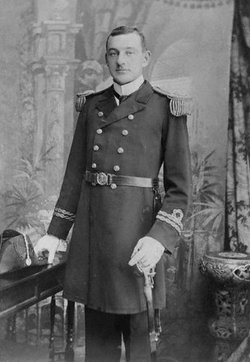
Henry Tingle Wilde in his summer white uniform, that he wore on the Olympia. [Image courtesy: Encyclopedia Titanica]

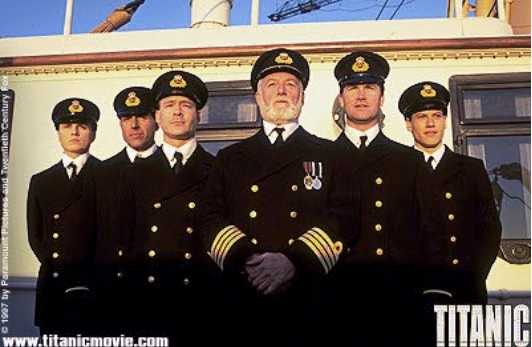
Publicity still from the Movie Titanic. Mark Lindsay Chapman, third from the left, plays Chief Officer Henry Tingle. He stands just to the left of Bernard Hill who is playing Captain Smith. [Image courtesy: William Murdoch.org]


The Titanicleft Southampton, England on April 10th, 1912 with stops at Cherbourg, France and Queenstown, Ireland before heading west across the Atlantic toward New York. Wilde had the 2-6 AM and the 2-6 PM shifts as “Officer of the Watch.” So he was not on the bridge when the ship hit an iceberg at 11:40 PM on April 14th.

Wilde was in charge of the loading the even-numbered lifeboats on the port side of the ship. (He also distributed firearms to the senior officers.) He adhered strictly to Captain Smith’s order to “put women and children in and lower away…” so the boats from that side of the ship only contained women, children and two crew members (to work the boats). When all the boats on his side of the ship were launched he went to starboard side of the ship. Some survivors recall seeing him attempting to release Boat A or B from the roof the Officers’ Quarters when the Titanic’s deck flooded.

Schematic of Titanic. [Image courtesy: Mail Online]

Survivor George Rheims wrote in a letter dated just days after the sinking:

“While the last boat was leaving, I saw an officer with a revolver fire a shot and kill a man who was trying to climb into it. As there remained nothing else for him to, the officer told us, “Gentlemen, each man for himself. Good bye.” He gave a military salute and then fired a bullet into his head. That’s what I call a man!” [Henry Tingle Wilde, Chief Officer by Christine Ehren, Titanic-lore.info]

But it isn’t known if that officer was Wilde or First Officer Murdoch. It doesn’t matter. If he didn’t die of a self-inflicted gunshot wound he died a few minutes later in the freezing waters of the North Atlantic. His body was never found. He was 39 years old.

In 1998 the newspaper Liverpool Echo wrote about Wilde’s role on the Titanic as follows:

Liverpool’s forgotten hero, Chief Officer Henry Wilde… from Walton, flits through the enquiry evidence but witnesses have described how Wilde supervised the loading of the lifeboats and stopped 100 people rushing them by the sheer force of his personality….He is believed to have prevented a panic which would have led to even greater losses. [Henry Tingle Wilde, Chief Officer by Christine Ehren, Titanic-lore.info]

 He was survived by four children (he had recently lost his wife and twin boys.)

——————————–

Thanks to J.G.Burnette at jgburdette.wordpress.com for suggesting Henry Wilde as the Thought of the Day Birthday Bio for today. J.G. is a big Titanic fan and was able to give me both the name and birthdate so I could start my research.–I hope I found some new nugget for your Titanic files! — IF YOU have some one you’d like to see profiled on Thought of the Day please let me know. Cheers, Rita


Thought of the Day 9.20.12 Elizabeth Kenny

“He who angers you conquers you.”

–Elizabeth Kenny

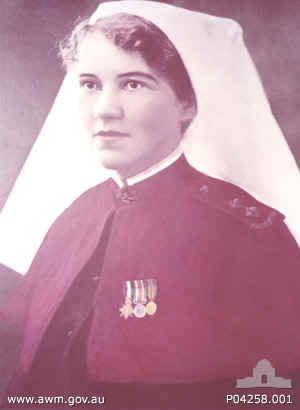
“Sister” Kenny [Image courtesy: Australian War Memorial; AWM.Gov.au]

Elizabeth Kenny was born on this day in Warialda, New South Wales, Australia in 1880. Today is the 132nd anniversary of her birth.

Because her father was an itinerant farmer the family moved often when Elizabeth was growing up. Her education was limited to home-schooling and a variety of small town primary schools. When she was 17 she fell off her horse and broke her wrist. Her father, Michael, took her to the town of  Toowoomba to see Dr. Aeneas McDonnell. Kenny remained in Toowoomba to recover from the injury and grew fascinated with Dr. McDonnell’s medical books, especially those on anatomy, and his model skeleton. It started Kenny on her life long journey in medicine. She made her own model skeleton to study how muscles and bone worked together in the human body.

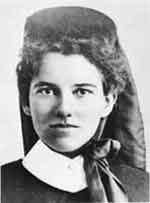
Elizabeth Kenny as a young woman. [Image courtesy: Minnesota Public Radio.org]

At 18 she became an unaccredited,  unpaid bush nurse. She later (probably) volunteered at the maternity hospital at Guyra in New South Wales.

There is no official record of formal training or registration as a nurse. She probably learned by voluntary assistance at a small maternity hospital at Guyra, New South Wales. About 1910 Kenny was a self-appointed nurse, working from the family home at Nobby on the Darling Downs, riding on horseback to give her services, without pay, to any who called her. [Elizabeth Kenny, by Ross Patrick, Australian Dictionary of Biography]

Kenny opened St. Canice’s Cottage Hospital in Clifton. She kept in contact with Dr. McDonnell and would often telegraph him when a case stymied her.

In 1911 one such case presented itself. She contacted McDonnell about a new case that stymied her.. a young girl who was crippled, but not from a fall or external trauma. McDonnell replied that it was probably “It sounds like Infantile Paralysis.  There’s no known treatment, so do the best you can.” [Sister Elizabeth Kenny. Australians Documentary Series. 1998. from Teachspace.org] Kenny used a common sense approach. She applied hot compresses to the little girl’s spasming muscles. Hot, heavy woolen blankets were applied that help loosen the muscles and relieve the pain. Then she stretched the little girls legs and strengthened the muscles. It worked. The pain abated, the girl (allegedly) asked “Please, I want them rags that well my leg.”

Of the twenty children in the district, the six that Kenny treated survived without complications. [Sister Elizabeth Kenny. Australians Documentary Series. 1998. from Teachspace.org]

With the outbreak of World War I Kenny, with a letter of recommendation from Dr. McDonnell, joined the Australian Medical Corps. She worked on hospital ships bringing the wounded home from Europe. She was received a shrapnel wound to the leg while at the front.

She patented her invention of a stretcher that immobilized shock patients during transport, the Sylvia Stretcher, and used the royalties  open a clinic for polio patients in Townsville, Queensland. Here she treated long-term polio and cerebral palsy patients, tossing aside the braces and concentrating on hot baths, passive movements and foments.

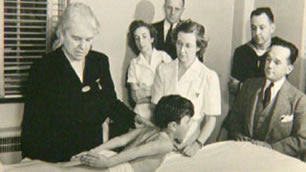
Sister Kenny works with a young patient as other doctors, nurses and physiotherapist observe. [Image courtesy: Sister Elizabeth Kenny: Medical Pioneer]

Her “homespun” methods for polio treatment, though effective, were controversial as the  accepted practice was to splint the affected limbs to keep them rigid. That way the stronger muscles wouldn’t pull on the weaker/paralyzed muscles and create deformities. Kenny thought that splinting the limbs would actually produce deformities and increase paralysis. She alternately dismissed, ridiculed or vilified by the medical establishment. Kenny soldiered on, buoyed by the support of parents who witnessed first hand the results her methods were having on their children. Kenny opened clinics in Brisbane and through out Queensland.

The controversy over her methods followed her to England  and the US. Kenny worked in the Minneapolis General Hospital where…

Her methods became widely accepted. She began courses for doctors and physiotherapists from many parts of the world. The Sister Kenny Institute was built in Minneapolis in 1942 and other Kenny clinics were established. [Elizabeth Kenny, by Ross Patrick, Australian Dictionary of Biography]

Kenny in 1950. {Image courtesy: Wikipedia]

She developed Parkinson’s disease and retired to Toowoomba in 1951. Kenny died there of cerebrovascular disease on 30 November 1952.

Sister Kenny’s pioneering principles of muscle rehabilitation became the foundation of physical therapy. Today, Sister Kenny Rehabilitation Services is one of the premier rehabilitation centers in the country, known for its progressive and innovative vision. [Nurses for nurse everywhere.info]


Thought of the Day 9.16.12 Henry V

“Once more unto the breach, dear friends, once more;
Or close the wall with our English dead.”
― William ShakespeareHenry V

Henry the Fifth of England was born in the tower above Monmouth Castle in Wales on this day in 1386. Today is the 626th anniversary of his birth.

Illustration of Henry V from Cassell’s History of England [Image Courtesy: Wiki Commons]

Henry’s birthday was not officially recorded but it is believed to be either September 16 or August 9, and in either 1386 or 1387. He was born into one of the most important families in England. As such, he had the best education and upbringing available at the time. He learned to ride, fight and hunt. In the class room he learned history, literature, and music (he could play the harp) and he could speak English, French and Latin fluently. Because he was born in Monmouth Castle he was referred to as Henry Monmouth during his early life.

His grandfather, John of Gaunt was the son of Edward III, his parents were Henry Bolingbroke, the Earl of Derby and Mary Bonhun. At the time of Monmouth’s birth Richard II sat on the English throne. John of Gaunt, the King’s uncle, was an ardent support, Bolingbroke had a less steadfast relationship with the King. Although the two had been childhood friends Bolingbroke took part in the Lords Appellant’s rebellion against Richard in 1387. Richard forgave him and even promoted him to Duke of Hereford. But in 1397…

“Henry Bolingbroke reported treasonous comments made by the Duke of Norfolk; a court was convened but, as it was one Duke’s word against another, trial by battle was arranged. It never took place. Instead, Richard II intervened in 1398 by exiling Bolingbroke for ten years…
[Henry V, of England by Robert Wilde, About.com Guide]

At that time Richard “invited” 12-year-old Henry Monmouth to be his “guest” at court. Essentially Monmouth was a hostage. If  the father returned to England to cause any trouble, the son would be forfeit. Things were not so grim in the Royal castle, however, Richard treated Monmouth kindly. The two became friends. The King even knighted Monmouth.

But in 1399 Monmouth’s grandfather, John of Gaunt died. Instead of Bolingbroke automatically inheriting his father’s lands Richard II “kept them for himself and extended Bolingbroke’s exile to life. ”

In 1399, whilst Richard was in Ireland, Henry of Bolingbroke returned to claim his father’s inheritance. … Henry captured and deposed Richard. Bolingbroke was crowned King as Henry IV. [The Official website of The British Monarchy]

Richard was thrown in jail, and, on October 13th 1399 Henry Bolingbroke became Henry the Fourth of England, his son, was named

“heir to the throne, Prince of Wales, Duke of Cornwall and Earl of Chester. Two months later he was given the further titles Duke of Lancaster and Duke of Aquitaine.” [Henry V, of England by Robert Wilde, About.com Guide]

Detail of miniature of Henry, Prince of Wales, receiving a book from Thomas Hoccleve. [Image Courtesy: Wiki Commons]

So… Henry  Monmouth becomes Prince Hal. He was at his father’s side in battle at the Battle of Shrewsbury. He also fought bravely (and effectively) in Wales, Scotland and France. As his father’s health began to fail the Prince took on more and more responsiblity at court. He became a  major political player. Shakespeare’s portrayal of him laughing it up with Falstaff was more dramatic fiction than historic truth.

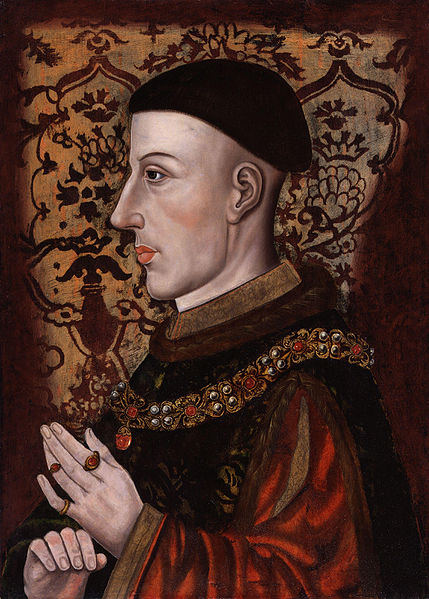
Henry as King. [Image Courtesy: Wiki Commons]

He ascended to the throne upon his father’s death on March 21st, 1413 and was crowned Henry V on April 9th. He transferred the remains of Richard II — who died of starvation in Pontefract Castle tower  to Winchester Cathedral and gave him an honorable burial. He prepared the nation for a war with France. He straighten out the royal finances by editing royal budgets. He decreed that all government documents be written in English. He  tackled the lawless no-man’s-lands and reduced the number of roving bandits (mostly by funneling them into the army.) He crushed the religiously “deviant” Lollards. And he united the people — noble and common alike — behind him.

Kenneth Branagh as Henry V [Image Courtesy: Renaissance Films PLC 1989]

“And Crispin Crispian shall ne’er go by,
From this day to the ending of the world,
But we in it shall be remembered-
We few, we happy few, we band of brothers;
For he to-day that sheds his blood with me
Shall be my brother”
― William ShakespeareHenry V

“In August 1415, after dealing with a conspiracy to remove him from the throne, he led an army of 20,000 foot soldiers and 9,000 horsemen to attack Harfleur and, after sending a large part of his army home due to illness, marched to Calais to secure a base for further operations. On the way, unable to avoid a vastly superior French army, he gave battle at Agincourt on Oct. 25, 1415, gaining a great victory and capturing the constable of France and the Duke of Orléans.” [Henry V Biography, Your Dictionary.com]

In May 1420 the Treaty of Troyes was signed. Under the treaty  Charles VI remained King of France, Henry married his daughter Katherine, was named heir, and ruled the country in all but name.
Alas, Henry took ill in 1422 while laying siege to one of the last French hold outs.  He lingered for three weeks before dying at Vincennes on August 31st.  He was 35 years old.
“I see you stand like greyhounds in the slips,
Straining upon the start. The game’s afoot;
Follow your spirit: and upon this charge,
Cry — God for Harry! England and Saint George!”
― William ShakespeareHenry V

Thought of the Day 9.15.12 Marco Polo

“I have not told half of what I saw.”

–Marco Polo

Marco Polo was born on this day in Venice, Italy in 1254. It is the 758th anniversary of his birth.

Marco Polo followed in the footsteps of his explorer father, Niccolo, and uncle, Matteo and traveled with them from Europe to the East. Niccolo and Matteo were on their first trip East when Marco was born. The elder Polos made it as far east as Kkublai Khan’s capital Kaifeng in the Mongol Empire. When they returned to Italy they found out that Marco’s mother, Niccolo’s wife, had died. Marco, then 15,  joined the explorers and in 1271 they set off again.

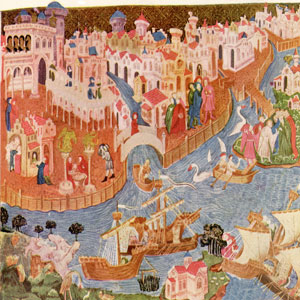
14th-century print showing the Polos leaving Venice at the beginning of their journey [Image Courtesy Hutton Archive/Getty Image / How Stuff Works]

This time they met the Great Khan himself in his summer capital of Xanadu. Khan liked the Polos, and took a special interest in the lively,  20 year-old Marco who he

conscripted him into service for the Empire. Marco served in several high-level government positions, including as ambassador and as the governor of the city of Yangzhou. [Biography of Marco Polo by Matt Rosenberg, About.Com Guide]

The Polos stayed in the diplomatic service of the Khan,  exploring the Empire for 17 years. In 1292, charged by Khan to escort a 17-year-old princess to Persia to wed a King, the Polos led an armada of 14 ships and 600 passengers that departed Sumatra and travelled to Indonesia, Sri Lanka, India through the Strait of Hormuz to Persia. The trip took 2 years.

Supposedly, only eighteen people survived from the original 600, including the Princess who could not wed her intended fiancée because he had died, so she married his son instead. [Biography of Marco Polo by Matt Rosenberg, About.Com Guide]

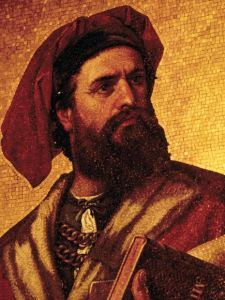
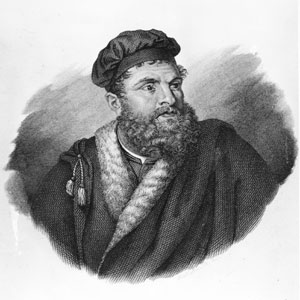
Polo would have been about 40 when he returned home from the East. [Image Courtesy: Hutton Archive/Getty Images; How Stuff Works]

The Polos went back to Venice. Marco became involved in the Italian wars between the city-states of Venice and Genoa, and was captured. While in prison he met Rustichello da Pisa . To pass the time he shared the stories of his far East travels with Rustichello who wrote them down. When they were released they worked together to publish The Travels of Marco Polo.

Polo told tales of fabulous Asian courts, black stones that would catch on fire (coal), and Chinese money made out of paper. [Biography of Marco Polo by Kallie Szczepanski, About.com Guide]

The book was an exaggerated telling of Polo’s actual adventures. Perhaps Marco hyped up the adventure to make for a more interesting tale in the dark days of prison, or maybe Rustichel loaded  it with danger and cannibals to increase sales. Regardless of how it happened, the book was an enormous hit. It was translated into most of the European languages and sold thousands of copies during Polo’s life time.

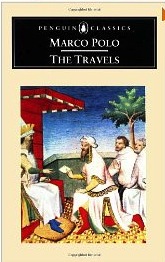
Cover of The Travels of Marco Polo, the paperback edition. The book has been in continuous publication (in one for or another) for 712 years. [ Image courtesy: Amazon.com]

The accounts of his travels provide a fascinating glimpse of the different societies he encountered: their religions, customs, ceremonies and way of life; on the spices and silks of the East; on precious gems, exotic vegetation and wild beasts. He tells the story of the holy shoemaker, the wicked caliph and the three kings, among a great many others, evoking a remote and long-vanished world with colour and immediacy. [Amazon.com]

The book heightened Europe’s desire to explore the world. Christopher Columbus owned a copy of it.

Marco lived out his days in Venice as a merchant. He married the daughter of another successful merchant and they had three daughters. He prefered to stay in Italy, letting others travel for the supplies that he sold.

As Polo neared death in 1324, he was asked to recant what he had written and simply said that he had not even told half of what he had witnessed. [Biography of Marco Polo by Matt Rosenberg, About.Com Guide]

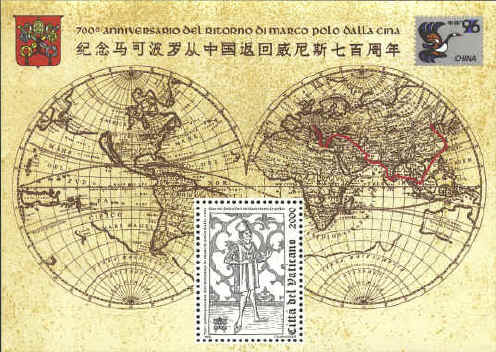
The Polo’s route outlined in red [Image Courtesy: Tropical Stamps]