Monthly Archives: September 2012

Thought of the Day 9.8.12 Patsy Cline

“Here’s to those who wish us well and those who don’t can go to hell”

–Patsy Cline

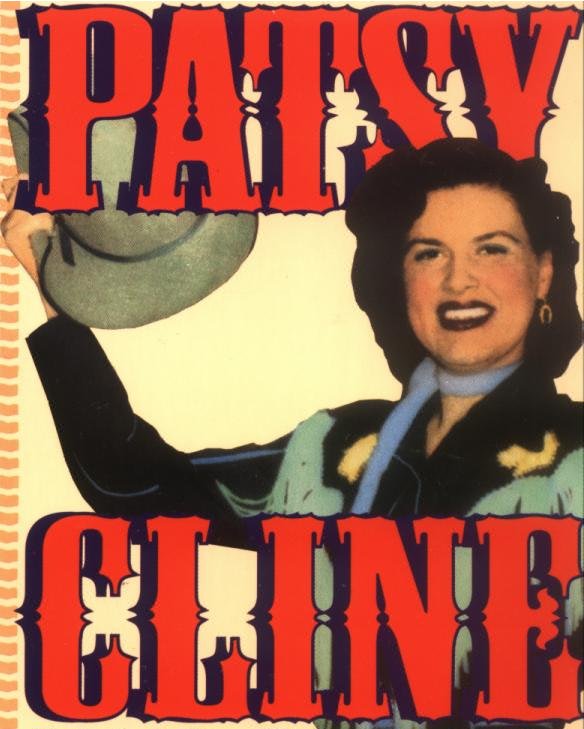
Patsy Cline early in her career. [Image courtesy: Patsy Cline, A Fan’s Tribute]

Virginia Patterson Hensley was born on this day in Winchester, Virginia in 1932. It is the 80th anniversary of her birth.

At 4 she won a dance contest for tap dancing. Her mother gave her a piano for her 8th birthday and Patsy taught herself to play.  She sang with her church choir and at 14 was a regular on WINC Radio. At 15 her parents divorced and Patsy sang in clubs at night and worked in a drug store during the day to help pay the bills.

She married Gerald Cline in 1952 and continued to sing in clubs as well as with Bill Peer’s Melody Playboys in Maryland and as a regular on “Town and Country Jamboree” on a radio station out of Washington DC. She got a recording contract with Four Star Records in 1954 and she won first place on the TV variety show “Talent Scouts” with Arthur Godfrey where she sang “Walkin’ After Midnight.” The song became a hit and on both the country and pop charts.

Cline made her debut on the stage of the Grad Old Opry in 1960 and continued her rise to stardom with her second hit “I Fall to Pieces.” She is also known for her songs “Sweet Dreams,” “Crazy” and “She’s Got You.”

A country music legend, Patsy Cline helped break down the gender barrier in this musical genre. [Patsy Cline. biography profile, bio.TRUE STORY]

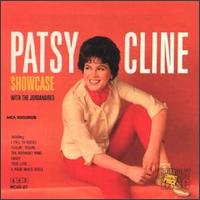
[This is one of the Patsy Cline albums that was in my parent’s record collection. Image courtesy: Decca Records]

She helped  the careers of other up and coming female singers, especially Loretta Lynn.

Cline died in a plane crash returning from a benefit concert in 1963.

In 1973 she was the first female soloist to be honored in the Country Music Hall of Fame.

[Image courtesy: blog.zap2it.com]


Thought of the Day 9.7.12 Elizabeth R.

“I may not be a lion, but I am a lion’s cub, and I have a lion’s heart.”

–Elizabeth I of England

[In honoring QUEEN ELIZABETH REGINA GLORIANA’s birthday I decided to concentrate on her time before she took the throne. Frankly this blog would be enormous if I chronicled her entire life — the post is pretty long as is — and I opted to retell the earlier, slightly less well-known, period. I hope I’ve given you enough to whet your whistle and have no doubt that you’ll be able to find tons of additional material on her life either on-line and at your local library or book store.]
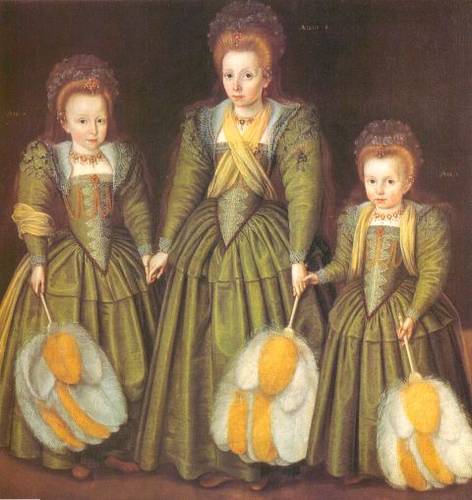
Seventeenth century painting by an unknown artist depicts the later Queen Elizabeth I of England as a (left to right) five-year-old, six-year-old, and three-year-old. The dress is anachronistic. (Image courtesy of: Wikipedia).

Elizabeth Tudor was born on this day in Greenwich Palace, England in 1533. Today is the 479th anniversary of her birth.

She was the daughter of King Henry the VIII of England and his second wife, Anne Boleyn. Henry had divorced his first wife, Katherine of Aragon — with whom he already had one daughter, Mary — and invented a new religion — the Church of England — in order to marry Boleyn. He had great hopes that she would provide him with a male heir. When their only living offspring was a girl, Henry grew disenchanted with Boleyn. His eye soon wandered to pretty (and more docile) Jane Seymour.  But, fearing what would become of herself and Elizabeth, Boleyn refused to divorce the King. On May 19, 1536, Anne Boleyn was executed on charges of treason, incest and adultery.  The marriage was nullified and Elizabeth, like Mary, was declared illegitimate.

Henry, ever the charmer, married four more times before he died. Wife number three, Jane Seymour managed to give Henry his male heir, Prince Edward, but she died nine days later. Elizabeth was seven when her father married Anne of Cleves for political reasons. Henry found her German manners ill-suited  for the English Court, and her face ill-suited for his taste.  Wife number 5 was Catherine Howard, a cousin of Anne Boleyn, and like Boleyn she was arrested for treason and adultery and was beheaded. Unlike Elizabeth’s mother, Catherine was guilty as charged.

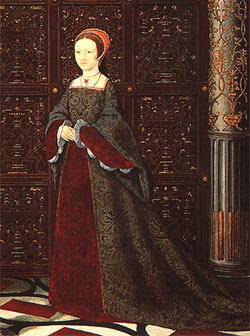
Princess Elizabeth, c. 1543-1547.
‘The Family of Henry VIII’, detail.
Anon. Hampton Court Palace. © The Royal Collection.    (Image courtesy: the Faces of Elizabeth I)

Elizabeth was a precocious ten-year old when Henry married his last wife, Catherine Parr. Catherine brought all of Henry’s children back to court. She was Elizabeth’s ‘second mother’ and she saw to it that the girl was well-educated in the Greek and Latin. By the time she was queen Elizabeth could speak five languages fluently.

Perhaps Catherine‘s most significant achievement was Henry‘s passing of an act that confirmed both Princess Mary‘s and Elizabeth‘s line in succession for the throne, despite the fact that they had both been made illegitimate by divorce or remarriage. [Tudorplace.com]

At Henry’s death in 1547 the throne went to Edward, with Mary and then Elizabeth next in line. Elizabeth lived with Catherine at Whitehall in Chelsea. Catherine  and Admiral Thomas Seymour (Jane Seymour’s brother) married just four months after Henry’s death. Thomas, Catherine and 14-year-old Elizabeth moved to Sudeley Castle.

Thomas was reported to have paid morning visits to Elizabeth, in her bedchamber…There was romping, laughing and giggling… no one knows how far these romps went… [Elizabethan Era Index]

Although Catherine and the servants were present during such tom foolery and “Elizabeth denied any scandal or bad behaviour” she left  Sudeley. No ill will seemed to fall between her and Catherine and they wrote to each other affectionately after her departure. But Thomas wasn’t through with the princess yet. After Catherine’s death in childbirth he applied to become Elizabeth’s suitor. He was rejected. He continued to plot for power, even attempting to kidnap the King, and was arrested for treason. And, because of their former friendship, the Princess was implicated . Despite serious interrogation the 15-year-old maintained her innocence.

In 1553 Edward died of tuberculosis. Edward named his cousin, Lady Jane Grey as his heir. Unlike his sisters, Jane had the advantage of being legitimate and the support of the manipulative Lord Protector John Dudley. Unfortunately for her it wasn’t enough. Elizabeth was smart enough to steer clear of Dudley’s power play. She feigned sickness,  kept to her bed, and away from the palace, as the drama played out. Mary took her rightful throne and Elizabeth kept her head. After a brief stay in Queen Mary’s court Elizabeth retreated to Hatfield.

When news of Queen Mary’s intended marriage to King Philip II of Spain surfaced in 1553 protestants in England worried that he’d bring the Spanish Inquisition with him. Nobles who had supported Dudley and Jane Grey now hatched the Wyatt Rebellion. Wyatt implicated Elizabeth in the rebellion by sending her a letter about it before hand. The conspirators wished to make her queen once Mary was dethroned. Elizabeth never got the letter — it was intercepted by Mary’s government agents. The rebellion failed, Wyatt was sentenced to be hung, drawn and quartered. Elizabeth was summed to London for questioning. She asked to see her sister, but was denied. She was allowed to write to Mary and sent her a long letter protesting her innocence and loyalty (and wisely drawling lines through the unused parts of the paper so no forged additions could be made.) She was sent to the Tower of London, and made to enter through the Traitor’s Gate where she said:

“Here landeth as true a subject, being prisoner, as ever landed at these stairs. Before Thee, O God, do I speak it, having no other friend but Thee alone. Oh Lord, I never thought to have come in here as a prisoner, and I pray you all bear me witness that I come in as no traitor but as true a woman to the Queen’s Majesty as any as is now living.” [Elizabeth I from Elizabethan Era Index]

She lived in fear the entire time she was locked up, and was in real danger of being killed when a warrant for her execution came to Bell Tower. But the warrant lacked Mary’s signature and Sir John Brydges, the Lieutenant of the Tower refused to carry out the order unless it was complete.
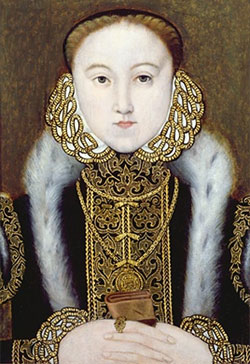
Elizabeth I as Princess, c.1555.
Artist Unknown. Private Collection. (Image Courtesy: The Faces of Elizabeth I)

After two long months Elizabeth was released  on May 19, 1554. Phillip, it seems, was wise enough to know that the English would harbor some ill will over the execution of their beloved Princess, and that that ill will would be turned toward him.

He advised Mary to release Elizabeth from the Tower. And Mary, who was besotted with Phillip, obeyed…. Elizabeth was released… but was … placed under the equivalent of house arrest at the palace at Woodstock. [Elizabeth I from Elizabethan Era Index]

She was under constant surveillance at Woodstock. Her writing materials were restricted, her books censored,  and activities limited. After almost a year in the virtual prison at Woodstock Elizabeth was freed. She traveled, under heavy guard, to Hampton Court where she was allowed to meet with Phillip. He was instrumental in a reconciliation between the sisters (frosty though it may be). He would rather have Elizabeth next in line to the English throne than Mary Queen of Scotts — who supported his enemy France.
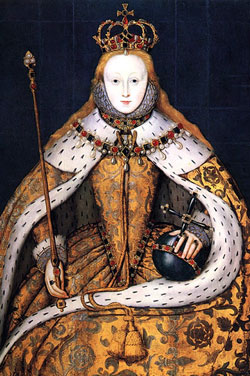
The Coronation Portrait, c. 1600.
Copy of 1559 lost original.
Artist Unknown.
Previously attr. to William Stretes. © National Portrait Gallery.
(Image courtesy: The Faces of Elizabeth I)

Elizabeth went home to Hatfield. On November 17th 1558 Mary died and Elizabeth became Queen of England. She was crowned on Sunday January 15th 1559. She died on March 24th 1603 having ruled for 45 years.

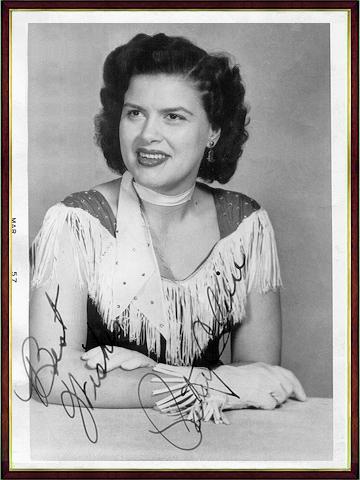
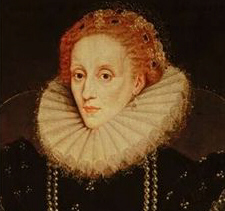
Elizabeth in later life. (Image courtesy: Elizabeth I Biography.)


Thought of the Day 9.16.12 Lauren Bacall

“You know how to whistle, don’t you, Steve? You just put your lips together and blow.”

— Lauren Bacall

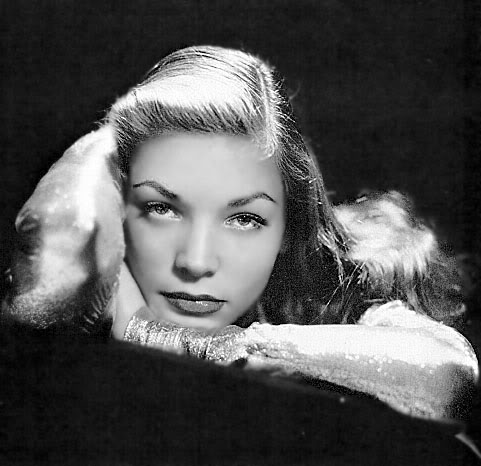
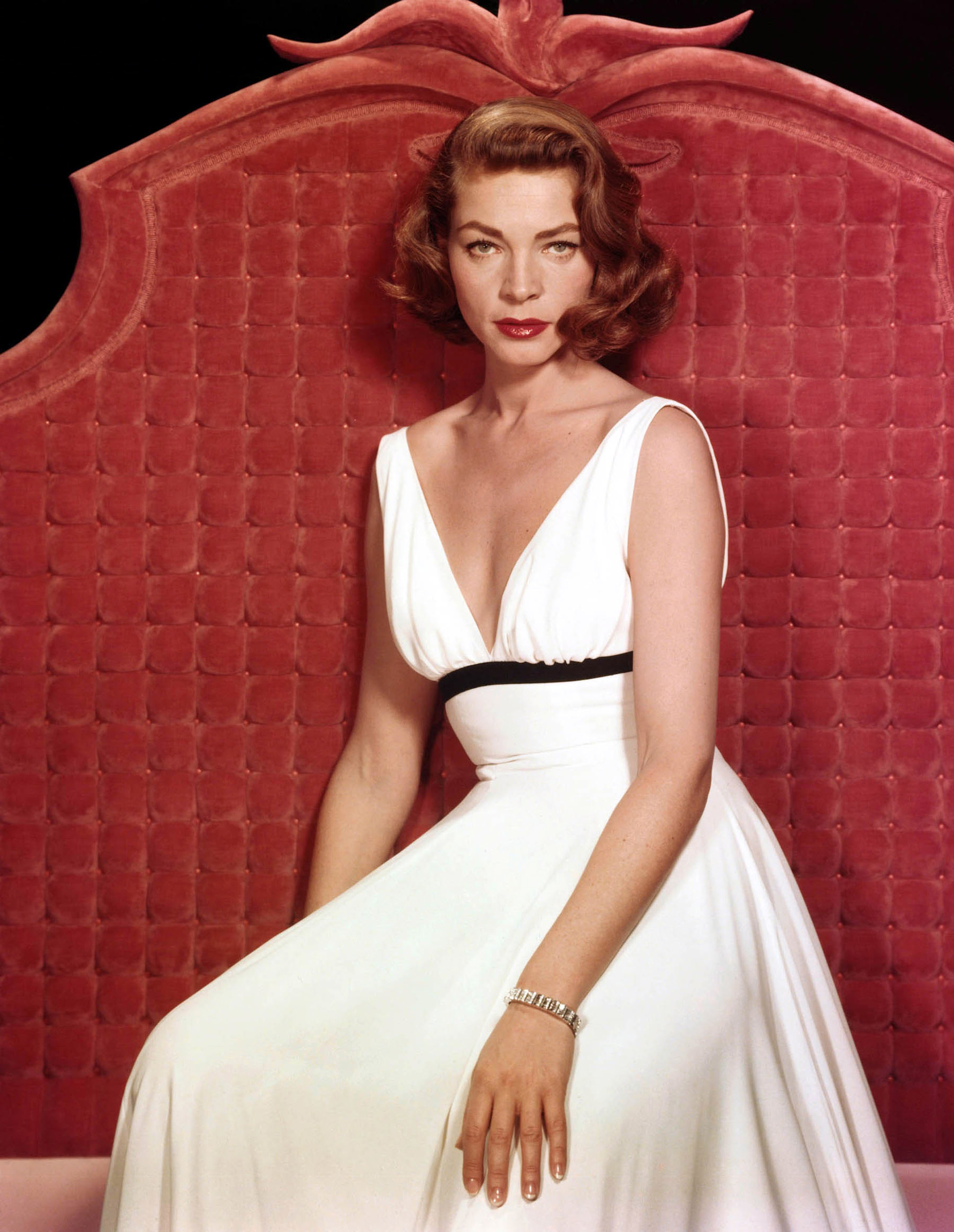
(Photo courtesy: Tweedland)

Betty Joan Perske was born on this day in the Bronx, New York in 1924. She is 88 years old.

She grew up in a middle class family. Her father, William Perske, was a salesman and her mother, Natalie Weinstein-Bacal Perske, was a secretary. Betty’s father, an alcoholic, left when she was six. Her mother changed their last name to Bacall. (The Romanian form of her mother’s maiden name.)

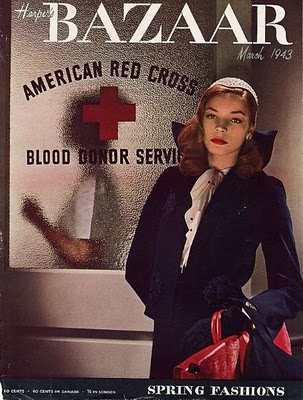
Bacall loved to dance but was smitten by the acting bug too. She studied at the American Academy of Dramatic Arts in New York. And got some work in off-Broadway productions. She had her first paid acting gig in Johnny 2×4 it was a walk on role, she was 17. She ushered at theatres to make money. She also modeled and it was a modeling gig on a Harper’s Bazaar cover in 1943 that brought her to the attention of director Howard Hawks’ wife Nancy. Nancy convinced Hawks to give Bacall a screen test. Hawks liked what he saw. He offered her a seven-year contract starting at $100 a week.  He  got her to modulate her voice (so she spoke in a lower, more sultry, register) and to  her to change her first name to Lauren. Nancy Hawks befriended Bacall and helped her with matters of dress “elegance, manner, and taste.” [ Original Old Radio ]

The Harper’s Bazaar cover that started it all. (Image courtesy Noir and Chick Flicks)

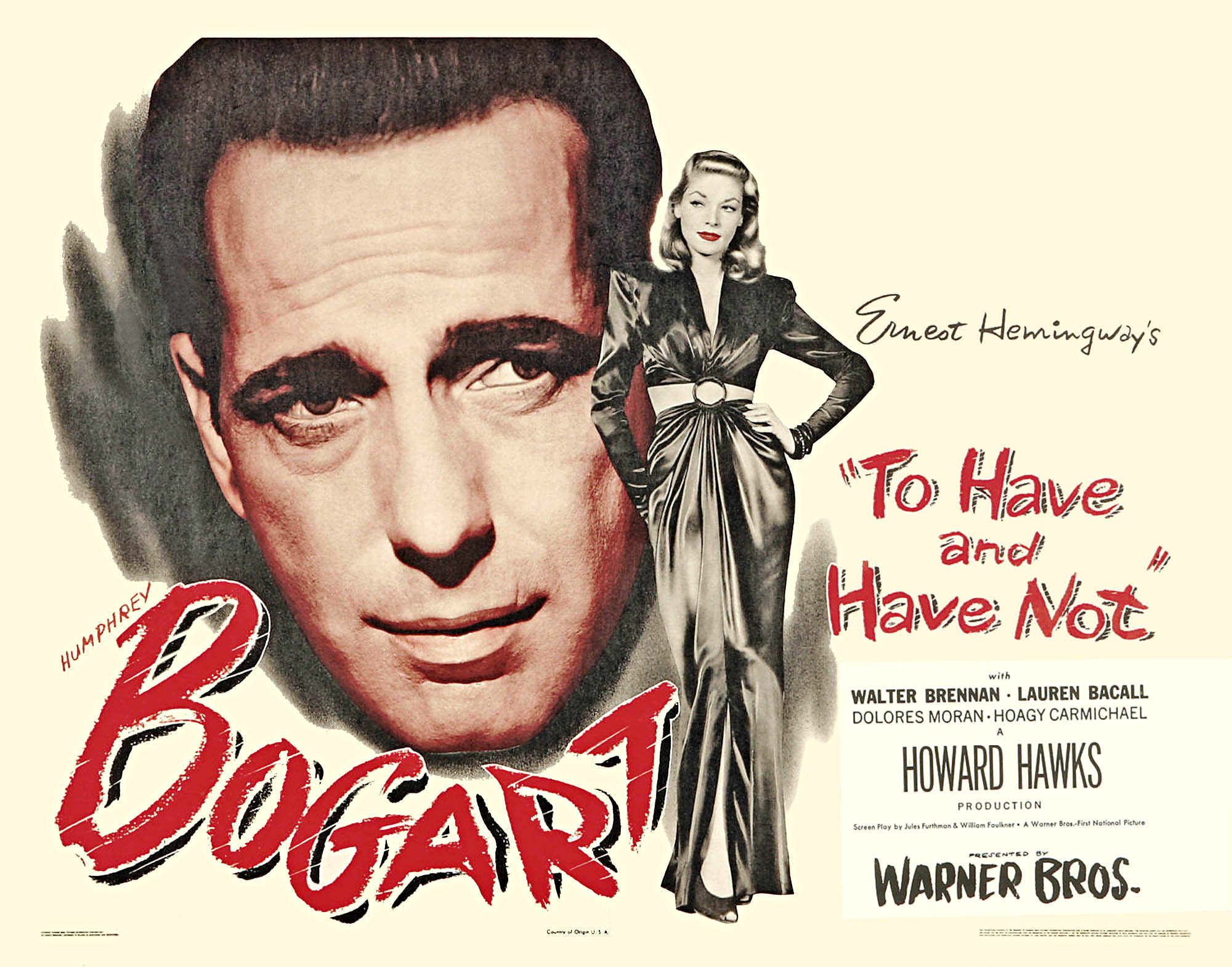
Her first role was in To Have and Have Not with Humphrey Bogart in 1944. The movie is loosely based on a book by Earnest Hemingway, the screenplay was by William Faulkner, but the famous “whistle” line was written by Hawks for Bacall’s screen test. After seeing the test, he not only offered her the role, but he asked Faulkner to work the scene into the script. Bogart’s Harry addresses Bacall’s Marie as ‘Slim’, she calls him ‘Steve’ — the same nicknames Howard and Nancy Hawks used for each other. Her  famous “Look” was the result of nerves.

“I used to tremble from nerves so badly that the only way I could hold my head steady was to lower my chin practically to my chest and look up at Bogie. That was the beginning of The Look.” [Lauren Bacall as quoted on Brainy Quotes]

Movie poster for To Have and Have Not. (Image courtesy of: Dr.Marco’s High Quality Movie Scans)

Bacall was only 19. Bogie, who was a quarter century her senior, fell in love with the beautiful, talented, strong woman, and she fell in love with him. The two married in 1945.

The duo made The Big Sleep, Dark Passage and Key Largo together. By limiting the number of films she made she could choose her roles carefully. She’d made one flop, Confidential Agent following To Have and have Not, and  she thought her career never fully recovered from it. With her reputation as a solid actress — and  the security of being married to one of Hollywood’s leading men — she was able to turn down roles that she didn’t find interesting. Bacall averaged one film a year while she was married to Bogart.

She and Bogey had two children, Stephen and Leslie Bogart and enjoyed 12 years of marriage before Bogart died of Lung cancer.

Bacall returned to New York and  started the second phase of her career, this time focusing on Broadway.

“I finally felt that I came into my own when I went on the stage,” [bio.TRUE STORY]

In 1961 Bacall married again, this time to actor Jason Robards, Jr., and had third child, Sam Robards.

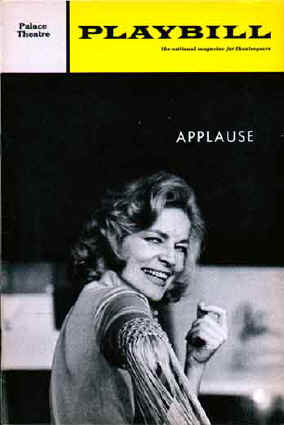
Applause Playbill (Image courtesy of: www.musicals101.com)

Bacall starred in Goodbye, Charlie (1959), Cactus Flower (1965) and had the lead in the musical adaptation of the 1952 movie All About Eve, Applause. The show earned Bacall her first Tony. Her second Tony came in 1981 for Woman of the Year.

She wrote two autobiographies, part one, Lauren Bacall By Myself, came out in 1978, the second part, Now, was published in 1994.

Both volumes openly discussed difficult parts of her life, including the alcoholism of both of her husbands, despite the fact that some of the topics were relatively controversial for the time. [bio.TRUE STORY]

She also tells about a time in her teens when she met actress Bette Davis in Davis’ hotel. Davis returned the favor when Bacall was giving new life to Margo Channing, the roll Davis’ originated in All About Eve.  Davis came backstage at the Palace Theatre after a showing of Applause  and congratulated Bacall on her performance.

Bacall was honored with a Governor’s Award for Screen Legends from the Academy of Motion Picture Arts and Sciences in 2009.

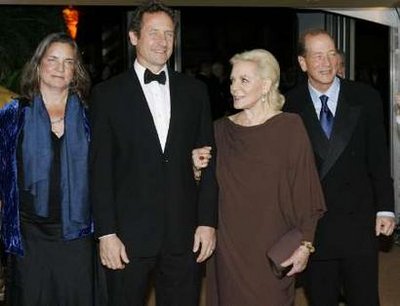
Lauren Bacall and her children, Leslie Bogart, Sam Robards and Stephen Bogart at The Academy of Motion Picture Arts and Sciences 2009 Governors Awards. Lauren Bacall was presented with the Governor’s Award.

Other Lauren Bacall quotes:

“I think your whole life shows in your face and you should be proud of that.”

“Find me a man who’s interesting enough to have dinner with and I’ll be happy.”

“I am not a has-been. I am a will be.”

“I wish Frank Sinatra would just shut up and sing.” (They were briefly engaged. Sinatra abruptly broke it off when he found out that news about the engagement had been leaked.)

(Photo courtesy of: Doctor Marco’s High Quality Movie Scans)


Thought of the Day 9.5.12 Freddie Mercury

“F*ck today, it’s tomorrow.”

“What will I be doing in twenty years’ time? I’ll be dead, darling! Are you crazy?”

— Freddie Mercury

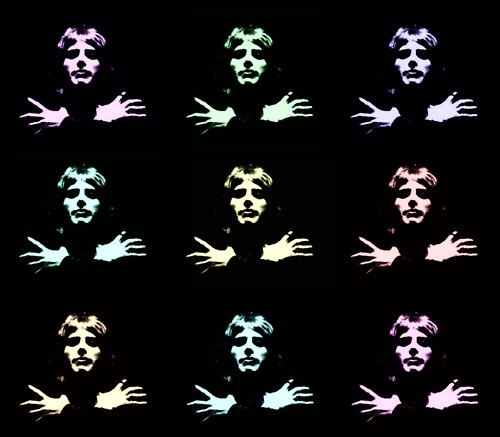
(Image courtesy of Fan Pop)

Farrokh Bulsara was born on this day in British Zanzibar, East Africa in 1946. He would have been 66 years old.

He grew up in Zanzibar and India. He attended St. Peter’s School, a British-style boarding school in Panchgani. The students at St. Peter’s anglicized his name to Freddie. Although he hated some of the school’s sports — running and cricket — he like others — hockey & boxing, and he became the school champion at table tennis at 10. He preferred art and music. He took private piano lessons and enjoyed Bollywood musicals. At school he formed a cover band that performed rock and roll. He also joined the school choir and participated in several theatre productions.

In 1964 when Freddie was 17 there was a great deal of unrest in Zanzibar, most of it directed at the British and Indian ex-pats. So Freddie and his family moved to Feltham, Middlesex, England. There he received a Diploma in Art and Graphic Design from the Ealing Art College. All the while he performed in bands. He also worked part-time selling second-hand clothes at Kensington Market and worked in a catering department at  nearby Heathrow Airport.

After stints with the bands Ibex and Sour Milk Sea he, Brian May (guitar) and Roger Taylor (drums) formed Queen. John Deacon rounded out the group in 1971.

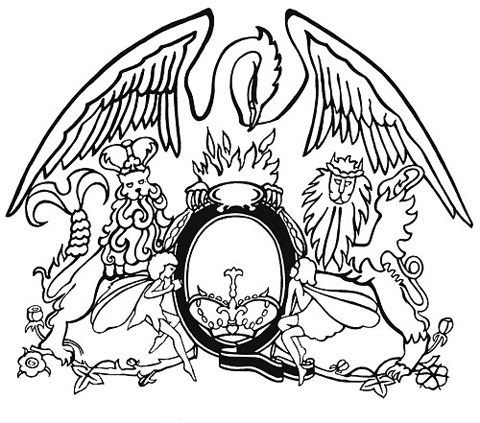
Mercury designed Queen’s logo. (Image courtesy of Lost at E Minor.com)

Freddie changed his last name to Mercury when he started Queen.  As lead singer for the group Mercury’s range went from a low bass F to a high tenor F, 3  full octaves. He wrote the lion share of the group’s songs including Bohemian Rhapsody, Killer Queen, Somebody to Love, We Are the Champions and Crazy Little Thing Called Love.

http://youtu.be/k-ARuoSFflc

He hated to do the same thing twice so he borrowed from a variety of genres when writing. So from the opera inspired Bohemian Rhapsody to the rockabilly Crazy Little Thing Called Love, Mercury proved just how mercurial he could be.

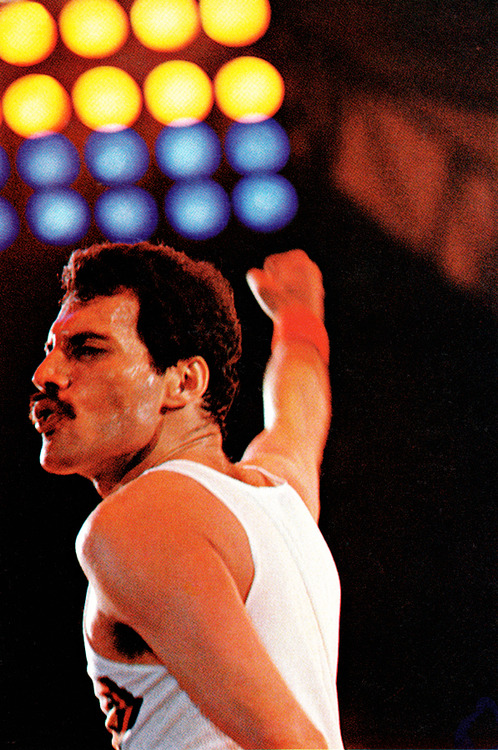
(Image courtesy of Fan Pop)

He was an amazing show man on stage. Queen gave over 700 concerts worldwide.

It wasn’t anything that could be developed. It was his charisma, his pure natural gift that was in perfect harmony with his voice, his appearance, his delicate taste and his musicianship in the wide sense of the word. The fact that he realized it himself made him absolutely fascinating! [Freddie Mercury: biography by Jacky Gunn & Jim Jenkins]

Their 20 minute set at Live Aid at Wembley Stadium stole the show. Freddie sings, struts, dances, plays piano and guitar, gives 110%,  and has a hell of a good time. (Plus, how much fun is it to hear 72,000 people singing along to a Queen song?)

He  produced two solo albums, Mr. Bad Guy and Barcelona and several singles. And he did solo side gigs including a performance with the Royal Ballet where he danced  in font of a packed audience of ballet enthusiasts to orchestral versions of Bohemian Rhapsody and Crazy Little Thing Called Love. He received  a standing ovation. Freddie co-wrote Love Kills for the re-release of Fritz Lang’s 1926 classic film Metropolis.

Freddie Mercury died of AIDS in 1991 at the age of 45.


Thought of the Day 9.4.12 Paul Harvey

“In times like these, it helps to recall that there have always been times like these.”

–Paul Harvey

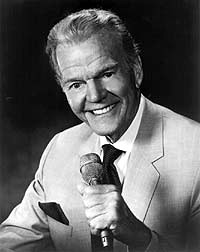
Broadcaster Paul Harvey (Image courtesy of: Arcane Radio Trivia.)

Paul Harvey Aurandt was born on this day in Tulsa, Oklahoma in 1918. Today is the 94th anniversary of his birth.

He was the son of a police officer and was interested in radio early on. He made radio receivers as a child and when he was in high school his smooth voice and distinctive reading style attracted the attention of a teacher who suggested to audition for the local radio station, KVOO.

He was hired at KVOO, but, the road to on air personality began humbly with Harvey starting out by sweeping the floor. Eventually he began to read the news and do commercials. He continued to work as KVOO, both as an announcer and a program director, while he attended the University of Tulsa. He had stints as Salina Kansas’ KFBI, Oklahoma City’s KOMA and St. Louis’ KXOK before he moved to Hawaii. He enlisted in the US Army Air Corps  in December of 1943, but he only served for 14 weeks at which time he was given a medical discharge for a cut on his heel. (Some sources say it was a Section 8 discharge and that Harvey changed his orders to make himself a ranking officer,  stole a plane and inflicted the wound himself during a psychotic dream. Harvey denied all those charges saying:

“It was an honorable medical discharge… There was a little training accident…a minor cut on the obstacle course…I don’t recall seeing anyone I knew who was a psychaitrist…I cannot tell you the exact wording of my discharge.” [The Washington Examiner])

Harvey moved to Chicago and he worked for the ABC affiliate WENR-AM.

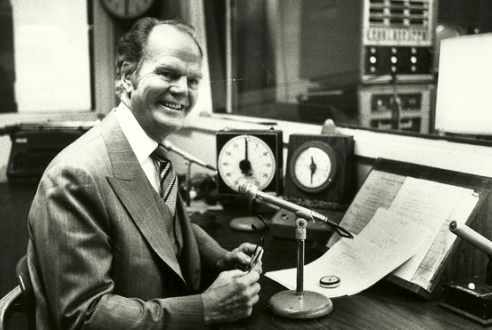
Paul Harvey at the broadcasting counsel in Chicago (image courtesy Time Out Chicago)

He had a run-in with national security when he attempted to infiltrate the Argonne National Laboratory outside of Chicago. The Lab was a favorite target of Harvey’s for it’s “lack of security” and the radio host wanted to prove it.

Shortly past 1 a.m. on February 6, 1951, Argonne guards discovered reporter Paul Harvey near the 10-foot (3.0 m) perimeter fence, his coat tangled in the barbed wire. Searching his car, guards found a previously prepared four-page broadcast detailing the saga of his unauthorized entrance into a classified “hot zone”. He was brought before a federal grand jury on charges of conspiracy to obtain information on national security and transmit it to the public, but was not indicted. [Argonne National Laboratory; History]

Harvey had friends in high places, most notably Senator Joseph McCarthy and FBI Director J. Edgar Hoover, and the charges against him were dropped. Of the incident Harvey later went on air to say  “Though my methods may be questioned, my accuracy and my loyalty never will be.”

In 1951, while the grand jury was still out in the Argonne case, Harvey debuted a new program on ABC,  Paul Harvey News and Comment. The show came on weekdays at noon and ran  for 58 years — the longest running radio show in history — until Harvey’s death in 2009. It was:

an idiosyncratic mix of headlines, comments, quips and advertisements, all voiced by Harvey — …syndicated at its peak to more than 1200 radio stations around the country each day. Harvey … wrote and recorded his shows six days a week from studios in Chicago. His brisk, quirky delivery and signature greeting “Hello, Americans!” were widely (if fondly) parodied. In 1976 Harvey began a companion radio feature, The Rest of the Story, telling little-known tales from the lives of famous people.  [Who 2 Biographies]

The Rest of the Story, while broadcast by Harvey, were written and produced by his son, Paul Harvey, Jr.. According to the production team the stories were completely true, but, in reality were either poorly researched or simply skewed to represent Harvey’s (Sr. and Jr) point of view.

He is the author of 7 books including: Autumn of Liberty; Our Lives, Our Fortunes, Our Sacred Honor; Paul Harvey’s For What It’s Worth; and several collections of The Rest of the Story. His biography Good Day! The Paul Harvey Story was published in 2009.

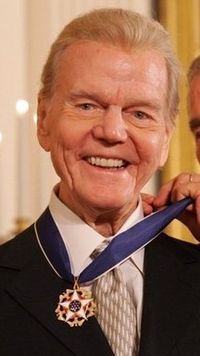
Harvey was inducted into the Radio Hall of Fame in 1990. In 2005 he received the Presidential Medal of Freedom.

Other Paul Harvey quotes include:

“Golf is a game in which you yell ‘fore!’ shoot six, and write down five.”

“If there is a 50-50 chance that something can go wrong, then 9 times out of ten it will.”

“Like what you do, if you don’t like it, do something else.”

Radios at the Vintage Radio and Communications Museum of Connecticut (Image courtesy Arcane Radio Trivia)

[This is one of those Thought of the Day birthday nods that I have a sentimental link to. I’m not a big fan of Paul Harvey and his conservative, folksy style, but there is a touchstone here.

I clearly remember listening to his gravely voice and pregnant pauses while in the car with my dad. He’d sign off with ‘good day’ and we’d echo back a ‘good day’ to each other.

The A&E Biography page links Harvey with Joseph McCarthy, J. Edgar Hoover and Billy Graham as “friends”, not three people I’d hope to see as the top three friends in my bio. And it is pretty clear that Harvey was less than diligent in his research. But I guess when you have to put out 5 days worth of “Story” to 23 MILLION fans facts can take a back seat.

…Still anytime I can spend a few hours remember my dad is worth the effort. And THAT’s the REST of the story. ‘Good day!’]


Heck yes! I’m a Stats Junkie

I’m a total Stats Junkie.

I turn on my computer. I check my email. I check my Facebook page. And in one last attempt to check the validity of my existence as a human being, I check the stats on my WordPress page.

The funny thing is I’m not generally a narcissistic creature. But in this electronic, faux culture of cyber space I have become addicted to the monkey on my back that is FEEDBACK. So even while I’m writing and researching the Thought of the Day I find myself glancing up to that mini stat indicator eyelash above the Edit Post. [Yes, I just did it.]

Honestly, I’m happy when I get 30 or so hits in a day. That’s decent, right? 30 people stopping by is worth the effort I’ve put into any given post. Maybe I’ve touched some one, made them laugh, given them a nugget of new information that they can share at the water cooler. That’s cool.

A fifty day? Boy-ya! I’m feeling good about myself. Seriously. “Give that fan a contract.” (That’s an Oriole’s thing, if you’re wondering.)

Up until this week my best day was 95! It was a Shakespeare inspire day and it was pretty awesome.

My stats as of about 48 minutes ago.

Then a couple of days ago I wrote a little tribute to my cousin Pat “Scunny” McCusker (who, sadly, had just passed away) and things went  through the roof. My stats topped out at 105. That’s an awesome day. Except, well,  it wasn’t. The only thing awesome about getting those stats was that it served as a continuing reminder that Pat touched a lot of hearts. Believe me, I’d much rather have a month of single digit days than have the reason for the spike you see over Aug 29.

So what about today? Well… it’s a rainy day, and a holiday, and people are home with nothing to do. No doubt that explains that second spike. And I’ve got to give another nod to Pat because 10 of these hits were from web searches on his name. But that’s still a pretty awesome day. This is how it looked  when I checked in at 7:00 Eastern Time…

At 8:00, when the stats click over for another day, the views had ticked up to 110 hits from 13 countries for 12 blog posts and the current home page.  Not bad at all. That plus… the Orioles won today.

So thanks everybody! Keep on stopping by virtual desk to see what I’m working on.

Cheers,

Rita


Thought of the Day 9.3.12 Ludovico Ariosto

“When the devil grows old he turns hermit”

Ludovico Ariosto 

c. 1510

c. 1510 (Photo credit: Wikipedia)

Ludovico Ariosto was born on this day in Reggio Emilia, Italy, in 1474. Today is the 538th anniversary of his birth.

Ariosto was the eldest of 10 children born to an affluent family. His father, Count Niccolo Ariosto, was the commander of the citadel, and Ludovico was supposed to follow in the his footsteps. He studied law, languages and literature.  He had a great love of poetry and wanted to become a writer, but he was obliged to support his family. When his father died, in 1500, he took over the family estate. In 1503 he began to work for Cardinal Ippolito D’Este who acted as Ariosto’s patron for a few years. Later he worked for the Cardinal’s brother, Alfonso I, Duke of Ferrara. In 1522 he was sent to wilderness of Garfagnana, Ferrara as governor. He did not take to the remote location of the bandits.

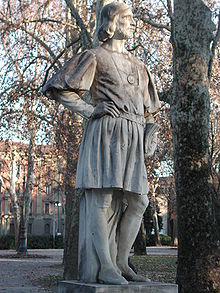
Statue of Ludovico Ariosto in Reggio Emilia

Ariosto snuck time to write some comedies, prose and poetry when his duties permitted. His play Cassaria was staged in 1508 and I Suppositi followed in 1509. (It was translated into English and was the inspiration for parts of  Shakespeare’s The Taming of the Shrew.) He wrote 5 comedies and 7 satires.

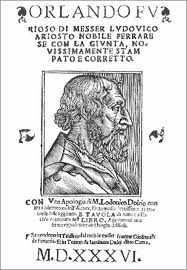
His greatest work, indeed ” the most celebrated narrative poem of the Italian high Renaissance” [Books and Writers] was Orlando Furioso. It was first published in 1516 at a length of  40 cantos.  The epic poem was revised and added to several times with the final version, at 46 cantos, appearing in 1532.  An additional 5 cantos , the Cinque canti were published by his son Virgino after the poet’s death.

 The plot revolves around the conflict of the Christian versus the Moor, the war between Charles, the Holy Roman Emperor, and Agramante, King of North Africa, and Marsilio, King of Spain. With the defeat and death of Agramante, the conflict ends, and Marsilio returns to Spain. [Books and Writers]

Two editions of Orlando Furioso.

The piece was so popular that, rumor has it, when the last revision came out Queen Elizabeth banned the English translator of the work from Court until he completed his task so he wouldn’t be distracted. Artist, composers and other writers have used characters from Orlando Furioso as their muse. Portrait of a Gentleman by Titian is one such work. His A Man with a Quilted Sleeve is believed to be Ludovico.


Thought of the Day 9.2.12 Salma Hayek

“I’ve stolen a couple of hearts and they are in my private collection!”

Salma Hayek

English: Salma Hayek at the Cannes film festival

English: Salma Hayek at the Cannes film festival (Photo credit: Wikipedia)

Salma Hayek was born on this day in Coatzacoalcos, Mexico in 1966. She is 46 years old.

Hayek admits that she and her brother were both a bit spoiled growing up. Her parents, Sami Hayek Dominguez an oil company executive and one time mayoral candidate for Coatzacoalcoa, and Diana Jimenez Median, an opera singer and talent scout raised the children Catholic. At 12  Salma was sent to the Academy of the Sacred Heart in New Orleans but she was expelled for pulling pranks on the sisters. She studied International Relations at Mexico City’s Universidad Iberoamericana, and decided to take on acting full time.

She won the title role in the telenovela Teresa in 1989, and  became an overnight sensation in Mexico.

Looking for bigger roles and a wider audience Hayek moved to Hollywood. But Hollywood didn’t know what to do with the 5’2″ Latino firecracker who suffered from dyslexia and had trouble speaking English. She managed to get some bit parts, but she felt under-appreciated and she let her feelings be known on a Spanish-language late night talk show.

Producer Robert Rodiguez saw the show and took notice. He cast her opposite Antonio Banderas in Desperado (1995) and as a vampire queen in From Dusk Till Dawn (1996). 1997 brought a starring role in the rom-com Fools Rush In and Breaking Up. She followed that up with Wild Wild West and Dogma. 

She took up producing and directing through her production company Ventanarosa. The company’s first film was El Coronel No Tiene Quien le Escriba (No One Writes to the Colonel). It was Mexico’s pick for Best foreign Film Oscar entry.  Hayek has directed music videos for Prince and was the executive producer (and occasional guest star) for Ugly Betty. But her dream role was Frida Kahlo and she both starred in and produced Frida in 2002. The movie received 6 Oscar nominations, including best actress for Hayek.

Promotional poster for the movie Frida (Photo Credit: Wikipedia)

In 2003 she filmed the last in the “El Mariachi” trilogy with Banderas with Once Upon a Time in Mexico.

In 2010 she co-starred in the Adam Sandler flick Grown Ups. And she turned in a sassy animated performance as Kitty Softpaws in Puss in Boots (again with Banderas.


Thought of the Day 9.1.12 Edgar Rice Burroughs

“I write to escape…to escape poverty.”

Edgar Rice Burroughs

Русский: Эдгар Райс Берроуз

Edgar Rice Burroughs (Photo credit: Wikipedia)

Edgar Rice Burroughs was born on this day in Chicago, Illinois in 1875. Today is the 137th anniversary of his birth.

He was the middle child Major George Burroughs and his wife Mary Evaline. His younger siblings died of childhood diseases, leaving him the baby of the family. He bounced around several different local schools. Whenever there was an outbreak of a disease his parents took him out of one school and put him in another.  Since schools taught Latin and Greek as well as English he later …

“his erratic schooling… resulted in his … learning little English while taking the same Greek and Latin courses over and over again. Despite his claims to the contrary, this early exposure to Classical literature and mythology would serve Burroughs well in his future writing career.” [The Official Edgar Rice Burroughs Mini-Bio]

When a flu epidemic swept through Chicago his parents sent a teenaged Edgar to his brothers’ cattle ranch in Idaho. He love the rough and tumble “wild west”  with its range wars and saloon shoot outs and he lived there for six months before his parents realized the danger of  frontier life was on par with the danger of getting influenza. They called him home and enrolled him in Phillips Academy in Andover, Massachusetts. He didn’t last long there and was soon transferred to the more structured  Michigan Military Academy. He failed the West Point entrance exam  and signed up for the Army  as a private where he served with the 7th US Cavalry at Fort Grant, Arizona Territory. He was discharged from the Army for a heart condition in 1897.

In 1899 he was back in Chicago working for his father ‘s company, and the next year he married his childhood sweetheart, Emma Hulbert. After a few years he and Emma travelled west to Idaho so he could try his luck with his brothers again, this time at gold mining. But that venture soon went bust and Burroughs went through a number of jobs from railway policeman to peddler for quack medicine.

One of his jobs was as a pencil sharpener wholesaler. He placed ads for the pencil sharpeners in pulp fiction magazines and he would read through the magazines to check the placement of the ads.

“After reading several thousand words of breathless pulp fiction Burroughs determined … that ‘if people were paid for writing rot such as I read in some of those magazines that I could write stories just as rotten. As a matter of fact, although I had never written a story, I knew absolutely that I could write stories just as entertaining and probably a whole lot more so than any I chanced to read in those magazines.'” [The Official Edgar Rice Burroughs Mini-Bio]

Cover of "Under the Moons of Mars: A Prin...

Cover via Amazon

In fact he had already written stories, but his introduction into the pulp fiction market with Under the Moons of Mars,  for which he received a whopping $400 from All-Story magazine, was a turning point in his career. The story was serialized  in the magazine and produced as a novel under its original name of A Princess of Mars. By the time the last installment was published in July of 1912 Burroughs had completed two more novels. The Outlaw of Torn and Tarzan of the Apes. Outlaw was not picked up by the publisher, but Tarzan was an immediate hit. Burroughs got $700 for the book. He wrote a number of sequels for both Mars (11, including John Carter of Mars) and Tarzan (26).

Dustjacket by Armstrong Sperry for the first e...

Dustjacket by Armstrong Sperry for the first edition of Tarzan and the Lost Empire by Edgar Rice Burroughs (Photo credit: Wikipedia)

Other book series by Burroughs includes:

  • The Pellucidar series, which takes place in the hollow shell of the Earth (7 books, including one featuring a cross over appearance from Tarzan).
  • The Venus series, where Carson Napier, who is attempting a solo flight to Mars, crash lands instead on the watery planet of Venus. — look for a film made from the series coming out next year. (5 books)
  • The Caspak series, a prehistoric series, including The Land That Time Forgot (3 books)

He crossed writing genres at will penning social realism, horror stories, and westerns (and more).

Burroughs was living in Honolulu,  Hawaii when the Japanese bombed Pearl Harbor on December 7, 1941. He volunteered  to serve the war effort as a war correspondent  (the oldest in the Pacific theatre).

He died on March 19, 1950.

English: Bookplate of American writer Edgar Ri...

English: Bookplate of American writer Edgar Rice Burroughs (1875-1950) showing Tarzan holding the planet Mars, surrounded by other characters from Burroughs’ stories and symbols relating to the author’s personal interests and career. Associated media: File:Letter from Edgar Rice Burroughs to Ruthven Deane 1922.jpg explaining the design of his bookplate. (Photo credit: Wikipedia)