Tag Archives: Jane Austen

Jane Austen 12.16.12 Thought of the Day

“If I loved you less, I might be able to talk about it more.”
Jane Austen

Jane Austen

Jane Austen was born in the Steventon Rectory, Hampshire, England in 1775. Today is the 237th anniversary of her birth.

The second youngest of eight children, Jane was also the younger of two girls in the Austen family. As was the custom for a family of the Austen’s class and means, baby Jane was sent to live with a wet-nurse, Elizabeth Little, until she was 18-months old. She was very close to her sister Cassandra and the two girls, along with their cousin Jane Cooper, were sent to Mrs. Cawley’s school in Oxford when Jane was 7. The school moved to Southampton when measles broke out in Oxford. But Southampton proved no safer. Typhus broke out there and all three girls caught the disease. The girls came back to Steventon where they were home schooled for a year before going to school at Mrs. La Tournelles (aka Sarah Hacket) where the girls received instruction in spelling, needlework and French. But by 1786 she was back home, this time for good.

Jane never had any formal education again…From their experience of school we can gather that Jane and Cassandra had perhaps learned some social skills, had had the opportunity to read, take part in plays, learn some French and learn the piano. These were things that were all available at home anyway. [Janeaustensworld]

And the Austen home was an excellent place at which to be home schooled. Her father took in tutors and taught his own sons. He had an impressive library (which Jane had free access to) The older boys included her in their theatricals  and charades and “even as a little girl Jane was encouraged to write” [jasa.net]

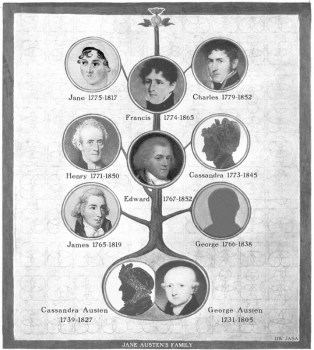
familytreelowres

Austen’s immediate family tree. [Image courtesy: jasa.net]

Jane had six older brothers: James, George, Edward, Henry, Francis and Charles.

By 14 she was writing to entertain her friends and family, penning such comedies as Love and Freindship (sic) and the parody   A History of England by a partial, prejudiced and ignorant Historian.  She collected 29 of her stories into three bound books, now known as Juvenilia.

In 1793 she began to write longer works in the epistolary style. Lady Susan was one such novel in letters.  She wrote Elinor and Marianne in the same style before she rewrote the work as a third person narrative and changed the title to Sense and Sensibility.

Jane Austen, Watercolour and pencil portrait b...

Jane Austen, Watercolour and pencil portrait by her sister Cassandra, 1810 (Photo credit: Wikipedia)

In 1801 Rev. Austen moved (with Mrs. Austen, Cassandra and Jane) to Bath. Jane’s productivity took a nose-dive. She was either too busy to write — with all the shopping and socializing in Bath — or too depressed to write. The Austens lived in Sydney Place, no.4…

which offered both an easy walk into town and handy access to Sydney Gardens, a great outdoor attraction at that time with regular gala nights featuring music and fireworks.[Seeking Jane Austen]

…until Mr. Austen died  in 1804. By 1806 the ladies had left Bath for good, and moved Chawton in Southampton. As soon as they had settled in their new home she renewed her writing in earnest .

English: Back View of Jane Austen, Watercolor

English: Back View of Jane Austen, Watercolor (Photo credit: Wikipedia)

In 1811, Thomas Egerton, a military Library publishing house printed 750 copies Sense and Sensibility, largely on Austen’s dime. The book sold out of its first edition by 1813. And Austen eventually made 140 pounds on it.  It  appeared under the pseudonym “A Lady,” and Austen carefully guarded her anonymity .

Encouraged by this success, Jane Austen turned to revising First Impressions, a.k.a. Pride and Prejudice. She sold it in November 1812, and her “own darling child” (as she called it in a letter) was published in late January 1813. [Pemberley.com]

In May of 1814 her third novel, Mansfield Park was published. It sold out in six months.

Austen's

Despite carefully guarding her name, word had begun to leak out. People knew who  the  “Lady” was…important people…like the Prince Regent. While she was writing Emma she was summoned to the palace and invited to dedicate her next novel to the Prince. Austen was less than thrilled to be given the honor, but couldn’t exactly refuse, so in wonderful Austen wit she flattered him as only she could…

TOHIS ROYAL HIGHNESS THE PRINCE REGENT, THIS WORK IS,BY HIS ROYAL HIGHNESS’S PERMISSION,MOST REPECTFULLY DEDICATED,BY HIS ROYAL HIGHNESS’S DUTIFUL AND OBEDIENT HUMBLE SERVANT, THE AUTHOR

In 1815 she began working on Persuasion. By then her health had begun to deteriorate. She completed the first draft by 1816 and began The Brothers which later became  Sanditon. Her condition rapidly worsened. In May her bother Henry took Jane to Winchester for treatment, but on July 18, 1817 at the age of 41 Jane Austen passed away. She was buried at Winchester Cathedral.

English: Jane Austen's memorial gravestone in ...

English: Jane Austen’s memorial gravestone in the nave of Winchester Cathedral (Photo credit: Wikipedia)

Henry, with Cassandra’s help, got Persuasion and Northanger Abbey published in December of 1817. For the first time the author was listed as “Jane Austen.”

Happy Birthday Jane!!!

Ooops forgot to link to my own blog on the Pride and Prejudice Essay Contest!

  • JASNA (Jane Austen Society of North America)

My Darcy Weekend

As you may recall from Will (and Jane) This Summer in B’more (June 6) THIS past Friday, Saturday and Sunday was Regency Weekend at the Chesapeake Shakespeare Company (CSC).  The acting troupe put on Christina Calvit’s adaptation of  Jane Austen’s delightful Pride and Prejudice.  The Jane Austen Society of North America: Maryland Chapter (JASNA:MD) joined forces with CSC on Sunday for our Summer meeting, and I came by with some family and friends on Saturday to help with a Game Tent and to drum up some interest in JASNA.

SATURDAY:

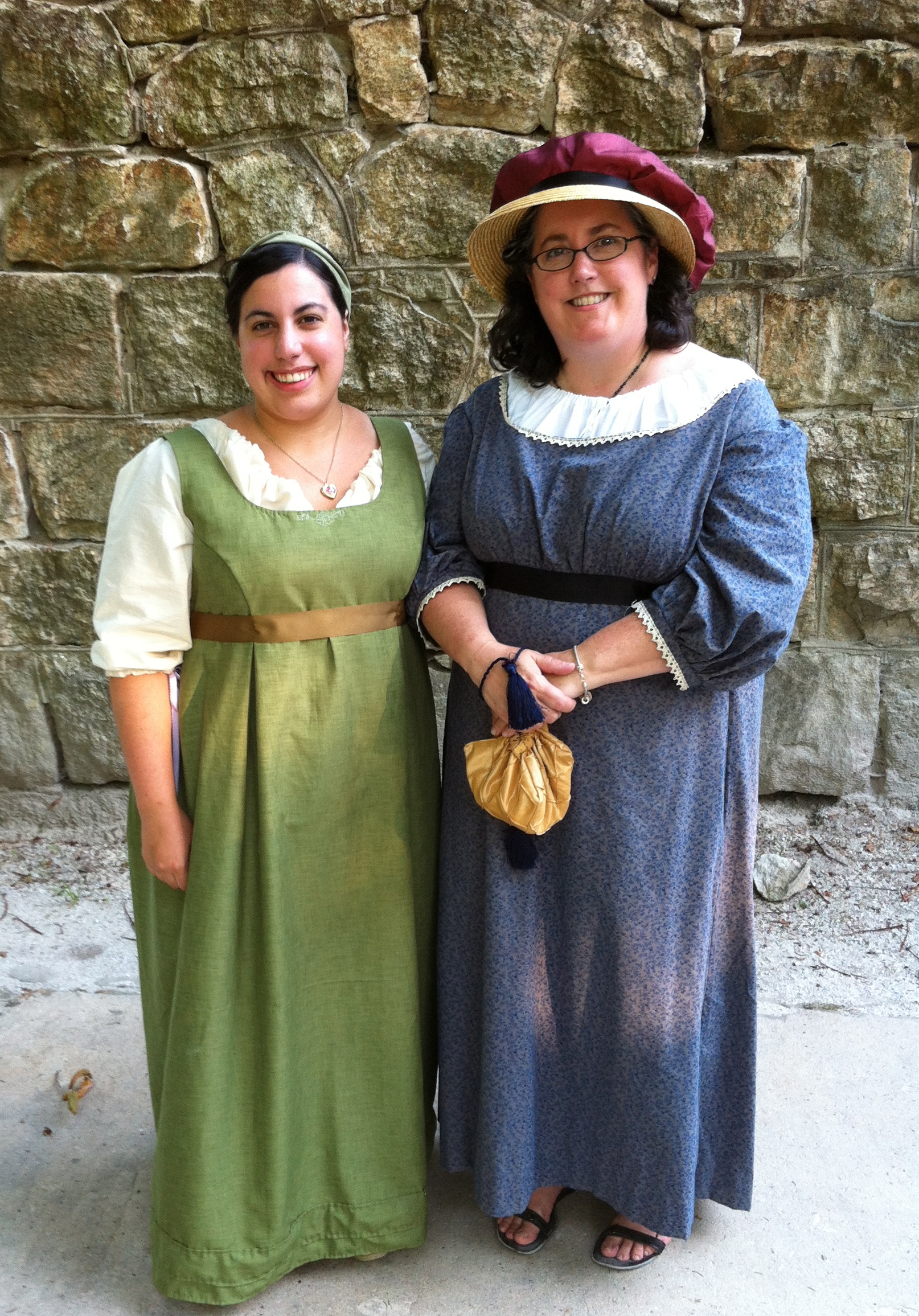
My lovely daughter Maggie, my sister Margie, my husband Bill and I headed to Ellicott City’s Patapsco Female Institute (the stabilized ruins of an old girls school that is now an open air theatre and part of the Howard County Park System) where we met our friends  Lynn Reynolds, Chris and Matt. There  we split up to handle Game Duties and the JASNA recruitment table.

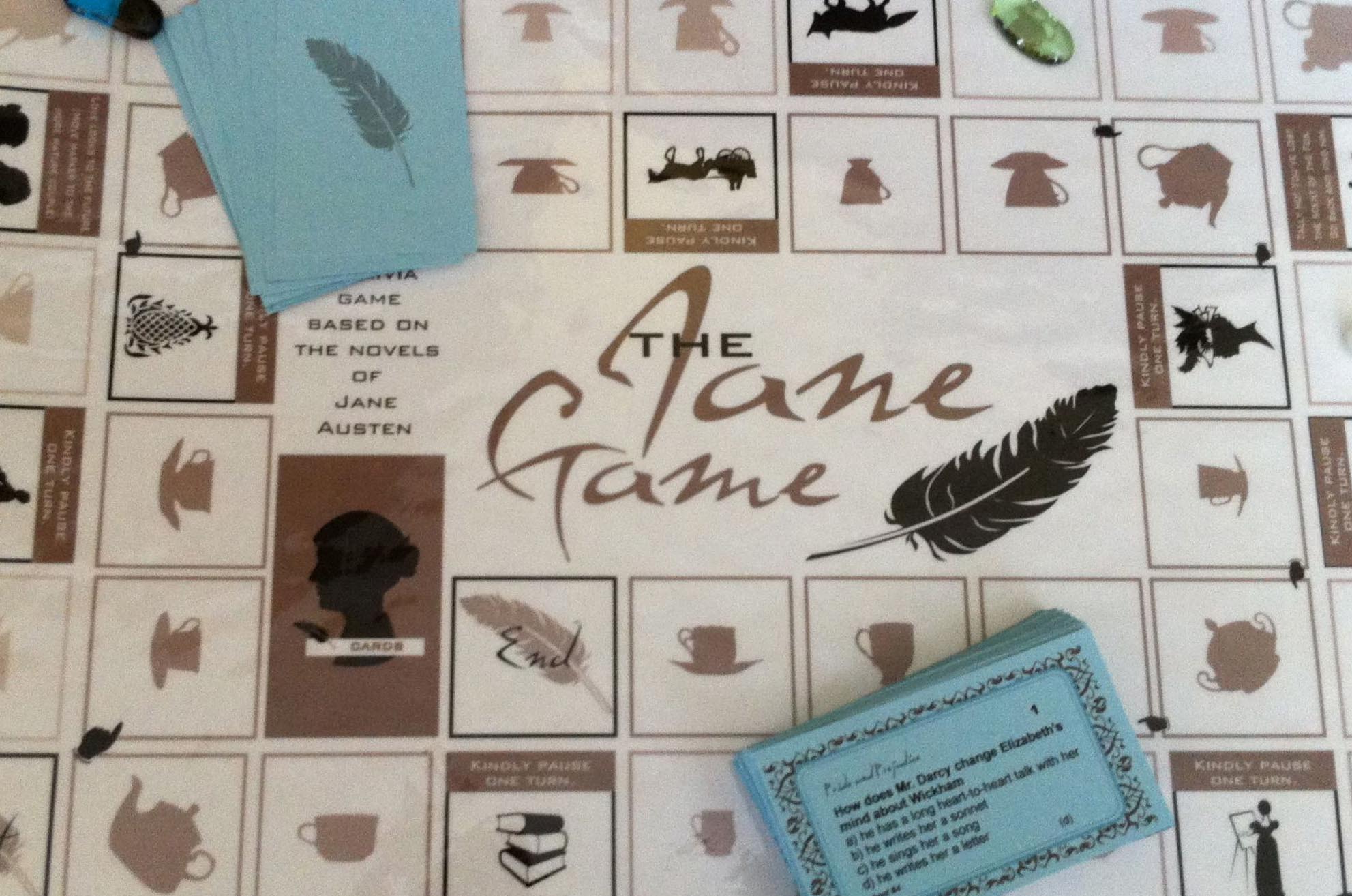
I created the Jane Game while working with a graphic design student. It was a side-by-side project and our goal was to create a board game that we would want to play. It is a trivia game based on the novels of Jane Austen and comes with a laminated or cloth playing board, 100 cards on Pride and Prejudice, glass game pieces and a draw string bag. If you are interested in securing your very own game send me a message.

At the Game Tent we set up The JANE GAME a trivia game based on Pride and Prejudice and Austen BINGO.

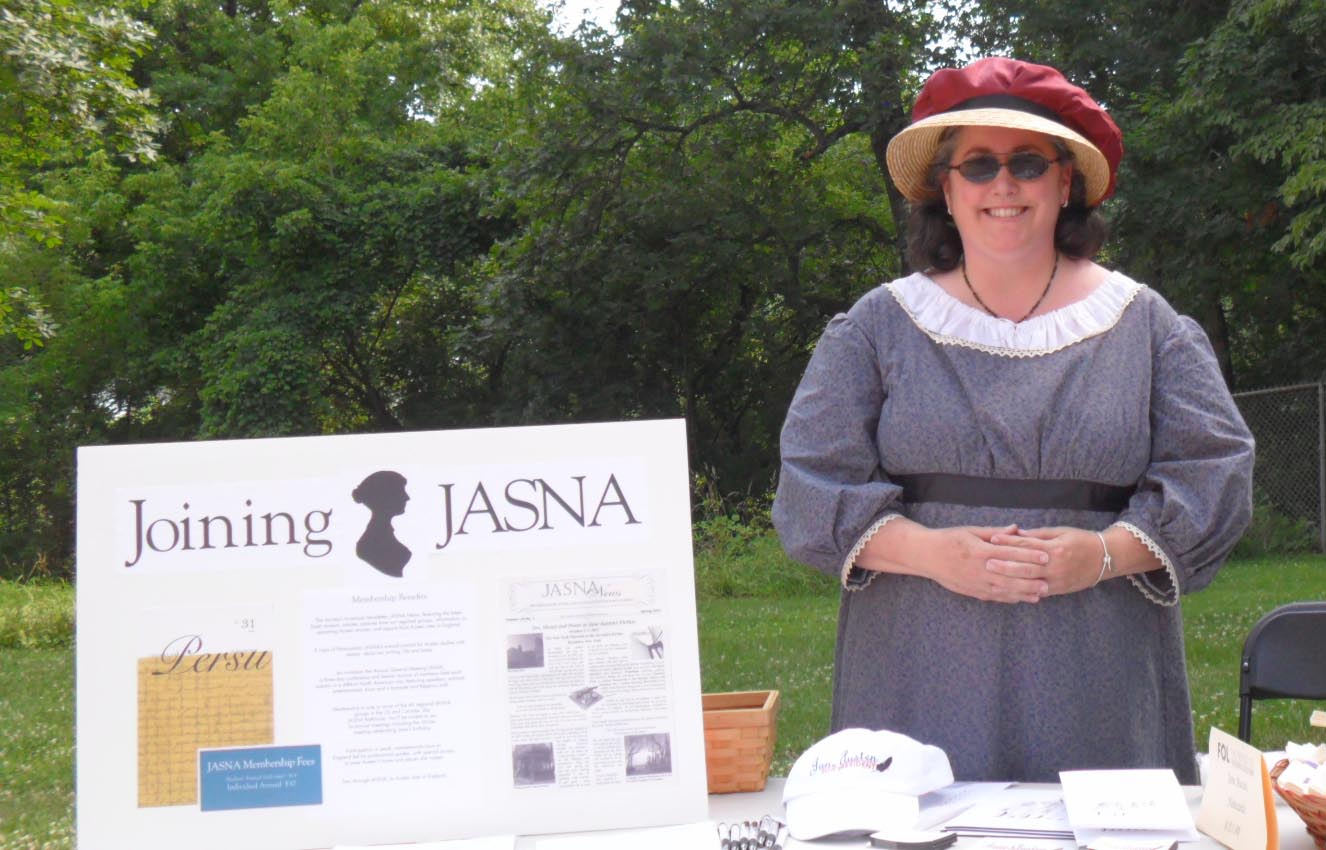
WoMANning the JASNA table. (Photo courtesy of Kim Rock)

Over at the JASNA info table we had registration forms and some fun Austen inspired gear. JASNA is a terrific organization dedicated to the appreciation of Jane Austen and her writing. The over 4,000 members in JASNA (US and Canada) enjoy reading and discussing Austen’s books, learning more about the things Jane liked to do, and exploring the world that influenced her writing. Membership is open to every one interested in the life and works of Jane Austen and includes: a subscription to JASNA News; JASNA’s literary journal — Persuasions; an invitation to the Annual General Meeting; An invitation to join one or more local chapter — like  JASNA: MD ; and participation in members-only tours of Austen sites.  Membership is only $30.00 per year (for individual members.)

We got to talk to some lovely people (first from the cast, then  from the audience) and then we got to see the play.

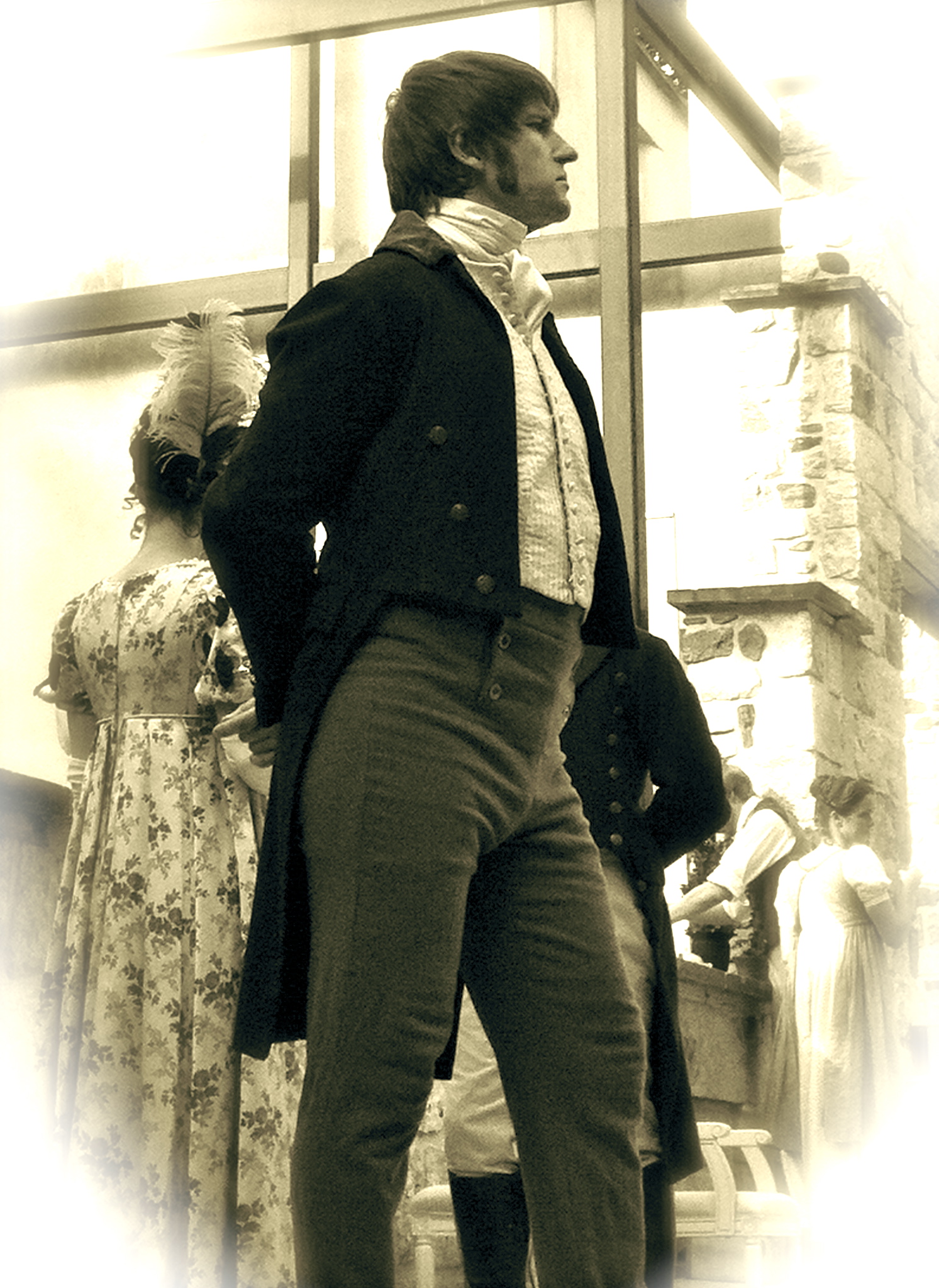
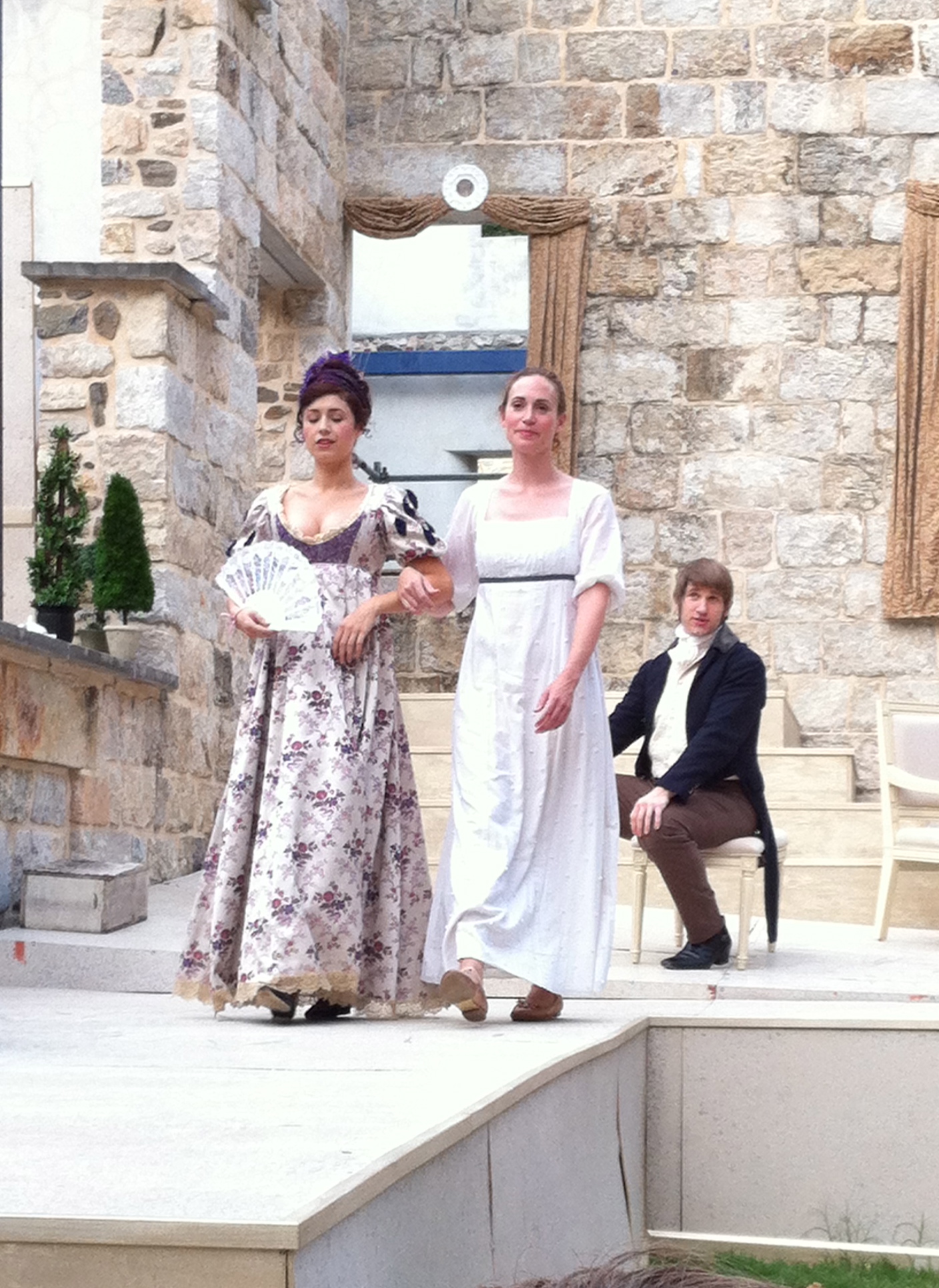
Mr. Darcy observes Caroline and Lizzy in a scene from Pride and Prejudice (running now through the end of July at the Chesapeake Shakespeare Company.)

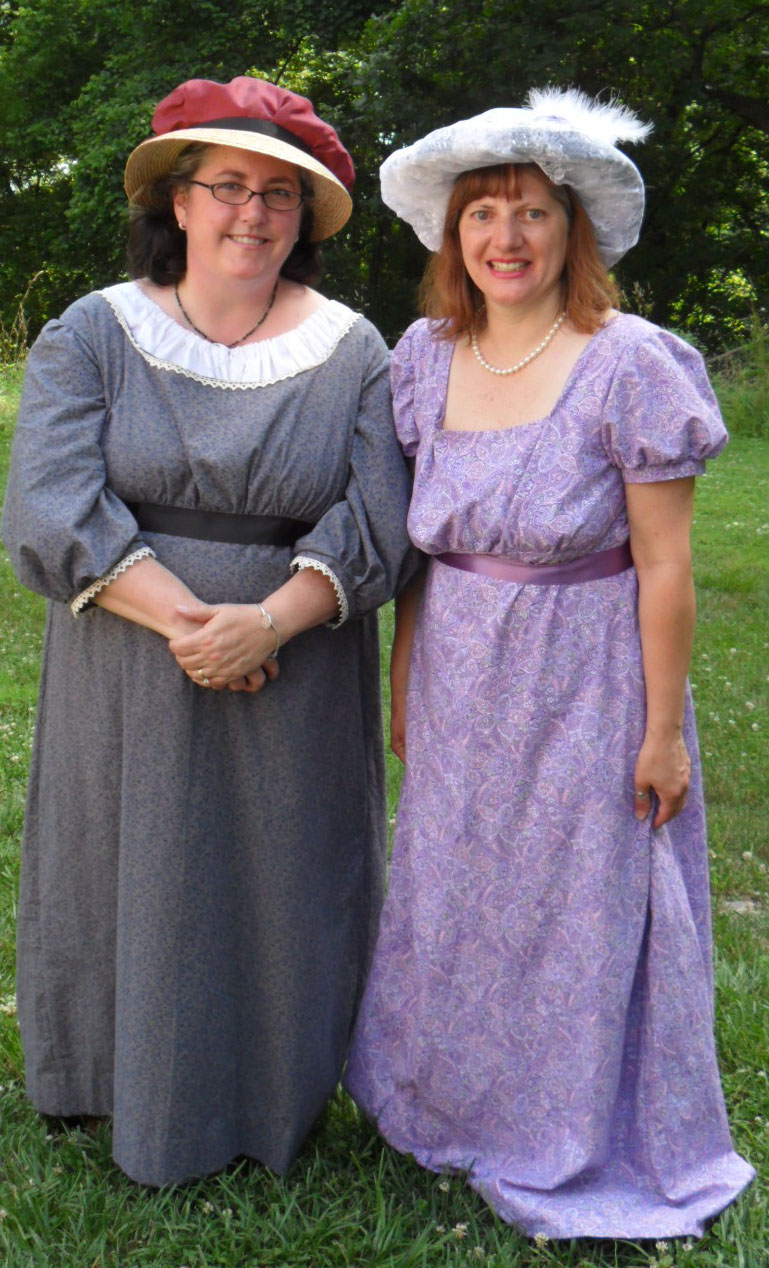
As you may have already figured  out, I’m a huge Jane Austen fan (I’ve created a board  game based on her books and I’ve got my own Regency dress, for heavens sake!)  So I was primed and ready for this stage play of P&P.

And I’m happy to say it was universally charming! Happy thought INDEED!

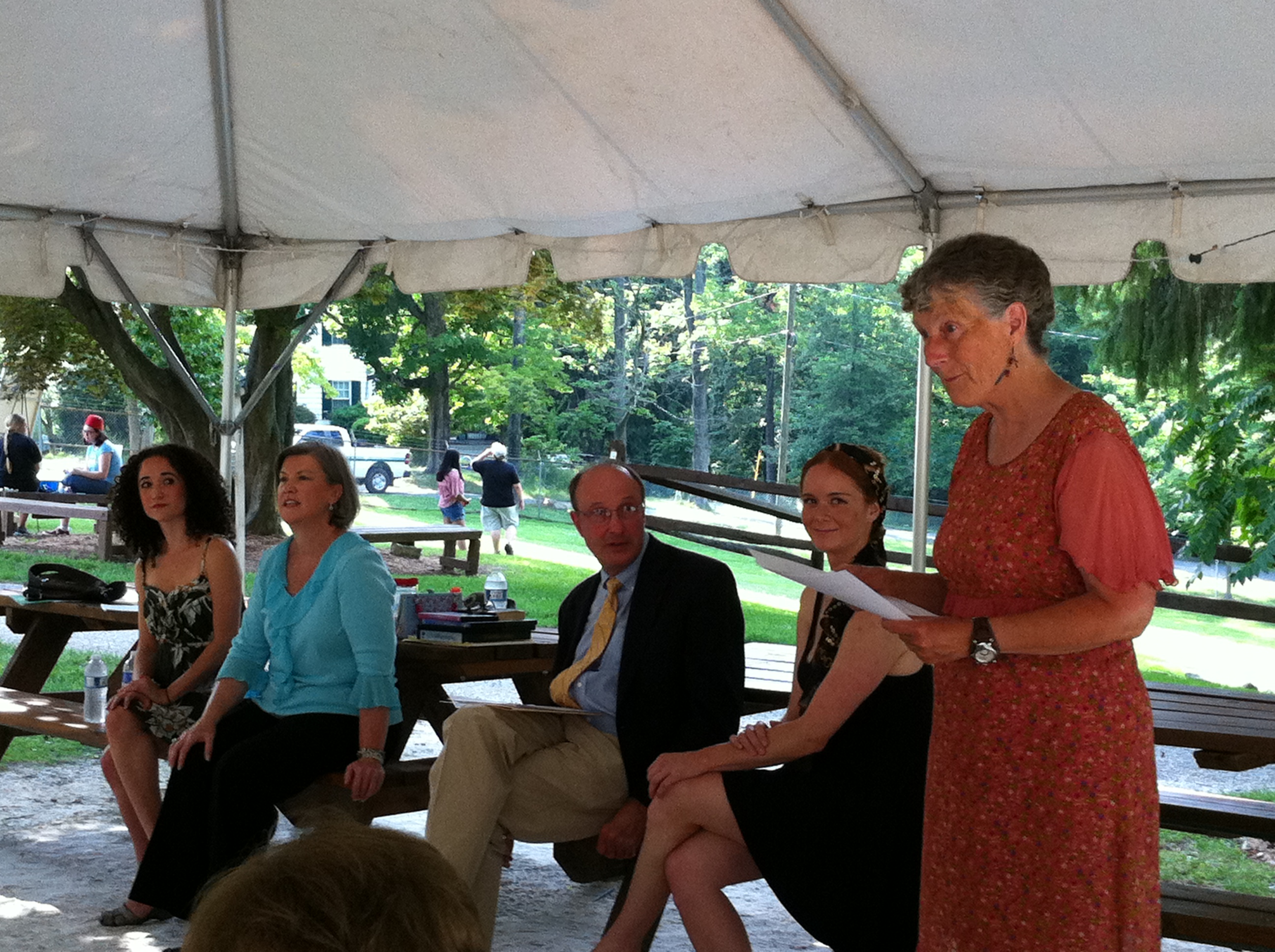
The pre-show panel “Kitty and Lydia: Mischief and Merriment” with Rachael Jacobs, Karen Stakem Hornig, Mark Turner, Jana Stambaugh and moderator, Polly Bart.

SUNDAY:

JASNA:MD worked with CSC to pull together a special treat for Sunday’s audience, a pre-show panel discussion on “Kitty and Lydia: Mischief and Merriment.” Polly Bart, JASNA:MD’s Programming Chair, co-ordinated the event for the group and acted as the moderator for the panel. She brought together the actresses who play Kitty and Lydia, Jana Stambaugh and Rachael Jacobs, with JASNA members Mark Turner and Karen Stakem Hornig.

Kitty and Lydia on stage.

The actresses spoke on the joys and challenges of bringing their 200 year old characters from the page to the stage. Turner, who is known for delighting JASNA members with his mind tickling Austen era Charades, took over with “Kitty and Lydia: Their Roles and Relationships” (aka “The Case of the Ugly Bonnet”)

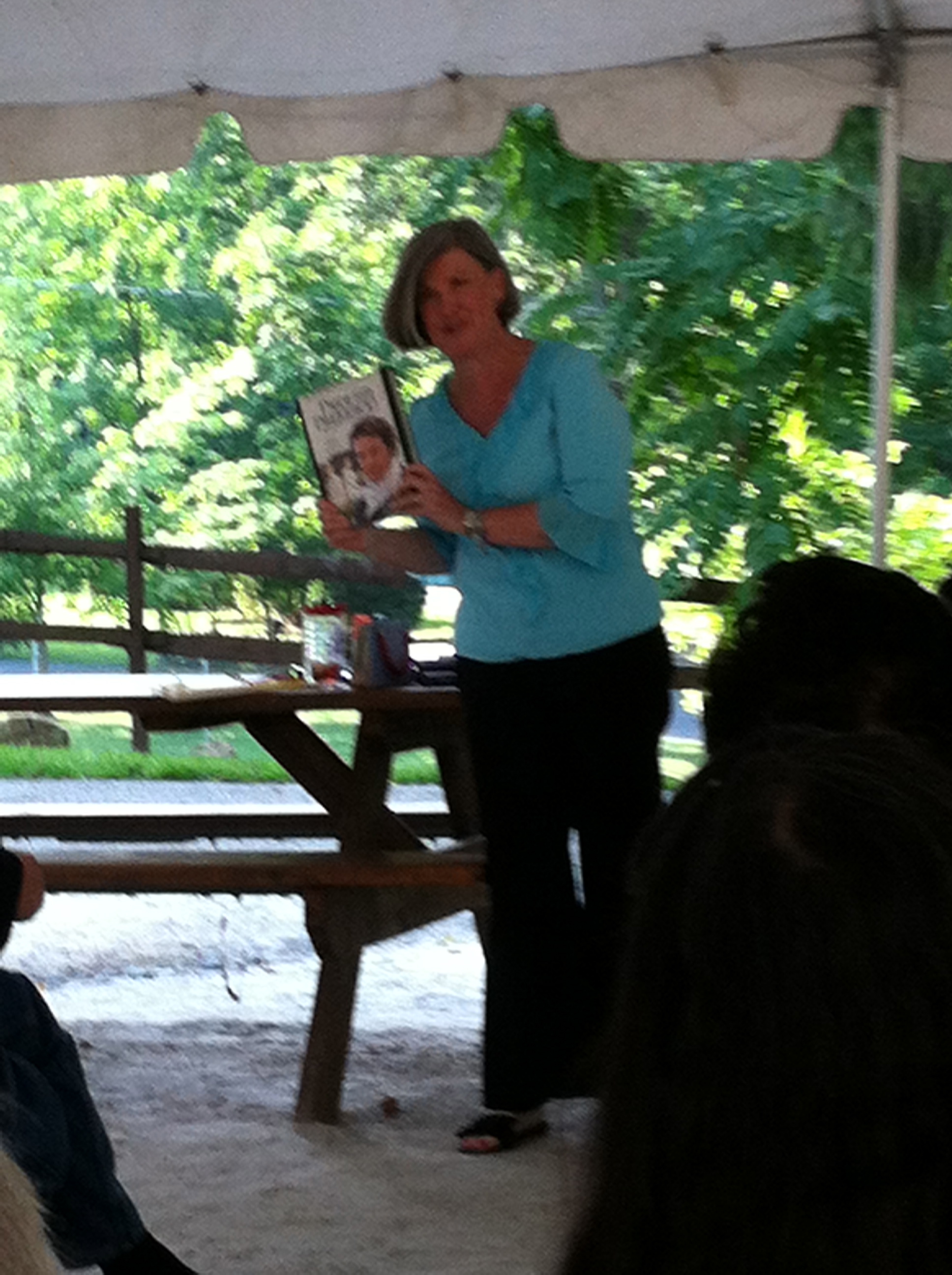
Hornig holds up her favorite film adaptation of Pride and Prejudice.

Hornig presented “Kitty and Lydia as Character Types in Film Adaptations of Pride and Prejudice.” (Note the image of Colin Firth on the cover the Collector’s Edition of the DVD.)

Photo courtesy Kim Rock

My friend Kim helped me at the JASNA registration/info table on Sunday. We met some wonderful Jane fans who were interested in learning about the organization, as well as tons of lovely current JASNA members stopped by to say hello!

Jane and Lizzie share a sisterly moment in Act One.

I enjoyed the show even more on Sunday. (All the stage shots in this blog are from Sunday’s performance — you aren’t allowed to use a  flash, but since the Sunday show starts two hours earlier… I could shoot with out a flash.)

Sadly I don’t have any photos of Jose Guzman as Mr. Collins. He was hilarious as the sycophant clergyman. Jonas David Grey (Mr. Bennet) and James Jager (Mr. Bingley) were also very funny. Blythe Coons (Lizzy) and Adam Sheaffer (Mr. Darcy) gave more subtle, but equally delicious performances. I particularly like how the audience on Sunday was cheering for Jana Stambaugh — after her pre-show talk about how she, Kitty,  was the “Jan” of the Bennet family, she definitely had us in her corner.

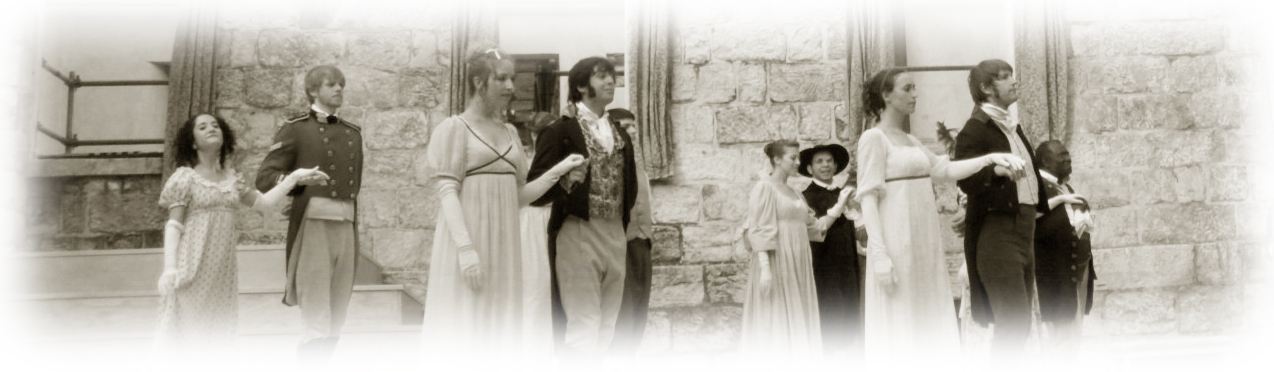
This just in: Thanks to Kim Rock, we now have a picture showing Mr. Collins! (fourth from the right).

Although my weekend with Mr. Darcy, Lizzy and the rest of the Pride and Prejudice cast is over I hope that you will take the opportunity to visit Chesapeake Shakespeare Company this summer and catch this charming adaptation of Jane Austen’s classic.

Pride and Prejudice runs in repertoire with Romeo and Juliet until July 29th.

Cheers! Rita


Will (and Jane) this Summer in B’more

Frankly, when the wonderful Baltimore Shakespeare Festival closed its doors last year I thought it was curtains for live classical theatre in Baltimore.

Then I discovered the Chesapeake Shakespeare Company. Their  summer venue under the stars at the old Patapsco Female Institute in Ellicott City is a bit of a drive, but this is SHAKESPEARE!

The CSC announced this spring that it has found a new indoor facility in downtown Baltimore. The  Merchantile Trust and Deposit Company building on East Redwood will allow for an eight month production schedule as well as extended educational programs. And they’ll continue with their summer tradition of performing alfresco at the PFI.

This summer the troupe will present two of the greatest love stories ever written. Huzzah!

Mass-produced colour photolithography on paper...

Photolithography on paper for Toy Theatre; Romeo and Juliet  (Photo credit: Wikipedia)

Catch the Bard’s star crossed lovers Romeo and Juliet as the CSC open’s its season this weekend (June 8, 9 & 10 is opening weekend). Two R&J has another full weekend then it begins to run in repertory with CSC’s other summer production…

PRIDE AND PREJUDICE

The most famous of Jane Austen’s novel’s Pride and Prejudice takes stage June 22nd. There’s a special REGENCY WEEKEND to launch P&P (June 22, 23 & 24).

There is a strong argument for READING Austen. But when it is performed really well, and really faithfully I love it too. I got to see EMMA performed last winter in PA, and it was delightful. And, of course I’ve seen every Austen film out there from the A&E Pride and Prejudice with Colin Firth to the Bollywood inspired “Bride and Prejudice”. I doubt there will be any wet shirts on stage at the CSC but knowing the caliber of their productions I have very high hopes for this stage version of P&P.

Try and come during Regency Weekend. There will be a costume booth where you can try on period outfits, English Line Dancing, a talk on “Kitty and Lydia” with some  JASNA;MD folks (on Sunday) and Jane Austen trivia with me on Saturday!  (If you can’t make opening weekend the show runs in repertory with Romeo and Juliet until July 29th.

For tickets to the Romeo and Juliet or Pride and Prejudice you can go to http://www.chesapeakeshakespeare.com/tickets.html

English: This diagram, or map, illustrates the...

For anyone who has stumbled upon this post and DOESN’T know the plot of Pride and Prejudice… this might help.  (Photo credit: Wikipedia)

And there’s more good news on the Shakespeare front. The Baltimore Shakespeare Factory, which had been performing in Carroll County has moved to Charm City and taken over the Meadow at Evergreen Museum this summer.

The Baltimore Shakespeare Factory presents the Cannon as it would have been done in Bard’s day, in natural light (so the actors can see the audience as much as the audience can see the actors), minimal sets and contemporary music. We saw their Macbeth this spring and it was nicely done, indeed.

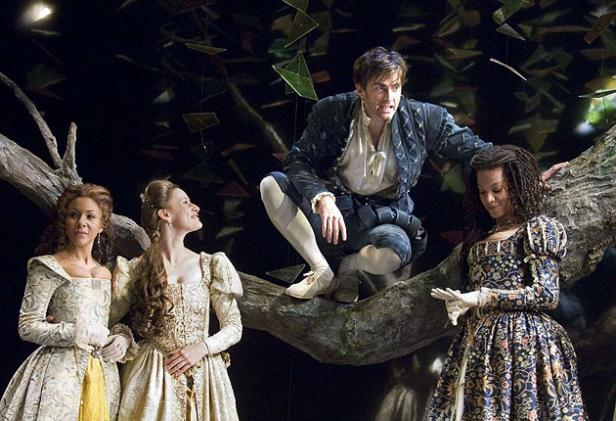
That’s the Doctor up in the tree, btw. He won’t be in the BSF’s performance, but how cool is that?

They will be doing Love’s Labour’s Lost from July 13 – Aug 5, and

the Taming of the Shrew from Aug 2 – Aug 26.

I have yet to see either of these to plays live so I’m very much looking forward to packing a picnic and heading to Charles Street to catch these.

For information on the Baltimore Shakespeare Factory go to  http://theshakespearefactory.com/

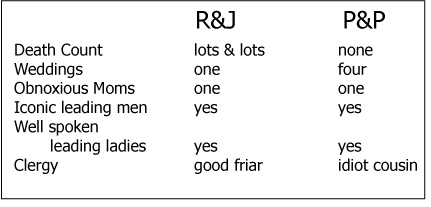
So in summary… Your summer should be filled with lots of great Shakespeare and Austen.

Breakdown:

Hope to see you under the stars this summer.

————————————

BTW here’s my list of must brings to an alfresco theatre production: HAT, Sunscreen & Sunglasses (if its during the day), bug repellant, bottle of cold water, lawn chair or blanket, light sweatshirt/jacket (if its at night)  snack or picnic (optional), wine (optional), chocolate (optional, but always recommended.)


Literary references in Jane Austen’s Persuasion

The following is a talk I gave at the JASNA:MD winter meeting in Baltimore. (JASNA stands for Jane Austen Society or North America). It is written (and was given) in first person, as Jane. I didn’t feel up to presenting in front of a room full of JA scholars as just little ole me. The numbers at the beginning of some of the paras refer to where the allusions fall in novel. 
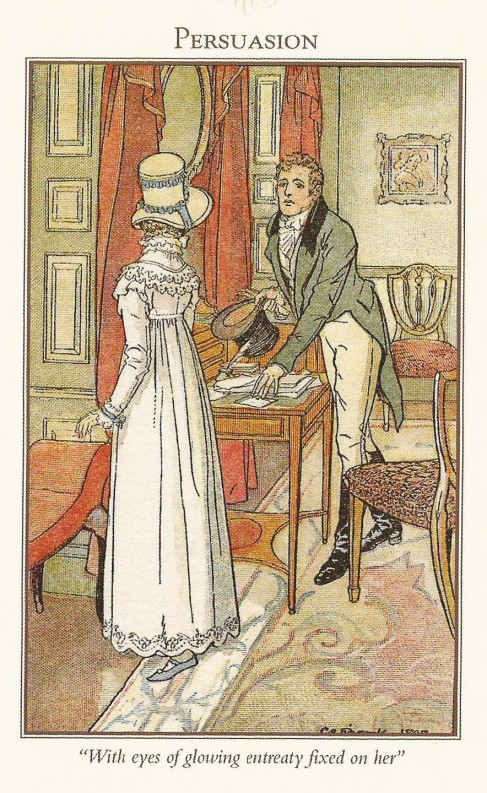
Image


The last novel I completed was Persuasion. It is shorter than my earlier works, and, perhaps because of my illness it is a bit less polished. The pace of Persuasion is uneven with some scenes being tight, brisk and full of information, while, I fear, others lumber along  like a country dance and take pages and pages in getting to the point. And I’m ashamed to admit that subplots and characters are unsatisfactorily deployed.  Alas it was left to my  dear brother Henry to publish it, along with Northanger Abbey, after I left this mortal plane in 1817.

Like many of my novels there’s an touch of the Fairy Tale lurking in the plot. Persuasion and Mansfield Park both owe a bit to Cinderella. Anne Elliot is treated as a “nobody” through out the book by her ridiculously vain father, Sir Walter, and her sisters, Elizabeth and  Mary.  There maybe no pumpkin or glass slipper, but, dear reader, rest assured there is a ‘prince’ at the end.

1.1

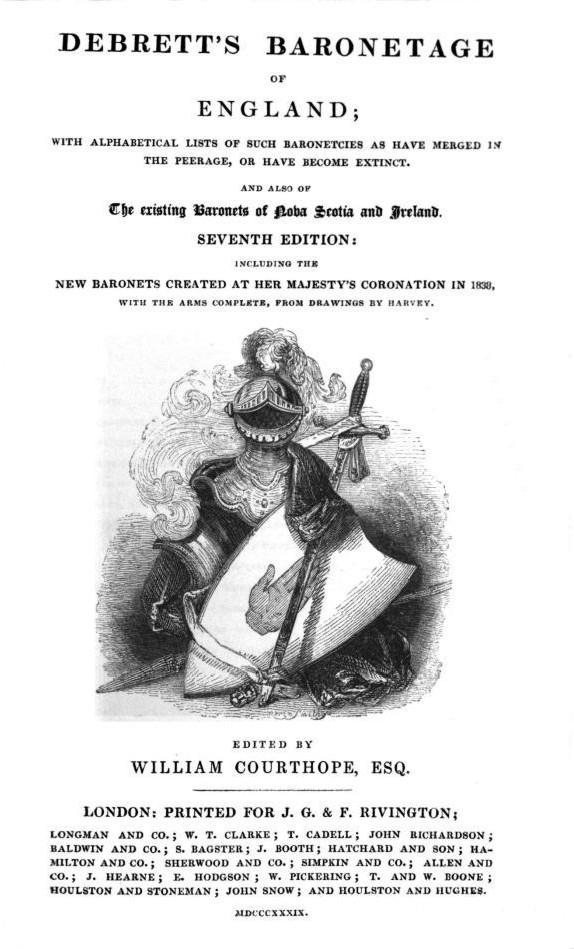
My first literary allusion is to John Debrett’s Baronetage of England. The Baronetage is Sir Walter’s favorite book, indeed it is the only book he ever reads. It is almost always open to page on the Elliot’s of Kellynich Hall.  The book is a genealogical guide to the British Ton, a Regency Who’s Who of the Peerage. Inclusion in the book reinforces Sir Walter’s very high opinion of himself.  And although HE is quite fictional, I am afraid to say there are those of my acquaintance who spend more time turning the leaves of the Baronetage than those of the Good Book.
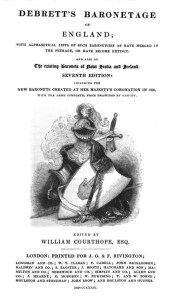
Here’s an ABBREVIATED listing from the REAL Baronetage:

 Barrington, of Barrington-Hall, Essex. Created Baronet, June 29, 1611.

Ti/TR. Camden, in his Britannia, fays, * Barrington-Hall « the feat of that eminent family of the Barringtons, who, in the time of King Stephen, were greatly enriched with the estate of the Lords Montfitchct;  a match with the daughter and co- heir of Henry Pole, Lord Montacute…

By including the book’s fictionalized entry for the Elliot’s I cleverly introduce several of the novels main characters.

1.8 Another reference list appears in Chapter 8. We are at Uppercross. Captain Wentworth is having dinner with the Musgrove’s and Anne. The eldest Musgrove sisters, Louisa and Henrietta pull out the Navy List to find out which ships Captain Wentworth had commanded. It is a calculated move of flirtation on their part. He is looking for a wife, and any pretty girl who shows a passing interest in the Navy will be sure to catch his eye.
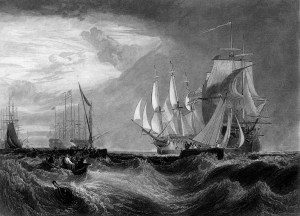
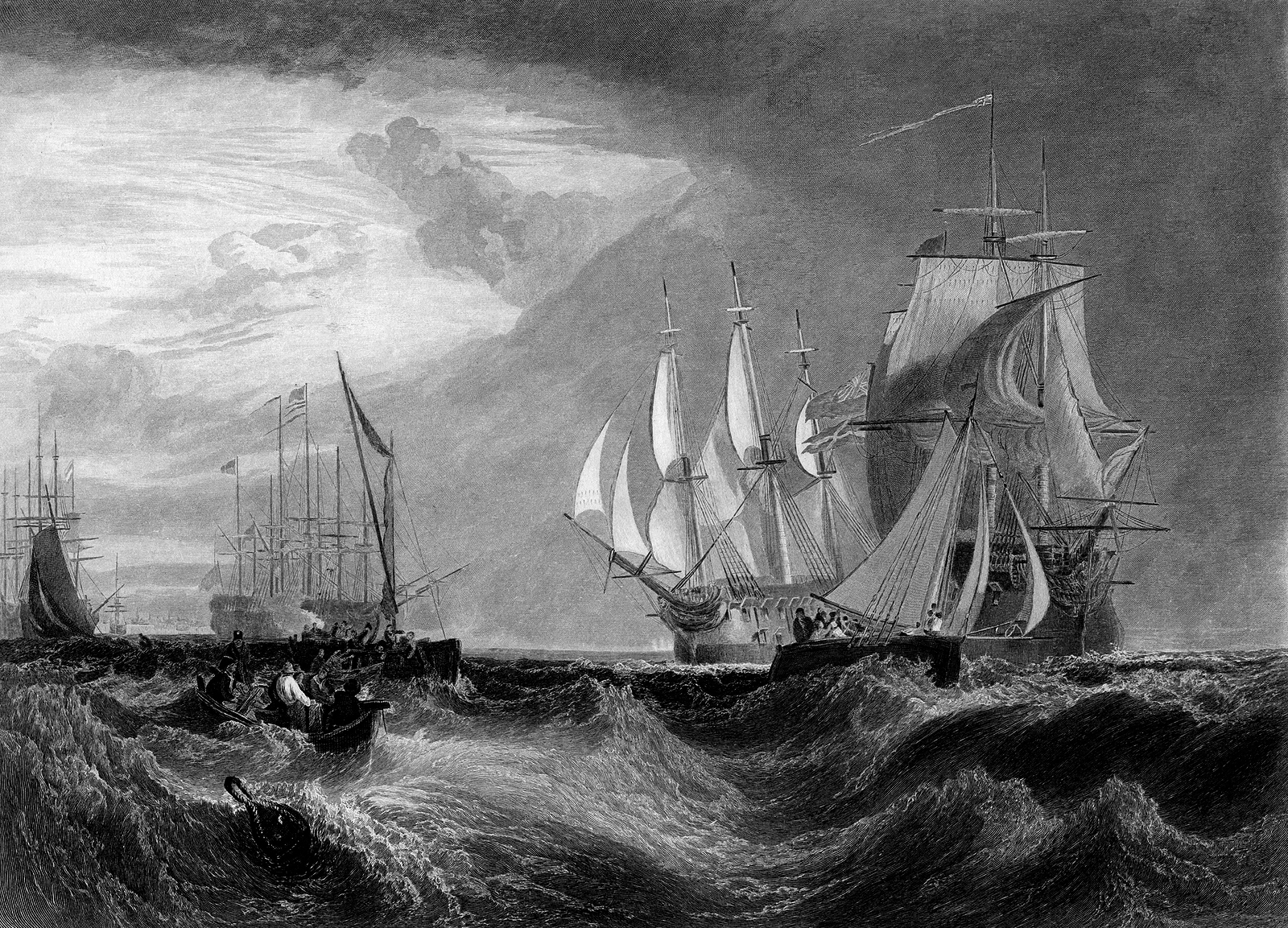
The Royal Fleet

Here’s an example of a real listing from the Navy List:

  • Wallib, Sir P. W. P., Mid. of “Cleopatra” when captured by the French frigate ” Villede Milan,” after a long action, 1805; Lieutenant of “Curieux,” and cut out a vessel in St. Ann’s Bay, Guadeloupe ; subsequently wrecked, in “Curieux” on the enemy’s coast…

So now you have it,  two list, the Baronetage and the Navy List. The  Linked-in and Facebook of the day if you please. By having a character read one verses the other I’m giving you a hint as to where their values lie. The older establishment members of society clung to the Baronetage, while the up and coming youngsters liked to read the Navy List.
1.10

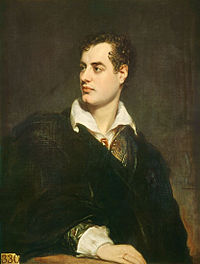
While at Uppercross my characters take a long November walk. Captain Wentworth is deep in conversation with the pretty Miss Musgroves, and pays no attention to Anne. Her goal, as usual, is not to be in any body’s way, and any pleasure she is to get from the walk “must arise from the exercise” and the beautiful autumn day which she describes as “the view of the last smiles of the year upon the tawny leaves and withered hedges.”  You’ll forgive my gentle echos of the romantic poetry of Byron, Wordsworth and Scott, and the sonnets of Shakespeare. Anne is 27, and I wrote it when I was nearly 40, we are both in the Autumn of our lives — caution and reserve in love as young women has lead us to loneliness and regret as we’ve grown older — and it is particularly tender that we find solace from the beauty in a fall day, is it not?

1.11

The Literary Allusions really start sailing when the group travels to Lyme to visit Captain Wentworth’s  friends  Captain Harville and Captain Benwick. Benwick was to marry Harville’s sister Fanny but the young woman died while he was at sea. Benwick, heartbroken takes solace only in long walks along the cobb and in reading depressing poetry.  Anne, no stranger to self punishment, joins him in conversation about literature as they discuss Sir Walter Scott’s “The Lady of the Lake” and  his “Marmion: A Tale of Flooden Field”
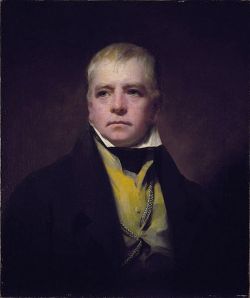
The Lady of the Lake is a narrative poem. Although it enjoys the same name of an Arthurian legioned it doesn’t share the same material as the Once and Future King.

“Marmion” tells how Lord Marmion lusts for the innocent Clara. Marmion  conspires with Constance a fallen nun, to implicate Clara’s fiancé, Sir Ralph De Wilton, in treason. De Wilton looses a duel goes into exile.  Clara takes refuge in a convent to escape Marmion’s advances. Constance is abandoned by Marmion and she ends up being walled – up – alive in the convent for breaking her vows. But she redeems herself by giving witness to De Wilton’s innocence. He returns and seeks his revenge at the Battle of Flooden Field.  Marmion dies in the combat, while De Wilton displays heroism … regains his honor … retrieves his lands … and marries Clara!  

Both poems are long and exciting, and were well known in in my circle, but “Marmion” has the added benefit of being about two lovers unjustly torn apart for years. Sound familiar?

So, Anne hopes to be of some use to her new friend by encouraging a “larger allowance of prose in his daily study.” She suggest works of the best moralists, … “calculated to rouse and fortify the mind.” … Then wonders ironically at her being able to preach patience and resignation when, after so many years of both, she is currently feeling very little of either.

1.12 The next day as their party is taking their last walk along the Cobb, Captain Benwick draws near Anne. When he says “Lord Byron’s ‘dark blue seas’ could not fail of being brought forward by their present view.”  I’m alluding of course to Byron’s poem “Chile Harold’s Pilgrimage” …

He that has sailed upon the dark blue sea,
Has viewed at times, I ween, a full fair sight;
When the fresh breeze is fair as breeze may be,
The white sails set, the gallant frigate tight,
Masts, spires, and strand retiring to the right,
The glorious main expanding o’er the bow,
The convoy spread like wild swans in their flight,
The dullest sailer wearing bravely now,
So gaily curl the waves before each dashing prow.
 

… Anne and Benwick give their full attention to both poem and scenery until it is drawn away when Louisa is injured.
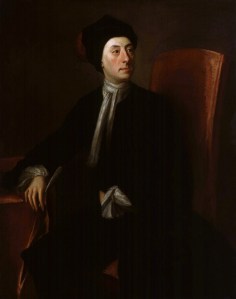
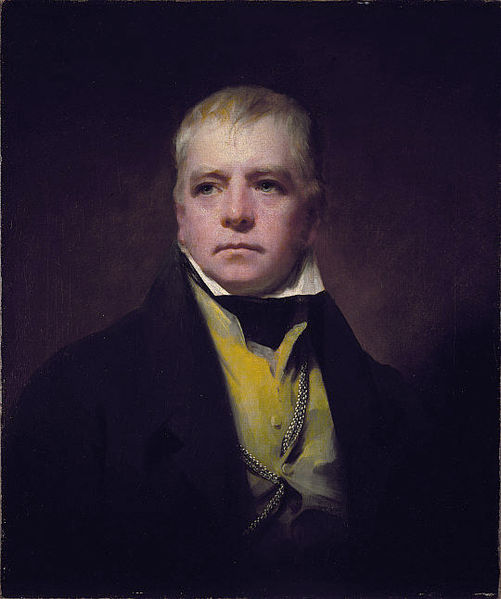
Mathew Prior

Anne attends to the invalid as others loose their heads. Anne, ever anxious to be of use, is ready to stay and nurse Louisa, who is now clearly Captain Wentworth’s favorite. The passage: “Without emulating the feelings of an Emma towards her Henry, she would have attended on Louisa with a zeal above the common claims of regard, for his sake…”  refers to Matthew Prior’s  “Henry and Emma”  a ballad based on the much earlier “The Nut-Brown Maid.”

As Beauty’s Potent Queen, with ev’ry Grace
That once was Emma’s, has adorn’d Thy Face;
And as Her Son has to My Bosom dealt
That constant Flame, which faithful Henry felt:

2.3

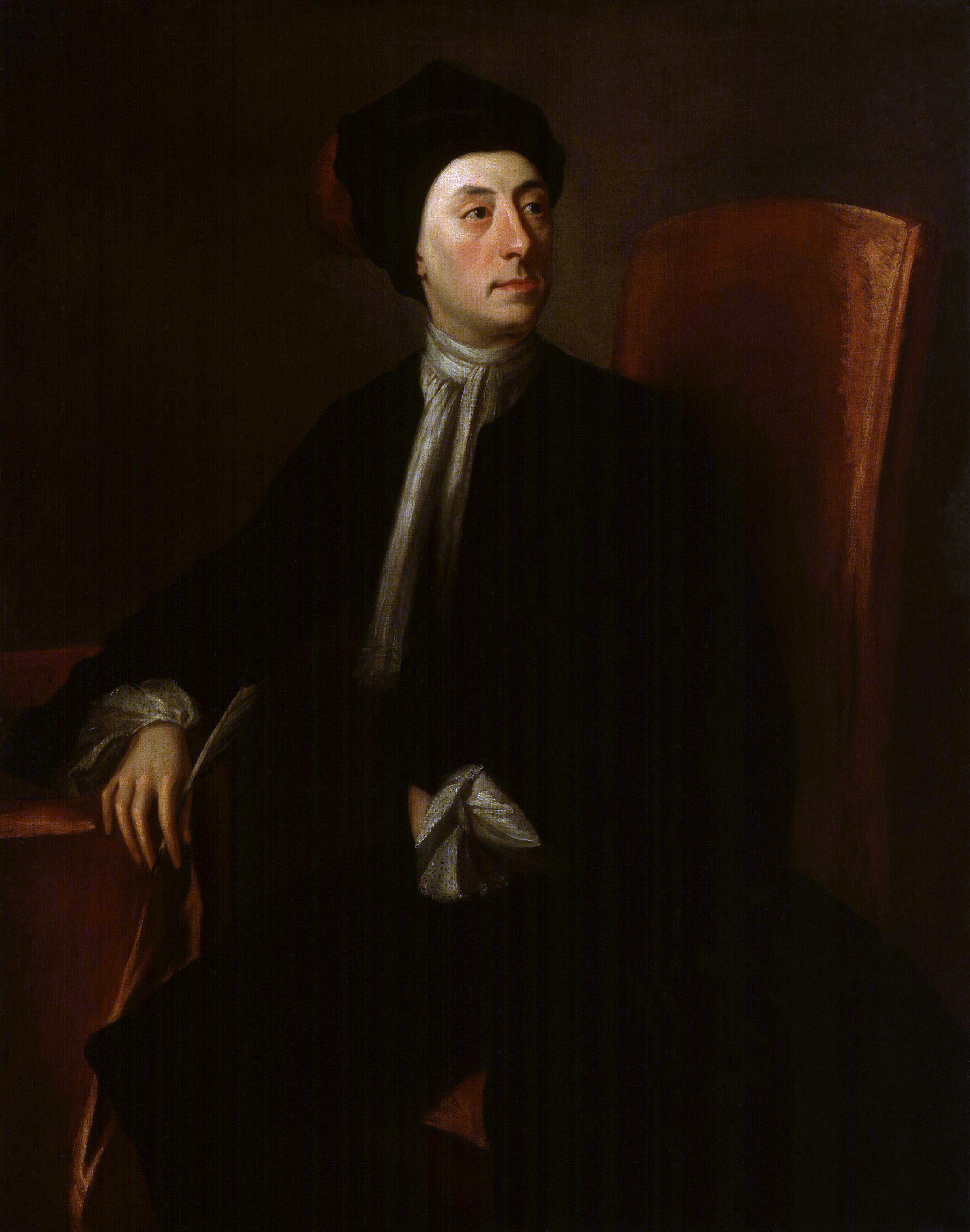
In the second volume of the novel I move the action, alas, to Bath. Here my critical eyes are wide open and looking everywhere as I skewer society’s witless and vain. With the Elliots I find easy fodder. In Chapter Three Mr. Elliot, Anne’s Cousin, and heir to Kellynich Hall, pays a late night visit to the family at Camden-place. I neatly set the time of the visit with the phrase “The elegant little clock on the mantle-piece had stuck ‘eleven with its silver sounds” an allusion to Alexander Pope’s “The Rape of the Lock”.

Thrice rung the Bell, the Slipper knock’d the Ground,
And the press’d Watch return’d a silver Sound.

“The Rape of the Lock” is a mock-epic poem. Forgive me if I join Mr. Pope in lampooning Society. In Bath one must fine one’s sources of amusement where one can.

2.8
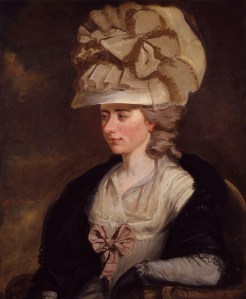
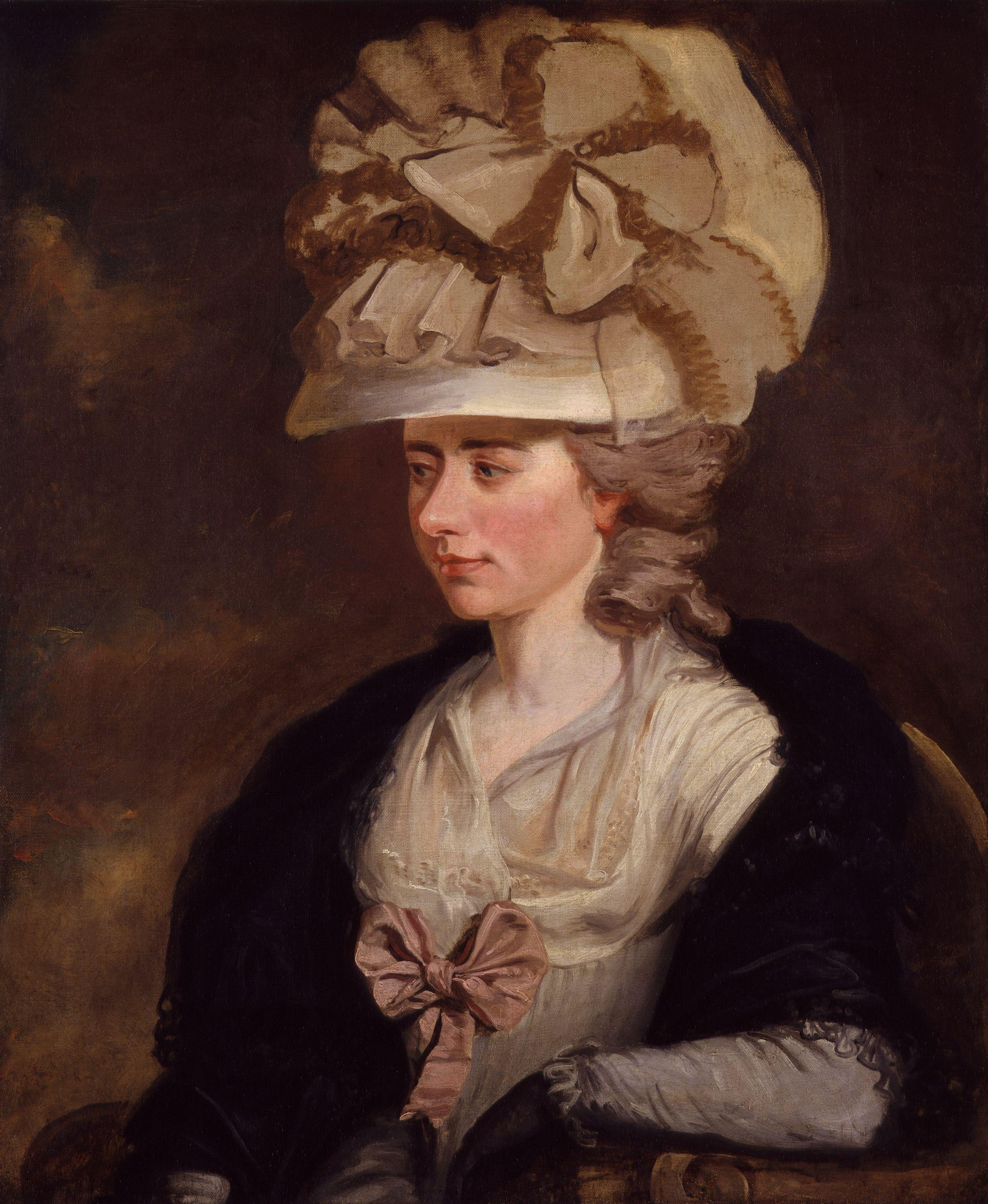
It comes to pass that Captain Wentworth also winds up in Bath. When Anne, her family and Frederick all show up at the same concert Anne attempts to get a seat that will let her both keep an eye on the Captain and allow herself to be seen by him. “She could not do so, without comparing herself with Miss Larolles, the inimitable Miss Larolles …” is a reference to  a character from Fanny Burney’s 1782 novel “Cecilia.”  There is some synergy between the books as both Anne and Cecilia have a parent obsessed with social rank center, and both their families live beyond their means. Miss Larolles, a member of the Ton, takes measures to explain the best place sit at the opera if one is to enjoy oneself.

“Do you know” says Miss Larolles “Mr Meadows has not spoke one word to me all the evening, though I am sure he saw me, for I sat at the outside on purpose to speak to a person or two that I knew would be strolling about; for if one sits on the inside there’s no speaking to a creature; you know so I never do it at the opera… It’s the shockingest thing you can conceive, to be made sit in the middle of these forms one might as well be at home for nobody can speak to one.” 

I just adored “Cecilia.” I mention it in both Persuasion and Northanger Abbey, and even borrowed the title of Pride and Prejudice from a passage near the end of the novel.

2.11

The final Literary Allusion in Persuasion is to The Thousand and One Arabian Nights. Anne’s friend, Mrs. Smith, has informed her of Mr. Elliot’s true nature, but she must wait before she reveals it. “Her faith was plighted, and Mr. Elliot’s character, like the Sultaness Scheherazade’s head, must live another day.” Scheherazade, of course, kept her head by telling a new story to the Sultan every night.  Thus both The Thousand and One Arabian Night and Persuasion are stories of deferral, with Anne’s taking seven years to come to fruition.

In the end the Sultan was so entranced with Scheherazade that he did not kill her…

… His mind had become softened, and he was convinced of the great merit and good sense of the Sultana Scheherazade.  He well recollected the courage with which she voluntarily exposed herself to destruction, in becoming his queen.”

He had become very much PERSUADED, indeed.

If in some small measure I have managed to illuminate the great works that have influenced me I will be most pleased. And I hope that the next time you lift the pages of this novel you will discover the hidden gems in my beloved Persuasion.


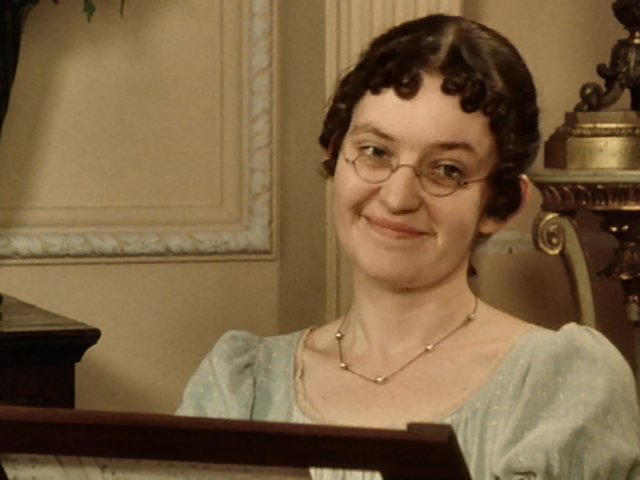
Jane Austen’s A-Z

Personally I think this would make an awesome children’s book. Any one want to publish it with me?

A Anne Anxious Heart (Persuasion)

B Captain Benwick’s Buried Beloved (Persuasion)

C Courteous Colonel Brandon (Sense and Sensibility)

D Donwell Abbey’s Drafty Hall (Emma)

E Elinor & Edwards’ Eternal Love (Sense and Sensibility)

F Frank Churchill’s Fancy Hair Cut (Emma)

G The Gardiner’s of Grace Church Street (Pride and Prejudice)

H Harriet’s Humble Beginnings (Emma)

I Ignorant, Idle Mrs. Elton (Emma)

J Jane’s Jade Necklace (Pride and Prejudice)

K Knightly’s Kind Heart (Emma)

L Lizzie’s Lovely Eyes (Pride and Prejudice)

M Margaret’s Marvelous Atlas (Sense and Sensibility)

N Nights at Northanger Abbey (Northanger Abbey)

O Overbearing, Obstinate Lady Catherine(Pride & Prejudice)

P Picking Plump Strawberries (Emma)

Q Quixotically, Quiet Jane Fairfax (Emma)

R Ridiculous, Rotund Mr. Rushworth (Mansfield Park)

S Stupid, Selfish Lydia! (Pride & Prejudice)

T Tiring Teas with Fanny (Sense and Sensibility)

U Emma’s Ubiquitous Umbrella (Emma)

V Vain, Villainous Wickham (Pride & Prejudice)

W Willoughby’s Wayward Ways (Sense and Sensibility)

X Darcy’s Xenophobic View of Society. (Pride & Prejudice)

Y A Year of Yawning in Bath (Persuasion)

Z Zillions of Accolades by  a Rosings Zealot (Pride & Prejudice)