Category Archives: Theatre

Thought of the Day 10.20.12 Viggo Mortensen

“There’s no excuse to be bored. Sad, yes. Angry, yes. Depressed, yes. Crazy, yes. But there’s no excuse for boredom, ever.”
Viggo Mortensen

Viggo Mortensen was born on this day in New York City, New York, USA  in 1958. He is 54 years old.

His family lived in Venezuela, Denmark and Argentina where his father managed farms and ranches.   He learned to speak fluent Danish, Spanish and English growing up. His parents divorced when he was 11 and he moved with his mother back to New York. After graduating St. Lawrence University he moved to Europe and lived in Spain, England and Denmark making his way as a truck driver and flower seller. Eventually he returned to the US ready to try his hand at acting.

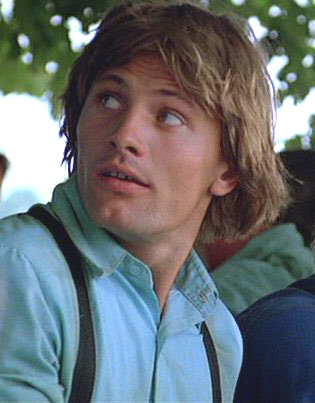
Viggo Mortensen in a still from Witness [Image courtesy: Brego.net]

He did some theatre then expanded to film. His footage in 1984’s Swing Shift and  Woody Allen’s The Purple Rose of Cairo ended up on the cutting room floor, but he had more luck in Peter Weir’s Witness. Mortensen played Moses Hochleitner, the younger brother to Alexander Godunov’s Daniel Hochleitner. He didn’t have a lot of lines in the Harrison Ford flick, but some how he stood out from the sea of blond-haired Amish men in blue shirts.

His next step was to Television where he was cast as Bragg on Search for Tomorrow [BRAGG, what a great soap opera name, right?]

In 1987 he played a crooked cop on Miami Vice. There was more theatre too, this time in LA’s Coast Playhouse’s production of Bent, for which he earned a Dramalogue Critics’ Award.

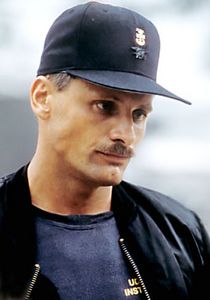
Movie still from G.I. Jane [Brego.net]

A splay of supporting roles in the 1990s saw him acting in some good movies (The Portrait of a Lady directed by Jane Campion) and some not so good movies (Leatherface: The Texas Chainsaw Massacre III)  Critics started to take notice when he starred opposite Demi Moore as brutal Master Chief John Urgayle in G.I. Jane (some critics said he stole the movie from Moore) and as the other man in A Walk on the Moon with Diane Lane. He played another ‘other’ man in A Perfect Murder, a reboot of Hitchcock’s Dial M for Murder with Michael Douglas and Gwyneth Paltrow. He was Eddie Boone, a major league baseball player with a trifecta of additions in rehab with Sandra Bullock in 28 Days. And rounded out the decade by playing the devil in The Prophecy.

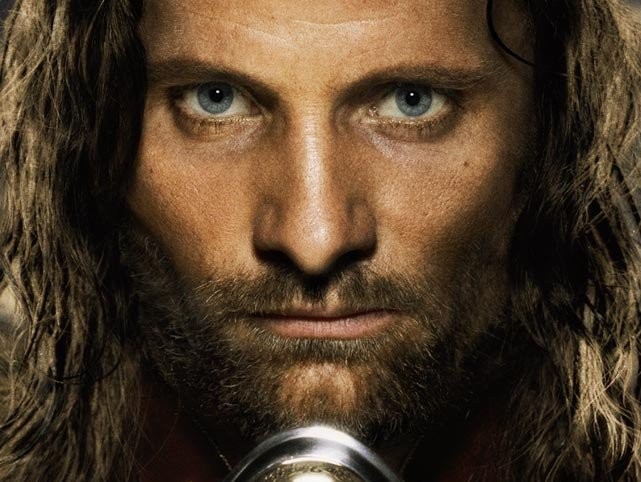
Movie poster from Lord of the Rings [Image courtesy: Beyond Hollywood.com]

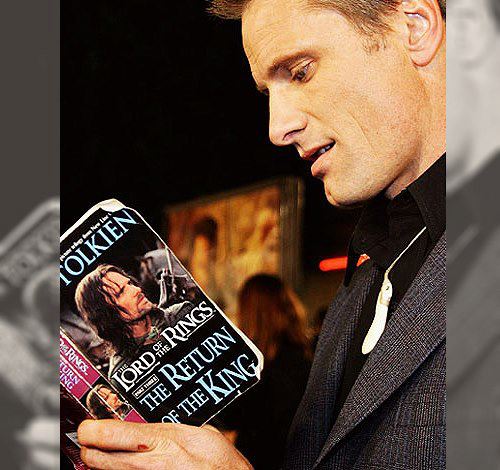
2001 saw the release of The Lord of the Rings: The Fellowship of the Rings, the first in Peter Jackson’s epic Tolkien cycle. With his role as the heroic Aragorn “Mortensen was established as a major leading man among Hollywood’s A-list ranks.” [Viggo Mortensen — Biography, Movies. yahoo.com The Two Towers followed in 2002 and The Return of the King premiered in 2003. He brought quiet strength, “commanding good looks”[ibid] and a rye sense of humor to Aragorn. He embraced the role whole heartedly. He did all his own stunts in the movies (and took quiet a few knocks in the process). He wore his sword and costume for days on end so they would have an authentic lived in look. And he became so attached to his equine co-stars, Uraeus and Kenny, that he purchased the horses after the film wrapped and took them home.

After his success in the Lord of the Rings Mortensen managed to keep himself centered…

Exceedingly humble about success and uncharacteristically un-Hollywood, Mortensen managed to stay somewhat reclusive and focused on other interests outside of acting, namely painting and writing poetry, despite becoming one of the most recognizable stars in the world. [Viggo Mortensen — Biography, Movies. yahoo.com ]

He used some of his earnings from playing Aragorn to start Perceval Press publishing house in Santa Monica, California.

Perceval Press is a small, independent publisher specializing in art, critical writing, and poetry. The intention of the press is to publish texts, images, and recordings that otherwise might not be presented. [Percival Press]

Mortensen’s own artistic, musical and written works are available through Perceval Press. He writes poetry, essays, and companion pieces for his paintings and photographic work in English, Spanish and Danish. Musically he has completed 16 albums, working almost exclusively with the guitarist Buckethead.

Back on the silver screen was Hidalgo in 2007.  It is the true story of American Frank T. Hopkins who participation in a 3,000-mile race across the Najd desert called the “Ocean of Fire”.

He gave “his most compelling and carefully drawn performance to date” [ibid] as an everyday man who’s violent past catches up to him in A History of Violence a film directed by David Cronenberg. He worked with Cronenberg again in 2007 for Eastern Promises, where he played a Russian gangster. He was nominated for an Academy Award for his role in the film.

In 2008 he was Ed Harris’ sidekick in the Western Appaloosa. He also starred in Good which takes place in the 1930s. Mortensen is a professor struggling to decide if he should join the Nazi party.

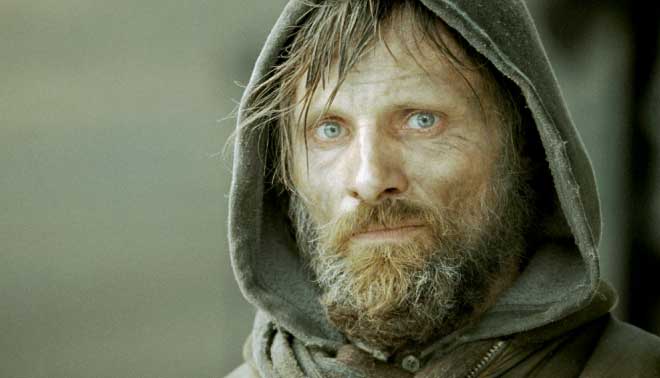
Movie still from The Road. [Image courtesy: Wired.com]

The grim Cormac McCarthy novel was the basis for Mortensen’s next movie, The Road. It is a post-apocalyptic story of a father and son trying to survive in a bleak wasteland.

Once again teaming up with Cronenberg, Mortensen plays Dr. Sigmund Freud in his the 2011 film,  A Dangerous Method.

Coming up Mortensen has several film ready for release including: On The Road and Everybody Has a Plan; and in 2013 The Faces of January and The Last Voyage of Demeter.

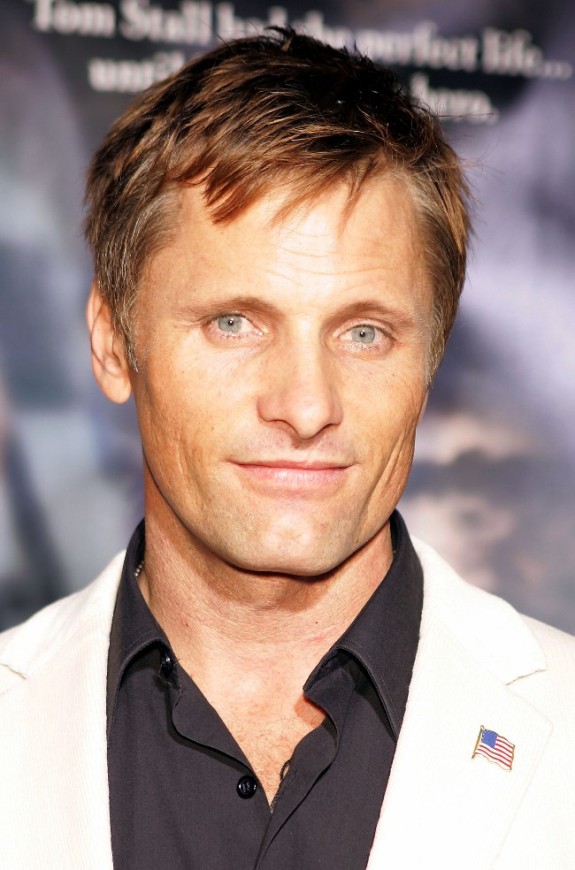
Publicity shot. [Image courtesy: TheReelist]

Found this on Facebook and had to share.


Thought of the Day 10.15.12 P. G. Wodehouse

“I just sit at a typewriter and curse a bit.”“There is only one cure for gray hair. It was invented by a Frenchman. It is called the guillotine.”“I know I was writing stories when I was five. I don’t know what I did before that. Just loafed I suppose.”–P.G. Wodehouse

P. G. Wodehouse, Bolton's friend and collaborator

“I just sit at a typewriter and curse a bit.”

Pelham Grenville Wodehouse was born on this day in Guildford, Surrey, England in 1881. This is the 131st anniversary of his birth.

Wodehouse, called “Plum” as a child, spent much of his early life in the care of a gaggle of aunts and at boarding schools in England, while his parents lived in the Far East. Third of four boys, Wodehouse was close to his brothers.  He went to The Chalet School, Elizabeth College in Guernsey, Malvern House (near Dover) and finally at Dulwich College with his older brother Armine. He flourished at Dulwich where he played sports (especially boxing, cricket and rugby), studied the classics, sang and acted in the school’s theatricals, and of course, wrote.)

Psmith in the City

Psmith in the City (Photo credit: Wikipedia)

Upon graduation in 1900 ailing family finances meant he couldn’t go on to Oxford like Armine. Instead, Plum’s father got him a job in the London branch of the Hong Kong and Shanghai Bank. He wrote about his experiences at the bank in Psmith in the City, but he said he “never learned a thing about banking.”  In 1902 he gave up the financial farce and dove into journalism  with a job writing a comic column at The Globe newspaper. He moved to New York and published his first novel, The Pothunters the same year.  A Prefect’s Uncle; Love Among the Chickens; The Swoop; Psmith In the City; Psmith, Journalist; The Prince and Betty; and  Something New followed fairly quickly there after.

The Prince and Betty

The Prince and Betty (Photo credit: Wikipedia)

He also wrote for musicals. He penned the book for Cole Porter’s Anything Goes; the Gershwin’ s Oh Kay . He worked with Ira Gershwin on the lyrics for Rosalie. And he wrote dozens of musicals — generically called the Princess Theatre Musicals — with Guy Bolton and Jerome Kern. [For a complete list of Wodehouse musicals go to The Playwrights Database at doolee.com]   The Princess Theatre Musical are generally seen as a stepping stone that took the best of vaudeville and operetta and blended them into modern musical theatre. They transitioned

“… the haphazard musicals of the past to the newer, more methodical modern musical comedy … the libretto is remarkably pun-free and the plot is natural and unforced. Charm was uppermost in the creators’ minds … the audience could relax, have a few laughs, feel slightly superior to the silly undertakings on stage, and smile along with the simple, melodic, lyrically witty but undemanding songs” [Bloom and Vlastnic Broadway Musicals: The 101 Greatest Shows of All Time]

My Man Jeeves

My Man Jeeves (Photo credit: Wikipedia)

Starting with My Man Jeeves in 1919 Wodehouse published the series of books for which is he best known, The Jeeves and Wooster books.  Here’s a clip from the 1990 Granada Television production of Jeeves and Wooster starring Hugh Laurie and Stephen Fry:

He also wrote the Blandings Castle series about a fictional castle with Lord Emsworth and his prize-winning pig, the “Empress of Blandings.”

Since he and his wife, Ethel Wayman, were officially residents of both England and the US they were being taxed by both countries. To alleviate the tax burden they moved to France in 1934. The Wodehouse’s remained in France when the Nazi troops moved in. Wodehouse was interned as an “enemy alien” eventually landing in Tost, Upper Silesia, Poland. He later quipped of  his ‘lodgings’ “If this is Upper Silesia, what on earth must Lower Silesia be like?” He entertained his fellow prisoners with dialogues and wrote during his two-year internment (he completed one novel and started two more). He was released just prior to his 60th birthday when a German friend from his Hollywood days, Werner Plack, approached him about doing a broadcast for the Americans describing his life as an internee.  America was not at war with Germany yet, and he had received many letters of encouragement from his fans in the US while in the camp. He saw this as a way to thank them. And, Wodehouse claimed,  he was simply reflecting the “flippant, cheerful attitude of all British prisoners.” [the Guardian]  in the broadcasts. But the British public didn’t see it that way, and neither did MI5. He was interrogated for suspected collaboration with the Germans — something that shocked the aging author. “I thought that people, hearing the talks, would admire me for having kept cheerful under difficult conditions,” [ibid] Wodehouse maintained that he never had intended to aid the enemy. But the incident left a bad taste with both the Wodehouses and the British public. The author moved to the US in 1945, and never went back to England.

Wodehouse died in 1975.

books - wodehouse

books – wodehouse (Photo credit: rocketlass)


Thought of the Day 10.4.12 Buster Keaton

“Tragedy is a close-up; comedy is a long shot.”
Buster Keaton

Buster Keaton

Buster Keaton (Photo credit: twm1340)

Joseph Frank Keaton IV was born on this day in Piqua, Kansas, USA in 1895. Today is the 117th anniversary of his birth.

Keaton’s parents were vaudeville actors and he joined their act at age three. He got his nickname, Buster, when he fell down a flight a stairs and landed at Harry Houdini‘s feet. The magician picked him up and handed him to his mother saying “What a buster.”

Physical comedy and slapstick was part of the family act — redubbed “The Three Keatons” when Buster became a permanent fixture.  The little boy was

knocked over, thrown through windows, dropped down stairs, and essentially used as a living prop. It was this training in vaudeville that prepared him for the fast-paced slapstick comedy of the silent movies. [American Masters: Buster Keaton]

Keaton later noted that “It was the roughest knockout act that was ever in the history of the theater.” [Buster Keaton.biography] He knew how to land and never got hurt from the onstage antics as “the little boy who can’t be damaged,” he enjoyed flying about the stage so much that he would giggle when his father tossed him about. But when he realized that the audience liked the heightened sense of danger, Buster  developed his famous “deadpan face.”

Buster Keaton

Buster Keaton (Photo credit: Wikipedia)

Buster moved to Hollywood at 22 and began to work with Fatty Arbuckle. His first film was The Butcher Boy in 1917. Arbuckle was already an established comedian and he became Keaton’s mentor. Keaton earned $40 a week for his work with Arbuckle, and the two worked together until 1920 when Keaton was confident enough to go it alone.

He made a number of “two-reelers,” or shorts, and then feature films including One Week, The Playhouse, Cops, The Camera man, Steamboat Bill, Jr.Our Hospitality, Sherlock. Jr. and The General.  

Here’s the classic “hat” scene from Steamboat Bill, Jr...

He did all his own stunts — instructing the cameras to keep rolling “no matter what” until he yelled “cut” or he died.  And he didn’t use special effects.In another scene from Steamboat Bill, Jr. Keaton stands outside a dilapidated house. The front of the house (a 2 ton facade) falls on him, and he happens to be standing where an open window lets him escape injury. It is not a very big window (there is a much bigger on right next to him) and it must have taken both a lot of mathematics and a lot of courage to do the stunt, but it made for some movie magic…

The General is considered one of the greatest silent films ever made now, but when it came out the reception was tepid.  It resulted in Keaton’s switch to MGM studios, something he regretted for the rest of his career.  Keaton thought The General was his greatest movie, and the public, eventually, came around to his point of view. In 1989 the National Film Registry added The General  to its list. Roger Ebert named the film  the #1 greatest film of the silent era.

Buster Keaton

Buster Keaton (Photo credit: twm1340)

MGM let him make one more truly classic “Buster style” film, The Cameraman in 1928, but then MGM lowered the boom and  took away his creative control. How sweet is this scene from the Cameraman?

With the studio calling the shots Keaton became just another comic actor. He had a number of hits in the 30’s, many of them with Jimmy Durante at his side, but he lacked the stoic charm and the ownership of his previous movies. He worked on Marx Brothers and Red Skelton movies — uncredited — and did what he could to make a living.

Screen shot from Sunset Boulevard. [Image courtesy: Bobby Rivers TV]

In  1950 he played himself as a member of the “waxworks” in Billy Wilder‘s Sunset Boulevard and then in 1953 he was in  Charlie Chaplin’s Limelight. Interest in his old movies revived and he started to make television appearances. Paramount made a movie about his life, The Buster Keaton Story starring Donald O’Connor.

 “…By the 1960s, his films were returning to the theaters and he was being hailed as the greatest actor of the silent era.” [American Masters: Buster Keaton]

He was given an Honorary Academy Award “for his unique talents which brought immortal comedies to the screen” in 1960.

Keaton passed away on February 1, 1966. He was suffering from Cancer.


Thought of the Day 10.3.12 Clive Owens

“The sexiest part of the body is the eyes. That’s what I believe.”
Clive Owen


Clive Owen was born on this day in Coventry, West Midlands, England. he is 48 years old.

He grew up in a the small working class town of Coventry. He is fourth in a brood of five boys. His father exited the scene when Clive was 3, and he was raised by his mother and step father. He starting acting at 13 when he was cast as the Artful Dodger in a school play. (And there has been a little bit of the Artful Dodger in almost every role he’s played since.) He says he became “completely obsessed and decided to become an actor from then on.” He moved on to the Royal Academy of Dramatic Art in London in 1987. The audition process was daunting, two monologues, one modern and one from Shakespeare. If you nailed it you were in, if you didn’t, you weren’t. He nailed it. After RADA he continued doing Shakespeare at the Young Vic.

From theatre he moved to television. His most notable series being  Chancer –where he played a con-man with a heart of gold, he’s an anti-hero who is willing to use all the arrows in his –checkered past’s– quiver to help his friends. As the show’s tag line says “He’s rude, arrogant, ingenious, unprincipled … and utterly charming.”   [Owen’s is still growing into himself as an actor in Chancer. He’s good, but he’s not great. And The production values are definitely television level.]


Cover art for Croupier.

His big break in film came in the 1998 movie Croupier. Owens plays a an aspiring writer who takes a job as casino croupier to both pay the bills and help with research on a book. Owens narrates the movie in his deadpan quasi-noir style. [It is well written and well acted, and deserves a place on your Clive Owen’s Netflix queue.]

<iframe width=”420″ height=”315″ src=”http://www.youtube.com/embed/JhQpMqJMdnw&#8221; frameborder=”0″ allowfullscreen>

He shifted gears to play Colin Briggs a prisoner in an experimental English prison who gets rehabilitated  through gardening in Greenfingers. Helen Mirren also stars. [I really enjoyed this gentle movie. Although it is largely set in a prison it isn’t filled with the violence that is so often present in a Owen’s film. Make this #2 for your C.O. Netflix queue.]

<iframe width=”420″ height=”315″ src=”http://www.youtube.com/embed/lzvwH5EhNTI&#8221; frameborder=”0″ allowfullscreen>

Back on BBC One he starred in Second Sight as Chief Inspector Ross Tanner a detective who is loosing his eye sight.

He played a key role in Robert Altman’s ensemble film Gosford Park. [There’s so much to see in Gosford Park you’ll probably need to watch it more than once. Plus…Maggie Smith bonus!… put it in your queue.]

<iframe width=”560″ height=”315″ src=”http://www.youtube.com/embed/CjXdmXhwIQk&#8221; frameborder=”0″ allowfullscreen>

On stage he appeared as Dan both in the West End and Broadway versions of Closer. When the show was made into a movie in 2005 he switched roles and played Larry. He garnered a Golden Globe and BAFTA award for the film.

He followed Closer with a trio of films, Derailed, Sin City andInside Man in quick succession He was rumored to be the next James Bond, but the producers chose Daniel Craig instead. Which is fine because it left him open to take his best role to date, Theo Faron in Alfonso Cuaron’s Children of Men.

Children of Men is a gritty dystopian look at life in 2027 England. “It’s a heartbreaking, bullet-strewn valentine to what keeps us human.” (–Keith Phipps) and is loosely based on the P.D. James novel of the same name. Owen, whose characters are often anti heroes who spend a movie reacting to shit that thrown at them, is the anti-ist of heroes who has the most shit ever thrown at him in the roughly 100 minute running time of the film. And he is wonderful in it. [This is my favorite Owen’s movie and my number one pick for your Netflix queue.]

He is good in other films, Elizabeth: The Golden Age, King Arthur, andInside Man; and just OK in a slew of films where he always seems to play the same guy with a gun.  He was very funny poking fun at his leading man image in a guest spot on the Ricky Gervais show Extras. [ I didn’t make it through the HBO Hemingway & Gellhorn, (I’m not sure if was a too tense Nicolle Kidman, the excess of sex, Clive’s mustache, or a combination of  all three, but  I gave up about 45 minutes in.) There are a couple of films I’m looking forward to seeing– The Boys Are Back and Shadow Dancer both look interesting. ]

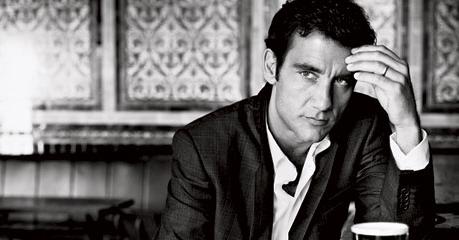
[Image courtesy: The Movie Blog]

He met his wife when they were cast opposite each other as Romeo and Juliet 20 years ago. For an actor considered an international sex symbol/tough guy he is very family oriented. He does a movie for several months then comes home where he enjoys being a homebody/nobody. They have two pre-teen girls.


Thought of the Day 9.28.12 Gwyneth Paltrow

“Beauty, to me, is about being comfortable in your own skin. That, or a kick-ass red lipstick.”
–Gwyneth Paltrow

03092011-DSC_0697_Gwyneth Paltrow

03092011-DSC_0697_Gwyneth Paltrow (Photo credit: brixton21)

Gwyneth Kate Paltrow was born on this day in Los Angeles, California in 1972. She is 40 years old.

Paltrow has show business in her DNA. Her father, the late Bruce Paltrow, was a film producer and director, and her mother, Blythe Danner, is an Emmy and Tony Award winning actress. Brother, Jake, is following in his father’s footsteps as a director.

Gwyneth grew up in Santa Monica. The family moved to Massachusetts when she was 11 and she split her time there between summer stock at the Williamstown Theatre Festival in the Berkshires and the all girls Spence School in Manhattan during the winter.

“My playground was the theatre. I’d sit and watch my mother pretend for a living. As a young girl, that’s pretty seductive.” [Paltrow]

She flirted with Anthropology at the UC Santa Barbara, but Acting called and she dropped out.

At 19 she made her film debut in the movie Shout in which John Travolta plays a  teacher at a West Texas home for boys who helps the kids learn to love music through the magic of Rock and Roll. She was Young Wendy in Steven Spielberg’s Hook. After a slew of made for television movies she returned to the big screen in 1995 in Se7en opposite then love interest Brad Pitt.

In 1996 she sparkled in the title role of Emma. It’s always a good career move to play a Jane Austen heroine in my opinion, and  Paltrow did a delightful job with the role of Emma Woodhouse. [Emma is my first pick of Paltrow movies that  you should put on your Netflix queue — if you don’t already own it.]

Paltrow as Emma [Image courtesy: Austenitis]

Now a Hollywood a-lister, Paltrow had an impressive run of  films in 1998; a modern version of Great Expectations with Ethan Hawke, Sliding Doors, A Perfect Murder (a remake of Dial M for Murder), Hush, and the magnificent Shakespeare in Love.

Paltrow plays Viola de Lesseps opposite Joseph Finnes’ Shakespeare in a story of mistaken identity, love, comedy and drama worthy the bard. With Geoffrey Rush, Judi Dench and Collin Firth in supporting roles, Shakespeare in Love is fantastic. Paltrow and Dench won Oscars and the movie took home Best Picture.  [Shakespeare in Love is my second Paltrow pick for your Netflix queue.]

She was in Anthony Minghella’s The Talented Mr. Ripley opposite Matt Damon and Jude Law in 1999.

In 2000 she showed the world that she could sing in Duets with Huey Lewis. Then played opposite her long time friend Ben Affleck in Bounce.

She had roles in the ensemble movies Anniversary Party & The Royal Tenenbaums in 2001. And co-starred with Jack Black in the comedy Shallow Hal.

Paltrow and Arron Eckhart played the sexiest literary researchers EVER in an adaptation of A.S. Byatt’s Possession. The pair uncover letters linking two Victorian writers (played by Jeremy Northam and Jennifer Ehle.)

Paltrow and Eckhart in Possession [Image courtesy:buzzsugar.com]

Paltrow rather famously said:

“I don’t really understand the concept of having a career, or what agents mean when they say they’re building one for you. I just do things I think will be interesting and that have integrity.”

which explains the swings from serious/dramatic roles to the campy fun fest that dot her filmography. She took on poet Sylvia Path in Sylvia  (Blythe Danner played her mother) then the next year she played reporter Polly Perkins in the highly stylized retro/sci fi Sky Captain and the World of Tommorow. Then it was back to serious Gwyneth for Proof.

She had small roles in Infamous, Love and Other Disasters, and Running With Scissors and a supporting role in The Good Night before landing the role of Pepper Potts in the big budget film Iron Man opposite Robert Downey, Jr.. She reprised the role in Iron Man 2 and in the Avengers. (And because you can never flog a dead horse too much… you can look for Pepper Potts AGAIN inIron Man 3 in 2013)

She brought out the pipes again for Country Strong where she played struggling country singer Kelly Canter. Here’s “Shake That Thing” from the movie:

Paltrow has had three guest spots on the popular television show Glee as substitute teacher Holly Holliday.

She had a small but pivital role in Contagion. The film also stars  her Talented Mr. Ripley co stars Matt Damon and Jude Law, and her Possession co-star Jennifer Ehle. [Contagion is another movie you should put in your queue.]

This  year you can see her in the romanic comedy Thanks for Sharing with Mark Ruffalo and Tim Robbins.


Thought of the Day 9.26.12 George Gershwin

Life is a lot like jazz.. it’s best when you improvise.
 –George Gershwin
English: George Gershwin, 28 March 1937 Azərba...

English: George Gershwin, 28 March 1937 Azərbaycan: Corc Gerşvin, ABŞ bəstəkarı, 28 mart 1937 Español: George Gershwin, 28 marzo 1937 (Photo credit: Wikipedia)

Jacob Gershvin was  born on this day in Brooklyn, New York in 1898. Today is the 114th anniversary of his birth.

His parents were Russian Jewish emigrants. He had three siblings, Ira, Arthur and Frances. His parents bought a piano and paid for lesson for Ira, but it was George who took up the instrument. At 15 he left school and began to work at New York’s Tin Pan Alley. (He changed his name George Gershwin when he entered the professional music world.) He sold his first song, “When You Want ‘Em, You Can’t Get ‘Em; When You Have ‘Em, You Don’t Want ‘Em,” for $5.

Music theatre folk-lore has it that one day Gershwin was performing his composition “Swanee” at a party when Broadway star Al Jolson heard it. Jolson added the song to his show in 1919 and it became his signature song. Gershwin rose in the ranks of New York City song composers.

Gershwin collaborated with Arthur L. Jackson and Buddy De Sylva on his first complete Broadway musical, “La, La Lucille” [American Masters; George Gershwin]

He worked in Vaudeville for a bit, and in 1920 he teamed up with lyricist Buddy DeSylva for a one-act jazz opera, Blue Monday.

opening bars rhapsody in blue - gershwin

opening bars rhapsody in blue – gershwin (Photo credit: Wikipedia)

At 25 his Rhapsody in Blue for solo piano and orchestra debuted in New York. It combined Gershwin’s twin musical loves a jazz and classical. Bandleader Paul Whiteman commissioned the piece  and it was premiered in a concert titled “An Experiment in Modern Music on February 12th with Gershwin at the piano. His other “serious music” includes Concerto in F, An American Paris and his Second Rhapsody (originally New York Rhapsody.)

In 1924, when George teamed up with his older brother Ira, “the Gershwins” became the dominant Broadway songwriters, creating infectious rhythm numbers and poignant ballads, fashioning the words to fit the melodies with a “glove-like” fidelity. [Gershwin.com]

George and his brother Ira worked together in 1924 on the musical Lady Be Good. The show opened at the Liberty Theatre and starred  Fred Astaire and his sister Adele and featured the songs “Fascinating Rhythm, “O Lady Be Good” and,  “The Half of It, Dearie, Blues.”  You can hear Gershwin’s complicated rhythms and the jazz chords that he would build on in later compositions like Rhapsody and Blue in this  early recording of “The Half Of It, Dearie, Blues“…

Oh, Kay! a musical about an English Duke and his sister turned American bootleggers opened at the Princess Theatre in 1926. It featured the dance number”Clap Yo’ Hands,” the love duet “Maybe” and “Someone To Watch Over Me“.

Funny Face opened in 1927, again with the Astaires in the lead. Songs included “S’Wonderful”, “My One and Only,” He Loves and She Loves” and “Let’s Kiss and Make Up.” An updated of Funny Face opened on Broadway as “My One and Only” in 1983 and ran for over 700 shows. And Hollywood made a move starring Fred Astaire and Audrey Hepburn in 1957 called Funny Face and using four of the songs, but with a different plot.

In Strike Up the Band America declares war on Switzerland. The original production only made it to previews in Philadelphia in 1927, but the Gershwins revised it and brought it to Broadway in 1930.  The songs “The Man I Love,Strike Up the Band,” “Soon,” and “I’ve Got a Crush on You  were added to the Gershwin Song Book from the show. [If you ignore all the other links in this post, do yourself a favor and click on I’ve Got a Crush on You — I pulled the incomparable Ella Fitzgerald’s smooth as silk rendition of the Gershwin classic… and no matter how crazy / busy your day is… you deserve this 3min. 18sec. piece of musical heaven.]

True to its name, Show Girl, is all about show business. It starred Ruby Keeler as an up and coming show girl Dixie Dugan. Other “A list” performers like Jimmy Durante and Eddie Foy, Jr. filled out the bill.  It  was produced by Florenz Ziegfeld. Songs includeHarlem Serenade,” andLiza (All the Clouds’ll Roll Away)” [– Ruby Keeler was married to Al Jolson and he used to come see the show several times a week and sing this, the last song, out loud from the audience, lovingly, to her. ]

In 1929 he wrote the score for the Fox film Delicious. His “New York Rhapsody” (which later became his “Second Rhapsody”) and a five-minute dream sequence was all that the producers chose to use of his score. Gershwin was disgusted.

In 1930 Girl Crazy hit the stage. It starred Ethel Merman, and made a star out of Ginger Rogers [to read the Thought of the Day Ginger Roger’s profile click HERE.]. The show was made into 3 movies,  and while the films shared many of the stage show’s  most popular songs — like “Embraceable You,”But Not For Me” and “I’ve Got Rhythm” — the plots lines deviated from the original.

Of Thee I Sing premiered in 1931 and became the first musical to win a Pulitzer Prize in 1932.
This all-American political satire focuses on the election campaign and Presidency of John P. Wintergreen, whose party, lacking a viable platform, runs on love, promising that if elected he will marry the partner chosen for him at an Atlantic City beauty pageant. When he falls for Mary Turner (a campaign secretary who bakes a mean corn muffin) instead of Diana Deveraux (the fairest flower of the South and winner of the pageant), trouble begins! [MTI Music theatre International]

His ground breaking, genre defying Porgy and Bess came out in September of 1935. George wrote the music, DeBose Heyward wrote the libretto, and Heyward and Ira Gershwin wrote the lyrics. It was based on Heyward’s novel Porgy  Gershwin intended it to be a folk opera.  Although it is considered a modern masterpiece now, the show flopped when it premiered on Broadway. It had revivals in 1942 and 1952, but it and didn’t get the recognition it deserved in the  opera world until the Huston Grand Opera staged it in 40 years later (1976). Songs include “It Ain’t Necessarily So,” “Bess You Is My Woman Now,” and “Summertime.”

Disappointed in the reception that Porgy and Bess received on Broadway he moved to Hollywood. He and Ira worked with RKO movies to score Shall We Dance, Fred Astaire and Ginger Rogers’s 10th film. He won an Academy Award for his song “They Can’t Take That Away from Me” from the film.
Starting in early 1937 George Gershwin began to have blinding headaches and the sensation of smelling burned rubber. He was diagnosed with a brain tumor. He died  on July 11, 1937.

Thought of the Day 9.25.12 Shel Silverstein

“Listen to the mustn’ts, child. Listen to the don’ts. Listen to the shouldn’ts, the impossibles, the won’ts. Listen to the never haves, then listen close to me… Anything can happen, child. Anything can be.”

–Shel Silverstein

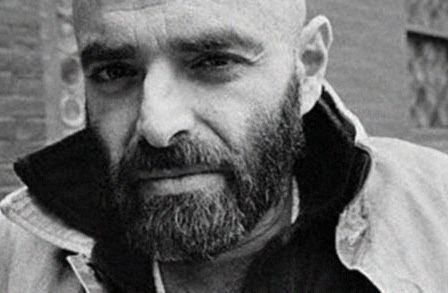
[Image courtesy: Poetry Foundation]

Sheldon Allan Silverstein was born on this day in Chicago, Illinois in 1930. Today is the  82nd anniversary of his birth.

Shel grew up in the Logan Square area of Chicago. He was notoriously private and seldom gave interviews so there is not much know about his early life. In one of the rare interviews he gave he said:

“When I was a kid—12 to 14, around there—I would much rather have been a good baseball player or a hit with the girls, but I couldn’t play ball. I couldn’t dance. Luckily, the girls didn’t want me. Not much I could do about that. So I started to draw and to write. I was also lucky that I didn’t have anybody to copy, be impressed by. I had developed my own style…” [Publishers Weekly, February 24, 1975.]

At 12 he became interested in cartooning and would practice his drawing by tracing comics, including Al Capp, from the “funny papers.” He attended the University of Illinois (for “One useless semester”), and the Art Institute of Chicago (for a summer session) before landing at Roosevelt University. It was a Roosevelt that he was first published, his cartoons appeared in the Roosevelt Torch.

In 1953 he was drafted into the US Army. He served from 1953-1955 and worked as a cartoonist for Stars and Stripes Newspaper. He said in a later Stars and Stripes interview that the Army  helped his art work because he didn’t have to worry about selling the cartoons anywhere. He was guaranteed 3 square meals a day. The Army also gave him the structure of a daily deadline. [To read the entire Stars and Stripes interview go to Off On a Tangent: Shel Silverstein Stars & Stripes Interview] His book Take Ten is a compilation of the cartoons he drew for Stars and Stripes.

Take Ten cover art. (Image courtesy: Amazon.com]

When he got out of the Army he found it difficult to sell his work on a regular basis. He freelanced for Sports Illustrated and Playboy and in 1956 he became a staff cartoonist for Playboy. He contributed poems and published several collections of his cartoons through the magazine.

Then in 1963 things took a turn.

“…at the suggestion of fellow illustrator Tomi Ungerer, he was introduced to Ursula Nordstrom who convinced him to begin writing for children. One of Silverstein’s most popular books, The Giving Tree, was published in 1964.” [Shel Silverstein, Introduction by Meghan Ung. Humanities on the Internet]

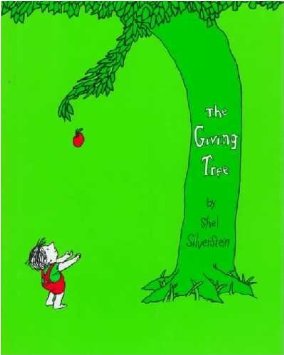
Cover art for The Giving Tree [Image courtesy: Amazon.com]

No on had wanted to publish the book. They thought it was too sad for a children’s book. They thought it was too short. They couldn’t pigeonhole it as either for adults or children. But they all agreed it was wonderful. Then Harper and Row gave it a chance and it became a classic in children’s literature.

Here’s the 1973 animated movie of The Giving Tree narrated by Silverstein:

1974’s Where the Sidewalk Ends, a collection of poetry for children, won the New York Times Outstanding Book Award. The collection has been republished several times with Silverstein added poems at the 25th and 30th anniversary.  Here’s one of my favorite poems from the book, Hug o’ War:

Hug o’ War

I will not play at tug o’ war.

I’d rather play at hug o’war.

Where everyone hugs

instead of tugs,

Where everyone giggles

and rolls on the rug,

Where everyone kisses,

And everyone grins,

And everyone cuddles,

And everyone wins.

Next up was The Missing Piece is a beautifully written story about a circle who is looking for its soul mate. The nontraditional ending is both truthful and bittersweet.

A Light In the Attic brought more wonderful poems and illustrations. [Backward Bill always cracked us up at our house…]

…Backward Bill’s got a backward pup.

They eat their supper when the sun comes up…

Silverstein’s illustration of Backward Bill. [Image courtesy: Amazon.com]

Silverstein wrote a sequel to The Missing Piece called The Missing Piece Meets the Big O (see below) which won the 1982 International Reading Association’s Children’s Choice Award.

The Shel Silverstein collection  — “borrowed” from the shelves of an obliging independent brick and mortar bookstore, Greetings and Readings, Hunt Valley, Maryland.

Silverstein also had a musical side. He played guitar and wrote songs, including the Johnny Cash hit A Boy Named Sue, the Irish Rovers “Unicorn Song” and the Dr. Hook song “The Cover of the Rolling Stone.” He performed on several albums (both his own and others.)

He was also a playwright. He had a hit with The Lady or the Tiger Show a play where contestants in a game show have to choose between two doors. Behind one door is a beautiful woman, behind the other door is a man-eating tiger. He co-wrote Oh, Hell! with David Mamet for Lincoln Center. The two worked together again on the film Things Change.

Silverstein died of a heart attack on May 10th, 1999 in Key West.

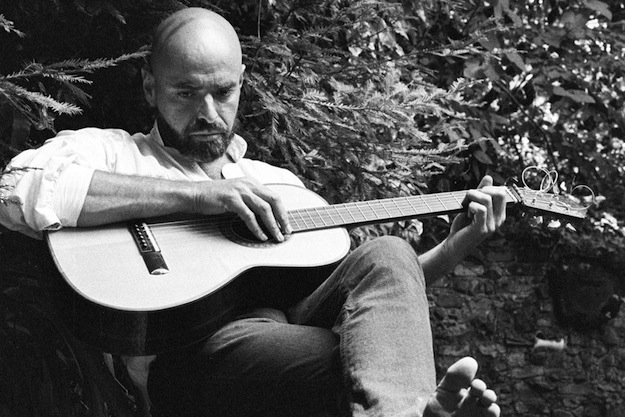
Shel playing his guitar. [Image courtesy: 105.7 Hawk]

Here’s the YouTube video for The Missing Piece Meets the Big O, I’d never read this book, or seen this video, but I just loved the message and had to share it…


Thought of the Day 9.19.12 Jeremy Irons

“It’s always great to play a man who sets himself up to be punctured.”

–Jeremy Irons

Jeremy John Irons was born on this day in Cowes on the Isle of Wight, England in 1948. He is 64 years old.

He grew up on the island, and didn’t have much connection with the professional performing arts. The family only ventured to the mainland once a year. But when he was an adolescent the family moved to Hertfordshire and, at 13, Jeremy was sent to the Sherborne School in Dorset. There he took part in a four-man school band called the Four Pillars of Wisdom. The group played for their mates on Sunday afternoons, with Jeremy on drums and harmonica (including stand out harmonica solos in “Moon River” and “Stairway to Heaven.” — because when you think of Stairway to Heaven you think ‘harmonica solo!’) He also performed comedy skits and was in the school’s production of My Fair Lady (he played Professor Higgins.)

Irons trained at the Bristol Old Vic Theatre School. There he “gained much experience working in everything from Shakespeare to contemporary dramas.” [IMDB biography] He supported himself with a number of odd jobs and by busking on the streets of Bristol.

In 1971 he moved to London and landed the role dual role of John the Baptist/Judas in Godspell at the Round House.

He did a lot of television work in the 1970’s including: The Pallisers;  Love of Lydia; Churchill’s People; Langrishe, Go Down; The Voysey Inheritance; and as Franz Liszt in Notorious Woman,

His film debut was in the 1980 film Nijinsky, but his break out role was opposite Meryl Streep in the French Lieutenant’s Woman. The film, based on the John Fowles novel, follows two parallel love stories — one between Victorian palaeontologist Charles and “the French Lieutenant’s Whore” Sarah; the other between Mike and Anna, the actors who play the Victorian couple in a movie they are making on the novel. Irons was nominated for a BAFTA Award for best Actor (Streep won one for Best Actress.)

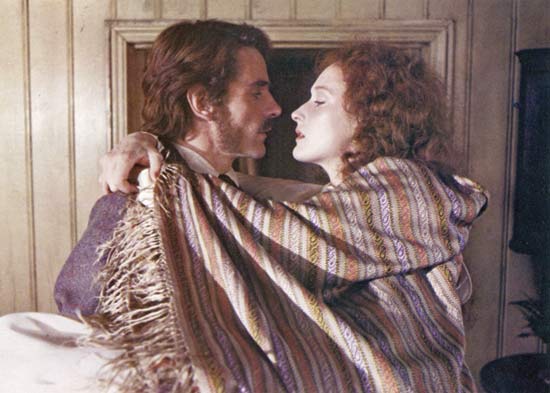
Still from The French Lieutenant’s Woman [Image Courtesy: Encyclopedia Britannica]

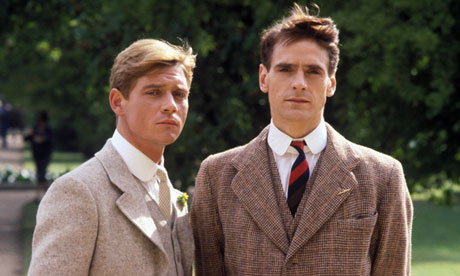
Back on television he played another Charles, Charles Ryder, opposite Anthony Andrew’s Sebastian Flyte in the hugely successful Brideshead Revisited  based on the Evelyn Waugh novel.  Irons got another BAFTA Nomination (Andrews won), both men were nominated for Emmy Awards.

Anthony Andrews and Jeremy Irons in Brideshead Revisited (Image Courtesy The Guardian.)

He followed those two high profile projects with an independent film about Polish guest workers in London, Moonlighting.

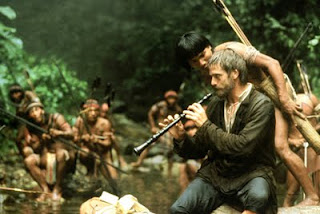
Irons played Father Gabriel in Roland Joffe’s The Mission. Father Gabriel is a Spanish Missionary who is sent into the jungles of South America. He builds a sanctuary for the Guarani Indians. Robert DeNiro, a reformed slave hunter joins him at the mission. Together they must defend both the mission and the people who live there from the encroaching Portuguese It is all set to Ennio Morricone’s beautiful music.

Father Gabriel’s (Irons) first encounter with the Guarani Indians. [Image courtesy: Mostly Movies]

David Cronenberg’s psychological thriller Dead Ringers saw Iron’s playing identical twin gynecologist. The movie brought the word “co-dependant” to a whole new level. Iron’s is cool (maybe even icy) and creepy in the movie. (It is a total departure from his Father Gabriel. So if you are planning a Jeremy fest, don’t book these two back to back.)

Reversal of Fortune finally brought Irons the Gold. He won both an Academy Award  and a Golden Globe Award for his portrayal of Claus von Bulow.

Irons took on the role of Rene Gallimard when Cronenberg brought M. Butterfly from stage to screen.

You might recognize his growling voice from Disney’s the Lion King. He played Simba’s uncle Scar.

When Bruce Willis brought his Die Hard franchise to New York for Die Hard with a Vengeance, Irons played his foil, psychopath Simon Gruber.

He pulled on some tights when he took on Aramis in The Man in the Iron Mask; Antonio, to Al Pacino’s Shylock, in Michael Radford’s 2004 movie of Shakepeare’s The Merchant of Venice;  suited up as Tiberias, a Knight Templar, in Kingdom of Heaven; and starred in the tv mini-series Elizabeth I, the Virgin Queen, as the Earl of Leicester/Lord Dudley, opposite Helen Mirren’s Bess.

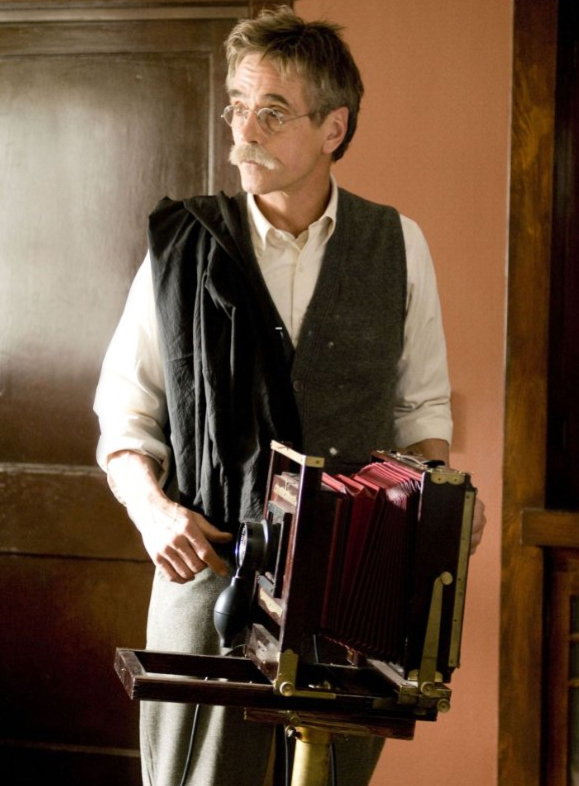
He played photographer Alfred Stieglitz in the made for TV biopic Georgia O’Keefe in 2009.

Still from Georgia O’Keefe. (Image Courtesy: IMDB)

Heck, he’s even voiced the part of Moe’s Bar Rag in the Simpsons!

Irons currently can be seen in Showtime’s sweeping TV mini series The Borgias, a crime drama set in 1492 Italy.

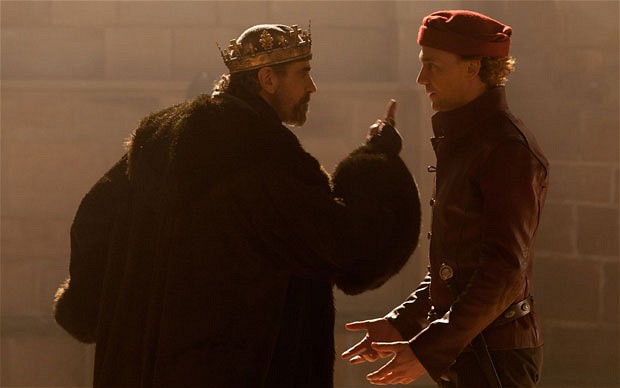
And he plays Henry IV in Shakespeare’s Henry IV, Part 1 & 2  in the BBC’s the Hallow Crown series.

Still from Henry IV, Part 1 with Irons and Tom Hiddleston as Prince Hal (Image Courtesy: The Telegraph)

Here’s Ennio Morricone’s BAFTA Award winning song Gabriel’s Oboe from the film The Mission. [The soundtrack holds a very special place in my heart because we used parts of it, including Gabriel’s Oboe at our wedding. I wrote the publisher to see if I could get the sheet music, but it wasn’t published yet. They contacted Mr. Morricone and they supplied us with a copy of the hand written piano score. How’s that for romantic? This was played on a pipe organ as I walked up the aisle with my dad. ]


Thought of the Day 9.10.12 Colin Firth

“Colin is the sort of name you give your goldfish for a joke.”

Colin Firth

Colin Andrew Firth was born on this day in Grayshott, Hampshire, England in 1960. He is 52 years old.

He spent much of his first four years in Nigeria where his parents, Shirley and David Firth, were missionaries.They returned to England where his parents took up University posts and Colin and his younger  siblings, Kate and Jonathan grew up. In 1972 the family moved to St. Louis, MO,for a year. The transition did not go well and, he says, he reacted badly, becoming rude and defensive.

The family settled in Winchester when they returned to England with David at King Alfred’s College lecturing on History, and Shirley at the Open University teaching comparative religion. Colin’s rebellion streak continued.

He was a troubled teen, scruffy and cocky, and often railing against a middle class whose children progressed via academia while the working class were pushed towards carpentry and other manual skills. [TalkTalk, Colin Firth-Biography]

At 14 he declared that he wanted to become an actor, and by 18 he had joined the National Youth Theatre in London. S-L-O-W-L-Y he built his career, at first doing grunt work, like fetching tea and answering phones, then enrolling in more acting classes — this time at the London Drama Center and learning the Stanislavski method. After 3 years of study he started to see lead roles — including Hamlet — come his way at the school.

[Image Courtesy Probert Encyclopaedia]

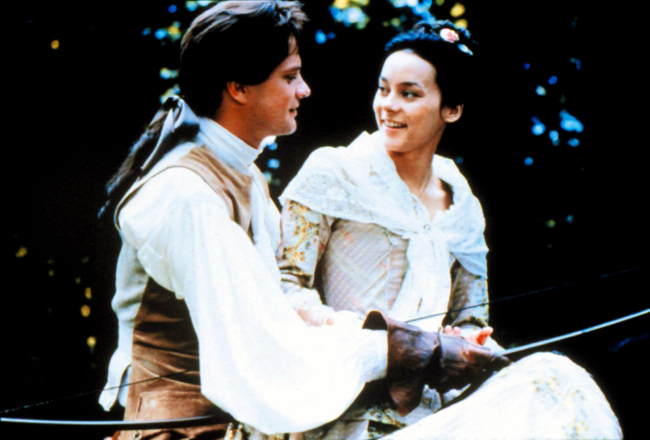
In 1983 a talent scout saw his portrayal of the great Dane and offered him a spot replacing Daniel Day-Lewis in the West End production of Another Country. He went on to play another role in the movie production of the play, his first film. Though the movie was a success, and his role it was critically acclaimed, he went back to the theatre  — working at the Churchill Theatre and  the Old Vic. He also did some television, including Camille with John Gielgud and Ben Kingsley, and the mini-series Lost Empireswith Laurence Olivier.
Firth and Tilly in Valmont [Image Courtesy: Pure Cine]

He stepped easily from stage to screen (small and large). Another film of note from his early career is Valmont, “An earthy, physical take on the novel Les Liaisons Dangereuses…” [TalkTalk]He co-starred here was Annette Bening, as

 ‘Lustful, manipulative aristocrats in 18th Century France, they would toy with the affections and bodies of others, until real emotions leads to the downfall of them both.’ [TalkTalk]

During the film ing of Liaisons he fell in love with actress Meg Tilly who played Madame de Tourvel. They dropped out the acting world, moving to a cabin in  the wilds of British Columbia. The two had a son William.   After the two-year hiatus he returned to the stage, Almedia, the small screen Hostages, and the indie film circuit, The Hour of the Pig (aka The Advocate).

If you want to see Firth as a creepy bad guy you can rent Playmaker (a film not even he likes) or The Deep Blue Sea (in which he plays a no-good cad.) He also plays a bit of a cad in Circle of Friends.

But nobody wants to see Colin Firth play a cad…am I right? In 1995 he was offered, and REFUSED, the role of Fitzwilliam Darcy in Andrew Davies’ adaptation of Jane Austen’s Pride and Prejudice.  There is a certain Darcy-esque story behind Firth’s refusal of the role. For a serious actor trying to build a serious career — an actor who was NOT trying to make it on his pretty face — the role “seemed tiresome and predictable.” [Talk Talk] He was as aloof about the role as Darcy is about  society in Meryton. He just wasn’t looking for a role that simply required that he throw on a Waist coat, snarl in a period costume, and pick up a pay check. He also didn’t think that Austen’s story was too female centric, and that just wouldn’t be enough for him to do. But Sue Birtwistle, the show’s producer, was persistent. She got him look at the script and rethink what he could bring to Darcy.

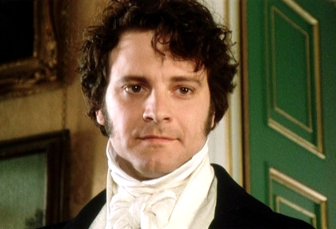
Firth as Darcy [Image Courtesy: Period Dramas.com]

Filming began in June 1994.

“As Mr. Darcy in the acclaimed 1995 television adaptation of Pride and PrejudiceColin Firth induced record increases in estrogen levels on both sides of the Atlantic. Imbuing his role as one of literature’s most obstinate lovers with surly, understated charisma, Firthcaused many a viewer to wonder where he had been for so long, even though he had in fact been appearing in television and film for years.” [New York Times, Movies & TV]

The series was wildly popular and is THE standard against which all other Jane Austen adaptations are judged. Firth’s stock as both movie star and sex symbol sky rocketed. But instead of taking on another leading role, his next turn on the silver screen was a relatively minor role as Kristen Scott Thomas’ lightweight husband in The English Patient. He looses Scott Thomas to Ralph Fiennes in that movie. He played an even bigger cuckold (and a less amiable one) in Shakespeare in Love, where he looses his screen love — it’s Gwyneth Paltrow this time — to another Fiennes brother, Joseph. Speaking of Shakespeare…He’s an American farmer in A Thousand Acres which is an adaptation of Shakespeare’s King Lear, then does a comic turn AS Shakespeare in Blackadder: Back and Forth. 

From Shakespeare in Love [Image Courtesy: My Favorite Things]

It must have felt like he was looking in a mirror when he took on another Mr. Darcy in Bridget Jones’s Diary and Bridget Jones: the Edge of Reason, (especially as the former loosely echos the plot of P&P.)

Here’s a rundown of most of his other post Pride and Prejudice work:

  • Other Rom-Com work includes… Hope Springs, Fever Pitch, Love Actually, The Accidental Husband, Relative Values, Four Play, Then She Found Me and Easy Virtue.  I suppose you can add Mamma Mia to that list as well. (I can vouch for Firth’s performances in the first three. I think Hope Springs is his best Romantic Comedy, Fever Pitch is funny if a bit too sporty for me, and he was the best thing in Love Actually, actually.)
  • For period pieces you can choose from… Girl with a Pearl Earring, The Importance of Being Earnest, Nostromo, The Turn of the Screw (briefly) and Dorian Gray. (Pearl Earring was excellent, if a little slow-moving — in a beautiful kind of way. Earnest was funny — but it’s Wilde, so, you know, that’s kind of a given. Dorian Gray was based on a Wilde novel too… but I didn’t like that one nearly as much.)
  • Looking for more modern drama? Try… My Life So Far, Conspiracy, Born Equal, Trauma, Where Lies The Truth, Main Street, And When Did You Last See Your Father? and Genova. (Of this lot I’ve only seen Conspiracy, which is a chilling drama about a Nazi conference where officials discuss the “Final Solution.” It is a beautifully acted film all around with Firth in a lessor role.)
  • He seemed a little out-of-place in the family films What a Girl Wants and Nanny McPhee  and the historical action flick The Last Legion. 

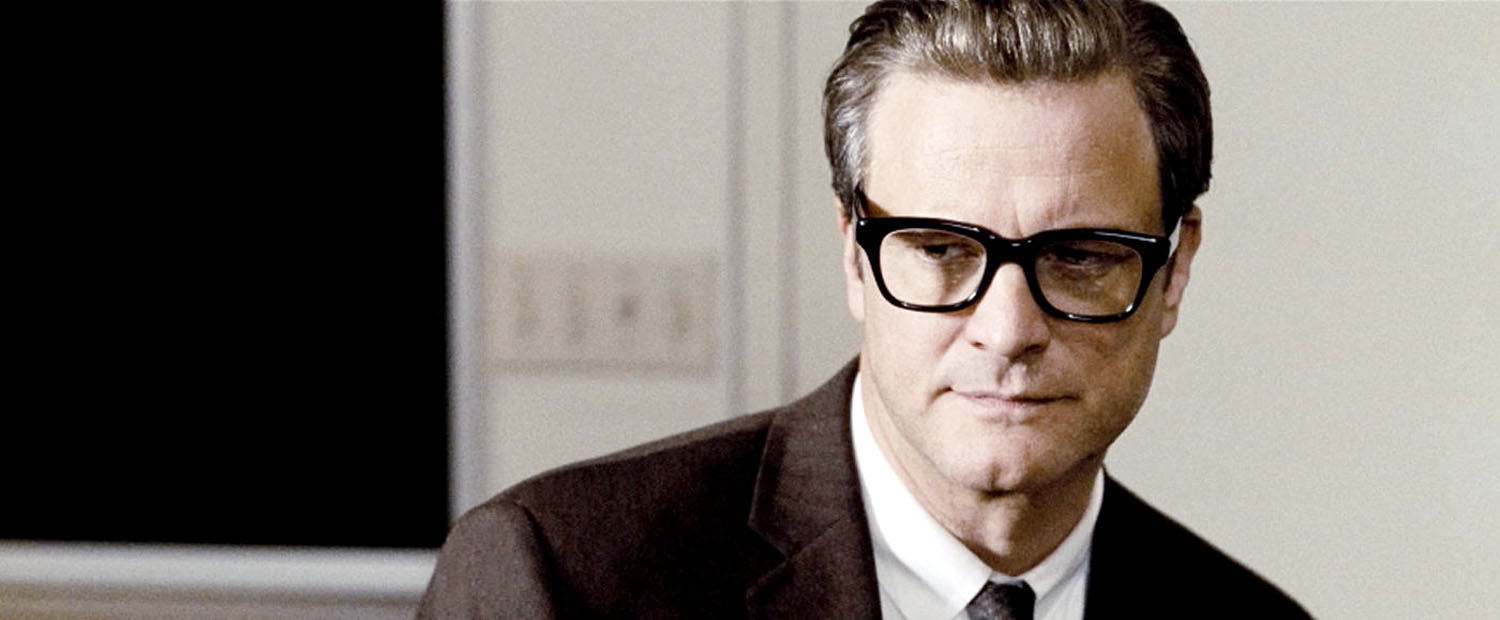
Then came A Singe Man in 2009, and suddenly Colin Firth went from being movie star (small caps) to MOVIE STAR (big caps) all over again. His performance as George Falconer (in the movie based on the Christopher Usherwood  novel of the same name) was understated and amazing. It’s 1962 and Firth’s George plays a university professor who is in mourning after the accidental death of his long time partner, Jim. Firth was nominated for an Academy Award, and won a Golden Globe and Screen Actors Guild Award for Best Actor.

Firth in A Single Man [Image Courtesy: Talking Movies]

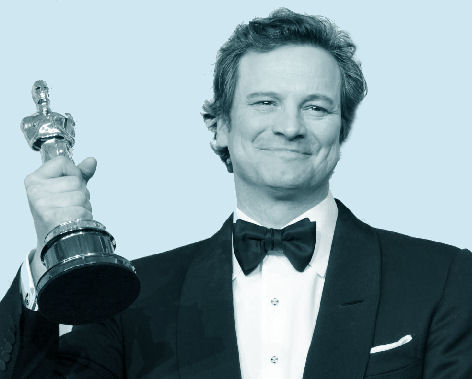
The next year, 2010, was golden, and Firth finally got his Oscar for The Kings Speech. On the brink of WWII King Edward VIII abdicates the throne of England, leaving the job to his ill prepared brother “Bertie” (Firth). Bertie must overcome a terrific stammer and self-doubt to lead his country in its time of greatest need.

Satisfaction! [ColinFirth.com]

In 2011 he took a supporting role in Tinker Tailor Soldier Spyas Bill Haydon (the “Tailor”) to Gary Oldman’s George Smiley.

Next month Gambit co-starring Alan Rickman, Stanley Tucci and Cameron Diaz will hit theaters. This remake of the 1966 Shirley MacLaine/Michael Caine comedy caper is a Joel and Ethan Coen project.

Firth also hasArthur Newman, Golf Pro, The Railway Man, Bridget Jones’ Baby and Devil’s Knot on the way. 

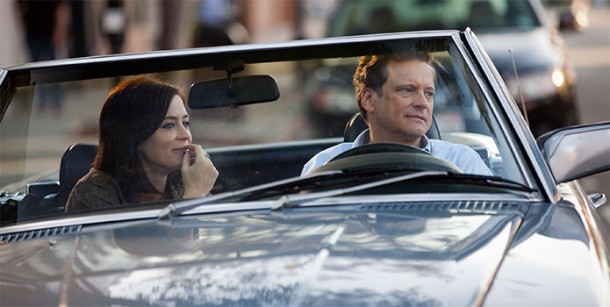
Still from the upcoming Arthur Newman, Golf Pro with Emily Blunt [Image Courtesy: Best Movies Ever]

The actor has rather famously down played his sex appeal.
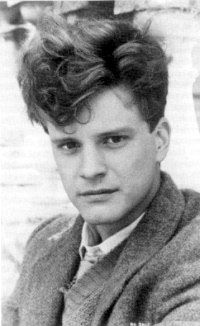
“I think it’s quite extraordinary that people cast me as if I’m Warren Beatty: until I met my present wife, at the age of 35, you could name two girlfriends.” [Colin Firth  on Brainyquote.com]

Besides his romance with Tilly, he had an affair with Jennifer Ehle (Elizabeth in Pride and Prejudice) and has been married to Italian film producer/director Livia Giuggioli  since 1997. The couple has two sons, Luca and Matteo.