Category Archives: postaday

Pride and Prejudice characters: Charlotte and Mr. Collins

Charlotte & Collins

For a woman who came from a family of clergymen — her father, two brothers and four cousins wore a collar — Jane Austen certainly enjoys poking fun at them in her novels. And Pride and Prejudice’s  Mr. Collins is her most ridiculous clerical caricature. How on earth does sensible Charlotte wind up with such a buffoon?

A clergyman was a professional, just like a lawyer or doctor. He made his living in the pulpit, not at the bar or in the examining room, but he still needed to be a well educated man. Add to that a vicar needed have a high moral standard, be a good speaker and have compassion for the poor and needy.

David Bamber is Mr. Collins  in the 1995 series [Image courtesy BBC Home.]

David Bamber is Mr. Collins in the 1995 series [Image courtesy BBC Home.]

Instead we get conceited, pompous, narrow-minded, silly, self important Mr. Collins. He is a mixture of pride and obsequiousness, a social climber with a very good opinion of himself and his patroness Lady Catherine de Bourgh.

He comes to Meryton to visit the Bennets. As closest male relative he is set to inherit the Longbourn estate on Mr. Bennet’s death. That is something, to his credit, that he feels some guilt over. So he decides to marry one of the five Bennet sisters. Jane is all but engaged to Mr. Bingley so he sets his sites on Lizzie.

Tom Hollander as Mr. Collin in the 2005 movie

Tom Hollander as Mr. Collin in the 2005 movie

Poor Lizzie receives two of the worst proposals  of marriage in literature. The first is from Mr. Collins. He wants to get married because:

  1.  as a clergyman it would set a good example to the parish.
  2.  it will add to his happiness.
  3.  it is “the particular advice “ of Lady Catherine.
  4.  he has a violent affection for Elizabeth

Of course he doesn’t expect a rejected. For one thing he’s SUCH a catch, and for another he’s chosen well. The girls are desperate and he has them in a corner.

He literally can not believe that she declines his offer. Neither can her mother. And for a while Longbourn is long born with strife.

Queue Charlotte.

Charlotte Lucas is plain, pragmatic, good-tempered, funny, sensible, intelligent and unromantic.  She is 27 years old and Lizzie’s intimate friend. She’s such a good friend, in fact, that she comes to the rescue when Lizzie refuses Mr. Collins. She keeps him in good humor by listening to him and, one assumes, diverts him, making sure he’s out of ear shot of the shouting Mrs. Bennet and the giggling Lydia and Kitty.

Lucy Scott in the 1995 series

Lucy Scott in the 1995 series

Lizzie thanks her friend,  but “Charlotte’s kindness extended farther than Elizabeth had any conception of; — its object was nothing less than to secure her from any return of Mr. Collins’s addresses, by engaging them towards herself.” With a little encouragement on her part Mr. Collins transfers his ‘violent affections’ form one lady to the next and…

”In as short a time as Mr. Collins’s long speeches would allow, every thing was settled between them to the satisfaction of both… he earnestly entreated her to name the day that was to make him the happiest of men… and Miss Lucas, who accepted him solely from the pure and disinterested desire of an establishment, cared not how soon that establishment were gained.”

Lizzie is surprised that Mr. Collins could so quickly change his mind  and settle on another life partner. But she is astonished that Charlotte could accept his proposal.  Charlotte reminds her however that she is…

”not romantic, you know. I never was. I ask only a comfortable home; and considering Mr. Collins’s character, connections, and situation in life, I am convinced that my chance of happiness with him is as fair as most people can boast on entering the marriage state.”

In some ways Charlotte winds up in same situation as Mr. Bennet in the marriage department. Neither of them respect or love their partners. And both do what they can in daily life to avoid interacting with their spouses Mr. Bennet shuts the door to his library, while Charlotte sits in her parlor and encourages Mr. Collins to work with his bees or visit Lady Catherine.

Claudie Blakley in the 2005 movie

Claudie Blakley in the 2005 movie

At the end of the novel Mr. Bennet writes to Mr. Collins informing him that — despite warning to the contrary by both Collins and Lady Catherine — Lizzie and Darcy are soon to marry. Mr. Bennet advises Mr. Collins to  “Console Lady Catherine as well as you can. But, if I were you, I would stand by the nephew. He has more to give.” If Mr. Collins heeds this wise advice he’d shift his alliance to Darcy who would never put up with the vicar’s toady behavior. That, combined with Charlotte’s even handed temper–which (hopefully) would rub off on Collins–MIGHT make him a more tolerable fool.

—————————————————————–

Here’s a clip of the wonderful Julia Cho and Maxwell Glick in a scene from The Lizzie Bennet Diaries…


Pride and Prejudice characters: Mr. and Mrs. Bennet

Mr. and Mrs. Bennet

It is unlikely that either Mr. or Mrs. Bennet would win any parenting awards. Nor are they they a role model of a happy marriage.

Mr. Bennet is the easier to take of the two. Perhaps because Austen herself liked a witty conversationalist, she gives Mr. Bennet plenty of ironic banter. Sure, he’s got a quip for every idiotic thing that comes out of Mrs. Bennet’s mouth, and he puts down his daughters with unsettling regularity, but he’s on our girl Lizzie side of things. And when he does come out with a  snarky remark it isn’t said in a shrill scream. He’s calm — to the point of being detached. And if things get too hectic he just shuts the door to his man cave, er, I mean LIBRARY and lets the others put out the fire.

Benjamin Whitrow played Mr. Bennet in the 1995 series [Image courtesy BBC Home.]

Benjamin Whitrow played Mr. Bennet in the 1995 series [Image courtesy BBC Home.]

Mrs. Bennet on the other hand is constantly in emergency mode. She’s over excited about everything… from the arrival of the militia in Meryton to Jane’s budding romance. Her mood swings are so intense that she’s either quite shallow or bipolar. If Mr. Bennet is disengaged from his daughter’s lives (specifically the part of his daughter’s lives that involves them getting a husband) she is hyper involved. And while Mr. Bennet hides in his library, Mrs. Bennet prefers to take center stage. In case of emergency she succumbs to her palpitations and flutterings and retires to her lounge to be waited on hand and foot.

Both of them play favorites while neglecting to educate their daughters and have chosen an economic course that requires the girls to marry well or face lives of genteel poverty which their upbringings have made them entirely unprepared for.” [ Story and History; A guide to Everything Jane Austen ]

Mr. Bennet favor’s Lizzie with her sharp tongue and sense of irony. He has a soft spot for Jane who is so sweet he has a hard time finding anything negative about her. But by the time we get to Mary his patience wears thin. He makes fun of her zealous nature and doesn’t support her earnest attempts to exhibit. He has all but given up on Kitty and Lydia  and calls them the two silliest girls in the country.

Alison Steadman is Mrs. Bennet  in the 1995 series [Image courtesy BBC Home.]

Alison Steadman is Mrs. Bennet in the 1995 series [Image courtesy BBC Home.]

Mrs. Bennet admires Jane’s beauty and good nature, but she really dotes on Lydia (her twin in temperament and love of all things in a Red Coat.) Her second daughter is a source of anxiety for her– especially when she refuse a perfectly good offer of marriage from Mr. Collins.

Austen describes the couple at the end of the first chapter…

Mr. Bennet was so odd a mixture of quick parts, sarcastic humour, reserve, and caprice, that the experience of three and twenty years had been insufficient to make his wife understand his character. Her mind was less difficult to develope. She was a woman of mean understanding, little information, and uncertain temper. When she was discontented, she fancied herself nervous. The business of her life was to get her daughters married; its solace was visiting and news.

They married young. Mr. Bennet…

captivated by youth and beauty, and that appearance of good humour which youth and beauty generally give, had married a woman whose weak understanding and illiberal mind had, very early in their marriage, put an end to all real affection for her. Respect, esteem, and confidence had vanished for ever; and all his views of domestic happiness were overthrown. … To his wife he was very little otherwise indebted, than as her ignorance and folly had contributed to his amusement.

The novel is almost as much about economics as it is about love. Longbourn, the Bennet’s family estate is entailed away to the nearest male heir upon the untimely demise of Mr. Bennet.

When first Mr. Bennet had married, economy was held to be perfectly useless; for, of course, they were to have a son. This son was to join in cutting off the entail, as soon as he should be of age, and the widow and younger children would by that means be provided for.

But they didn’t have a son, so Mr. Collins is set to inherit the estate.

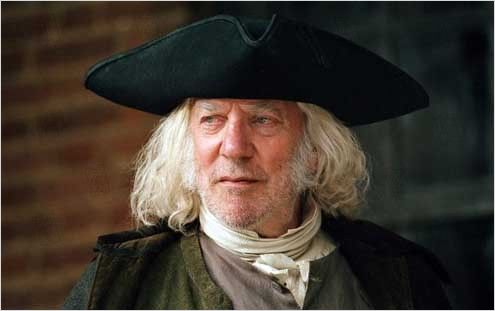
Donald Southerland in the 2005 Movie

Donald Southerland in the 2005 Movie

Even if they HAD had a son there’s no guarantee that  Junior would have agreed to end the entail. He could have wound up like John Dashwood from Sense and Sensibility and turned his back on his family financially. Given the hands off attitude the Bennets employed with their children’s education Junior could have been as feckless and week minded as Lydia. I doubt that the estate could have survived long in that case.  A son would not have necessarily solved the problem. Better if the Bennets had economized through the years.

English: C. E. Brock illustration for the 1895...

English: C. E. Brock illustration for the 1895 edition of Jane Austen’s novel Pride and Prejudice (Chapter 13 ): “Why, Jane — you never dropt a word of this; you sly thing! ” Français : C. E. Brock illustration pour l’édition C. E. Brock illustration pour l’édition 1895 du roman de Jane Austen Pride and Prejudice (Chapitre 13) Mrs Bennet est sûre que Bingley vient diner (alors qu’il s’agit de Mr Collins) (Photo credit: Wikipedia)

Better yet if the girls were better educated. If the girls  were really to be “marriage market” ready they should have had a governess or some one who insisted they learn to drawl (one of Caroline/Darcy’s requirements for a refined lady) read the classics, learn foreign languages, dance and play an instrument.  Only two of them can play an instrument, and they don’t play all that well.

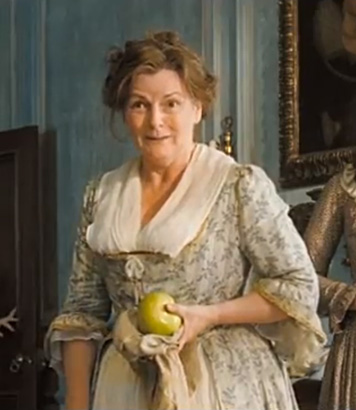
Brenda Blethyn in the 2005 movie

Brenda Blethyn in the 2005 movie

Given the economic uncertainty for the girls Mrs. Bennet should have at least prepared them with a more domestic education. At dinner when Mr. Collins wants to compliment which ever of his fair cousins has prepared the meal, Mrs. Bennet informs him that they keep a cook, “and that her daughters had nothing to do in the kitchen.” But maybe the girls should learn a little about cooking. Not to go into service but to be able to run their own kitchen as Lydia certainly will have to. Lady Catherine brags at finding a  governess position for some young ladies she knows. That’s another profession the girls could be readying for.
But neither parent seems at all interested in pushing them toward preparing for the future beyond winning the husband lottery.

Still, Mr. and Mrs. Bennet add a lot of humor to the novel (even if it is self/co inflicted.) And, given that I’ve been known to be sarcastic and I’m a lot closer to their age then Lizzie or Jane’s age I’ve got a soft spot for them. Perhaps they wont win Parent of the Year, 1813, but the novel just wouldn’t be the same with out them.


Pride and Prejudice Characters: Lydia and Wickham

Today is the third installment in a week’s worth of Pride and Prejudice character studies leading up to next Monday’s 200th anniversary of the Austen novel.
 
Lydia and Wickham

Was there ever a sillier, more insipid, selfish little sister than Lydia Bennet? One would need a thesaurus to accurately describe how crass she is… if Austen hadn’t painted such a wonderful picture for us.

On the kind side of the Lydia spectrum I could say she had an exuberant spirit. From there the rainbow of Lydia character trait runs from “Vain, ignorant, idle, and absolutely uncontrolled!” to selfish, reckless, and just a little bit mean. (Though she’s got nothing on Caroline Bingley in the Mean Girl department.)

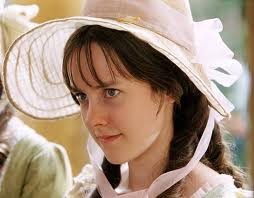
Jena Malon took on the Lydia role for the 2005 movie

Jena Malon took on the Lydia role for the 2005 movie

Although Jane and Lizzie attempt to “check the imprudence” of Kitty and Lydia their efforts have little effect. The girls are indulged by their mother but are …

“always affronted by their advice… Lydia, self-willed and careless, would scarcely give them a hearing….”

Lydia has no filter. She says what ever thought floats across her vapid mind, no matter how rude or inappropriate it might be.

Julia Sawalha in the 1995 version of Pride and Prejudice [Image courtesy BBC Home]

Julia Sawalha in the 1995 version of Pride and Prejudice [Image courtesy BBC Home]

“Lord” she tells Jane, “how ashamed I should be of not being married before three and twenty!” Likewise she does what ever she wants without regard for decorum or consequence.

Mary Kate Wiles embodies the 2012/13 party girl Lydia in the Lizzie Bennet Diaries VLOG [Image courtesy @TheLydiaBennett Twitter page]

Mary Kate Wiles embodies the 2012/13 party girl Lydia in the Lizzie Bennet Diaries VLOG [Image courtesy @TheLydiaBennett Twitter page]

She is…

“the most determined flirt that ever made herself and her family ridiculous. A flirt, too, in the worst and meanest degree of flirtation; without any attraction beyond youth and a tolerable person; and from the ignorance and emptiness of her mind, wholly unable to ward off any portion of that universal contempt which her rage for admiration will excite.”

Lizzie warns their father not to allow Lydia to go to Brighton, but Mr. Bennet, knows that there will be no peace at home if he doesn’t concede. He justifies the decision by saying…

“Colonel Forester is a sensible man, and will keep her out of any real mischief; and she is luckily too poor to be an object of prey to any body. At Brighton she will be of less importance, even as a common flirt, than she has been here. The officers will find women better worth their notice. Let us hope, therefore, that her being there may teach her her own insignificance. At any rate, she cannot grow many degrees worse without authorizing us to lock her up for the rest of her life.”

Lydia, of course, does not disappoint. She manages to do the least appropriate thing possible… she runs off, unmarried with a man. That man is George Wickham and it takes some doing to get the couple to the altar.

A triumphant Lydia returns home with her husband in the 1940 movie. With Ann Rutherford (Lydia), Edward Ashley (Wickham), Maureen O'Sullivan (Jane), and Greer Garson (Lizzie).

A triumphant Lydia returns home with her husband in the 1940 movie. With Ann Rutherford (Lydia), Edward Ashley (Wickham), Maureen O’Sullivan (Jane), and Greer Garson (Lizzie).

When they return to Longbourn …

“Lydia was Lydia still; untamed, unabashed, wild, noisy, and fearless. She turned from sister to sister, demanding their congratulations…”

She even insists that Jane take walk behind her as she is a married woman now, and therefore holds a higher rank.

Peeya Rai Chowdhury and Daniel Gilles as Lakhi Bakshi (Lydia) and George in Bride and Prejudice

Peeya Rai Chowdhury and Daniel Gilles as Lakhi Bakshi (Lydia) and George in Bride and Prejudice

“I find Lydia to be tiresome” says Austen fan Mary Baldauf Wiedel, “and Wickham is a true cad.” She adds that the two are ”fairly unlikable characters, although no one deserves to be with Wickham.”

Sometimes when I’m rereading the novel* or am watching one of the adaptations I try to remember back to my original impressions of Wickham. Was I suspicious? Did I like his easy manner and winning smile as much as the ladies of Longbourn? Or did I know right away that he was trouble?

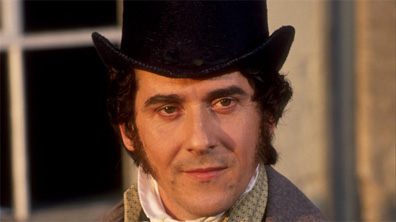
Adrian Lukis as Wickham in the 1995 series.

Adrian Lukis as Wickham in the 1995 series.

Not even Lizzie gets an accurate bead on Wickham’s character at first. She spends about a third of the book enjoying his company and listening to his poisonous tales about Darcy.

George Wickham is handsome. He has “a fine countenance, a good figure, and very pleasing address.” An officer in the militia, Wickham makes quite a dashing figure in his regimentals. But Lizzie observes that he has something more in his “person, countenance, air, and walk” than this companions. And he could make the “commonest, dullest, most threadbare topic” interesting.

Rupert Friend in the 2005 Movie [Image courtesy: AustenAuthors.net]

Rupert Friend in the 2005 Movie [Image courtesy: AustenAuthors.net]

He may not be rich, but, as he explains, that is not his fault. Its Darcy’s. Darcy has cruelly denied Wickham the church living promised to him. So now he must make his way as an “honest” soldier.

In reality he’s a gambler, a womanizer, a slacker and a liar. He uses his good looks and his social ease to manipulate people. He even manipulates Lizzie, who is usually a keen judge of character, into taking his side against Darcy. He leaves a trail of debt and broken hearts where ever he goes.

Wes Aderhold updates Wickham in the Lizzie Bennet Diaries

Wes Aderhold updates Wickham in the Lizzie Bennet Diaries

So why does Wickham elope with Lydia? For her part it is probably a romantic lark, an adventure. She seldom looks past the moment and he is fulfilling her immediate needs. But what does she have to offer him? Not money. Not status. Not love. My guess is that he initially does it as a lark too. Lydia is pretty and is certainly willing to run away with him. He can always leave her when he gets tired of the situation and travel to another country to find a rich wife. But, then he realizes that he can make a little money off this deal. When Darcy finds them he realizes he’s hit pay dirt. If Darcy cares enough to come looking for Lydia he’ll care enough to pay Wickham’s gambling debts and pay his overdue tavern bills and more.. All he has to do is marry one of the silliest girls in the country.

Ahhh marital bliss. [Image courtesy BBC]

Ahhh marital bliss. [Image courtesy BBC]

———————————————————————————

* for the record… I am not in a CONSTANT state of rereading one or the other of Ms. Austen’s novels. I just thought you should know.

The LY-Di-A Bennet  on Lizzie Bennet Diaries has her own VLOG. Here’s a taste:


Pride and Prejudice Characters: Lady Catherine & Caroline part 1

Today is the second installment in a week’s worth of Pride and Prejudice character studies leading up to next Monday’s 200th anniversary of the Austen novel.

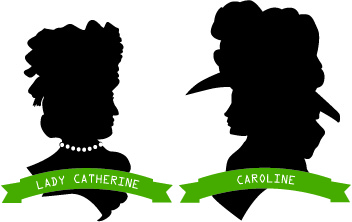
Lady Catherin and Caroline

If there is a truth universally known in the world of Austen it is that the rich play by a different set of rules than the poor or middle class. Lady Catherine de Bourgh and Miss Caroline Bingley are two of her richest women and they play to win.

Lady Catherine was born to her title. Her father was an Earl, so  “She is referred to as “Lady” followed by her first name because she is the daughter of a higher nobleman” [Pemberly.com]— (as was her sister Lady Anne Darcy, Darcy’s mother.) She married well, taking for her husband the landed Sir Lewis de Bourgh. She has one daughter, the sickly Anne de Bourgh, whom she hopes to marry off of to Darcy. (It was”the favourite wish of his mother, as well as of her’s. While in their cradles,” they “planned the union.” )

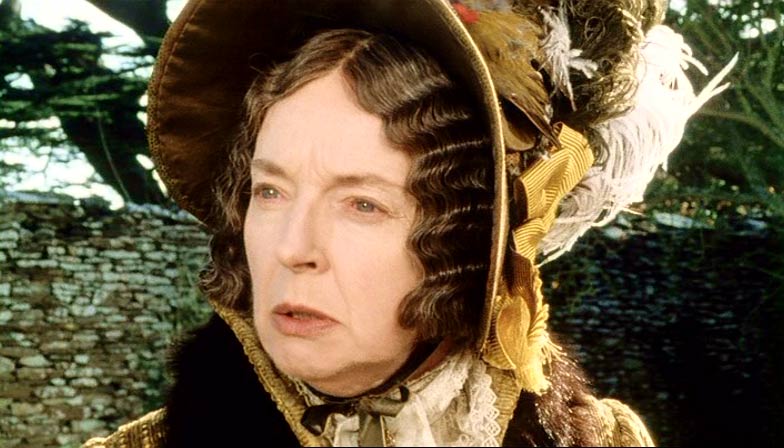
Barbara Leigh Hunt played the ultimate Lady Catherine in the 1995 Pride and Prejudice series with Colin Firth and Jennifer Ehle.

Barbara Leigh Hunt played the ultimate Lady Catherine in the 1995 Pride and Prejudice series with Colin Firth and Jennifer Ehle.

She is from old money and represents the old way of doing things. She follows the rules of society strictly and “likes to have the distinction of rank preserved.” [Pride and Prejudice] In fact she spends most of her time CONDESCENDING to her inferiors and giving them advice. Staying in Lady Catherine’s good graces has its benefits — you might be offered a ride home in the Barouche — but it is hard to hold one’s tongue. The woman had an…

opinion on every subject in so decisive a manner as proved that she was not used to have her judgment controverted. She enquired into Charlotte’s domestic concerns familiarly and minutely, and gave her a great deal of advice as to the management of them all;…  Elizabeth found that nothing was beneath this great lady’s attention, which could furnish her with an occasion of dictating to others. [Pemberly.com quote from Pride and Prejudice]

She is a large, imposing woman who may have once been handsome. “…Whatever she said, was spoken in so authoritative a tone, as marked her self-importance…” [Pride and Prejudice] She is not used to people disagreeing with her. So she’s surprised when Lizzie answers her personal questions candidly.

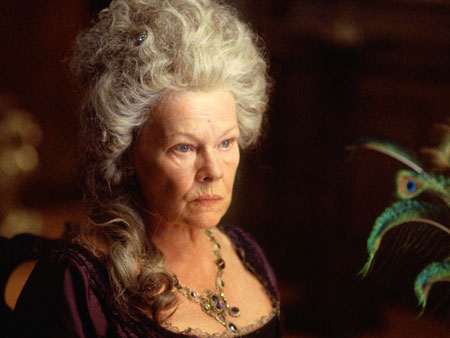
    Dame Judy Dench took on the role for the Kiera Knightly movie version of P&P

Dame Judy Dench took on the role for the Kiera Knightly movie version of P&P

I’ll give Lady Catherine one thing– for being such a traditionalist she represents a progressive, for the time, position on woman’s property rights.

Your father’s estate is entailed on Mr. Collins, I think. For your sake, I am glad of it; but otherwise I see no occasion for entailing estates from the female line. [Pride and Prejudice]

By actively seeking an eligible partner for her sickly daughter she is attempting to secure Anne’s future by getting a strong husband to run the estate. . “It’s ironic”, says Karen Hornig, of JASNA Maryland, that “one of the least liked characters in the novel is the one established figure who has the most progressive view with respect to women inheriting property and fortune.”

End of Part One go to Part Two


Buzz Aldrin 1.20.13 Thought of the Day

“Beautiful, beautiful, magnificent desolation.”–Buzz Aldrin

Aldrin on the Moon [Image courtesy: Buzz Aldrin.com]

Aldrin on the Moon [Image courtesy: Buzz Aldrin.com]

Edwin EugeneBuzzAldrin, Jr. was born on this day in Montclair, New Jersey in 1930. He is 83 years old.

Aldrin’s father was a Colonel in the Air Force, an aviation pioneer and a Doctor of Science graduate from MIT. His mother, whose maiden name was, appropriately enough, Moon, was the daughter of an Army Chaplain. He had two older sisters, the younger of whom couldn’t pronounce brother, instead she said “Buzzer.” That was shortened to Buzz.

[Image courtesy: Buzz Aldrin.com]

[Image courtesy: Buzz Aldrin.com]

He was offered a full scholarship to MIT, but turned it down, choosing instead to enter West Point Military Academy. He graduated third in his class.

He then joined the Air Force where he flew F86 Sabre Jets in 66 combat missions in Korea, shot down two MIG-15′s, and was decorated with the Distinguished Flying Cross.  After a tour of duty in Germany flying F100’s, he went on to earn his Doctorate of Science in Astronautics at MIT and wrote his thesis on Manned Orbital Rendezvous. [BuzzAlrdrin.com]

He joined NASA as part of the third group of astronauts. His expertise on docking techniques earned him the nickname “Dr. Rendezvous”

The docking and rendezvous techniques he devised for spacecraft in Earth and lunar orbit became critical to the success of the Gemini and Apollo programs, and are still used today.  He also pioneered underwater training techniques, as a substitute for zero gravity flights, to simulate spacewalking. [Ibid]

[Image courtesy: Buzz Aldrin.com]

[Image courtesy: Buzz Aldrin.com]

During his Gemini 12 Mission he “performed the world’s first successful spacewalk” [Ibid].

In July of 1969 he landed on the Moon with Neil Armstrong while Michael Collins orbited over head during the Apollo 11 Mission. Aldrin and Armstrong   became “the first two humans to set foot on another world. They spent 21 hours on the lunar surface and returned with 46 pounds of moon rocks.” [Ibid]

Image Courtesy: NASA]

Image Courtesy: NASA]

Although he has since retired from NASA he remains a tireless advocate for Space exploration, especially the exploration of Mars. He has written a children’s book, an autobiography, and two space based science-fact-fiction novels.

[Image courtesy: Buzz Aldrin.com]

[Image courtesy: Buzz Aldrin.com]

At the passing of Neil Armstrong he wrote:

Whenever I look at the moon I am reminded of that precious moment, over four decades ago, when Neil and I stood on the desolate, barren, yet beautiful, Sea of Tranquility, looking back at our brilliant blue planet Earth suspended in the darkness of space, I realized that even though we were farther away from earth than two humans had ever been, we were not alone. Virtually the entire world took that memorable journey with us. I know I am joined by many millions of others from around the world in mourning the passing of a true American hero and the best pilot I ever knew. My friend Neil took the small step but giant leap that changed the world and will forever be remembered as a historic moment in human history…. [Buzz Aldrin.com]

When people talk about Neil Armstrong they sometimes say he was the “First man on the Moon.” I’m a huge Armstrong fan, but that statement is just not true. Armstrong was the first man to WALK on the Moon, because he descended the ladder of the Lunar Lander first, but he and Aldrin landed on the Moon at the same time.

English: One of the first steps taken on the M...

English: One of the first steps taken on the Moon, this is an image of Buzz Aldrin’s bootprint from the Apollo 11 mission. Neil Armstrong and Buzz Aldrin walked on the Moon on July 20, 1969. (Photo credit: Wikipedia)

Click here the ritaLOVEStoWRITE bioBLOG on Neil Armstrong.


Secondary Character Saturday — SPIDER (Anansi Boys)

Who: Spider

My take on the Anansi brothers, Fat Charlie and Spider. [Copyright: ritaLOVEStoWRITE.]

My take on the Anansi brothers, Fat Charlie and Spider. [Copyright: ritaLOVEStoWRITE.]

From: Anansi Boys

Written by: Neil Gaiman

Date of Publication: Jan 2008.

Why: He’s the trickster brother to the book’s everyman hero, Fat Charlie.  He’s the cool, funny, magical brother you’d always wish you had. Kinda. [Full disclosure: I’m really a card-carrying member of “Team Fat Charlie. ” But, as he’s the lead character, I couldn’t really pick him for this profile could I?  So I picked Spider, who is so like Fat Charlie! –Except he’s completely different.]

Here’s what happened when the brothers met:

“Fat Charlie blew his nose. “I never knew I had a brother,” he said.
“I did,” said Spider. “I always meant to look you up, but I got distracted. You know how it is.”
“Not really.”
“Things came up.”
“What kind of things?”
“Things. They came up. That’s what things do. They come up. I can’t be expected to keep track of them all.”
“Well, give me a f’rinstance.”
Spider drank more wine. “Okay. The last time I decided that you and I should meet, I, well, I spent days planning it. Wanted it to go perfectly. I had to choose my wardrobe. Then I had to decide what I’d say to you when we met. I knew that the meeting of two brothers, well, it’s the subject of epics, isn’t it? I decided that the only way to treat it with the appropriate gravity would be to do it in verse. But what kind of verse? Am I going to rap it? Declaim it? I mean, I’m not going to greet you with a limerick. So. It had to be something dark, something powerful, rhythmic, epic. And then I had it. The perfect line: Blood calls to blood like sirens in the night. It says so much. I knew I’d be able to get everything in there – people dying in alleys, sweat and nightmares, the power of free spirits uncrushable. Everything was going to be there. And then I had to come up with a second line, and the whole thing completely fell apart. The best I could come up with was Tum-tumpty-tumpty-tumpty got a fright.”
Fat Charlie blinked. “Who exactly is Tum-tumpty-tumpty-tumpty?”
“It’s not anybody. It’s just there to show you where the words ought to be. But I never really got any futher on it than that, and I couldn’t turn up with just a first line, some tumpties and three words of an epic poem, could I? That would have been disrespecting you.”
“Well….”
“Exactly. So I went to Hawaii for the week instead. Like I said, something came up.” [Anansi Boys]

Anasi Boys 2

Pros: He’s pretty much a god. He can make people do things with the power of suggestion. He talks to spiders. After living most of his life in hedonistic selfishness (he is a god after all) he learns to grow and love.

Cons: When we first meet him he is selfish and destructive.  He’s a liar and a cheat. And he never thinks about the real world consequences since he never sticks around long enough to deal with them. He steal’s Fat Charlie’s fiance, Rosie, and takes over his flat. He pretty much ruins Fat Charlie’s life.

——————————————————————————–

If you haven’t guessed… I’m a big Neil Gaiman fan. So I was thrilled when one of my besties, Lynn Reynolds gifted me Anansi Boys as an Audible Book  for Christmas. I’d only really done a handful of books on tape before, most notably the Harry Potter books (I’ve also done various books  through my Kindle’s text-too-speech while gardening or painting. But those sound like the “Garman car man” guy  so they don’t count.) Any way, I was really pleased with this Audible Book both for Lenny Henry’s narration and, especially, for the wonderful writing. I think you should give it a try…

Here’s the Kindle link: http://www.amazon.com/Anansi-Boys-ebook/dp/B000FCKENQ/ref=tmm_kin_title_0

And here’s the link for the Audio version – http://www.amazon.com/Anansi-Boys-Neil-Gaiman/dp/0060823844/ref=tmm_abk_title_0

[Image courtesy Amazon.com]

[Image courtesy Amazon.com]

  Click here to read the ritaLOVEStoWRITE Neil Gaiman bioBLOG


A.A. Milne 1.18.13 Thought of the Day

“One of the advantages of being disorganized is that one is always having surprising discoveries.”
–A.A. Milne

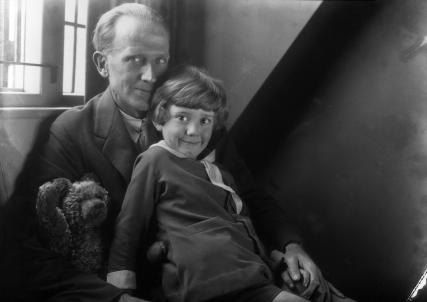
 A.A. Milne; Christopher Robin Milne and Pooh Bear  by: Howard Coster


A.A. Milne; Christopher Robin Milne and Pooh Bear by: Howard Coster

A. A. Milne was born  on this day in Kilburn, London, England in 1882. Today is the 131st anniversary of his birth.

Alan Alexander Milne  was the youngest of three boys born to John Vine and Sarah Maria Milne. John Milne ran a school, Henley House, and it was here that the boys took their first steps in the world of learning. One of the teachers at the school was H.G. Wells and he and Alan would remain friends for the rest of their lives. After Henley House Alan went on to Westminster School before attending Cambridge on a mathematics scholarship.

A.A. Milne’s first literary efforts came during his Cambridge days. He edited the college’s humorist publication, The Granta. Alan and his brother Ken worked together, by mail, on light verse that was published in The Granta under a mash-up of their initials A.K.M.

After graduation Alan moved to London and worked as a freelance writer. He had articles published in both newspapers, like the St. James Gazette, and in humor magazines, such as Punch.

In February of 1906 he became an assistant editor and weekly contributor to Punch magazine. His  contributions included stories on sports (especially cricket and golf), the exploits of the fictional middle class Rabbit Family, and children stories that he wrote with his niece Marjorie in mind.

In 1913 he married Dorothy “Daphne” de Selincourt. When World War I broke out he volunteered as a signalling officer. He saw action in France until returning to England in November 1916 with a fever. Once recovered he was

…put in charge of a company at a new formed signalling school at Fort Southwick. He stayed there until he was released from the army on February 14, 1919. [Pooh-Corner.org — The Author]

A.A. Milne on the Western Front 1916. [Image courtesy Spartacus.Schoolnet.co.uk]

A.A. Milne on the Western Front 1916. [Image courtesy Spartacus.Schoolnet.co.uk]

While in the Army he wrote his first play Wurzel-Flummery. Alan didn’t go back to Punch after the war — his job had been given to some one else — and he preferred the freedom of not having a weekly deadline. He also liked writing plays and collaborating with the actors.

…he had several successes, both in London and in New York. Mr Pim Passes By… opened in London on January 5, 1920, and ran for 246 performances in London. It also had a successful run in New York…. Within the next year, Milne had another four plays running in London. Other notable plays include Belinda, The Lucky One, The Romantic Age, The Dover Road, and The Truth About Bladys. … At one time, A. A. Milne was England’s most successful, prolific, and best-known playwright. [Pooh-Corner.org — The Author]

Ironically his biggest flop was called Success.

He wrote an adaptation of Mr. Pim Passes By and a mystery, The Red House Mystery. When he proposed writing Red House his agent bulked, suggesting the public wanted more humor stories. But Milne stuck to his guns, and The Red House Mystery was “his most successful book other than his four children’s books.” [Ibid]

The Red House Mystery

The Red House Mystery (Photo credit: Wikipedia)

Alan and Daphne Milne had a son Christopher Robin in 1920. They called the little boy “Billy Moon”  at home and among friends (the first name was a nickname, the “Moon” came from Christopher’s mispronunciation of his last name). Alan wrote the first Billy Moon poem “Vespers” after watching the little boy say his prayers before going to bed. It proved so popular that Milne was

asked to provide another children’s verse for a new children’s magazine entitled The Merry-Go-Round. That poem was “The Dormouse and the Doctor“, and also became quickly famous. Alan toyed with the idea of writing a whole book of children’s verse, and the result was When We Were Very Young, published in 1924. To illustrate the book, Milne enlisted the aid of Punch illustrator, Ernest Shepard. The combination of Milne’s poetry and Shepard’s drawings proved to be a winner, as the book sold over 50.000 copies within eight weeks of its first publication. [Ibid]

The family moved to Cotchford Farm, in Hartfield, East Sussex, in 1925 and Alan used the bucolic setting as his backdrop for his next book,Winnie-the-Pooh. Shepard was on board again as illustrator. Milne thought so highly of Shepard’s role in the success of the first children’s books that he insisted Shepard get an 80/20 share of the royalties of Winnie-the-Pooh instead of a flat rate. Winnie-the -Pooh was enormously well received.

Cover of Winnie-the-Pooh

Cover of Winnie-the-Pooh (Photo credit: Wikipedia)

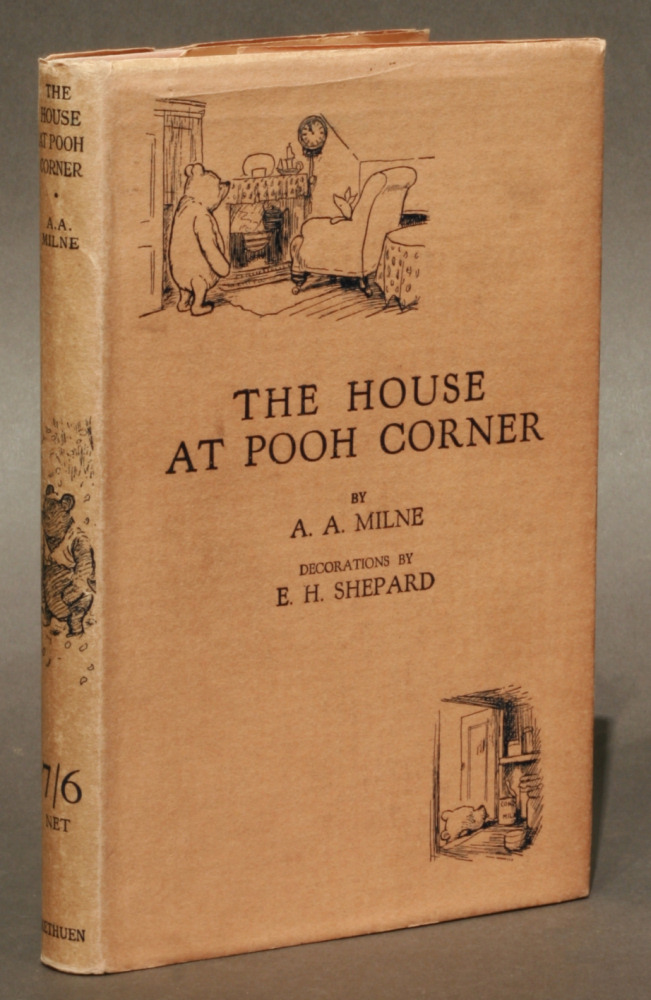
The second Pooh book, The House at Pooh Corner was equally loved. (Except by Dorothy Parker who famously quipped in her Constant Reader column in the New Yorker that by page 5 of the book the “tonstant Weader fwowed up”. Milne was unfazed by Parker’s quip, noting that “no writer of children’s books says gaily to his publisher, “Don’t bother about the children, Mrs Parker will love it.””[Ibid])

Milne House at Pooh Corner1000

Alan wrote more plays. His Toad of Toad Hall, based on Grahame’s The Wind in the Willows, got it’s stage debut in 1929. The play was hailed as a “family classic” and Milne was quickly getting painted into a corner. Especially in London, his works for adults were being ignored as the public clamored for more Pooh, or at least more children’s fiction. New York was more forgiving and his plays had longer runs on Broadway, including The Ivory Door and Michael and Mary. In 1933 his adult novel Four Days of Wonder sold moderately well, but he didn’t publish another novel for another 13 years.

At the dawn of World War II Milne, the pacifist, wrote Peace With Honour in which he outlined that nothing was

“worth repeating the Somme for. He would later change his mind and would write a pamphlet called War With Honour, in which he explained his changed views. ‘If anyone reads Peace With Honour now, he must read it with that one word HITLER scrawled across every page. One man’s fanaticism has cancelled rational argument.’ [Ibid]

The Milnes had moved away from the ‘Hundred Acre Woods’ and Cotchford Farm for London and New York, but with the War they moved back to East Sussex. Alan was Captain of the Home Guard for the area. His relationship with Daphne, which had waned, rekindled, but his ties with Christopher, which had always been strong, weakened. Christopher joined the Royal Engineers as a Sapper.

In 1946 Milne’s Chloe Marr, his last novel, came out to good reviews. It sold well. He continued to see success with his plays, which were now running in repertory.

[Image courtesy pdxretro.com]

[Image courtesy pdxretro.com]

But his relationship with Christopher — who ” had begun to resent his father and hated the books that made his name famous” [Ibid] — was crumbling. By the early 1950’s Christopher was married and living 200 miles away.

In October 1952, Milne had a stroke which left him an invalid for his remaining years. … A. A. Milne died on January 31, 1956. [Ibid]


Naveen Andrews 1.17.13 Thought of the Day

“I was always in trouble from an early age. I had a fraught relationship with my parents, who were very traditional. Doing plays at school was a joyous release.”–Naveen Andrews

[Image courtesy FanPop.com]

[Image courtesy FanPop.com]

Naveen William Sidney Andrews was born on this day in London, England in 1969. He is 43 years old.

Andrews was raised in the Wandsworth neighborhood of South London in a conservative parents, both of whom are first generation immigrants from Kerala, India. He attended London’s Guildhall School of Music and Drama.

He broke into film with the role of Bike in London Kills Me (1991).

In 1996 he played Kip, a British sapper, in The English Patient.  Kip’s relationship with Hana is a gentle, romantic shadow of the sensual, adulterous relationship between Almasy and Katharine Clifton. Here he is defusing a bomb…

He was clearly having a good time with his role of Bairaj (Bingley) in Bollywood’s Bride and Prejudice. Bonus: we get to see him dance and sing.

He played a considerably darker character on Lost for 116 episodes. Sayid Jarrah is a former member of Iraqi’s Special Republican Guard. His character is equally well versed in mechanical and radio engineering and in torture.  On an Island where nothing is as simple as it appears, and all the heroes come with a big helping of “anti-” … Sayid isn’t a bad person to have on your team.

[Image courtesy FanPop.com]

[Image courtesy FanPop.com]


Richard Thompson 1.16.13 Though of the Day

“To stand up on a stage alone with an acoustic guitar requires bravery bordering on heroism. Bordering on insanity.”–Richard Thompson

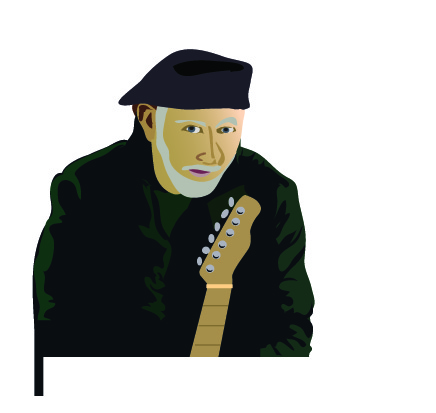
[Image courtesy Helpless Dancer]

[Image courtesy Helpless Dancer]

Richard John Thompson was born on this day in Notting Hill, London, England in 1949. He is 64 years old.
Thompson was born into a musical family. His father was an amateur guitarist and other family members played music professionally. His first band, which he started in school, was called Emil and the Detectives. Thompson embraced rock and roll, jazz and traditional Scottish music influences as he kerned his skills.
At 18 he joined Fairport Convention, a folk, electric folk, folk rock band.
In his four years with the group, they released a half a dozen albums that married electric rock with acoustic folk, changing the musical landscape in Britain… [NPR.org]
His strong guitar playing helped the band gain traction both in the UK and in the States. Thompson also wrote most of Convention’s songs like “Meet on the Ledge” .
Thompson left Fairport Convention in 1971 and struck out on his own. His first solo album, Henry the Human Fly failed to impress critics and the record buying public, but it did yield an important professional and personal connection — Thompson worked with Linda Peters on the project. Peters and Thompson fell in love and married in October of 1972.
Richard Thompson

Richard Thompson (Photo credit: artolog)

Richard and Linda Thompson put out a half-dozen albums including I Want to See the Bright Lights Tonight, Hokey Pokey and Pour Down Like Silver.
The duo hit their professional stride with the well received album Shoot Out the Lights. Unfortunately their personal life together had begun to unravel. After touring to support the album the couple divorced in 1982.
Here’s Wall of Death from Shoot Out the Lights
From 1983 on Thompson was a solo act — kind of — he found a myriad of other performers who mixed well with his vocal, guitar and folk/rock style.
No artist to emerge in the second half of the ’60s has gone on to have a more productive and vital career than Richard Thompson. The England-born, L.A.-based artist has amassed an astounding body of work comprising more than 40 albums, containing artfully shaped material that seamlessly and expressively integrates traditional and contemporary modes. And Thompson is among the most distinctive of guitar virtuosos, capable of breathtaking drama and sublime delicacy, prompting Rolling Stone to hail him as “a perennial dark-horse contender for the title of greatest living rock guitarist.” [Amazon.com — Richard Thompson Biography]
Richard Thompson at Cambridge Folk Festival

Richard Thompson at Cambridge Folk Festival (Photo credit: Wikipedia)

Here’s 1952 Vincent Black Lightning a beautiful exhibition of his storytelling and musical skills.
The Thompson’s son Teddy began singing professionally with his father in the 1990’s. The two performed a duet, Persausion, for Action Packed, Richard Thompson’s 1999 best-of record.
That same year Thompson was asked for a list of the most popular music of the previous millennium for Playboy Magazine.  Thompson knew they were only looking for a pop look at the past 20 years or so, but he took the task to heart and researched songs stretching back 1068.  He started with Sumer is Icumen In and ended with his own take on Oops! I Did It Again. Thompson decided to record the songs (he did 23 in all).
To get a comprehensive taste of Thompson music you can listen to this NPR concert:

RICHARD THOMPS SM