Category Archives: postaday

Secondary Character Saturday: Anita (West Side Story)

So… Tomorrow night I’m going to go see Romeo and Juliet at the  Baltimore Shakespeare Factory and that got me thinking about West Side  Story. And THAT got me thinking about one of my favorite Secondary Characters… Anita.

———————————————————————-

Who: Anita

From: West Side Story

West Side Story

West Side Story (Photo credit: thejcgerm)

By: Arthur Laurents, Stephen Sondheim,  and Leonard Bernstein

Produced: 1957 Broadway Premier / 1961 Film

Pros: feisty, spicy, self confident, beautiful, great dancer, great singer, realistic, loyal, great friend, gutsy,

Cons: A bit abrasive, assertive,  and hardly a saint.

Best Shining Moment: Singing AMERICA on the roof top. AND going into Jet territory to tell Tony to wait for Maria.

Least Shining Moment: When the Jets verbally, physically (and very nearly sexually) abuse her she lies to them (and thru them Tony) and tells them Maria is dead, setting up the tragic closing scenario. But that’s really on the Jets.


Ludwig Wittgenstein 4.26.13 Thought of the Day

“Knowledge is in the end based on acknowledgement.” — Ludwig Wittgenstein

Ludwig Wittgenstein 2
Ludwig Wittgenstein 2 (Photo credit: Christiaan Tonnis)

Ludwig Josef Johann Wittgenstein was born on this day in Vienna, Austria in 1889. Today is the 124th Anniversary of his birth.

Ludwig Wittgenstein's five siblings: (back) He...
Ludwig Wittgenstein’s five siblings: (back) Hermine, Helene, Margarete, (front) Paul and Ludwig. (Photo credit: Wikipedia)

Ludwig was the youngest of 9 children born to Karl and Poldi Wittgenstein. The Wittgensteins were “a wealthy industrial family, well-situated in intellectual and cultural Viennese circles.”[Stanford.edu]

Karl Wittgenstein was one of the most successful businessmen in the Austro-Hungarian Empire, leading the iron and steel industry there. The Wittgensteins’ home attracted people of culture, especially musicians, including the composer Johannes Brahms, who was a friend of the family. [UTM.edu]

Young Ludwig was tutored at home for several years before studying mechanical engineering in Berlin, then aeronautical engineering  in Manchester. He went to Cambridge and studied under Bertrand Russel working on the philopsohy of pure mathematics and  the philosophy and  the foundations of logic.

When his father died in 1913 Wittgenstein gave away some of his inheritance. He moved to Skjolden Norway to isolate himself . There he wrote Logik .

When World War One broke out he volunteered with the Austrian Army. He saw heavy action on the Russian front.  He was decorated for bravery and military merit.

He was taken captive in 1917 and spent the remaining months of the war at a prison camp. It was during the war that he wrote the notes and drafts of his first important work, Tractatus Logico-Philosophicus. After the war the book was published in German and translated into English. [Stanford.edu]

After the war he return to home to Vienna. Always eccentric, now Wittgentstein seemed to cross over some invisible line to unstable. This brilliant man whose work in philosophy was revolutionizing the field suddenly wanted to teach elementary school. (Ironic, considering he had never even gone to elementary school.) He went back to college to get a teaching degree, and he went about getting rid of his fortune.  Wittgenstein worked as a gardener and then “as elementary school teacher in rural Austria, where his approach was strict and unpopular, but apparently effective.” [UTM.edu]

Ludwig Wittgenstein

Ludwig Wittgenstein (Photo credit: Wikipedia)

He returned to Cambridge in 1929 and began to work on philosophy again, he became a professor a decade later.  He took a break from teaching during World War II  (when he worked in London as a hospital porter and in Newcastle as a research technician) but came back to Cambridge after VE day. In 1947 he decided to work on his writing full-time and he began to amass his Philosophical Investigations , which was published posthumously.

Wittgenstein died of prostate cancer in 1951.


Ella Fitzgerald 4.25.13 Thought of the Day

“It isn’t where you came from, it’s where you’re going that counts.” — Ella Fitzgerald

Ella Sings Broadway

Ella Sings Broadway (Photo credit: Wikipedia)

Ella Jane Fitzgerald was born on this day in Newport News, Va. in  1917.  Today is the  96th anniversary of her birth.

Her parents, William and Tempie Fitzgerald split when she was an infant and Ella and her mother moved to Yonkers, New York. Tempie fell in love with Joe Da Silva and the couple had a baby girl, Ella’s half-sister, Frances in 1923. When Joe couldn’t make ends meet with his part-time chauffeuring gig he dug ditches. Tempie worked at a laundromat. Even little Ella helped out, she was a runner for local gamblers.

Ella enjoyed sports as a child and liked to dance and sing with her friends. “some evenings they would take the train into Harlem and watch various acts at the Apollo Theater.” [The Official Website of Ella Fitzgerald] She was inspired by Louis Armstrong and the Boswell Sisters, a trio from New Orleans who specialized in tight harmonies and intricate rhythms.

She had to grow up fast  in 1932 when her mother died from injuries she received in a car crash. Joe died shortly thereafter, and Frances shortly after him. Ella lived with her Aunt Virginia for a while.

Her grades dropped dramatically, and she frequently skipped school. After getting into trouble with the police, she was taken into custody and sent to a reform school. ….Eventually Ella escaped from the reformatory. The 15-year-old found herself broke and alone during the Great Depression, and strove to endure….. [Ibid]

She was homeless for a while and on the run. But her luck turned around when she was 17. She was at the Apollo Theatre and her name was selected to compete at “Amateur Night.” Although she was planning to dance  she changed her mind when she saw another act  win the crowd over with their spectacular dancing. She would have to do something else. She decided to sing instead. She chose an old Boswell song, “Judy,” that she knew by heart.

Portrait of Ella Fitzgerald

Portrait of Ella Fitzgerald (Photo credit: Wikipedia)

Ella could be shy off stage, but on stage she lit up like a Christmas Tree. The audience loved her song and demanded an encore (she did the song from the flip side of the Boswell record). She was fearless and she won the talent show and took home the $25 prize. “Once up there, I felt the acceptance and love from my audience,…I knew I wanted to sing before people the rest of my life.” [Ibid]

She began to enter every talent show she could find. And she won them all. She met drummer/bandleader Chick Webb and signed a contract with him to front his band for $12.50 a week. In 1936 she recorded “Love and Kisses” on the Decca label. At 21 She recorded “A-Tisket, A-Tasket” her first #1 hit.

When Webb died his band changed its name to “Ella and her Famous Orchestra.” She recorded 150 songs with the group, but it wasn’t until she left, in 1942 that her career really began to take off.  She signed with Decca records  and did a  series of “songbooks” by famous jazz composers. From Irving Berlin to Duke Ellington to Cole Porter she reinterpreted jazz standards for a new audience.

“I never knew how good our songs were until I heard Ella Fitzgerald sing them,” Ira Gershwin once remarked. [Ibid]

She also began to work with Norman Granz on his Jazz at the Philharmonic and her sound morphed from big band to bebop and she began to master scat singing.

She received the National Medal of Arts from President Ronald Reagan in 1987. She gave her final concert in Carnegie Hall in 1991. She died on June 15, 1996 in Beverly Hills, California

Here she is scatting away and doing a Broadway standard:


James Buchanan

“What is right and what is practicable are two different things.”– James Buchanan

English: I took photo of James Buchanan in Nat...
English: I took photo of James Buchanan in National Portrait Gallery with Canon camera. Public domain. (Photo credit: Wikipedia)

James Buchanan was born on this day in Cove Gap, Pennsylvania, USA in 1791. Today is the 222nd anniversary of his birth.

James Buchanan Log House

Although he was born in a log cabin Buchanan’s family was well to do. His father was a prosperous businessman. His father, James Buchanan, Sr. was a farmer, businessman and merchant, his mother, Elizabeth Speer, was intelligent and well-respected. James was the second of 11 children, 8 of whom lived to adulthood.

Young James attended school in the Mercersberg area, but his father’s business triumphs and his mother’s interest in education dictated better opportunities for the boy. At age sixteen, he entered Dickinson College in Carlisle, seventy miles from home. [the Miller Center.org]

After graduation in 1809 he went to Lancaster, PA, to study Law. He passed the bar in 1812.

Although he was against the War of 1812 (he thought it was unnecessary) He joined the light dragoon unit when the British invaded Maryland and helped defend the city of Baltimore. Although the Battle of Baltimore would later become famous because of Francis Scott Key’s poem The Star Spangled Banner, Buchanan’s unit didn’t see any action.

He returned to Lancaster after the war. At 23 he ran for Pennsylvania House of Representatives and won a seat as a Federalist.

Toward the end of his time in the legislature, Buchanan fell in love with Ann Caroline Coleman. … The young woman’s family opposed the match with Buchanan, however. … Ann Coleman sent him a letter breaking off the engagement. A few days later she died. The Coleman family turned its grief and guilt on the young lawyer and forbade him to attend the funeral. The experience severely shook Buchanan; he vowed he would not marry another, and he never became seriously involved with any other woman for the rest of his life, though he carried on many flirtations. He would be the nation’s first and only bachelor President. [the Miller Center.org]

He threw himself into his work and was elected to the U.S. House of Representatives in 1820.

He was elected five times to the House of Representatives; then, after an interlude as Minister to Russia, served for a decade in the Senate. He became Polk’s Secretary of State and Pierce’s Minister to Great Britain. [White House.gov]

Being out of the country during a contentious primary season helped Buchanan side step the bloody Slavery debate. “The overseas post enabled Buchanan to be unblemished by the political bloodshed that resulted from the disastrous Kansas-Nebraska Act of 1854.” [the Miller Center.org]  He became the Democratic Party’s nominee for President in 1856. He beat Republican John C. Frémont and took the White House on March 4, 1857 as the 15th president of the United States.

James Buchanan: Fifteenth President of the Uni...
James Buchanan: Fifteenth President of the United States (Photo credit: Wikipedia)

The first crisis of his presidency happened when the Supreme Court handed down the Dread Scott Decision…

Asserting that Congress had no constitutional power to deprive persons of their property rights in slaves in the territories. Southerners were delighted, but the decision created a furor in the North. [White House.gov]

More slavery woes were in store in the territory of Kansas. The choice in Bleeding Kansas was between two rival state constitutions, the Free-Soil (anti-slavery settlers) took Topeka as their capital, those who were pro-slavery picked Lecompton as the seat of government. The Free-Soil party was in the majority but the Lecomptons managed (through a number of shady means) to get their platform passed.

Buchanan decided to end the troubles in Kansas by urging the admission of the territory as a slave state. Although he directed his Presidential authority to this goal, he further angered the Republicans and alienated members of his own party. Kansas remained a territory. [Ibid]

By the mid-term elections Buchanan’s political star had fallen and the Republican took the House and Senate. He was the lamest of lame ducks and the government was at a stalemate. In the presidential election of 1860 the Democrats split with Buchanan taking the Southern states and Douglas taking the Northern states.

Consequently, when the Republicans nominated Abraham Lincoln, it was a foregone conclusion that he would be elected even though his name appeared on no southern ballot. Rather than accept a Republican administration, the southern “fire-eaters” advocated secession…President Buchanan, dismayed and hesitant, denied the legal right of states to secede but held that the Federal Government legally could not prevent them. He hoped for compromise, but secessionist leaders did not want compromise. [White House.gov]

South Carolina was first to secede (on December 20, 1860.) Six other states joined South Carolina and formed the Confederate States of America. “When Buchanan left office on March 3, 1861, to retire to his estate outside of Lancaster, Pennsylvania, he left the nation on the brink of civil war.” [Biography.com ]

James Buchanan
James Buchanan (Photo credit: Wikipedia)

He lived out the war at his home, Wheatland, in Lancaster, PA.

Rightly or wrongly, considerable blame for the Civil War fell upon him. His portrait had to be removed from the Capitol to keep vandals from damaging it, and posters captioned “Judas” depicted him with his neck in a hangman’s noose. A wave of second-guessing condemned Buchanan’s actions with regard to Fort Sumter. The Republican press attacked him while absolving the Republican Party and Lincoln from all responsibility for the conflict. Although Buchanan vocally supported the Union cause, many branded him an appeaser of the South and a lover of slavery.  [the Miller Center.org]

He died of respiratory failure in 1868. He 77.


Muffin Monday — Almond Cranberry Muffins (DF)

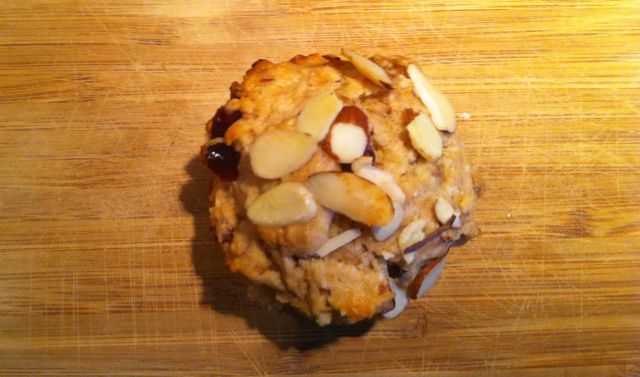
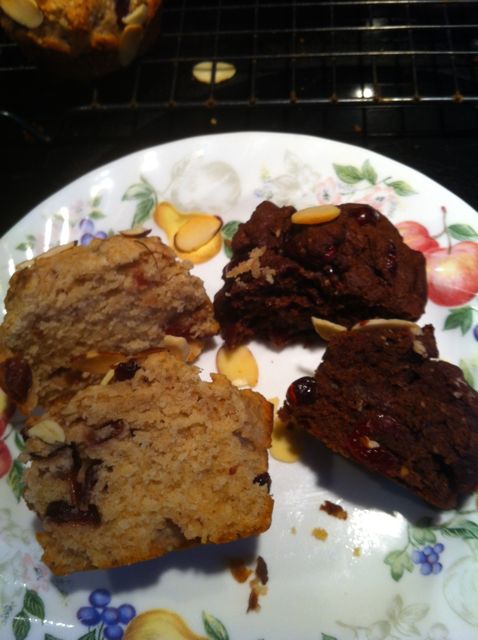
IMG_4800

Almond Cranberry Muffins (Dairy Free?)

I had to suggestions for this week’s Muffin Monday blog — something with Cranberries and something Dairy Free. I think I achieved both goals with these yummy Almond Cranberry Muffins. [Will my DF eaters double check me, please?]

Ingredients:

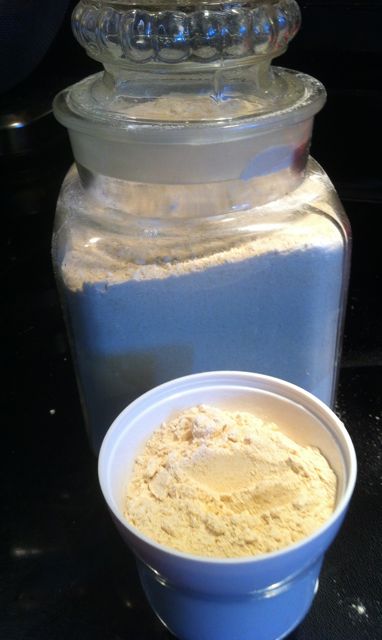
  • 1 cup White Whole Wheat Flour

IMG_4692

  • 3/4 cup Almond Meal or Almond Flour

IMG_4683

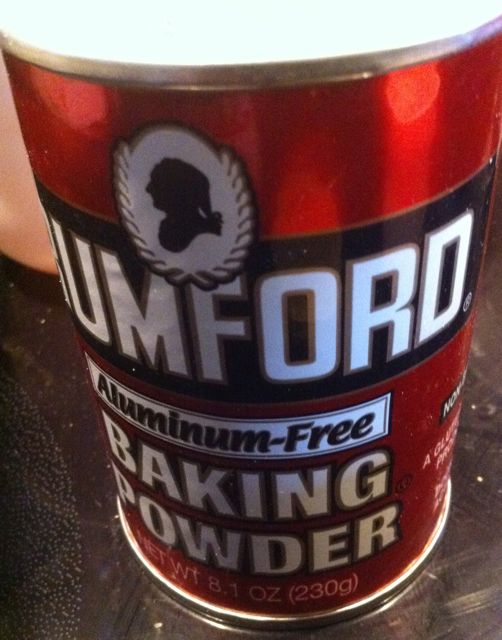
  • 1 tsp Baking Powder

IMG_4704

  • 1/2 tsp Salt

IMG_4707

  • 4 tsp JUST WHITES (or 2 eggs)

IMG_4747

  • 1/4 c Water (don’t add this water if you use eggs)

IMG_4748

  • 1 tsp Vanilla or Almond Extract

IMG_4540

  • 1/2 cup Vegetable Oil

IMG_4571

  • 2 Tbsp Maple Syrup

maple syrup

  • 2/3 cup Dried Cranberries

IMG_4784

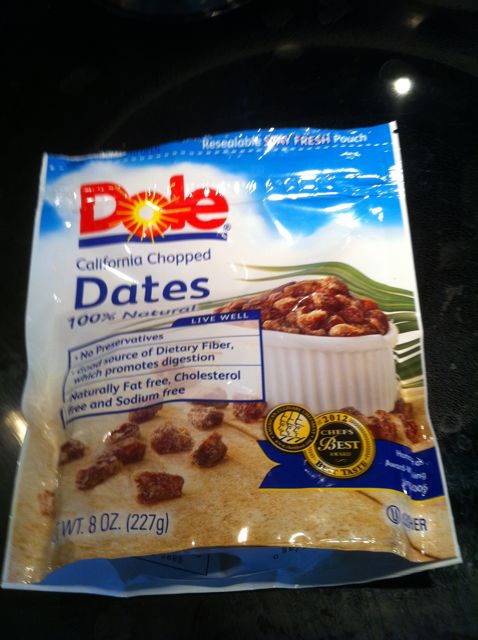
  • 1/2 cup Chopped Dry Dates

IMG_4782

  • 1 cup of Boiling Water

Step One: Put the cranberries and dates in the boiling water and stir. Let sit for 5 minutes to plump then drain. (You can reserve the cranberry juice add another cup of cold water and drink it. )

Step Two: Pre-heat the oven to 350 F. Put muffin pants into the muffin tin and spray lightly.

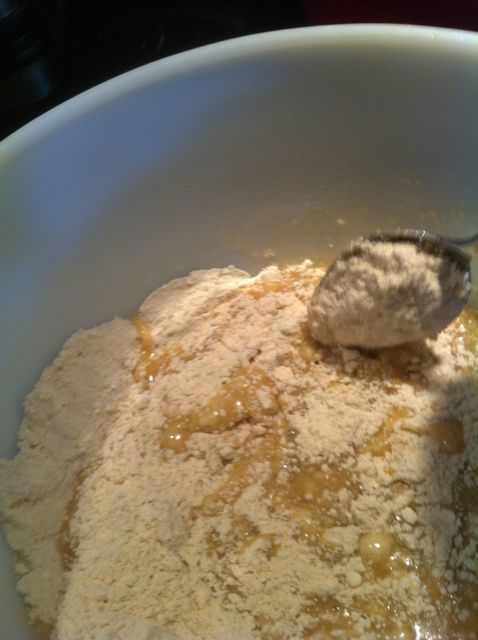
Step Three: Mix the flour, almond meal, baking powder, salt and Just Whites in a medium-sized bowl

Step Four: Mix the 1/4 cup of water, the extract, the cooking oil, and the maple syrup in a small bowl (or measuring cup large enough to handle it)

Step Five: Combine the wet ingredients with the dry ingredients. Don’t over mix.

IMG_4794

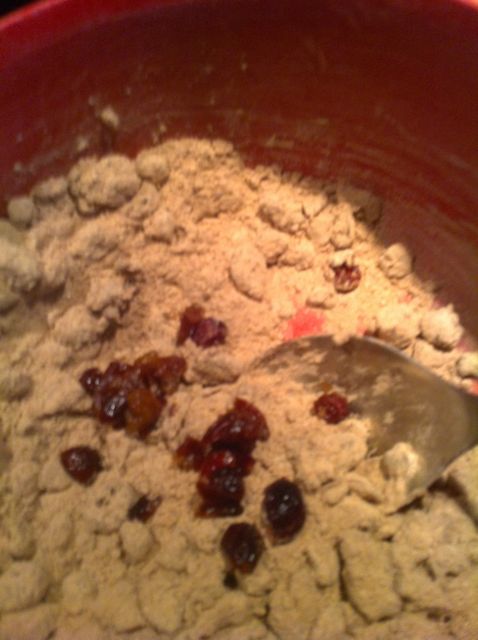
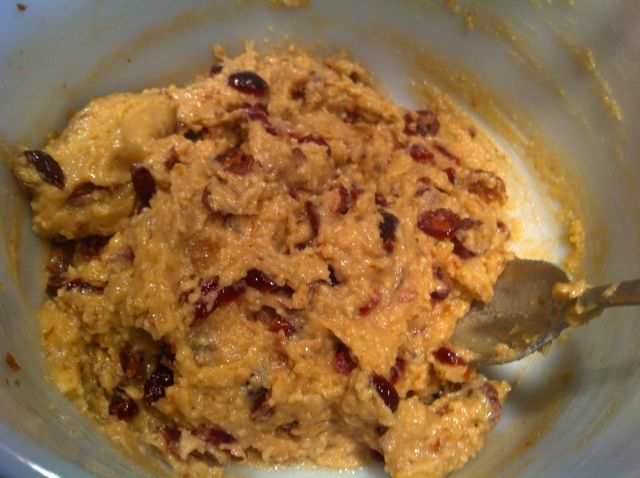
Step Six: Add the drained Cranberry and Date mixture.

IMG_4791

Step Seven: Spoon into the muffin tin.

IMG_4795

Step Eight: Bake for 25 minutes, until the muffins are golden brown at the top and they pass the toothpick test. Cool for 10 minutes before eating.

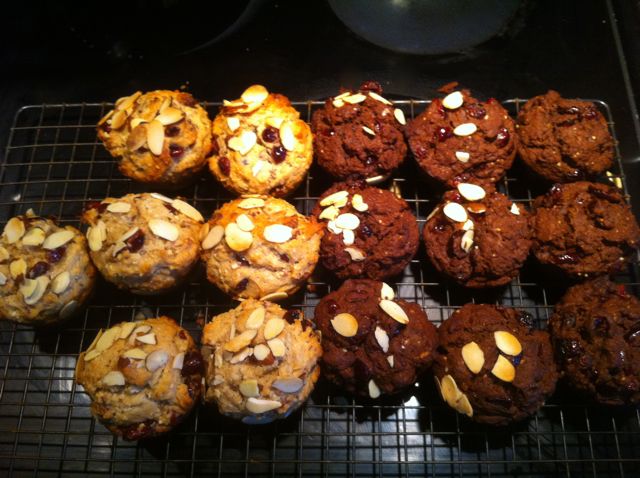
This recipe made 9 muffins.

IMG_4797

BONUS RECIPE:

IMG_4809

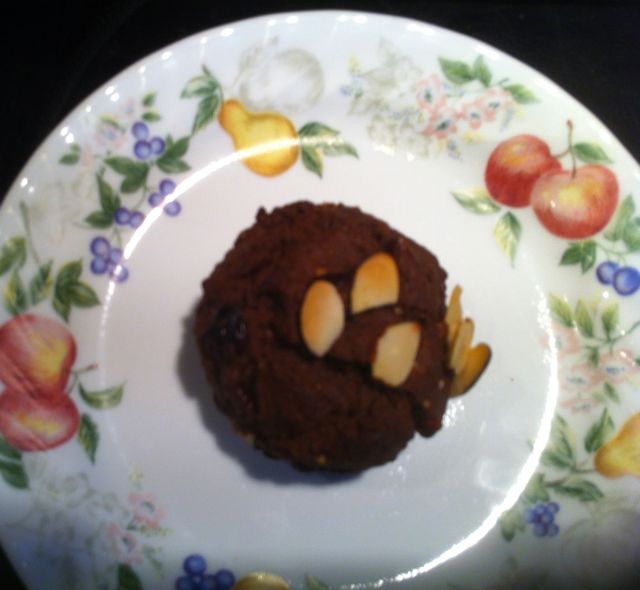
Chocolate Cranberry Muffins

For those of you who like a little Chocolate just change the top two ingredients…

  • 1 1/2 cup of White Whole Wheat Flour

IMG_4692

  • 1/4 cup Cocoa Powder

IMG_4788

Follow the recipe above.

IMG_4805

These muffins had a perfect flaky consistency and moisture content. Although usually a Chocolate girl myself, I actually prefered the almond version a bit more. But both were delicious.   Enjoy!

More I want to try:


The Samuel Mudd House

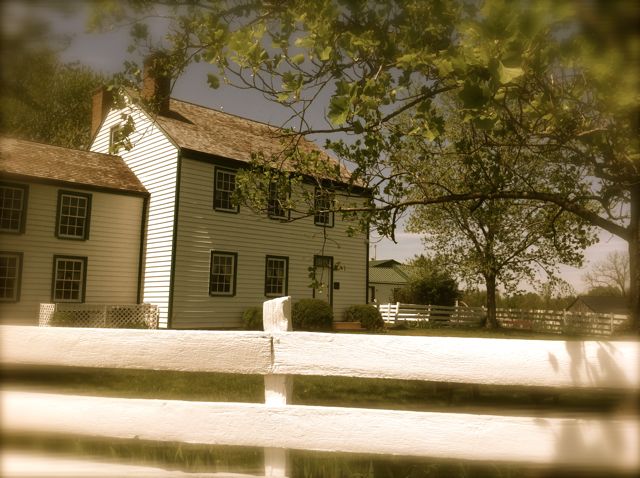
Home of Dr Samuel Mudd

Home of Dr Samuel Mudd (Photo credit: crazysanman.history)

A trip to Southern Maryland brought us to the door step of history today when we stopped by the Samuel Mudd House. You may remember that I profiled Mudd as a Thought of the Day bioBLOG on his birthday back in December (click HERE to read the bio) so when we saw the brown historical marker indicating that Mudd’s house was a few mile off Maryland’s Route 5 we had to make a side trip and explore.

Approaching the Mudd House.

Approaching the Mudd House.

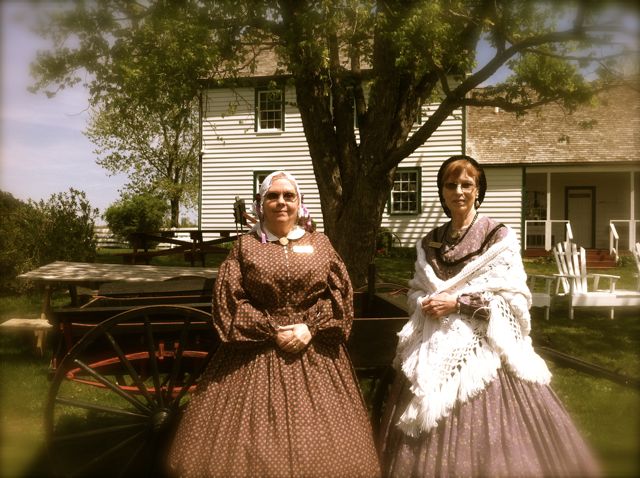
You enter the Dr. Samuel Mudd House at the back of the house, at the gift shop. There a docent will greet you and take you on a tour of the house. Our docent, Russet Hodgkins, took us through the events of early April 16th when…

Docents Russet Hodgkins and Lynn Bounviri pose behind the Mudd House.

Docents Russet Hodgkins and Lynn Bounviri pose behind the Mudd House.

A knock at the door work the 31-year-old doctor and his wife “Frankie”  at 4:00 am.

Two men stood in the doorway, one in need of medical attention for a badly broken leg. It was David Herold and John Wilkes Booth. News of the previous night’s assassination had not reached sleepy Charles Country.  Mudd couldn’t have known that Booth had shot Lincoln. The doctor didn’t even recognize the men, who were traveling under aliases — though there was something familiar about the injured man. He had actually met Booth before (when the actor was looking to buy a horse and property in the area) but that night he was in disguise, and the poor light and a false beard fooled the doctor.

English: Broadside advertising reward for capt...

English: Broadside advertising reward for capture of Lincoln assassination conspirators, illustrated with photographic prints of John H. Surratt, John Wilkes Booth, and David E. Herold. Français : Avis de recherche avec prime de 100.000 $ pour la capture de John Wilkes Booth, le meurtrier du président Abraham Lincoln, et deux de ses complices, David Edgar Herold et John Harrison Surratt. (Photo credit: Wikipedia)

He examined the stranger’s leg on a red couch that still sits in the House’s parlor, and had him taken upstairs where he set the leg.  The next day the two men acted suspiciously, turning their faces to the wall when Mudd’s wife brought them food.  After a few hours rest they left, headed toward Virginia where they were eventually found at the Garrett Farm.

Investigators followed Booth’s trail to Mudd’s house and the doctor was implicated in the Lincoln assignation.Mudd was convicted by a Military Commission and sentenced to life in prison. He was sent to the military prison at the Dry Tortugas, west of Key West, Florida. When a yellow fever outbreak hit the Dry Tortugas and the  prison doctor died of the disease Mudd took over. For his efforts during the epidemic President Andrew Johnson pardoned him.

Dr. Mudd as he appeared when working in the ca...

Dr. Mudd as he appeared when working in the carpenter’s shop in the prison at Fort Jefferson. (Photo credit: Wikipedia)

He went back to his wife and children and the Maryland farm. Mudd died of pneumonia in 1883.  He was 49 years old.

The house is decorated with furniture from several generations of Mudds, and it is interesting to see how this working farm passed down from generation to generation.

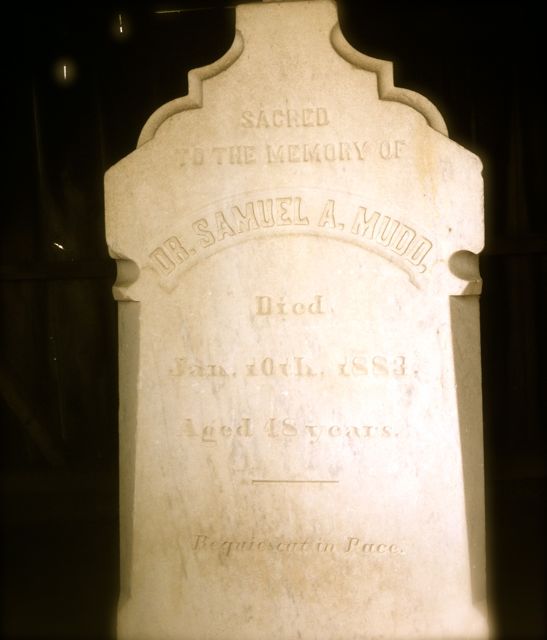
The mistake tombstone

The mistake tombstone

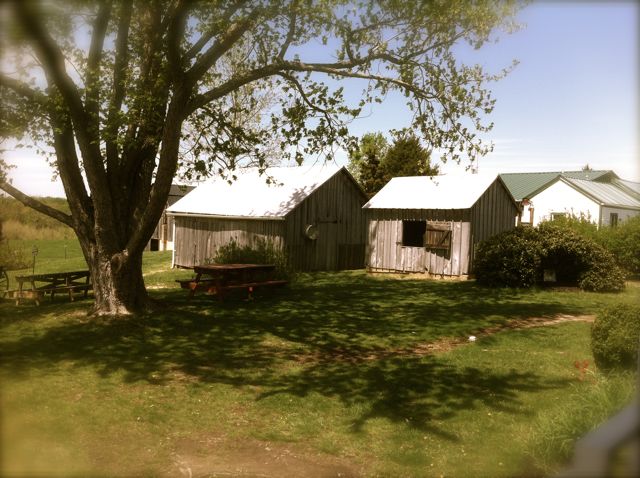
Don’t miss the outbuildings, especially the gravestone building (they made a mistake on his grave marker, and this “mistake” is housed at the museum.) Other outbuildings house period farm equipment, a tobacco barn, a Civil War display and more.

Outbuildings and barns to explore at the Mudd House

Outbuildings and barns to explore at the Mudd House

Dr.  Samuel A. Mudd House is a privately run museum and is open March to November on Wednesdays and Saturdays from 11 to 4  and Sundays 12 to 3:30. (Closed on Easter.) The museum is also open the first weekend in December for a Victorian Christmas.

Call 1-301-274-9358 for more information.


Second Character Saturday: Glenda

“When all the stars have fallen down into the sea and on the ground, and angry voices carry on the wind, a beam of light will fill your head and you’ll remember what’s been said by all the good men this world’s ever known.”–Glinda the Good Witch

Cover of the Glinda of Oz

Cover of the Glinda of Oz (Photo credit: Wikipedia)

Who: Glinda the Good Witch

From: The Wizard of Oz

By: L. Frank Baum

Published: 1900

The portrait of Glinda the Good appearing in G...

The portrait of Glinda the Good appearing in Glinda of Oz, by L. Frank Baum. (Photo credit: Wikipedia)

Pros: Kind, protective, wise, thoughtful, brave, magical, friendly, and a strong female role model — her court is almost entirely made up of women. Her leadership style involves letting people figure things out on their own. She keeps a careful eye on the situation and guides them as necessary but she lets them come to the conclusions on their own without spoon-feeding them the knowledge or answers. She’s also there to help when called on.

Why I chose Glinda: I choose her because my daughter recommended this TED talk. Although Mr. Stokes speaks to the Glinda character in the 1939 Movie (and I’m going back to the source Glinda in the book) I think he hits the nail on the head. And it inspired me to choose her for today’s Secondary Character.

http://www.wellhappypeaceful.com/glinda-the-good-witch/

Billie Burke as Glinda and Judy Garland as Dorothy in the 1939 movie of The Wizard of Oz [Image courtesy: Well Happy Peaceful]

Billie Burke as Glinda and Judy Garland as Dorothy in the 1939 movie of The Wizard of Oz [Image courtesy: Well Happy Peaceful]


John Phillip 4.19.13 Thought of the Day

John Phillip was born on this day in Aberdeen, Scotland in 1817. Today is the 196th anniversary of his birth.

Self Portrait Aberdeen Art Gallery & Museums Collections [bbc.co.uk]

Self Portrait Aberdeen Art Gallery & Museums Collections [bbc.co.uk]

His father was a former soldier and a shoe maker. The Phillip family was very poor. But John’s talents emerged when he was young and a patron made it possible for the boy to be educated at the Royal Academy of Arts in the Piccadilly area of London.

He was a member of The Clique, a group of artist started by Richard Dadd. The Clique eschewed high art in favor of genre painting (paintings of every day life).  The group, who were followers of Hogarth and Wilkie,  sketched a common subject and then critiqued each other’s work.

The Artist and His Wife (Maria Elizabeth Dadd) Aberdeen Art Gallery [bbc.co.uk]

The Artist and His Wife (Maria Elizabeth Dadd) Aberdeen Art Gallery [bbc.co.uk] He married Richard Dadd’s sister Maria Eliabeth Dadd.

In 1857 he was made an associate of the Royal Academy, he earned full membership in 1859.

Disgorging the Fly (Aberdeen Art Gallery) [BBC.co.uk]

Disgorging the Fly (Aberdeen Art Gallery) [BBC.co.uk]

At first Phillip focused on scenes that idealized his Scottish past — simple, traditional, pious. In 1851 he took a trip to Spain for health reasons and shifted to painting shifted Spanish every day life. He made a total of three trips to Spain.

The Marriage of the Princess Royal (sketch) a painting commissioned by Queen Victoria to commemorate the marriage of her daughter. (Aberdeen Art Gallery) [bbc.co.uk]

The Marriage of the Princess Royal (sketch) a painting commissioned by Queen Victoria to commemorate the marriage of her daughter. (Aberdeen Art Gallery) [bbc.co.uk]

Queen Victoria, a fan of Phillip’s work –“who considered him to be Britain’s greatest portrait painter and entrusted him to paint the Royal Family portraits.  [About Aberdeen.com]– dubbed him “Spanish Phillip.”

The Spanish Flower Seller (Aberdeen Art Gallery) [bbc.co.uk]

Phillip was an immensely competent artist, his work distinguished by a boldness of handling and a strong sense of colour and chiaroscuro which seem typically Scottish. Spain bought out these characteristics, and the resulting paintings are dazzling evocations of Spanish life at its most picturesque and exotic, delighting in dramatic contrasts of light and shade and brilliant local colour illuminated by strong sunlight. [Golden Age Paintings.blogspot]

The Evil Eye (The Stirling Smith Art Gallery) [bbc.co.uk]

He died on February 27,  1867 in London.


Lucrezia Borgia 4.18.13 Thought of the Day

“If people knew the reasons for my fears, they would Be able to understand my pain.” — Lucrezia Borgia

Italiano: Lucrezia Borgia ritratta nella "...

Italiano: Lucrezia Borgia ritratta nella “Disputa di Santa Caterina” dell’Appartamento Borgia, nella Sala dei Santi in Vaticano. (Photo credit: Wikipedia)

Lucrezia Borgia  was born on this day in Subiaco, near Rome, Italy in 1480. Today is the 533rd anniversary of her birth.

Lucrezia  was the daughter of the powerful Cardinal Rodrigo Borgia and his mistress Vannozza dei Cattanei, and younger sister of Cesare and Giovanni Borgia.  When she was a toddler her father took the children away from their mother and sent them to live with his cousin, Adriana de Mila. The Cardinal took an active role in raising the children, making sure they were well-educated and properly brought up. He doted on pretty Lucrezia.

“Lucrezia was educated according to the usual curriculum of Renaissance ladies of rank, and was taught languages, music, embroidery, painting, etc…” [NNDB] She studied poetry and read the classics. She could converse in Latin, Italian, French and Greek. She was also a beauty. Her long blond hair, flawless complexion, hazel eyes and graceful stature were all the fashion in Renaissance Italy.

By eleven she was betrothed to a Spanish nobleman, Don Cherubin do Centelles, but that brokered arrangement was broken for a more advantageous one, with another Spaniard, Don Gasparo de Procida. Before the two could marry Cardinal Borgia became Pope Alexander VI, and  “he annulled the union with Procida; in February 1493 Lucrezia was betrothed to Giovanni Sforza, Lord of Pesaro.” (Ibid)

Portrait of Pope Alexander VI. Painting locate...

Portrait of Pope Alexander VI. Painting located at Corridoio Vasariano (museum) in Florence (Firenze), Italy. Measures of painting: 59 x 44 cm. (Photo credit: Wikipedia)

This time Lucrezia, at 13,  did walk down the aisle. Sforza was 15 years older than the girl and it was hardly a match made in heaven. So when the political winds shifted and the Pope wanted to annul the marriage his daughter didn’t object. But Sforza did. Alexander claimed the reason for the annulment was Sforza’s impotency, a charge the Lord of Pesaro vehemently denied — and offered to prove in front of anyone who cared to act as witness. He countered that Alexander and Lucrezia were having an incestuous relationship. He later recanted the allegations and accepted the annulment, but there were other Borgia enemies who took up the rumors.

Whispers of incest filled the streets of Rome and 14-year-old Lucrezia’s reputation was damaged beyond repair. There was also a claim that she poisoned her enemies. She allegedly had her own special formula for a an undetectable poison. She’s even supposed to have had a specially designed ring with a compartment for the poison and a tiny needle with which to administer it.

Coin of Lucrezia Borgia

Coin of Lucrezia Borgia (Photo credit: Wikipedia)

Pope Alexander married her off again, this time to Alphonso of Aragon, the 18-year-old duke of Bisceglie, to firm up his political alliances with Naples. Although it was an arranged marriage the match was a happy one. Lucrezia and Alphonso had a baby, Rodrigo and seemed to be very much in love. Alas it only lasted 2 years. “Pope Alexander and Lucrezia’s brother Cesare sought a new alliance with France, and Lucrezia’s marriage to Alfonso was a major obstacle.” [Biography] Alfonso was attacked by assassins in the streets of Rome. He was brutally stabbed in the head, arm and leg. With the help of his own guards he made it back to the papal residence, where he was nursed  by Lucrezia and others.  But, while he was recovering an assassin (almost certainly working for her brother) gained admittance to the sick room and strangled him. Lucrezia was heart broken.

After Alphonso’s death Pope Alexander went away to survey a  “new acquisition” and “left the administration of the Vatican and the Church in the hands of Lucrezia.” [trutv.com]

English: Lucrezia Borgia presiding over the Cu...

English: Lucrezia Borgia presiding over the Curia Romana in the abcense of her father Pope Alexander VI (Photo credit: Wikipedia)

But the political chess game that was Lucrezia’s life wasn’t over yet. Single again at 20 her father found her yet another husband Alfonso I d’Este. The d’Este family had heard the rumors of Lucrezia’s infamous behavior, they’d seen how her last two marriages had ended, and they knew how dangerous it was to dance with the Borgas . They bulked at the union, but when Alexander applied pressure — and upped the dowry — they gave in and the wedding took place in 1502. Lucrezia was packed up and sent to Ferrara.

At first her new life in Ferrara was very difficult. Her husband was distant and unloving, her new family was suspicious and shunned her and she was removed from everyone she had every loved — especially her baby, Rodrigo. But Alfonso d’Este and eventually his family came to realize she wasn’t the murderous adulterer she painted to be.”She won over her reluctant husband by her youthful charm (she was only twenty-two), and from that time forth she led a peaceful life, about which there was hardly a breath of scandal.” [NNDB]

Possibly portrait of Lucrezia Borgia

Possibly portrait of Lucrezia Borgia (Photo credit: Wikipedia)

In 1503 Pope Alexander died and she was finally free from her role as the family’s pawn. Two years later Alfonso’s father died making the couple the Duke and Duchess of Ferrara.

During their seventeen year marriage Alfonso and Lucrezia had 6 children, 2 of whom lived to adulthood. (Rodrigo lived to be 12-years-old. Although Lucrezia tried she never saw her son after she left Rome)

As Duchess she helped make the court of Fererra a truly Renaissance place. She…

gathered many learned men, poets and artists at her court, among whom were Ariosto, Cardinal Bembo, Aldus Manutius the printer, and the painters Titian and Dosso Dossi. She devoted herself to the education of her children and to charitable works [Ibid]

She died due to complications of child birth on June 24, 1519.

English: Lucrezia Borgia

English: Lucrezia Borgia (Photo credit: Wikipedia)