Category Archives: England

Thought of the Day 9.29.12 Elizabeth Gaskell

“Sometimes one likes foolish people for their folly, better than wise people for their wisdom.”
Elizabeth Gaskell

Elizabeth Gaskell, in portrait of 1851 by Geor...

Elizabeth Gaskell, in portrait of 1851 by George Richmond (Photo credit: Wikipedia)

Elizabeth Cleghorn Stevenson was born on this day in London, England in 1810. Today is the 202nd anniversary of her birth.

The youngest of eight children, she was just a little over a year old when her mother died. Her father, William Stevenson, a Scottish Unitarian minister, was not up to taking care of the baby  and Elizabeth (Lily) went to live with her maternal aunt Hannah Lumb, whom she affectionately referred to as her “more than mother,” at Heathwaite House  in  the small town of Knutsford, Cheshire. There she enjoyed the affections of several aunts and other single ladies (either widows or spinsters) in the town. Her aunt taught her read. She went to Miss Byerlys school at Barford House and later to Avonbank in Stratford-on-Avon. Her education was traditional for a well-bred Victorian girl. She learned the classics, art, music and social graces at finishing school, while her father encouraged her writing and her brother John (John and Elizabeth were the only siblings to survive past infancy), who was in the Merchant Navy, sent her books and wrote her letters from his posts around the world .

When Elizabeth was nine she visited her father in London. He had remarried, and, unfortunately, Elizabeth did not get along with her new stepmother, Catherine Thomson. To complicate matters William and Catherine preferred their own children, and Elizabeth often felt like the odd man out. Eventually she was sent to live with a distant relative, another William, William Turner. Turner was a

A staunch proponent of reform and the abolition of oppressive and inhumane practices such as slavery, his outspoken criticisms profoundly affected Elizabeth’s values and her perspective on life. [The Literature Network]
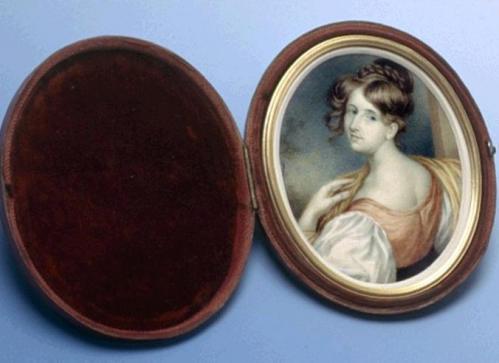
Elizabeth Gaskell around the time of her marriage, 1832 (Image courtesy: Jane Austen’s World)

She married William Gaskell, a minister in Knutsford in 1832. The Gaskells lived in Manchester. They had six children; a stillborn daughter, a son, who died in infancy from scarlet fever, and four girls.  “As the wife of a minister and mother to four growing girls, Gaskell’s life was hectic: they both taught Sunday school and volunteered for much-needed charitable causes in Manchester.” [The Literature Network] — Manchester, a mill town, had a lot of poor and working poor and Gaskell witnessed it first hand as she worked among them lending charity where she could.

Still, Elizabeth found time to write, keeping a diary about her growing daughters and the job she and her husband were doing as parents. William and Elizabeth collaborated  on some poems, Sketches among the Poor which were published in 1837.

In 1840 Clopton Hall, Elizabeth’s first solo work to be published, appeared in William Howitt’s  Visits to Remarkable Places. It was attributed to “a lady.” Later that year Howitt included her Notes on Cheshire Customs in his The Rural Life of England.

She used the pseudonym Cotton Mather Mills to write short story fiction until she published her first novel, Mary Barton in 1948.

In Mary Barton Gaskell drew on the devastation she felt after loosing her son. She also wrote about the hardships of the poor she saw all around her. The novel was published anonymously but it garnered praise from admirers like Charles Dickens, Thomas Carlyle, Charles Kingsley and John Ruskin. Other critics, however, were not so kind. They didn’t appreciate her scathing portrait of conditions in the mills or her calls for social reforms.
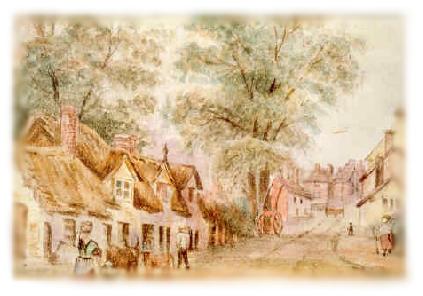
Real life Knutsford circa 1860, was the model for fictional Cranford. [Image courtesy Jane Austen World]

Dickens was so enamored with her writing that he published her next work Cranford in serial installments in his journal Household Words. Gaskell drew on her life with her Aunt Lumb and the kind (if opinionated) women of Knutsford for the characters and setting of her fictionalized Cranford.

In this witty and poignant comedy of early Victorian life in a country town, Elizabeth Gaskell describes the uneventful lives of the lady-like inhabitants so as to offer an ironic commentary on the diverse experiences of men and women. [The Literature Network]

Cranford was published in book form in 1853. As was Gaskell’s novel Ruth.

Like Mary Barton, Ruth raised a lot of eyebrows in Victorian England as its title character is a “fallen woman.” But Gaskell’s point is not the seduction or Ruth’s “loose morals” but the circumstances that led to the affair, and the web of lies and deception that cover up her “fall”. The novel is a little uneven with some of the characters merely looking down their Victorian noses disapprovingly  in a 2 demensional cartoon manner — Mrs. Benson–  or accepting their fate with angelic grace — Ruth– while, fortunately others are more fleshed out and interesting — the kind Thurstons totally won my heart. [Can some one please make this novel into a movie so Peter Dinklage can play Rev. Thurston?]

North and South is the second of Gaskell’s “industrial novels.” It was better received than Mary Barton because it gave  a more even-handed description of life in a mill town. In North and South Gaskell has the working poor (and — when a strike devastates the town — the sometimes NOT working poor) but she also gets into the head of the Mill Owner, Mr. Thornton. Between both camps is Margaret Hale who happens to be the daughter of a minister. North and South was serialized in Household Words before it was published as book.
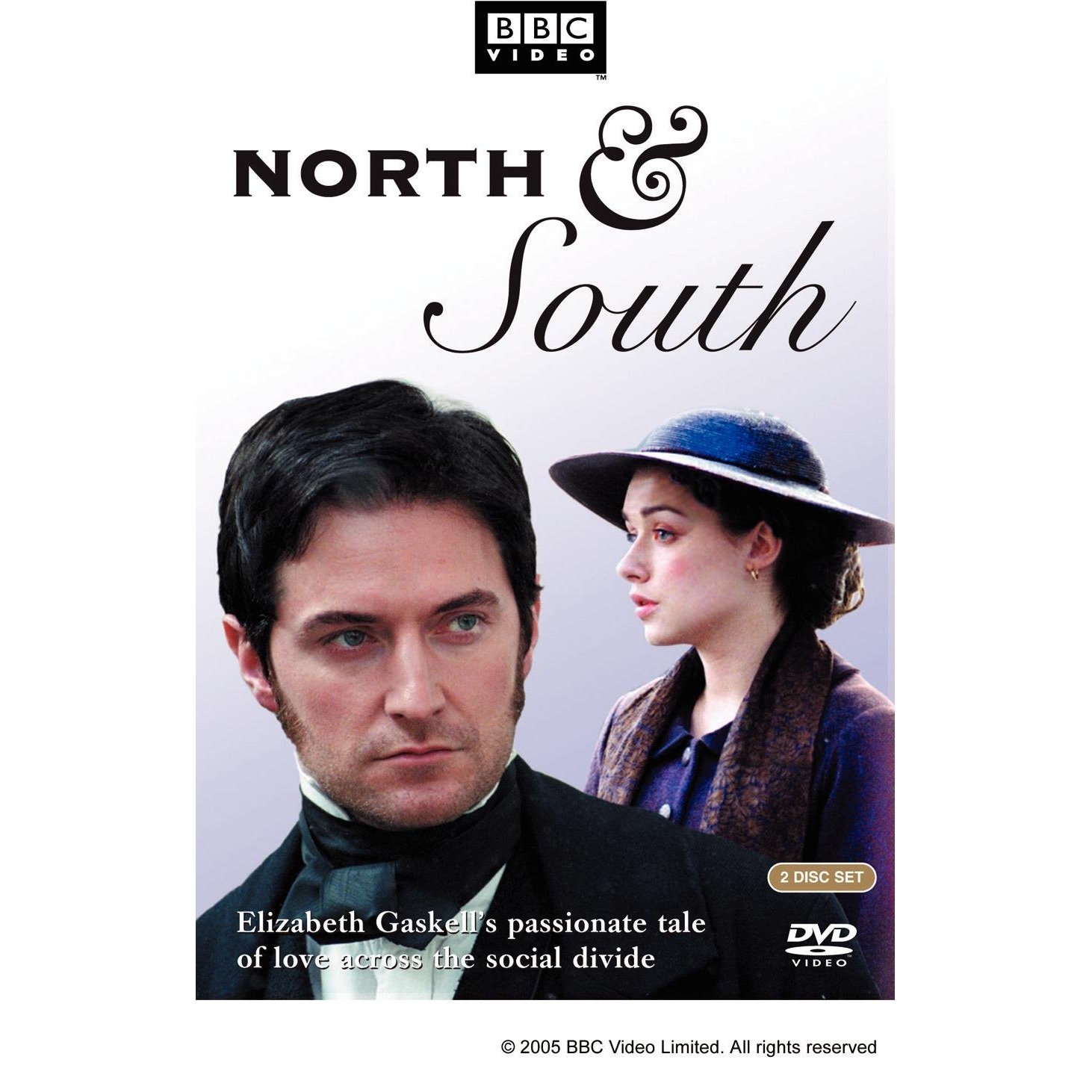
DVD box art from the mini series of North and South. [Image courtesy: Amazon]

Her next book was far more personal. Elizabeth Gaskell met Charlotte Bronte in 1850 while in the Lake District.  The two became close friends, writing frequently. They visited each other several times. After Charlotte’s death in 1855.

the Reverend Patrick Bronte, for himself and on behalf of Brontes’s husband Arthur Bell Nicholls, asked Gaskell to write her biography in response to gossip and speculation. The Life of Charlotte Bronte was published in 1857. Gaskell spent much time researching, gathering material, and reading the letters of the eldest Bronte sister, and while she had set out to write a biography, the first edition was seen as an artful weaving of fact and fiction.  [The Literarure Network]

It was  “a pioneering biography of one great Victorian woman novelist by another.” [Google Books]

In 1863 she was paid 1,000 pounds for her novel Sylvia’s Lovers. (Mary Barton had brought her only 100 pounds.) A tragic love story set against the Napoleonic Wars Sylvia’s Lovers is one of her least well known novels.

England is at war with France, and press-gangs wreak havoc by seizing young men for service. One of their victims is a whaling harpooner named Charley Kinraid, whose charm and vivacity have captured the heart of Sylvia Robson. But Sylvia’s devoted cousin, Philip Hepburn, hopes to marry her himself and, in order to win her, deliberately withholds crucial information—with devastating consequences. [Good Reads]
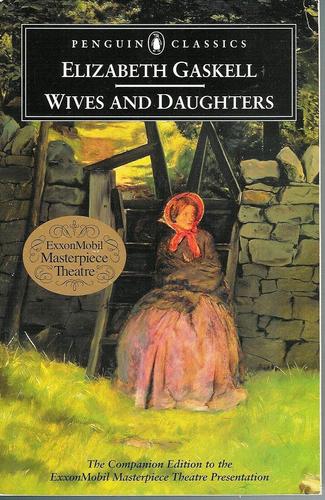
Cover of Wives and Daughters. [ Image courtesy: Amazon.com]

Wives and Daughters was also serialized (this time in Cornhill Magazine) before it came out as a novel.  It was the last book Gaskell wrote before she died (She didn’t quite finish it, and it was left to Frederick Greenwood to finish it off.)  Molly Gibson’s mother died when she was very young

Wives and Daughters centers on the story of youthful Molly Gibson, brought up from childhood by her father. When he remarries, a new step-sister enters Molly’s quiet life – loveable, but worldly and troubling, Cynthia. The narrative traces the development of the two girls into womanhood within the gossiping and watchful society of Hollingford. [Good Reads]

Gaskell also wrote dozens of short stories, especially ghost stories that she published both in magazines and in collections.

English: Elizabeth Gaskell (1810-1865)

English: Elizabeth Gaskell (1810-1865) (Photo credit: Wikipedia)

Elizabeth Gaskell died unexpectantly of a heart attack on November 12, 1865.

————————-

Published works by Elizabeth Gaskell  [Courtesy: The Titi Tudorancea Learning Center]

Novels

Mary Barton (1848)
Cranford (1851–3)
Ruth (1853)
North and South (1854–5)
Sylvia’s Lovers (1863)
Wives and Daughters: An Everyday Story (1865)

Novellas and collections

”The Moorland Cottage” (1850)
”Mr. Harrison’s Confessions (1851)
”The Old Nurse’s Story” (1852)
”Lizzie Leigh” (1855)
”My Lady Ludlow” (1859)
”Round the Sofa” (1859)
”Lois the Witch” (1861)
”A Dark Night’s Work” (1863)
”Cousin Phillis” (1864)

Short stories (partial)

Libbie Marsh’s Three Eras (1847)
Christmas Storms and Sunshine (1848)
The Squire’s Story (1853)
Half a Life-time Ago (1855)
An Accursed Race (1855)
The Poor Clare (1856)
“The Manchester Marriage” (1858), a chapter of A House to Let, co-written with Charles Dickens, Wilkie Collins, and Adelaide Anne Procter
The Haunted House (1859), co-written with Charles Dickens, Wilkie Collins, Adelaide Proctor, George Sala and Hesba Stretton.
The Half-brothers (1859)
The Grey Woman (1861)

Non-fiction

The Life of Charlotte Brontë (1857)
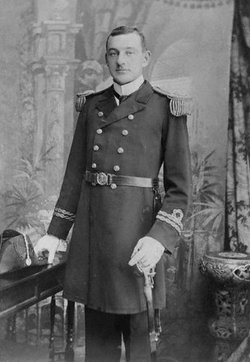

Thought of the Day 9.21.12 Henry Tingle Wilde

“I still don’t like this ship . . . I have a queer feeling about it.”

–Henry Tingle Wilde

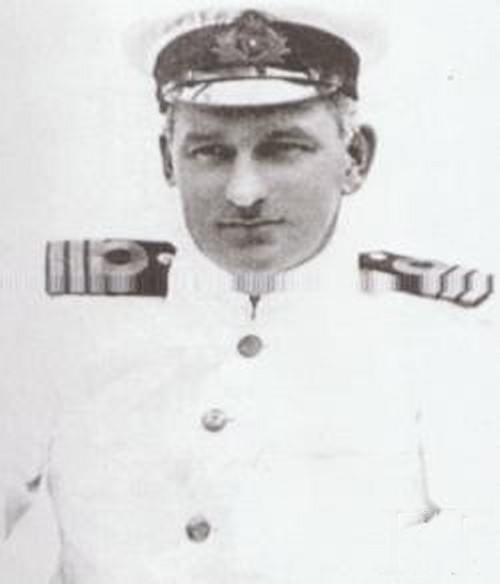
Henry Tingle Wilde, Jr was the Chief Officer of the Titanic. [Image courtesy: Wikipedia]

Henry Tingle Wilde was born on this day in Walton, Liverpool, England in 1872. Today is the 140th anniversary of his birth.

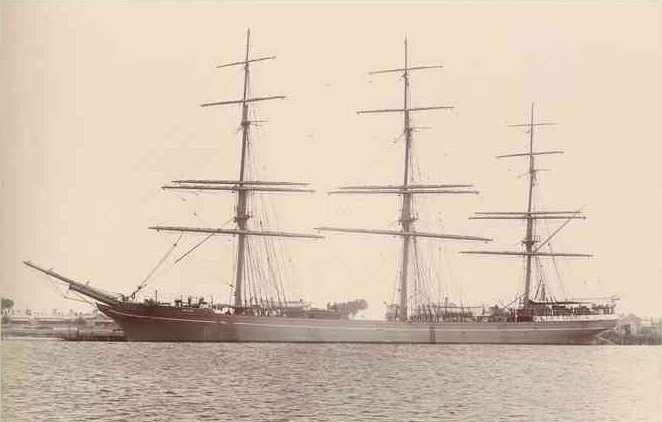
Wilde was drawn to the sea at an early age. At 17 he left his home for an apprenticeship on the iron sailing ship the Greystoke Castle — a three mast, square sail vessel– as a third mate. He served on the Greystoke’s sister ship the Hornby Castle, also as third mate. He was posted to the steamships the S.S. Brunswick and the S.S. Europa before joining the White Star Line in 1897. He was a Lieutenant in the Royal Naval Reserve, and held ordinary and extra masters certificates.

The Hornby Castle, a sailing ship that Wilde trained on. He worked on both sail and steam vessels.  [Image Courtesy Wreck Site]

Starting in 1905 he transferred to the White Star passenger line, working mostly on the Liverpool to New York, and Australian routes. He rose in the ranks aboard The Arabic, The Covic, The Cufic, The Tauric, the Celtic, the Medic, The Delphic, the Cymric and The Olympic until he reached the rank of Chief Officer under Captain Edward John Smith on The Olympic.

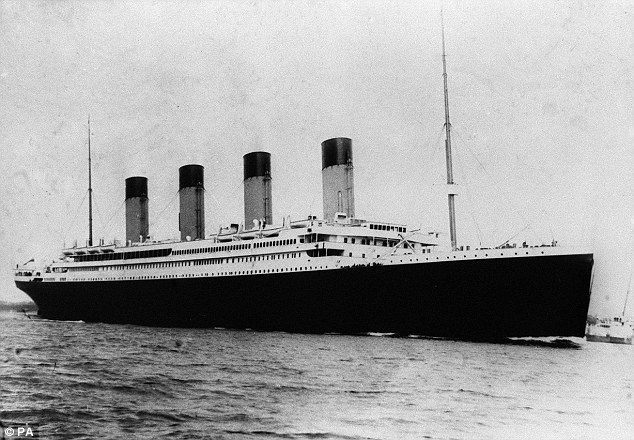
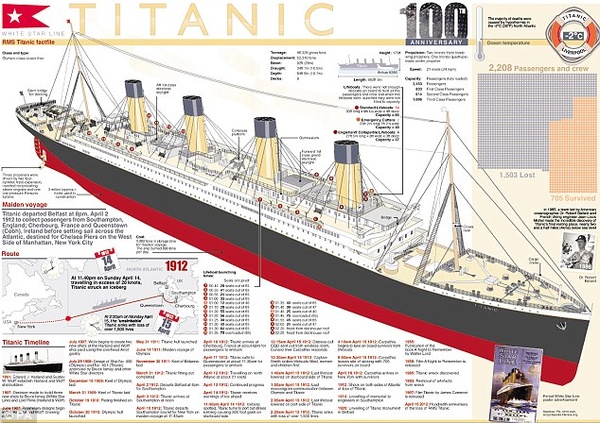
The Titanic [Image courtesy: Mail Online]

Smith transferred to the White Star’s newest vessel, The Titanic as her Captain. Wilde was due to ship out with The Olympicbut White Star officials sent word for him to stay in Southampton and await further orders. At 39 and with years of experience he was certainly seasoned enough to get his own ship. But Captain Smith wanted to add experience to his senior staff and he requested that Wilde join the crew as Chief Officer. Wilde debated the move. His family urged him to take the position, but, as he wrote in a letter to his sister…

“I still don’t like this ship…I have a queer feeling about it…” [Henry Tingle Wilde, Chief Officer by Christine Ehren, Titanic-lore.info]

He officially joined The Titanic crew on April 9th, the day before she sailed. The post was for the great ship’s maiden voyage only. And it meant that the other senior officers would be shifted down in rank. William Murdoch became first officer, Charles Lightoller became second officer. The man originally slated to be second officer, David Blair, did not make the journey. The junior officers retained their positions.

Henry Tingle Wilde in his summer white uniform, that he wore on the Olympia. [Image courtesy: Encyclopedia Titanica]

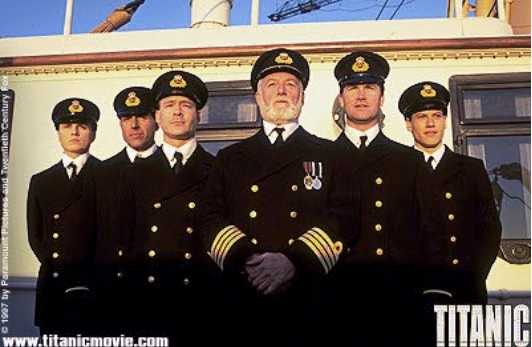
Publicity still from the Movie Titanic. Mark Lindsay Chapman, third from the left, plays Chief Officer Henry Tingle. He stands just to the left of Bernard Hill who is playing Captain Smith. [Image courtesy: William Murdoch.org]


The Titanicleft Southampton, England on April 10th, 1912 with stops at Cherbourg, France and Queenstown, Ireland before heading west across the Atlantic toward New York. Wilde had the 2-6 AM and the 2-6 PM shifts as “Officer of the Watch.” So he was not on the bridge when the ship hit an iceberg at 11:40 PM on April 14th.

Wilde was in charge of the loading the even-numbered lifeboats on the port side of the ship. (He also distributed firearms to the senior officers.) He adhered strictly to Captain Smith’s order to “put women and children in and lower away…” so the boats from that side of the ship only contained women, children and two crew members (to work the boats). When all the boats on his side of the ship were launched he went to starboard side of the ship. Some survivors recall seeing him attempting to release Boat A or B from the roof the Officers’ Quarters when the Titanic’s deck flooded.

Schematic of Titanic. [Image courtesy: Mail Online]

Survivor George Rheims wrote in a letter dated just days after the sinking:

“While the last boat was leaving, I saw an officer with a revolver fire a shot and kill a man who was trying to climb into it. As there remained nothing else for him to, the officer told us, “Gentlemen, each man for himself. Good bye.” He gave a military salute and then fired a bullet into his head. That’s what I call a man!” [Henry Tingle Wilde, Chief Officer by Christine Ehren, Titanic-lore.info]

But it isn’t known if that officer was Wilde or First Officer Murdoch. It doesn’t matter. If he didn’t die of a self-inflicted gunshot wound he died a few minutes later in the freezing waters of the North Atlantic. His body was never found. He was 39 years old.

In 1998 the newspaper Liverpool Echo wrote about Wilde’s role on the Titanic as follows:

Liverpool’s forgotten hero, Chief Officer Henry Wilde… from Walton, flits through the enquiry evidence but witnesses have described how Wilde supervised the loading of the lifeboats and stopped 100 people rushing them by the sheer force of his personality….He is believed to have prevented a panic which would have led to even greater losses. [Henry Tingle Wilde, Chief Officer by Christine Ehren, Titanic-lore.info]

 He was survived by four children (he had recently lost his wife and twin boys.)

——————————–

Thanks to J.G.Burnette at jgburdette.wordpress.com for suggesting Henry Wilde as the Thought of the Day Birthday Bio for today. J.G. is a big Titanic fan and was able to give me both the name and birthdate so I could start my research.–I hope I found some new nugget for your Titanic files! — IF YOU have some one you’d like to see profiled on Thought of the Day please let me know. Cheers, Rita


Thought of the Day 9.19.12 Jeremy Irons

“It’s always great to play a man who sets himself up to be punctured.”

–Jeremy Irons

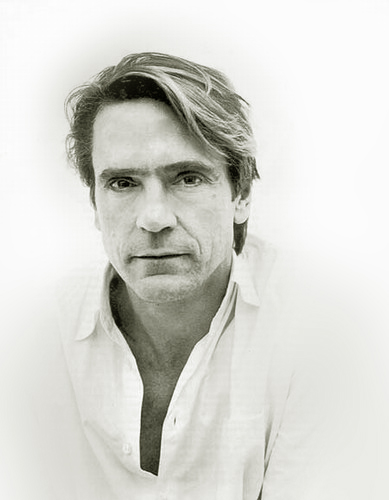
Jeremy John Irons was born on this day in Cowes on the Isle of Wight, England in 1948. He is 64 years old.

He grew up on the island, and didn’t have much connection with the professional performing arts. The family only ventured to the mainland once a year. But when he was an adolescent the family moved to Hertfordshire and, at 13, Jeremy was sent to the Sherborne School in Dorset. There he took part in a four-man school band called the Four Pillars of Wisdom. The group played for their mates on Sunday afternoons, with Jeremy on drums and harmonica (including stand out harmonica solos in “Moon River” and “Stairway to Heaven.” — because when you think of Stairway to Heaven you think ‘harmonica solo!’) He also performed comedy skits and was in the school’s production of My Fair Lady (he played Professor Higgins.)

Irons trained at the Bristol Old Vic Theatre School. There he “gained much experience working in everything from Shakespeare to contemporary dramas.” [IMDB biography] He supported himself with a number of odd jobs and by busking on the streets of Bristol.

In 1971 he moved to London and landed the role dual role of John the Baptist/Judas in Godspell at the Round House.

He did a lot of television work in the 1970’s including: The Pallisers;  Love of Lydia; Churchill’s People; Langrishe, Go Down; The Voysey Inheritance; and as Franz Liszt in Notorious Woman,

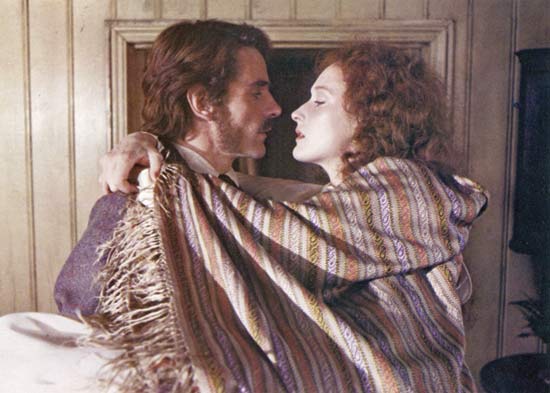
His film debut was in the 1980 film Nijinsky, but his break out role was opposite Meryl Streep in the French Lieutenant’s Woman. The film, based on the John Fowles novel, follows two parallel love stories — one between Victorian palaeontologist Charles and “the French Lieutenant’s Whore” Sarah; the other between Mike and Anna, the actors who play the Victorian couple in a movie they are making on the novel. Irons was nominated for a BAFTA Award for best Actor (Streep won one for Best Actress.)

Still from The French Lieutenant’s Woman [Image Courtesy: Encyclopedia Britannica]

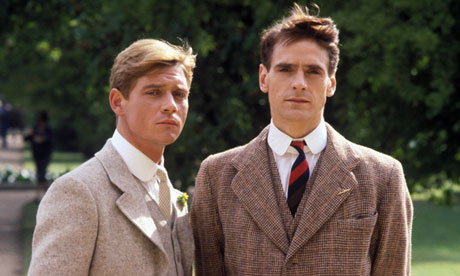
Back on television he played another Charles, Charles Ryder, opposite Anthony Andrew’s Sebastian Flyte in the hugely successful Brideshead Revisited  based on the Evelyn Waugh novel.  Irons got another BAFTA Nomination (Andrews won), both men were nominated for Emmy Awards.

Anthony Andrews and Jeremy Irons in Brideshead Revisited (Image Courtesy The Guardian.)

He followed those two high profile projects with an independent film about Polish guest workers in London, Moonlighting.

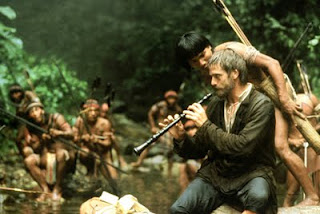
Irons played Father Gabriel in Roland Joffe’s The Mission. Father Gabriel is a Spanish Missionary who is sent into the jungles of South America. He builds a sanctuary for the Guarani Indians. Robert DeNiro, a reformed slave hunter joins him at the mission. Together they must defend both the mission and the people who live there from the encroaching Portuguese It is all set to Ennio Morricone’s beautiful music.

Father Gabriel’s (Irons) first encounter with the Guarani Indians. [Image courtesy: Mostly Movies]

David Cronenberg’s psychological thriller Dead Ringers saw Iron’s playing identical twin gynecologist. The movie brought the word “co-dependant” to a whole new level. Iron’s is cool (maybe even icy) and creepy in the movie. (It is a total departure from his Father Gabriel. So if you are planning a Jeremy fest, don’t book these two back to back.)

Reversal of Fortune finally brought Irons the Gold. He won both an Academy Award  and a Golden Globe Award for his portrayal of Claus von Bulow.

Irons took on the role of Rene Gallimard when Cronenberg brought M. Butterfly from stage to screen.

You might recognize his growling voice from Disney’s the Lion King. He played Simba’s uncle Scar.

When Bruce Willis brought his Die Hard franchise to New York for Die Hard with a Vengeance, Irons played his foil, psychopath Simon Gruber.

He pulled on some tights when he took on Aramis in The Man in the Iron Mask; Antonio, to Al Pacino’s Shylock, in Michael Radford’s 2004 movie of Shakepeare’s The Merchant of Venice;  suited up as Tiberias, a Knight Templar, in Kingdom of Heaven; and starred in the tv mini-series Elizabeth I, the Virgin Queen, as the Earl of Leicester/Lord Dudley, opposite Helen Mirren’s Bess.

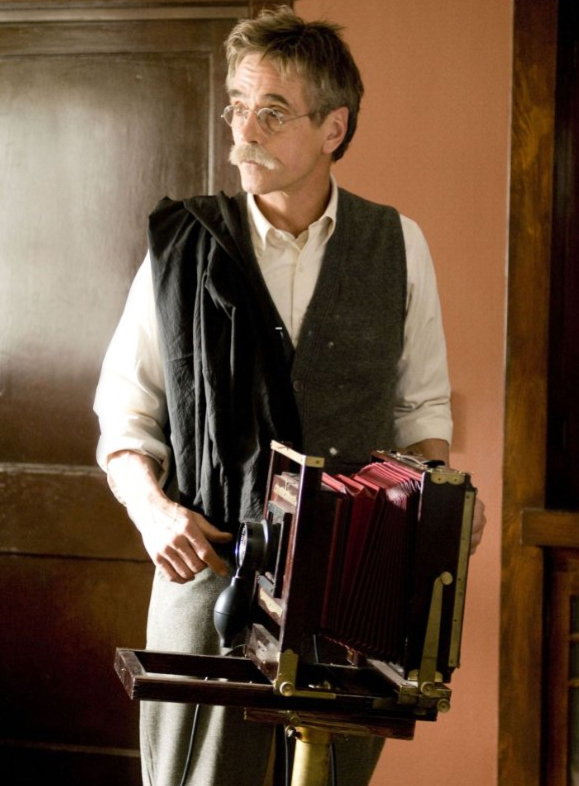
He played photographer Alfred Stieglitz in the made for TV biopic Georgia O’Keefe in 2009.

Still from Georgia O’Keefe. (Image Courtesy: IMDB)

Heck, he’s even voiced the part of Moe’s Bar Rag in the Simpsons!

Irons currently can be seen in Showtime’s sweeping TV mini series The Borgias, a crime drama set in 1492 Italy.

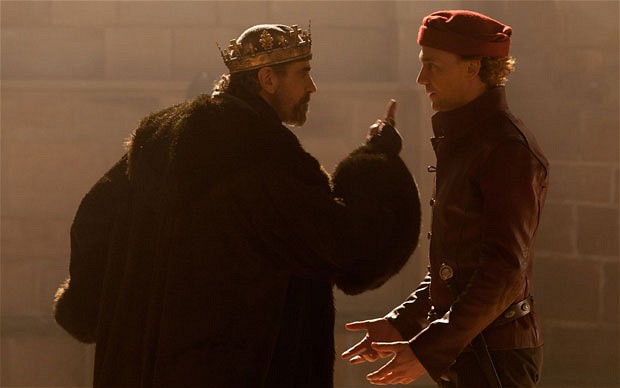
And he plays Henry IV in Shakespeare’s Henry IV, Part 1 & 2  in the BBC’s the Hallow Crown series.

Still from Henry IV, Part 1 with Irons and Tom Hiddleston as Prince Hal (Image Courtesy: The Telegraph)

Here’s Ennio Morricone’s BAFTA Award winning song Gabriel’s Oboe from the film The Mission. [The soundtrack holds a very special place in my heart because we used parts of it, including Gabriel’s Oboe at our wedding. I wrote the publisher to see if I could get the sheet music, but it wasn’t published yet. They contacted Mr. Morricone and they supplied us with a copy of the hand written piano score. How’s that for romantic? This was played on a pipe organ as I walked up the aisle with my dad. ]


Thought of the Day 9.16.12 Henry V

“Once more unto the breach, dear friends, once more;
Or close the wall with our English dead.”
― William ShakespeareHenry V

Henry the Fifth of England was born in the tower above Monmouth Castle in Wales on this day in 1386. Today is the 626th anniversary of his birth.

Illustration of Henry V from Cassell’s History of England [Image Courtesy: Wiki Commons]

Henry’s birthday was not officially recorded but it is believed to be either September 16 or August 9, and in either 1386 or 1387. He was born into one of the most important families in England. As such, he had the best education and upbringing available at the time. He learned to ride, fight and hunt. In the class room he learned history, literature, and music (he could play the harp) and he could speak English, French and Latin fluently. Because he was born in Monmouth Castle he was referred to as Henry Monmouth during his early life.

His grandfather, John of Gaunt was the son of Edward III, his parents were Henry Bolingbroke, the Earl of Derby and Mary Bonhun. At the time of Monmouth’s birth Richard II sat on the English throne. John of Gaunt, the King’s uncle, was an ardent support, Bolingbroke had a less steadfast relationship with the King. Although the two had been childhood friends Bolingbroke took part in the Lords Appellant’s rebellion against Richard in 1387. Richard forgave him and even promoted him to Duke of Hereford. But in 1397…

“Henry Bolingbroke reported treasonous comments made by the Duke of Norfolk; a court was convened but, as it was one Duke’s word against another, trial by battle was arranged. It never took place. Instead, Richard II intervened in 1398 by exiling Bolingbroke for ten years…
[Henry V, of England by Robert Wilde, About.com Guide]

At that time Richard “invited” 12-year-old Henry Monmouth to be his “guest” at court. Essentially Monmouth was a hostage. If  the father returned to England to cause any trouble, the son would be forfeit. Things were not so grim in the Royal castle, however, Richard treated Monmouth kindly. The two became friends. The King even knighted Monmouth.

But in 1399 Monmouth’s grandfather, John of Gaunt died. Instead of Bolingbroke automatically inheriting his father’s lands Richard II “kept them for himself and extended Bolingbroke’s exile to life. ”

In 1399, whilst Richard was in Ireland, Henry of Bolingbroke returned to claim his father’s inheritance. … Henry captured and deposed Richard. Bolingbroke was crowned King as Henry IV. [The Official website of The British Monarchy]

Richard was thrown in jail, and, on October 13th 1399 Henry Bolingbroke became Henry the Fourth of England, his son, was named

“heir to the throne, Prince of Wales, Duke of Cornwall and Earl of Chester. Two months later he was given the further titles Duke of Lancaster and Duke of Aquitaine.” [Henry V, of England by Robert Wilde, About.com Guide]

Detail of miniature of Henry, Prince of Wales, receiving a book from Thomas Hoccleve. [Image Courtesy: Wiki Commons]

So… Henry  Monmouth becomes Prince Hal. He was at his father’s side in battle at the Battle of Shrewsbury. He also fought bravely (and effectively) in Wales, Scotland and France. As his father’s health began to fail the Prince took on more and more responsiblity at court. He became a  major political player. Shakespeare’s portrayal of him laughing it up with Falstaff was more dramatic fiction than historic truth.

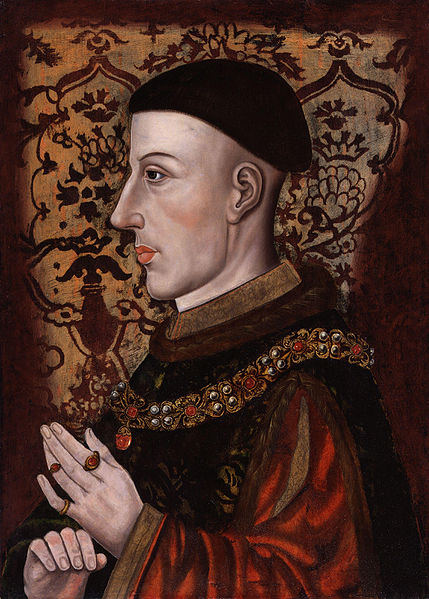
Henry as King. [Image Courtesy: Wiki Commons]

He ascended to the throne upon his father’s death on March 21st, 1413 and was crowned Henry V on April 9th. He transferred the remains of Richard II — who died of starvation in Pontefract Castle tower  to Winchester Cathedral and gave him an honorable burial. He prepared the nation for a war with France. He straighten out the royal finances by editing royal budgets. He decreed that all government documents be written in English. He  tackled the lawless no-man’s-lands and reduced the number of roving bandits (mostly by funneling them into the army.) He crushed the religiously “deviant” Lollards. And he united the people — noble and common alike — behind him.

Kenneth Branagh as Henry V [Image Courtesy: Renaissance Films PLC 1989]

“And Crispin Crispian shall ne’er go by,
From this day to the ending of the world,
But we in it shall be remembered-
We few, we happy few, we band of brothers;
For he to-day that sheds his blood with me
Shall be my brother”
― William ShakespeareHenry V

“In August 1415, after dealing with a conspiracy to remove him from the throne, he led an army of 20,000 foot soldiers and 9,000 horsemen to attack Harfleur and, after sending a large part of his army home due to illness, marched to Calais to secure a base for further operations. On the way, unable to avoid a vastly superior French army, he gave battle at Agincourt on Oct. 25, 1415, gaining a great victory and capturing the constable of France and the Duke of Orléans.” [Henry V Biography, Your Dictionary.com]

In May 1420 the Treaty of Troyes was signed. Under the treaty  Charles VI remained King of France, Henry married his daughter Katherine, was named heir, and ruled the country in all but name.
Alas, Henry took ill in 1422 while laying siege to one of the last French hold outs.  He lingered for three weeks before dying at Vincennes on August 31st.  He was 35 years old.
“I see you stand like greyhounds in the slips,
Straining upon the start. The game’s afoot;
Follow your spirit: and upon this charge,
Cry — God for Harry! England and Saint George!”
― William ShakespeareHenry V

Thought of the Day 9.13.12 Roald Dahl

“We are the music makers, and we are the dreamers of dreams.”

–Roald Dahl

My Roald Dahl collage featuring some of his most popular characters (as drawn by the amazing Quentin Blake). Surrounding Mr. Dahl and his pups are: at the top left The BFG & Sophie, The Enormous Crocodile, Mr. Fox, James (inside the Peach,) the Grand High Witch, Willy Wonka, Danny (Champion of the World) and Matilda.

[I gave a little inward squeak of delight when I saw that it was Roald Dahl’s birthday today. I can’t think of a better way to spend a few hours than to reminisce with my old friends Charlie, Matilda, Sophie, James and the rest. What joy!]

Roald Dahl was born on this day in Llandaff, Cardiff, Wales, in 1916. Today is the 96th anniversary of this birth.

Although Dahl grew up in Wales his parents were from Norway and the family spoke Norwegian at home. His older sister, Astrid, and his father,Harald, died within weeks of each other when Roald was a toddler. Sophie, his mother, was pressured to bring the family home and live with relatives, but she knew Harald had wanted the children to have a proper English education. So she split the difference.  Summers were spent visiting relatives across the North Sea. Roald and his sisters enjoyed long, sun drenched days on the water and beaches of the Norwegian coast and the family visited with their grandparents in Oslo.

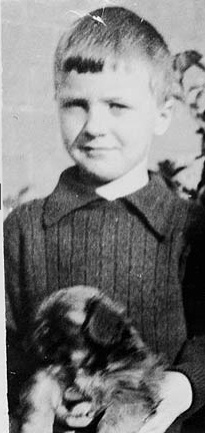
Roald Dahl aged 8. [Image courtesy: The Telegraph]

It was a lovely break for the dreary days at English public school that Dahl described as  being filled with “rules, rules and still more rules to be obeyed.”  His biography Boy: Tales Childhooddetails his exploits, dramas, and adventures growing up… like the time he mixed goat droppings into his older sister’s fiance’s pipe tobacco or the when he and his friend were given Cadbury chocolate samples to taste test at school.

After school Roald wanted adventure…

Though not a good student, his mother nevertheless offered him the option of attending Oxford or Cambridge University …. His reply, …was, “No, thank you. I want to go straight from school to work for a company that will send me to wonderful faraway places like Africa or China.”…Dahl took a position with the Shell Oil Company in Tanganyika (now Tanzania)

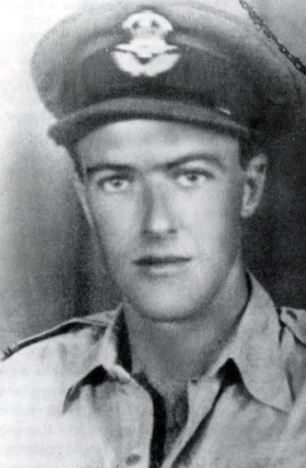
He worked for Shell in Mombasa, Kenya and Dar-es-Salaam, Tanganyika and had a famous encounter with a black mamba and some lions. At the outbreak of WWII Dahl joined the British Royal Air Force as a pilot — not an easy thing for him to do as he was 6’6″ and the open cockpit of his De Havilland Tiger Moth was built for men who were considerably smaller.  His head stuck up above the windshield.

Dahl in his RAF uniform. [Image Courtesy: Mail Online]

In September 1940 while flying the last leg of a trip across the top of Africa he found himself  running out fuel and was lost. He couldn’t find the target airstrip near Mersa Matruh, Egypt, and had to make a desert landing. He cracked his skull, broke his nose, and was temporarily blinded in the crash. When he woke up he found out that the coordinates he’d been given for the airstrip had been all wrong. HQ had sent him by mistake into a no man’s land between Allied and Axis forces.

He flew other missions — bravely flying with the 80th Squadron  in the Greek Campaign. He described the “Battle of Athens” as “an endless blur of enemy fighters whizzing towards me from every side.” [Going Solo, Scholastic] After that he was sent back to Egypt and flew sorties over the Mediterranean against Vichy France, but he’d begun to have severe headaches — a result of the earlier crash. When the headaches got so bad that he began to black out he was grounded.  He writes about his adventures in Africa and in the War in his second, equally wonderful biography, Going Solo.

Dahl was sent to Washington DC as an assistant air attaché. While in Washington he stepped briefly into the role of a spy. He passed information to MI6 and worked on propoganda to promote the British agenda within the US. It was in DC that he began to write. The Saturday Evening Post published his first piece, “A Piece of Cake” (which it retitled to the more sensational, if less accurate “Shot Down Over Libya,”) in 1942. He also wrote his first book, a novel for adults about  the mythical creatures gremlins. Walt Disney optioned the story for a potential animated film.

The Gremlins is the story of Gus, a British World War II fighter pilot, who during the Battle of Britain turned to look out on the wing of his plane only to see an amazing sight: a little man, no more than six inches tall with horns growing from his head, drilling a hole in the plane’s wing. [Amazon.com]

Although the film was never made a companion book was released on a limited run. The book was re-released in 2006. (The classic Twilight Zone episode “Nightmare at 20,000 Feet” is an homage to the story.)

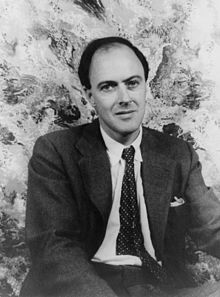
Dahl in 1954 [Image Courtesy Wikipedia]

He began to write for children when his own family came along. ( He was married to actress Patricia Neal and had five children with her.)

…Dahl began making up stories for them each night before they went to bed. These stories became the basis for his career as a children’s writer, which began seriously with the publication of James and the Giant Peach in 1961. …Dahl insisted that having to invent stories night after night was perfect practice for his trade… [Roald Dahl Biography]

His other childrens’ books include: Charlie and the Chocolate Factory 1964; The Fantastic Mr. Fox 1970, Danny, the Champion of the World 1975;  The BFG 1982; The Witches 1983;  Matilda 1988 and others. He also wrote books of verse for children including the hilarious Revolting Rhymes and Dirty Beasts.  Most of his books have nasty adults who mistreat children, those adults do not fare well in the end. The justification that “Beastly people must be punished,” made Dahl very popular with children of all ages.

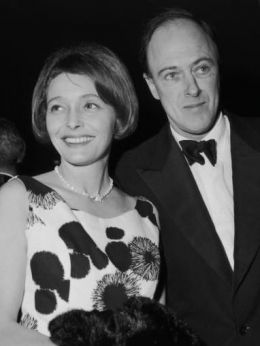
Neal and Dahl prior to their marriage. [HubPages.com]

He wrote fiction for adults as well, though it is much more difficult to find. Roald Dahl: Collected Stories is a good place to start and it contains dozens of the writer’s short stories. As does The Best of Roald Dahl.

“Dahl has the mastery of plot and characters possessed by great writers of the past, along with the wildness and wryness of his own. One of his trademarks is writing beautifully about the ugly, even the horrible.” [– The Los Angeles Times on the back of The Best of Roald Dahl]

He also wrote screen plays. He wrote a full script for The Gremlins for Disney, as well as the screenplay for Chitty Chitty Bang Bang (1968)– that creepy child catcher  who trolls the streets of Vulgaria with his candy festooned wagon is 100% Dahl– and the 1971 version of Willy Wonka & the Chocolate Factory.  For the small screen he penned  6 episodes of Alfred Hitchcock Presents  and several other suspense shows.

Dahl died at the age of 74 from Leukemia.

[Image courtesy: Wikipedia]


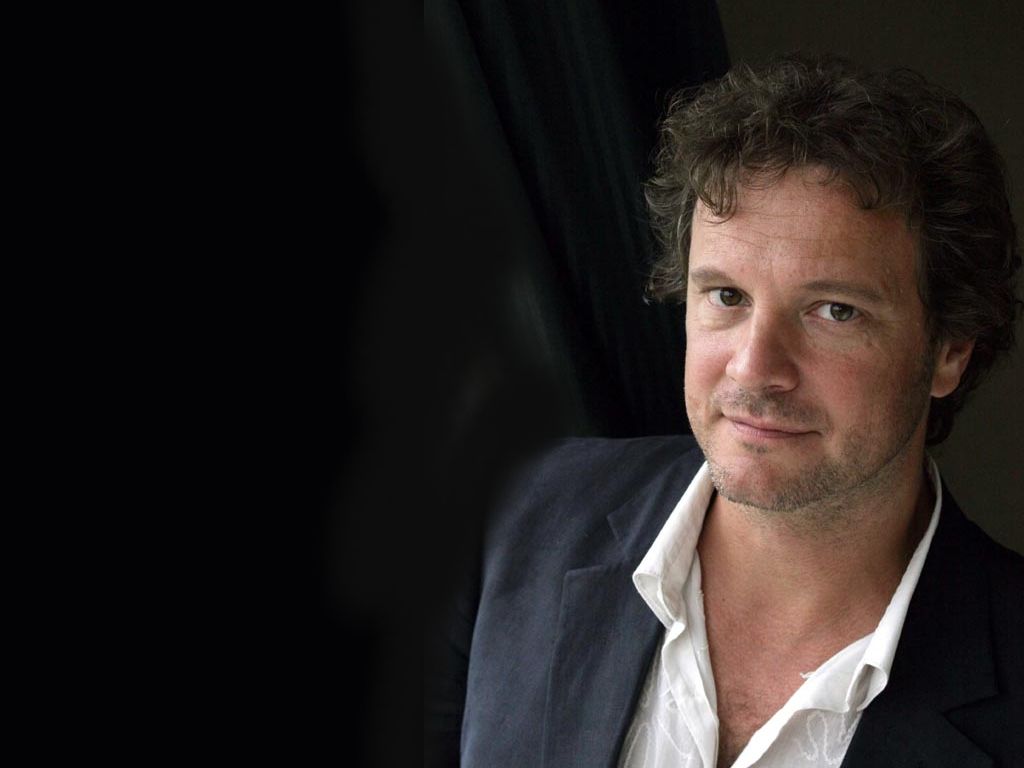
Thought of the Day 9.10.12 Colin Firth

“Colin is the sort of name you give your goldfish for a joke.”

Colin Firth

Colin Andrew Firth was born on this day in Grayshott, Hampshire, England in 1960. He is 52 years old.

He spent much of his first four years in Nigeria where his parents, Shirley and David Firth, were missionaries.They returned to England where his parents took up University posts and Colin and his younger  siblings, Kate and Jonathan grew up. In 1972 the family moved to St. Louis, MO,for a year. The transition did not go well and, he says, he reacted badly, becoming rude and defensive.

The family settled in Winchester when they returned to England with David at King Alfred’s College lecturing on History, and Shirley at the Open University teaching comparative religion. Colin’s rebellion streak continued.

He was a troubled teen, scruffy and cocky, and often railing against a middle class whose children progressed via academia while the working class were pushed towards carpentry and other manual skills. [TalkTalk, Colin Firth-Biography]

At 14 he declared that he wanted to become an actor, and by 18 he had joined the National Youth Theatre in London. S-L-O-W-L-Y he built his career, at first doing grunt work, like fetching tea and answering phones, then enrolling in more acting classes — this time at the London Drama Center and learning the Stanislavski method. After 3 years of study he started to see lead roles — including Hamlet — come his way at the school.

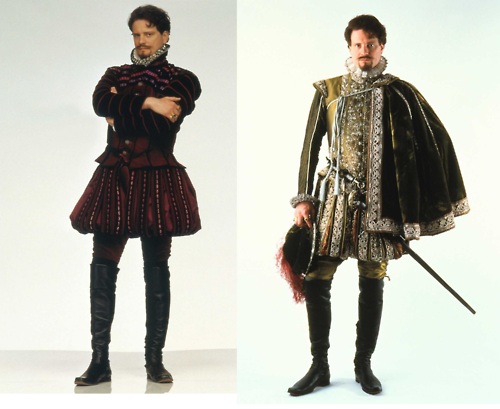
[Image Courtesy Probert Encyclopaedia]

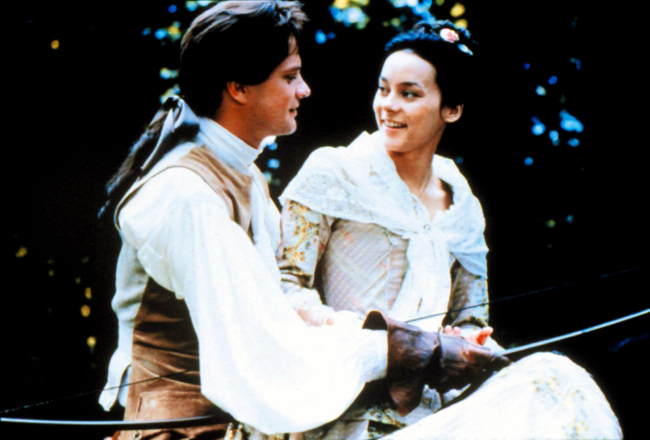
In 1983 a talent scout saw his portrayal of the great Dane and offered him a spot replacing Daniel Day-Lewis in the West End production of Another Country. He went on to play another role in the movie production of the play, his first film. Though the movie was a success, and his role it was critically acclaimed, he went back to the theatre  — working at the Churchill Theatre and  the Old Vic. He also did some television, including Camille with John Gielgud and Ben Kingsley, and the mini-series Lost Empireswith Laurence Olivier.

Firth and Tilly in Valmont [Image Courtesy: Pure Cine]

He stepped easily from stage to screen (small and large). Another film of note from his early career is Valmont, “An earthy, physical take on the novel Les Liaisons Dangereuses…” [TalkTalk]He co-starred here was Annette Bening, as

 ‘Lustful, manipulative aristocrats in 18th Century France, they would toy with the affections and bodies of others, until real emotions leads to the downfall of them both.’ [TalkTalk]

During the film ing of Liaisons he fell in love with actress Meg Tilly who played Madame de Tourvel. They dropped out the acting world, moving to a cabin in  the wilds of British Columbia. The two had a son William.   After the two-year hiatus he returned to the stage, Almedia, the small screen Hostages, and the indie film circuit, The Hour of the Pig (aka The Advocate).

If you want to see Firth as a creepy bad guy you can rent Playmaker (a film not even he likes) or The Deep Blue Sea (in which he plays a no-good cad.) He also plays a bit of a cad in Circle of Friends.

But nobody wants to see Colin Firth play a cad…am I right? In 1995 he was offered, and REFUSED, the role of Fitzwilliam Darcy in Andrew Davies’ adaptation of Jane Austen’s Pride and Prejudice.  There is a certain Darcy-esque story behind Firth’s refusal of the role. For a serious actor trying to build a serious career — an actor who was NOT trying to make it on his pretty face — the role “seemed tiresome and predictable.” [Talk Talk] He was as aloof about the role as Darcy is about  society in Meryton. He just wasn’t looking for a role that simply required that he throw on a Waist coat, snarl in a period costume, and pick up a pay check. He also didn’t think that Austen’s story was too female centric, and that just wouldn’t be enough for him to do. But Sue Birtwistle, the show’s producer, was persistent. She got him look at the script and rethink what he could bring to Darcy.

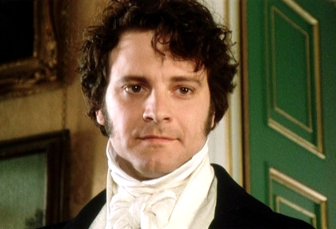
Firth as Darcy [Image Courtesy: Period Dramas.com]

Filming began in June 1994.

“As Mr. Darcy in the acclaimed 1995 television adaptation of Pride and PrejudiceColin Firth induced record increases in estrogen levels on both sides of the Atlantic. Imbuing his role as one of literature’s most obstinate lovers with surly, understated charisma, Firthcaused many a viewer to wonder where he had been for so long, even though he had in fact been appearing in television and film for years.” [New York Times, Movies & TV]

The series was wildly popular and is THE standard against which all other Jane Austen adaptations are judged. Firth’s stock as both movie star and sex symbol sky rocketed. But instead of taking on another leading role, his next turn on the silver screen was a relatively minor role as Kristen Scott Thomas’ lightweight husband in The English Patient. He looses Scott Thomas to Ralph Fiennes in that movie. He played an even bigger cuckold (and a less amiable one) in Shakespeare in Love, where he looses his screen love — it’s Gwyneth Paltrow this time — to another Fiennes brother, Joseph. Speaking of Shakespeare…He’s an American farmer in A Thousand Acres which is an adaptation of Shakespeare’s King Lear, then does a comic turn AS Shakespeare in Blackadder: Back and Forth. 

From Shakespeare in Love [Image Courtesy: My Favorite Things]

It must have felt like he was looking in a mirror when he took on another Mr. Darcy in Bridget Jones’s Diary and Bridget Jones: the Edge of Reason, (especially as the former loosely echos the plot of P&P.)

Here’s a rundown of most of his other post Pride and Prejudice work:

  • Other Rom-Com work includes… Hope Springs, Fever Pitch, Love Actually, The Accidental Husband, Relative Values, Four Play, Then She Found Me and Easy Virtue.  I suppose you can add Mamma Mia to that list as well. (I can vouch for Firth’s performances in the first three. I think Hope Springs is his best Romantic Comedy, Fever Pitch is funny if a bit too sporty for me, and he was the best thing in Love Actually, actually.)
  • For period pieces you can choose from… Girl with a Pearl Earring, The Importance of Being Earnest, Nostromo, The Turn of the Screw (briefly) and Dorian Gray. (Pearl Earring was excellent, if a little slow-moving — in a beautiful kind of way. Earnest was funny — but it’s Wilde, so, you know, that’s kind of a given. Dorian Gray was based on a Wilde novel too… but I didn’t like that one nearly as much.)
  • Looking for more modern drama? Try… My Life So Far, Conspiracy, Born Equal, Trauma, Where Lies The Truth, Main Street, And When Did You Last See Your Father? and Genova. (Of this lot I’ve only seen Conspiracy, which is a chilling drama about a Nazi conference where officials discuss the “Final Solution.” It is a beautifully acted film all around with Firth in a lessor role.)
  • He seemed a little out-of-place in the family films What a Girl Wants and Nanny McPhee  and the historical action flick The Last Legion. 

Then came A Singe Man in 2009, and suddenly Colin Firth went from being movie star (small caps) to MOVIE STAR (big caps) all over again. His performance as George Falconer (in the movie based on the Christopher Usherwood  novel of the same name) was understated and amazing. It’s 1962 and Firth’s George plays a university professor who is in mourning after the accidental death of his long time partner, Jim. Firth was nominated for an Academy Award, and won a Golden Globe and Screen Actors Guild Award for Best Actor.

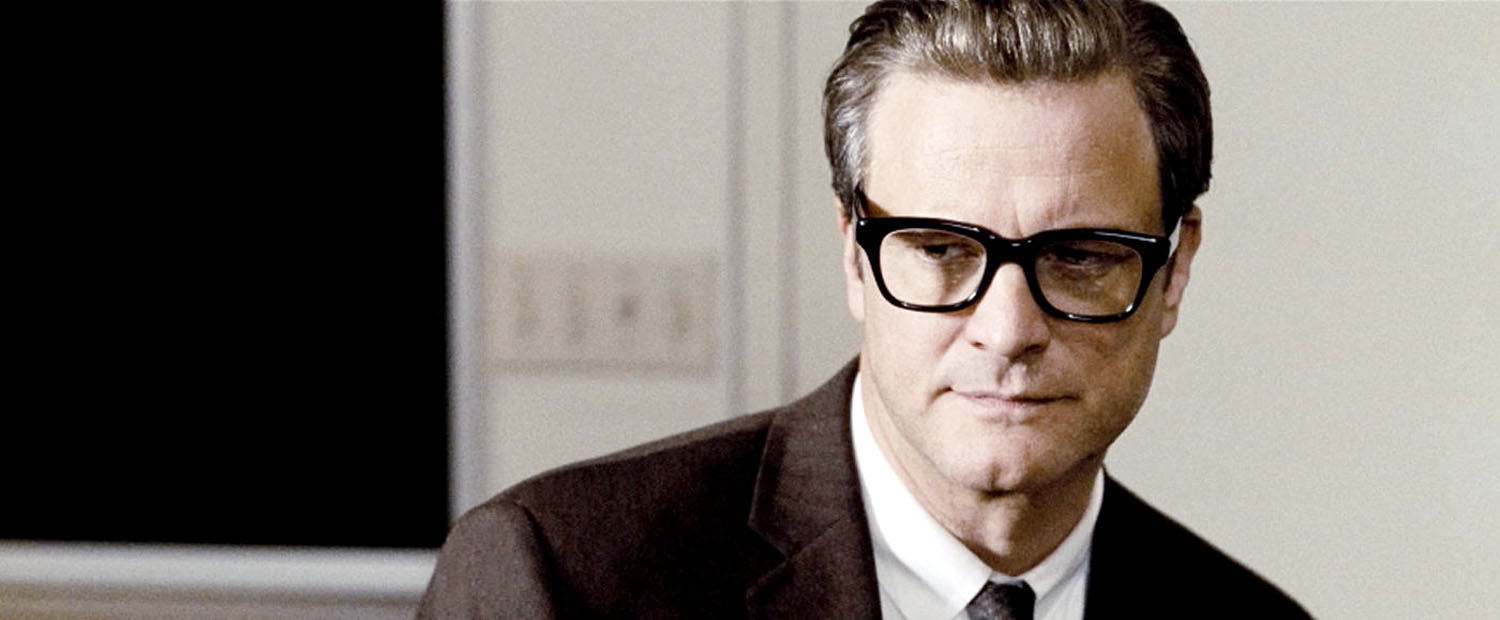
Firth in A Single Man [Image Courtesy: Talking Movies]

The next year, 2010, was golden, and Firth finally got his Oscar for The Kings Speech. On the brink of WWII King Edward VIII abdicates the throne of England, leaving the job to his ill prepared brother “Bertie” (Firth). Bertie must overcome a terrific stammer and self-doubt to lead his country in its time of greatest need.

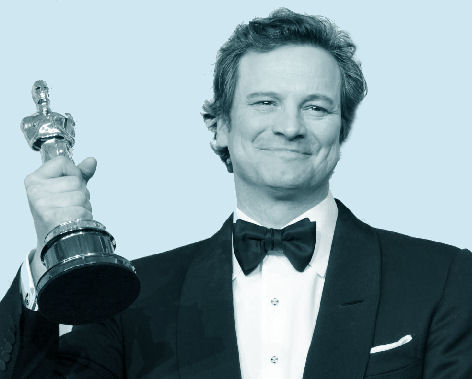
Satisfaction! [ColinFirth.com]

In 2011 he took a supporting role in Tinker Tailor Soldier Spyas Bill Haydon (the “Tailor”) to Gary Oldman’s George Smiley.

Next month Gambit co-starring Alan Rickman, Stanley Tucci and Cameron Diaz will hit theaters. This remake of the 1966 Shirley MacLaine/Michael Caine comedy caper is a Joel and Ethan Coen project.

Firth also hasArthur Newman, Golf Pro, The Railway Man, Bridget Jones’ Baby and Devil’s Knot on the way. 

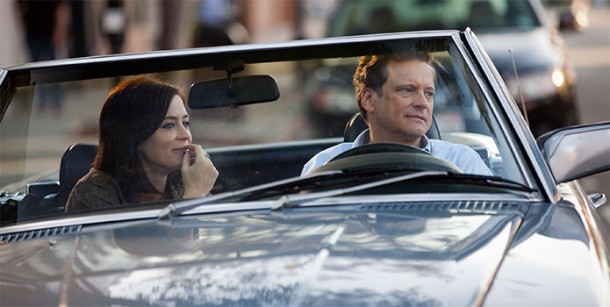
Still from the upcoming Arthur Newman, Golf Pro with Emily Blunt [Image Courtesy: Best Movies Ever]

The actor has rather famously down played his sex appeal.

“I think it’s quite extraordinary that people cast me as if I’m Warren Beatty: until I met my present wife, at the age of 35, you could name two girlfriends.” [Colin Firth  on Brainyquote.com]

Besides his romance with Tilly, he had an affair with Jennifer Ehle (Elizabeth in Pride and Prejudice) and has been married to Italian film producer/director Livia Giuggioli  since 1997. The couple has two sons, Luca and Matteo.


Thought of the Day 9.7.12 Elizabeth R.

“I may not be a lion, but I am a lion’s cub, and I have a lion’s heart.”

–Elizabeth I of England

[In honoring QUEEN ELIZABETH REGINA GLORIANA’s birthday I decided to concentrate on her time before she took the throne. Frankly this blog would be enormous if I chronicled her entire life — the post is pretty long as is — and I opted to retell the earlier, slightly less well-known, period. I hope I’ve given you enough to whet your whistle and have no doubt that you’ll be able to find tons of additional material on her life either on-line and at your local library or book store.]

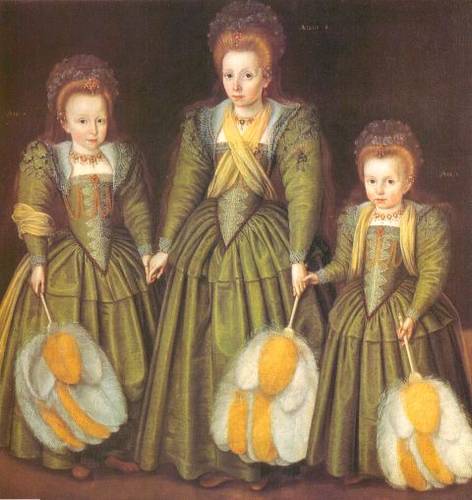
Seventeenth century painting by an unknown artist depicts the later Queen Elizabeth I of England as a (left to right) five-year-old, six-year-old, and three-year-old. The dress is anachronistic. (Image courtesy of: Wikipedia).

Elizabeth Tudor was born on this day in Greenwich Palace, England in 1533. Today is the 479th anniversary of her birth.

She was the daughter of King Henry the VIII of England and his second wife, Anne Boleyn. Henry had divorced his first wife, Katherine of Aragon — with whom he already had one daughter, Mary — and invented a new religion — the Church of England — in order to marry Boleyn. He had great hopes that she would provide him with a male heir. When their only living offspring was a girl, Henry grew disenchanted with Boleyn. His eye soon wandered to pretty (and more docile) Jane Seymour.  But, fearing what would become of herself and Elizabeth, Boleyn refused to divorce the King. On May 19, 1536, Anne Boleyn was executed on charges of treason, incest and adultery.  The marriage was nullified and Elizabeth, like Mary, was declared illegitimate.

Henry, ever the charmer, married four more times before he died. Wife number three, Jane Seymour managed to give Henry his male heir, Prince Edward, but she died nine days later. Elizabeth was seven when her father married Anne of Cleves for political reasons. Henry found her German manners ill-suited  for the English Court, and her face ill-suited for his taste.  Wife number 5 was Catherine Howard, a cousin of Anne Boleyn, and like Boleyn she was arrested for treason and adultery and was beheaded. Unlike Elizabeth’s mother, Catherine was guilty as charged.

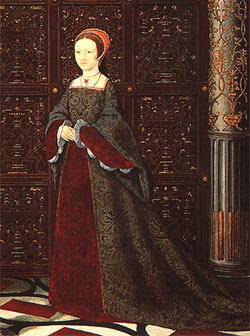
Princess Elizabeth, c. 1543-1547.
‘The Family of Henry VIII’, detail.
Anon. Hampton Court Palace. © The Royal Collection.    (Image courtesy: the Faces of Elizabeth I)

Elizabeth was a precocious ten-year old when Henry married his last wife, Catherine Parr. Catherine brought all of Henry’s children back to court. She was Elizabeth’s ‘second mother’ and she saw to it that the girl was well-educated in the Greek and Latin. By the time she was queen Elizabeth could speak five languages fluently.

Perhaps Catherine‘s most significant achievement was Henry‘s passing of an act that confirmed both Princess Mary‘s and Elizabeth‘s line in succession for the throne, despite the fact that they had both been made illegitimate by divorce or remarriage. [Tudorplace.com]

At Henry’s death in 1547 the throne went to Edward, with Mary and then Elizabeth next in line. Elizabeth lived with Catherine at Whitehall in Chelsea. Catherine  and Admiral Thomas Seymour (Jane Seymour’s brother) married just four months after Henry’s death. Thomas, Catherine and 14-year-old Elizabeth moved to Sudeley Castle.

Thomas was reported to have paid morning visits to Elizabeth, in her bedchamber…There was romping, laughing and giggling… no one knows how far these romps went… [Elizabethan Era Index]

Although Catherine and the servants were present during such tom foolery and “Elizabeth denied any scandal or bad behaviour” she left  Sudeley. No ill will seemed to fall between her and Catherine and they wrote to each other affectionately after her departure. But Thomas wasn’t through with the princess yet. After Catherine’s death in childbirth he applied to become Elizabeth’s suitor. He was rejected. He continued to plot for power, even attempting to kidnap the King, and was arrested for treason. And, because of their former friendship, the Princess was implicated . Despite serious interrogation the 15-year-old maintained her innocence.

In 1553 Edward died of tuberculosis. Edward named his cousin, Lady Jane Grey as his heir. Unlike his sisters, Jane had the advantage of being legitimate and the support of the manipulative Lord Protector John Dudley. Unfortunately for her it wasn’t enough. Elizabeth was smart enough to steer clear of Dudley’s power play. She feigned sickness,  kept to her bed, and away from the palace, as the drama played out. Mary took her rightful throne and Elizabeth kept her head. After a brief stay in Queen Mary’s court Elizabeth retreated to Hatfield.

When news of Queen Mary’s intended marriage to King Philip II of Spain surfaced in 1553 protestants in England worried that he’d bring the Spanish Inquisition with him. Nobles who had supported Dudley and Jane Grey now hatched the Wyatt Rebellion. Wyatt implicated Elizabeth in the rebellion by sending her a letter about it before hand. The conspirators wished to make her queen once Mary was dethroned. Elizabeth never got the letter — it was intercepted by Mary’s government agents. The rebellion failed, Wyatt was sentenced to be hung, drawn and quartered. Elizabeth was summed to London for questioning. She asked to see her sister, but was denied. She was allowed to write to Mary and sent her a long letter protesting her innocence and loyalty (and wisely drawling lines through the unused parts of the paper so no forged additions could be made.) She was sent to the Tower of London, and made to enter through the Traitor’s Gate where she said:

“Here landeth as true a subject, being prisoner, as ever landed at these stairs. Before Thee, O God, do I speak it, having no other friend but Thee alone. Oh Lord, I never thought to have come in here as a prisoner, and I pray you all bear me witness that I come in as no traitor but as true a woman to the Queen’s Majesty as any as is now living.” [Elizabeth I from Elizabethan Era Index]

She lived in fear the entire time she was locked up, and was in real danger of being killed when a warrant for her execution came to Bell Tower. But the warrant lacked Mary’s signature and Sir John Brydges, the Lieutenant of the Tower refused to carry out the order unless it was complete.

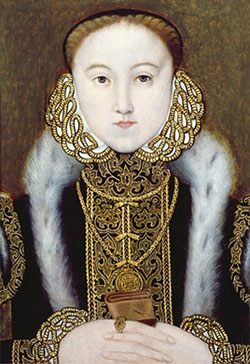
Elizabeth I as Princess, c.1555.
Artist Unknown. Private Collection. (Image Courtesy: The Faces of Elizabeth I)

After two long months Elizabeth was released  on May 19, 1554. Phillip, it seems, was wise enough to know that the English would harbor some ill will over the execution of their beloved Princess, and that that ill will would be turned toward him.

He advised Mary to release Elizabeth from the Tower. And Mary, who was besotted with Phillip, obeyed…. Elizabeth was released… but was … placed under the equivalent of house arrest at the palace at Woodstock. [Elizabeth I from Elizabethan Era Index]

She was under constant surveillance at Woodstock. Her writing materials were restricted, her books censored,  and activities limited. After almost a year in the virtual prison at Woodstock Elizabeth was freed. She traveled, under heavy guard, to Hampton Court where she was allowed to meet with Phillip. He was instrumental in a reconciliation between the sisters (frosty though it may be). He would rather have Elizabeth next in line to the English throne than Mary Queen of Scotts — who supported his enemy France.

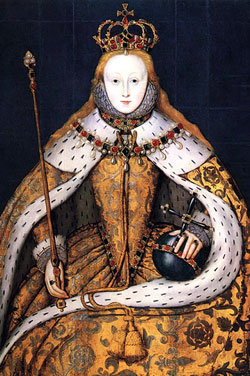
The Coronation Portrait, c. 1600.
Copy of 1559 lost original.
Artist Unknown.
Previously attr. to William Stretes. © National Portrait Gallery.
(Image courtesy: The Faces of Elizabeth I)

Elizabeth went home to Hatfield. On November 17th 1558 Mary died and Elizabeth became Queen of England. She was crowned on Sunday January 15th 1559. She died on March 24th 1603 having ruled for 45 years.

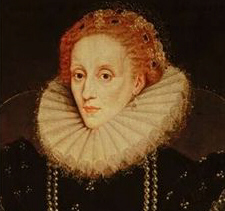
Elizabeth in later life. (Image courtesy: Elizabeth I Biography.)


Thought of the Day 9.5.12 Freddie Mercury

“F*ck today, it’s tomorrow.”

“What will I be doing in twenty years’ time? I’ll be dead, darling! Are you crazy?”

— Freddie Mercury

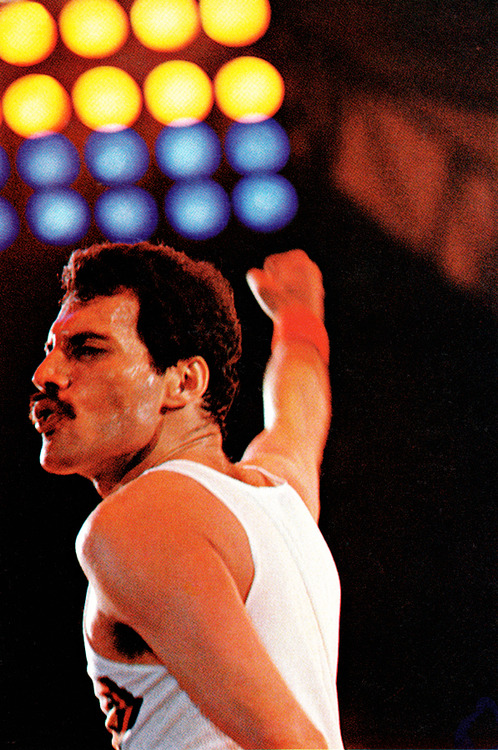
(Image courtesy of Fan Pop)

Farrokh Bulsara was born on this day in British Zanzibar, East Africa in 1946. He would have been 66 years old.

He grew up in Zanzibar and India. He attended St. Peter’s School, a British-style boarding school in Panchgani. The students at St. Peter’s anglicized his name to Freddie. Although he hated some of the school’s sports — running and cricket — he like others — hockey & boxing, and he became the school champion at table tennis at 10. He preferred art and music. He took private piano lessons and enjoyed Bollywood musicals. At school he formed a cover band that performed rock and roll. He also joined the school choir and participated in several theatre productions.

In 1964 when Freddie was 17 there was a great deal of unrest in Zanzibar, most of it directed at the British and Indian ex-pats. So Freddie and his family moved to Feltham, Middlesex, England. There he received a Diploma in Art and Graphic Design from the Ealing Art College. All the while he performed in bands. He also worked part-time selling second-hand clothes at Kensington Market and worked in a catering department at  nearby Heathrow Airport.

After stints with the bands Ibex and Sour Milk Sea he, Brian May (guitar) and Roger Taylor (drums) formed Queen. John Deacon rounded out the group in 1971.

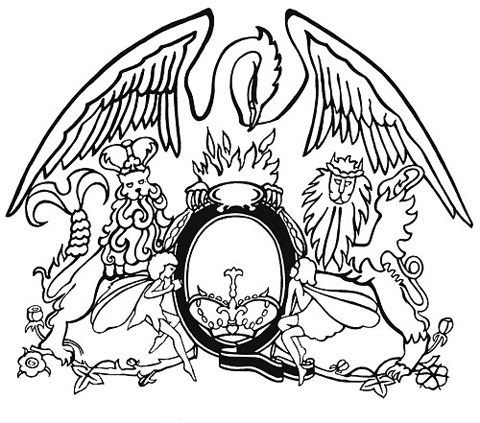
Mercury designed Queen’s logo. (Image courtesy of Lost at E Minor.com)

Freddie changed his last name to Mercury when he started Queen.  As lead singer for the group Mercury’s range went from a low bass F to a high tenor F, 3  full octaves. He wrote the lion share of the group’s songs including Bohemian Rhapsody, Killer Queen, Somebody to Love, We Are the Champions and Crazy Little Thing Called Love.

http://youtu.be/k-ARuoSFflc

He hated to do the same thing twice so he borrowed from a variety of genres when writing. So from the opera inspired Bohemian Rhapsody to the rockabilly Crazy Little Thing Called Love, Mercury proved just how mercurial he could be.

(Image courtesy of Fan Pop)

He was an amazing show man on stage. Queen gave over 700 concerts worldwide.

It wasn’t anything that could be developed. It was his charisma, his pure natural gift that was in perfect harmony with his voice, his appearance, his delicate taste and his musicianship in the wide sense of the word. The fact that he realized it himself made him absolutely fascinating! [Freddie Mercury: biography by Jacky Gunn & Jim Jenkins]

Their 20 minute set at Live Aid at Wembley Stadium stole the show. Freddie sings, struts, dances, plays piano and guitar, gives 110%,  and has a hell of a good time. (Plus, how much fun is it to hear 72,000 people singing along to a Queen song?)

He  produced two solo albums, Mr. Bad Guy and Barcelona and several singles. And he did solo side gigs including a performance with the Royal Ballet where he danced  in font of a packed audience of ballet enthusiasts to orchestral versions of Bohemian Rhapsody and Crazy Little Thing Called Love. He received  a standing ovation. Freddie co-wrote Love Kills for the re-release of Fritz Lang’s 1926 classic film Metropolis.

Freddie Mercury died of AIDS in 1991 at the age of 45.


Thought of the Day 8.30.12 Mary Woolstonecraft Shelley

“We are tomorrow’s past.”

–Mary Wollstonecraft Shelley

English: Cropped portrait of Mary Shelley

English: Cropped portrait of Mary Shelley (Photo credit: Wikipedia)

Mary Wollstonecraft Godwin was born on  this day in London, England in 1797. This is the 215th anniversary of her birth.

She was born into a family of  “intellectual rebels.” Her mother, Mary Wollstonecraft…

“the celebrated author of A Vindication of the Rights of Woman (1792), died of puerperal fever, leaving Godwin, [her father, William Godwin] the author of An Enquiry Concerning Political Justice (1793), to care for Mary and her three-year-old half-sister, Fanny Imlay.”[Eleanor Ty, Wilfrid Laurier University]

English: William Godwin, oil on canvas, 1802, ...

English: William Godwin, oil on canvas, 1802, 29 1/2 in. x 24 1/2 in. (749 mm x 622 mm), “Godwin liked Northcote’s portrait, describing it as ‘The principal memorandum of my corporal existence that will remain after my death.’ With the light hitting the philosopher’s temples, Northcote symbolised Godwin’s belief in progress based on reason.” (Photo credit: Wikipedia)

For four years Godwin raised “Pretty Little Mary” and her half-sister Fanny with the help of a governess. Mary thrived under her father’s affectionate care and grew into a “precocious, sensitive and spirited” little girl. But in 1801 he  married  Mary Jane Clairmont.  Little Mary did not get on well with her new “mother.” She grew up…

with a cruel step mother and emotionally distant father; she consoled herself at her mother’s graveside and spent periods of time in Scotland with friends of the family. [the Literary Network]

She was close to her half-sister Fanny and especially her step-sister Claire. But, while Claire was sent away to a boarding school to learn, Mary was left a home to learn what she could from the family library. Fortunately the library was well stocked, and her Father hosted a stream of literary visitors who sparked the girls’ imaginations. (Claire and Mary snuck into one such meeting and hid under a sofa so they could listen to Coleridge recite “The Rime of the Ancient Mariner.” [the Literary Network has a more detailed account of Mary’s early life and the strife between the girl and Mrs. Godwin.]

Percy Bysshe Shelley imbibed his radical philo...

Percy Bysshe Shelley imbibed his radical philosophy from William Godwin’s Political Justice. (Amelia Curran, 1819) (Photo credit: Wikipedia)

At  16, after a return from a very happy holiday with her friends the Baxters in Scotland,  she met Percy Bysshe Shelly. Percy was 5 years her senior and established writer and rich. He came to the Godwin’s to talk to her father about politics and his philosophy.  Mary and Percy fell in love with each other. Unfortunately Percy was already married (unhappily) to Harriet  Westbrook. Regardless of his marital status Mary and Percy ran off to Europe with Claire in tow. Her father, who believed in free love for other people, was against it for his daughter, he refused to talk to Mary until she and Percy married several years later.

Godwin-Shelley family tree

Godwin-Shelley family tree (Photo credit: Wikipedia)

The eight years Mary and Percy Shelley spent together were indeed characterized by romance and melodrama. During this period Mary and Percy, both extremely idealistic, lived on love–because of extended negotiations over the disposition of the estate of Percy’s grandfather–without money, constantly moving from one placed to another. Mary gave birth to four children, only one of whom survived to adulthood… [Eleanor Ty, Wilfrid Laurier University]

While at Lake Geneva they met Lord Byron. Byron and Claire became lovers and had a child of their own, Allegra.  Mary started work on Frankenstein while they were in Switzerland. It was inspired after a night of telling ghost stories.

Steel engraving (993 x 71mm) for frontispiece ...

Steel engraving (993 x 71mm) for frontispiece to the revised edition of Frankenstein by Mary Shelley, published by Colburn and Bentley, London 1831. The novel was first published in 1818. (Photo credit: Wikipedia)

As December 1816 loomed Harriet Westbrook Shelly committed suicide by walking into the Serpentine River near her home in Hyde Park. Unlike his relationship with Harriet, Percy found Mary an intellectual and romantic partner. With in the month Mary and Percy were married in London. They continued to travel, often with Byron, Claire and Allegra.

In 1822 Mary had a serious miscarriage and almost died. Later that year Percy was out sailing on the schooner “Don Juan’ when the boat sank in a sudden storm. Mary, devastated, returned to England with her only surviving son, Percy Florence.

The Cremation of Percy Bysshe Shelley, by Loui...

The Cremation of Percy Bysshe Shelley, by Louis Édouard Fournier. (Photo credit: Wikipedia)

She died in 1851 at the age of 54.  Romantic legend has it that when her son and daughter-in-law opened her box desk they found locks of hair from her long dead children and a silk envelope containing the ashes of Percy’s “heart”.

Books by Mary Wollstonecraft Shelly include:

History of Six Weeks’ Tour though a Part of France, Switzerland, Germany and Holland

Frankenstein; or The Modern Prometheus

Mathilda

Valperga; or, The Life and Adventures of Castruccio, Prince of Lucca

The Last Man

the Fortunes of Perkin Warbeck

Ladore

Falkner

Rambles in Germany and Italy

and collections of poems of Percy Bysshe Shelly