Category Archives: England

David Bowie 1.6.13 Thought oh the Day

I’m an instant star.  just add water and stir.”
David Bowie

[Image courtesy Fashion Office Buzz)

[Image courtesy Fashion Office Buzz)

David Robert Jones was born on this day in Brixton, London, England in 1947. He is 66 years old.

He attended local schools in Brixton and Bromley. He took choir– his voice was given a grade of average. — and learned to play the recorder. At home his father bought a stack of American 45s and introduced young David to Rock and Roll. Inspired by Little Richard and Elvis Presley he amped up his music cred by adding ukulele and tea-chest bass to the mix.

At age thirteen, inspired by the jazz of the London West End, he picked up the saxophone and called up Ronnie Ross for lessons. Early bands he played with – The Kon-Rads, The King Bees, the Mannish Boys and the Lower Third –provided him with an introduction into the showy world of pop and mod, and by 1966 he was David Bowie, with long hair and aspirations of stardom rustling about his head. [David Bowie.com]

His self titled, and bizarrely campy, debut album came out in 1967. [It’s pretty hard to listen to any of the songs now, but if you must experience it try The Laughing Gnome Song — http://youtu.be/mWoT9elA-oY  complete with squeaky gnome co-star.]

Bowie’s professional career took off with the 1969 release of his Space Oddity album. The record reach #5 in England.  Space Oddity (aka “Major Tom”) was the break out single, and it remains both a Bowie classic and a pop anthem.

But the longer, more complex, and beautiful Cygnet Committee shouldn’t be overlooked.

His third album, The Man Who Sold the World took on a harder rock feel, and introduced us to  the Spiders from Mars.

Here’s the title track:

And another favorite — All the Madmen:

Album #4 was Hunky Dory released in 1971.  So it’s time for a little ch-ch- Changes

And Life On Mars

[I’m limiting myself to just two clips per album… grrr. But you could go pull the YouTube version of Oh! You Pretty Things  too.]

Next up it was a full concept album with The Rise and Fall of Ziggy Stardust and the Spiders from Mars.  Here’s Starman..

and Ummmmmm Yeah…… Ziggy Stardust

1973 brought Aladdin Sane and Pin Ups, followed the next year with Diamond Dogs featuring Rebel, Rebel

Young Americans came out in 1975. The title song reached #28 on the Billboard Charts…

Here he is grooving another hit from the album, Fame
Station to Station introduced Bowie’s Thin White Duke character while continuing the funk and soul sound of Young Americans. Here’s Golden Years.

Low began Bowie his Berlin Trilogy. It is one of his best. [I also love Sound and Vision and Breaking Glass] Here’s Always Crashing The Same Car...

Part two of the Berlin Trilogy was Heroes which came out in 1977. I’ve got to go with the title track on this one…

His thirteenth album, and the last in the Berlin Trilogy, was Lodger.  Here’s Look Back in Anger.

..

The Berlin Trilogy was a critical and artistic success, but not immediately financial success.

Both came with Bowie’s 14th Album Scary Monsters (And Super Creeps) which hit #1 in the UK and did well in the US.

Bowie went pop and super dance-y with Let’s Dance. Singles China Girl, Modern Love and Let’s Dance all did well. Let’s Dance sold 6 million records.

After Let’s Dance Bowie kind of fell of my RADAR, frankly. But he continued to write and sing and put out albums for another two decades:

  • Tonight (84)
  • Never Let Me Down (87)
  • Black Tie White Noise (93)
  • Buddha of Suburbia (93)
  • Outside (95)
  • Earthling (97)
  • Hours (99)
  • Heathen (02)
  • Reality (03)

He was inducted into the Rock and Roll Hall of Fame in 1996, but he didn’t attend the ceremony or the concert.

After The release of Reality and its related A Reality Tour Bowie went into the woodwork.

Apart from the odd rare sighting at a charity function and one or two snatched paparazzi shots, David has kept an extremely low profile [David Bowie.com]

But now it appears he is back. Today he release a new single, Where Are We Now, and he is promising a new album, his 30th, in March!

<iframe width=”560″ height=”315″ src=”http://www.youtube.com/embed/FOyDTy9DtHQ&#8221; frameborder=”0″ allowfullscreen>


“We can be heroes, just for one day.” — David Bowie

“I’m always amazed that people take what I say seriously. I don’t even take what I ‘am’ seriously.” — David Bowie


Secondary Character Saturday — John Thornton (North and South)

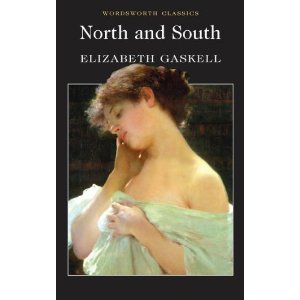
First, let me be clear, the North and South of which I speak is the wonderful Victorian novel by Elizabeth Gaskell, not the 1980’s mini series about the Civil War. If you haven’t read it do yourself a favor and put it on your reading list… Click HERE for the free Guttenberg file to read on-line or HERE for the Kindle file

—————————————————————————————-

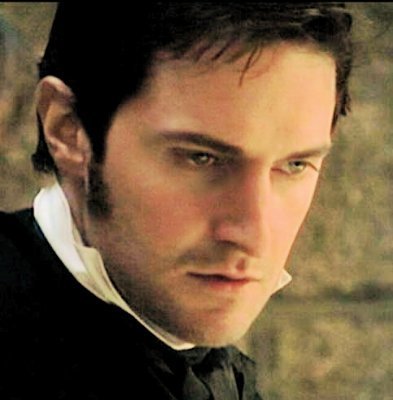
Richard Armitage played John Thornton in the 2008 BBC miniseries North and South.

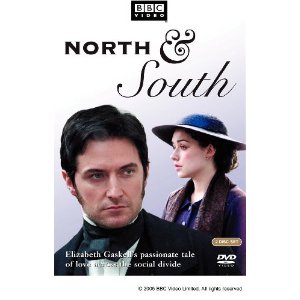
Richard Armitage played John Thornton in the 2005 BBC miniseries North and South.

Who: John Thornton

From: North and South

Written by: Elizabeth Cleghorn Gaskell

Date of Publication: 1855

Why: John Thornton is a self-made man whose stoic exterior conceals a heart waiting for the love of the right woman. He has spent his life building a business and taking care of his mother and sister. He’s the owner of a mill in the fictional city of Milton in northern England. He has “never loved any woman before.” His “life has been to busy,” his “thoughts too much absorbed with other things.” But, when a beautiful young woman, Margaret Hale, comes to the city from the rural, gentrified, south  the walls of indifference he has built up around his heart begin to tumble.  …Are the two of them so different in manners and customs…(and is their timing too flawed) for love to bloom?

Pros: Strong, loyal, generous, disciplined, intense, genuinely concerned with both his worker’s health and the mill’s financial viability.

Cons: Hot tempered and initially inflexible with his workers. Bad timing.

Shining Moment: During a strike against the mill (it’s a town-wide strike) he has brought in Irish workers to run the mill. When the town’s workers hear about the scabs they storm the mill. Thornton protects the Irish workers, and, at Margaret’s urging, attempts to talk to the rioters and calm them.  (ALSO: the ending, but I wont give that away.)

Least Shining Moment: When Margaret first see’s Thornton. He’s in the mill and has caught a worker smoking. The slightest flame can set the entire works ablaze and he beats the worker for his carelessness.


North+and+South

Click here to read my Elizabeth Gaskell Thought of the Day.

51dj-uo3U0L._SL500_AA300_

And you should really watch the 2005 BBC mini series of North and South. (Which has the added bonus of co-starring Brendan Coyle — Downton Abbey’s Mr. Bates — as mill worker Nicholas Higgins.)


Maggie Smith 12.28.12 Thought of the Day

“I like the ephemeral thing about theatre, every performance is like a ghost – it’s there and then it’s gone.”
Maggie Smith
Maggie Smith was author J. K. Rowling's person...

Maggie Smith was author J. K. Rowling’s personal choice for the role of McGonagall in the film series. (Photo credit: Wikipedia)

Margaret Natalie Smith was born on this day in Ilford, London, England in 1934. She is 78 years old.
The daughter of a secretary and a public health pathologist, she has twin older brothers. When Smith was 4 the family moved to Oxford where her father took a position at Oxford University.
Upon graduating from high school,
Smith attended the Oxford Playhouse School in 1951-53. She made her professional stage début in 1952, playing Viola in an Oxford University Dramatics Society production of Shakespeare’s Twelfth Night. [Biography]
She worked on Broadway in a comedy review, New Faces of 1956. 1956 also saw her first film role, an uncredited part in Child in the House.  She did a number of guest spots on television shows  before she landed a larger role in 1959’s Nowhere to Go. (For which she won  the British Academy of Film and Television Arts “Most Promising Newcomer” award.)
Back home she worked with the National Theatre of Great Britain, and had her break out role as Desdemona opposite Laurence Olivier’s Othello in 1964. The duo “reprised their roles in a film version of Othello the following year.” [Ibid] The film earned Smith her first Oscar nomination
While at the National Theatre, she acted in classic dramas by major authors such as Henrik Ibsen and Anton Chekhov. [Ibid]
She played Beatrice to Robert Stephens’ Benedict in the 1967 television version of Much Ado About Nothing.
In June of 1967 Smith and Stephens married (’67 – ’74)  and had two sons, Chris Larken and Toby Stephens. Both of boys grew up to become actors.
The Prime of Miss Jean Brodie, the story of a headstrong Scottish school teacher, won her both an Oscar and a BAFTA award in 1969.  In 1978 she won her second Oscar, this time for Best Supporting Actress in California Suite.
By the mid ’80s  she was winning accolades (and awards) for more mature roles, like her turn as Charlotte Bartlett in A Room with a View, Mrs. Medlock in The Secret Garden, Lady Random inTea With Mussolini, and as the elitist Constance, Countess of Trentham in the wonderful Gosford Park.
In 1975 she married playwright and librettist Beverly Cross, who died 1998.
In 1990 she won a Tony Award for Best Lead Actress in Lettice and Lovage on Broadway.
While she donned a pointy hat and tartan accented witch robes for the role of Professor Minerva McGonagall in the Harry Potter series, she continued to perform in an eclectic mix of movies, television and stage shows in both England and the US.
She won an Emmy for My House in Umbria in 2003,   and two more as the Dowager Countess of Grantham, Cousin Violet Crawley in Downton Abbey.
On the big screen she recently won a Screen Actors Guild Award for her performance in The Best Exotic Marigold Hotel (2012).  You can also see her  Quartet with Michael Gabon and Billy Connolly.

In 1990 Smith was made a Dame commander of the Order of the British Empire.


Thomas Nelson, Jr. 12,26.12 Thought of the Day

An engraving of Thomas Nelson, Jr., a signer o...

Thomas Nelson, Jr was born on this day in Yorktown, Virginia in 1738. Today is the 274th anniversary of his birth.

Nelson was a planter, statesman, and soldier. He was a signer of the Declaration of Independence in 1776 and he was Virginia’s fourth Governor (he followed Thomas Jefferson in the post.)

English: Portrait of Governor Thomas Nelson at...

English: Portrait of Governor Thomas Nelson at age 15. (Photo credit: Wikipedia)

His grandfather and namesake, Thomas “Scotch Tom” Nelson  was one of the first men to settle in the Yorktown area. And the family was prominent in local and regional politics. Young Thomas traveled to England for his formal education. He went to Eton and Trinity College, Cambridge.  In 1760 he graduated and returned to the family home.

Capitol Building from the North side. [ritaLOVEStoWRITE]

Capitol Building from the North side. [ritaLOVEStoWRITE]

One year later, 1761 he was elected to the House of Burgesses, Colonial Virginia’s legislative house in Williamsburg, Virginia. His time in the Capital wasn’t all business, in 1762 he met and married Lucy Grymes, niece of one of the richest and most powerful men in the Colony, Peyton Randolph. He and Lucy had 11 children in their 27 year marriage. (One son, Hugh Nelson, served in the US Congress.)

In 1774, after hearing about the Boston Tea Party, he [Thomas] performed an act against the British Tea Tax by boarding a merchant ship, Virginia, which was anchored near his home, and dumped several chests of tea into the York River. [Geni.com]

He was a member of the Continental Congress in Philadelphia, Pennsylvania, from 1775 to 1777. A supporter of the independence cause, he was a signer of the Declaration of Independence.

English: This is a high-resolution image of th...

English: This is a high-resolution image of the United States Declaration of Independence (article (Photo credit: Wikipedia)

In May of 1777 he suffered the first of a series of strokes and returned to Yorktown. He also suffered “periodic bouts of asthma”[Geni.com] but remained active in politics.

He also became a General in the Virginia Militia. He and his 3,000 Militiamen were part of George Washington’s Army during the siege of Yorktown. Cornwallis, the British commander had taken Nelson’s home for one of his head quarters. The

American artillerymen refused to fire on the house, in respect to General Nelson. Nelson then aimed … a cannon at his own home, and ordered the men to fire at his house…. [Ibid]

He offered a bounty of five guineas to the first American gunner to hit the house. The house, now a part of the Colonial National Historical Park system, still shows “evidence of damage from cannon fire.” [National Park Service]

Nelson House, York County, Virginia. [Image courtesy: National Park Service]

Nelson House, York County, Virginia. [Image courtesy: National Park Service]

In 1781 he succeeded Thomas Jefferson as Governor Virginia. He retired to his “son’s estate, ‘Mont Air,’ Hanover County, Va., and died there on January 4, 1789” [Congress.gov Biographical Dictionary of the United States Congress] He was buried in Yorktown, in Grace Churchyard.


Secondary Character Saturday: Piglet!


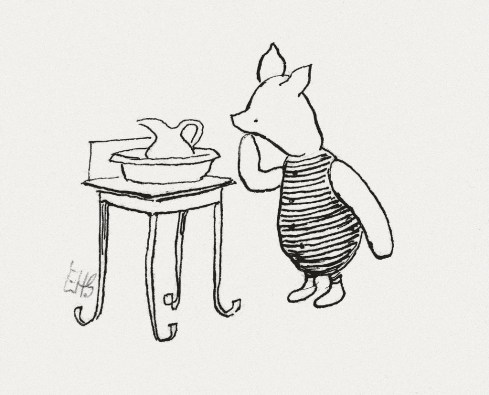
[It’s Second Character Saturday! Today’s character is Piglet. I’ll be going straight to the source and discussing the AA Milne Piglet with illustrations by Ernest Shepard— not the Disney-fied Piglet.]

“But Piglet is so small that he slips into a pocket, where it is very comfortable to feel him when you are not quite sure whether twice seven is twelve or twenty-two.”― A.A. Milne, Winnie-the-Pooh

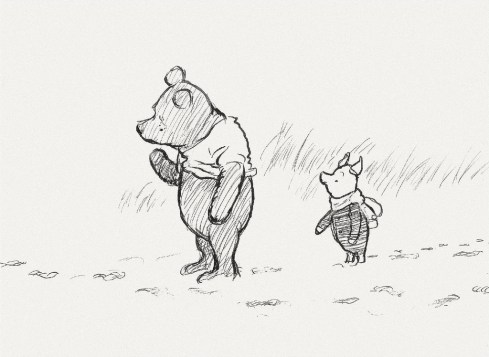
Piglet and Pooh think about fall.

Piglet and Pooh think about fall.


Who: Piglet


From: Winnie-the-Pooh


By: A.A. Milne


Date: 1926


Why: Piglet is shy, but brave. He reminds us that no matter how small and un-impowered we are… we are still big enough to stand up for what is right and face our fears.He is a role model for friendship.


In the stories he grounds the more popular (and more flighty) Pooh. He has a very strong relationship with Pooh, Eeyore and Christopher Robin. As readers (especial children) we relate to him because of his size and soft voice and WE want to be his friend too.


Piglet plants a haycorn plant.

Piglet plants a haycorn plant.


Pros: Loyal, brave, innocent, earnest, creative, humble, good listener, hard worker.


Cons: Excitable, follower, gullible.


Pooh and Piglet on an adventure

Pooh and Piglet on an adventure


Shining Moment: I love all the moments with Piglet in the books. I especially the quiet moments between Pooh and Piglet that just say “friendship” to me…


Piglet sidled up to Pooh from behind. “Pooh?” he whispered.
“Yes, Piglet?”
“Nothing,” said Piglet, taking Pooh’s hand. “I just wanted to be sure of you.”


“I don’t feel very much like Pooh today,” said Pooh.
“There there,” said Piglet. “I’ll bring you tea and honey until you do.”


“How do you spell ‘love’?” – Piglet
“You don’t spell it…you feel it.” – Pooh”


When you wake up in the morning, Pooh,” said Piglet at last, “what’s the first thing you say to yourself?”
“What’s for breakfast?” said Pooh. “What do you say, Piglet?”
“I say, I wonder what’s going to happen exciting today?” said Piglet.
Pooh nodded thoughtfully. “It’s the same thing,” he said.”


Piglet gets ready for the party


I love when he listens to Eeyore and does something to help him out of his funk.


He’s there for his friends and always willing to help. Despite his diminutive size he is brave enough to face great odds. He may be afraid of everything, but that doesn’t get in the way of his standing up for what is right, or standing next to a friend to face a challenge.


The Disney-fied version of my beloved porcine friend. [Image courtesy: render-graphiques.fr]

The Disney-fied version of my beloved porcine friend. [Image courtesy: render-graphiques.fr]


Least Shining Moment: I do not like what Disney did with Piglet. They turned his innocence into a cartoon. I was OK with that as a kid, but as I get older, and Disney keeps chugging out more and more Pooh related crap, I resent that they are forcing the Milne characters into cookie-cutter cartoons of themselves to sell more DVDs and plastic  stuff. Piglet just gets squeekier and squeekier and the tender, brave, humble pig gets more and more diluted. SHAME.


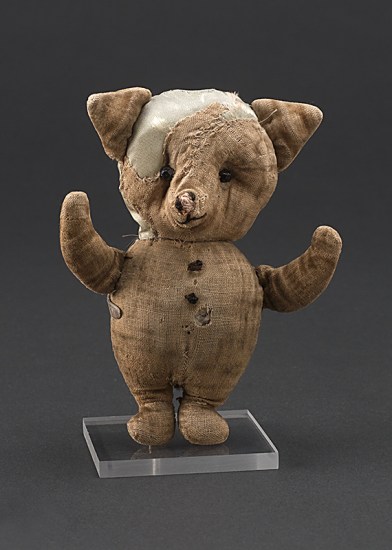
Well loved and well used, this is the original Piglet. One of Christopher Robin Milne's surviving stuffed animals, Piglet resides at the New York Public Library.

Well loved and well used, this is the original Piglet. One of Christopher Robin Milne‘s surviving stuffed animals, Piglet resides at the New York Public Library.

In 1921, as a first-birthday present, Christopher Robin Milne received a small stuffed bear, which had been purchased at Harrods in London. Eeyore, Piglet, Kanga, and Tigger soon joined Winnie-the-Pooh as Christopher’s playmates and the inspiration for the children’s classics When We Were Very Young (1924), Winnie-the-Pooh (1926), Now We Are Six (1927), and The House at Pooh Corner (1928), written by his father, A.A. Milne, and illustrated by Ernest H. Shepard.

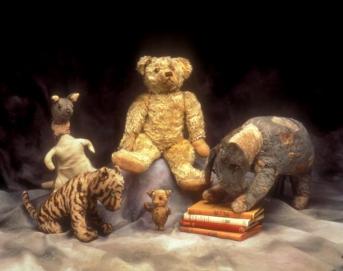
You can see just how small Piglet is compared to the other stuffed animals in this photo. [Image courtesy: The New York Public Library

You can see just how small Piglet is compared to the other stuffed animals in this photo. [Image courtesy: The New York Public Library

Brought to the United States in 1947, the toys remained with the American publisher E.P. Dutton until 1987, when they were donated to The New York Public Library. [Treasures of The New York Public Library.]


Cover of Winnie-the-Pooh

Cover of Winnie-the-Pooh (Photo credit: Wikipedia)


One more image... Piglet dancing with delight. Keep that image in your heart today, OK?

One more image… Piglet dancing with delight. Keep that image in your heart today, OK?


Williamsburg (part 2)

Textile 3

[This is part two of my What To Do in Williamsburg Blog for part one go HERE.]

Yesterday’s tips included:

  1. Planning your trip in the Fall or Winter to avoid the heat and crowds.
  2. Staying in a Colonial House.
  3. Engaging with the locals.

Today we’ll focus on some [FREE] tours.

4. Visit the Wren Building.

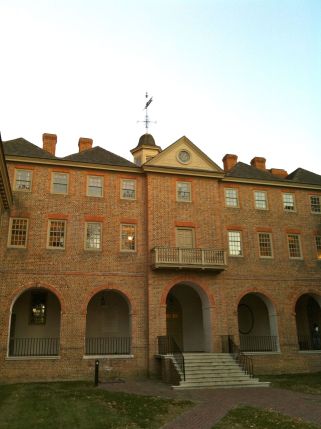
The first State House of Virginia was in Jamestown. But it burned down. Then it burned again. And again. And a fourth time. The governor and the citizens of Jamestown thought they’d better look for a better location for their capital. They chose Williamsburg (then known as the Middle Plantation) because the town already had a market, a church — Burton Parish, and a school — William and Mary. The architectural gem of William and Mary is the Wren Building. It sits at the opposite end of Duke of Gloucester Street from the Capitol and it is definitely worth a visit.

English: The front of the Wren Building at the...

English: The front of the Wren Building at the College of William & Mary in Williamsburg, Virginia, USA. (Photo credit: Wikipedia)

The building began construction in 1695 and was completed in 1699. It is the oldest restored building in Williamsburg. It has suffered three major fires (in 1705, 1859 and 1862) and been rebuilt each time. Between 1928 and 1931 it was restored to its Colonial appearance. Every student at William and Mary has at least one class in the historic Wren Building during their time at the college. The college counts three US presidents among its alumni; Thomas Jefferson, James Monroe and John Tyler. Their portraits hang in the Great Hall.

Free tours of the building are available M-F 1-5 when school is in session. Hint: As you climb the steps to the front door look for a patch of darker red brick to your left. You’ll see the initials of some of the school’s earliest residents carved in the bricks.

Wren Building from the William and Mary Campus side. (Photo credit: Bill.)

Wren Building from the William and Mary Campus side. (Photo credit: Bill.)

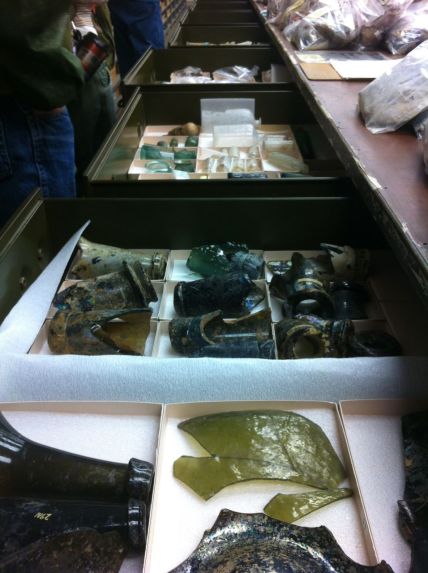
5.) Take the Rubbish, Treasures and Colonial Life Tour.   Rev. W.A.R. Goodwin, the pastor at Bruton Church convinced John D. Rockefeller Jr. to join him in a dream of restoring the sleepy little 1920’s country seat back to  the glorious colonial capital it had once been. That took a lot of money, a lot of research and a lot of digging.  There is no better way to learn about how that transformation took place than on the 90 minute Rubbish, Treasures and Colonial Life tour. Meet members of the staff, learn about how archaeological methods have changed over the years, and see the treasures that await their turn to be cataloged. Tickets are FREE with your Williamsburg Admission Pass, but you must make a reservation prior to the tour.

Glass fragments are sorted by type in drawer in the Archeology labs in Williamsburg.

6.) Another great free tour is the Behind the Scenes tour. This tour takes place at the Bruton Heights School and focuses on preservation techniques (as opposed how the objects are found, put together and cataloged.) You’ll see the studio where educational videos, Emmy Award winning broadcasts and blogs are made…

Film Studio at Williamsburg's  Bruton School facility.

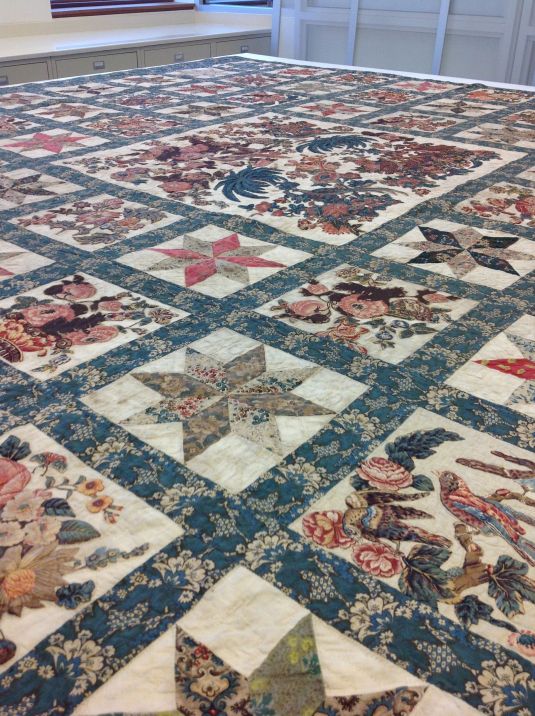
…then go to one of the restoration labs to see work being done on an 18th century item. We visited the Textile Lab where they were restoring some quilts for an upcoming show at the De Witt Wallace Museum.

Over sized quilt being restored at the Textile Lab

Over sized quilt being restored at the Textile Lab
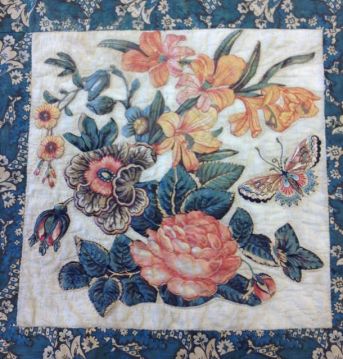
Detail from an over sized quilt being restored at the Textile Lab.

Detail of quilt

6.) Go to the De Witt Wallace Decorative Arts Museum and the Abby Aldrich Rockefeller Folk Art Museum. With a substantial permanent exhibit and wonderful traveling exhibits we have never been disappointed by a stop at the twin museums that are accessible through the recreated Public Hospital on Frances Street.

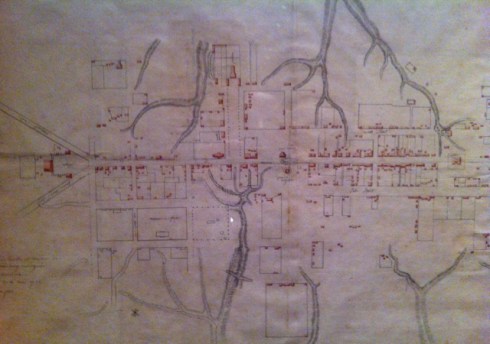
The Frenchman's Map was on display as part of a temporary exhibit on maps and mapmaking. Drawn when the French moved into the city after during the Siege of Yorktown, It is the Rosettastone for Archeologist trying to restore Williamsburg.

The Frenchman’s Map was on display as part of a temporary exhibit on maps and map making. Drawn when the French moved into the city after during the Siege of Yorktown, It is the Rosetta stone for Archeologist trying to restore Williamsburg. The Bodleian Plate, another key to what the Colonial Capital looked like, is also on display.

This is a terrific way to spend a rainy (or cold) afternoon. And if you are traveling with youngsters the Children’s room in the Abby Aldrich Museum is delightful.

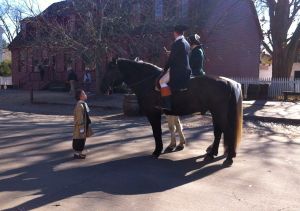
Looking up to the past.<br /><br />A young visitor finds both human and equine re-enactors equally fascinating andfriendly on Duke of Gloucester street.

Looking up to the past.
A young visitor finds both human and equine re-enactors equally fascinating and friendly on Duke of Gloucester street.
  • To read my article on Williamsburg: A Winter Escape in 2011’s Mason-Dixon ARRIVE Magazine click HERE and scroll down == it is the third article on the page.

C.S.Lewis 11.29.12 Thought of the Day

The statue of C. S. Lewis in front of the ward...

The statue of C. S. Lewis in front of the wardrobe from his book The Lion, the Witch and the Wardrobe in East Belfast, Northern Ireland (Photo credit: Wikipedia)

“Aim at heaven and you will get earth thrown in. Aim at earth and you get neither”
C.S. Lewis

Clive Staples Lewis was born on this day in Belfast, Ireland in 1898. Today is the 114th anniversary of his birth.

When he was four years old he adopted the nickname “Jack” (short for “Jacksie”) in honor of a beloved neighborhood dog who got hit by a car and died. As a child he and his brother Warren (also known as Warnie) created a fantasy world with talking animals called “Boxen.”

Lewis and Weldon Borland

Lewis and Weldon Borland (Photo credit: Kevin Borland)

When Lewis was nine his mother died of cancer. In 1910 he was sent to Campbell College, a boarding school in Belfast. He withdrew after a year because he developed a respiratory condition. In 1913 he attended Malvern College for a year. There he abandoned his Christian faith and became an atheist.  The following year he left Malvern and was privately tutored.

Lewis received a scholarship to University College Oxford. He started there in 1916, but took a leave of absence to join the Army when World War One broke out. He was injured at the Battle of Arras on April 15, 1918. After his release from the Army in December of 1919 he went back to Oxford. Where he received Firsts in Greek, Latin, Philosophy, Ancient History and English.

He was appointed Fellow and Tutor of English Literature at Oxford University in 1925 (a position he held until 1954 — for 29 years). In 1954 he became chair of Medieval and Renaissance Literature at Cambridge.

In 1931 after an evening of discussing Christianity with J.R.R. Tolkien and Hugo Dawson  Lewis converted to Christianity. The following day he and Warnie took a motorcycle ride to the Whipsnade Zoo. ” I did not believe that us Christ was the Son of God, and when we reached the Zoo I did.” [Surprised by Joy, C.S. Lewis]

At Oxford he was one of the founders of the literary group The Inklings.

He wrote more than 30 books including novels, fantasy literature, Christian literature, literary criticism, and essays. He is best known for The Chronicles of Narnia, The Screwtape Letters, The Four Loves and Mere Christianity.

English: Map of Narnian world as described in ...

English: Map of Narnian world as described in The Chronicles of Narnia by C.S. Lewis (Photo credit: Wikipedia)

C.S. Lewis died on November 22nd, 1963 in England.


Thought of the Day 11.5.12 Vivien Leigh

“It’s much easier to make people cry than to make them laugh”
–Vivien Leigh

Vivien Leigh

Vivien Leigh (Photo credit: Wikipedia)

Vivian Mary Hartley was born on this day in Darjeeling, Bengal, India in 1913. Today is the 99th anniversary of her birth.

She made her stage debut reciting “little bo peep” at age three.

She was convent-educated in England and throughout Europe, and inspired by her schoolmate Maureen O’Sullivan to embark on an acting career. [Biography.com]

After seeing O’Sullivan in a movie she enrolled in the Royal Academy of Dramatic Arts. She left the school when she married Herbert Leigh Holman.

She made her first film, Things Are Looking Up in 1935. At the advice of her agent she changed her professional  name to Vivien (changing the “a” to an “e”) Leigh.

In 1937 she co-starred with Laurence Olivier in Fire Over England and the two began an affair. When Olivier went to Hollywood to film Wuthering Heights she followed. She wanted the role of Scarlett O’Hara in Gone With The Wind. The couple went to the set to see the Burning of Atlanta scene, and she was introduced to the producer, David O. Selznick. He got her a screen test, and she got the role. She won an Academy Award for her Scarlett.

English: Cropped screenshot of Vivien Leigh fr...

English: Cropped screenshot of Vivien Leigh from the trailer for the film Gone with the Wind (Photo credit: Wikipedia)

In 1940 she divorced Leigh Holman and married Olivier. The two became a Hollywood “Powerhouse couple” [Ibid] They starred in several films and plays together. But Leigh suffered from manic depression / bipolar disorder. She had a miscarriage in 1944.

…She simultaneously battled insomnia, …and a respiratory ailment eventually diagnosed as tuberculosis. Hoping for relief, Leigh underwent electroshock therapy, which was very rudimentary at the time and sometimes left her with burn marks on her temples. It wasn’t long before she began to drink heavily.[Ibid]

In 1949 she took up the second great role of her life, Blanche Du Bois in A Streetcar Named Desire. She brought life to the role, first on stage and then on film. She won her second Best Actress Oscar for Streetcar.

Cropped screenshot of Vivien Leigh from the tr...

Cropped screenshot of Vivien Leigh from the trailer for the film A Streetcar Named Desire (Photo credit: Wikipedia)

At home things were crumbling and she and Olivier divorced in 1960. She bounced back with her Tony Award winning role in Tovarich in 1963, and starring in the Oscar-winning Ship of Fools.

But she became ill again in 1967 while in London and passed away from tuberculosis at the age of 53.


Thought of the Day 10.31.12 Juliette Gordon Low

If you are a Girl Scout you know who JGLow is. This is one of those bioBlogs that I knew I was going to do weeks before the date. It is my honor to celebrate her birthday.

————————————————–

“Right is right, even if no one else does it.”
Juliette Gordon Low

English: A portrait of Juliette Gordon Low (18...

English: A portrait of Juliette Gordon Low (1887, Edward Hughes) located in the National Portrait Gallery in Washington, D.C. (Photo credit: Wikipedia)

Juliette Magill Kinzie Gordon was born on this day in Savannah Georgia in 1860. Today is the 152nd anniversary of her birth.

“Daisy” was a beautiful baby with a sweet disposition. She was the second of the Gordon’s six children. The family lived at 10 East Oglethorpe Avenue in a double town house in a wealthy section of town. She had all the advantages of a well to do Southern girl. But she was born on the cusp of the Civil War. Daisy was born in October 1860 and hostilities at Fort Sumter, South Carolina marked the official beginning of the war on April 12th 1861. The Gordon’s was a house divided. Her father was pro-succession and a slave holder, her mother was from the Chicago and an abolitionist.

While Daisy’s father was joining the war efforts on behalf of the South, her maternal relatives were enlisting in the Northern militias. Daisy’s mother struggled with the conflicting feelings of having loved ones on both sides of the war, and often faced wrath from angry neighbors. [Biography.com]

: Juliette Gordon Low Historic District: Wayne...

: Juliette Gordon Low Historic District: Wayne-Gordon House (Photo credit: Wikipedia)

Her father joined the Confederate Army and was away from home for most Daisy’s early life. She didn’t see him for more than a few days at a time. Food shortages in the city meant that even the wealthy Gordons suffered from malnutrition. Savannah’s coastal location meant illnesses like malaria were always a threat.  By 1864 things were looking grim for the Confederacy. General Sherman had taken Atlanta and was marching through Georgia to the sea burning a path in his wake. Savannah was the last city in his way. When the city surrendered Eleanor Kinzie Gordon invited the General, an old friend, to tea.  He brought her letters and packages from her friends and family in Chicago.

He also brought the two older girls, Nelly and Daisy, a gift of rock sugar candy, the first sugar the girls had ever eaten….He often recounted a funny anecdote about the 4-year-old Daisy Gordon. After eating her sugar, she sat on his lap and began to curiously inspect his head. When he asked what she was doing, she told him she had heard him called that ”old Devil Sherman” and she wanted to see his horns. [Juliette Gordon Low Birthplace]

Some say he was so charmed by the little girl and her mother’s hospitality that he spared the city [it probably had more to do with city’s strategic sea port.] Eleanor Gordon packed up her daughters and headed north (under the protection of General Sherman) to her family in Chicago to wait out the rest of the war. (All wives of Southern officers were ordered to leave the city.)

At her grandparents’ home in Illinois, Daisy was exposed to an entirely different way of life…As a result of her maternal grandparents’ influence in the community, Daisy encountered a variety of new people, including many Native Americans… Her interactions with Native Americans gave her an early appreciation of Native American culture, which she would idealize for the rest of her life….By 1865, the family had reunited in Savannah and, thanks to her mother’s efforts to recoup their financial losses in the South, Daisy’s father was able to revitalize Belmont cotton plantation.  [Biography.com]

As a child Daisy learned to sketch, paint and sculpt, write poems, write and act in plays. Daisy loved her pets including dogs and birds. She was a good swimmer and captain of the rowing team. She liked to play tennis. She learned to stand on her head [a trick she repeated annually on her birthday to prove that she could still do it.]

When she was a teen Daisy went to the Virginia Female Institute (now Stuart Hall School) in Staunton, Virginia. Then she went to Mesdemoiselles Charbonniers for finishing school in New York City.

…She was taught the typical social graces of a highborn lady in school—excelling in drawing, piano and speech—she yearned instead to explore, hike, play tennis and ride horses—all activities discouraged by her restrictive finishing schools. Defiant in nature, Daisy was frequently caught breaking the rules.[Ibid]

As a young woman she traveled  in the US and Europe. She spent time in New York trying to make a living painting. She met and married a wealthy English cotton merchant, William Mackay Low on December 21, 1886.  When well-wishers threw the traditional rice at the newlyweds a grain became lodged in Daisy’s ear. The pain became so bad that she went to a doctor to have the rice removed. “When trying to remove the rice, the doctor punctured the eardrum and damaged the nerve-endings resulting in a total loss of hearing in that ear.” [Juliette Gordon Low Birthplace] It was an omen of things to come.

The Lows lived in England and traveled extensively. They spent their summers in England and their winters in the US.

During the Spanish-American War, Juliette came back to America to aid in the war effort. She helped her mother organize a convalescent hospital for wounded soldiers returning from Cuba…At the end of the war, Juliette returned to England to a disintegrating marriage. [Juliette Gordon Low Birthplace]

The couple, who had been unable to conceive children had begun to drift apart.

William, who had limitless funds and no restrictions, began spending more and more time apart from his wife, gambling, partying, hunting, and splurging on extravagant toys. Daisy was also gone on frequent trips, searching for cures for her hearing loss. [Biography.com]

One of William Low‘s new hobbies was his mistress, Ms. Anna Bateman. By 1901 he had asked Daisy repeatedly for a divorce, but she refused. At that time a divorce brought shame on all parties involved. But when Daisy returned home from a trip to find Ms. Bateman living in the house and her (Daisy’s) things moved to the servants quarters she gave in. Daisy went to stay with friends and the Lows were legally seperated. Before their final divorce papers could come through William Low died. He left everything to Bateman, Daisy had to go through the embaressment of contesting the will. She eventually got the Savannah Lafayette Ward estate.

Daisy began to look for new purpose in her life. She traveled, this time as far as Egypt and India. In 1911 she met Sir Robert Baden-Powell, the founder of the Boy Scouts. She worked with Baden-Powell, his wife Olive, and his sister Agnes in their efforts to create girl’s version of the scouts.

Low started several troops in Scotland and London, for girls of varying income brackets. The effect on the girls’ self-esteem was so striking that Low decided she had to take the program to the United States.  [Biography.com]

So she returned to Savannah and hatched her plans to start the Girl Guides on this side of the Atlantic…

English: Juliette Gordon Low Category:Girl Sco...

English: Juliette Gordon Low Category:Girl Scouts of the USA images (Photo credit: Wikipedia)

Less than a year later, she… made her historic telephone call to her cousin Nina Pape, saying, “I’ve got something for the girls of Savannah, and all of America, and all the world, and we’re going to start it tonight!” On March 12, 1912, Juliette Low gathered 18 girls to register the first two patrols of American Girl Guides.  [Juliette Gordon Low Birthplace]

Low used her own money (with contributions from her friends and family) and her considerable energy to forge the new organization. The name of the group was changed to Girl Scouts a year later.

It was her goal to bring girls from all backgrounds together as equals to enjoy the outdoors, to learn new skills and to be ambassadors of peace in the world.

She encouraged girls to prepare not only for traditional homemaking, but also for possible future roles as professional women—in the arts, sciences and business—and for active citizenship outside the home. [Ibid]

She remained friends with the Baden-Powells and “she helped lay the foundation for the World Association of Girl Guides and Girl Scouts.” [Ibid]

In 1923 Daisy was diagnosed with breast cancer. She died four years late on January 17, 1927. She was laid to rest at the Laurel Grove Cemetery in Savannah, Georgia. A Scout to the end, Daisy is burried her Girl Scout uniform.

Girl Scouts is the largest educational organization for girls in the world and has influenced the more than 50 million girls, women and men who have belonged to it. [Ibid]

: Juliette Gordon Low Historic District: Site ...

: Juliette Gordon Low Historic District: Site of first Girl Scout meeting (Photo credit: Wikipedia)