Monthly Archives: August 2012

Thought of the Day 8.23.12 River Phoenix

“Acting is like a Halloween mask that you put on.”
River Phoenix

River Jude Bottom  was born on this day in Madras, Oregon in 1970. He would have been 42.

River’s parents, John and Arlyn met while hitchhiking in northern California. The family moved often as John and Arlyn were itinerant fruit pickers. When River was 3 they joined the Children of God religious cult and became missionaries. They moved through out the southern US, the Caribbean and South America, and siblings Rain, Joaquin, and Libertad were welcomed to the family.

The church sent them Caracas, Venezuela in 1976. Although John was the Church of God’s Archbishop to Venezuela and the Caribbean he did not get a salary and the family had to fend for themselves financially. Occasionally finances got so strained that young River and Rain performed music on street corners to raise money for food (River played guitar).  Eventually the Bottoms became disillusioned with Church of God leader, David Berg, and the direction the  religious group was taking. They left the group, living in a beach hut and at a church until they stowed away in a cargo ship bound for Florida.

Once they made it to Florida (they were discovered by the crew of the cargo ship, but they were treated well,) the family stayed with Arlyn’s parents in Winter Park. The last of the Bottom siblings, Summer was born in 1978 and the entire family changed their last name to Phoenix to symbolize the new beginning in their life.

River, Rain and Summer performed in talent shows in Florida, and got an invitation to come out to Hollywood and audition for Paramount studio. The family jumped at the chance, but when they arrived in California the audition fell through. Arlyn got a job in casting for NBC and arranged for a meeting between the kids and agent Iris Burton.

At 10 River started his acting career.  His first break came as the youngest brother, Guthrie, in the TV Series Seven Brides for Seven Brothers in 1982. And he made several made-for-television movies and had  guest spots on network shows.

River Phoenix

River Phoenix and Wil Wheaton in Stand By Me (Photo credit: One From RM)

In 1984 he was cast in his first big screen picture Explorers along side another newcomer, Ethan Hawke.  He was in Rob Reiner’s  Stand By Me (1986) with Wil Wheaton, Richard Dreyfuss, Jerry O’Connel and Corey Feldman.   Next up was Peter Weir’s The Mosquito Coast with Harrison Ford. The two work together again in Indiana Jones and the Last Crusade with River taking on the role of young Indy.  Running on Empty (which had some simularities to Phoenix’s youth — consent moving, musical prodegy) was also a big hit. He received an Academy Award nomination for his work in Running. He worked with his friend Keanu Reeves in My Own Private Idaho by Gus Van Sant.

Young Indiana Jones in The Last Crusade

Young Indiana Jones in The Last Crusade (Photo credit: Wikipedia)

Phoenix was a vegetarian, and later vegan because he strong opposition to how the meat and dairy industries treated animals. He was a member of PeTA. He was also an ardent environmentalist and worked with Earth Save and Earth Trust and he personally purchased  several hundred acres of rain forest in South America to keep it from being cut down.

He continued to play guitar and sing even as his acting career rocketed skyward. He performed with his sister Rain’s band Aleka’s Attic and, occasionally, on screen.

Phoenix died of an overdose at the age of 23 in Los Angeles.

Thought of the Day 8.22.12 Dorothy Parker

“Beauty is only skin deep, but ugly goes clean to the bone”

–Dorothy Parker

Dorothy Rothschild was born on this day in West End, New Jersey in 1893. Today is the 119th anniversary of her birth.

She said she was “a late unexpected arrival in a loveless family.” Dottie’s mother, Annie, died when the little girl was only five. Her father, Jacob, remarried two years later. But Dottie hated his new wife, Eleanor. Instead of calling Eleanor ‘Mother’ or ‘Stepmother’ Dorothy would refer to her as ‘the housekeeper.’  Annie was Protestant and Jacob was Jewish, but Eleanor was a strict Roman Catholic, and little Dottie thought she was a religious fantastic. Dottie was sent to elementary school at the Convent of the Blessed Sacrament, something else she loathed. She got into trouble when she refered to the Immaculate Conception as “spontaneous combustion.” Of her education there she later remarked…

…as for helping me in the outside world, the Convent taught me only that if you spit on a pencil eraser, it will erase ink.

She went to Miss Dana’s School for Young Ladies, a private boarding and finishing school in Morristown, New Jersey.  Shortly after graduating finishing school she learned that her brother, Henry, died aboard the Titanic. A year later her father passed away.

Dorothy moved to New York where she wrote during the day and played piano at a dancing school at night until her career took off. In 1914 she sold her poem “Any Porch” to Vanity Fair for $12.  She worked for Vogue (a sister Conde Nast publication) writing fashion captions including such quips as “Brevity is the soul of lingerie.” Later she moved over to Vanity Fair where her managing editor, Frank Crowinshield said she had

 “the quickest tongue imaginable, and I need not to say the keenest sense of mockery.” [Poetry Hunter.com]

In 1917 she married a wall street stockbroker, Edwin Pond Parker II.  Edwin went off to serve in World War I. He was wounded in the War and came back an alcoholic and morphine addict. The marriage didn’t last long, but she kept his name for the rest of her life.

Dorothy took over as Theatre Critic for P.G. Woodhouse. She was the only female drama critic in New York at the time.  Her acerbic wit was evident in such reviews as “if you don’t knit, bring a book.” Parker was

“a firecracker who was aggressively proud of being tough, quirky, fiesty…and she managed to carry it off with style and humor.” [ Marion Meade, What Fresh Hell Is This]

the readers loved her, but the theater owners and producers were less than pleased. She crossed the line once too often and when she panned a big production she got fired from the drama desk.

The Algonquin Round Table in caricature by Al ...

The Algonquin Round Table in caricature by Al Hirschfeld. Seated at the table, clockwise from left: Dorothy Parker, Robert Benchley, Alexander Woollcott, Heywood Broun, Marc Connelly, Franklin P. Adams, Edna Ferber, George S. Kaufman, Robert Sherwood. In back from left to right: frequent Algonquin guests Lynn Fontanne and Alfred Lunt, Vanity Fair editor Frank Crowninshield and Frank Case. (Photo credit: Wikipedia)

In the 1920’s Dorothy was a founding member of the Algonquin Round Table, a group of  — mostly male — writers and friends known for their quick-witted quips. During this period she wrote her poem “News Item” which contains the iconic Parker line “Men seldom make passes at girls who wear glasses.”  She worked for various publications most notably The New Yorker. At the New Yorker she wrote book reviews (just as funny and acerbic as her drama reviews) from 1927-1933 under the pseudonym the “Constant Reader.” She continued to write poetry and short stories,a nd in 1929 her story “The Big Blonde” won the prestigious O. Henry award.

Also in 1929 she began to write screenplays. She was hired by MGM and moved to Hollywood.  In 1933 Parker met husband #2, Alan Campbell, another screenwriter and the two became both professional and romantic partners. They signed on with Paramount Pictures in 1935 and Parker got an Academy Award nomination as part of the screenwriting team that penned “A Star Is Born.”

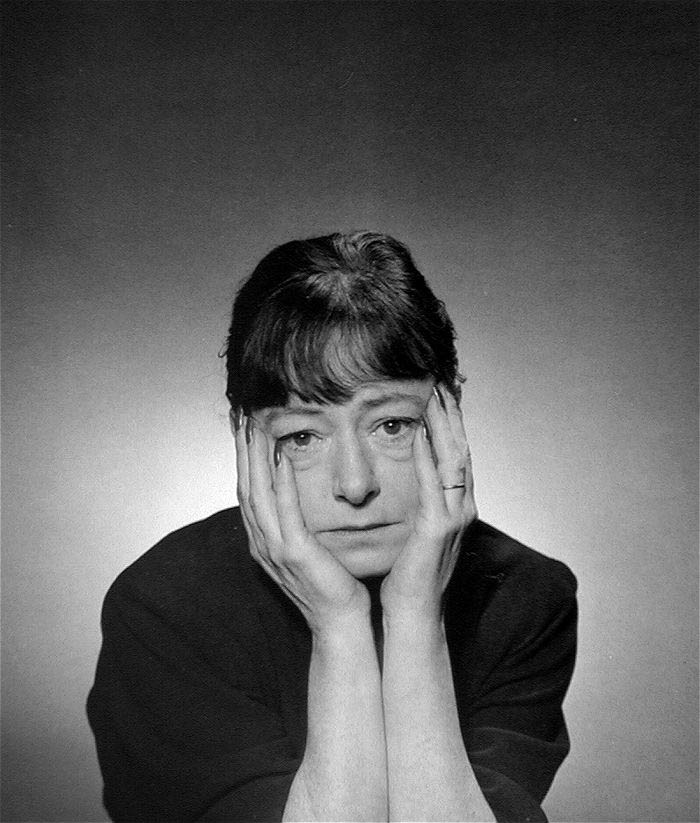
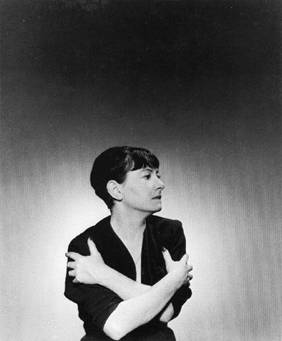
George Platt Lynes took this portrait in 1943. [ courtesy Dorothy Parker’s World Online. ]

Parker used her pen to fight for social justice. She championed feminism, racial equity, and the fight against Fascism. She supported the International Brigade (along with Earnest Hemingway) in their fight against Franco in the Spanish Civil War. In 1936 she helped found the Anti Nazi League. She also joined the Communist Party, an act that got her black listed in the 1950’s.Starting in 1957 she wrote book reviews for Esquire magazine, and in 1959 she was inducted into the American Academy of Arts and Letters.

Parker had a dark side. She was an alcoholic and she attempted suicide on several occasions. In her poem Resume she wrote about suicide:

Razors pain you;
Rivers are damp;
Acids stain you;
And drugs cause cramp.
Guns aren't lawful;
Nooses give;
Gas smells awful;
You might as well live.

On June 7, 1967 Parker died of a heart attack in New York City.

————————————————————-

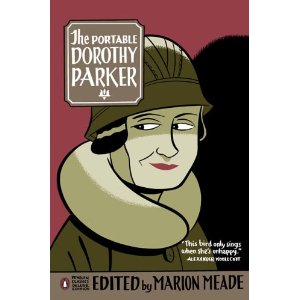
The Portable Dorothy Parker is available on Amazon.com.

Here are some more Dorothy Parker quotes: 

“She runs the gamut of emotions from A to B.”

The only ‘-ism’ Hollywood believes in is plagiarism.

Time wounds all heels.

I’d like to have money. And I’d like to be a good writer. These two can come together, and I hope they will, but if that’s too adorable, I’d rather have money.

Sorrow is tranquility remembered in emotion.

(In 1955) “Hollywood money isn’t money. It’s congealed snow, melts in your hand, and there you are.”

The best way to keep children at home is to make the home atmosphere pleasant, and let the air out of the tires.

One more drink and I’ll be under the the table, two more drinks and I’ll be under the host.

Scratch an actor – and you’ll find an actress.

Upon being told that former US President Calvin Coolidge (known as “Silent Cal” for being very tight-lipped) had died, she quipped, “How can they tell?”

He and I had an office so tiny that an inch smaller and it would have been adultery.

Excuse me, I have to use the toilet. Actually, I have to use the telephone, but I’m too embarrassed to say so.

People ought to be one of two things, young or dead.

On truth: Wit has truth in it; wisecracking is simply calisthenics with words.

“I’d rather have a bottle in front of me, than a frontal lobotomy.”

“This is not a novel to be tossed aside lightly. It should be thrown with great force.”

“You can drag a horticulture, but you can’t make her think.”

“Look at him, a rhinestone in the rough.”

“They sicken of the calm, who know the storm”

“This wasn’t just plain terrible, this was fancy terrible. This was terrible with raisins in it.”


Thought of the Day 8.21.12 Aubrey Beardsley

“No language is rude that can boast polite writers.”

Aubrey Beardsley

[ E ] Frederick Henry Evans - Aubrey Beardsley...

[ E ] Frederick Henry Evans – Aubrey Beardsley (1895) (Photo credit: Cea.)

Aubrey Vincent Beardsley was born on this day in Brighton, England in 1872. Today is the 140th anniversary of his birth.

Beardsley grew up in a middle class family. His paternal grandfather was in trade, but his father, Vincent,  lived on the income from an inheritance from his maternal grandfather (Aubrey’s great-grandfather). As the money from that fund began to run out Vincent worked in London Breweries. Aubrey’s mother, Ellen, gave piano lessons.  Both Aubrey and his sister, Mabel, showed a talent for music as children. The two were displayed as “infant musical phenomenons” in 1884.

He went to Bristol Grammar School and developed a talent for drawing caricatures of his teachers. He had drawing and cartoons published in the school newspaper. He set about illustrating all his favorite books. He illustrated “The Pay of the Pied Piper” for the school’s Christmas show in 1888.

At 17 he started entered the workforce as a clerk  for Guardian Life and Fire Insurance Company, but he found the job unfulfilling. Beardsley wanted a full-time employment as an artist.  With Mabel in tow he made an unannounced visit  Edward Burne-Jones’ studio. Beardsley impressed the famous Pre-Raphaelite painter with his portfolio (which he just happened to have with him,) and Burne-Jones recommended that he attend Westminster School of Art at night. The older man also introduced him to Oscar Wilde, something he later regretted.

English: How Sir Bedivere Cast the Sword Excal...

English: How Sir Bedivere Cast the Sword Excalibur into the Water. Illustration from: Sir Thomas Malory, Le Morte d’Arthur. London: Dent, 1894. Français : How Sir Bedivere Cast the Sword Excalibur into the Water (littéralement « Comment Sir Bedivere jeta l’Epée Excalibur dans l’eau). Illustration tirée de Le Morte d’Arthur par Sir Thomas Malory, London: Dent, 1894. (Photo credit: Wikipedia)

Beardsley was busy in 1893 and 94. He worked steadily on covers and book illustrations (for both books and periodicals) and worked on J.M. Dent’s version of Malory’s Morte Darthur — a 12 volume work that contained over 300 illustrations.  Burne-Jones, his mentor, wasn’t pleased with the work he completed for ‘Arthur’, finding some of the borders filled with vulgar  phallic flowers  and some of the illustrations sloppily done.  In truth, Beardsley had lost interest in the massive project and told Burne-Jones that he had come to hate King Arthur ‘and all mediaeval things’.

The Climax

The Climax (Photo credit: Wikipedia)

"The Peacock Skirt", illustration by...

“The Peacock Skirt”, illustration by Aubrey Beardsley for Oscar Wilde’s play Salomé (1892) (Photo credit: Wikipedia)

Wilde commissioned Beardsley to illustrate the English edition of his play Salome. Beardsley also translated it from the original French.

The cover of the Yellow Book periodical 1890s ...

The cover of the Yellow Book periodical 1890s Downloaded from http://www.library.unt.edu/rarebooks/exhibits/binding/images/yellows.jpg (The cover is by Aubrey Beardsley, d. 1898.) (Photo credit: Wikipedia)

He worked with Henry Harland on the art and literature quarterly The Yellow Book (Beardsley was Art Editor) the same year.

It was Beardsley’s starling black-and-white drawings, title-pages, and covers which, combined with the writings of the so-called “decadents,” a unique format, and publisher John Lane’s remarkable marketing strategies, made the journal an overnight sensation. Although well received by much of the public, The Yellow Book was attacked by critics as indecent. [Victorianweb.org]

In 1895 the Oscar Wilde sodomy scandal errupted, and Beardsley (was one of the many friends) who officially severed ties with the writer. None the less, even though Wilde’s work never appeared in The Yellow Book, there was a ‘perceived link’ between the two men and the publication dismissed the illustrator lest it be similarly  tainted.

Beardsley went to work for a rival publisher of Victorian erotica, Leonard Smithers. The two created a new magazine, The Savoy,  for which Beardsley both illustrated and wrote.  When the Savoy ran until December 1896. Beardsley and Smithers continued to work together with Beardsley illustrating books for other authors in the publisher’s stable, most famously Pope’s The Rape of the Lock and (very explicit) Jonson’s The Lysistrata of AristophanesHe also saw the publication of his own book of illustrations A book of Fifty Drawings.

"The New Star," Illustration by Aubr...

“The New Star,” Illustration by Aubrey Beardsley for The Rape of the Lock (Photo credit: Wikipedia)

His black and white, highly stylized, Art Nouveau illustrations challenged the Victorian notions of what was proper.

Beardsley was only 25 was he died of tuberculosis in 1898.


Thought of the Day 8.20.12 Luciano De Crescenzo

“We are, each of us angels with only one wing; and we can only fly by embracing one another.”

–Luciano De Crescenzo

Luciano De Crescenzo - foto di Augusto De Luca

Luciano De Crescenzo – foto di Augusto De Luca (Photo credit: AUGUSTO DE LUCA)

——————

Confession: I spend way too much time on this guilty pleasure I like to call blogging. The “Thought of the Day”– which started as a single inspirational quote to an email list of friends —  takes waaaaaaay too much time too research and write. Sometimes, like yesterday, I’m so anxious to get-it-finished that I click the PUBLISH button before remembering to proof read it. (sorry about that,Orville! The edited version is now on up.)

I moved “Thought of the Day” over to ritaLOVEStoWRITE in mid June and I decided to make it my Summer Writing Challenge. I switched up the format a little to focus on a quote from someone who is having a birthday, added some biographical information, and (about two weeks in) discovered that WordPress offers copyright free images if you write long enough, so I put those in too (if I don’t like the images I do more research.)

It DOES get me writing. Unfortunately for the characters in the many notebooks on my desk (and for my bank account) it also takes away time from REAL work.

The trick is to [QUICKLY] find an interesting quote from an interesting person who is having a birthday on a given day. Hopefully that person will have some interesting art associated with him/her. Then I go to two or three websites and read about the person, write and edit the post, add the links, tags and categories, and put in the artwork. Grab the”quick link” code, PUBLISH, and go on Facebook and Twitter and let folks know that the new blog post is… errr… posted.

WHY am I telling you all this? Well I’ve been meaning to explain my process for awhile, and… Luciano De Crescenzo dropped this little gift of a quote into my lap.

Luciano is the prefect subject for me. Great quote (lots of great quotes actually, but this one! Bellissimo!)  There’s not a ton of information for me to slog through in the research stage (like there was for good ole Orville — yesterday’s subject.) And I know next to nothing about him, so I’m sure to learn a lot.

So, basically, if I hadn’t written this confessional I’d be done already. 🙂

——————

Luciano De Crescenzo was born on this day  in Naples, Italy in 1928. He is 84 years old.

He has a degree in engineering and worked for IBM before shifting gears and writing about his beloved Naples. His first book was published in 1977 and was titled Cosi Parlo Bellavista (Thus Spake Bellavista.) He has written 20 more books, been translated into 19 languages. His books have sold over 20 million copies.

His natural charm and Italian good looks led him to film in 1980. De Crescenzo has added screenwriter, actor and director to his CV as he  has worked with Italian movie legends from Teo Teocoli and  Isabella Rossellini  to Roberto Benigni.


[For a full list of his his books and movies click here.]

Luciano De Crescenzo, filosofo

Luciano De Crescenzo, filosofo (Photo credit: Wikipedia)


Thought of the Day 8.19.12 Orville Wright

If we worked on the assumption that what is accepted as true really is true, then there would be little hope for advance

— Orville Wright

The Wright brothers patent war

The Wright brothers patent war (Photo credit: Wikipedia)

Orville Wright was born in Dayton, Ohio on this day in 1871. Today is the 141st anniversary of his birth.

Orville was the fourth of five children to Milton and Susan Wright. He was very close to his brother Wilbur, who was four years his senior. The Wrights grew up in Dayton and Iowa.

“We were lucky enough to grow up in an environment where there was always much encouragement to children to pursue intellectual interests; to investigate whatever aroused curiosity.” [–Orville Wright/NASA.Gov]

When they wanted to find out how something mechanical worked they asked their mother. In matters of a religious or intellectual nature they asked their minister father. Their father bought the boys a toy “helicopter” made of paper and bamboo with a cork weight and a rubber band “motor.” The toy ignited their interest in flight.

Of the two, Orville was the mischievous one. While Wilbur was good at school and an earnest student, Orville preferred to hone his skills as a champion bicyclist. It seemed Wilbur was destined to go to college (Yale) but an accident while the boys were playing hockey left him injured. Some one lost control of their hockey stick and it flew out of their hands and struck Wilber, he fell and knocked out his front teeth. A few weeks later he began to have heart palpitations. He withdrew socially, and spent his days reading in the family’s extensive library. He also cared for his mother who was dying from TB.

Wright brothers bicycle

Wright brothers bicycle (Photo credit: nicomachus)

Orville was able to bring his more bookish brother out of his funk. When Orville was 18 (and Wilbur was 22) the brothers started a printing firm with a press they built themselves out of used buggy parts and a damaged tombstone. They began to publish their own weekly paper. The brothers were both cyclist and they repaired bikes for friends. They opened their own bicycle shop, The Wright Cycle Exchange (which later became the Wright Cycle Company ), in 1893 and in 1896 made their own bikes called Van Cleves and St. Clairs.

When Orville came down with typhoid fever Wilber helped nurse him by reading articles about German and French attempts at aviation. The brothers were hooked.  Wilber threw himself into research writing to the Smithsonian Institute requesting their information on aeronautical research. He studied all he could find about pitch, roll and yaw and designed a unique wing warping system. They contacted the US Weather  Bureau and found out where the most windy regions of the country were. They settled on Kitty Hawk which had average wind speeds of 13 mph.

The brothers travelled to Kitty Hawk in 1900 and 1901 testing the glider. They constructed a wind tunnel  to test different wing shapes. In October 1902 with a glider using a new wing design they glided over the sands of Kitty Hawk for 602 feet (a record). They went back to Ohio and worked on an engine propelled flying machine.

First successful flight of the Wright Flyer, b...

First successful flight of the Wright Flyer, by the Wright brothers. The machine traveled 120 ft (36.6 m) in 12 seconds at 10:35 a.m. at Kitty Hawk, North Carolina. (Photo credit: Wikipedia)

On December 14, 1903 the brothers tossed a coin to see who would take the Wright Flyer on its maiden flight. Wilbur won the coin toss. It lasted  just 3 seconds and ended in a minor crash requiring some repairs. On December 17 the flyer was ready again. This time it was Orville’s turn.  He flew for 12 seconds for about 120 feet. The brothers traded off twice more and by the fourth flight of the day Wilbur  was able to fly for 59 seconds  for 852 feet before the plane began to pitch and it hit the ground. None of the flights reached more than 10 feet in altitude that day, so Wilbur wasn’t really hurt.

The Wrights returned to Dayton and established an airfield in a cow pasture called Huffman Prairie. They spend the next two years perfecting their airplane design  and flying skills.  Eventually they won contracts from the US Signal Corp and the French Government. Their flying ability and engineering genius made them famous.

Wilbur died of typhoid fever at the Wright home in Dayton on May 20 1912.

English: Orville Wright, 1928.

English: Orville Wright, 1928. (Photo credit: Wikipedia)

Orville was a founding member of  National Advisory Committee for Aeronautics (the NACA). He served on its board for 28 years  and was elected a member of the National Academy of Sciences in 1936. He died of a heart attack in 1948.


Thought of the Day 8.18.12 Robert Redford

“Why do they have to mess with things that were perfect the first time around?”

Robert Redford

English: Robert Redford in Barefoot in the Park

English: Robert Redford in Barefoot in the Park (Photo credit: Wikipedia)

Charles Robert Redford, Jr was born on this day in Van Nuys, California in 1936. He is 76 years old.

Redford had a comfortable upbringing — his father was an accountant for Standard Oil –but he had a rebellious streak. He did well in sports and played football and tennis for Van Nuys High School. But he was more interested in what was going on outside the classroom than in what was on the syllabus. He got into trouble for drinking and stealing hub caps. He was good enough at baseball to get a scholarship the University of Colorado, but he lost it because of his drinking.  He dropped out of college and went to Europe to pursue painting.

When he returned to the US he met Lola Van Wagenan in New York and the two were married. Redford studied art at the Pratt Institute and then switched to acting at the American Academy of Dramatic Arts. In 1959 he landed his first small role on Broadway in Tall Story. The  Little Moon of Alban followed, and then came his breakthrough role in Neil Simon’s Barefoot in the Park opposite Elizabeth Ashley.  Park was Simon’s longest running Broadway show and Redford revised his role as Paul for the 1967 movie (this time opposite Jane Fonda.)

Cover of "War Hunt"

Cover of War Hunt

1962’s War Hunt marked Redford’s film debut.  The movie tells about a new recruit (Redford) and a war weary psychotic killer named Private Endore  (John Saxon). It was well received both at the box office and by the critics, and was named one of the ten best films in 1962 by the National Board of Review. One of Redford’s co-stars, Sydney Pollack went on to direct him in This Property is CondemnedJeremiah Johnson, The Way We Were, Three Days of the Condor, The Electric Horseman, Havana, and Out of Africa.

The late 50’s and 1960’s also brought a number of television appearances in shows like Playhouse 90, the Twilight Zone and Alfred Hitchcock Presents.

Film poster for Butch Cassidy and the Sundance...

Film poster for Butch Cassidy and the Sundance Kid – Copyright 1969, New Films International (Photo credit: Wikipedia)

He was a solid actor with a very pretty face. After several successful, movies where was a dashing blond guy in a suit, he turned down roles in The Graduate and Who’s Afraid of Virginia Woolf to avoid being typecast.  He opted instead for Butch Cassidy and the Sundance Kid where he played gritty, lovable, outlaw. The movie co-starred Paul Newman.  Newman and Redford hit gold again with The Sting a few years later.

After the box office hits of Butch Cassidy and the Sundance Kid, The Sting, Jeremiah Johnson and the Way We Were Redford could pick and choose his film projects. Some notables (not already mentioned) are: All the President’s Men, The Natural,  and  (the voice over for )A River Runs Through It.

Ordinary People was Redford’s directorial debut. (He did the unimaginable and made Mary Tyler Moore come off as a bitch). Redford won the Best Director Oscar. He hit directorial pay dirt with River, Quiz Show and The HorseWhisperer.  In 2011 he directed The Conspirator.

Robert Redford

Robert Redford (Photo credit: http://dirtywhorelebrity.com/)

He founded the Sundance Institute in 1981 to promote independent film making. The Sundance Film Festival soon followed.


Thought of the Day 8.17.12 Davy Crockett

“Since you have chosen to elect a man with a timber toe to succeed me, you may all go to hell and I will go to Texas.”

–Davy Crockett

Davy Crockett

Davy Crockett (Photo credit: Wikipedia)

David Stern Crockett was born on this day near the Nolichucky River in Greene County, Tennessee in 1786. Today is the 226th anniversary of his birth.

Here’s what I THOUGHT I knew about Davy Crockett…

He was born on a mountain top in Tennessee. He wore a coon skin hat. He looked like either Fess Parker or John Wayne. He killed himself a bear when he was only three. He had a riffle named Ole Betsy. He was “King of the Wild Frontier.” He died in the Alamo.

English: Davy Crockett 1967 Issue, 5c

English: Davy Crockett 1967 Issue, 5c (Photo credit: Wikipedia)

Here’s what I LEARNED about Davy Crockett while researching this Thought of the Day segment…

John and Rebecca Crockett had 9 children, Davy was their 5th. His father taught him how to hunt and shoot (when he was 8 — so that bear probably lived another 5 years.) His father put him in school at 13, but Davy had some trouble with a bully and lasted only 4 days. After he “whupped the tar” out of the class bully  he reckoned he was in trouble with both the teacher and his parents so he ran away. He spent three years in the wilderness before coming home. He didn’t learn to read and write until he was 18. He married his first wife Mary Finley when he was 19 going on 20. They  had three children together, but then Mary passed away. Crockett then married Elizabeth Patton and fathered two more children.

Crockett enlisted in the army in 1813 as a scout  and was stationed in Winchester, Tennessee. He took part in the massacre against the Cree at Tallussahatchee on November 3rd, 1813. He left the  US Army in 1815 as a fourth sergeant. He joined the Tennesee Militia and became a lieutenant colonel.

English: Oil on canvas portrait of Davy Crocke...

English: Oil on canvas portrait of Davy Crockett; original size without frame 76.2×63.5 cm. (Photo credit: Wikipedia)

His folksy demeanor and larger than life frontiersman ways gave him a folk legend status. Crockett was elected to the Tennessee State Legislature  and in 1826  ran for US House of Representatives as a supporter of Andrew Jackson. He  was pro squatters rights and he won a second term. But when he opposed Jackson’s Indian Removal Act  he was defeated for his bid for a third consecutive term. He bounced back in 1832, insisting that he would remain independent of Jackson “I bark at no man’s bid. I will never come and go, and fetch and carry, at the whistle of the great man in the White House no matter who he is.”

When he was defeated in 1835 he decided he’d had enough of backstabbing Washington politics and he joined the fight for Texan Independence.

Cover of "The Alamo"

Cover of The Alamo

He arrived at the Alamo on February 8, 1836. He liked his new environment and his new companions. “I would rather be in my present situation” he wrote in a letter to his daughter, “than to be elected to a seat in Congress for life.” General Santa Anna’s Mexican army laid siege to the make shift fort on February 23. He fought at the Alamo with 189 defenders in San Antonio for 13 days against the much larger Mexican Army. On March 6, in a 20 minute final battle, the fort was over run and Crockett was killed.


Thought of the Day 8.15.12 T.E. Lawrence

“Rebellions can be made by 2 percent actively in the striking force and 98 percent passively sympathetic.”

-T.E. Lawrence

T. E. Lawrence, Lawrence of Arabia

T. E. Lawrence, Lawrence of Arabia (Photo credit: Wikipedia)

Thomas Edward Lawrence  was born on this day in Tremadoc, Caernarvonshire, Wales in 1888.  Today is the 124th anniversary of his birth.

He was the son of Thomas Robert Tighe Chapman, the Baronet of Westmeath, and Sarah Junner a governess for the Chapman children.  A few years earlier T.E.’s  father, having fallen in love with the young governess,  had asked his wife, Edith, for a divorce, when she refused,  he left her and set up house with Junner. They were known as Mr. and Mrs. Lawrence and  had five sons together (T.E. was the second eldest). The family moved several times while T.E. (or Ned as he was known  then) was growing up. Ned and his brothers loved to cycle and sail and explore the countryside. He was very smart, and could read books and newspapers at 4. He studied history at Jesus College, Oxford.

When he was 21 he went to Ottoman Syria and visited 36 crusader castles. He covered 1,100 miles on foot and wrote his thesis ‘The Influence of the Crusades on European Military Architecture – to the End of the XIIth Century.”

He graduated from Jesus College and went on to post-graduate work in mediaeval pottery under a research fellowship for travel by Magdalen College. Lawrence went back to Syria, travelled to Egypt, Palestine and other spots in the Middle East working as a field archaeologist with his friend Leonard Wooley. Lawrence learned the customs and language of the people while he explored the history of the land.

At the outbreak of WWI Lawrence was co-opted into British military intelligence. He and Wooley surveyed the Negev Desert.

English: British Army File photo of T.E. Lawrence

English: British Army File photo of T.E. Lawrence (Photo credit: Wikipedia)

As the War progressed Lawrence began to dress in the long flowing robes of an Arab and  fought along side Emir Feisal to launch a Arab revolt against Germany’s ally, the Ottoman Empire. Feisal and Lawrence lead a guerrilla war in the desert. It took the Turkish government  far more  resources to squash a rebellion of breakaway Arab tribes than it took the British to incite one. Instead of attacking the heavily fortified city of Medina Feisal and Lawrence organized raids on the Hejaz railway.

Lawrence at Aqaba, 1917

Lawrence at Aqaba, 1917 (Photo credit: Wikipedia)

He was wounded several times by both bullets and shrapnel. He was captured in 1916 in Deraa where he was beaten and sexually assaulted. He escaped but the experience left him shattered.

In 1917 he and Feisal led an overland attack on the port city of Akuba. (The town was heavily fortified against a naval attack, but was surprised by an attack from the desert.) In 1918 he led Arab forces in the Battle of Tafileh  (for which he won the Distinguished Service Order  and was promoted.)

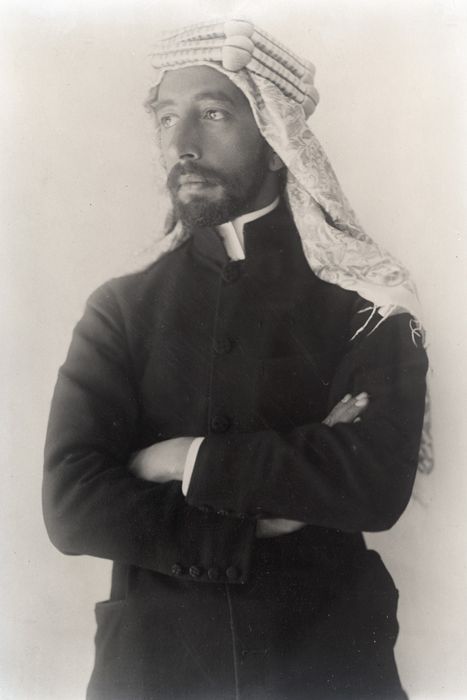
Prince Feisal

Prince Feisal

As the War wound down Lawrence returned to England and advocated for Arab independence. He travelled with Feisal to the Paris Peace Conference in 1919. But the Western powers, having used their Arab pawns in a successful game of chess against Germany and Turkey, divided the Middle East between France and England in the Sykes-Picot Agreement.

American journalist Lowell Thomas and cameraman Harry Chase had spent several weeks in the desert shooting dramatic footage of of Lawrence and (at Lawrence’s insistence) Arab leaders like Feisal. Thomas began to show his “Slide and Lantern” lecture to audiences in the US and England.

“The romantic and adventurous tales of this “mysterious blue eyed Arab in the garb of a prince wandering the streets” were an instant hit. Lowell Thomas’ screen show showed to packed audiences in New York and then London. ” [MPT Laurence of Arabia / Lowell Thomas]

Thomas’ London lecture/film tour ran for 6 months and included a Royal Command Performance. He went on to tour most of the English speaking countries in the world and made millions of dollars.

The legend of Lawrence of Arabia was born.

Cover of "Lawrence of Arabia (Single Disc...

DVD cover for the David Lean movie based on Lawrence’s life.  via Amazon

Lawrence, however was angry over the Paris Peace talks and, although he went to see Thomas’ show, he eschewed the added celebrity. He withdrew from public life to write his memoir, The Seven Pillars of Wisdom

He served, at Winston Churchill’s request, as a political adviser to the Colonial Office to help construct a pro-Arab settlement for the Middle East. He returned, under a pseudonym, to the armed forces, first in the Royal Air Force as John Hume Ross, then in the Army as Thomas Edward Shaw. But the press always found him out.

In May of 1935 Lawrence was riding his motorbike at 100 mph along a country road when he lost control and crashed. He died a few days later.

Lawrence of Arabia on his Brough Superior

Lawrence of Arabia on his Brough Superior (Photo credit: Wikipedia)


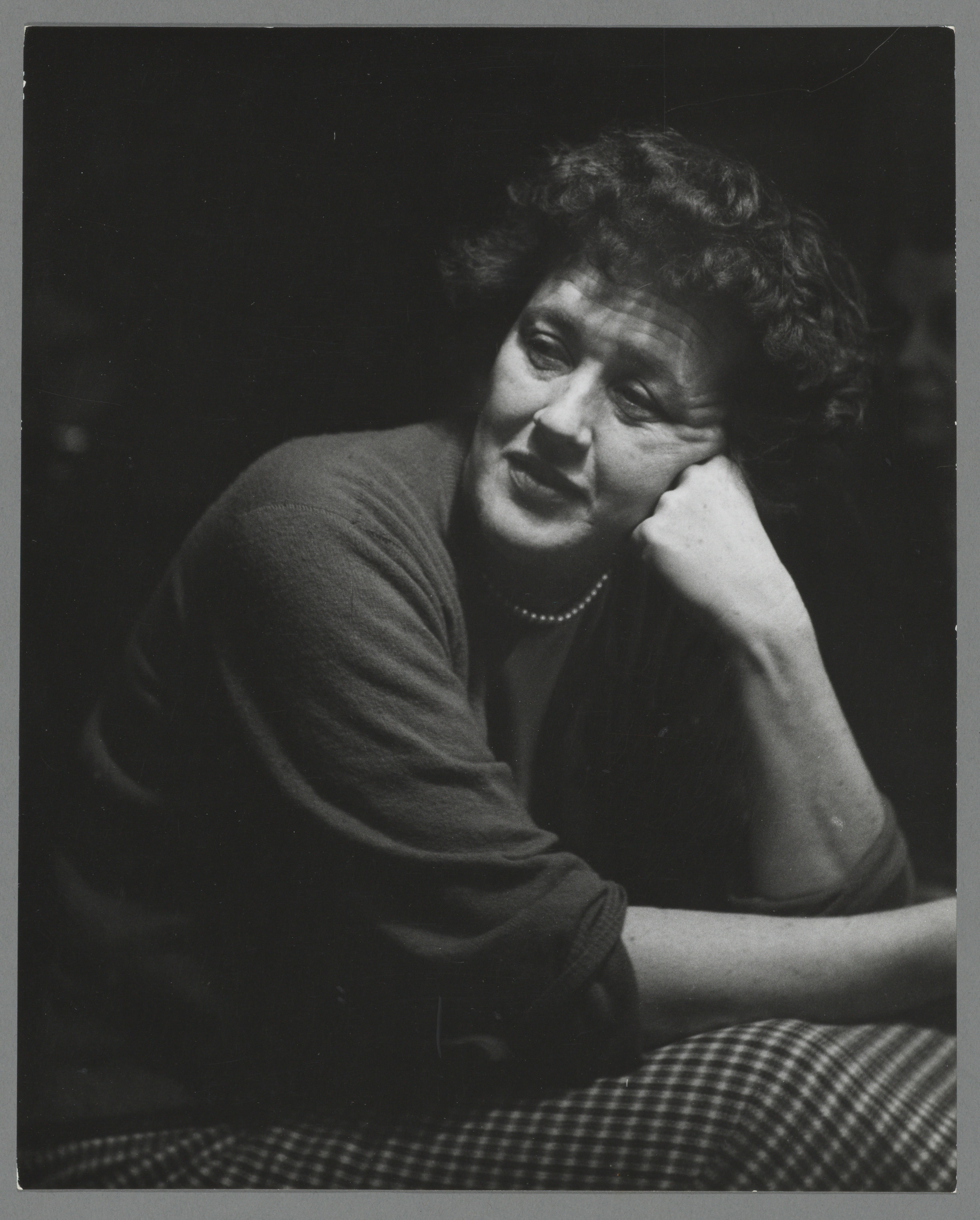
Thought of the Day 8.15.12 Julia Child

“The only time to eat diet food is while you’re waiting for the steak to cook”

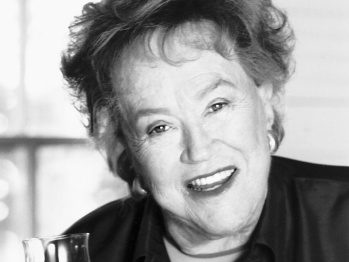
Julia Child

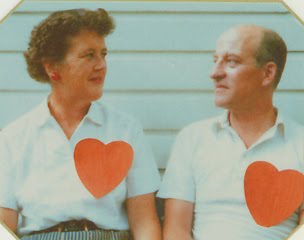
Julia McWilliams was born on this day in Pasadena, California in 1912. Today is the 100th Anniversary of her birth.

“Juju” was the oldest of three children in the McWilliams household. Their father was a real estate magnet, their mother a paper-company heiress and daughter of a lieutenant governor of Massachusetts. Julia was vivacious, athletic (she was 6’2″ by the time she graduated the exclusive Katherine Branson School for Girl’s in San Francisco) and loved a good laugh. She studied writing at Smith College and worked in advertising after graduation.

During WWII Julia tried to join the Woman’s Army Corps, but she was too tall to be a WAC, so she volunteered at the OSS, a government intelligence agency. She started as a typist in Washington but worked her way up to researcher for Top Secret intelligence. She worked overseas in China and Sri Lanka. The SPY Museum in Washington DC included a display on Julia’s time in the OSS as part of their collection. In 2009 they held a special event featuring Child’s Coq au Vin and a talk about the chef’s life as a spy.

While she was in Sri Lanka on assignment she met fellow OSS employee Paul Child and the two began to date. In 1946 Paul and Julia were married. When Paul, now in the US State Department, was assigned to Paris the couple moved to France.

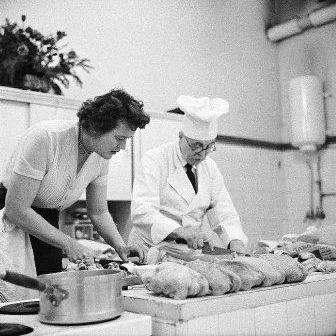
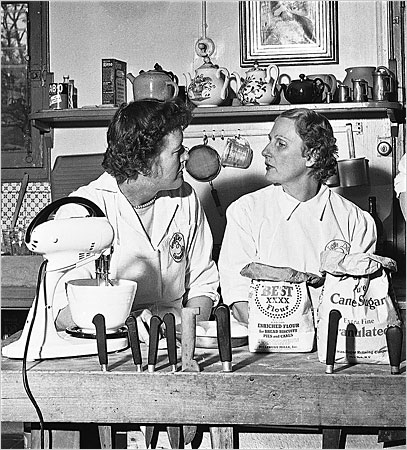
Julia loved food and loved a challenge, so she started to take classes at the Cordon Bleu cooking school. After graduation she worked with her colleagues Simone Beck and Louisette Bertholle to start The School of the Three Gourmands for American women in Paris. The three started to write a cookbook that would translate French cuisine to the American kitchen. After a lot of hard work and many revisions that cookbook became Mastering the Art of French Cooking, a best selling cookbook that changed the way people looked at French cuisine.

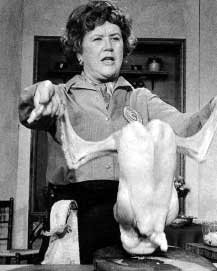
When Julia promoted the book by cooking an omelet on-air  at her local PBS station the response was so good that they offered her  her own cooking show for $50 a pop.  The French Chef premiered on WGBH Boston in 1962. It was the first cooking show on PBS. It ran for 10 years  and was syndicated nation wide. The show won a Peabody and Emmy award (Julia was first educational television personality to receive an Emmy. In her career she was nominated for a total of eight and won three). In 1966 Time Magazine anointed Julia as a culinary goddess by putting her on the cover with the title “Our Lady of the Ladle.” A dozen more TV shows (with bigger budgets) followed. You can still catch reruns of Baking with Julia on PBS. She used 753 pounds of butter during the filming of that series alone.

She wrote sixteen more cookbooks, most  were associated with her television series.

She was awarded the Presidential Medal of Freedom by President Bush in 2003. Her autobiography My Life in France was published posthumously. Her kitchen, designed by her husband Paul, is now installed at the Smithsonian Institute’s National Museum of American History in Washington DC.

Blogger Julie Powell digested the  Mastering the Art of French Cooking, working her way — recipe by recipe– through the  752 page book in one year. She documented the journey in a book, Julie and Julia: 365 Days, 524 Recipes, 1 Tiny Apartment Kitchen (which was then made into a movie, Julie & Julia starring Meryl Streep in 2009.)

“Something came out of Julia on television that was unexpected… it was just magical.  You can’t fake that. You can’t take classes to learn how to be wonderful. Our food culture is the better for it. Our stomaches are the better for it. ” — Julie Powell

This week restaurants are celebrating Julia’s 100th birthday by  featuring some of her most famous recipes.