Pride and Prejudice characters: Charlotte and Mr. Collins

Charlotte & Collins

For a woman who came from a family of clergymen — her father, two brothers and four cousins wore a collar — Jane Austen certainly enjoys poking fun at them in her novels. And Pride and Prejudice’s  Mr. Collins is her most ridiculous clerical caricature. How on earth does sensible Charlotte wind up with such a buffoon?

A clergyman was a professional, just like a lawyer or doctor. He made his living in the pulpit, not at the bar or in the examining room, but he still needed to be a well educated man. Add to that a vicar needed have a high moral standard, be a good speaker and have compassion for the poor and needy.

David Bamber is Mr. Collins  in the 1995 series [Image courtesy BBC Home.]

David Bamber is Mr. Collins in the 1995 series [Image courtesy BBC Home.]

Instead we get conceited, pompous, narrow-minded, silly, self important Mr. Collins. He is a mixture of pride and obsequiousness, a social climber with a very good opinion of himself and his patroness Lady Catherine de Bourgh.

He comes to Meryton to visit the Bennets. As closest male relative he is set to inherit the Longbourn estate on Mr. Bennet’s death. That is something, to his credit, that he feels some guilt over. So he decides to marry one of the five Bennet sisters. Jane is all but engaged to Mr. Bingley so he sets his sites on Lizzie.

Tom Hollander as Mr. Collin in the 2005 movie

Tom Hollander as Mr. Collin in the 2005 movie

Poor Lizzie receives two of the worst proposals  of marriage in literature. The first is from Mr. Collins. He wants to get married because:

  1.  as a clergyman it would set a good example to the parish.
  2.  it will add to his happiness.
  3.  it is “the particular advice “ of Lady Catherine.
  4.  he has a violent affection for Elizabeth

Of course he doesn’t expect a rejected. For one thing he’s SUCH a catch, and for another he’s chosen well. The girls are desperate and he has them in a corner.

He literally can not believe that she declines his offer. Neither can her mother. And for a while Longbourn is long born with strife.

Queue Charlotte.

Charlotte Lucas is plain, pragmatic, good-tempered, funny, sensible, intelligent and unromantic.  She is 27 years old and Lizzie’s intimate friend. She’s such a good friend, in fact, that she comes to the rescue when Lizzie refuses Mr. Collins. She keeps him in good humor by listening to him and, one assumes, diverts him, making sure he’s out of ear shot of the shouting Mrs. Bennet and the giggling Lydia and Kitty.

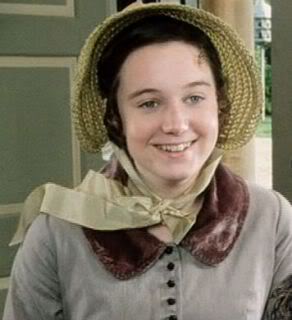
Lucy Scott in the 1995 series

Lucy Scott in the 1995 series

Lizzie thanks her friend,  but “Charlotte’s kindness extended farther than Elizabeth had any conception of; — its object was nothing less than to secure her from any return of Mr. Collins’s addresses, by engaging them towards herself.” With a little encouragement on her part Mr. Collins transfers his ‘violent affections’ form one lady to the next and…

”In as short a time as Mr. Collins’s long speeches would allow, every thing was settled between them to the satisfaction of both… he earnestly entreated her to name the day that was to make him the happiest of men… and Miss Lucas, who accepted him solely from the pure and disinterested desire of an establishment, cared not how soon that establishment were gained.”

Lizzie is surprised that Mr. Collins could so quickly change his mind  and settle on another life partner. But she is astonished that Charlotte could accept his proposal.  Charlotte reminds her however that she is…

”not romantic, you know. I never was. I ask only a comfortable home; and considering Mr. Collins’s character, connections, and situation in life, I am convinced that my chance of happiness with him is as fair as most people can boast on entering the marriage state.”

In some ways Charlotte winds up in same situation as Mr. Bennet in the marriage department. Neither of them respect or love their partners. And both do what they can in daily life to avoid interacting with their spouses Mr. Bennet shuts the door to his library, while Charlotte sits in her parlor and encourages Mr. Collins to work with his bees or visit Lady Catherine.

Claudie Blakley in the 2005 movie

Claudie Blakley in the 2005 movie

At the end of the novel Mr. Bennet writes to Mr. Collins informing him that — despite warning to the contrary by both Collins and Lady Catherine — Lizzie and Darcy are soon to marry. Mr. Bennet advises Mr. Collins to  “Console Lady Catherine as well as you can. But, if I were you, I would stand by the nephew. He has more to give.” If Mr. Collins heeds this wise advice he’d shift his alliance to Darcy who would never put up with the vicar’s toady behavior. That, combined with Charlotte’s even handed temper–which (hopefully) would rub off on Collins–MIGHT make him a more tolerable fool.

—————————————————————–

Here’s a clip of the wonderful Julia Cho and Maxwell Glick in a scene from The Lizzie Bennet Diaries…


Pride and Prejudice characters: Mr. and Mrs. Bennet

Mr. and Mrs. Bennet

It is unlikely that either Mr. or Mrs. Bennet would win any parenting awards. Nor are they they a role model of a happy marriage.

Mr. Bennet is the easier to take of the two. Perhaps because Austen herself liked a witty conversationalist, she gives Mr. Bennet plenty of ironic banter. Sure, he’s got a quip for every idiotic thing that comes out of Mrs. Bennet’s mouth, and he puts down his daughters with unsettling regularity, but he’s on our girl Lizzie side of things. And when he does come out with a  snarky remark it isn’t said in a shrill scream. He’s calm — to the point of being detached. And if things get too hectic he just shuts the door to his man cave, er, I mean LIBRARY and lets the others put out the fire.

Benjamin Whitrow played Mr. Bennet in the 1995 series [Image courtesy BBC Home.]

Benjamin Whitrow played Mr. Bennet in the 1995 series [Image courtesy BBC Home.]

Mrs. Bennet on the other hand is constantly in emergency mode. She’s over excited about everything… from the arrival of the militia in Meryton to Jane’s budding romance. Her mood swings are so intense that she’s either quite shallow or bipolar. If Mr. Bennet is disengaged from his daughter’s lives (specifically the part of his daughter’s lives that involves them getting a husband) she is hyper involved. And while Mr. Bennet hides in his library, Mrs. Bennet prefers to take center stage. In case of emergency she succumbs to her palpitations and flutterings and retires to her lounge to be waited on hand and foot.

Both of them play favorites while neglecting to educate their daughters and have chosen an economic course that requires the girls to marry well or face lives of genteel poverty which their upbringings have made them entirely unprepared for.” [ Story and History; A guide to Everything Jane Austen ]

Mr. Bennet favor’s Lizzie with her sharp tongue and sense of irony. He has a soft spot for Jane who is so sweet he has a hard time finding anything negative about her. But by the time we get to Mary his patience wears thin. He makes fun of her zealous nature and doesn’t support her earnest attempts to exhibit. He has all but given up on Kitty and Lydia  and calls them the two silliest girls in the country.

Alison Steadman is Mrs. Bennet  in the 1995 series [Image courtesy BBC Home.]

Alison Steadman is Mrs. Bennet in the 1995 series [Image courtesy BBC Home.]

Mrs. Bennet admires Jane’s beauty and good nature, but she really dotes on Lydia (her twin in temperament and love of all things in a Red Coat.) Her second daughter is a source of anxiety for her– especially when she refuse a perfectly good offer of marriage from Mr. Collins.

Austen describes the couple at the end of the first chapter…

Mr. Bennet was so odd a mixture of quick parts, sarcastic humour, reserve, and caprice, that the experience of three and twenty years had been insufficient to make his wife understand his character. Her mind was less difficult to develope. She was a woman of mean understanding, little information, and uncertain temper. When she was discontented, she fancied herself nervous. The business of her life was to get her daughters married; its solace was visiting and news.

They married young. Mr. Bennet…

captivated by youth and beauty, and that appearance of good humour which youth and beauty generally give, had married a woman whose weak understanding and illiberal mind had, very early in their marriage, put an end to all real affection for her. Respect, esteem, and confidence had vanished for ever; and all his views of domestic happiness were overthrown. … To his wife he was very little otherwise indebted, than as her ignorance and folly had contributed to his amusement.

The novel is almost as much about economics as it is about love. Longbourn, the Bennet’s family estate is entailed away to the nearest male heir upon the untimely demise of Mr. Bennet.

When first Mr. Bennet had married, economy was held to be perfectly useless; for, of course, they were to have a son. This son was to join in cutting off the entail, as soon as he should be of age, and the widow and younger children would by that means be provided for.

But they didn’t have a son, so Mr. Collins is set to inherit the estate.

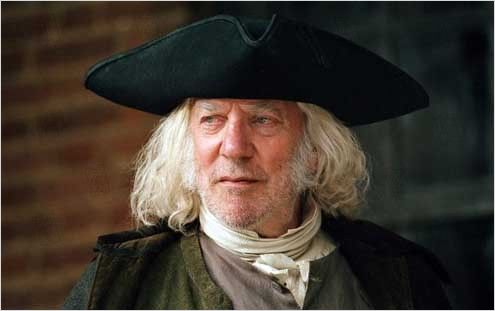
Donald Southerland in the 2005 Movie

Donald Southerland in the 2005 Movie

Even if they HAD had a son there’s no guarantee that  Junior would have agreed to end the entail. He could have wound up like John Dashwood from Sense and Sensibility and turned his back on his family financially. Given the hands off attitude the Bennets employed with their children’s education Junior could have been as feckless and week minded as Lydia. I doubt that the estate could have survived long in that case.  A son would not have necessarily solved the problem. Better if the Bennets had economized through the years.

English: C. E. Brock illustration for the 1895...

English: C. E. Brock illustration for the 1895 edition of Jane Austen’s novel Pride and Prejudice (Chapter 13 ): “Why, Jane — you never dropt a word of this; you sly thing! ” Français : C. E. Brock illustration pour l’édition C. E. Brock illustration pour l’édition 1895 du roman de Jane Austen Pride and Prejudice (Chapitre 13) Mrs Bennet est sûre que Bingley vient diner (alors qu’il s’agit de Mr Collins) (Photo credit: Wikipedia)

Better yet if the girls were better educated. If the girls  were really to be “marriage market” ready they should have had a governess or some one who insisted they learn to drawl (one of Caroline/Darcy’s requirements for a refined lady) read the classics, learn foreign languages, dance and play an instrument.  Only two of them can play an instrument, and they don’t play all that well.

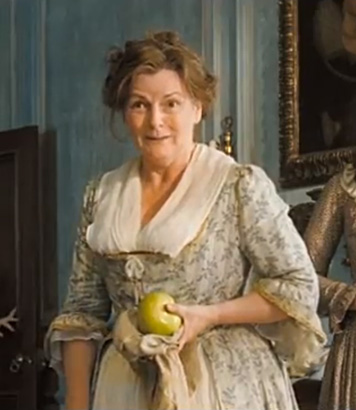
Brenda Blethyn in the 2005 movie

Brenda Blethyn in the 2005 movie

Given the economic uncertainty for the girls Mrs. Bennet should have at least prepared them with a more domestic education. At dinner when Mr. Collins wants to compliment which ever of his fair cousins has prepared the meal, Mrs. Bennet informs him that they keep a cook, “and that her daughters had nothing to do in the kitchen.” But maybe the girls should learn a little about cooking. Not to go into service but to be able to run their own kitchen as Lydia certainly will have to. Lady Catherine brags at finding a  governess position for some young ladies she knows. That’s another profession the girls could be readying for.
But neither parent seems at all interested in pushing them toward preparing for the future beyond winning the husband lottery.

Still, Mr. and Mrs. Bennet add a lot of humor to the novel (even if it is self/co inflicted.) And, given that I’ve been known to be sarcastic and I’m a lot closer to their age then Lizzie or Jane’s age I’ve got a soft spot for them. Perhaps they wont win Parent of the Year, 1813, but the novel just wouldn’t be the same with out them.


Catching up on P&P Characters

I hope you’ve been enjoying this week’s look Pride and Prejudice characters.
Coming up we’ve got:

  • Mr. and Mrs. Bennett
  • Charlotte and Mr. Collins
  • Jane and Bingley
  • And, of course Darcy and Elizabeth

I’d love to hear from you about your favorite characters (or least favorites) and why? When did you discover Austen? What is your favorite adaptation? And how do the characters speak to you in your modern life?

Cheers, Rita

Image


Pride and Prejudice Characters: Lydia and Wickham

Today is the third installment in a week’s worth of Pride and Prejudice character studies leading up to next Monday’s 200th anniversary of the Austen novel.
 
Lydia and Wickham

Was there ever a sillier, more insipid, selfish little sister than Lydia Bennet? One would need a thesaurus to accurately describe how crass she is… if Austen hadn’t painted such a wonderful picture for us.

On the kind side of the Lydia spectrum I could say she had an exuberant spirit. From there the rainbow of Lydia character trait runs from “Vain, ignorant, idle, and absolutely uncontrolled!” to selfish, reckless, and just a little bit mean. (Though she’s got nothing on Caroline Bingley in the Mean Girl department.)

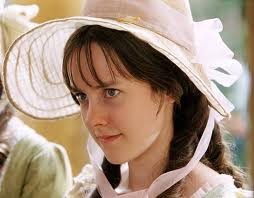
Jena Malon took on the Lydia role for the 2005 movie

Jena Malon took on the Lydia role for the 2005 movie

Although Jane and Lizzie attempt to “check the imprudence” of Kitty and Lydia their efforts have little effect. The girls are indulged by their mother but are …

“always affronted by their advice… Lydia, self-willed and careless, would scarcely give them a hearing….”

Lydia has no filter. She says what ever thought floats across her vapid mind, no matter how rude or inappropriate it might be.

Julia Sawalha in the 1995 version of Pride and Prejudice [Image courtesy BBC Home]

Julia Sawalha in the 1995 version of Pride and Prejudice [Image courtesy BBC Home]

“Lord” she tells Jane, “how ashamed I should be of not being married before three and twenty!” Likewise she does what ever she wants without regard for decorum or consequence.

Mary Kate Wiles embodies the 2012/13 party girl Lydia in the Lizzie Bennet Diaries VLOG [Image courtesy @TheLydiaBennett Twitter page]

Mary Kate Wiles embodies the 2012/13 party girl Lydia in the Lizzie Bennet Diaries VLOG [Image courtesy @TheLydiaBennett Twitter page]

She is…

“the most determined flirt that ever made herself and her family ridiculous. A flirt, too, in the worst and meanest degree of flirtation; without any attraction beyond youth and a tolerable person; and from the ignorance and emptiness of her mind, wholly unable to ward off any portion of that universal contempt which her rage for admiration will excite.”

Lizzie warns their father not to allow Lydia to go to Brighton, but Mr. Bennet, knows that there will be no peace at home if he doesn’t concede. He justifies the decision by saying…

“Colonel Forester is a sensible man, and will keep her out of any real mischief; and she is luckily too poor to be an object of prey to any body. At Brighton she will be of less importance, even as a common flirt, than she has been here. The officers will find women better worth their notice. Let us hope, therefore, that her being there may teach her her own insignificance. At any rate, she cannot grow many degrees worse without authorizing us to lock her up for the rest of her life.”

Lydia, of course, does not disappoint. She manages to do the least appropriate thing possible… she runs off, unmarried with a man. That man is George Wickham and it takes some doing to get the couple to the altar.

A triumphant Lydia returns home with her husband in the 1940 movie. With Ann Rutherford (Lydia), Edward Ashley (Wickham), Maureen O'Sullivan (Jane), and Greer Garson (Lizzie).

A triumphant Lydia returns home with her husband in the 1940 movie. With Ann Rutherford (Lydia), Edward Ashley (Wickham), Maureen O’Sullivan (Jane), and Greer Garson (Lizzie).

When they return to Longbourn …

“Lydia was Lydia still; untamed, unabashed, wild, noisy, and fearless. She turned from sister to sister, demanding their congratulations…”

She even insists that Jane take walk behind her as she is a married woman now, and therefore holds a higher rank.

Peeya Rai Chowdhury and Daniel Gilles as Lakhi Bakshi (Lydia) and George in Bride and Prejudice

Peeya Rai Chowdhury and Daniel Gilles as Lakhi Bakshi (Lydia) and George in Bride and Prejudice

“I find Lydia to be tiresome” says Austen fan Mary Baldauf Wiedel, “and Wickham is a true cad.” She adds that the two are ”fairly unlikable characters, although no one deserves to be with Wickham.”

Sometimes when I’m rereading the novel* or am watching one of the adaptations I try to remember back to my original impressions of Wickham. Was I suspicious? Did I like his easy manner and winning smile as much as the ladies of Longbourn? Or did I know right away that he was trouble?

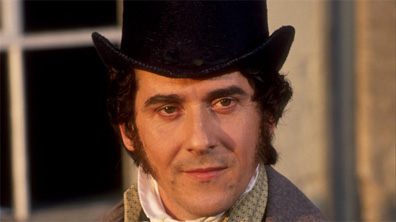
Adrian Lukis as Wickham in the 1995 series.

Adrian Lukis as Wickham in the 1995 series.

Not even Lizzie gets an accurate bead on Wickham’s character at first. She spends about a third of the book enjoying his company and listening to his poisonous tales about Darcy.

George Wickham is handsome. He has “a fine countenance, a good figure, and very pleasing address.” An officer in the militia, Wickham makes quite a dashing figure in his regimentals. But Lizzie observes that he has something more in his “person, countenance, air, and walk” than this companions. And he could make the “commonest, dullest, most threadbare topic” interesting.

Rupert Friend in the 2005 Movie [Image courtesy: AustenAuthors.net]

Rupert Friend in the 2005 Movie [Image courtesy: AustenAuthors.net]

He may not be rich, but, as he explains, that is not his fault. Its Darcy’s. Darcy has cruelly denied Wickham the church living promised to him. So now he must make his way as an “honest” soldier.

In reality he’s a gambler, a womanizer, a slacker and a liar. He uses his good looks and his social ease to manipulate people. He even manipulates Lizzie, who is usually a keen judge of character, into taking his side against Darcy. He leaves a trail of debt and broken hearts where ever he goes.

Wes Aderhold updates Wickham in the Lizzie Bennet Diaries

Wes Aderhold updates Wickham in the Lizzie Bennet Diaries

So why does Wickham elope with Lydia? For her part it is probably a romantic lark, an adventure. She seldom looks past the moment and he is fulfilling her immediate needs. But what does she have to offer him? Not money. Not status. Not love. My guess is that he initially does it as a lark too. Lydia is pretty and is certainly willing to run away with him. He can always leave her when he gets tired of the situation and travel to another country to find a rich wife. But, then he realizes that he can make a little money off this deal. When Darcy finds them he realizes he’s hit pay dirt. If Darcy cares enough to come looking for Lydia he’ll care enough to pay Wickham’s gambling debts and pay his overdue tavern bills and more.. All he has to do is marry one of the silliest girls in the country.

Ahhh marital bliss. [Image courtesy BBC]

Ahhh marital bliss. [Image courtesy BBC]

———————————————————————————

* for the record… I am not in a CONSTANT state of rereading one or the other of Ms. Austen’s novels. I just thought you should know.

The LY-Di-A Bennet  on Lizzie Bennet Diaries has her own VLOG. Here’s a taste:


Pride and Prejudice Characters: Lady Catherine & Caroline part 1

Today is the second installment in a week’s worth of Pride and Prejudice character studies leading up to next Monday’s 200th anniversary of the Austen novel.

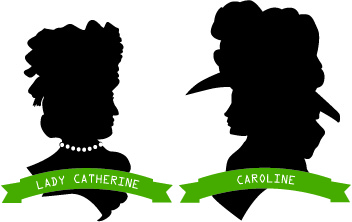
Lady Catherin and Caroline

If there is a truth universally known in the world of Austen it is that the rich play by a different set of rules than the poor or middle class. Lady Catherine de Bourgh and Miss Caroline Bingley are two of her richest women and they play to win.

Lady Catherine was born to her title. Her father was an Earl, so  “She is referred to as “Lady” followed by her first name because she is the daughter of a higher nobleman” [Pemberly.com]— (as was her sister Lady Anne Darcy, Darcy’s mother.) She married well, taking for her husband the landed Sir Lewis de Bourgh. She has one daughter, the sickly Anne de Bourgh, whom she hopes to marry off of to Darcy. (It was”the favourite wish of his mother, as well as of her’s. While in their cradles,” they “planned the union.” )

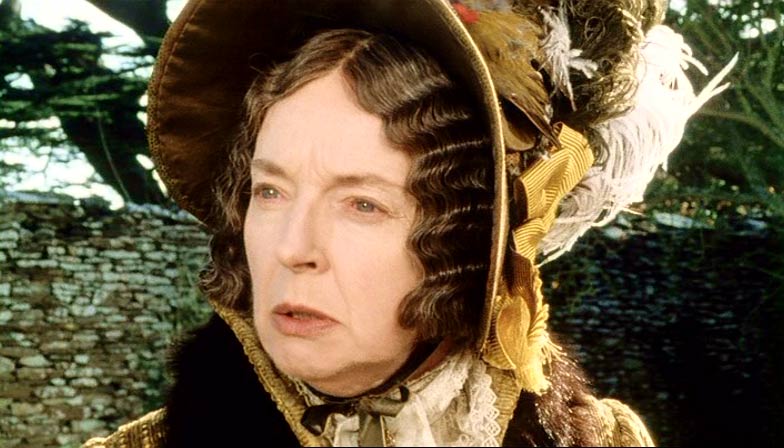
Barbara Leigh Hunt played the ultimate Lady Catherine in the 1995 Pride and Prejudice series with Colin Firth and Jennifer Ehle.

Barbara Leigh Hunt played the ultimate Lady Catherine in the 1995 Pride and Prejudice series with Colin Firth and Jennifer Ehle.

She is from old money and represents the old way of doing things. She follows the rules of society strictly and “likes to have the distinction of rank preserved.” [Pride and Prejudice] In fact she spends most of her time CONDESCENDING to her inferiors and giving them advice. Staying in Lady Catherine’s good graces has its benefits — you might be offered a ride home in the Barouche — but it is hard to hold one’s tongue. The woman had an…

opinion on every subject in so decisive a manner as proved that she was not used to have her judgment controverted. She enquired into Charlotte’s domestic concerns familiarly and minutely, and gave her a great deal of advice as to the management of them all;…  Elizabeth found that nothing was beneath this great lady’s attention, which could furnish her with an occasion of dictating to others. [Pemberly.com quote from Pride and Prejudice]

She is a large, imposing woman who may have once been handsome. “…Whatever she said, was spoken in so authoritative a tone, as marked her self-importance…” [Pride and Prejudice] She is not used to people disagreeing with her. So she’s surprised when Lizzie answers her personal questions candidly.

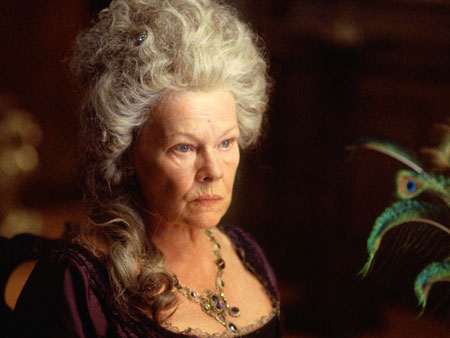
    Dame Judy Dench took on the role for the Kiera Knightly movie version of P&P

Dame Judy Dench took on the role for the Kiera Knightly movie version of P&P

I’ll give Lady Catherine one thing– for being such a traditionalist she represents a progressive, for the time, position on woman’s property rights.

Your father’s estate is entailed on Mr. Collins, I think. For your sake, I am glad of it; but otherwise I see no occasion for entailing estates from the female line. [Pride and Prejudice]

By actively seeking an eligible partner for her sickly daughter she is attempting to secure Anne’s future by getting a strong husband to run the estate. . “It’s ironic”, says Karen Hornig, of JASNA Maryland, that “one of the least liked characters in the novel is the one established figure who has the most progressive view with respect to women inheriting property and fortune.”

End of Part One go to Part Two


Pride and Prejudice Characters Lady Catherine and Caroline part 2

PART 2

Lady Catherin and Caroline

Lady Catherine (acting for Anne) isn’t the only one hoping to get Darcy down the aisle. Caroline Bingley would like nothing better than to snag Mr. D..

He’s rich — much richer than her brother — and he comes from old money with a landed estate. Caroline’s rich too, she has 20,000 pounds. But the Bingley’s money comes from Trade. They don’t even have an estate — which is why Charles rents Netherfield in the first place. Buying an estate would raise their rank, but Charles has yet to get around to doing so.

Darcy is uncomfortable around strangers — advantage Caroline. She is the only single woman of his station in the area. Although she, and Mrs. Hurst (her sister), proclaim Jane to be a sweet girl, she’s quick to cut down every one and everything else in Meryton. It’s kind of schtick.

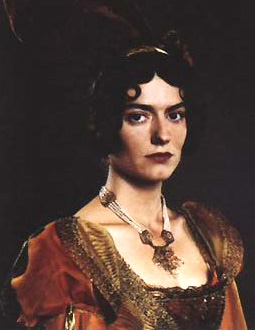
Caroline from the TV series

Caroline from the TV series

What she intends as wit comes off as snobbery. At first Darcy plays along. But by the time Lizzie is staying at Netherfield (while Jane recovers from her cold) he has had enough.

Eliza Bennet,” said Miss Bingley…`is one of those young ladies who seek to recommend themselves to the other sex by undervaluing their own, and with many men, I dare say, it succeeds. But, in my opinion, it is a paltry device, a very mean art.”

“Undoubtedly,” replied Darcy, to whom this remark was chiefly addressed, “there is meanness in all the arts which ladies sometimes condescend to employ for captivation. Whatever bears affinity to cunning is despicable.”

“Caroline was probably a more of a humorous figure at the time the book was written.” Says Karen Hornig, “She is the embodiment of the snobbery of the nouveau riche.  Her family is not landed gentry… and yet she holds herself out as superior to the Bennets.  The irony of her disdain for the Gardiners (also in trade) would not have been lost on contemporary readers of the novel.”

The tables have definitely turned on her by the time every one arrives at Pemberly, but poor Caroline can not seem to keep her foot out of her mouth. Intending to discompose Lizzie she brings up the militia, and by implication, Wickham. But that only serves to alarm Darcy on his sister’s part. Caroline’s scheme backfires and “The very circumstance which had been designed to turn his thoughts from Elizabeth, seemed to have fixed them on her more, and more cheerfully.”

Austen  uses both characters to ding Darcy’s high-handed pride. In the famous letter he points to Lizzie’s family’s “total want of propriety” but some of HIS family and friends are just act just as inappropriately.

Perhaps Austen is being severe upon the these two wealthy members of her own sex, but some one has to be the bad guy.  And as a reader it is delicious to see these two manipulative, snobby women loose the game, even when they are playing by their own rules.

Click here for Part 1


Pride and Prejudice Characters : Mary and Kitty

Today we start a week’s worth of Pride and Prejudice character studies in anticipation of next Monday’s 200th anniversary of the Austen novel.

Mary & Kitty 1

If you are reading this I doubt that I’m giving anything away by saying that at the end of Pride and Prejudice  three out of the five sisters are married. Two, Mary and Kitty, remain at unwed.

No surprise there. Mary and Kitty are practically throw away daughters in the Bennet household. When Austen introduces the family in Chapter One we find out that Lizzie, the clever one, is Mr. Bennet’s favorite, that Jane is the pretty one and that Lydia is the good-humoured one.

The remaining girls finally get a mention in Chapter Two. Poor Kitty has the misfortune of coughing when Mrs. Bennet is in need of something to be vexed at. A little later when  Mr. Bennet introduces Mary as “a young lady of deep reflection he is not giving her a compliment. He’s asked Mary a question and before she can frame a sensible answer — and God forbid she not give him a sensible answer — he cuts her off with “While Mary is adjusting her ideas… let us return to Mr. Bingley.”

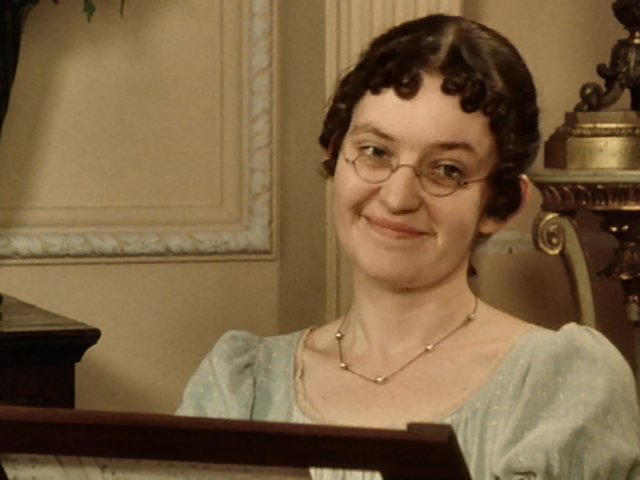
Polly Maberly was Kitty in  the Colin Firth / Jennifer Ehle version of P&P

Polly Maberly was Kitty in the Colin Firth / Jennifer Ehle version of P&P

Mary is bookish and plain. ”I should infinitely prefer a book.”  She applies herself to the piano — she’s the only sister who practices — but doesn’t have much in the way of natural talent. She reads moral books and sermons but only seems to pull the harshest lessons from them. So when Lizzie mentions “Pride” Mary has this  little reflection on the subject…

“Pride… is a very common failing… human nature is very prone to it… Vanity and pride are different things, though the words are often used synonymously. A person may be proud with out being vain. Pride relates more tour opinion of ourselves, vanity to what we would have others think of us.” With pompous homilies like that Mary is hard to take.” [Pride and Prejudice]

Still, why does Austen paint Mary as such a looser? She fits the model of what a Regency young lady should be better than any of her sisters after all. … she’s highly moral, she’s willing to exhibit her talents, and she’s demure in social situations. The poor girl can’t help that she’s awkward and unattractive.

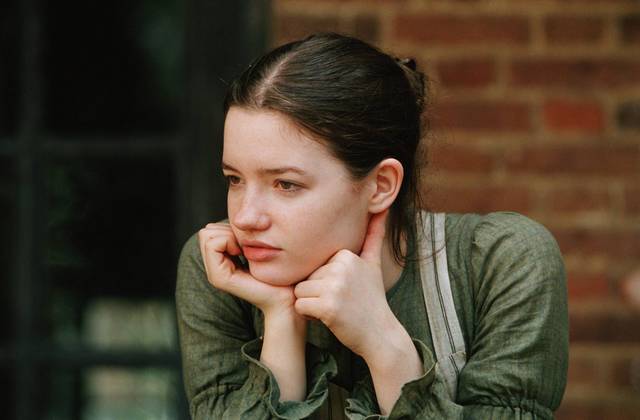
Talulah Riley played Mary in the Kiera Knightly version

Talulah Riley played Mary in the Kiera Knightly version

Maybe Austen needs a foil for her more likable, more interesting characters — and until Mr. Collins comes along that foil is Mary. But scratch deeper and perhaps Austen, the genius and keen social observer, is reflecting a little bit of the human dynamic. Doesn’t every large family have its small jealousies and regrets. Here is the middle daughter feeling overwhelmed by her older sisters’ beauty and wit, and over shadowed by her younger sisters’ vivacity and love of life. Mary isn’t the last middle sister to feel like she was drowning in a vortex of better, cuter, funnier siblings. No wonder she strikes a chord of sympathy and kinship with so many readers.

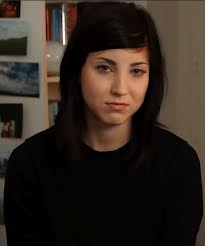
Briana Cuoco plays Mary in The LIzzie Bennet Diaries video blog.

Briana Cuoco plays Mary in The LIzzie Bennet Diaries video blog.

We know at the end of the novel that Mary stays at home, but she is “Obliged to mix more with the world”. Since she is “no longer mortified by comparisons between her sisters’ beauty and her own” her self worth improves and she becomes generally easier company.


CatherineBennet2

Polly Maberly as Kitty in the Colin Firth / Jennifer Ehle version

Mrs. Bennet dotes on her youngest, Lydia. And Lydia, spoiled beyond redemption, has grown up wild and unrestrained. Kitty, no doubt, sees what her younger sister gets away with, and, in an attempt to earn some of her mother’s admiration and love joins in on the flightiness. Her father thinks even less of Kitty than he does of Mary. He is happy to lump her together with Lydia. [Indeed, the Lydia/Kitty “lump” is so strong that Kitty is usually the first Bennet sister cut from an adaptation as unnecessary.]

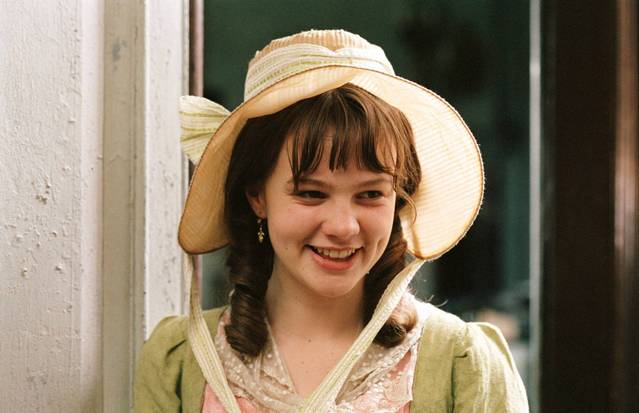
Carey Mulligan was Kitty in the Kiera Knightly version

Carey Mulligan was Kitty in the Kiera Knightly version

Kitty feels keenly the injustice of Lydia’s being invited to Brighton as Mrs. Foster’s particular friend. Kitty is two years older and Lydia has, once again, jumped rank. What’s worse when Lydia runs off with Wickham it seems Kitty is the one who bears the brunt of the punishment. Lydia has escaped with her Redcoat. But Kitty has to put up with her father’s wrath…

“YOU go to Brighton. I would not trust you so near it as Eastbourne for fifty pounds! No, Kitty, I have at last learnt to be cautious, and you will feel the effects of it….” [Ibid]

At the end of the novel we learn that

“Kitty, to her very material advantage, spent the chief of her time with her two elder sisters. In society so superior to what she had generally known, her improvement was great.” [Ibid]

With out Lydia (or Mrs. Bennet) around to influence her she becomes “less irritable, less ignorant and less insipid.”

Austen’s nephew James Edward Austen-Leigh’s book A Memoir of Jane Austen (1870) gave further details on how the Author envisioned life for Mary and Kitty post novel. He wrote that “She would, if asked, tell us many little particulars about the subsequent career of some of her people.” Kitty was satisfactorily married to a clergyman near Pemberley. While Mary obtained nothing higher than one of her uncle Philip’s clerks.

Kitty is played by an actual kitty in the Lizzie Bennet Diaries. She has her own Twitter account.

Kitty is played by an actual kitty in the Lizzie Bennet Diaries. She has her own Twitter account.


Let the Austen-ing begin…

One week to go before the 200th Anniversary of the publication of Pride and Prejudice!

Jane's silo 2

To lead up to this “Austentatious” event we’ll be taking a look at the novel’s characters this week.

Next MONDAY, JANUARY 28th is the deadline for  the super fun, creative, Jane Austen “Essay” Contest. I’m really looking forward to reading/viewing your unique takes on the novel. Send you entries to: ritaLOVEStoWRITE@gmail.com

—————————————————————————

So get your creative juice flowing for the Jane Austen “Essay” Contest to celebrate the 200th anniversary of Pride and Prejudice.

Deadline: 28 January 2013

THIS JUST IN: New prize — just for entering…the first 25 people who send in an entry will receive a cool refrigerator magnet like this brand new Austen Neon magnet…

[TM ritaLOVEStoWRITE]

[TM ritaLOVEStoWRITE]

Any one can participate!  Couple of RULES here:

  1. TRY and keep it under 1200 words please.
  2. The “essay” should be Pride and Prejudice centric.
  3. Please submit your “essay” in English.
  4. Have fun with it!
  5. Oh, and no pornography == THIS is Austen after all!

English: Français : Une gravure de 1833 illust...

Prizes include… All entries will be published in an upcoming special edition of the award-winning ritaLOVEStoWRITE blog. All entries will receive a participation banner for your blog. The top three entries will receive a special “Finalist” banner for their Blog Page, and the top entry will win a Darcy mug! (Please make sure to include an email contact — which I will remove before posting so the whole world doesn’t see it.)

Deadline: 28 January 2013 (That’s the anniversary date of the novel’s publication)

*I seriously encourage you to think outside the box. For you illustrators out there… how about some character studies? Are you a playwright? Why not treat us to a re-imagined scene or two?… This should be a fun expression of your love for Austen and Pride and Prejudice. Don’t be afraid of a little well written/thought out fan fiction. (But no vampires, please.)

AND … Although I’m not going to snark  your intellectual property I strongly suggest you throw a copyright on all your original material in case any one else takes a liking to it.


Buzz Aldrin 1.20.13 Thought of the Day

“Beautiful, beautiful, magnificent desolation.”–Buzz Aldrin

Aldrin on the Moon [Image courtesy: Buzz Aldrin.com]

Aldrin on the Moon [Image courtesy: Buzz Aldrin.com]

Edwin EugeneBuzzAldrin, Jr. was born on this day in Montclair, New Jersey in 1930. He is 83 years old.

Aldrin’s father was a Colonel in the Air Force, an aviation pioneer and a Doctor of Science graduate from MIT. His mother, whose maiden name was, appropriately enough, Moon, was the daughter of an Army Chaplain. He had two older sisters, the younger of whom couldn’t pronounce brother, instead she said “Buzzer.” That was shortened to Buzz.

[Image courtesy: Buzz Aldrin.com]

[Image courtesy: Buzz Aldrin.com]

He was offered a full scholarship to MIT, but turned it down, choosing instead to enter West Point Military Academy. He graduated third in his class.

He then joined the Air Force where he flew F86 Sabre Jets in 66 combat missions in Korea, shot down two MIG-15′s, and was decorated with the Distinguished Flying Cross.  After a tour of duty in Germany flying F100’s, he went on to earn his Doctorate of Science in Astronautics at MIT and wrote his thesis on Manned Orbital Rendezvous. [BuzzAlrdrin.com]

He joined NASA as part of the third group of astronauts. His expertise on docking techniques earned him the nickname “Dr. Rendezvous”

The docking and rendezvous techniques he devised for spacecraft in Earth and lunar orbit became critical to the success of the Gemini and Apollo programs, and are still used today.  He also pioneered underwater training techniques, as a substitute for zero gravity flights, to simulate spacewalking. [Ibid]

[Image courtesy: Buzz Aldrin.com]

[Image courtesy: Buzz Aldrin.com]

During his Gemini 12 Mission he “performed the world’s first successful spacewalk” [Ibid].

In July of 1969 he landed on the Moon with Neil Armstrong while Michael Collins orbited over head during the Apollo 11 Mission. Aldrin and Armstrong   became “the first two humans to set foot on another world. They spent 21 hours on the lunar surface and returned with 46 pounds of moon rocks.” [Ibid]

Image Courtesy: NASA]

Image Courtesy: NASA]

Although he has since retired from NASA he remains a tireless advocate for Space exploration, especially the exploration of Mars. He has written a children’s book, an autobiography, and two space based science-fact-fiction novels.

[Image courtesy: Buzz Aldrin.com]

[Image courtesy: Buzz Aldrin.com]

At the passing of Neil Armstrong he wrote:

Whenever I look at the moon I am reminded of that precious moment, over four decades ago, when Neil and I stood on the desolate, barren, yet beautiful, Sea of Tranquility, looking back at our brilliant blue planet Earth suspended in the darkness of space, I realized that even though we were farther away from earth than two humans had ever been, we were not alone. Virtually the entire world took that memorable journey with us. I know I am joined by many millions of others from around the world in mourning the passing of a true American hero and the best pilot I ever knew. My friend Neil took the small step but giant leap that changed the world and will forever be remembered as a historic moment in human history…. [Buzz Aldrin.com]

When people talk about Neil Armstrong they sometimes say he was the “First man on the Moon.” I’m a huge Armstrong fan, but that statement is just not true. Armstrong was the first man to WALK on the Moon, because he descended the ladder of the Lunar Lander first, but he and Aldrin landed on the Moon at the same time.

English: One of the first steps taken on the M...

English: One of the first steps taken on the Moon, this is an image of Buzz Aldrin’s bootprint from the Apollo 11 mission. Neil Armstrong and Buzz Aldrin walked on the Moon on July 20, 1969. (Photo credit: Wikipedia)

Click here the ritaLOVEStoWRITE bioBLOG on Neil Armstrong.