Category Archives: Writing

Johnny Gruelle 12.24.12 Thought of the Day

“What is all the racket about? Did you put red pepper on the lollypops?'”
— Johnny Gruelle

JohnnyGruelle01

John Barton Gruelle was born on this day in Arcola, Illinois, USA in 1880. Today is the 132nd anniversary of his birth.

Gruelle followed his father, Richard Gruelle, into Art. But, while Richard Gruelle was a member of the acclaimed Hoosier Group and produced beautiful American Impressionist landscapes and portraits, Johnny’s art took on a more commercial side. He was a prolific political cartoonist, illustrator and children’s book author in the early 20th Century. But he is best known for creating Raggedy Ann and Andy.

His career started in newspapers.

In 1901 the 20-year-old Gruelle landed his first newspaper job, at the gossipy Indianapolis tabloid, the People. There he worked for several months creating rough-hewn “chalk-plate” portraits. [Johnny Gruelle, Inspired Illustrator by Patricia Hall]

He worked for several paper, both in black and white and  color, and

would turn out as many as ten cartoons each week, his style steadily growing more expert and refined. [Ibid]
000

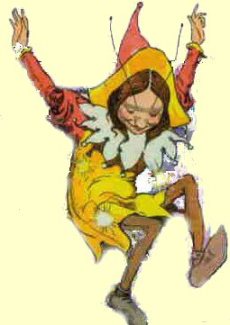
Mr. Twee Deedle

Before Raggedy Ann came out he  produced a popular cartoon for the New York Herald, Mr. Twee Deedle. It ran from 1911 to 1914. That brought commissions for children’s books. He wrote and Illustrated All about Cinderella, and illustrated Grimm’s Fairy Tales, Nobody’s Boy, All About Hansel and Grethel, All About the Little Small Red Hen and  Sunny Bunny.

Rapunzel, from the 1914 Cupples & Leon edition...

Rapunzel, from the 1914 Cupples & Leon edition of Grimm’s Fairy Tales, illustrated by Johnny Gruelle. (Photo credit: Wikipedia)

His daughter Marcella found an old rag doll in the attic of their family home and, after cleaning it up, Gurell painted a face on it and gave it to the girl. He created stories and adventures about the doll and incorporated other toys in Marcella’s nursery. Marcella loved the doll, Raggedy Ann, and the folk-lore her father built around it.  And Gruelle thought other children might like the stories too.
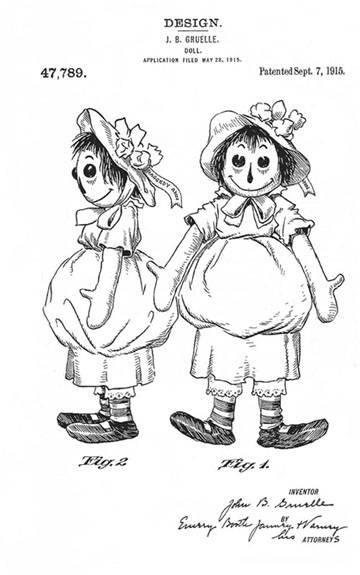
The original patient for Raggedy Ann

The original patient for Raggedy Ann

He patented the doll in 1915 and worked with the PF Volland publishing company in Chicago to put out Raggedy Ann Stories in 1918.

The Raggedy Ann and Andy stories are similar in structure to the more modern Toy Story movies. The dolls and toys have full, adventurous lives when the humans aren’t looking. But, the second the humans enter the room all the dolls are back in place, just where they were left.

Raggedy Anne and Andy's adventures are available on Project Guttenberg at www.guttenber.org

Raggedy Anne and Andy’s adventures are available on Project Gutenberg at www.gutenberg.org

Gruelle’s beloved Marcella, his daughter and muse, died in his arms from diphtheria when she was 13. He was heartbroken and could only find comfort from her old rag doll. He continued to write Raggedy Ann stories in tribute to Marcella for the rest of his life, capturing with each joy-filled illustration the little girl he lost.

Marcella plays with Raggedy Ann.

Marcella plays with Raggedy Ann.

His writing and illustrating career flourished. He went on to draw and create stories for books, magazines and newspapers, until his death in 1938.

Jane Austen 12.16.12 Thought of the Day

“If I loved you less, I might be able to talk about it more.”
Jane Austen

Jane Austen

Jane Austen was born in the Steventon Rectory, Hampshire, England in 1775. Today is the 237th anniversary of her birth.

The second youngest of eight children, Jane was also the younger of two girls in the Austen family. As was the custom for a family of the Austen’s class and means, baby Jane was sent to live with a wet-nurse, Elizabeth Little, until she was 18-months old. She was very close to her sister Cassandra and the two girls, along with their cousin Jane Cooper, were sent to Mrs. Cawley’s school in Oxford when Jane was 7. The school moved to Southampton when measles broke out in Oxford. But Southampton proved no safer. Typhus broke out there and all three girls caught the disease. The girls came back to Steventon where they were home schooled for a year before going to school at Mrs. La Tournelles (aka Sarah Hacket) where the girls received instruction in spelling, needlework and French. But by 1786 she was back home, this time for good.

Jane never had any formal education again…From their experience of school we can gather that Jane and Cassandra had perhaps learned some social skills, had had the opportunity to read, take part in plays, learn some French and learn the piano. These were things that were all available at home anyway. [Janeaustensworld]

And the Austen home was an excellent place at which to be home schooled. Her father took in tutors and taught his own sons. He had an impressive library (which Jane had free access to) The older boys included her in their theatricals  and charades and “even as a little girl Jane was encouraged to write” [jasa.net]

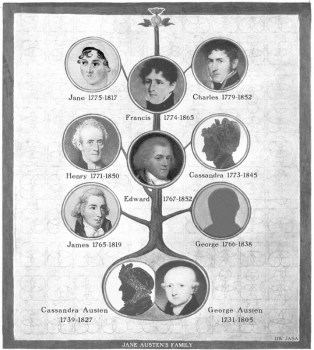
familytreelowres

Austen’s immediate family tree. [Image courtesy: jasa.net]

Jane had six older brothers: James, George, Edward, Henry, Francis and Charles.

By 14 she was writing to entertain her friends and family, penning such comedies as Love and Freindship (sic) and the parody   A History of England by a partial, prejudiced and ignorant Historian.  She collected 29 of her stories into three bound books, now known as Juvenilia.

In 1793 she began to write longer works in the epistolary style. Lady Susan was one such novel in letters.  She wrote Elinor and Marianne in the same style before she rewrote the work as a third person narrative and changed the title to Sense and Sensibility.

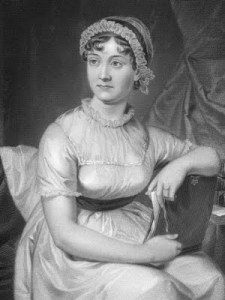
Jane Austen, Watercolour and pencil portrait b...

Jane Austen, Watercolour and pencil portrait by her sister Cassandra, 1810 (Photo credit: Wikipedia)

In 1801 Rev. Austen moved (with Mrs. Austen, Cassandra and Jane) to Bath. Jane’s productivity took a nose-dive. She was either too busy to write — with all the shopping and socializing in Bath — or too depressed to write. The Austens lived in Sydney Place, no.4…

which offered both an easy walk into town and handy access to Sydney Gardens, a great outdoor attraction at that time with regular gala nights featuring music and fireworks.[Seeking Jane Austen]

…until Mr. Austen died  in 1804. By 1806 the ladies had left Bath for good, and moved Chawton in Southampton. As soon as they had settled in their new home she renewed her writing in earnest .

English: Back View of Jane Austen, Watercolor

English: Back View of Jane Austen, Watercolor (Photo credit: Wikipedia)

In 1811, Thomas Egerton, a military Library publishing house printed 750 copies Sense and Sensibility, largely on Austen’s dime. The book sold out of its first edition by 1813. And Austen eventually made 140 pounds on it.  It  appeared under the pseudonym “A Lady,” and Austen carefully guarded her anonymity .

Encouraged by this success, Jane Austen turned to revising First Impressions, a.k.a. Pride and Prejudice. She sold it in November 1812, and her “own darling child” (as she called it in a letter) was published in late January 1813. [Pemberley.com]

In May of 1814 her third novel, Mansfield Park was published. It sold out in six months.

Austen's

Despite carefully guarding her name, word had begun to leak out. People knew who  the  “Lady” was…important people…like the Prince Regent. While she was writing Emma she was summoned to the palace and invited to dedicate her next novel to the Prince. Austen was less than thrilled to be given the honor, but couldn’t exactly refuse, so in wonderful Austen wit she flattered him as only she could…

TOHIS ROYAL HIGHNESS THE PRINCE REGENT, THIS WORK IS,BY HIS ROYAL HIGHNESS’S PERMISSION,MOST REPECTFULLY DEDICATED,BY HIS ROYAL HIGHNESS’S DUTIFUL AND OBEDIENT HUMBLE SERVANT, THE AUTHOR

In 1815 she began working on Persuasion. By then her health had begun to deteriorate. She completed the first draft by 1816 and began The Brothers which later became  Sanditon. Her condition rapidly worsened. In May her bother Henry took Jane to Winchester for treatment, but on July 18, 1817 at the age of 41 Jane Austen passed away. She was buried at Winchester Cathedral.

English: Jane Austen's memorial gravestone in ...

English: Jane Austen’s memorial gravestone in the nave of Winchester Cathedral (Photo credit: Wikipedia)

Henry, with Cassandra’s help, got Persuasion and Northanger Abbey published in December of 1817. For the first time the author was listed as “Jane Austen.”

Happy Birthday Jane!!!

Ooops forgot to link to my own blog on the Pride and Prejudice Essay Contest!

  • JASNA (Jane Austen Society of North America)

Pride and Prejudice Essay Contests

Today’s blog features two essay contests: the official JASNA Student Essay Contest,
and the ritaLOVEStoWRITE Essay Contest for the rest of us.


JASNA essay contest


JASNA STUDENT ESSAY CONTEST:


Attention: Students at the high school, college and post-graduate levels:


In celebration of the 200th anniversary of the publication of Pride and Prejudice, JASNA (The Jane Austen Society of North America) is looking for short essays on the following topic:


“Though Pride and Prejudice may be regarded as timeless, nevertheless within the novel Austen plots her time very carefully. Timing is everything for important relationships and events. And the characters are deeply connected to the time in which they live, which is both like and unlike our times. What do we discover about time, times, or timeliness from reading Pride and Prejudice?”


Title page from the first edition of the first...

Title page from the first edition of the first volume of Pride and Prejudice (Photo credit: Wikipedia)

Judges will be awarding scholarships ranging from $250 to $1000, plus a years membership to JASNA, plus tickets and lodging to the 2013 JASNA Annual General Meeting in Minneapolis. The winning essays will also appear on the JASNA website.


Deadline is May 15, 2013. 


Click HERE to go to the JASNA Essay Contest Page for more details.


[Please note that the contest is open to students outside the United States too, but the essay must be written in English.]


———————————————————————————————-


English: Mr. and Mrs. Bennet. Austen, Jane. Pr...

English: Mr. and Mrs. Bennet. Austen, Jane. Pride and Prejudice. London: George Allen, 1894, page 5. (Photo credit: Wikipedia)

ritaLOVEStoWRITE  Contest for the rest of us:


So what about the rest of us Pride and Prejudice lovers? Can’t WE write an essay*? Well, sure you can. I’m calling for entries right here and right now.


We too will be celebrating the 200th anniversary of P&P! But guess what? Any one can participate!  Couple of RULES here:


  1. TRY and keep it under 1200 words please.
  2. The “essay” should be Pride and Prejudice centric.
  3. Please submit your essay in English.
  4. Have fun with it!
  5. Oh, and no pornography == THIS is Austen after all!


English: Français : Une gravure de 1833 illust...

English: Français : Une gravure de 1833 illustrant une scène du chapitre 59 du roman Orgueil et Préjugés de Jane Austen. À gauche M. Bennet, à droite Elizabeth. Avec File:Pickering – Greatbatch – Jane Austen – Pride_and_Prejudice – This is not to be borne, Miss Bennet.jpg, il s’agit des toutes premières illustrations de l’œuvre. (Photo credit: Wikipedia)


Prizes include… All entries will be published in an upcoming special edition of the award-winning ritaLOVEStoWRITE blog. All entries will receive a participation banner for your blog. The top three entries will receive a special “Finalist” banner for their Blog Page, and the top entry will win a Darcy mug! (Please make sure to include an email contact — which I will remove before posting so the whole world doesn’t see it.)


Deadline: 28 January 2013 (That’s the anniversary date of the novel’s publication)


*I seriously encourage you to think outside the box. For you illustrators out there… how about some character studies? Are you a play wright? Why not treat us to a re-imagined scene or two?


AND … Although I’m not going to snark on your intellectual property I strongly suggest you throw a copyright on all your original material in case any one else takes a liking to it.


English: This diagram, or map, illustrates the...

English: This diagram, or map, illustrates the relationships between each of the main characters in the novel Pride and Prejudice by Jane Austen. (Photo credit: Wikipedia)


Emily Dickinson 12.10.12 Thought of the Day

“Saying nothing…sometimes says the most.”
Emily Dickinson

English: Daguerreotype of the poet Emily Dicki...

If I can stop one heart from breaking,
I shall not live in vain;
If I can ease one life the aching,
Or cool one pain,
Or help one fainting robin
Unto his nest again,
I shall not live in vain.

Emily Elizabeth Dickinson was born on this day in Amherst, Massachusetts in 1830. Today is the 182 anniversary of her birth.

Emily was the second of three of three children born to Edward and Emily Norcross Dickinson. Her brother William Austin Dickinson was born a year before her, her litter sister Lavinia (“Vinnie”) three years after. Her father was a lawyer who served in the Massachusetts State legislature and Senate and the US House of Representatives.

The Dickinson children (Emily on the left), ca...

The Dickinson children (Emily on the left), ca. 1840. From the Dickinson Room at Houghton Library, Harvard University. (Photo credit: Wikipedia)

Emily was a proper Victorian girl and was well-educated in English, History, Science (especially Botany), the Classics, Literature, and Math at Amherst Academy.

“By Emily Dickinson’s account, she delighted in all aspects of the school—the curriculum, the teachers, the students … At the academy she developed a group of close friends within and against whom she defined her self and its written expression. …the time at school was a time of intellectual challenge and relative freedom for girls, especially in an academy such as Amherst, which prided itself on its progressive understanding of education.” [Poetry Foundation. org]

At 16 she entered Mount Holyoke Female Seminary. She found her time at the Seminary less agreeable and less challenging and she only stayed a year.

In February, 1852 the Springfield Daily Republican published Sic transit gloria mundi,” Dickinson’s first published work.

The speakers in Dickinson’s poetry, like those in Brontë’s and Browning’s works, are sharp-sighted observers who see the inescapable limitations of their societies as well as their imagined and imaginable escapes. [Poetry Foundation. org]

Only 20 of her 1700 poems were published  in her lifetime. She collected her writing in notebooks and shared her poems with her family and close friends, especially her sister-in-law Susan Gilbert Dickinson.

In 1864 and 1865 she went to stay with her Norcross cousins in Boston to see an eye doctor whereupon she was forbidden to read or write. It would be the last time she ventured from Amherst. [Online-Literature.com]

By 1870 she and Lavinia were staying at home to care for their bed ridden mother. In 1872 “Dickinson enjoyed a romance with Judge Otis Phillips Lord, a friend of her fathers.” [Emily Dickinson Museum.org] 

Austin Dickinson house, Amherst, Massachusetts...

Austin Dickinson house, Amherst, Massachusetts. View of facade from left. (Photo credit: Wikipedia)

In 1874 her father died unexpectedly. At that point Emily stopped going out in public. She lost her nephew Gib in 1883. Judge Lord died in 1884. And her dear friend Helen Hunt Jackson passed in 1885. Death seemed to surround her. Emily herself was very ill with an sickness “affecting the kidneys, Bright’s Disease, symptoms of which include chronic pain and edema, which may have contributed to her seclusion from the outside world.” [Online-Literature.com]

To make the abstract tangible, to define meaning without confining it, to inhabit a house that never became a prison, Dickinson created in her writing a distinctively elliptical language for expressing what was possible but not yet realized.[Poetry Foundation. org]

“She remained in poor health until she died at age 55 on May 15, 1886. She was buried four days later in the town cemetery, now known as West Cemetery.” [Ibid]

English: Grave of Emily Dickinson in Amherst, ...

English: Grave of Emily Dickinson in Amherst, Massachusetts. (Photo credit: Wikipedia)

Because I could not stop for Death,
He kindly stopped for me;
The carriage held but just ourselves
And Immortality.We slowly drove, he knew no haste,
And I had put away
My labor, and my leisure too,
For his civility.

We passed the school, where children strove
At recess, in the ring;
We passed the fields of gazing grain,
We passed the setting sun.

Or rather, he passed us;
The dews grew quivering and chill,
For only gossamer my gown,
My tippet only tulle.

We paused before a house that seemed
A swelling of the ground;
The roof was scarcely visible,
The cornice but a mound.

Since then ’tis centuries, and yet each
Feels shorter than the day
I first surmised the horses’ heads
Were toward eternity.


Secondary Character Saturday — Mary Musgrove (Persuasion)

[Most of you know that I’m a Jane Austen fan. And you are probably surprised that it has taken me three whole weeks of Second Character Saturdays to get to an Austen character. Frankly, so am I!  I suppose I was warming up a bit with Horatio and Ron. But today, dear reader, I present you with my absolute favorite Austen creation… a confection of comedy, social commentary and self absorption (and even pathos)… Mary Musgrove from Persuasion.

If you’ve never read Jane Austen’s wonderful Persuasion you can go HERE to read it online via Project Guttenberg; or get it from Amazon Kindle HERE.  Or if you prefer to listen to Austen’s lovely prose HERE is a link to the Librabox recording. All three of these sources are free. You can also go to a book store or library and get something I like to call a B-O-O-K that you hold in your hand and turn the paper pages with your fingers.]

———————————————————-

Name: Mary Musgrove, Nee: Elliot

From: Persuasion

By: Jane Austen

Written In: 1816

Illustration from an early edition of Persuasion.

Illustration from an early edition of Persuasion.

Why: Through Mary Austen holds a mirror up to the Elliot’s (and through them the upper class in general)  over inflated sense of self-importance. Society is changing in the novel, there are the established gentry and the up and coming gentry, and each group admires different things. The Elliots are clearly old money and Mary feels, as a Baronet’s daughter, she deserves the best of everything. Unfortunately for her the Musgroves don’t give her the respect she thinks her rank deserves.

The more she demands attention, the more the Musgroves roll their eyes and ignore her.  The more she pushes herself to (her rightful place at) the front of the line, the more ridiculous she looks (and the more resented she is). By the time we meet her in the novel the only way she can get attention is when she is sick.

Poor Mary:

…is the least attractive daughter in a family where personal vanity is rated a virtue. While Elizabeth is a beauty whose looks have lasted into her late twenties, and Anne was “an extremely pretty girl”, though her bloom faded early, Mary “was inferior to both sisters, and had, even in her bloom, only reached the dignity of being ‘a fine girl’.”  [Literary Characters: Mary Musgrove in Persuasion]

Since Elizabeth never married, Mary would never have been able to enter a wider society. At about 19, she married a man who preferred her sister, and into a family where the members were blindly partial to one another and would always view her as an outsider and a second choice.” [Jane Austen-Her Life and Works] 

Not even her little boys listen to her.

Masterpiece Theatre - The Complete Jane Austen: "Persuasion" - Julia Davis as Elizabeth Elliot, Sally Hawkins as Anne Elliot, Amanda Hale as Mary Musgrove [Photo credit: Nick Briggs/Masterpiece Theatre]

Masterpiece Theatre – The Complete Jane Austen: “Persuasion” – Julia Davis as Elizabeth Elliot, Sally Hawkins as Anne Elliot, Amanda Hale as Mary Musgrove [Photo credit: Nick Briggs/Masterpiece Theatre]

Anne (the heroine of the story) inherited her mother’s soothing ways. It’s no wonder Mary calls on her when ever she feels “ill.”

…she is not a first object to anyone. It is understandable that a young woman brought up with so little affection might think herself ill-used when surrounded by evidence of it in a family where she can never fully share it, and where another would have been clearly preferred. [Ibid]

Here’s how Austen describes Mary:

“While well, and happy, and properly attended to, she had great good humour and excellent spirits, but any indisposition sunk her completely; she had no resources for solitude; and inheriting a good deal of the Elliot self-importance, was very prone to … fancying herself neglected and ill-used.” [from Persuasion, by Jane Austen]

Pros: She loves her boys, her husband and her sister. She’s funny. She brings much-needed comic relief to the novel (at her expense).

Cons: hypochondriac, elitist, selfish

Best Moment: ummmm… well…. I think Mary really does love Anne. And she appreciates her much more than any one else in the family. Although on the surface that may seem to be for purely selfish reasons I think Mary is genuinely happy to see Anne and spend time with her.

The fabulous Sophie Thompson played Mary in the 1995 version of Persusion. (Amanda Root is Anne). [Image courtesy: Collar City Brownstone]

The fabulous Sophie Thompson played Mary in the 1995 version of Persusion. (Amanda Root is Anne). [Image courtesy: Collar City Brownstone]

Worst Moment: When Mary gets hysterical at Lyme. Her sister-in-law, Louisa Musgrove, has just taken a serious spill from the top of a stone wall and lies critically injured, and Mary freaks out — causing some of the others to pay attention to her, and not to the unfortunate Louisa. Fortunately Anne keeps her head, calls for a doctor and gets Louisa to their friend’s the Harvilles’ house. “Captain Wentworth asks the capable Anne to stay and assist. Mary is offended, insisting she should stay.” [Literary Characters: Mary Musgrove in Persuasion] Every one gives in, of course, and Anne removes with Wentworth and Henrietta Musgrove to break the news to Mr. and Mrs. Musgrove back at Uppercross. When Mary finally returns to Uppercross we learn …

how useless Mary is as a ‘nurse’, compared with what Anne would have been. While her sister-in-law lies seriously ill, supposedly nursed by her, Mary goes out enjoying herself. Jane Austen writes, that, during her stay in Lyme, Mary ‘found more to enjoy than to suffer’. [Jane Austen-Her Life and Works] 

Why I love her: In my bucket list of fantasy things I’d like to do in this life… one of them is to play Mary Musgrove on stage. She is such an interesting character, and it would be a challenge to bring out the humanity to this character who can so easily be portrayed as a cartoon. She makes me laugh, but I feel for her too. I also get pretty frustrated with her. That’s a pretty interesting Secondary Character …. hmmm now that I think about it she’s a lot like Ron.

austen_6526

More Jane Austen Blogs from ritaLOVEStoWRITE:


Secondary Character Saturday — Ron Weasley

Welcome to the next edition of Secondary Character Saturday.

———————————————————————————–

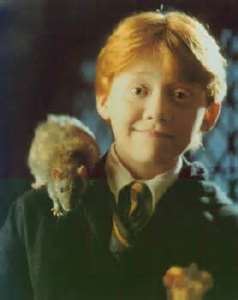
Rupert Grint played Ron in the Harry Potter movies.

Rupert Grint played Ron in the Harry Potter movies.

Name: Ronald Bilius “Ron” Weasley

From: The Harry Potter series

By: J. K. Rowling

Written in: Ron first appeared in Harry Potter and the Philosopher’s Stone which was published in 1997.

Why: Ron is the everyman of the Potter series. In the triumvirate that crowns  the Harry Potter food chain you’ve got the hero (Harry), the brains (Hermione), and the foil (Ron). He is flawed, there’s no doubt about it. As the youngest brothers he’s neither the smartest, nor the bravest, nor the funniest.

I’m the sixth in our family to go to Hogwarts. You could say I got a lot to live up to. Bill and Charlie have already left – Bill was Head Boy and Charlie was captain of Quidditch. Now Percy’s a prefect. Fred and George mess around a lot, but they still get really good marks and everyone thinks they’re really funny. Everyone expects me to do as well as the others, but if I do, it’s no big deal, because they did it first.” [Harry Potter and the Sorcerer’s Stone, by JK Rowling, Scholastic Inc. New York, New York, pg 98]

Throw his little sister Ginny into the mix and he’s not even the cutest. He doesn’t seem to have any special “thing” that he can point to and say “this is what I do best.” So Ron is always searching for his moment in the sun. It doesn’t help that his best mate is the world-famous (at least in the wizarding world) Harry Potter. Ron suffers from insecurity from the start and it gets worse as the books go along. He is also largely clueless when it comes to women. Just ask Hermione. But Ron is loyal, funny, and generous. He’s grounded in a way that neither Harry or Hermione seem to be. And in this way Ron seems the most human of the central characters in the series. (In fact, as a pure blood Wizard he’s the least human. But while other Pure Bloods hold that over mere Mud Bloods it never seems to enter into Ron’s equation of friendship.)

Pros: Loyalty, Nerve, Sense of Humor

Cons: Easily frustrated, occasionally lapses in his loyalty, procrastinates, jealous

Shining moment: Ron’s shining moment (imho) comes in the first book when he plays the game of Wizard’s Chess. It takes both courage and skill to play the game, and Ron willingly sacrifices his piece (and himself) so the others can win the game and advance in their goal to stop Quirell.

“We’re nearly there,” he muttered suddenly. “Let me think… let me think…”
The white queen turned her blank face toward him.
“Yes…” said Ron softly, “it’s the only way…I’ve got to be taken.”
“NO!” Harry and Hermione shouted.
“That’s chess!” snapped Ron. “You’ve got to make some sacrifices! I take one step forward and she’ll take me— that leave you free to checkmate the king, Harry!” [Ibid, pg 283]

Runner up Shining Moment: Working with Harry to save Ginny from the Chamber of Secrets in book two.

Cover of Harry Potter and the Chamber of Secrets

Cover of Harry Potter and the Chamber of Secrets

Silliest moment: Probably my favorite Ron moment happens in the second book, and it involves belching slugs. ‘Nugh said.

Least shining moment: He is least likeable in the last book when he leaves Harry and Hermione to finish the quest for the Horcurxes on their own. That is pretty weak. It is almost unforgivable. But Ron is human (well, he’s a wizard, but he has very human tendencies) and his weaknesses and failures make him more relatable to us. And Ron realizes his mistake, of course, and comes back.

Lego Ron

Lego Ron

So I know some of you are not going to like the fact that Ron is listed here as secondary character, but before you throw an unspeakable curse my way please consider that the books are named “Harry Potter and the…” Harry is the primary character.  Ron and every one else are, therefore, secondary.

AND lest you Snape or Luna lovers loose heart, just because I picked Ron this time doesn’t mean I wont pick another H.P. character another time. Saturday comes around once a week after all, and, clearly, I’ve got some pretty strong opinions up my sleeves.

Thanks to Ellie, Maggie, Bill and Stevie for their input on this blog post.


C.S.Lewis 11.29.12 Thought of the Day

The statue of C. S. Lewis in front of the ward...

The statue of C. S. Lewis in front of the wardrobe from his book The Lion, the Witch and the Wardrobe in East Belfast, Northern Ireland (Photo credit: Wikipedia)

“Aim at heaven and you will get earth thrown in. Aim at earth and you get neither”
C.S. Lewis

Clive Staples Lewis was born on this day in Belfast, Ireland in 1898. Today is the 114th anniversary of his birth.

When he was four years old he adopted the nickname “Jack” (short for “Jacksie”) in honor of a beloved neighborhood dog who got hit by a car and died. As a child he and his brother Warren (also known as Warnie) created a fantasy world with talking animals called “Boxen.”

Lewis and Weldon Borland

Lewis and Weldon Borland (Photo credit: Kevin Borland)

When Lewis was nine his mother died of cancer. In 1910 he was sent to Campbell College, a boarding school in Belfast. He withdrew after a year because he developed a respiratory condition. In 1913 he attended Malvern College for a year. There he abandoned his Christian faith and became an atheist.  The following year he left Malvern and was privately tutored.

Lewis received a scholarship to University College Oxford. He started there in 1916, but took a leave of absence to join the Army when World War One broke out. He was injured at the Battle of Arras on April 15, 1918. After his release from the Army in December of 1919 he went back to Oxford. Where he received Firsts in Greek, Latin, Philosophy, Ancient History and English.

He was appointed Fellow and Tutor of English Literature at Oxford University in 1925 (a position he held until 1954 — for 29 years). In 1954 he became chair of Medieval and Renaissance Literature at Cambridge.

In 1931 after an evening of discussing Christianity with J.R.R. Tolkien and Hugo Dawson  Lewis converted to Christianity. The following day he and Warnie took a motorcycle ride to the Whipsnade Zoo. ” I did not believe that us Christ was the Son of God, and when we reached the Zoo I did.” [Surprised by Joy, C.S. Lewis]

At Oxford he was one of the founders of the literary group The Inklings.

He wrote more than 30 books including novels, fantasy literature, Christian literature, literary criticism, and essays. He is best known for The Chronicles of Narnia, The Screwtape Letters, The Four Loves and Mere Christianity.

English: Map of Narnian world as described in ...

English: Map of Narnian world as described in The Chronicles of Narnia by C.S. Lewis (Photo credit: Wikipedia)

C.S. Lewis died on November 22nd, 1963 in England.


Charles M. Schultz 11.26.12 Thought of the Day

MSP: Snoopy

MSP: Snoopy (Photo credit: jpellgen)

All you  need is love. But a little chocolate now the doesn’t hurt.

Life is like a ten speed bicycle, most of us have gears we never use.

I love mankind. Its people I can’t stand.

There is no problem so big it can’t be run away from.

A whole sack of memories never equal one hope.

Try not to have a good time this is supposed to be educational.

 “My life has no purpose, no direction, no aim, no meaning, and yet I’m happy. I can’t figure it out. What am I doing right?”

Charles Schultz


Ba Jin 11.25.12 Thought of the Day

Sichuanese people

“You have your thoughts and I have mine. This is the fact and you can’t change it even if you kill me.
Ba Jin

Li Yaotang was born on this day in in Chengdu, Sichuan, China in 1908. Today is the 104th anniversary of his birth.

  He began his career in 1927, and has a collected work of 14 volumes of novels and proses. The first volume contains his novel The Family, completed in 1931, and his novellette Autumn in Spring in 1932. The second volume contains his two novelettes Garden of Repose, completed in 1944, and Bitter Cold Nights in 1946. The third volume contains the novelette The Grit Men, and 22 short stories. The fourth volume contains 43 articles on literary creation and other subjects by Ba Jin.[Selected Works of Ba Jin]
He was an anarchist who was often at odds with the Communist Party.But after the Communist Revolution he renounced his anarchist ideas and was considered a politically reliable person.

He was nominated for the Nobel prize in Literature in 1975.

Only Ba Jin statue I've ever seen in China

Only Ba Jin statue I’ve ever seen in China (Photo credit: Foto Jenny)

[today’s blog is a little light because I am traveling.]