Category Archives: Uncategorized

Thought of the Day 8.19.12 Orville Wright

If we worked on the assumption that what is accepted as true really is true, then there would be little hope for advance

— Orville Wright

The Wright brothers patent war

The Wright brothers patent war (Photo credit: Wikipedia)

Orville Wright was born in Dayton, Ohio on this day in 1871. Today is the 141st anniversary of his birth.

Orville was the fourth of five children to Milton and Susan Wright. He was very close to his brother Wilbur, who was four years his senior. The Wrights grew up in Dayton and Iowa.

“We were lucky enough to grow up in an environment where there was always much encouragement to children to pursue intellectual interests; to investigate whatever aroused curiosity.” [–Orville Wright/NASA.Gov]

When they wanted to find out how something mechanical worked they asked their mother. In matters of a religious or intellectual nature they asked their minister father. Their father bought the boys a toy “helicopter” made of paper and bamboo with a cork weight and a rubber band “motor.” The toy ignited their interest in flight.

Of the two, Orville was the mischievous one. While Wilbur was good at school and an earnest student, Orville preferred to hone his skills as a champion bicyclist. It seemed Wilbur was destined to go to college (Yale) but an accident while the boys were playing hockey left him injured. Some one lost control of their hockey stick and it flew out of their hands and struck Wilber, he fell and knocked out his front teeth. A few weeks later he began to have heart palpitations. He withdrew socially, and spent his days reading in the family’s extensive library. He also cared for his mother who was dying from TB.

Wright brothers bicycle

Wright brothers bicycle (Photo credit: nicomachus)

Orville was able to bring his more bookish brother out of his funk. When Orville was 18 (and Wilbur was 22) the brothers started a printing firm with a press they built themselves out of used buggy parts and a damaged tombstone. They began to publish their own weekly paper. The brothers were both cyclist and they repaired bikes for friends. They opened their own bicycle shop, The Wright Cycle Exchange (which later became the Wright Cycle Company ), in 1893 and in 1896 made their own bikes called Van Cleves and St. Clairs.

When Orville came down with typhoid fever Wilber helped nurse him by reading articles about German and French attempts at aviation. The brothers were hooked.  Wilber threw himself into research writing to the Smithsonian Institute requesting their information on aeronautical research. He studied all he could find about pitch, roll and yaw and designed a unique wing warping system. They contacted the US Weather  Bureau and found out where the most windy regions of the country were. They settled on Kitty Hawk which had average wind speeds of 13 mph.

The brothers travelled to Kitty Hawk in 1900 and 1901 testing the glider. They constructed a wind tunnel  to test different wing shapes. In October 1902 with a glider using a new wing design they glided over the sands of Kitty Hawk for 602 feet (a record). They went back to Ohio and worked on an engine propelled flying machine.

First successful flight of the Wright Flyer, b...

First successful flight of the Wright Flyer, by the Wright brothers. The machine traveled 120 ft (36.6 m) in 12 seconds at 10:35 a.m. at Kitty Hawk, North Carolina. (Photo credit: Wikipedia)

On December 14, 1903 the brothers tossed a coin to see who would take the Wright Flyer on its maiden flight. Wilbur won the coin toss. It lasted  just 3 seconds and ended in a minor crash requiring some repairs. On December 17 the flyer was ready again. This time it was Orville’s turn.  He flew for 12 seconds for about 120 feet. The brothers traded off twice more and by the fourth flight of the day Wilbur  was able to fly for 59 seconds  for 852 feet before the plane began to pitch and it hit the ground. None of the flights reached more than 10 feet in altitude that day, so Wilbur wasn’t really hurt.

The Wrights returned to Dayton and established an airfield in a cow pasture called Huffman Prairie. They spend the next two years perfecting their airplane design  and flying skills.  Eventually they won contracts from the US Signal Corp and the French Government. Their flying ability and engineering genius made them famous.

Wilbur died of typhoid fever at the Wright home in Dayton on May 20 1912.

English: Orville Wright, 1928.

English: Orville Wright, 1928. (Photo credit: Wikipedia)

Orville was a founding member of  National Advisory Committee for Aeronautics (the NACA). He served on its board for 28 years  and was elected a member of the National Academy of Sciences in 1936. He died of a heart attack in 1948.
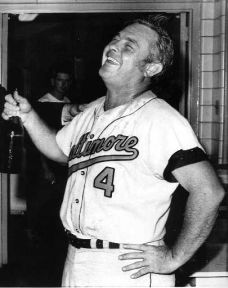
Thought of the Day 8.14.12 Earl Weaver

“I became an optimist when I discovered that I wasn’t going to win any more games by being anything else.”

Earl Weaver

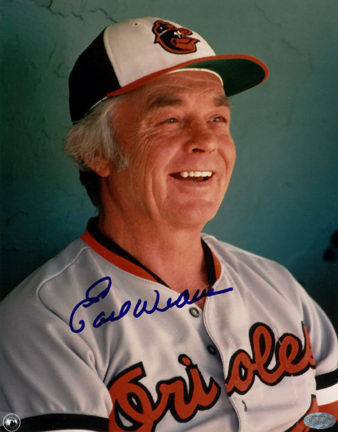
Earl Sidney Weaver was born on this day in St. Louis, Missouri in 1930. He is 82 years old.

Weaver managed the Baltimore Orioles from 1968-1982 and again from 1985-1986.  He became a Hall of Famer a decade later.

He played second base for 13 years in the minor leagues, then he managed for another dozen years in the minors before making it to the Show as a first-base coach for the Orioles in 1968. He took over as Manager in July of that season.

He wore #4 on his Oriole’s jersey and had a .583 winning record while managing the club. The team won 6 American League East titles, had 5 100+ win seasons, won 4 A.L. pennants, and won the 1970 World Series under his leadership.

Weaver didn’t want to bunt or sacrifice to advance a runner, according Hall of Fame player Frank Robinson, “He didn’t even have a hit and run sign…” Earl was all about the three run home run.

He pioneered the use of radar guns to track fast balls in 1975’s Spring Training season (according to the National Baseball Hall of Fame.)

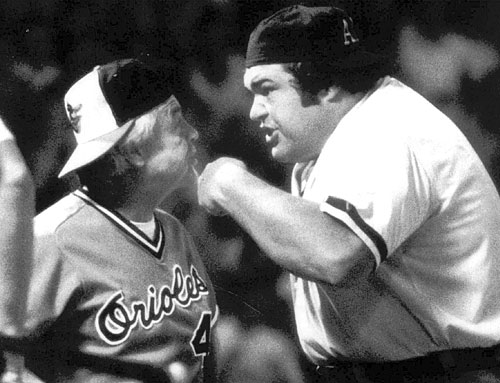
He was famous for his heated arguments with umpires that often ended with the manager kicking Memorial Stadium’s infield dirt at the official. Weaver was tossed from 91 regular season games.

Locals also remember the “Tomato Wars” he had with groundskeeper Pat Santarone. Santarone had a patch of plants in the left field foul area, Weaver grew his maters at home. The two argued (good naturedly) for 17 years over who had the best tomatoes in Baltimore.

After he left the O’s he worked as broadcaster for ABC television providing color commentary during the 1983-84 baseball seasons. He also did Manager’s Corner with Tom Marr while he was with the O’s (some times to very colorful effect.)

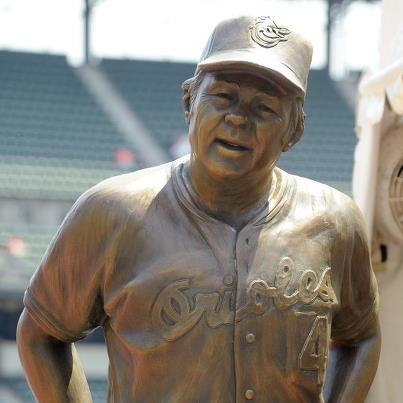
He was elected to the Baseball Hall of Fame in 1996.  A bronze statue of the manager was erected at Camden Yards (the “new” home of the Orioles) in June of this year.  At seven feet the statue towers over the real life Weaver, who is only 5’7″.  Weaver quipped “I guess there will be a lot of kids looking up at me…saying, ‘who is this?'”


Chillin’ out in GRAND CAVERNS

Who’d have thought that things that go drip in a cave could be so pretty?

On our way home from a family vacation in Staunton, VA we stopped at Grand Caverns. The cave was discovered in 1804 by a trapper and opened for tours two years later as “The Grottoes of the Shenandoah”. It is the oldest continually operating “show cave” in America and is rated 2nd best “show cave” (after Carlsbad Caverns in New Mexico) by Parade Magazine. In 1926 it was renamed “Grand Caverns” and it was declared a National Natural Landmark in 1973.

Drapery formations hang from the ceiling in the Persian  Palace  (once known as the Tannery).

During the Civil War soldiers from both sides explored the cave. 200 men signed the walls of the cave. Two of the signatures, one from a Northern soldier, one from a Confederate soldier, were left on the same day, only hours apart. A firearm accidentally discharged inside the cave, piercing one of the shield formations. The hole is still visible today.

The rock formations are always growing, albeit at an extremely slow rate. Oil from human hands block that growth, so visitors aren’t allowed to touch any of the rock formations.  However, visitors will inevitably feel a drip or two while taking a tour. Those are called “Cave Kisses” and are supposed to bring good luck.

The Cathedral Hall is the largest chamber in the caverns. An impressive stalagmite, “George Washington’s Ghost” (foreground) stands century at the center of the hall. The white spot on the ceiling is likely a spot where a shield broke off centuries ago.

Naturally occurring colors in the cave are White (from calcite/calcium carbonate), Red (from iron/iron oxide) or Grey (limestone or manganese). Another color  in the cave is Green (from cave algae which is the result of dampness of the cave combined with lint from clothing and heat and light from the light bulbs.) Colored lights enhance the cave formations in certain areas. With out artificial lights the cave would be pitch black, of course.

The Bridal Chamber has a shield formation with drapery that represents a bride’s veil. It is about 17 feet tall.

With over 200 shield formations, Grand Caverns has more cave shield formations than any other cave or cavern in the eastern United States. No one knows how these formations are made, but for some reason they form flat disks rather than columns.  Some notable shield formations in Grand Caverns are  the “Clam Shell”  formation, a triple shield formation in the Lily Room, and the “Bride’s Veil” formation that combines both a shield and drapery.

The Lily Room. A shield with drapery resembles a calla lily and takes center stage in the Lily Room

Another formation in the Lily Room.

Grand Caverns is open daily except Thanksgiving, Dec 24, 25 & Jan 1. Summer Hours (April to Oct 31) are 9-5. Winter Hours (Nov 1-March 31) are 10-4. Tours are given hourly. For pricing and directions click here.

At the lowest part of the cave (as seen on the tour) looking up to the highest part of the cave.


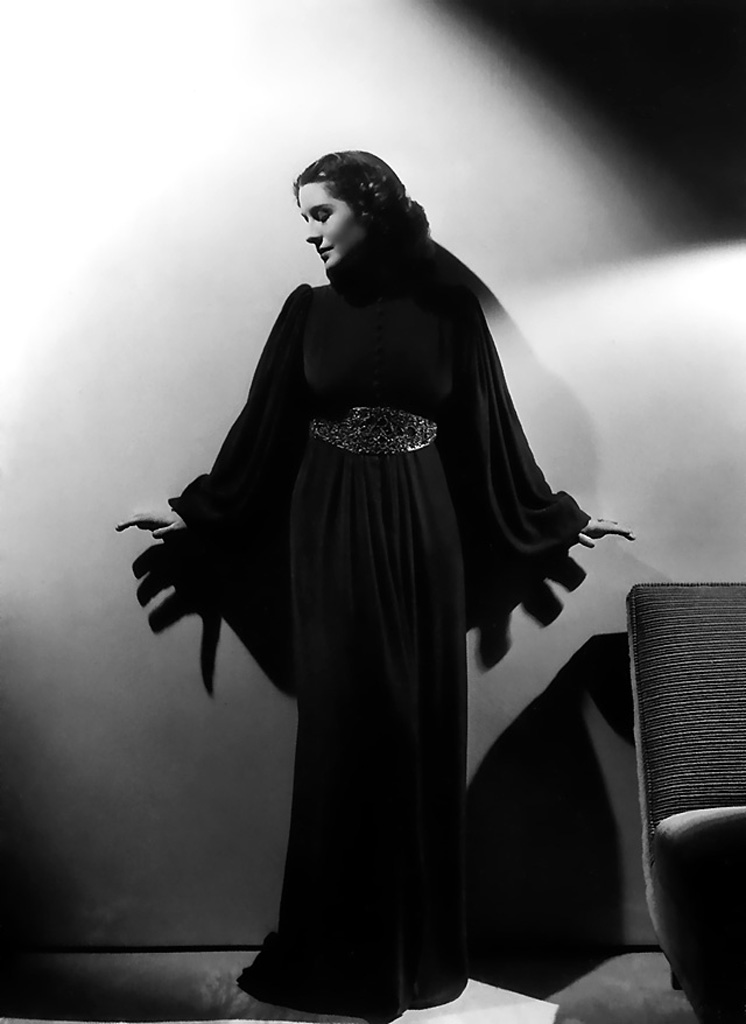
Thought of the Day 8.10.12 Norma Shearer

“An adventure may be worn as a muddy spot or it may be worn as a proud insignia. It is the woman wearing it who makes it the one thing or the other.”

Norma Shearer

Edith Norma Shearer was born on this day in Montreal Canada in 1902. Today is the 110th anniversary of her birth.

Shearer showed early promise as a pianist. Indeed, her mother, who was a bit of a stage mother, wanted her to become a world class concert pianist.  But when Norma was treated to a Vaudeville show for her 9th birthday all that changed. She wanted to become an actress. In 1918 when her father’s business failed and her parents separated her mother sold the piano and bought tickets to New York City. A Montreal theatre owner had given Norma a letter of introduction to Florenz Ziegfeld of Ziegfeld Follies fame. The Follies audition didn’t pan out, but Norma got work as an extra on several films.

She took up modeling (for the much needed money it offered)

 “I could smile at a cake of laundry soap as if it were dinner at the Ritz. I posed with a strand of imitation pearls. I posed in dust-cap and house dress with a famous mop, for dental paste and for soft drink, holding my mouth in a whistling pose until it all but froze that way.” [ From Norma Shearer: A Life]

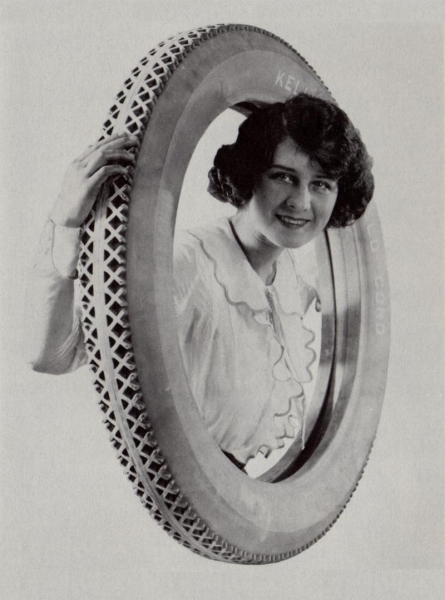
Springfield Tires hired her as their go to model and dubbed her “Miss Lotta Miles.

It took her a year of bit parts, walk ons and modeling gigs, but in 1921 she got a break and was cast in The Stealers. In 1923 she caught the eye of Hollywood talent scout Hal Roach and signed a six month contract with Louis B. Mayer for $250 a week. She met Irving Thalberg, the vice-president of the studio and did a screen test. After a rocky start on the West Coast, Shearer hit her stride and was cast in six movies in  eight months. By 1924 she was a big enough star that she landed the role of Consuelo (the love interest) in He Who Gets Slapped MGM‘s first big budged attraction.

She renewed her contract with MGM (making considerably more money) and began dating Irving Thalberg who was then the chief of production. While she was filming The Student Prince in Old Heidelberg the couple became engaged. They were married on September 29, 1927. She refused to take off her wedding ring, even if a role demanded it (she covered it with flesh-colored tape instead.) The two stayed together until Thalberg, who had a serious heart condition, died in 1936. Having a husband who was chief of production didn’t hurt her career. She could pick and choose the juiciest roles (something other starlets, like Joan Crawford, openly resented. — Crawford rather snarkily referred to Shearer at “Miss Lotta Miles.”)

Her first talkie was The Trial of Mary Dungan. She won an Oscar a year later for The Divorcee. And she earned the moniker the First Lady of MGM. Other notable movies include: The Barretts of Wimpole Street, Romeo and Juliet, Marie Antoinette and The Women.

Soon after she retired in 1942 she married her second husband, Martin Arrouge, a ski instructor eleven years her junior. They withdrew from the glitz and glam of Hollywood and Shearer refused interviews and roles (like Norma Desmond in Sunset Boulevard — a gig that won Gloria Swanson an Oscar) Shearer once quipped: “Never let them see you in public after you’ve turned 35. You’re finished if you do!”


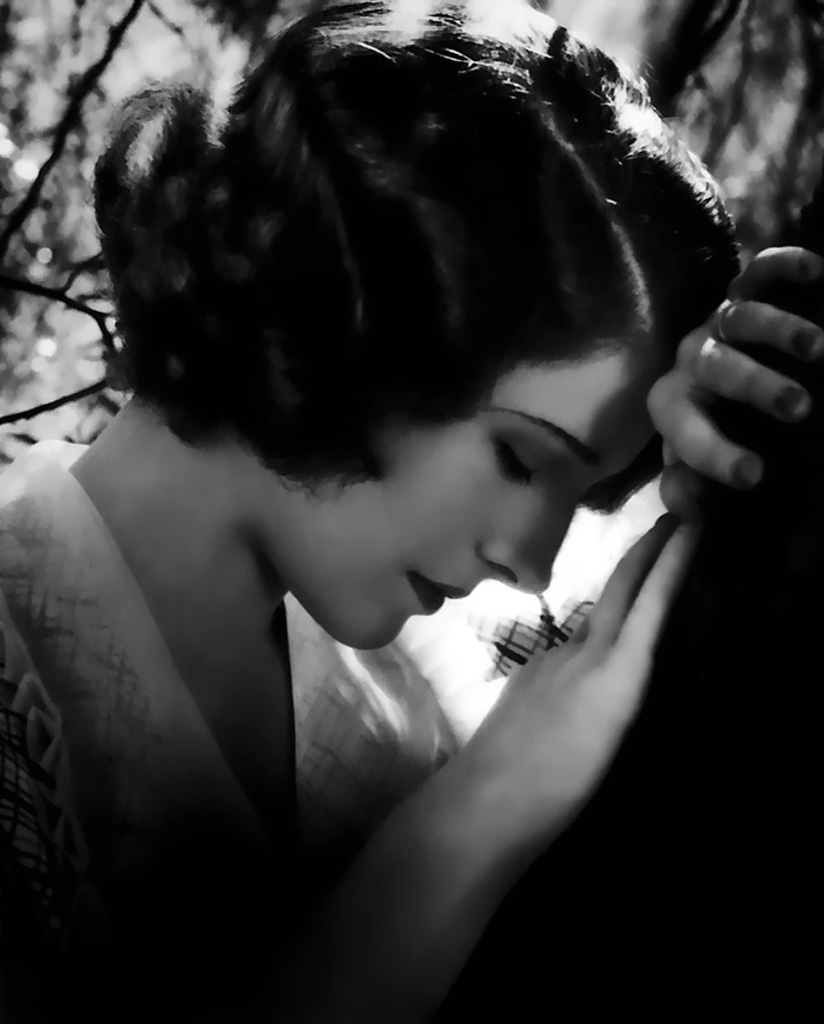
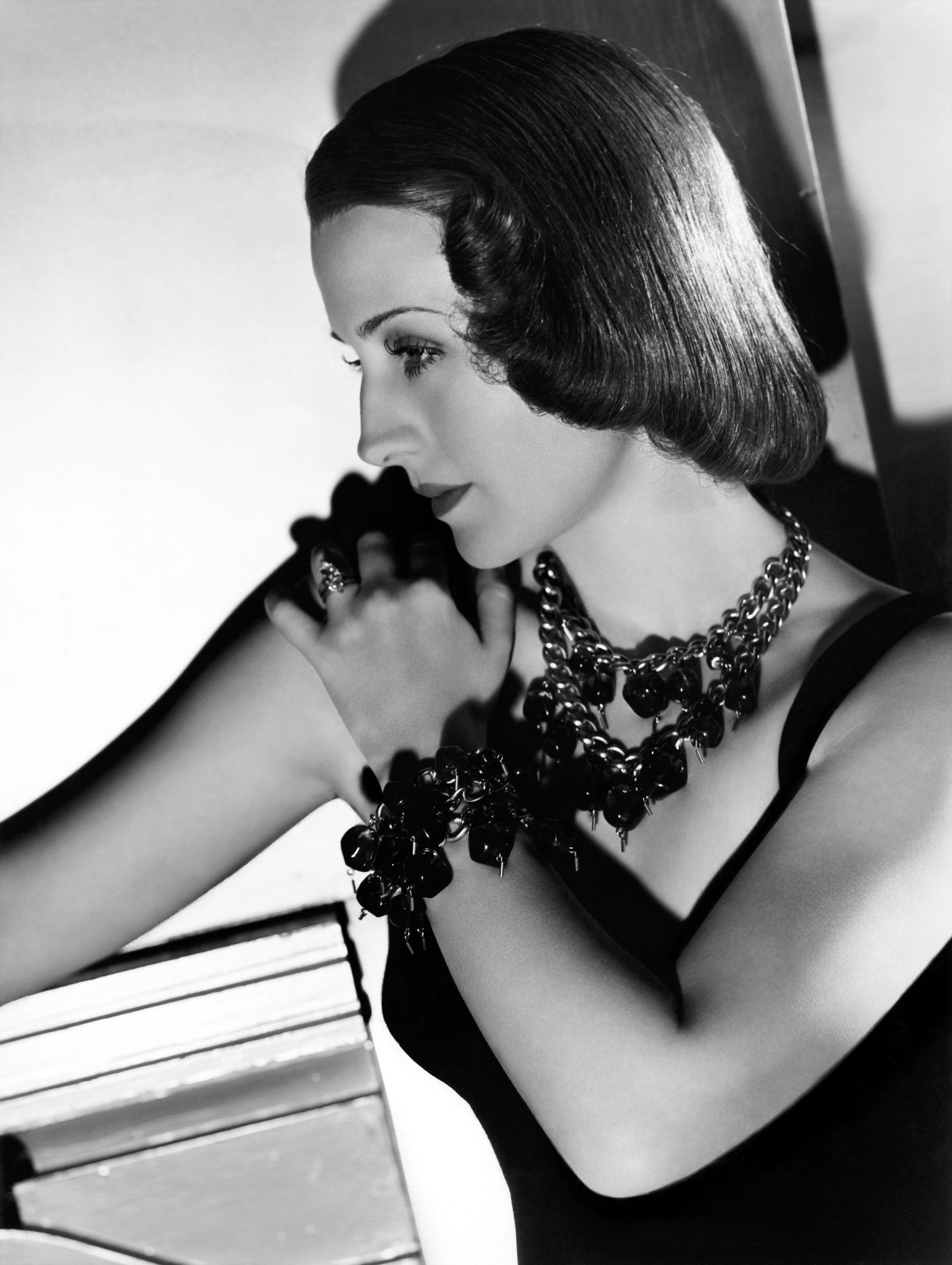
[All photos courtesy of the Norma Shearer Annex.  Except Miss Lotta Miles which is from Hollywood-Legends.webs.com ]

————————————————-

[Please Note that ritaLOVEStoWRITE is stepping away from the keyboard for a few days to get some fresh air. Be back soon.]


Beatrix Potter update

OK… so I thought we could have a little informal discussion on who is everyone’s favorite Beatrix Potter character.

Mine is Mr. McGregor.

What? How could mean old Mr. McGregor be your favorite character in the beloved Potter cannon?

Well, first of all as a gardener I’ve had my McGregor moments when it comes to rabbits.

Secondly, and most importantly, I remember reading the stories to my daughter when she was a wee little bit of lass. I would draw out Mr. McGregor’s name as long as I could in my mock Scottish accent. It was always good for a giggle.

Thirdly, with out Mr. McGregor there isn’t much drama in the story is there?


Who is YOUR favorite Potter character? and why?

Please leave a comment and let us all know.


Cheers,

ritaLOVEStoWRITE.


Thought of the Day 7.15.12

“Choose only one master — Nature.”

Rembrandt van Rijn

Self-portrait in cap, with eyes wide open. circa 1630.

Rembrandt van Rijn was born on this day in Leiden, the Netherlands in 1606. Today is the  406th  anniversary of his birth.

His father, a  miller, wanted his son to be an educated man and sent Rembrandt to the University of Leiden. There he learned science and anatomy, but he didn’t stay long. He wanted to paint. He  learned about light, form and composition from by studying the masters of Renaissance art like Da Vinci and Caravaggio. In 1630 he moved to Amsterdam and set up a studio painting portraits for individuals and for local guilds.

The Anatomy Lesson of Dr. Nicolas Tulp as an important early work. With its dark background and focus of light Rembrandt tells a story in the painting. It isn’t just a group of men sitting around having their picture painted. This is a narrative slice of action.

His reputation as a painter grew he established himself as in society. He married the beautiful and rich Saskia van Uylenburgh and the couple moved into an expensive house on the good side of town. Domestic bliss was not long lived however as the couple lost their first three children in infancy. The fourth child, Titus, survived, but Saskia died the next year. It seemed that life followed art for Rembrandt and every bright spot on his personal canvass had and equal patch of darkness.

In 1642 he painted The Night Watch. It  was almost 12 feet by 14.5 feet and was his masterpiece. Another guild painting, this one was commissioned by the Captain and guard of the Kloveniers (the civic guard). He was paid 1,600 guilders for the work.

Rembrandt van Rijn - Self-Portrait (1659)

Rembrandt van Rijn – Self-Portrait (1659) (Photo credit: Wikipedia)


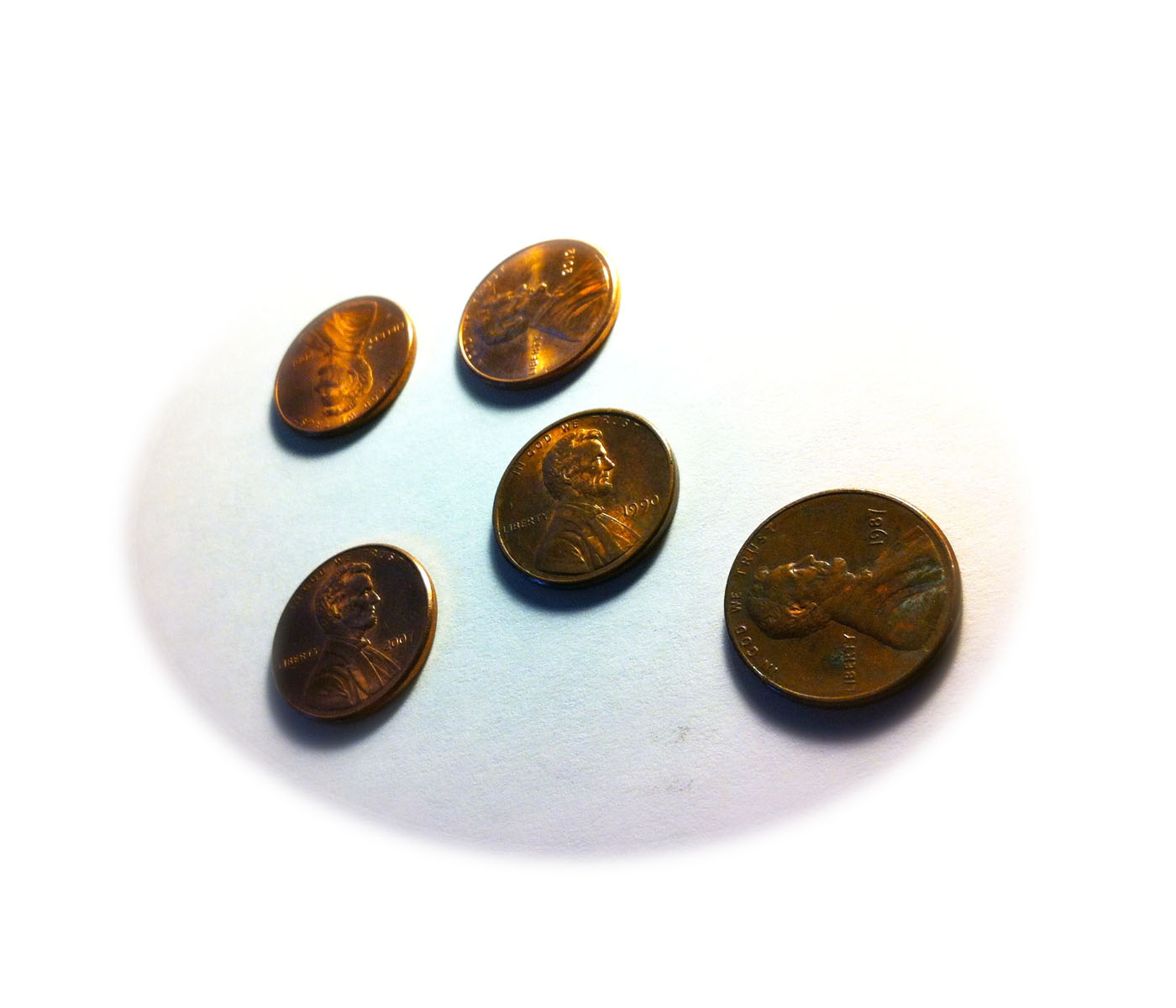
Hey Brother, can you spare 5 CENTS?

I’ve been thinking about the National Debt.

And I’ve been thinking about how much money is going to be spent by the candidates in both parties to get IN this Election this year.

President Obama and Governor Romney are both projected to spend at least a Billion dollars in their run for President. And billions more will be spent by those seeking office in Congress and on a state level.

We may never know how much the Super Packs spend to support the candidates and issues that they favor.

I propose that anyone running for public office (and any super pack) give 5 CENTS of every dollar they spend in advertising, polling, telemarketing, research, lawn signs… what ever… 5 cents out of ever dollar that they spend to get to the White House (or Congress or the Governor’s House) to pay down the NATIONAL DEBT.

I don’t think it should be a tax. I think it should be a good will offering.  They could declare it when the report how much they’ve received in donations… then cut a check to the IRS.

Its simple. If you’d like to represent me (and the other citizens of the United States), then I think you should put your money where your mouth is by giving a measly 5 cents per buck  you spend getting into office to help pay off the National Debt.

Do that…and you can proudly proclaim it during your next stump speech or at your next debate. Your really ARE doing something to pay down the Debt!

Do that… and you can use my nifty little logo on your advertising and stuff.

I know that even 5% of all the money spent on this election will not solve the Debt crisis, but at least it will put 5% of ALL THAT MONEY to some good use.


Feel free to repost to you favorite candidate’s site. Come on…lets get THIS party started.


Thought of the Day 7.9.12

“If it wasn’t hard, everyone would do it. It’s the hard that makes it great.”

Tom Hanks

Tom Hanks was born in Concord, California, in 1956. He is 56 years old.

Hanks is an actor, director and producer. He started his acting career in the sitcom Bosom Buddies in the early 1980s. His first movie hit was SPLASH. Next came BIG in which he  seemed to both lampoon and perfect his man/child image with sweetness and charm. He left both qualities home when he played the gruff manager of an all-woman baseball team in A League of Their Own in 1992 and we learned that “there is NO crying in baseball.” He took on the role of leading rom.com. man in Sleepless in Seattle in 1993.

Hanks has since proved that he can easily handle both tough, serious roles as well as comedies with layered performances in Philadelphia, Forrest Gump, Apollo 13, That Thing You Do, Saving Private Ryan, You’ve Got Mail, Cast Away,  The Road to Perdition, The Terminal, Charlie Wilson’s War,  The Da Vinci Code, Angels and Demons, and Extremely Loud and Incredibly Close.

He has lent his voice to several animated characters, most notably Woody from the Toy Story franchise.

He expanded on two of his most popular films (Apollo 13 and Saving Private Ryan) by co-producing and directing  HBO miniseries with similar content. From Earth to the Moon followed the Apollo missions from Sputnik to Apollo 17.  Band of Brothers retold the story of “Easy” Company’s WWII European campaign. He later Executive Produced The Pacific which followed three Marines in the fight against Japan in that War.

Tom Hanks

Tom Hanks (Photo credit: Alan Light)


Random Thought: Corn


Driving down a country road yesterday I noticed that the corn has started to spike. I love when that happens. It is already over my head, so walking next to the corn field on my daily walks with the dog is like walking next to a cool, living wall of green. But driving by it yesterday I got a whole different perspective. I got the feeling God went to some cosmic fabric store bought a giant bolt of green corduroy and threw it over the hill. Ahhh, the beauty of living in the country.