Category Archives: Today’s Birthday

Xin QiJi 5.28.13 Thought of the Day

Precious hairpin, broken, halved
At the Peach-Leaf Ferry where
We parted; darkening mist and willow shroud the place.
I dread to climb the tower-top stair;
Nine days out of ten wind raves, rain torrents race:
It breaks my heart to see the scarlet petals scatter one by one.
All this with nobody to care
Above it – who is there
Will bid the oriole’s singing cease?
Xin QiJi

[Image courtesy: OnePlaceTravel.com]

[Image courtesy: OnePieceTravel.com]

Xin QiJi was born on this day in Licheng (now Jinan) in the Shandong Province  of China in  1140. Today is the 873rd anniversary of his birth.

He was born to an age of conflict. Northern China was occupied by a nomadic “horde” from north-east China called the Jin or Jurchen.

In his childhood his grandfather told him about the time when the Han Chinese ruled the north and told him to be an honorable man and seek revenge against the barbarian for the nation. It was then when he developed his patriotic feelings. [Cultural China.com]

At 22 he began his military career with a group of fifty men under his command. He fought along side Geng Jing with his 10,000 strong army. After some success in 1161 Xin QiJi convinced Geng Jing to …

 …Join forces with the Southern Song army in order to fight the Jurchen more effectively. … but just as Xin finished a meeting with the Southern Song Emperor… Xin learned that Geng Jing had been assassinated by their former friend-turned-traitor, Zhang Anguo (张安国). With merely fifty men, Xin fought his way through the Jurchen camp and captured Zhang Anguo. Xin then led his men safely back across the border and had Zhang Anguo decapitated by the emperor. [Ibid]

His bravery, military prowless, and loyality to Geng Jing, his men and the Emperor “gained him a place in the Southern Song court.” [Ibid]

He was frustrated by the courts appeasement policy toward the invaders, and kept from a position of influence by being given “a series of minor posts” [Ibid] in the court.

[Image courtesy: ibid]

[Image courtesy: Cultural China.com]

Although he was an effective ruler on the district level (where he improved the irrigation system, helped poverty-struck peasants and maintained  well trained troops) it is through the  poetry that he began to write when he moved to the South that is known for today.

Xin Qiji’s Song poems are “powerful and sonorous , embracing the world and history”. As a patriotic lyricist , he sang of the sorrows and joys of the time , and the indignation and hope of the nation , pushing the Song poems up a new peak . [Ibid]

When young, I knew not the taste of sorrow,
But loved to mount the high towers;
I loved to mount the hight towers
To compose a new song,urging myself to talk about sorrow.
Now that I have known all the taste of sorrow,
I would like to talk about it, but refrain;
I would like to talk about it, but refrain,

And say merely: “It is chilly; what a fine autumn!” [Ibid]

-Xin QiJi

[Image courtesy: Cultural China.com]

[Image courtesy: Cultural China.com]


Helena Bonham Carter 5.26.13 Thought of the Day

“I should get a few ribs taken out, because I’ll be in a corset for the rest of my life.” —Helena Bonham Carter

Helena Bonham Carter at the press conference o...

Helena Bonham Carter at the press conference of “Toast”. (Photo credit: Wikipedia)

Helena Bonham Carter was born on this day in London, England in 1966. She is 47 years old.

She is youngest of three children born to Elena and Raymond Bonham Carter. Her mother is a psychotherapist, her father was a banker. She went to South Hampstead High School  and Westminster School.  Although not formally trained as an actress Bonham Carter had plenty of gumption and talent. When she won second place in a national poetry writing competition she used the money she won to put her head shot in a casting directory. She started to get commercials and made a few television dramas.

Her first feature film was in 1985 with A Room with a View in which she played Lucy Honeychurch. The following year she nabbed the title role as Lady Jane Grey in Lady Jane. Period drama seemed in her blood and she was quickly dubbed the “Corset Queen” for her roles like:

  • Ophelia in Hamlet,
  • Caroline Abbott in Where Angels Fear to Tread,
  • Helen Schiegel in Howards End,
  • Elizabeth in Frankenstein,
  • Olivia in Twelfth Night and
  • Kate Croy in The Wings of the Dove.

But she could bring the drama (nd occasionally  a darkly comic sensibility) to more modern roles too, as she did in Fight Club, Live from Baghdad, and Terminator Salvation.

After 2001, when she played Ari, a sympathetic ape in Planet of the Apes, she seemed to take on a new type of typecasting and this beautiful actress was suddenly thrust into the role of the haggard witch…which is what she played in Big Fish and the Harry Potter. She also did  creepy variations on that genre with her roles as:

  • Mrs. Lovett in Sweeny Todd,
  • Madame Thenardier in Les Miserables
  • Miss Havisham in Great Expectations and
  • the Red Queen in Alice in Wonderland.

Then she did a perfectly lovely, warm and very funny turn as the Queen Mom in the wonderful The King’s Speech. She earned an Academy Award nomination for the role.

Colin Firth and Helena Bonham Carter filming T...

Colin Firth and Helena Bonham Carter filming The King’s Speech at Queen Street Mill Textile Museum. (Photo credit: Wikipedia)

Upcoming for films for Bonham Carter include:

  • The Lone Ranger
  • The Young and Prodigious Spivet and
  • Burton & Taylor (She plays Taylor to Dominic West’s Burton for the BBC biopic that promises to out act the Lifetime / Lindsay Lohan movie on the famous pair, Liz and Dick.)

Pieter Neefs the Younger 5.22.13 Thought of the Day

Interior of a Cathedral

Interior of a Cathedral (Photo credit: Wikipedia)

Pieter Neefs, the Younger was born on this day in Antwerp, Belgium,  in 1620. Today is the  393rd anniversary of his birth.

Pieter  was one of five children born to Pieter Neefs the Elder and Maria Lauterbeens Neef.  Along with his brother, Ludovicus, he learned to paint from his father,  an established architectural painter. By 1640, when Pieter the Younger was 20 years old, he was working with his father and brother full-time, although he’d never gone through formal training or been registered at the guild hall.

Interior of a Church

Interior of a Church (Photo credit: Wikipedia)

The subject of most of the Neefs paintings was the interiors of the great churches of Antwerp. The grand interiors of a church allowed the Neefs to explore both perspective and light in their detailed paintings.

Their most frequent subject was the interior of Antwerp Cathedral; the details of sculpture, altars and paintings vary in accuracy, and sometimes the subject seems to be very freely interpreted. The Neefs also liked to depict the effects of artificial illumination in crypt-like spaces (in the manner of Hendrick van Steenwijck the younger). [Sphinx Fine Art . com]

The artist worked together, often on the same subject, so it is sometimes difficult to tell where one Pieter’s work ends and the next Pieter’s work begins.

English: Interior of a Gothic Church

English: Interior of a Gothic Church (Photo credit: Wikipedia)

But Pieter Neefs the Younger’s work makes …

a more reserved impression; their colouring is smoother, and they are not as dark in the shadows, while their drawing is sharper. Solely working as architectural painters, they had the figures added to the finished works by colleagues. [Dorotheum.com]

He died some time after 1675.

Interior of a Gothic Church

Interior of a Gothic Church (Photo credit: Wikipedia)


Bernie Taupin 5.22.13 Thought of the Day

English: Bernie Taupin attending the premiere ...

English: Bernie Taupin attending the premiere of The Union at the Tribeca Film Festival. (Photo credit: Wikipedia)

“Don’t let the sun go down on me.” — Bernie Taupin

Bernard John Taupin was born on this day in Sleaford, Lincolnshire, England in 1950. He is 63 years old.

Bernie was the middle son born to Robert and Daphne Taupin. His father was a farmer and stock man, his mother a nanny. He has an older brother, Tony. Little brother Christopher (aka Kit) came along 11 years after Bernie was born.

Bernie credits his mother and paternal grandfather for instilling him with an appreciation for literature, nature, history, music and poetry. Although Bernie didn’t have much interest in traditional education, he demonstrated an uncommon flair for writing.  [Bernie Taupin Biography]

At 15 he dropped out of school  and spent two years hopping from one dead-end job to the next in rural England. Then, in 1967, he saw an ad in New Musical Express. Liberty Records was looking for talent. He answered the ad. So did Reginald Kenneth Dwight (aka Elton John). The two joined forces to become one of the best song writing teams in the history of rock and roll.

Publicity photo of Elton John and Bernie Taupin.

Publicity photo of Elton John and Bernie Taupin. (Photo credit: Wikipedia)

With a musical partnership that has lasted longer than many marriages the John and Taupin have released 356 songs (more than “Lennon/McCartney and Jagger/Richards combined” [Elton John.com]  According to John Taupin makes it easy…

…He’s a very cinematic writer. I get a piece of paper [from him] and it has as story on it. Then I sit down at the keyboard and hope and pray that something is going to come out. Because the story that he’s telling affects what I’m hearing. [Ibid]

Although Taupin wrote with other musicians (Alice Cooper, Melissa Manchester and Heart to name a few) it was the songs he forged with Elton John that became the sound track to a post Beatles generation.

Their first hit was  1970’s Your Song. 

http://youtu.be/mTa8U0Wa0q8

[OK I’m going to stop writing for a while and just let you listen to some of the best of Bernie and Elton… feel free to sing along and play air guitar/piano or drums as you wish]

Here’s Tiny Dancer

and Benny and Jets 

and Yellow Brick Road

and Saturday Night’s Alright for Fighting

and Philadelphia Freedom

and Sad Songs (Say So Much)

http://youtu.be/YjwP9dkf5sY

and Daniel

http://youtu.be/Nry8i-crj4U

and Sun Go Down On Me

Bernie lives with his family on a working ranch in southern California where he breeds and trains cutting horses, hosts his own radio show, Bernie Taupin’s American Roots Radio, on Sirius/ XM Channel 30, and pursues a successful career as a painter. This year, “Beyond Words: An Exhibition Of Contemporary & Extraordinary Artworks By Famed Lyricist & Artist Bernie Taupin” has been touring select art galleries across America. [Elton John.com]


Albrecht Dürer 5.21.13 Thought of the Day

“What beauty is, I know not, though it adheres to many things.” — Albrecht Dürer.

Self-portrait, 1498. Museo del Prado, Madrid. ...

Self-portrait, 1498. Museo del Prado, Madrid. Oil on wood panel, 52 cm x 41 cm. (Photo credit: Wikipedia)

Albrecht Dürer was born on this day in Nuremberg, Germany in 1471. Today is the 542nd anniversary of his birth.

Dürer  was the third child born to Albrecht and Barbara Dürer. Although the family name “Dürer” means door maker, his father was actually a successful goldsmith. It was from his father that young Albrecht learned to work with gold and to draw. His talent for art led him to an apprenticeship with Michael Wolgemut at 15 and then to travel throughout Europe to study with various artist.

Durer self-portrait at the age of thirteen. , ...

Durer self-portrait at the age of thirteen. , Albertina. (Photo credit: Wikipedia)

Dürer’s skill set grew to include woodcuts, water colors, print making, drafting, and oil painting.

 Dürer revolutionized printmaking, elevating it to the level of an independent art form. He expanded its tonal and dramatic range, and provided the imagery with a new conceptual foundation. [The Metropolitan Museum of Art]

He came back to Nuremberg in 1495 and opened his own workshop. He did three woodcut series, Passion, Apocalypse and Life of the Virgin  in the next few years. His work included both sacred and secular subjects.

…Such as the so-called Master Engravings featuring Knight, Death, and the Devil (1513; 43.106.2), Saint Jerome in His Study (1514), and Melancholia I (1514; 43.106.1), which were intended more for connoisseurs and collectors than for popular devotion. Their technical virtuosity, intellectual scope, and psychological depth were unmatched by earlier printed work. [Ibid]

Dürer’s time abroad, especially in Italy, influenced his ascetic chiefly in the areas of persepective, proportion and human anatomy. He wrote the Four Books on Human Proportion.

c. 1490-1493

c. 1490-1493 (Photo credit: Wikipedia)

In 1512  the Holy Roman Emperor Maximilian 1 became Dürer’s patron.

What Dürer was angling for was a lifetime imperial pension, and he got one, though at the price of taking on hackwork. Along with other court artists, he was ordered to design an array of ceremonial stage props to enhance the emperor’s status visually. Most of this stuff — chariots, arches, froufrou armor — was just shiny, expensive junk, and a waste of creative energy. [NYTimes.com]

That didn’t stop him from pursuing Maximilian’s successor, Charles V., as his next patron. About this time he also became interested in the teachings of Martin Luther.

Late in his life he painted his final masterpiece,  two large panels for the Nuremberg town hall, The Four Apostles. In one panel St. John is in the foreground with St. Peter in the background, in the second panel St. Paul takes the foreground with St. Mark in the background.

The Four Apostles

The Four Apostles (Photo credit: Wikipedia)

The Four Apostles

The Four Apostles (Photo credit: Wikipedia)

He died in 1528 at the age of 56.

Dürer's Rhinoceros, a fanciful 'armoured' depi...

Dürer’s Rhinoceros, a fanciful ‘armoured’ depiction. (Photo credit: Wikipedia)


Studs Terkel 5.16.13 Thought of the Day

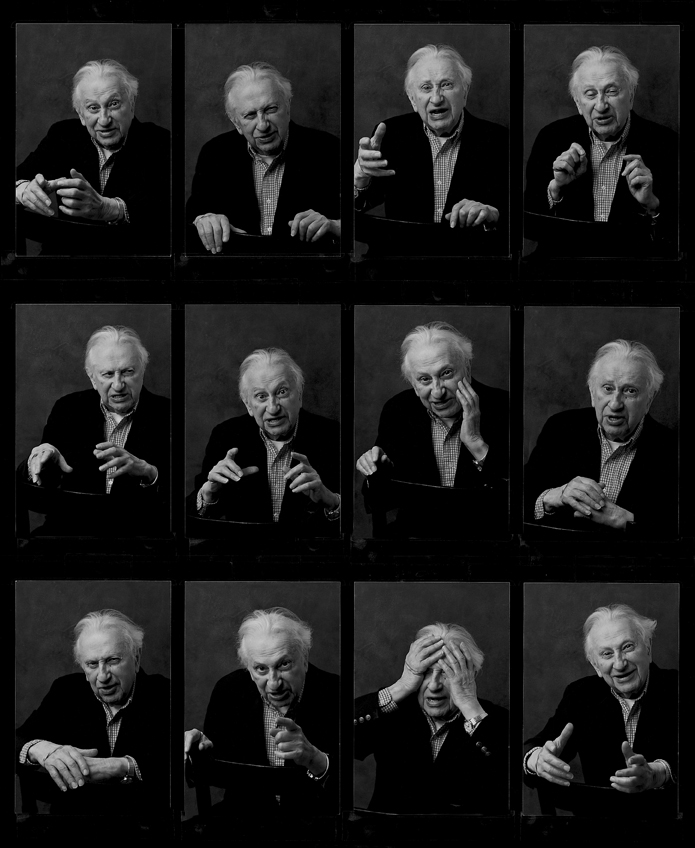
“Most of us have jobs that are too small for our spirits.”–Studs Terkel

[Image courtesy: NPR.org]

[Image courtesy: NPR.org]

Louis “Studs” Terkel was born on this day in New York City, New York, USA in 1912. Today is the 101st anniversary of his birth.

Studs was the youngest of three boys born to Samuel and Anna Terkel. Both his parents worked in the clothing industry. His father was a tailor and his mother was a seamstress. The family moved to Chicago in 1922 and the Terkels opened a boarding house. There Studs met people from all over the world and listened to their stories.

Terkel later credited his curiosity and comfort with the world’s people to the many tenants he met there. “The thing I’m able to do, I guess, is break down walls,” he once told an interviewer. “If they think you’re listening, they’ll talk. It’s more of a conversation than an interview.” [Biography.com]

He went to the University of Chicago  and in 1934 he earned his law degree. But Studs’ talents lie else where and he didn’t take the Bar exam.

It was the middle of the Great Depression and he joined the WPA working in the radio division of the Writers Project. He found himself both writing and performing on air. He did both scripted work and read the news. Terkel did a stint in the Air Force then came back to radio. He covered the news, sports and eventually got his own interview and music show (he could play what ever he liked, so the show was an eclectic mix of folk, opera, jazz and blues.) In 1945 he made the leap to TV and hosted Stud’s Place.

His first book was Giants of Jazz published in 1956.

In 1966 he published …

his first book of oral history interviews, Division Street: America, … It was followed by a succession of oral history books on the 1930s Depression, World War Two, race relations, working, the American dream, and aging. His last oral history book, Will the Circle Be Unbroken: Reflections on Death, Rebirth, and Hunger for a Faith, was published in 2001.  [Studs Terkel.org]

He says in the preface of Division Street:

I realized quite early in this adventure that interviews, conventionally conducted, were meaningless. Conditioned clichés were certain to come. The question-and-answer technique may be of some value in determining favored detergents, toothpaste and deodorants, but not in the discovery of men and women. [Division Street]

It was better to just turn on the tape recorder and talk — as if your were sitting down to have a drink  at the bar in Stud’s Place.

His 1974 book Working became a Broadway play a few years later and we got to know The Housewife, The Cleaning Women, The Long Distance Trucker, Joe, and a dozen or so other every day characters that had never made it to the stage before.

In 1988 Terkel appeared as Hugh Fullerton in the John Sayles movie 8 Men Out about the Chicago Black Sox scandal.

He was still writing into the 21st Century, his last book, P.S.: Further Thoughts from a Lifetime of Listening, was released in 2008, but open heart surgery in 2005 (at 93) slowed him down — and forced him to stop his habit of smoking two cigars a day.

Studs died on Halloween Day of 2008. He was 96 years old.


Recommended Links:


L. Frank Baum 5.15.13 Thought of the Day

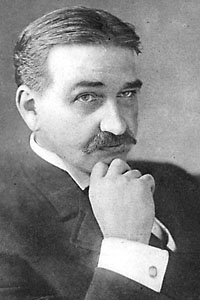
“Imagination has brought mankind through the dark ages to its present state of civilization. Imagination led Columbus to discover America. Imagination led Franklin to discover electricity.”– L. Frank Baum

[Image courtesy: xyz
[Image courtesy: QOTD.org]

Lyman Frank Baum was born on this day in Chittenango, New York, USA in 1856. today is the 157th anniversary of his birth.

Frank was the seventh of nine children born to Benjamin and Cynthia Baum. The Baums were wealthy. Benjamin made his fortune in the oil fields of Pennsylvania. And Frank grew up happy at the family estate of Rose Lawn. He was a shy child, and, because of a “weak heart,”  he was home schooled for most of his life. He loved to read and spent hours in his father’s library. He didn’t like classical fairy tales — their goblins and villains were too scary — so he made up his own stories and shared them with his brothers and sisters.

When he was twelve his father… hoping to toughen Frank up and cure him of his ‘daydreaming,’ sent him to the Peekskill Military Academy. Baum was miserable there for over a year, and the only results of the experiment were a physical (and possibly also psychological) breakdown, and a lifelong aversion to both formal education and the military. [The Oddness of Oz]

Once home he turned to creative writing. His father bought him a small printing press and, along with his little brother Harry, “he started his own newspaper, the Rose Lawn Home Journal” [the Literary Network]. Frank filled the pages, honing his craft by cranking out articles, fiction and poetry. Other publications included Baum’s Complete Stamp Dealers’ Directory an 11 page  booklet for amateur philatelist and The Poultry Record in which Baum wrote about Hamburg chickens. “He would also write about the raising and breeding of chickens in The Book of Hamburgs. (1896)” [Ibid]

He became fascinated with acting and the theater.

He developed an intense and enduring fascination with the theater. In 1878, he began to work as a professional actor. Four years later his father bought him a small dramatic company, and Baum was soon adapting and starring in a romantic melodrama, The Maid of Arran [The Oddness of Oz]

Baum as Hugh Holcomb in Maid from Arran. [Image courtesy: Hungry Tiger Press.com]

But Baum had bad luck in almost every business endeavor he put his hand to. The Maid of Arran was a moderate success, but while he was touring with the play his theater back home (the one his father bought him) burned down. The company lost the building, all the sets and costumes, and all of the scripts (except those they were traveling with). Ironically the Baum play that was running at the time was called “Matches.”

Other short-lived opportunities soon soured. And he struggled for long-term success. In 1882 he married Maud Gage. Now he had a family to provide for. The time of being a daydreamer were over.

The family moved Aberdeen, South Dakota where he opened a department store, Baum’s Bazaar. The store failed — Frank let people have too much store credit. He became an editor of The Aberdeen Saturday Pioneer, where, after the Massacre at Wounded Knee, he wrote (what one hopes was) a Swiftian inspired modest proposal that all Native Americans be exterminated…

“Having wronged them for centuries, we had better, in order to protect our civilization, follow it up by one more wrong and wipe these untamed and untamable creatures from the face of the earth.”

He tried his hand at managing a baseball club and worked as a buyer for a department store. Nothing seemed to stick.

Baum moved the family to the Humboldt Park neighborhood of  Chicago in 1891. He worked as a reported for the Evening Post, edited a magazine on window displays and worked as traveling salesman.

In 1897, he finally started to have some success with his writing.   Mother Goose in Prose, stories based on traditional Mother Goose poems paired with lovely Maxfield Parrish illustrations, sold well enough that he could quit his door-to-door salesman job. Two years later Baum published Father Goose, His Book this time with W.W. Denslow as his illustrator and had even greater success.

Cover of the first edition of the Wonderful Wizard of Oz [Image courtesy: Loc.gov]

Cover of the first edition of the Wonderful Wizard of Oz [Image courtesy: Loc.gov]

In 1989 he wrote the Wizard of Oz. It was published in 1900, again with Denslow as illustrator, and cost $1.50 a copy.

Unlike other books for children, The Wizard of Oz was pleasingly informal; characters were defined by their actions rather than authorial discourse; and morality was a subtext rather than a juggernaut rolling through the text. [SmithsonianMag.org]

Baum wrote 13 more Oz books (some coming as frequently as one a year.) He had done more than write a best seller, he had created a new genre of fiction… The American Fairy Tale.

He wrote dozens of other books, from Dot and Tot of Merryland to The Life and Adventures of Santa Claus to his last book Phoebe Daring: A Story for Young Folk, but the Oz books were his bread a butter best sellers.

The family moved to Hollywood, California and Baum tried his hand at making silent films with the creation of the Oz Film Manufacturing Company. He wrote, directed and acted with the company which used experimental film effects to capture some of Baum’s fantastic themes. He also  worked with the Uplifters theatre troupe.

L. Frank Baum died of a stroke on May  6th, 1919.

“To please a child is a sweet and lovely thing

that warms one’s heart and brings its own reward.”

–L. Frank Baum

An illustration by W. W. Denslow from The Wond...
An illustration by W. W. Denslow from The Wonderful Wizard of Oz, also known as The Wizard of Oz, a 1900 children’s novel by L. Frank Baum. (Photo credit: Wikipedia)

Katharine Hepburn 5.11.13 Thought of the Day

“. . . as one goes through life one learns that if you don’t paddle your own canoe, you don’t move.”–Katharine Hepburn

From Woman of the Year [Image courtesy: Wikimedia]

From Woman of the Year [Image courtesy: Wikimedia]

Katharine Houghton Hepburn was born on this day in Hartford, Connecticut, USA in 1907. Today is the 106th anniversary of her birth.

She was the second of six children born to Thomas and Katharine Hepburn. Her father was a urologist, her mother was a suffragette. Her parents “encouraged her to speak her mind, develop it fully, and exercise her body to its full potential.” [IMDb] She decided to become an actress while attending Bryn Mawr College.

Upon graduation  in 1928 (she got her degree in history and philosophy) she went to Broadway  where she got a number of small roles before starring as Antiope, the Amazon princess, in A Warrior’s Husband in 1932. The same year she made her first film A Bill of Divorce with John Barrymore. She won her first Academy Award for 1933’s Morning Glory.

Hepburn was always her own woman. She wore pants, but didn’t wear makeup. She spoke her mind and she certainly didn’t fit into the Hollywood starlet mold. That made for a difficult road for the actress in the mid to late 1930’s. Although she had a few stage and screen successes  she struggled until she starred in The Philadelphia Story on Broadway in 1938.

Cropped screenshot of the film The Philadelphi...

Cropped screenshot of the film The Philadelphia Story (Photo credit: Wikipedia)

She quickly bought the film rights, and so was able to negotiate her way back to Hollywood on her own terms, including her choice of director and co-stars. The film version of The Philadelphia Story (1940), was a box-office hit, and Hepburn, who won her third Oscar nomination for the film, was bankable again. For her next film, Woman of the Year (1942), she was paired with Spencer Tracy, and the chemistry between them lasted for eight more films, spanning the course of 25 years, and a romance that lasted that long off-screen. (She received her fourth Oscar nomination for the film.) Their films included the very successful Adam’s Rib (1949), Pat and Mike (1952), and Desk Set (1957). [Ibid]

Cover of "The Hepburn & Tracy Signature C...

Cover via Amazon

By the 1950’s she was pegged for more mature roles like Oscar nominated role opposite Humphrey Bogart in The African Queen.

She won her second Oscar opposite Spencer Tracy in Guess Who’s Coming to Dinner (Tracy’s last movie) in 1967. And repeated the walk down the red carpet to pick up Oscar #3 the following year for The Lion In Winter.

Hepburn added more TV work to she schedule in the 1970s, but still found some plum film work  including Rooster Cogburn and On Golden Pond. She won her 4th Oscar for Golden Pond.

From On Golden Pond [Image courtesy: The Hairpin.com]

From On Golden Pond [Image courtesy: The Hairpin.com]

Katharine Hepburn died on June 29, 2003. She was 96 years old.


Bono 5.10.13. Thought of the Day

“Music can change the world because it can change people.” — Bono

Bono [Image courtesy: Club Fashionista.com]

Bono [Image courtesy: Club Fashionista.com]

Paul David Hewson (aka Bono) was born on this day in Ballymun, Dublin, Ireland in 1960. He is 53 years old.

Paul was born to Bobby Hewson and Iris Rankin. He is the second of their children, his brother Norman is eight years his senior. His parents were unusual in their Dublin neighborhood as his father was Catholic and his mother was Church of Ireland (Protestant). He walked the fence between the two religions, attending services with his mother and brother and starting his education at The Inkwell (a Protestant school) before transferring to the Catholic St. Patrick’s Cathedral Choir School. His tenure in the Catholic school was not long as the “precocious, outspoken” [atu2.com] boy acted up once too often and was asked to leave after “throwing dog feces at his Spanish teacher.” [Ibid] He found his feet at a non-denominational, co-ed high school, Mount Temple Comprehensive.

At 14 Paul’s mother died of a brain hemorrhage. Life with his father was difficult.

Despite his father’s attempts to hold the family together, Bono claims that he and Bob Hewson “didn’t get on very well.” As a result, father and son never enjoyed a particularly close relationship. In fact, Bono would later claim that the inarticulate Bob Hewson’s unspoken message to his children was “to dream is to be disappointed.”[Ibid]

Paul rebelled against his father by dreaming big and trying everything.

At Mount Temple “he had a flair for history and art, and became a keen and expert chess player” [Ibid]. It is there that he met his wife to be Alison Stewart, his eventual U2 band mates, Larry Mullen, Dave Evans (aka The Edge), and Adam Clayton, and picked up the name Bono.

At first the group did covers, but then they started to write and perform their own music. Their first album was 1980’s Boy. The LP featured the post-punk Twilight and I Will Follow.

October  came out  in 1981 and touched on the band’s spiritual side, especially with Gloria, Tomorrow and With a Shout (Jerusalem).

1983’s WAR reached #1 in England and  #12 on the US charts. Bono said of the recording: “‘More than any other record, ‘War‘ is right for its time. It is a slap in the face against the snap, crackle and pop. Everyone else is getting more and more style-orientated, more and more slick.” [U2.com Discography]  Stand out tracks (on a very strong album) include 40, New Year’s Day, and Sunday Bloody Sunday.

U2’s fourth album, The Unforgettable Fire was produced by Brian Eno and Daniel Lanois. Pride (In the Name of Love), one of the groups biggest hits, came from The Unforgettable Fire.

[As much as I love the bass and drums on the earlier stuff — and I do — the guitar on this one just kills.]

If you STILL haven’t found what you’re looking for… maybe you need to pull out 1987’s The Joshua Tree. [Because, frankly, I’m about to give up being an objective blogger and just gush with fan girl admiration…With OR Without You.] Here’s Where The Streets Have No Name…

Rattle and Hum came out in 1988. It combines covers, new original music and concert recordings of some of their most famous songs. A documentary film directed by Phil Joanou  was released at the same time as the album.  Here’s All I want is You [My personal favorite U2 song.]

Achtung Baby was the band’s 7th release. It saw a shift to a more industrial rock and electronic dance music. Zooropa (1993) and Pop (1997) followed.

2000’s All That You Can’t Leave Behind marked a return to a lyric/melody driven style. It boasted successful singles Beautiful Day, Elevation, Walk On and Stuck in a Moment You Can’t Get Out Of.

Bono said of How To Dismantle an Atom Bomb  “‘It’s just such a personal record. It may just be our best.'” [Um yeah!] This time Vertigo, All Because of You, Sometimes You Can’t Make It on Your Own, City of Blinding Lights, and Yahweh stood out.

No Line on the Horizon came out in February of 2009 along with the companion film Linear. Get on Your Boots and Magnificent both charted in the US (Boots, with its awesome bass and guitar riffs, was #1 in Ireland) Here’s the band playing  Magnificent on Letterman:

Bono is still writing, recording and performing. If you are in the New York area and have a cool $3000 to donate to a good cause you can see him on Monday (May 13)  as part of the Robin Hood Foundation Gala at the Javits Center.  A more affordable option may be a trip your local movie theatre to see U2-3D, a concert film that comes out May 30th.


I could write another 500 words on Bono’s charitable works, but that would put me over the limit.