Category Archives: Today’s Birthday

Thought of the Day 8.2.12 L’Enfant

Pierre Charles L'Enfant

Pierre Charles L’Enfant (Photo credit: Wikipedia)

Pierre Charles L’Enfant was born on this day in 1754 at Anet, Eure et Loir, France. Today is the 258th anniversary of his birth.

L’Enfant was educated at the Royal Academy in Paris as an engineer before joining Lafayette  to help the American side during the War of Independence. He arrived in 1777 at the age of 23 and fought as military engineer. He joined George Washington’s staff  after recovering from injuries at the Siege of Savannah. He attainted the rank of Major of Engineers in 1783.

He moved to New York after the war and established a civil engineering firm. In 1788 he redesigned the  New York’s city hall to be the United States’ first capitol building, Federal Hall.  The building was the site of George Washington’s inauguration and where the Bill of Rights was signed.

Federal Hall, Seat of Congress 1790
hand-colored engraving by Amos Doolittle, depicting Washington’s April 30, 1789 inauguration. [Image Courtesy Wikimedia Commons: public domain]
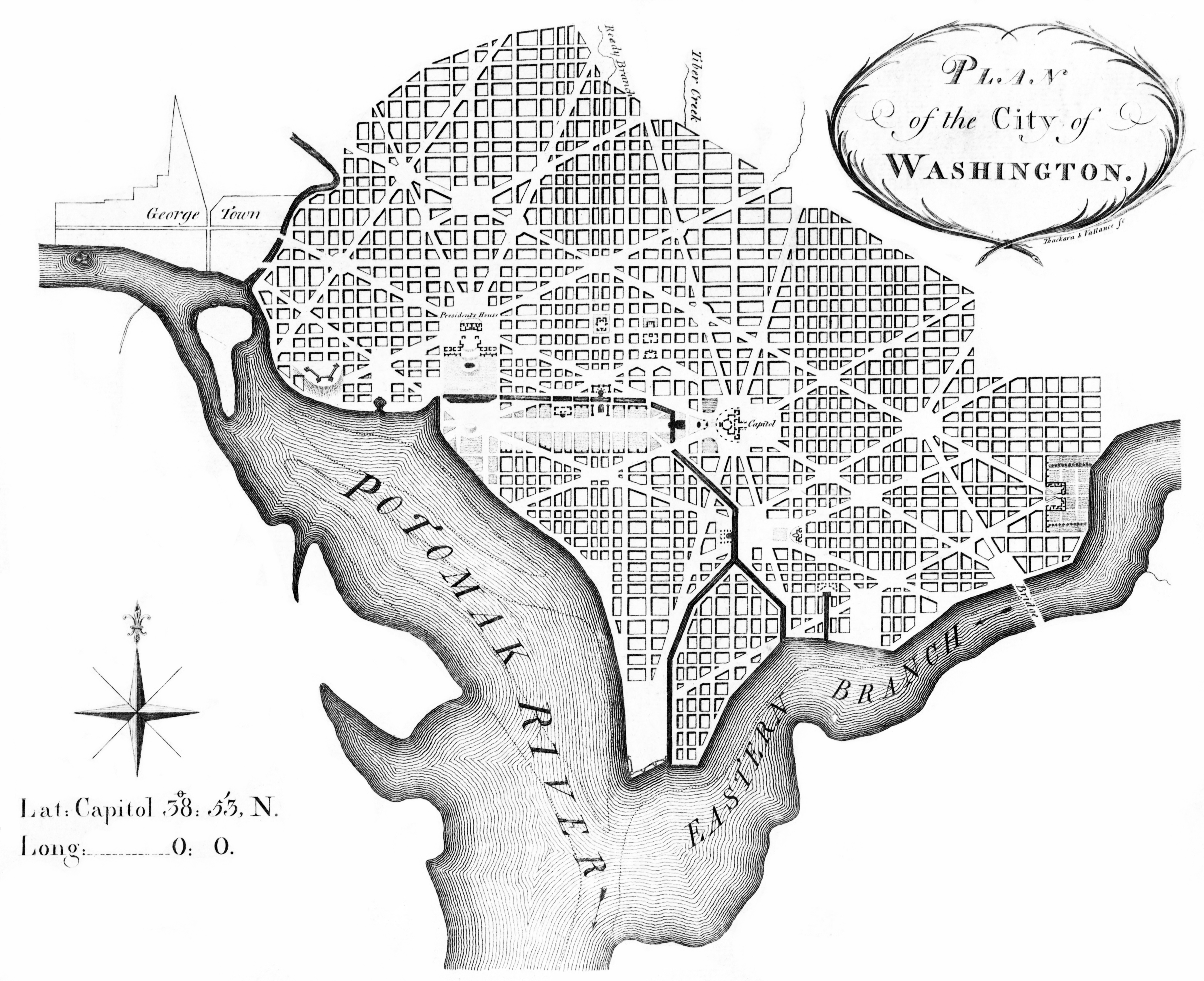
In 1791 the US Congress authorized the building of a capital city on the Potomac River. George Washington appointed his old friend L’Enfant  to design the new city in 1791.

L’Enfant’s “Plan of the city of Washington” March 1792 is at the Library of Congress. [Image courtesy Wikimedia Commons. This image is in the Public Domain.]

“Congress House” (the Capitol) was to be on top a hill, a place of honor overlooking the rest of the city.  The “President’s House” (the White House) was to be a grand mansion fit for the leader of the country. His plan outlined the need for public spaces including a grand public walk (today’s National Mall) ). It would be 1 mile long and 400 feet wide and would stretch from the Capitol to an equestrian statue of Washington (the Washington Monument is now where the statue would have been).

The western front of the United States Capitol...

The western front of the United States Capitol. The Capitol serves as the seat of government for the United States Congress, the legislative branch of the U.S. federal government. It is located in Washington, D.C., on top of Capitol Hill at the east end of the National Mall. The building is marked by its central dome above a rotunda and two wings. It is an exemplar of the Neoclassical architecture style. (Photo credit: Wikipedia)

According to “A Brief History fo Pierre L’Enfant and Washington, D.C.”:

L’Enfant placed Congress on a high point with a commanding view of the Potomac, instead of reserving the grandest spot for the leader’s palace as was customary in Europe. Capitol Hill became the center of the city from which diagonal avenues named after the states radiated, cutting across a grid street system. These wide boulevards allowed for easy transportation across town and offered views of important buildings and common squares from great distances. Public squares and parks were evenly dispersed at intersections.

Wide avenues and public squares would make it “people’s city”, while monuments  and inspiring buildings would give it the stature and importance of world capital.

While he was concerned with the grand vision of the city  his bosses on the Congressional appointed committee were concerned with how much the project was going to cost . They  wanted to keep the wealthy plantation owners in the area happy. L’Enfant “delayed producing a map for the sale of city lots (fearing real estate speculators would buy up land and leave the city vacant).” And he angered the commission when he had a prominent resident’s house torn down because it was in the way of one his boulevards.  When the city’s surveyor went behind his back and produced a lot map L’Enfant resigned. He was never properly paid for the work he did on the Capital.

The city was built, but the design had been greatly altered. Gone were the arrow straight streets and parkways. The Mall between the Capitol and the White House was a tree-covered park of irregular shape. Cows grazed on it.

Visitors ridiculed the city for its idealistic pretensions in a bumpkin setting and there was even talk after the Civil War of moving the capital to Philadelphia or the Midwest.

But in 1901 the McMillan Commission resurrected L’Enfant’s ideas and updated them for a modern city. The Mall was reclaimed, cleared and lined with American Elm trees. Memorials to Lincoln and Jefferson were added, and Museums and government buildings lined the perimeter.

L’Enfant worked on commissions

after the Capital, but non were very successful. His design for Philadelphia millionaire Robert Morris’ mansion was called Morris’ Folly. His final years were spent at the home of his friend William Dudley Digges, near Bladensburg, Maryland. He was buried there, but his body was exhumed and reinterred at Arlington National Cemetery with full military honors. His tomb now overlooks the city he helped design.

Tomb of Pierre Charles L'Enfant, designer of W...

Tomb of Pierre Charles L’Enfant, designer of Washington, D.C.’s original city plan, on the grounds of Arlington House (the Robert E. Lee Memorial) at Arlington National Cemetery in Arlington, Virginia, in the United States. (Photo credit: Wikipedia)


Thought of the Day 8.1.12 Herman Melville

“To the last, I grapple with thee; From Hell’s heart, I stab at thee; For hate’s sake, I spit my last breath at thee”

–Herman Melville


Photo of Herman Melville

Photo of Herman Melville (Photo credit: Wikipedia)

Herman Melvill was born this day on 1819 in New York City. Today is the 193 Anniversary of his birth.

He was the third of eight children. He grew up in Boston and Albany.  His father, Allan Melvill, was a successful merchant and the family lived comfortably for several years until an unsuccessful trading venture led to financial ruin. The elder Melvill sparked Herman’s love for adventure and the sea with stores of seafaring excitement and faraway places. Herman was 12 when his father died and the family moved to Lansingburg on the Hudson. It was then that his mother added the “e” to the end of the family name, and Melvill became Melville.

He got a job on a ship bound from New York to Liverpool as a cabin boy.  After several years as a teacher he heard the call of the sea again. In 1840 he signed on with the Acushnet from Fairhaven, Massachusetts. The ship left port for an 18 month journey in Pacific journey in January of 1841.  The Acushnet was a whaler and much of his material for Moby-Dick came from his time on board the ship. By the time they reached the Marquesas Islands in July of 1842 Melville had had enough of life on the Acushnet.

He deserted the ship and lived among the Typee tribe for three weeks. He then joined the crew of another whaler, this one, an  Australian ship called the Lucy Ann, was bound for Tahiti. Melville participated in a mutiny and landed in jail. Upon his release he signed up with yet another whaler and made it as far as Honolulu where he jumped ship again. He worked as a clerk until he was able to sign on with the USS United States which got him back to Boston in 1844. There Melville began to write about his adventures.

Cover of "Typee (Signet classics)"

Cover of Typee (Signet classics)

Typee is a quasi-autobiographical adventure novel about Tommo’s four month stay on a tropical paradise amidst the “nobel savages” (or cannibals) who may or may not be about to eat him,  and his relationship with the beautiful, and exotic, Faraway. He had trouble fining an American publisher, but the book was an overnight success when it was published in England. Omoo, continued the tale, again roughly following Melville’s adventures in the Pacific. Mardi, and a Voyage Thither showed a more sophisticated writing style. It was not a successful as the straight forward narratives of Typee and Omoo. In 1849 He published Redburn : His First Voyage, the fictionalized account of his first sea journey  as a cabin boy. In 1850 White-Jacket, based on his time as a seaman on the USS United States, was published. Because of its graphic depiction’s of flogging the U.S. Navy banned the punishment.

Sadly at this point the tides seem to have turned in his literary career. His popularity waned. Other books didn’t garner critical or popular acclaim in his lifetime. The Confidence-Man, Pierre, Billy Budd, and even Moby-Dick had to wait until a Melville revival, some 30 years after his death, to get their rightful praise.

Herman Melville: Moby-Dick

Herman Melville: Moby-Dick (Photo credit: wolfgraebel)

Melville went on the lecture circuit to supplement his writing income. He then moved his family to New York City and worked at the New York Custom House. He continued to write, working on both poetry and fiction, until his death.

http://www.online-literature.com/melville/

http://en.wikipedia.org/wiki/Herman_Melville


Thought of the Day 7.31.12 JKRowling

“It matters not what a person is born, but who they choose to be.”

–J.K.Rowling

English: J.K. Rowling reads from Harry Potter ...

English: J.K. Rowling reads from Harry Potter and the Sorcerer’s Stone at the Easter Egg Roll at White House (Photo credit: Wikipedia)

Joanne Rowling was born on this day in Yate, England in 1965. She is 47 years old.

Her creative writing career began as a little girl when she would tell  her sister Di fantasy stories. At five or six she wrote down a story about a rabbit who got the measles and was visited by a giant bumble bee.

The idea for Harry Potter, a boy who finds out he has magical powers and attends a school for Wizards, came to her while she was travelling from Manchester to London.

Upon graduating from Exeter University Rowling moved to Porto, Portugal to teach English as a foreign language. There she met Jorge Arantes and fell in love. The two married and had a daughter, Jessica, in 1993. When the marriage ended Rowling moved to Edinburgh, to be near her sister. She struggled financially and she and Jessica lived in a small flat and lived on welfare for a while.  While she worked on her postgraduate degree in education (so she could teach in Scotland) She began to write Harry Potter in earnest. Rowling often wrote in coffee shops because taking the baby for a walk was the best way to get her to fall asleep.

Cover of "Harry Potter and the Philosophe...

Cover of Harry Potter and the Philosophers Stone

She completed Harry Potter and the Philosopher’s Stone and found an agent. The book was submitted to twelve publishers before finding a home at Bloomsbury Publishing House in London. The publisher thought the target audience for the book would be pre-teen boys so they asked her to use her initials.  She added  “K” as her middle initial in honor of her grandmother. They did an first run of 1,000 copies.

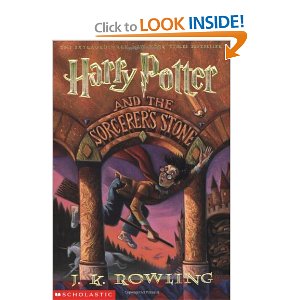
An auction was held for the rights to publish the book in the US (under the name “Harry Potter and the Sorcerer’s Stone.”) Scholastic Inc. won the auction and paid a whopping $105,000.

Cover of Harry Potter and the Sorcerer’s Stone from Amazon.com

The story of the young wizard took off like a golden snitch.

In 1999 the first three books in the Harry Potter series, ...The Sorcerer’s Stone, …The Chamber of Secrets and …The Prisoner of Azkaban held the top three spots on the New York times best-seller list.  The books “earned approximately $480 million in three years, with over 35 million copies in print in 35 languages.” according to biography.com. The following year Harry Potter and the Goblet of Fire, the fourth book in the series became the fastest-selling book of all time. It had a first printing of 5.3 million copies. And in 2000 the British Book Awards pegged Rowling as Author of the Year.

English: Alternate coat of arms of Hogwarts sc...

English: Alternate coat of arms of Hogwarts school of witchcraft and wizardry from Harry Potter book series, by J.K Rowling, with added shading effects. The motto translates to “never tickle a sleeping dragon” vector drawing,.SVG format. (Photo credit: Wikipedia)

The Order of the Phoenix came out in 2003 (an excruciating  three years wait for Potter fans). …The Half-Blood Prince “sold 6.9 million copies in the United State in its first 24 hours, the biggest opening in publishing history.”  This time the British Book Awards gave the book the prize granting it Book of the Year for 2006.  The final book in the series …The Deathly Hallows had the largest pre-order numbers ever.  It sold 11 million copies on the first day it was released in the UK and the US.

All seven books in the Harry Potter series in ...

All seven books in the Harry Potter series in order without their dust jackets. Each hardcover book used a different two-color scheme. The books are the first American editions published by Scholastic. Author’s collection. (Photo credit: Wikipedia)


Films of the books (with different directors and screenwriters) started  in 2001. They were all blockbuster events. And [despite some serious directing/screen writing and even acting quality issues (IMHO) with several of the movies] they all grossed top dollar and were box-office successes.

Director Alfonso Cuaron amped up the creepy and played down the camp in this, the third installment of the HP movies. In my humble opinion this is the best book to movie translation of the series. (Though I do like the Deathly Hallows 1&2 quite a lot as well.)

Royalties from the HP series, movies, merchandise and add-ons have made Rowling Britain’s 13 wealthiest woman.

Although the Harry Potter series has concluded (at least for now, rumor has it that she may revisit Hogwarts) Rowling continues to  write. Her dark comedy about small town politics, The Casual Vacancy, is due out soon.

She works with several charities including Amnesty International, Comic Relief, Gingerbread (formerly One Parent Families), Multiple Sclerosis Society of Great Britain and Lumos.  And she established the Volant Charitable Trust to combat poverty.

She married Dr. Neil Murray in 2001 and they have two children together.

—————————————–

It is also Harry Potter’s birthday.


Thought of the Day 7.30.12 Emily Bronte

“Love is like the wild rose-briar; Friendship like the holly-tree. The holly is dark when the rose-briar blooms, But which will bloom most constantly?”

–Emily Bronte

A portrait of Emily, painted by her brother Br...

A portrait of Emily, painted by her brother Branwell. (Photo credit: Wikipedia)
Emily Jane Bronte was born this day in Thornton, near Bradford, Yorkshire England in 1818. Today is the 194th anniversary of her birth.

Maria Branwell and Patrick Bronte had six children; Maria, Elizabeth, Charlotte, Patrick Branwell, Emily and Anne. The young family moved to Haworth Parsonage in 1824 where Patrick Bronte was curate. Emily was only three when her mother died, probably of stomach cancer, and she remembered little of the vivacious, lively woman who had brought so much joy to the house.

English: Brontë Parsonage Museum

English: Brontë Parsonage Museum (Photo credit: Wikipedia)
In 1824 the older girls were sent to Cowan Bridge School, a school for the daughters of middle class clergymen in Lancashire. The students endured harsh conditions, corporal punishment and fire and brimstone sermons along with long hours of study and prayer. The dormitories were unheated. In the morning  the students shared a basin of water to wash. Often it was so cold that the water had frozen over. It’s not surprising that the students took ill. There was an outbreak typhus and tuberculosis. The girls were brought home, but both Maria and Elizabeth died with in weeks of each other. The family was devastated.  Charlotte changed the name of the horrible school to Lowood and wrote about it in Jane Eyre,

Charlotte and Emily stayed at home and were educated by their Aunt Elizabeth Branwell along with their Brother and little sister Anne.  The children had very vivid imaginations and created fantasy adventures. “Glasstown” featured Branwell’s 12 wooden soldiers. Charlotte and Branwell  invented “Angria”  and Emily and Anne created “Gondal.” Gondal was and island in the South Pacific and was ruled by a woman who “was in control of herself fan her life.” Both Charlotte and Emily return to themes from Angria and Gondal in their later novels.

Brontë

Brontë (Photo credit: Wikipedia)

After a brief stint as a teacher in Halifax Emily return to Haworth Parsonage and took over as housekeeper.  In 1845 Charlotte discovered two notebooks of Emily’s poems and encouraged her to publish them. Emily felt betrayed and refused, but relented when she found out that Anne writing about Gondal too.

Cover of the first edition of Poems by Currer,...

Cover of the first edition of Poems by Currer, Ellis, and Acton Bell, by the Brontë sisters, 1846 (Photo credit: Wikipedia)

Aylott and Jones published 62 of the sister’s poems in “Poems by Currer, Ellis and Acton Bell.”  The initial run sold only 2 copies, but the sisters were undaunted.  By 1847 they had each had a novel published (with in months of one another. Charlotte penned  Jane Eyre (October). Emily  and Anne had a three volume deal. Emily took two volumes for Wuthering Heights, and Anne had the the last volume for Agnes Grey. The set was published in December.  Anne quickly followed up with The Tenant of Wildfell Hall in June of 1848. Emily was working on a second novel at the time of her death, but it has been lost. (Some speculation has it that Charlotte destroyed the manuscript.)

Emily took ill after her brother Branwell’s funeral. She died of tuberculosis on December 19, 1948.

Wuthering Height is Emily Bronte’s literary legacy. CLICK HERE For a readers guide to the novel. You can pick up a FREE Kindle edition  or read the book on line at Bibliomania. Prefer a hard copy? (and don’t we all?) Go to the library or click here.


Thought of the Day 7.29.12 Ken Burns

“Good history is a question of survival. Without any past, we will deprive ourselves of the defining impression of our being.”

–Ken Burns

His family, including his brother Ric Burns, who is also a documentary film maker, traveled often through out Europe and the North East US. They settled in Ann Arbor.  Burns enjoyed reading, especially history. For his 17th birthday he got an 8mm movie camera and made his first documentary (it was about a factory in Ann Arbor.)  He attended Hampshire College in Amherst, MA. He Graduated in 1975 and co-founded Florentine Films in 1976 with Roger Sherman, Buddy Squires and Larry Hott.

Burns’ work as a director, writer, producer, cinematographer, and film music director began in earnest in 1977  when he started work on a documentary based on the book The Great Bridge by David McCullough.  The result, Brooklyn Bridge (1981) brought Burns an Academy Award nomination. He followed that success with 23 (and counting) award winning documentaries most of which saw their debut on PBS.

His break out series was the 11 hour  The Civil War which first ran in 1990. Burns used over 16,000 photographs  and archival images. He had first person narratives (mostly letters) read by different actors, giving each historic figure their on personality in the film. He had live interviews with noted historians. And the finishing touch was the music — a mix of Civil War era tunes and the haunting theme song, Jay Unger’s Ashokan Farewell.  The Civil War won two Emmy Awards, two Grammy Awards, a Peabody Award,  a Producers Guild of America Award, a People’s Choice Award and a slew of other accolades.


Films by Ken Burns:

  • The Shakers: Hands to Work, Hearts to God
  • The Statue of Liberty (which also received an Oscar nomination)
  • Huey Long
  • The Congress
  • Thomas Hart Benton
  • The Civil War
  • Empire of the Air: The Men Who Made Radio
  • Baseball
  • The West
  • Thomas Jefferson
  • Lewis & Clark: the Journey of the Corps of Discovery
  • Frank Lloyd Wright
  • Not for Ourselves Alone: Elizabeth Cady Stanton and Susan B. Anthony
  • Jazz
  • Mark Twain
  • Horatio’s Drive: America’s First Road Trip
  • Unforgivable Blackness: The Rise and Fall of Jack Johnson
  • The War
  • The National Parks: America’s Best Idea
  • The 10th Inning
  • Prohibition
  • The Dust Bowl

Films in production include:

  • The Central Park Five
  • The Roosevelts
  • Jackie Robinson
  • Vietnam
  • Country Music
  • Ernest Hemingway

The Baltimore Sun’s Media Critic, David Zurawik, has called Burns “… not only the greatest documentarian of the day, but also the most influential filmmaker period. ”


Thought of the Day 7.28.12 Beatrix Potter

“Thank goodness I was never sent to school; it would have rubbed off some of the originality.”*

-Beatrix Potter

English: A picture of Beatrix Potter

English: A picture of Beatrix Potter (Photo credit: Wikipedia)

Helen Beatrix Potter was born on this day  in South Kensington, London in 1866. Today is the 146th anniversary of her birth.

Beatrix and her younger brother (Walter) Bertram were raised in London, but enjoyed long holidays in rural Scotland and the English Lake District. According to the web site for the Beatrix Potter Society she was educated by a governess at home and loved languages and literature especially fairy tales and folk tales. Her early talent for drawling and as a water colorist was encouraged and she illustrated several popular fairy tales for her family’s entertainment. She wrote stories about the family pets . The children kept  “rabbits, a hedgehog, some mice and bats…” most of which would one day wind up in her stories.

She kept a journal — written in a code she invented herself (and which was not deciphered until 1958) — and a sketchbook. In her 20’s she “sold some of her artwork for greetings (sic) cards and illustrations” but she largely concerned herself with the study of natural  history, giving special focus to mycology — the study of fungi. She produced beautiful and technically accurate watercolors of mushrooms and became an adept scientific illustrator. She wrote a paper on the reproduction of fungi. On April 1, 1897 the paper was presented by a male scientist since women weren’t allowed to attend, much less present at, The Linnean Society (“the world’s oldest biological society” has since changed their  Men Only policy).

She also wrote delightful letters to children of her acquaintance that were wonderfully illustrated and told tales of little woodland creatures and pets. In 1901 she adapted some of those letters into The Tale of Peter Rabbit.

Cover of the first, privatley printed edition ...

Cover of the first, privatley printed edition of The Tale of Peter Rabbit by Beatrix Potter (Photo credit: Wikipedia)

Since she couldn’t get any commercial publishers to take on the book she self published the initial edition. But then Frederick Warne & Co.  agreed print Peter Rabbit and Potter converted the black and white illustrations to color.

Cover of the first edition, The Tale of Peter ...

Cover of the first edition, The Tale of Peter Rabbit (Photo credit: Wikipedia)

Norman Warne, the youngest son of the publishing magnet was assigned as Potter’s editor and the two brought twenty Potter books to market, usually at a rate of 2 or 3 a year. Potter also marketed stuffed animals, paint books and wall paper based on the characters in her books.

In 1905 Norman Warne proposed to Beatrix Potter. Her parents vehemently against the match because Warne was socially inferior and “from Trade.” Beatrix found this ironic since her grand parents had been engaged in the cotton trade. But ultimately their pressure won out and she kept the engagement a secret. It didn’t matter. Norman had lymphatic leukemia — a disease that was hard to diagnose at the turn of the century — he died within a month. Potter was summoned to the sick bed, but she arrived too late.

Photo of Norman Warne ca 1900

Photo of Norman Warne ca 1900 (Photo credit: Wikipedia)

Beatrix bought Hill Top Farm in the Lake District  in Lancashire as a sanctuary. She wanted to paint, write and learn about  land management. Later she purchased Castle Farm across the road from Hill Top Farm. Her goal was to preserve land in the area from development.

English: Hill Top Farm, Near Sawrey, Cumbria. ...

English: Hill Top Farm, Near Sawrey, Cumbria. Home of children’s author, Beatrix Potter. As requested in her will, the interior has been “left as if she had just gone out to the post”: a fire burning in the hearth, cups and saucers on the table ready for a visitor! (Photo credit: Wikipedia)

In 1923 she bought and restored Troutbeck Park. The sheep at Troutbeck were disease-ridden and under her stewardship the Herdwick sheep were restored to health.  She became very involved in the local community and joined several committees to help improve rural live including the founding of  a nursing trust to improve local health care. In 1913 she married a local solicitor, William Heelis.In 1926 the semi-autobiographical The Fairy Caravan was published in the United States (it didn’t show up in England until after she passed away).

At her death Beatrix Potter Heelis left 4,000 acres, on 15 farms, in the Lake District to the National Trust.

Beatrix Potter and her husband William Heelis ...

Beatrix Potter and her husband William Heelis on their wedding day (Photo credit: Wikipedia)

The Beatrix Potter Society was founded in 1980 to promotes the appreciation of the life and works the author. Please see their web site and the excellent article by  Linda Lear for more information on Potter.

The relationship between Beatrix Potter and Norman Warne is basis of the film Ms. Potter starring Renee Zellweger and Ewan McGregor.

——————————————————————————————————————–

*Perhaps her teachers were forced to teach to the TEST!

AND Maggie would like you to know that Beatrix Potter is NOT Harry Potter’s Muggle cousin.

Harry Potter

NOT related to this guy. Also not a lego. Yet I love all three. Harry Potter (Photo credit: Profound Whatever)


Thought of the Day 7.27.12

[No quote for Today’s Thought, just some interesting history and some lovely paintings.]

Ludovico Sforza, called the Moor

Ludovico Sforza, called the Moor (Photo credit: Wikipedia)
Ludovico Sforza [il Moro],  born on this day in Vigevano, Lombardy, Italy in 1452. Today is the 518 anniversary of his Birth.

The fourth son of the powerful Sforza family Ludovico was not supposed to become Duke of Milan. But his mother, Bianca Maria Visconti Sforza insisted that he be educated in the arts, government and warfare.

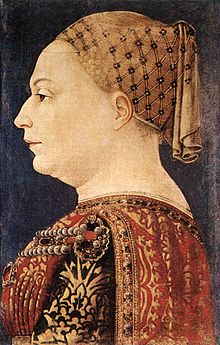
Bianca Maria Visconti Sforza (Photo courtesy Wikipedia)

When Ludovico was 14 his father died and his bother Galeazzo Maria became Duke. Galeazzo, was cruel and sadistic ruler. He reigned for 10 years until he was assassinated on St. Steven’s Day (Dec 26) 1476.

Galeazzo Maria Sforza (Image courtesy Wikipedia)

The next in line was Galeazzo’s 7 year old son Gian Galeazzo Sforza.

Alleged portrait of Gian Galeazzo Maria Sforza...

Alleged portrait of Gian Galeazzo Maria Sforza as Saint Sebastian, by Giovanni Ambrogio de Predis in 1483. Portrait of a Youth as Saint Sebastian, Cleveland Museum of Art, Ohio (Photo credit: Wikipedia)

Ludovico, called the More because of his black hair and swarthy appearance, saw his chance and made a play to become Regent for young Gian, but the boy’s mother, Bona of Savoy, fended him off. Ludovico went into exile for a while but returned in 1481 and seized control of Milan.

With Bona out of the way he  became Regent and de facto ruler. He kept a tight reign on the young Duke and refused to turn over power when Gian came of age. And when Gian died from natural causes (many believed his uncle had him poisoned) Ludovico took official control of the Dukedom.

As Regent and then as Duke Ludovico  built Milan into a powerhouse among Italian city states. He invested in infrastructure, building  up the cattle and horse industries as well as the silk industry. He widened the streets,  funded the universities and supported the the continued building of the Cathedral of MIlan.

Ludovico married Beatrice d’Este, a charming and beautiful 15 year old in 1491. Ludovico was already a patron of the arts — Leonardo Da Vinci helped bring about his marriage —  but with Beatrice’s sense of style (and extravagance) Sforza castle blossomed into a center of entertainment.

Portrait of a lady

Portrait of a lady  Beatrice d’Este by Giovanni Ambrogio de Predis and Leonardo da Vinci. (Photo credit: Wikipedia)

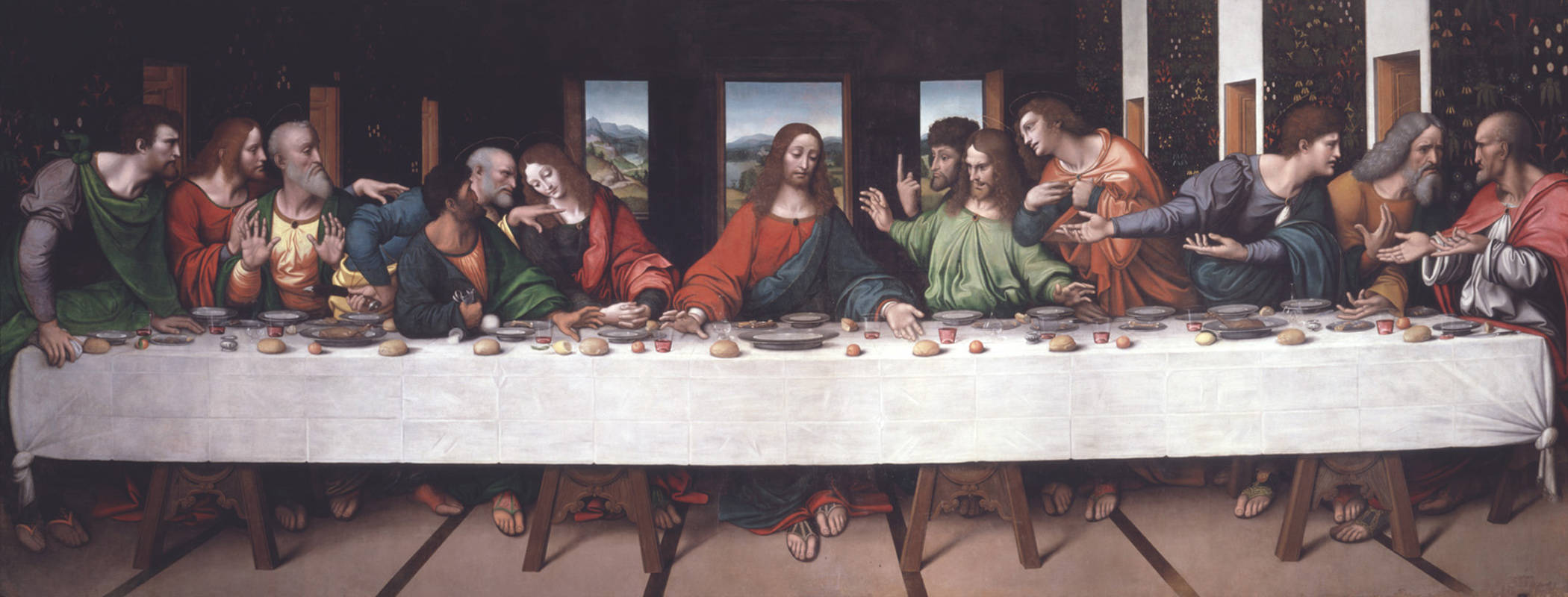
Perhaps Ludovico’s most famous contributions to history is his commissioning of The Last Supper by Leonardo da Vinci. The masterpiece, based on the Gospel of John 13:21 depicts Jesus breaking bread with his 12 disciples shortly before his death. Specifically it shows the reaction of the 12 to Jesus telling them that one of them will betray him  It measures 15 x 29 feet and graces the wall of a dining hall at the monastery of Santa Maria delle Grazie in Milan. (Ludovico’s father, Francesco is buried at Santa Maria).

The Last Supper

As the Duke of Milan he was one of many players on the game board that was Italy (Venice, Florence, Naples, and the Vatican in Rome being some others.) Ludovico played a key roll in the Italian Wars.  It was a game he ultimately lost.  He was captured and handed over to the French. He died in the dungeon at Loches on May17, 1508.


Thought of the Day 7.26.12

“Experience is not what happens to you. It is what you do with what happens to you.”

–Aldous Huxley

Aldous Leonard Huxleywas born on this day in Godalming, Surrey in 1894. Today is the 118th anniversary of his birth.

Huxley was born into a family of scientist, educators and writers. His grandfather, Thomas Henry Huxley was a biologist and anatomist who was know as “Darwin’s Bulldog” for his strong support of Darwin’s theories on evolution. His father, Leonard Huxley, who was a writer, editor, and schoolmaster, had a botanical laboratory  of his own that he shared with Aldous and his siblings. Both his older brother, Julian, and his step brother, Andrew, became renowned scientist (Julian was a leading evolutionary biologist and the first director of UNESCO;  Andrew won a Nobel Prize in Physiology or Medicine in 1963.) Aldous attended Eton College, but he suffered from keratitis punctata at 16 and was almost totally blind for a year and a half.  By learning Braille and with the use of special glasses he was able to continue his studies, but he could no longer follow his dream of becoming a scientist (his first career choice). It also meant he couldn’t fight in WWI.

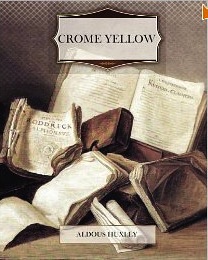
2011 edition of Chrome Yellow published by Create Space.

He taught French at Eton (Eric Blair aka George Orwell was one of his students) and began to write poetry and novels. Chrome Yellow was his first novel, a social satire that was published in 1921. With his use of social criticism, snappy dialogue and cynicism Huxley saw critical and financial success as a writer. He published a dozen books during the 1920s.

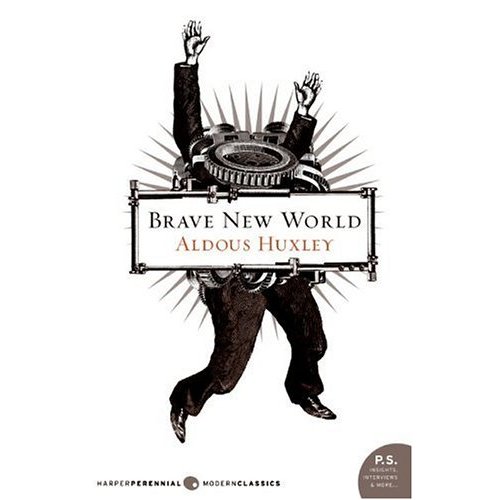
2006 edition of Brave New World published by Harper Perennial Modern Classics
Huxley met D.H. Lawrence when he moved to Italy part time in 1920. The two authors remained close friends until Lawrence’s death.  While in Italy Huxley wrote his masterpiece, Brave New World It is a dystopian vision of a world controlled by genetic engineering, it’s citizens pacified by institutional drug use.
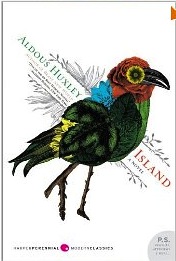
He moved to Hollywood, CA in 1937. Here he wrote essays and worked on screenplays (including the 1940 version Pride and Prejudice and the 1944 version of Jane Eyre.)  He became involved with the counter culture  and experimented with self-directed psychedelic drugs. In 1962 he published  Island, a “good” Utopia. Where the people of Brave New World took the drug Soma to numb and intoxicate themselves, the people of Island take a perfected (and fictional) LSD variant that helps them expand their world in a religious way.

The 2009 edition of Island published by Harper Perennial Modern Classics

Huxley died on November 22nd, 1963, the same days as C.S. Lewis and President John F. Kennedy.

Thought of the Day 7.25.12

“The big artist keeps an eye on nature and steals her tools.” –Thomas Eakins

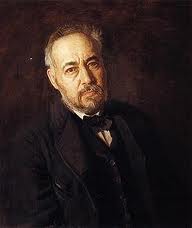
Thomas Eakins Self Portrait 1894. national Academy of Design, New York.
Photo courtesy Wikimedia Commons.

Thomas Cowperthwait Eakins was born on this day in Philadelphia, PA in 1844.

Today is the 168th anniversary of his birth. He went to the Pennsylvania Academy of the Fine Arts  and attended classes on anatomy at Jefferson Medical College. He spent a few years abroad studying in Paris and Spain then returned home to Philadelphia. He worked in watercolor, oil and photography to capture realistic landscapes and the human figure. He taught at the Pennsylvania Academy stressing the importance of realism. He  ran into trouble with Victorian sensibilities with his emphasis on using nude subjects and was forced to retire from that institution.

John Biglin in a Single Scull, ca 1873 by Thomas Eakins a Watercolor on paper

Early paintings reflected things he liked to do like rowing on the Schuykill river. He also painted portraits of women and children (usually of family or friends) at home in intimate, shadowed settings.

The Thinker: Portrait of Louis N. Kenton, 1900 by Thomas Eakins, Oil on Canvas.
Kenton was Eakin’s brother-in-law. The painting is 82 x 42″ and is in the New York Metropolitan Museum of Art.

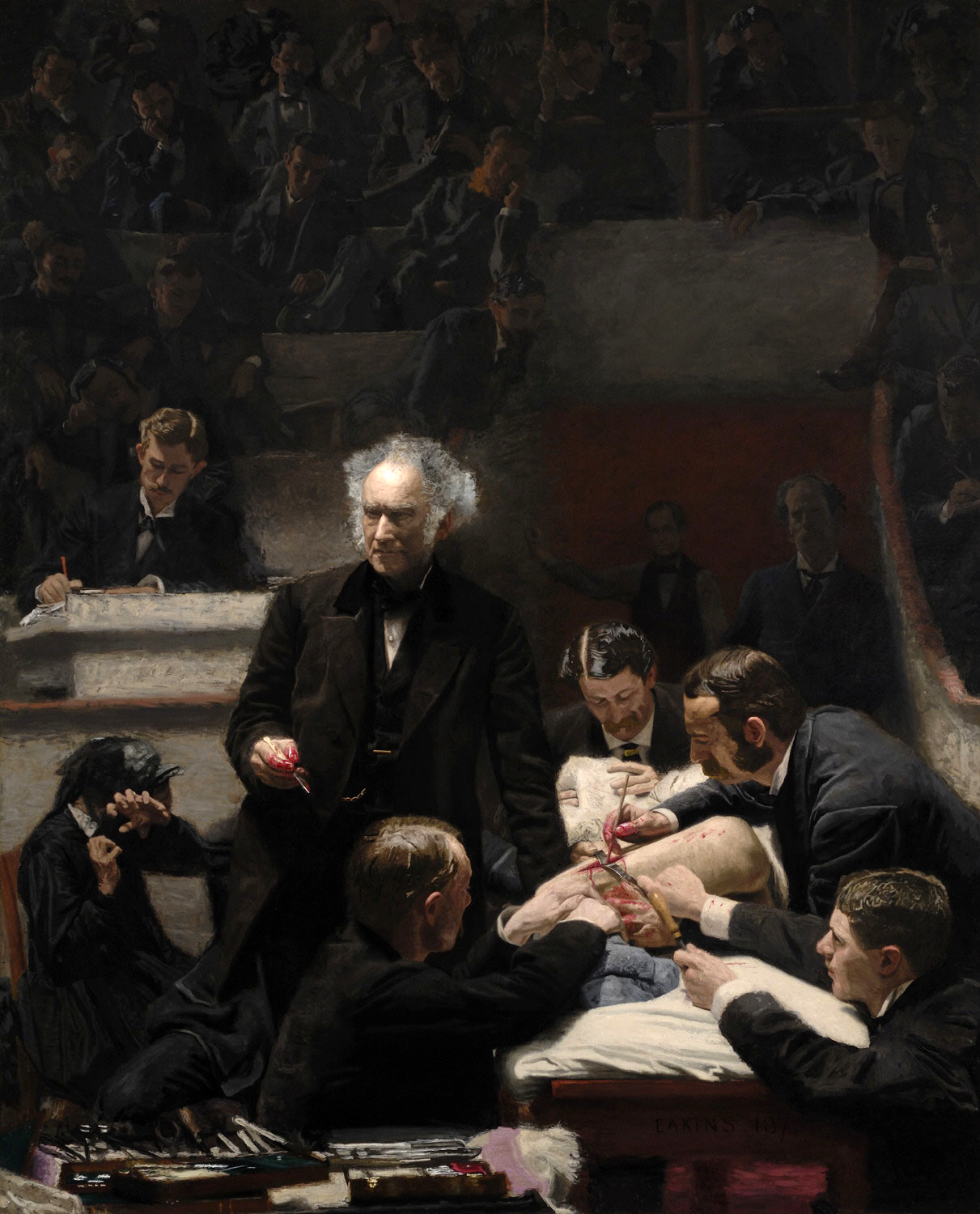
During his lifetime his was not well received in the art world. His portraits — he painted several hundred of them — were rarely done on commission and  were often painted to scale, inside  and in isolation. He was also very interested in science and medicine (especially anatomy) as is reflected in two of his most famous works The Gross Clinic and The Agnew Clinic. 

The Gross Clinic by Thomas Eakins, 1875. Oil on Canvas 96 x 78″. Philadelphia Museum of Art. Photo Courtesy Wikimedia Commons.

Thomas Eakins' "The Agnew Clinic," a...

Thomas Eakins’ “The Agnew Clinic,” a companion piece to “The Gross Clinic.” (Photo credit: zpeckler)