Category Archives: Music

David Bowie 1.6.13 Thought oh the Day

I’m an instant star.  just add water and stir.”
David Bowie

[Image courtesy Fashion Office Buzz)

[Image courtesy Fashion Office Buzz)

David Robert Jones was born on this day in Brixton, London, England in 1947. He is 66 years old.

He attended local schools in Brixton and Bromley. He took choir– his voice was given a grade of average. — and learned to play the recorder. At home his father bought a stack of American 45s and introduced young David to Rock and Roll. Inspired by Little Richard and Elvis Presley he amped up his music cred by adding ukulele and tea-chest bass to the mix.

At age thirteen, inspired by the jazz of the London West End, he picked up the saxophone and called up Ronnie Ross for lessons. Early bands he played with – The Kon-Rads, The King Bees, the Mannish Boys and the Lower Third –provided him with an introduction into the showy world of pop and mod, and by 1966 he was David Bowie, with long hair and aspirations of stardom rustling about his head. [David Bowie.com]

His self titled, and bizarrely campy, debut album came out in 1967. [It’s pretty hard to listen to any of the songs now, but if you must experience it try The Laughing Gnome Song — http://youtu.be/mWoT9elA-oY  complete with squeaky gnome co-star.]

Bowie’s professional career took off with the 1969 release of his Space Oddity album. The record reach #5 in England.  Space Oddity (aka “Major Tom”) was the break out single, and it remains both a Bowie classic and a pop anthem.

But the longer, more complex, and beautiful Cygnet Committee shouldn’t be overlooked.

His third album, The Man Who Sold the World took on a harder rock feel, and introduced us to  the Spiders from Mars.

Here’s the title track:

And another favorite — All the Madmen:

Album #4 was Hunky Dory released in 1971.  So it’s time for a little ch-ch- Changes

And Life On Mars

[I’m limiting myself to just two clips per album… grrr. But you could go pull the YouTube version of Oh! You Pretty Things  too.]

Next up it was a full concept album with The Rise and Fall of Ziggy Stardust and the Spiders from Mars.  Here’s Starman..

and Ummmmmm Yeah…… Ziggy Stardust

1973 brought Aladdin Sane and Pin Ups, followed the next year with Diamond Dogs featuring Rebel, Rebel

Young Americans came out in 1975. The title song reached #28 on the Billboard Charts…

Here he is grooving another hit from the album, Fame
Station to Station introduced Bowie’s Thin White Duke character while continuing the funk and soul sound of Young Americans. Here’s Golden Years.

Low began Bowie his Berlin Trilogy. It is one of his best. [I also love Sound and Vision and Breaking Glass] Here’s Always Crashing The Same Car...

Part two of the Berlin Trilogy was Heroes which came out in 1977. I’ve got to go with the title track on this one…

His thirteenth album, and the last in the Berlin Trilogy, was Lodger.  Here’s Look Back in Anger.

..

The Berlin Trilogy was a critical and artistic success, but not immediately financial success.

Both came with Bowie’s 14th Album Scary Monsters (And Super Creeps) which hit #1 in the UK and did well in the US.

Bowie went pop and super dance-y with Let’s Dance. Singles China Girl, Modern Love and Let’s Dance all did well. Let’s Dance sold 6 million records.

After Let’s Dance Bowie kind of fell of my RADAR, frankly. But he continued to write and sing and put out albums for another two decades:

  • Tonight (84)
  • Never Let Me Down (87)
  • Black Tie White Noise (93)
  • Buddha of Suburbia (93)
  • Outside (95)
  • Earthling (97)
  • Hours (99)
  • Heathen (02)
  • Reality (03)

He was inducted into the Rock and Roll Hall of Fame in 1996, but he didn’t attend the ceremony or the concert.

After The release of Reality and its related A Reality Tour Bowie went into the woodwork.

Apart from the odd rare sighting at a charity function and one or two snatched paparazzi shots, David has kept an extremely low profile [David Bowie.com]

But now it appears he is back. Today he release a new single, Where Are We Now, and he is promising a new album, his 30th, in March!

<iframe width=”560″ height=”315″ src=”http://www.youtube.com/embed/FOyDTy9DtHQ&#8221; frameborder=”0″ allowfullscreen>


“We can be heroes, just for one day.” — David Bowie

“I’m always amazed that people take what I say seriously. I don’t even take what I ‘am’ seriously.” — David Bowie


Patti Smith 12.30.12 Thought of the Day

“Never let go of that fiery sadness called desire.” — Patti Smith


English: Patti Smith performing at TIM Festiva...

English: Patti Smith performing at TIM Festival, Marina da Glória, Rio de Janeiro, Brazil. Français : Patti Smith au TIM Festival de Rio de Janeiro. Português: Patti Smith em Rio de Janeiro. Русский: Концерт Патти Смит в Рио-де-Жанейро. (Photo credit: Wikipedia)


Patricia Lee “Patti” Smith was born on this day in Chicago, Illinois, USA in 1946. She is 66 years old today.


Smith grew up in Chicago, Germantown, Pennsylvania and Woodbury , New Jersey. She was shy, sickly and awkward as a child, but she had a spark inside that would one day transform her into a world renown rock musician.


“I mean, I wasn’t attractive, I wasn’t very verbal, I wasn’t very smart in school. I wasn’t anything that showed the world I was something special, but I had this tremendous hope all the time. I had this tremendous spirit that kept me going … I was a happy child, because I had this feeling that I was going to go beyond my body physical … I just knew it.” [Biography.com]


She attended Deptford High School where she tuned into the music “of John Coltrane, Little Richard and the Rolling Stones and performed in many of the school’s plays and musicals.” [Ibid]


After a short gig as a factory worker she enrolled at Glassboro State Teachers College on tract to become an art teacher. But poor academics and a focus on experimental and obscure artists meant put an end to her college career in 1967.  Smith moved to New York City. While working at a bookstore she met Robert Mapplethorpe a photographer, painter, sculptor and activist.


She gave her first public poetry reading at St. Mark’s Church in 1971. She published several collections of her poetry with Seventh Heaven, Early Morning Dream and Witt. She also wrote for music magazines Creem and Rolling Stone and began to set her words to music.


In 1974, she formed a band and recorded the single “Piss Factory,” now widely considered the first true “punk” song, which garnered her a sizeable and fanatical grassroots following. [Ibid]


Piss Factory reflected her time working in a toy factory after high school. The success of the single helped her land a record deal at Arista Records and in 1975 she put out Horses, her debut album. The album featured break out singles Gloria and Land of a Thousand Dances.


People Have the Power

People Have the Power (Photo credit: Wikipedia)


Her follow up albums Radio Ethiopia (1976) and Easter (1978) also achieved commercial success, especially  with Because the Night a tune she co wrote with Bruce Springsteen.


Things slowed down with the release of her fourth album, Wave. Smith married Fred”Sonic” Smith in 1980 and pretty much dropped out of the music scene for the next 17 years.


When Fred “Sonic” Smith died of a heart attack in 1994, the last in a series of many close friends and collaborators of Smith’s who passed away in quick succession, it finally provided her the impetus to revive her music career. Smith achieved a triumphant return with her 1996 comeback album Gone Again, featuring the singles “Summer Cannibals” and “Wicked Messenger.” [Biography.com]


She followed Gone Again with Peace and Noise (1997), Gung Ho (2000) and Trampin’ (2004) all of which did well both with the fans and the critics.  In 2008 she put out a live album with Kevin Shields, The Coral Sea. In 2010 her memoir, Just Kids, about her relationship with Mapplethorpe and her life in the 1970’s was published. It won the national Book Award for Nonfiction.


This  “Godmother of Punk,” was inducted into the Rock and Roll Hall of Fame on march 12, 2007.


Her latest album, Banga (Believe or Explode) came out in June of 2012.


Edith Piaf 12.19.12 Thought of the Day


I think you have to pay for love with bitter tears.
Edith Piaf


Edith Piaf

Edith Piaf (Photo credit: tsweden)

Édith Giovanna Gassion was born on this day in Belleville, Paris, France in 1915. Today is the 97tj ammoversary of her birth.


Her mother was a cafe singer and her father was a street acrobat. She was abandoned by her parents to the care of her maternal grandmother, then was taken to her father’s mother. Her paternal grandmother ran a brothel and Édith grew up amongst the prostitutes. She was blinded as a result of meningitis at three but recovered by seven (supposedly because the “prostitutes pooled money to send her on a pilgrimage honoring Sainte Thérèse de Lisieux, which … resulted in a miraculous healing.”[geni.com] by 14 she was performing with her father on the streets of France. “Piaf’s songs and singing style seemed to reflect the tragedies of her own difficult life.” [Encyclopedia Britannica]

Français : Edith Piaf enfant

Français : Edith Piaf enfant (Photo credit: Wikipedia)

She left her father’s act and performed on her own singing in the streets for years before being discovered by a nightclub owner. She changed her last name to Piaf (and became known as “the little sparrow.” ) She switched to ballads.


She entertained French POWS during WWII, and gained world wide fame after the war with such songs as Non, je ne regrette rien and La Vie en rose by touring extensively.


Her throaty, expressive voice, combined with her fragile appearance and a dramatic tight spotlight on her face and hands, made her concerts memorable. [Answers.com]

She died  of liver cancer at age 47 in 1963.


English: Bust of Edith Piaf in Celebrity Alley...

English: Bust of Edith Piaf in Celebrity Alley in Kielce (Poland) Česky: Busta Edith Piaf v polských Kielcích (Photo credit: Wikipedia)


Ludwig van Beethoven 12.17.12 Thought of the day

“Music should strike fire from the heart of man, and bring tears from the eyes of woman.”
Ludwig van Beethoven

English: Photograph of bust statue of Ludwig v...

Ludwig van Beethoven was born on this day in Vienna, Austria in 1770. Today is the 242nd anniversary of his birth.

He was the eldest of the three surviving Beethoven children. His father taught him the violin and clavier. The elder Beethoven was an alcoholic and a draconian teacher, “Beethoven was flogged, locked in the cellar” [Biography], beaten if he played a wrong note, and deprived of sleep so he could practice. The boy had his debut with a public performance in Cologne in March 1778. His father shaved a few years off his age so Ludwig’s talents made him seem more of a child prodigy.

Musically talented he was, but little Ludwig  struggled at school. Math and spelling eluded him his entire life. “Music” he said “comes to me more readily than words.”

At 10 he left school and began to take lessons on the organ and in composition from Court Organist Christian Neefe. Neefe was a much better teacher than his father and he introduced the boy to a world outside the scope of music, including philosophy. By 12 he published his first musical piece, 9 Variations in C Minor for Piano.

When Beethoven was 14 Neefe recommended Beethoven as court organist for Maxcimmian Franz of Cologne.

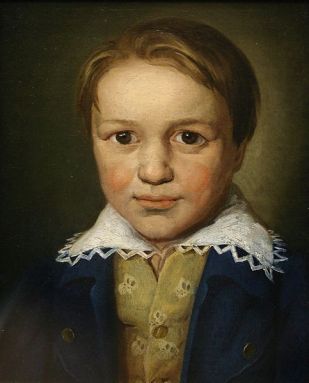
"Ludwig van Beethoven was recognised as a child prodigy. He worked at the age of 13 as organist, pianist/harpsichordist and violist at the court in Bonn, and had published three early piano sonatas. This portrait in oils is the earliest authenticated likeness of Beethoven." Circa 1782 (Wikimedia commons)

“Ludwig van Beethoven was recognised as a child prodigy. He worked at the age of 13 as organist, pianist/harpsichordist and violist at the court in Bonn, and had published three early piano sonatas. This portrait in oils is the earliest authenticated likeness of Beethoven.” Circa 1782 (Wikimedia commons)

At 17 Prince Maximilian sent him to Vienna to meet Mozart, but returned home two weeks later upon hearing that his beloved mother (who he called his best friend) had become severely ill. Heartbroken, he stayed in Bonn for several years. He took over the care of his younger brothers — his father had sunk further into alcoholism and was no longer contributing to the family.

In 1790  he wrote a musical memorial in honor of the death of Emperor Joseph II.

For reasons that remain unclear, Beethoven’s composition was never performed … more than a century later, Johannes Brahms discovered that Beethoven had in fact composed a “beautiful and noble” piece of music entitled Cantata on the Death of Emperor Joseph II. It is now considered his earliest masterpiece. [Biography]

Here’s the Soprano aria with Judith Howarth and the Corydon Orchestra.

He went back to Vienna at 22 and studied with Haydn, Salieri and Albrechtsberger. His skills as a virtuoso pianist helped him win patrons among the Viennese aristocracy. His composing allowed him to highlight his  piano playing skills.  In 1795 he performed and published his Opus number 1, three piano trios.

In April of 1800 “Beethoven debuted his Symphony No. 1 in C major” [Biography]. As he matured as a composer he found fault with the symphony saying “In those days I did not know how to compose.” But when it came out Symphony No. 1 was a hit.  It…

established him as one of Europe’s most celebrated composers. As the new century progressed, Beethoven composed piece after piece that marked him as a masterful composer reaching his musical maturity. [Ibid]

Portrait of Ludwig van Beethoven (1803) by Christian Horneman [Image courtesy: Wikimedia Commons]

Portrait of Ludwig van Beethoven (1803) by Christian Horneman [Image courtesy: Wikimedia Commons]

His Sonata quasis un fantasia (aka Moonlight Sonata) and the ballet The Creatures of Prometheus came next. He was transitioning from Classical world to the Romantic world.

He followed the ballet with his Symphony No. 3, The “Eroica Symphony” which he originally wrote in Napoleon’s honor.

it was his grandest and most original work to date — so unlike anything heard before that through weeks of rehearsal, the musicians could not figure out how to play it. A prominent reviewer proclaimed Eroica, “one of the most original, most sublime, and most profound products that the entire genre of music has ever exhibited.” [Biography]

Here’s the first movement as played by New York Philharmonic, conducted by Leonard Bernstein.

By 26 Beethoven had begun to loose his hearing. He could not hear from the persistent ringing in his ears. He stopped attending social functions and moved to Heiligenstadt, a small town outside of Vienna.

He was  depressed and angry over the fate life had handed him. He confessed in the Helligenstadt Testament that he considered suicide, but …

it was only my art that held me back. Ah, it seemed impossible to leave the world until I had brought forth all that I felt was within me. [Ibid]

Tenaciously he continued to compose, producing “an opera, six symphonies, four solo concerti, five string quartets, six string sonatas, seven piano sonatas, five sets of piano variations, four overtures, four trios, two sextets and seventy-two songs” [Ibid] in his heroic or Middle period.

Beethoven in 1814

Beethoven in 1814 (Photo credit: Wikipedia)

He kept conversation books where friends would writing down what they were talking about to keep him in the loop, and he would respond orally (and sometimes would respond on paper.)  He had about 400 of these books, but only 136 exist today.

Portrait Ludwig van Beethoven when composing t...

Portrait Ludwig van Beethoven when composing the Missa Solemnis (Photo credit: Wikipedia)

His late period includes the Missa Solemnis, String Quartet No. 14 and his infamous Ninth Symphony.

The symphony’s famous choral finale, with four vocal soloists and a chorus singing the words of Friedrich Schiller’s poem “Ode to Joy,” is perhaps the most famous piece of music in history. While connoisseurs delighted in the symphony’s contrapuntal and formal complexity, the masses found inspiration in the anthem-like vigor of the choral finale and the concluding invocation of “all humanity.” [Biography]

Beethoven died on March 26, 1827. He was 56 years old.

Here is the Kyrie Eleison from his Missa Solemnis performed by the London Symphony Orchestra and Chorus,  Sir Colin Davis conducting…


Frank Sinatra 12.12.12 Thought of the Day

“May you live to be 100 and may the last voice you hear be mine.”
— Frank Sinatra

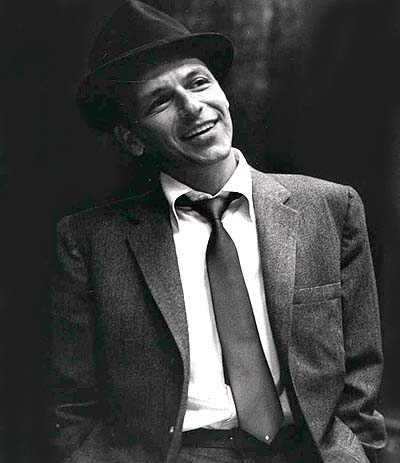
Image courtesy last.fm

Image courtesy last.fm

Francis Albert Sinatra was born on this day in Hoboken, New Jersey, USA in 1915. Today is the 97th anniversary of his birth.

Frank was the only child of Marty and Dolly Sinatra. As a kid he stood on top of the bar at a local nightclub and sang for tips. He dropped (or was kicked) out of high school, and help make ends meet at home by delivering the local paper, the Jersey Observer. He also worked as a riveter at a local shipyard. Although he couldn’t read music he began singing professionally by the mid 1930s when he joined the Three Flashes (they changed their name to the Hoboken Four.)

He worked as a singing waiter in Englewood Cliffs for $15 a week for almost 4 years. Then Henry James signed him for a one year contract at $75 a week. On July 13th, 1939, as the US was emerging from a decade of Depression and the world was on the advent of another great War, 23-year-old  Frank Sinatra recorded his first record, From the Bottom of my Heart, with the Harry James Orchestra.

He released 10 songs with James (none of which charted particularly high in their original pressing.) Sinatra switched to the more popular Tommy Dorsey’s band (with James’ blessing) in November. He recorded over 40 songs on Dorsey. One of his biggest hits with Dorsey was I’ll Never Smile Again.

By 1941 he was at the top of  both the Billboard and Down Beat magazine polls. Not only did he sell records, he opened up an entirely new audience — the bobby soxers (aka teenagers.) [It seems odd today — when so much of a company’s advertising budget goes toward capturing the 12-20 year old’s pocketbook — but prior to 1940 most consumers were adults.  Sinatra appealed to both adult women and bobby sox wearing girls.]

Image courtesy last.fm

Image courtesy last.fm

He went solo in 1943 and in the next three years he charted 17 times.  Sinatra was classified 4-F for military service because of a perforated eardrum, so he did not serve in the military.

He started making films as part of the Dorsey Band  with Las Vegas Nights and  Ship Ahoy, he had a walk on / singing part in the wonderfully named Reveille with Beverly but then had his first real role in Higher and Higher. He teamed with Gene Kelly for the hugely successful Anchors Aweigh in 1945.  It was the first of three Sinatra/Kelly films with Take Me Out to the Ball Game and On the Town coming out in 1949.  He won a special academy award for his work on the (dated) short film The House I Live In. (1945)

At the beginning of the 1950’s Sinatra saw his popularity wane somewhat. The bobby soxers who had screamed out deafening choruses of “FRANKIE” for the thin, blue-eyed singer had found new idols to adore.

He came back with a bang with his next movie, 1953’s From Here to Eternity. He won an Oscar as bad boy Angelo Maggio.

Cover of "From Here to Eternity"

Cover of From Here to Eternity

The same year he signed with Capitol Records. In 1954 his album Swing Easy! was named Album of the Year by Billboard and the single Young At Heart was picked for Song of the year. Swing Easy was arranged by Nelson Riddle. Sinatra and Riddle worked together again for Songs for Swingin’ Lovers! which included I’ve Got You Under My Skin.

He poked fun at his mobster image in the movie version of Guys and Dolls. in 1955 as Nathan Detroit.  In 1956 he played Mike Connor to Grace Kelly’s Tracy Lord in High Society.  The next year he was Joey in Pal Joey.

He started his own record label in 1960, Reprise Records. 

In 1962 he starred in his most dramatic movie the classic political thriller, The Manchurian Candidate. [For my money The Manchurian Candidate is the best movie of the bunch.]

He was a founding member of the Rat Pack and worked alongside Dean Martin, Peter Lawford, Sammy Davis Jr., and Joey Bishop in several movies and countless nightclub acts.

Here he is  having a ton of fun singing Lady Is a Tramp with the incomparable Ella Fitzgerald

Sinatra was a sucker for charities.  He raised over a billion dollars in the course of his life for charities all over the world.

His generosity touched the worlds of education, medicine, science, and children’s needs, his favorite cause. … Sometimes it was a late-night phone call that moved him; sometimes he just caught wind of a hard-luck story on the news or in the paper and did what he could to fix it. [Sinatra.com]

In 1962 he led a 12 country World Tour for Children that raised over a million dollars for children’s charities worldwide. He paid for the entire cost of the tour himself, and recruited other musical luminaries to join him.

He also worked against segregation , taking a major role in the desegregation of Nevada entertainment and hospitality industry in the 1960s. He boycotted venues and hotels where black performers and guest were banned. And he played benefits for Martin Luther King, Jr. and the Equal Right Movement.

Sinatra received the Presidential medal of Freedom from Ronal Reagan in 1985.

Ole’ Blue Eyes faced his final curtain on May 14, 1998. He was 82 years old.

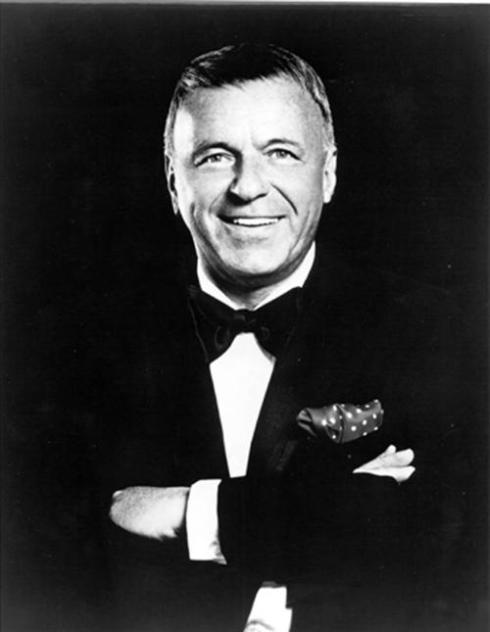
Frank older

Image courtesy last.fm


Jakob Dylan 12.9.12 Thought of the Day

“Tolerance can lead to learning something.”
— Jakob Dylan

Cover of "Red Letter Days"

Jakob Luke Dylan was born on this day in New York City, New York, USA in 1969. He is 43 years old.

Dylan is the youngest son of  Bob Dylan and his wife Sara, and he is the only one of his siblings to become a musician. He has long been under the shadow of his more famous father, something he takes in stride. He is determined not to sell tickets based on his last name, but he’s also had to bear the burden of 45 years worth of fans expecting him to be the next Bob Dylan.

On one hand, he acknowledges that no one forced him into a recording studio at knifepoint. On the other hand, the result has been, at times, preposterous; he was somehow elected chairman of the Child Musicians Who Could Never Live Up to Their Fathers Assn. [The Essential Jakob Dylan; Los Angeles Times  June 08, 2008]

The younger Dylan played in bands in high school and, after taking some time off to attend the Parsons School for Design in New York, formed The Wallflowers in the late 1980s. They put out a The Wallflowers in 1992 to lukewarm response, but fared better with their sophomore release, Bringing Down the Horse.  Horse was one of 1997s best-selling albums and it featured hits like 6th Avenue Heartache, One Headlight, Three Marlenas, and The Difference.  (Breach) and Red Letter Days came out in 2000 and 2002 respectively.

Here’s 6th Avenue Heartache…

I prefer my Jakob Dylan unplugged… like in this Austin City Limits Festival version of Evil is Alive & Well from 2008.

The song is off his first solo album, Seeing Things which was released in June of 2008.

Here’s an “unplugged” studio version of One Headlight with The Wallflowers.

His second “solo” album is really a collaborative effort with 15 other artists. Here’s Everybody’s Hurting from that album.

The Wallflowers reunited earlier this year. They put out a new album, Glad All Over in October. The group picks up touring again at the end of the month. So if you are in the little town of Bethlehem (PA) you can see them on the 27th at the Sands Casino. (Austin fans; they’ll be at the Erwin Center on St. Patty’s Day). A complete list of tour dates are on the Wallflower web site HERE.

ACL - Jakob Dylan

ACL – Jakob Dylan (Photo credit: kfjmiller)


Thought of the Day 11.18.12 Johnny Mercer

[For those of you who are playing along… I posted a blog yesterday seeking advice as to who I should profile in today’s birthday post — song smith Johnny Mercer or Gilbert or Gilbert and Sullivan fame. Just about everyone picked Mercer, so put on your Breakfast at Tiffanys ’cause there’s some Moon River coming your way.]

“Days of wine and roses laugh and run away, like a child at play.”
–Johnny Mercer

English: Johnny Mercer, New York, N.Y., betwee...

English: Johnny Mercer, New York, N.Y., between 1946 and 1948 (Photograph by William P. Gottlieb) (Photo credit: Wikipedia)

John Herndon Mercer was born on this day  in Savannah, Georgia, USA in 1909. Today is the 103rd anniversary of his birth.

He grew up in Savannah (though never in the Mercer House — made famous in Midnight in the Garden of Good and Evil) He enjoyed music as a child and he could hum a tune before he could talk. He was singing in a choir by six and all the song memorized by 11. He tried to take lessons on various instruments  but never made it very far. Even as an adult he could only play piano one finger at a time.

He wrote his first song, “Sister Susie, Strut Your Stuff,”  at age 15 while a student at the exclusive boy’s school Woodbury Forest School in Orange Co,  Virginia. After graduation he moved to New York to try his hand at acting. Although he was cast in bit roles  in a few shows, it was his talent for writing songs (both the witty lyrics and the snappy melodies) that showcased his real talent.

In 1930, while … looking for an acting job … he was informed that (a) play was all cast, but that they could use some songs. In the show were two other future great writers — Vernon Duke and E.Y. “Yip” Harburg, who accepted Mercer’s “Out of Breath and Scared to Death of You. [Johnny Mercer.com]

The show, “Garrick Gaieties,” also featured a dancer named Ginger Meehan who Mercer fell in love with. The two married in 1931.

Mercer began to collaborate with Hoagy Carmichael in 1932. Their first hit was “Lazy Bones” which hit #1 for one artist, Ted Lewis, and broke the top ten for two other singers.

By 1938 he was recording duets with Bing Crosby for Decca and the following year, he was on Benny Goodman’s Camel Cavalcade radio program as a featured singer. [AllMusic]

His string of hit in 1934 included “You Have Taken My Heart”,  “Pardon My Southern Accent”  and “P.S. I Love You”

Heres a really sweet version of P.S. I Love You featuring Bridget Davis and Sam Petitti …

In 1935 he went to Hollywood to appear in and write some songs for a couple of RKO musicals. One was “To Beat the Band,” a movie that featured the songs “Eeny-Meeney-Miney-Mo, “If You Were Mine,” Meet Miss America” and “I saw her at Eight O’Clock.” Mercer played a member of the band.

He started Capitol Records in 1942 with Glenn Wallichs and Buddy DeSylva. There he produced “Atchison, Topeka and Sante Fe,” “Ac-Cent-Tchu-Ate The Positive” and “Personality.” The label attracted the talents of Nat King Cole and Peggy Lee.

Jaques Edmond of The Capitol News called Mercer “One of the greatest lyricists of all times.”  He added that Mercer could have made it as a singer too.

Johnny Mercer epitomized the hip songwriter a hipness that was also reflected in his cool Southern accented singing. His voice was relaxed, swinging and bang on. One of the few writers who could have easily made it as a vocalist even if he had never written a lyric or a note of music. [Capitol News]

His smooth, upbeat story telling, southern style of singing made Ac-Cent-Tchu-Ate the Positive a peppy anthem of hope during World War II. It was quickly snapped up by other, bigger named, singers, like Bing Crosby.

Here’s Mercer’s version…


He also worked with Crosby in 1936  with the song “I’m an Old Cowhand from the Rio Grande.”  In 1937 he wrote the iconic “Hooray For Hollywood”.

In ’37 he had a hit with “Too Marvelous for Words” from the film Ready, Willing and Able. Frank Sinatra made it a hit.

Here’s Old Blue Eyes being fabulous…

Among Mercer’s most durable lyrics — a highly abbreviated list — are those for “One for My Baby (And One More for the Road),” “Blues in the Night,” “Come Rain or Come Shine,” [AllMusic] You can add to that “Jeepers Creepers,” “That Old Black Magic,” “Something’s Gotta Give, ” “Days of Wine and Roses,” “G.I. Jive,”  “You Must Have Been a Beautiful Baby,” “Tangerine,” “Glow Worm,” “Autumn Leaves” and the unforgetable “Moon River.”

Here’s Audrey Hepburn singing Moon River in the 1961 film  Breakfast at Tiffanys:

Of his writing style he said: “Usually a title or simple idea comes first, and then the rest of the words just seem to fall into place. … It’s all as easy  as chopping up ten cords of wood per day.” [The Johnny Mercer Educational Archives]

in 1971 Mercer  was inducted into the Songwriter’s Hall of Fame. Mercer died on June 25, 1976 in Westwood, California.


Thought of the Day 11.6.12 John Philip Sousa

“Jazz will endure just as long people hear it through their feet instead of their brains.” –John Philip Sousa

John Philip Sousa, the composer of the song.

John Philip Sousa, the composer of the song. (Photo credit: Wikipedia)

I can’t think of any one who would make a better Thought of the Day Bio subject on Election Day 2012 than John Philip Sousa. He practically wrote the soundtrack for American patriotism AND he’s got a great mustache. What’s not to like?

He was born on this day in Washington, DC, USA in 1854. Today is the 158th anniversary of his birth.

He started his music career playing the violin, and soon added voice, piano, flute, cornet, baritone, trombone and alto horn to the mix.  After John Phillip tried to run away to join a circus band, his father, John Antonio Sousa,  “enlisted him in the Marines at age 13 as an apprentice…”[John Philip Sousa] in 1867.

He wrote and published his first composition “Moonlight on the Potomac Waltzes” in 1875 and was honorably discharged from the Marines two years later. Sousa “began performing (on violin), touring and eventually conducting theater orchestras. Conducted Gilbert & Sullivan’s H.M.S. Pinafore on Broadway.” [Ibid] While rehearsing Pinafore he met his wife Jane van Middlesworth Bellis.

In 1880 he returned to the US Marine Band as the Band’s leader, a post he kept for next 12 years.  Sousa conducted

“The President’s Own”, serving under presidents Hayes, Garfield, Cleveland, Arthur and Harrison. After two successful but limited tours with the Marine Band in 1891 and 1892, promoter David Blakely convinced Sousa to resign and organize a civilian concert band. [Ibid]

Sousa and his newly-formed civilian band, 1893

Sousa and his newly-formed civilian band, 1893 (Photo credit: Wikipedia)

Sousa wrote his own operetta, El Capitan in 1895.

He wrote 136 marches including Semper Fidelis March, King Cotton, Fairest of the Fair, Hands Across the Sea, And Stars and Stripes Forever — which he wrote in 1896. (In 1987 Congress proclaimed it the National March of the United States)

He designed a new type of bass tuba called the sousaphone. The Sousa Band toured throughout the world.

During World War I, Sousa joins the US Naval Reserve at age 62. He is assigned the rank of lieutenant and paid a salary of $1 per month…. After the war, Sousa continued to tour with his band. He championed the cause of music education, received several honorary degrees and fought for composers’ rights, testifying before Congress in 1927 and 1928.[Ibid]

Sousa died at the age of 77 in Reading, Pennsylvania after conducting a rehearsal. Fittingly, the last piece he conducted was Stars and Stripes Forever.

"Stars and Stripes Forever" (sheet m...

“Stars and Stripes Forever” (sheet music) Page 4 of 5 (Photo credit: Wikipedia)

Click HERE for a page with lots of audio clips of Sousa marches.

————————————-


Thought of the Day 11.1.12 Toni Collette

“I don’t understand why I do what I do. I don’t understand why I act anymore. But I do know that I love it, and that I find it really interesting and satisfying to enter into other worlds and explore different ways of thinking.”
Toni Collette

Toni Collette (United States of Tara)

Toni Collette (United States of Tara) (Photo credit: Capital M)

Antonia Collette was born on this day in Blacktown, Sydney, Australia in 1972. She is 40 years old today.

Toni is the oldest of three, and only girl, to Judy and Bob Collette. The family lived about an hour away from Sydney where Bob was a truck driver and Judy was a customer-service rep. When she was six the family moved to the Sydney suburbs. She had a number of pets as a child, including cats, dogs, birds and rabbits. Toni was always a tom-boy and athletic.

Collette at 15 at the Blackstown Girls High School [Image courtesy: Toni Collette Online]

At 14 she caught the acting bug when she performed in her school’s production of Godspell. By 16, with her parents permission, she dropped out of school and enrolled in NIDA (the National Institute of Dramatic Arts, ) It was a three-year acting course, but she left after 18 months to take a role in her first film Spotswood with Anthony Hopkins and Russell Crowe. She was nominated for Best Supporting Actress by the Australian Film Institutefor her role as Wendy in the movie.

She moved to the Theatre, playing Petra in A Little Night Music , Meg in Away .

…She won a Critics’ Circle Award as Best Newcomer for her performance as Sonya in Chekhov’s Uncle Vanya“. There would also be Aristophane’s “Frogs (…directed by Geoffrey Rush), Summer Of The Aliens , and … Cordelia in King Lear. [Toni Collette Online]

Cover of "Muriel's Wedding"

Cover of Muriel’s Wedding

Her break out film was Muriel’s Wedding. Her hefty Muriel (she gained 40 pounds for the role) is a misfit. She has no direction in life. Her one hazy ambition is to get married, (even though she’s never had a boy friend).

A very special actress was needed, someone who could reveal the terrible torment and turmoil inside the outwardly cheery Muriel, someone who could really enjoy the extravagant highs of Muriel’s holiday – including a storming rendition of Abba’s Waterloo with Rachel Griffiths. [Ibid]

Collette is wonderful in the film about a “girl who didn’t fit in, but learns to stand out.” [from the dvd cover]. [If you are planning a Quirky Australian Film Night — and why wouldn’t you be? — throw this one in with Strictly Ballroom]

Cover of "Emma [Region 2]"

Cover of Emma [Region 2]

Her simple, sweet Harriet Smith in the 1996 Gwyneth Paltrow/Jeremy Northam version of Jane Austen’s Emma was a delight. [Click Here to read the Thought of the Day on Gwyneth Paltrow.]

She made her Broadway in 1999 debut in Michael John LaChiusa’s The Wild Party. She nominated for a Toni Award, a Drama Desk Award and a Theatre World Award (Collette won the latter.)

She was offered the role of Bridget Jones, but had to turn it down because of her Broadway commitment. No worries, that left her free to take the role in M. Night Shyamalan’s The Sixth Sense.  [Click Here to read the Thought of the Day on M. Night Shyamalan] Collette  earned an Oscar nomination as the harried mother who glued her troubled son to reality in this thriller. She turned in a fantastic performance among a cast full of fantastic performances and her turn from smiling, singing Muriel or bland, sweet Harriet to intense, worried Lynn Sear let the world know that she was an actress to look out for.

She had a supporting role in Nick Hornby’s About a Boy as Fiona, and in The Hours, as Kitty in 2002. Collette received a slew of awards and nominations for both.

Cover of "Little Miss Sunshine [Blu-ray]&...

Cover of Little Miss Sunshine [Blu-ray]

Collette played mom Sheryl Hoover in the sleeper hit of 2006, Little Miss Sunshine. Sunshine was an ensemble piece with quirky characters all around.

…Meet the Hoovers, an Albuquerque clan riddled with depression, hostility, and the tattered remnants of the American Dream; despite their flakiness, they manage to pile into a VW van for a weekend trek to L.A. in order to get moppet daughter Olive (Abigail Breslin) into the Little Miss Sunshine beauty pageant. Much of the pleasure of this journey comes from watching some skillful comic actors doing their thing…[From Robert Horton’s review of Little Miss Sunshine on Amazon.com]

Again Collette plays a mom just trying to keep her family together (although to a lot more laughs here than she did in Sixth Sense.)

HBO and the BBC joined forces to produce Tsunami: The Aftermath in which Collette plays an Australian aid worker named Kathy Graham. Tim Roth, Hugh Bonneville & Chiwetel Ejiofor also star in the film that dramatized events around the devastating the 2004 tsunami that hit Thailand.

United States of Tara

United States of Tara (Photo credit: Wikipedia)

She won an Emmy, a Golden Globe and an Australian Film Institute Award for her work on the United States of Tara. In it she plays a housewife with dissociative identity disorder. When stressed one of her multiple personalities come out. The show ran for three seasons on Showtime.

Collette re-teamed with her Muriel  director PJ Hogan for the quirky Aussie film Mental. It was release Down Under on October 4th.  Other indie films out (or coming out) include the comedy Jesus Henry Christ — a comedy about a ten-year old, “petri-dish”, boy genius who goes in search of his biological father and  Hitchcock — about the making of Psycho.

Collette and husband Dave Galafassi headline the group Toni Collette and the Finish. Their cd, “Beautiful Awkward Pictures” came out in 2006 features 11 of Collette’s original songs.

Here’s Cowboy Games…