Category Archives: History

Ernest Shackleton 2.15.13 Thought of the Day


“Difficulties are just things to overcome, after all.” — Ernest Shackleton


Sir Ernest Shackleton

Sir Ernest Shackleton (Photo credit: Marxchivist)

Gentleman and adventurer…


Captain, March 1917, Cover of the popular Engl...

Captain, March 1917, Cover of the popular English magazine with Ernest Shackleton back from his epic expedition South This picture is the copyright of the Lordprice Collection and is reproduced on Wikipedia with their permission Source URL http://www.lordprice.co.uk/Merchant2/merchant.mvc?Screen=CTGY&Category_Code=Antarctic (Photo credit: Wikipedia)


Ernest Henry Shackleton was born on this day in Kilkea, County Kildare, Ireland in 1874. Today is the 139th anniversary of his birth.


Ernest was the second of ten children born to Henry and Henrietta Shackleton. His father was a land owner, but he gave up farming for medicine shortly after Ernest’s birth. When the boy was six the family moved to Sydenham, London, England. He joined the merchant navy at 16.


Shackleton went on his first polar journey in 1901. He was chosen to join Robert Scott on an expedition to the South Pole. He, Scott and one other companion “trekked towards the South Pole in extremely difficult conditions, getting closer to the Pole than anyone had come” [BBC History] before turning back.


He returned to Antarctica as the head of expedition in 1908 aboard the Nimrod. “He was knighted on his return to Britain.” [Ibid] But it was his third journey to the South Pole that is one of legend.


Endurance final sinking in Antarctica

Endurance final sinking in Antarctica (Photo credit: Wikipedia)


In 1914 Shackleton and the crew of the Endurance headed south determined to cross the Antarctic continent via the South Pole. The ship was trapped in the ice of the Weddell Sea in 1915 and was crushed in October.


Shackleton’s crew had already abandoned the ship to live on the floating ice. In April 1916, they set off in three small boats, eventually reaching Elephant Island. Taking five crew members, Shackleton went to find help. In a small boat, the six men spent 16 days crossing 1,300 km of ocean to reach South Georgia and then trekked across the island to a whaling station. [Ibid]


The men on Elephant Island were rescued in August, and, amazingly, no one in the crew died.


Launch of the James Caird from the shore of El...

Launch of the James Caird from the shore of Elephant Island. (Photo credit: Wikipedia)


His memoir of the journey was published in “Endurance”  in 1919. (If he had any luck on the journey it was in taking along Photographer Frank Hurley who took stunning still and motion pictures of the Endurance and her crew.)


Shackleton made a finale trip south in 1922, this time bent on circumnavigating Antarctic. He made it to South Georgia Island. On January 5, he had a heart attack and died.


Glimpse of the Ship ['Endurance'] through Humm...

Glimpse of the Ship [‘Endurance’] through Hummocks, 1915 / photographed by Frank Hurley (Photo credit: State Library of New South Wales collection)

More reading:

South: The Story of Shackleton’s Last Expedition (1914-1917) by Sir Ernest Shackleton

Endurance: Shackleton’s Incredible Voyage by Alfred Lansing

And watch:

Shackleton – The Greatest Survival Story of All Time (3-Disc Collector’s Edition) Starring Kenneth Branagh

South Starring Ernest Shackleton, Frank Worsley, J. Stenhouse, et al. (The original silent movie by Frank Hurley)


Frederick Douglas 2.14.13 Thought of the Day

It is easier to build strong children than to repair broken men.

A sketch of Douglass, from the 1845 edition of...

Frederick Augustus Washington Bailey was born on this day in Talbot County, Maryland, USA in 1818. Today is the 195th anniversary of his birth.

The exact day and year of his birth is unknown, but he decided on February 14th, 1818.  He never met his father, a white man,  and almost never saw his mother.  He lived with his grandparents in their cabin west of the Tuckahoe Creek. In his first autobiography he wrote:

“I do not recollect ever seeing my mother by the light of day. … She would lie down with me, and get me to sleep, but long before I waked she was gone.” [Narrative of the life of Frederick Douglass, an American slave. Written by himself. (1851)
At seven he was sent to Wye House plantation near Easton, in Talbot County, Maryland. Soon he was sent to Hugh Auld a Baltimore carpenter. Auld’s wife, Sophia,  taught him to read until the master (her husband)  stopped her. Hugh Auld thought teaching slaves lead to rebellious slaves. Frederick practiced reading and writing in secret. When he was in Baltimore he heard about Abolition for the first time, and in 1831 he  read an article “on John Quincy Adams’s antislavery petitions in Congress” [Frederick Douglass Timeline]

At 13 he was sent to the shipping town of St. Michael’s, Maryland to work for Thomas Auld. When Auld discovered that Frederick was teaching other slaves to read he rented him out to a brutal slavebreaker, Edward Covey.”The treatment he received was indeed brutal. Whipped daily and barely fed, Douglass was “broken in body, soul, and spirit.” “ [PBS.org]

In 1838 he was back in Baltimore hired out to work as a caulker in a shipyard. He made his escape to freedom by…

Travelling by train, then steamboat, then train, he arrived in New York City the following day. Several weeks later he had settled in New Bedford, Massachusetts, living with his newlywed bride (whom he met in Baltimore and married in New York) under his new name, Frederick Douglass. [Ibid]

Douglass became active in the Abolitionist movement. He became a “licensed preacher for the African Methodist Episcopal Zion Church.” [Frederick Douglass Timeline] In 1841 he spoke at an antislavery meeting in New Bedford about his life in Maryland. The Massachusetts Anti-Slavery Society hired him as a speaker.

English: Portrait of Frederick Douglass as a y...

English: Portrait of Frederick Douglass as a younger man (Photo credit: Wikipedia)

Some people didn’t believe that a former slave could speak so eloquently and assumed Douglass was a fraud. In response to that criticism he wrote Narrative of the Life of Frederick Douglass. In 1845 he toured England and Ireland to raise money to buy his freedom. (Auld  manumitted him for $711.66.) Douglass used the remaining money from the Great Britain tour to buy a printing press and began to publish the North Star, a weekly Abolitionist paper. The paper later became the Frederick Douglass’ Paper and is joined in 1859 by the Douglass’ Monthy.

In 1855 he published his second autobiography, My Bondage and My Freedom. During the American Civil War Douglass was a recruiter for the all African-American 54th Massachusetts Infantry.

After the ratification of the 13th Amendment to the Constitution (which outlaws slavery) Douglass continued to fight for civil rights and woman’s rights. A fringe political party, The Equal Rights Party nominated Douglass as its vice-presidential Nominee in 1872.

The title page of the 1845 edition of Narrativ...

The title page of the 1845 edition of Narrative of the Life of Frederick Douglass, An American Slave (Photo credit: Wikipedia)

In 1881 he published his final autobiography, The Life and Times of Frederick Douglass.

He was appointed to the post of US Marshal of the District of Columbia and the Recorder of Deed of the District of Columbia before becoming Minister Resident and Consul General to the Republic of Haiti in 1889.

Frederick Douglass

Frederick Douglass (Photo credit: Wikipedia)

Frederick Douglass died on February 20th, 1895 of heart failure.

The gravestone of Frederick Douglass located a...


Rosa Parks 2.4.13 Thought of the Day

“I have learned over the years that when one’s mind is made up, this diminishes fear; knowing what must be done does away with fear.” –Rosa Parks

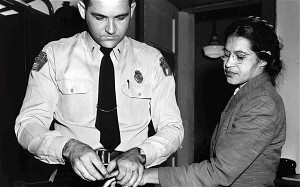
Rosa Parks getting fingerprinted after her arrest.

Rosa Parks getting fingerprinted after her arrest. [Image courtesy  abcnews.go.com]

Rosa Louise McCauley was born on this day in Tuskegee, Alabama in 1913. Today is the 100th anniversary of her birth.

Rosa’s father James was a carpenter and her mother Leona was a teacher. Her parents separated when Rosa was 2, and she moved with her mother a little brother Sylvester to Pine Level, Alabama (just outside the capital, Montgomery) to live with her maternal grandparents. He mother taught her to read. The segregated one room school-house she attended seldom had enough desks  or other supplies. At 11 she went to the Montgomery Industrial School for Girls, an institution a laboratory school set up by the Alabama State Teachers College for Negroes and founded “liberal-minded women from the northern United States. The school’s philosophy of self-worth was …to ‘take advantage of the opportunities, no matter how few they were.'” [Achievement.org] She dropped out of the school to care first for her grandmother then her mother.

At 19 she married Raymond Parks and moved to Montgomery. Raymond encouraged Rosa to finish high school, and she earned her degree in 1933.  The two were active in the National Association for the Advancement of Colored People (Raymond had been an active member when they met.) They worked to raise money to help defend the Scottsboro Boys and were members of the Voter’s League. Mrs. Parks managed to get her voter’s card (it took her three tries because of the Jim Crow laws in Montgomery.)

English: Photograph of Rosa Parks with Dr. Mar...

English: Photograph of Rosa Parks with Dr. Martin Luther King jr. (ca. 1955) Mrs. Rosa Parks altered the negro progress in Montgomery, Alabama, 1955, by the bus boycott she unwillingly began. National Archives record ID: 306-PSD-65-1882 (Box 93). Source: Ebony Magazine Ελληνικά: Φωτογραφία της Rosa Parks με τον Dr. Martin Luther King jr. (περ. 1955.) Español: Fotografía de Rosa Parks con Martin Luther King jr. (aprox. 1955). Français : Photographie Rosa Parks (ca. 1955) (Photo credit: Wikipedia)

Rosa served as the chapter’s youth leader. And in 1944 she became the secretary to NAACP President E.D. Nixon—a post she held until 1957. (She recalls that they needed a secretary, she was the only woman there, and she was too timid to decline.)

“I worked on numerous cases with the NAACP,” Mrs. Parks recalled, “but we did not get the publicity. There were cases of flogging, peonage, murder, and rape. We didn’t seem to have too many successes. It was more a matter of trying to challenge the powers that be, and to let it be known that we did not wish to continue being second-class citizens.” [Rosa Parks quoted on Achievement.org]

On Thursday, December 1, 1955

Rosa Parks boarded the Cleveland Avenue bus for home. She took a seat in the first of several rows designated for “colored” passengers. …As the bus Rosa was riding continued on its route, it began to fill with white passengers. Eventually, the bus was full and the driver noticed that several white passengers were standing in the aisle. He stopped the bus and moved the sign separating the two sections back one row and asked four black passengers to give up their seats. Three complied, but Rosa refused and remained seated. The driver demanded, “Why don’t you stand up?” to which Rosa replied, “I don’t think I should have to stand up.” The driver called the police and had her arrested. …The police arrested Rosa at the scene and charged her with violation of Chapter 6, Section 11, of the Montgomery City Code. She was taken to police headquarters, where, later that night, she was released on bail. [biography.com]

Booking photo of Parks

Booking photo of Parks (Photo credit: Wikipedia)

On the day of her trial the NAACP and the Montgomery Improvement Association (with its new leader Dr. Martin Luther King, Jr.) organized a Bus Boycott.  The

13-month mass protest that ended with the U.S. Supreme Court ruling that segregation on public buses is unconstitutional. …The bus boycott demonstrated the potential for nonviolent mass protest to successfully challenge racial segregation and served as an example for other southern campaigns that followed. In Stride Toward Freedom, King’s 1958 memoir of the boycott, he declared the real meaning of the Montgomery bus boycott to be the power of a growing self-respect to animate the struggle for civil rights. [Stanford.edu]

“At the time I was arrested I had no idea it would turn into this, … It was just a day like any other day. The only thing that made it significant was that the masses of the people joined in.” –Rosa Parks

After her arrest Parks lost her job  as a seamstress in a department store. “her husband was fired after his boss forbade him to talk about his wife or their legal case.” [biography.com] The couple was unable to find work and eventually they moved to Detroit, Michigan with Rosa’s Mother.

In Michigan Rosa Parks worked U.S. House of Representative John Conyer as a secretary and receptionist. In 1987 she helped found the Rosa and Raymond Parks Institute for Self-Development which runs bust tours  to civil rights and Underground Railroad sites for young people.

Rosa Parks receives an award from Bill Clinton.

Rosa Parks receives an award from Bill Clinton. (Photo credit: Wikipedia)

She published a biography, Rosa Parks: My Story and a memoir, Quiet Strength in the 1990s. In 1996 she received the Presidential Medal of Freedom from President Clinton.

Rosa Parks died on October 24, 2005 at the age of 93. She was honored by lying in state at the Capitol Rotunda in Washington, DC.

Today, on the centennial of her birth the US Postal Service is releasing a Forever Stamp with her likeness.

[Image courtesy USPS]

[Image courtesy USPS]

“I would like to be remembered as a person who wanted to be free… and other people would be also free.” –Rosa Parks


Thomas Nelson, Jr. 12,26.12 Thought of the Day

An engraving of Thomas Nelson, Jr., a signer o...

Thomas Nelson, Jr was born on this day in Yorktown, Virginia in 1738. Today is the 274th anniversary of his birth.

Nelson was a planter, statesman, and soldier. He was a signer of the Declaration of Independence in 1776 and he was Virginia’s fourth Governor (he followed Thomas Jefferson in the post.)

English: Portrait of Governor Thomas Nelson at...

English: Portrait of Governor Thomas Nelson at age 15. (Photo credit: Wikipedia)

His grandfather and namesake, Thomas “Scotch Tom” Nelson  was one of the first men to settle in the Yorktown area. And the family was prominent in local and regional politics. Young Thomas traveled to England for his formal education. He went to Eton and Trinity College, Cambridge.  In 1760 he graduated and returned to the family home.

Capitol Building from the North side. [ritaLOVEStoWRITE]

Capitol Building from the North side. [ritaLOVEStoWRITE]

One year later, 1761 he was elected to the House of Burgesses, Colonial Virginia’s legislative house in Williamsburg, Virginia. His time in the Capital wasn’t all business, in 1762 he met and married Lucy Grymes, niece of one of the richest and most powerful men in the Colony, Peyton Randolph. He and Lucy had 11 children in their 27 year marriage. (One son, Hugh Nelson, served in the US Congress.)

In 1774, after hearing about the Boston Tea Party, he [Thomas] performed an act against the British Tea Tax by boarding a merchant ship, Virginia, which was anchored near his home, and dumped several chests of tea into the York River. [Geni.com]

He was a member of the Continental Congress in Philadelphia, Pennsylvania, from 1775 to 1777. A supporter of the independence cause, he was a signer of the Declaration of Independence.

English: This is a high-resolution image of th...

English: This is a high-resolution image of the United States Declaration of Independence (article (Photo credit: Wikipedia)

In May of 1777 he suffered the first of a series of strokes and returned to Yorktown. He also suffered “periodic bouts of asthma”[Geni.com] but remained active in politics.

He also became a General in the Virginia Militia. He and his 3,000 Militiamen were part of George Washington’s Army during the siege of Yorktown. Cornwallis, the British commander had taken Nelson’s home for one of his head quarters. The

American artillerymen refused to fire on the house, in respect to General Nelson. Nelson then aimed … a cannon at his own home, and ordered the men to fire at his house…. [Ibid]

He offered a bounty of five guineas to the first American gunner to hit the house. The house, now a part of the Colonial National Historical Park system, still shows “evidence of damage from cannon fire.” [National Park Service]

Nelson House, York County, Virginia. [Image courtesy: National Park Service]

Nelson House, York County, Virginia. [Image courtesy: National Park Service]

In 1781 he succeeded Thomas Jefferson as Governor Virginia. He retired to his “son’s estate, ‘Mont Air,’ Hanover County, Va., and died there on January 4, 1789” [Congress.gov Biographical Dictionary of the United States Congress] He was buried in Yorktown, in Grace Churchyard.


Samuel Mudd 12.20.12 Thought of the Day

English: Samuel Mudd

English: Samuel Mudd (Photo credit: Wikipedia)

Samuel Alexander Mudd was born on this day in Charles County, Maryland, USA in 1833. Today is the 179th anniversary of his birth.


Mudd grew up on a tobacco plantation about 30 miles southeast of Washington DC. He was the fourth of ten children . He was home schooled until age 15 when he went to St. John’s boarding school in Frederick, MD. He went to college at Georgetown in Washington, and graduated from  the University of Maryland, Baltimore having studied medicine with an emphasis on dysentery. In 1856 he returned to Charles County and began a family with his long time sweetheart Sarah “Frankie” Dyer. Mudd’s father gave the couple a 218 acre tobacco farm called St. Catherine’s. He supplemented his income as a doctor with the sale of tobacco from the farm. (He grew the tobacco with the help of five slaves.)


Dr. Mudd's House

Dr. Mudd’s House (Photo credit: jimmywayne)

When the Civil War began Maryland was a border state. If Washington, with its large number of Union soldiers had not be located in its southern border along the Potomac River the state may have voted to succeed from the Union. When Maryland abolished slavery in 1864 ( a year after the Emancipation Proclamation) Mudd could no longer effectively run his farm. He began looking for a buyer and was introduced to a young, dashing, actor in the market for some property. That actor’s name was John Wilkes Booth.


Booth and Mudd met in November  at St. Mary’s Catholic Church  to discuss the purchase. Booth stayed overnight at the farm before returning to Washington. Unbeknownst to Mudd, Booth wasn’t interested in real estate at all, but was scouting out an escape path from the Nation’s Capital. The actor was planning on kidnapping President Lincoln to bring him to Richmond (the capital of the Confederacy). He would ransom Lincoln for a large number of Confederate POWS.


Portrait of John Wilkes Booth (1838–1865)

Portrait of John Wilkes Booth (1838–1865) (Photo credit: Wikipedia)

Mudd and Booth met again shortly before Christmas 1964, this time in Washington. They met John Surratt and Louis Weichmann for drinks.


Before Booth could pull off his ill-advised and grandiose plan Lee surrendered at Appomatox, Virginia and the War was over. Booth was furious. He altered his plan and decided to kill the president instead of kidnapping him. Booth shot Lincoln in the head five days after Lee surrendered. The President and Ms. Lincoln were watching a play, Our American Cousin at Ford’s Theatre in Washington, DC. After shooting Lincoln at point-blank range he jumped down from the Presidential Box to the stage to escape. He broke his leg in the fall but managed to get out the stage door and onto his horse and escape the city.


English: Interior of Ford's Theatre, Washingto...

English: Interior of Ford’s Theatre, Washington, D.C., where Abraham Lincoln was assassinated. The presidential box is towards the right. The theatre is still in operation and the stage is set up for a current stage play (i.e., it is not set up as it was when Lincoln was shot). (Photo credit: Wikipedia)

About four o’clock on the morning following the Lincoln assassination two men on horseback arrived at the Mudd farm near Bryantown.  The men, it turned out, were John Wilkes Booth–in severe pain with a badly fractured leg that he received from his fall to the stage after shooting the President–and David Herold.  Mudd welcomed the men into his house, first placing Booth on his sofa, then later carrying him upstairs to a bed where he dressed the limb. 

After daybreak, Mudd made arrangements with a nearby carpenter to construct a pair of crutches for Booth and tried, unsuccessfully, to secure a carriage for his two visitors.  Booth (after having shaved off his moustache in Mudd’s home) and Herold left later on the fifteenth, after Mudd pointed the route to their next destination, Parson Wilmer’s. [UMKC.edu]

Military investigators followed Booth’s trail to the Mudd farm and Dr. Mudd admitted to having seen a patient, but claimed…”‘I never saw either of the parties before, nor can I conceive who sent them to my house.” [Historynet.com]  When Lt. Lovett, the lead investigator on the Mudd end of the trail returned again to the farm Sarah “brought down from upstairs a boot that had been cut off the visitor’s leg three days earlier.” [Ibid.] Booth’s initials were in the boot’s cuff, but Mudd still denied knowing who it was.


Booth's boot, found at the Mudd's farm .[Image courtesy]

Booth’s boot, found at the Mudd’s farm . [Image courtesy UMKC.edu]

During the trail Mudd’s lie about not recognizing Booth, compounded by his not coming forward  about “suspicions … aroused by a broken-legged visitor who, during his brief stay the Mudd farm, shaved off his moustache” [Ibid] stained his character far more deeply than the circumstantial evidence of witnesses who claimed he knew of the conspiracy.


Defense Attorney Thomas Ewing argued to the Commission that it is no crime to fix  a broken leg, even if it were the leg of a presidential assassin and even if the doctor knew it was the leg of a presidential assassin. [Ibid}

Mudd was convicted by a Military Commission and sentenced to life in prison.


English: Broadside advertising reward for capt...

English: Broadside advertising reward for capture of Lincoln assassination conspirators, illustrated with photographic prints of John H. Surratt, John Wilkes Booth, and David E. Herold. Français : Avis de recherche avec prime de 100.000 $ pour la capture de John Wilkes Booth, le meurtrier du président Abraham Lincoln, et deux de ses complices, David Edgar Herold et John Harrison Surratt. (Photo credit: Wikipedia)

He, and the other conspirators who escaped the noose were sent to Fort Jefferson in the Dry Tortugas 70 miles west of Key West,  Florida. He tried to escape once, but was quickly discovered. He and other prisoners were transferred to “the dungeon” a ground-level gunroom. They were let out six days a week to work, but were forced to stay inside the dungeon on Sundays and holidays. He wore leg irons while outside the cell.


Dr. Mudd as he appeared when working in the ca...

Dr. Mudd as he appeared when working in the carpenter’s shop in the prison at Fort Jefferson. (Photo credit: Wikipedia)

.


In 1867, an outbreak of yellow fever overtook the Dry Tortugas, claiming the lives of fellow conspirator and inmate Michael O’Lauglin, as well as the prison doctor.  Mudd assumed the role as the new prison doctor. [Ibid]

Mudd was pardoned in March of 1869 by President Andrew Johnson. The Doctor returned to his Maryland farm and his wife (they had 4 more children.) He had always been interested in politics and in 1877 he ran (unsuccessfully) for the Maryland House Delegates. In 1880 his farm was destroyed by a fire. and by 1883, at just 49 years old, Mudd was dead of pneumonia.


———————————————————————–


Lincoln’s death brought on a media circus the likes of which we are only all too familiar with in 2012. But then, when the nation need to be healed from its bloody civil war a swift and definitive trial was essential. Yellow journalism was in full swing. Certainly some of the men (and possible the one woman) on trial were guilty … but what do you think? Did was Dr. Mudd innocent or guilty?


English: John Wilkes Booth's escape route Türk...


Williamsburg (part 4)

Textile 3

[This is part four of my What To Do in Williamsburg Blog for part one go HERE. For part two go HERE. For part three go HERE. ]

Previous tips included:

  1. Planning your trip in the Fall or Winter to avoid the heat and crowds.
  2. Staying in a Colonial House.
  3. Engaging with the locals.
  4. Visit the Wren Building
  5. Take the Rubbish, Treasures and Colonial Life Tour & the Behind the Scenes Tour
  6. Visit the De Witt Wallace and Abby Aldrich Rockefeller Folk Art Museums
  7. Tour the Governor’s Palace
  8. Tour the Thomas Everard House.
  9. Visit Bassett Hall.
  10. Get spooky with it.

Today we’ll  touch on some odds and ends in Williamsburg and travel down the road to the current capital of Virginia, Richmond.

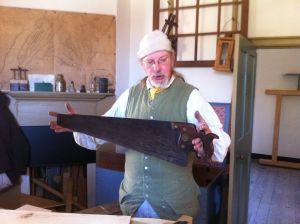
11. Stop in to see the craftsmen making things with wood.  Bill likes woodworking so we spent time at the joiners near the Capitol on Frances Street…

Saw envy at the Joiners.

Saw envy at the Joiners.

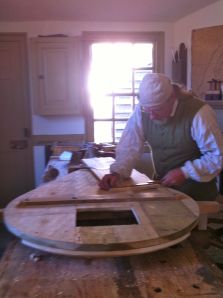
Where they do ordinary work, like making sashes for windows and  bellows for the Gunsmith Shop….

Making 1 of three large wooden panels for the bellows.

Making 1 of three large wooden panels for the bellows.

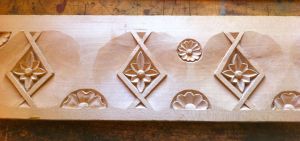
…and fancy work, like this decorative piece.

The craftsmen at the Joiners used a lot of fine carving skills to make this wooden ornamental panel.

The craftsmen at the Joiners used a lot of fine carving skills to make this wooden ornamental panel.

We also went to the Cabinetmaker’s shop, which is on Nicholson Street, closer to the Palace Green.

Bill has a talk with one of the cabinet makers.

Bill has a talk with one of the cabinet makers.

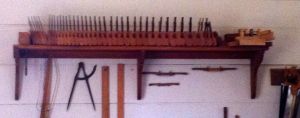
Both shops had beautiful sets of hollows and rounds for making moldings.

Hollow and round plains on the shelf.

Hollow and round plane sets on the shelf.

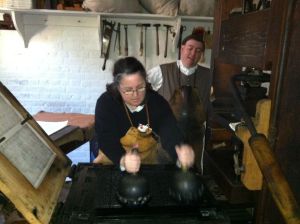
12.) Get your Ps and Qs in line at the Printers. Bill indulged my love of graphic design with a trip to the Printers. We had a nice long talk with printer and he was kind enough to let me have a go at the press.

First I inked the plate.

First I inked the plate.

IMG_0168

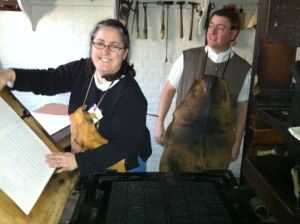
Added paper, cranked the carriage into place then PULLED the press down.

Rita putting paper on press

Cranked the carriage back out and lifted the paper tray and…

Gazette rita's pull

Taadaaa… my impression of a colonial paper. (Get it? IMPRESSION? It’s a letter-press. Never mind, it’s a printing joke.)

13.) Stroll along Duke of Gloucester Street. We  especially enjoyed the Blacksmith, the Silversmith and the Milliner.

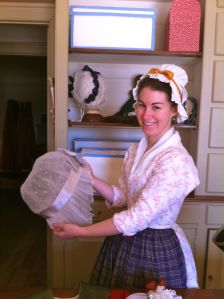
Milliner

The Milliner shows off a hat that would have been popular around 1790. I like to think of it as a Mrs. Bennett or Mrs. Dashwood appropriate hat. (Yes that is Jane Austen reference.)

14.) Stand witness for the prosecution at the Courthouse. Learn about the 18th Century justice system first hand with the Order In The Court program (it runs several times a day and is free with your Williamsburg pass).

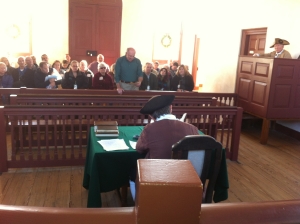
Courthouse

The Williamsburg Courthouse is one of the original buildings and was still in use when Goodwin and Rockefeller began to rebuild the town.

We saw several civil trials which required audience participation.

A Williamsburg visitor takes on the roll of a townsperson who has failed to come to church -- an offense which was against the law.

A Williamsburg visitor takes on the roll of a towns person who has failed to come to church — an offense which was against the law.

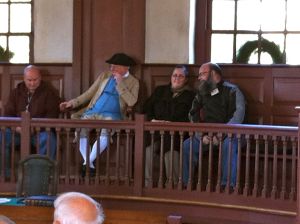
You MIGHT even get a chance to be on the judge’s bench (even if you’re a woman == as long as you go along with premise that you are a man for the purposes of historical accuracy.)

Court House Judge Rita

Yes, that’s judge Rita conferring with the bearded judge to the right on the fate of some poor soul. Don’t worry I was very easy. Every body else was a hangin’ mood, but not me.

15. EAT. There are four Colonial Taverns to choose from in the city, Christiana Campbell’s, Shield’s, King’s Arms, and Chownings. I liked King’s Arms the best because they have an amazing Peanut Soup.  Dinner at any of the Taverns is by candle light and includes period entertainment, but be warned … it will be an expensive meal. You might choose to eat at one of the restaurants at Merchant’s Square  (which is between Colonial Williamsburg and Williams and Mary. The bus that runs in a clockwise circle around the historic district has a stop at Merchants Square so you wont have to get in your car.) We liked the Cheese Shop on the square, and especially the Aroma Coffee Shop on Prince George Street. If you do decide to step into your horseless carriage just go out Richmond Road and you’ll find the usual suspect of chain eateries, an oddly prolific collection of pancake establishments and some rather nice restaurants of the non-chain variety (yes, there are still some of them out there.) We enjoyed sushi at Kyoto and American fare at Food for Thought (the best food I ate all week was the Food for Thought’s quinoa salad.)

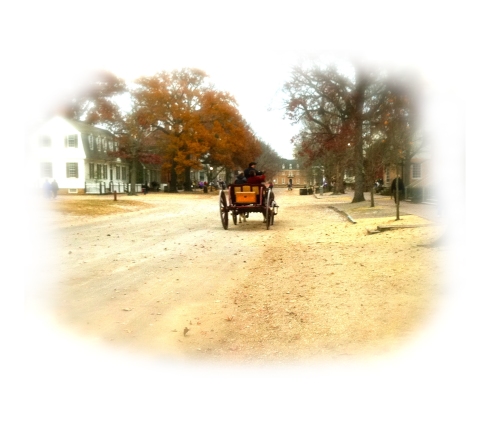
carriage riding down the roadTime to travel down the road and into the present, leaving 18th Century Williamsburg for 21st Century Richmond. Well, almost… there’s still a lot of history to explore on this trip.

Richmond is the capital of Virginia and during the American Civil War it was the Capital of the Confederacy. The city is ripe with monuments & museums to the South (and given the whole Slavery thing, that made me a mite itchy. But I do love my history, so…) While in the city you can visit the Museum and White House of the Confederacy, the Virginia Historical Society,  Hollywood Cemetery or take a stroll down Monument Avenue.

We went to Tredegar Iron Works on the James River. You get two museums in one location here. One is run by the National Park Service and the other is part of the American Civil War Center. We went into the (free) Park Service museum and enjoyed the displays and movie on the third floor. The Map Room is a great way to orient yourself on Richmond’s role in the war.

Photograph of the Tredegar Iron Works, shortly...

Photograph of the Tredegar Iron Works, shortly after the Evacuation Fire of 1865; despite the original caption of the image, the works themselves survived largely unscathed. (Photo credit: Wikipedia)

The outdoor exhibits had seen better days, but this museum is a gem in the rough. I hope they get some funding and can restore all the exhibits to top-notch condition.

Next stop: Shopping. Carytown  is Richmond’s “Mile of Style” and we enjoyed a mild weather stroll down the main drag of boutiques and unique shops. This quaint shopping district won Southern Living Magazine’s “Best Neighborhood to Shop In” nod by the magazine’s readers.

Flower Power Case at Anthill Antiques, Carytow...

Flower Power Case at Anthill Antiques, Carytown, Richmond, VA (Photo credit: kayadams.com)

We ate at the Can Can Brasserie a beautifully restored building that made you feel like you’d stepped off the streets of Paris. I kept expecting to see Henri de Toulouse-Lautrec stroll by the table. The atmosphere was delightful, so was the food (I got half a Roast Chicken Salad and a half order of their Roasted Apple & Rutabaga Soup. ) And don’t forget to order a Eloise (their special version of a Shirley Temple.)

But our big find in Richmond, besides the wonderful company, was the Virginia Museum of Fine Arts… which I will talk about tomorrow.


Williamsburg (part 3)

Textile 3

[This is part three of my What To Do in Williamsburg Blog for part one go HERE. For part two go HERE. ]

Previous tips included:

  1. Planning your trip in the Fall or Winter to avoid the heat and crowds.
  2. Staying in a Colonial House.
  3. Engaging with the locals.
  4. Visit the Wren Building
  5. Take the Rubbish, Treasures and Colonial Life Tour & the Behind the Scenes Tour
  6. Visit the De Witt Wallace and Abby Aldrich Rockefeller Folk Art Museums

Today we’ll go inside some of Williamsburg’s beautiful houses and get a little spooky after dark.

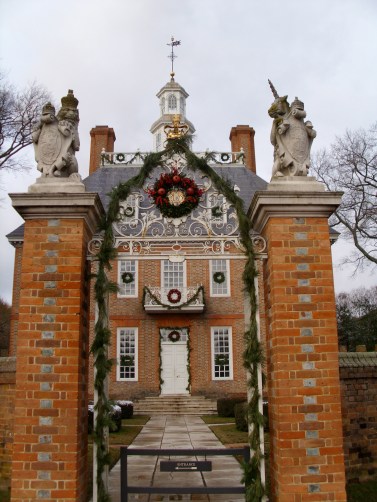
7. Tour the Governor’s Palace. It is the largest and finest residence in Williamsburg and it is meant to awe, inspire and intimidate all who see it. The moment you walk into the entrance hall lined with fire arms and crossed swords you know the power behind the man who lives here. It was home to seven colonial governors and two elected Virginia governors before Thomas Jefferson moved the Capital further west to Richmond in 1780.

Front gate leading to the Palace.

Front gate leading to the Palace.

Tours, which require a separate ticket, will bring you through the public and private portions of the house.

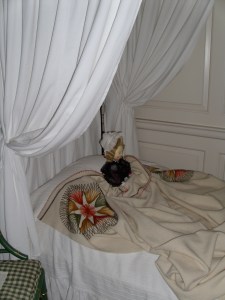
One of the beds in the Palace.

One of the beds in the Palace.

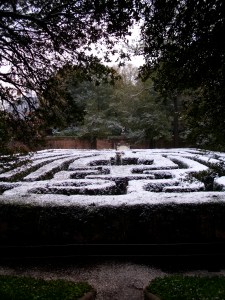
After your tour explore the vast gardens. Don’t miss the box wood maze. And be sure to climb the pyramid over the ice house. I found the gardens more enchanting than the building itself.

View of the box wood maze taken from the top of the pyramid. This was from our 2010 trip, and it had just snowed.

View of the box wood maze taken from the top of the pyramid. This was from our 2010 trip, and it had just snowed.

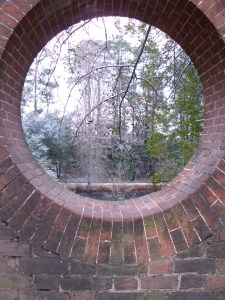
There were dozens of hidden treasures.

Window through the garden wall looking out to the canal.

Window through the garden wall looking out to the canal.

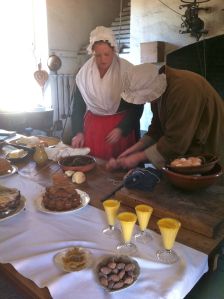
Even if you don’t take a formal Palace tour be sure to stop in to see the cellars and the kitchen. It will give you a fascinating glimpse on how they kept this huge home running. The cook, a man, was one of the highest paid and best regarded people in Williamsurg btw.

They made one big meal for the day. What kept was "left over" for breakfast.

They made one big meal for the day. What kept was “left over” for breakfast.

8. Tour the Thomas Everard House. On a prime piece of real estate on the Palace Green is the Thomas Everard House. Everard was an orphan when he arrived in Virginia as an apprentice to Matthew Kemp. Everard trained for seven years as a clerk. Soon after his apprenticeship was finished he was appointed clerk of Elizabeth City County court. Eventually he became the clerk of York county court for 36 years,  Mayor of Williamsburg and held other prestigious post in the city. He purchased the house on the corner of Palace Green and expanded it.

The front of the Everard House faces the Palace Green.

The front of the Everard House faces the Palace Green.

His wife died fairly young but his two daughters, Fanny and Patsy lived with him as they grew up.

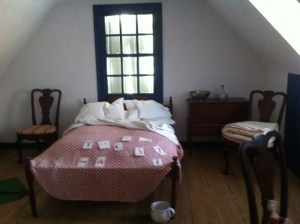
One of the girl's bedroom.

One of the girl’s bedroom.

Fanny married Rev. James Horrocks in 1765. He was the rector of Bruton Parish Church and president of Williams and Mary. He was a powerful man in the colony. When Rev. Horrocks died she returned to her father’s house. Sadly she died a year later. Her sister, Patsy lived, there until 1774 when she married.

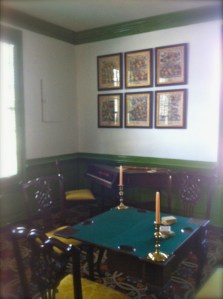
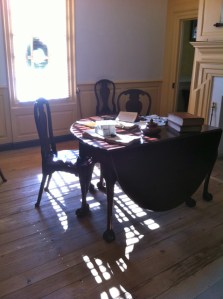
Parlor

The house is in a “U” configuration. On the main floor the parlor and dining room face the front. The Parlor is a public room in the house. This multi use room can be set up for music, games or dancing.

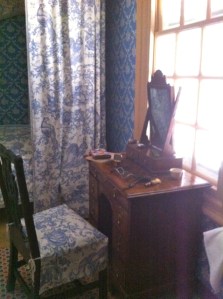
Thomas’ bedroom was accessible through the drawling room.

Everett's bedroom

He  had a quieter prospect  of the yard and garden out his window. A back door allowed for special friends to enter his cozy retreat.

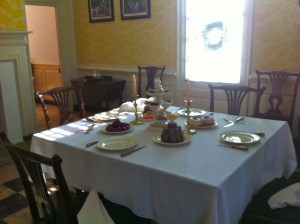
Like the Parlor, the Dinning Room also faces the Palace Green. Dining

The door in the back of the dining room led to Thomas’ study. This room was also accessible through a rear door.

Evert's study

The Thomas Everard House is open 9-4 Tue, Wed & Friday.

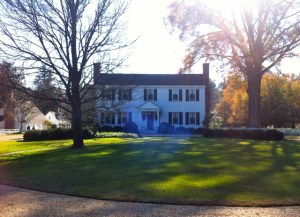
9. Visit Bassett Hall. Williamsburg would not have been possible without the vision of one man and the generosity of another. The first man was Rev. W.A.R. Goodwin, The second was John D. Rockefeller, Jr.. Goodwin convinced Rockefeller to help him rebuild the Revolutionary City to its Colonial glory. Rockefeller and his wife Abby Aldrich Rockefeller.

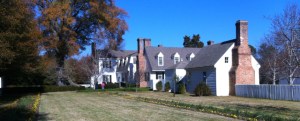
Bassett Hall front

It was their retreat from the outside world. The Rockefellers visited there twice each year. The house and grounds have been restored not to the colonial era, but to the 1930s when the Rockefellers lived there.

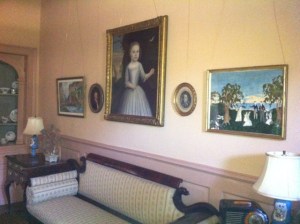
Abby filled the rooms with her folk art finds.

The drawing room at Bassett Hall.

Folk art graces the walls at Bassett Hall.

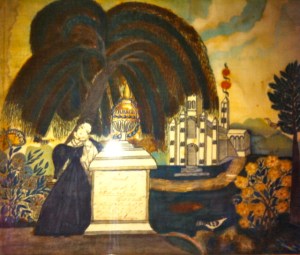
One of her special interest was “School Girl Art.”  A sub set of her Folk Art collection the School Girl Art was literally done by girls who were away at school, usually finishing school in the 19 and 18th centuries.

A sample of School Girl Mourning Art memoralizing some one close to them who has died.

A sample of School Girl Mourning Art. The artist was encouraged to memorialize some one close to them who had died.

The family entertained  the locals — rich and poor– at their dinner table.

Dining rm

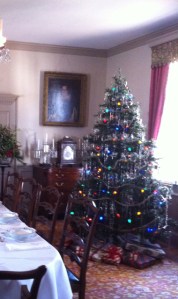
Dining Room decorated to Christmas

During the summer guest were often invited to tea in the Tea Room which was in a building overlooking the garden.

Looking back at the house from the garden.

Looking back at the house from the garden.

Bassett Hall is open Wed-Sun 9-5. Don’t miss the informative movie at the beginning of the tour. You’ll learn a lot about the Rockefellers and the re-making of Williamsburg.

10. Get spooky with it. When you visit a 300 + year old city you expect a lot of history, and probably a few ghosts. So join in the fun and take a Ghost tour. We did the Tavern Ghost tour and it was fun (if not very scary.)  Better still participate in the Cry Witch Program at the Capitol.

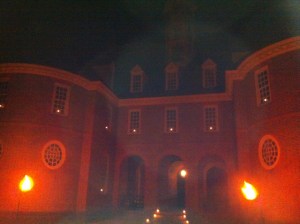
Capital for cry witch

The Capitol Building at night before the Cry Witch program.

You’ll witness the trial of Grace Sherwood with first person interpreters bringing the transcript and court room drama to life. We don’t know what the actual verdict was, those documents have been lost. So the audience in the courtroom gets to weigh the evidence and decide Grace’s fate.

Tomorrow we finish up with Williamsburg and move up the road to Richmond.


Williamsburg (part 2)

Textile 3

[This is part two of my What To Do in Williamsburg Blog for part one go HERE.]

Yesterday’s tips included:

  1. Planning your trip in the Fall or Winter to avoid the heat and crowds.
  2. Staying in a Colonial House.
  3. Engaging with the locals.

Today we’ll focus on some [FREE] tours.

4. Visit the Wren Building.

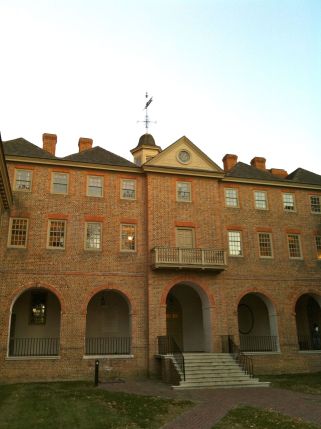
The first State House of Virginia was in Jamestown. But it burned down. Then it burned again. And again. And a fourth time. The governor and the citizens of Jamestown thought they’d better look for a better location for their capital. They chose Williamsburg (then known as the Middle Plantation) because the town already had a market, a church — Burton Parish, and a school — William and Mary. The architectural gem of William and Mary is the Wren Building. It sits at the opposite end of Duke of Gloucester Street from the Capitol and it is definitely worth a visit.

English: The front of the Wren Building at the...

English: The front of the Wren Building at the College of William & Mary in Williamsburg, Virginia, USA. (Photo credit: Wikipedia)

The building began construction in 1695 and was completed in 1699. It is the oldest restored building in Williamsburg. It has suffered three major fires (in 1705, 1859 and 1862) and been rebuilt each time. Between 1928 and 1931 it was restored to its Colonial appearance. Every student at William and Mary has at least one class in the historic Wren Building during their time at the college. The college counts three US presidents among its alumni; Thomas Jefferson, James Monroe and John Tyler. Their portraits hang in the Great Hall.

Free tours of the building are available M-F 1-5 when school is in session. Hint: As you climb the steps to the front door look for a patch of darker red brick to your left. You’ll see the initials of some of the school’s earliest residents carved in the bricks.

Wren Building from the William and Mary Campus side. (Photo credit: Bill.)

Wren Building from the William and Mary Campus side. (Photo credit: Bill.)

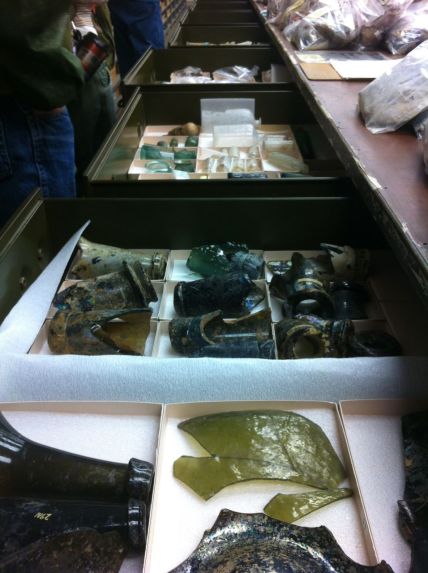
5.) Take the Rubbish, Treasures and Colonial Life Tour.   Rev. W.A.R. Goodwin, the pastor at Bruton Church convinced John D. Rockefeller Jr. to join him in a dream of restoring the sleepy little 1920’s country seat back to  the glorious colonial capital it had once been. That took a lot of money, a lot of research and a lot of digging.  There is no better way to learn about how that transformation took place than on the 90 minute Rubbish, Treasures and Colonial Life tour. Meet members of the staff, learn about how archaeological methods have changed over the years, and see the treasures that await their turn to be cataloged. Tickets are FREE with your Williamsburg Admission Pass, but you must make a reservation prior to the tour.

Glass fragments are sorted by type in drawer in the Archeology labs in Williamsburg.

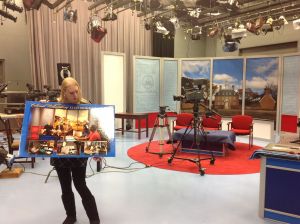
6.) Another great free tour is the Behind the Scenes tour. This tour takes place at the Bruton Heights School and focuses on preservation techniques (as opposed how the objects are found, put together and cataloged.) You’ll see the studio where educational videos, Emmy Award winning broadcasts and blogs are made…

Film Studio at Williamsburg's  Bruton School facility.

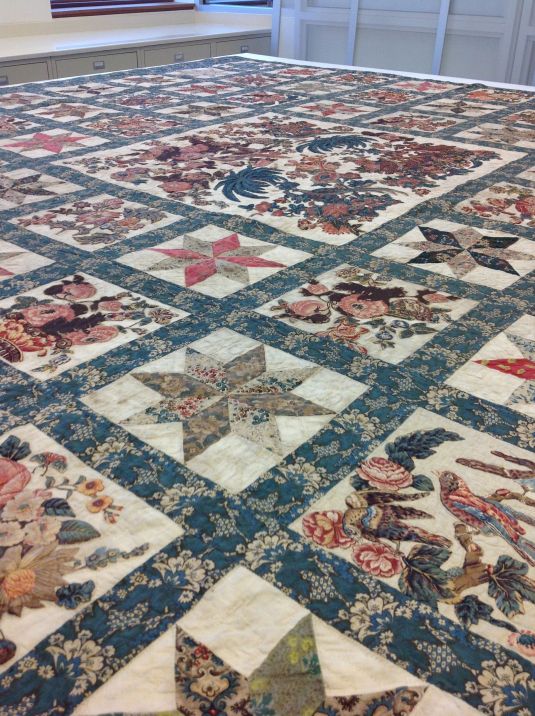
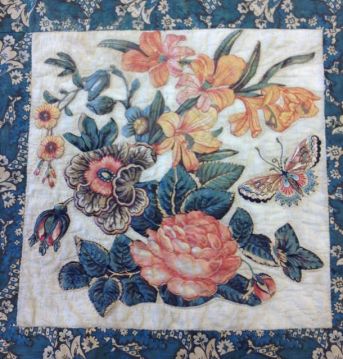
…then go to one of the restoration labs to see work being done on an 18th century item. We visited the Textile Lab where they were restoring some quilts for an upcoming show at the De Witt Wallace Museum.

Over sized quilt being restored at the Textile Lab

Over sized quilt being restored at the Textile Lab
Detail from an over sized quilt being restored at the Textile Lab.

Detail of quilt

6.) Go to the De Witt Wallace Decorative Arts Museum and the Abby Aldrich Rockefeller Folk Art Museum. With a substantial permanent exhibit and wonderful traveling exhibits we have never been disappointed by a stop at the twin museums that are accessible through the recreated Public Hospital on Frances Street.

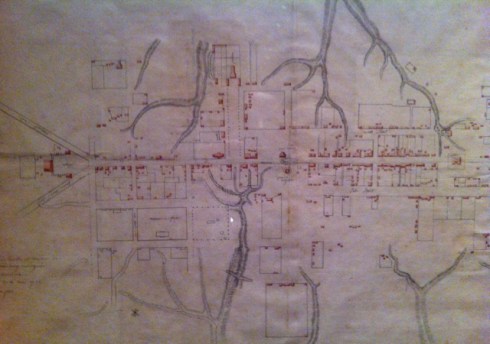
The Frenchman's Map was on display as part of a temporary exhibit on maps and mapmaking. Drawn when the French moved into the city after during the Siege of Yorktown, It is the Rosettastone for Archeologist trying to restore Williamsburg.

The Frenchman’s Map was on display as part of a temporary exhibit on maps and map making. Drawn when the French moved into the city after during the Siege of Yorktown, It is the Rosetta stone for Archeologist trying to restore Williamsburg. The Bodleian Plate, another key to what the Colonial Capital looked like, is also on display.

This is a terrific way to spend a rainy (or cold) afternoon. And if you are traveling with youngsters the Children’s room in the Abby Aldrich Museum is delightful.

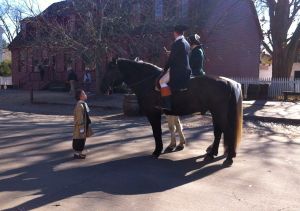
Looking up to the past.<br /><br />A young visitor finds both human and equine re-enactors equally fascinating andfriendly on Duke of Gloucester street.

Looking up to the past.
A young visitor finds both human and equine re-enactors equally fascinating and friendly on Duke of Gloucester street.
  • To read my article on Williamsburg: A Winter Escape in 2011’s Mason-Dixon ARRIVE Magazine click HERE and scroll down == it is the third article on the page.

Abigail Adams 11.22.12 Thought of the Day

“We have too many high-sounding words, and too few actions that correspond with them.”
— Abigail Adams

Abigail Adams by Benjamin Blythe, 1766

Abigail Adams by Benjamin Blythe, 1766 (Photo credit: Wikipedia)

Abigail Smith was born on this day in Weymouth, Massachusetts, in 1744. Today is the 268th anniversary of her birth.

Abigail  was literally born in a church. Her father, Reverend William Smith was the pastor at the North Parish Congregational Church, her mother, Elizabeth Quincy Smith was first cousins to Dorothy Quincy Hancock (John Hancock’s wife). Reverend Smith believed in reason and morality and he imparted those lessons to  his daughters Mary, Elizabeth and Abigail. Her mother home schooled the girls with the aid of her extended family’s libraries. The girls studied English and French literature, philosophy, history, and the Bible. Abigail
“was a keen political observer, prolific writer…” [abigailadams.org]

Abigail’s third cousin John Adams visited the Smith’s with his friend Richard Cranch. Cranch was engaged to Mary Smith, the eldest Smith sister. Adam’s was just a country lawer, and Abigail’s mother didn’t approve of him as a suitor, but the couple prevailed.

On October 25, 1764 Abigail married John Adams, a Harvard graduate pursuing a law career.  Their marriage was one of mind and heart, producing three sons and two daughters, and lasting for more than half a century. [Ibid]

As a young married couple they lived on the farm John inherited, Braintree. Later they moved to Boston. She stayed in Massachusetts when John went to Philadelphia  to participate in the Continental Congress (1 & 2), travelled abroad as an envoy, and served in elected office.

Abigail struggled alone with wartime shortages, lack of income, and difficult living conditions.  She ran the household, farm, and educated her children.  Abigail’s letters to John were strong, witty and supportive.  The letters, which have been preserved, detail her life during revolutionary times, and describe the many dangers and challenges she faced as our young country fought to become independent.  Most of all, the letters tell of her loneliness without her “dearest friend,” her husband John. [Ibid]

She joined John in Paris in 1784 and travelled with him to England the following year. In 1800 she became the First Lady to preside over the White House as John Adams became the second President of the United States. (The Capitol had recently been moved to Washington DC).

English: "Abigail Smith Adams," oil ...

English: “Abigail Smith Adams,” oil on canvas, by the American artist Gilbert Stuart. Courtesy of the National Gallery of Art, Washington, D. C. (Photo credit: Wikipedia)

When John Adams lost his bid for a second term he and Abigail moved back to Braintree …”and for 17 years enjoyed the companionship that public life had long denied them.” [Ibid]

Abigail Adams died on October 28, 1818. She was a woman …

often ahead of her time with many of her ideas. She opposed slavery, believed in equal education for boys and girls, and practiced what she learned as a child – the duty of the fortunate is to help those who are less fortunate. [Ibid]