Category Archives: Film

Thought of the Day 10.17.12 Elinor Glyn

“All the legislation in the world will not abolish kissing”
Elinor Glyn

Portrait of Elinor Glyn, 1927

Portrait of Elinor Glyn, 1927 (Photo credit: Wikipedia)

Elinor Southerland was born on this day in Jersey, Channel Islands, England in 1864. Today is the 148th anniversary of her birth.

Elinor’s father died when she was a toddler and the family moved for a while to Canada. They returned to Jersey when she was eight and her mother remarried.  Elinor…

was a voracious reader interested in French history and mythology, though she had no formal education … She would later be drawn to mysticism and romance. [The Literature Network]

She liked to write and she kept a diary.

At 28 she married Clayton Glyn. The couple had two daughters, Margot and Juliet. The marriage was not a happy one.  and, although Elinor and Clayton officially remained together both had affairs.

Elinor had affairs with a succession of British aristocrats and some of her books are supposedly based on her various affairs… [Good Reads]

English: Elinor Glyn portrait

English: Elinor Glyn portrait (Photo credit: Wikipedia)

She contributed articles to Scottish Life and Cosmopolitan but her real break through in the literary world came with the serialization of her first book The Visits of Elizabeth in 1900. The book, was written as a series of letters by an innocent young woman. Elizabeth.

The naive and charming narrator gets herself into social scrapes due to her innocence, … they are actually funny over a hundred years later because you know what Elizabeth doesn’t know–and perhaps that was the appeal for the more knowing Edwardian readers. Glyn’s book is a bit of a satire, but a romantic one, and Elizabeth gets her happily-ever-after, but not before making every handsome gentleman fall deeply in love with her.  [Amazon.com review]

Elinor was prolific in turning out her novels (she had to be, finances at home had taken a turn for the worse and the once wealthy Clayton Glyn was in debt by 1908. He died in 1915.)  Her reputation as a writer of romance grew with the publications  of The Seventh Commandment (1902), The Reflections of Ambrosine (1903), The Damsel and the Sage (1903), The Vicissitudes of Evangeline (1905) and Beyond the Rocks (1906).
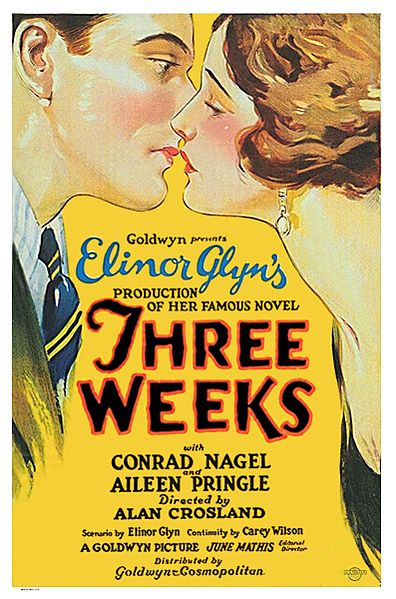
Movie poster for Three Weeks

Her risqué Three Weeks, about an exotic Balkan queen who seduces a young British aristocrat, was allegedly inspired by her affair with Lord Alistair Innes Ker. On the one hand it scandalized Edwardian aristocrats and jeopardized Glyn’s status. [The Literature Network]

Deemed immoral and banned at elite schools like Eton and panned by some critics who considered it disjointed and dull, the book non the less sold out within weeks of its publication and  it  “ensured her meteoric rise to fame.” [ibid]. It also brought about the anonymous  ditty:

Would you like to sin
With Elinor Glyn
On a tiger skin?
Or would you prefer
To err
With her
On some other fur

Her private life seemed to either echo or prelude the romantic interludes of the heroines in her novels as she continued to crank out “romances” until the start of World War One. During the Great War she worked in France as a war correspondent and Glyn was one of two women to witness the signing of the Treaty of Versailles.

Elinor Glyn looks up at Rudolph Valentino, fro...

Elinor Glyn looks up at Rudolph Valentino, from the frontispiece of Beyond The Rocks (Photo credit: Wikipedia)

She made the move to Hollywood in 1920 where she worked as a scriptwriter  for MGM and Paramount. The Great Moment was filmed in 1920.  In 1922 Beyond the Rocks was made into a major motion picture with red-hot Rudolph Valentino and Gloria Swanson. Three Weeks was given the big screen treatment not once, but twice, first in 1914 and then in 1924. And Glyn wrote the screenplay and was closely involved in the production of the 1926 Love’s Blindness.

In 1927 she wrote a novella that gave us the expression “the IT girl.”  She coined the phrase and quickly  crowned Clara Bow, who was staring in Red Hair (a movie based on Glyn’s The Vicissitudes of Evangeline), as the first IT girl. Here autobiography Romantic Adventure was published in 1936. She continued writing until 1940 when she published her last — and 42nd — book, The Third Eye.

English novelist and scriptwriter Elinor Glyn ...

English novelist and scriptwriter Elinor Glyn (1864-1943) (Photo credit: Wikipedia)

Elinor Glyn died in September of 1943 in Chelsea, London.

————————————————————————–

Bookshelf:

Interested in reading some of Elinor Glyn’s books? You can find them through the links below.

Red Hair (Classic Reprint)<img src=”http://www.assoc-amazon.com/e/ir?t=rico095-20&l=as2&o=1&a=B0094JHIEE&#8221; width=”1″ height=”1″ border=”0″ alt=”” style=”border:none !important; margin:0px !important;” />

Man and maid<img src=”http://www.assoc-amazon.com/e/ir?t=rico095-20&l=am2&o=1&a=117680328X&#8221; width=”1″ height=”1″ border=”0″ alt=”” style=”border:none !important; margin:0px !important;” />

Three Weeks<img src=”http://www.assoc-amazon.com/e/ir?t=rico095-20&l=am2&o=1&a=0715603612&#8243; width=”1″ height=”1″ border=”0″ alt=”” style=”border:none !important; margin:0px !important;” />

The Visits Of Elizabeth<img src=”http://www.assoc-amazon.com/e/ir?t=rico095-20&l=am2&o=1&a=1162711698&#8243; width=”1″ height=”1″ border=”0″ alt=”” style=”border:none !important; margin:0px !important;” />

The man and the moment<img src=”http://www.assoc-amazon.com/e/ir?t=rico095-20&l=am2&o=1&a=1178145077&#8243; width=”1″ height=”1″ border=”0″ alt=”” style=”border:none !important; margin:0px !important;” />

The man and the moment<img src=”http://www.assoc-amazon.com/e/ir?t=rico095-20&l=am2&o=1&a=1178145077&#8243; width=”1″ height=”1″ border=”0″ alt=”” style=”border:none !important; margin:0px !important;” />

The Point of View<img src=”http://www.assoc-amazon.com/e/ir?t=rico095-20&l=am2&o=1&a=1444425269&#8243; width=”1″ height=”1″ border=”0″ alt=”” style=”border:none !important; margin:0px !important;” />


Thought of the Day 10.15.12 P. G. Wodehouse

“I just sit at a typewriter and curse a bit.”“There is only one cure for gray hair. It was invented by a Frenchman. It is called the guillotine.”“I know I was writing stories when I was five. I don’t know what I did before that. Just loafed I suppose.”–P.G. Wodehouse

P. G. Wodehouse, Bolton's friend and collaborator

“I just sit at a typewriter and curse a bit.”

Pelham Grenville Wodehouse was born on this day in Guildford, Surrey, England in 1881. This is the 131st anniversary of his birth.

Wodehouse, called “Plum” as a child, spent much of his early life in the care of a gaggle of aunts and at boarding schools in England, while his parents lived in the Far East. Third of four boys, Wodehouse was close to his brothers.  He went to The Chalet School, Elizabeth College in Guernsey, Malvern House (near Dover) and finally at Dulwich College with his older brother Armine. He flourished at Dulwich where he played sports (especially boxing, cricket and rugby), studied the classics, sang and acted in the school’s theatricals, and of course, wrote.)

Psmith in the City

Psmith in the City (Photo credit: Wikipedia)

Upon graduation in 1900 ailing family finances meant he couldn’t go on to Oxford like Armine. Instead, Plum’s father got him a job in the London branch of the Hong Kong and Shanghai Bank. He wrote about his experiences at the bank in Psmith in the City, but he said he “never learned a thing about banking.”  In 1902 he gave up the financial farce and dove into journalism  with a job writing a comic column at The Globe newspaper. He moved to New York and published his first novel, The Pothunters the same year.  A Prefect’s Uncle; Love Among the Chickens; The Swoop; Psmith In the City; Psmith, Journalist; The Prince and Betty; and  Something New followed fairly quickly there after.

The Prince and Betty

The Prince and Betty (Photo credit: Wikipedia)

He also wrote for musicals. He penned the book for Cole Porter’s Anything Goes; the Gershwin’ s Oh Kay . He worked with Ira Gershwin on the lyrics for Rosalie. And he wrote dozens of musicals — generically called the Princess Theatre Musicals — with Guy Bolton and Jerome Kern. [For a complete list of Wodehouse musicals go to The Playwrights Database at doolee.com]   The Princess Theatre Musical are generally seen as a stepping stone that took the best of vaudeville and operetta and blended them into modern musical theatre. They transitioned

“… the haphazard musicals of the past to the newer, more methodical modern musical comedy … the libretto is remarkably pun-free and the plot is natural and unforced. Charm was uppermost in the creators’ minds … the audience could relax, have a few laughs, feel slightly superior to the silly undertakings on stage, and smile along with the simple, melodic, lyrically witty but undemanding songs” [Bloom and Vlastnic Broadway Musicals: The 101 Greatest Shows of All Time]

My Man Jeeves

My Man Jeeves (Photo credit: Wikipedia)

Starting with My Man Jeeves in 1919 Wodehouse published the series of books for which is he best known, The Jeeves and Wooster books.  Here’s a clip from the 1990 Granada Television production of Jeeves and Wooster starring Hugh Laurie and Stephen Fry:

He also wrote the Blandings Castle series about a fictional castle with Lord Emsworth and his prize-winning pig, the “Empress of Blandings.”

Since he and his wife, Ethel Wayman, were officially residents of both England and the US they were being taxed by both countries. To alleviate the tax burden they moved to France in 1934. The Wodehouse’s remained in France when the Nazi troops moved in. Wodehouse was interned as an “enemy alien” eventually landing in Tost, Upper Silesia, Poland. He later quipped of  his ‘lodgings’ “If this is Upper Silesia, what on earth must Lower Silesia be like?” He entertained his fellow prisoners with dialogues and wrote during his two-year internment (he completed one novel and started two more). He was released just prior to his 60th birthday when a German friend from his Hollywood days, Werner Plack, approached him about doing a broadcast for the Americans describing his life as an internee.  America was not at war with Germany yet, and he had received many letters of encouragement from his fans in the US while in the camp. He saw this as a way to thank them. And, Wodehouse claimed,  he was simply reflecting the “flippant, cheerful attitude of all British prisoners.” [the Guardian]  in the broadcasts. But the British public didn’t see it that way, and neither did MI5. He was interrogated for suspected collaboration with the Germans — something that shocked the aging author. “I thought that people, hearing the talks, would admire me for having kept cheerful under difficult conditions,” [ibid] Wodehouse maintained that he never had intended to aid the enemy. But the incident left a bad taste with both the Wodehouses and the British public. The author moved to the US in 1945, and never went back to England.

Wodehouse died in 1975.

books - wodehouse

books – wodehouse (Photo credit: rocketlass)


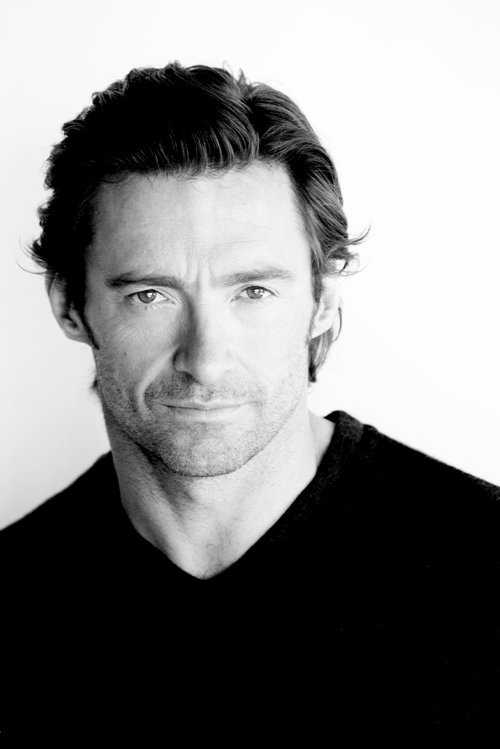
Thought of the Day 10.12.12 Hugh Jackman

“Basically, I’ll make an ass of myself anywhere.”
Hugh Jackman

[Image courtesy: RealHughJackman (his twitter feed)]

Hugh Michael Jackman was born on this day in Sydney, New South Wales, Australia in 1968. He is 44 years old.

The youngest of five ankle-biters, Jackman was raised by his father when his parents divorced. Jackman was eight-years-old at the time. He grew up with a love of the outdoors and enjoyed camping and playing on the beach. His first brush with acting was in My Fair Lady in Knox Grammar School at 17. He earned a degree in Communications at the University of Technology, Sydney in 1991. To finish up his university work he took some acting classes and found his muse.

After finishing a one-year intensive course called “The Journey” at the Actor’s Center in Sydney he hopped coasts to Perth to attend the Western Australian Academy of Performing Arts at Edith Cowan University.

Promotional still from Correlli . [Image courtesy: IMDb]

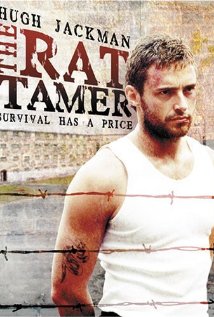
Almost immediately after graduating from ECU he was offered the part of  Kevin Jones in a 10-part prison drama on Australian Broadcasting Company’s (ABC) Correlli. Jackman began dating  his future wife, the series star, Deborra-Lee Furness on the show’s set.

After Correlli Jackman hit the stage for the Melbourne based productions of  Beauty and the Beast (as Gaston) and Sunset Boulevard (as Joe). Back in the cinema he was in the Australian indie films Erskinesville Kings and the rom-com Paperback Hero. He also did a smattering television guest spots on the ABC.

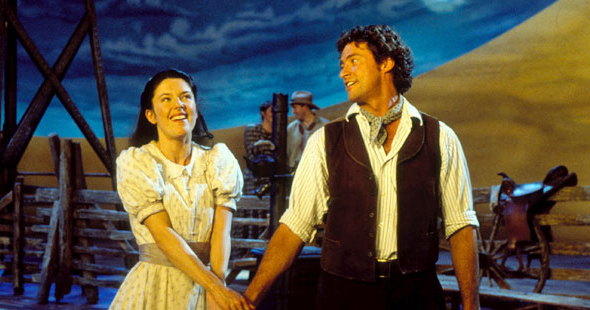
Still from the filmed staged production of Oklahoma! [Image courtesy: Great Performances]

His big international break came as Curley in Trevor Nunn’s reboot of Rodgers & Hammerstein’s “Oklahoma!” Jackman won an Oliver Award for his work in the musical.

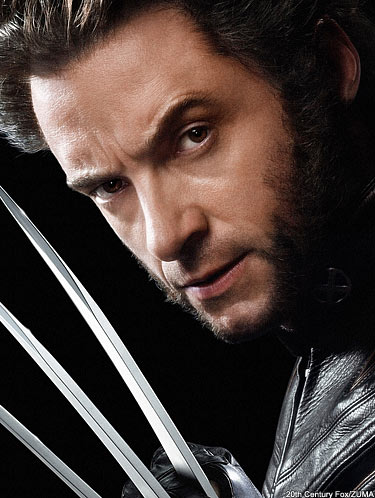
Don’t mess with this man! Jackman snagged the #1 spot in the Top Ten Hollywood Heroes List on Netscape Celebrity’s pole, beating out Matt Damon, Tom Cruise and Brad Pitt. [Image courtesy: Netscape Celebrity]

Then came the role that changed everything. Wolverine. He’s played the Clawed One in five movies now (he holds the record for an actor playing the same super ‘hero’ in the most movies.)  The X-Men franchise was hugely popular and found an audience across genres and generations.

He followed up rough and hairy Wolverine with the role of refined and charming Leopold Alexis Elijah Walker Thomas Gareth MountbattenDuke of Albany in the time travel rom-com Kate and Leopold.

Jackman switched gears again, next appearing as a ex-con computer hacker who unwittingly gets involved in John Travolta’s crime circle in Swordfish.

Local advertising for the musical The Boy from...

Local advertising for the musical The Boy from Oz starring Hugh Jackman in New York City, 2004. Cropped from original. (Photo credit: Wikipedia)

In 2004 he won a Tony Award for his portrayal of fellow Aussie Peter Allen  in The Boy  from Oz. He hosted the Tonys for three years running (’03, ’04, and ’05) and won an Emmy Award for his emcee work in ’04.

He reprised Wolverine in X2: X-Men United, then starred as Gabriel Van Helsing in the rather ridiculous (and IMO dismal) Van Helsing.

He fared better as one of a pair of dueling magicians (Christian Bale was the other) in The Prestige in 2006. It didn’t hurt the movie that David Bowie added his talents as Nikola Tesla.

Personally, I liked the weird and romantic The Fountain. It was a big, strange, time traveling ride, and I just went with it. I thought Jackman and co-star Rachel Weisz had a lot of movie charisma and, for me at least, it worked. NOT so much for his next film Scoop.

Scoop should have been good. It starred the equally like able Scarlett Johanson and was written and directed by Woody Allen. It is supposed to be a comedy/ mystery hybrid but it isn’t funny and it isn’t suspenseful, and there was very little chemistry between the stars. So sad.

His star took a mediocre swing up again with X-Men: The Last Stand. He was good again as the muscled, intense Wolverine. But not a lot of new territory was covered character wise in the this, the third installment of the franchise.

Then my Hugh Jack admiration took a real dive. He provided the voice for two animated movies. He adopted a strange (southern?) accent to play Memphis, the father emperor penguin to Elijah Wood’s tap dancing Mumble in Happy Feet. Then he played a rat who gets flushed down the pipes in Flushed Away. Human again he played Wyatt Bose in the “thriller” Deception.


Cover of "Australia"

Cover of Australia

Baz Luhrmann’s Australia gave Jackman a chance to star in an epic, big budget, old-fashioned, romantic movie. It is very Luhrmann in style, and the director wisely lets Jackman’s natural Aussie charm shine through the rough and tumble character of the Drover . (Though, for the record, Brandon Walters, as Nullah, steals the show.) With the unforgiving but beautiful outback as the title character, and the  nicely filmed attack of Darwin,  Australia worked.

He was in the ensemble comedy Butter and played a down on his luck boxer in the heart warming Real Steel both of which that came out last fall.

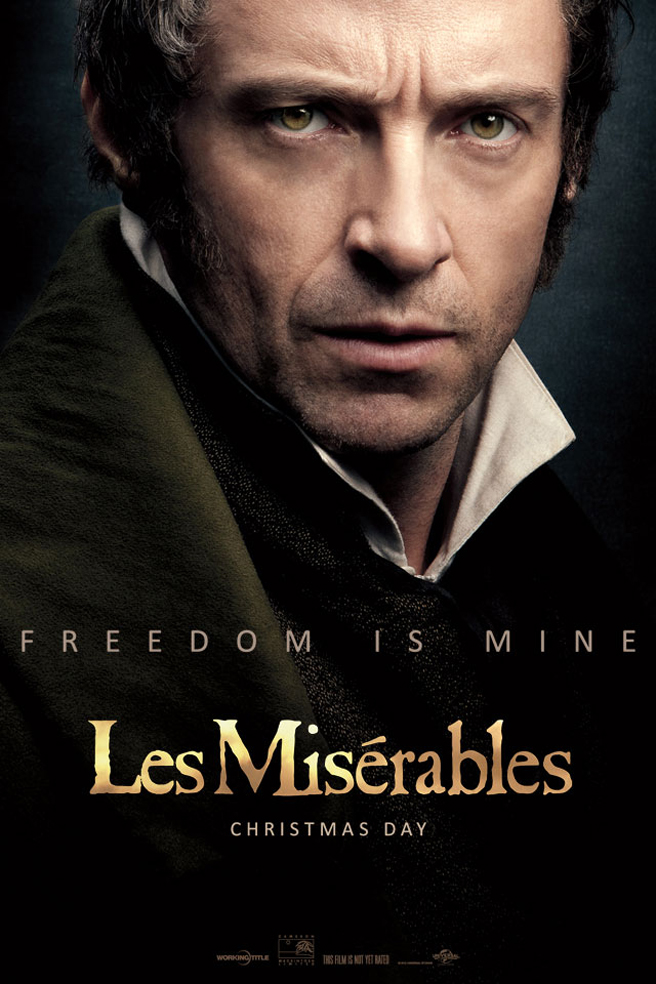
Jackman has several projects upcoming including his role as Jean Valjean in Les Miserables coming out this Christmas.

[Image courtesy Joblo’s Movie Posters]


Thought of the Day 10.4.12 Buster Keaton

“Tragedy is a close-up; comedy is a long shot.”
Buster Keaton

Buster Keaton

Buster Keaton (Photo credit: twm1340)

Joseph Frank Keaton IV was born on this day in Piqua, Kansas, USA in 1895. Today is the 117th anniversary of his birth.

Keaton’s parents were vaudeville actors and he joined their act at age three. He got his nickname, Buster, when he fell down a flight a stairs and landed at Harry Houdini‘s feet. The magician picked him up and handed him to his mother saying “What a buster.”

Physical comedy and slapstick was part of the family act — redubbed “The Three Keatons” when Buster became a permanent fixture.  The little boy was

knocked over, thrown through windows, dropped down stairs, and essentially used as a living prop. It was this training in vaudeville that prepared him for the fast-paced slapstick comedy of the silent movies. [American Masters: Buster Keaton]

Keaton later noted that “It was the roughest knockout act that was ever in the history of the theater.” [Buster Keaton.biography] He knew how to land and never got hurt from the onstage antics as “the little boy who can’t be damaged,” he enjoyed flying about the stage so much that he would giggle when his father tossed him about. But when he realized that the audience liked the heightened sense of danger, Buster  developed his famous “deadpan face.”

Buster Keaton

Buster Keaton (Photo credit: Wikipedia)

Buster moved to Hollywood at 22 and began to work with Fatty Arbuckle. His first film was The Butcher Boy in 1917. Arbuckle was already an established comedian and he became Keaton’s mentor. Keaton earned $40 a week for his work with Arbuckle, and the two worked together until 1920 when Keaton was confident enough to go it alone.

He made a number of “two-reelers,” or shorts, and then feature films including One Week, The Playhouse, Cops, The Camera man, Steamboat Bill, Jr.Our Hospitality, Sherlock. Jr. and The General.  

Here’s the classic “hat” scene from Steamboat Bill, Jr...

He did all his own stunts — instructing the cameras to keep rolling “no matter what” until he yelled “cut” or he died.  And he didn’t use special effects.In another scene from Steamboat Bill, Jr. Keaton stands outside a dilapidated house. The front of the house (a 2 ton facade) falls on him, and he happens to be standing where an open window lets him escape injury. It is not a very big window (there is a much bigger on right next to him) and it must have taken both a lot of mathematics and a lot of courage to do the stunt, but it made for some movie magic…

The General is considered one of the greatest silent films ever made now, but when it came out the reception was tepid.  It resulted in Keaton’s switch to MGM studios, something he regretted for the rest of his career.  Keaton thought The General was his greatest movie, and the public, eventually, came around to his point of view. In 1989 the National Film Registry added The General  to its list. Roger Ebert named the film  the #1 greatest film of the silent era.

Buster Keaton

Buster Keaton (Photo credit: twm1340)

MGM let him make one more truly classic “Buster style” film, The Cameraman in 1928, but then MGM lowered the boom and  took away his creative control. How sweet is this scene from the Cameraman?

With the studio calling the shots Keaton became just another comic actor. He had a number of hits in the 30’s, many of them with Jimmy Durante at his side, but he lacked the stoic charm and the ownership of his previous movies. He worked on Marx Brothers and Red Skelton movies — uncredited — and did what he could to make a living.

Screen shot from Sunset Boulevard. [Image courtesy: Bobby Rivers TV]

In  1950 he played himself as a member of the “waxworks” in Billy Wilder‘s Sunset Boulevard and then in 1953 he was in  Charlie Chaplin’s Limelight. Interest in his old movies revived and he started to make television appearances. Paramount made a movie about his life, The Buster Keaton Story starring Donald O’Connor.

 “…By the 1960s, his films were returning to the theaters and he was being hailed as the greatest actor of the silent era.” [American Masters: Buster Keaton]

He was given an Honorary Academy Award “for his unique talents which brought immortal comedies to the screen” in 1960.

Keaton passed away on February 1, 1966. He was suffering from Cancer.


Thought of the Day 10.3.12 Clive Owens

“The sexiest part of the body is the eyes. That’s what I believe.”
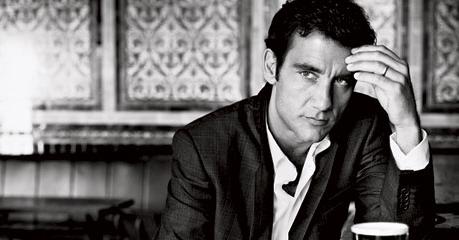
Clive Owen


Clive Owen was born on this day in Coventry, West Midlands, England. he is 48 years old.

He grew up in a the small working class town of Coventry. He is fourth in a brood of five boys. His father exited the scene when Clive was 3, and he was raised by his mother and step father. He starting acting at 13 when he was cast as the Artful Dodger in a school play. (And there has been a little bit of the Artful Dodger in almost every role he’s played since.) He says he became “completely obsessed and decided to become an actor from then on.” He moved on to the Royal Academy of Dramatic Art in London in 1987. The audition process was daunting, two monologues, one modern and one from Shakespeare. If you nailed it you were in, if you didn’t, you weren’t. He nailed it. After RADA he continued doing Shakespeare at the Young Vic.

From theatre he moved to television. His most notable series being  Chancer –where he played a con-man with a heart of gold, he’s an anti-hero who is willing to use all the arrows in his –checkered past’s– quiver to help his friends. As the show’s tag line says “He’s rude, arrogant, ingenious, unprincipled … and utterly charming.”   [Owen’s is still growing into himself as an actor in Chancer. He’s good, but he’s not great. And The production values are definitely television level.]


Cover art for Croupier.

His big break in film came in the 1998 movie Croupier. Owens plays a an aspiring writer who takes a job as casino croupier to both pay the bills and help with research on a book. Owens narrates the movie in his deadpan quasi-noir style. [It is well written and well acted, and deserves a place on your Clive Owen’s Netflix queue.]

<iframe width=”420″ height=”315″ src=”http://www.youtube.com/embed/JhQpMqJMdnw&#8221; frameborder=”0″ allowfullscreen>

He shifted gears to play Colin Briggs a prisoner in an experimental English prison who gets rehabilitated  through gardening in Greenfingers. Helen Mirren also stars. [I really enjoyed this gentle movie. Although it is largely set in a prison it isn’t filled with the violence that is so often present in a Owen’s film. Make this #2 for your C.O. Netflix queue.]

<iframe width=”420″ height=”315″ src=”http://www.youtube.com/embed/lzvwH5EhNTI&#8221; frameborder=”0″ allowfullscreen>

Back on BBC One he starred in Second Sight as Chief Inspector Ross Tanner a detective who is loosing his eye sight.

He played a key role in Robert Altman’s ensemble film Gosford Park. [There’s so much to see in Gosford Park you’ll probably need to watch it more than once. Plus…Maggie Smith bonus!… put it in your queue.]

<iframe width=”560″ height=”315″ src=”http://www.youtube.com/embed/CjXdmXhwIQk&#8221; frameborder=”0″ allowfullscreen>

On stage he appeared as Dan both in the West End and Broadway versions of Closer. When the show was made into a movie in 2005 he switched roles and played Larry. He garnered a Golden Globe and BAFTA award for the film.

He followed Closer with a trio of films, Derailed, Sin City andInside Man in quick succession He was rumored to be the next James Bond, but the producers chose Daniel Craig instead. Which is fine because it left him open to take his best role to date, Theo Faron in Alfonso Cuaron’s Children of Men.

Children of Men is a gritty dystopian look at life in 2027 England. “It’s a heartbreaking, bullet-strewn valentine to what keeps us human.” (–Keith Phipps) and is loosely based on the P.D. James novel of the same name. Owen, whose characters are often anti heroes who spend a movie reacting to shit that thrown at them, is the anti-ist of heroes who has the most shit ever thrown at him in the roughly 100 minute running time of the film. And he is wonderful in it. [This is my favorite Owen’s movie and my number one pick for your Netflix queue.]

He is good in other films, Elizabeth: The Golden Age, King Arthur, andInside Man; and just OK in a slew of films where he always seems to play the same guy with a gun.  He was very funny poking fun at his leading man image in a guest spot on the Ricky Gervais show Extras. [ I didn’t make it through the HBO Hemingway & Gellhorn, (I’m not sure if was a too tense Nicolle Kidman, the excess of sex, Clive’s mustache, or a combination of  all three, but  I gave up about 45 minutes in.) There are a couple of films I’m looking forward to seeing– The Boys Are Back and Shadow Dancer both look interesting. ]

[Image courtesy: The Movie Blog]

He met his wife when they were cast opposite each other as Romeo and Juliet 20 years ago. For an actor considered an international sex symbol/tough guy he is very family oriented. He does a movie for several months then comes home where he enjoys being a homebody/nobody. They have two pre-teen girls.


Thought of the Day 10.1.12 Julie Andrews

“Sometimes I’m so sweet even I can’t stand it.”
–Julie Andrews

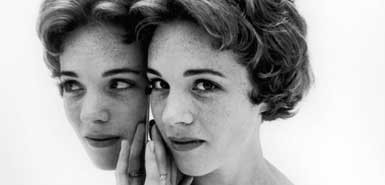
[Image courtesy: NNDB]

Julia Elizabeth Wellswas born on this day in Walton-on-Thames, Surrey, England in 1935. She is 77 years old.

Her parents divorced when  Julie was a baby. Both parents remarried and Julie lived primarily with her mother and stepfather Ted Andrews, whom she called “Pop.” Julie’s last name was changed to Andrews to make the transition easier. According to Julie they were “very poor and we lived in a bad slum area of London,”

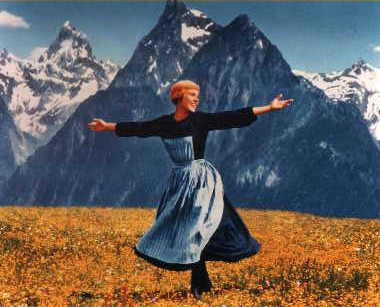
In the movie version of The Sound of Music she sings “Perhaps I had a wicked childhood / Perhaps I had a miserable youth / But somewhere in my wicked, miserable past / There must have been a moment of truth…” While those lyrics were written for her character, Maria, they echo a past that Andrew’s called “a very black period in my life.” Her stepfather was an alcoholic (so was her mother to a lesser degree.) Julie had to put a lock on her bedroom door after Pop tried, drunkenly, to get into bed with her, twice.

Both her mother and her stepfather were entertainers. Her mother, who had trained as a classical pianist, helped to make ends meet by giving lessons and accompanying vaudeville acts. Mom and Pop had their own act and at about 10 Julie began to appear with them on stage. Soon Julie joined the act on a regular basis. She’d have to take a nap in the afternoon so she could be bright and alert on stage late into the night. She took singing lessons and was said to have both perfect pitch and a four octave range. (She denies the perfect pitch.)

During World War II she lived through the Blitz.

She remembers spending some nights on the neighborhood subway platform, listening for unmanned bombers so that she could alert the neighbors of danger. Her parents once awakened to find an unexploded incendiary bomb in the tenement courtyard just outside their kitchen window. They once watched a mid-air dogfight directly above them. [Visions Fantastic]

She performed for King George VI’s family during the 1948 Royal Command Variety Performance in London. (She is the youngest performer ever to do so.) The Andrews act went on radio and TV. She was a cast member on the radio show Educating Archie from 1950-1952.

Julie Andrews in a introspective moment [Image courtesy: VisualizeUs]

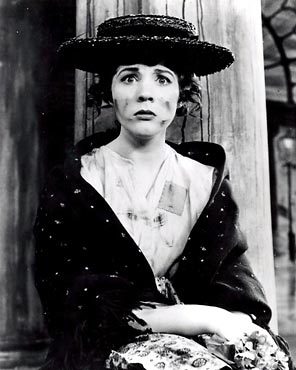
At 19 she made her Broadway debut as Polly Browne in The Boyfriend. Next she auditioned for the new musical adaptation of George Bernard Shaw’s Pygmalion and created the role of Eliza Doolittle in Lerner and Loewe’s My Fair Lady.

Andrews as Eliza in My Fair Lady circa 1956. [Image courtesy: The Seattle Times]

During her Broadway run of My Fair Lady she transformed from rags to riches again in the 1957 Rodgers and Hammerstein television musical version of Cinderella for CBS TV.

In 1959 she married set designer Tony Walton.

Her next Broadway triumph was in 1960 as Queen Guinevere to Richard Burton’s King Arthur and Robert Goulet’s Lancelot in Lerner and Loewe’s Camelot.

She was terrific as both Eliza and Guinevere, but when it came time to make major motion pictures of the musicals the producers opted  for actresses with more proven box office success. Jack Warner gave Eliza to Audrey Hepburn. Vanessa Redgrave got Guinevere. Andrews returned to England to have her daughter Emma instead.

The Disney company thought Andrews would be Practically Perfect for their adaptation of P.L. Travers’ Mary Poppins and offered her the role in their 1964 film. Andrews won an Oscar for this, her first, major motion picture. In her acceptance speech for the Golden Globe Andrews, with a bit of whimsy, thanked the man who “made all this possible in the first place, Mr. Jack Warner.”

In 1965 Andrews stepped into the role of Maria Von Trapp for the 20th Century Fox movie of The Sound of Music. It went on to become the third highest grossing film ever made. The soundtrack sold more than 11 million copies.

United  Artists produced Andrews next movie, Hawaii based on the novel by James A Michener.  The film earned more than $6 million, and was 1966’s biggest box office hit.

Also in 1966, she co-starred with Paul Newman in Cold War psychological thriller Torn Curtain for director Alfred Hitchcock.

Andrew’s next movie musical was Thoroughly Modern Millie for Universal Pictures.

The 70s were quiet for Andrews. She divorced Warner and married director Blake Edwards. Although she continued to do television work — including a variety show, guest spots and specials — she focused much of her time during the disco decade raising her family.

In Edwards’s 1981 film S.O.B. she rather famously shed her innocent image by barring her breast. The next year she played dual roles in Victor Victoria and earned another Golden Globe Award.

The Princess Diaries gave her career yet another breath of fresh air as she co-starred as Queen Clarisse Renaldi with Anne Hathaway. She put on the crown again for The Princess Diaries 2: Royal Engagementt in 2004.  The same year she donned an animated crown was Queen Lillian for Shrek 2 (and the subsequent Shrek sequels) and she narrated Enchanted. She also voiced the character of Marlena in Despicable Me in 2010.

She was given the title Dame Commander of the British Empire by Queen Elizabeth II in 2000 for her work both in the entertainment industry and for her involvement in charitable organizations like Save the Children, the UN’s Fund for Women and the Foundation for Hereditary Disease.


Thought of the Day 9.28.12 Gwyneth Paltrow

“Beauty, to me, is about being comfortable in your own skin. That, or a kick-ass red lipstick.”
–Gwyneth Paltrow

03092011-DSC_0697_Gwyneth Paltrow

03092011-DSC_0697_Gwyneth Paltrow (Photo credit: brixton21)

Gwyneth Kate Paltrow was born on this day in Los Angeles, California in 1972. She is 40 years old.

Paltrow has show business in her DNA. Her father, the late Bruce Paltrow, was a film producer and director, and her mother, Blythe Danner, is an Emmy and Tony Award winning actress. Brother, Jake, is following in his father’s footsteps as a director.

Gwyneth grew up in Santa Monica. The family moved to Massachusetts when she was 11 and she split her time there between summer stock at the Williamstown Theatre Festival in the Berkshires and the all girls Spence School in Manhattan during the winter.

“My playground was the theatre. I’d sit and watch my mother pretend for a living. As a young girl, that’s pretty seductive.” [Paltrow]

She flirted with Anthropology at the UC Santa Barbara, but Acting called and she dropped out.

At 19 she made her film debut in the movie Shout in which John Travolta plays a  teacher at a West Texas home for boys who helps the kids learn to love music through the magic of Rock and Roll. She was Young Wendy in Steven Spielberg’s Hook. After a slew of made for television movies she returned to the big screen in 1995 in Se7en opposite then love interest Brad Pitt.

In 1996 she sparkled in the title role of Emma. It’s always a good career move to play a Jane Austen heroine in my opinion, and  Paltrow did a delightful job with the role of Emma Woodhouse. [Emma is my first pick of Paltrow movies that  you should put on your Netflix queue — if you don’t already own it.]

Paltrow as Emma [Image courtesy: Austenitis]

Now a Hollywood a-lister, Paltrow had an impressive run of  films in 1998; a modern version of Great Expectations with Ethan Hawke, Sliding Doors, A Perfect Murder (a remake of Dial M for Murder), Hush, and the magnificent Shakespeare in Love.

Paltrow plays Viola de Lesseps opposite Joseph Finnes’ Shakespeare in a story of mistaken identity, love, comedy and drama worthy the bard. With Geoffrey Rush, Judi Dench and Collin Firth in supporting roles, Shakespeare in Love is fantastic. Paltrow and Dench won Oscars and the movie took home Best Picture.  [Shakespeare in Love is my second Paltrow pick for your Netflix queue.]

She was in Anthony Minghella’s The Talented Mr. Ripley opposite Matt Damon and Jude Law in 1999.

In 2000 she showed the world that she could sing in Duets with Huey Lewis. Then played opposite her long time friend Ben Affleck in Bounce.

She had roles in the ensemble movies Anniversary Party & The Royal Tenenbaums in 2001. And co-starred with Jack Black in the comedy Shallow Hal.

Paltrow and Arron Eckhart played the sexiest literary researchers EVER in an adaptation of A.S. Byatt’s Possession. The pair uncover letters linking two Victorian writers (played by Jeremy Northam and Jennifer Ehle.)

Paltrow and Eckhart in Possession [Image courtesy:buzzsugar.com]

Paltrow rather famously said:

“I don’t really understand the concept of having a career, or what agents mean when they say they’re building one for you. I just do things I think will be interesting and that have integrity.”

which explains the swings from serious/dramatic roles to the campy fun fest that dot her filmography. She took on poet Sylvia Path in Sylvia  (Blythe Danner played her mother) then the next year she played reporter Polly Perkins in the highly stylized retro/sci fi Sky Captain and the World of Tommorow. Then it was back to serious Gwyneth for Proof.

She had small roles in Infamous, Love and Other Disasters, and Running With Scissors and a supporting role in The Good Night before landing the role of Pepper Potts in the big budget film Iron Man opposite Robert Downey, Jr.. She reprised the role in Iron Man 2 and in the Avengers. (And because you can never flog a dead horse too much… you can look for Pepper Potts AGAIN inIron Man 3 in 2013)

She brought out the pipes again for Country Strong where she played struggling country singer Kelly Canter. Here’s “Shake That Thing” from the movie:

Paltrow has had three guest spots on the popular television show Glee as substitute teacher Holly Holliday.

She had a small but pivital role in Contagion. The film also stars  her Talented Mr. Ripley co stars Matt Damon and Jude Law, and her Possession co-star Jennifer Ehle. [Contagion is another movie you should put in your queue.]

This  year you can see her in the romanic comedy Thanks for Sharing with Mark Ruffalo and Tim Robbins.


Thought of the Day 9.26.12 George Gershwin

Life is a lot like jazz.. it’s best when you improvise.
 –George Gershwin
English: George Gershwin, 28 March 1937 Azərba...

English: George Gershwin, 28 March 1937 Azərbaycan: Corc Gerşvin, ABŞ bəstəkarı, 28 mart 1937 Español: George Gershwin, 28 marzo 1937 (Photo credit: Wikipedia)

Jacob Gershvin was  born on this day in Brooklyn, New York in 1898. Today is the 114th anniversary of his birth.

His parents were Russian Jewish emigrants. He had three siblings, Ira, Arthur and Frances. His parents bought a piano and paid for lesson for Ira, but it was George who took up the instrument. At 15 he left school and began to work at New York’s Tin Pan Alley. (He changed his name George Gershwin when he entered the professional music world.) He sold his first song, “When You Want ‘Em, You Can’t Get ‘Em; When You Have ‘Em, You Don’t Want ‘Em,” for $5.

Music theatre folk-lore has it that one day Gershwin was performing his composition “Swanee” at a party when Broadway star Al Jolson heard it. Jolson added the song to his show in 1919 and it became his signature song. Gershwin rose in the ranks of New York City song composers.

Gershwin collaborated with Arthur L. Jackson and Buddy De Sylva on his first complete Broadway musical, “La, La Lucille” [American Masters; George Gershwin]

He worked in Vaudeville for a bit, and in 1920 he teamed up with lyricist Buddy DeSylva for a one-act jazz opera, Blue Monday.

opening bars rhapsody in blue - gershwin

opening bars rhapsody in blue – gershwin (Photo credit: Wikipedia)

At 25 his Rhapsody in Blue for solo piano and orchestra debuted in New York. It combined Gershwin’s twin musical loves a jazz and classical. Bandleader Paul Whiteman commissioned the piece  and it was premiered in a concert titled “An Experiment in Modern Music on February 12th with Gershwin at the piano. His other “serious music” includes Concerto in F, An American Paris and his Second Rhapsody (originally New York Rhapsody.)

In 1924, when George teamed up with his older brother Ira, “the Gershwins” became the dominant Broadway songwriters, creating infectious rhythm numbers and poignant ballads, fashioning the words to fit the melodies with a “glove-like” fidelity. [Gershwin.com]

George and his brother Ira worked together in 1924 on the musical Lady Be Good. The show opened at the Liberty Theatre and starred  Fred Astaire and his sister Adele and featured the songs “Fascinating Rhythm, “O Lady Be Good” and,  “The Half of It, Dearie, Blues.”  You can hear Gershwin’s complicated rhythms and the jazz chords that he would build on in later compositions like Rhapsody and Blue in this  early recording of “The Half Of It, Dearie, Blues“…

Oh, Kay! a musical about an English Duke and his sister turned American bootleggers opened at the Princess Theatre in 1926. It featured the dance number”Clap Yo’ Hands,” the love duet “Maybe” and “Someone To Watch Over Me“.

Funny Face opened in 1927, again with the Astaires in the lead. Songs included “S’Wonderful”, “My One and Only,” He Loves and She Loves” and “Let’s Kiss and Make Up.” An updated of Funny Face opened on Broadway as “My One and Only” in 1983 and ran for over 700 shows. And Hollywood made a move starring Fred Astaire and Audrey Hepburn in 1957 called Funny Face and using four of the songs, but with a different plot.

In Strike Up the Band America declares war on Switzerland. The original production only made it to previews in Philadelphia in 1927, but the Gershwins revised it and brought it to Broadway in 1930.  The songs “The Man I Love,Strike Up the Band,” “Soon,” and “I’ve Got a Crush on You  were added to the Gershwin Song Book from the show. [If you ignore all the other links in this post, do yourself a favor and click on I’ve Got a Crush on You — I pulled the incomparable Ella Fitzgerald’s smooth as silk rendition of the Gershwin classic… and no matter how crazy / busy your day is… you deserve this 3min. 18sec. piece of musical heaven.]

True to its name, Show Girl, is all about show business. It starred Ruby Keeler as an up and coming show girl Dixie Dugan. Other “A list” performers like Jimmy Durante and Eddie Foy, Jr. filled out the bill.  It  was produced by Florenz Ziegfeld. Songs includeHarlem Serenade,” andLiza (All the Clouds’ll Roll Away)” [– Ruby Keeler was married to Al Jolson and he used to come see the show several times a week and sing this, the last song, out loud from the audience, lovingly, to her. ]

In 1929 he wrote the score for the Fox film Delicious. His “New York Rhapsody” (which later became his “Second Rhapsody”) and a five-minute dream sequence was all that the producers chose to use of his score. Gershwin was disgusted.

In 1930 Girl Crazy hit the stage. It starred Ethel Merman, and made a star out of Ginger Rogers [to read the Thought of the Day Ginger Roger’s profile click HERE.]. The show was made into 3 movies,  and while the films shared many of the stage show’s  most popular songs — like “Embraceable You,”But Not For Me” and “I’ve Got Rhythm” — the plots lines deviated from the original.

Of Thee I Sing premiered in 1931 and became the first musical to win a Pulitzer Prize in 1932.
This all-American political satire focuses on the election campaign and Presidency of John P. Wintergreen, whose party, lacking a viable platform, runs on love, promising that if elected he will marry the partner chosen for him at an Atlantic City beauty pageant. When he falls for Mary Turner (a campaign secretary who bakes a mean corn muffin) instead of Diana Deveraux (the fairest flower of the South and winner of the pageant), trouble begins! [MTI Music theatre International]

His ground breaking, genre defying Porgy and Bess came out in September of 1935. George wrote the music, DeBose Heyward wrote the libretto, and Heyward and Ira Gershwin wrote the lyrics. It was based on Heyward’s novel Porgy  Gershwin intended it to be a folk opera.  Although it is considered a modern masterpiece now, the show flopped when it premiered on Broadway. It had revivals in 1942 and 1952, but it and didn’t get the recognition it deserved in the  opera world until the Huston Grand Opera staged it in 40 years later (1976). Songs include “It Ain’t Necessarily So,” “Bess You Is My Woman Now,” and “Summertime.”

Disappointed in the reception that Porgy and Bess received on Broadway he moved to Hollywood. He and Ira worked with RKO movies to score Shall We Dance, Fred Astaire and Ginger Rogers’s 10th film. He won an Academy Award for his song “They Can’t Take That Away from Me” from the film.
Starting in early 1937 George Gershwin began to have blinding headaches and the sensation of smelling burned rubber. He was diagnosed with a brain tumor. He died  on July 11, 1937.

Thought of the Day 9/24/12 Jim Henson

“My hope still is to leave the world a bit better than when I got here.”
–Jim Henson

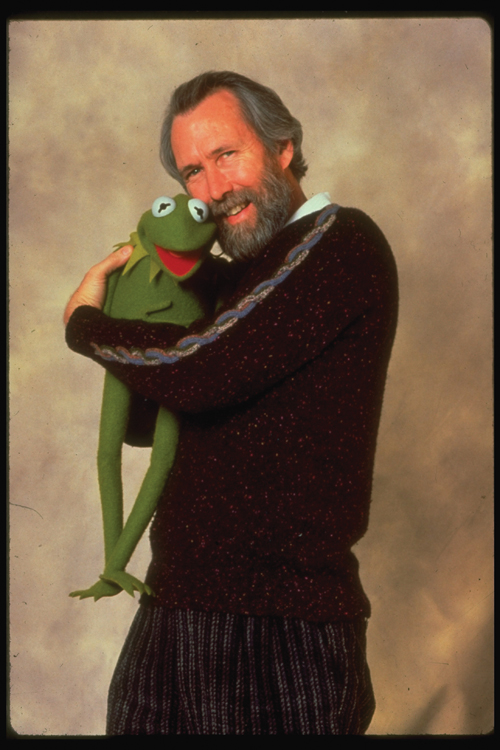
James Maury Hensonwas born on this day in Greenville, Mississippi in 1936. Today is the 76th anniversary of his birth.

He grew up  near Leland,  Mississippi exploring the countryside around his home. He was encouraged to pursue his artistic side, but he didn’t see a puppet show until the family moved to Washington, D.C. in the late 40’s. Henson recalled the family getting their first television as “the biggest event of his adolescence.” He enjoyed watching early puppet shows like Kukla, Fran and Ollie, Edgar Bergen and Charlie McCarthy, and Bil Baird and Charlemagne the lion. While still at Northwestern High School he got his first TV experience on WTOP-TV where he created and performed puppets for The Junior Morning Show on Saturday mornings. At the University of Maryland  Henson  was a studio arts major with hopes of working that into a career in stage or television design.

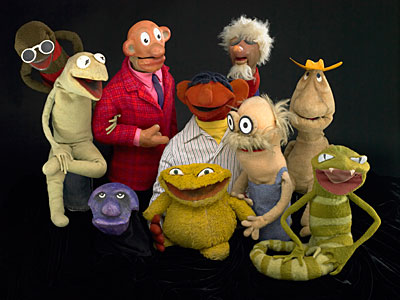
As a freshman he worked for WRC-TV on a five-minute long program that ran nightly at 6:40 pm called Sam and Friends. For the show he created a cross-breed of a marionettes and hand puppets  which he called “muppets.” Muppets were more flexible and could express more emotion than traditional puppets. Instead of painted wood he used foam rubber-covered with fabric which gave the creatures soft bodies. He gave them large mouths “that allowed them to convey a wide range of emotions.” [The Mississippi Writers Page]

The Sam and Friends characters were donated to the National Museum of American History in Washington, DC [Image courtesy: National Museum of American History]

Here’s a sketch from Sam and Friends

He asked fellow UofM freshman Jane Nebel to help him on the show. Hensen and Nebel married in 1959 and had five children together.

Sam and Friends ran for six seasons and…

proved the stepping stone for a series of commercials that brought him nationwide fame. Soon, he was making guest appearances on such national network programs as The Steve Allen ShowThe Jack Paar ShowThe Tonight ShowEd Sullivan, and The Jimmy Dean Show, and weekly appearances on The Today Show …[The Mississippi Writers Page]

Muppets, Inc. grew. Jim and Jane added puppeteer and writer Jerry Juhl, puppet builder Don Sahlin and puppeteer Frank Oz to the fold. In 1968 they created a special for National Education Television “Muppets on Puppets” a 9 minute mini documentary on the world of puppeteering.

<iframe width=”420″ height=”315″ src=”http://www.youtube.com/embed/MUdJVsDpGTI&#8221; frameborder=”0″ allowfullscreen>

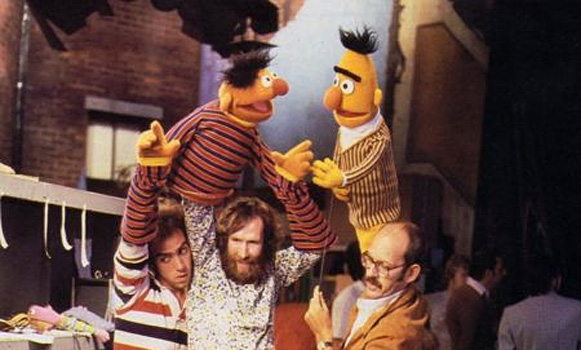
The next year Sesame Street premiered. Children’s Television Workshop asked Henson and his creative team to develop a family of muppets to populate Sesame Street. They came up with Bert and Ernie, Big Bird, Oscar the Grouch, Grover, the Cookie Monster and others.

Hensen, center, works on Sesame Street. [Image courtesy: Jedimouseketeer.com]

Next came  the weekly syndicated variety show, The Muppet Show, starring Kermit. The show included an expanded cast of muppets (like Miss Piggy, Gonzo, the Count, and Elmo) and featured a human guest star. It ran from 1976 to 1981.

Here’s a clip from the show featuring John Cleese…

<iframe width=”420″ height=”315″ src=”http://www.youtube.com/embed/EyMCG0dWeQA&#8221; frameborder=”0″ allowfullscreen>

Movies followed. Henson found success with both Muppet productions and other puppet enhanced movies like The Dark Crystal and Labyrinth.

Henson won 18 Emmy Awards, 7 Grammy Awards and 4 Peabody Awards in his 30 year career and touched millions of lives. He died from complications of pneumonia in New York on May 16, 1990. Here’s “Just One Person” (one of my favorite Muppet songs) performed at Henson’s tribute.

<iframe width=”420″ height=”315″ src=”http://www.youtube.com/embed/0Zzfdlxjx4Y&#8221; frameborder=”0″ allowfullscreen>