Category Archives: Film

Thought of the Day 8.31.12 William Saroyan

“I can’t hate for long. It isn’t worth it.”

“The role of art is to make a world which can be tolerated.”

“Try as much as possible to be wholly alive, with all your might, and when you laugh, laugh like hell and when you get angry, get good and angry. Try to be alive. You will be dead soon enough.”

–William Saroyan

William Saroyan, American writer.

William Saroyan, American writer. (Photo credit: Wikipedia)

William Saroyan was born on this day in Fresno, California in 1908. Today is the 104th anniversary of his birth.

William was the youngest son of Armenian immigrant parents. His father died when he was 3 years old. William and his siblings went to the Fred Finch Orphanage in Oakland while their mother, Tahooki, found what work she could in San Francisco.  Six years later the family reunited as Tahooki got permanent work at a cannery in Fresno. He didn’t like school. The work was boring and he was picked on because he was the son of an immigrant. But he liked to learn, he liked to read and he like to write. He took advantage of the Fresno public library’s book collection and he took a course on typing at the Technical School. He sold newspapers to help with family finances, and worked his way up to messenger boy with a telegram company.

He travelled around the country hoping to become the next big American writer, but luck wasn’t with him (one time his suitcase, with most of his money and clothes inside, wound up in New Orleans instead of with him in New York.) So Saroyan returned to California and took a string of uninspiring jobs from working in a funeral parlor to selling vegetables at a farmers market. All the time he was writing on the side.

In 1933 he started to get published. His earned $15 when his short story The Daring Young Man on the Flying Trapeze appeared in the national magazine Story. Encouraged by the publication he decided to send the magazine one story a day for the entire month of January.

This he proceeded systematically to do, still full of the usual doubts that harass the unestablished writer, but determined to carry through the ambitious work program in as positive frame of mind as possible. He began with no firm ideas as to what the stories would be about… Midway through the month a telegram… arrived from the editors with the message he needed: yes, the stories were being received with great interest — keep them coming! This was the decisive moment of acceptance, marking the end of his long apprenticeship…. [Brian Darwent, William Saroyan Society, Biographical Sketch]

Other, higher paying, magazines began to take an interest. His stories appeared in The American Mercury, Harper’s, Scribner’s and others. A collection of his short stories was published by Random House in 1934 and became a best seller.

He traveled overseas, making a pilgrimage to his father’s homeland of Armenia. (He couldn’t make it as far his father home town, which was now a part of Turkey, but he did get to Erivan, Soviet Armenia.) Along the way he met Charlie Chaplin, George Bernard Shaw and Finnish composer Jean Sibelius.

He added playwriting to his skill list  in 1939 with My Heart’s in the Highlands. The play centers around a struggling Arminian American poet and his son Johnny.  His second play The Time of Your Life won a Pulitzer Prize (which Saroyan refused) and The New York Drama Critic’s Circle Best Play award (which he accepted.)  It takes place in Nick’s Pacific Street Saloon and centers around a wealthy young man named Joe and a bar full of colorful characters. The play has been revived several times on Broadway and in LA, and has been made into a big screen movie, with James Cagney and a Playhouse 90 television movie with Jackie Gleason.

First edition cover

First edition cover (Photo credit: Wikipedia)

The Human Comedy was produced by MGM Studios. Saroyan was under contract with Louis B. Mayer and he wrote and directed a short film called The Good Job as well as the 4.5 hour screen play for The Human Comedy (which Mayer turned over to another writer to edit down.) Saroyan also wrote a novel  on the same material that came out the same week as the film. The sentimental story was based on his life growing up as an immigrant in Fresno and it won an Oscar for the writer.

After WWII his writing career cooled. He was considered to sentimental and sugary for the harder edged, post-war critics.

 Saroyan praised freedom; brotherly love and universal benevolence were for him basic values, but with his idealism Saroyan was considered more or less out of date. [Books and Writers]

But he continued to write prolifically. In 1952 he published his memoir The Bicycle Rider in Beverly Hills.

Just before he died of cancer in 1981 he called the Associated Press quipping “Everybody has got to die, but I have always believed an exception would be made in my case. Now what?”

Stanford University has a large collection of his works and the author is celebrated by the William Saroyan Society. 

William Saroyan statue, Yerevan

William Saroyan statue, Yerevan (Photo credit: tm-tm)

Thought of the Day 8.28.12 Mary Norton

“I’m no lady; I’m a member of Congress, and I’ll proceed on that basis.”

–Mary Norton

Kathleen Mary Pearson was born on this day  in London, England in 1903. It is the 99th anniversary of her birth.

The Cedars, Church Square at the end of the Hi...

The Cedars, Church Square at the end of the High Street in Leighton Buzzard, Bedfordshire, England. Built in 1855 for Mr. John Dollin Bassett. Designed by W. C. Read. Current location of Leighton Middle School, and occupied by Cedars Upper School until 1973. Location: OSGB36: SP 919 249, WGS84: 51:54.9192N 0:39.8815W (Photo credit: Wikipedia)

She grew up in a large Georgian style house, called The Cedars, in Bedfordshire. She used the house as inspiration for her setting of The Borrowers.

During World War II she worked for the War Office and in 1941 she moved to New York as part of the British Purchasing Commission. It was while she was in New York that she started to write.

Cover of "Bonfires and Broomsticks"

Cover of Bonfires and Broomsticks

In 1943 she published The Magic Bed Knob; or, How to Become a Witch in Ten Easy Lessons. The book sold well and Norton followed it up with Bonfires and Broomsticks. The books were turned into a 1971 Disney film called Bedknobs and Broomsticks that combined live action with animation (something the studio first did in Mary Poppins.) The movie starred  Angela Lansbury as a novice witch determined to use her powers to help England in the war effort. It featured the charming music number “Portobello Road,” a memorable soccer game between wild (animated) animals, and concluded with an army (live action) of suits of army fighting the invading Germans.

In 1946 she married Robert Charles Norton with whom she had 4 children.

The Borrowers (TV miniseries)

The Borrowers (TV miniseries) (Photo credit: Wikipedia)

In 1952 the first installment of her wildly popular The Borrowers series was published. It was followed by five more Borrowers novels. The books have been made into numerous stage shows,  movies and TV series.

Cover of "Are All the Giants Dead?"

Cover of Are All the Giants Dead?


In 1975 she wrote Are All the Giants Dead?


Thought of the Day 8.24.12 Stephen Fry

“It is a cliche that most cliches are true, but then like most cliches, that cliche is untrue”

Stephen Fry

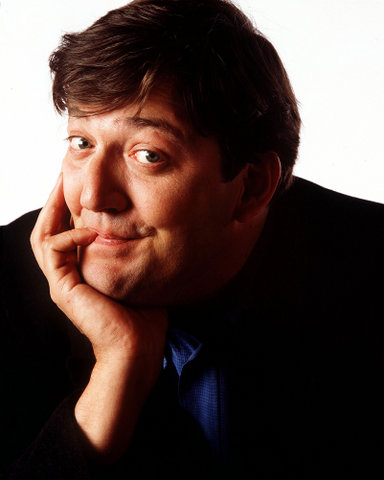
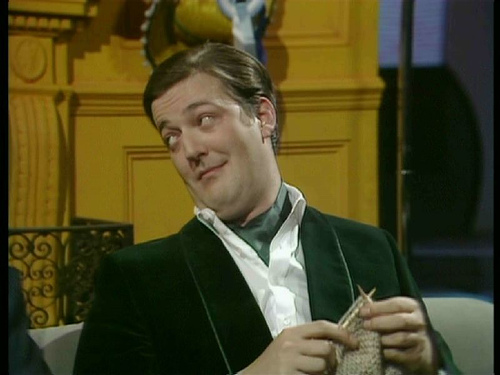
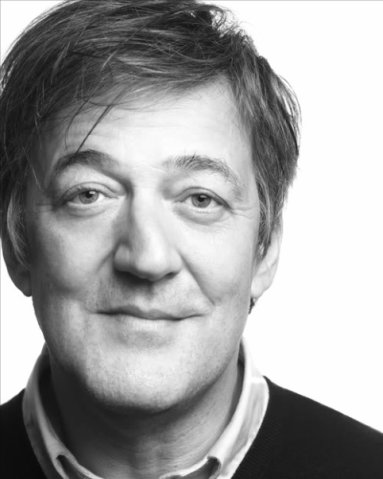
Stephen John Fry was born on this day in Hampstead, London, England in 1957. He is 55 years old.

He grew up in Norfolk. He was expelled from several schools and got into trouble with the law as a teen. He served three months in Pucklechurch Prison after stealing a credit card from a family friend. But the stint in prison seemed enough to straighten him out. He went back to school, this time at City College of Norwith and promised to apply himself to his studies. He scored well enough in his Cambridge entrance exams to get a scholarship at Queens’ College in 1979. At Queens he joined the Cambridge Footlights Dramatic Club and met Emma Thompson and Hugh Laurie. He won a Fringe First Award for  Latin! or Tobacco and Boys  a play he wrote for Footlights.

He teamed up with Laurie  to for the comedy act A Bit of Fry & Laurie. The Duo turned the act into a television sketch comedy series that premiered on December 26, 1987 with a 36 minute pilot. It ran for four seasons (1-3 on BBC2; season 4 on the more mainstream BBC1). The show’s combination of satire, wordplay and innuendo made it very popular. The complete series is available on DVD and selected sketches have been collected in book form.

In 1984  Fry adapted Noel Gay’s Me and My Gal. It had an eight year, 3,303 performance run at the Adelphi Theatre in London’s West End (with Robert Lindsay and Emma Thompson in the cast.)  It hopped the pond and opened at Broadway’s Marquis Theatre  in 1986 where it ran for 1,420 shows and was nominated for 13 Tony Awards. It also made him rich.

Fry considers himself a writer first and a  comedian/ actor second. He has published four novels: Liar (1991), The Hippopotamus (1994), Making History:  A Novel (1997) and The Stars’ Tennis Balls (200). His biography, Moab is My Washpot came out in 1997.

Other television work include Lord Melchett  in Black-Adder II and Reginald Jeeves in  Jeeves and Wooster. On the Radio he worked on Loose Ends, Delve Special, This is David Lander, Saturday Night Fry, Absolute Power and was the voice of Winnie the Pooh. He also presented The Incomplete and Utter History of Classical Music, a 20 part review of music over the past millennium.

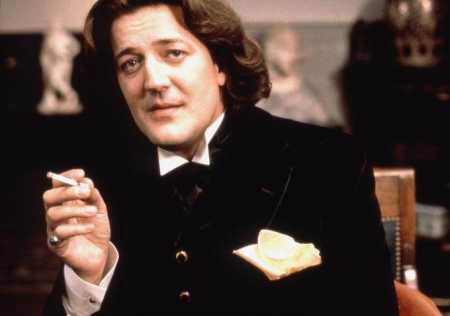
His film work goes back to 1985. He had was in the ensemble cast of Peter’s Friends (with Laurie and Thompson). He played Oscar Wilde in Wilde (1997). In Gosford Park he is the clueless Inspector Thompson. He’s the Cheshire Cat in Tim Burton’s 2010 Alice in Wonderland. You can catch him as the Master of Laketown in the upcoming The Hobbit: There and Back Again and as Sir Simon De Canterville in The Canterville Ghost. [The list of Fry’s television and film roles is quite long.  See his IMBD site for a more comprehensive look at this side of his career.)

Fry also has lent his talents to audio books. He read the film tie-in version of  Douglas Adam’s The Hitchhiker’s Guide To The Galaxy (he also dubbed the voice of the Book and was the narrator for the movie ) in 2005. He’s recorded his own novels and works by A.A. Milne, Anthony Buckeridge and Roald Dahl. Most famously he is the voice for the English audio books for the Harry Potter novels by J.K.Rowling.

He embraces technology with both hands, and has said he’s never met a smart phone he didn’t buy. He is “deeply dippy for all things digital” and says he bought the third Macintosh computer sold in the UK (Douglas Adams beat him to the first two.) His Twitter account has passed the four million mark .

He is actively involved in a number of social issue (often promoting them with his Twitter account and on his website.)

[All images courtesy Last.fm where you can find lots more great photos of Stephen Fry.]


Thought of the Day 8.23.12 River Phoenix

“Acting is like a Halloween mask that you put on.”

River Phoenix

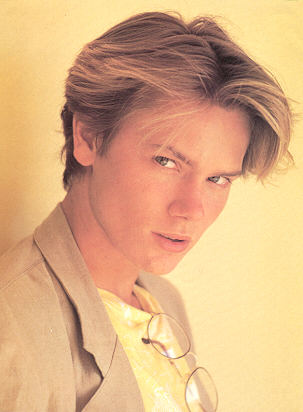
River Jude Bottom  was born on this day in Madras, Oregon in 1970. He would have been 42.

River’s parents, John and Arlyn met while hitchhiking in northern California. The family moved often as John and Arlyn were itinerant fruit pickers. When River was 3 they joined the Children of God religious cult and became missionaries. They moved through out the southern US, the Caribbean and South America, and siblings Rain, Joaquin, and Libertad were welcomed to the family.

The church sent them Caracas, Venezuela in 1976. Although John was the Church of God’s Archbishop to Venezuela and the Caribbean he did not get a salary and the family had to fend for themselves financially. Occasionally finances got so strained that young River and Rain performed music on street corners to raise money for food (River played guitar).  Eventually the Bottoms became disillusioned with Church of God leader, David Berg, and the direction the  religious group was taking. They left the group, living in a beach hut and at a church until they stowed away in a cargo ship bound for Florida.

Once they made it to Florida (they were discovered by the crew of the cargo ship, but they were treated well,) the family stayed with Arlyn’s parents in Winter Park. The last of the Bottom siblings, Summer was born in 1978 and the entire family changed their last name to Phoenix to symbolize the new beginning in their life.

River, Rain and Summer performed in talent shows in Florida, and got an invitation to come out to Hollywood and audition for Paramount studio. The family jumped at the chance, but when they arrived in California the audition fell through. Arlyn got a job in casting for NBC and arranged for a meeting between the kids and agent Iris Burton.

At 10 River started his acting career.  His first break came as the youngest brother, Guthrie, in the TV Series Seven Brides for Seven Brothers in 1982. And he made several made-for-television movies and had  guest spots on network shows.

River Phoenix

River Phoenix and Wil Wheaton in Stand By Me (Photo credit: One From RM)

In 1984 he was cast in his first big screen picture Explorers along side another newcomer, Ethan Hawke.  He was in Rob Reiner’s  Stand By Me (1986) with Wil Wheaton, Richard Dreyfuss, Jerry O’Connel and Corey Feldman.   Next up was Peter Weir’s The Mosquito Coast with Harrison Ford. The two work together again in Indiana Jones and the Last Crusade with River taking on the role of young Indy.  Running on Empty (which had some simularities to Phoenix’s youth — consent moving, musical prodegy) was also a big hit. He received an Academy Award nomination for his work in Running. He worked with his friend Keanu Reeves in My Own Private Idaho by Gus Van Sant.

Young Indiana Jones in The Last Crusade

Young Indiana Jones in The Last Crusade (Photo credit: Wikipedia)

Phoenix was a vegetarian, and later vegan because he strong opposition to how the meat and dairy industries treated animals. He was a member of PeTA. He was also an ardent environmentalist and worked with Earth Save and Earth Trust and he personally purchased  several hundred acres of rain forest in South America to keep it from being cut down.

He continued to play guitar and sing even as his acting career rocketed skyward. He performed with his sister Rain’s band Aleka’s Attic and, occasionally, on screen.

Phoenix died of an overdose at the age of 23 in Los Angeles.


Thought of the Day 8.20.12 Luciano De Crescenzo

“We are, each of us angels with only one wing; and we can only fly by embracing one another.”

–Luciano De Crescenzo

Luciano De Crescenzo - foto di Augusto De Luca

Luciano De Crescenzo – foto di Augusto De Luca (Photo credit: AUGUSTO DE LUCA)

——————

Confession: I spend way too much time on this guilty pleasure I like to call blogging. The “Thought of the Day”– which started as a single inspirational quote to an email list of friends —  takes waaaaaaay too much time too research and write. Sometimes, like yesterday, I’m so anxious to get-it-finished that I click the PUBLISH button before remembering to proof read it. (sorry about that,Orville! The edited version is now on up.)

I moved “Thought of the Day” over to ritaLOVEStoWRITE in mid June and I decided to make it my Summer Writing Challenge. I switched up the format a little to focus on a quote from someone who is having a birthday, added some biographical information, and (about two weeks in) discovered that WordPress offers copyright free images if you write long enough, so I put those in too (if I don’t like the images I do more research.)

It DOES get me writing. Unfortunately for the characters in the many notebooks on my desk (and for my bank account) it also takes away time from REAL work.

The trick is to [QUICKLY] find an interesting quote from an interesting person who is having a birthday on a given day. Hopefully that person will have some interesting art associated with him/her. Then I go to two or three websites and read about the person, write and edit the post, add the links, tags and categories, and put in the artwork. Grab the”quick link” code, PUBLISH, and go on Facebook and Twitter and let folks know that the new blog post is… errr… posted.

WHY am I telling you all this? Well I’ve been meaning to explain my process for awhile, and… Luciano De Crescenzo dropped this little gift of a quote into my lap.

Luciano is the prefect subject for me. Great quote (lots of great quotes actually, but this one! Bellissimo!)  There’s not a ton of information for me to slog through in the research stage (like there was for good ole Orville — yesterday’s subject.) And I know next to nothing about him, so I’m sure to learn a lot.

So, basically, if I hadn’t written this confessional I’d be done already. 🙂

——————

Luciano De Crescenzo was born on this day  in Naples, Italy in 1928. He is 84 years old.

He has a degree in engineering and worked for IBM before shifting gears and writing about his beloved Naples. His first book was published in 1977 and was titled Cosi Parlo Bellavista (Thus Spake Bellavista.) He has written 20 more books, been translated into 19 languages. His books have sold over 20 million copies.

His natural charm and Italian good looks led him to film in 1980. De Crescenzo has added screenwriter, actor and director to his CV as he  has worked with Italian movie legends from Teo Teocoli and  Isabella Rossellini  to Roberto Benigni.


[For a full list of his his books and movies click here.]

Luciano De Crescenzo, filosofo

Luciano De Crescenzo, filosofo (Photo credit: Wikipedia)


Thought of the Day 8.18.12 Robert Redford

“Why do they have to mess with things that were perfect the first time around?”

Robert Redford

English: Robert Redford in Barefoot in the Park

English: Robert Redford in Barefoot in the Park (Photo credit: Wikipedia)

Charles Robert Redford, Jr was born on this day in Van Nuys, California in 1936. He is 76 years old.

Redford had a comfortable upbringing — his father was an accountant for Standard Oil –but he had a rebellious streak. He did well in sports and played football and tennis for Van Nuys High School. But he was more interested in what was going on outside the classroom than in what was on the syllabus. He got into trouble for drinking and stealing hub caps. He was good enough at baseball to get a scholarship the University of Colorado, but he lost it because of his drinking.  He dropped out of college and went to Europe to pursue painting.

When he returned to the US he met Lola Van Wagenan in New York and the two were married. Redford studied art at the Pratt Institute and then switched to acting at the American Academy of Dramatic Arts. In 1959 he landed his first small role on Broadway in Tall Story. The  Little Moon of Alban followed, and then came his breakthrough role in Neil Simon’s Barefoot in the Park opposite Elizabeth Ashley.  Park was Simon’s longest running Broadway show and Redford revised his role as Paul for the 1967 movie (this time opposite Jane Fonda.)

Cover of "War Hunt"

Cover of War Hunt

1962’s War Hunt marked Redford’s film debut.  The movie tells about a new recruit (Redford) and a war weary psychotic killer named Private Endore  (John Saxon). It was well received both at the box office and by the critics, and was named one of the ten best films in 1962 by the National Board of Review. One of Redford’s co-stars, Sydney Pollack went on to direct him in This Property is CondemnedJeremiah Johnson, The Way We Were, Three Days of the Condor, The Electric Horseman, Havana, and Out of Africa.

The late 50’s and 1960’s also brought a number of television appearances in shows like Playhouse 90, the Twilight Zone and Alfred Hitchcock Presents.

Film poster for Butch Cassidy and the Sundance...

Film poster for Butch Cassidy and the Sundance Kid – Copyright 1969, New Films International (Photo credit: Wikipedia)

He was a solid actor with a very pretty face. After several successful, movies where was a dashing blond guy in a suit, he turned down roles in The Graduate and Who’s Afraid of Virginia Woolf to avoid being typecast.  He opted instead for Butch Cassidy and the Sundance Kid where he played gritty, lovable, outlaw. The movie co-starred Paul Newman.  Newman and Redford hit gold again with The Sting a few years later.

After the box office hits of Butch Cassidy and the Sundance Kid, The Sting, Jeremiah Johnson and the Way We Were Redford could pick and choose his film projects. Some notables (not already mentioned) are: All the President’s Men, The Natural,  and  (the voice over for )A River Runs Through It.

Ordinary People was Redford’s directorial debut. (He did the unimaginable and made Mary Tyler Moore come off as a bitch). Redford won the Best Director Oscar. He hit directorial pay dirt with River, Quiz Show and The HorseWhisperer.  In 2011 he directed The Conspirator.

Robert Redford

Robert Redford (Photo credit: http://dirtywhorelebrity.com/)

He founded the Sundance Institute in 1981 to promote independent film making. The Sundance Film Festival soon followed.


thought of the Day 8.13.12 Alfred Hitchcock

“If it’s a good movie, the sound could go off and the audience would still have a perfectly clear idea of what was going on.”

Alfred Hitchcock

Alfred Hitchcock Presents

Alfred Hitchcock Presents (Photo credit: twm1340)

Alfred Joseph Hitchcock was born on this day in Leytonstone, England in 1899. Today is the 113th anniversary of his birth.

He grew up as the middle child of three siblings in a very strict family. When he was a little boy his father once sent him with a note to the town police station. The note asked the constable to lock Alfred up for a jail term of 10 minutes as punishment for bad behavior. The possibly apocryphal story ended with the policeman putting 5-year-old Alfred in a cell for a few minutes before letting him out with a stern warning that “this is what we do to naughty boys.” It was a bit more fire and brimstone guilt heaped on top the boys already strict Catholic upbringing.

He attended St. Ignatius College and London County Council School of Engineering and Navigation. He was rejected for service in WWI because of his health, but served as a cadet with the Royal Engineers. He worked for a company called Henley’s as a draftsman and advertising designer. The company had an in-house publication, The Henley Telegraph, and Hitchcock became one of its most prolific contributors. His stories were generally suspenseful, funny and usually ended with a twist.

His first foray into films was as a title card designer for the nascent Paramount Pictures (London) where he designed title cards for silent movies. He worked for a number of studios at the start of his career and began to write for the movies in the early 1920’s. He did work in Germany where he observed the expressionistic style at Babelsberg Studios. His directorial debut was a bit of a fizzle as Number 13 (1924) was cancelled before it the film got in the can for financial reasons, The Pleasure Garden was flop, and all prints for The Mountain Eagle  have been lost.

Cover of "The Lodger"

Cover of The Lodger

In 1926 Hitchock had his first directorial success with The Lodger: A Story of the London Fog. His first talkie was Blackmail, which he made while working with British International Pictures. It was also the first of Hitchcock’s films to use a famous landmark (this time the dome of the British Museum) as a back drop. Other Hitchcock films from the period are The Man Who Knew Too much (1934) and the excellent 39 Steps.  He was the highest-paid director in England and earned the nick name “Alfred the Great.”

In 1939, as the specter of war loomed again in Europe, Hitchcock was lured to Hollywood to work for David O. Selznick. He directed a film based on the Daphne du Maurier  book  Rebecca (the film won an Oscar). He worked steadily and successfully through out the 1940s for a number of Hollywood studios, producing movies like Lifeboat (1944), Spellbound (1945), and Notorious (1946) .

Rope (1948) was the first movie he made in color. It starred Jimmy Stewart (Stewart would star in four Hitchcock films) and featured long tracking shots that ranged from 4.5 to 10 minutes. (10 Minutes was the maximum a camera could hold at one time.) The necessary cuts were “hidden”  as a dark object came in front of the lens. The result was a seamless story.

Cropped screenshot from the trailer for the fi...

Cropped screenshot from the trailer for the film Rear Window (Photo credit: Wikipedia)

Dial M for Murder, Rear Window and To Catch a Thief  marked a trifecta of 50’s films where the director collaborated with the beautiful Grace Kelly. Hitchcock paired her against Ray Miland (Murder),  Stewart (Window) and Grant (Thief). They were extremely popular. Kelly stopped making films the next year when she married Prince Rainier of Monaco.

English: Doris Day and James Stewart on the of...

English: Doris Day and James Stewart on the of The Man Who Knew Too Much, 1956. Alfred Hitchcock is in the back (Photo credit: Wikipedia)

He rounded out the 1950s with The Man Who Knew Too Much (1956), Vertigo (1958), North by Northwest (1959) and Psycho (1960).  He also became a US Citizen in 1955 and debuted the television show Alfred Hitchcock Presents.

In 1963 he adapted another Daphne du Maurier story, The Birds.

He continued to direct, write and produce, but his health problems meant the pacing slowed down. The critics said the quality diminished as well, with the exception of Marne.

He had a cameo in almost all of his movies. Often he is just standing or sitting or walking by a main character, very briefly in a scene. In Lifeboat he appeared in a newspaper advertisement as the before and after client for Reduco weight loss product. The site Alfred Hitchcock The Master of Suspense has a full list of his Cameos.

English: Studio publicity photo of Alfred Hitc...

English: Studio publicity photo of Alfred Hitchcock. (Photo credit: Wikipedia)


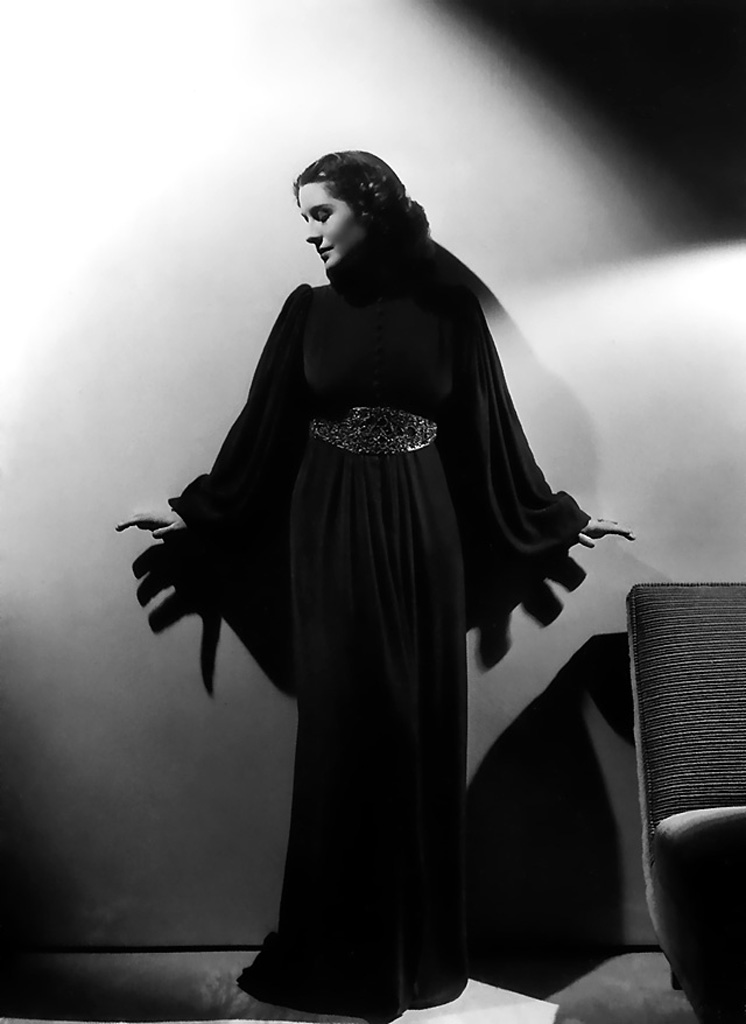
Thought of the Day 8.10.12 Norma Shearer

“An adventure may be worn as a muddy spot or it may be worn as a proud insignia. It is the woman wearing it who makes it the one thing or the other.”

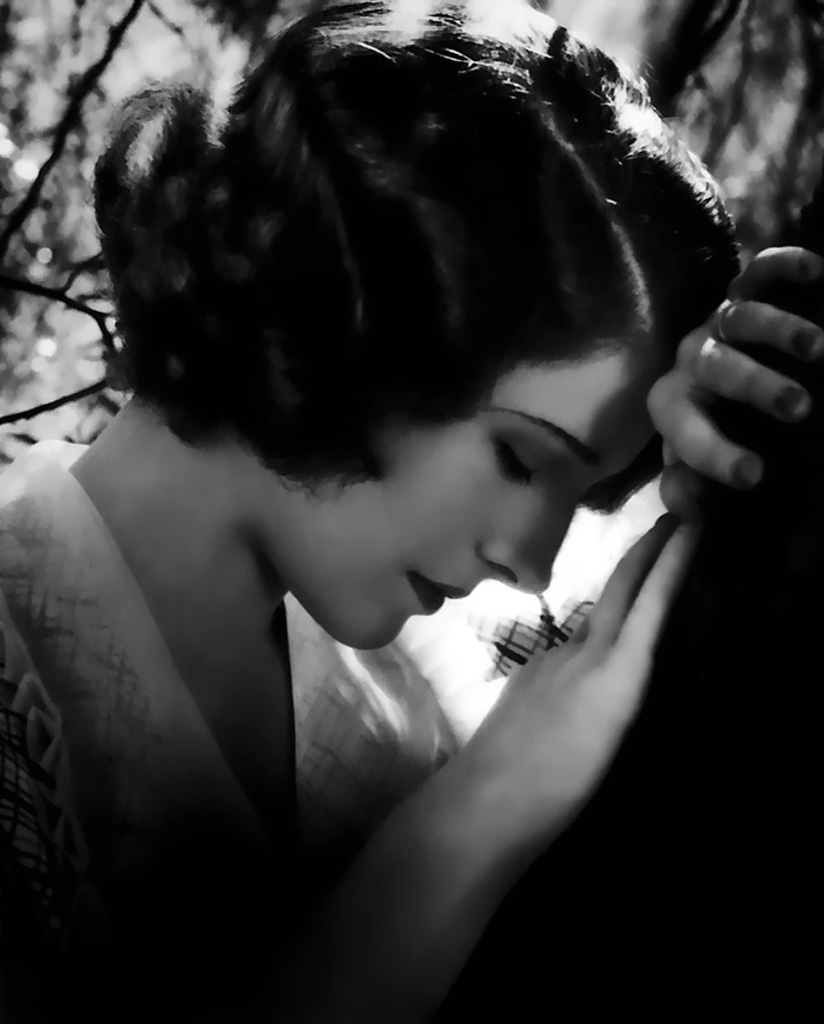
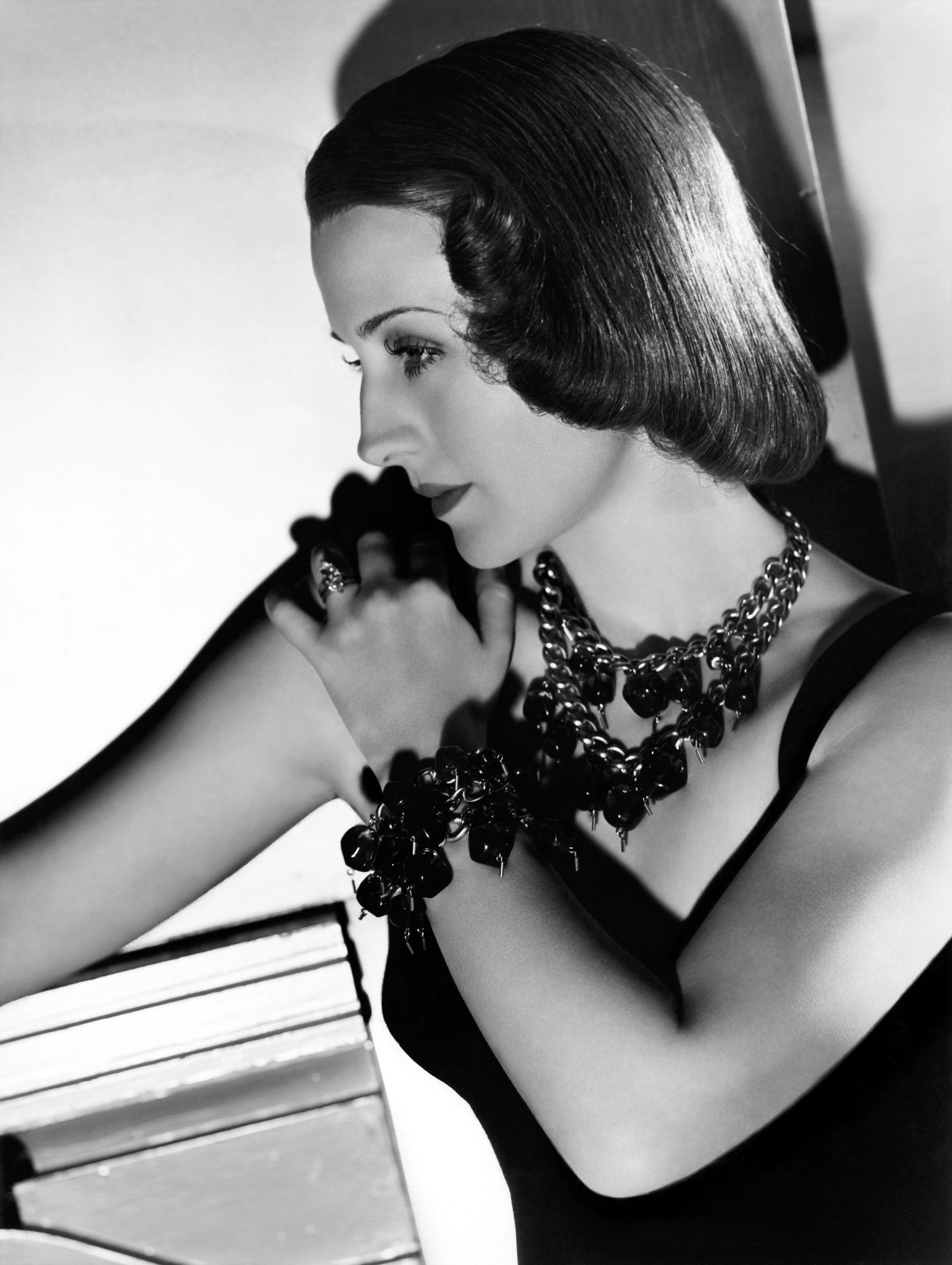
Norma Shearer

Edith Norma Shearer was born on this day in Montreal Canada in 1902. Today is the 110th anniversary of her birth.

Shearer showed early promise as a pianist. Indeed, her mother, who was a bit of a stage mother, wanted her to become a world class concert pianist.  But when Norma was treated to a Vaudeville show for her 9th birthday all that changed. She wanted to become an actress. In 1918 when her father’s business failed and her parents separated her mother sold the piano and bought tickets to New York City. A Montreal theatre owner had given Norma a letter of introduction to Florenz Ziegfeld of Ziegfeld Follies fame. The Follies audition didn’t pan out, but Norma got work as an extra on several films.

She took up modeling (for the much needed money it offered)

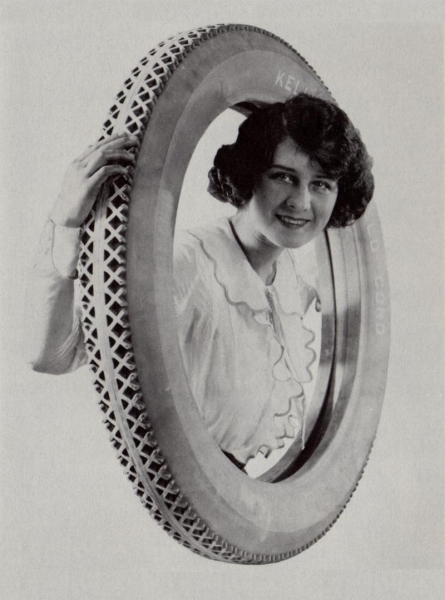
 “I could smile at a cake of laundry soap as if it were dinner at the Ritz. I posed with a strand of imitation pearls. I posed in dust-cap and house dress with a famous mop, for dental paste and for soft drink, holding my mouth in a whistling pose until it all but froze that way.” [ From Norma Shearer: A Life]

Springfield Tires hired her as their go to model and dubbed her “Miss Lotta Miles.

It took her a year of bit parts, walk ons and modeling gigs, but in 1921 she got a break and was cast in The Stealers. In 1923 she caught the eye of Hollywood talent scout Hal Roach and signed a six month contract with Louis B. Mayer for $250 a week. She met Irving Thalberg, the vice-president of the studio and did a screen test. After a rocky start on the West Coast, Shearer hit her stride and was cast in six movies in  eight months. By 1924 she was a big enough star that she landed the role of Consuelo (the love interest) in He Who Gets Slapped MGM‘s first big budged attraction.

She renewed her contract with MGM (making considerably more money) and began dating Irving Thalberg who was then the chief of production. While she was filming The Student Prince in Old Heidelberg the couple became engaged. They were married on September 29, 1927. She refused to take off her wedding ring, even if a role demanded it (she covered it with flesh-colored tape instead.) The two stayed together until Thalberg, who had a serious heart condition, died in 1936. Having a husband who was chief of production didn’t hurt her career. She could pick and choose the juiciest roles (something other starlets, like Joan Crawford, openly resented. — Crawford rather snarkily referred to Shearer at “Miss Lotta Miles.”)

Her first talkie was The Trial of Mary Dungan. She won an Oscar a year later for The Divorcee. And she earned the moniker the First Lady of MGM. Other notable movies include: The Barretts of Wimpole Street, Romeo and Juliet, Marie Antoinette and The Women.

Soon after she retired in 1942 she married her second husband, Martin Arrouge, a ski instructor eleven years her junior. They withdrew from the glitz and glam of Hollywood and Shearer refused interviews and roles (like Norma Desmond in Sunset Boulevard — a gig that won Gloria Swanson an Oscar) Shearer once quipped: “Never let them see you in public after you’ve turned 35. You’re finished if you do!”


[All photos courtesy of the Norma Shearer Annex.  Except Miss Lotta Miles which is from Hollywood-Legends.webs.com ]

————————————————-

[Please Note that ritaLOVEStoWRITE is stepping away from the keyboard for a few days to get some fresh air. Be back soon.]


Thought of the day 8.9.12 Audrey Tautou

“In France we have a law which doesn’t allow the press to publish a photo that you didn’t approve. It lets the paparazzi take the picture, but if they publish this picture, you have the choice to sue the newspaper. So me, I always sued them.”

Audrey Justine Tautou

Amélie

Amélie (Photo credit: Wikipedia)

Audrey Justine Tautou  was born on this day in  Beaumont, in the Auvergne region of France in 1976 (or maybe it was 1978, no one seems to really know, and Tautou isn’t telling.) She is 36  (or 34).

She was named after actress Audrey Hepburn, it seemed destined that the French waif would become an actress. She studied acting Cours Florent (a private drama school in Paris), and, upon graduation quickly found work on television.

She won the Canal+ “Young Debut” award in 1998. The following year she won a Ceasar for Best New Actress in her work in the film Venus Beauty Institute .  She had three movies come out in 2000, Le Libertin, Voyous Voyelle, and Happenstance. She won the Prix Suzanne Bianchetti Award for her work that year.

Then came Amelie. Le Fabuleux destin d’Amélie Poulain, was directed by Mathieu Kassovitz, who also co-starred. Tauto plays the a young waitress who, despite a sad and lonely childhood, decides

to dedicate herself to bringing happiness to those who are less fortunate than she, whilst punishing those who deserve to be punished.[FilmsdeFrance.com]

It made her the best paid actress in France, and gave her international exposure.

The Da Vinci Code (film)

The Da Vinci Code (film) (Photo credit: Wikipedia)

In 2002 she made her first English Language film with director Stephen Frears, Dirty Pretty Things. And in 2006 she starred in the block buster Da Vinci Code directed by Ron Howard and starring Tom Hanks.

Coco Before Chanel

Coco Before Chanel (Photo credit: Wikipedia)

In 2009 she embraced the role of fashion icon Coco Chanel in Coco Before Chanel.

In 2012 she made her stage debut at the Theatre de la Madeleine in Paris in Ibsen’s A Doll’s House.

Tautou says she is not interested in doing sequels. “ I certainly don’t want to be in Thingy Blah Blah 3, if you know what I mean.”  She enjoyed working with Howard and Hanks on Da Vinci Code, but ““I never want to do the same things twice. I like surprises.”