“Let us tenderly and kindly cherish, therefore, the means of knowledge. Let us dare to read, think, speak, and write.”
—John Adams
President of the Senate John Adams (Photo credit: Wikipedia)
John Adams was born on this day in Braintree, Massachusetts Bay Colony, USA in 1735. Today is the 275th anniversary of his birth.
His ancestors came over on the Mayflower. His father was a farmer, shoemaker, a Puritan deacon, a lieutenant in the militia and a member of town council. John loved being outdoors and he sometimes skipped school to hunt or fish.
He said later that he would have preferred a life as a farmer, but his father insisted that he receive a formal education. His father hoped that he might become a clergyman. John attended a dame school, a local school taught by a female teacher that was designed to teach the rudimentary skills of reading and writing, followed by a Latin school, a preparatory school for those who planned to attend college. He eventually excelled at his studies and entered Harvard College at age fifteen. He graduated in 1755. [Miller Center.org]
After graduation he taught school for a time to earn enough money to study law. In 1756 he began a two-year apprenticeship studying law with John Putnam and was admitted to the bar at 26. He opened his practice in 1758, but things were slow going at first. He had only one case in his first year of practicing law which he lost.
Abigail Adams by Benjamin Blythe, 1766 (Photo credit: Wikipedia)
His Law practice began to grow and he felt he was on sturdy enough financial ground to begin courting Abigail Smith. They married in 1764. John and Abigail Adams had six children together (including John Quincy Adams [click HERE for my John Quincy bioBlog ] and one of American History’s most endearing relationships.
When the Incident on King Street (aka the Boston Massacre) resulted in the death of five civilians in March of 1770 Adams defended the eight British soldiers and Captain Preston, the lone officer, charged with the crime. It was important that the soldiers receive a fair trail so the Crown would not have grounds for retaliation. Adams, with his Patriot pedigree and commitment to the letter of the law, was the perfect man for the job. His impassioned speech that “Facts are stubborn things; and whatever may be our wishes, our inclinations, or the dictates of our passion, they cannot alter the state of facts and evidence.”[Quotes.net] saved the men’s lives. (Sam Adams was on the prosecuting team).
While his flashier (and more popular) cousin Samuel Adams rallied/roused crowds in the square, John worked in the courts, taking a more measured approach to American equality.
He was reelected to the Second Continental Congress, … in May 1775, just a few days after war … erupted at Lexington and Concord. When Congress created the Continental army in June 1775, Adams nominated George Washington… to be its commander. Adams soon emerged as the leader of the faction in Congress that pushed to declare independence. . [Miller Center.org]
In June of 1776 the Continental Congress appointed Adams, Thomas Jefferson, Benjamin Franklin, Roger Sherman and Robert Livingston to the Committee of Five to draft a Declaration of Independence. “A Declaration by the Representatives of the United States of America, in General Congress assembled” was presented on June 28th. After much debate (especially about the slavery issue) the Declaration was adopted late in the morning of July 4th 1776.
John Adams (Photo credit: cliff1066™)
Adams wrote a pamphlet detailing his Thoughts on Government. In it he advised that the new Continental government be one which benefited the happiness and virtue of the greatest number of people (not one that benefited the knighted few or the King). He advocated a government with separate executive, judicial and legislative branches.
“Love, Faith, Courage – with these three we can win the world..”
–Marie of Romania
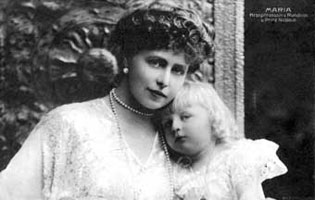
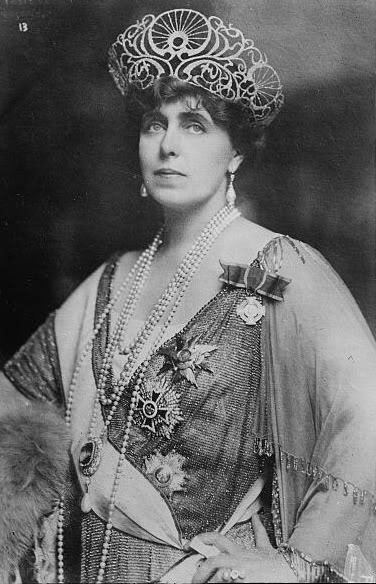
Marie Alexandra Victoria, Princess Marie of Edinburgh, was born on this day at Eastwell Park in Kent, England in 1875. Today is the 137th anniversary of her birth.
She was the eldest daughter of Prince Alfred of England and Grand Duchess Maria Alexandrovna of Russia and the granddaughter of Queen Victoria on her father’s side and of Tsar Alexander II on her mother’s side. Because of her double royal lineage she was considered highly suitable for a Royal match of her own.
When Marie was 17 she was married to Prince Ferdinand of Romania, a German raised nephew of King Carol I of Romania in Sigmaringen German in 1893. Ferdinand was 27 at the time. They had 6 children. Three boys and three girls. However, the marriage was not a happy one and The Princess took a lover, Barbu Stirbey. It is likely that Mircea (and possibly Mignon and Ileana) were Stirbey’s.
In 1914 King Carol I died and Ferdinand took the throne. Marie became Her Majesty the Queen of Romania but the couple were delayed in becoming the King and Queen until after World War 1.
During the War Princess Marie influenced the country to side with the Allies (and away from the Germans), she volunteered with the Red Cross and nursed the sick and wounded. Her book My Country raised money for the Red Cross.
When WWI was over and the Allies were trying to figure out how to partition Europe and scold Germany, Marie herself went to Versailles and represented Romania. She wooed the ministers so much that they gave back territory that Romania had lost and promised not to partition her. [GEH — Queen Marie of Romania Study Notes]
Ferdinand and Marie were finally crowned in 1922. She was determined to be a modern queen.
A Queen who was not stuck in the Victorian time warp like Queen Mary of England, and a Queen who listened to her people and made herself available to her people. [Ibid]
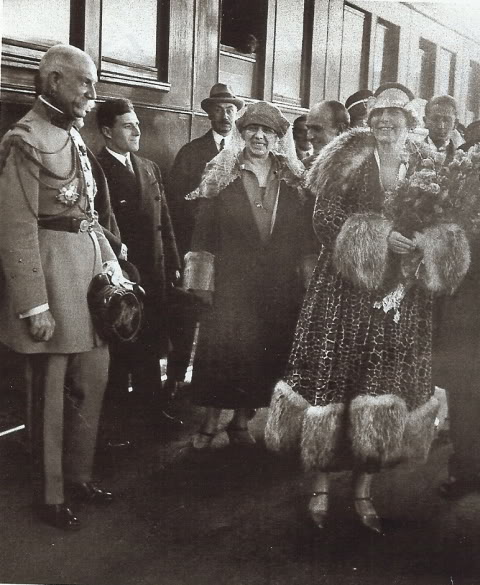
Queen Marie was very popular and travelled through out Europe and the US.
The Queen, on the right, traveling in Europe. [Image courtesy Alexanderpalace.org]
Although she was close with her younger children she was never on good terms with Crown Prince Carol (who became King Carol II after Ferdinand’s death in 1927). After Carol’s coronation he excluded his mother. She remained the Romania and wrote her two-part memoir, The Story of My Life.
She died after a sudden illness in 1938. Following the Queen’s instructions her heart was removed from her body and kept at a cloister at Balchik Palace. The rest of her remains were interred with her husband.
Desiderius Erasmus, 1466-1536, Rotterdam Renaissance humanist, Catholic priest and theologian, by Hans Holbein the Younger, 1523. (Photo credit: Wikipedia)
Desiderius Erasmus was born on this day in Rotterdam, Holland in 1467 (or perhaps 1466). Today is the 545th (546th) anniversary of his birth.
He was the illegitimate son of Gerard (aka Roger) of Gouda and his housekeeper, Margaret Rogers. He was their second son. Gerard either was a Catholic priest at the time of Erasmus’ birth or he took vows soon after. Although his parents never married the boys weren’t neglected. Their father saw to it that they were well educated. He sent 9-year-old Erasmus and 12-year-old Pieter to “one of the best Latin grammar schools in the Netherlands near Deventer.” [Stanford Encyclopedia of Philosophy] Margaret moved to the town to take care of the boys. At this semi-monastic school they and learned Latin, Greek and a humanist approach to literature and culture.
In 1483 the Black Plague hit the city. Margaret died and the boys went back to Gouda. Gerard soon fell ill too. At his death the brothers were left with a small inheritance in the hands of three guardians. At first they were sent to a grammar school. “The highest level of study there did not go up to the level the brothers had already completed at Deventer. Erasmus regarded this period as a total waste.” [Ibid] The boy’s options were limited.
“Since the two boys had only a small inheritance and, being born out-of-wedlock, were not eligible for an ordinary career as secular priests or for membership in many professions, entry into a monastery was their only realistic option.”[ibid]
It was an option neither of them wanted, but Pieter agreed, and after much pressure Erasmus finally gave in. He entered the Steyn monastery in 1487 as a novice.
“He felt no truereligious vocation for such a step, and in later years characterized this act as the greatest misfortune of his life. … He was left free, however, to pursue his studies, and devoted himself mainly to the ancient classics, whose content and formal beauty he passionately admired.”[New Advent Catholic Encyclopedia]
Here he found kindred spirits who shared his love of classical literature. He wrote De Contemptu mundi (On Contempt of the World) while at Steyn (although it wasn’t published until 1521). Still he resented the limits on his activities and freedoms, and he felt thwarted by the limited intellect of some of the other monks (he wrote about that in Antibarbarorum liber (Book Against the Barbarians). None the less he agreed to be ordained as a priest in 1492.
Ordination should have turned the lock in the monastery, gate as it were, but Erasmus’ was already “identified as an intelligent and widely read monk with an outstanding Latin style.” [Stanford Encyclopedia of Philosophy] and about a year after taking final vows he was plucked from the monastery to act as secretary to the Bishop of Cambrai, Henry of Bergen. It was to be a temporary assignment, but some how he managed never to return.
Erasmus persuaded the bishop to send him to study theology at the University of Paris, in the Collège de Montaigu. He found Montaigu less than wonderful. The food was so bad it ruined his digestive system for life. The housing was filthy. And the students were expected to do menial labor along with their studies. He also “expressed hostility to the traditional scholastic theology based on questions, disputations, and reliance on Aristotle.” [Ibid] He found it, in a word, medieval. ” But Paris also had an active literary life and had been thoroughly exposed to the humanistic culture of Italy. The city and the court had a substantial circle of humanists.” [Ibid]
For the next two decades he travelled back and forth across Europe staying in Paris, Leuven (Belgium), England, Basel (Switzerland) and Italy but he consciously avoided any permanent alliances that would limit his intellectual freedom or literary expression. “…after his return from England in 1500, religion as well as the study of Greek became more prominent in his thought.”[Ibid] He was determined to master Greek so he could translate biblical texts and he focused a good deal of his attention on the writings of “St. Jerome, the most learned of the ancient Latin Fathers… ” [Ibid] He received the degree of Doctor of Divinity at Turin. He befriended printer/publisher Aldus Manutius and embraced the new technology of the printing press as a way to communicate.
In 1514 he went to Basel and met with publisher Johann Froben who became his publisher of choice for the rest of his life. He worked with Froben to publish Novum Instumentum (later Novum Testamentum which “included the first published edition of the Greek text of the New Testament, accompanied by a cautious revision of the traditional Latin New Testament and by Erasmus’ annotations explaining how in specific passages…” [Stanford Encyclopedia of Philosophy] This ‘new testament’ was a marketing coup as much as it was a literary masterpiece. In Spain a bigger, better financed (and probably better researched — they had better Greek manuscripts) New Testament was sitting in a warehouse waiting the blessing of Cardinal-Archbishop of Toledo (the work’s sponsor.) Erasmus and Froben were under no such editorial control. The Spanish…
“Edition was made obsolete even before publication by Erasmus’ humanistic methods of textual criticism. The future of biblical studies belonged to the new philological and critical methods developed by Erasmus, not to the cautious and traditionalist approach of the Spanish scholars Their edition was obsolete [Stanford Encyclopedia of Philosophy]
It didn’t hurt that he dedicated his Greek/Latin hybrid New Testament to Pope Leo X. in 1517 He published his research on St. Jerome (all seven volumes of it) ” confirming his status as the greatest scholar of his generation.” [Ibid] Erasmus and Froben also put out a new addition of the former’s Adages with additional proverbs.
The Adages became not only a handy tool for those who wrote in Latin but also a medium for expressing Erasmus’ opinions, and the book was another literary and financial success, frequently reprinted throughout the century. [Ibid]
In 1516 Erasmus petitioned the Pope Leo X for “relief from certain legal disabilities.”[Ibid]
1. the burden and consequences of his illegitimate birth
2. his membership in the monastery at Steyn
3. having to wear the robes of the Augustinian monks
Leo approved the petition. Erasmus moved to the University of Louvain in the Netherlands.Although his German Humanism was not a perfect match with the more conservative Louvian theology Erasmus seemed to have found a home.
But then there was that GERMAN, Martin Luther, who went and nailed his protest to the door of a church. “With remarkable rapidity, reform-minded young German humanists (and many older ones also) who had become admirers of Erasmus identified Luther’s ideas and reform program with those of Erasmus, regarding Luther and Erasmus as leaders of a single movement.” [Ibid] Erasmus HAD been a vocal critic regarding the follies and abuses of the clergy, but it was against his nature to take up a partisan position on the issue of Protestantism.
“The emergence of Luther caused serious problems for Erasmus across a broad front, including his situation in Louvain….Erasmus came under intense pressure to join in their denunciation of Luther, but he was unwilling to do so, claiming that he was so busy that he had read none, or almost none, of Luther’s publications. In reality, he had read at least some of Luther’s books with great interest and had concluded that while Luther took extreme positions on some questions and might have made some errors, there was much to be praised in his works.” [Ibid]
Unable to denounce Luther Erasmus moved from Louvian to Basel, back to his old friend the printer, Froben. He lived there for eight years until the city “reformed” in 1529. He felt morally obligated “to leave a city where open Catholic worship was suppressed. He moved to the near-by city of Freiburg-im-Breisgau, also a university town. ” [Ibid]
He died in 1536 …
“He did not have a priest available to administer last rites, and there is no evidence that he desired such ministrations, which he had always respected if done in the right spirit but never considered very important. He died during the night of 11–12 July. A whole host of ailments contributed to his end, but dysentery was the immediate cause.”[Ibid]
Director Ian Gallanar chose to pick the characters up from the 15th century and time warp them to something resembling War War One. Clever, especially considering the Patapsco Female Institute was used as a war hospital during the Great War. In his director’s notes he says:
“The production really uses the visual palate and the historic technology of the World War One era as a way to clarify the relationships of the characters….[The audience] might also recognize the futility and wastefulness of a war that, much like the English “Wars of the Roses,” seemed more about resolving who would inherit power rather than who ought to inherit power.” [Chesapeake Shakespeare Company, Richard III: Program Notes]
So on a cold October night we got to see one of Shakespeare’s bloodiest plays in and around the shell of a burned out 19th Century building that some people claim is haunted. The occasional gas-masked actors quietly playing cards in a dimly lit corner or typing away orders on an antique typewriter upped the creep factor. As did the lighting effects, the period music and wonderful costumes.
Vince Eisenson as Richard III. Photo by Teresa Castracane. [Image courtesy: Chesapeake Shakespeare Company]
This version of Richard really worked. I really liked the “Moveable” aspect too. It added to the length of the play (instead of quick scene changes the audience literally did a scene change by moving to a new part of the building or grounds, and that took a while.) My only problem was that there was a scene or two where I couldn’t see the action because I had the bad luck of standing behind some one tall.) Still, I liked that we kept moving through the building, and “discovering” new rooms. It really put the audience DEAD center into the action of the play (and moving about kept us warm.)
Richard III runs for one more weekend at Chesapeake Shakespeare. So if you are local to Maryland jump on their website and grab some tickets before they sell out. http://chesapeakeshakespeare.com/
————————————
Scrap for a Shakespeare character card: Richard III., c. 1890; Printer: Siegmund Hildesheimer & Co. Victoria and Albert Museum, London, Museum number: S.63-2008, Link (Photo credit: Wikipedia)
Of course they didn’t have instant fact checkers in Shakespeare’s day, and history, as they say is written by the winners. So it comes as no surprise that the Richard the Third we met last night was a real piece of work. Shakespeare was writing for an Elizabethan audience. Elizabeth, a Tudor, was the granddaughter of the man who finally brought about Richard’s undoing on Bosworth Field in Leicestershire, Henry VII. It was in his interest to make Richard as loathsome as possible.
Henry VII’s claim to the thrown was weak at best. So he took…
“every opportunity of enhancing his own reputation at the expense of his predecessor. Richard’s actions and behaviour were the subject of attention and scrutiny and were presented, in the weeks and years after his death, as those of a wicked and unscrupulous tyrant.” [The Richard III Society]
While he was alive Richard was well thought of.
He was loyal to his brother Edward.
He was effective in his administration of the North.
He defended the country against the Scots.
He handled the premature death of Edward with out plunging the country into crisis.
Shakespeare wasn’t the first writer to take up the thread of anti- Richard-ism. (Yes, I just made that up.)
By the time the Elizabethan playwright William Shakespeare penned what was to become one of his most popular and frequently performed plays, The Tragedy of King Richard III, the works of the anonymous Croyland Chronicler, John Rous, Bernard André, Polydore Vergil, Sir Thomas More, Edward Hall, Richard Grafton and Raphael Holinshed had been written. [Ibid]
So, as Chesapeake Shakespeare Managing Director and Richard III Dramaturge says in her note… The Bard’s “fictitious villainous Richard has triumphed over the historic Richard for centuries now.” [CSC Program]
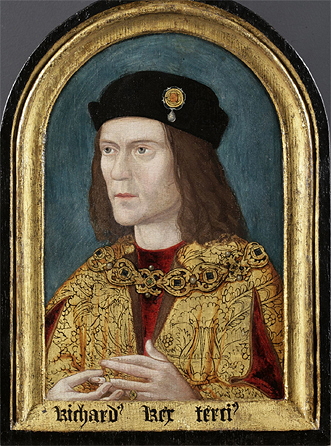
Richard III earliest surviving portrait. [Image courtesy: Wikipedia]
In a timely twist of history archeologists digging up a parking lot in Leicester have found the remains of the Greyfriars Church that might be those of Richard, the last King of England to die on the battlefield. They have found a skeleton in the choir area (Richard was buried in the choir of Friars Minor at Leicester), that had a skull injury caused by a bladed implement, an arrowhead was found between its vertebrae and upper back, and it had spinal abnormalities.
“the individual would have had severe scoliosis – which is a form of spinal curvature. This would have made his right shoulder appear visibly higher than the left shoulder.” [University of Leicester Press Release : The Leicester Greyfriars Dig]
——————————————————————————-
Bonus Material:
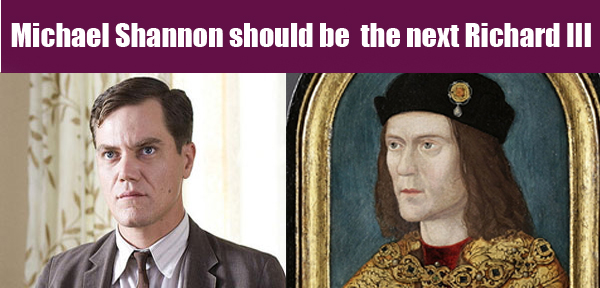
Not sure how many of you watch HBO’s Boardwalk Empire… but I couldn’t stop thinking how much Michael Shannon (who plays messed up Treasury agent turned iron salesman Nelson Van Alden) looks like our boy Richard. I think they ought to do a new film version of Richard cubed with Shannon in the lead. He certainly has the intensity to play the role.
PROGRAMMING NOTE: Switching up the formula a little today as it is NOT John Lennon’s Birthday — that was October 9th — but I was away that day, so I thought I’d retroactively give John the birthday nod.
———————————————————————–
“If someone thinks that love and peace is a cliché that must have been left behind in the Sixties, that’s his problem. Love and peace are eternal.” — John Lennon
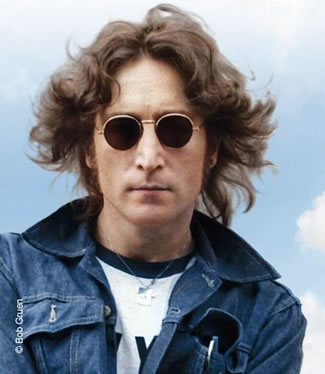
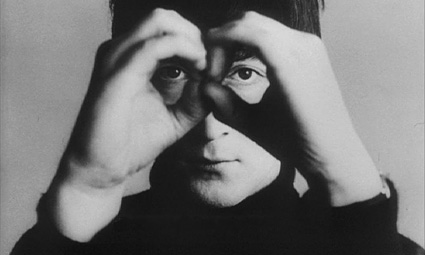
John Winston Lennon was born on October 9th, 1940 in Liverpool, England. He would be 72 years old this year.
John was born during World War II, indeed he was born during an air raid, to Julia and Alfred Lennon. His father worked as a merchant seaman and was often away from home. By the time John was four-years-old his parents were divorced and he went to live with his Aunt Mimi Smith. Although Alfred was largely out of the picture, Julia remained close, she visited John regularly.
She taught John how to play the banjo and the piano and purchased his first guitar. [biography.com]
Julia Lennon died when John was 18, she was stuck by a car.
He did not do well in school, and preferred to be the class clown rather than study. He did love art and music though. John drew unique (almost grotesque) line drawings that quickly and simply captured the image.
John started a ‘skiffle band’ (a band that used the instruments they had at hand) called the Quarry Men when he was 16. The Quarry Men take their name from John’s high school, Quarry Bank High School in Liverpool. The next year he asked Paul McCartney to join the group. George Harrison and Lennon’s art school mate Stu Sutcliffe also joined the band and they later added Pete Best on drums.
The group changed their name to the Beatles and played clubs in Hamburg, Germany and the Cavern Club in Liverpool. Brian Epstein came on board in 1961 as manager, and they got a recording contract with EMI records.
1962 saw huge changes for both Lennon and the group. In April of 1962 Sutcliffe died tragically of a brain aneurysm. In August John married Cynthia Powell, the couple had a son, Julian in April the next year. The band replaced drummer Pete Best with Ringo Starr. The realigned group recorded at EMI with George Martin as their producer, and released Love Me Do in October. The single reached #17 on the British Charts. Please, Please Me the follow-up single, topped the charts. And the Beatles were off.
Beatlemania invaded the US in 1964. They appeared on The Ed Sullivan Show and played sold out concerts.
Still from Hard Day’s Night. [Image courtesy: Cinematical]
Back in the UK they made the movie A Hard Day’s Night. The movie is a delightfully fun, pop romp of a mockumentary. It featured songs from the album of the same name, notably: A Hard Days Night, If I Fell, I’m Happy Just to Dance with You, Tell Me Why, Any Time At All and Can’t Buy Me Love. The popularity of the movie helped keep the album at #1 for 14 weeks on the Billboard chart. The budget was limited so it was shot in black and white, and everything was kept simple. Not so with their second film HELP! which still manages to be charming but not as charming as Hard Day’s Night. It is overproduced and over done. Lennon said that the Beatles felt like extras in their own movie with HELP! and it shows. Still the music was pretty awesome: Help!, You’ve Got to Hide Your Love Away, You’re Going to Lose That Girl! Ticket to Ride, It’s Only Love, I’ve Just Seen a Face, and Yesterday. The Album held the top spot on Billboard for 9 weeks.
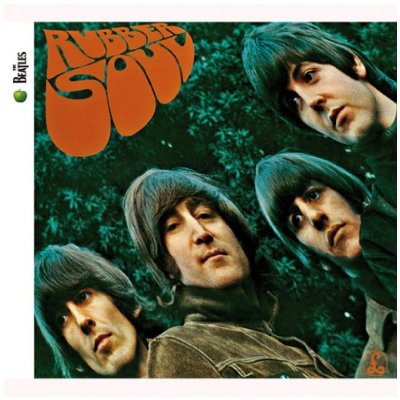
Musically the lads from Liverpool were in top form, releasing the breakthrough album, Rubber Soul in 1965. Their song writing had transformed from the harder R&B influenced Hold My Hand kind of song to lyrical, mature songs like Norwegian Wood, Nowhere Man, Michelle, Girl, In My Life, and If I Needed Someone. It was another #1 Billboard album (6 weeks). [I’m guessing that if you are still reading this blog you are a Beatles fan and already have most of their albums, but if you don’t… I’d put Rubber Soul at the top of the list. For my money Rubber Soul and Revolver are two of the best albums every made.]
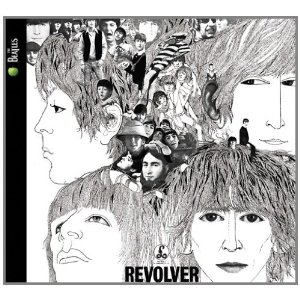
Yesterday…and Today came out in 1966. Stand out songs include: Drive My Car, Nowhere Man, Yesterday, If I Needed Someone, We Can Work It Out and Day Tripper. The album reached #1 for 5 weeks. Revolver also came out in 1966. Taxman, Eleanor Rigby, Here, There and Everywhere, Yellow Submarine, Good Day Sunshine, And Your Bird Can Sing, and Got to Get You Into My Life are some of the hits off the album, which spent 6 weeks at the #1 spot on Billboard’s chart. By 1966 the strain of constant touring, recording, and the hounding fans was weighing on the band. Lennon got in trouble for his “We’re more popular than Jesus now” remark. They played their last concert in Candlestick Park stadium, San Francisco in August.
The following year the Beatles put out their eighth LP, Sgt. Pepper’s Lonely Hearts Club Band. An eclectic mix of pop, rock n roll, and Indian influenced tracks. It won Album of the Year and was #1 on the Billboard charts for a whopping 15 weeks. Hits from the album include: With a Little Help from My Friends, Lucy in the Sky with Diamonds, Getting Better, –the amazing — A Day in the Life, and of course, Lovely Rita. But as good as Pepper was, and it was very good, it was also over produced. All those horns and whistles and animal sounds didn’t quite get in the way enough to ruin the songs, but were they really necessary? Listening back on them now… well, I prefer a simpler production. [It worked somehow in A Day in the Life; not so much in Lovely Rita, but still, the later has such a great title.]
Speaking of over produced…there’s Magical Mystery Tour — a movie that makes absolutely no sense. The LP had some lovely songs though. And even if it was becoming painfully clear that Lennon was writing the “Lennon” songs– which were leaning toward sarcasm — and McCartney was writing the “McCarntney” songs — which were tending to get more nostalgic and saccharine — both came up with some good ones here, like: The Fool on the Hill, Strawberry Fields Forever, Penny Lane, and All You Need Is Love.
1968 brought the animated (and equally bizarre) film Yellow Submarine. In November they release a new album called The Beatles aka The White Album. It was at the top of the charts for 9 weeks. This double album seems almost schizophrenic with some great songs like the hard rock and roll Back in the USSR, Why Don’t We Do It in the Road? Helter Skelter, and Revolution; others that are lovely and lyrical; While My Guitar Gently Weeps, Blackbird, Julia, Long, Long, Long, Good Night; And others that I’m not going to waste my time talking about.
On the personal side John divorced Cynthia Lennon in November of 1968. He and Yoko Ono, who he had been seeing since 1966, and living with since the summer of ’68, put out a collaborative album Two Virgins. The album showed the couple nude on the cover and was banned in most record stores. On March 20, 1969 John and Yoko married in Gibraltar.
The following week, the two master media manipulators used their celebrity for good, hosting a honeymoon “bed-in” for peace in room 902, the presidential suite of the Amsterdam Hilton. The… pajama-clad newlyweds spoke out about world peace. It was the honeymoon as performance art, interlaced with a protest against the Vietnam War. [About.com]
They repeated the “performance” in Montreal the following week and with a bedroom full of musicians, artist, writers and other 1960’s counter-culture dignitaries, they recorded Give Peace a Chance.
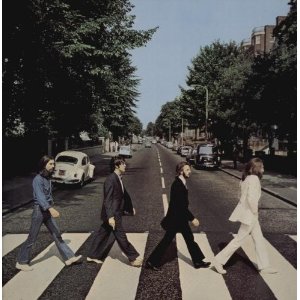
Abbey Road was released in 1969. It is actually the last album the Beatles recorded, but it was released before Let It Be.
Notable songs include: Come Together, Something, Here Comes the Sun, and I Want You. Abbey Road stayed at #1 for 11 weeks.
Recorded largely in January in 1969, Let it Be wasn’t released until 1970 and was #1 for 4 weeks. Lennon had already left the group (September of 1969.) A film of the same name came out the same year. The film was supposed to be a documentary that went behind the scenes to show the world’s most famous rock band making an album. Instead it showed the world’s most famous rock band dissolving. The film culminated in a rooftop concert on January 30th. Songs from the album include: Don’t Let Me Down, Get Back, Two of Us, Let It Be, and The Long and Winding Road.
After the Beatles John released Plastic Ono Band.
The raw, confessional nature of Plastic Ono Band reflected the primal-scream therapy that Lennon and Ono had been undergoing with psychologist Arthur Janov. He dealt with such fundamental issues as “God” and “Mother” and the class system (“Working Class Hero”) on an album as full of naked candor as any in rock has ever been. [Rock & Roll Hall of Fame]
1971 brought Imagine. Rolling Stone Magazine called the title track the third all-time best song ever written.
English: John Lennon and Yoko Ono (Photo credit: Wikipedia)
John and Yoko followed Imagine with an anti-war release Happy Xmas (War is Over). The Nixon administration was not amused. It decided to begin deportation proceeding against Lennon. The stress took its toll on Lennon’s marriage with Ono and the two separated. For 18 months he lived in Los Angeles with another woman, May Pang. It is a period he calls his “Lost weekend” of drinking a partying. He fished Mind Games, and recordedWalls and Bridges.Whatever Gets You Thru the Night, a single off the later album became a number one hit. He co-wrote Fame with David Bowie.
He and Ono were reunited in 1975 shortly before the release of Rock n Roll. The couple celebrated the birth of their son Sean in October of 1975. And, after releasing Shaved Fish, John became a stay at home dad for five years.
In 1980 he came out of retirement and released Double Fantasy with the single Just Like Starting Over.
On December 8, 1980 the music died. As Lennon and Ono were returning home from recording tracks for the following up album, Milk and Honey he was assassinated in front of his New York apartment building, the Dakota.
“All the legislation in the world will not abolish kissing” —Elinor Glyn
Portrait of Elinor Glyn, 1927 (Photo credit: Wikipedia)
Elinor Southerland was born on this day in Jersey, Channel Islands, England in 1864. Today is the 148th anniversary of her birth.
Elinor’s father died when she was a toddler and the family moved for a while to Canada. They returned to Jersey when she was eight and her mother remarried. Elinor…
was a voracious reader interested in French history and mythology, though she had no formal education … She would later be drawn to mysticism and romance. [The Literature Network]
She liked to write and she kept a diary.
At 28 she married Clayton Glyn. The couple had two daughters, Margot and Juliet. The marriage was not a happy one. and, although Elinor and Clayton officially remained together both had affairs.
Elinor had affairs with a succession of British aristocrats and some of her books are supposedly based on her various affairs… [Good Reads]
She contributed articles to Scottish Life and Cosmopolitan but her real break through in the literary world came with the serialization of her first book The Visits of Elizabeth in 1900. The book, was written as a series of letters by an innocent young woman. Elizabeth.
The naive and charming narrator gets herself into social scrapes due to her innocence, … they are actually funny over a hundred years later because you know what Elizabeth doesn’t know–and perhaps that was the appeal for the more knowing Edwardian readers. Glyn’s book is a bit of a satire, but a romantic one, and Elizabeth gets her happily-ever-after, but not before making every handsome gentleman fall deeply in love with her. [Amazon.com review]
Elinor was prolific in turning out her novels (she had to be, finances at home had taken a turn for the worse and the once wealthy Clayton Glyn was in debt by 1908. He died in 1915.) Her reputation as a writer of romance grew with the publications of The Seventh Commandment (1902), The Reflections of Ambrosine (1903), The Damsel and the Sage (1903), The Vicissitudes of Evangeline (1905) andBeyond the Rocks(1906).
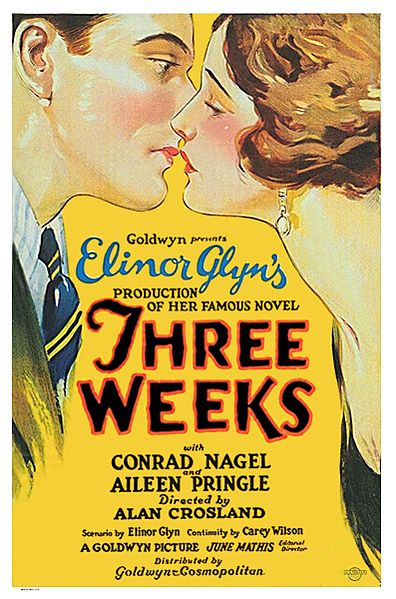
Movie poster for Three Weeks
Her risqué Three Weeks, about an exotic Balkan queen who seduces a young British aristocrat, was allegedly inspired by her affair with Lord Alistair Innes Ker. On the one hand it scandalized Edwardian aristocrats and jeopardized Glyn’s status. [The Literature Network]
Deemed immoral and banned at elite schools like Eton and panned by some critics who considered it disjointed and dull, the book non the less sold out within weeks of its publication and it “ensured her meteoric rise to fame.” [ibid]. It also brought about the anonymous ditty:
Would you like to sin
With Elinor Glyn
On a tiger skin?
Or would you prefer
To err
With her
On some other fur
Her private life seemed to either echo or prelude the romantic interludes of the heroines in her novels as she continued to crank out “romances” until the start of World War One. During the Great War she worked in France as a war correspondent and Glyn was one of two women to witness the signing of the Treaty of Versailles.
Elinor Glyn looks up at Rudolph Valentino, from the frontispiece of Beyond The Rocks (Photo credit: Wikipedia)
She made the move to Hollywood in 1920 where she worked as a scriptwriter for MGM and Paramount. The Great Momentwas filmed in 1920. In 1922 Beyond the Rockswas made into a major motion picture with red-hot Rudolph Valentino and Gloria Swanson. Three Weeks was given the big screen treatment not once, but twice, first in 1914 and then in 1924. And Glyn wrote the screenplay and was closely involved in the production of the 1926 Love’s Blindness.
In 1927 she wrote a novella that gave us the expression “the IT girl.” She coined the phrase and quickly crowned Clara Bow, who was staring in Red Hair (a movie based on Glyn’s The Vicissitudes of Evangeline), as the first IT girl. Here autobiography Romantic Adventure was published in 1936. She continued writing until 1940 when she published her last — and 42nd — book, The Third Eye.
English novelist and scriptwriter Elinor Glyn (1864-1943) (Photo credit: Wikipedia)
Elinor Glyn died in September of 1943 in Chelsea, London.
————————————————————————–
Bookshelf:
Interested in reading some of Elinor Glyn’s books? You can find them through the links below.
“I just sit at a typewriter and curse a bit.”“There is only one cure for gray hair. It was invented by a Frenchman. It is called the guillotine.”“I know I was writing stories when I was five. I don’t know what I did before that. Just loafed I suppose.”–P.G. Wodehouse
“I just sit at a typewriter and curse a bit.”
Pelham Grenville Wodehouse was born on this day in Guildford, Surrey, England in 1881. This is the 131st anniversary of his birth.
Wodehouse, called “Plum” as a child, spent much of his early life in the care of a gaggle of aunts and at boarding schools in England, while his parents lived in the Far East. Third of four boys, Wodehouse was close to his brothers. He went to The Chalet School, Elizabeth College in Guernsey, Malvern House (near Dover) and finally at Dulwich College with his older brother Armine. He flourished at Dulwich where he played sports (especially boxing, cricket and rugby), studied the classics, sang and acted in the school’s theatricals, and of course, wrote.)
Psmith in the City (Photo credit: Wikipedia)
Upon graduation in 1900 ailing family finances meant he couldn’t go on to Oxford like Armine. Instead, Plum’s father got him a job in the London branch of the Hong Kong and Shanghai Bank. He wrote about his experiences at the bank in Psmith in the City, but he said he “never learned a thing about banking.” In 1902 he gave up the financial farce and dove into journalism with a job writing a comic column at The Globe newspaper. He moved to New York and published his first novel, The Pothunters the same year. A Prefect’s Uncle; Love Among the Chickens; The Swoop; Psmith In the City; Psmith, Journalist; The Prince and Betty; and Something New followed fairly quickly there after.
The Prince and Betty (Photo credit: Wikipedia)
He also wrote for musicals. He penned the book for Cole Porter’s Anything Goes; the Gershwin’ s Oh Kay . He worked with Ira Gershwin on the lyrics for Rosalie. And he wrote dozens of musicals — generically called the Princess Theatre Musicals — with Guy Bolton and Jerome Kern. [For a complete list of Wodehouse musicals go to The Playwrights Database at doolee.com] The Princess Theatre Musical are generally seen as a stepping stone that took the best of vaudeville and operetta and blended them into modern musical theatre. They transitioned
“… the haphazard musicals of the past to the newer, more methodical modern musical comedy … the libretto is remarkably pun-free and the plot is natural and unforced. Charm was uppermost in the creators’ minds … the audience could relax, have a few laughs, feel slightly superior to the silly undertakings on stage, and smile along with the simple, melodic, lyrically witty but undemanding songs” [Bloom and Vlastnic Broadway Musicals: The 101 Greatest Shows of All Time]
My Man Jeeves (Photo credit: Wikipedia)
Starting with My Man Jeeves in 1919 Wodehouse published the series of books for which is he best known, The Jeeves and Wooster books. Here’s a clip from the 1990 Granada Television production of Jeeves and Wooster starring Hugh Laurie and Stephen Fry:
He also wrote the Blandings Castle series about a fictional castle with Lord Emsworth and his prize-winning pig, the “Empress of Blandings.”
Since he and his wife, Ethel Wayman, were officially residents of both England and the US they were being taxed by both countries. To alleviate the tax burden they moved to France in 1934. The Wodehouse’s remained in France when the Nazi troops moved in. Wodehouse was interned as an “enemy alien” eventually landing in Tost, Upper Silesia, Poland. He later quipped of his ‘lodgings’ “If this is Upper Silesia, what on earth must Lower Silesia be like?” He entertained his fellow prisoners with dialogues and wrote during his two-year internment (he completed one novel and started two more). He was released just prior to his 60th birthday when a German friend from his Hollywood days, Werner Plack, approached him about doing a broadcast for the Americans describing his life as an internee. America was not at war with Germany yet, and he had received many letters of encouragement from his fans in the US while in the camp. He saw this as a way to thank them. And, Wodehouse claimed, he was simply reflecting the “flippant, cheerful attitude of all British prisoners.” [the Guardian] in the broadcasts. But the British public didn’t see it that way, and neither did MI5. He was interrogated for suspected collaboration with the Germans — something that shocked the aging author. “I thought that people, hearing the talks, would admire me for having kept cheerful under difficult conditions,” [ibid] Wodehouse maintained that he never had intended to aid the enemy. But the incident left a bad taste with both the Wodehouses and the British public. The author moved to the US in 1945, and never went back to England.
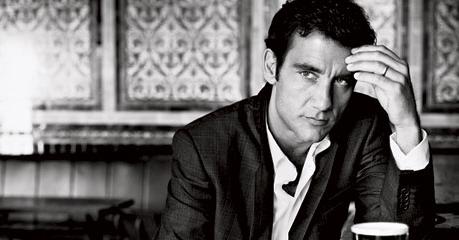
“The sexiest part of the body is the eyes. That’s what I believe.” —Clive Owen
Clive Owen was born on this day in Coventry, West Midlands, England. he is 48 years old.
He grew up in a the small working class town of Coventry. He is fourth in a brood of five boys. His father exited the scene when Clive was 3, and he was raised by his mother and step father. He starting acting at 13 when he was cast as the Artful Dodger in a school play. (And there has been a little bit of the Artful Dodger in almost every role he’s played since.) He says he became “completely obsessed and decided to become an actor from then on.” He moved on to the Royal Academy of Dramatic Art in London in 1987. The audition process was daunting, two monologues, one modern and one from Shakespeare. If you nailed it you were in, if you didn’t, you weren’t. He nailed it. After RADA he continued doing Shakespeare at the Young Vic.
From theatre he moved to television. His most notable series being Chancer –where he played a con-man with a heart of gold, he’s an anti-hero who is willing to use all the arrows in his –checkered past’s– quiver to help his friends. As the show’s tag line says “He’s rude, arrogant, ingenious, unprincipled … and utterly charming.” [Owen’s is still growing into himself as an actor in Chancer. He’s good, but he’s not great. And The production values are definitely television level.]
Cover art for Croupier.
His big break in film came in the 1998 movie Croupier. Owens plays a an aspiring writer who takes a job as casino croupier to both pay the bills and help with research on a book. Owens narrates the movie in his deadpan quasi-noir style. [It is well written and well acted, and deserves a place on your Clive Owen’s Netflix queue.]
He shifted gears to play Colin Briggs a prisoner in an experimental English prison who gets rehabilitated through gardening in Greenfingers. Helen Mirren also stars. [I really enjoyed this gentle movie. Although it is largely set in a prison it isn’t filled with the violence that is so often present in a Owen’s film. Make this #2 for your C.O. Netflix queue.]
Back on BBC One he starred in Second Sight as Chief Inspector Ross Tanner a detective who is loosing his eye sight.
He played a key role in Robert Altman’s ensemble film Gosford Park. [There’s so much to see in Gosford Park you’ll probably need to watch it more than once. Plus…Maggie Smith bonus!… put it in your queue.]
On stage he appeared as Dan both in the West End and Broadway versions of Closer. When the show was made into a movie in 2005 he switched roles and played Larry. He garnered a Golden Globe and BAFTA award for the film.
He followed Closer with a trio of films, Derailed, Sin City andInside Man in quick succession. He was rumored to be the next James Bond, but the producers chose Daniel Craig instead. Which is fine because it left him open to take his best role to date, Theo Faron in Alfonso Cuaron’sChildren of Men.
Children of Men is a gritty dystopian look at life in 2027 England. “It’s a heartbreaking, bullet-strewn valentine to what keeps us human.” (–Keith Phipps) and is loosely based on the P.D. James novel of the same name. Owen, whose characters are often anti heroes who spend a movie reacting to shit that thrown at them, is the anti-ist of heroes who has the most shit ever thrown at him in the roughly 100 minute running time of the film. And he is wonderful in it. [This is my favorite Owen’s movie and my number one pick for your Netflix queue.]
He is good in other films, Elizabeth: The Golden Age, King Arthur, andInside Man; and just OK in a slew of films where he always seems to play the same guy with a gun. He was very funny poking fun at his leading man image in a guest spot on the Ricky Gervais show Extras. [ I didn’t make it through the HBO Hemingway & Gellhorn, (I’m not sure if was a too tense Nicolle Kidman, the excess of sex, Clive’s mustache, or a combination of all three, but I gave up about 45 minutes in.) There are a couple of films I’m looking forward to seeing– The Boys Are Back and Shadow Dancer both look interesting. ]
He met his wife when they were cast opposite each other as Romeo and Juliet 20 years ago. For an actor considered an international sex symbol/tough guy he is very family oriented. He does a movie for several months then comes home where he enjoys being a homebody/nobody. They have two pre-teen girls.
Julia Elizabeth Wellswas born on this day in Walton-on-Thames, Surrey, England in 1935. She is 77 years old.
Her parents divorced when Julie was a baby. Both parents remarried and Julie lived primarily with her mother and stepfather Ted Andrews, whom she called “Pop.” Julie’s last name was changed to Andrews to make the transition easier. According to Julie they were “very poor and we lived in a bad slum area of London,”
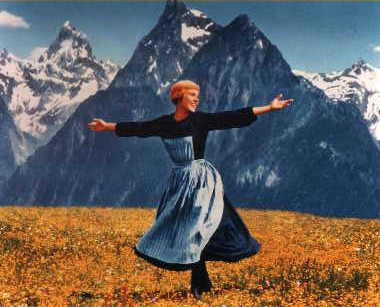
In the movie version of The Sound of Music she sings “Perhaps I had a wicked childhood / Perhaps I had a miserable youth / But somewhere in my wicked, miserable past / There must have been a moment of truth…” While those lyrics were written for her character, Maria, they echo a past that Andrew’s called “a very black period in my life.” Her stepfather was an alcoholic (so was her mother to a lesser degree.) Julie had to put a lock on her bedroom door after Pop tried, drunkenly, to get into bed with her, twice.
Both her mother and her stepfather were entertainers. Her mother, who had trained as a classical pianist, helped to make ends meet by giving lessons and accompanying vaudeville acts. Mom and Pop had their own act and at about 10 Julie began to appear with them on stage. Soon Julie joined the act on a regular basis. She’d have to take a nap in the afternoon so she could be bright and alert on stage late into the night. She took singing lessons and was said to have both perfect pitch and a four octave range. (She denies the perfect pitch.)
During World War II she lived through the Blitz.
She remembers spending some nights on the neighborhood subway platform, listening for unmanned bombers so that she could alert the neighbors of danger. Her parents once awakened to find an unexploded incendiary bomb in the tenement courtyard just outside their kitchen window. They once watched a mid-air dogfight directly above them. [Visions Fantastic]
She performed for King George VI’s family during the 1948 Royal Command Variety Performance in London. (She is the youngest performer ever to do so.) The Andrews act went on radio and TV. She was a cast member on the radio show Educating Archie from 1950-1952.
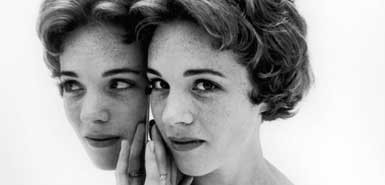
Julie Andrews in a introspective moment [Image courtesy: VisualizeUs]
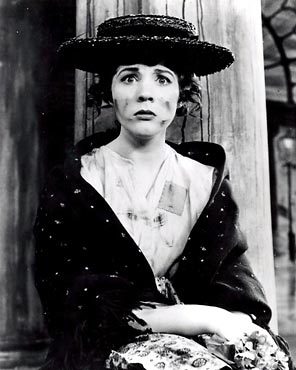
At 19 she made her Broadway debut as Polly Browne in The Boyfriend. Next she auditioned for the new musical adaptation of George Bernard Shaw’s Pygmalion and created the role of Eliza Doolittle in Lerner and Loewe’s My Fair Lady.
Andrews as Eliza in My Fair Lady circa 1956. [Image courtesy: The Seattle Times]
During her Broadway run of My Fair Lady she transformed from rags to riches again in the 1957 Rodgers and Hammerstein television musical version of Cinderellafor CBS TV.
In 1959 she married set designer Tony Walton.
Her next Broadway triumph was in 1960 as Queen Guinevere to Richard Burton’s King Arthur and Robert Goulet’s Lancelot in Lerner and Loewe’s Camelot.
She was terrific as both Eliza and Guinevere, but when it came time to make major motion pictures of the musicals the producers opted for actresses with more proven box office success. Jack Warner gave Eliza to Audrey Hepburn. Vanessa Redgrave got Guinevere. Andrews returned to England to have her daughter Emma instead.
The Disney company thought Andrews would be Practically Perfect for their adaptation of P.L. Travers’ Mary Poppins and offered her the role in their 1964 film. Andrews won an Oscar for this, her first, major motion picture. In her acceptance speech for the Golden Globe Andrews, with a bit of whimsy, thanked the man who “made all this possible in the first place, Mr. Jack Warner.”
In 1965 Andrews stepped into the role of Maria Von Trapp for the 20th Century Fox movie of The Sound of Music. It went on to become the third highest grossing film ever made. The soundtrack sold more than 11 million copies.
United Artists produced Andrews next movie, Hawaii based on the novel by James A Michener. The film earned more than $6 million, and was 1966’s biggest box office hit.
Also in 1966, she co-starred with Paul Newman in Cold War psychological thriller Torn Curtain for director Alfred Hitchcock.
The 70s were quiet for Andrews. She divorced Warner and married director Blake Edwards. Although she continued to do television work — including a variety show, guest spots and specials — she focused much of her time during the disco decade raising her family.
In Edwards’s 1981 film S.O.B. she rather famously shed her innocent image by barring her breast. The next year she played dual roles in Victor Victoria and earned another Golden Globe Award.
The Princess Diaries gave her career yet another breath of fresh air as she co-starred as Queen Clarisse Renaldi with Anne Hathaway. She put on the crown again for The Princess Diaries 2: Royal Engagementt in 2004. The same year she donned an animated crown was Queen Lillian for Shrek 2 (and the subsequent Shrek sequels) and she narrated Enchanted. She also voiced the character of Marlena in Despicable Mein 2010.
She was given the title Dame Commander of the British Empire by Queen Elizabeth II in 2000 for her work both in the entertainment industry and for her involvement in charitable organizations like Save the Children, the UN’s Fund for Women and the Foundation for Hereditary Disease.













 ritaLOVEStoWRITE
