Thought of the Day 10.12.12 Hugh Jackman

“Basically, I’ll make an ass of myself anywhere.”
Hugh Jackman

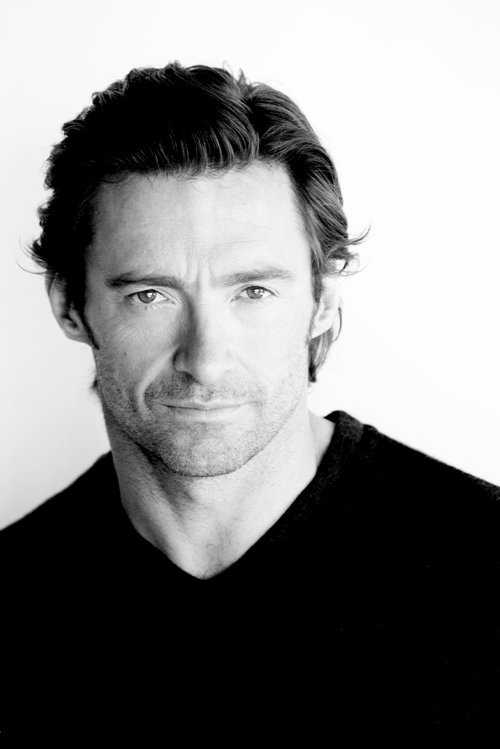
[Image courtesy: RealHughJackman (his twitter feed)]

Hugh Michael Jackman was born on this day in Sydney, New South Wales, Australia in 1968. He is 44 years old.

The youngest of five ankle-biters, Jackman was raised by his father when his parents divorced. Jackman was eight-years-old at the time. He grew up with a love of the outdoors and enjoyed camping and playing on the beach. His first brush with acting was in My Fair Lady in Knox Grammar School at 17. He earned a degree in Communications at the University of Technology, Sydney in 1991. To finish up his university work he took some acting classes and found his muse.

After finishing a one-year intensive course called “The Journey” at the Actor’s Center in Sydney he hopped coasts to Perth to attend the Western Australian Academy of Performing Arts at Edith Cowan University.

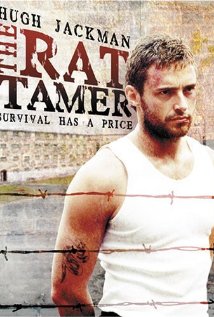
Promotional still from Correlli . [Image courtesy: IMDb]

Almost immediately after graduating from ECU he was offered the part of  Kevin Jones in a 10-part prison drama on Australian Broadcasting Company’s (ABC) Correlli. Jackman began dating  his future wife, the series star, Deborra-Lee Furness on the show’s set.

After Correlli Jackman hit the stage for the Melbourne based productions of  Beauty and the Beast (as Gaston) and Sunset Boulevard (as Joe). Back in the cinema he was in the Australian indie films Erskinesville Kings and the rom-com Paperback Hero. He also did a smattering television guest spots on the ABC.

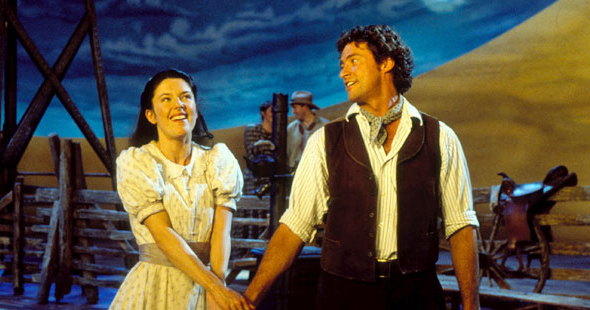
Still from the filmed staged production of Oklahoma! [Image courtesy: Great Performances]

His big international break came as Curley in Trevor Nunn’s reboot of Rodgers & Hammerstein’s “Oklahoma!” Jackman won an Oliver Award for his work in the musical.

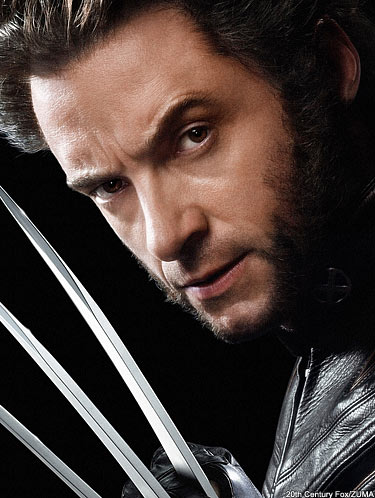
Don’t mess with this man! Jackman snagged the #1 spot in the Top Ten Hollywood Heroes List on Netscape Celebrity’s pole, beating out Matt Damon, Tom Cruise and Brad Pitt. [Image courtesy: Netscape Celebrity]

Then came the role that changed everything. Wolverine. He’s played the Clawed One in five movies now (he holds the record for an actor playing the same super ‘hero’ in the most movies.)  The X-Men franchise was hugely popular and found an audience across genres and generations.

He followed up rough and hairy Wolverine with the role of refined and charming Leopold Alexis Elijah Walker Thomas Gareth MountbattenDuke of Albany in the time travel rom-com Kate and Leopold.

Jackman switched gears again, next appearing as a ex-con computer hacker who unwittingly gets involved in John Travolta’s crime circle in Swordfish.

Local advertising for the musical The Boy from...

Local advertising for the musical The Boy from Oz starring Hugh Jackman in New York City, 2004. Cropped from original. (Photo credit: Wikipedia)

In 2004 he won a Tony Award for his portrayal of fellow Aussie Peter Allen  in The Boy  from Oz. He hosted the Tonys for three years running (’03, ’04, and ’05) and won an Emmy Award for his emcee work in ’04.

He reprised Wolverine in X2: X-Men United, then starred as Gabriel Van Helsing in the rather ridiculous (and IMO dismal) Van Helsing.

He fared better as one of a pair of dueling magicians (Christian Bale was the other) in The Prestige in 2006. It didn’t hurt the movie that David Bowie added his talents as Nikola Tesla.

Personally, I liked the weird and romantic The Fountain. It was a big, strange, time traveling ride, and I just went with it. I thought Jackman and co-star Rachel Weisz had a lot of movie charisma and, for me at least, it worked. NOT so much for his next film Scoop.

Scoop should have been good. It starred the equally like able Scarlett Johanson and was written and directed by Woody Allen. It is supposed to be a comedy/ mystery hybrid but it isn’t funny and it isn’t suspenseful, and there was very little chemistry between the stars. So sad.

His star took a mediocre swing up again with X-Men: The Last Stand. He was good again as the muscled, intense Wolverine. But not a lot of new territory was covered character wise in the this, the third installment of the franchise.

Then my Hugh Jack admiration took a real dive. He provided the voice for two animated movies. He adopted a strange (southern?) accent to play Memphis, the father emperor penguin to Elijah Wood’s tap dancing Mumble in Happy Feet. Then he played a rat who gets flushed down the pipes in Flushed Away. Human again he played Wyatt Bose in the “thriller” Deception.


Cover of "Australia"

Cover of Australia

Baz Luhrmann’s Australia gave Jackman a chance to star in an epic, big budget, old-fashioned, romantic movie. It is very Luhrmann in style, and the director wisely lets Jackman’s natural Aussie charm shine through the rough and tumble character of the Drover . (Though, for the record, Brandon Walters, as Nullah, steals the show.) With the unforgiving but beautiful outback as the title character, and the  nicely filmed attack of Darwin,  Australia worked.

He was in the ensemble comedy Butter and played a down on his luck boxer in the heart warming Real Steel both of which that came out last fall.

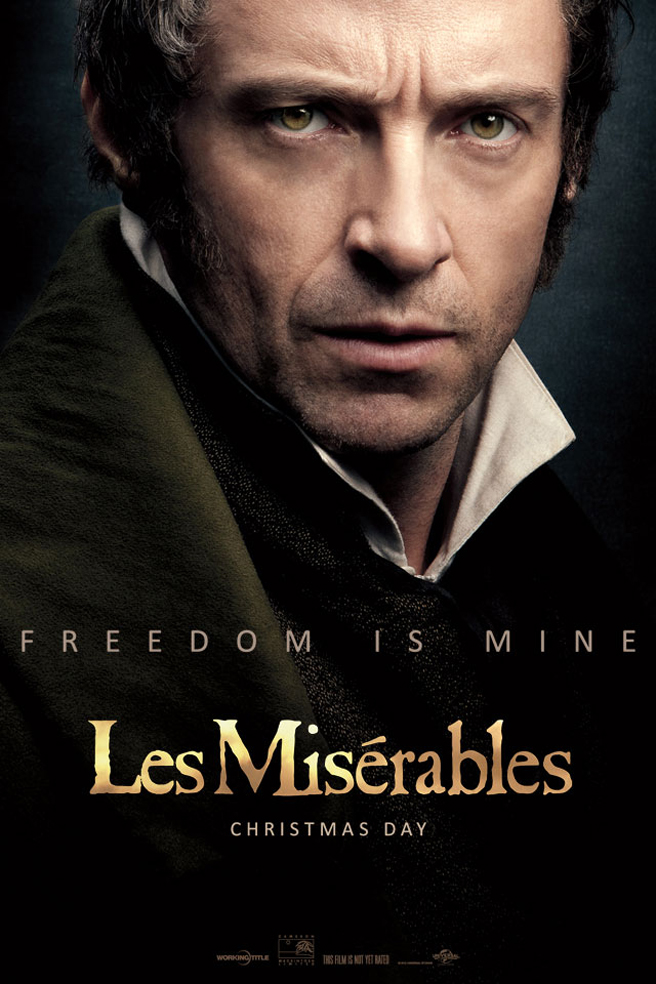
Jackman has several projects upcoming including his role as Jean Valjean in Les Miserables coming out this Christmas.

[Image courtesy Joblo’s Movie Posters]


Thought of the Day 10.11.12 Eleanor Roosevelt

  [Eleanor Roosevelt is such a hero of mine, I’m thrilled to write this bio.]

“Great minds discuss ideas, average minds discuss events, small minds discuss people”

“Do what you feel in your heart to be right, for you’ll be criticized anyway.”

“No one can make you fell inferior without your consent.”

“Remember always: That you not only have the right to be an individual, you have an obligation to be one.”

“You must do the thing you think you can not do.”

–Eleanor Roosevelt

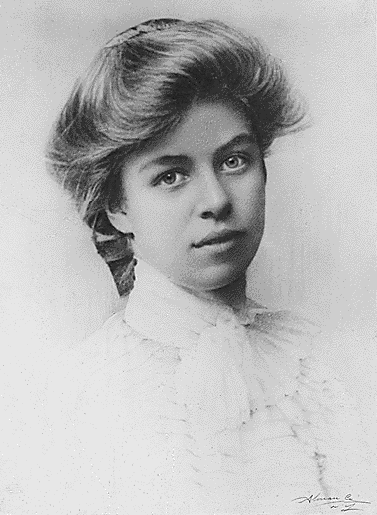
Eleanor Roosevelt at Waldorf Astoria Hotel in ...

Eleanor Roosevelt at Waldorf Astoria Hotel in New York City – NARA – 195324 (Photo credit: Wikipedia)

Anna Eleanor Roosevelt was born on this day in New York City, New York, USA in 1884. Today is the 128th anniversary of her birth.

She was the niece of one US president and the wife of another. She grew up with immense wealth and great personal sorrow. She was a quiet, shy child, so serious that she was nicknamed “Granny”. Her mother died when she was eight of diphtheria. Just months later both her brothers contracted Scarlet fever, one, Elliot, died. Her father died two years later.  Orphaned she went to live with her grandmother Mary Ludlow Hall. She was privately tutored until 15. Then she was sent to a finishing school near London, England called Allenswood. It was a progressive school where Eleanor was said to be studious but popular. At Allenswood she learned self-confidence.

“During her time at Allenswood, Roosevelt came out of her shell of childhood loneliness and isolation. She thrived both academically and emotionally. ” [New World Encyclopedia]

Eleanor in 1898 at school in England. [Image courtesy: New World Encyclopedia.]

Eleanor (she always preferred to be called by her middle name) was presented to society on December 14, 1902 at the Waldorf-Astoria hotel in New York City. As a young woman she volunteered with the New York Junior League and worked in the city’s slums. She taught dancing and calisthenics to children and was a member of the Consumers League (a group that investigated sweatshop conditions in the city.) It was a connection with the poor that she would continue through her life.

She met Franklin D. Roosevelt later that year. He was her fifth cousin, they got engaged in 1904 and married on St. Patrick’s Day of 1905. President Theodore Roosevelt gave away his niece.

When Franklin entered politics Eleanor became his partner in “it” as well. Her role shifted, “I simply knew that what we had to do we did, and that my job was to make it easy.”  During World War I she “threw herself into wartime relief.” She worked for the Red Cross and helped with Navy Relief. Her work was outside the scope of what she had done to promote her husband’s career, and, she later noted “I … gained certain assurance as to my ability to run things, and the knowledge that there is joy in accomplishing good.”  [The Eleanor Roosevelt Papers Project]

Franklin D. Roosevelt and Eleanor Roosevelt wi...

She had an infamously difficult relationship with her mother-in-law Sara Delano Roosevelt. Franklin was very attached to his mother and the lived in one of her houses. The tide turned when Franklin contracted Polio, Eleanor realized that she had to “stand on her own two feet in regards to her husband’s life, her own life and the rearing of her children. ” [Franklin d. Roosevelt Presidential Library and Museum]

Together she and Franklin had six children: Anna Eleanor, Jr. ; James (after Franklin’s father James); Franklin Delano, Jr (who died as an infant); Elliott (after Eleanor’s father); Franklin Delano, Jr (the second son named for Franklin); and John Aspinwall.

Franklin D. Roosevelt, Eleanor Roosevelt, Sara...

Franklin D. Roosevelt, Eleanor Roosevelt, Sara Delano Roosevelt, and Mr. and Mrs. James Roosevelt in New York City… – NARA – 197052 (Photo credit: Wikipedia)

Although Eleanor never sought elected office she was surely America’s FIRST LADY.

“While she neither drafted legislation nor held elective office, she worked with other reformers outside and inside the administration to shape the contours of the New Deal.” [Franklin d. Roosevelt Presidential Library and Museum]

She also wrote  a syndicated column “My Day” six days a week  from 1935 til her death. It was her bully pulpit for social issues.

English: Franklin D. Roosevelt Presidential Li...

After Franklin’s death she was

“…Selected to be a delegate to the United Nations General Assembly, serving from 1945 to 1953. She also became the chair of the UN’s Human Rights Commission. As a part of this commission, she helped to write the Universal Declaration of Human Rights.” [Biography]

English: Former U.S. First Lady Eleanor Roosev...

English: Former U.S. First Lady Eleanor Roosevelt with the English version of the United Nations Universal Declaration of Human Rights Italiano: Mrs. Eleanor Roosevelt, moglie del presidente degli Stati Uniti, mostra la Dichiarazione in formato poster (1949) (Photo credit: Wikipedia)

She wrote about her experiences in 1937’s This Is My Story;  1949’s  This I Remember;  1958’s On My Own; and 1961’s Autobiography.

President Kennedy asked her to serve as chair of the Commission on the Status of Women and made her delegate to the UN in 1961.

Eleanor Roosevelt


Thought of the Day 10.10.12 Lin Yutang

“If you can spend a perfectly useless afternoon in a perfectly useless manner, you have learned how to live.”
-Lin Yutang

English: Lin Yutang 中文: 林语堂

English: Lin Yutang 中文: 林语堂 (Photo credit: Wikipedia)

Lin Yutang was born on this day in Banzai, Fujian province, China in 1895. today is the 117th anniversary of his birth.

China provinces fujian

China provinces fujian (Photo credit: Wikipedia)

He grew up in the mountains of Fujian province the son of a Chinese Presbyterian minister. He studied at Saint John’s University, Shanghai and at Harvard University in the US. At first he studied to be a minister, but he renounced Christianity and pursued a degree in English instead.

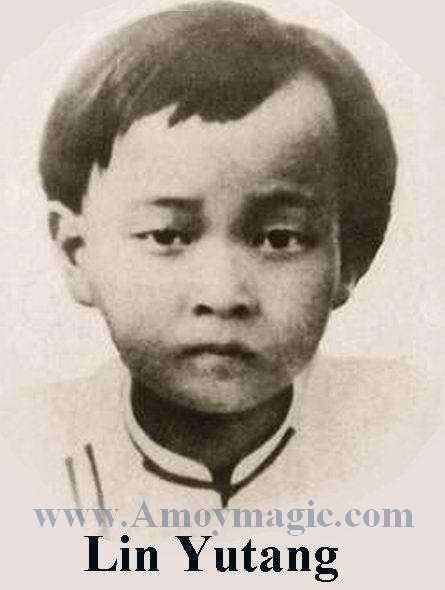
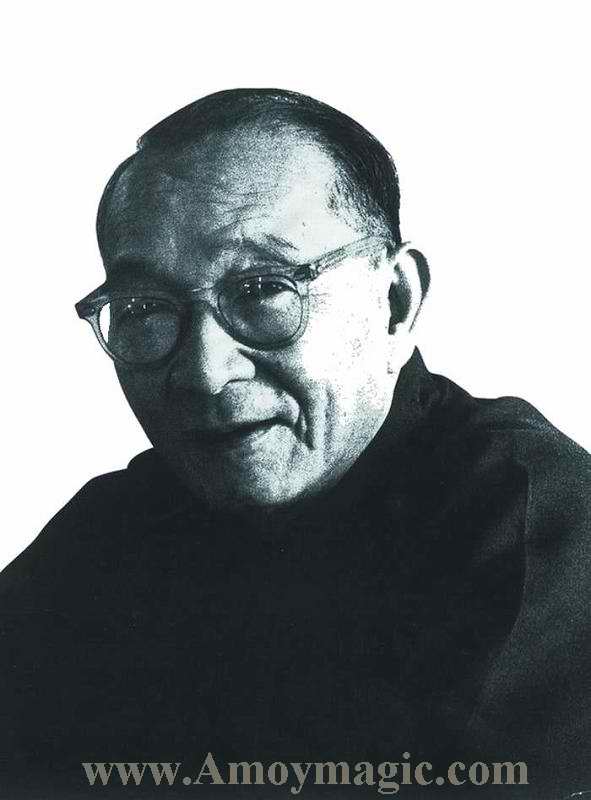
[Image courtesy: Amoymagic.com]

He bridged the cultural and linguistic divide writing and editing for both English and Chinese magazines and produced Lin Yutang’s Chinese-English Dictionary of Modern Usage.

His successful satirical magazine Analects Fortnightly was the first of its kind in China. In 1933 Pearl Buck introduced him to her publisher who took Lin Yutang on as a client.

English: Lin Yutang (Lin Yü-t'ang) (1895 - 197...

English: Lin Yutang (Lin Yü-t’ang) (1895 – 1976) 日本語: 林語堂 (1895 – 1976) ‪中文(简体)‬: 林语堂 (1895 – 1976) ‪中文(繁體)‬: 林語堂 (1895 – 1976) (Photo credit: Wikipedia)

In 1935 he moved to the US.

Lin published the first of his many English-language books, My Country and My People. It was widely translated and for years was regarded as a standard text on China. [Britannica.com]

He moved to New York and published Moment in Peking in 1939. His 1941 novel  A Leaf in the Storm, presents China on the brink of war with Japan. Wisdom of China and India  followed in 1942.

[Image courtesy: Amoymagic.com]

Lin’s fiction includes Chinatown Family — a look at culture, race and religion faced by an immigrant Chinese American family; and his 1968 The Flight of the Innocents.

Ming Kwai Typewriter

Ming Kwai Typewriter (Photo credit: Wikipedia)

During the WWII Lin developed a workable Chinese typewriter, the “Ming Kwai” typewriter.

His belief that literature should be a means of self-expression, not a tool for propaganda put him at odds with political movements in China when he returned to his homeland in 1943 and 1954.

Lin wrote more than three dozen books and is “arguably the most distinguished Chinese American writer of the twentieth century.” [Google Books] He died on March 26, 1976.

[Image courtesy: Amoymagic.com]

 “In his prolific literary career, Chinese author Lin Yutang wrote expertly about an unusual variety of subjects, creating fiction, plays, and translations as well as studies of history, religion, and philosophy. Working in English as well as in Chinese, he became the most popular of all Chinese writers to early 20th-century American readers.” [Britannica.com]


Mangahoota [a special fiction post]

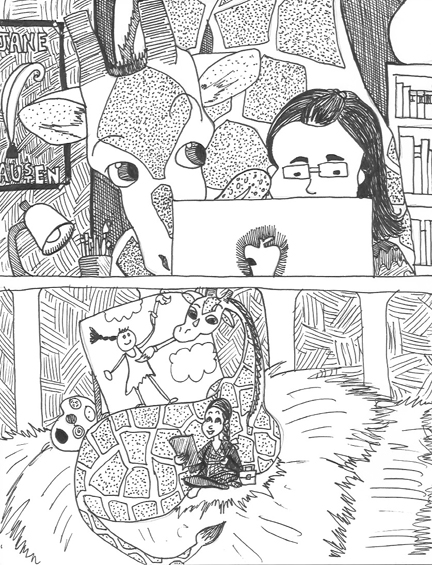
[Since I will be AFK (Away From Keyboard) I thought I’d share the following short children’s story called “Mangahoota.” My daughter was kind enough to do the wonderful images. (I especially love the author/illustrator image at the end.) Needless to say this is copyrighted material and may not be duplicated in any form. Same goes for the illustrations. ]

———————————————————————————————————

Mangahoota

by Rita Baker-Schmidt, illustrations by Maggie Schmidt
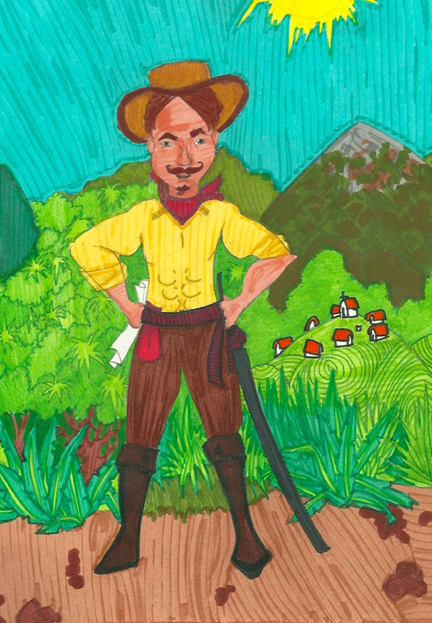


There once was an explorer named Juan Diego Benetiz Jorges Alanzo Perez. He loved to explore the wild and wonderful jungles of the Mexican country side. One day he was walking through a field, eating a mango, when something fell– plop– right on his head. It hit Juan with such a force that the poor man was knocked out cold.

When he woke up there was a bandage across his eyes. He couldn’t see and he had a terrible headache. “Please, Please, where am I?” Juan asked in Spanish.

“Senior, you are in my hospital.” Brother Christos put a gentle hand on the man’s arm. “You had a terrible blow, but you will be all right.”

“All right? I can’t see!”

“That is because your eyes have been bandaged.” Brother Cristos told him, “In a few days we will take off the bandages and you will be all better.”

Brother Christos stayed with Juan for a little while and then he left to go to Mass. But, before he left he promised Juan he would visit him again just before evening prayers.

Juan fell back asleep. He had odd dreams of gigantic flying creatures. He woke with a start. There was a thunderous sound outside. “Bam, Bam! Bam, Bam!” The whole hut shook! But, then a second later a softer “Bam, Bam,” came, and a tiny “Ouch.”

“What is that?” Juan called out, but he was the only one in the hospital that day so there was no one to answer he question.

When the good brother came back that evening he asked Juan if he had gotten any rest.
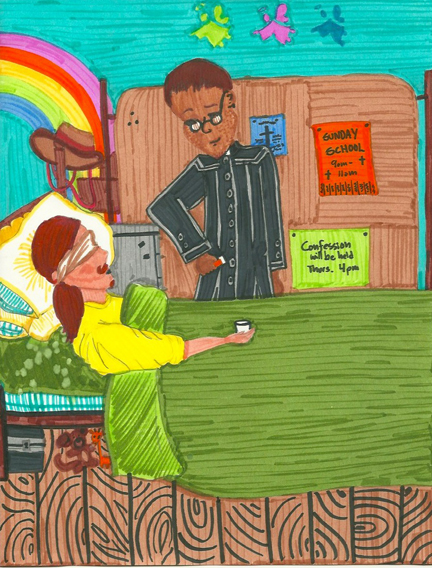
“I did rest” Juan told him, agitated, “but then I was awaken by a terrible noise.” He described it to Brother Christos.

Because the bandages, Juan could not see Brother Christos smile.

“Did we have an earth quake, Brother?”

“Oh, no.” Brother Christos said calmly, “That was only Mangahoota.”

“What on Earth is Mangahoota?” Juan demanded.

“It is a creature that lives in this area.” Brother explained. “It is usually very sweet and gently, but I’m afraid he lost his control yesterday and he fell from the sky.” There was a note of apology in the holy man’s voice. “That is how you got hurt, you see. Mangahoota fell on you.”

“A bird that is big enough to knock a man cold?”

“Oh, not a bird exactly, but yes, it is quite big.” Brother Christos told him.  “It is a difficult thing to explain.”

The next day, when Juan was sitting in the garden of the hospital, enjoying the warm sun on his bandaged face, it happened again. There was an enormous swooshing sound and then “Bam, Bam!” The Earth shook and the water spilled from his glass, “Bam, Bam!” Then softer “Bam, Bam, ouch”

“Help!” Juan cried in horror. “Help! Help! That Mangahoota is trying to get me! Help!”

The Mangahoota must have been frightened by the tone in Juan’s voice because it flew away again immediately.

Brother Christos came running. “What it is Senior? Are you all right?”

“That beast, that Mangahoota swooped down on me again!” Juan cried. “Take me inside, Brother, please.”

“But, senior, I assure you the Mangahoota is a loving animal. It will not hurt you.”

Juan pointed to his bandages, “It has already hurt me!” He said angrily, “Now, Please, I beg you, take me inside.”

“That was an accident.” Brother Cristos said soothingly, but he obliged Juan and walked him into the hut. “Forgive me Senior,” He said gently,  as he helped the explorer sit down “I am a bit confused.”

“Why is that Brother?” Juan asked. He was much calmer now that they were inside.

“I thought you were an explorer.”

“I am an explorer.”

Brother Cristos fluffed his pillow. “I see.” He said patiently.

“Why?”

The Holy man poured Juan a drink of cool water and put it in his hand. “Humm?”

“Why did you ask me if I was an explorer?”

“It is only that I thought that explorers liked to learn new things.” He said quietly.

“We do.” Juan told him. “We love to learn new things. That is what we live for!”

“Ahhh.” Brother Christos nodded. He sat down in the chair opposite Juan.

“‘Ahhh’ what?” Juan asked. He wished Brother Christos would just come out and say what was on his mind.

“Well… here you are a man who loves to explore new things, and out there is the Mangahoota, a new thing to you, and yet….”

Juan was quiet.

“I understand your hesitation, Senior. It must have been frightening.”

Juan grabbed at the brothers sleeve. “It was! It is a terribly frightening thing to have a Mangahoota land on your head.”

“I’m sure.” Brother Christos patted his arm. “And you just frightened the Mangahoota by shouting so fiercely. So perhaps it would be best if you didn’t meet.” He pushed himself off his chair and went to leave the room. “You are right, Senior. A meeting would be a bad thing.”

Juan thought for a long time about what Brother Christos had said. He was an explorer and this was a new and strange thing. He’s instincts as a man of knowledge kicked in and curiosity replaced his fear. By the time Brother Christos returned after evening prayers Juan had made up his mind to meet the beast.

The next day Brother Christos walked Juan into the bean field by the mission. When they stopped he handed Juan a bunch of mangos. “What is this?” Juan asked.
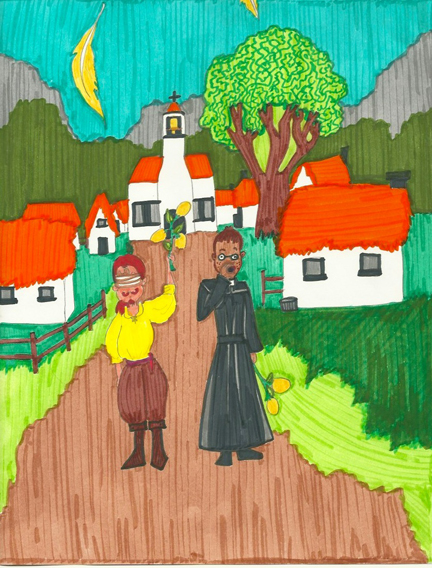
“Those are mangoes. Mangahoota loves mangoes.” He held Juan’s hand so it was straight out then he brought it in a slow arch above his head and back down again. “You must wave the mangoes like this, Senior.”

Juan did as he was instructed. “Like this Brother?”

“Yes, but a little faster.” Brother Christos told him. “And you must call him to  you, Senior.”

Juan stopped waving. “How?”

“You must wave your mangoes and call in a loud voice ‘Mangahoota, Mangahoota, come and get them, Mangahoota.”

Juan thought he must be joking.

“Please, go on Senior, or he may not come.”

Feeling silly, Juan waved the bouquet of mangoes over his head and called out “Mangahoota, Mangahoota, come and get them, Mangahoota.”

And from high above the mountains came the swoosh, swooshing sound of enormous wings. Then, “Bam, Bam…Bam, Bam…” and more quietly “Bam, Bam,” and just a whisper of a sound “Ouch.”

The Mangahoota clip-clopped over to them and took a nibble of the mangoes. Sweet smelling, sticky, mango juice pored over Juan’s hands as the creature ate. “Does he like them, Brother?”

Brother Christos laughed as the Mangahoota bent over and gave Juan a sticky lick of a kiss. “Oh, yes, Senior, as I say, they are his favorites.”

They spent some time in the field with the Mangahoota. Both Juan and Brother Christos kept their voices calm and soothing. And the Mangahoota let Juan pet his long fur covered body.

Juan could tell that the creature had long legs with big knobby knees. He had enormous wings, of course, which he kept tucked in against his body. And he had a long muscular neck. His neck was so long that Juan couldn’t reach the top unless the Mangahoota bent down.  But Juan couldn’t form a picture of the Mangahoota in his mind’s eye.

As the Mangahoota flew away and the men walked back into the compound of the mission Juan turned to Brother Christos. “I must know what a Mangahoota looks like.”

“Tomorrow,” Brother Christos told him, “We will take the bandages off, and if you are strong enough we will take our walk outside and you can call him again.”

Juan tried to sleep that night, but he couldn’t keep his mind off the Mangahoota. In the morning Brother Christos came to him and, as promised cut away the bandages.

It took a minute for Juan’s eyes to register his surroundings. The simple thatched hut with the crucifix on the wall, the four camp beds made up with white linens, and the kind young man who had been his doctor smiling at him. Juan smiled back. “Lets go.”

Brother Christos nodded to the bedside table. There were two bouquets of mangoes.

“I must warn you Senior,” Brother Christos told him, “the Mangahootas are very unusual creatures.”

“I should say so!” Instead of the monk helping support Juan, he was being pulled by him. They walked to the middle of the field.

“So unusual that you must employ all of your powers of imagination to see him as he is.”

“I understand. Don’t worry Brother, I have a very good imagination.”

Brother Christos smiled at him and gave him some mangoes.

With out hesitation Juan waved them frantically over her head. “Mangahoota, Mangahoota, come and get them Mangahoota!”

No creatures emerged.

“Mangahoota, Mangahoota, come and get them Mangahoota!” Juan looked at the monk. “Perhaps he doesn’t recognize me with out my bandages.

“We will both try, Senior.” And, holding his robes so he wouldn’t trip, he waved his too mangoes in the air.

“Mangahoota, Mangahoota, come and get them Mangahoota!” They both called. “Mangahoota, Mangahoota, come and get them Mangahoota!”

Then they saw him. Flying high over the mountains, so big that for a second he blocked out the Sun.

“Mangahoota, Mangahoota, come and get them Mangahoota!”

It flew lower over the field. Then with a ground shaking “Bam, Bam” its front hooves hit the ground. “Bam, Bam” the back hooves touched down. Then  a slow unforgiving arch of unstoppable motion bent his long neck and with a  softer, “Bam, Bam” the knobs on the tops of the Mangahoota’s short antlers tapped the ground, and the creature gave a soft, childlike “Ouch.”
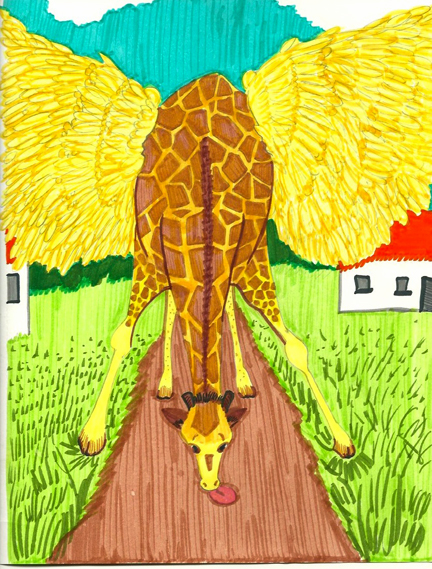
It shook away the small pain and  brought its face up to the mangoes. It began to eat, showering Juan and Brother Christos with mango juice. They laughed out loud. When he had devoured the mangoes he eyed them with his big giraffe eyes and lowered his sweet face first to Juan and then to Brother Christos and administered a lick of appreciation.

Later, as the giant animal took flight, Juan turned to Brother Christos. “Why didn’t you tell me a Mangahoota is a flying giraffe?”

“Some times it is better to believe without seeing, Senior, but some things are better believed when seen. The trick,” the young man smiled at Juan, “Is to know which is which.”

The End.

Rita is a writer, designer, musician, animal lover and Austen enthusiast. She thinks her daughter is extra awesome for doing these illustrations. 
 
Maggie is an aspiring educator, perpetual doodler and actress. 

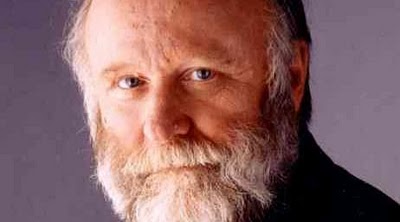
Thought of the Day 10.8.12 B Frank Herbert

Hi — Trying this again as I’m not sure why the top half of this bio got clipped yesterday (or why it was centered?). I also changed the top photo — which I think might have been the problem. 😦

_________________________________________________

“There is no real ending. It’s just the place where you stop the story.”
–Frank Herbert

Cover of "Dune [Blu-ray]"

Cover of Dune [Blu-ray]

Frank Herbert was born on this day in Tacoma, Washington, USA in 1920. Today is the 92nd anniversary of his birth.

Frank’s mother came from a large Irish Catholic family (10 girls; 3 boys) (his invention of the Ben Gesserit for the Dune universe was likely an off shoot of the deep influence this gaggle of Aunts had on young Herbert’s life.) Frank’s father was a bus driver,  security guard, salesman, motorcycle patrolman and farmer. The family did a lot of traveling around before they settled on the farm.

Young Frank knew what he wanted be early in life.

On the morning of his eighth birthday Frank Junior famously announced to his family: “I wanna be a author.” (sic.) That day he wrote his first short story, which he called “Adventures in Darkest Africa.”  [Frank Herbert: The Works]

He was an explorer who thought nothing of paddling solo around Puget Sound to the San Juan Islands and back (200 miles) when he was ten or swimming across the Tacoma Narrows. He was also a great reader. “By the age of 12 he had, incredibly, already read the complete works of Shakespeare and discovered Ezra Pound.” [Frank Herbert: The Works]

Both Herbert’s parents were alcoholics and their drinking worsened as Frank entered his teen years. His sister, Patricia, was born when Frank was 13  and he took on parenting duties. By 1935 his parents were on the verge of a divorce. During high school he worked at his writing. He wrote short stories — he even wrote  novel, a boilerplate western, that he published under a pen name. He got a part-time job at the Tacoma Ledger. But by November of 1938 the situation at home had become too much. He left home with his baby sister and went to live with an aunt and uncle in Salem, Oregon. He graduated from North Salem High School and became a newspaper journalist. After a stint as a Photographer in the US Navy during WWII (he received a medical discharge because of a cranial blood clot he  developed after a fall)  he returned to Oregon and worked as a copy editor for the Oregon Journal in Portland. He worked for a number of west coast newspapers in a variety of cities for next two decades.

Besides his work in journalism: he lectured at University of Washington; he was a social and ecological consultant in Vietnam and Pakistan; and he wrote, directed and produced the documentary “The Tillers” based on the work of Roy Posterman.

[Image courtesy: Poor William’s Almanack]

Success on the fiction front was more difficult to come by. He had short stories published — his first was “The Survival of the Cunning,” a war story published in Esquire magazine.  In 1952 Herbert published his first science fiction story, “Looking For Something,” in Startling Stories. It is about a stage hypnotist who discovers that the entire world is under alien hypnosis. Other short stories followed, but no publishers seemed interested when Herbert showed them Dune.

The Dragon in the Sea
The Dragon in the Sea (Photo credit: Wikipedia)

In 1956  Herbert’s first novel, The Dragon in the Sea was published. It had been serialized in Astounding Magazine as”Under Pressure“.

 “he used the environment of a 21st-century submarine as a way to explore sanity and madness. The book predicted worldwide conflicts over oil consumption and production. It was a critical success, but it was not a major commercial one.”  [Biblio.com]

While working on an article about sand dunes for the US Department of Agriculture in Florence, Oregon he got the idea of a sand dune so big that it could swallow up whole cities. In 1965, Dune was finished, a labor of love more than six years in the making. It was serialized in the magazine Analog then largely revised and expanded into book form. It was rejected 20 times before little Chilton Books — an auto repair manual publisher —  took a chance on it.

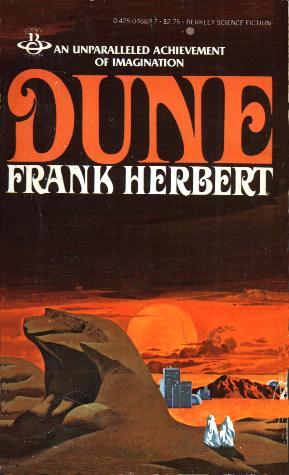
Dune cover art [Image courtesy: Book Wit]

Dune won the very first Nebula Award and was the co-winner of the Hugo Award. Published in 1965 it sets the scene for the Dune Series that follows — a series that is often considered the Lord of the Rings of Science Fiction. “Set on the desert planet Arrakis, Dune is the story of the boy Paul Atreides, who would become the mysterious man known as Muad’Dib. He would avenge the traitorous plot against his noble family–and would bring to fruition humankind’s most ancient and unattainable dream.” [Amazon.com review]

” Dune was the first ecological science fiction novel, containing a multitude of big, inter-relating themes and multiple character viewpoints, a method which ran through all Herbert’s mature work. ” [Biblio.com]

Dune Messiah hit stores in 1969.   Children of Dune (1976)  was the first hardcover science fiction book to reach best-seller status. It was nominated for a Hugo Award.   And the spice kept flowing… God Emperor of Dune,  came out in 1981, followed by Heretics of Dune in 1984 and Chapterhouse: Dune in 1985.

Frank Herbert died of pancreatic cancer in 1986. But the Dune series lives on…Using Frank Herbert’s notes his son  Brian Herbert has co-authored additional Dune sequels with Kevin J. Anderson.

Frank Herbert Books
Frank Herbert Books (Photo credit: cobalt123)

Related articles


Thought of the Day 10.8.12 Frank Herbert

“There is no real ending. It’s just the place where you stop the story.”
–Frank Herbert

[Image courtesy: Otras musicas]


Frank Herbert was born on this day in Tacoma, Washington, USA in 1920. Today is the 92nd anniversary of his birth.

Frank’s mother came from a large Irish Catholic family (10 girls; 3 boys) (his invention of the Ben Gesserit for the Dune universe was likely an off shoot of the deep influence this gaggle of Aunts had on young Herbert’s life.) Frank’s father was a bus driver,  security guard, salesman, motorcycle patrolman and farmer. The family did a lot of traveling around before they settled on the farm.

Young Frank knew what he wanted be early in life.

On the morning of his eighth birthday Frank Junior famously announced to his family: “I wanna be a author.” (sic.) That day he wrote his first short story, which he called “Adventures in Darkest Africa.”  [Frank Herbert: The Works]

He was an explorer who thought nothing of paddling solo around Puget Sound to the San Juan Islands and back (200 miles) when he was ten or swimming across the Tacoma Narrows. He was also a great reader. “By the age of 12 he had, incredibly, already read the complete works of Shakespeare and discovered Ezra Pound.” [Frank Herbert: The Works]

Both Herbert’s parents were alcoholics and their drinking worsened as Frank entered his teen years. His sister, Patricia, was born when Frank was 13  and he took on parenting duties. By 1935 his parents were on the verge of a divorce. During high school he worked at his writing. He wrote short stories — he even wrote  novel, a boilerplate western, that he published under a pen name. He got a part-time job at the Tacoma Ledger. But by November of 1938 the situation at home had become too much. He left home with his baby sister and went to live with an aunt and uncle in Salem, Oregon. He graduated from North Salem High School and became a newspaper journalist. After a stint as a Photographer in the US Navy during WWII (he received a medical discharge because of a cranial blood clot he  developed after a fall)  he returned to Oregon and worked as a copy editor for the Oregon Journal in Portland. He worked for a number of west coast newspapers in a variety of cities for next two decades.

Besides his work in journalism: he lectured at University of Washington; he was a social and ecological consultant in Vietnam and Pakistan; and he wrote, directed and produced the documentary “The Tillers” based on the work of Roy Posterman.

[Image courtesy: Poor William’s Almanack]


Success on the fiction front was more difficult to come by. He had short stories published — his first was “The Survival of the Cunning,” a war story published in Esquire magazine.  In 1952 Herbert published his first science fiction story, “Looking For Something,” in Startling Stories. It is about a stage hypnotist who discovers that the entire world is under alien hypnosis. Other short stories followed, but no publishers seemed interested when Herbert showed them Dune.

The Dragon in the Sea
The Dragon in the Sea (Photo credit: Wikipedia)


In 1956  Herbert’s first novel, The Dragon in the Sea was published. It had been serialized in Astounding Magazine as”Under Pressure“.

 “he used the environment of a 21st-century submarine as a way to explore sanity and madness. The book predicted worldwide conflicts over oil consumption and production. It was a critical success, but it was not a major commercial one.”  [Biblio.com]

While working on an article about sand dunes for the US Department of Agriculture in Florence, Oregon he got the idea of a sand dune so big that it could swallow up whole cities. In 1965, Dune was finished, a labor of love more than six years in the making. It was serialized in the magazine Analog then largely revised and expanded into book form. It was rejected 20 times before little Chilton Books — an auto repair manual publisher —  took a chance on it.

Dune cover art [Image courtesy: Book Wit]


Dune won the very first Nebula Award and was the co-winner of the Hugo Award. Published in 1965 it sets the scene for the Dune Series that follows — a series that is often considered the Lord of the Rings of Science Fiction. “Set on the desert planet Arrakis, Dune is the story of the boy Paul Atreides, who would become the mysterious man known as Muad’Dib. He would avenge the traitorous plot against his noble family–and would bring to fruition humankind’s most ancient and unattainable dream.” [Amazon.com review]

Dune was the first ecological science fiction novel, containing a multitude of big, inter-relating themes and multiple character viewpoints, a method which ran through all Herbert’s mature work. ” [Biblio.com]

Dune Messiah hit stores in 1969.   Children of Dune (1976)  was the first hardcover science fiction book to reach best-seller status. It was nominated for a Hugo Award.   And the spice kept flowing… God Emperor of Dune,  came out in 1981, followed by Heretics of Dune in 1984 and Chapterhouse: Dune in 1985.

Frank Herbert died of pancreatic cancer in 1986. But the Dune series lives on…Using Frank Herbert’s notes his son  Brian Herbert has co-authored additional Dune sequels with Kevin J. Anderson.

Frank Herbert Books
Frank Herbert Books (Photo credit: cobalt123)


Thought of the Day 10.7.12 John Cougar Mellencamp

“Forget all that macho shit, and learn how to play guitar.”
–John (Cougar) Mellencamp

Cover of "American Fool (Rpkg)"

Cover of American Fool (Rpkg)

John Mellencamp was born on this day in Seymour, Indiana, USA in 1951. He is 61 years old.

He had spinalbifida as baby. With a growth the size of a man’s fist on the back of his neck that was removed during a day-long operation when he was  three weeks old. His house was filled with music growing up, and Mellencamp learned to play guitar. He was troublemaker at school who drank, smoked, cursed and trolled for girls.

Mellencamp is first and foremost an American storyteller. His classic song Jack and Diane starts out “Little ditty about Jack and Diane /Two American kids growin up in the heartland…” He might as well have begun Once upon a time in a small town in the midwest.

“His songs document the joys and struggles of ordinary people seeking to make their way, and he has consistently brought the fresh air of common experience to the typically glamour-addled world of popular music.” [–Anthony DeCurtis]

He played in bands with names like “Crepe Soul,” “Trash,” “Snakepit Banana Barn” and “the Mason Brothers.” He spent more time partying and playing music than studying so he didn’t do well in school. At 18 he eloped with his older pregnant girlfriend while still a Senior in high school.

He worked odd jobs and took classes at community college, Vincennes, University where he binged on drugs and alcohol while listening to Roxy Music. But by 1974 he’d graduated from Vincesse, sobered up, and got serious about his career.

He cut a four song demo tape and moved to New York City. It took 18 months to get a manager,  Tony DeFries, and land a record deal, with MCA Records. DeFries is the one who came up with the idea of changing his Mellencamp’s last name to Cougar. It was all part of the pre-packaged “rebel” rock star that DeFries was putting together. And it was something Mellencamp didn’t know about until he saw the proofs for the album art  emblazoned with “Johnny Cougar.” No one, DeFries, thought, would buy records from some guy named Mellencamp. Thus Chestnut Street Incident, Johnny Cougar‘s first album was pressed in 1976 by MCA. The album was a mix of cover tunes and originals. It was hardly a chart topping effort and MCA declined to release a second album (The Kid Inside — it was released after Mellencamp made it big.) and “Cougar” and DeFries parted ways.

Mellencamp  signed  with Billy Gaff and release the album “A Biogrpahy” by Riva Records overseas. The single I Need a Lover  became a hit in Australia, and Pat Benatar had a top 40 hit with her cover of the tune. It became the single from his next U.S. album John Cougar.

He embraced his bad boy, rebel reputation with his next album and was rewarded with first top 40 album with Nothing Matters and What if It Did.

In American Fool he stripped away the pre-packaged pop of the Johnny Cougar /Chestnut Street Incident sound and went with two guitars, a bass and a drum to back up his raw, honest vocals. He found his voice as a singer songwriter and Jack and Diane were born. Other cuts from American Fool include: Hurt So Good and Hand to Hold On To.

Here is Hurts Good:

Pink Houses and Crumblin’ Down, two singles of Mellencamp’s 1983 album Uh-Huh hit #8 and #9 on the Billboard Top Ten.


Crumblin' Down

Crumblin’ Down (Photo credit: Wikipedia)

With Scarecrow he began to mix social issues with the music. The album was dedicated to his grandfather and sold 5 million copies. Singles Lonely Ol’ Night, R.O.C.K. in the U.S.A, and Small Town cracked the top 10 charts while  Rain on the Scarecrow became an American anthem.

Here’s Lonely Ol’ Night:

Mellencamp became active in helping farmers keep their farms when he worked with Willie Nelson and Neil Young to create FARM AID. Using the LIVE AID (see the 10.5.12 Thought of the Day on Bob Geldof ) Mellencamp et al held concerts to help American farmers who faced foreclosure. The first concert was in Champaign, Illinois on September 25, 1985 and raised over $9 million. Mellencamp and Nelson worked to bring farmers to US Congress to testify about plight of farmers, resulting in the Agricultural Credit Act. The effort continues, with the organizers coming together for annual concerts, and the organization (of which Mellencamp is a board member) establishing an emergency hot line for farm disaster relief when an area is hit with natural disaster.

Here’s Mellencamp performing Rain On The Scarecrow at Farm Aid 2008

For Lonesome Jubilee he added fiddle and backing vocals to his four piece band sound. The album garnered the hit singles  Paper in Fire, Check It Out and Cherry Bomb. It reached #1 on the Canadian Charts and #6 on US Billboard 200. 

Cover of "Lonesome Jubilee (Rpkg)"

Cover of Lonesome Jubilee (Rpkg)

After Big Daddy he stepped away from the music industry for three years and  took up a different artistic pursuit, painting. He used some of that art on the cover of his next album, Whenever We Want It.

While touring to promote his 1994 Dance Naked album he had a heart attack. Mellencamp smoked 5 packs prior to the attack. He started to eat a heart healthy diet and started to exercise and reduced the number of  cigarettes he smokes (but can’t seem to give them up all together.)

Mellencamp sept2000

Mellencamp sept2000 (Photo credit: Wikipedia)

He has put out 22 albums thus far and was inducted into the Rock and Roll Hall of Fame in 2008


“He’s painted little movies, little stories … a slice of America”  Kenny Aronoff, Mellencamp’s Drummer [A&E Biography]


Oh, you didn’t really think I’d leave you with out a little Jack and Diane, did you?


Thought of the day 10.6.12 David Brin

“When it comes to privacy and accountability, people always demand the former for themselves and the latter for everyone else.”
David Brin

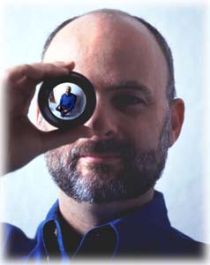
[Image courtesy: Scientific American.com]

David Brin was born on this day in Glendale, California, USA in 1950. He is 61 years old.

Brin is a graduate of the California Institute of Technology where he majored in astrophysics. He earned a Masters in applied physics and Doctor of Philosophy in space science from the University of  California, San Diego.

He is a consultant for NASA and the writer of  hard science fiction.

Brin serves on advisory committees dealing with subjects as diverse as national defense and homeland security, astronomy and space exploration, SETI and nanotechnology, future/prediction and philanthropy. His non-fiction book — The Transparent Society: Will Technology Force Us to Choose Between Freedom and Privacy? — deals with secrecy in the modern world. It won the Freedom of Speech Prize from the American Library Association. [The Worlds of David Brin]

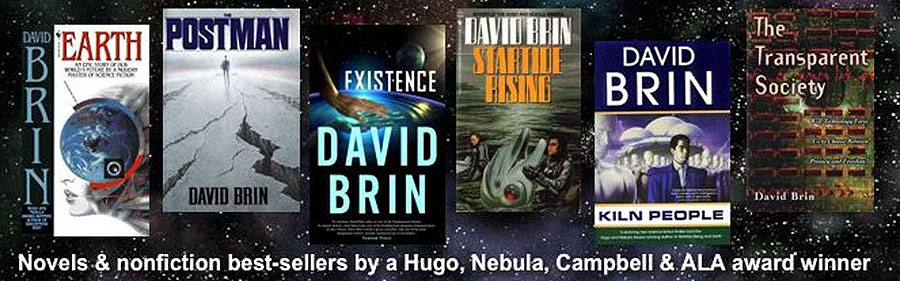
Some of Brin’s book covers. [Image courtesy: The worlds of David Brin]

Brin won two Hugo Awards for his Uplift series. The “Uplift Universe explores a future when humans genetically engineer higher animals like dolphins to become equal members of our civilization.” [The Worlds of David Brin] The books in the series are: Sundiver, Startide Rising (which won the Hugo, Locus and Nebula awards,) The Uplift War (which won the Hugo  and Locus awards) and The Uplift Trilogy: Brightness Reef, Infinity’s Shore and Heaven’s Reach.

Other books he’s written include:

  • The Postman (which won  a Campbell and Locus Award and — after some major reworking– was made into a movie starring Kevin Costner.)
  • Earth (which ” foreshadowed global warming, cyberwarfare and near-future trends such as the World Wide Web” [The Worlds of David Brin])
  • Kiln People (“a fast-moving and fun noir detective story, set in a future when new technology enables people to physically be in more than two places at once.”[The Worlds of David Brin])
  • Foundation’s Triumph (a book that “brings a grand finale to (Isaac) Asimov’s famed Foundation Universe.”  [The Worlds of David Brin]
  • Sky Horizon (Winner of the Hal Clement Award for Best Sci Fi for young readers.)
  • Existence (“Existence – is set forty years ahead, in a near future when human survival seems to teeter along not just on one tightrope, but dozens, with as many hopeful trends and breakthroughs as dangers… a world we already see ahead.” [Amazon.com]

He has a trio of Graphic Novels on the shelf: Forgiveness (A Star Trek the Next Generation graphic novel), The Life Eaters (a graphic novel that loooks at what the world would be like if WWII had ended differently) and Tinkerers.

On the nonfiction front Brin has written : The Transparent Society: Will Technology Force Us to Choose Between Privacy and Freecom?  (Won the Freedom of Speech Award) and Star Wars on Trail: Science Fiction and Fantasy Writers Debat the Most Popular Science Fiction Films of All Time.

[Image courtesy: The Worlds of David Brin]

He’s also written novels for young adults, short stories, and a plethora of articles (both fiction and non fiction) like the excellent guest blog in Scientific American  “Too Hard For Science?”
http://blogs.scientificamerican.com/guest-blog/2011/04/29/too-hard-for-science-david-brin-raising-animals-to-human-levels-of-intelligence/


Thought of the Day 10.5.12 Bob Geldof

“It’s really very simple, Governor. When people are hungry they die. So spare me your politics and tell me what you need and how you’re going to get it to these people.”
Bob Geldof

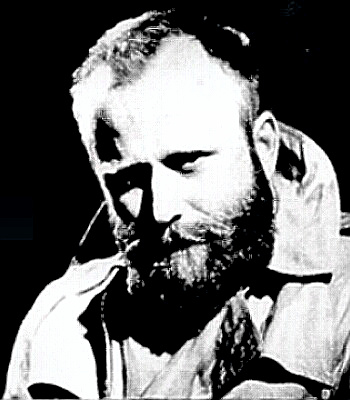
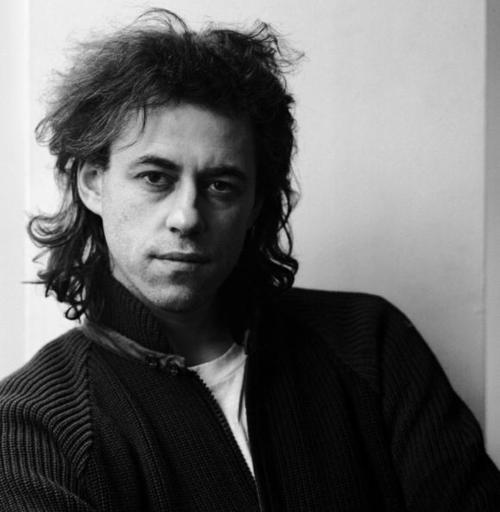
[Image courtesy: LastFM]

Robert Frederick Zenon Geldof was born on this day in Dun Laoghaire, County Dublin, Irelandin 1951. He is 61  years old.

After graduating from Black Rock College in Ireland, Geldof travelled to Canada to work as a journalist. In 1975 he co-founded the Dublin based punk band The Boomtown Rats for which he was the lead singer.  Rat Trap was their first #1 song on the New Wave charts in the UK. I Don’t Like Mondays brought the group international fame.

The band’s video  that song and for Up All Night scored high with MTV [Remember when MTV actually was known for introducing new music via music videos?]

Geldof as Pink in a still from Pink Floyd The Wall [Image courtesy: HQRock]

In 1982  Geldof played Pink in the movie Pink Floyd the Wall. 

Geldof  parted ways with the Rats in 1986 and sent solo. He co-wrote the beautiful This the World Calling with the Eurthmics’ Dave Stewart.

He worked with a variety of artist and continued to collaborate with David Gilmour of Pink Floyd. He sang Too Late God at the Freddie Mercury Tribute Concert (he co-wrote the tune with Mercury.)

Starting in the early 80s he performed in benefits like the Secret Policeman’s Ball for Amenesty International. By 1984 he came up with the idea of bring the pop music industry together for a concert to aid famine relief in Ethiopia. He co-wrote Do They Know It’s Christmas? With Midge Ure of Ultravox and brought together a supergroup of pop artist under the name Band Aid to the Sarm West Studios to record it.  The song eventually raised over 8 million pounds.

In July of 1985 Geldof and Ure expanded on the idea of Band Aid with a broadcast concerts, Live Aid. The concerts took place both in the UK, at Wembley Stadium, and in the US, at Philadelphia’s Kennedy Stadium. The BBC carried the whole thing live — all 16 hours of it. Geldof’s passionate, angry plea/demand for money helped the event raise over 150 million pounds in famine relief.  Live Aid set the standard for benefit concerts to come.

Geldof was knighted for his efforts.

Along with fellow rocker, Bono, he continues to work toward debt relief for developing countries. He is a member of the African Progress Panel, a watch dog group that keeps world leaders focused on their commitments to the African continent.

Bob Geldof at the Headquarters of the Internat...

Bob Geldof at the Headquarters of the International Monetary Fund in Washington, DC. (Photo credit: Wikipedia)