Category Archives: World War Two

Thought of the Day 9.12.12 H.L.Mencken

“Love is the triumph of imagination over intelligence.”

— H. L. Mencken

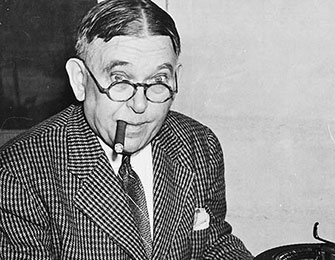
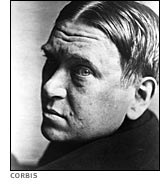
The Sage of Baltimore. [Image courtesy: The American Mercury]

Henry Louis Mencken was born on this day  in Baltimore, Maryland in 1880. Today is the 132nd anniversary of his birth.

Mencken lived in the same house in the Union Square neighborhood of the city for all but 5 years of his life. At 9 he read Huckleberry Finn by Mark Twain and knew he wanted to become a writer. His family had other ideas.

His grandfather had prospered in the tobacco business and his father, August, continued the family tradition. Mencken studied at the Baltimore Polytechnic Institute (1892-96) and then worked at his father’s cigar factory. [Books and Writers]

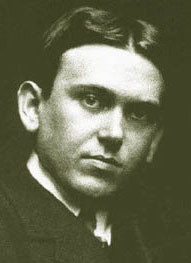
[Image Courtesy: Wikimedia Commons]

He worked for 3 years at the family owned business and would have stayed indefinitely, but upon his father’s death in 1899  Mencken was “free to choose his own trade in the world.”

Within a week, Mencken “invaded” the city room of the old Baltimore Morning Herald to face down the city editor and ask for a job…There were no jobs that day, but Mencken, persistent, returned daily for two weeks. “Finally I was sent out on a small assignment — it was a stable robbery at Govans — and a few days later I was on the staff,” [H.L. Mencken, Pioneer Journalist, By Jacques Kelly The Baltimore Sun]

His skill as a writer and his reputation for being able to turn a phrase grew. So 6 years later when the Herald closed its doors Mencken applied for a position at the larger Baltimore Sun.  He started at “The Sun as its Sunday editor, became an editorial writer, and in 1911 started writing his own column, the Free Lance Mencken.”  He worked at The Sun until 1948, bring his unflinching wit and critical eye to everything he saw.

“I believe that a young newspaper reporter in a big city… led a live that has never been matched… for romance and interest.” [Mencken from his only known audio interview. Courtesy of: The American Mercury.com]/

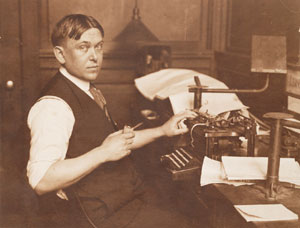
Mencken at work. [Image Courtesy: Enoch Pratt free Library Digital Collections.]

He was a war correspondent in Germany and Russia from 1916 to 1918. During WWI Mencken was pro-German (a very unpopular thing to be in patriotic Baltimore of 1917).

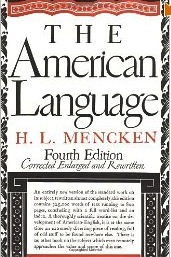
In 1919 he published The American Language, a guide to American expressions and idioms.

From 1914 to 1923 Mencken co-edited with drama critic George Jean Nathan (1882-1958) the Smart Set, which mocked everything from politics to art, universities to the Bible…[Books and Writers]

He preferred realism to modernism and he helped the careers of Sinclair Lewis, Dorothy Parker and Eugene O’Neill.

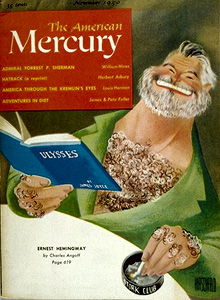
Cover of the American Mercury [Image Courtesy: Wikipedia]

He started The American Mercury monthly magazine, working on the magazine from 1924 t0 1933.

A stroke in 1948 left him nearly unable to read or write. Speaking took a lot of effort, and he grew easily frustrated. He spent his remaining days organizing his papers and letters (which can now be found in H.L. Mencken Room and Collection at the Central Branch of the Enoch Pratt Free Library on Cathedral Street in Baltimore.

[Image courtesy: MPT]

Here are a few more quips from the Sage of Baltimore:

  • “A cynic is a man who, when he smells flowers, looks around for a coffin.”
  • “Nature abhors a moron”
  • “Do not overestimate the decency of the human race”
  • “A man loses his sense of direction after four drinks; a woman loses hers after four kisses”
  • “Love is like war; easy to begin but very hard to stop”
  • “It is a sin to believe evil of others, but it is seldom a mistake.”
  • “Conscience is the inner voice that warns us somebody may be looking.”
  • “You come into the world with nothing, and the purpose of your life is to make something out of nothing”
  • “Most people are unable to write because they are unable to think, and they are unable to think because they congenitally lack the equipment to do so, just as they congenitally lack the equipment to fly over the moon.”
  • “I believe that it is better to tell the truth than a lie. I believe it is better to be free than to be a slave. And I believe it is better to know than to be ignorant.”

Thought of the Day 9.1.12 Edgar Rice Burroughs

“I write to escape…to escape poverty.”

Edgar Rice Burroughs

Русский: Эдгар Райс Берроуз

Edgar Rice Burroughs (Photo credit: Wikipedia)

Edgar Rice Burroughs was born on this day in Chicago, Illinois in 1875. Today is the 137th anniversary of his birth.

He was the middle child Major George Burroughs and his wife Mary Evaline. His younger siblings died of childhood diseases, leaving him the baby of the family. He bounced around several different local schools. Whenever there was an outbreak of a disease his parents took him out of one school and put him in another.  Since schools taught Latin and Greek as well as English he later …

“his erratic schooling… resulted in his … learning little English while taking the same Greek and Latin courses over and over again. Despite his claims to the contrary, this early exposure to Classical literature and mythology would serve Burroughs well in his future writing career.” [The Official Edgar Rice Burroughs Mini-Bio]

When a flu epidemic swept through Chicago his parents sent a teenaged Edgar to his brothers’ cattle ranch in Idaho. He love the rough and tumble “wild west”  with its range wars and saloon shoot outs and he lived there for six months before his parents realized the danger of  frontier life was on par with the danger of getting influenza. They called him home and enrolled him in Phillips Academy in Andover, Massachusetts. He didn’t last long there and was soon transferred to the more structured  Michigan Military Academy. He failed the West Point entrance exam  and signed up for the Army  as a private where he served with the 7th US Cavalry at Fort Grant, Arizona Territory. He was discharged from the Army for a heart condition in 1897.

In 1899 he was back in Chicago working for his father ‘s company, and the next year he married his childhood sweetheart, Emma Hulbert. After a few years he and Emma travelled west to Idaho so he could try his luck with his brothers again, this time at gold mining. But that venture soon went bust and Burroughs went through a number of jobs from railway policeman to peddler for quack medicine.

One of his jobs was as a pencil sharpener wholesaler. He placed ads for the pencil sharpeners in pulp fiction magazines and he would read through the magazines to check the placement of the ads.

“After reading several thousand words of breathless pulp fiction Burroughs determined … that ‘if people were paid for writing rot such as I read in some of those magazines that I could write stories just as rotten. As a matter of fact, although I had never written a story, I knew absolutely that I could write stories just as entertaining and probably a whole lot more so than any I chanced to read in those magazines.'” [The Official Edgar Rice Burroughs Mini-Bio]

Cover of "Under the Moons of Mars: A Prin...

Cover via Amazon

In fact he had already written stories, but his introduction into the pulp fiction market with Under the Moons of Mars,  for which he received a whopping $400 from All-Story magazine, was a turning point in his career. The story was serialized  in the magazine and produced as a novel under its original name of A Princess of Mars. By the time the last installment was published in July of 1912 Burroughs had completed two more novels. The Outlaw of Torn and Tarzan of the Apes. Outlaw was not picked up by the publisher, but Tarzan was an immediate hit. Burroughs got $700 for the book. He wrote a number of sequels for both Mars (11, including John Carter of Mars) and Tarzan (26).

Dustjacket by Armstrong Sperry for the first e...

Dustjacket by Armstrong Sperry for the first edition of Tarzan and the Lost Empire by Edgar Rice Burroughs (Photo credit: Wikipedia)

Other book series by Burroughs includes:

  • The Pellucidar series, which takes place in the hollow shell of the Earth (7 books, including one featuring a cross over appearance from Tarzan).
  • The Venus series, where Carson Napier, who is attempting a solo flight to Mars, crash lands instead on the watery planet of Venus. — look for a film made from the series coming out next year. (5 books)
  • The Caspak series, a prehistoric series, including The Land That Time Forgot (3 books)

He crossed writing genres at will penning social realism, horror stories, and westerns (and more).

Burroughs was living in Honolulu,  Hawaii when the Japanese bombed Pearl Harbor on December 7, 1941. He volunteered  to serve the war effort as a war correspondent  (the oldest in the Pacific theatre).

He died on March 19, 1950.

English: Bookplate of American writer Edgar Ri...

English: Bookplate of American writer Edgar Rice Burroughs (1875-1950) showing Tarzan holding the planet Mars, surrounded by other characters from Burroughs’ stories and symbols relating to the author’s personal interests and career. Associated media: File:Letter from Edgar Rice Burroughs to Ruthven Deane 1922.jpg explaining the design of his bookplate. (Photo credit: Wikipedia)


Thought of the Day 8.31.12 William Saroyan

“I can’t hate for long. It isn’t worth it.”

“The role of art is to make a world which can be tolerated.”

“Try as much as possible to be wholly alive, with all your might, and when you laugh, laugh like hell and when you get angry, get good and angry. Try to be alive. You will be dead soon enough.”

–William Saroyan

William Saroyan, American writer.

William Saroyan, American writer. (Photo credit: Wikipedia)

William Saroyan was born on this day in Fresno, California in 1908. Today is the 104th anniversary of his birth.

William was the youngest son of Armenian immigrant parents. His father died when he was 3 years old. William and his siblings went to the Fred Finch Orphanage in Oakland while their mother, Tahooki, found what work she could in San Francisco.  Six years later the family reunited as Tahooki got permanent work at a cannery in Fresno. He didn’t like school. The work was boring and he was picked on because he was the son of an immigrant. But he liked to learn, he liked to read and he like to write. He took advantage of the Fresno public library’s book collection and he took a course on typing at the Technical School. He sold newspapers to help with family finances, and worked his way up to messenger boy with a telegram company.

He travelled around the country hoping to become the next big American writer, but luck wasn’t with him (one time his suitcase, with most of his money and clothes inside, wound up in New Orleans instead of with him in New York.) So Saroyan returned to California and took a string of uninspiring jobs from working in a funeral parlor to selling vegetables at a farmers market. All the time he was writing on the side.

In 1933 he started to get published. His earned $15 when his short story The Daring Young Man on the Flying Trapeze appeared in the national magazine Story. Encouraged by the publication he decided to send the magazine one story a day for the entire month of January.

This he proceeded systematically to do, still full of the usual doubts that harass the unestablished writer, but determined to carry through the ambitious work program in as positive frame of mind as possible. He began with no firm ideas as to what the stories would be about… Midway through the month a telegram… arrived from the editors with the message he needed: yes, the stories were being received with great interest — keep them coming! This was the decisive moment of acceptance, marking the end of his long apprenticeship…. [Brian Darwent, William Saroyan Society, Biographical Sketch]

Other, higher paying, magazines began to take an interest. His stories appeared in The American Mercury, Harper’s, Scribner’s and others. A collection of his short stories was published by Random House in 1934 and became a best seller.

He traveled overseas, making a pilgrimage to his father’s homeland of Armenia. (He couldn’t make it as far his father home town, which was now a part of Turkey, but he did get to Erivan, Soviet Armenia.) Along the way he met Charlie Chaplin, George Bernard Shaw and Finnish composer Jean Sibelius.

He added playwriting to his skill list  in 1939 with My Heart’s in the Highlands. The play centers around a struggling Arminian American poet and his son Johnny.  His second play The Time of Your Life won a Pulitzer Prize (which Saroyan refused) and The New York Drama Critic’s Circle Best Play award (which he accepted.)  It takes place in Nick’s Pacific Street Saloon and centers around a wealthy young man named Joe and a bar full of colorful characters. The play has been revived several times on Broadway and in LA, and has been made into a big screen movie, with James Cagney and a Playhouse 90 television movie with Jackie Gleason.

First edition cover

First edition cover (Photo credit: Wikipedia)

The Human Comedy was produced by MGM Studios. Saroyan was under contract with Louis B. Mayer and he wrote and directed a short film called The Good Job as well as the 4.5 hour screen play for The Human Comedy (which Mayer turned over to another writer to edit down.) Saroyan also wrote a novel  on the same material that came out the same week as the film. The sentimental story was based on his life growing up as an immigrant in Fresno and it won an Oscar for the writer.

After WWII his writing career cooled. He was considered to sentimental and sugary for the harder edged, post-war critics.

 Saroyan praised freedom; brotherly love and universal benevolence were for him basic values, but with his idealism Saroyan was considered more or less out of date. [Books and Writers]

But he continued to write prolifically. In 1952 he published his memoir The Bicycle Rider in Beverly Hills.

Just before he died of cancer in 1981 he called the Associated Press quipping “Everybody has got to die, but I have always believed an exception would be made in my case. Now what?”

Stanford University has a large collection of his works and the author is celebrated by the William Saroyan Society. 

William Saroyan statue, Yerevan

William Saroyan statue, Yerevan (Photo credit: tm-tm)


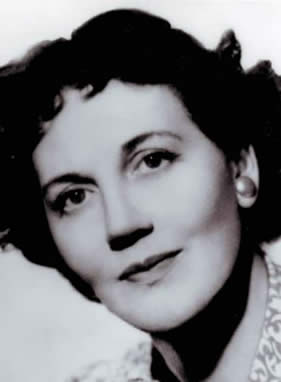
Thought of the Day 8.28.12 Mary Norton

“I’m no lady; I’m a member of Congress, and I’ll proceed on that basis.”

–Mary Norton

Kathleen Mary Pearson was born on this day  in London, England in 1903. It is the 99th anniversary of her birth.

The Cedars, Church Square at the end of the Hi...

The Cedars, Church Square at the end of the High Street in Leighton Buzzard, Bedfordshire, England. Built in 1855 for Mr. John Dollin Bassett. Designed by W. C. Read. Current location of Leighton Middle School, and occupied by Cedars Upper School until 1973. Location: OSGB36: SP 919 249, WGS84: 51:54.9192N 0:39.8815W (Photo credit: Wikipedia)

She grew up in a large Georgian style house, called The Cedars, in Bedfordshire. She used the house as inspiration for her setting of The Borrowers.

During World War II she worked for the War Office and in 1941 she moved to New York as part of the British Purchasing Commission. It was while she was in New York that she started to write.

Cover of "Bonfires and Broomsticks"

Cover of Bonfires and Broomsticks

In 1943 she published The Magic Bed Knob; or, How to Become a Witch in Ten Easy Lessons. The book sold well and Norton followed it up with Bonfires and Broomsticks. The books were turned into a 1971 Disney film called Bedknobs and Broomsticks that combined live action with animation (something the studio first did in Mary Poppins.) The movie starred  Angela Lansbury as a novice witch determined to use her powers to help England in the war effort. It featured the charming music number “Portobello Road,” a memorable soccer game between wild (animated) animals, and concluded with an army (live action) of suits of army fighting the invading Germans.

In 1946 she married Robert Charles Norton with whom she had 4 children.

The Borrowers (TV miniseries)

The Borrowers (TV miniseries) (Photo credit: Wikipedia)

In 1952 the first installment of her wildly popular The Borrowers series was published. It was followed by five more Borrowers novels. The books have been made into numerous stage shows,  movies and TV series.

Cover of "Are All the Giants Dead?"

Cover of Are All the Giants Dead?


In 1975 she wrote Are All the Giants Dead?


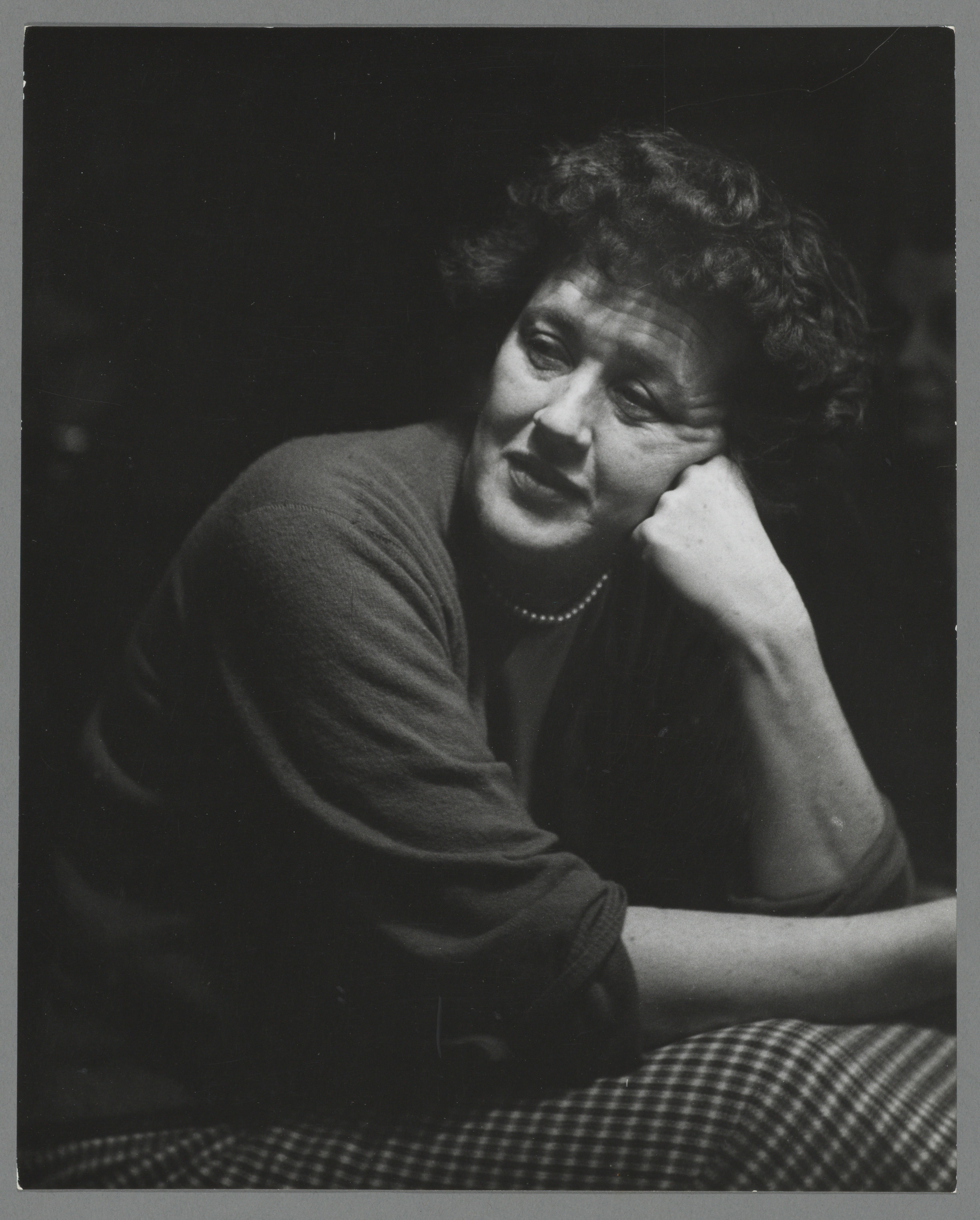
Thought of the Day 8.15.12 Julia Child

“The only time to eat diet food is while you’re waiting for the steak to cook”

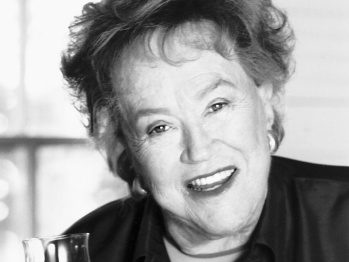
Julia Child

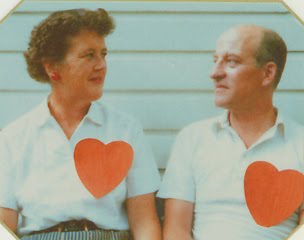
Julia McWilliams was born on this day in Pasadena, California in 1912. Today is the 100th Anniversary of her birth.

“Juju” was the oldest of three children in the McWilliams household. Their father was a real estate magnet, their mother a paper-company heiress and daughter of a lieutenant governor of Massachusetts. Julia was vivacious, athletic (she was 6’2″ by the time she graduated the exclusive Katherine Branson School for Girl’s in San Francisco) and loved a good laugh. She studied writing at Smith College and worked in advertising after graduation.

During WWII Julia tried to join the Woman’s Army Corps, but she was too tall to be a WAC, so she volunteered at the OSS, a government intelligence agency. She started as a typist in Washington but worked her way up to researcher for Top Secret intelligence. She worked overseas in China and Sri Lanka. The SPY Museum in Washington DC included a display on Julia’s time in the OSS as part of their collection. In 2009 they held a special event featuring Child’s Coq au Vin and a talk about the chef’s life as a spy.

While she was in Sri Lanka on assignment she met fellow OSS employee Paul Child and the two began to date. In 1946 Paul and Julia were married. When Paul, now in the US State Department, was assigned to Paris the couple moved to France.

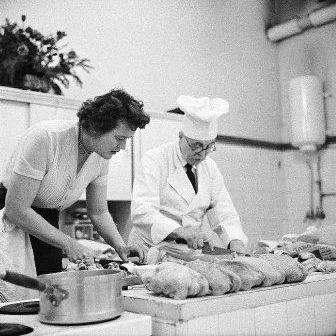
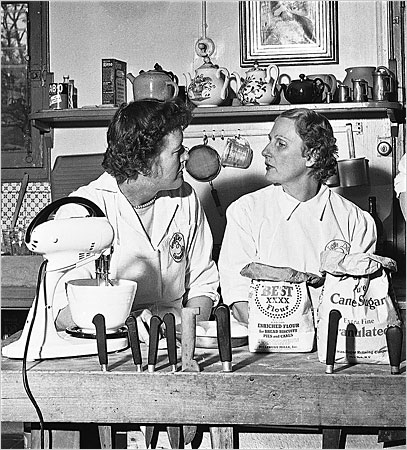
Julia loved food and loved a challenge, so she started to take classes at the Cordon Bleu cooking school. After graduation she worked with her colleagues Simone Beck and Louisette Bertholle to start The School of the Three Gourmands for American women in Paris. The three started to write a cookbook that would translate French cuisine to the American kitchen. After a lot of hard work and many revisions that cookbook became Mastering the Art of French Cooking, a best selling cookbook that changed the way people looked at French cuisine.

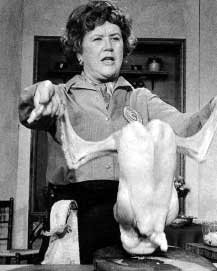
When Julia promoted the book by cooking an omelet on-air  at her local PBS station the response was so good that they offered her  her own cooking show for $50 a pop.  The French Chef premiered on WGBH Boston in 1962. It was the first cooking show on PBS. It ran for 10 years  and was syndicated nation wide. The show won a Peabody and Emmy award (Julia was first educational television personality to receive an Emmy. In her career she was nominated for a total of eight and won three). In 1966 Time Magazine anointed Julia as a culinary goddess by putting her on the cover with the title “Our Lady of the Ladle.” A dozen more TV shows (with bigger budgets) followed. You can still catch reruns of Baking with Julia on PBS. She used 753 pounds of butter during the filming of that series alone.

She wrote sixteen more cookbooks, most  were associated with her television series.

She was awarded the Presidential Medal of Freedom by President Bush in 2003. Her autobiography My Life in France was published posthumously. Her kitchen, designed by her husband Paul, is now installed at the Smithsonian Institute’s National Museum of American History in Washington DC.

Blogger Julie Powell digested the  Mastering the Art of French Cooking, working her way — recipe by recipe– through the  752 page book in one year. She documented the journey in a book, Julie and Julia: 365 Days, 524 Recipes, 1 Tiny Apartment Kitchen (which was then made into a movie, Julie & Julia starring Meryl Streep in 2009.)

“Something came out of Julia on television that was unexpected… it was just magical.  You can’t fake that. You can’t take classes to learn how to be wonderful. Our food culture is the better for it. Our stomaches are the better for it. ” — Julie Powell

This week restaurants are celebrating Julia’s 100th birthday by  featuring some of her most famous recipes.


thought of the Day 8.13.12 Alfred Hitchcock

“If it’s a good movie, the sound could go off and the audience would still have a perfectly clear idea of what was going on.”

Alfred Hitchcock

Alfred Hitchcock Presents

Alfred Hitchcock Presents (Photo credit: twm1340)

Alfred Joseph Hitchcock was born on this day in Leytonstone, England in 1899. Today is the 113th anniversary of his birth.

He grew up as the middle child of three siblings in a very strict family. When he was a little boy his father once sent him with a note to the town police station. The note asked the constable to lock Alfred up for a jail term of 10 minutes as punishment for bad behavior. The possibly apocryphal story ended with the policeman putting 5-year-old Alfred in a cell for a few minutes before letting him out with a stern warning that “this is what we do to naughty boys.” It was a bit more fire and brimstone guilt heaped on top the boys already strict Catholic upbringing.

He attended St. Ignatius College and London County Council School of Engineering and Navigation. He was rejected for service in WWI because of his health, but served as a cadet with the Royal Engineers. He worked for a company called Henley’s as a draftsman and advertising designer. The company had an in-house publication, The Henley Telegraph, and Hitchcock became one of its most prolific contributors. His stories were generally suspenseful, funny and usually ended with a twist.

His first foray into films was as a title card designer for the nascent Paramount Pictures (London) where he designed title cards for silent movies. He worked for a number of studios at the start of his career and began to write for the movies in the early 1920’s. He did work in Germany where he observed the expressionistic style at Babelsberg Studios. His directorial debut was a bit of a fizzle as Number 13 (1924) was cancelled before it the film got in the can for financial reasons, The Pleasure Garden was flop, and all prints for The Mountain Eagle  have been lost.

Cover of "The Lodger"

Cover of The Lodger

In 1926 Hitchock had his first directorial success with The Lodger: A Story of the London Fog. His first talkie was Blackmail, which he made while working with British International Pictures. It was also the first of Hitchcock’s films to use a famous landmark (this time the dome of the British Museum) as a back drop. Other Hitchcock films from the period are The Man Who Knew Too much (1934) and the excellent 39 Steps.  He was the highest-paid director in England and earned the nick name “Alfred the Great.”

In 1939, as the specter of war loomed again in Europe, Hitchcock was lured to Hollywood to work for David O. Selznick. He directed a film based on the Daphne du Maurier  book  Rebecca (the film won an Oscar). He worked steadily and successfully through out the 1940s for a number of Hollywood studios, producing movies like Lifeboat (1944), Spellbound (1945), and Notorious (1946) .

Rope (1948) was the first movie he made in color. It starred Jimmy Stewart (Stewart would star in four Hitchcock films) and featured long tracking shots that ranged from 4.5 to 10 minutes. (10 Minutes was the maximum a camera could hold at one time.) The necessary cuts were “hidden”  as a dark object came in front of the lens. The result was a seamless story.

Cropped screenshot from the trailer for the fi...

Cropped screenshot from the trailer for the film Rear Window (Photo credit: Wikipedia)

Dial M for Murder, Rear Window and To Catch a Thief  marked a trifecta of 50’s films where the director collaborated with the beautiful Grace Kelly. Hitchcock paired her against Ray Miland (Murder),  Stewart (Window) and Grant (Thief). They were extremely popular. Kelly stopped making films the next year when she married Prince Rainier of Monaco.

English: Doris Day and James Stewart on the of...

English: Doris Day and James Stewart on the of The Man Who Knew Too Much, 1956. Alfred Hitchcock is in the back (Photo credit: Wikipedia)

He rounded out the 1950s with The Man Who Knew Too Much (1956), Vertigo (1958), North by Northwest (1959) and Psycho (1960).  He also became a US Citizen in 1955 and debuted the television show Alfred Hitchcock Presents.

In 1963 he adapted another Daphne du Maurier story, The Birds.

He continued to direct, write and produce, but his health problems meant the pacing slowed down. The critics said the quality diminished as well, with the exception of Marne.

He had a cameo in almost all of his movies. Often he is just standing or sitting or walking by a main character, very briefly in a scene. In Lifeboat he appeared in a newspaper advertisement as the before and after client for Reduco weight loss product. The site Alfred Hitchcock The Master of Suspense has a full list of his Cameos.

English: Studio publicity photo of Alfred Hitc...

English: Studio publicity photo of Alfred Hitchcock. (Photo credit: Wikipedia)


Thought of the Day 8.3.12 Leon Uris

“Often we have no time for our friends but all the time in the world for our enemies.”

–Leon Uris

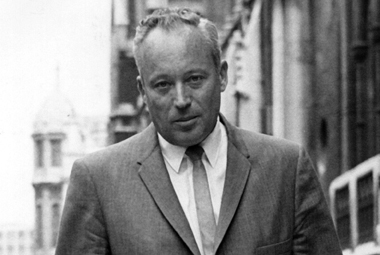
Leon Marcus Uris was born on this day in Baltimore, Maryland in 1924. This is the 88th anniversary of his birth.

Son of Polish and Russian Jewish immigrants Leon went to schools in Baltimore, Norfolk and Philadelphia. He failed English three times, but he loved History and Literature. He allegedly wrote an operetta about the death of his dog when he was only six years old.

When the Japanese attacked Pearl Harbor on December 7, 1941 Uris dropped out of high school and enlisted in the Marine Corps. He served from 1942 to 1945 in the South Pacific. He  was a radio operator  and saw combat at Guadalcanal and Tarawa. When he contracted malaria he was sent to San Francisco to recuperate. There he met his first wife Marine sergeant Betty Beck.

1st edition cover Pages: 694 pp (Mass Market P...

1st edition cover Pages: 694 pp (Mass Market Paperback) (G.P. Putnam’s Sons) (Photo credit: Wikipedia)

After his discharge from the service he worked  for the San Francisco Call-Bulletin and wrote fiction in his spare time. His first book, Battle Cry,  retold his war experiences. Published in 1953 ,and made into a movie by Warner Brothers with Uris as screen writer, the film did well at the box office.

His second novel also took place during WWII, but this time in the European Theatre. The Angry Hills is about Greek resistance fighters.  It too was made into a movie, this one starring Robert Mitchum.

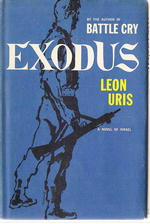
Research Uris did for The Angry Hills and his time  as a war correspondent during Arab-Israeli fighting in 1956  lead to most his most successful novel, Exodus. Published in 1958 the book is the result of  thousands of interviews. Uris traveled 12,000 miles in Israel and read hundreds of books on Jewish history. Doubleday bought the book which out sold Gone with the Wind, becoming the biggest bestseller in the United States. It was translated into 50  languages. A blockbuster movie starring Paul Newman came out in 1960.

Mila 18 is about Jewish resistance fighters during the Warsaw uprising. Armageddon: A Novel of Berlin is about the complications of the Cold War during and after and the Berlin Airlift. Topaz, a spy story, has the Cuban Missile Crisis and the Cold War in its cross hairs. Alfred Hitchcock  directed it for the big screen.  QBVII  is a courtroom drama about a doctor who was pressed into service in a Nazi concentration camp.  It was made into a mini series starring Anthony Hopkins in 1974.

In Trinity Uris tacked the troubles in Ireland, following the lives of several families from the potato famine to the Easter Uprising. Redemption, written two decades later follows up on the Irish story.

The Haj delves again into the troubled Middle East. The Milta Pass is about the Suez Crisis.

A God in Runs takes on the American political scene when Quinn Patrick O’Connell runs for president. His last novel, O’Hara’s Choice, was published posthumously, and was not well received.

Non fiction works include: Ireland: A terrible Beauty and Jerusalem: Song of Songs both include photographs by his with Jill Uris.

More on Leon Uris try this site: http://www.kirjasto.sci.fi/uris.htm


Thought of the Day 7.14.12

“Sometimes love is stronger than a man’s convictions”

Isaac Bashevis Singer

Isaac Bashevis Singer was born on this day in Radzymin, Poland in 1904. He would have been 98 years old today.

He came from a religious family. His father was a rabbi and his mother had several rabbis in her family. He grew up surrounded in a world steeped in Hasidic traditions and even attended Rabbinical School. According to Singer’s Nobel Prize biography, it was a world:

which the reader encounters in Singer’s stories, … a very Jewish but also a very human world. It appears to include everything – pleasure and suffering, coarseness and subtlety…

But Singer wanted  a more secular life. The World was changing fast around him and he wanted to be a part of it.  The conflict of old verses new (both on a personal level and a global level as Eastern Europe churned through WWI and the build up and horrors of  WWII ) were fodder for Singer’s budding journalism and short story writing. Singer gave voice to those conflicts, mixing the tragic with the comic; breaking our hearts but warming them too, all on the same page.

He emigrated to the United States in 1935 and began to work  for Yiddish Newspapers. Because of the Holocaust the Yiddish language was nearly wiped out  in Europe, but Singer  reveled in the power of his native tongue and knew there was still an audience for it. His work often recalled a Poland before the War, but without the sugar coating of nostalgia.

He published memoirs, essays, novels, children’s books and short stories.  Singer won the Nobel Prize in Literature in 1978.

English: Isaac Bashevis Singer, Miami Book Fai...

English: Isaac Bashevis Singer, Miami Book Fair International, 1988 (Photo credit: Wikipedia)


Thought of the Day 7.3.12

“Every exit is an entrance somewhere else”

–Tom Stoppard

Tom Straussler was born this day in Zlin, Czechoslovakia in 1937. He is 75  years old.

As War World II loomed in Europe his family moved to Singapore to escape the Nazis. In 1941 as the Japanese were poised to invade Singapore he and his mother and brother fled to Darjeeling, India. (His father stayed in the city and was died in the invasion.) After the war they moved to England and his mother remarried. Kenneth Stoppard adopted Tom and his sister.

Stoppard left school when he was only 17 and began to write for local newspapers. He started writing plays and scripts and in 1963  his first television play, A Walk on the Water was produced. Success on the stage came with his hugely popular Rosencrantz and Guildenstern are Dead, a play that looks at Hamlet from the point of view of two minor characters. For the screen he penned Empire of the Sun, Billy Bathgate, and co-wrote Brazil and Shakespeare in Love. He won the “Best Screenplay” Oscar  for Shakespeare in Love.

His other works include: Every Good Boy Deserves Favour, The Real Thing, Arcadia and Dogg’s Hamlet, Cahoot’s Macbeth

Tom Stoppard on a reception in honour of the p...

Tom Stoppard on a reception in honour of the premiere of “The Coast of Utopia” in Russia (Photo credit: Wikipedia)