“I did a women’s movie, and I’m not a woman. I did a gay movie, and I’m not gay. I learned as I went along.” — Ang Lee
Ang Lee (Photo credit: Wikipedia)
Ang Lee was born on this day in Chaochou in Pingtung, Taiwan in 1954. He is 58 years old.
His parents put a heavy emphasis on a classical Chinese education, including culture, art, and calligraphy. His father was the principal at his high school, and Ang was expected to become an academic, perhaps a professor. But, his interests in drama took him in another direction.
After graduating from The national Taiwan College of Arts and completing his mandatory service in the Republic of China’s military, Ang Lee attended the University of Illinois at Urbana-Champaign where he received his BFA in Theatre/Theater Direction and New York University where he earned his Masters in Film Production.
At NYU he worked with Spike Lee on Joe’s Bed-Stuy Barbershop: We Cut Heads.His Shades of the Lake was a Best Drama pick in Short Film in Taiwan and his Fine Line, his thesis film, won the Outstanding Direction Wasserman Award and was later shown on the BBC.
Cover of The Wedding Banquet
His professional career was off to a slow start. After struggling for six years he submitted the screenplays for Pushing Hands and The Wedding Banquetto a Taiwanese competition in 1990. The scripts came in first and second.
Lee … eventually making his directorial debut in 1992 with Pushing Hands. A comedy about the generational and cultural gaps in a Taiwanese family in New York, it won awards in Lee‘s native country. [NYTimes.com]
The Wedding Banquet had an art house release in the US and Lee found a much wider audience. It was the second film in his “Taiwanese Trilogy” and like the others it featured generational and cultural conflicts. Here Winston Chao played…
a homosexual Chinese man who feigns a marriage in order to satisfy the traditional demands of his Taiwanese parents. It garnered Golden Globe and Oscar nominations, and won a Golden Bear at the Berlin Film Festival. [IMDB]
The third film in his valentine to Taiwan was Eat Drink Man Woman. It tells the story of a semi-retired chef and his three grown daughters. It cemented his role as “A warmly engaging storyteller [Janet Maslin, The New York Times]
Cover of Eat Drink Man Woman
Lee switched continents and centuries when he helmed his next film, Emma Thompson’s wonderful adaptation of Jane Austen’s Sense and Sensibility. It won a BAFTA and Golden Globe award for Best Picture. Lee was voted Best Director by New York Film Critics Circle. Austen’s resurgence in popularity can be traced back to Lee’s Sense and Sensibility and the Colin Firth/Jennifer Ehle Pride and Prejudice mini-series that came a half decade later. [S&S is one of my personal favorite Austen film adaptations. Alan Rickman’s Col. Brandon still makes me sigh.]
Back in 20th century (this time 1973 Connecticut), Lee tackled a dysfunction family in crisis in The Ice Storm. The film starred Kevin Kline, Joan Allen, Sigourney Weaver, Tobey Maguire, Christina Ricci and Elijah Wood.
He worked with Tobey Maguire again in Ride with the Devil, a Civil War tale about two friends who join the Bushwhackers in Missouri.
Cover via Amazon
Next came the magical Crouching Tiger, Hidden Dragon. It is the story of a mysterious young assassin who steals a magical sword and the two martial arts masters who set out retrieve it. The chase through the bamboo forest alone is worth the price of a rental.
With movies about family drama, English classical literature and Asian mystical martial arts under his belt Lee did the next logical thing… he directed a movie based on the Marvel Comic’s hero the Hulk.
Star-crossed lovers. The poster was fashioned after Titanic ‘ s. (Photo credit: Wikipedia)
IN 2005 Lee tackled his most controversial movie yet, Brokeback Mountain. The film starred Heath Ledger, Jake Gyllenhaal,
The film’s sensitive and epic portrayal of a thriving romance that survives between two Wyoming cowboys in the 1960’s was praised as both elegiac and grounded. Lee‘s deft handling of material that simultaneously drew on the established themes of classic cinema and pioneered completely unexplored territory in mass media could not have been more exalted…[NYTimes.com]
Lee won Best Director at the Academy Awards, BAFTAs and Gold Globes for Brokeback Mountain.
Lust, Caution takes place in Japanese occupied 1938 Hong Kong and 1940s Shanghai. A group of Chinese university students plot to assassinate a government official. The film was called tense, sensual and beautifully-shot. The film did well in Hong Kong and China, but because of its adult content it earned an NC-17 rating in the US and didn’t do well in this market.
2009’s Comedy/Drama Taking Woodstock offers a groovy look on how the world’s most famous music concert came to be. The Chicago Time’s Michael Phillips called it “A mosaic…drifting in and out of focus — stitching the story of how the peace-and-music bash fell together.”
His latest film, Life of Pi is due out next month. Life of Pi is based on the novel by Yann Martel and is about a 16-year-old survivor of a ship wreck. He finds himself on a lifeboat with another unusual (and dangerous) castaway.
Director Ian Gallanar chose to pick the characters up from the 15th century and time warp them to something resembling War War One. Clever, especially considering the Patapsco Female Institute was used as a war hospital during the Great War. In his director’s notes he says:
“The production really uses the visual palate and the historic technology of the World War One era as a way to clarify the relationships of the characters….[The audience] might also recognize the futility and wastefulness of a war that, much like the English “Wars of the Roses,” seemed more about resolving who would inherit power rather than who ought to inherit power.” [Chesapeake Shakespeare Company, Richard III: Program Notes]
So on a cold October night we got to see one of Shakespeare’s bloodiest plays in and around the shell of a burned out 19th Century building that some people claim is haunted. The occasional gas-masked actors quietly playing cards in a dimly lit corner or typing away orders on an antique typewriter upped the creep factor. As did the lighting effects, the period music and wonderful costumes.
Vince Eisenson as Richard III. Photo by Teresa Castracane. [Image courtesy: Chesapeake Shakespeare Company]
This version of Richard really worked. I really liked the “Moveable” aspect too. It added to the length of the play (instead of quick scene changes the audience literally did a scene change by moving to a new part of the building or grounds, and that took a while.) My only problem was that there was a scene or two where I couldn’t see the action because I had the bad luck of standing behind some one tall.) Still, I liked that we kept moving through the building, and “discovering” new rooms. It really put the audience DEAD center into the action of the play (and moving about kept us warm.)
Richard III runs for one more weekend at Chesapeake Shakespeare. So if you are local to Maryland jump on their website and grab some tickets before they sell out. http://chesapeakeshakespeare.com/
————————————
Scrap for a Shakespeare character card: Richard III., c. 1890; Printer: Siegmund Hildesheimer & Co. Victoria and Albert Museum, London, Museum number: S.63-2008, Link (Photo credit: Wikipedia)
Of course they didn’t have instant fact checkers in Shakespeare’s day, and history, as they say is written by the winners. So it comes as no surprise that the Richard the Third we met last night was a real piece of work. Shakespeare was writing for an Elizabethan audience. Elizabeth, a Tudor, was the granddaughter of the man who finally brought about Richard’s undoing on Bosworth Field in Leicestershire, Henry VII. It was in his interest to make Richard as loathsome as possible.
Henry VII’s claim to the thrown was weak at best. So he took…
“every opportunity of enhancing his own reputation at the expense of his predecessor. Richard’s actions and behaviour were the subject of attention and scrutiny and were presented, in the weeks and years after his death, as those of a wicked and unscrupulous tyrant.” [The Richard III Society]
While he was alive Richard was well thought of.
He was loyal to his brother Edward.
He was effective in his administration of the North.
He defended the country against the Scots.
He handled the premature death of Edward with out plunging the country into crisis.
Shakespeare wasn’t the first writer to take up the thread of anti- Richard-ism. (Yes, I just made that up.)
By the time the Elizabethan playwright William Shakespeare penned what was to become one of his most popular and frequently performed plays, The Tragedy of King Richard III, the works of the anonymous Croyland Chronicler, John Rous, Bernard André, Polydore Vergil, Sir Thomas More, Edward Hall, Richard Grafton and Raphael Holinshed had been written. [Ibid]
So, as Chesapeake Shakespeare Managing Director and Richard III Dramaturge says in her note… The Bard’s “fictitious villainous Richard has triumphed over the historic Richard for centuries now.” [CSC Program]
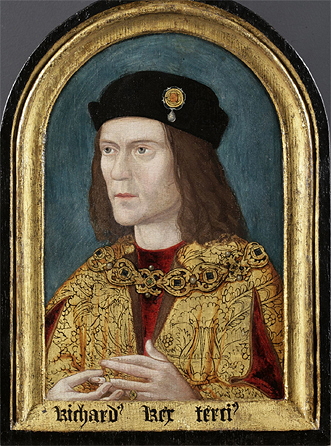
Richard III earliest surviving portrait. [Image courtesy: Wikipedia]
In a timely twist of history archeologists digging up a parking lot in Leicester have found the remains of the Greyfriars Church that might be those of Richard, the last King of England to die on the battlefield. They have found a skeleton in the choir area (Richard was buried in the choir of Friars Minor at Leicester), that had a skull injury caused by a bladed implement, an arrowhead was found between its vertebrae and upper back, and it had spinal abnormalities.
“the individual would have had severe scoliosis – which is a form of spinal curvature. This would have made his right shoulder appear visibly higher than the left shoulder.” [University of Leicester Press Release : The Leicester Greyfriars Dig]
——————————————————————————-
Bonus Material:
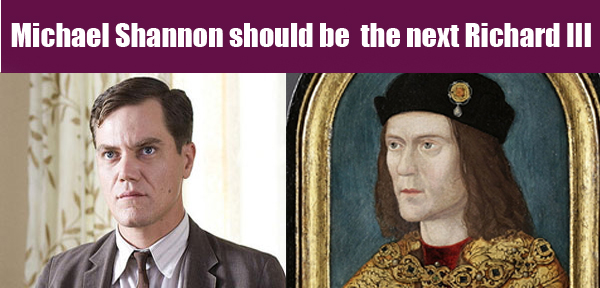
Not sure how many of you watch HBO’s Boardwalk Empire… but I couldn’t stop thinking how much Michael Shannon (who plays messed up Treasury agent turned iron salesman Nelson Van Alden) looks like our boy Richard. I think they ought to do a new film version of Richard cubed with Shannon in the lead. He certainly has the intensity to play the role.
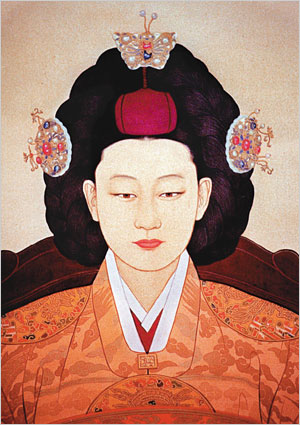
Her name was not recorded at her birth. Neither was the name of her mother. Her father’s name was Min Chi-rok, and he was a member of the wealthy and influential Min family.
She was orphaned by the time she was 8-years old, which was actually something of a benefit to her in terms of marriage as when the future Emperor Gojong went looking for a wife (when he was 15-years old) the preference was for a girl without many relatives who would be seeking favor at court and be inclined toward corruption. [Mad Monarchist. blogspot.com]
She was smart, pretty, from a good family, healthy, appropriately educated (for a woman), and (most likely) fertile. So, at 16, after a lengthy vetting period she was married to 15-year-old King Gojong and became Queen Min.
Typically, queen consorts concerned themselves with setting fashions for the noble women of the realm, hosting tea parties, and gossiping. Queen Min, however, had no interest in these pastimes. Instead, she read widely on history, science, politics, philosophy, and religion, giving herself the kind of education ordinarily reserved for men. [Asian History/About.com]
Her father-in-law, Taewongun, the regent and puppet master over the young king, was having none of it. He moved to weaken her influence on the king by giving him a royal consort. While Queen Min had difficulty in conceiving, the consort soon produced a little boy. Taewongun said Queen Min was infertile, but the Queen had a baby of her own with in the year, again a boy. Sadly the little boy died after just four days. She claimed her father-in-law had poisoned the baby with ginseng, and vowed revenge.
She went to the council. Her husband was now 22, surely he was old enough to run the country on his own. He no longer needed a regent. The counsel agreed and Taewongun was sent away to his property in the country. (But it would not be the last Queen Min heard from him.)
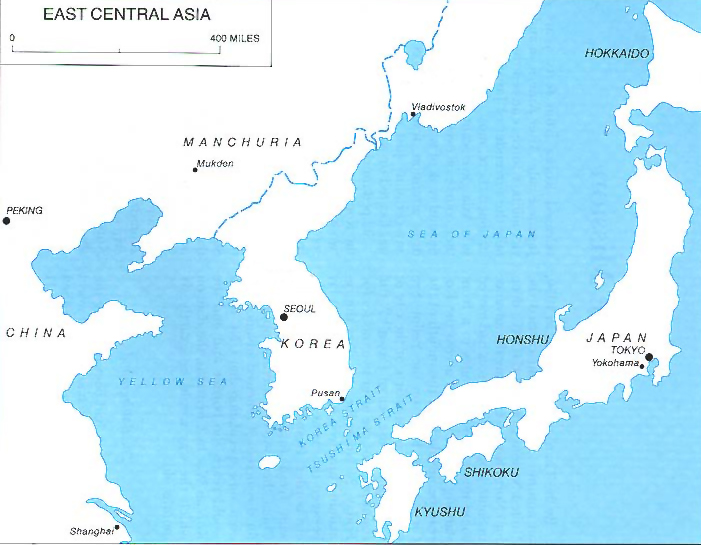
Traditionally Korea had been a tributary of Qing China, but when King Gojong took the throne Japan came seeking trade access and demanding tribute. Queen Lin encouraged the King to show strength and to send them packing. But in 1874 Japan came calling again. Although Queen Min counseled her husband to stand firm again and expel the dignitaries, he signed a trade treaty. When Japan sent a gunship, the Unyo, into restricted waters to ‘survey sea routes’ the Koreans fired on it. The ship retreated. But Japan retaliated when they…
sent a fleet of six naval vessels into Korean waters. Under the threat of force, Gojong once again folded rather than fighting back; Queen Min was unable to prevent this capitulation. The king’s representatives signed the Ganghwa Treaty. [Asian History/About.com]
According to the Ganghwa Treaty:
Japan had free access to some Korean ports and all Korean waters,
Japan gained special trading status
Japanese accused of crimes in Korea could only be tried under Japanese law – they were immune to local laws.
Koreans gained absolutely nothing from this treaty, which signaled the beginning of the end of Korean independence. Despite Queen Min’s best efforts, the Japanese would dominate Korea until 1945. [ibid]
Hwangwonsam: everyday clothes for queen/empress (Photo credit: Wikipedia)
The Queen commissioned fact finding missions to study Japanese westernization. It seemed that the Japanese had leap-frogged over Korea in their ability to Westernize. Where Seoul and Busan had been major commerce centers, they were now overshadowed by Tokyo and Osaka. Korea needed to change with the times. The country and the military needed to modernize.
Queen Min knew Korea would have to tread carefully and she favored a plan by which Korea would continue to deal with Japan in order to modernize and, once that was sufficiently completed, would then ally with the United States or some other or more western powers to drive the Japanese influence out of Korea. [Mad Monarchist. blogspot.com]
She reorganized the government, creating twelve new bureaus to handle foreign relations, commerce and update the military. In general she was determined to bring Korea into a more modern, technological age.
[Image courtesy: Wikipedia]
Needless to say all that modernization didn’t make the traditionalist very happy. In 1882 there was a rebellion seeking to over throw Queen Min and King Gojong and replace them with Gojong’s third brother. The Imo Incident was backed by their old nemesis (and Gojong’s father) Taewongun. “The uprising temporarily ousted Gojong and Min from the palace, returning the Taewongun to power.” [ibid] With the help of 4,500 Chinese soldiers the rebellion was foiled and the King and Queen were restored to power. The Japanese took advantage of the incident to strengthen their growing hold on the peninsula. They…
strong-armed Gojong into signing the Japan-Korea Treaty of 1882. Korea agreed to pay restitution for the Japanese lives and property lost in the Imo Incident, and also to allow Japanese troops into Seoul so that they could guard the Japanese Embassy. [Asian History/About.com]
The Queen countered by granting China access to ports that the Japanese were not privy to. She also asked that Chinese and German officers to head up improvements in the army.
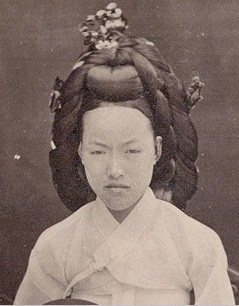
English: Purportedly a photo of Queen Min of Korea, from an old Japanese travel book. (Photo credit: Wikipedia)
In 1894 The Tonghak Rebellion — a week-long popular rebellion against taxes and foreign influence ended with China sending 2,500 troops (invited) and Japan sending 4,500 troops (uninvited) to help quell the insurrection. The peasants quickly went home. The troops remained.
On July 23, Japanese troops marched in to Seoul and captured King Gojong and Queen Min. On August 1, China and Japan declared war on one another, fighting for control of Korea. [ibid]
The Sino-Japanese War ensued. Although China sent 390,000 more troops to Korea, the better prepared and more modern Japanese Meiji military easily won. China withdrew leaving Korea and other Asian allies to deal with the much stronger Japanese.
As many as 100,000 of Korea’s peasants had risen up late in 1894 to attack the Japanese as well, but they were slaughtered. Internationally, Korea was no longer a vassal state of the failing Qing; its ancient enemy, Japan, was now fully in charge. Queen Min was devastated. [ibid]
The queen did not give up she sent emissaries to Russia, hoping they would come to Korea’s aid.
The new caretaker government knew what she was up to. They aligned themselves with Taewongun (her father-in-law). He had no love for the Japanese, but he saw this as a way to get rid of Queen Lin once and for all and he took it.
In 1895 Operation Fox Hunt was put into place. A mixed group of Japanese and Korean assassins attacked Gyeongbokgung Palace. They found the King, but did not hurt him. They came upon the Queen’s sleeping quarters and dragged her out into the courtyard along with four of her attendants.
They brutally killed Queen Min, displayed her body to foreigners so there could be no doubt that she was dead, then took her outside the palace walls and burned her.
For two years Taewongun was in charge, but he lacked the desired “commitment…for modernizing Korea.” [ibid] and the Japanese ousted him.
Gojong took the throne back (with Russian support). He…
declared himself emperor of Korea. He also ordered a careful search of the woods where his queen’s body had been burned, which turned up a single finger bone. Emperor Gojong organized an elaborate funeral for this relic of his wife… The queen consort also received the posthumous title of Empress Myeongseong. [ibid]
The power-struggle over the Korean peninsula continued with Russia and Japan fighting the Russo-Japanese War in 1904-1905. Japan won again. In 1910 they formally annexed Korea. The country did not regain independence until after World War II.
PROGRAMMING NOTE: Switching up the formula a little today as it is NOT John Lennon’s Birthday — that was October 9th — but I was away that day, so I thought I’d retroactively give John the birthday nod.
———————————————————————–
“If someone thinks that love and peace is a cliché that must have been left behind in the Sixties, that’s his problem. Love and peace are eternal.” — John Lennon
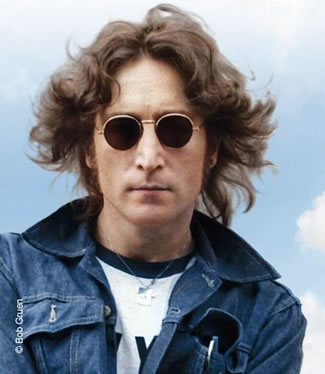
John Winston Lennon was born on October 9th, 1940 in Liverpool, England. He would be 72 years old this year.
John was born during World War II, indeed he was born during an air raid, to Julia and Alfred Lennon. His father worked as a merchant seaman and was often away from home. By the time John was four-years-old his parents were divorced and he went to live with his Aunt Mimi Smith. Although Alfred was largely out of the picture, Julia remained close, she visited John regularly.
She taught John how to play the banjo and the piano and purchased his first guitar. [biography.com]
Julia Lennon died when John was 18, she was stuck by a car.
He did not do well in school, and preferred to be the class clown rather than study. He did love art and music though. John drew unique (almost grotesque) line drawings that quickly and simply captured the image.
John started a ‘skiffle band’ (a band that used the instruments they had at hand) called the Quarry Men when he was 16. The Quarry Men take their name from John’s high school, Quarry Bank High School in Liverpool. The next year he asked Paul McCartney to join the group. George Harrison and Lennon’s art school mate Stu Sutcliffe also joined the band and they later added Pete Best on drums.
The group changed their name to the Beatles and played clubs in Hamburg, Germany and the Cavern Club in Liverpool. Brian Epstein came on board in 1961 as manager, and they got a recording contract with EMI records.
1962 saw huge changes for both Lennon and the group. In April of 1962 Sutcliffe died tragically of a brain aneurysm. In August John married Cynthia Powell, the couple had a son, Julian in April the next year. The band replaced drummer Pete Best with Ringo Starr. The realigned group recorded at EMI with George Martin as their producer, and released Love Me Do in October. The single reached #17 on the British Charts. Please, Please Me the follow-up single, topped the charts. And the Beatles were off.
Beatlemania invaded the US in 1964. They appeared on The Ed Sullivan Show and played sold out concerts.
Still from Hard Day’s Night. [Image courtesy: Cinematical]
Back in the UK they made the movie A Hard Day’s Night. The movie is a delightfully fun, pop romp of a mockumentary. It featured songs from the album of the same name, notably: A Hard Days Night, If I Fell, I’m Happy Just to Dance with You, Tell Me Why, Any Time At All and Can’t Buy Me Love. The popularity of the movie helped keep the album at #1 for 14 weeks on the Billboard chart. The budget was limited so it was shot in black and white, and everything was kept simple. Not so with their second film HELP! which still manages to be charming but not as charming as Hard Day’s Night. It is overproduced and over done. Lennon said that the Beatles felt like extras in their own movie with HELP! and it shows. Still the music was pretty awesome: Help!, You’ve Got to Hide Your Love Away, You’re Going to Lose That Girl! Ticket to Ride, It’s Only Love, I’ve Just Seen a Face, and Yesterday. The Album held the top spot on Billboard for 9 weeks.
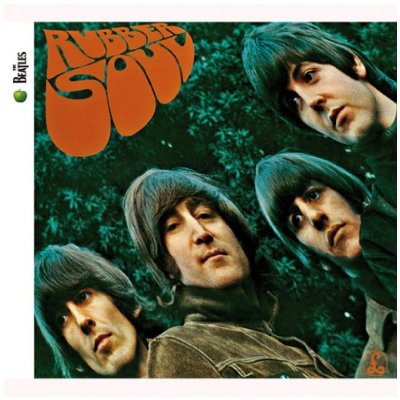
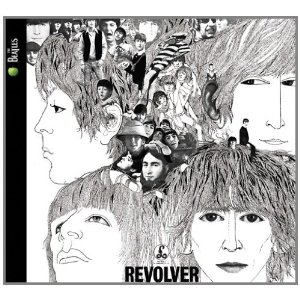
Musically the lads from Liverpool were in top form, releasing the breakthrough album, Rubber Soul in 1965. Their song writing had transformed from the harder R&B influenced Hold My Hand kind of song to lyrical, mature songs like Norwegian Wood, Nowhere Man, Michelle, Girl, In My Life, and If I Needed Someone. It was another #1 Billboard album (6 weeks). [I’m guessing that if you are still reading this blog you are a Beatles fan and already have most of their albums, but if you don’t… I’d put Rubber Soul at the top of the list. For my money Rubber Soul and Revolver are two of the best albums every made.]
Yesterday…and Today came out in 1966. Stand out songs include: Drive My Car, Nowhere Man, Yesterday, If I Needed Someone, We Can Work It Out and Day Tripper. The album reached #1 for 5 weeks. Revolver also came out in 1966. Taxman, Eleanor Rigby, Here, There and Everywhere, Yellow Submarine, Good Day Sunshine, And Your Bird Can Sing, and Got to Get You Into My Life are some of the hits off the album, which spent 6 weeks at the #1 spot on Billboard’s chart. By 1966 the strain of constant touring, recording, and the hounding fans was weighing on the band. Lennon got in trouble for his “We’re more popular than Jesus now” remark. They played their last concert in Candlestick Park stadium, San Francisco in August.
The following year the Beatles put out their eighth LP, Sgt. Pepper’s Lonely Hearts Club Band. An eclectic mix of pop, rock n roll, and Indian influenced tracks. It won Album of the Year and was #1 on the Billboard charts for a whopping 15 weeks. Hits from the album include: With a Little Help from My Friends, Lucy in the Sky with Diamonds, Getting Better, –the amazing — A Day in the Life, and of course, Lovely Rita. But as good as Pepper was, and it was very good, it was also over produced. All those horns and whistles and animal sounds didn’t quite get in the way enough to ruin the songs, but were they really necessary? Listening back on them now… well, I prefer a simpler production. [It worked somehow in A Day in the Life; not so much in Lovely Rita, but still, the later has such a great title.]
Speaking of over produced…there’s Magical Mystery Tour — a movie that makes absolutely no sense. The LP had some lovely songs though. And even if it was becoming painfully clear that Lennon was writing the “Lennon” songs– which were leaning toward sarcasm — and McCartney was writing the “McCarntney” songs — which were tending to get more nostalgic and saccharine — both came up with some good ones here, like: The Fool on the Hill, Strawberry Fields Forever, Penny Lane, and All You Need Is Love.
1968 brought the animated (and equally bizarre) film Yellow Submarine. In November they release a new album called The Beatles aka The White Album. It was at the top of the charts for 9 weeks. This double album seems almost schizophrenic with some great songs like the hard rock and roll Back in the USSR, Why Don’t We Do It in the Road? Helter Skelter, and Revolution; others that are lovely and lyrical; While My Guitar Gently Weeps, Blackbird, Julia, Long, Long, Long, Good Night; And others that I’m not going to waste my time talking about.
On the personal side John divorced Cynthia Lennon in November of 1968. He and Yoko Ono, who he had been seeing since 1966, and living with since the summer of ’68, put out a collaborative album Two Virgins. The album showed the couple nude on the cover and was banned in most record stores. On March 20, 1969 John and Yoko married in Gibraltar.
The following week, the two master media manipulators used their celebrity for good, hosting a honeymoon “bed-in” for peace in room 902, the presidential suite of the Amsterdam Hilton. The… pajama-clad newlyweds spoke out about world peace. It was the honeymoon as performance art, interlaced with a protest against the Vietnam War. [About.com]
They repeated the “performance” in Montreal the following week and with a bedroom full of musicians, artist, writers and other 1960’s counter-culture dignitaries, they recorded Give Peace a Chance.
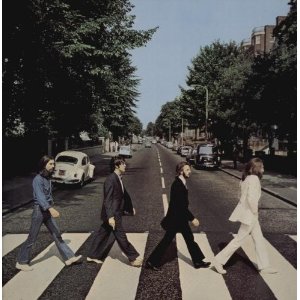
Abbey Road was released in 1969. It is actually the last album the Beatles recorded, but it was released before Let It Be.
Notable songs include: Come Together, Something, Here Comes the Sun, and I Want You. Abbey Road stayed at #1 for 11 weeks.
Recorded largely in January in 1969, Let it Be wasn’t released until 1970 and was #1 for 4 weeks. Lennon had already left the group (September of 1969.) A film of the same name came out the same year. The film was supposed to be a documentary that went behind the scenes to show the world’s most famous rock band making an album. Instead it showed the world’s most famous rock band dissolving. The film culminated in a rooftop concert on January 30th. Songs from the album include: Don’t Let Me Down, Get Back, Two of Us, Let It Be, and The Long and Winding Road.
After the Beatles John released Plastic Ono Band.
The raw, confessional nature of Plastic Ono Band reflected the primal-scream therapy that Lennon and Ono had been undergoing with psychologist Arthur Janov. He dealt with such fundamental issues as “God” and “Mother” and the class system (“Working Class Hero”) on an album as full of naked candor as any in rock has ever been. [Rock & Roll Hall of Fame]
1971 brought Imagine. Rolling Stone Magazine called the title track the third all-time best song ever written.
English: John Lennon and Yoko Ono (Photo credit: Wikipedia)
John and Yoko followed Imagine with an anti-war release Happy Xmas (War is Over). The Nixon administration was not amused. It decided to begin deportation proceeding against Lennon. The stress took its toll on Lennon’s marriage with Ono and the two separated. For 18 months he lived in Los Angeles with another woman, May Pang. It is a period he calls his “Lost weekend” of drinking a partying. He fished Mind Games, and recordedWalls and Bridges.Whatever Gets You Thru the Night, a single off the later album became a number one hit. He co-wrote Fame with David Bowie.
He and Ono were reunited in 1975 shortly before the release of Rock n Roll. The couple celebrated the birth of their son Sean in October of 1975. And, after releasing Shaved Fish, John became a stay at home dad for five years.
In 1980 he came out of retirement and released Double Fantasy with the single Just Like Starting Over.
On December 8, 1980 the music died. As Lennon and Ono were returning home from recording tracks for the following up album, Milk and Honey he was assassinated in front of his New York apartment building, the Dakota.
‘Why am I so soft in the middle when the rest of my life is so hard?”
— Paul Simon
Paul Frederic Simon was born in Newark, New Jersey, USA on this day in 1941. He is 71 years old.
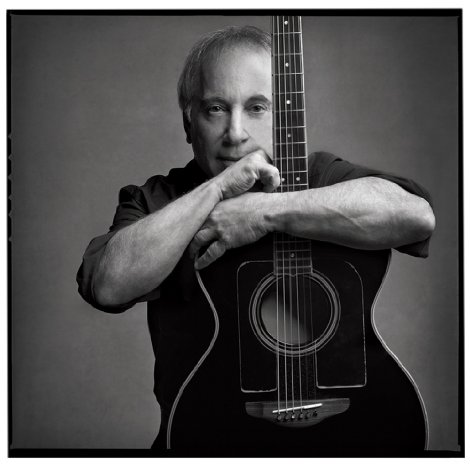
Paul’s other love is baseball. [Image courtesy Paul-Simon.info]
He grew up in Queens, New York loving baseball and music. Simon met Art Garfunkel in middle school. They were the White Rabbit and the Cheshire Cat in their 6th grade production of Alice and Wonderland and attended Forest Hills High School together. He and Garfunkel would use a tape recorder to practice singing together. In 1954 Paul got a guitar for his birthday. They tried to duplicate the tight harmonies of the Everly Brothers, who they idolized. In 1956 Simon wrote their first song “The Girl for Me” which his father, Louis (who was musician and college professor) wrote out and corded for the duo.
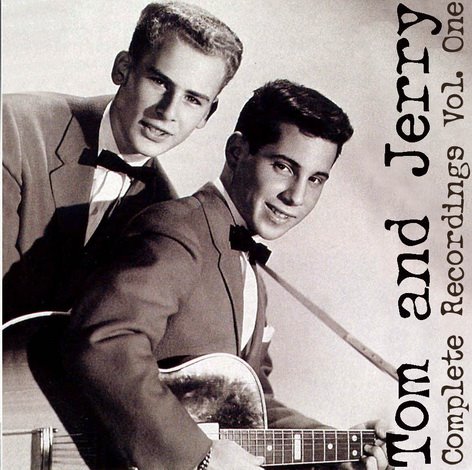
While juniors in high school they started the group Tom and Jerry. (Art was Tom; Paul was Jerry) They released a single, Hey, Schoolgirl. The song reached #49 on the Billboard charts.
After high school Simon went to Queen’s College, New York and studied English. He met singer songwriter Carol King at Queen’s and he did solo work and played with a group called Tico & The Triumphs. Although Tico et al put out a few singles the efforts weren’t very successful.
Worried that Simon and Garfunkel sounded too Jewish the duo opted for the more generic Tom and Jerry. [Image courtesy Paul-Simon.info]
Simon continued to write after graduation. He embraced the changing social climate of the early Sixties and “the burgeoning Greenwich Village folk scene.” [ Paul-Simon.info] His maturing style is reflected in the songs he wrote during this era, especially the Sound of Silence.
´Sound of Silence´ uses imagery of light and darkness to show how ignorance and apathy destroy people´s ability to communicate on even a simple level. The light symbolizes truth and enlightenment. Both music and lyrics are perfectly fitting. [Paul-Simon.info]
Simon reunited with Art Garfunkel in 1963. They began to sing in folk clubs, worked on songs and recorded a few of the songs Simon had earlier penned.
Here is He Was My Brother a song that Paul dedicated to Andrew Goodman, one of three civil rights workers killed in Mississippi in 1964.
They released Wednesday Morning, 3 A.M. as Simon and Garfunkel. A classic now, the album met with tepid response when it first came out. The songs are a mix of original Simon compositions; Bleecker Street, Sparrow, The Sound of Silence, Wednesday Morning, 3 A.M.; traditional tunes the duo arranged to best fit their voices; and covers. Sound of Silence hit #1 and gave Simon and Garfunkel their first gold record.
Simon moved to England and Garfunkel went back to school. Paul worked with the Australian band The Seekers and did some solo recording.
Back in the US Simon and Garfunkel released Sounds of Silence; Parsley, Sage, rosemary and Thyme, Bookends, andBridge Over Troubled Water. They also contributed heavily to the soundtrack for the movie Mrs. Robinson.
America (Simon & Garfunkel song) (Photo credit: Wikipedia)
The duo won GRAMMYs in 1969 and 1971 (plus a GRAMMY: Lifetime Achievement Award in 2003) and were inducted into the Rock and Roll Hall of Fame in 1990.
They split in 1970, again. Simon put out a self title album that was more World Beat inspired. The album featured Mother and Child Reunion and Me and Julio Down by the Schoolyard.
There Goes Rhymin’ Simon came out in 1973 and had the hits Kodachrome and Loves Me Like a Rock.
In 1975 he put out Still Crazy After All These Years with the hits My Little Town and 50 Ways to Leave YourLover. Simon picked up another Grammy for the album.
He switched record labels to Warner Brothers for One-Trick Pony. He starred in a movie of the same name. His next album was Hearts and Bones. That album was written around the famous 1981 Central Park reunion concert for Simon and Garfunkel and Art’s influence can be heard on several songs.
English: Front cover of the Paul Simon music album Graceland. (Photo credit: Wikipedia)
When Simon worked on the We Are the World single to raise money for USA for Africa his interest in world music was rekindled. His Graceland album — which celebrated its 25th anniversary on June 5th — was a
“…melding of South African styles and Simon’s trademark sensibility made for one of the most intriguing albums–not to mention commercial hits–of the ’80s. At once lively, thoughtful, gorgeous, and tough, Graceland acknowledges splits both in South Africa’s social fabric and in Simon’s personal life … Humor is hardly absent from the mix, though; witness the addled “I Know What I Know” and the fable-like “You Can Call Me Al.”[ –Rickey Wright. Amazon.com]
Rhythm of the Saints was recorded in Rio de Janeiro and New York in 1989. This album featured a latin beat, and Simon was quick to point out that the World Sound label was nothing new for his songs. He’d been writing with an international flavor since Julio after all.
Simon lent his talents to the 1998 musical play The Capeman. Although most critics liked his songs, and the production was nominated for several Tony’s the critics panned the effort and it lost millions.
In 2000 he produce a more conventional pop album You’re the One.
He continues to tour — often with other folk and rock icons, and occasionally with Garfunkel. In 2010 he put out So Beautiful or So What.
“If you can spend a perfectly useless afternoon in a perfectly useless manner, you have learned how to live.”
–-Lin Yutang
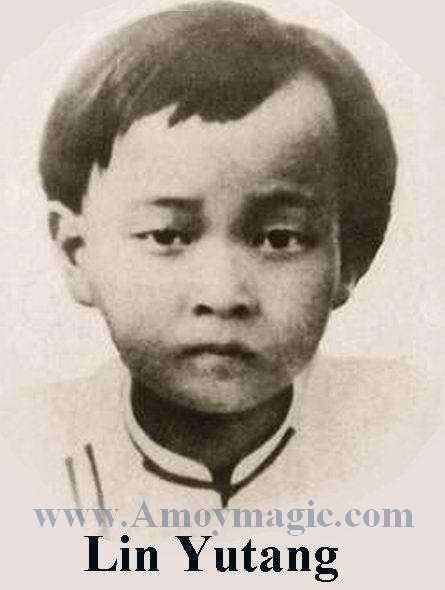
English: Lin Yutang 中文: 林语堂 (Photo credit: Wikipedia)
Lin Yutang was born on this day in Banzai, Fujian province, China in 1895. today is the 117th anniversary of his birth.
China provinces fujian (Photo credit: Wikipedia)
He grew up in the mountains of Fujian province the son of a Chinese Presbyterian minister. He studied at Saint John’s University, Shanghai and at Harvard University in the US. At first he studied to be a minister, but he renounced Christianity and pursued a degree in English instead.
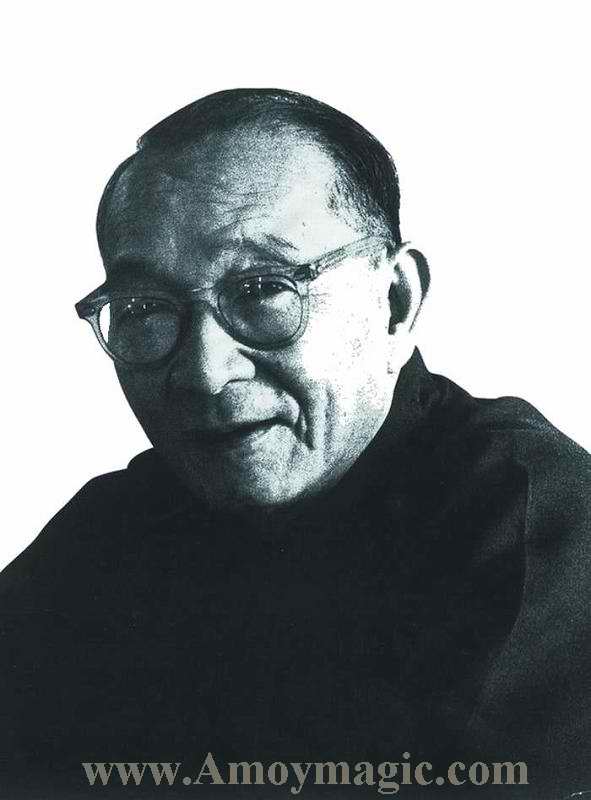
[Image courtesy: Amoymagic.com]
He bridged the cultural and linguistic divide writing and editing for both English and Chinese magazines and produced Lin Yutang’s Chinese-English Dictionary of Modern Usage.
His successful satirical magazine Analects Fortnightly was the first of its kind in China. In 1933 Pearl Buck introduced him to her publisher who took Lin Yutang on as a client.
Lin published the first of his many English-language books, My Country and My People. It was widely translated and for years was regarded as a standard text on China. [Britannica.com]
He moved to New York and published Moment in Peking in 1939. His 1941 novel A Leaf in the Storm, presents China on the brink of war with Japan. Wisdom of China and India followed in 1942.
[Image courtesy: Amoymagic.com]
Lin’s fiction includes Chinatown Family— a look at culture, race and religion faced by an immigrant Chinese American family; and his 1968 The Flight of the Innocents.
Ming Kwai Typewriter (Photo credit: Wikipedia)
During the WWII Lin developed a workable Chinese typewriter, the “Ming Kwai” typewriter.
His belief that literature should be a means of self-expression, not a tool for propaganda put him at odds with political movements in China when he returned to his homeland in 1943 and 1954.
Lin wrote more than three dozen books and is “arguably the most distinguished Chinese American writer of the twentieth century.” [Google Books] He died on March 26, 1976.
[Image courtesy: Amoymagic.com]
“In his prolific literary career, Chinese author Lin Yutang wrote expertly about an unusual variety of subjects, creating fiction, plays, and translations as well as studies of history, religion, and philosophy. Working in English as well as in Chinese, he became the most popular of all Chinese writers to early 20th-century American readers.” [Britannica.com]
Hi — Trying this again as I’m not sure why the top half of this bio got clipped yesterday (or why it was centered?). I also changed the top photo — which I think might have been the problem. 😦
_________________________________________________
“There is no real ending. It’s just the place where you stop the story.” –Frank Herbert
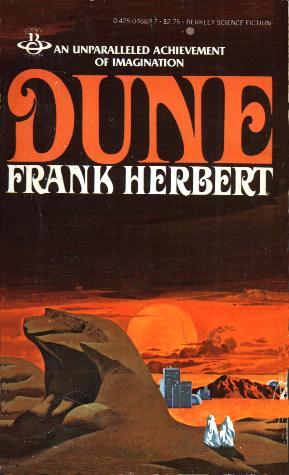
Cover of Dune [Blu-ray]
Frank Herbert was born on this day in Tacoma, Washington, USA in 1920. Today is the 92nd anniversary of his birth.
Frank’s mother came from a large Irish Catholic family (10 girls; 3 boys) (his invention of the Ben Gesserit for the Dune universe was likely an off shoot of the deep influence this gaggle of Aunts had on young Herbert’s life.) Frank’s father was a bus driver, security guard, salesman, motorcycle patrolman and farmer. The family did a lot of traveling around before they settled on the farm.
Young Frank knew what he wanted be early in life.
On the morning of his eighth birthday Frank Junior famously announced to his family: “I wanna be a author.” (sic.) That day he wrote his first short story, which he called “Adventures in Darkest Africa.” [Frank Herbert: The Works]
He was an explorer who thought nothing of paddling solo around Puget Sound to the San Juan Islands and back (200 miles) when he was ten or swimming across the Tacoma Narrows. He was also a great reader. “By the age of 12 he had, incredibly, already read the complete works of Shakespeare and discovered Ezra Pound.” [Frank Herbert: The Works]
Both Herbert’s parents were alcoholics and their drinking worsened as Frank entered his teen years. His sister, Patricia, was born when Frank was 13 and he took on parenting duties. By 1935 his parents were on the verge of a divorce. During high school he worked at his writing. He wrote short stories — he even wrote novel, a boilerplate western, that he published under a pen name. He got a part-time job at the Tacoma Ledger. But by November of 1938 the situation at home had become too much. He left home with his baby sister and went to live with an aunt and uncle in Salem, Oregon. He graduated from North Salem High School and became a newspaper journalist. After a stint as a Photographer in the US Navy during WWII (he received a medical discharge because of a cranial blood clot he developed after a fall) he returned to Oregon and worked as a copy editor for the Oregon Journal in Portland. He worked for a number of west coast newspapers in a variety of cities for next two decades.
Besides his work in journalism: he lectured at University of Washington; he was a social and ecological consultant in Vietnam and Pakistan; and he wrote, directed and produced the documentary “The Tillers” based on the work of Roy Posterman.
Success on the fiction front was more difficult to come by. He had short stories published — his first was “The Survival of the Cunning,” a war story published in Esquiremagazine. In 1952 Herbert published his first science fiction story, “Looking For Something,” in Startling Stories. It is about a stage hypnotist who discovers that the entire world is under alien hypnosis. Other short stories followed, but no publishers seemed interested when Herbert showed them Dune.
The Dragon in the Sea (Photo credit: Wikipedia)
In 1956 Herbert’s first novel, The Dragon in the Sea was published. It had been serialized in Astounding Magazineas”Under Pressure“.
“he used the environment of a 21st-century submarine as a way to explore sanity and madness. The book predicted worldwide conflicts over oil consumption and production. It was a critical success, but it was not a major commercial one.” [Biblio.com]
While working on an article about sand dunes for the US Department of Agriculture in Florence, Oregon he got the idea of a sand dune so big that it could swallow up whole cities. In 1965, Dune was finished, a labor of love more than six years in the making. It was serialized in the magazine Analog then largely revised and expanded into book form. It was rejected 20 times before little Chilton Books — an auto repair manual publisher — took a chance on it.
Dune won the very first Nebula Award and was the co-winner of the Hugo Award. Published in 1965 it sets the scene for the Dune Series that follows — a series that is often considered the Lord of the Ringsof Science Fiction. “Set on the desert planet Arrakis, Dune is the story of the boy Paul Atreides, who would become the mysterious man known as Muad’Dib. He would avenge the traitorous plot against his noble family–and would bring to fruition humankind’s most ancient and unattainable dream.” [Amazon.com review]
” Dune was the first ecological science fiction novel, containing a multitude of big, inter-relating themes and multiple character viewpoints, a method which ran through all Herbert’s mature work. ” [Biblio.com]
Dune Messiah hit stores in 1969. Children of Dune (1976) was the first hardcover science fiction book to reach best-seller status. It was nominated for a Hugo Award. And the spice kept flowing… God Emperor of Dune, came out in 1981, followed by Heretics of Dune in 1984 and Chapterhouse: Dune in 1985.
Frank Herbert died of pancreatic cancer in 1986. But the Dune series lives on…Using Frank Herbert’s notes his son Brian Herbert has co-authored additional Dune sequels with Kevin J. Anderson.
“Forget all that macho shit, and learn how to play guitar.” –John (Cougar) Mellencamp
Cover of American Fool (Rpkg)
John Mellencamp was born on this day in Seymour, Indiana, USA in 1951. He is 61 years old.
He had spinalbifida as baby. With a growth the size of a man’s fist on the back of his neck that was removed during a day-long operation when he was three weeks old. His house was filled with music growing up, and Mellencamp learned to play guitar. He was troublemaker at school who drank, smoked, cursed and trolled for girls.
Mellencamp is first and foremost an American storyteller. His classic song Jack and Diane starts out “Little ditty about Jack and Diane /Two American kids growin up in the heartland…” He might as well have begun Once upon a time in a small town in the midwest.
“His songs document the joys and struggles of ordinary people seeking to make their way, and he has consistently brought the fresh air of common experience to the typically glamour-addled world of popular music.” [–Anthony DeCurtis]
He played in bands with names like “Crepe Soul,” “Trash,” “Snakepit Banana Barn” and “the Mason Brothers.” He spent more time partying and playing music than studying so he didn’t do well in school. At 18 he eloped with his older pregnant girlfriend while still a Senior in high school.
He worked odd jobs and took classes at community college, Vincennes, University where he binged on drugs and alcohol while listening to Roxy Music. But by 1974 he’d graduated from Vincesse, sobered up, and got serious about his career.
He cut a four song demo tape and moved to New York City. It took 18 months to get a manager, Tony DeFries, and land a record deal, with MCA Records. DeFries is the one who came up with the idea of changing his Mellencamp’s last name to Cougar. It was all part of the pre-packaged “rebel” rock star that DeFries was putting together. And it was something Mellencamp didn’t know about until he saw the proofs for the album art emblazoned with “Johnny Cougar.” No one, DeFries, thought, would buy records from some guy named Mellencamp. Thus Chestnut Street Incident, Johnny Cougar‘s first album was pressed in 1976 by MCA. The album was a mix of cover tunes and originals. It was hardly a chart topping effort and MCA declined to release a second album (The Kid Inside— it was released after Mellencamp made it big.) and “Cougar” and DeFries parted ways.
Mellencamp signed with Billy Gaff and release the album “A Biogrpahy” by Riva Records overseas. The single I Need a Lover became a hit in Australia, and Pat Benatar had a top 40 hit with her cover of the tune. It became the single from his next U.S. album John Cougar.
He embraced his bad boy, rebel reputation with his next album and was rewarded with first top 40 album with Nothing Matters and What if It Did.
In American Fool he stripped away the pre-packaged pop of the Johnny Cougar /Chestnut Street Incident sound and went with two guitars, a bass and a drum to back up his raw, honest vocals. He found his voice as a singer songwriter and Jack and Diane were born. Other cuts from American Fool include: Hurt So Good and Hand to Hold On To.
Here is Hurts Good:
Pink Houses and Crumblin’ Down, two singles of Mellencamp’s 1983 album Uh-Huh hit #8 and #9 on the Billboard Top Ten.
Crumblin’ Down (Photo credit: Wikipedia)
With Scarecrow he began to mix social issues with the music. The album was dedicated to his grandfather and sold 5 million copies. Singles Lonely Ol’ Night, R.O.C.K. in the U.S.A, and Small Town cracked the top 10 charts while Rain on the Scarecrow became an American anthem.
Here’s Lonely Ol’ Night:
Mellencamp became active in helping farmers keep their farms when he worked with Willie Nelson and Neil Young to create FARM AID. Using the LIVE AID (see the 10.5.12 Thought of the Day on Bob Geldof ) Mellencamp et al held concerts to help American farmers who faced foreclosure. The first concert was in Champaign, Illinois on September 25, 1985 and raised over $9 million. Mellencamp and Nelson worked to bring farmers to US Congress to testify about plight of farmers, resulting in the Agricultural Credit Act. The effort continues, with the organizers coming together for annual concerts, and the organization (of which Mellencamp is a board member) establishing an emergency hot line for farm disaster relief when an area is hit with natural disaster.
Here’s Mellencamp performing Rain On The Scarecrow at Farm Aid 2008
For Lonesome Jubileehe added fiddle and backing vocals to his four piece band sound. The album garnered the hit singles Paper in Fire, Check It Out and Cherry Bomb. It reached #1 on the Canadian Charts and #6 on US Billboard 200.
Cover of Lonesome Jubilee (Rpkg)
After Big Daddyhe stepped away from the music industry for three years and took up a different artistic pursuit, painting. He used some of that art on the cover of his next album, Whenever We Want It.
While touring to promote his 1994 Dance Naked album he had a heart attack. Mellencamp smoked 5 packs prior to the attack. He started to eat a heart healthy diet and started to exercise and reduced the number of cigarettes he smokes (but can’t seem to give them up all together.)
Mellencamp sept2000 (Photo credit: Wikipedia)
He has put out 22 albums thus far and was inducted into the Rock and Roll Hall of Fame in 2008
“He’s painted little movies, little stories … a slice of America” Kenny Aronoff, Mellencamp’s Drummer [A&E Biography]
Oh, you didn’t really think I’d leave you with out a little Jack and Diane, did you?
“Tragedy is a close-up; comedy is a long shot.” — Buster Keaton
Buster Keaton (Photo credit: twm1340)
Joseph Frank Keaton IV was born on this day in Piqua, Kansas, USA in 1895. Today is the 117th anniversary of his birth.
Keaton’s parents were vaudeville actors and he joined their act at age three. He got his nickname, Buster, when he fell down a flight a stairs and landed at Harry Houdini‘s feet. The magician picked him up and handed him to his mother saying “What a buster.”
Physical comedy and slapstick was part of the family act — redubbed “The Three Keatons” when Buster became a permanent fixture. The little boy was
knocked over, thrown through windows, dropped down stairs, and essentially used as a living prop. It was this training in vaudeville that prepared him for the fast-paced slapstick comedy of the silent movies. [American Masters: Buster Keaton]
Keaton later noted that “It was the roughest knockout act that was ever in the history of the theater.” [Buster Keaton.biography] He knew how to land and never got hurt from the onstage antics as “the little boy who can’t be damaged,” he enjoyed flying about the stage so much that he would giggle when his father tossed him about. But when he realized that the audience liked the heightened sense of danger, Buster developed his famous “deadpan face.”
Buster Keaton (Photo credit: Wikipedia)
Buster moved to Hollywood at 22 and began to work with Fatty Arbuckle. His first film was The Butcher Boy in 1917. Arbuckle was already an established comedian and he became Keaton’s mentor. Keaton earned $40 a week for his work with Arbuckle, and the two worked together until 1920 when Keaton was confident enough to go it alone.
He made a number of “two-reelers,” or shorts, and then feature films including One Week, The Playhouse, Cops, The Camera man, Steamboat Bill, Jr., Our Hospitality, Sherlock. Jr.andThe General.
Here’s the classic “hat” scene from Steamboat Bill, Jr...
He did all his own stunts — instructing the cameras to keep rolling “no matter what” until he yelled “cut” or he died. And he didn’t use special effects.In another scene from Steamboat Bill, Jr. Keaton stands outside a dilapidated house. The front of the house (a 2 ton facade) falls on him, and he happens to be standing where an open window lets him escape injury. It is not a very big window (there is a much bigger on right next to him) and it must have taken both a lot of mathematics and a lot of courage to do the stunt, but it made for some movie magic…
The General is considered one of the greatest silent films ever made now, but when it came out the reception was tepid. It resulted in Keaton’s switch to MGM studios, something he regretted for the rest of his career. Keaton thought The General was his greatest movie, and the public, eventually, came around to his point of view. In 1989 the National Film Registry added The General to its list. Roger Ebert named the film the #1 greatest film of the silent era.
Buster Keaton (Photo credit: twm1340)
MGM let him make one more truly classic “Buster style” film, The Cameramanin 1928, but then MGM lowered the boom and took away his creative control. How sweet is this scene from the Cameraman?
With the studio calling the shots Keaton became just another comic actor. He had a number of hits in the 30’s, many of them with Jimmy Durante at his side, but he lacked the stoic charm and the ownership of his previous movies. He worked on Marx Brothers and Red Skelton movies — uncredited — and did what he could to make a living.
Screen shot from Sunset Boulevard. [Image courtesy: Bobby Rivers TV]
In 1950 he played himself as a member of the “waxworks” in Billy Wilder‘s Sunset Boulevard and then in 1953 he was in Charlie Chaplin’s Limelight. Interest in his old movies revived and he started to make television appearances. Paramount made a movie about his life, The Buster Keaton Storystarring Donald O’Connor.
“…By the 1960s, his films were returning to the theaters and he was being hailed as the greatest actor of the silent era.” [American Masters: Buster Keaton]
He was given an Honorary Academy Award “for his unique talents which brought immortal comedies to the screen” in 1960.
Keaton passed away on February 1, 1966. He was suffering from Cancer.