Category Archives: Thought of the Day

Thought of the Day 7.7.12

“I like Beethoven, especially the poems.”

Ringo Starr

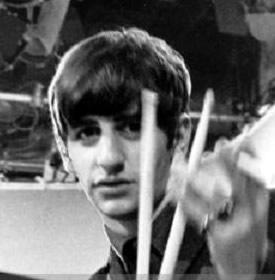
Richard Starkey was born today in Liverpool, England  in 1940. He is 72 years old.

For those of you who may not have turned on a radio in the last 50 years… Richard  Starkey is better known by his alias Ringo Starr. Starr was the drummer for the 1960’s rock and roll band the Beatles. Ringo met the nascent band in Hamburg, Germany. He was later asked to replace Pete Best as the Beatles drummer, and, with the exit of bass player Stu Sutcliffe, the Fab Four were born.

The Beatles released  their first 45 –“Love Me Do/P.S. I Love You”– in 1962 to moderate success, followed by “Please Please Me” which launched the group to the top of the English Charts. Beatlemania was born.

Although Ringo took a back seat to the juggernaut composing team of Lennon and McCartney and sang only a fraction for the Liverpudlian mop tops he was wildly popular. His easy going manner and self deprecating humor made him a fan favorite that lasted long after the band broke up.  Ringo wrote and sang one of the groups most popular songs, “With a Little Help from My Friends.”

He also starred in film and  television. Including his role as Mr. Conductor in the beloved children’s program Thomas the Tank Engine.


Thought of the Day 7.6.12

“I have not yet begun to fight”

John Paul Jones

John Paul was born in Arbigland Scotland in 1747. Today is the 265 anniversary of his birth.

At 13 he started his seaman’s apprenticeship. After a brief stint on Slave Ships — which he quit calling it an “abominable trade” — and time as a Master Supercargo (the officer in charge of buying and selling the cargo of a ship), Paul became a captain at 21.  He worked the trans Atlantic routes to the Caribbean and Virginia and amassed a small fortune in the merchant marine business by 1773, but his hot temper got him into trouble more than once. And when he killed a mutineer in the West Indies he had to flee to Virginia. It was then that he changed his name to John Paul Jones.

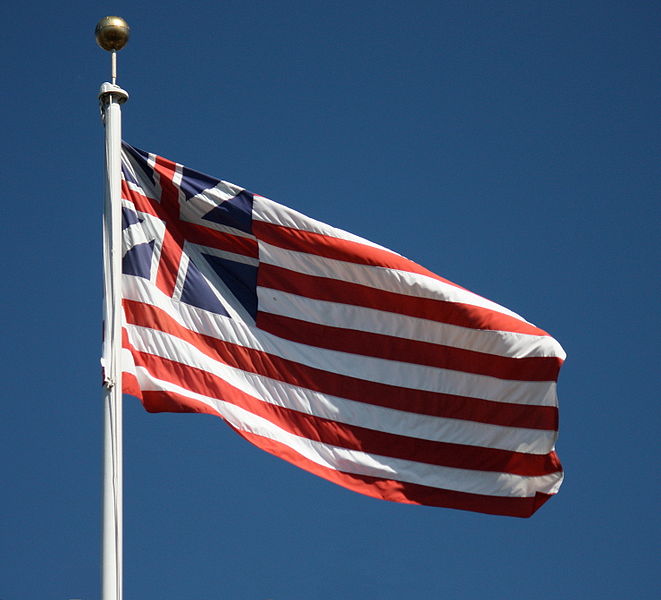
War with England was brewing and John Paul Jones offered his services on the sea. With the endorsement of Richard Henry Lee, Jones was commissioned as a First Lieutenant into the vast Continental Navy (they only had six vessels) on December 7th, 1775. As his ship, the Alfred set sail from the Delaware River on its maiden cruise he hosted the Grand Union Flag, (the first national flag of the United States,) it was the first time a US ensign was flown over a naval vessel. He next took command of the sloop Providence. He captured 16 prizes along the coast of Nova Scotia. Although he argued with Naval authorities, his reputation grew, he was given command of the USS Ranger and set sail for France. There he befriended American diplomats in Paris John Adams, Arthur Lee, and especially Benjamin Franklin (he named one of his boat the Bonhomme Richard in honor of Franklin’s Poor Richard’s Almanac.)  When the Bonhomme Richard was in dire straights in the Battle of Flamborough Head with the frigate Serapis he was offered the chance to surrender. Jones, of course answered that he had not yet begun to fight. He lost the Richard, but went on to capture the larger frigate.  Jones later earned the moniker  “Father of the American Navy.”

After the American Revolutionary War  Thomas Jefferson (who was then the American Ambassador to France) recommended him for service in Catherine II’s  Russian Navy. John Paul Jones then became Kontradmiral check Pavel Ivanovich Jones and served with Potemkin in the Black Sea campaign.

John Paul Jones, line drawing

John Paul Jones, line drawing (Photo credit: Wikipedia)

This media file is in the public domain in the United States. This applies to U.S. works where the copyright has expired, often because its first publication occurred prior to January 1, 1923.

A replica of the Grand Union Flag, the first flag of the United States of America.
(This image has been released into public domain by its author, Makaristos, and is courtesy Wikipedia.)


Public domain I, the copyright holder of this work, release this work into the public domain. This applies worldwide.
In some countries this may not be legally possible; if so:
I grant anyone the right to use this work for any purpose, without any conditions, unless such conditions are required by law.

Thought of the Day 7.5.12

“If I shoot at the sun I may hit a star”

— P.T. Barnum

Phineas Taylor Barnum was born in Bethel, Connecticut in 1810. He would be 202 years old today.

According to the Ringling Bros. and Barnum & Bailey website P.T. Barnum presented “the public of the 19th century shameless hucksterism, peerless spectacle and everything in between.”  The consummate promoter, Barnum began by presenting acts in New York. Here’s a few of the live acts and curiosities the “Master Showman” brought to the public: Joice Heth — a blind, nearly paralyzed slave woman, whom he claimed was the 161 year old Nurse to George Washington;  Charles Stratton, aka General Tom Thumb– “The Smallest Person that Ever Walked Alone;” and the embalmed remains of the “Feejee Mermaid.” In 1850 he presented a more refined act when he brought “The Swedish Nightingale” Jenny Lind to the American Stage.

In 1870 Barnum took his show on the road with P.T. Barnum’s Grand Traveling Museum, Menagerie, Caravan and Circus. The Circus made $400,000 its first year and quickly became known as the “The Greatest Show on Earth”  Barnum also started America’s first aquarium.

Barnum lectured as a temperance speaker, served two terms in the Connecticut legislature and was mayor of Bridgeport.

Image courtesy of the Ringling Bros. and Barnum & Baily Circus website


Today’s Thought 7.4.12

“…We hold these Truths to be self-evident, that all Men are created equal, that they are endowed by their CREATOR with certain unalienable Rights, that among these are Life, Liberty and the Pursuit of Happiness…”

–The Declaration of Independence

Independence Hall, Philadelphia, PA

The Declaration of Independence  was adopted by the Second Continental Congress on this date in 1776. It is 236 years old.

The document was written by Thomas Jefferson with help from the “Committee of Five” (Jefferson, John AdamsBenjamin Franklin, Robert Livingston, and Roger Sherman). It announced that the thirteen American colonies had severed ties from the British Empire.

The interior of Independence Hall. This is the room where the Second Continental Congress signed the Declaration of Independence on July 4, 1776.

For the full text of the Declaration of Independence go HERE.  Links to the full text of the Constitution and the Bill of Rights can also be found on that page.


Thought of the Day 7.3.12

“Every exit is an entrance somewhere else”

–Tom Stoppard

Tom Straussler was born this day in Zlin, Czechoslovakia in 1937. He is 75  years old.

As War World II loomed in Europe his family moved to Singapore to escape the Nazis. In 1941 as the Japanese were poised to invade Singapore he and his mother and brother fled to Darjeeling, India. (His father stayed in the city and was died in the invasion.) After the war they moved to England and his mother remarried. Kenneth Stoppard adopted Tom and his sister.

Stoppard left school when he was only 17 and began to write for local newspapers. He started writing plays and scripts and in 1963  his first television play, A Walk on the Water was produced. Success on the stage came with his hugely popular Rosencrantz and Guildenstern are Dead, a play that looks at Hamlet from the point of view of two minor characters. For the screen he penned Empire of the Sun, Billy Bathgate, and co-wrote Brazil and Shakespeare in Love. He won the “Best Screenplay” Oscar  for Shakespeare in Love.

His other works include: Every Good Boy Deserves Favour, The Real Thing, Arcadia and Dogg’s Hamlet, Cahoot’s Macbeth

Tom Stoppard on a reception in honour of the p...

Tom Stoppard on a reception in honour of the premiere of “The Coast of Utopia” in Russia (Photo credit: Wikipedia)


Thought of the Day 7.2.12

“None of us got where we are solely by pulling ourselves up by our bootstraps. We got here because somebody – a parent, a teacher, an Ivy League crony or a few nuns – bent down and helped us pick up our boots.”

Thurgood Marshall

Thurgood Marshall was born in Baltimore, Maryland in 1908. Today would have been his 104th birthday.

The grandson of a slave, Marshall knew first hand the long arm of a segregated society.  In 1930, after graduating cum laude from Lincoln University,  he applied to the University of Maryland Law School, but wasn’t accepted because of his race. Marshall went instead to Howard University Law School where he graduated magna cum laude. He later successfully sued UofM to admit Donald Murray to the Law school.

He moved to New York and became a special counsel for the NAACP. He helped draft  the constitutions for Ghana and Tanzania on the behest of the United Nations.

Marshall argued in numerous Supreme Court cases, most revolving around segregation. The landmark decision of Brown v. Board of Education of Topeka, Kansas demolished legal “separate but equal” segregation in the United States.

In 1961 Marshall was appointed by President Kennedy  as a circuit judge.  In 1965 President Johnson appointed him Solicitor General, and in 1967 Thurgood Marshall was appointed to the Supreme Court of the United States. He served on the Court until 1991.

He saw the Constitution as  living document , noting in 1987 on the bicentennial of the Constitution that:

“the government they devised was defective from the start, requiring several amendments, a civil war, and major social transformations to attain the system of constitutional government and its respect for the freedoms and individual rights, we hold as fundamental today…Some may more quietly commemorate the suffering, struggle, and sacrifice that has triumphed over much of what was wrong with the original document, and observe the anniversary with hopes not realized and promises not fulfilled. I plan to celebrate the bicentennial of the Constitution as a living document, including the Bill of Rights and the other amendments protecting individual freedoms and human rights.”


Thurgood Marshall, appointed by Kennedy to the...

Thurgood Marshall, appointed by Kennedy to the United States Court of Appeals for the Second Circuit. (Photo credit: Wikipedia)


Thought of the Day 7.1.12

“There is only one happiness in this life, to love and be loved.”

George Sand

George Sand was born Amandine Aaurore Lucile Dedvant in Paris, France in 1804. Today is the 208th anniversary of her Birth.

She grew up in the French countryside, a setting often used in her novels. After an unsatisfying early marraige Dedvant moved to Paris  where she wrote articles and developed her writing. She reveled in Parisian life and fell in love with another writer Jule Sandeau. They wrote collectively under the byline of “J. Sand.” In 1832, when her first novel, Indiana, was accepted for publication she chose the pseudonym “George Sand.”

Sand wrote at night, every night, from midnight to sunrise. Her novels, which are romanic idealism in nature, include Indiana, Valentine, Lelia, Le Compagnon du tour de France, La Mare au diable, Consuelo, La Petite Fadette, and Le Peche de Monsieur Antoine.

She wore men’s clothing in public, had affairs (most notably with Polish pianist and composer Frederic Chopin), smoked tobacco, and was considered a loose woman by some people in society. Yet she was admired for her spirit and frankness by countless others.


Image courtesy Wikipedia


Thought of the Day 6.30.12

“Shadow owes its birth to light.”

John Gay

John Gay was born on this day in Barnstaple, England in 1685. We are celebrating the 327th anniversary of his birth.

Gay was a poet and dramatist. His most famous work was the Beggar’s Opera, but he wrote several other satirical plays. The Beggar’s Opera is considered the first successful ballad opera, and the predecessor of the popular operetta that would take hold on the English stage a century or so later with Gilbert and Sullivan.

He was a contemporary of Jonathan Swift and Alexander Pope. He studied music with George Frideric Handel.

Gay died at 47 and was buried in Poet’s Corner of Westminster Abbey. His epitaph is from the Beggar’s Opera “Life is a jest, and all things show it: I thought so once and now I know it.”


John Gay

John Gay (Photo credit: Wikipedia)


Thought of the Day 6.29.12

“True happiness comes from the joy of deeds well done, the zest of creating things new.”

-Antoine de Saint-Exupery

Antoine de Saint-Exupery was born in Lyons, France on this day in 1900. He would have been 112.

Saint-Exupery was an aviator, adventurer and writer. He made his first solo flight in July of 1921. By 1926 he had secured a job flying mail for Aeropstale over North Africa. His first novel, Southern Mail, was written shortly after. His move to South America and work as director of Aeroposta Argentina became the basis of his second novel, Night Flight. The book was an international best seller and was made into a movie starring Clark Gable in 1933. While recovering from two serious aviation accidents he wrote Wind, Sand and Stars.

At the outbreak of WWII he joined the French Air Force and flew reconnaissance missions. When France fell to Germany, he travelled to the United States and tried to build support for the US entering the War. While here he published Flight to Arras. After two years in the States he joined the Free French Air Force in North Africa, again flying reconnaissance missions. On July 31, 1944 he took off  from an airbase on Corsica and never returned.

The Little Prince  was written while he was in the US, and was published in 1943. It was Saint-Exupery’s best selling book. It has been translated into 250 languages and has sold 200 million copies.

Cover of "The Little Prince (Turtleback S...

Cover via Amazon