Category Archives: Theatre

Thought of the Day 9.16.12 Lauren Bacall

“You know how to whistle, don’t you, Steve? You just put your lips together and blow.”

— Lauren Bacall
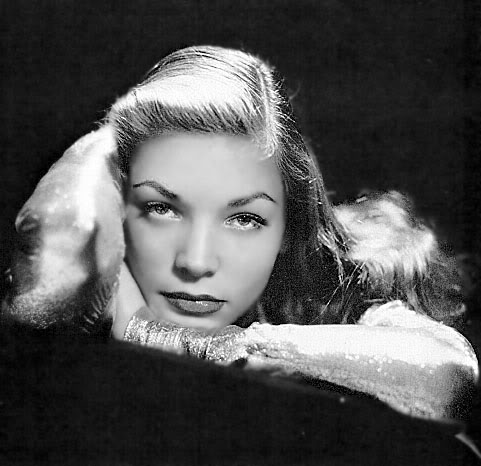
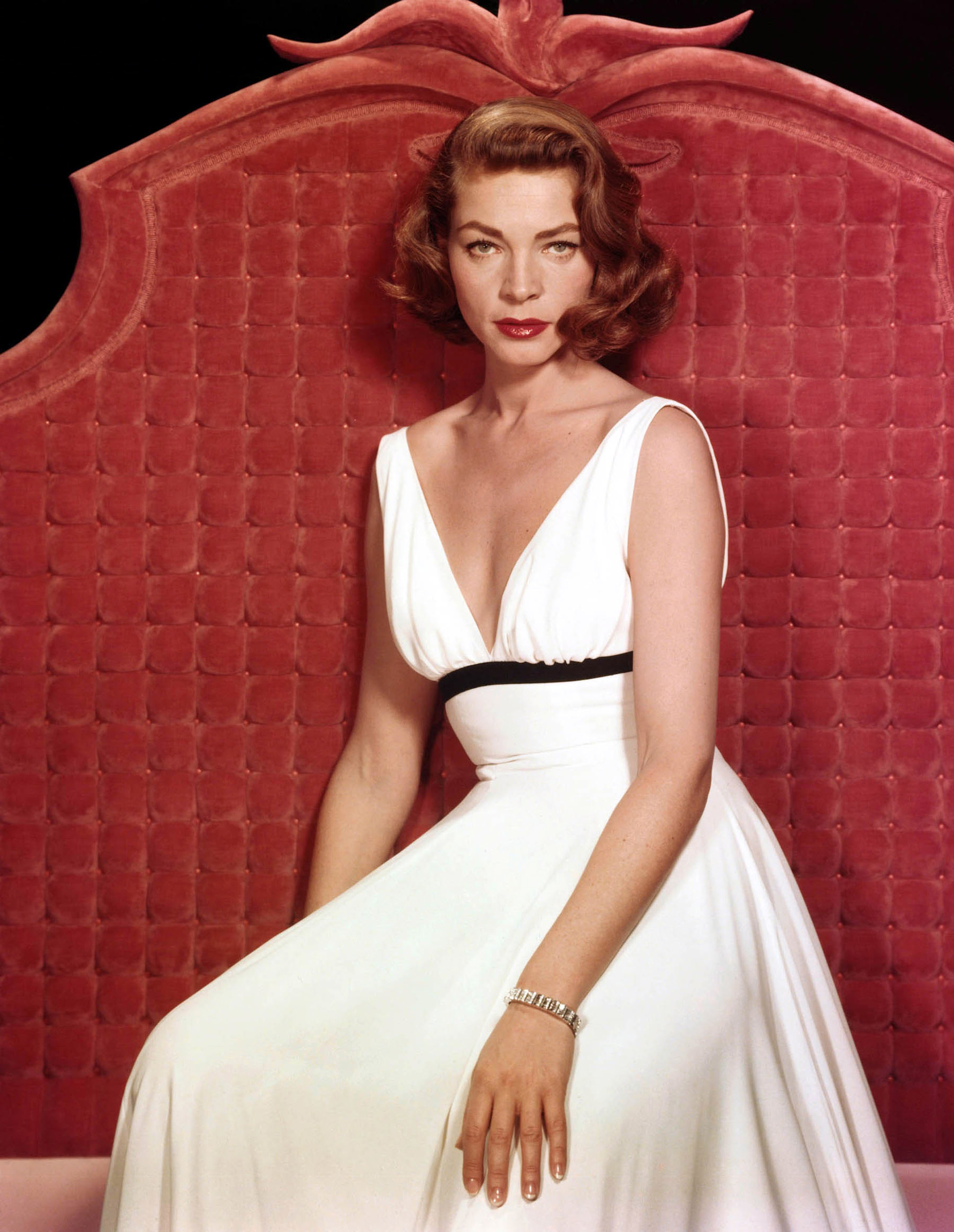
(Photo courtesy: Tweedland)

Betty Joan Perske was born on this day in the Bronx, New York in 1924. She is 88 years old.

She grew up in a middle class family. Her father, William Perske, was a salesman and her mother, Natalie Weinstein-Bacal Perske, was a secretary. Betty’s father, an alcoholic, left when she was six. Her mother changed their last name to Bacall. (The Romanian form of her mother’s maiden name.)

Bacall loved to dance but was smitten by the acting bug too. She studied at the American Academy of Dramatic Arts in New York. And got some work in off-Broadway productions. She had her first paid acting gig in Johnny 2×4 it was a walk on role, she was 17. She ushered at theatres to make money. She also modeled and it was a modeling gig on a Harper’s Bazaar cover in 1943 that brought her to the attention of director Howard Hawks’ wife Nancy. Nancy convinced Hawks to give Bacall a screen test. Hawks liked what he saw. He offered her a seven-year contract starting at $100 a week.  He  got her to modulate her voice (so she spoke in a lower, more sultry, register) and to  her to change her first name to Lauren. Nancy Hawks befriended Bacall and helped her with matters of dress “elegance, manner, and taste.” [ Original Old Radio ]
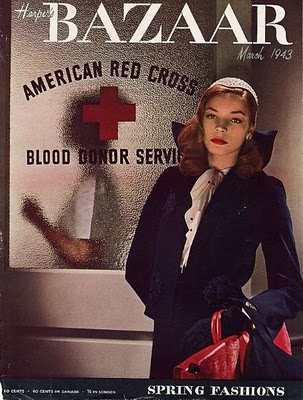
The Harper’s Bazaar cover that started it all. (Image courtesy Noir and Chick Flicks)

Her first role was in To Have and Have Not with Humphrey Bogart in 1944. The movie is loosely based on a book by Earnest Hemingway, the screenplay was by William Faulkner, but the famous “whistle” line was written by Hawks for Bacall’s screen test. After seeing the test, he not only offered her the role, but he asked Faulkner to work the scene into the script. Bogart’s Harry addresses Bacall’s Marie as ‘Slim’, she calls him ‘Steve’ — the same nicknames Howard and Nancy Hawks used for each other. Her  famous “Look” was the result of nerves.

“I used to tremble from nerves so badly that the only way I could hold my head steady was to lower my chin practically to my chest and look up at Bogie. That was the beginning of The Look.” [Lauren Bacall as quoted on Brainy Quotes]
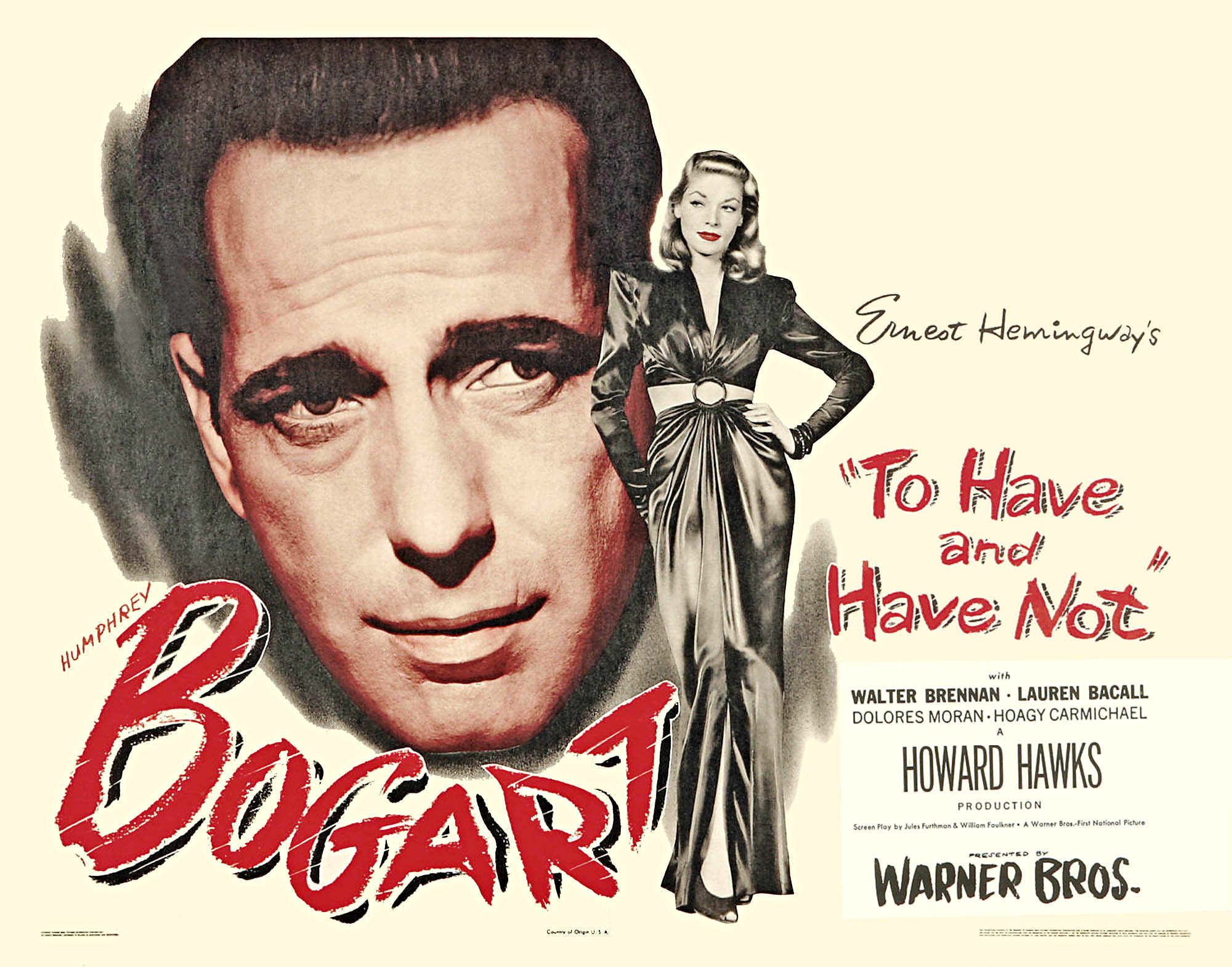
Movie poster for To Have and Have Not. (Image courtesy of: Dr.Marco’s High Quality Movie Scans)

Bacall was only 19. Bogie, who was a quarter century her senior, fell in love with the beautiful, talented, strong woman, and she fell in love with him. The two married in 1945.

The duo made The Big Sleep, Dark Passage and Key Largo together. By limiting the number of films she made she could choose her roles carefully. She’d made one flop, Confidential Agent following To Have and have Not, and  she thought her career never fully recovered from it. With her reputation as a solid actress — and  the security of being married to one of Hollywood’s leading men — she was able to turn down roles that she didn’t find interesting. Bacall averaged one film a year while she was married to Bogart.

She and Bogey had two children, Stephen and Leslie Bogart and enjoyed 12 years of marriage before Bogart died of Lung cancer.

Bacall returned to New York and  started the second phase of her career, this time focusing on Broadway.

“I finally felt that I came into my own when I went on the stage,” [bio.TRUE STORY]

In 1961 Bacall married again, this time to actor Jason Robards, Jr., and had third child, Sam Robards.
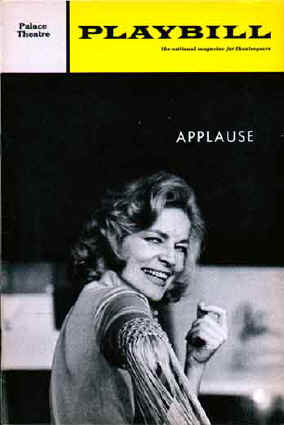
Applause Playbill (Image courtesy of: www.musicals101.com)

Bacall starred in Goodbye, Charlie (1959), Cactus Flower (1965) and had the lead in the musical adaptation of the 1952 movie All About Eve, Applause. The show earned Bacall her first Tony. Her second Tony came in 1981 for Woman of the Year.

She wrote two autobiographies, part one, Lauren Bacall By Myself, came out in 1978, the second part, Now, was published in 1994.

Both volumes openly discussed difficult parts of her life, including the alcoholism of both of her husbands, despite the fact that some of the topics were relatively controversial for the time. [bio.TRUE STORY]

She also tells about a time in her teens when she met actress Bette Davis in Davis’ hotel. Davis returned the favor when Bacall was giving new life to Margo Channing, the roll Davis’ originated in All About Eve.  Davis came backstage at the Palace Theatre after a showing of Applause  and congratulated Bacall on her performance.

Bacall was honored with a Governor’s Award for Screen Legends from the Academy of Motion Picture Arts and Sciences in 2009.

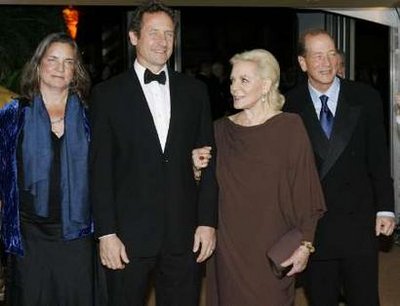
Lauren Bacall and her children, Leslie Bogart, Sam Robards and Stephen Bogart at The Academy of Motion Picture Arts and Sciences 2009 Governors Awards. Lauren Bacall was presented with the Governor’s Award.

Other Lauren Bacall quotes:

“I think your whole life shows in your face and you should be proud of that.”

“Find me a man who’s interesting enough to have dinner with and I’ll be happy.”

“I am not a has-been. I am a will be.”

“I wish Frank Sinatra would just shut up and sing.” (They were briefly engaged. Sinatra abruptly broke it off when he found out that news about the engagement had been leaked.)

(Photo courtesy of: Doctor Marco’s High Quality Movie Scans)

Thought of the Day 9.3.12 Ludovico Ariosto

“When the devil grows old he turns hermit”

Ludovico Ariosto 

c. 1510

c. 1510 (Photo credit: Wikipedia)

Ludovico Ariosto was born on this day in Reggio Emilia, Italy, in 1474. Today is the 538th anniversary of his birth.

Ariosto was the eldest of 10 children born to an affluent family. His father, Count Niccolo Ariosto, was the commander of the citadel, and Ludovico was supposed to follow in the his footsteps. He studied law, languages and literature.  He had a great love of poetry and wanted to become a writer, but he was obliged to support his family. When his father died, in 1500, he took over the family estate. In 1503 he began to work for Cardinal Ippolito D’Este who acted as Ariosto’s patron for a few years. Later he worked for the Cardinal’s brother, Alfonso I, Duke of Ferrara. In 1522 he was sent to wilderness of Garfagnana, Ferrara as governor. He did not take to the remote location of the bandits.

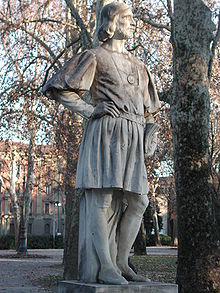
Statue of Ludovico Ariosto in Reggio Emilia

Ariosto snuck time to write some comedies, prose and poetry when his duties permitted. His play Cassaria was staged in 1508 and I Suppositi followed in 1509. (It was translated into English and was the inspiration for parts of  Shakespeare’s The Taming of the Shrew.) He wrote 5 comedies and 7 satires.

His greatest work, indeed ” the most celebrated narrative poem of the Italian high Renaissance” [Books and Writers] was Orlando Furioso. It was first published in 1516 at a length of  40 cantos.  The epic poem was revised and added to several times with the final version, at 46 cantos, appearing in 1532.  An additional 5 cantos , the Cinque canti were published by his son Virgino after the poet’s death.

 The plot revolves around the conflict of the Christian versus the Moor, the war between Charles, the Holy Roman Emperor, and Agramante, King of North Africa, and Marsilio, King of Spain. With the defeat and death of Agramante, the conflict ends, and Marsilio returns to Spain. [Books and Writers]

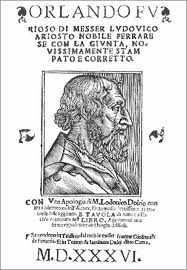
Two editions of Orlando Furioso.

The piece was so popular that, rumor has it, when the last revision came out Queen Elizabeth banned the English translator of the work from Court until he completed his task so he wouldn’t be distracted. Artist, composers and other writers have used characters from Orlando Furioso as their muse. Portrait of a Gentleman by Titian is one such work. His A Man with a Quilted Sleeve is believed to be Ludovico.


Thought of the Day 9.1.12 Edgar Rice Burroughs

“I write to escape…to escape poverty.”

Edgar Rice Burroughs

Русский: Эдгар Райс Берроуз

Edgar Rice Burroughs (Photo credit: Wikipedia)

Edgar Rice Burroughs was born on this day in Chicago, Illinois in 1875. Today is the 137th anniversary of his birth.

He was the middle child Major George Burroughs and his wife Mary Evaline. His younger siblings died of childhood diseases, leaving him the baby of the family. He bounced around several different local schools. Whenever there was an outbreak of a disease his parents took him out of one school and put him in another.  Since schools taught Latin and Greek as well as English he later …

“his erratic schooling… resulted in his … learning little English while taking the same Greek and Latin courses over and over again. Despite his claims to the contrary, this early exposure to Classical literature and mythology would serve Burroughs well in his future writing career.” [The Official Edgar Rice Burroughs Mini-Bio]

When a flu epidemic swept through Chicago his parents sent a teenaged Edgar to his brothers’ cattle ranch in Idaho. He love the rough and tumble “wild west”  with its range wars and saloon shoot outs and he lived there for six months before his parents realized the danger of  frontier life was on par with the danger of getting influenza. They called him home and enrolled him in Phillips Academy in Andover, Massachusetts. He didn’t last long there and was soon transferred to the more structured  Michigan Military Academy. He failed the West Point entrance exam  and signed up for the Army  as a private where he served with the 7th US Cavalry at Fort Grant, Arizona Territory. He was discharged from the Army for a heart condition in 1897.

In 1899 he was back in Chicago working for his father ‘s company, and the next year he married his childhood sweetheart, Emma Hulbert. After a few years he and Emma travelled west to Idaho so he could try his luck with his brothers again, this time at gold mining. But that venture soon went bust and Burroughs went through a number of jobs from railway policeman to peddler for quack medicine.

One of his jobs was as a pencil sharpener wholesaler. He placed ads for the pencil sharpeners in pulp fiction magazines and he would read through the magazines to check the placement of the ads.

“After reading several thousand words of breathless pulp fiction Burroughs determined … that ‘if people were paid for writing rot such as I read in some of those magazines that I could write stories just as rotten. As a matter of fact, although I had never written a story, I knew absolutely that I could write stories just as entertaining and probably a whole lot more so than any I chanced to read in those magazines.'” [The Official Edgar Rice Burroughs Mini-Bio]

Cover of "Under the Moons of Mars: A Prin...

Cover via Amazon

In fact he had already written stories, but his introduction into the pulp fiction market with Under the Moons of Mars,  for which he received a whopping $400 from All-Story magazine, was a turning point in his career. The story was serialized  in the magazine and produced as a novel under its original name of A Princess of Mars. By the time the last installment was published in July of 1912 Burroughs had completed two more novels. The Outlaw of Torn and Tarzan of the Apes. Outlaw was not picked up by the publisher, but Tarzan was an immediate hit. Burroughs got $700 for the book. He wrote a number of sequels for both Mars (11, including John Carter of Mars) and Tarzan (26).

Dustjacket by Armstrong Sperry for the first e...

Dustjacket by Armstrong Sperry for the first edition of Tarzan and the Lost Empire by Edgar Rice Burroughs (Photo credit: Wikipedia)

Other book series by Burroughs includes:

  • The Pellucidar series, which takes place in the hollow shell of the Earth (7 books, including one featuring a cross over appearance from Tarzan).
  • The Venus series, where Carson Napier, who is attempting a solo flight to Mars, crash lands instead on the watery planet of Venus. — look for a film made from the series coming out next year. (5 books)
  • The Caspak series, a prehistoric series, including The Land That Time Forgot (3 books)

He crossed writing genres at will penning social realism, horror stories, and westerns (and more).

Burroughs was living in Honolulu,  Hawaii when the Japanese bombed Pearl Harbor on December 7, 1941. He volunteered  to serve the war effort as a war correspondent  (the oldest in the Pacific theatre).

He died on March 19, 1950.

English: Bookplate of American writer Edgar Ri...

English: Bookplate of American writer Edgar Rice Burroughs (1875-1950) showing Tarzan holding the planet Mars, surrounded by other characters from Burroughs’ stories and symbols relating to the author’s personal interests and career. Associated media: File:Letter from Edgar Rice Burroughs to Ruthven Deane 1922.jpg explaining the design of his bookplate. (Photo credit: Wikipedia)


Thought of the Day 8.31.12 William Saroyan

“I can’t hate for long. It isn’t worth it.”

“The role of art is to make a world which can be tolerated.”

“Try as much as possible to be wholly alive, with all your might, and when you laugh, laugh like hell and when you get angry, get good and angry. Try to be alive. You will be dead soon enough.”

–William Saroyan

William Saroyan, American writer.

William Saroyan, American writer. (Photo credit: Wikipedia)

William Saroyan was born on this day in Fresno, California in 1908. Today is the 104th anniversary of his birth.

William was the youngest son of Armenian immigrant parents. His father died when he was 3 years old. William and his siblings went to the Fred Finch Orphanage in Oakland while their mother, Tahooki, found what work she could in San Francisco.  Six years later the family reunited as Tahooki got permanent work at a cannery in Fresno. He didn’t like school. The work was boring and he was picked on because he was the son of an immigrant. But he liked to learn, he liked to read and he like to write. He took advantage of the Fresno public library’s book collection and he took a course on typing at the Technical School. He sold newspapers to help with family finances, and worked his way up to messenger boy with a telegram company.

He travelled around the country hoping to become the next big American writer, but luck wasn’t with him (one time his suitcase, with most of his money and clothes inside, wound up in New Orleans instead of with him in New York.) So Saroyan returned to California and took a string of uninspiring jobs from working in a funeral parlor to selling vegetables at a farmers market. All the time he was writing on the side.

In 1933 he started to get published. His earned $15 when his short story The Daring Young Man on the Flying Trapeze appeared in the national magazine Story. Encouraged by the publication he decided to send the magazine one story a day for the entire month of January.

This he proceeded systematically to do, still full of the usual doubts that harass the unestablished writer, but determined to carry through the ambitious work program in as positive frame of mind as possible. He began with no firm ideas as to what the stories would be about… Midway through the month a telegram… arrived from the editors with the message he needed: yes, the stories were being received with great interest — keep them coming! This was the decisive moment of acceptance, marking the end of his long apprenticeship…. [Brian Darwent, William Saroyan Society, Biographical Sketch]

Other, higher paying, magazines began to take an interest. His stories appeared in The American Mercury, Harper’s, Scribner’s and others. A collection of his short stories was published by Random House in 1934 and became a best seller.

He traveled overseas, making a pilgrimage to his father’s homeland of Armenia. (He couldn’t make it as far his father home town, which was now a part of Turkey, but he did get to Erivan, Soviet Armenia.) Along the way he met Charlie Chaplin, George Bernard Shaw and Finnish composer Jean Sibelius.

He added playwriting to his skill list  in 1939 with My Heart’s in the Highlands. The play centers around a struggling Arminian American poet and his son Johnny.  His second play The Time of Your Life won a Pulitzer Prize (which Saroyan refused) and The New York Drama Critic’s Circle Best Play award (which he accepted.)  It takes place in Nick’s Pacific Street Saloon and centers around a wealthy young man named Joe and a bar full of colorful characters. The play has been revived several times on Broadway and in LA, and has been made into a big screen movie, with James Cagney and a Playhouse 90 television movie with Jackie Gleason.

First edition cover

First edition cover (Photo credit: Wikipedia)

The Human Comedy was produced by MGM Studios. Saroyan was under contract with Louis B. Mayer and he wrote and directed a short film called The Good Job as well as the 4.5 hour screen play for The Human Comedy (which Mayer turned over to another writer to edit down.) Saroyan also wrote a novel  on the same material that came out the same week as the film. The sentimental story was based on his life growing up as an immigrant in Fresno and it won an Oscar for the writer.

After WWII his writing career cooled. He was considered to sentimental and sugary for the harder edged, post-war critics.

 Saroyan praised freedom; brotherly love and universal benevolence were for him basic values, but with his idealism Saroyan was considered more or less out of date. [Books and Writers]

But he continued to write prolifically. In 1952 he published his memoir The Bicycle Rider in Beverly Hills.

Just before he died of cancer in 1981 he called the Associated Press quipping “Everybody has got to die, but I have always believed an exception would be made in my case. Now what?”

Stanford University has a large collection of his works and the author is celebrated by the William Saroyan Society. 

William Saroyan statue, Yerevan

William Saroyan statue, Yerevan (Photo credit: tm-tm)


Thought of the Day 8.28.12 Shania Twain

Man! I Feel Like a Woman!

–Shania Twain

Greatest Hits (Shania Twain album)

Greatest Hits (Shania Twain album) (Photo credit: Wikipedia)

Eilleen Regina Edwards was born on this day in Windsor, Ontario, Canada in 1965. She is 47 years old.

She is the eldest of five siblings and grew up about 500 miles north of Toronto with her mother Sharon and her adoptive father Jerry Twain.

According to the biography on her official web site she …

“grew up listening to Waylon, Willie, Dolly, Tammy, all of them…But we also listened to the Mamas and the Papas, The Carpenters, The Supremes and Stevie Wonder. The many different styles of music I was exposed to as a child not only influenced my vocal style, but even more so, my writing style.” [ShaniaTwain.com]

Impressed by the girl’s singing, guitar playing and song writing skills, her mother became her defacto agent and  began to book the 8-year-old Twain at local venues and radio and TV spots. Twain says she would be awaken after midnight and taken to local clubs to sing with house bands — bar stopped selling alcohol at midnight.

The “b” side of Twain’s rural Canadian upbringing was summers spent on reforestation crews with her stepfather where she “learned to wield” a different kind of axe (and “handle a chain saw as well as any man.”)

An automobile accident took the lives of  both Sharon and Jerry Twain, and 21-year-old Eilleen took over raising her little brothers. She got a job at the Deerhurst Resort in Ontario which not only allowed her to pay the bills but also introduced her to musical theatre.

At 24 Twain recorded a demo of original music and changed her first name to Shania (Ojibway Indian for “I’m on my way” in honor of Jerry Twain’s Ojibway’s ancestry.) She signed on with Mercury Records and put out Shania Twain in 1993. The CD included the hits “Dance With The One That Brought You” and “What Made You Say That.”

She joined forces with rock producer Robert John “Mutt” Lange  (both professionally and personally — the two married  in 1993.) Her single Whose Bed Have Your Boots Been Under came out in 1995 and went to #11 on the  country charts. Woman In Me, her second album made “Twain the best-selling country female artist of all time. “ “Any Man of Mine,” “(If You’re Not In It for Love) I’m Outta Here!” “You Win My Love and “No One Needs to Know” all went to number 1, and the project won Country Album of the Year at the Grammies.

She released Come On Over in 1997 and listeners from pop and rock stations took her invitation seriously. She became a crossover artist with “You’re Still the One”  (which was #1 in Country and #2 on Billboard’s Hot 100 pop chart) and “Man! I Feel Like A Woman.” The album sold over 11 million copies.

<iframe width=”420″ height=”315″ src=”http://www.youtube.com/embed/KNZH-emehxA&#8221; frameborder=”0″ allowfullscreen>

In 2002 she continued in a more pop vain with the release of  UP.  In the music video  for the single I’m Gonna Getcha Good she leaves behind her trademark bare midriff and  jeans and opts for a futuristic Tron style leather get up as she takes a motorcycle ride through a dystopian landscape.

In 2011 she did a six part documentary on the OWN network and released her memoirs. To date she has sold over 75 million cds and has earned the moniker “The Queen of Country Pop.”


Celebrate Good Times, Come ON! 100 post!!!


Wordpress Button Closeup

WordPress Button Closeup (Photo credit: Titanas)

Instead of my usual Thought of the Day I wanted to share the exciting news that ritaLOVEStoWRITE has hit a milestone.  This is my 100th post on WordPress!

Thank you to all of the readers who have hit the blog 2,700 plus times in the last three months. And especially to my 57 dedicated followers (plus those 300 plus of you on Facebook and Twitter who follow that way.) Your LIKES, feedback and support have made these lonely hours in front of my computer well worth it.

Of course the act of researching, writing, adding the photos and editing the posts  has been its own reward. How else would I have found out about Mata Hari?

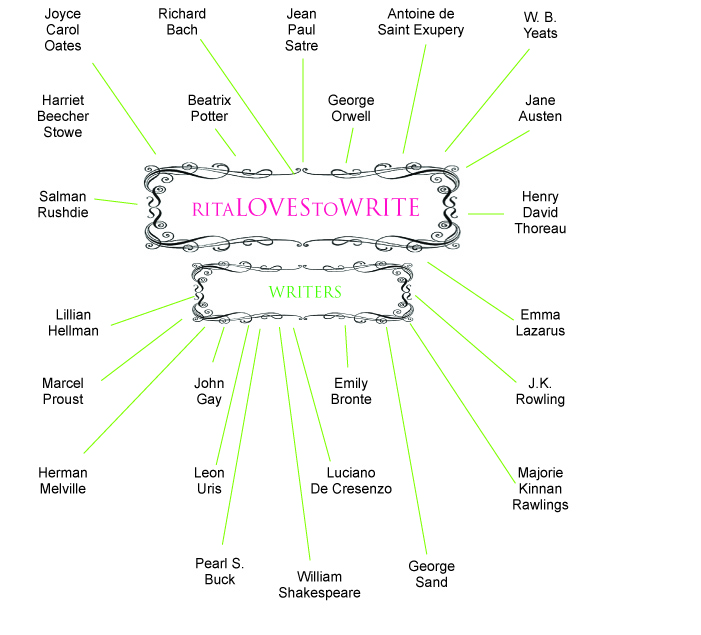
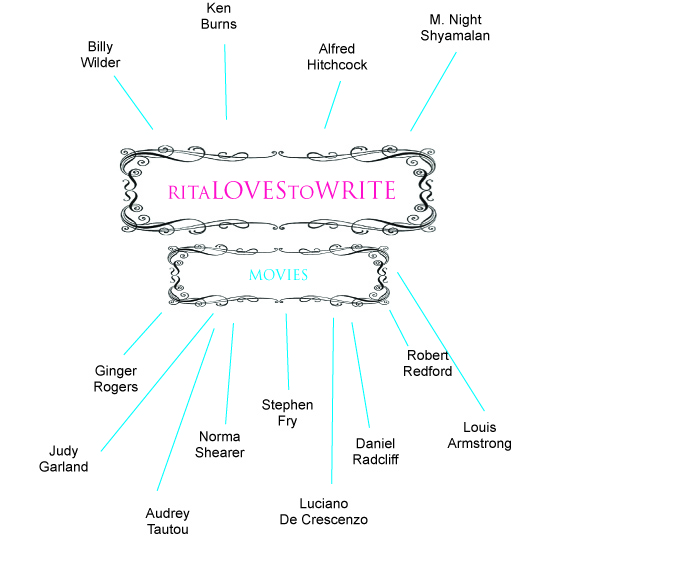
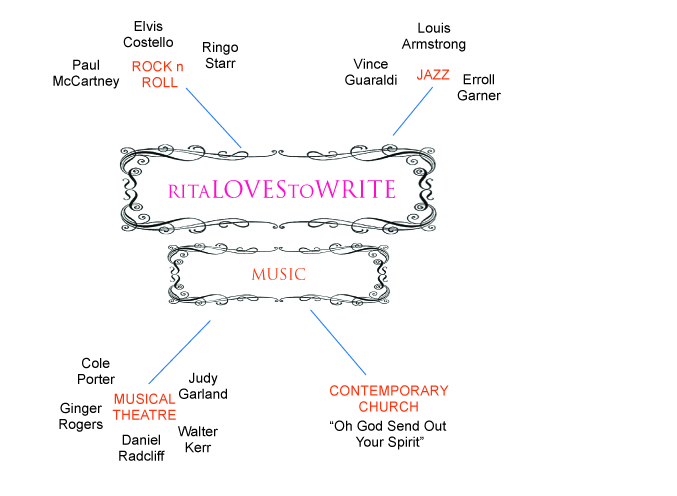
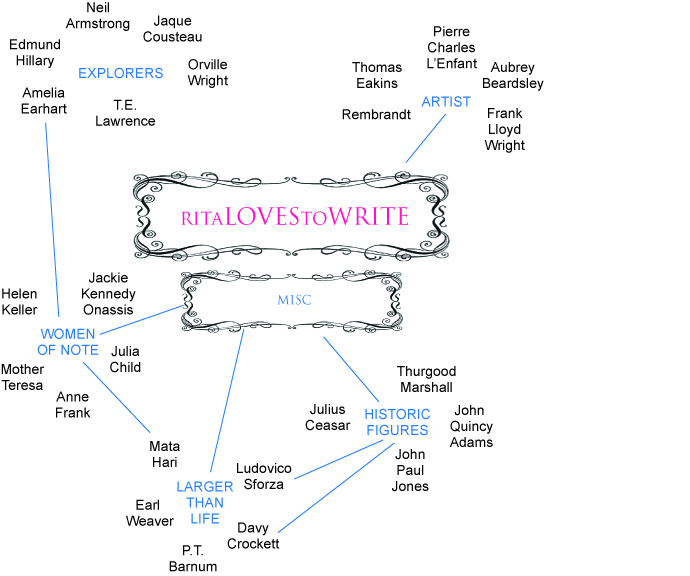
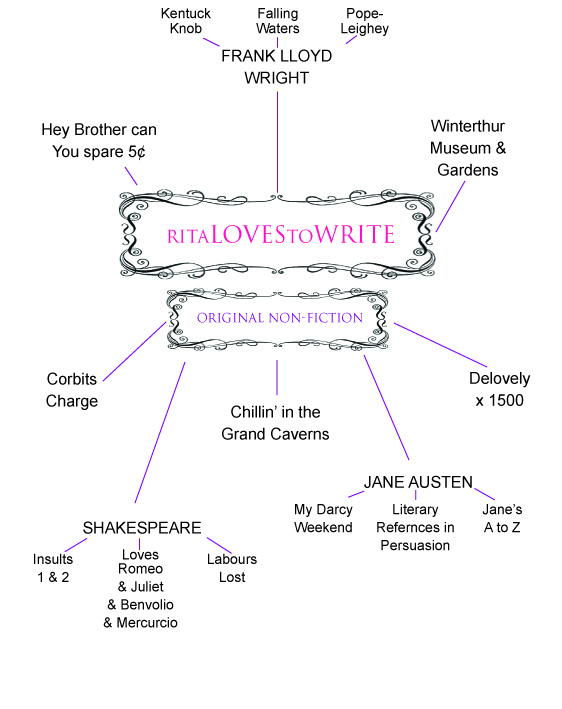
So, incase any one asks, here’s what rita WRITES about: 


I was somewhat surprised at how that broke down. While in the trenches of writing the blog I thought it weighed way to heavily on the celebrity and was too light on the cerebral, but actually I had more WRITERS than anyone else.


There was some nice cross over between Movies and Music (in Musical Theatre)…


The bulk of my 100 posts are in the Thought of the Day category, and the MISC. chart gives a who’s who of folks who didn’t fit nicely into Writing, Movies or Music. I liked the cross referencing here too.


The last chart is for post that didn’t appear as a Thought of the Day entry, “Original Non-Fiction.” Hmmm. Well everything on my blog is my original work (except one repost from my friend Lynn Reynolds about Books and How to Sell Them) and so far it has been all non-fiction. So I guess EVERYTHING could be on this chart.

In the future I hope to add some fiction to the site. Would you like that?

Please know that I love to get feedback, but I’m pretty fierce about SPAM. If there is any chance something is SPAM I throw it in the trash. So if I have inadvertently trashed your perfectly legitimate comment, I apologize. It was thrown into my SPAM folder and I probably couldn’t see your website to check. PLEASE write something referring back to “ritaLOVEStoWRITE” in your comment then I’ll know it is the real deal and not some bot trolling for unsuspecting bloggers.

I’ll leave you with a Thought for Today from Australian politician Arthur Calwell who was born on this day in 1896…

“It is better to be defeated on principle than to win on lies.”

Hmmm something to think about as the (American) political season goes super nova.


Thought of the Day 8.24.12 Stephen Fry

“It is a cliche that most cliches are true, but then like most cliches, that cliche is untrue”

Stephen Fry

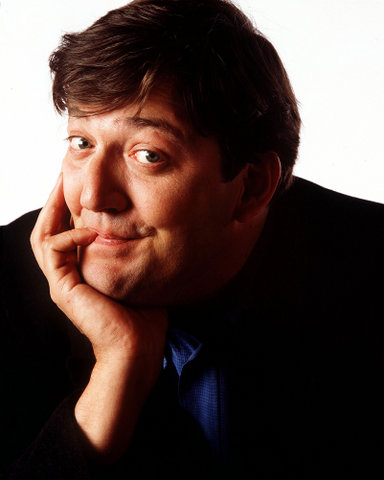
Stephen John Fry was born on this day in Hampstead, London, England in 1957. He is 55 years old.

He grew up in Norfolk. He was expelled from several schools and got into trouble with the law as a teen. He served three months in Pucklechurch Prison after stealing a credit card from a family friend. But the stint in prison seemed enough to straighten him out. He went back to school, this time at City College of Norwith and promised to apply himself to his studies. He scored well enough in his Cambridge entrance exams to get a scholarship at Queens’ College in 1979. At Queens he joined the Cambridge Footlights Dramatic Club and met Emma Thompson and Hugh Laurie. He won a Fringe First Award for  Latin! or Tobacco and Boys  a play he wrote for Footlights.

He teamed up with Laurie  to for the comedy act A Bit of Fry & Laurie. The Duo turned the act into a television sketch comedy series that premiered on December 26, 1987 with a 36 minute pilot. It ran for four seasons (1-3 on BBC2; season 4 on the more mainstream BBC1). The show’s combination of satire, wordplay and innuendo made it very popular. The complete series is available on DVD and selected sketches have been collected in book form.

In 1984  Fry adapted Noel Gay’s Me and My Gal. It had an eight year, 3,303 performance run at the Adelphi Theatre in London’s West End (with Robert Lindsay and Emma Thompson in the cast.)  It hopped the pond and opened at Broadway’s Marquis Theatre  in 1986 where it ran for 1,420 shows and was nominated for 13 Tony Awards. It also made him rich.

Fry considers himself a writer first and a  comedian/ actor second. He has published four novels: Liar (1991), The Hippopotamus (1994), Making History:  A Novel (1997) and The Stars’ Tennis Balls (200). His biography, Moab is My Washpot came out in 1997.

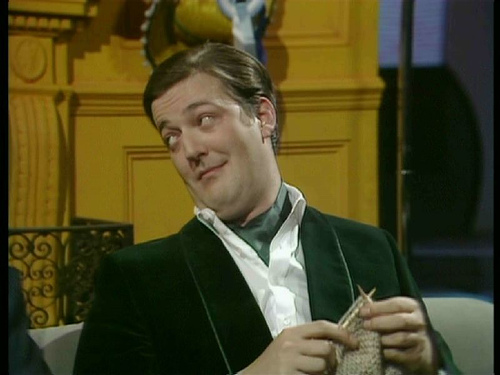
Other television work include Lord Melchett  in Black-Adder II and Reginald Jeeves in  Jeeves and Wooster. On the Radio he worked on Loose Ends, Delve Special, This is David Lander, Saturday Night Fry, Absolute Power and was the voice of Winnie the Pooh. He also presented The Incomplete and Utter History of Classical Music, a 20 part review of music over the past millennium.

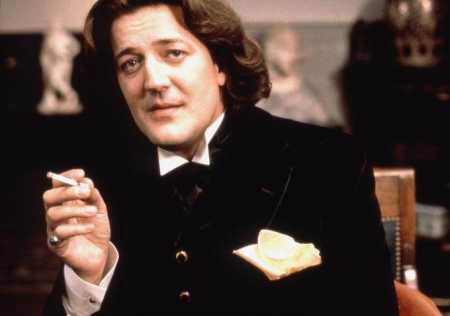
His film work goes back to 1985. He had was in the ensemble cast of Peter’s Friends (with Laurie and Thompson). He played Oscar Wilde in Wilde (1997). In Gosford Park he is the clueless Inspector Thompson. He’s the Cheshire Cat in Tim Burton’s 2010 Alice in Wonderland. You can catch him as the Master of Laketown in the upcoming The Hobbit: There and Back Again and as Sir Simon De Canterville in The Canterville Ghost. [The list of Fry’s television and film roles is quite long.  See his IMBD site for a more comprehensive look at this side of his career.)

Fry also has lent his talents to audio books. He read the film tie-in version of  Douglas Adam’s The Hitchhiker’s Guide To The Galaxy (he also dubbed the voice of the Book and was the narrator for the movie ) in 2005. He’s recorded his own novels and works by A.A. Milne, Anthony Buckeridge and Roald Dahl. Most famously he is the voice for the English audio books for the Harry Potter novels by J.K.Rowling.

He embraces technology with both hands, and has said he’s never met a smart phone he didn’t buy. He is “deeply dippy for all things digital” and says he bought the third Macintosh computer sold in the UK (Douglas Adams beat him to the first two.) His Twitter account has passed the four million mark .

He is actively involved in a number of social issue (often promoting them with his Twitter account and on his website.)

[All images courtesy Last.fm where you can find lots more great photos of Stephen Fry.]


Thought of the Day 8.22.12 Dorothy Parker

“Beauty is only skin deep, but ugly goes clean to the bone”

–Dorothy Parker

Dorothy Rothschild was born on this day in West End, New Jersey in 1893. Today is the 119th anniversary of her birth.

She said she was “a late unexpected arrival in a loveless family.” Dottie’s mother, Annie, died when the little girl was only five. Her father, Jacob, remarried two years later. But Dottie hated his new wife, Eleanor. Instead of calling Eleanor ‘Mother’ or ‘Stepmother’ Dorothy would refer to her as ‘the housekeeper.’  Annie was Protestant and Jacob was Jewish, but Eleanor was a strict Roman Catholic, and little Dottie thought she was a religious fantastic. Dottie was sent to elementary school at the Convent of the Blessed Sacrament, something else she loathed. She got into trouble when she refered to the Immaculate Conception as “spontaneous combustion.” Of her education there she later remarked…

…as for helping me in the outside world, the Convent taught me only that if you spit on a pencil eraser, it will erase ink.

She went to Miss Dana’s School for Young Ladies, a private boarding and finishing school in Morristown, New Jersey.  Shortly after graduating finishing school she learned that her brother, Henry, died aboard the Titanic. A year later her father passed away.

Dorothy moved to New York where she wrote during the day and played piano at a dancing school at night until her career took off. In 1914 she sold her poem “Any Porch” to Vanity Fair for $12.  She worked for Vogue (a sister Conde Nast publication) writing fashion captions including such quips as “Brevity is the soul of lingerie.” Later she moved over to Vanity Fair where her managing editor, Frank Crowinshield said she had

 “the quickest tongue imaginable, and I need not to say the keenest sense of mockery.” [Poetry Hunter.com]

In 1917 she married a wall street stockbroker, Edwin Pond Parker II.  Edwin went off to serve in World War I. He was wounded in the War and came back an alcoholic and morphine addict. The marriage didn’t last long, but she kept his name for the rest of her life.

Dorothy took over as Theatre Critic for P.G. Woodhouse. She was the only female drama critic in New York at the time.  Her acerbic wit was evident in such reviews as “if you don’t knit, bring a book.” Parker was

“a firecracker who was aggressively proud of being tough, quirky, fiesty…and she managed to carry it off with style and humor.” [ Marion Meade, What Fresh Hell Is This]

the readers loved her, but the theater owners and producers were less than pleased. She crossed the line once too often and when she panned a big production she got fired from the drama desk.

The Algonquin Round Table in caricature by Al ...

The Algonquin Round Table in caricature by Al Hirschfeld. Seated at the table, clockwise from left: Dorothy Parker, Robert Benchley, Alexander Woollcott, Heywood Broun, Marc Connelly, Franklin P. Adams, Edna Ferber, George S. Kaufman, Robert Sherwood. In back from left to right: frequent Algonquin guests Lynn Fontanne and Alfred Lunt, Vanity Fair editor Frank Crowninshield and Frank Case. (Photo credit: Wikipedia)

In the 1920’s Dorothy was a founding member of the Algonquin Round Table, a group of  — mostly male — writers and friends known for their quick-witted quips. During this period she wrote her poem “News Item” which contains the iconic Parker line “Men seldom make passes at girls who wear glasses.”  She worked for various publications most notably The New Yorker. At the New Yorker she wrote book reviews (just as funny and acerbic as her drama reviews) from 1927-1933 under the pseudonym the “Constant Reader.” She continued to write poetry and short stories,a nd in 1929 her story “The Big Blonde” won the prestigious O. Henry award.

Also in 1929 she began to write screenplays. She was hired by MGM and moved to Hollywood.  In 1933 Parker met husband #2, Alan Campbell, another screenwriter and the two became both professional and romantic partners. They signed on with Paramount Pictures in 1935 and Parker got an Academy Award nomination as part of the screenwriting team that penned “A Star Is Born.”

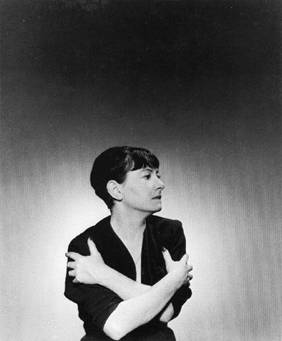
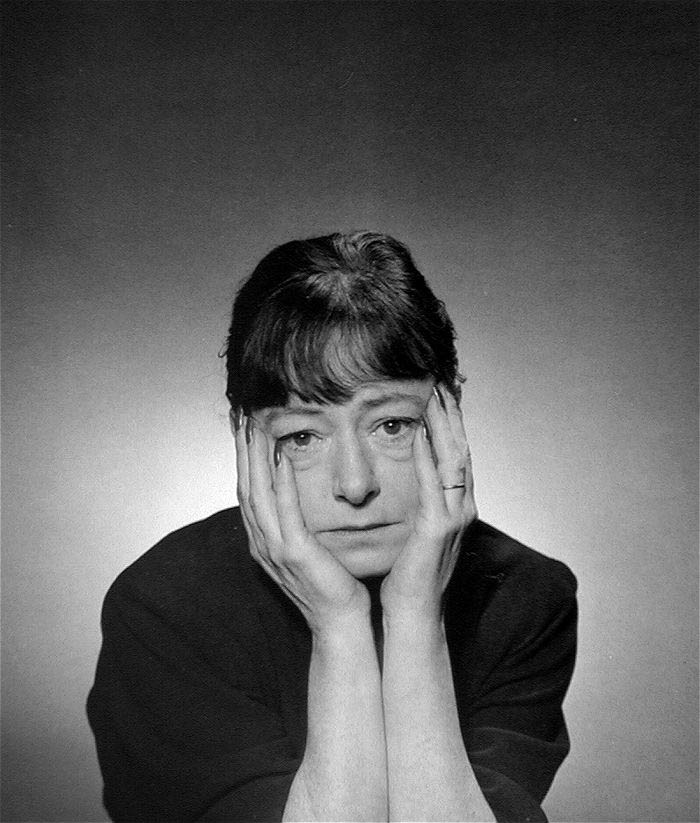
George Platt Lynes took this portrait in 1943. [ courtesy Dorothy Parker’s World Online. ]

Parker used her pen to fight for social justice. She championed feminism, racial equity, and the fight against Fascism. She supported the International Brigade (along with Earnest Hemingway) in their fight against Franco in the Spanish Civil War. In 1936 she helped found the Anti Nazi League. She also joined the Communist Party, an act that got her black listed in the 1950’s.Starting in 1957 she wrote book reviews for Esquire magazine, and in 1959 she was inducted into the American Academy of Arts and Letters.

Parker had a dark side. She was an alcoholic and she attempted suicide on several occasions. In her poem Resume she wrote about suicide:

Razors pain you;
Rivers are damp;
Acids stain you;
And drugs cause cramp.
Guns aren't lawful;
Nooses give;
Gas smells awful;
You might as well live.

On June 7, 1967 Parker died of a heart attack in New York City.

————————————————————-

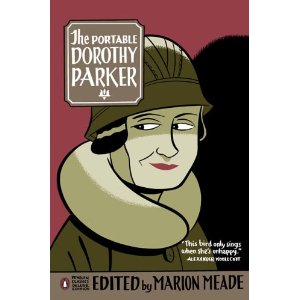
The Portable Dorothy Parker is available on Amazon.com.

Here are some more Dorothy Parker quotes: 

“She runs the gamut of emotions from A to B.”

The only ‘-ism’ Hollywood believes in is plagiarism.

Time wounds all heels.

I’d like to have money. And I’d like to be a good writer. These two can come together, and I hope they will, but if that’s too adorable, I’d rather have money.

Sorrow is tranquility remembered in emotion.

(In 1955) “Hollywood money isn’t money. It’s congealed snow, melts in your hand, and there you are.”

The best way to keep children at home is to make the home atmosphere pleasant, and let the air out of the tires.

One more drink and I’ll be under the the table, two more drinks and I’ll be under the host.

Scratch an actor – and you’ll find an actress.

Upon being told that former US President Calvin Coolidge (known as “Silent Cal” for being very tight-lipped) had died, she quipped, “How can they tell?”

He and I had an office so tiny that an inch smaller and it would have been adultery.

Excuse me, I have to use the toilet. Actually, I have to use the telephone, but I’m too embarrassed to say so.

People ought to be one of two things, young or dead.

On truth: Wit has truth in it; wisecracking is simply calisthenics with words.

“I’d rather have a bottle in front of me, than a frontal lobotomy.”

“This is not a novel to be tossed aside lightly. It should be thrown with great force.”

“You can drag a horticulture, but you can’t make her think.”

“Look at him, a rhinestone in the rough.”

“They sicken of the calm, who know the storm”

“This wasn’t just plain terrible, this was fancy terrible. This was terrible with raisins in it.”


Thought of the Day 8.18.12 Robert Redford

“Why do they have to mess with things that were perfect the first time around?”

Robert Redford

English: Robert Redford in Barefoot in the Park

English: Robert Redford in Barefoot in the Park (Photo credit: Wikipedia)

Charles Robert Redford, Jr was born on this day in Van Nuys, California in 1936. He is 76 years old.

Redford had a comfortable upbringing — his father was an accountant for Standard Oil –but he had a rebellious streak. He did well in sports and played football and tennis for Van Nuys High School. But he was more interested in what was going on outside the classroom than in what was on the syllabus. He got into trouble for drinking and stealing hub caps. He was good enough at baseball to get a scholarship the University of Colorado, but he lost it because of his drinking.  He dropped out of college and went to Europe to pursue painting.

When he returned to the US he met Lola Van Wagenan in New York and the two were married. Redford studied art at the Pratt Institute and then switched to acting at the American Academy of Dramatic Arts. In 1959 he landed his first small role on Broadway in Tall Story. The  Little Moon of Alban followed, and then came his breakthrough role in Neil Simon’s Barefoot in the Park opposite Elizabeth Ashley.  Park was Simon’s longest running Broadway show and Redford revised his role as Paul for the 1967 movie (this time opposite Jane Fonda.)

Cover of "War Hunt"

Cover of War Hunt

1962’s War Hunt marked Redford’s film debut.  The movie tells about a new recruit (Redford) and a war weary psychotic killer named Private Endore  (John Saxon). It was well received both at the box office and by the critics, and was named one of the ten best films in 1962 by the National Board of Review. One of Redford’s co-stars, Sydney Pollack went on to direct him in This Property is CondemnedJeremiah Johnson, The Way We Were, Three Days of the Condor, The Electric Horseman, Havana, and Out of Africa.

The late 50’s and 1960’s also brought a number of television appearances in shows like Playhouse 90, the Twilight Zone and Alfred Hitchcock Presents.

Film poster for Butch Cassidy and the Sundance...

Film poster for Butch Cassidy and the Sundance Kid – Copyright 1969, New Films International (Photo credit: Wikipedia)

He was a solid actor with a very pretty face. After several successful, movies where was a dashing blond guy in a suit, he turned down roles in The Graduate and Who’s Afraid of Virginia Woolf to avoid being typecast.  He opted instead for Butch Cassidy and the Sundance Kid where he played gritty, lovable, outlaw. The movie co-starred Paul Newman.  Newman and Redford hit gold again with The Sting a few years later.

After the box office hits of Butch Cassidy and the Sundance Kid, The Sting, Jeremiah Johnson and the Way We Were Redford could pick and choose his film projects. Some notables (not already mentioned) are: All the President’s Men, The Natural,  and  (the voice over for )A River Runs Through It.

Ordinary People was Redford’s directorial debut. (He did the unimaginable and made Mary Tyler Moore come off as a bitch). Redford won the Best Director Oscar. He hit directorial pay dirt with River, Quiz Show and The HorseWhisperer.  In 2011 he directed The Conspirator.

Robert Redford

Robert Redford (Photo credit: http://dirtywhorelebrity.com/)

He founded the Sundance Institute in 1981 to promote independent film making. The Sundance Film Festival soon followed.