Category Archives: postaday

Ernest Shackleton 2.15.13 Thought of the Day


“Difficulties are just things to overcome, after all.” — Ernest Shackleton


Sir Ernest Shackleton

Sir Ernest Shackleton (Photo credit: Marxchivist)

Gentleman and adventurer…


Captain, March 1917, Cover of the popular Engl...

Captain, March 1917, Cover of the popular English magazine with Ernest Shackleton back from his epic expedition South This picture is the copyright of the Lordprice Collection and is reproduced on Wikipedia with their permission Source URL http://www.lordprice.co.uk/Merchant2/merchant.mvc?Screen=CTGY&Category_Code=Antarctic (Photo credit: Wikipedia)


Ernest Henry Shackleton was born on this day in Kilkea, County Kildare, Ireland in 1874. Today is the 139th anniversary of his birth.


Ernest was the second of ten children born to Henry and Henrietta Shackleton. His father was a land owner, but he gave up farming for medicine shortly after Ernest’s birth. When the boy was six the family moved to Sydenham, London, England. He joined the merchant navy at 16.


Shackleton went on his first polar journey in 1901. He was chosen to join Robert Scott on an expedition to the South Pole. He, Scott and one other companion “trekked towards the South Pole in extremely difficult conditions, getting closer to the Pole than anyone had come” [BBC History] before turning back.


He returned to Antarctica as the head of expedition in 1908 aboard the Nimrod. “He was knighted on his return to Britain.” [Ibid] But it was his third journey to the South Pole that is one of legend.


Endurance final sinking in Antarctica

Endurance final sinking in Antarctica (Photo credit: Wikipedia)


In 1914 Shackleton and the crew of the Endurance headed south determined to cross the Antarctic continent via the South Pole. The ship was trapped in the ice of the Weddell Sea in 1915 and was crushed in October.


Shackleton’s crew had already abandoned the ship to live on the floating ice. In April 1916, they set off in three small boats, eventually reaching Elephant Island. Taking five crew members, Shackleton went to find help. In a small boat, the six men spent 16 days crossing 1,300 km of ocean to reach South Georgia and then trekked across the island to a whaling station. [Ibid]


The men on Elephant Island were rescued in August, and, amazingly, no one in the crew died.


Launch of the James Caird from the shore of El...

Launch of the James Caird from the shore of Elephant Island. (Photo credit: Wikipedia)


His memoir of the journey was published in “Endurance”  in 1919. (If he had any luck on the journey it was in taking along Photographer Frank Hurley who took stunning still and motion pictures of the Endurance and her crew.)


Shackleton made a finale trip south in 1922, this time bent on circumnavigating Antarctic. He made it to South Georgia Island. On January 5, he had a heart attack and died.


Glimpse of the Ship ['Endurance'] through Humm...

Glimpse of the Ship [‘Endurance’] through Hummocks, 1915 / photographed by Frank Hurley (Photo credit: State Library of New South Wales collection)

More reading:

South: The Story of Shackleton’s Last Expedition (1914-1917) by Sir Ernest Shackleton

Endurance: Shackleton’s Incredible Voyage by Alfred Lansing

And watch:

Shackleton – The Greatest Survival Story of All Time (3-Disc Collector’s Edition) Starring Kenneth Branagh

South Starring Ernest Shackleton, Frank Worsley, J. Stenhouse, et al. (The original silent movie by Frank Hurley)


Frederick Douglas 2.14.13 Thought of the Day

It is easier to build strong children than to repair broken men.

A sketch of Douglass, from the 1845 edition of...

Frederick Augustus Washington Bailey was born on this day in Talbot County, Maryland, USA in 1818. Today is the 195th anniversary of his birth.

The exact day and year of his birth is unknown, but he decided on February 14th, 1818.  He never met his father, a white man,  and almost never saw his mother.  He lived with his grandparents in their cabin west of the Tuckahoe Creek. In his first autobiography he wrote:

“I do not recollect ever seeing my mother by the light of day. … She would lie down with me, and get me to sleep, but long before I waked she was gone.” [Narrative of the life of Frederick Douglass, an American slave. Written by himself. (1851)

At seven he was sent to Wye House plantation near Easton, in Talbot County, Maryland. Soon he was sent to Hugh Auld a Baltimore carpenter. Auld’s wife, Sophia,  taught him to read until the master (her husband)  stopped her. Hugh Auld thought teaching slaves lead to rebellious slaves. Frederick practiced reading and writing in secret. When he was in Baltimore he heard about Abolition for the first time, and in 1831 he  read an article “on John Quincy Adams’s antislavery petitions in Congress” [Frederick Douglass Timeline]

At 13 he was sent to the shipping town of St. Michael’s, Maryland to work for Thomas Auld. When Auld discovered that Frederick was teaching other slaves to read he rented him out to a brutal slavebreaker, Edward Covey.”The treatment he received was indeed brutal. Whipped daily and barely fed, Douglass was “broken in body, soul, and spirit.” “ [PBS.org]

In 1838 he was back in Baltimore hired out to work as a caulker in a shipyard. He made his escape to freedom by…

Travelling by train, then steamboat, then train, he arrived in New York City the following day. Several weeks later he had settled in New Bedford, Massachusetts, living with his newlywed bride (whom he met in Baltimore and married in New York) under his new name, Frederick Douglass. [Ibid]

Douglass became active in the Abolitionist movement. He became a “licensed preacher for the African Methodist Episcopal Zion Church.” [Frederick Douglass Timeline] In 1841 he spoke at an antislavery meeting in New Bedford about his life in Maryland. The Massachusetts Anti-Slavery Society hired him as a speaker.

English: Portrait of Frederick Douglass as a y...

English: Portrait of Frederick Douglass as a younger man (Photo credit: Wikipedia)

Some people didn’t believe that a former slave could speak so eloquently and assumed Douglass was a fraud. In response to that criticism he wrote Narrative of the Life of Frederick Douglass. In 1845 he toured England and Ireland to raise money to buy his freedom. (Auld  manumitted him for $711.66.) Douglass used the remaining money from the Great Britain tour to buy a printing press and began to publish the North Star, a weekly Abolitionist paper. The paper later became the Frederick Douglass’ Paper and is joined in 1859 by the Douglass’ Monthy.

In 1855 he published his second autobiography, My Bondage and My Freedom. During the American Civil War Douglass was a recruiter for the all African-American 54th Massachusetts Infantry.

After the ratification of the 13th Amendment to the Constitution (which outlaws slavery) Douglass continued to fight for civil rights and woman’s rights. A fringe political party, The Equal Rights Party nominated Douglass as its vice-presidential Nominee in 1872.

The title page of the 1845 edition of Narrativ...

The title page of the 1845 edition of Narrative of the Life of Frederick Douglass, An American Slave (Photo credit: Wikipedia)

In 1881 he published his final autobiography, The Life and Times of Frederick Douglass.

He was appointed to the post of US Marshal of the District of Columbia and the Recorder of Deed of the District of Columbia before becoming Minister Resident and Consul General to the Republic of Haiti in 1889.

Frederick Douglass

Frederick Douglass (Photo credit: Wikipedia)

Frederick Douglass died on February 20th, 1895 of heart failure.

The gravestone of Frederick Douglass located a...


Grant Wood 2.13.13 Thought of the Day

“All the good ideas I ever had came to me while I was milking a cow” –Grant Wood

Self Portrait [Image courtesy: Wikipedia]

Self Portrait [Image courtesy: Wikipedia]

Grant DeVolson Wood was born on this day outside Anamosa, Iowa, USA in 1891. today is the 122nd anniversary of his birth.

Growing up on a farm Grant helped with the chores and raised his own goats and poultry. He liked to draw from a young age and used home-made charcoal sticks made of burnt wood from his mother’s stove.

Near Sundown Wood [Image courtesy: Wikipedia]

Near Sundown Wood [Image courtesy: Wikipedia]

His father died when he was 10 and the family moved to Cedar Rapids. He attended Washington High School where he took art, designed scenery for plays and drew for the school paper and yearbook.

After he graduated in 1910, Grant did a lot of different things.  He took art classes, taught art, made jewelry, learned carpentry, decorated people’s houses and cared for his mother and his sister Nan….He loved gadgets and making things, and he worked slowly and carefully at all of his crafts.  He was even able to use his artistic talent when he joined the army during World War 1.  His job was to paint camouflage on tanks and cannons. [Grant Wood Art Gallery]

After the war he traveled to Europe to study the 19th Century French Impressionist. Upon returning to the States he set off on his own style of painting, American Regionalism.

Appraisal [Image courtesy: Wikipedia]

Appraisal [Image courtesy: Wikipedia]

Going back to Iowa, for Grant Wood, was the formative experience in his artistic life. It was the return to his home state that prompted his painting to take a distinctive turn–towards regionalism, towards American subjects, towards the nineteenth century, towards an affectionate and yet ironic vision of his country and its history…[Virginia.edu]

He hit the peak of his popularity during the great depression.

His vision of the American heartland seemed to touch a troubled country deeply; his paintings offered a land that responded to cultivation lusciously rather than blowing away in the tornadoes of the dustbowl, as well as farmers and their families who offered a bounty with round and blushing cheeks. [Ibid]

He started the Stone City Art Colony and Art School with Adrian Dornbush and Edward Rowan in 1932. With the help of the Public Works of Art Project and the Civil Works Administration Grant employed many of the artist who lived at the Colony to produce murals in public buildings like court houses and post offices.

English: This is one of the digitized images o...

English: This is one of the digitized images of the original painting American Gothic that Grant DeVolson Wood, a master artist of the twentieth century, created in 1930 and sold to the Art Institute of Chicago in November of the same year. (Photo credit: Wikipedia)

He taught painting at University of Iowa from 1934 -1941.

Wood died of pancreatic cancer on February 12 in 1942.

Daughters of the Revolution [Image courtesy: Wikipedia]

Daughters of the Revolution [Image courtesy: Wikipedia]

—————————————————————–

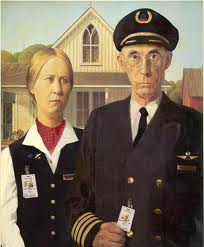
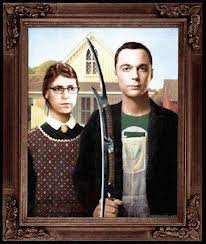
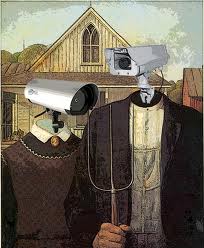
Grant used his sister Nan and their family dentist as subjects for his famous painting, American Gothic. The image has been updated and satired endlessly. Here are a few examples…

from soldiers and airline workers

Soldiers

Soldiers

Air Line employees

Airline employees

to celebrates…

Paris and Nicole

Paris and Nicole

Amy and Sheldon (From the Big Bang Theory)

Amy and Sheldon (From the Big Bang Theory)

to politicians…

Sarah Palin and John McCain

Sarah Palin and John McCain

Michelle and Barack Obama

Michelle and Barack Obama

to just plain weird stuff…

security cameras

security cameras

And you know if there's a lego version out there... I'm gonna put it in.

And you know if there’s a lego version out there… I’m gonna put it in.


Abraham Lincoln 2.12.13 Thoughts of the Day

President Abraham Lincoln was descended from S...

Abraham Lincoln was born on this day near Hodgenville, Harden Co., Kentucky in 1809. Today is the 204th anniversary of his birth.

I’m going to assume that you are all familiar with the 16th President of United States — the man who grew up in a log cabin, was a simple country lawyer and  went on to become president during this country’s darkest days. [For more information on his life might I suggest the White House.gov biography, Lincoln’s write-up on Biography.com , or the article on History.com ]  Frankly, there is little I can bring to the table that you don’t already know or couldn’t read about on more lofty websites… so instead I thought I’d bring you my favorite Lincoln quotes.

LIncoln logo

  • Better to remain silent and be thought a fool than to speak out and remove all doubt.
  • Sir, my concern is not whether God is on our side; my greatest concern is to be on God’s side, for God is always right.
  • You can fool all the people some of the time, and some of the people all the time, but you cannot fool all the people all the time.
  • In the end, it’s not the years in your life that count. It’s the life in your years.
  • Character is like a tree and reputation like a shadow. The shadow is what we think of it; the tree is the real thing.
  • Give me six hours to chop down a tree and I will spend the first four sharpening the axe.
  • Whatever you are, be a good one.
  • Be sure you put your feet in the right place, then stand firm.
  • The things I want to know are in books; my best friend is the man who’ll get me a book I ain’t read.
  • No man has a good enough memory to be a successful liar.
  • I destroy my enemies when I make them my friends.
  • My great concern is not whether you have failed, but whether you are content with your failure.
  • It has been my experience that folks who have no vices have very few virtues.
  • If I were two-faced, would I be wearing this one?
  • I want it said of me by those who knew me best, that I always plucked a thistle and planted a flower where I thought a flower would grow.
  • The time comes upon every public man when it is best for him to keep his lips closed.
Abraham Lincoln

Abraham Lincoln (Photo credit: George Eastman House)

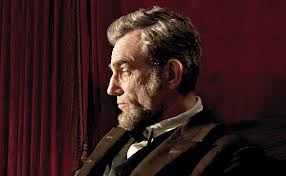
Lastly if you haven’t had a chance to see the Steven Spielberg film LINCOLN with Daniel Day-Lewis as the President, I recommend it. Why not Celebrate Lincoln’s birthday watching this tribute to the man’s indomitable spirit?

——————-

UPDATE: Daniel Day Lewis won the Oscar last night for his amazing portrayal of Lincoln. Well deserved!

Daniel Day Lewis embodied Lincoln in last year's Oscar nominated the Steven Speilberg movie.

Daniel Day Lewis embodied Lincoln in last year’s Oscar nominated the Steven Speilberg movie.

Daniel Day Lewis won the BEST ACTOR OSCAR for his performance of Lincoln.

Daniel Day Lewis won the BEST ACTOR OSCAR for his performance of Lincoln.

Daniel Day Lewis embodied Lincoln in last year's Oscar nominated the Steven Speilberg movie.

Daniel Day Lewis embodied Lincoln in last year’s Oscar nominated the Steven Speilberg movie.


Keeley Hawes 2.10.13 Thought of the Day

“I’ve been really lucky with my career so far. I haven’t been pigeon-holed, which sometimes happens to actors. … I’m even lucky enough to have done my pocket version of Lady Macbeth!”– Keeley Hawes

Zoe Reynolds

Zoe Reynolds (Photo credit: Wikipedia)

Clare Julia “Keeley”  Hawes was born on this day in  Marylebone, London, UK in 1976. She is 37 years old.

The youngest of four siblings she grew up in a working class family. Her father drives a taxi, and her brothers followed suit. Keeley is the only one in the family who was bit by the acting bug. They lived near the Sylvia Young Theatre School and she attended on a grant. There she took ten years of elocution lessons to lose her cockney accent. She also took acting lessons.  At 16 she began modelling for a year and half before making the switch to working as a fashion assistant for Cosmopolitan magazine.

In 1996 she landed a role in Dennis Potter’s Karaoke with Albert Finney and her acting career started in earnest. She had a starring role in the BBC’s 1998 adaptation of Dicken’s Our Mutual Friend. Her Lizzie Hexam is shy, humble, poor, innocent.

Her next major mini series role, Cynthia Kirkpatrick, in Elizabeth Gaskell’s Wives and Daughters is none of those things. The only thing Lizzie and Cynthia have in common is that  they both wear a corset… and Hawes is wonderful in both parts.

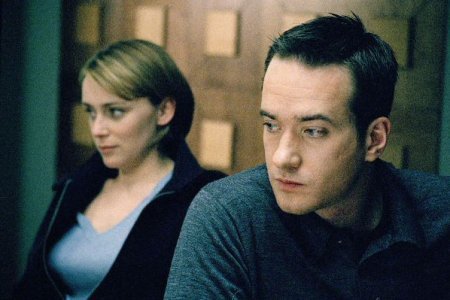
In 2002 she took on a much more modern role as Zoe Reynolds in the BBC One spy series Spo0ks (MI-5 in the US). She met her husband, Matthew MacFayden, while working on the series.

Keeley Hawes and Matthew MacFayden from Spooks (Image courtesy Fanpop.com

Keeley Hawes and Matthew MacFayden from Spooks (Image courtesy Fanpop.com]

Speaking of modern, Hawes starred in two modernized Shakespeare plays; an Andrew Davies penned retelling of Othello for Masterpiece Theatre, and as Ella MacBeth in BBC’s  Shakespeare Retold  with James MacAvoy.

Hawes has been busy (I’m only mentioning the performances I’ve seen == all of which have been excellent).

Her latest “Masterpiece” was last year’s Lady Agnes Holland on the reboot of Upstairs Downstairs.


Secondary Character Saturday — Samwise Gamgee

Sean Astin [Image courtesy: New Line Cinema]

Sean Astin as Sam in the 2001 LOTR  [Image courtesy: New Line Cinema]

Samwise Gamgee

“I feel as if I was inside a song, if you take my meaning.” –Sam from The Fellowship of the Ring

“I wonder if we shall ever be put into songs or tales. We’re in one, or course; but I mean: put into words, you know, told by the fireside, or read out of a great big book with red and black letters, years and years afterwards. And people will say: “Let’s hear about Frodo and the Ring!” And they’ll say: “Yes, that’s one of my favourite stories. Frodo was very brave. wasn’t he, dad?” “Yes, my boy, the famousest of the hobbits, and that’s saying a lot.“‘–Sam from the Two Towers

Who: Samwise “Sam” Gamgee

From: The Lord of the Rings

Written by: JRR Tolkien

Date Published: July 21, 1954

Why: Sam is the heart of the novel. The Lord of the Rings is essentially a quest/buddy story with a 9 member fellowship of adventurers trying to get the Ring to Mt. Doom. It is hard to stand out in a group of nine when you are small, socially unconnected and unskilled. Sam isn’t a wizard (Gandalf), he’s not a prince (BoromirAragorn), he’s not a warrior (Legolas, Gimli),  and he’s not even a well-born Hobbit (Frodo, Meriadoc and Pippin). He’s just Frodo’s servant. Yet his character arch from simple Shire gardener to determined hero is one of the 20th Century literature’s most endearing.

Pros: Loyal, Brave, Selfless, Kind, Modest, Inquisitive, Humble, Optimistic,

Cons: Occasionally slow-witted and jealous, Sam can also holds a grudge.

Frodo and Sam enter Mordor (Image courtesy Wallpapermay.com]

Frodo and Sam enter Mordor, while Gollum looks on(Image courtesy Wallpapermay.com]

Shining moment: Sam has several shining moments in the books ( saving the Frodo, Merry and Pippen from Old Man Willow, his fight with Shelob, keeping Frodo fed, sane and going thru Mordor, singlehandedly battling the orcs at Cirith Ungol to rescue Frodo among them) but I think his most shiny moment is when he carries Frodo up the side of Mount Doom…

“Come, Mr. Frodo!” he cried. “I can’t carry it for you, but I can carry you and it as well. So up you get! Come on, Mr. Frodo dear! Sam will give you a ride. Just tell him where to go, and he’ll go.” [The Return of the King]

Least shining moment: Like all of us Sam has his doubts, and Gollum is a master manipulator who plays on those doubts. Sam doesn’t trust Gollum or his alter ego Sméagol, and he doesn’t treat the creature kindly.

Sean Astin embodied Sam for the Peter Jackson trilogy [Image courtesy: New Line Cinema]

Sean Astin [Image courtesy: New Line Cinema]

Conclusion: Sam manages to stay true to himself while evolving into a wonderful hero. He has just as much chance to take the Ring as bigger, more powerful characters, but he doesn’t. He doesn’t need the Ring (or its power) to make him happy. It tempts him with visions of greatness, but he knows himself.  “The one small garden of a free gardener was all his need and due, not a garden swollen to a realm; his own hands to use, not the hands of others to command.” [The Return of the King] So he carries it but never puts it on his finger.

In “The Lord of the Rings” it is difficult to find a more honest character. During the journey Sam was to Frodo what Sancho was to Don Quixote – confident, conscious and supportive…Sam is a pledge for the prosperity of Hobbiton both in the literal and figurative sense of the word. When in Lyrien, he received a box with the blessed soil, which would fertilize the land in every corner of Middle-earth. This is what Galadriel said: “Well, Master Samwise. I hear and see that you have used my gift well. The Shire shall now be more than ever blessed and beloved.” [Lord of the Rings.org]

For more on Sam, The Lord of the Rings and Tolkien go to Tolkien Gateway HERE

Lego Sam

Don’t mess with Lego Sam


Elizabeth Bishop 2.8.13 Thought of the Day

“The whole shadow of Man is only as big as his hat.”–Elizabeth Bishop

[Image courtesy: Poetry Foundation.org]

[Image courtesy: Poetry Foundation.org]

Elizabeth Bishop was born on this day in Worcester, Massachusetts, USA in 1911 .  Today is the 102nd anniversary of her birth.

She was an only child whose father died when she was 8 moths old. Her mother suffered a series of mental breakdowns and was “permanently committed to an institution when Elizabeth was only five years old.” [Poetry Foundation]

[Image courtesy: The Elizabeth Bishop Legacy]

[Image courtesy: The Elizabeth Bishop Legacy]

Bishop, who went to live with her maternal grandparents in Nova Scotia, never saw her mother again. After several years her paternal grandparents took her to live with them in Massachusetts. The Bishops were well to do  and could afford a first class education for the little girl. They sent her to “Walnut Hills School for Girls and to Vassar College.” [Ibid]

[Image courtesy Elizabeth Bishop Society]

[Image courtesy Elizabeth Bishop Society]

After graduating Vassar Bishop, who was independently wealthy traveled extensively in Europe and North Africa. She lived for four years in Key West Florida where she wrote of her travels.  In 1946 those poems were compiled into her first book, North and South.  (The book won a Pulitzer Prize.) In 1951 she received a traveling fellowship and decided to circumnavigate South America. She made it as far as Santo, Brazil. Her intended stay of 2 weeks lasted over fifteen years. Upon returning to the United States she lived in New York, San Francisco, and New England.

Her style “focuses … with great subtlety on her impressions of the physical world… Her images are precise and true to life, and they reflect her own sharp wit and moral sense.” [Poets.org] The New York Times Called Bishop “One of the most important American poets” of the 20th Century. Bishop wrote slowly and precisely. She didn’t write a huge volume of poems, but each was measured perfection.

Here is my favorite Bishop poem, The Map:

map

The Map

Land lies in water; it is shadowed green.
Shadows, or are they shallows, at its edges
showing the line of long sea-weeded ledges
where weeds hang to the simple blue from green.
Or does the land lean down to lift the sea from under,
drawing it unperturbed around itself?
Along the fine tan sandy shelf
is the land tugging at the sea from under?

The shadow of Newfoundland lies flat and still.
Labrador’s yellow, where the moony Eskimo
has oiled it. We can stroke these lovely bays,
under a glass as if they were expected to blossom,
or as if to provide a clean cage for invisible fish.
The names of seashore towns run out to sea,
the names of cities cross the neighboring mountains
-the printer here experiencing the same excitement
as when emotion too far exceeds its cause.
These peninsulas take the water between thumb and finger
like women feeling for the smoothness of yard-goods.

Mapped waters are more quiet than the land is,
lending the land their waves’ own conformation:
and Norway’s hare runs south in agitation,
profiles investigate the sea, where land is.
Are they assigned, or can the countries pick their colors?
-What suits the character or the native waters best.
Topography displays no favorites; North’s as near as West.
More delicate than the historians’ are the map-makers’ colors.

Elizabeth Bishop

compass

Bishop died  at age 68 in October of 1979 in Boston. Besides her Pulitzer she won a National Book Award for Poetry in 1970, the Neustadt Internaional Prize in 1976 and two Guggenheim Fellowships (1947 & 1978).

[Image courtesy: Poets.org]

[Image courtesy: Poets.org]

Other Bishop poems I highly recommend:

A Visit to St. Elizabeths

Conversation

Five Flights Up

In The Waiting Room


Charles Dickens 2.7.13 Thought of the Day

“A loving heart is the truest wisdom.”–Charles Dickons

English: Detail from photographic portrait of ...

English: Detail from photographic portrait of Charles Dickens (Photo credit: Wikipedia)

Charles John Huffam Dickens was born on this day in Landport, Portsmouth, Hampshire, England in 1812. Today is 201st anniversary of his birth.

He was the second eldest child in a family of eight. His parents were of modest means but dreamed of a bigger, better life. His father, John, was a clerk, Elizabeth wanted to be a teacher — but with 8 children afoot never made it to the head of the classroom. The family was always poor, sometimes destitute.

When Dickens was four the family moved to Chatham, Kent. Dickens and his brothers and sisters roamed “he countryside and explore(d) the old castle at Rochester.” [Biography.com] They were happy years, and Dickens attended school and read ferociously. But the good times did not last. John outspent his income and was sent to debtor’s prison at the Marshalsea debtors’ prison in London in 1824. Elizabeth and the younger children moved in with  the father, but Frances, the eldest and Charles were sent to live with family friends.

Dickens at the Blacking Warehouse. Charles Dic...

Dickens at the Blacking Warehouse. Charles Dickens is here shown as a boy of twelve years of age, working in a factory. (Photo credit: Wikipedia)

So at 12 years old Charles Dickens was…

forced to leave school to work at a boot-blacking factory alongside the River Thames. At the rundown, rodent-ridden factory, Dickens earned six shillings a week labeling pots of “blacking,” a substance used to clean fireplaces. [Ibid]

John Dickens came into some money when his paternal grandmother died and he was released from the Marshalsea, but  Charles’ mother didn’t let him quit the boot-black factory right away. The family had grown accustomed to his six shillings a week. He never forgave her for making him go back to dirt and rats of the factory. Eventually he was able to go back to school, this time to The Wellington House Academy. Unfortunately the experience was anything but pleasant. The headmaster was sadistic, the teaching haphazard and fellow students undisciplined.

Charles Dickens described the second Marshalse...

Charles Dickens described the second Marshalsea in Little Dorrit. (Photo credit: Wikipedia)

At 15 he got a job as an office boy at a law office.

As it turned out, the job became an early launching point for his writing career. Within a year of being hired, Dickens began freelance reporting at the law courts of London. Just a few years later, he was reporting for two major London newspapers. [Ibid]

Dickens, who had a near photographic memory, stored all the experiences, the injustices, the cruelties, and the people he met in his head. They came out later on the pages of his novels. (Amy and her family live in the Marshalsea in Little Dorrit. David, Pip and Oliver relive some of his worst experiences in David Copperfield, Great Expectations, and Oliver Twist.)

Copy of Sketch of Charles Dickens

Copy of Sketch of Charles Dickens (Photo credit: Wikipedia)

By 1833 he was being published under a pseudonym, “Boz,” in magazines and three years later his first book, a collection of articles, Sketches by Boz, was published.

He wrote often wrote serialization for magazines (sometimes magazines in which he had a financial interest) and then published the finished story in the form of a book.

Charles Dickens (1812-1870)

Charles Dickens (1812-1870) (Photo credit: Wikipedia)

Here’s a list of his books:

  • The Posthumous Papers of the Pickwick Club
  • The Adventures of Oliver Twist
  • The Life and Adventures of Nicholas Nickleby
  • The Old Curiosity Shop
  • Barnaby Rudge: A Tale of the Riots of ‘Eighty
  • The Life and Adventures of Martin Chuzzlewit
  • Dombey and Son
  • David Copperfield
  • Bleak House
  • Hard Times: For These Times    
  • Little Dorrit     
  • A Tale of Two Cities
  • Great Expectations     
  • Our Mutual Friend
  • The Mystery of Edwin Drood

The Christmas books:

  •         A Christmas Carol (1843)
  •         The Chimes (1844)
  •         The Cricket on the Hearth (1845)
  •         The Battle of Life (1846)
  •         The Haunted Man and the Ghost’s Bargain (1848)

————————————————————————————————-

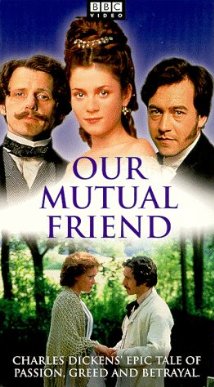
If you are looking for a good Dicken’s dvd to watch during the snow storm we are promised this weekend I can recommend both Little Dorrit with Clair Foy and Matthew MacFayden or Our Mutual Friend with Keely Hawes and Steven Mackintosh.

Our Mutual Friend DVD (Image courtesy IMDB)

Our Mutual Friend DVD (Image courtesy IMDB)

Little Dorrit dvd  (Image courtesy Amazon.com)

Little Dorrit dvd (Image courtesy Amazon.com)


Babe Ruth 2.6.13 Thought of the Day

“Never let the fear of striking out get in your way.” — Babe Ruth

Babe Ruth

Babe Ruth (Photo credit: carloscappaticci)

George Herman Ruth was born on this day in Baltimore, Maryland, USA in 1895. Today is the 118th anniversary of his birth.

He was one of eight children born to George and Kate Ruth. Only he and his sister Mamie survived.  His parents ran a saloon  at 426 West Camden Street, a job that took much of their time. So George, Jr and Mamie were left to their own devices. As an adult Ruth reflected that he ran the streets as a kid, skipped school, chewed tobacco and drank beer while his father wasn’t looking. He was “incorrigible,” and that’s what his parents recorded on his entry documentation to St. Mary’s Industrial School for Boys when he was sent he was just 7 years old.

St. Mary’s was part reformatory, part orphanage, part school and part work house. It was run by the Xavier Brothers and it served boys from ages 5 to 21. Ruth learned to make shirts as well as carpentry skills at the school. He lived there for 12 years. His parents seldom had the time to visit the school.

Ruth (top row, far left) at St Mary's Industri...
Ruth (top row, far left) at St Mary’s Industrial School for Boys, Baltimore, Maryland, c. 1912 (Photo credit: Wikipedia)

Fortunately for Ruth, the prefect of discipline at St. Mary’s, Brother Matthias Boutlier, took him under his wing.

Ruth particularly looked up to a monk named Brother Mathias, who became a father figure to the young boy… Matthias, along with several other monks of the order, introduced Ruth to baseball, a game at which the boy excelled. [Biography.com]

Brother Matthias worked with Ruth to hone his hitting, pitching and fielding abilities. Ruth showed such promise that …

the Brothers invited Jack Dunn, owner of the Baltimore Orioles, to come watch (him)  play. Dunn was obviously impressed, as he offered a contract to (Ruth) in February 1914 after watching him for less than an hour…. Upon seeing (Ruth) for the first time, the Orioles players referred to him as “Jack’s newest babe”…[baberuth.com]

The nickname stuck and he was known as Babe Ruth from then on.

Babe Ruth pitching with Boston Red Sox, Comins...
Babe Ruth pitching with Boston Red Sox, Cominsky Park, 1914 (Photo credit: Wikipedia)

He started as a pitcher. First for Baltimore and then for the Boston Red Sox. By 1915 he was a “permanent fixture in the Red Sox rotation, …accumulating an 18-8 record with an ERA of 2.44.” [Ibid] Both his pitching and hitting game improved over the next few years and “In 1918, Babe Ruth pitched his 29th scoreless inning in a World Series. That record stood for 43 years!” [about.com]

English: American baseball player Babe Ruth in...
English: American baseball player Babe Ruth in 1921 (Photo credit: Wikipedia)

The following year he shifted his focus to his hitting game and earned a new record. This time for a whopping 29 home runs in a single season. Ruth was traded to the Yankees in 1920 and topped his home run tally (coming in at 54 for the year.) In 1921 he broke the record again with 59 home runs.  In 1927 Ruth, as part of the Yankees famous “Murderer’s Row” hit an amazing 60 home runs for the season — a record that stood for 34 years.


Over the course of his career, Ruth went on to break baseball’s most important slugging records, including:

  • most years leading a league in home runs (12);
  • most total bases in a season (457)
  • and highest slugging percentage for a season (.847).

In all he hit 714 home runs, a mark that stood until 1974, when Hank Aaron of the Atlanta Braves surpassed him. [Biography.com]


Baseball player Babe Ruth
Baseball player Babe Ruth (Photo credit: Wikipedia)

Ruth helped the Yankees win seven pennants and four World Series. He wore pinstripes until 1934. He was ready to retire from the active roster and wanted to manage, but his off-field hijinks — he was almost as famous for his love of alcohol, women and food as he was for his ability to swing a bat — made owners think twice about placing him in a supervisory position. He was traded to the Boston Braves for his final season where he hoped to have both playing and assistant-management duties, but he soon realized the “management” part of his job was mostly P.R., public appearances and giving autographs.

Ruth with the Boston Braves in 1935, his last ...
Ruth with the Boston Braves in 1935, his last year as a player (Photo credit: Wikipedia)


On May 25, 1935, an overweight and greatly diminished Babe Ruth reminded fans of his greatness one last time when hit three home runs in a single game at Forbes Field in Pittsburgh, Pennsylvania. The following week, Ruth officially retired. [Biography.com]

The Sultan of Swat, The Bambino, Number “3” (Babe’s number in the Yankee batting line up and eventually the number on the back of his pinstripes) was inaugurated into the Baseball Hall of Fame in 1936.

Babe Ruth
Babe Ruth (Photo credit: Wikipedia)

A decade later doctors discovered a tumor on his neck. Ruth had cancer. He died on August 16, 1948.

Babe still remains the greatest figure in major league baseball, and one of the true icons in American history. The Babe helped save baseball from the ugly Black Sox scandal, and gave hope to millions during The Great Depression. …He continues to be the benchmark by which all other players are measured. Despite last playing nearly 75 years ago, Babe is still widely considered the greatest player in Major League Baseball history. [baberuth.com]


Gehrig_&_Ruth[1]
#4 Gehrig and #3 Ruth were the heart of Murderer’s Row and the Yankees.

—————————————————————————–

Sigh, it kills this Baltimore Orioles girl to write “Y – A – N – K – E – E -S”  so often in a post. Please know I could only do it for the Babe (and for Lou Gehrig when it is his turn). When is Brooks Robinson’s birthday?