Category Archives: Musical Theatre

Thought of the Day 9.26.12 George Gershwin

Life is a lot like jazz.. it’s best when you improvise.
 –George Gershwin
English: George Gershwin, 28 March 1937 Azərba...

English: George Gershwin, 28 March 1937 Azərbaycan: Corc Gerşvin, ABŞ bəstəkarı, 28 mart 1937 Español: George Gershwin, 28 marzo 1937 (Photo credit: Wikipedia)

Jacob Gershvin was  born on this day in Brooklyn, New York in 1898. Today is the 114th anniversary of his birth.

His parents were Russian Jewish emigrants. He had three siblings, Ira, Arthur and Frances. His parents bought a piano and paid for lesson for Ira, but it was George who took up the instrument. At 15 he left school and began to work at New York’s Tin Pan Alley. (He changed his name George Gershwin when he entered the professional music world.) He sold his first song, “When You Want ‘Em, You Can’t Get ‘Em; When You Have ‘Em, You Don’t Want ‘Em,” for $5.

Music theatre folk-lore has it that one day Gershwin was performing his composition “Swanee” at a party when Broadway star Al Jolson heard it. Jolson added the song to his show in 1919 and it became his signature song. Gershwin rose in the ranks of New York City song composers.

Gershwin collaborated with Arthur L. Jackson and Buddy De Sylva on his first complete Broadway musical, “La, La Lucille” [American Masters; George Gershwin]

He worked in Vaudeville for a bit, and in 1920 he teamed up with lyricist Buddy DeSylva for a one-act jazz opera, Blue Monday.

opening bars rhapsody in blue - gershwin

opening bars rhapsody in blue – gershwin (Photo credit: Wikipedia)

At 25 his Rhapsody in Blue for solo piano and orchestra debuted in New York. It combined Gershwin’s twin musical loves a jazz and classical. Bandleader Paul Whiteman commissioned the piece  and it was premiered in a concert titled “An Experiment in Modern Music on February 12th with Gershwin at the piano. His other “serious music” includes Concerto in F, An American Paris and his Second Rhapsody (originally New York Rhapsody.)

In 1924, when George teamed up with his older brother Ira, “the Gershwins” became the dominant Broadway songwriters, creating infectious rhythm numbers and poignant ballads, fashioning the words to fit the melodies with a “glove-like” fidelity. [Gershwin.com]

George and his brother Ira worked together in 1924 on the musical Lady Be Good. The show opened at the Liberty Theatre and starred  Fred Astaire and his sister Adele and featured the songs “Fascinating Rhythm, “O Lady Be Good” and,  “The Half of It, Dearie, Blues.”  You can hear Gershwin’s complicated rhythms and the jazz chords that he would build on in later compositions like Rhapsody and Blue in this  early recording of “The Half Of It, Dearie, Blues“…

Oh, Kay! a musical about an English Duke and his sister turned American bootleggers opened at the Princess Theatre in 1926. It featured the dance number”Clap Yo’ Hands,” the love duet “Maybe” and “Someone To Watch Over Me“.

Funny Face opened in 1927, again with the Astaires in the lead. Songs included “S’Wonderful”, “My One and Only,” He Loves and She Loves” and “Let’s Kiss and Make Up.” An updated of Funny Face opened on Broadway as “My One and Only” in 1983 and ran for over 700 shows. And Hollywood made a move starring Fred Astaire and Audrey Hepburn in 1957 called Funny Face and using four of the songs, but with a different plot.

In Strike Up the Band America declares war on Switzerland. The original production only made it to previews in Philadelphia in 1927, but the Gershwins revised it and brought it to Broadway in 1930.  The songs “The Man I Love,Strike Up the Band,” “Soon,” and “I’ve Got a Crush on You  were added to the Gershwin Song Book from the show. [If you ignore all the other links in this post, do yourself a favor and click on I’ve Got a Crush on You — I pulled the incomparable Ella Fitzgerald’s smooth as silk rendition of the Gershwin classic… and no matter how crazy / busy your day is… you deserve this 3min. 18sec. piece of musical heaven.]

True to its name, Show Girl, is all about show business. It starred Ruby Keeler as an up and coming show girl Dixie Dugan. Other “A list” performers like Jimmy Durante and Eddie Foy, Jr. filled out the bill.  It  was produced by Florenz Ziegfeld. Songs includeHarlem Serenade,” andLiza (All the Clouds’ll Roll Away)” [– Ruby Keeler was married to Al Jolson and he used to come see the show several times a week and sing this, the last song, out loud from the audience, lovingly, to her. ]

In 1929 he wrote the score for the Fox film Delicious. His “New York Rhapsody” (which later became his “Second Rhapsody”) and a five-minute dream sequence was all that the producers chose to use of his score. Gershwin was disgusted.

In 1930 Girl Crazy hit the stage. It starred Ethel Merman, and made a star out of Ginger Rogers [to read the Thought of the Day Ginger Roger’s profile click HERE.]. The show was made into 3 movies,  and while the films shared many of the stage show’s  most popular songs — like “Embraceable You,”But Not For Me” and “I’ve Got Rhythm” — the plots lines deviated from the original.

Of Thee I Sing premiered in 1931 and became the first musical to win a Pulitzer Prize in 1932.
This all-American political satire focuses on the election campaign and Presidency of John P. Wintergreen, whose party, lacking a viable platform, runs on love, promising that if elected he will marry the partner chosen for him at an Atlantic City beauty pageant. When he falls for Mary Turner (a campaign secretary who bakes a mean corn muffin) instead of Diana Deveraux (the fairest flower of the South and winner of the pageant), trouble begins! [MTI Music theatre International]

His ground breaking, genre defying Porgy and Bess came out in September of 1935. George wrote the music, DeBose Heyward wrote the libretto, and Heyward and Ira Gershwin wrote the lyrics. It was based on Heyward’s novel Porgy  Gershwin intended it to be a folk opera.  Although it is considered a modern masterpiece now, the show flopped when it premiered on Broadway. It had revivals in 1942 and 1952, but it and didn’t get the recognition it deserved in the  opera world until the Huston Grand Opera staged it in 40 years later (1976). Songs include “It Ain’t Necessarily So,” “Bess You Is My Woman Now,” and “Summertime.”
Disappointed in the reception that Porgy and Bess received on Broadway he moved to Hollywood. He and Ira worked with RKO movies to score Shall We Dance, Fred Astaire and Ginger Rogers’s 10th film. He won an Academy Award for his song “They Can’t Take That Away from Me” from the film.
Starting in early 1937 George Gershwin began to have blinding headaches and the sensation of smelling burned rubber. He was diagnosed with a brain tumor. He died  on July 11, 1937.

Thought of the Day 9/24/12 Jim Henson

“My hope still is to leave the world a bit better than when I got here.”
–Jim Henson

James Maury Hensonwas born on this day in Greenville, Mississippi in 1936. Today is the 76th anniversary of his birth.

He grew up  near Leland,  Mississippi exploring the countryside around his home. He was encouraged to pursue his artistic side, but he didn’t see a puppet show until the family moved to Washington, D.C. in the late 40’s. Henson recalled the family getting their first television as “the biggest event of his adolescence.” He enjoyed watching early puppet shows like Kukla, Fran and Ollie, Edgar Bergen and Charlie McCarthy, and Bil Baird and Charlemagne the lion. While still at Northwestern High School he got his first TV experience on WTOP-TV where he created and performed puppets for The Junior Morning Show on Saturday mornings. At the University of Maryland  Henson  was a studio arts major with hopes of working that into a career in stage or television design.

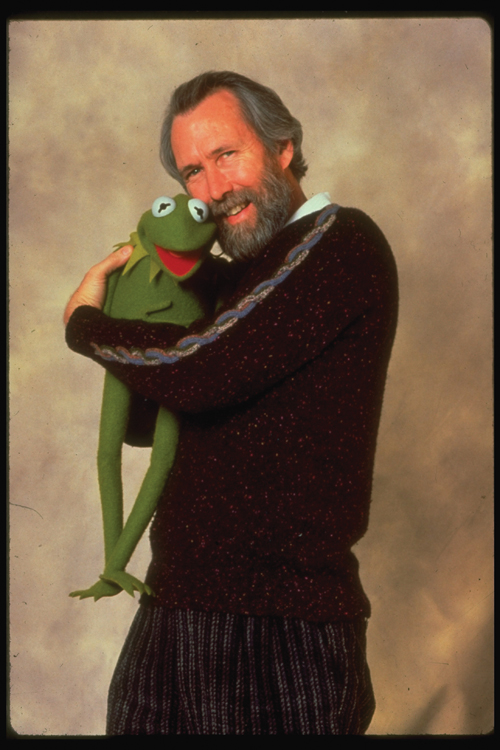
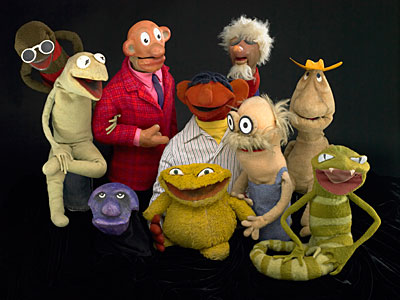
As a freshman he worked for WRC-TV on a five-minute long program that ran nightly at 6:40 pm called Sam and Friends. For the show he created a cross-breed of a marionettes and hand puppets  which he called “muppets.” Muppets were more flexible and could express more emotion than traditional puppets. Instead of painted wood he used foam rubber-covered with fabric which gave the creatures soft bodies. He gave them large mouths “that allowed them to convey a wide range of emotions.” [The Mississippi Writers Page]

The Sam and Friends characters were donated to the National Museum of American History in Washington, DC [Image courtesy: National Museum of American History]

Here’s a sketch from Sam and Friends

He asked fellow UofM freshman Jane Nebel to help him on the show. Hensen and Nebel married in 1959 and had five children together.

Sam and Friends ran for six seasons and…

proved the stepping stone for a series of commercials that brought him nationwide fame. Soon, he was making guest appearances on such national network programs as The Steve Allen ShowThe Jack Paar ShowThe Tonight ShowEd Sullivan, and The Jimmy Dean Show, and weekly appearances on The Today Show …[The Mississippi Writers Page]

Muppets, Inc. grew. Jim and Jane added puppeteer and writer Jerry Juhl, puppet builder Don Sahlin and puppeteer Frank Oz to the fold. In 1968 they created a special for National Education Television “Muppets on Puppets” a 9 minute mini documentary on the world of puppeteering.

<iframe width=”420″ height=”315″ src=”http://www.youtube.com/embed/MUdJVsDpGTI&#8221; frameborder=”0″ allowfullscreen>

The next year Sesame Street premiered. Children’s Television Workshop asked Henson and his creative team to develop a family of muppets to populate Sesame Street. They came up with Bert and Ernie, Big Bird, Oscar the Grouch, Grover, the Cookie Monster and others.

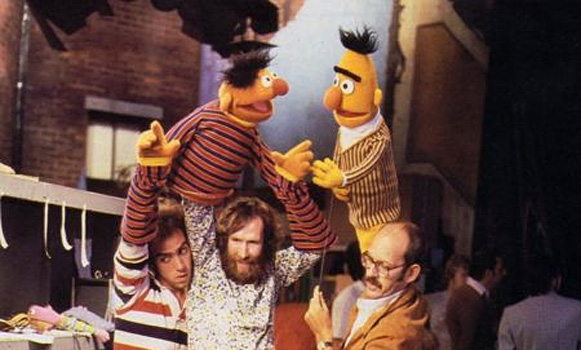
Hensen, center, works on Sesame Street. [Image courtesy: Jedimouseketeer.com]

Next came  the weekly syndicated variety show, The Muppet Show, starring Kermit. The show included an expanded cast of muppets (like Miss Piggy, Gonzo, the Count, and Elmo) and featured a human guest star. It ran from 1976 to 1981.

Here’s a clip from the show featuring John Cleese…

<iframe width=”420″ height=”315″ src=”http://www.youtube.com/embed/EyMCG0dWeQA&#8221; frameborder=”0″ allowfullscreen>

Movies followed. Henson found success with both Muppet productions and other puppet enhanced movies like The Dark Crystal and Labyrinth.

Henson won 18 Emmy Awards, 7 Grammy Awards and 4 Peabody Awards in his 30 year career and touched millions of lives. He died from complications of pneumonia in New York on May 16, 1990. Here’s “Just One Person” (one of my favorite Muppet songs) performed at Henson’s tribute.

<iframe width=”420″ height=”315″ src=”http://www.youtube.com/embed/0Zzfdlxjx4Y&#8221; frameborder=”0″ allowfullscreen>


Thought of the Day 9.17.12 Baz Luhrmann

n”I only achieve about 60 per cent of what I’ve dreamed of. Perhaps that’s a good thing – if I did ever get the whole way with anything, I think I’d probably want to destroy it.”

 Baz Luhrmann

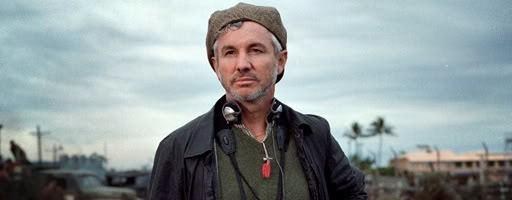
On the set of Australia [Image Courtesy: The Play List]

Mark Anthony Luhrmann was born on this day in Sydney, Australia in 1962. He is 50 years old.

His mother, Barbara, owned a dress shop. His father, Leonard, was a farmer and owned a gas station and movie theater in the small town of Herons Creek near where they lived. Barbara and Leonard competed in ballroom dance competitions and Barbara taught ballroom dance at a local studio.

“What kind of kid was I? …Extremely busy. My father was a bit mad, you see. He thought that we had to be the renaissance kids of Herons Creek. We had to learn commando training as well as photography, how to grow corn as well as how to play a musical instrument. We were up at 5 in the morning, and then we just went until we dropped. The town consisted of a gas station, a pig farm, a dress shop and a movie theatre – and we ran them all.” [Baz Luhrmann, as quoted on Baz the Great! fansite]

Growing up the Luhrmann kids helped run the various family businesses. In their free time they rode horses, learned to ballroom dance (of course), and made amateur movies. As a gas jockey at the service station Mark saw a stream of people  pass through. He was invisible to them, and  so was able to observe  their stories unfiltered and unedited for the 5 minutes it took to fill up their tank.  Later, after his parents divorced he eventually found himself in Sydney. Prior to the move he (and his brothers) had to keep their hair closely cropped in a buzz cut, but once in Sydney he was allowed grow it out. When he was teased that his new hair do made him look like a puppet fox on TV, Basil Bush, he embraced the  taunting and officially changed his first name to Bazmark.  In high school he acted in Henry IV, Part 1.  And at 17 he got a role in the Judy Davis, Bryan Brown film The Winter of Our Dreams.

He worked with the Australian Opera to bring in a younger audience and directed and performed in a number of stage productions for the company.

In 1987, while working on an experimental opera, Lake Lost, He met Catherine Martin, a production designer. She became his exclusive production designer and his wife.  (They now have two children.)

Luhrmann mounted productions of La Boheme, A Midsummer’s Night’s Dream and other classics in modern or unusual settings.

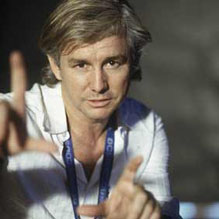
[Image Courtesy: NNDB]

His break out film was Strictly Ballroom. The project began as a 30-minute play, but Luhrmann developed it into a full blown motion picture in 1992. The story centers around handsome, spoiled, Scott. He’s a leading ballroom dancer who’s set to win the Pan-Pacific Ballroom Championships. But Scott wants to break the rules and dance his own steps. Enter Fran, a shy, ugly duckling of a girl from the beginner class at his mother’s studio. He teaches her how to dance and along the way she teaches him a thing or two as well. It’s quirky, funny, over the top, and wonderful. Here’s a scene about mid-way through the movie:

It is the first of his Red Curtain Trilogy.  Romeo + Juliet and Moulin Rouge! round out the trio. Luhrmann describes a Red Curtain film as having the following attributes:

  1. the audience knows how it will end right from the start;
  2. the storyline is thin and simple;
  3. the world created in the film is one of heightened reality; and
  4. there is to be a specific device driving the story. For Strictly Ballroom it was dance, for Romeo + Juliet it was iambic pentameter, and for Moulin Rouge! it was characters breaking into song.

The success of Strictly Ballroom  brought Luhrmann to the attention of 20th Century Fox  who signed him to a 3-year deal. For second movie Luhrmann gave Romeo + Juliet a modern jump. It starred Leonardo DiCaprio and Claire Danes and is both fast paced and action packed.  In both style and weirdness factors there is a 15% increase from Ballroom, but still, it works.

The third movie of the set was Moulin Rouge!, a highly stylized musical love story starring Nicole Kidman and Ewan McGregor.

“. . . if you make a film full of risk, studios don’t run towards you to give you $50,000,000 in order to reinvent the post-modern musical, I can tell you. If you do manage to cajole them into doing it and you want to maintain the flag of creative freedom, you better make sure that it pays its bill.”[Baz Luhrmann, IMDB]

It was somehow even bigger and stranger than J + R and Ballroom put together. With an odd combination of modern songs (with modified lyrics) that should not have fit in the 1900 Paris setting, this musical had no business becoming a hit. But it did. Frankly, once Ewan McGregor opened his mouth to sing… nothing else seemed to matter.  (As is evidenced by the bizarre beginning of this clip… Here McGregor’s Christian has snuck into courtesan Satine’s room. He is a penniless writer and he tries to win her over with the strength of his prose [well, in this case it’s Elton John’s lyrics] Kidman feign’s over excitement, hoping to get the shy wordsmith to leave, but then he starts to sing and the movie, and their attraction,  takes off.)

For his next project he brought  La Boheme to Broadway.  The show opened on December 8, 2002 and was declared a “brilliant reworking of Puccini’s masterpiece that appealed to all. [Baz the Great! fansite]

In 2008 he teamed with Kidman again, this time pairing her with Hugh Jackman, in the epic WWII Aussie drama, Australia. It’s beautifully shot. From a cattle drive worthy any Western… to the Japanese attack on Darwin… to the love story, Australia has a lot going for it. (But be warned it is a bit preachy too.)

<iframe width=”420″ height=”315″ src=”http://www.youtube.com/embed/p447zpUmbxw&#8221; frameborder=”0″ allowfullscreen>

His eclectic mix of images and music can make even the every day seem extrordinary…


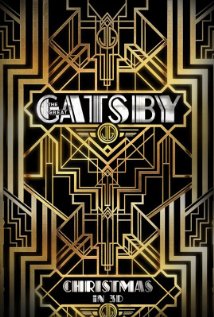
Luhrmann’s latest project is Gatsby. This time he re-teams with DiCaprio. This stylish take on the Fitzgerald’s classic, The Great Gatsby is due out on Christmas Day. [Don’t buy your tickets just yet… seems like the release date has been pushed back to Summer 2013 — thanks to John for the heads up. ]


Thought of the Day 7.16.12

“When two people love each other, they don’t look at each other, they look in the same direction”

–Ginger Rogers

Virginia Katherine McMathwas born in Independence, Missouri on this day in 1911. She would have been 101  years old today.

Her parents divorced when she was a baby and little Virginia, Ginger, stayed with her mother, Lela. When she remarried, Ginger took the name Lela’s second husband John Rogers. Ginger was introduced to the theater when Lela became a theater critic and took the girl to the shows that she reviewed. Legend has it that Ginger would hang out backstage picking up the songs and dances from the performers as her mother sat in the audience and took notes. One night while she was backstage at a traveling vaudeville show the act needed a stand-in, Rogers was tapped for the duty and had her first gig.

She was still in high school when she won  The Texas State Charleston Championship. The prize — a tour of theaters in Texas cities — was expanded to include  a wider tour of the Western US.. Ginger’s easy banter with the master of ceremonies was such an audience hit that it became as much of a draw as the dance routine.  At 17 she married vaudeville artist Jack “Pepper” Culpepper and the two formed the act known as “Ginger and Pepper.” The marriage was short lived, but Ginger’s career continued. She made it to New York where she had her Broadway debut in Top Speed in 1929.  Shortly thereafter the Gershwin Brothers picked Ginger to star in Girl Crazy along with Ethel Merman. The musical made a star of both actresses  and introduced Ginger to Fred Astaire who was hired as a dance coach. Ginger’s amazing renditions of  Embraceable You and But Not For Me in the musical helped the tunes become part of the American Song Book.

At 19 she switched to movies. Her breakthrough role was in Warner Brother’s 42nd Street. In 1933 she made her first film with Fred Astaire, Flying Down to Rio. The duo made nine musicals together, the most famous probably being Top Hat.

Dancing was only one arrow in her quiver, she was also an acclaimed singer and actor and her career went on long after she stopped making musicals with Fred. She won an Academy Award for Kitty Foyle in 1940.

She went back to the Great White Way when roles for mature women in film became scarce. Ginger took over for Carol Channing as Dolly in Hello! Dolly in 1965 and performed to packed houses for an 18-month run. She then took Mame to London’s West End for 14-months (and a Royal command performance.)

Ginger Rogers - 1920s

Ginger Rogers – 1920s (Photo credit: danceonair1986)


Thought of the Day 7.8.12

“He had delusions of adequacy.”

Walter Kerr

Walter Kerr was born today in Evanston, Illinois  in 1913. He would have been 99.

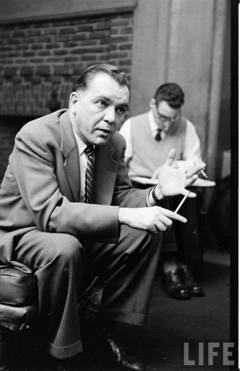
Kerr was a mid 20th Century New  York theatre critic, director and author. His sharp, witty reviews could make or break a Broadway show and he won a Pulitzer Prize for Criticism. Kerr also put his money where his mouth is– producing work for the stage as a writer and director. With his wife Jean Kerr he wrote Goldilocks, which won the 1958 Tony Award. Kerr directed the production. He also directed Touch and Go andKing of Hearts.

His books include How Not to Write a Play, Criticism and Censorship, The Theatre in Spite of Itself, and Thirty Plays Hath November.

In 1990 Broadway gave Kerr the ultimate honor. It named a theater after him. The old Ritz Theatre at 218 West 48th Street was renovated and reopened the Water Kerr Theatre. It opened to August Wilson’s The Piano Lesson and has since house six Tony Award Winning Plays.

Marquee of the Walter Kerr Theatre, advertisin...

Marquee of the Walter Kerr Theatre, advertising Christine Ebersole in Grey Gardens 218 West 48th Street, Manhattan, New York (Photo credit: Wikipedia)


Thought of the Day 6.30.12

“Shadow owes its birth to light.”

John Gay

John Gay was born on this day in Barnstaple, England in 1685. We are celebrating the 327th anniversary of his birth.

Gay was a poet and dramatist. His most famous work was the Beggar’s Opera, but he wrote several other satirical plays. The Beggar’s Opera is considered the first successful ballad opera, and the predecessor of the popular operetta that would take hold on the English stage a century or so later with Gilbert and Sullivan.

He was a contemporary of Jonathan Swift and Alexander Pope. He studied music with George Frideric Handel.

Gay died at 47 and was buried in Poet’s Corner of Westminster Abbey. His epitaph is from the Beggar’s Opera “Life is a jest, and all things show it: I thought so once and now I know it.”


John Gay

John Gay (Photo credit: Wikipedia)


Thought of the Day 6.10.12

“Be a first rate version of yourself, not a second rate version of someone else.”

Judy Garland

Judy Garland was born today in 1922 , she would have been 90.

She starred in dozens of movies from 1929 to 1963, most for MGM.  She won an Academy Award for her Dorothy in “The Wizard of Oz” and a nomination for the award for her roles  in “A Star Is Born” and “Judgement at Nuremberg“. Other Garland favorites include “Meet Me In St. Louis“, “The Harvey Girls” and “Easter Parade.”


re-cropped screenshot of Judy Garland from the...

re-cropped screenshot of Judy Garland from the trailer for the film A Star Is Born. (Photo credit: Wikipedia)


Thought of the Day 6.9.12 Cole Porter

“Birds do it, bees do it, even educated fleas do it. Let’s do it, let’s fall in love.”

–Cole Porter

[“Let’s Do It”]


It is Cole Porter’s Birthday he would have been 119 years.

Porter was an icon of the Great White Way, and wrote both the lyrics and music for hundreds of songs including “Night and Day”, “Begin the Beguine”, “De-Lovely”, “You Do Something to Me”, “I’ve Got You Under My Skin”, “My Heart Belongs to Daddy”  “In the Still of the Night”,  “I get a Kick out of You,” and “You’re the Top”. His musicals include Anything goes and Kiss Me Kate (a take on Taming of the Shrew.)  Are you singing yet?

Cole porter smiling

Cole porter smiling (Photo credit: Lord Mariser)