Category Archives: England

Secondary Character Saturday Alan Rickman: Colonel Brandon

[Courtesy Fan Pop]

[Click on the image for animated Alan; Image Courtesy Fan Pop]

Who: Colonel Brandon


From: Sense and Sensibility


Title page from the first edition of Jane Aust...


By: Jane Austen 


Published: 1811


Pros: Kind, considerate, thoughtful, decent, patient, gentle, faithful, honorable, sensitive, generous, caring… and , oh, yeah, RICH.


Although reserved and not passionate, he has a very good heart and helps out those in distress. His charitable behavior toward Eliza Williams and Edward Ferrars makes him the unnoticed knight in shining armor. [Book Rags.com]


Cons: Unromantic (on the surface at least), dull, remote, joyless, grave.  He appears stern and dour. especially when compared to Willoughby.


English: "when Colonel Brandon appeared i...

English: “when Colonel Brandon appeared it was too great a shock to be borne with calmness” – Marianne, expecting Willoughby, leaves after Colonel Brandon appears. Austen, Jane. Sense and Sensibility. London: George Allen, 1899. (Photo credit: Wikipedia)


Most Shining Moment: Traveling from Cleveland to Barton Cottage overnight to fetch Mrs. Dashwood to Marianne’s sick-bed.


Not a moment was lost in delay of any kind. The horses arrived, even before they were expected, and Colonel Brandon only pressing her hand with a look of solemnity, and a few words spoken too low to reach her ear, hurried into the carriage. It was then about twelve o’clock, and she returned to her sister’s apartment to wait for the arrival of the apothecary, and to watch by her the rest of the night. [Sense and Sensibility, Chapter 43]


Least Shining Moment: [I love Brandon, don’t get me wrong. I don’t know that there is a bigger Brandon fan out there than yours truly. BUT … ]  Marianne (rightly) thinks Brandon too old for her. His attraction to her is largely based on a decades old attraction to another woman, Eliza Williams*, to whom he was separated from when he was shipped off to the Army. Essentially he is in love with a ghost from his past.   I know we live a different times but… crushing on some one who is nearly 20 years your junior because they remind you of lost love is a bit creepy, isn’t it? .

Brandon and Marianne (Kate Winslett) in the 1995 movie version of Sense and Sensibility [Image Courtesy: Fan Pop]

Brandon and Marianne (Kate Winslet) in the 1995 movie version of Sense and Sensibility [Image Courtesy: Fan Pop]

It is as good for him as it is for Marianne that it takes them the entire novel to get together. He’s a very patient man. And in the time it takes for her to realize that he is actually a wonderful guy, he has learned to appreciate her for who she really is (and not just as a substitute for his long-lost Eliza.) I think at the end of the novel Brandon really does love Marianne for herself. Perhaps that is the sweetest journey of all in the book.


He has clearly already had his heart-broken, and the romantic Marianne believes that everyone is fated to only love once; she prefers the young, handsome, and spontaneous Willoughby, who eventually jilts her. Proving that patience is a virtue, Brandon remains on the perimeter until Marianne gets over being jilted. Brandon’s character and temperament conform to Austen’s and Elinor’s idea of sense rather than sensibility. [Book Rags.com]


Alan Rickman played as Colonel Brandon in the 1995 movie directed by Ang Lee, from a screenplay by Emma Thompson. It was “the first cinematic Jane Austen adaptation in 50 years” [IMDb Sense and Sensibility] I love the movie. Like most Austen adaptions it swings wildly away from the book at times, but, still, Ahhhhh… it is a delight. And Rickman’s pitch perfect Brandon is certainly a big part of why I’m so fond of the film. He’s soooo somber, and the poor guy never seems to get his timing right. He’s always walking in just as  Marianne is expecting the more pleasant company of Willoughby.

As Marianne languishes in the other room, Brandon begs for a commission from Elinore. She suggests he fetch her mother, Mrs. Dashwood to Cleveland. [Image Courtesy: Fan Pop]

As Marianne languishes in the other room, Brandon begs for a commission from Elinore. She suggests he fetch her mother, Mrs. Dashwood to Cleveland. [Image Courtesy: Fan Pop]

The comparison between the two men (sensible Brandon and sensual Willoughby) is a secondary theme  in the book (it echos the dichotomy of the sisters’ relationship) but  the movie gives it a wonderful treatment with almost identical scenes of the male character carrying Marianne to safety through the rain. Willoughby does so almost effortlessly towards the beginning of the movie. He puts her down on her mother’s couch as if she is light as a feather. The episode hardly cost him any effort and Marianne is instantly besotted with him.  For Brandon it is a different story. He falls to his knees when he makes to the main hall at Cleveland. He’s spent every ounce of his energy in the task of finding and rescuing Marianne.  But, as she is lifted out of his arms, she is too ill to notice, much less thank him. … SIGH… for those of us who like a tablespoon of  unrequited love in our fiction it is a lovely scene.


Brandon reads to a recovering Marianne (in the 1995 movie version of Sense and Sensibility) [Image Courtesy Fan Pop]

Brandon reads to a recovering Marianne (in the 1995 movie version of Sense and Sensibility) [Image Courtesy Fan Pop]

*BTW: The Brandon and Eliza back story would make such a lovely historically based novel. Some one get on that please.


Henry II 3.5.13 Thought of the Day — Part 2

English: Henry II and Thomas Becket

English: Henry II and Thomas Becket (Photo credit: Wikipedia)

Click here for PART ONE

When word reached Henry that Becket was hiring armed men to protect him he said “What miserable drones and traitors have I nourished and brought up in my household, who let their lord be treated with such shameful contempt by a low-born cleric?” [History of Britain, Schama, pg 142] It was said in a moment of frustration and anger, and probably not given as command, but it was all the anti- Becket faction needed. Four knights set out to murder the Archbishop while he was at Vespers in Canterbury Cathedral.   “Almost overnight Becket became a saint. Henry reconciled himself with the church.” [BBC.co.uk] He was genuinely grief-stricken over the loss of his former friend. He did penance at Beckett’s tomb and reversed the Constitution of Clarendon.

Family

English: Henry II and his wife Eleonora

English: Henry II and his wife Eleonora (Photo credit: Wikipedia)

Henry had trust issues. Those extended to his family. Eleanor, 10 years Henry’s senior, was very much in love with him when they first married. She was a dutiful wife and bore him seven children, five of whom were boys. She traveled with him when she could. But he preferred to have Becket entertain visiting royalty — usually the Queen’s job — and he was a restless busy man who gave her titles but not power. She put up with it for 14 years before returning to Aquitaine to “assume personal control of the lands. Henry was left to his own affairs (of every sort) back in England.” [About.com]

Henry now had problems within his own family. His sons – Henry, Geoffrey, Richard and John – mistrusted each other and resented their father’s policy of dividing land among them. There were serious family disputes in 1173, 1181 and 1184. The king’s attempt to find an inheritance for John led to opposition from Richard and Philip II of France. Henry was forced to give way. [BBC.co.uk]

[James Goldman’s excellent play The Lion in Winter portrays a fictionalized Christmas between the imbittered royal family in 1183.]

Henry and Richard were at war in France when Henry took seriously ill. After so many years of refusing to name Richard his heir he was forced to do so at Ballan. He died  on the 6th of July, 1189.

Henry II & his children

———————————————-

Links:

We saw The Lion in Winter at the  American Shakespeare Center in Staunton, Virginia last summer. It was an amazing theatre and an awesome Shakespeare (and historical) experience. Click on the link and check them out.


Henry II 3.5.13 Thought of the Day PART ONE

“Will no one rid me of this turbulent priest?” — Henry II of England

James Keegan as King Henry in The Lion in Winter, 2012. Photo by Michael Bailey. James Keegan as Henry II in last summer's production of The Lion in Winter at the American Shakespeare Center.]

James Keegan as King Henry in The Lion in Winter, 2012. Photo by Michael Bailey. [At the American Shakespeare Center.]

Henry II of England was born on this day in Le Mans, France  in 1133. Today is the 880th anniversary of his birth.

Henry, Count of Anjou, Count of Maine, Duke of Normandy, Duke of Aquitaine, Count of Nantes, Lord of Ireland, and  eventually King of England (1154–89)  was the oldest child of Empress Matilda and Geoffrey the Fair. Matilda was the eldest daughter of England’s Henry I who died unexpectedly in 1135 without naming an heir. She had a strong claim that her baby boy, a direct male descendant should be next in line for the throne, but her cousin Stephen, Count of Blois,  (aka Stephen the Usurper), got there  first. Matilda, aided by her half-brother Robert of Gloucester, raised an army and a 17 year civil war ensued.

Stephen and Henry discuss across the River Tha...

Stephen and Henry discuss across the River Thames how to settle the succession of the English throne. (Photo credit: Wikipedia)

Henry’s early years were spent in the Court of Anjou with his father, but beginning in 1142 the boy traveled to England to join the campaign.  The years he spent living in a Spartan manner followed him the rest of his life and Henry eschewed the opulence and soft pleasures of other monarchs.

1151, Henry became ruler of Normandy and Anjou, after the death of his father. In 1152, he married Eleanor of Aquitaine, the greatest heiress in western Europe. In 1153, he crossed to England to pursue his claim to the throne, reaching an agreement that he would succeed Stephen on his death, which occurred in 1154. [BBC.co.uk]

Henry and Becket

The next order of business was to restore peace and order in England. To do that Henry turned to Thomas Becket. Together they rid the country of the robber barons, disloyal knights and criminals who were lapping up the offal of 17 years of war. As a reward for a job well done (and to strengthen his own power over the church) Henry named Becket Archbishop of Canterbury when the old Archbishop died. The church hierarchy was stunned and dismayed, Becket was the King’s man. He wasn’t even a priest. He was ordained on June 2nd, 1162, and consecrated Archbishop on June 3rd. But Becket surprised everyone, especially Henry. He undertook a religious transformation, and where he had been loyal wholly to the King he was now loyal only to God.  He began to work to restore the powers of the  Archbishop and the Church, especially in matters of Law.

English: King Henry II and Thomas Archbishop Č...

English: King Henry II and Thomas Archbishop Česky: Jindřich II. a Thomas Beckett From the Liber Legum Antiquorum Regum, a 12th century work (Photo credit: Wikipedia)

Henry thought the Law of the Land superseded the Law of the Church. Becket disagreed. Henry called and assembly of clergy to Clarendon Palace  in January 1164 where he demanded that Becket sign the Constitution of Clarendon which “established procedures of criminal justice, establishing courts and prisons for those awaiting trial. In addition, the assizes gave fast and clear verdicts, enriched the treasury and extended royal control.” [BBC.co.uk]  In other words it gave Henry power over the church. After much heated debate Becket pledged an oath to the  idea of the Constitution, but he refused to sign. Henry was satisfied. But later when Becket refused to say mass until the oath was overturned. Henry was outraged and had the Archbishop put on trail for treason. Becket fled for exile in France. A  battle of wills ensued between two of Europe’s most stubborn men and neither Queen Elinor nor the Pope Alexander III could bring the parties together. Becket used the last most powerful arrow in his quiver. He tried to excommunicate Henry. Henry countered by threatening to arrest any one who supported Becket with treason. Becket’s support dwindled. He agreed to meet Henry in July of 1170. Becket accepted Henry’s legal supremacy in England. He was allowed to return to England. But he wasn’t willing to leave well enough alone.

Henry II with Thomas Becket, from a 13th-centu...

Henry II with Thomas Becket, from a 13th-century illuminated manuscript (Photo credit: Wikipedia)

Click here for PART TWO


George Harrison PART TWO

[George Harrison PART TWO

English: George Harrison in the Oval Office du...

English: George Harrison in the Oval Office during the Ford administration. (Photo credit: Wikipedia)

]In 1968 Harrison’s interest in Indian music …

extended into a yearning to learn more about eastern spiritual practices. In 1968, he led the Beatles on a journey to northern India to study transcendental meditation under Maharishi Mahesh Yogi. [Biography.com]

That year the group’s White Album came out. Harrison penned “While My Guitar Gently Weeps,” “Piggies,” “Long, Long, Long” and “Savoy Truffle.” “While My Guitar Gently Weeps,” is ranked as #7 Greatest Guitar Song of All Time by Rolling Stone Magazine.

On Yellow Submarine he  penned “Only A Northern Song” and “It’s All Too Much” both of which — like the rest of the album — were self indulgent and over produced.

He bounced back with Abbey Road which has two of Harrison’s best songs, “Something” and  “Here Comes The Sun”

Let It Be had “I Me Mine Mine” and “For You Blue.” While recording Let It Be Harrison grew frustrated with the poor working conditions of the film studio as well as with the Lennon-McCartney lock on creative input on songs. He walked way from the recording sessions on January 10th, 1969. The other Beatles convinced him to return 12 days later but the writing was on the wall. The end was near for the super group.

When Beatles broke up in April of 1970 Harrison had a back log of music written and ready to produce. His first post-Beatles album was a triple disk, All Things Must Pass. The album yielded two hits “My Sweet Lord” and “What Is Life”

In 1971  he organized a charity concert at Madison Square Garden to raise money and awareness for the refugees in Bangladesh. The Concert for Bangladesh (and the concert film) was a fore runner to other multi-band high-profile charity concerts to come a decade later like Live Aid.

His next Album, Living in the Material World went Gold  with in a week of its release. The single from the album, “Give Me Love (Give Me Peace on Earth)” became an international  best seller.

But then things began to flatten out musically–sales wise at least. Harrison continued to write and experiment musically.

He “started his own film production company, Handmade Films. The outfit underwrote Monty Python’s Life of Brian and would go on to put out 26 other movies before Harrison sold his interest in the company in 1994.” [Biography.com]

In 1987 released Cloud Nine and began to work with a collection of rockers who formed the group the Traveling Wilburys.

The Traveling Wilburys, 1988. L–R: Roy Orbison...

The Traveling Wilburys, 1988. L–R: Roy Orbison, Jeff Lynne, Bob Dylan, George Harrison, and Tom Petty. (Photo credit: Wikipedia)

“In 1998, Harrison, a longtime smoker, reportedly was successfully treated for throat cancer.” [Ibid] Two years later the cancer returned, this time it had spread to his brain. He died in Los Angeles in November of 2001.


—————————–

Oy! Yesterday was full of frustration WordPress wise. I could NOT get a YouTube song/vid to successfully link.(And believe me I had TONS of great George clips to share.) So I’m trying again to day… with fresh optimism. … Here Comes the Sun…


George Harrison PART ONE 2.25.13

“I think people who can truly live a life in music are telling the world, “You can have my love, you can have my smiles. Forget the bad parts, you don’t need them. Just take the music, the goodness, because it’s the very best, and it’s the part I give”– George Harrison

[Image courtesy: IMDb]

[Image courtesy: IMDb]

George Harrison was born on this day in Liverpool, England in 1943. today is the 70th anniversary of his birth.

Harrison was the youngest of four children born to Harold, a school bus driver, and Louise as shop assistant and stay a home mother. He went to school at Dovedale Primary School until he was 11 when he transferred to the prestigious Liverpool Institute.

By his own admission, Harrison was not much of a student and what little interest he did have for his studies washed away with his discovery of the electric guitar and American rock ‘n roll. [Biography.com]

He was riding his bike through the streets of Liverpool one day when he heard Elvis Presley’s Heartbreak Hotel coming through a window. Harrison said it was an epiphany. His father bought him an acoustic guitar and he taught himself how to play.  He formed a pop, jazz, blues, folk, roots band with his older brother Peter and their friend Arthur Kelly called the Rebels.

Harrison knew Paul McCartney from school and in 1958 he auditioned for McCartney and John Lennon’s band The Quarrymen. Lennon was reluctant to bring on the 14-year-old Harrison, but after a second audition — this on the upper deck of a bus — he was sufficiently wowed by Harrison’s rock and roll guitar that the younger guitarist began to fill in with the group.

By 16 Harrison had left school and was working as an apprentice electrician as well as a musician both for the Quarrymen and for the Les Stewart Quartet.

By 1960 Harrison’s music career was in full swing. Lennon had renamed the band the Beatles and the young group began cutting their rock teeth in the small clubs and bars around Liverpool and Hamburg, Germany. Within two years, the group had a new drummer, Ringo Starr, and a manager, Brian Epstein,… Before the end of 1962, Harrison and the Beatles recorded a top 20 U.K. hit, Love Me Do. [Biography.com]

They followed that with Please, Please me and produced an album (also called Please, Please Me.) Harrison sang lead on two songs, Chains, a cover of  the Little Eva hit by Gerry Goffin and Carole King, and Do You Want to Know a Secret by Lennon and McCartney. The album (literally) rocked the UK charts

Given that the UK album chart in those days tended to be dominated by more ‘adult’ tastes such as film soundtracks and easy listening vocalists, it was a surprise when Please Please Me hit the top of the chart in May 1963 and remained there for thirty weeks before being replaced by With The Beatles. [TheBeatles.com]

The 1963 UK release of With The Beatles, hosted the first Harrison penned song to make it to vinyl;  Don’t Bother Me.

It wasn’t until Help! that another Harrison song made it onto a Beatles album. He contributed “I Need You” and “You Like Me Too Much” to Help!

Harrison’s influence grew in the band with the release of Rubber Soul. Again he has two songs on the album, Think For Yourself and If I Needed Some One. He brought both a folk rock flavor to the group and an interest in classical Indian music.

Harrison soon developed a deep interest in Indian music.He taught himself the sitar, introducing the instrument to many western ears on John Lennon’s song, “Norwegian Wood.”” [Biography.com]

By bringing sitar player Ravi Shankar to the attention of the Western World Harrison introduced the instrument to other rock groups (like the Rolling Stones.) And his willingness to stray from the traditional western rock instruments (guitar, bass, drums, piano) helped “pave the way for such groundbreaking Beatles albums as Revolver and Sgt. Pepper’s Lonely Hearts Club Band” [Ibid]

He scored with three singles on Revolver, “Taxman,” “Love You To” and “I Want to Tell You.” You can really hear the Eastern influence on “Love You To”

He only contributed one song to Sgt. Pepper’s Lonely Hearts Club Band, “Within You Without You.”  He’s the only Beatle to play on the song.

[Continued in PART TWO]


Ernest Shackleton 2.15.13 Thought of the Day


“Difficulties are just things to overcome, after all.” — Ernest Shackleton


Sir Ernest Shackleton

Sir Ernest Shackleton (Photo credit: Marxchivist)

Gentleman and adventurer…


Captain, March 1917, Cover of the popular Engl...

Captain, March 1917, Cover of the popular English magazine with Ernest Shackleton back from his epic expedition South This picture is the copyright of the Lordprice Collection and is reproduced on Wikipedia with their permission Source URL http://www.lordprice.co.uk/Merchant2/merchant.mvc?Screen=CTGY&Category_Code=Antarctic (Photo credit: Wikipedia)


Ernest Henry Shackleton was born on this day in Kilkea, County Kildare, Ireland in 1874. Today is the 139th anniversary of his birth.


Ernest was the second of ten children born to Henry and Henrietta Shackleton. His father was a land owner, but he gave up farming for medicine shortly after Ernest’s birth. When the boy was six the family moved to Sydenham, London, England. He joined the merchant navy at 16.


Shackleton went on his first polar journey in 1901. He was chosen to join Robert Scott on an expedition to the South Pole. He, Scott and one other companion “trekked towards the South Pole in extremely difficult conditions, getting closer to the Pole than anyone had come” [BBC History] before turning back.


He returned to Antarctica as the head of expedition in 1908 aboard the Nimrod. “He was knighted on his return to Britain.” [Ibid] But it was his third journey to the South Pole that is one of legend.


Endurance final sinking in Antarctica

Endurance final sinking in Antarctica (Photo credit: Wikipedia)


In 1914 Shackleton and the crew of the Endurance headed south determined to cross the Antarctic continent via the South Pole. The ship was trapped in the ice of the Weddell Sea in 1915 and was crushed in October.


Shackleton’s crew had already abandoned the ship to live on the floating ice. In April 1916, they set off in three small boats, eventually reaching Elephant Island. Taking five crew members, Shackleton went to find help. In a small boat, the six men spent 16 days crossing 1,300 km of ocean to reach South Georgia and then trekked across the island to a whaling station. [Ibid]


The men on Elephant Island were rescued in August, and, amazingly, no one in the crew died.


Launch of the James Caird from the shore of El...

Launch of the James Caird from the shore of Elephant Island. (Photo credit: Wikipedia)


His memoir of the journey was published in “Endurance”  in 1919. (If he had any luck on the journey it was in taking along Photographer Frank Hurley who took stunning still and motion pictures of the Endurance and her crew.)


Shackleton made a finale trip south in 1922, this time bent on circumnavigating Antarctic. He made it to South Georgia Island. On January 5, he had a heart attack and died.


Glimpse of the Ship ['Endurance'] through Humm...

Glimpse of the Ship [‘Endurance’] through Hummocks, 1915 / photographed by Frank Hurley (Photo credit: State Library of New South Wales collection)

More reading:

South: The Story of Shackleton’s Last Expedition (1914-1917) by Sir Ernest Shackleton

Endurance: Shackleton’s Incredible Voyage by Alfred Lansing

And watch:

Shackleton – The Greatest Survival Story of All Time (3-Disc Collector’s Edition) Starring Kenneth Branagh

South Starring Ernest Shackleton, Frank Worsley, J. Stenhouse, et al. (The original silent movie by Frank Hurley)


Keeley Hawes 2.10.13 Thought of the Day

“I’ve been really lucky with my career so far. I haven’t been pigeon-holed, which sometimes happens to actors. … I’m even lucky enough to have done my pocket version of Lady Macbeth!”– Keeley Hawes

Zoe Reynolds

Zoe Reynolds (Photo credit: Wikipedia)

Clare Julia “Keeley”  Hawes was born on this day in  Marylebone, London, UK in 1976. She is 37 years old.

The youngest of four siblings she grew up in a working class family. Her father drives a taxi, and her brothers followed suit. Keeley is the only one in the family who was bit by the acting bug. They lived near the Sylvia Young Theatre School and she attended on a grant. There she took ten years of elocution lessons to lose her cockney accent. She also took acting lessons.  At 16 she began modelling for a year and half before making the switch to working as a fashion assistant for Cosmopolitan magazine.

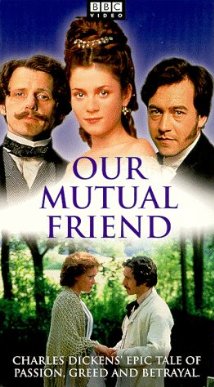
In 1996 she landed a role in Dennis Potter’s Karaoke with Albert Finney and her acting career started in earnest. She had a starring role in the BBC’s 1998 adaptation of Dicken’s Our Mutual Friend. Her Lizzie Hexam is shy, humble, poor, innocent.

Her next major mini series role, Cynthia Kirkpatrick, in Elizabeth Gaskell’s Wives and Daughters is none of those things. The only thing Lizzie and Cynthia have in common is that  they both wear a corset… and Hawes is wonderful in both parts.

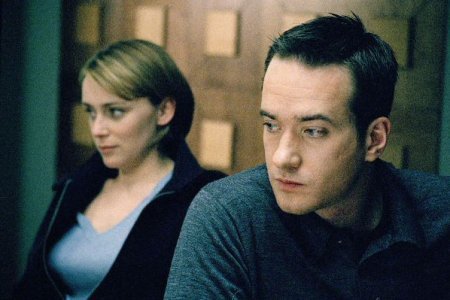
In 2002 she took on a much more modern role as Zoe Reynolds in the BBC One spy series Spo0ks (MI-5 in the US). She met her husband, Matthew MacFayden, while working on the series.

Keeley Hawes and Matthew MacFayden from Spooks (Image courtesy Fanpop.com

Keeley Hawes and Matthew MacFayden from Spooks (Image courtesy Fanpop.com]

Speaking of modern, Hawes starred in two modernized Shakespeare plays; an Andrew Davies penned retelling of Othello for Masterpiece Theatre, and as Ella MacBeth in BBC’s  Shakespeare Retold  with James MacAvoy.

Hawes has been busy (I’m only mentioning the performances I’ve seen == all of which have been excellent).

Her latest “Masterpiece” was last year’s Lady Agnes Holland on the reboot of Upstairs Downstairs.


Charles Dickens 2.7.13 Thought of the Day

“A loving heart is the truest wisdom.”–Charles Dickons

English: Detail from photographic portrait of ...

English: Detail from photographic portrait of Charles Dickens (Photo credit: Wikipedia)

Charles John Huffam Dickens was born on this day in Landport, Portsmouth, Hampshire, England in 1812. Today is 201st anniversary of his birth.

He was the second eldest child in a family of eight. His parents were of modest means but dreamed of a bigger, better life. His father, John, was a clerk, Elizabeth wanted to be a teacher — but with 8 children afoot never made it to the head of the classroom. The family was always poor, sometimes destitute.

When Dickens was four the family moved to Chatham, Kent. Dickens and his brothers and sisters roamed “he countryside and explore(d) the old castle at Rochester.” [Biography.com] They were happy years, and Dickens attended school and read ferociously. But the good times did not last. John outspent his income and was sent to debtor’s prison at the Marshalsea debtors’ prison in London in 1824. Elizabeth and the younger children moved in with  the father, but Frances, the eldest and Charles were sent to live with family friends.

Dickens at the Blacking Warehouse. Charles Dic...

Dickens at the Blacking Warehouse. Charles Dickens is here shown as a boy of twelve years of age, working in a factory. (Photo credit: Wikipedia)

So at 12 years old Charles Dickens was…

forced to leave school to work at a boot-blacking factory alongside the River Thames. At the rundown, rodent-ridden factory, Dickens earned six shillings a week labeling pots of “blacking,” a substance used to clean fireplaces. [Ibid]

John Dickens came into some money when his paternal grandmother died and he was released from the Marshalsea, but  Charles’ mother didn’t let him quit the boot-black factory right away. The family had grown accustomed to his six shillings a week. He never forgave her for making him go back to dirt and rats of the factory. Eventually he was able to go back to school, this time to The Wellington House Academy. Unfortunately the experience was anything but pleasant. The headmaster was sadistic, the teaching haphazard and fellow students undisciplined.

Charles Dickens described the second Marshalse...

Charles Dickens described the second Marshalsea in Little Dorrit. (Photo credit: Wikipedia)

At 15 he got a job as an office boy at a law office.

As it turned out, the job became an early launching point for his writing career. Within a year of being hired, Dickens began freelance reporting at the law courts of London. Just a few years later, he was reporting for two major London newspapers. [Ibid]

Dickens, who had a near photographic memory, stored all the experiences, the injustices, the cruelties, and the people he met in his head. They came out later on the pages of his novels. (Amy and her family live in the Marshalsea in Little Dorrit. David, Pip and Oliver relive some of his worst experiences in David Copperfield, Great Expectations, and Oliver Twist.)

Copy of Sketch of Charles Dickens

Copy of Sketch of Charles Dickens (Photo credit: Wikipedia)

By 1833 he was being published under a pseudonym, “Boz,” in magazines and three years later his first book, a collection of articles, Sketches by Boz, was published.

He wrote often wrote serialization for magazines (sometimes magazines in which he had a financial interest) and then published the finished story in the form of a book.

Charles Dickens (1812-1870)

Charles Dickens (1812-1870) (Photo credit: Wikipedia)

Here’s a list of his books:

  • The Posthumous Papers of the Pickwick Club
  • The Adventures of Oliver Twist
  • The Life and Adventures of Nicholas Nickleby
  • The Old Curiosity Shop
  • Barnaby Rudge: A Tale of the Riots of ‘Eighty
  • The Life and Adventures of Martin Chuzzlewit
  • Dombey and Son
  • David Copperfield
  • Bleak House
  • Hard Times: For These Times    
  • Little Dorrit     
  • A Tale of Two Cities
  • Great Expectations     
  • Our Mutual Friend
  • The Mystery of Edwin Drood

The Christmas books:

  •         A Christmas Carol (1843)
  •         The Chimes (1844)
  •         The Cricket on the Hearth (1845)
  •         The Battle of Life (1846)
  •         The Haunted Man and the Ghost’s Bargain (1848)

————————————————————————————————-

If you are looking for a good Dicken’s dvd to watch during the snow storm we are promised this weekend I can recommend both Little Dorrit with Clair Foy and Matthew MacFayden or Our Mutual Friend with Keely Hawes and Steven Mackintosh.

Our Mutual Friend DVD (Image courtesy IMDB)

Our Mutual Friend DVD (Image courtesy IMDB)

Little Dorrit dvd  (Image courtesy Amazon.com)

Little Dorrit dvd (Image courtesy Amazon.com)


Elizabeth Blackwell 2.3.13 Thought of the Day


“If society will not admit of woman’s free development, then society must be remodeled.”
Elizabeth Blackwell

[Image courtesy History.com]

[Image courtesy History.com]

Elizabeth Blackwell was born on this day in Bristol, England in 1821. Today is the 192nd anniversary of her birth.


Elizabeth was the third of nine children born to Samuel and Hannah Blackwell. She had a happy childhood growing up with her large family (four aunts also lived with them.) Her father encouraged all his children in their education. Elizabeth had both a governess and private tutors.


In 1832, when Elizabeth was 11, the Blackwells moved to America. Her father wanted to get the family away from Bristol’s chaotic atmosphere. He also wanted to move to America to help the abolitionist movement. He started a new sugar refinery but this business in New York, but it did not do as well as his Bristol refinery. They moved to Ohio in 1838 to begin again. But soon after the move west Samuel Blackwell died. He left a large family and a good deal of debt.

T909228_08

[Image courtesy Biography.com]


Elizabeth and two of her sisters started a school, The Cincinnati English and French Academy for Young Ladies.


Blackwell later decided to pursue a career in medicine. But the road to becoming a doctor was not an easy one for her. She studied independently with a doctor before getting accepted to the Geneva Medical College in upstate New York in 1847. [Biography.com]

Notwithstanding the opposition of fellow students and the townspeople of Geneva, New York, and despite being keep from attending medical demonstrations that were considered inappropriate for women Elizabeth Blackwell graduated in 1849…


becoming thereby the first woman to graduate from medical school, the first woman doctor of medicine in the modern era. [about.com]

She went to Europe and trained in midwifery at La Maternite in Paris. In England she “worked at St. Bartholomew’s Hospital with Dr. James Paget…and became friends with Florence Nightingale.”[Ibid]


English: u.s. postage stamp of 1974, depicting...

English: u.s. postage stamp of 1974, depicting Elizabeth Blackwell Français : Timbre des Etats-unis de 1974, portrait de Elizabeth Blackwell (Photo credit: Wikipedia)

But on returning to the States she was unable to find a hospital willing to allow her to practice under their roof. She couldn’t get office space, “and she had to purchase a house in which to begin her practice.” [Ibid]


Her sister, Dr. Emily Blackwell, joined her in 1856 and, together with Dr. Marie Zakrzewska, they opened the New York Infirmary for Women and Children at 64 Bleecker Street in 1857. This institution and its medical college for women (opened 1867) provided training and experience for women doctors and medical care for the poor. [NIH.gov]

Health Education and maintaining Sanitary Conditions were core to the school. She helped establish the U.S. Sanitary Commission.


Blackwell returned to England “and served as a lecturer at the London School of Medicine for Women.” [Biography.com]


Cover of "Pioneer Work In Opening The Med...

Cover via Amazon

In 1877 she retired to Hastings, England. She published her biography, Pioneer Work in Opening the Medical Profession to Women in 1895.  On May 31, 1910 she died from complications of a stroke.

Portrait of Elizabeth Blackwell by Joseph Stan...

Portrait of Elizabeth Blackwell by Joseph Stanley Kozlowski, 1905. Syracuse University Medical School collection. (Photo credit: Wikipedia)