Category Archives: American History

Thought of the Day 7.11.12

“If your actions inspire others to dream more, learn more, do more and become more, you are a leader.”

–John Quincy Adams

English: John Quincy Adams

English: John Quincy Adams (Photo credit: Wikipedia)

John Quincy Adams was born in Braintree, Massachusetts in 1767. Today is the 245th anniversary of his birth.

Eldest son of John and Abigail Adams, John Quincy grew up a child of the Revolution. His father was THE voice calling for  Independence from Britain in the Continental  Congress.  When he was 8 years old he watched the Battle of Bunker Hill from his parent’s farm.

After the War he travelled with his father to Europe, acting as his secretary. He attended Harvard and became a lawyer and at 26 was appointed Minister to the Netherlands. He became a US Senator in 1802 and when his term was up he was appointed as Minister to Russia by President Madison.  His international service to the US included the negotiation of numerous treaties including the Treaty of Ghent (that ended the War of 1812.) While Secretary of State under President Monroe he nailed down America’s border with Canada as far as the Pacific Ocean and was instrumental in forming the Monroe Doctrine and acquiring Florida from Spain.

The Presidential election in 1824 was decided in the House of Representatives. Since no candidate had garner a majority of the electoral votes  in the popular count it  was a three-way run off between JQ Adams, Andrew Jackson and Henry Clay. Clay’s platform was similar to Adams’ so he ceded his support to Quincy. Adams in turn named Clay as Secretary of State. Jackson, left out in the cold, raised angry cries of “corrupt bargaining” and began an aggressive campaign to gain the White House in 1828.

As President, Quincy started the first system of interstate roads and canals (breaking ground for the C&O Canal in 1828), he worked to modernize the US economy and paid off much of the National Debt,  encouraged the arts and sciences with a national university, scientific expeditions and an observatory. But he was thwarted on many of his initiatives by an uncooperative Congress.

In 1828 he was defeated in his bid for a second term after a bitter and messy campaign against Jackson and returned to his beloved Massachusetts only to be unexpectedly elected to the US House of Representative in 1830. He is the only  man to have served first as President and then in the House of Representatives, but his 17 years in the House were far more successful than his 4 years in the White House. Ever a stalwart proponent of civil liberties, Adams now became a leading voice against Slavery. He fought against the “gag rule”   — a resolution that automatically tabled any petition having to do with Slavery without review — by attempting to use parliamentary procedures to circumvent the rule. Eventually enough Congressmen from the North came down on the side of  antislavery and freedom of expression, and Adam’s argument gained favor. In 1844, after 8 years of fighting against it, the House rescinded the “Gag Rule” on a motion made by John Quincy Adams.

In 1840 Adams, “Old Man Eloquent,”  argued successfully for the defendants in the  Amistad case in front of the Supreme Court.

JQ Adams suffered a stroke while on the floor of the House of Representatives. He was taken to the Speaker’s Chambers and died four days later.

John Quincy Adams portrait. "John Quincy ...

John Quincy Adams portrait. “John Quincy Adams”. Metropolitan Museum of Art . . Retrieved September 4, 2009 . (Photo credit: Wikipedia)

Thought of the Day 7.6.12

“I have not yet begun to fight”

John Paul Jones

John Paul was born in Arbigland Scotland in 1747. Today is the 265 anniversary of his birth.

At 13 he started his seaman’s apprenticeship. After a brief stint on Slave Ships — which he quit calling it an “abominable trade” — and time as a Master Supercargo (the officer in charge of buying and selling the cargo of a ship), Paul became a captain at 21.  He worked the trans Atlantic routes to the Caribbean and Virginia and amassed a small fortune in the merchant marine business by 1773, but his hot temper got him into trouble more than once. And when he killed a mutineer in the West Indies he had to flee to Virginia. It was then that he changed his name to John Paul Jones.

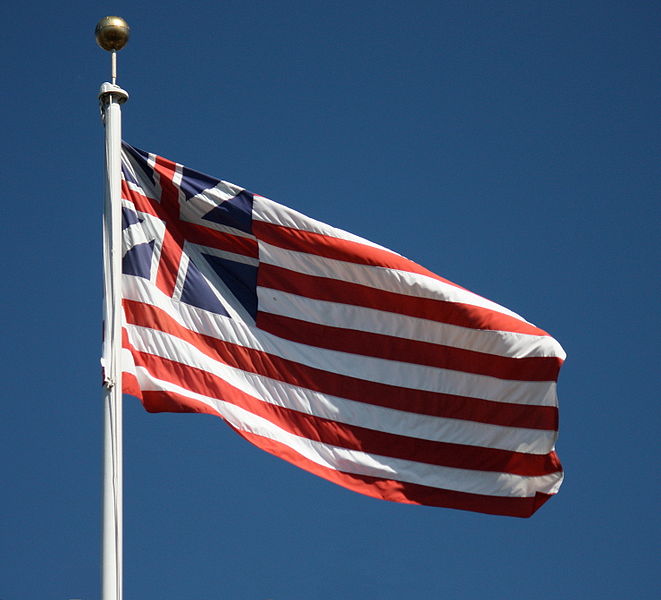
War with England was brewing and John Paul Jones offered his services on the sea. With the endorsement of Richard Henry Lee, Jones was commissioned as a First Lieutenant into the vast Continental Navy (they only had six vessels) on December 7th, 1775. As his ship, the Alfred set sail from the Delaware River on its maiden cruise he hosted the Grand Union Flag, (the first national flag of the United States,) it was the first time a US ensign was flown over a naval vessel. He next took command of the sloop Providence. He captured 16 prizes along the coast of Nova Scotia. Although he argued with Naval authorities, his reputation grew, he was given command of the USS Ranger and set sail for France. There he befriended American diplomats in Paris John Adams, Arthur Lee, and especially Benjamin Franklin (he named one of his boat the Bonhomme Richard in honor of Franklin’s Poor Richard’s Almanac.)  When the Bonhomme Richard was in dire straights in the Battle of Flamborough Head with the frigate Serapis he was offered the chance to surrender. Jones, of course answered that he had not yet begun to fight. He lost the Richard, but went on to capture the larger frigate.  Jones later earned the moniker  “Father of the American Navy.”

After the American Revolutionary War  Thomas Jefferson (who was then the American Ambassador to France) recommended him for service in Catherine II’s  Russian Navy. John Paul Jones then became Kontradmiral check Pavel Ivanovich Jones and served with Potemkin in the Black Sea campaign.

John Paul Jones, line drawing

John Paul Jones, line drawing (Photo credit: Wikipedia)

This media file is in the public domain in the United States. This applies to U.S. works where the copyright has expired, often because its first publication occurred prior to January 1, 1923.

A replica of the Grand Union Flag, the first flag of the United States of America.
(This image has been released into public domain by its author, Makaristos, and is courtesy Wikipedia.)


Public domain I, the copyright holder of this work, release this work into the public domain. This applies worldwide.
In some countries this may not be legally possible; if so:
I grant anyone the right to use this work for any purpose, without any conditions, unless such conditions are required by law.

Thought of the Day 7.5.12

“If I shoot at the sun I may hit a star”

— P.T. Barnum

Phineas Taylor Barnum was born in Bethel, Connecticut in 1810. He would be 202 years old today.

According to the Ringling Bros. and Barnum & Bailey website P.T. Barnum presented “the public of the 19th century shameless hucksterism, peerless spectacle and everything in between.”  The consummate promoter, Barnum began by presenting acts in New York. Here’s a few of the live acts and curiosities the “Master Showman” brought to the public: Joice Heth — a blind, nearly paralyzed slave woman, whom he claimed was the 161 year old Nurse to George Washington;  Charles Stratton, aka General Tom Thumb– “The Smallest Person that Ever Walked Alone;” and the embalmed remains of the “Feejee Mermaid.” In 1850 he presented a more refined act when he brought “The Swedish Nightingale” Jenny Lind to the American Stage.

In 1870 Barnum took his show on the road with P.T. Barnum’s Grand Traveling Museum, Menagerie, Caravan and Circus. The Circus made $400,000 its first year and quickly became known as the “The Greatest Show on Earth”  Barnum also started America’s first aquarium.

Barnum lectured as a temperance speaker, served two terms in the Connecticut legislature and was mayor of Bridgeport.

Image courtesy of the Ringling Bros. and Barnum & Baily Circus website


Today’s Thought 7.4.12

“…We hold these Truths to be self-evident, that all Men are created equal, that they are endowed by their CREATOR with certain unalienable Rights, that among these are Life, Liberty and the Pursuit of Happiness…”

–The Declaration of Independence

Independence Hall, Philadelphia, PA

The Declaration of Independence  was adopted by the Second Continental Congress on this date in 1776. It is 236 years old.

The document was written by Thomas Jefferson with help from the “Committee of Five” (Jefferson, John AdamsBenjamin Franklin, Robert Livingston, and Roger Sherman). It announced that the thirteen American colonies had severed ties from the British Empire.

The interior of Independence Hall. This is the room where the Second Continental Congress signed the Declaration of Independence on July 4, 1776.

For the full text of the Declaration of Independence go HERE.  Links to the full text of the Constitution and the Bill of Rights can also be found on that page.


Thought of the Day 7.2.12

“None of us got where we are solely by pulling ourselves up by our bootstraps. We got here because somebody – a parent, a teacher, an Ivy League crony or a few nuns – bent down and helped us pick up our boots.”

Thurgood Marshall

Thurgood Marshall was born in Baltimore, Maryland in 1908. Today would have been his 104th birthday.

The grandson of a slave, Marshall knew first hand the long arm of a segregated society.  In 1930, after graduating cum laude from Lincoln University,  he applied to the University of Maryland Law School, but wasn’t accepted because of his race. Marshall went instead to Howard University Law School where he graduated magna cum laude. He later successfully sued UofM to admit Donald Murray to the Law school.

He moved to New York and became a special counsel for the NAACP. He helped draft  the constitutions for Ghana and Tanzania on the behest of the United Nations.

Marshall argued in numerous Supreme Court cases, most revolving around segregation. The landmark decision of Brown v. Board of Education of Topeka, Kansas demolished legal “separate but equal” segregation in the United States.

In 1961 Marshall was appointed by President Kennedy  as a circuit judge.  In 1965 President Johnson appointed him Solicitor General, and in 1967 Thurgood Marshall was appointed to the Supreme Court of the United States. He served on the Court until 1991.

He saw the Constitution as  living document , noting in 1987 on the bicentennial of the Constitution that:

“the government they devised was defective from the start, requiring several amendments, a civil war, and major social transformations to attain the system of constitutional government and its respect for the freedoms and individual rights, we hold as fundamental today…Some may more quietly commemorate the suffering, struggle, and sacrifice that has triumphed over much of what was wrong with the original document, and observe the anniversary with hopes not realized and promises not fulfilled. I plan to celebrate the bicentennial of the Constitution as a living document, including the Bill of Rights and the other amendments protecting individual freedoms and human rights.”


Thurgood Marshall, appointed by Kennedy to the...

Thurgood Marshall, appointed by Kennedy to the United States Court of Appeals for the Second Circuit. (Photo credit: Wikipedia)

Sailabration Celebration

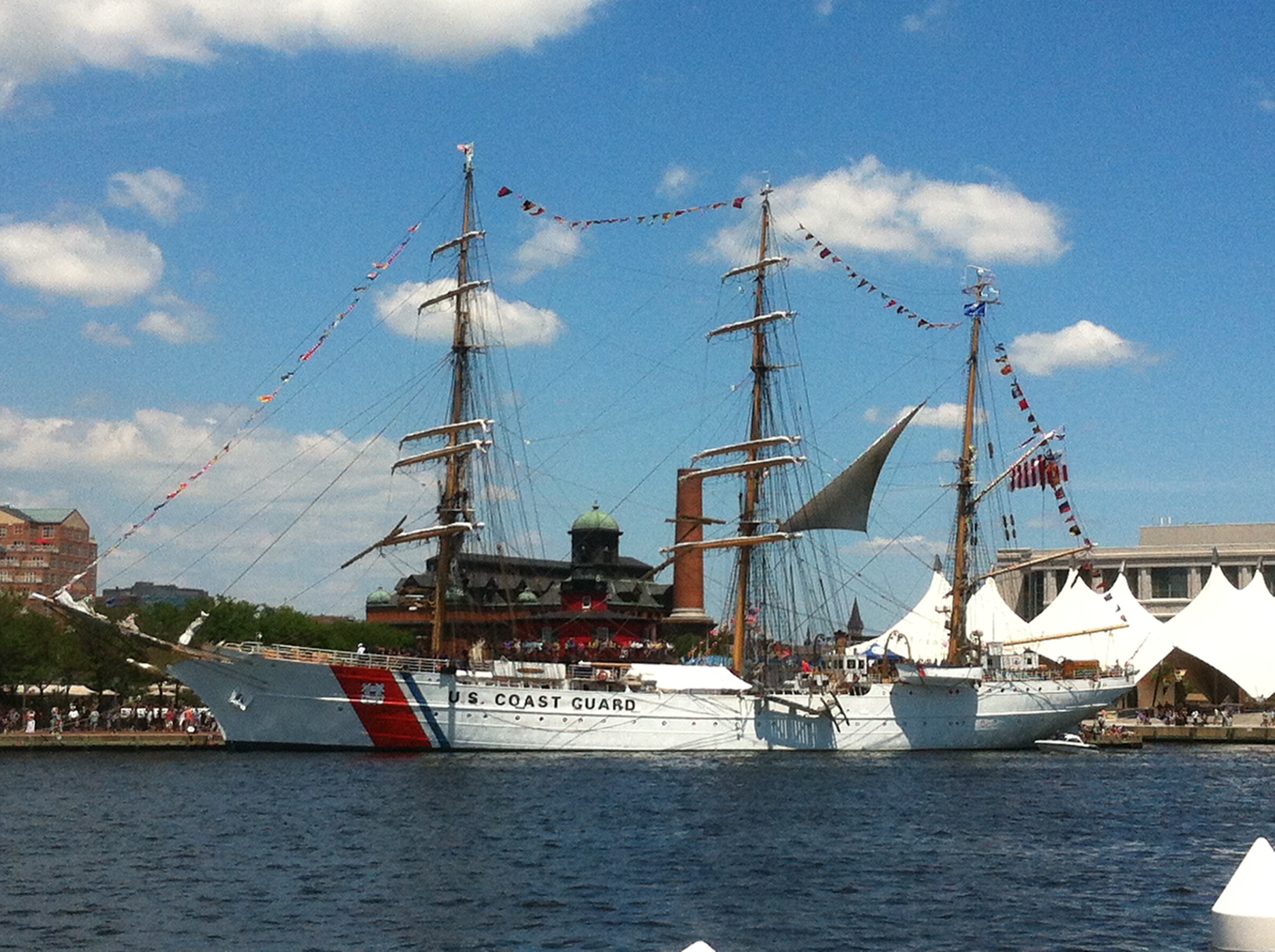
The Battle of Baltimore and the Bombardment of Fort McHenry was a turning point in the War of 1812. As the country celebrates the bicentennial of the war Baltimore threw a Sailabration with tall ships, naval vessels, an air show by the Blue Angels, and festivities galore.

The ships began to arrive on Wednesday June 13th. Past met present as 1812 living history reenactors gave tours of important sites in the Battle of Baltimore (like the battles of North Point and Hampstead Hill)  while the 2012 Navy parachutist team, the “Leap Frogs,” put on shows at Clifton Park and Patterson Park.

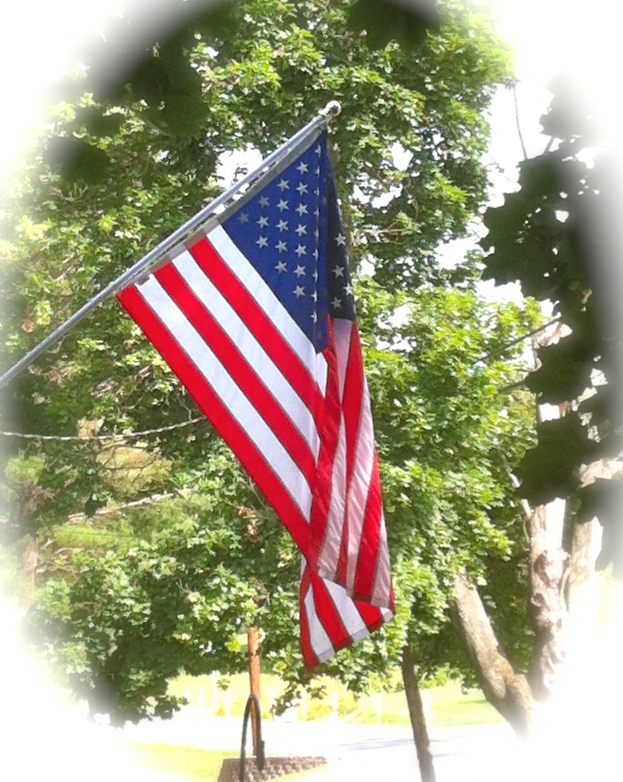
Thursday was Flag Day, and as any good Baltimorean knows, the US Flag that flew over Fort McHenry during the bombardment was not made by Betsy Ross,  but was sewn by local widow Mary Pickersgill. When Francis Scott Key penned the Star Spangled Banner it was Pickersgill’s flag he saw waving at dawn’s early light.  During a special Flag Day ceremony at the Flag House three strands from the original Star-Spangled Banner were sewn into the National 9/11 flag.  Later that day the 33rd Annual Pause for the Pledge took place at Fort McHenry.

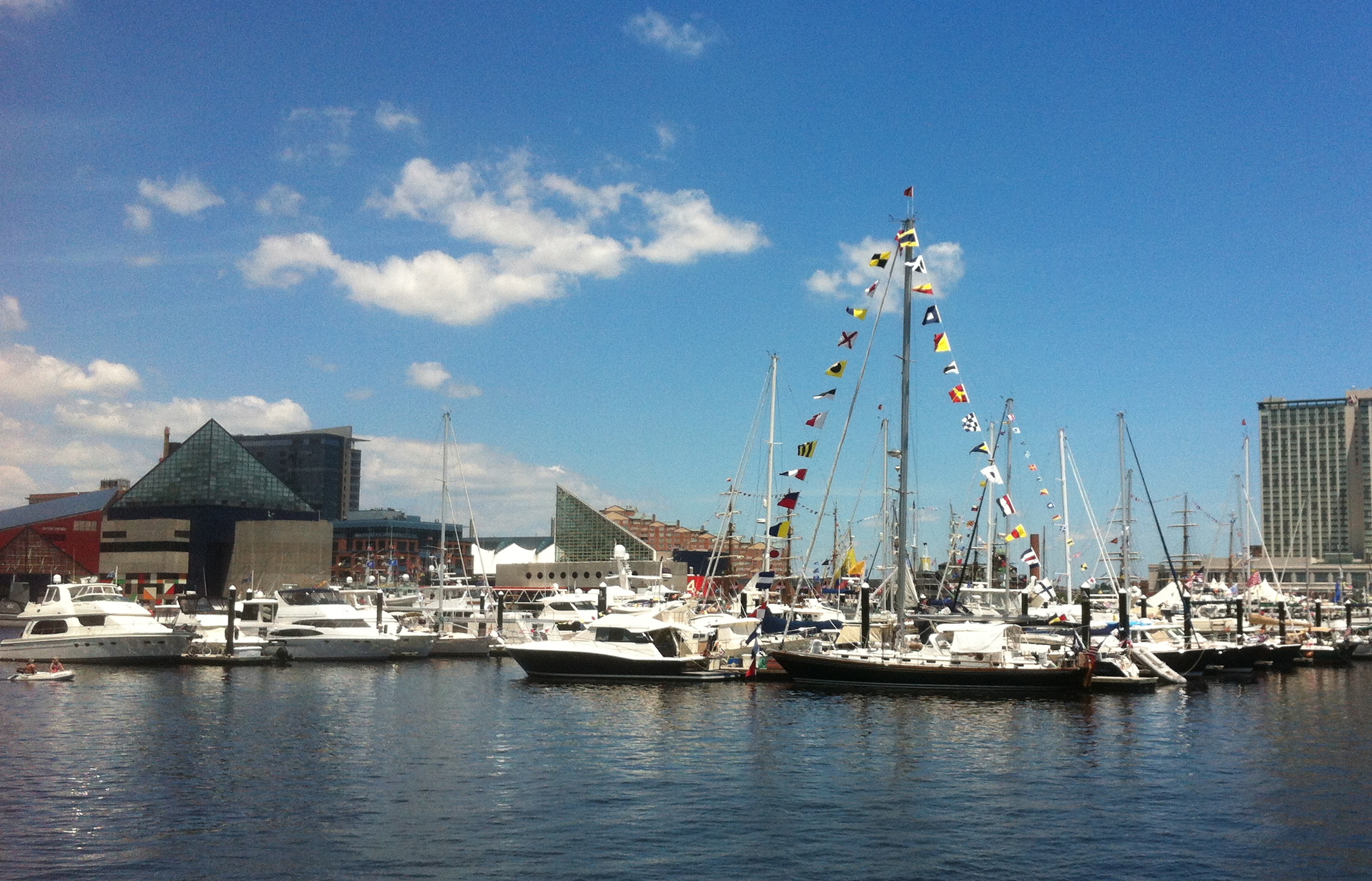
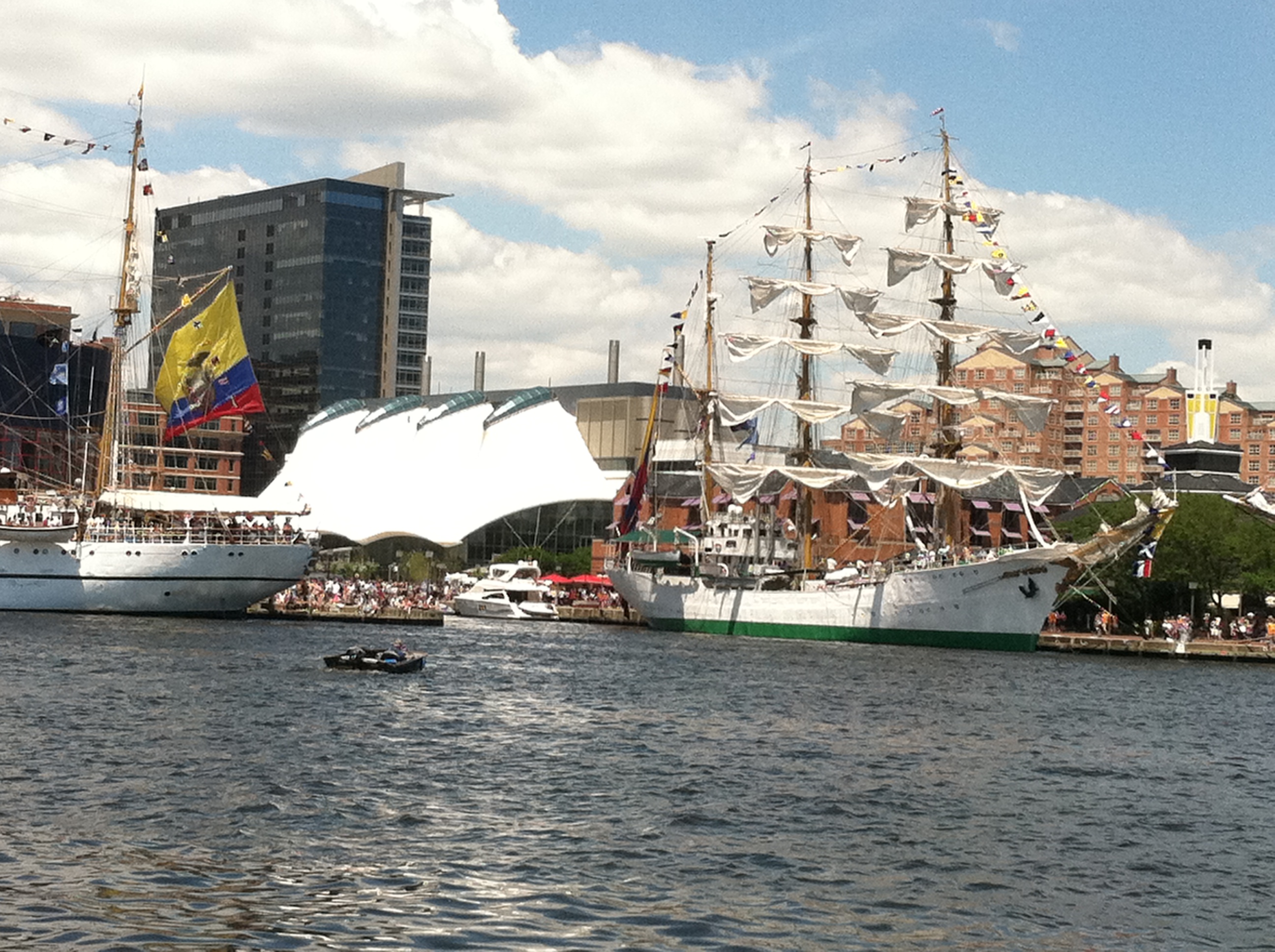
Looking at some of the smaller ships at the the marina near Rash Field. The Baltimore Aquarium is the background.

Free tours began on the ships at the Inner Harbor, Fells Point and Locust Point. And there was a concert and the Sailabration Festival Villages at Rash Field and Broadway Pier opened their stalls.

Friday boasted another beautiful day for touring the ships and enjoying the festivities.

Martin State Airport allowed visitors to get up close and personal with their military aircraft on Saturday and Sunday. Adventurous souls could even take a ride in the Navy Flight Simulator!

Four of the Blue Angels perform one of many jaw dropping maneuvers.

In the waters in front of Fort McHenry the Navy demonstrated its latest Special Warfare Combat Craft on Saturday & Sunday, while overhead the Blue Angels performed superhuman aviation tricks.  The Saturday night capped off with a concert and Fireworks at Fort McHenry.

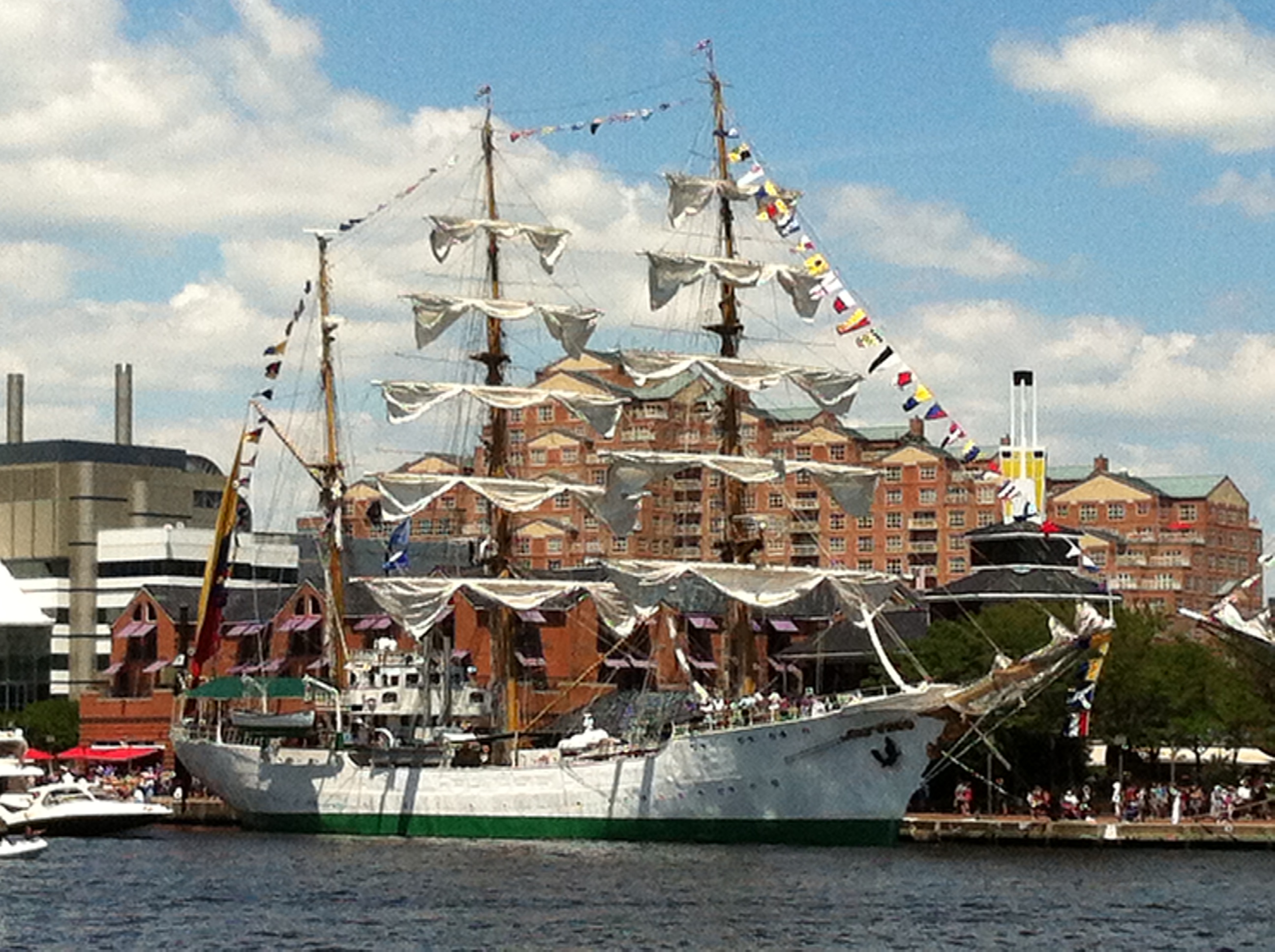
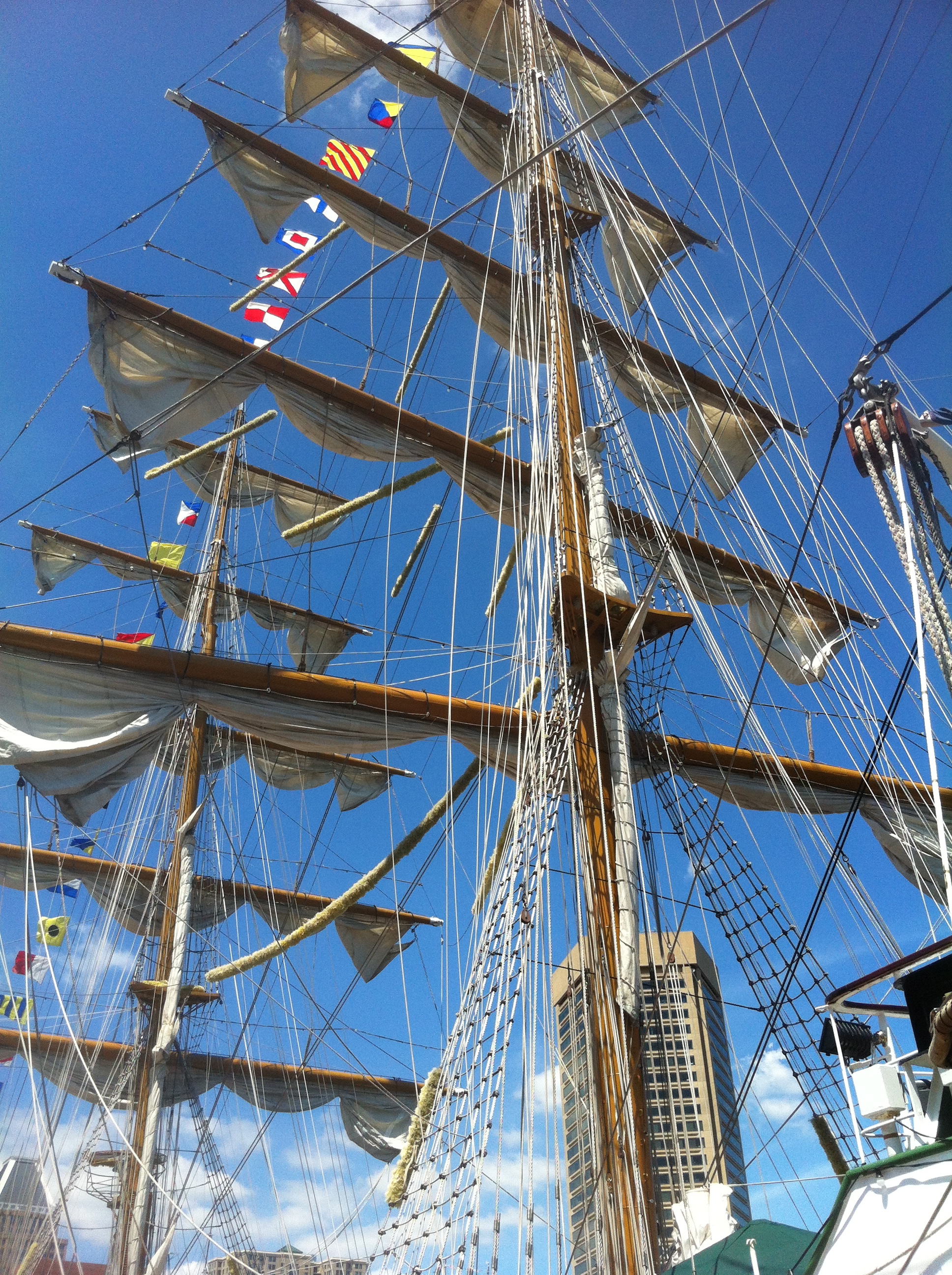
Rigging of the B.E. Cuauhtemoc, a Mexican tall ship.

Today, Sunday, will bring much of the same beautiful weather, ship tours, (crowds) and Blue Angels. Tonight you can catch  a Star-Spangled Symphony  at the Meyerhoff Symphony Hall. The musical event includes the premiere of Philip Glass’ “Overture for 2012”.

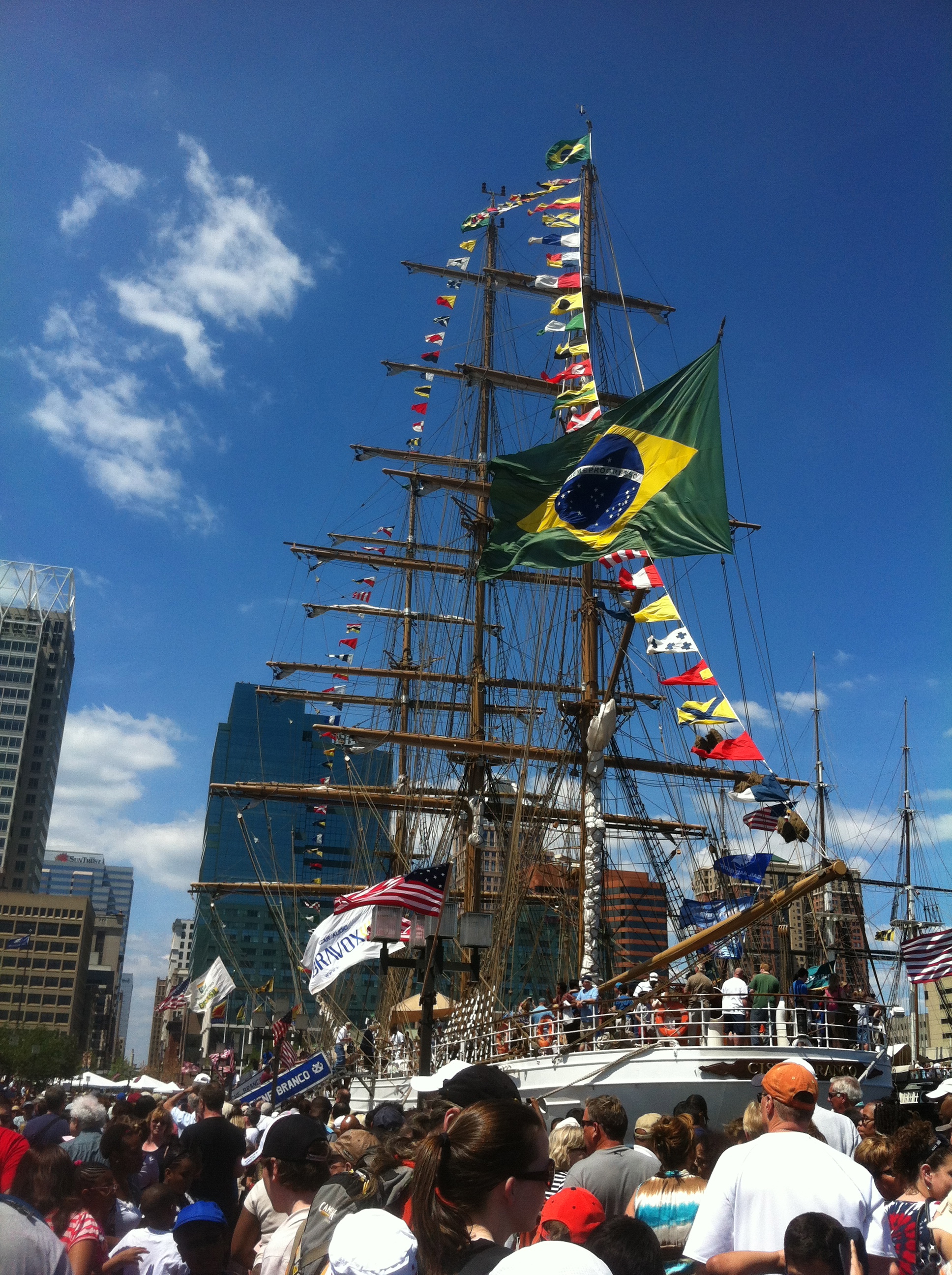
Brazil’s NVe Cisne Branco was docked at the Inner Harbor

On Monday representatives from the US, Great Britain and Canada will commemorate the anniversary of the Declaration of War on Great Britain with “From Enemies to Allies” at Fort McHenry at 10:30. Ship tours continue.

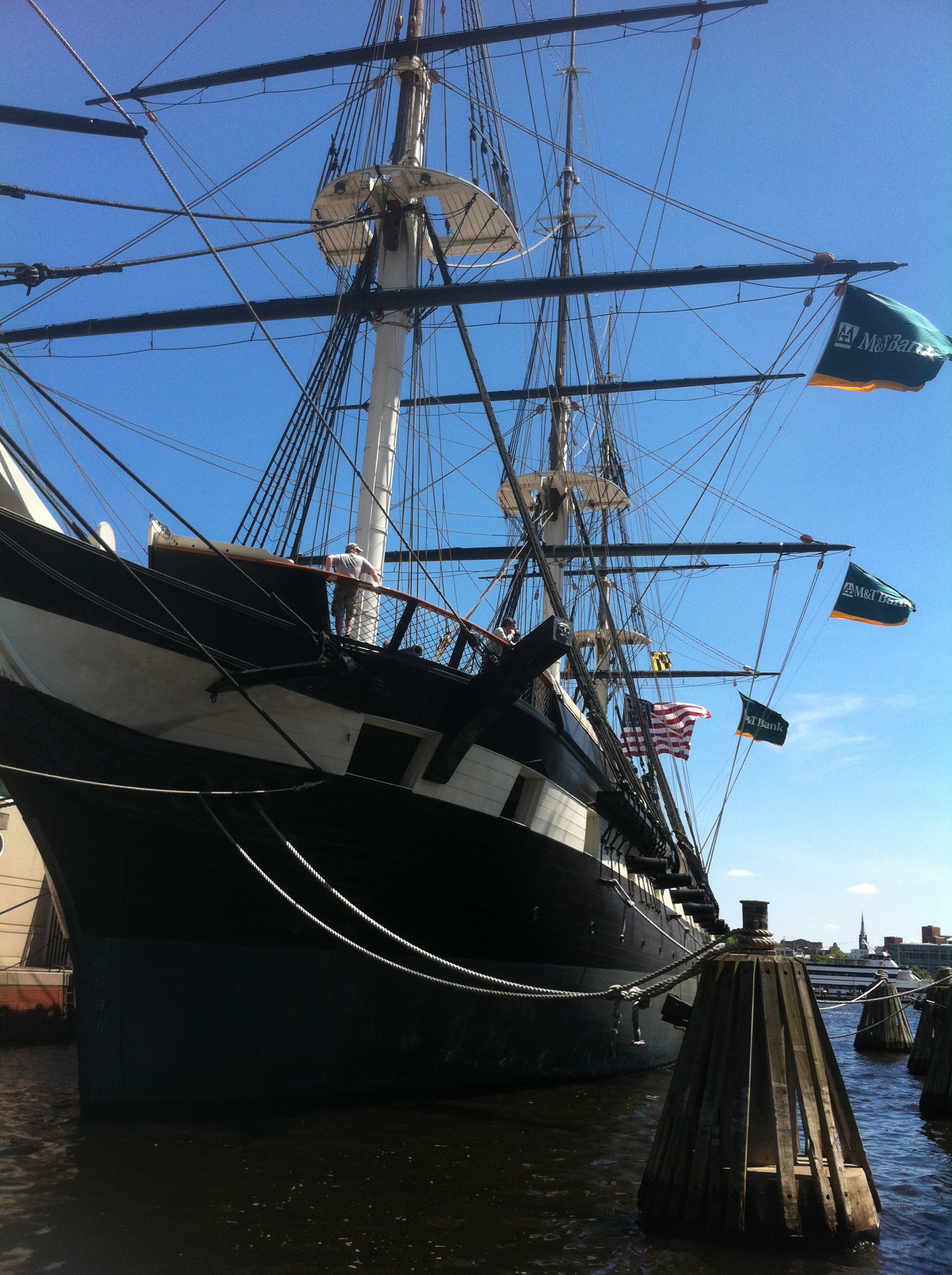
The USS Constellation, a Sloop-of-War ship launched in 1854.

The Sailabration ends on Tuesday as the ships leave the Baltimore area.

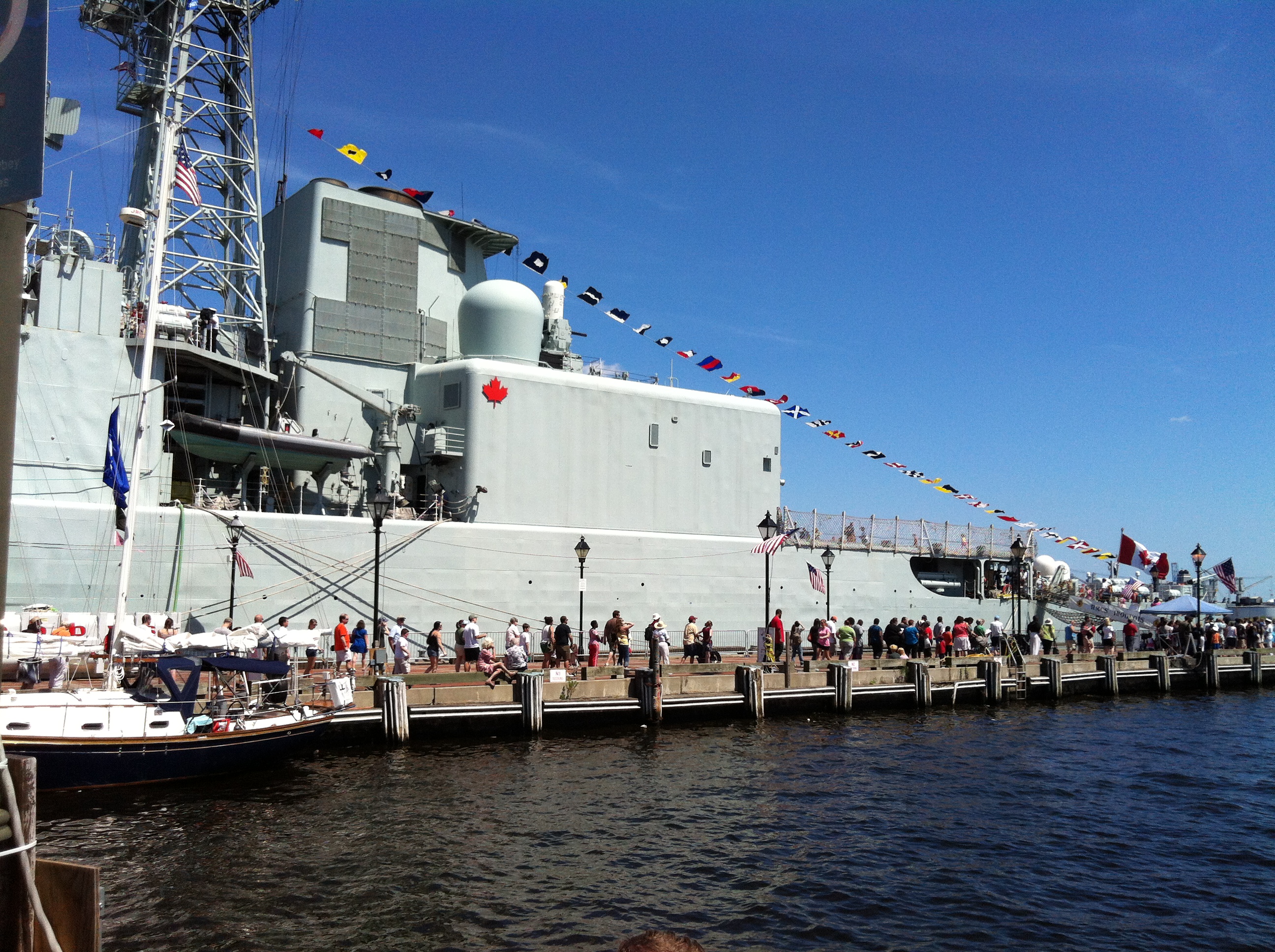
Warships, like the Canadian Iroquois docked at Fells Point, debark from 7:00 to 11:00 am on June 19th.

The tall ships debark from 11:00 to 1:00 on Tuesday. (photo courtesy of notesoftheladyupstairs)

Although The Battle of Baltimore and the Bombardment of Fort McHenry didn’t take place until September of 1814, Baltimore has gotten a wonderful start to celebrating the bicentennial of the War of 1912 with this Sailabration.

Oh, say can you see by the dawn’s early light
What so proudly we hailed at the twilight’s last gleaming?
Whose broad stripes and bright stars thru the perilous fight,
O’er the ramparts we watched were so gallantly streaming?
And the rocket’s red glare, the bombs bursting in air,
Gave proof through the night that our flag was still there.
Oh, say does that star-spangled banner yet wave
O’er the land of the free and the home of the brave?

———————————————————————————————————

All content is original. Photos by ritaLOVEStoWRITE and her daughter notesoftheladyupstairs.

All rights reserved.


Thought of the Day 6.14.12

“So much has been said and sung of beautiful young girls, why doesn’t somebody wake up to the beauty of old women”

–Harriet Beecher Stowe

Harriet Beecher Stowe was born this day in 1811, she would be 201 years old today.

Beecher-Stowe 2

Beecher-Stowe 2 (Photo credit: Wikipedia)
 

Stowe was a social activist and writer.

She wrote over 30 books covering a wide range of genres (from biographies to children’s books and how-to books on homemaking)  but she is best remembered for her best selling Uncle Tom’s Cabin.

Uncle Tom’s Cabin was  originally published in installments in the National Era, a weekly antislavery journal, starting in June of 1851. In 1852 it came out as a book which was published in two volumes. It was internationally well received and has been translated into 60 languages (including, if one is to believe Rogers and Hammerstein, Siamese.)

Visit the Harriet Beecher Stowe Center’s site to learn more.


Thought of the Day 6.8.12 Frank Lloyd Wright

“I’m all in favor of keeping dangerous weapons out of the hands of fools.
Let’s start with typewriters.”

–Frank Lloyd Wright

Today is Frank Lloyd Wright’s birthday, he would have been 145 years old.English: Frank Lloyd Wright, American architec...

English: Frank Lloyd Wright, American architect, portrait, head and shoulders, facing right. (Photo credit: Wikipedia)
[As a writer all I can say to that quote is “ouch.”]