Freelance writer, graphic designer, musician, foodie and Jane Austen enthusiast in Northern Baltimore County, Maryland. As a writer I enjoy both fiction and non fiction (food, travel and local interest stories.) As an advocate for the ARTS, one of my biggest passions is helping young people find a voice in all the performing arts. To that end it has been my honor to give one-on-one lessons to elementary, middle and high school students in graphic design and music. And as JANE-O I am a member of the Jane Austen Society of North America, Maryland. I acted as that group's Regional Coordinator for several years. In 2025 I sat on the JASNA AGM (Annual General Meeting) Planning Committee where I held the post of Head of User Experience. I'm also the coordinator for the Maryland Jane Austen Fest in Monkton, Maryland. This year the Fest takes place on May 1, 2 and 3rd.
Bruce Lee: Quest of the Dragon (Photo credit: Wikipedia)
Love is like a friendship caught on fire. In the beginning a flame, very pretty, often hot and fierce, but only light and flickering. As love grows older, our hearts mature and our love becomes as coals, deep-burning and unquenchable.
The key to immortality is first living a life worth living.
I fear not the man who has practiced a thousands kicks once; but I fear the man who has practiced one kick a thousand times.
A goal is not always something to be reached, it often serves simply to as something to aim at.
If you want to swim jump into the water.
–Bruce Lee
Lee Jun-fan (Bruce Lee) was born on this day in San Francisco, CA, USA in 1940. Today is the 2nd anniversary of his birth.
Although he was born in San Francisco he was raised in Hong Kong. He began to train in the martial arts at 13. He studied philosophy at the University of Seattle. Upon graduation he opened a martial arts studio in Oakland and Los Angeles and developed his own art called Jeet Kun Do.
Bruce Lee trained several celebrities before entering the film industry himself. He was born under the sign of the Dragon and the word dragon appears in several of his movie titles.
Lee died at the age of 32 from a cerebral edema from an allergic reaction to medicine in July of 1973.
Bruce Lee (Madame Tussauds Hong Kong). (Photo credit: Wikipedia)
“You have your thoughts and I have mine. This is the fact and you can’t change it even if you kill me. —Ba Jin
Li Yaotang was born on this day in in Chengdu, Sichuan, China in 1908. Today is the 104th anniversary of his birth.
He began his career in 1927, and has a collected work of 14 volumes of novels and proses. The first volume contains his novel The Family, completed in 1931, and his novellette Autumn in Spring in 1932. The second volume contains his two novelettes Garden of Repose, completed in 1944, and Bitter Cold Nights in 1946. The third volume contains the novelette The Grit Men, and 22 short stories. The fourth volume contains 43 articles on literary creation and other subjects by Ba Jin.[Selected Works of Ba Jin]
He was an anarchist who was often at odds with the Communist Party.But after the Communist Revolution he renounced his anarchist ideas and was considered a politically reliable person.
He was nominated for the Nobel prize in Literature in 1975.
Only Ba Jin statue I’ve ever seen in China (Photo credit: Foto Jenny)
[today’s blog is a little light because I am traveling.]
[Welcome to Secondary Character Saturday! If you usually get the Thought of the Day birthday bioBlog, please note that I’ll be doing a special blog on Saturdays instead — Secondary Character Saturday! Isn’t that exciting? Why? Well, after 200 biographies for real people I really miss fictional people, and I want to get to know them a little bit better too. But not just any fictional people, but the people who stand just off-center. The supporting characters who make good literature so much fun to read — or in this case, watch.]
—————————————————————
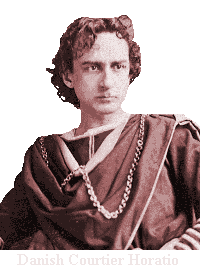
This Saturday’s Secondary Character? HORATIO
The “gravedigger scene” The Gravedigger Scene: Hamlet 5.1.1–205. (Artist: Eugène Delacroix 1839) (Photo credit: Wikipedia)
From: Hamlet
By: William Shakespeare
Written: 1603 (ish)
Why: Horatio is there at the beginning, he’s there at the end, and he’s there for Hamlet. So he acts as both witness (to the ghost, to Hamlet’s true state of mental health, to the bloody body count at the end of the play, etc) and as sounding board (and best mate) for the protagonist.
[Image courtesy Hamlet Study Guide]
Pros: Loyal to his friends. Steady. Intelligent. Brave. Not politically motivated or ambitious. In a world where power and political position are everything…the unconnected, poor, fellow student of the Prince of Denmark navigates the court by being observant and unobtrusive. His loyalty to Hamlet is his sole commitment and he is willing to give everything for his friend, even his life. It is that friendship, steadfastness, and lack of deception in the den of sycophants and players at court that ground Hamlet and let him know that there are still good, true people in the world. He is also a voice of reason that tempers the storm of anger and emotion in his friend.
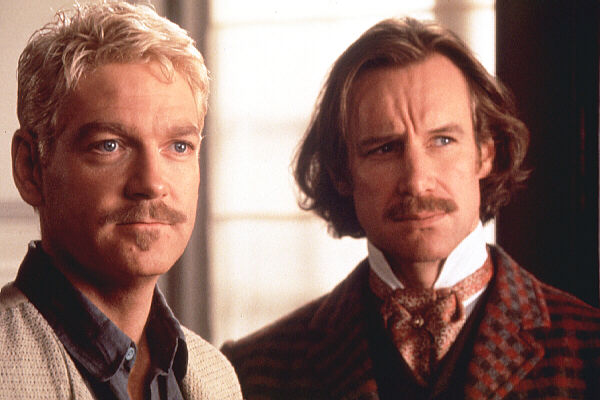
Kenneth Branagh as Hamlet and Nicholas Farrell as Horatio in the 1996 version of Hamlet [Image courtesy: Daily Telegraph.com]
Cons: Compared to Hamlet, Horatio is a bit vanilla. He lacks flare and ambition. And as loyal as he is to Hamlet, perhaps he could have stood up to him a bit more and guided him to a safer path.
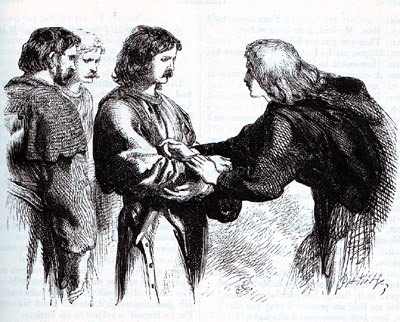
Sketch from Act 1: Scene 2 where Horatio tells Hamlet about his father’s ghost. [Image Courtesy: Hyperion to a satyr]
With out Horatio we (the audience) would only know what Hamlet was really thinking through his soliloquies. He can be staged as “the shadow of Elsinor”, appearing (some times in a crowd, sometimes half hidden) in scenes where he doesn’t have a line and gaining information for both the audience and the Prince.
Here’s a clip from the BBC’s Dramatic Works of William Shakespeare’s Hamlet with Derek Jacobi as Hamlet and Robert Swann as Horatio. I think it nicely shows Horatio’s patience…
And for you CSI hipsters here’s Horatio take on Hamlet (just for Maggie):
“He looked like something that had gotten loose from Macy’s Thanksgiving Day Parade.”
–Harpo Marx
Adolph Marx was born on this day in New York City, New York, USA in 1888. Today is the 124th anniversary of his birth.
The second of five brothers in the Marx family, Adolph didn’t make it past second grade in school. He was small for his age and he was picked on by the bigger boys because he was Jewish. Two boys literally threw him out of the (first floor) classroom window on several occasions before he gave up and left school. He joined his brother Chico in doing odd jobs to help the family.
His uncle Al Schoenberg (stage name Al Shean) was in a Vaudeville act. His older brother Chico played piano, and his younger bother Julius (Groucho) was a boy soprano. Adolph joined Julius and Milton (Gummo) to form “the Three Nightingales” in 1910. Lou Levy joined them to make the group “The Four Nightingales.” When their mother, Minnie, and Aunt Hannah joined the act they changed the name to “The Six Mascots.”
The five Marx brothers with their parents in New York City, 1915. From left to right; Groucho, Gummo, Minnie (mother), Zeppo, Frenchy (father), Chico, and Harpo. (Photo credit: Wikipedia)
In 1911 he changed his name to Arthur because he didn’t like the sound of Adolph. He adopted the stage name of Harpo when his mother sent him a harp. He didn’t know how to tune it or play it. He didn’t even know how to hold it until he found an image of an angel holding a harp at the 5&10 store. He tuned it the best he could and taught himself to play.
At that point Harpo’s two-fold schtick — he “couldn’t talk” so he blew his horn or whistled to communicate; and he played the harp — was in place. (He could, in fact, talk. And he did so — a lot — off stage/scene. His “speaking career” stopped after he received a bad review for a largely ad-libbed performance in the play Home Again.)
A critic in the local newspaper described the show by saying, in part, “Adolph Marx performed beautiful pantomime which was ruined whenever he spoke.” Harpo then decided he could do a better job of stealing focus by not speaking. [The Marx Brothers; Harpo Marx from an article in Theatre Arts Monthly, October 1939]
The four Marx Brothers stowing away on an ocean vessel by hiding in barrels in this promotional still for Monkey Business. Left to right: Harpo, Zeppo, Chico, Groucho. (Photo credit: Wikipedia)
From the Vaudeville stage the Marx Brothers moved on to Hollywood. They made the short, Humor Risk, in 1921. (The film has since been lost.) Harpo was then in Too Many Kissesas the character “The Village Peter Pan.” He actually has a line in this movie, but, as it’s a silent film, you don’t actually hear him speak it. His brothers did not appear in the film.
In 1929 the brothers put out The Cocoanuts.The film was based on their Broadway play of the same name. In it…
the Marx Brothers run a hotel, auction off some land, thwart a jewel robbery, and generally act like themselves. [IMDB]
They shot during the day and performed in the stage show of Animal Crackers at night. It was an exhausting schedule and the Brothers were not happy with the result. They were “so appalled … that they offered to buy the negative from Paramount so that they could burn it.” [Ibid]
Marx Brothers, head-and-shoulders portrait, facing front. Top to bottom: Chico, Harpo, Groucho and Zeppo. (Photo credit: Wikipedia)
The Brothers made Animal Crackers,Horse Feathers , Duck Soup, A Night at the Opera, A Day at the Races, Room Service, At the Circus, Go West, The Big Store, A Night in Casablanca, and Love Happy in quick succession.
Starting in 1952 Harpo started doing guest spots on Television, most notably on the I Love Lucy Show.
His last film was The Story of Mankindin 1957. He played Sir Isaac Newton.
Off screen Harpo, the elementary school drop out, rubbed shoulders with some pretty high level literary types. In the 1920’s he held his own at the Algonquin Round Table with writers such as George S. Kaufman and Dorothy Parker. In 1928 he spent the summer on the French Riviera with George Bernard Shaw.
He attributes his welcome hanging out with the fast literary crowd at the Algonquin Round Table in New York in the 1920s to his ability to listen — in fact, to being the one real listener in that set. [Robert Wilfred Franson’s review of Harpo Speaks]
In 1933 Harpo did a 6-week goodwill mission in the Soviet Union. He was the “first American to perform in the Soviet Union after the United States government officially recognized it.” [Harpo’s Place] According to his autobiography, Harpo Speaks, the trip was part performance and part spy caper. He smuggled papers out of the USSR by taping them to his leg.
Marx died while having open-heart surgery on September 28, 1964.
Here’s a clip of Harpo actually speaking (and honking):
Nothing is more honorable than a grateful heart. –Seneca
He enjoys much who is thankful for little;
a grateful mind is both a great and happy mind. –unknown
Let us be grateful to people who make us happy;
they are the charming gardeners who make our souls blossom. –Marcel Proust
Let us rise up and be thankful; for if we didn’t learn a lot today, at least we learned a little, and if we didn’t learn a little, at least we didn’t get sick, and if we got sick, at least we didn’t die; so, let us all be thankful. –Buddha
I am grateful for what I am and have.
My thanksgiving is perpetual…
O how I laugh when I think of my vague indefinite riches.
No run on my bank can drain it
for my wealth is not possession but enjoyment. –Henry David Thoreau
Be grateful for whomever comes,
because each has been sent
as a guide from beyond. –Jalal ad-Din Rumi
Live your life so that the fear of death can never enter your heart. When you arise in the morning, give thanks for the morning light. Give thanks for your life and strength. Give thanks for your food and for the joy of living. And if perchance you see no reason for giving thanks, rest assured the fault is in yourself. –Chief Tecumseh, Shawnee Indian Chief
“We have too many high-sounding words, and too few actions that correspond with them.” — Abigail Adams
Abigail Adams by Benjamin Blythe, 1766 (Photo credit: Wikipedia)
Abigail Smith was born on this day in Weymouth, Massachusetts, in 1744. Today is the 268th anniversary of her birth.
Abigail was literally born in a church. Her father, Reverend William Smith was the pastor at the North Parish Congregational Church, her mother, Elizabeth Quincy Smith was first cousins to Dorothy Quincy Hancock (John Hancock’s wife). Reverend Smith believed in reason and morality and he imparted those lessons to his daughters Mary, Elizabeth and Abigail. Her mother home schooled the girls with the aid of her extended family’s libraries. The girls studied English and French literature, philosophy, history, and the Bible. Abigail
“was a keen political observer, prolific writer…” [abigailadams.org]
Abigail’s third cousin John Adams visited the Smith’s with his friend Richard Cranch. Cranch was engaged to Mary Smith, the eldest Smith sister. Adam’s was just a country lawer, and Abigail’s mother didn’t approve of him as a suitor, but the couple prevailed.
On October 25, 1764 Abigail married John Adams, a Harvard graduate pursuing a law career. Their marriage was one of mind and heart, producing three sons and two daughters, and lasting for more than half a century. [Ibid]
As a young married couple they lived on the farm John inherited, Braintree. Later they moved to Boston. She stayed in Massachusetts when John went to Philadelphia to participate in the Continental Congress (1 & 2), travelled abroad as an envoy, and served in elected office.
Abigail struggled alone with wartime shortages, lack of income, and difficult living conditions. She ran the household, farm, and educated her children. Abigail’s letters to John were strong, witty and supportive. The letters, which have been preserved, detail her life during revolutionary times, and describe the many dangers and challenges she faced as our young country fought to become independent. Most of all, the letters tell of her loneliness without her “dearest friend,” her husband John. [Ibid]
She joined John in Paris in 1784 and travelled with him to England the following year. In 1800 she became the First Lady to preside over the White House as John Adams became the second President of the United States. (The Capitol had recently been moved to Washington DC).
English: “Abigail Smith Adams,” oil on canvas, by the American artist Gilbert Stuart. Courtesy of the National Gallery of Art, Washington, D. C. (Photo credit: Wikipedia)
When John Adams lost his bid for a second term he and Abigail moved back to Braintree …”and for 17 years enjoyed the companionship that public life had long denied them.” [Ibid]
Abigail Adams died on October 28, 1818. She was a woman …
often ahead of her time with many of her ideas. She opposed slavery, believed in equal education for boys and girls, and practiced what she learned as a child – the duty of the fortunate is to help those who are less fortunate. [Ibid]
Yeah, I can’t believe it either… but that blog you read yesterday — the one on my hero Robert F. Kennedy — was the 200th blog post for ritaLOVEStoWRITE.
That’s 12,641 views! and 128 faithful followers (THANKS GUYS!!!) — not counting those folks who read it on Facebook.
So…Who was your favorite Thought of the Day birthday profile?
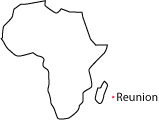
My quest for “world domination” is still on going. On the imaginary the RISK board playing out in my head I still need Guyana and French Guyana in South America; Nicaragua, the Bahamas, and Haiti in Central America/Caribbean; Greenland for North America; Macedonia and Moldova for Europe; and a bunch more in Africa and Asia. (But, hey, I got the island country of Reunion and I didn’t even know where that was*, so I figure I’m ahead of the game.) So if you know any body in one of the gray countries in the map below please ask them to stop by ritaLOVEStoWRITE.com — it’ll really make my day. (Yes, I know how pathetic that sounds.)
So… a couple of things…
1.) NAME CHANGE: I’ve been calling my bioBlogs Thought of the Day with the date and birthday person. I’m changing that to the birthday person’s name, then the date then, Thought of the Day. (So yesterday’s blog would now be “Robert F. Kennedy 11.20.12 Thought of the Day”) Hopefully that will make it easier for people to find the individual blog posts through a search engine.
2.) FEED BACK: PLEASE talk back! I love it when I get a response. Cross my heart — I do! But please be aware that the spam filter catches a lot of stuff and if your comment doesn’t specifically reference the blog; if I can’t see a legit web page or blog; or if there’s a hint of anything blue in the content of the comment or your web page name I’ll delete it. Gotta be safe.
3.) NEW!!! Secondary Character Saturday — I’m toying with the idea of dedicating Saturday (or maybe Sunday) to profiling a fictional character instead of an actual person. It wont necessarily be on their birthday. And they likely will not be the main character. WHAT DO YOU THINK?????
4.) If you have a famous (or semi famous) person with a birthday coming up, and you’d like to see them featured in Thought of the Day please submit their name and birth date. I’ll see what I can do.
5.) I’m looking for guest bloggers. Want to be a featured guest blogger and write a birthday bioBlog about some one you admire? Don’t be shy just drop me a line.
I think that’s it from here. Thanks again for reading along!
Cheers,
Rita
* Reunion is off the coast of Madagascar in the Indian Ocean.
“It is from numberless diverse acts of courage and belief that human history is shaped. Each time a man stands up for an ideal, or acts to improve the lot of others, or strikes out against injustice, he sends forth a tiny ripple of hope.”
“People say I am ruthless. I am not ruthless. And if I find the man who is calling me ruthless, I shall destroy him.”
“I believe that, as long as there is plenty, poverty is evil.”
“Ultimately, America’s answer to the intolerant man is diversity, the very diversity which our heritage of religious freedom has inspired.”
—Robert F. Kennedy
Robert F. Kennedy, Cabinet Room, White House, Washington, DC. (Photo credit: Wikipedia)
Robert Francis Kennedy was born on this day in Brookline, Massachusetts in 1925. Today is the 87th anniversary of his birth.
He was the seventh of nine Kennedy children, the third son. The family split their time between New York and their summer home in Hyannis Port, Massachusetts. Bobby attended public schools until 6th grade. He went to a series of private schools including a Benedictine boarding school for boys and Milton Academy.
Shortly before he turned 18 he enlisted in the US Naval Reserve. He participated in the V-12 Navy College Training Program at Harvard and Bates College from 1944 to 1946 and served on the USS Joseph P. Kennedy, Jr, a destroyer named after his brother, on it’s shakedown cruise in the Caribbean. He was honorably discharged later that year. He then went on to the University of Virginia Law School.
English: Kennedy brothers; left to right John, Robert, Ted. Česky: Bratři Kennedyové – vlevo John F., uprostřed Robert F. (Photo credit: Wikipedia)
In 1952 he managed John F. Kennedy’s run for U.S. Senate. His brother won the Senate seat and Robert Kennedy served
briefly on the staff of the Senate Subcommittee on Investigations, chaired by Senator Joseph McCarthy. Disturbed by McCarthy’s controversial tactics, Kennedy resigned from the staff after six months. He later returned to the Senate Subcommittee on Investigations as chief counsel for the Democratic minority, in which capacity he wrote a report condemning McCarthy’s investigation of alleged Communists in the Army. [John F. Kennedy Presidential Library & Museum]
Next he tackled corruption in trade unions as Chief Counsel for the Senate Rackets Committee. His book The Enemy Within details the corruption he confronted with the Teamsters and other unions.
In 1956 he was an aide to Democratic presidential nominee Adlai Stevenson. Stevenson lost, but the experience was good training. Bobby took the reigns again for his brother’s bid for the presidency against Richard Nixon in 1960. When John Kennedy won he made Bobby the Attorney General.
He fought organized crime and “became increasingly committed to helping African-Americans win the right to vote.” [Ibid] In a 1961 speech in Georgia he said:
“We will not stand by or be aloof. We will move. I happen to believe that the 1954 [Supreme Court school desegregation] decision was right. But my belief does not matter. It is the law. Some of you may believe the decision was wrong. That does not matter. It is the law.” [Ibid]
He worked with the administration to create the Civil Rights Act of 1964.
Attorney General Robert F. Kennedy speaking to a crowd of African Americans and whites through a megaphone outside the Justice Department; sign for Congress of Racial Equality is prominently displayed. (Photo credit: Wikipedia)
He was also instrumental in foreign affairs including the Berlin Crisis of 1961 and the Cuban Missile Crisis of 1962.
John F. Kennedy was assassinated in Dealey Plaza, Dallas, Texas on November 22, 1963. Robert Kennedy was devastated by the death of his brother and friend. He even felt guilt — had his aggressive pursuit against organized crime and obsession to “get” Castro some how brought this about? [I won’t even attempt to resolve the myriad of conspiracy theories here. Suffice it to say Bobby was not the same man after the death of his brother.]
He resigned from his post as Attorney General nine months after the assassination and began a run for U.S. Senate. He won the seat.
He climbed Mount Kennedy, a mountain that was named for his brother and the highest peak in Canada that had not be summited, in 1965.
In 1966 he went to South Africa to speak out against the Apartheid government. He dared to ask “Supposed God is black? What if we go to Heaven and we, all our lives, have treated the Negro as an inferior, and God is there, and we look up and He is not white? What then is our response?”
As Senator he also spoke out against the Vietnam War, continued to work for Civil Rights and the War on Poverty.
He sought to remedy the problems of poverty through legislation to encourage private industry to locate in poverty-stricken areas, thus creating jobs for the unemployed, and stressed the importance of work over welfare. [John F. Kennedy Presidential Library & Museum]
On March 16, 1968 he declared his bid for the Presidency. His platform was based on racial and economic justice, he was also anti-war
…he challenged the complacent in American society and sought to bridge the great divides in American life – between the races, between the poor and the affluent, between young and old, between order and dissent. His 1968 campaign brought hope to an American people troubled by discontent and violence at home and war in Vietnam.[Ibid]
When Martin Luther King, Jr. was assassinated in April of 1968 Kennedy found out about it minutes before he was to give a speech in downtown Indianapolis. He could have gotten back in his limo and let some one else make the announcement to a crowd that was certain to be upset by the news, but he stepped in front of the inner city crowd and gave an impromptu speech calling for reconciliation between the races.
Many other American cities burned after King was killed. But there was no fire in Indianapolis, which heard the words of Robert Kennedy… a well-organized black community kept its calm. It’s hard to overlook the image of one single man, standing on a flatbed truck, who never looked down at the paper in his hand — only at the faces in the crowd. [NPR.org]
Kennedy also fell victim to an assassin’s bullet. He was fatally shot at the Ambassador Hotel in Los Angeles, California on June 5, 1968. He had just won California’s Democratic Primary.
The Robert F. Kennedy Memorial (Photo credit: Bernt Rostad)
[One of my earliest real memories is watching the train that carried Robert Kennedy’s body to its Arlington National Cemetery. My parents had taken us all on a picnic at the the ball field near the train tracks. We weren’t the only family there, there were lots of kids playing and other families on blankets eating cold chicken and potato salad. Then a train rolled through and all the adults stood up and faced the tracks. We kids didn’t need to be hushed. My mother was silently crying. I took her hand and asked her what was going on. As the flag festooned final car passed she whispered “A great American is on that train.” And then it was over. We packed up the picnics. No one was hungry or wanted to play any more.]
[Do you have a Bobby Kennedy story? Share it with us please.]











 ritaLOVEStoWRITE