Archives: 2013

Top 100 Books proves that Jane Austen is the Teacher’s Pet

CLASS lets get reading…

TES (Think, Educate, Share) a website dedicated to bringing the latest teaching news and strategies to educators and the public asked 500 primary and secondary teachers what their top 10 books were. They crunched the numbers and came up with the following list of 100 top books.

It is an interesting list and it ranges nicely from early-ish chapter books — the kind that got us all hooked on reading in the first place, like Dahl and Lewis — to more mature novels like Atonement.

I was glad to see that my girl Jane made the grade (#1, 32, 52, 58). And you’ll recognize lots of other Thought of the Day authors on here too (I put them in italics — if you  are interested in reading the bioBlogs go to the search box to the right and type in their name.)

1. Pride and Prejudice Jane Austen

Jane Austen, Watercolour and pencil portrait b...

Jane Austen, Watercolour and pencil portrait by her sister Cassandra, 1810 (Photo credit: Wikipedia)


2. To Kill a Mockingbird Harper Lee

3. Harry Potter (series) J.K. Rowling

4. Wuthering Heights Emily Bronte

5. Jane Eyre Charlotte Bronte

6. Nineteen Eighty-Four George Orwell

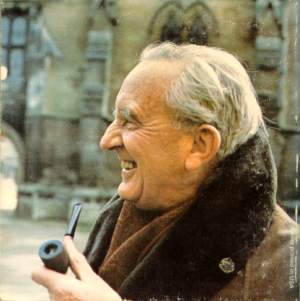
7. The Lord of the Rings (series) J.R.R. Tolkien

[Image courtesy Biography online

[Image courtesy Biography online

8. The Book Thief Markus Zusak9. The Hobbit J.R.R. Tolkien10. The Great Gatsby F. Scott Fitzgerald11. The Kite Runner Khaled Hosseini12. The Hunger Games (series) Suzanne Collins13. The Time Traveller’s Wife Audrey Niffenegger

14. The Chronicles of Narnia (series) C.S. Lewis

15. Of Mice and Men John Steinbeck

16. Birdsong Sebastian Faulks

17. His Dark Materials (series) Philip Pullman

18. The Gruffalo Julia Donaldson and Axel Scheffler

19. The Catcher in the Rye J.D. Salinger

20. Life of Pi Yann Martel

21. Tess of the d’Urbervilles Thomas Hardy

22. Rebecca Daphne du Maurier

23. The Curious Incident of the Dog in the Night-Time Mark Haddon

24. Lord of the Flies William Golding

25. Matilda Roald Dahl

My Roald Dahl collage featuring some of his most popular characters (as drawn by the amazing Quentin Blake).  Surrounding Mr. Dahl and his pups are: at the top left are: The BFG, Sophie, Dahl with his pups, The Enormous Crocodile, Mr. Fox, James, the Grand High Witch, Willy Wonka, and Matilda.

My Roald Dahl collage featuring some of his most popular characters (as drawn by the amazing Quentin Blake).


26. Catch-22 Joseph Heller

27. Millennium (series) Stieg Larsson

28. Animal Farm George Orwell

29. The Handmaid’s Tale Margaret Atwood

30. Persuasion Jane Austen

31. One Hundred Years of Solitude Gabriel Garcia Marquez

32. Kensuke’s Kingdom Michael Morpurgo

33. Goodnight Mister Tom Michelle Magorian

34. The Grapes of Wrath John Steinbeck

35. Charlie and the Chocolate Factory Roald Dahl

36. The Boy in the Striped Pyjamas John Boyne

37. Little Women Louisa May Alcott

English: Bust of Louisa May Alcott

English: Bust of Louisa May Alcott (Photo credit: Wikipedia)

38. One Day David Nicholls

39. We Need to Talk About Kevin Lionel Shriver

40. The Twits Roald Dahl

41. Wolf Hall Hilary Mantel

42. A Thousand Splendid Suns Khaled Hosseini

43. The Wind in the Willows Kenneth Grahame

44. Frankenstein Mary Shelley

45. Great Expectations Charles Dickens

46. Captain Corelli’s Mandolin Louis de Bernieres

47. George’s Marvellous Medicine Roald Dahl

48. The Hitchhiker’s Guide to the Galaxy Douglas Adams

douglas adams inspired "Hitch hikers guid...

douglas adams inspired “Hitch hikers guide to the galaxy” H2G2 http://www.hughes-photography.eu (Photo credit: Wikipedia)

49. Room Emma Donoghue

50. Anna Karenina Leo Tolstoy

51. Atonement Ian McEwan

52. Emma Jane Austen

53. Middlemarch George Eliot

54. The Shadow of the Wind Carlos Ruiz Zafon

55. The Color Purple Alice Walker

56. The Very Hungry Caterpillar Eric Carle

57. Brave New World Aldous Huxley

58. Sense and Sensibility Jane Austen

59. The Bell Jar Sylvia Plath

60. Alice’s Adventures in Wonderland Lewis Carroll

61. Charlotte’s Web E.B. White

62. Dracula Bram Stoker

63. We’re Going on a Bear Hunt Michael Rosen and Helen Oxenbury

64. A Prayer for Owen Meany John Irving

65. The Secret History Donna Tartt

66. The Little Prince Antoine de Saint-Exupery.

Antoine de Saint-Exupery. Scanned drawing.

Antoine de Saint-Exupery. Scanned drawing. (Photo credit: Wikipedia)

67. Crime and Punishment Fyodor Dostoevsky

68. The Poisonwood Bible Barbara Kingsolver

69. Jude the Obscure Thomas Hardy

70. Skellig David Almond

71. The Woman in White Wilkie Collins

72. Gone with the Wind Margaret Mitchell

73. Game of Thrones (series) George R.R. Martin

74. David Copperfield Charles Dickens

Charles Dickens, a former resident of Lant Street.

Charles Dickens, a former resident of Lant Street. (Photo credit: Wikipedia)

75. Never Let Me Go Kazuo Ishiguro

76. Where the Wild Things Are Maurice Sendak

77. Twilight (series) Stephenie Meyer

78. Beloved Toni Morrison

79. The Help Kathryn Stockett

80. Sherlock Holmes (series) Arthur Conan Doyle

81. Half of a Yellow Sun Chimamanda Ngozi Adichie

82. Moneyball Michael Lewis

83. My Family and Other Animals Gerald Durrell

84. Memoirs of a Geisha Arthur Golden

85. On the Road Jack Kerouac

86. Cloud Atlas David Mitchell

87. Wild Swans Jung Chang

88. Anne of Green Gables L.M. Montgomery

89. Les Miserables Victor Hugo

90. Room on the Broom Julia Donaldson and Axel Scheffler

91. Private Peaceful Michael Morpurgo

92. Noughts and Crosses Malorie Blackman

93. Cider with Rosie Laurie Lee

94. Danny the Champion of the World Roald Dahl

95. Down and Out in Paris and London George Orwell

English: George Orwell in Hampstead On the cor...

English: George Orwell in Hampstead On the corner of Pond Street and South End Road, opposite the Royal Free Hospital. The bookshop has long gone. (Photo credit: Wikipedia)

96. The Magic Faraway Tree Enid Blyton

97. The Witches Roald Dahl

98. The God of Small Things Arundhati Roy

99. Holes Louis Sachar

100. The Picture of Dorian Gray Oscar Wilde.

English: Oscar Wilde, three-quarter length por...

English: Oscar Wilde, three-quarter length portrait, facing front, seated, leaning forward, left elbow resting on knee, hand to chin, holding walking stick in right hand, wearing coat. (Photo credit: Wikipedia)

So… what do you think? Did the teachers get an A+ for their list?  Are there any other books that you treasure that didn’t make the top 100?

If you were asked to list your top 10 books what would you include?


Dorothea Dix 4.4.13 Thought of the Day

“In a world where there is so much to be done, I felt strongly impressed that there must be something for me to do” — Dorothea Dix

Ninth plate daguerreotype of Dorothea Lynde Dix.

Ninth plate daguerreotype of Dorothea Lynde Dix. (Photo credit: Wikipedia)

Dorothea Lynde Dix was born on this day in Hampden, Maine, USA in 1802. Today is  211th anniversary of her birth.

She was the oldest child of Joseph and Mary Dix. Joseph was an itinerant Methodist preacher and sometime laborer. He was also an alcoholic and an abusive father. “Her mother was not in good mental health” [Webster.edu] so by the time her two brothers, Joseph and Charles, were born Dorothea was taking care of the house. She also cared for her brothers.

During the war of 1812 the British took control of Hampden and the family moved Vermont. She also spent much of her early life in Worcester, Massachusetts. Her father taught her to read and write when she was little, “when she entered school she was way ahead of everyone else. This developed a passion for reading and teaching, as she taught her brothers how to read as well” [Ibid]

When she was about 12 it was decided that her parents could not care for the children (her mother was suffering from severe, incapacitating headaches and her father’s alcoholism was spiraling out of control) so the Dorothea, Joseph and Charles went to live with their Grandmother Dix in Boston. Madame Dix was a wealthy woman and life in the Dix Mansion was far cry from the poverty at home. But her grandmother had a very narrow vision of what well brought up young ladies did and did not do. They DID take dancing lessons and wear fine clothing. They DID NOT give food and clothing to children begging at the front gate. When Dorothea was 14 Madame Dix asked her sister, Dorothea’s great-aunt, Mrs. Duncan, to take in the girl and teach her how to be a proper young lady. That relationship fared better, but Dorothea did everything she could to get back to her brothers.

Dorothea wanted to be a teacher and with the help of an older cousin, Edward Bangs, she opened a Dame School for young ladies. “In the fall of 1816, at age fifteen, she faced her first twenty pupils between the ages of six and eight. She ran this school of sorts for three years.” [Ibid]

She continued teaching and began a formal school for older children in a cottage on her grandmother´s property. The school was named “the Hope” and it served the poor children of Boston whose parents could not afford a formal education. At this time, Dorothea wrote her first book, Conversations on Common Things. This encyclopedia for children was quite popular and sold many copies.[Learning to Give.org]

Dorothea Dix

Dorothea Dix (Photo credit: elycefeliz)

in 1826 she had to close the school because of health problems. It took her several years to recover, during this time she “wrote four more books including Hymns for Children and American Moral Tales for Young Persons.” [Ibid] Although she took on a governess job and later returned to teaching her bouts with illness recurred. She had tuberculosis, and had to eventually give up teaching. On advice from her doctors she took a long trip to England to recuperate. There she stayed with the Rathbone family. The Rathbones were Quakers and social reformers.

While in England she toured the York Retreat insane asylum. It was built by William Tuke in 1796 as was a state of the art facility for the mentally ill.

The idea that full recovery could be made if the mentally ill were treated and cared for compassionately was a principle Dix never forgot and brought to every aspect of her work. [Ibid]

When she came back to the U.S. she was asked to teach Sunday school at the East Cambridge Jail.

She discovered the appalling treatment of the prisoners, particularly those with mental illnesses, whose living quarters had no heat. She immediately went to court and secured an order to provide heat for the prisoners, along with other improvements. [Biography.com]

She embarked on a 2 year fact-finding mission, touring every facility for the mentally ill in the state. The appalling conditions she found at East Cambridge Women’s Jail (no heat, no light, scant clothing, no furniture, scarce sanitation…) was the rule rather than the exception. Much to the chagrin of those running the facilities “she compiled a detailed report and submitted it to the legislature in January 1843.” .[Learning to Give.org] A bill to remedy the abuses was quickly passed.

U.S. Library of Congress DIX, DOROTHEA LYNDE. ...

U.S. Library of Congress DIX, DOROTHEA LYNDE. Retouched photograph. date found on item. Location: Biographical File Reproduction Number: LC-USZ62-9797 (Photo credit: Wikipedia)

Dorothea set her sights on neighboring states and soon had New York and Rhode Island reforms underway. New Jersey, Pennsylvania, Alabama, Louisiana, Georgia, South Carolina, Mississippi and Arkansas were next.

In 1848, Dix submitted a bill to Congress that called for five million acres to be set aside for the use of building mental institutions to care for the ill. … For the next three years, the bill was passed back and forth. Finally, in 1854, it passed both the Senate and House, but President Franklin Pierce vetoed the bill. President Millard Fillmore was a supporter of Dorothea Dix and, in 1852, signed an executive order to begin construction of a hospital that would benefit Army and Navy veterans . [Ibid]

When the Civil War broke out..

“she volunteered her services and was named superintendent of nurses. She was responsible for setting up field hospitals and first-aid stations, recruiting nurses, managing supplies and setting up training programs” [Biography.com]

As her health continued to deteriorate she entered the state hospital in Trenton, New Jersey, a hospital she help establish. She spent 6  year there before passing away on July 17, 1887.

In all she played a major role in founding 32 mental hospitals, 15 schools for the feeble-minded, a school for the blind, and numerous training facilities for nurses. Her efforts were an indirect inspiration for the building of many additional institutions for the mentally ill. She was also instrumental in establishing libraries in prisons, mental hospitals and other institutions. [Webster.edu]

the Fountain for thirsty horses that Dorothea ...

the Fountain for thirsty horses that Dorothea Dix gave to the city of Boston to honor the Massachusetts Society for the Prevention of Cruelty to Animals, located at the intersection of Milk and India Streets. (Photo credit: Wikipedia)


Leslie Howard 4.3.13 Thought of the Day

“I hate the damn part. I’m not nearly beautiful or young enough for Ashley, and it makes me sick being fixed up to look attractive.”–Leslie Howard

[Image courtesy: The Rebel Reader]

[Image courtesy: The Rebel Reader]

Leslie Howard Steiner was born on this day in Forest Hill, London, England in 1893. Today is the 120th anniversary of his birth.

Both his parents, Lilian and Ferdinand “Frank” Steiner, were of Jewish descent. Leslie’s father was from Hungary. His mother’s grandfather immigrated from East Prussia and married into well to do English society. She wanted the family to assimilate into English society as seamlessly as possible. She raised Leslie as a Christian, and when World War One broke out the family Anglicized their name from Steiner to Stainer. Leslie changed his name legally to Leslie Howard on February 24, 1920.

Although clearly bright, Howard’s sheltered upbringing and severe near-sightedness made him extremely self-conscious. Never a good student, the young Howard loathed his time at Alleyn’s School in Dulwich, London, preferring to lose himself in the comfort of books. Fiercely protective of her son, Lilian encouraged her boy’s participation in the arts, particularly theatre, as a means of improving his social and academic skills. [TMC.com]

The stage was good fit. By 14 he had written his first play and it wasn’t long before Lilian established the Upper Norwood Dramatic Club to showcase Leslie and his friends. His father, however, thought a more down to earth career was in Leslie’s future. At Frank’s insistence he took a job as a clerk at a London bank — which he hated. “When war finally did break out, Howard saw his chance to escape the monotony of his life and promptly enlisted with the British Cavalry.” [Ibid] He served on the front lines for a while before returning home in 1916 with a severe case of shell shock.

He returned to the theatre again as a kind of a therapy.

In a few years, his name was famous on the stages of London and New York. He made his first movie in 1914 (The Heroine of Mons (1914)). He became known as the perfect Englishman (slim, tall, intellectual and sensitive), a part that he played in many movies, and a part women would dream about. [IMDb]

He had a long career on stage and screen, with his top movies being:

Oh, Ashley! [Image courtesy: The Rebel Reader]

Oh, Ashley! [Image courtesy: The Rebel Reader]

  • Gone with the Wind, as Ashley Wilkes (a role he thought he was too old for — he was 46 at the time. He didn’t want to play another soft-spoken, dreamer. But the producer promised Leslie if he did the role he could co-produce Intermezzo  — a movie he’d been longing to make.)
  • Intermezzo, a Love Story , as Holger Brandt
Giving a smouldering look with Igrid Berman in Intermezzo [Image courtesy: DoctoreMacro.com]

Sharing a smouldering look with Igrid Berman in Intermezzo [Image courtesy: DoctorMacro.com]

  • Pygmalion, as Professor Henry Higgins
In Pygmalion [Image couresty: DoctorMarco.com]

In Pygmalion [Image couresty: DoctorMacro.com]

Howard in Scarlet Pimpernel. He was nominated for an Academy Award for the role. [Image courtesy The Telegraph]

Howard in Scarlet Pimpernel. He was nominated for an Academy Award for the role. [Image courtesy The Telegraph]

He returned to England at the onset of WWII to help with the war effort. Leslie Howard died in 1943 when the plane he was flying in from Lisbon to England was shot down over the Bay of Biscay.


Hans Christian Andersen Bonus Blog 2

Apple blossom 2

The Conceited Apple Branch (1852)

by: Hans Christian Andersen  

It was the month of May. The wind still blew cold; but from bush and tree, field and flower, came the welcome sound, “Spring is come.” Wild-flowers in profusion covered the hedges. Under the little apple-tree, Spring seemed busy, and told his tale from one of the branches which hung fresh and blooming, and covered with delicate pink blossoms that were just ready to open. The branch well knew how beautiful it was; this knowledge exists as much in the leaf as in the blood; I was therefore not surprised when a nobleman’s carriage, in which sat the young countess, stopped in the road just by. She said that an apple-branch was a most lovely object, and an emblem of spring in its most charming aspect. Then the branch was broken off for her, and she held it in her delicate hand, and sheltered it with her silk parasol. Then they drove to the castle, in which were lofty halls and splendid drawing-rooms. Pure white curtains fluttered before the open windows, and beautiful flowers stood in shining, transparent vases; and in one of them, which looked as if it had been cut out of newly fallen snow, the apple-branch was placed, among some fresh, light twigs of beech. It was a charming sight. Then the branch became proud, which was very much like human nature.

People of every description entered the room, and, according to their position in society, so dared they to express their admiration. Some few said nothing, others expressed too much, and the apple-branch very soon got to understand that there was as much difference in the characters of human beings as in those of plants and flowers. Some are all for pomp and parade, others have a great deal to do to maintain their own importance, while the rest might be spared without much loss to society. So thought the apple-branch, as he stood before the open window, from which he could see out over gardens and fields, where there were flowers and plants enough for him to think and reflect upon; some rich and beautiful, some poor and humble indeed.

“Poor, despised herbs,” said the apple-branch; “there is really a difference between them and such as I am. How unhappy they must be, if they can feel as those in my position do! There is a difference indeed, and so there ought to be, or we should all be equals.”

And the apple-branch looked with a sort of pity upon them, especially on a certain little flower that is found in fields and in ditches. No one bound these flowers together in a nosegay; they were too common; they were even known to grow between the paving-stones, shooting up everywhere, like bad weeds; and they bore the very ugly name of “dog-flowers” or “dandelions.”

“Poor, despised plants,” said the apple-bough, “it is not your fault that you are so ugly, and that you have such an ugly name; but it is with plants as with men,—there must be a difference.”

“A difference!” cried the sunbeam, as he kissed the blooming apple-branch, and then kissed the yellow dandelion out in the fields. All were brothers, and the sunbeam kissed them—the poor flowers as well as the rich.

The apple-bough had never thought of the boundless love of God, which extends over all the works of creation, over everything which lives, and moves, and has its being in Him; he had never thought of the good and beautiful which are so often hidden, but can never remain forgotten by Him,—not only among the lower creation, but also among men. The sunbeam, the ray of light, knew better.

“You do not see very far, nor very clearly,” he said to the apple-branch. “Which is the despised plant you so specially pity?”

“The dandelion,” he replied. “No one ever places it in a nosegay; it is often trodden under foot, there are so many of them; and when they run to seed, they have flowers like wool, which fly away in little pieces over the roads, and cling to the dresses of the people. They are only weeds; but of course there must be weeds. O, I am really very thankful that I was not made like one of these flowers.”

[Image courtesy: hans-christian-andersens.blogspot.com]

[Image courtesy: hans-christian-andersens.blogspot.com]

There came presently across the fields a whole group of children, the youngest of whom was so small that it had to be carried by the others; and when he was seated on the grass, among the yellow flowers, he laughed aloud with joy, kicked out his little legs, rolled about, plucked the yellow flowers, and kissed them in childlike innocence. The elder children broke off the flowers with long stems, bent the stalks one round the other, to form links, and made first a chain for the neck, then one to go across the shoulders, and hang down to the waist, and at last a wreath to wear round the head, so that they looked quite splendid in their garlands of green stems and golden flowers. But the eldest among them gathered carefully the faded flowers, on the stem of which was grouped together the seed, in the form of a white feathery coronal. These loose, airy wool-flowers are very beautiful, and look like fine snowy feathers or down. The children held them to their mouths, and tried to blow away the whole coronal with one puff of the breath. They had been told by their grandmothers that who ever did so would be sure to have new clothes before the end of the year. The despised flower was by this raised to the position of a prophet or foreteller of events.

“Do you see,” said the sunbeam, “do you see the beauty of these flowers? do you see their powers of giving pleasure?”

“Yes, to children,” said the apple-bough.

By-and-by an old woman came into the field, and, with a blunt knife without a handle, began to dig round the roots of some of the dandelion-plants, and pull them up. With some of these she intended to make tea for herself; but the rest she was going to sell to the chemist, and obtain some money.

Alice Havers' illustration for The Conceited Apple Branch [Image courtesy: http://topillustrations.wordpress.com/2012/11/18/alice-havers/]

Alice Havers’ illustration for The Conceited Apple Branch [Image courtesy: http://topillustrations.wordpress.com/2012/11/18/alice-havers/%5D

“But beauty is of higher value than all this,” said the apple-tree branch; “only the chosen ones can be admitted into the realms of the beautiful. There is a difference between plants, just as there is a difference between men.”

Then the sunbeam spoke of the boundless love of God, as seen in creation, and over all that lives, and of the equal distribution of His gifts, both in time and in eternity.

“That is your opinion,” said the apple-bough.

Then some people came into the room, and, among them, the young countess,—the lady who had placed the apple-bough in the transparent vase, so pleasantly beneath the rays of the sunlight. She carried in her hand something that seemed like a flower. The object was hidden by two or three great leaves, which covered it like a shield, so that no draught or gust of wind could injure it, and it was carried more carefully than the apple-branch had ever been. Very cautiously the large leaves were removed, and there appeared the feathery seed-crown of the despised dandelion. This was what the lady had so carefully plucked, and carried home so safely covered, so that not one of the delicate feathery arrows of which its mist-like shape was so lightly formed, should flutter away. She now drew it forth quite uninjured, and wondered at its beautiful form, and airy lightness, and singular construction, so soon to be blown away by the wind.

“See,” she exclaimed, “how wonderfully God has made this little flower. I will paint it with the apple-branch together. Every one admires the beauty of the apple-bough; but this humble flower has been endowed by Heaven with another kind of loveliness; and although they differ in appearance, both are the children of the realms of beauty.”

Then the sunbeam kissed the lowly flower, and he kissed the blooming apple-branch, upon whose leaves appeared a rosy blush.

appleblossom

Click here for the ritaLOVEStoWRITE Hans Christian Andersen bioBLOG.


Hans Christian Andersen Bonus Blog –The Beetle Who Went on His Travels

The Beetle Who Went on His Travels (1861)

by: Hans Christian Andersen

There was once an Emperor who had a horse shod with gold. He had a golden shoe on each foot, and why was this? He was a beautiful creature, with slender legs, bright, intelligent eyes, and a mane that hung down over his neck like a veil. He had carried his master through fire and smoke in the battle-field, with the bullets whistling round him; he had kicked and bitten, and taken part in the fight, when the enemy advanced; and, with his master on his back, he had dashed over the fallen foe, and saved the golden crown and the Emperor’s life, which was of more value than the brightest gold. This is the reason of the Emperor’s horse wearing golden shoes.

A beetle came creeping forth from the stable, where the farrier had been shoeing the horse. “Great ones, first, of course,” said he, “and then the little ones; but size is not always a proof of greatness.” He stretched out his thin leg as he spoke.

“And pray what do you want?” asked the farrier.

“Golden shoes,” replied the beetle.

“Why, you must be out of your senses,” cried the farrier. “Golden shoes for you, indeed!”

“Yes, certainly; golden shoes,” replied the beetle. “Am I not just as good as that great creature yonder, who is waited upon and brushed, and has food and drink placed before him? And don’t I belong to the royal stables?”

“But why does the horse have golden shoes?” asked the farrier; “of course you understand the reason?”

“Understand! Well, I understand that it is a personal slight to me,” cried the beetle. “It is done to annoy me, so I intend to go out into the world and seek my fortune.”

“Go along with you,” said the farrier.

“You’re a rude fellow,” cried the beetle, as he walked out of the stable; and then he flew for a short distance, till he found himself in a beautiful flower-garden, all fragrant with roses and lavender. The lady-birds, with red and black shells on their backs, and delicate wings, were flying about, and one of them said, “Is it not sweet and lovely here? Oh, how beautiful everything is.”

English: The flower garden, Loseley Park

English: The flower garden, Loseley Park (Photo credit: Wikipedia)

“I am accustomed to better things,” said the beetle. “Do you call this beautiful? Why, there is not even a dung-heap.” Then he went on, and under the shadow of a large haystack he found a caterpillar crawling along. “How beautiful this world is!” said the caterpillar. “The sun is so warm, I quite enjoy it. And soon I shall go to sleep, and die as they call it, but I shall wake up with beautiful wings to fly with, like a butterfly.”

“How conceited you are!” exclaimed the beetle. “Fly about as a butterfly, indeed! what of that. I have come out of the Emperor’s stable, and no one there, not even the Emperor’s horse, who, in fact, wears my cast-off golden shoes, has any idea of flying, excepting myself. To have wings and fly! why, I can do that already;” and so saying, he spread his wings and flew away. “I don’t want to be disgusted,” he said to himself, “and yet I can’t help it.” Soon after, he fell down upon an extensive lawn, and for a time pretended to sleep, but at last fell asleep in earnest. Suddenly a heavy shower of rain came falling from the clouds. The beetle woke up with the noise and would have been glad to creep into the earth for shelter, but he could not. He was tumbled over and over with the rain, sometimes swimming on his stomach and sometimes on his back; and as for flying, that was out of the question. He began to doubt whether he should escape with his life, so he remained, quietly lying where he was. After a while the weather cleared up a little, and the beetle was able to rub the water from his eyes, and look about him. He saw something gleaming, and he managed to make his way up to it. It was linen which had been laid to bleach on the grass. He crept into a fold of the damp linen, which certainly was not so comfortable a place to lie in as the warm stable, but there was nothing better, so he remained lying there for a whole day and night, and the rain kept on all the time. Towards morning he crept out of his hiding-place, feeling in a very bad temper with the climate. Two frogs were sitting on the linen, and their bright eyes actually glistened with pleasure.

Rela-comum (Hyla arborea)

Rela-comum (Hyla arborea) (Photo credit: Paulo A.)

“Wonderful weather this,” cried one of them, “and so refreshing. This linen holds the water together so beautifully, that my hind legs quiver as if I were going to swim.”

“I should like to know,” said another, “If the swallow who flies so far in her many journeys to foreign lands, ever met with a better climate than this. What delicious moisture! It is as pleasant as lying in a wet ditch. I am sure any one who does not enjoy this has no love for his fatherland.”

“Have you ever been in the Emperor’s stable?” asked the beetle. “There the moisture is warm and refreshing; that’s the climate for me, but I could not take it with me on my travels. Is there not even a dunghill here in this garden, where a person of rank, like myself, could take up his abode and feel at home?” But the frogs either did not or would not understand him.

“I never ask a question twice,” said the beetle, after he had asked this one three times, and received no answer. Then he went on a little farther and stumbled against a piece of broken crockery-ware, which certainly ought not to have been lying there. But as it was there, it formed a good shelter against wind and weather to several families of earwigs who dwelt in it. Their requirements were not many, they were very sociable, and full of affection for their children, so much so that each mother considered her own child the most beautiful and clever of them all.

“Our dear son has engaged himself,” said one mother, “dear innocent boy; his greatest ambition is that he may one day creep into a clergyman’s ear. That is a very artless and loveable wish; and being engaged will keep him steady. What happiness for a mother!”

“Our son,” said another, “had scarcely crept out of the egg, when he was off on his travels. He is all life and spirits, I expect he will wear out his horns with running. How charming this is for a mother, is it not Mr. Beetle?” for she knew the stranger by his horny coat.

“You are both quite right,” said he; so they begged him to walk in, that is to come as far as he could under the broken piece of earthenware.

“Now you shall also see my little earwigs,” said a third and a fourth mother, “they are lovely little things, and highly amusing. They are never ill-behaved, except when they are uncomfortable in their inside, which unfortunately often happens at their age.”

Thus each mother spoke of her baby, and their babies talked after their own fashion, and made use of the little nippers they have in their tails to nip the beard of the beetle.

“They are always busy about something, the little rogues,” said the mother, beaming with maternal pride; but the beetle felt it a bore, and he therefore inquired the way to the nearest dung-heap.

“That is quite out in the great world, on the other side of the ditch,” answered an earwig, “I hope none of my children will ever go so far, it would be the death of me.”

“But I shall try to get so far,” said the beetle, and he walked off without taking any formal leave, which is considered a polite thing to do.

When he arrived at the ditch, he met several friends, all them beetles; “We live here,” they said, “and we are very comfortable. May we ask you to step down into this rich mud, you must be fatigued after your journey.”

“Certainly,” said the beetle, “I shall be most happy; I have been exposed to the rain, and have had to lie upon linen, and cleanliness is a thing that greatly exhausts me; I have also pains in one of my wings from standing in the draught under a piece of broken crockery. It is really quite refreshing to be with one’s own kindred again.”

“Perhaps you came from a dung-heap,” observed the oldest of them.

“No, indeed, I came from a much grander place,” replied the beetle; “I came from the emperor’s stable, where I was born, with golden shoes on my feet. I am travelling on a secret embassy, but you must not ask me any questions, for I cannot betray my secret.”

Then the beetle stepped down into the rich mud, where sat three young-lady beetles, who tittered, because they did not know what to say.

Red Lily Beetle

Red Lily Beetle (Photo credit: macropoulos)

“None of them are engaged yet,” said their mother, and the beetle maidens tittered again, this time quite in confusion.

“I have never seen greater beauties, even in the royal stables,” exclaimed the beetle, who was now resting himself.

“Don’t spoil my girls,” said the mother; “and don’t talk to them, pray, unless you have serious intentions.”

But of course the beetle’s intentions were serious, and after a while our friend was engaged. The mother gave them her blessing, and all the other beetles cried “hurrah.”

Immediately after the betrothal came the marriage, for there was no reason to delay. The following day passed very pleasantly, and the next was tolerably comfortable; but on the third it became necessary for him to think of getting food for his wife, and, perhaps, for children.

“I have allowed myself to be taken in,” said our beetle to himself, “and now there’s nothing to be done but to take them in, in return.”

No sooner said than done. Away he went, and stayed away all day and all night, and his wife remained behind a forsaken widow.

“Oh,” said the other beetles, “this fellow that we have received into our family is nothing but a complete vagabond. He has gone away and left his wife a burden upon our hands.”

“Well, she can be unmarried again, and remain here with my other daughters,” said the mother. “Fie on the villain that forsook her!”

In the mean time the beetle, who had sailed across the ditch on a cabbage leaf, had been journeying on the other side. In the morning two persons came up to the ditch. When they saw him they took him up and turned him over and over, looking very learned all the time, especially one, who was a boy. “Allah sees the black beetle in the black stone, and the black rock. Is not that written in the Koran?” he asked.

n58_w1150

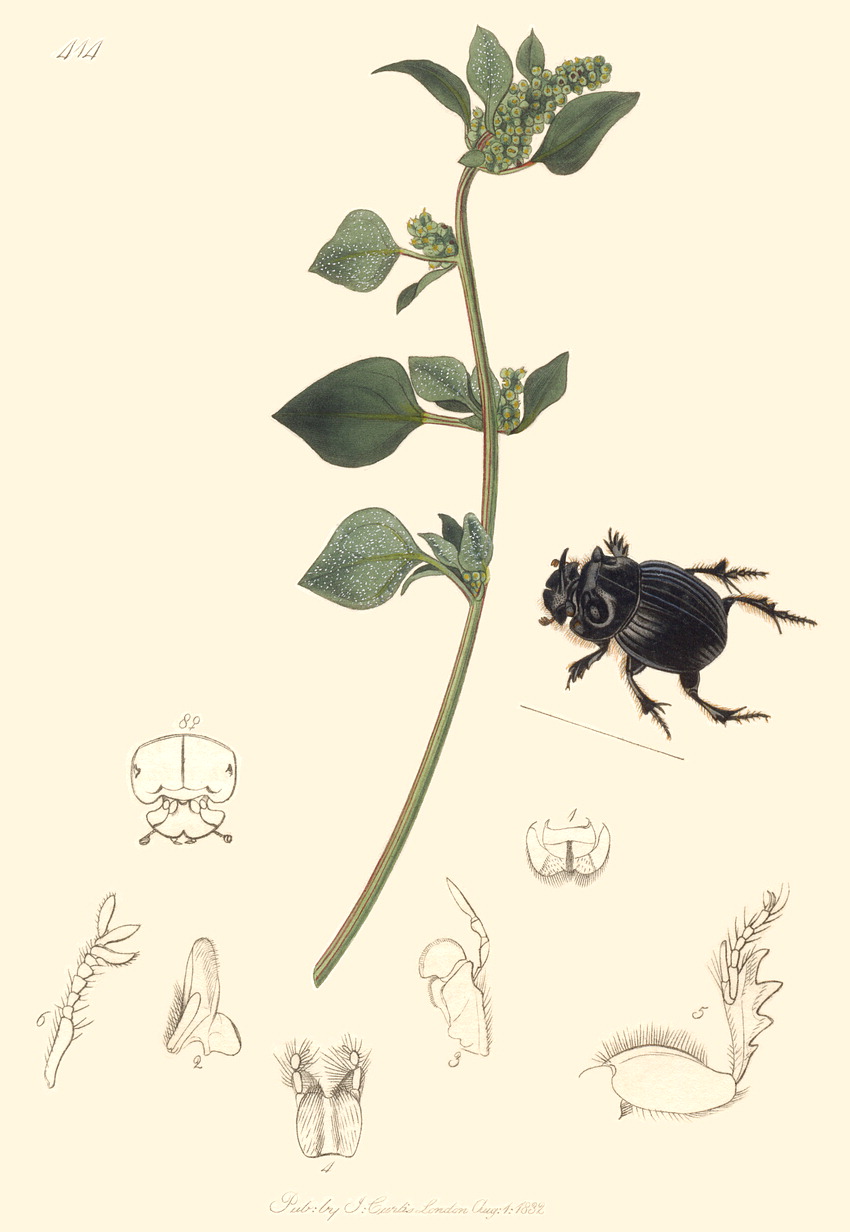
n58_w1150 (Photo credit: BioDivLibrary)

Then he translated the beetle’s name into Latin, and said a great deal upon the creature’s nature and history. The second person, who was older and a scholar, proposed to carry the beetle home, as they wanted just such good specimens as this. Our beetle considered this speech a great insult, so he flew suddenly out of the speaker’s hand. His wings were dry now, so they carried him to a great distance, till at last he reached a hothouse, where a sash of the glass roof was partly open, so he quietly slipped in and buried himself in the warm earth. “It is very comfortable here,” he said to himself, and soon after fell asleep. Then he dreamed that the emperor’s horse was dying, and had left him his golden shoes, and also promised that he should have two more. All this was very delightful, and when the beetle woke up he crept forth and looked around him. What a splendid place the hothouse was! At the back, large palm-trees were growing; and the sunlight made the leaves—look quite glossy; and beneath them what a profusion of luxuriant green, and of flowers red like flame, yellow as amber, or white as new-fallen snow! “What a wonderful quantity of plants,” cried the beetle; “how good they will taste when they are decayed! This is a capital store-room. There must certainly be some relations of mine living here; I will just see if I can find any one with whom I can associate. I’m proud, certainly; but I’m also proud of being so. Then he prowled about in the earth, and thought what a pleasant dream that was about the dying horse, and the golden shoes he had inherited. Suddenly a hand seized the beetle, and squeezed him, and turned him round and round. The gardener’s little son and his playfellow had come into the hothouse, and, seeing the beetle, wanted to have some fun with him. First, he was wrapped, in a vine-leaf, and put into a warm trousers’ pocket. He twisted and turned about with all his might, but he got a good squeeze from the boy’s hand, as a hint for him to keep quiet. Then the boy went quickly towards a lake that lay at the end of the garden. Here the beetle was put into an old broken wooden shoe, in which a little stick had been fastened upright for a mast, and to this mast the beetle was bound with a piece of worsted. Now he was a sailor, and had to sail away. The lake was not very large, but to the beetle it seemed an ocean, and he was so astonished at its size that he fell over on his back, and kicked out his legs. Then the little ship sailed away; sometimes the current of the water seized it, but whenever it went too far from the shore one of the boys turned up his trousers, and went in after it, and brought it back to land. But at last, just as it went merrily out again, the two boys were called, and so angrily, that they hastened to obey, and ran away as fast as they could from the pond, so that the little ship was left to its fate. It was carried away farther and farther from the shore, till it reached the open sea. This was a terrible prospect for the beetle, for he could not escape in consequence of being bound to the mast. Then a fly came and paid him a visit. “What beautiful weather,” said the fly; “I shall rest here and sun myself. You must have a pleasant time of it.”

“You speak without knowing the facts,” replied the beetle; “don’t you see that I am a prisoner?”

“Ah, but I’m not a prisoner,” remarked the fly, and away he flew.

“Well, now I know the world,” said the beetle to himself; “it’s an abominable world; I’m the only respectable person in it. First, they refuse me my golden shoes; then I have to lie on damp linen, and to stand in a draught; and to crown all, they fasten a wife upon me. Then, when I have made a step forward in the world, and found out a comfortable position, just as I could wish it to be, one of these human boys comes and ties me up, and leaves me to the mercy of the wild waves, while the emperor’s favorite horse goes prancing about proudly on his golden shoes. This vexes me more than anything. But it is useless to look for sympathy in this world. My career has been very interesting, but what’s the use of that if nobody knows anything about it? The world does not deserve to be made acquainted with my adventures, for it ought to have given me golden shoes when the emperor’s horse was shod, and I stretched out my feet to be shod, too. If I had received golden shoes I should have been an ornament to the stable; now I am lost to the stable and to the world. It is all over with me.”

But all was not yet over. A boat, in which were a few young girls, came rowing up. “Look, yonder is an old wooden shoe sailing along,” said one of the younger girls.

“And there’s a poor little creature bound fast in it,” said another.

The boat now came close to our beetle’s ship, and the young girls fished it out of the water. One of them drew a small pair of scissors from her pocket, and cut the worsted without hurting the beetle, and when she stepped on shore she placed him on the grass. “There,” she said, “creep away, or fly, if thou canst. It is a splendid thing to have thy liberty.” Away flew the beetle, straight through the open window of a large building; there he sank down, tired and exhausted, exactly on the mane of the emperor’s favorite horse, who was standing in his stable; and the beetle found himself at home again. For some time he clung to the mane, that he might recover himself. “Well,” he said, “here I am, seated on the emperor’s favorite horse,—sitting upon him as if I were the emperor himself. But what was it the farrier asked me? Ah, I remember now,—that’s a good thought,—he asked me why the golden shoes were given to the horse. The answer is quite clear to me, now. They were given to the horse on my account.” And this reflection put the beetle into a good temper. The sun’s rays also came streaming into the stable, and shone upon him, and made the place lively and bright. “Travelling expands the mind very much,” said the beetle. “The world is not so bad after all, if you know how to take things as they come.

English: A portrait of the Danish writer Hans ...

English: A portrait of the Danish writer Hans Christian Andersen. Français : Portrait de l’écrivain danois Hans Christian Andersen. (Photo credit: Wikipedia)

Click here for the ritaLOVEStoWRITE Hans Christian Andersen bioBLOG


Hans Christian Andersen 4.2.13 Thought of the Day

“Where words fail, music speaks.” — Hans Christian Andersen

Painting of Andersen, 1836, by Christian Albre...
Painting of Andersen, 1836, by Christian Albrecht Jensen (Photo credit: Wikipedia)

Hans Christian Andersen was born on this day in Odense, Denmark in 1805. This is the 208th anniversary of his birth.

Andersen was the only son of Anna Maria and Hans Andersen. She was a washerwoman and he was a shoemaker. The family was very poor, and Hans senior made all his son’s toys. He inspired Hans’ love of reading (he read to the boy from 1,001 Arabian Nights) and theater (by taking him to the local playhouse.)

The house he grew up in was shared by 11 other people, (his mother and a father and 2 other families were all crowded into the little house.) “since he was unable to have any real physical privacy … he was forced to escape into the privacy of his mind.” [DanishNet.com] “Young Hans grew to be tall and lanky, awkward and effeminate, but he loved to sing and dance, and he had a vivid imagination that would soon find its voice.” [Online-Literature.com] Hans was educated in the basics, and trained as both a weaver’s and tailor’s apprentice. But what he really wanted to do was act.

After his father’s death he moved to Copenhagen where he worked as a boy soprano in a choir. But when his voice changed, so did his job. He left the choir to try his luck as a ballet dancer, but that didn’t work out either. At 17  he met Jonas Collin, the Director of Royal Danish Theatre. Collins became his patron and sent the boy to school.

Hans Christian did not excel as a student, he was alienated by his fellow students, and he was continually mocked by his teachers for his ambition to become a writer. Andersen has described his time in school as the bitterest time of his life. Today it is believed that he suffered from dyslexia …. [DanishNet.com]

Collins pulled Andersen from school in 1827 and had him privately tutored. Hans began to write again. He had success in 1829 with A Journey on Foot from Homen’s Canal to the East Point of Amager and his play Love on St. Nicholas Church Tower and then again in 1835, with his first novel, The Improvisatore.

He went on to write plays, poems, prose, travelogues,  and, of course, fairy tales.

In the poet’s lifetime 156 “fairy tales and stories” were published. But if other texts of his in the nature of fairy tales and those which were printed only after his death are included, it makes a total of 212….he had the special knack of turning ideas into tales – in a particularly Nordic, melancholy and, at the same time, witty way. His fairy tales are philosophical, told with amazing narrative joy and sparkling imagination in beautiful, elegant language. [Odense.dk]

He is probably the most read author in the World today, his stories have been translated into hundreds of languages and have an international appeal. Some of his best known fairy tales include:

HCA statue in New York City's Central Park
HCA statue in New York City’s Central Park (Photo credit: Wikipedia)
  • The Princess and the Pea
  • Thumbellina
  • The Little Mermaid
  • The Emperor’s New Suit
  • The Brave Tin Soldier
  • The Ugly Duckling
  • The Snow Queen
  • The Red Shoes
  • The Little Match Seller

Click here to read The Beetle Who Went on His Travels and The Conceited Apple Branch

Want to read some of Hans Christian Andersen’s fairy tales? Click Here for a link to a free Kindle book.

Hans Christian Andersen
Hans Christian Andersen (Photo credit: Wikipedia)

Macaron Monday 4.1.13 Thought of the Day

IMG_4650

No that’s not an April Fool’s joke. I have taken the liberty of changing Muffin Monday to Macaron Monday this week. I wanted to try a little something different for Easter this year, and with wild abandon and complete innocence I thought macarons were just the thing.

That’s macaron, not macaroon btw. A macaroon, as in coconut macaroon is an entirely different, if equally delicious, thing.

A macaron is…

a meringue-based cookie made with almond flour, egg whites, and granulated and powdered sugar, then filled with buttercream or fruit spread. The delicate treat has a crunchy exterior, and a weightless interior with a soft ending that’s almost nougat like in its chewiness. [Yumsugar.com]

Macarons can be made by the French, Italian or Swiss method. Now, usually I’d make anything the ITALIAN way when given a choice, but considering the fact that the Italian method includes boiling sugar…um… I went with ze French method for my macarons. (If you are interested in how the three methods vary you might want to CLICK HERE for the Macaron Master]

EQUIPMENT:

You’ve probably got all the equipment you need to make French macarons in your kitchen cabinets…

  • liquid measuring cups
  • dry measuring cups
  • food processor
  • sifter
  • medium mesh strainer
  • mixer
  • spatula
  • parchment paper
  • cookie trays
  • cooling racks
  • pastry bag with a #8 tip (or if you are cheap and inventive like me.. a ziplock bag with a 1/2″ cut off the corner.)
  • bowls

You’ll also need a template to slip under your parchment paper so you’ll know how big to make the macarons. (Here’s my fancy Easter colored template… feel free to print it out and use it.)

macaron template2

Macarons are best baked in a convection oven. But don’t despair you can still make them if your oven is of the conventional variety. Just take care with the timing.

INGREDIENTS:

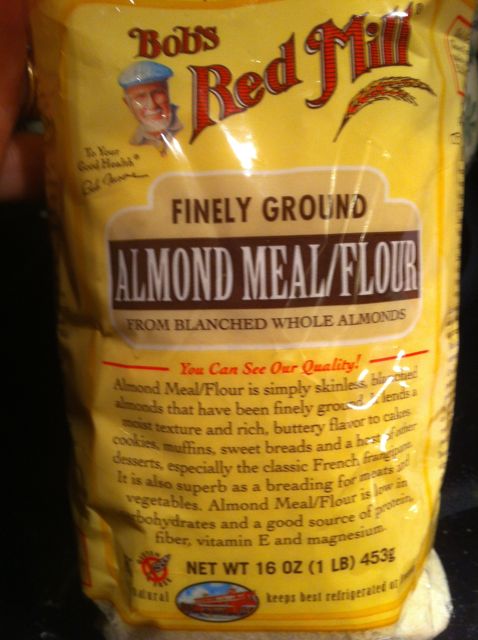
  • 2 3/4 cups of almond flour

IMG_4609(You can find it at higher end food stores  — locally I found it at Wegmans — and cake supply shops)

  • 2 3/4 cups of powdered sugar
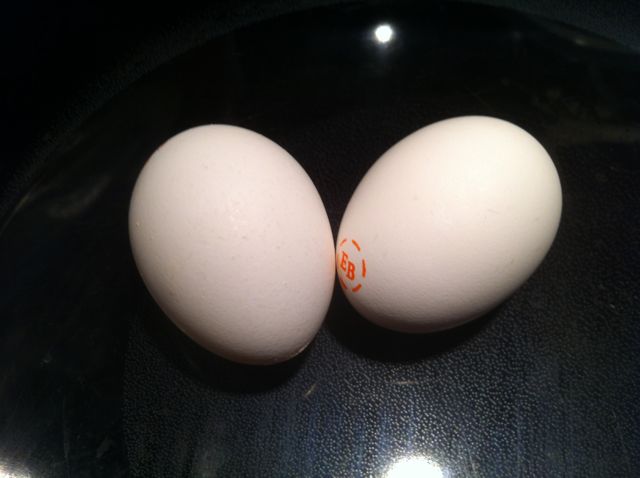
  • IMG_46051 cup of egg whites (it took 7 extra large eggs for me to get 1 cup of egg whites) room temperature

IMG_4522

  • 1/8 teaspoon of salt

IMG_4537

  • 3/4 cups of granulated sugar (superfine granulated if you can find it.) [Confession: I used powdered sugar here, and I didn’t have any superfine granulated, and I thought it would be better than regular sugar… next time I’ll use real sugar.]

Additional ingredients:

You’ll also need the following for dusting the macarons and for the filling:

  • 6 tablespoons cocoa powder
  • 3 cups powdered sugar (additional)
  • 1/2 cup butter, softened
  • 3 tablespoons milk
  • 1 teaspoon almond extract
  • 1/2 teaspoon salt (additional)

DIRECTIONS:

Step one: Prepare the cookie sheets. Put your template on the cookie sheet, then put the parchment paper on top. trim the parchment paper to fit the sheet. I made three copies of my template and taped them together, so there was extra paper  at the end. That way I could easily pull it out from under the parchment paper once the macaron batter is  piped on to it.

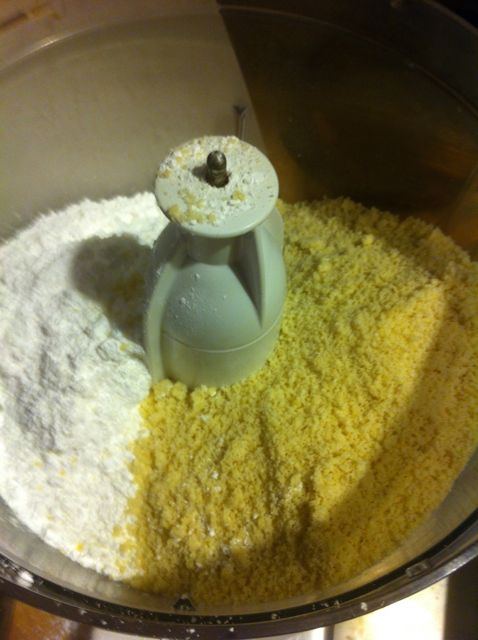
Step two: In a food processor combine the powdered sugar and the almond flour.

Process until it is a fine powder. Sift it into a medium bowl.

Powder sugar on the left; almond flour on the right, before being processed

Powder sugar on the left; almond flour on the right, before being processed

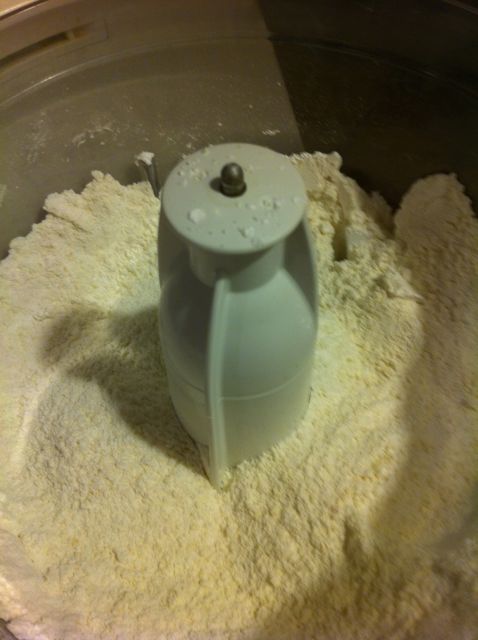
Process until it is completely combined and is a fine powder.

IMG_4611

This is what it looks like once the two ingredients are mixed together.
I processed it in short pulses for about a minute. (Long enough for the dog to start barking at the noise.)

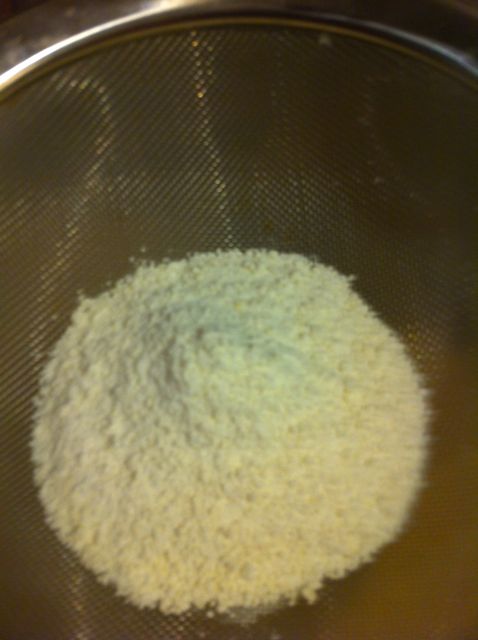
Using the sifter, sift it into a medium bowl.

Then sift it again through the mesh strainer into a large bowl.

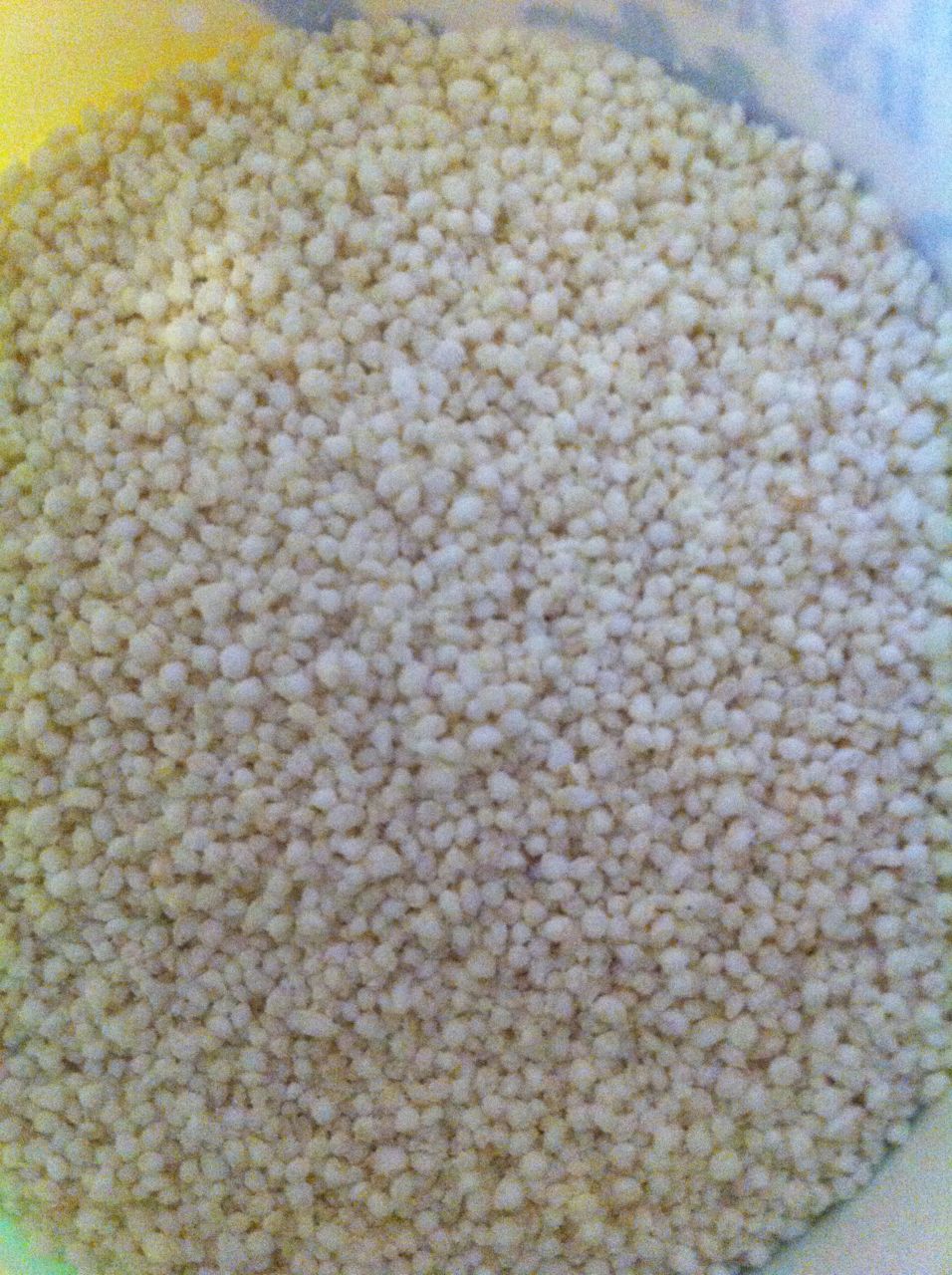
IMG_4612Your goal is to get the almond flour mixture as fine as possible. You may have some small “pebbles” of almond flour that don’t go through the strainer. If this happens sift additional almond flour and powder sugar to compensate. I had  about 1/2 cup of almond flour pebbles (stuff that didn’t go through the mesh of the strainer) so I sifted an additional 1/4 of almond flour and 1/4 cup of powdered sugar to compensate. (Save the almond flour pebbles.)

This is what the very small almond "pebbles" looked like. Put them aside for later.

This is what the very small almond “pebbles” looked like. They are smaller than couscous, but large enough that we’d have  lumpy macarons. (And no one likes lumpy macarons.)

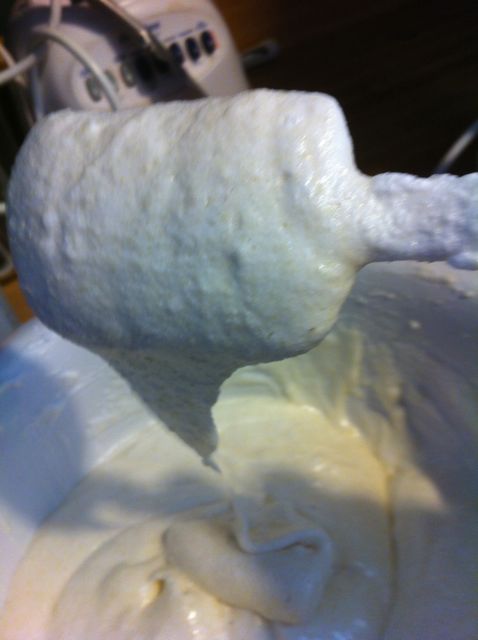
Step Three: With an electric mixer beat the egg whites and salt. Start slowly and gradually increase the speed.

About a minute into beating the egg whites and salt. Use the whisk attachment on you mixer.

About a minute into beating the egg whites and salt. Use the whisk attachment on you mixer.

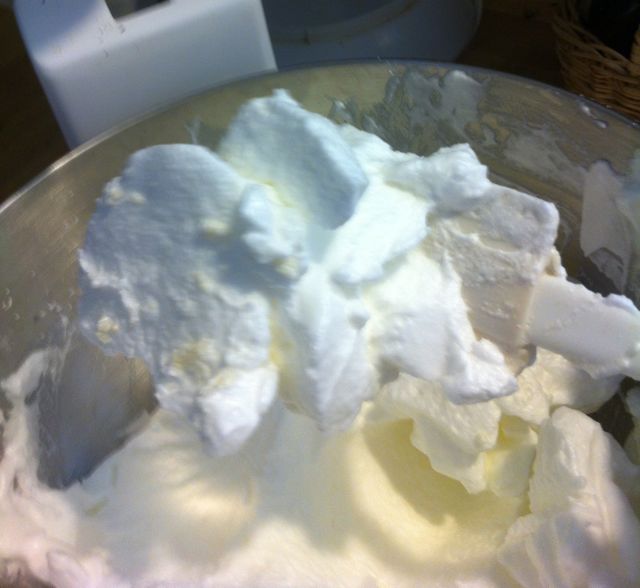
The whites will start to froth up and rise. Slowly add the granulated sugar and continue whipping until the mixture forms STIFF peaks and is firm and shiny.

Its so FLUFFY! The egg whites, salt and powdered sugar made nice stiff peaks (it I'd used granulated sugar it would have been glossy and probably have worked even better. Duh!)

It’s so FLUFFY! The egg whites, salt and powdered sugar made nice stiff peaks (if I’d used granulated sugar it would have been glossy and probably have worked even better. Duh!)

This takes a while, but patience is a virtue.

Step Four: Fold the egg white mixture into the dry mixture. Use a rubber spatula to gently mix the ingredients, scraping from the bottom of the bowl up.

Folding the egg white mixture into the dry mixture.

Folding the egg white mixture into the dry mixture.

Don’t over mix, but be sure to get all the dry mixture incorporated into the egg white mixture.

Step Five: Pre heat the oven to 300 degrees for a convection oven (325 degrees for a conventional oven)

Step Six: Put 1/2 the batter into the pastry bag (or ziplock bag with the snipped corner — ZIP UP THE BAG). Hold the pastry bag vertically over the center of a template circle and gently squeeze until enough batter comes out to fill the diameter of the circle. Lift and gently twist. You aren’t trying to get a peak here, like you would for a meringue. Repeat until all the circles are filled. Carefully remove your template and do a second Tray.

First batch as I'm piping the batter onto the parchment. (You can see the template under the parchment paper. I slid that out before the cookies went into the oven.)

First batch as I’m piping the batter onto the parchment. (You can see the template under the parchment paper. I slid that out before the cookies went into the oven.)

I don’t have a picture of me actually piping the batter on the cookie trays. Sorry I didn’t have enough hands to hold the bag and the camera.

Give the tray a gentle tap on your work surface to get rid of bubbles and smooth out the tops of the macarons.

Step Seven: WAIT! I know its hard now that you can see the macarons actually taking shape, but you’ve got to wait 15 minutes before you put them in the oven. Waiting will give the macarons “legs” and will help you build character.

I KNOW you know what a time looks like. I'm putting this in to emphasis that you need to wait 15 minutes. Don't forget... seriously.

I KNOW you KNOW what a timer looks like. I’m putting this in to emphasis that you need to wait 15 minutes. Don’t forget… seriously.

Step Eight: Bake the macarons for 5 minutes. Open the oven door for 30 seconds — to let out steam– close the door and CONTINUE baking for another 10 minutes. Set up your cooling rack if you haven’t already done so. (HINT: make sure they are far out of reach of any cats or cockapoos.)

Step Nine: When the macarons have baked a total of 15 minutes take them out of the oven. CAREFULLY slide the parchment sheet off the cookie tin and onto the cooling rack and COOL completely.

You can now repeat steps Six-Nine with the second half of the batter. I dusted my second batch with cocoa and some of the almond pebbles I reserved earlier.

Second batch ready to go into the oven.

Second batch ready to go into the oven.

Second batch -- finished baking, ready to cool.

Second batch — finished baking, ready to cool.

Step Ten: While you are waiting for the macarons to cool you can start to make the filling. Filling for macarons can be as simple as jam or as complex as ganache. I chose homemade Chocolate Almond Buttercream Frosting. (See the ingredient listed above. (After cleaning your mixing bowl and whisk attachment) combine all the ingredients in the mixer and blend until smooth. Put into a clean pastry bag (or another ziplock bag with the corner snipped out).

Pair the macarons so they are close in shape and size. Turn half the macarons upside down (so the flat side is up). Pipe the frosting onto the flat side of the macaron. Top with its mate and give a gentle quarter turn. Repeat with the rest of the macarons.

Assembled macaroons.

Assembled plain macaroons.

And…

Finished Chocolate Almond macaron.

Finished Chocolate Almond macaron.

Results: I like to bake using a minimum of bowls and kitchen gadgets. I like simple (ish) recipes. I also like for the recipe to have at least a whiff of nutritional value. Macarons fit none of those baking preferences.  These took lots of time, lots of money, and lots of effort to make. The recipe only yielded 2 dozen filled French macarons. But they are light as a feather and delightfully delicious.  And all my tasters wanted to know when I would make the next batch, so I guess they were a hit.

They reminded Mary B of meringues, but better because of the filling. She “really enjoyed them.”

Mike R. commented that “The crunch of the initial sensation on the teeth is met soon after by the yielding into a second layer of heavenly sweetness just inside the delicate outer layers.  As the palate then becomes aware of the fleshy interior of the “cookie”, it is surprised by the soft and flavorful filling (in this case chocolate buttercream).  The trio soon starts to meld and melt together, though not completely, giving a variety of textures and tastes to explore. ” He’s tried store bought macarons and found them to be “overly-dried almost like delicate styrofoam. I’ve also tasted plain fresh macarons from bakeries in New York City, but none come close to freshly baked deliciousness of these cookie gems…..”

Jackie R gave them an A+, saying “they were delicious and had just enough ‘bite and chew’ to be substantial, yet sweet and light enough to make me wiggle my toes a little.”

———————————————-

I was inspired by Cecile Cannone’s Macarons: Authentic French Cookie Recipes from the Macaron Cafe. It is a well written, well illustrated little book that will get you on your way to proper macaroning.


Ewan McGregor 3.31.13 Thought of the Day

“I’m fiercely proud to be Scottish.”– Ewan McGregor

[Image courtesy: Ewan McGregor.Tumbler.com]
[Image courtesy: Ewan McGregor.Tumbler.com]

Ewan Gordon McGregor was born on this day in Perth, Scotland, United Kingdom in 1971. He is 42.

His parents are both educators. His mother, Carole, was a teacher and school administrator, and his father, Jim, was  a phys. ed teacher. McGregor has an older brother, Colin, who is in the Royal Air Force.

At age 16, he left Crieff and Morrison Academy to join the Perth Repertory Theatre. His parents encouraged him to leave school and pursue his acting goals rather than be unhappy. McGregor studied drama for a year at Kirkcaldly in Fife, then enrolled at London’s Guildhall School of Music and Drama for a three-year course. [IMDb]

He left Guildhall School early to take a major role in Lipstick on Your Collar (1993).

He got international attention in 1996. as Mark Renton, the heroin addicted anti-hero in Danny Boyle’s Transpotting. He won a BAFTA Scotland award for Best Actor for his performance. He took on two sharply different roles the same year. He was charming, rich, glib, and not (as far as I know) a drug addict as Frank Churchill  in an adaptation of Jane Austen’s Emma opposite Gwyneth Paltrow.  And he played the romantic lead in Brassed Off. [Put both Emma and Brassed Off in your queue. Both are terrific. Transpotting was too gritty for me. As big of a fan as I am of McGregor, Kevin McKidd, Robert Carlyle, and Kelly Macdonald, I can’t say that I like the movie. It did, however, teach me that I categorically do NOT want to EVER try heroin– so there’s that, I guess.]

Ewan McGregor as Obi-Wan Kenobi in the Star Wa...

McGregor was  Obi-Wan Kenobi — a role originated by Sir Alec Guinness — in the first of the Star Wars prequels, Star Wars: Episode I – The Phantom Menace , in 1999. (He reprised the role twice in Star Wars Episode II: Attack of the Clones and  Star Wars Episode III: Revenge of the Sith) It was a real labor of love for McGregor who adored the Star Wars films growing up. He watched countless Guinness films in preparation for the role so he could get the screen legend’s pacing and accent down. And when it came time to film the light saber scenes …”he kept imitating the noise … during his fights. George Lucas explained many times that this would be added in by the special effects people later on. Ewan said “I keep getting carried away.”.” [IMDb]

Still from Mulan Rouge with Nicolle Kidman [http://ewan-mcgregor.tumblr.com/]
Still from Moulin Rouge with Nicolle Kiddman [Image courtesy: Ewan McGregor.Tumbler.com]] I wasn’t really sure if I was going to like this odd movie, but then Ewan opened his mouth to sing and I was hooked.

2001 was another big year for McGregor with two major motion pictures, the fantasy musical Moulin Rouge and gripping war story Black Hawk Down coming in short order.

He was terrific in Big Fish as the young protagonist, Edward Bloom.

I also liked him in The Island, Miss Potter, The Men Who Stare at Goats, Beginners, and especially Salmon Fishing in the Yemen. 

But with 60+ movies and TV appearances I’ve only scratched the surface of Mr. McGregor’s film garden. I’ll need to do more research.

In 2004 he and best mate Charley Boorman travelled through Europe, Asia and North America on motorcycles in the TV documentary Long Way Round. The 19,000 trek helped bring attention to UNICEF projects around the world. In 2006 They did a similar trip/ documentary called Long Way Down, this time traveling from Scotland to Cape Town, South Africa.

New to DVD release (it was in limited theatrical release late last year) is The Impossible, a drama about the 2004 tsunami.


<iframe width=”560″ height=”315″ src=”http://www.youtube.com/embed/Bgw394ZKsis&#8221; frameborder=”0″ allowfullscreen>


Secondary Character: Alan Rickman; Alexander Dane — Galaxy Quest

[Image Courtesy: Outcast Studios.com]

[Image Courtesy: Outcast Studios.com]

Who: Alexander Dane / Dr. Lazarus

From: Galaxy Quest

Alexander Dane was a stage actor famous for his portrayal of Richard III, for which he received five curtain calls. He then took a job portraying Dr. Lazarus on the ’80s TV show “Galaxy Quest,” a space-travel story about an intrepid crew and their travels across the universe. The TV show was cancelled and the GQ actors have been reduced to living off their fame by attending sci-fi conventions, presiding at the opening of new stores, and allowing rabid fans to film interviews in their garages and basements… [IMDb]

By: David Howard

Produced: 1999

[Image courtesy: Outcast Studios]

[Image courtesy: Outcast Studios]

Pros: Dedicated to his craft. Has a cool catch phrase –“By Grabthar’s hammer, by the suns of Warvan, you shall be avenged!” Shakespearian trained actor. Awesome latex headpiece.

Cons: Jealous of his co-star, Jason Nesmith, who played the Cmdr. Peter Quincy, the captain of the Protector on the show.  Hates his cool catch phrase. Generally wallows in misery and self-pity.  Full of himself.

Most Shining Moment: Loosing his ego and embracing his character in order to comfort dying Quellek, an alien who idolizes his character Dr. Lazarus.

[Image courtesy: Outcast Studios.]

[Image courtesy: Outcast Studios.]

Why Rickman is so good in this movie: Rickman is deliciously snarky and sarcastic in this movie. It is one of his best comic roles and he gives it 100%. [For another dark comedic Rickman role, you should also see him in Dogma, but his role there is much smaller there… more of a Tertiary Thursday Character than a Secondary Saturday Character.) As much as Alexander Dane, the actor, has a certain snobbishness towards his role of Dr. Lazzrus, you can see that Rickman is having a ton of fun throwing himself at his role as the actor-playing-an-alien — especially when his prosthetic rubber headpiece starts to fall apart.

Why I Picked Galaxy Quest: As you may have guessed from this week’s bioBLOGS on Leonard Niimoy  (Mr. Spock of Star Trek) and  Nathan Fillion (Captain Mal Reynolds of Firefly) I rather enjoy my Science Fiction, and Galaxy Quest is a terrific send up on the sometimes too serious take on the medium. (Although Firefly/Serenity never took itself too seriously, Star Trek — especially the Star Trek movies — could get a bit big for its britches.) So A) I like the movie. B) Rickman is hilarious in it. And C) it was requested by one of my most loyal readers.

—————————————————————-

Well, I guess that’s about it for our month of Alan Rickman Secondary Character studies. I hope this little salute has inspired you to put one or two Rickman movies in your queue. Cheers, Rita

Alan Rickman, The Awesome

Alan Rickman, The Awesome (Photo credit: ManaMalipeddi)