Monthly Archives: January 2013

Zora Neale Hurston 1.7.13 Thought of the Day

“I have been in Sorrow’s kitchen and licked out all the pots. Then I have stood on the peaky mountain wrapped in rainbows, with a harp and sword in my hands.”
Zora Neale Hurston

Zora Neale Hurston Photographer: Carl Van Vech...

Zora Neale Hurston Photographer: Carl Van Vechten. Silver geletin print, 1938 (Photo credit: Wikipedia)

Zora Neale Hurston was born on this day in Notasulag, Alabama, USA in 1891. Today is the 121st Anniversary of her birth.

Hurston was fifth of eight children born to John and Lucy Ann Hurston. Her father was a preacher, a tenant farmer and a carpenter. When Hurston was three the family moved to Eatonville, Florida. Hurston saw Eatonville as utopia where African-Americans could “live as they desired, independent of white society and all its ways.” [Women In History — Zora Neale Hurston] Her father was mayor of the town for a while, and Hurston enjoyed a happy childhood. While her preacher father tried to control his daughter’s exuberant love of life, her mother indulged her joyous nature.

“Mama exhorted her children at every opportunity to “jump at de sun.” We might not land on the sun, but at least we would get off the ground.”–Zora Neale Hurston

Her idyllic  childhood ended at thirteen with the death of her mother. Shortly afterward her father remarried. Hurston said she was “Passed around the family like a bad penny.” They sent her to  a boarding school, but when they stopped paying for her tuition she was kicked out.

Zora worked a series of menial jobs over the ensuing years, struggled to finish her schooling, and eventually joined a Gilbert & Sullivan traveling troupe as a maid to the lead singer. In 1917, she turned up in Baltimore; by then, she was 26 years old and still hadn’t finished high school. Needing to present herself as a teenager to qualify for free public schooling, she lopped 10 years off her life–giving her age as 16 and the year of her birth as 1901. [zoranealehurston.com/about]

Hurston finished Morgan Academy and in 1918 she went to Howard University in Washington, DC where she began pursue her literary career. She had her first story, “John Redding Goes to Sea” published in The Howard University literary magazine The Stylus. More stories followed and Hurston began to be noticed by the literary set of the Harlem Renaissance, like Langston Hughes. She transferred to Barnard College in New York and earned her degree in 1928.

The Harlem Renaissance was a period during which black artists broke with the traditional dialectal works and imitating white writers to explore black culture and express pride in their race.  This was expressed in literature, music, art, in addition to other forms of artistic expression.  Zora and her stories about Eatonville became a major force in shaping these ideals. Additionally, she combined her studies in anthropology with her literary output.  [Women In History — Zora Neale Hurston]

She received a Rosenwald fellowship and a Guggenheim Fellowship to do anthropological field research int he mid 1930s.

Zora Neale Hurston, beating the hountar, or ma...

Zora Neale Hurston, beating the hountar, or mama drum (Photo credit: Wikipedia)

Her first novel, Jonah’s Gourd Vine came out in 1934.  She followed that up with Mules and Men , a folklore classic based on her anthropological work in the South.

In 1937 she traveled to Jamaica and Haiti on a Guggenheim Fellowship to conduct field research on African rituals and voodoo. While in Haiti she wrote her most famous novel, Their Eyes Were Watching God, in seven weeks time.

Cover of "Their Eyes Were Watching God"

Cover of Their Eyes Were Watching God

Janie, the protagonist, returns to her home town at the beginning of the novel. She

recalls all the crucial moments of her life, from t he time she first discovers that she is a “colored” little girl…to the moment she returns to Eatonville, Florida, from the Everglades, not swindled and deceived, as had been expected, but heartbroken, yet boldly defiant, after having toiled in the bean fields, survived a hurricane and lost the man she loved. [Their Eyes Were Watching God, Forward]

Hurston prose is rich and colorful while her dialogue is dense with authentic slang. Here’s how she drops you into the story near the beginning of the novel…

So the beginning of this was a woman and she had come back from burying the dead. Not the dead of sick and ailing with friends at the pillow and the feet. She had come back from the sodden and the bloated; the sudden dead, their eyes flung wide open in judgement….

Seeing the woman as she was made them remember the envy they had stored up from other times. So they chewed up the back parts of their minds and swallowed with relish. They made burning statements with questions, and killing tools out of laughs. It was mass cruelty. A mood come alive. Words walking without masters; walking altogether like harmony in a song.

“What she doin’ coming back here in dem overhalls?  Can’t she find no dress to put on?– Where’s dat blue satin dress she left here in? — Where’s all dat money her husband took and died and left here? What dat ole forty year ole ‘omen doin’ wid her hair swingin’ down her back lak some young gal? …. [Their Eyes Were Watching God, Chapter One]

It takes a few pages to get used to, but the novel is more than worth the effort.

Portrait of Zora Neale Hurston: Eatonville, Fl...

Portrait of Zora Neale Hurston: Eatonville, Florida (Photo credit: State Library and Archives of Florida)

Other Major Hurston works include Tell My Horse, Moses, Man of the Mountain, Seraph on the Suwanee and her autobiography Dust Tracks on a Road.

Sadly, “Hurston never received the financial rewards she deserved. (The largest royalty she ever earned from any of her books was $943.75.)” [zoranealehurston.com/about] As the 40’s waned so did her career.

Never in her works did she address the issue of racism of whites toward blacks, and as this became a nascent theme among black writers in the post World War II ear of civil rights, Hurston’s literary influence faded. She further scathed her own reputation by railing the civil rights movement and supporting ultraconservative politicians. [Women In History — Zora Neale Hurston]

She opposed the New Deal and the Supreme Court’s ruling on Brown v. Board of Education. She struggled to get published, and took on jobs as a maid and a substitute teacher to try to make ends meet.

In 1959 she suffered from a stroke and had to enter the St. Lucie County Welfare Home. She died there in January of 1960 of hypertensive heart disease. Hurston was buried in an unmarked grave.


Joan of Arc 1.6.13 Thought of the Day

“One life is all we have and we live it as we believe in living it. But to sacrifice what you are and to live without belief, that is a fate more terrible than dying.”
Joan of Arc

Joan of Arc at the Coronation of Charles VII. ...

Joan of Arc at the Coronation of Charles VII. Oil on canvas, painted in 1854. (Photo credit: Wikipedia)

Joan of Arc was born on this day in Domremy, Cuch of Bar, France in 1412. Today is the 600th anniversary of her birth.

Born into a poor farming family, Joan was the youngest of five children. Being a peasant at a time of typically feudal political structure, Joan was not permitted an education and began working as a shepherd and field hand early in life. Despite this lack of schooling, Joan has been described as extremely quick-witted and articulate, a trait extolled by her friends, and bemoaned by her foes.

Even as a child, Joan displayed an ardent attachment to the church, going to mass at least once a day and spending what little free time she had there. However, it was not until 1425, when she was 13, that she heard what she would term for the rest of her life as her “voices”. At first her voices only spoke to her, though they did so quite clearly, but over time they were accompanied by flashes of light, and eventually discernible figures that she identified as St. Michael, St. Margaret, and St. Catherine.(1)

Joan of Arc

Joan of Arc (Photo credit: Wikipedia)

Joan was born in a time and place of great political unrest. A few decades before France had split into two factions, the Armagnacs and Burgundians, due to the instability of the king of Frances’ mental health ( it is most likely that he suffered from multiple personality disorder). The king of England, Henry V, took advantage of the situation and invaded France, capturing most of North West France. He was granted succession to the French throne by the Treaty of Troyes in 1420 by Queen Isabeau, an Armagnac sympathizer, leaving her own son, Charles the VII, out. Henry and the current king dies within a few months of each other, leaving Henry’s baby son as the heir, as well as his Armagnac and English supporters. Meanwhile, Charles, who had declared himself as the rightful king, was gathering Burgundian support, with the help of his mother-in-law, Yolande of Aragon. Despite so much support, he lost battle after battle.

By May of 1428 Joan’s “voices” had become insistent that she help Charles win back his kingdom. When she told them she could not fight or ride, the voices replied, “It is God who commands it.”(1) She presented herself, first to Robert Baudricourt, a commander of Charles’ army, then to Charles himself. In both cases she is said to have displayed mystical powers and knowledge to get them to trust her. She was vetted by bishops and doctors, and eventually was allowed to lead forces into battle.

Due to her efforts, the siege of Orleans was lifted, and Charles was crowned King in Reims in 1429. It seemed that her holy powers would win Charles his throne despite Armagnac opposition, but Joan was captured during any attack on Paris in the fall of that year. Instead of returning her to the Burgundians for a ransom, as was customary at the time, she was imprisoned and interrogated by Armagnac officials bent on revenge. She was charged with heresy and executed on May 30th, 1431, at the age of 19.

Joan of Arc's Death at the Stake (Right-Hand P...

Joan of Arc’s Death at the Stake (Right-Hand Part of The Life of Joan of Arc Triptych) (Photo credit: Wikipedia)

When Charles eventually retook Paris and was declared King of all of France, he set up a committee to clear Joan’s name of heresy, and made her family part of his court. She was canonized by the Catholic church in May, 1920, and her feast day is May 30th.

—————————–

Authors Note: Thanks again to Maggie who stepped in to guest write today’s blog!

For more information, this author recommends “the Maid and the Queen” by Nancy Goldstone


Secondary Character Saturday — John Thornton (North and South)

First, let me be clear, the North and South of which I speak is the wonderful Victorian novel by Elizabeth Gaskell, not the 1980’s mini series about the Civil War. If you haven’t read it do yourself a favor and put it on your reading list… Click HERE for the free Guttenberg file to read on-line or HERE for the Kindle file

—————————————————————————————-

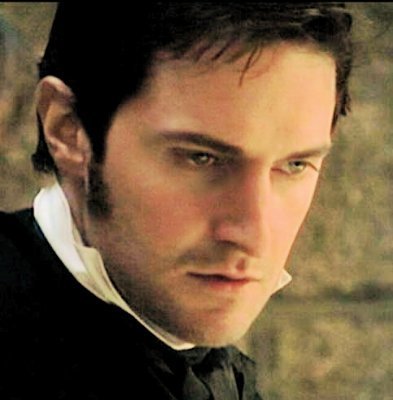
Richard Armitage played John Thornton in the 2008 BBC miniseries North and South.

Richard Armitage played John Thornton in the 2005 BBC miniseries North and South.

Who: John Thornton

From: North and South

Written by: Elizabeth Cleghorn Gaskell

Date of Publication: 1855

Why: John Thornton is a self-made man whose stoic exterior conceals a heart waiting for the love of the right woman. He has spent his life building a business and taking care of his mother and sister. He’s the owner of a mill in the fictional city of Milton in northern England. He has “never loved any woman before.” His “life has been to busy,” his “thoughts too much absorbed with other things.” But, when a beautiful young woman, Margaret Hale, comes to the city from the rural, gentrified, south  the walls of indifference he has built up around his heart begin to tumble.  …Are the two of them so different in manners and customs…(and is their timing too flawed) for love to bloom?

Pros: Strong, loyal, generous, disciplined, intense, genuinely concerned with both his worker’s health and the mill’s financial viability.

Cons: Hot tempered and initially inflexible with his workers. Bad timing.

Shining Moment: During a strike against the mill (it’s a town-wide strike) he has brought in Irish workers to run the mill. When the town’s workers hear about the scabs they storm the mill. Thornton protects the Irish workers, and, at Margaret’s urging, attempts to talk to the rioters and calm them.  (ALSO: the ending, but I wont give that away.)

Least Shining Moment: When Margaret first see’s Thornton. He’s in the mill and has caught a worker smoking. The slightest flame can set the entire works ablaze and he beats the worker for his carelessness.


North+and+South

Click here to read my Elizabeth Gaskell Thought of the Day.

51dj-uo3U0L._SL500_AA300_

And you should really watch the 2005 BBC mini series of North and South. (Which has the added bonus of co-starring Brendan Coyle — Downton Abbey’s Mr. Bates — as mill worker Nicholas Higgins.)


Sterling Holloway 1.4.13 Thought of the day

“If you do not know where you are going, any road will take you there.”
–Sterling Holloway

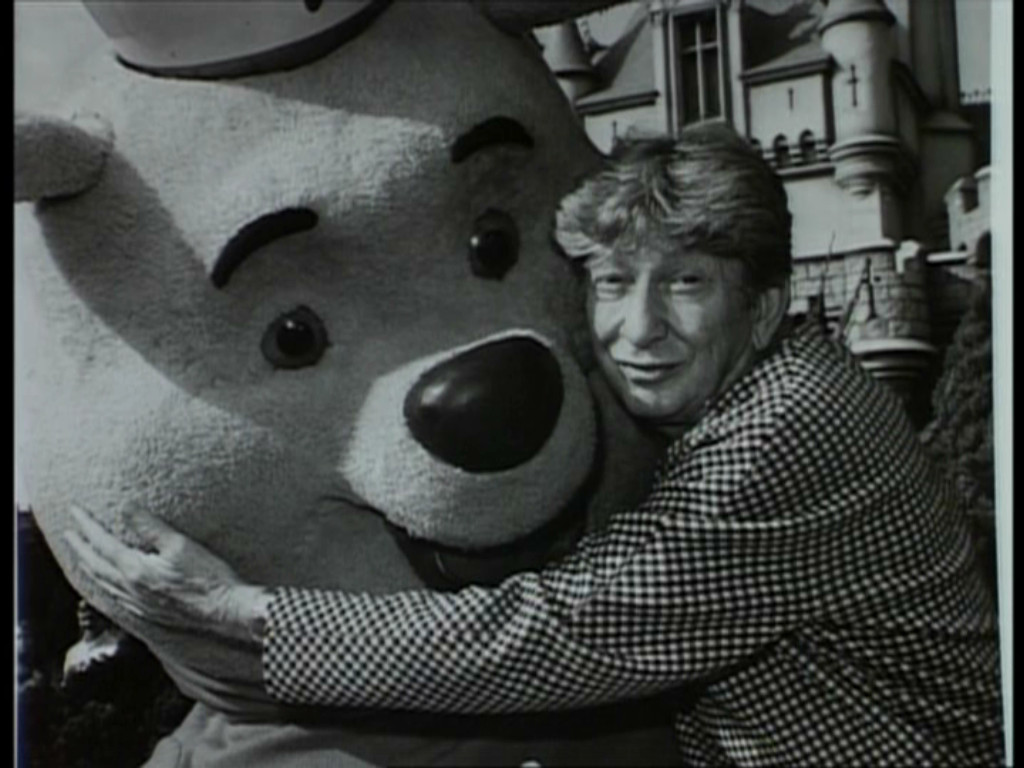
Image courtesy deviantart.com

Image courtesy deviantart.com


Sterling Price Holloway, Jr. was born on this day in Cedartown, Georgia, USA in 1905. Today is the 107th anniversary of his birth.


The Holloways owned a grocery story in Cedartown and were prominent citizens the town. His father was mayor for a while when Sterling was in elementary school. He went to the Georgia Military Academy and got his first taste of acting while performing in school plays there. Upon graduating from the GMA at 15  he went to New York and enrolled in the American Academy of Dramatic Arts. He worked with the Shepherd of the Hills touring stock company.


On stage he worked in musicals, vaudeville shows and reviews. He gained national attention in 1925 when he introduced the song Manhattan (as in “We’ll have Manhattan, The Bronx and Staten Island too…”)  by Rodgers and Hart. The following year he had another hit with “Mountain Greenery” also by the song writing duo.


Primed for success he moved to Hollywood to try his hands at the movies. He started in silent films with The Battling Kangaroo.  He made several silents, but when a director told him he was “too repulsive” for the screen he went back to the stage for a few years. He returned after the stock market crash. The studios were switching to talkies, and the money was good.


His bushy reddish-blond hair and trademark near-falsetto voice made him a natural for sound pictures, and he acted in scores of talkies, although he had made his picture debut in silents. His physical image and voice relegated him almost exclusively to comic roles, [IMDB]


To say he was prolific would be an understatement. Holloway made 19 movies in 1933 alone. He preferred to play in ensemble movies. When Louis B. Mayer offered him a contract at MGM he turned it down because he didn’t want to be a star.


In the 1930s and 40s, the lanky redhead who had a knack for playing country bumpkin roles appeared in such films as “Gold Diggers of 1933,” with Dick Powell, and “Blonde Venus,” with Marlene Dietrich.[Disney.go.com]


Soon his unusual voice came to the attention of Walt Disney and in 1941 Holloway made his first movie  for the Walt Disney company voicing the part of Mr. Stork in Dumbo.


His first Disney performance led to subsequent voice roles including, the adult Flower in “Bambi” and the Cheshire Cat in “Alice in Wonderland.” Sterling also played Kaa, the snake, in “The Jungle Book,” in which he sang the memorable song “Trust in Me.” His most beloved role, however, was as the voice of Winnie the Pooh in such featurettes as the Academy Award-winning “Winnie the Pooh and the Blustery Day.“[Ibid]


He was also featured in The Three Caballeros, the Aristocats and he narrated Peter and the Wolf.


Sterling Holloway

Sterling Holloway (Photo credit: Wikipedia)


Later in his career he work in television, guest starring on a score of episodic and variety shows.


Holloway died at the age of 87 in Los Angeles.


J.R.R. Tolkien 1.3.13 Thought of the Day

“All that is gold does not glitter; not all those that wander are lost.”
–J.R.R. Tolkien

[Image courtesy Biography online

[Image courtesy Biography online

John Ronald Reuel Tolkien was born on this day in Bournemouth, Orange Free State, South Africa) in 1892. Today is the 120th anniversary of his birth.

Tolkien is the older of two boys born to Arthur Reuel Tolkien and Mabel Suffield Tolkien. The family lived in South Africa where Arthur was head of the Bloemfontein office of a British bank. While he was in England on an extended holiday with his mother and brother Hilary his father passed away from rheumatic fever. Mabel Tolkien then moved in with her parents and a succession of relatives in the West Midlands. Mabel and her sister May caused quite a stir when they (and the boys) converted to Catholicism in 1900. Sadly, Mabel died in 1904, leaving her son’s well-being in the hands of a series of relatives and acquaintances until they were eventually taken in by a catholic educator, Father Francis. It was he who encouraged and refined Tolkien’s already blooming gift with words.

When he was sixteen, Tolkien met and developed a close friendship Edith Bratt. As friendship progressed to love, Father Francis forbade him from communicating with Edith until Ronald was 21 in order to keep his focus on his education. By the time they were reunited, Edith had converted to Catholicism, and Tolkien had completed his Oxford degree. They were together at the outbreak of World War I. [Tolkien Society]

J.R.R.Tolkien

J.R.R.Tolkien (Photo credit: proyectolkien)

Tolkien enlisted as a second lieutenant in the Lancashire Fusiliers, but married Edith while still in England on March 22, 1916. The match resulted in four children, three boys and a girl: John Francis Reuel Tolkien (November 17th, 1917 – January 22nd, 2003), Michael Hilary Reuel Tolkien (October 22nd, 1920 – February 27th, 1984), Christopher John Reuel Tolkien (born November 21st, 1924) and Priscilla Mary Anne Reuel Tolkien (born June 18th, 1929).  He was sent into active duty at the start of the Somme offensive, and after four months succumbed to “trench fever”[Ibid] He was sent back to a hospital in Birmingham, England, and was joined by Edith in Staffordshire. It is there that his work on the “Book of Lost Tales” (posthumously published) began. He was promoted to lieutenant and served out the rest of the war on home duty. [Ibid]

He floated through several postwar academic positions finally settling in the Rawlinson and Bosworth Professorship of Anglo-Saxon back at Oxford [Ibid]. He moved through several other posts, but always remained at Oxford until his retirement in 1959. It was there that he founded a group for those of similar interests called “The Inklings”. In 1936, Susan Dagnall, of the publishing firm of George Allen and Unwin, received and incomplete draft of Tolkien’s “The Hobbit” and implored the author to finish it.

J.R.R. Tolkien - illustration for The Hobbit

J.R.R. Tolkien – illustration for The Hobbit (Photo credit: deflam)

“The Hobbit” was published in 1937 and has remained a staple of school reading lists since then. Stanley Unwin was so pleased by the work that he asked if Tolkien had any similar works [Ibid]. Tolkien initially submitted his current draft of “the Silmarillion” ( posthumously published in 1977), but it was rejected by Unwin, who requested something like “the New Hobbit”(2). Understandably disappointed, Tolkien then began work on what would become The Lord of the Rings“.

English: A 3D model of the One Ring Italiano: ...

English: A 3D model of the One Ring Italiano: L’Unico Anello di Sauron da Il Signore degli Anelli di J.R.R. Tolkien. Immagine 3D realizzata da Hill. (Photo credit: Wikipedia)

He continued to write through the outbreak of World War II, the duration of which he served as an Air-Raid Warden, a job, it is said, he participated in with great zeal and enjoyment [“J.R.R. Tolkien: Master of Fantasy” by David R. Collins – Lerner Publications Company – 1992].

“The Lord of the Rings” was published as six books in three parts from 1954 through 1955. The work’s success was as unexpected as Bilbo’s journey in the Hobbit, Tolkien soon received an occult following, as well as a deal to make a highly condensed BBC radio adaption [Tolkien Society].

Tolkien died on September 2, 1973, two years after Edith. Both are buried beneath the same headstone in the Catholic section of Wolvercote cemetery, just north of Oxford.

[Image courtesy: Geeks of Doom]

[Image courtesy: Geeks of Doom]

Author’s Note: The majority of today’s blog was written by Maggie (Rita’s kid), so if there are mistakes, they are her fault. However, if you really, really like it, Maggie is partial to tea and dark chocolate, so you ought to convince Rita to gives her exorbitant amounts of both.


Rita’s Note: Done! Thanks Maggie!


Martha Carey Thomas 1.2.13 Thought of the Day

John Singer Sargent's Miss Carey Thomas [Image courtesy Jssgallery.org]

John Singer Sargent’s Miss Carey Thomas [Image courtesy Jssgallery.org]

“One thing I am determined on is that by the time I die my brain shall weigh as much as a man’s if study and learning can make it so.”
Martha Carey Thomas

Martha Carey Thomas was born on this day in Baltimore, Maryland, USA  in 1857. Today is the 155th anniversary of her birth.

M. Carey Thomas as a child [Image courtesy National Portrait Gallery]

M. Carey Thomas as a child [Image courtesy National Portrait Gallery]

She was the eldest of ten children in a prominent Quaker family. She got her feminist streak from her mother and maternal aunt, Hannah Whitall Smith. She studied at the Society of Friends school in Baltimore, then at Howland Institute, a Quaker boarding school near Ithaca, New York. When her education at this  “dame’s school” ended in the 1860’s she yearned for the chance for further education open to her brothers.

So, in 1872, Thomas persuaded her father to allow her to attend a newly opened school for girls in New York.  While studying there her father asked her to investigate Cornell University for him.  He later decided that it had been a mistake, because as soon as she saw it, she was determined to attend. [Maryland Women’s Hall of Fame]

She received her bachelor’s from Cornell in 1877. She did graduate work at both Johns Hopkins University in Baltimore and at the University of Leipzig, but withdrew from both — Hopkins did not permit her to attend classes and Leipzig did not grant degrees to women. In the end she earned her PhD. in linguistics from the University of Zürich. She graduated summa cum laude.  She stayed in Europe for a while, living in Paris, before returning to the US.

M. Carey Thomas. [Image courtesy Explore PA History.com]

M. Carey Thomas. [Image courtesy Explore PA History.com]

While studying in Europe she heard about a “proposed women’s college at Bryn Mawr, Pennsylvania, and applied for presidency. [Ibid] Although she didn’t get the presidency of the college — that went to a man — in 1884 she became the Dean of Bryn Mawr and the chair of the English department.  She was instrumental in forming the college’s curriculum.

She desired to build it into an institution that would encourage women to follow careers without having to face the difficulties with which she had struggled. Convinced that women deserved exactly the same education as men and needed even higher standards than men to succeed, she molded a curriculum that offered more advanced work than that given in many men’s colleges and upheld the highest academic standards. [Bookrags.com]

She also continued to work in Baltimore to  help form a “school where girls could obtain an education which would prepare them to attend a good college.” [Maryland Women’s Hall of Fame] In 1885 that school, The Bryn Mawr School for Girls in Baltimore, opened its doors.

She was also instrumental getting Johns Hopkins Medical School to change their admission policy on Women.

With the help of four of her friends, a total of $500,000 was raised to aid the Medical School in its financial struggle.  The funds raised were used as a leverage to get the University to accept women.  Thus, thanks largely to the efforts of these five women, women were to be admitted on precisely the same basis as men. [Ibid]

She was active in the suffragette movement and in 1908 became the first president of the National College Women’s Equal Suffrage League. She became the first woman trustee at Cornell.  And she helped organized the Bryn Mawr Summer School for Women Workers.

screen_shot_2012-08-12_at_8_medium

[Image courtesy: Geni.com]

In 1894 Thomas became president of Bryn Mawr College. It was a post she held until she retired at age 65 in 1922.

Carey Thomas died in Philadelphia on Dec 2, 1935.


James McAvoy 1-1-13 Thought of the Day

“That’s the main thing that attracts me – characters who have big journeys. I like playing those people.”
— James McAvoy

Scottish Actor James McAvoy at Hollywood Life ...

Scottish Actor James McAvoy at Hollywood Life Magazine’s 7th Annual Breakthrough Awards (Photo credit: Wikipedia)

James Andrew McAvoy was born on this day in Port Glasgow, Scotland in 1979. He is 33 years old.

The son of a psychiatric nurse and builder McAvoy has a sister and a half-brother. His parents divorced when he was seven and he went to live with his maternal grandparents. McAvoy was raised Catholic and attended St. Thomas Aquinas school in Joranhill, Glasgow. He considered becoming a priest, but followed his acting instincts instead.

His first professional gig came at 15 when he landed a role in the film The Near Room.  He had small roles in movies and guest spots in TV series while in school. He graduated from the Royal Scottish Academy of Music and Drama in 2000.

McAvoy continued to build his CV with high-profile guest spots on series like HBO’s Band of Brothers (he was Pvt. James Miller on “Replacements”) and BBC’s  Inspector Lynley,   Foyle’s War, and State of Play.

In 2003 the SciFi Channel took on Frank Herbert‘s Dune as a mini series and McAvoy landed the role of Leto Atreides II.

Leto Atreides II

Leto Atreides II (Photo credit: Wikipedia)

He had the lead role in Rory O’Shea Was Here as a disabled man whose enthusiasm shakes up the world around him.
McAvoy’s dark side came  out for his haunting performance as Joe Macbeth in ShakespeaRE-TOLD’s Macbeth. with the always wonderful Keeley Hawes as Ella (Lady M) and Richard Armitage as Peter Macduff.  [They only RE-TOLD four of the Bard’s plays — all of them interesting and worth a look — but this one is the real gem in the series.]
I’ve got two words to say about his next movie…” Mr. Tumnus. “
He stole The Chronicles of Narnia: The Lion, The Witch and the Wardrobe with his portrayal of the sweet, conflicted fawn who meeting Lucy  Pevensie.
From fantasy to drama biopic McAvoy next played the naive personal physician to Ugandan leader Idi Amin in The Last King of Scotland. Needless to say things go south quickly as the doctor gets in way over his head and Amin shows himself to be a brutal dictator.  (McAvoy won the BAFTA; Scotland in 2007 for his work on the film.)
He played a trio of romantic roles (albeit in very different genres) in Penelope, Starter for 10, and Becoming Jane (as Tom Lefroy to Anne Hathaway’s Jane Austen) in 2006 and 2007.
McAvoy landed the role of Robbie Turner in the movie version of Ian McEwan‘s novel Atonement.  (He won the Empire Award for Best Actor in 2008 for his role in Atonement.)
He shifted gears to play a fish out of water action hero in Wanted opposite Angelina Jolie.  Then went back to historical drama with The Last Station –a movie about Leo Tolstoy’s last days — and The Conspirator — the story of Mary Surratt’s involvement in the Lincoln assassination.
Most recently he’s been seen on the big screen as Professor X in the X-Men prequel — X-Men: First Class, and heard in a duo of voice parts as Gnomeo in Gnomeo & Juliet and Arthur in Arthur Christmas.
According to IMDB he has FIVE movies coming out in 2013:
  • Welcome to the Punch
  • Filth
  • The Disappearance of Eleanor Rigby: His
  • The Disappearance of Eleanor Rigby; Hers
  • Trance

And, rest assured, there’s another X-Men in the works.