Monthly Archives: December 2012

Williamsburg (part 4)

Textile 3

[This is part four of my What To Do in Williamsburg Blog for part one go HERE. For part two go HERE. For part three go HERE. ]

Previous tips included:

  1. Planning your trip in the Fall or Winter to avoid the heat and crowds.
  2. Staying in a Colonial House.
  3. Engaging with the locals.
  4. Visit the Wren Building
  5. Take the Rubbish, Treasures and Colonial Life Tour & the Behind the Scenes Tour
  6. Visit the De Witt Wallace and Abby Aldrich Rockefeller Folk Art Museums
  7. Tour the Governor’s Palace
  8. Tour the Thomas Everard House.
  9. Visit Bassett Hall.
  10. Get spooky with it.

Today we’ll  touch on some odds and ends in Williamsburg and travel down the road to the current capital of Virginia, Richmond.

11. Stop in to see the craftsmen making things with wood.  Bill likes woodworking so we spent time at the joiners near the Capitol on Frances Street…
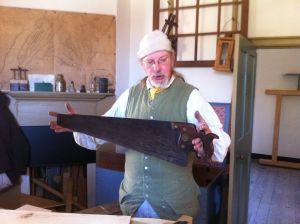
Saw envy at the Joiners.

Saw envy at the Joiners.

Where they do ordinary work, like making sashes for windows and  bellows for the Gunsmith Shop….
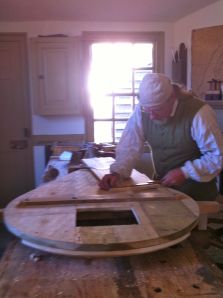
Making 1 of three large wooden panels for the bellows.

Making 1 of three large wooden panels for the bellows.

…and fancy work, like this decorative piece.
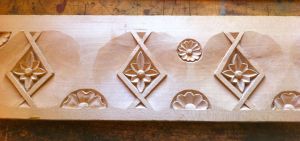
The craftsmen at the Joiners used a lot of fine carving skills to make this wooden ornamental panel.

The craftsmen at the Joiners used a lot of fine carving skills to make this wooden ornamental panel.

We also went to the Cabinetmaker’s shop, which is on Nicholson Street, closer to the Palace Green.

Bill has a talk with one of the cabinet makers.

Bill has a talk with one of the cabinet makers.

Both shops had beautiful sets of hollows and rounds for making moldings.
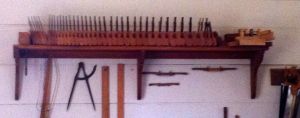
Hollow and round plains on the shelf.

Hollow and round plane sets on the shelf.

12.) Get your Ps and Qs in line at the Printers. Bill indulged my love of graphic design with a trip to the Printers. We had a nice long talk with printer and he was kind enough to let me have a go at the press.
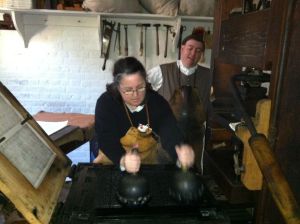
First I inked the plate.

First I inked the plate.

IMG_0168

Added paper, cranked the carriage into place then PULLED the press down.
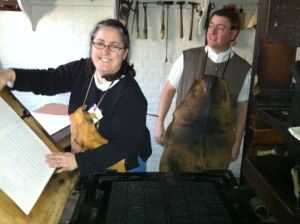
Rita putting paper on press

Cranked the carriage back out and lifted the paper tray and…
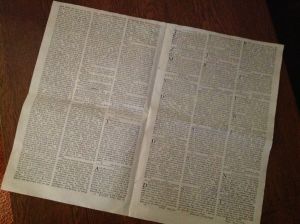
Gazette rita's pull

Taadaaa… my impression of a colonial paper. (Get it? IMPRESSION? It’s a letter-press. Never mind, it’s a printing joke.)

13.) Stroll along Duke of Gloucester Street. We  especially enjoyed the Blacksmith, the Silversmith and the Milliner.
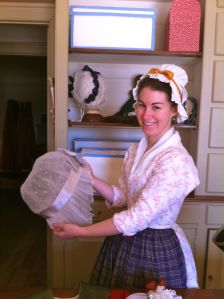
Milliner

The Milliner shows off a hat that would have been popular around 1790. I like to think of it as a Mrs. Bennett or Mrs. Dashwood appropriate hat. (Yes that is Jane Austen reference.)

14.) Stand witness for the prosecution at the Courthouse. Learn about the 18th Century justice system first hand with the Order In The Court program (it runs several times a day and is free with your Williamsburg pass).

Courthouse

The Williamsburg Courthouse is one of the original buildings and was still in use when Goodwin and Rockefeller began to rebuild the town.

We saw several civil trials which required audience participation.
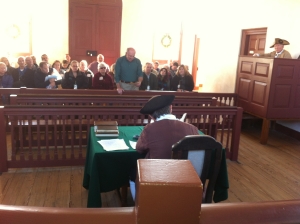
A Williamsburg visitor takes on the roll of a townsperson who has failed to come to church -- an offense which was against the law.

A Williamsburg visitor takes on the roll of a towns person who has failed to come to church — an offense which was against the law.

You MIGHT even get a chance to be on the judge’s bench (even if you’re a woman == as long as you go along with premise that you are a man for the purposes of historical accuracy.)
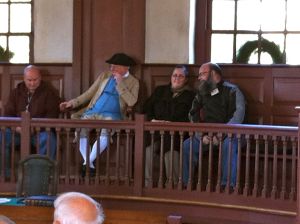
Court House Judge Rita

Yes, that’s judge Rita conferring with the bearded judge to the right on the fate of some poor soul. Don’t worry I was very easy. Every body else was a hangin’ mood, but not me.

15. EAT. There are four Colonial Taverns to choose from in the city, Christiana Campbell’s, Shield’s, King’s Arms, and Chownings. I liked King’s Arms the best because they have an amazing Peanut Soup.  Dinner at any of the Taverns is by candle light and includes period entertainment, but be warned … it will be an expensive meal. You might choose to eat at one of the restaurants at Merchant’s Square  (which is between Colonial Williamsburg and Williams and Mary. The bus that runs in a clockwise circle around the historic district has a stop at Merchants Square so you wont have to get in your car.) We liked the Cheese Shop on the square, and especially the Aroma Coffee Shop on Prince George Street. If you do decide to step into your horseless carriage just go out Richmond Road and you’ll find the usual suspect of chain eateries, an oddly prolific collection of pancake establishments and some rather nice restaurants of the non-chain variety (yes, there are still some of them out there.) We enjoyed sushi at Kyoto and American fare at Food for Thought (the best food I ate all week was the Food for Thought’s quinoa salad.)
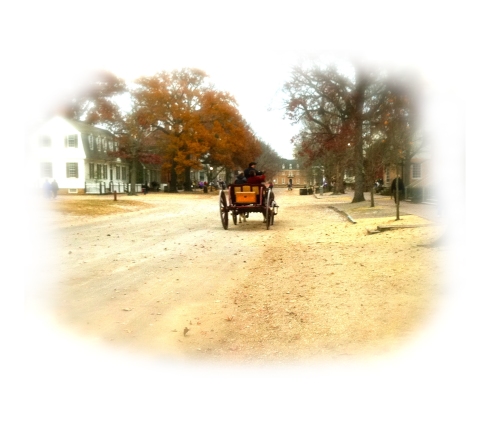
carriage riding down the roadTime to travel down the road and into the present, leaving 18th Century Williamsburg for 21st Century Richmond. Well, almost… there’s still a lot of history to explore on this trip.

Richmond is the capital of Virginia and during the American Civil War it was the Capital of the Confederacy. The city is ripe with monuments & museums to the South (and given the whole Slavery thing, that made me a mite itchy. But I do love my history, so…) While in the city you can visit the Museum and White House of the Confederacy, the Virginia Historical Society,  Hollywood Cemetery or take a stroll down Monument Avenue.

We went to Tredegar Iron Works on the James River. You get two museums in one location here. One is run by the National Park Service and the other is part of the American Civil War Center. We went into the (free) Park Service museum and enjoyed the displays and movie on the third floor. The Map Room is a great way to orient yourself on Richmond’s role in the war.

Photograph of the Tredegar Iron Works, shortly...

Photograph of the Tredegar Iron Works, shortly after the Evacuation Fire of 1865; despite the original caption of the image, the works themselves survived largely unscathed. (Photo credit: Wikipedia)

The outdoor exhibits had seen better days, but this museum is a gem in the rough. I hope they get some funding and can restore all the exhibits to top-notch condition.

Next stop: Shopping. Carytown  is Richmond’s “Mile of Style” and we enjoyed a mild weather stroll down the main drag of boutiques and unique shops. This quaint shopping district won Southern Living Magazine’s “Best Neighborhood to Shop In” nod by the magazine’s readers.

Flower Power Case at Anthill Antiques, Carytow...

Flower Power Case at Anthill Antiques, Carytown, Richmond, VA (Photo credit: kayadams.com)

We ate at the Can Can Brasserie a beautifully restored building that made you feel like you’d stepped off the streets of Paris. I kept expecting to see Henri de Toulouse-Lautrec stroll by the table. The atmosphere was delightful, so was the food (I got half a Roast Chicken Salad and a half order of their Roasted Apple & Rutabaga Soup. ) And don’t forget to order a Eloise (their special version of a Shirley Temple.)

But our big find in Richmond, besides the wonderful company, was the Virginia Museum of Fine Arts… which I will talk about tomorrow.
Williamsburg (part 3)

Textile 3

[This is part three of my What To Do in Williamsburg Blog for part one go HERE. For part two go HERE. ]

Previous tips included:

  1. Planning your trip in the Fall or Winter to avoid the heat and crowds.
  2. Staying in a Colonial House.
  3. Engaging with the locals.
  4. Visit the Wren Building
  5. Take the Rubbish, Treasures and Colonial Life Tour & the Behind the Scenes Tour
  6. Visit the De Witt Wallace and Abby Aldrich Rockefeller Folk Art Museums

Today we’ll go inside some of Williamsburg’s beautiful houses and get a little spooky after dark.

7. Tour the Governor’s Palace. It is the largest and finest residence in Williamsburg and it is meant to awe, inspire and intimidate all who see it. The moment you walk into the entrance hall lined with fire arms and crossed swords you know the power behind the man who lives here. It was home to seven colonial governors and two elected Virginia governors before Thomas Jefferson moved the Capital further west to Richmond in 1780.

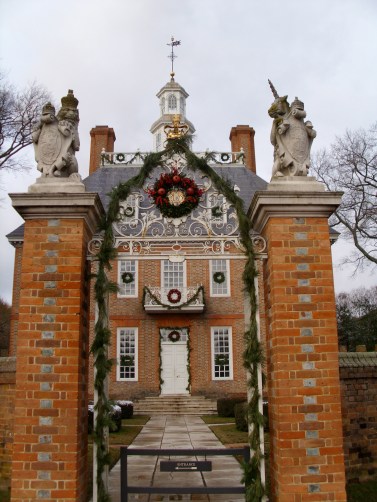
Front gate leading to the Palace.

Front gate leading to the Palace.

Tours, which require a separate ticket, will bring you through the public and private portions of the house.

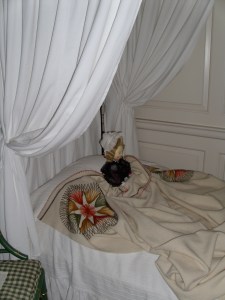
One of the beds in the Palace.

One of the beds in the Palace.

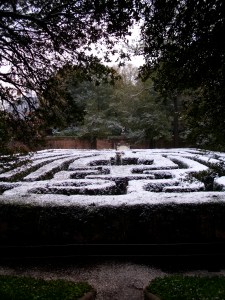
After your tour explore the vast gardens. Don’t miss the box wood maze. And be sure to climb the pyramid over the ice house. I found the gardens more enchanting than the building itself.

View of the box wood maze taken from the top of the pyramid. This was from our 2010 trip, and it had just snowed.

View of the box wood maze taken from the top of the pyramid. This was from our 2010 trip, and it had just snowed.

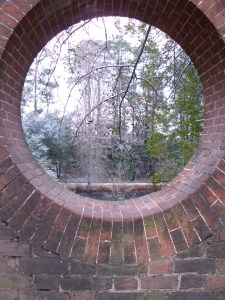
There were dozens of hidden treasures.

Window through the garden wall looking out to the canal.

Window through the garden wall looking out to the canal.

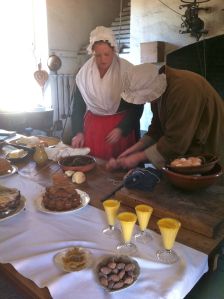
Even if you don’t take a formal Palace tour be sure to stop in to see the cellars and the kitchen. It will give you a fascinating glimpse on how they kept this huge home running. The cook, a man, was one of the highest paid and best regarded people in Williamsurg btw.

They made one big meal for the day. What kept was "left over" for breakfast.

They made one big meal for the day. What kept was “left over” for breakfast.

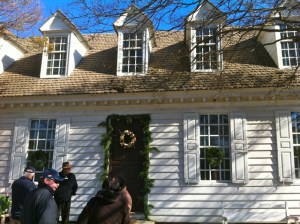
8. Tour the Thomas Everard House. On a prime piece of real estate on the Palace Green is the Thomas Everard House. Everard was an orphan when he arrived in Virginia as an apprentice to Matthew Kemp. Everard trained for seven years as a clerk. Soon after his apprenticeship was finished he was appointed clerk of Elizabeth City County court. Eventually he became the clerk of York county court for 36 years,  Mayor of Williamsburg and held other prestigious post in the city. He purchased the house on the corner of Palace Green and expanded it.

The front of the Everard House faces the Palace Green.

The front of the Everard House faces the Palace Green.

His wife died fairly young but his two daughters, Fanny and Patsy lived with him as they grew up.

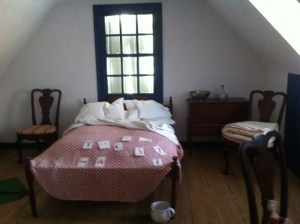
One of the girl's bedroom.

One of the girl’s bedroom.

Fanny married Rev. James Horrocks in 1765. He was the rector of Bruton Parish Church and president of Williams and Mary. He was a powerful man in the colony. When Rev. Horrocks died she returned to her father’s house. Sadly she died a year later. Her sister, Patsy lived, there until 1774 when she married.

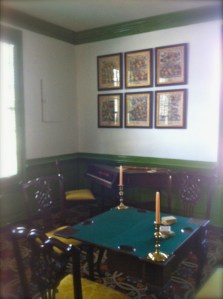
Parlor

The house is in a “U” configuration. On the main floor the parlor and dining room face the front. The Parlor is a public room in the house. This multi use room can be set up for music, games or dancing.

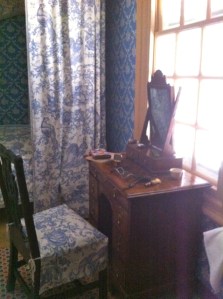
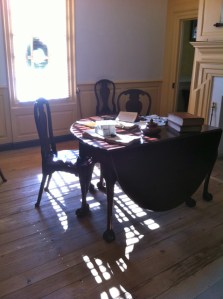
Thomas’ bedroom was accessible through the drawling room.

Everett's bedroom

He  had a quieter prospect  of the yard and garden out his window. A back door allowed for special friends to enter his cozy retreat.

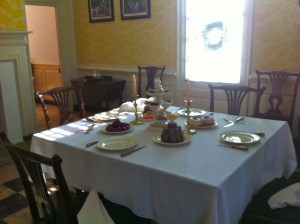
Like the Parlor, the Dinning Room also faces the Palace Green. Dining

The door in the back of the dining room led to Thomas’ study. This room was also accessible through a rear door.

Evert's study

The Thomas Everard House is open 9-4 Tue, Wed & Friday.

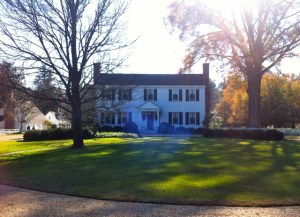
9. Visit Bassett Hall. Williamsburg would not have been possible without the vision of one man and the generosity of another. The first man was Rev. W.A.R. Goodwin, The second was John D. Rockefeller, Jr.. Goodwin convinced Rockefeller to help him rebuild the Revolutionary City to its Colonial glory. Rockefeller and his wife Abby Aldrich Rockefeller.

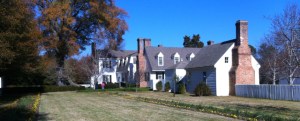
Bassett Hall front

It was their retreat from the outside world. The Rockefellers visited there twice each year. The house and grounds have been restored not to the colonial era, but to the 1930s when the Rockefellers lived there.

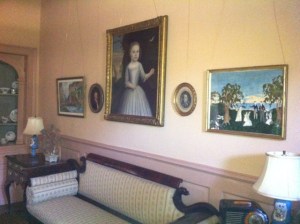
Abby filled the rooms with her folk art finds.

The drawing room at Bassett Hall.

Folk art graces the walls at Bassett Hall.

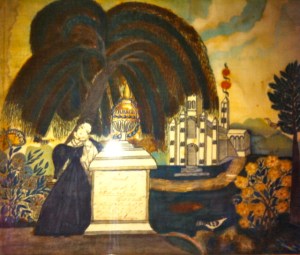
One of her special interest was “School Girl Art.”  A sub set of her Folk Art collection the School Girl Art was literally done by girls who were away at school, usually finishing school in the 19 and 18th centuries.

A sample of School Girl Mourning Art memoralizing some one close to them who has died.

A sample of School Girl Mourning Art. The artist was encouraged to memorialize some one close to them who had died.

The family entertained  the locals — rich and poor– at their dinner table.

Dining rm

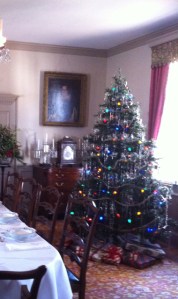
Dining Room decorated to Christmas

During the summer guest were often invited to tea in the Tea Room which was in a building overlooking the garden.

Looking back at the house from the garden.

Looking back at the house from the garden.

Bassett Hall is open Wed-Sun 9-5. Don’t miss the informative movie at the beginning of the tour. You’ll learn a lot about the Rockefellers and the re-making of Williamsburg.

10. Get spooky with it. When you visit a 300 + year old city you expect a lot of history, and probably a few ghosts. So join in the fun and take a Ghost tour. We did the Tavern Ghost tour and it was fun (if not very scary.)  Better still participate in the Cry Witch Program at the Capitol.

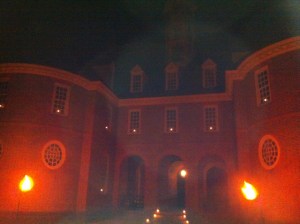
Capital for cry witch

The Capitol Building at night before the Cry Witch program.

You’ll witness the trial of Grace Sherwood with first person interpreters bringing the transcript and court room drama to life. We don’t know what the actual verdict was, those documents have been lost. So the audience in the courtroom gets to weigh the evidence and decide Grace’s fate.

Tomorrow we finish up with Williamsburg and move up the road to Richmond.


Williamsburg (part 1)

[Something happened with the formating on this blog post, so I took it down and am reposting it here. No new content but I wanted to have it available for those who were interested in reading all the Williamsburg posts. Thank you for your patience.]

Textile 3

[If you hadn’t noticed… last week’s blogs were a bit off. That’s because I was away from my lovely desktop Mac and trying to survive remotely with an iPad I still haven’t quite gotten the hang of. My husband also let me borrow his laptop — thanks, dear! We had gone to Williamsburg and Richmond Virginia, and this week I thought I’d blog about some of the cool things we did.] [Skip to Part Two]

Williamsburg — A Capitol City

This was our fourth trip to Colonial Williamsburg, so I have a little advice to share.

1.) Don’t go in the summer. Why sweat with the crowds when you can have the city practically to yourself in the fall and winter? We’ve been in November (this time) and December (in 2010) and it has been lovely both visits. The exhibits are all open and the tradespeople have tons of time to talk to you. It’s easy to get a reservation for dinner and tickets to events. You might get lucky and see some snow (as we did in ’10) then the town takes on a wonderland effect and you feel as if you’ve just stepped into a giant snow globe.

If it gets a bit nippy, no worries, just step into the newly constructed Charlton Coffee House. Charlton’s is steps from the stone fence of the Capitol. There you’ll learn about the Coffee House from first person interpreters and sit down to a hot cup of tea, coffee or chocolate with the proprietor.

The Chiswel Bucktrout Kitchen, one of the Colonial Houses available for rent.

2.) Stay in a Colonial House. Colonial Houses line Duke of Gloucester Street (the main drag of Williamsburg), Frances Street and Nicholson Street. They are furnished with Colonial Era reproduction furniture, but also host modern amenities like a heat/air, cable TV and indoor plumbing. Stay by yourself at one of the smaller structures like the Chiswell Bucktrout Kitchen (perfect for a romantic getaway); upgrade to a multi-room house and bring the family; or go for a tavern style vacation  at the Brick House Tavern. You’ll get a full breakfast at the wonderful Williamsburg Inn each morning. Look for packages, like the Holiday Decorations Package, that will also include a tour and gift card. (Word to the wise, Frances street is a 21st Century road, so there is bus, truck and car traffic. For a quieter stay book early and stay on Duke of Gloucester.)

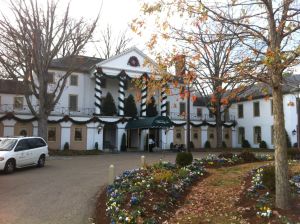
Williamsburg Inn. If you stay at a Colonial House you'll breakfast at the Inn's Regency Room.

3.) Engage. Talk to the interpreters and crafts people. The more you ask the more you’ll get out of your 18th Century adventure. Be sure to catch a “Public Audience” with George Washington, Thomas Jefferson or Patrick Henry.

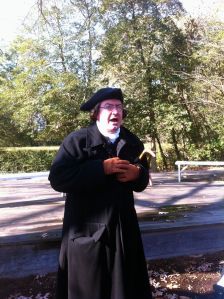
A first-person interpreter takes on the persona of founding father Patrick Henry for "A Public Audience with Patrick Henry" in the garden behind the Palace.

You can also meet less lauded members of society in the “Meet a Nation Builder” series.

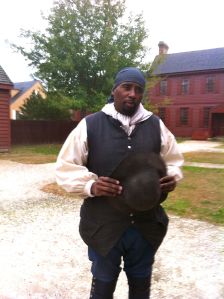
Aggy tells her story.

Slaves made up a large portion of the population in Williamsburg and their stories are represented throughout the city in such programs as His Natural Wife — the story of Aggy the common law wife of her master; and a slave’s perspective on life in the Randolph house (Payton Randolph had more slaves than any one else in the city.)

Interpreter at the Payton Randolph house describes what its like to be a slave for one of the richest men in the city.

Continued tomorrow…

Treat yourself to a carriage ride down the 1 mile long Duke of Gloucester Street from the Capitol to Merchant Square.[Photo Credit: Bill]

Related articles

All photos were taken by Rita except where indicated.


Williamsburg (part 2)

Textile 3

[This is part two of my What To Do in Williamsburg Blog for part one go HERE.]

Yesterday’s tips included:

  1. Planning your trip in the Fall or Winter to avoid the heat and crowds.
  2. Staying in a Colonial House.
  3. Engaging with the locals.

Today we’ll focus on some [FREE] tours.

4. Visit the Wren Building.

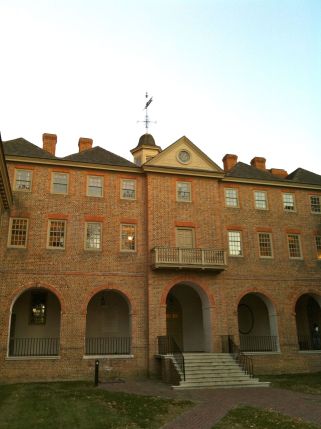
The first State House of Virginia was in Jamestown. But it burned down. Then it burned again. And again. And a fourth time. The governor and the citizens of Jamestown thought they’d better look for a better location for their capital. They chose Williamsburg (then known as the Middle Plantation) because the town already had a market, a church — Burton Parish, and a school — William and Mary. The architectural gem of William and Mary is the Wren Building. It sits at the opposite end of Duke of Gloucester Street from the Capitol and it is definitely worth a visit.

English: The front of the Wren Building at the...

English: The front of the Wren Building at the College of William & Mary in Williamsburg, Virginia, USA. (Photo credit: Wikipedia)

The building began construction in 1695 and was completed in 1699. It is the oldest restored building in Williamsburg. It has suffered three major fires (in 1705, 1859 and 1862) and been rebuilt each time. Between 1928 and 1931 it was restored to its Colonial appearance. Every student at William and Mary has at least one class in the historic Wren Building during their time at the college. The college counts three US presidents among its alumni; Thomas Jefferson, James Monroe and John Tyler. Their portraits hang in the Great Hall.

Free tours of the building are available M-F 1-5 when school is in session. Hint: As you climb the steps to the front door look for a patch of darker red brick to your left. You’ll see the initials of some of the school’s earliest residents carved in the bricks.

Wren Building from the William and Mary Campus side. (Photo credit: Bill.)

Wren Building from the William and Mary Campus side. (Photo credit: Bill.)

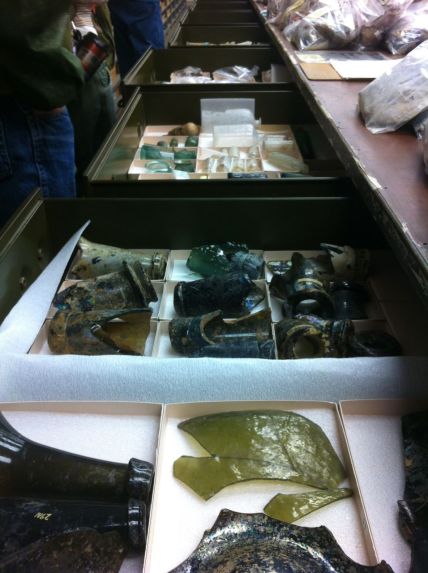
5.) Take the Rubbish, Treasures and Colonial Life Tour.   Rev. W.A.R. Goodwin, the pastor at Bruton Church convinced John D. Rockefeller Jr. to join him in a dream of restoring the sleepy little 1920’s country seat back to  the glorious colonial capital it had once been. That took a lot of money, a lot of research and a lot of digging.  There is no better way to learn about how that transformation took place than on the 90 minute Rubbish, Treasures and Colonial Life tour. Meet members of the staff, learn about how archaeological methods have changed over the years, and see the treasures that await their turn to be cataloged. Tickets are FREE with your Williamsburg Admission Pass, but you must make a reservation prior to the tour.

Glass fragments are sorted by type in drawer in the Archeology labs in Williamsburg.

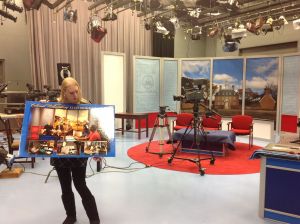
6.) Another great free tour is the Behind the Scenes tour. This tour takes place at the Bruton Heights School and focuses on preservation techniques (as opposed how the objects are found, put together and cataloged.) You’ll see the studio where educational videos, Emmy Award winning broadcasts and blogs are made…

Film Studio at Williamsburg's  Bruton School facility.

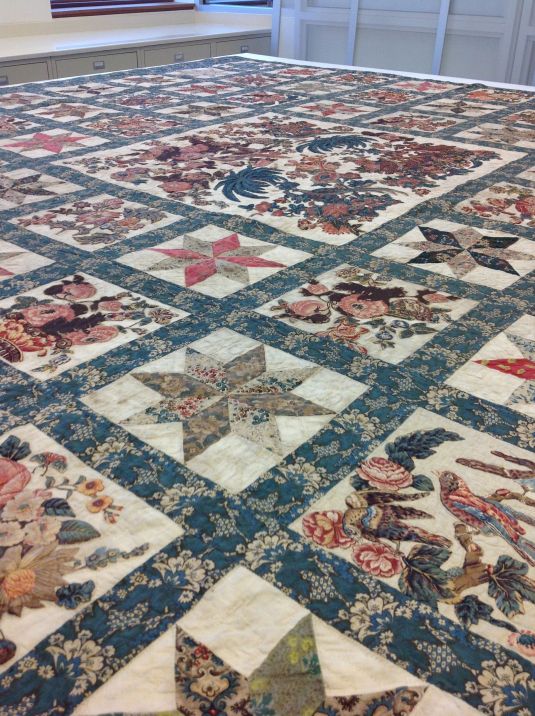
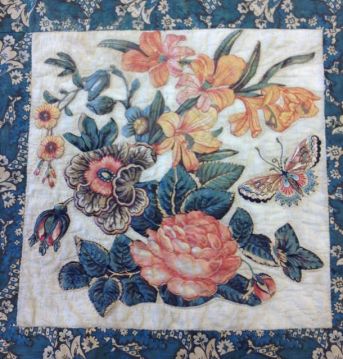
…then go to one of the restoration labs to see work being done on an 18th century item. We visited the Textile Lab where they were restoring some quilts for an upcoming show at the De Witt Wallace Museum.

Over sized quilt being restored at the Textile Lab

Over sized quilt being restored at the Textile Lab
Detail from an over sized quilt being restored at the Textile Lab.

Detail of quilt

6.) Go to the De Witt Wallace Decorative Arts Museum and the Abby Aldrich Rockefeller Folk Art Museum. With a substantial permanent exhibit and wonderful traveling exhibits we have never been disappointed by a stop at the twin museums that are accessible through the recreated Public Hospital on Frances Street.

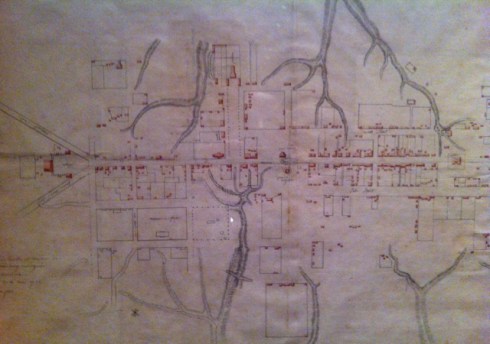
The Frenchman's Map was on display as part of a temporary exhibit on maps and mapmaking. Drawn when the French moved into the city after during the Siege of Yorktown, It is the Rosettastone for Archeologist trying to restore Williamsburg.

The Frenchman’s Map was on display as part of a temporary exhibit on maps and map making. Drawn when the French moved into the city after during the Siege of Yorktown, It is the Rosetta stone for Archeologist trying to restore Williamsburg. The Bodleian Plate, another key to what the Colonial Capital looked like, is also on display.

This is a terrific way to spend a rainy (or cold) afternoon. And if you are traveling with youngsters the Children’s room in the Abby Aldrich Museum is delightful.

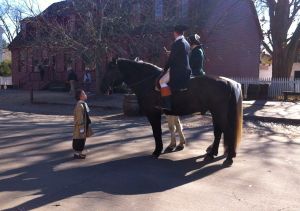
Looking up to the past.<br /><br />A young visitor finds both human and equine re-enactors equally fascinating andfriendly on Duke of Gloucester street.

Looking up to the past.
A young visitor finds both human and equine re-enactors equally fascinating and friendly on Duke of Gloucester street.
  • To read my article on Williamsburg: A Winter Escape in 2011’s Mason-Dixon ARRIVE Magazine click HERE and scroll down == it is the third article on the page.

Georges Seurat 12.2.12 Thought of the Day

“Some say they see poetry in my paintings; I see only science.”
Georges Seurat

Georges Seurat (1859-1891), photo

Georges Seurat (1859-1891), photo (Photo credit: Wikipedia)

George Seurat was born on this day in Paris, France in 1859. Today is the 153rd anniversary of his birth.

He was born to a wealthy family. His father was distant and taciturn.

At every available opportunity, Antoine-Christophe took leave of his family and disappeared to his villa in the suburbs to grow flowers and say mass in the company of his gardener; he was only at home on Tuesdays. Seurat’s mother was quiet and unassuming, but it was she who gave some warmth and continuity to his childhood. [Renoir Fine Art Inc.]

The family lived on the Boulevarde de Magenta near “Le Parc des Butte-Chaumont” and Georges and his mother often strolled through the park together. He revisited the park in his paintings. Seurat was a quite young man with a gentle voice. He always dressed in a dignified manner. Friends teased him that his tall handsome appearance made him look like a department store model. But he “was serious and intense ­ preferring to spend his money on books rather than on food or drink.” [Ibid]

He went to the Ecole des Beaux-Arts in 1878. He preferred pointillism over the soft brushstrokes of impressionism. He took a scientific approach to painting, working “fixed hours and (using a) meticulous systematization of his technique.” [Ibid]

English: Bathers at Asnières, Georges Seurat, ...

English: Bathers at Asnières, Georges Seurat, 1884. (Photo credit: Wikipedia)

He painted six huge canvas paintings that represent the bulk of his artistic output. The first, painted in 1813 (and taking almost the entire year to complete) was Bathing at Asnieres.

Next came La Grande Jatte. He spent two years on La Grande Jatte, going to the same spot every day for months. There he would sketch in the morning, then in the afternoon he would return to his studio and paint on his giant canvas.

A Sunday on La Grande Jatte

A Sunday on La Grande Jatte (Photo credit: Wikipedia)

Le Grande Jatte “made” Seurat.  He took a studio next to fellow pointillist Signac in Montmartre.

Here he was surrounded by artists ranging from the conservative decorator Puvis de Chavannes, whom he greatly admired, to more progressive contempories ­ including Degas, Gauguin, Van Gogh and Toulouse-Lautrec. He was at the center of artistic debates, but he kept aloof from them. [Renoir Fine Art Inc.]

Likewise he keep aloof about pricing his paintings. He didn’t need to worry about money like some of his fellow artists.

He settled into an annual routine of painting large canvas s in his studio during the winter and doing smaller marine paintings at one of the Normandy Ports in the Summer.

Paris - Musée d'Orsay: Georges Seurat's Le Cirque

Paris – Musée d’Orsay: Georges Seurat’s Le Cirque (Photo credit: wallyg)

His other large canvas paintings include Le Cirque (1890), The Models (1888), La Parade (1889), and Le Chahut (1891).

Le Chahut, 1889–1890, Kröller-Müller Museum, O...

Le Chahut, 1889–1890, Kröller-Müller Museum, Otterlo, Netherlands (Photo credit: Wikipedia)

Seurat died at the age of 31 from meningitis in March of 1891.


Secondary Character Saturday — Ron Weasley

Welcome to the next edition of Secondary Character Saturday.

———————————————————————————–

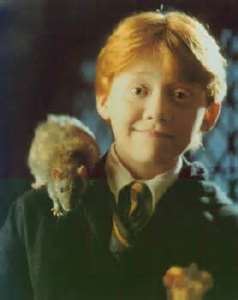
Rupert Grint played Ron in the Harry Potter movies.

Rupert Grint played Ron in the Harry Potter movies.

Name: Ronald Bilius “Ron” Weasley

From: The Harry Potter series

By: J. K. Rowling

Written in: Ron first appeared in Harry Potter and the Philosopher’s Stone which was published in 1997.

Why: Ron is the everyman of the Potter series. In the triumvirate that crowns  the Harry Potter food chain you’ve got the hero (Harry), the brains (Hermione), and the foil (Ron). He is flawed, there’s no doubt about it. As the youngest brothers he’s neither the smartest, nor the bravest, nor the funniest.

I’m the sixth in our family to go to Hogwarts. You could say I got a lot to live up to. Bill and Charlie have already left – Bill was Head Boy and Charlie was captain of Quidditch. Now Percy’s a prefect. Fred and George mess around a lot, but they still get really good marks and everyone thinks they’re really funny. Everyone expects me to do as well as the others, but if I do, it’s no big deal, because they did it first.” [Harry Potter and the Sorcerer’s Stone, by JK Rowling, Scholastic Inc. New York, New York, pg 98]

Throw his little sister Ginny into the mix and he’s not even the cutest. He doesn’t seem to have any special “thing” that he can point to and say “this is what I do best.” So Ron is always searching for his moment in the sun. It doesn’t help that his best mate is the world-famous (at least in the wizarding world) Harry Potter. Ron suffers from insecurity from the start and it gets worse as the books go along. He is also largely clueless when it comes to women. Just ask Hermione. But Ron is loyal, funny, and generous. He’s grounded in a way that neither Harry or Hermione seem to be. And in this way Ron seems the most human of the central characters in the series. (In fact, as a pure blood Wizard he’s the least human. But while other Pure Bloods hold that over mere Mud Bloods it never seems to enter into Ron’s equation of friendship.)

Pros: Loyalty, Nerve, Sense of Humor

Cons: Easily frustrated, occasionally lapses in his loyalty, procrastinates, jealous

Shining moment: Ron’s shining moment (imho) comes in the first book when he plays the game of Wizard’s Chess. It takes both courage and skill to play the game, and Ron willingly sacrifices his piece (and himself) so the others can win the game and advance in their goal to stop Quirell.

“We’re nearly there,” he muttered suddenly. “Let me think… let me think…”
The white queen turned her blank face toward him.
“Yes…” said Ron softly, “it’s the only way…I’ve got to be taken.”
“NO!” Harry and Hermione shouted.
“That’s chess!” snapped Ron. “You’ve got to make some sacrifices! I take one step forward and she’ll take me— that leave you free to checkmate the king, Harry!” [Ibid, pg 283]

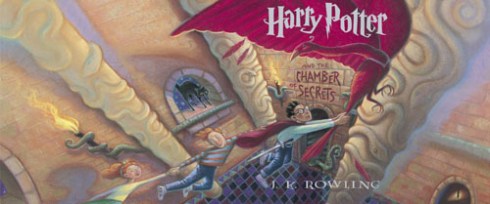
Runner up Shining Moment: Working with Harry to save Ginny from the Chamber of Secrets in book two.

Cover of Harry Potter and the Chamber of Secrets

Cover of Harry Potter and the Chamber of Secrets

Silliest moment: Probably my favorite Ron moment happens in the second book, and it involves belching slugs. ‘Nugh said.

Least shining moment: He is least likeable in the last book when he leaves Harry and Hermione to finish the quest for the Horcurxes on their own. That is pretty weak. It is almost unforgivable. But Ron is human (well, he’s a wizard, but he has very human tendencies) and his weaknesses and failures make him more relatable to us. And Ron realizes his mistake, of course, and comes back.

Lego Ron

Lego Ron

So I know some of you are not going to like the fact that Ron is listed here as secondary character, but before you throw an unspeakable curse my way please consider that the books are named “Harry Potter and the…” Harry is the primary character.  Ron and every one else are, therefore, secondary.

AND lest you Snape or Luna lovers loose heart, just because I picked Ron this time doesn’t mean I wont pick another H.P. character another time. Saturday comes around once a week after all, and, clearly, I’ve got some pretty strong opinions up my sleeves.

Thanks to Ellie, Maggie, Bill and Stevie for their input on this blog post.