Monthly Archives: October 2012

Thought of the Day 10.17.12 Elinor Glyn

“All the legislation in the world will not abolish kissing”
Elinor Glyn

Portrait of Elinor Glyn, 1927

Portrait of Elinor Glyn, 1927 (Photo credit: Wikipedia)

Elinor Southerland was born on this day in Jersey, Channel Islands, England in 1864. Today is the 148th anniversary of her birth.

Elinor’s father died when she was a toddler and the family moved for a while to Canada. They returned to Jersey when she was eight and her mother remarried.  Elinor…

was a voracious reader interested in French history and mythology, though she had no formal education … She would later be drawn to mysticism and romance. [The Literature Network]

She liked to write and she kept a diary.

At 28 she married Clayton Glyn. The couple had two daughters, Margot and Juliet. The marriage was not a happy one.  and, although Elinor and Clayton officially remained together both had affairs.

Elinor had affairs with a succession of British aristocrats and some of her books are supposedly based on her various affairs… [Good Reads]

English: Elinor Glyn portrait

English: Elinor Glyn portrait (Photo credit: Wikipedia)

She contributed articles to Scottish Life and Cosmopolitan but her real break through in the literary world came with the serialization of her first book The Visits of Elizabeth in 1900. The book, was written as a series of letters by an innocent young woman. Elizabeth.

The naive and charming narrator gets herself into social scrapes due to her innocence, … they are actually funny over a hundred years later because you know what Elizabeth doesn’t know–and perhaps that was the appeal for the more knowing Edwardian readers. Glyn’s book is a bit of a satire, but a romantic one, and Elizabeth gets her happily-ever-after, but not before making every handsome gentleman fall deeply in love with her.  [Amazon.com review]

Elinor was prolific in turning out her novels (she had to be, finances at home had taken a turn for the worse and the once wealthy Clayton Glyn was in debt by 1908. He died in 1915.)  Her reputation as a writer of romance grew with the publications  of The Seventh Commandment (1902), The Reflections of Ambrosine (1903), The Damsel and the Sage (1903), The Vicissitudes of Evangeline (1905) and Beyond the Rocks (1906).
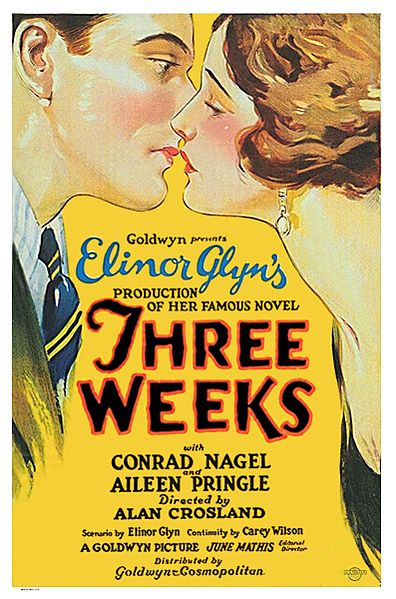
Movie poster for Three Weeks

Her risqué Three Weeks, about an exotic Balkan queen who seduces a young British aristocrat, was allegedly inspired by her affair with Lord Alistair Innes Ker. On the one hand it scandalized Edwardian aristocrats and jeopardized Glyn’s status. [The Literature Network]

Deemed immoral and banned at elite schools like Eton and panned by some critics who considered it disjointed and dull, the book non the less sold out within weeks of its publication and  it  “ensured her meteoric rise to fame.” [ibid]. It also brought about the anonymous  ditty:

Would you like to sin
With Elinor Glyn
On a tiger skin?
Or would you prefer
To err
With her
On some other fur

Her private life seemed to either echo or prelude the romantic interludes of the heroines in her novels as she continued to crank out “romances” until the start of World War One. During the Great War she worked in France as a war correspondent and Glyn was one of two women to witness the signing of the Treaty of Versailles.

Elinor Glyn looks up at Rudolph Valentino, fro...

Elinor Glyn looks up at Rudolph Valentino, from the frontispiece of Beyond The Rocks (Photo credit: Wikipedia)

She made the move to Hollywood in 1920 where she worked as a scriptwriter  for MGM and Paramount. The Great Moment was filmed in 1920.  In 1922 Beyond the Rocks was made into a major motion picture with red-hot Rudolph Valentino and Gloria Swanson. Three Weeks was given the big screen treatment not once, but twice, first in 1914 and then in 1924. And Glyn wrote the screenplay and was closely involved in the production of the 1926 Love’s Blindness.

In 1927 she wrote a novella that gave us the expression “the IT girl.”  She coined the phrase and quickly  crowned Clara Bow, who was staring in Red Hair (a movie based on Glyn’s The Vicissitudes of Evangeline), as the first IT girl. Here autobiography Romantic Adventure was published in 1936. She continued writing until 1940 when she published her last — and 42nd — book, The Third Eye.

English novelist and scriptwriter Elinor Glyn ...

English novelist and scriptwriter Elinor Glyn (1864-1943) (Photo credit: Wikipedia)

Elinor Glyn died in September of 1943 in Chelsea, London.

————————————————————————–

Bookshelf:

Interested in reading some of Elinor Glyn’s books? You can find them through the links below.

Red Hair (Classic Reprint)<img src=”http://www.assoc-amazon.com/e/ir?t=rico095-20&l=as2&o=1&a=B0094JHIEE&#8221; width=”1″ height=”1″ border=”0″ alt=”” style=”border:none !important; margin:0px !important;” />

Man and maid<img src=”http://www.assoc-amazon.com/e/ir?t=rico095-20&l=am2&o=1&a=117680328X&#8221; width=”1″ height=”1″ border=”0″ alt=”” style=”border:none !important; margin:0px !important;” />

Three Weeks<img src=”http://www.assoc-amazon.com/e/ir?t=rico095-20&l=am2&o=1&a=0715603612&#8243; width=”1″ height=”1″ border=”0″ alt=”” style=”border:none !important; margin:0px !important;” />

The Visits Of Elizabeth<img src=”http://www.assoc-amazon.com/e/ir?t=rico095-20&l=am2&o=1&a=1162711698&#8243; width=”1″ height=”1″ border=”0″ alt=”” style=”border:none !important; margin:0px !important;” />

The man and the moment<img src=”http://www.assoc-amazon.com/e/ir?t=rico095-20&l=am2&o=1&a=1178145077&#8243; width=”1″ height=”1″ border=”0″ alt=”” style=”border:none !important; margin:0px !important;” />

The man and the moment<img src=”http://www.assoc-amazon.com/e/ir?t=rico095-20&l=am2&o=1&a=1178145077&#8243; width=”1″ height=”1″ border=”0″ alt=”” style=”border:none !important; margin:0px !important;” />

The Point of View<img src=”http://www.assoc-amazon.com/e/ir?t=rico095-20&l=am2&o=1&a=1444425269&#8243; width=”1″ height=”1″ border=”0″ alt=”” style=”border:none !important; margin:0px !important;” />


Thought of the Day 10.15.12 P. G. Wodehouse

“I just sit at a typewriter and curse a bit.”“There is only one cure for gray hair. It was invented by a Frenchman. It is called the guillotine.”“I know I was writing stories when I was five. I don’t know what I did before that. Just loafed I suppose.”–P.G. Wodehouse

P. G. Wodehouse, Bolton's friend and collaborator

“I just sit at a typewriter and curse a bit.”

Pelham Grenville Wodehouse was born on this day in Guildford, Surrey, England in 1881. This is the 131st anniversary of his birth.

Wodehouse, called “Plum” as a child, spent much of his early life in the care of a gaggle of aunts and at boarding schools in England, while his parents lived in the Far East. Third of four boys, Wodehouse was close to his brothers.  He went to The Chalet School, Elizabeth College in Guernsey, Malvern House (near Dover) and finally at Dulwich College with his older brother Armine. He flourished at Dulwich where he played sports (especially boxing, cricket and rugby), studied the classics, sang and acted in the school’s theatricals, and of course, wrote.)

Psmith in the City

Psmith in the City (Photo credit: Wikipedia)

Upon graduation in 1900 ailing family finances meant he couldn’t go on to Oxford like Armine. Instead, Plum’s father got him a job in the London branch of the Hong Kong and Shanghai Bank. He wrote about his experiences at the bank in Psmith in the City, but he said he “never learned a thing about banking.”  In 1902 he gave up the financial farce and dove into journalism  with a job writing a comic column at The Globe newspaper. He moved to New York and published his first novel, The Pothunters the same year.  A Prefect’s Uncle; Love Among the Chickens; The Swoop; Psmith In the City; Psmith, Journalist; The Prince and Betty; and  Something New followed fairly quickly there after.

The Prince and Betty

The Prince and Betty (Photo credit: Wikipedia)

He also wrote for musicals. He penned the book for Cole Porter’s Anything Goes; the Gershwin’ s Oh Kay . He worked with Ira Gershwin on the lyrics for Rosalie. And he wrote dozens of musicals — generically called the Princess Theatre Musicals — with Guy Bolton and Jerome Kern. [For a complete list of Wodehouse musicals go to The Playwrights Database at doolee.com]   The Princess Theatre Musical are generally seen as a stepping stone that took the best of vaudeville and operetta and blended them into modern musical theatre. They transitioned

“… the haphazard musicals of the past to the newer, more methodical modern musical comedy … the libretto is remarkably pun-free and the plot is natural and unforced. Charm was uppermost in the creators’ minds … the audience could relax, have a few laughs, feel slightly superior to the silly undertakings on stage, and smile along with the simple, melodic, lyrically witty but undemanding songs” [Bloom and Vlastnic Broadway Musicals: The 101 Greatest Shows of All Time]

My Man Jeeves

My Man Jeeves (Photo credit: Wikipedia)

Starting with My Man Jeeves in 1919 Wodehouse published the series of books for which is he best known, The Jeeves and Wooster books.  Here’s a clip from the 1990 Granada Television production of Jeeves and Wooster starring Hugh Laurie and Stephen Fry:

He also wrote the Blandings Castle series about a fictional castle with Lord Emsworth and his prize-winning pig, the “Empress of Blandings.”

Since he and his wife, Ethel Wayman, were officially residents of both England and the US they were being taxed by both countries. To alleviate the tax burden they moved to France in 1934. The Wodehouse’s remained in France when the Nazi troops moved in. Wodehouse was interned as an “enemy alien” eventually landing in Tost, Upper Silesia, Poland. He later quipped of  his ‘lodgings’ “If this is Upper Silesia, what on earth must Lower Silesia be like?” He entertained his fellow prisoners with dialogues and wrote during his two-year internment (he completed one novel and started two more). He was released just prior to his 60th birthday when a German friend from his Hollywood days, Werner Plack, approached him about doing a broadcast for the Americans describing his life as an internee.  America was not at war with Germany yet, and he had received many letters of encouragement from his fans in the US while in the camp. He saw this as a way to thank them. And, Wodehouse claimed,  he was simply reflecting the “flippant, cheerful attitude of all British prisoners.” [the Guardian]  in the broadcasts. But the British public didn’t see it that way, and neither did MI5. He was interrogated for suspected collaboration with the Germans — something that shocked the aging author. “I thought that people, hearing the talks, would admire me for having kept cheerful under difficult conditions,” [ibid] Wodehouse maintained that he never had intended to aid the enemy. But the incident left a bad taste with both the Wodehouses and the British public. The author moved to the US in 1945, and never went back to England.

Wodehouse died in 1975.

books - wodehouse

books – wodehouse (Photo credit: rocketlass)


Thought of the Day 10.14.12 e.e.cummings

“It takes courage to grow up and become who you really are.”
–e.e. cummings

E. E. Cummings, 1958 by Edward Estlin Cummings...

E. E. Cummings, 1958 by Edward Estlin Cummings, Oil on canvas (Photo credit: cliff1066™)

Edward Estlin Cummings was born on this day in Cambridge, Massachusetts, USA in 1894. Today is the 118th anniversary of his birth.

As a child Cummings  enjoyed art and writing, as well as the outdoors. His mother encouraged him to write. And Cummings worked at his craft by writing daily. He went to Harvard where he became interested in non conventional poetry.

First edition dustjacket of The Enormous Room

First edition dustjacket of The Enormous Room (Photo credit: Wikipedia)

During World War I he was an ambulance driver in France and fell in love with Paris. But he sent letters home that “holding views critical of French war effort” [e.e. cummings Biography] He was arrested and thrown in prison for three months. His book The Enormous Room is based on his experiences in the French prison.  He was later drafted into the US Army.

1st edition cover

1st edition cover (Photo credit: Wikipedia)

His first collection of poems, Tulips and Chimneys came out in 1923. Although his poems received critical praise — he won the Dial Award for poetry in 1925 — Cummings found it hard to find a publisher. His poetry was considered too avant guard.

His my father moved through dooms of love is a tribute to his recently deceased father…

my father moved through dooms of love

by E. E. Cummings

              34

my father moved through dooms of love 
through sames of am through haves of give, 
singing each morning out of each night 
my father moved through depths of height

this motionless forgetful where 
turned at his glance to shining here; 
that if(so timid air is firm) 
under his eyes would stir and squirm

newly as from unburied which 
floats the first who,his april touch 
drove sleeping selves to swarm their fates 
woke dreamers to their ghostly roots

and should some why completely weep 
my father's fingers brought her sleep:
vainly no smallest voice might cry 
for he could feel the mountains grow.

Lifting the valleys of the sea 
my father moved through griefs of joy; 
praising a forehead called the moon 
singing desire into begin

joy was his song and joy so pure 
a heart of star by him could steer 
and pure so now and now so yes 
the wrists of twilight would rejoice

keen as midsummer's keen beyond
conceiving mind of sun will stand,
so strictly(over utmost him
so hugely) stood my father's dream

his flesh was flesh his blood was blood:
no hungry man but wished him food;
no cripple wouldn't creep one mile
uphill to only see him smile.

Scorning the Pomp of must and shall
my father moved through dooms of feel;
his anger was as right as rain
his pity was as green as grain

septembering arms of year extend 
yes humbly wealth to foe and friend 
than he to foolish and to wise  
offered immeasurable is

proudly and(by octobering flame 
beckoned)as earth will downward climb, 
so naked for immortal work 
his shoulders marched against the darkhis sorrow was as true as bread:
no liar looked him in the head; 
if every friend became his foe 
he'd laugh and build a world with snow.My father moved through theys of we, 
singing each new leaf out of each tree 
(and every child was sure that spring 
danced when she heard my father sing)then let men kill which cannot share, 
let blood and flesh be mud and mire, 
scheming imagine,passion willed, 
freedom a drug that's bought and soldgiving to steal and cruel kind, 
a heart to fear,to doubt a mind, 
to differ a disease of same,
conform the pinnacle of amthough dull were all we taste as bright, 
bitter all utterly things sweet,
maggoty minus and dumb death 
all we inherit,all bequeathand nothing quite so least as truth
--i say though hate were why men breathe--
because my Father lived his soul 
love is the whole and more than all

Cummings died in 1962 from a stroke.

E.E. Cummings, full-length portrait, facing le...

E.E. Cummings, full-length portrait, facing left, wearing hat and coat / World-Telegram photo by Walter Albertin. (Photo credit: Wikipedia)


Thought of the Day 10.13.12 Paul Simon

‘Why am I so soft in the middle when the rest of my life is so hard?”
— Paul Simon

Paul Frederic Simon was born in Newark, New Jersey, USA on this day in 1941. He is 71 years old.

Paul’s other love is baseball. [Image courtesy Paul-Simon.info]

He grew up in Queens, New York  loving baseball and music. Simon met Art Garfunkel in middle school. They were the White Rabbit and the Cheshire Cat in their 6th grade production of Alice and Wonderland and attended Forest Hills High School together. He and Garfunkel would use a tape recorder to practice singing together. In 1954 Paul got a guitar for his birthday. They  tried to duplicate the tight harmonies of the Everly Brothers, who they idolized. In 1956 Simon wrote their first song “The Girl for Me” which his father, Louis (who was musician and college professor) wrote out and corded for the duo.

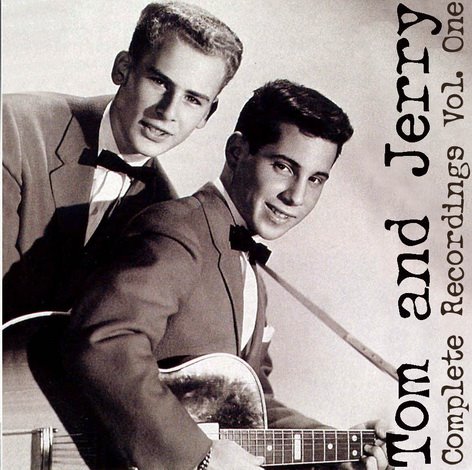
While juniors in high school they started the group Tom and Jerry. (Art was Tom; Paul was Jerry) They released a single, Hey, Schoolgirl. The song reached #49 on the Billboard charts.

After high school Simon went to Queen’s College, New York and studied English. He met singer songwriter Carol King at Queen’s and he did solo work and played with a group called Tico & The Triumphs. Although Tico et al put out a few singles the efforts weren’t very successful.

Worried that Simon and Garfunkel sounded too Jewish the duo opted for the more generic Tom and Jerry. [Image courtesy Paul-Simon.info]

Simon continued to write after graduation. He embraced the changing social climate of the early Sixties and “the burgeoning Greenwich Village folk scene.” [ Paul-Simon.info]  His maturing style is reflected in the songs he wrote during this era, especially the Sound of Silence.

´Sound of Silence´ uses imagery of light and darkness to show how ignorance and apathy destroy people´s ability to communicate on even a simple level. The light symbolizes truth and enlightenment. Both music and lyrics are perfectly fitting.  [Paul-Simon.info]

Simon reunited with Art Garfunkel in 1963. They began to sing in folk clubs, worked on songs and recorded a few of the songs Simon had earlier penned.

Here is He Was My Brother a song that Paul dedicated to Andrew Goodman, one of three civil rights workers killed in Mississippi in 1964.

They released Wednesday Morning, 3 A.M. as Simon and Garfunkel. A classic now, the album met with tepid response when it first came out. The songs are a mix of original Simon compositions; Bleecker Street, Sparrow, The Sound of Silence, Wednesday Morning, 3 A.M.; traditional tunes the duo arranged to best fit their voices; and covers. Sound of Silence hit #1 and gave Simon and Garfunkel their first gold record.

Simon moved to England and Garfunkel went back to school. Paul worked with the Australian band The Seekers and did some solo recording.

Back in the US Simon and Garfunkel released Sounds of Silence; Parsley, Sage, rosemary and Thyme, Bookends, and Bridge Over Troubled Water. They also contributed heavily to the soundtrack for the movie Mrs. Robinson.

America (Simon & Garfunkel song)

America (Simon & Garfunkel song) (Photo credit: Wikipedia)

The duo won GRAMMYs in 1969 and 1971 (plus a GRAMMY: Lifetime Achievement Award in 2003) and were inducted into the Rock and Roll Hall of Fame in 1990.

They split in 1970, again. Simon  put out a self title album that was more World Beat inspired. The album featured Mother and Child Reunion and Me and Julio Down by the Schoolyard.

There Goes Rhymin’ Simon came out in 1973 and had the hits Kodachrome  and Loves Me Like a Rock.

In 1975 he put out Still Crazy After All These Years with the hits My Little Town and 50 Ways to Leave Your Lover.  Simon picked up another Grammy for the album.

He switched record labels to Warner Brothers for One-Trick Pony. He starred in a movie of the same name. His next album was Hearts and Bones. That album was written around the famous 1981 Central Park reunion concert for Simon and Garfunkel and Art’s influence can be heard on several songs.

English: Front cover of the Paul Simon music a...

English: Front cover of the Paul Simon music album Graceland. (Photo credit: Wikipedia)

When Simon worked on the We Are the World single to raise money for USA for Africa his interest in world music was rekindled. His Graceland album  — which celebrated its 25th anniversary on June 5th — was a

“…melding of South African styles and Simon’s trademark sensibility made for one of the most intriguing albums–not to mention commercial hits–of the ’80s. At once lively, thoughtful, gorgeous, and tough, Graceland acknowledges splits both in South Africa’s social fabric and in Simon’s personal life … Humor is hardly absent from the mix, though; witness the addled “I Know What I Know” and the fable-like “You Can Call Me Al.”[ –Rickey Wright. Amazon.com]

Rhythm of the Saints was recorded in Rio de Janeiro and New York in 1989. This album featured a latin beat, and Simon was quick to point out that the World Sound label was nothing new for his songs. He’d been writing with an international flavor since Julio after all.

Simon lent his talents to the 1998 musical play The Capeman. Although most critics liked his songs, and the production was nominated for several Tony’s the critics panned the effort and it lost millions.

In 2000 he produce a more conventional pop album You’re the One.

He continues to tour — often with other folk and rock icons, and occasionally with Garfunkel. In 2010 he put out So Beautiful or So What.

[Image courtesy: Amazon.com]


Thought of the Day 10.12.12 Hugh Jackman

“Basically, I’ll make an ass of myself anywhere.”
Hugh Jackman

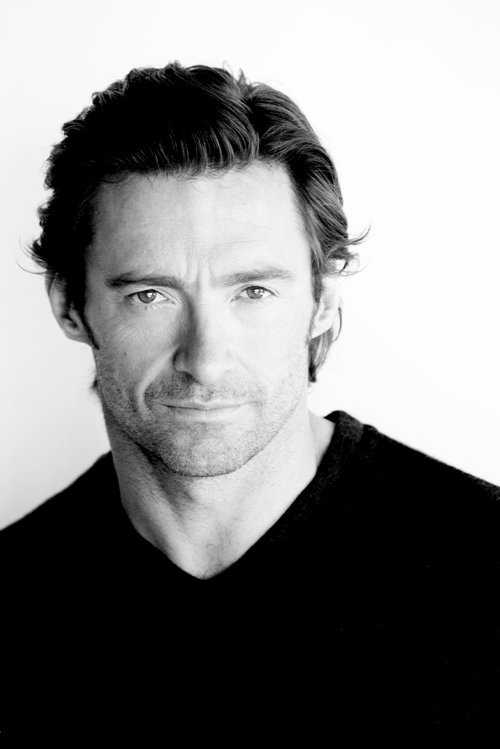
[Image courtesy: RealHughJackman (his twitter feed)]

Hugh Michael Jackman was born on this day in Sydney, New South Wales, Australia in 1968. He is 44 years old.

The youngest of five ankle-biters, Jackman was raised by his father when his parents divorced. Jackman was eight-years-old at the time. He grew up with a love of the outdoors and enjoyed camping and playing on the beach. His first brush with acting was in My Fair Lady in Knox Grammar School at 17. He earned a degree in Communications at the University of Technology, Sydney in 1991. To finish up his university work he took some acting classes and found his muse.

After finishing a one-year intensive course called “The Journey” at the Actor’s Center in Sydney he hopped coasts to Perth to attend the Western Australian Academy of Performing Arts at Edith Cowan University.

Promotional still from Correlli . [Image courtesy: IMDb]

Almost immediately after graduating from ECU he was offered the part of  Kevin Jones in a 10-part prison drama on Australian Broadcasting Company’s (ABC) Correlli. Jackman began dating  his future wife, the series star, Deborra-Lee Furness on the show’s set.

After Correlli Jackman hit the stage for the Melbourne based productions of  Beauty and the Beast (as Gaston) and Sunset Boulevard (as Joe). Back in the cinema he was in the Australian indie films Erskinesville Kings and the rom-com Paperback Hero. He also did a smattering television guest spots on the ABC.

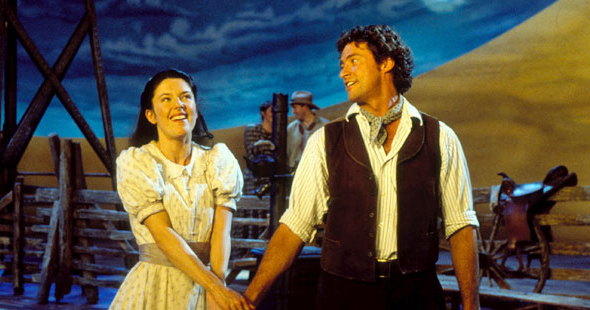
Still from the filmed staged production of Oklahoma! [Image courtesy: Great Performances]

His big international break came as Curley in Trevor Nunn’s reboot of Rodgers & Hammerstein’s “Oklahoma!” Jackman won an Oliver Award for his work in the musical.

Don’t mess with this man! Jackman snagged the #1 spot in the Top Ten Hollywood Heroes List on Netscape Celebrity’s pole, beating out Matt Damon, Tom Cruise and Brad Pitt. [Image courtesy: Netscape Celebrity]

Then came the role that changed everything. Wolverine. He’s played the Clawed One in five movies now (he holds the record for an actor playing the same super ‘hero’ in the most movies.)  The X-Men franchise was hugely popular and found an audience across genres and generations.

He followed up rough and hairy Wolverine with the role of refined and charming Leopold Alexis Elijah Walker Thomas Gareth MountbattenDuke of Albany in the time travel rom-com Kate and Leopold.

Jackman switched gears again, next appearing as a ex-con computer hacker who unwittingly gets involved in John Travolta’s crime circle in Swordfish.

Local advertising for the musical The Boy from...

Local advertising for the musical The Boy from Oz starring Hugh Jackman in New York City, 2004. Cropped from original. (Photo credit: Wikipedia)

In 2004 he won a Tony Award for his portrayal of fellow Aussie Peter Allen  in The Boy  from Oz. He hosted the Tonys for three years running (’03, ’04, and ’05) and won an Emmy Award for his emcee work in ’04.

He reprised Wolverine in X2: X-Men United, then starred as Gabriel Van Helsing in the rather ridiculous (and IMO dismal) Van Helsing.

He fared better as one of a pair of dueling magicians (Christian Bale was the other) in The Prestige in 2006. It didn’t hurt the movie that David Bowie added his talents as Nikola Tesla.

Personally, I liked the weird and romantic The Fountain. It was a big, strange, time traveling ride, and I just went with it. I thought Jackman and co-star Rachel Weisz had a lot of movie charisma and, for me at least, it worked. NOT so much for his next film Scoop.

Scoop should have been good. It starred the equally like able Scarlett Johanson and was written and directed by Woody Allen. It is supposed to be a comedy/ mystery hybrid but it isn’t funny and it isn’t suspenseful, and there was very little chemistry between the stars. So sad.

His star took a mediocre swing up again with X-Men: The Last Stand. He was good again as the muscled, intense Wolverine. But not a lot of new territory was covered character wise in the this, the third installment of the franchise.

Then my Hugh Jack admiration took a real dive. He provided the voice for two animated movies. He adopted a strange (southern?) accent to play Memphis, the father emperor penguin to Elijah Wood’s tap dancing Mumble in Happy Feet. Then he played a rat who gets flushed down the pipes in Flushed Away. Human again he played Wyatt Bose in the “thriller” Deception.


Cover of "Australia"

Cover of Australia

Baz Luhrmann’s Australia gave Jackman a chance to star in an epic, big budget, old-fashioned, romantic movie. It is very Luhrmann in style, and the director wisely lets Jackman’s natural Aussie charm shine through the rough and tumble character of the Drover . (Though, for the record, Brandon Walters, as Nullah, steals the show.) With the unforgiving but beautiful outback as the title character, and the  nicely filmed attack of Darwin,  Australia worked.

He was in the ensemble comedy Butter and played a down on his luck boxer in the heart warming Real Steel both of which that came out last fall.

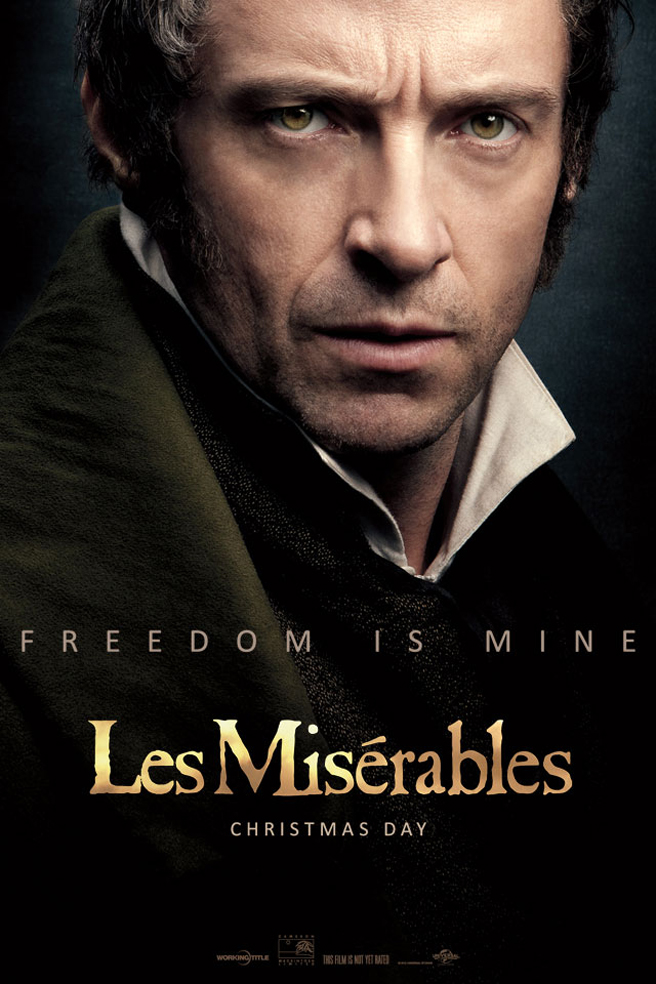
Jackman has several projects upcoming including his role as Jean Valjean in Les Miserables coming out this Christmas.

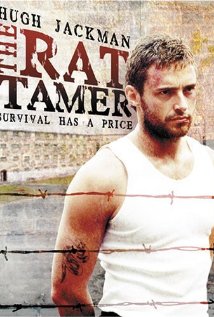
[Image courtesy Joblo’s Movie Posters]


Thought of the Day 10.11.12 Eleanor Roosevelt

  [Eleanor Roosevelt is such a hero of mine, I’m thrilled to write this bio.]

“Great minds discuss ideas, average minds discuss events, small minds discuss people”

“Do what you feel in your heart to be right, for you’ll be criticized anyway.”

“No one can make you fell inferior without your consent.”

“Remember always: That you not only have the right to be an individual, you have an obligation to be one.”

“You must do the thing you think you can not do.”

–Eleanor Roosevelt

Eleanor Roosevelt at Waldorf Astoria Hotel in ...

Eleanor Roosevelt at Waldorf Astoria Hotel in New York City – NARA – 195324 (Photo credit: Wikipedia)

Anna Eleanor Roosevelt was born on this day in New York City, New York, USA in 1884. Today is the 128th anniversary of her birth.

She was the niece of one US president and the wife of another. She grew up with immense wealth and great personal sorrow. She was a quiet, shy child, so serious that she was nicknamed “Granny”. Her mother died when she was eight of diphtheria. Just months later both her brothers contracted Scarlet fever, one, Elliot, died. Her father died two years later.  Orphaned she went to live with her grandmother Mary Ludlow Hall. She was privately tutored until 15. Then she was sent to a finishing school near London, England called Allenswood. It was a progressive school where Eleanor was said to be studious but popular. At Allenswood she learned self-confidence.

“During her time at Allenswood, Roosevelt came out of her shell of childhood loneliness and isolation. She thrived both academically and emotionally. ” [New World Encyclopedia]

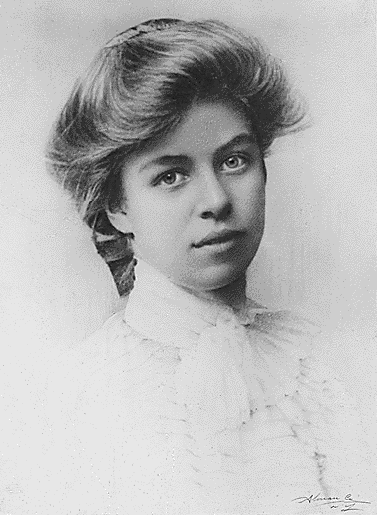
Eleanor in 1898 at school in England. [Image courtesy: New World Encyclopedia.]

Eleanor (she always preferred to be called by her middle name) was presented to society on December 14, 1902 at the Waldorf-Astoria hotel in New York City. As a young woman she volunteered with the New York Junior League and worked in the city’s slums. She taught dancing and calisthenics to children and was a member of the Consumers League (a group that investigated sweatshop conditions in the city.) It was a connection with the poor that she would continue through her life.

She met Franklin D. Roosevelt later that year. He was her fifth cousin, they got engaged in 1904 and married on St. Patrick’s Day of 1905. President Theodore Roosevelt gave away his niece.

When Franklin entered politics Eleanor became his partner in “it” as well. Her role shifted, “I simply knew that what we had to do we did, and that my job was to make it easy.”  During World War I she “threw herself into wartime relief.” She worked for the Red Cross and helped with Navy Relief. Her work was outside the scope of what she had done to promote her husband’s career, and, she later noted “I … gained certain assurance as to my ability to run things, and the knowledge that there is joy in accomplishing good.”  [The Eleanor Roosevelt Papers Project]

Franklin D. Roosevelt and Eleanor Roosevelt wi...

She had an infamously difficult relationship with her mother-in-law Sara Delano Roosevelt. Franklin was very attached to his mother and the lived in one of her houses. The tide turned when Franklin contracted Polio, Eleanor realized that she had to “stand on her own two feet in regards to her husband’s life, her own life and the rearing of her children. ” [Franklin d. Roosevelt Presidential Library and Museum]

Together she and Franklin had six children: Anna Eleanor, Jr. ; James (after Franklin’s father James); Franklin Delano, Jr (who died as an infant); Elliott (after Eleanor’s father); Franklin Delano, Jr (the second son named for Franklin); and John Aspinwall.

Franklin D. Roosevelt, Eleanor Roosevelt, Sara...

Franklin D. Roosevelt, Eleanor Roosevelt, Sara Delano Roosevelt, and Mr. and Mrs. James Roosevelt in New York City… – NARA – 197052 (Photo credit: Wikipedia)

Although Eleanor never sought elected office she was surely America’s FIRST LADY.

“While she neither drafted legislation nor held elective office, she worked with other reformers outside and inside the administration to shape the contours of the New Deal.” [Franklin d. Roosevelt Presidential Library and Museum]

She also wrote  a syndicated column “My Day” six days a week  from 1935 til her death. It was her bully pulpit for social issues.

English: Franklin D. Roosevelt Presidential Li...

After Franklin’s death she was

“…Selected to be a delegate to the United Nations General Assembly, serving from 1945 to 1953. She also became the chair of the UN’s Human Rights Commission. As a part of this commission, she helped to write the Universal Declaration of Human Rights.” [Biography]

English: Former U.S. First Lady Eleanor Roosev...

English: Former U.S. First Lady Eleanor Roosevelt with the English version of the United Nations Universal Declaration of Human Rights Italiano: Mrs. Eleanor Roosevelt, moglie del presidente degli Stati Uniti, mostra la Dichiarazione in formato poster (1949) (Photo credit: Wikipedia)

She wrote about her experiences in 1937’s This Is My Story;  1949’s  This I Remember;  1958’s On My Own; and 1961’s Autobiography.

President Kennedy asked her to serve as chair of the Commission on the Status of Women and made her delegate to the UN in 1961.

Eleanor Roosevelt


Thought of the Day 10.10.12 Lin Yutang

“If you can spend a perfectly useless afternoon in a perfectly useless manner, you have learned how to live.”
-Lin Yutang

English: Lin Yutang 中文: 林语堂

English: Lin Yutang 中文: 林语堂 (Photo credit: Wikipedia)

Lin Yutang was born on this day in Banzai, Fujian province, China in 1895. today is the 117th anniversary of his birth.

China provinces fujian

China provinces fujian (Photo credit: Wikipedia)

He grew up in the mountains of Fujian province the son of a Chinese Presbyterian minister. He studied at Saint John’s University, Shanghai and at Harvard University in the US. At first he studied to be a minister, but he renounced Christianity and pursued a degree in English instead.

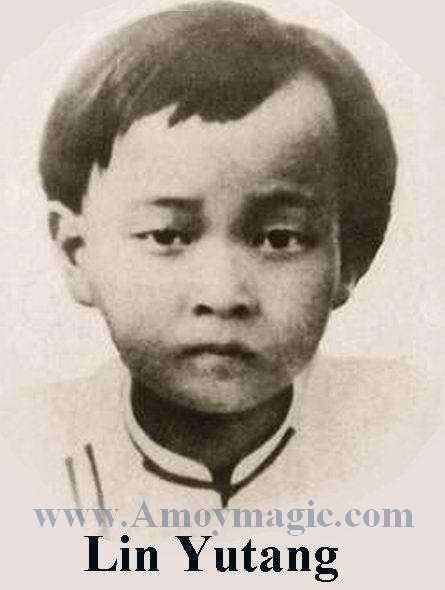
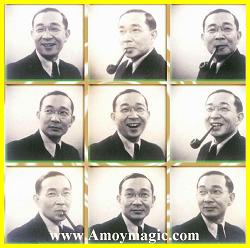
[Image courtesy: Amoymagic.com]

He bridged the cultural and linguistic divide writing and editing for both English and Chinese magazines and produced Lin Yutang’s Chinese-English Dictionary of Modern Usage.

His successful satirical magazine Analects Fortnightly was the first of its kind in China. In 1933 Pearl Buck introduced him to her publisher who took Lin Yutang on as a client.

English: Lin Yutang (Lin Yü-t'ang) (1895 - 197...

English: Lin Yutang (Lin Yü-t’ang) (1895 – 1976) 日本語: 林語堂 (1895 – 1976) ‪中文(简体)‬: 林语堂 (1895 – 1976) ‪中文(繁體)‬: 林語堂 (1895 – 1976) (Photo credit: Wikipedia)

In 1935 he moved to the US.

Lin published the first of his many English-language books, My Country and My People. It was widely translated and for years was regarded as a standard text on China. [Britannica.com]

He moved to New York and published Moment in Peking in 1939. His 1941 novel  A Leaf in the Storm, presents China on the brink of war with Japan. Wisdom of China and India  followed in 1942.

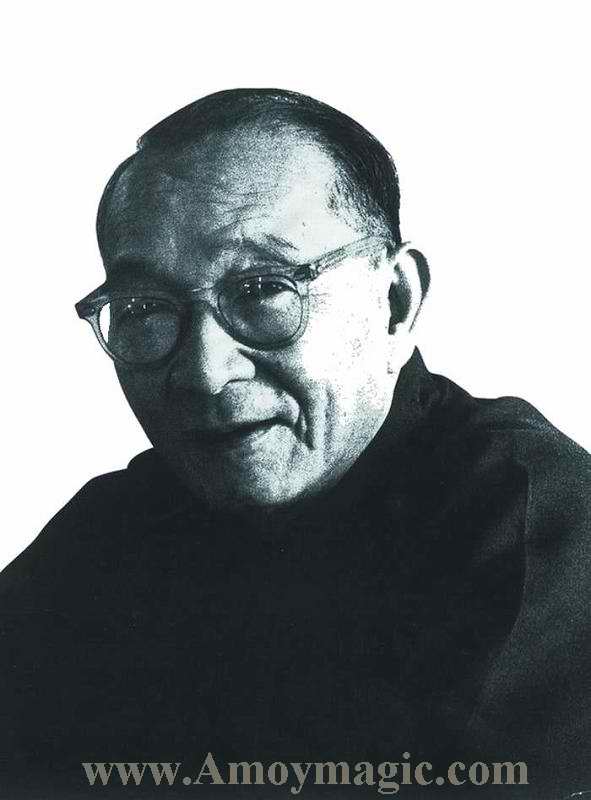
[Image courtesy: Amoymagic.com]

Lin’s fiction includes Chinatown Family — a look at culture, race and religion faced by an immigrant Chinese American family; and his 1968 The Flight of the Innocents.

Ming Kwai Typewriter

Ming Kwai Typewriter (Photo credit: Wikipedia)

During the WWII Lin developed a workable Chinese typewriter, the “Ming Kwai” typewriter.

His belief that literature should be a means of self-expression, not a tool for propaganda put him at odds with political movements in China when he returned to his homeland in 1943 and 1954.

Lin wrote more than three dozen books and is “arguably the most distinguished Chinese American writer of the twentieth century.” [Google Books] He died on March 26, 1976.

[Image courtesy: Amoymagic.com]

 “In his prolific literary career, Chinese author Lin Yutang wrote expertly about an unusual variety of subjects, creating fiction, plays, and translations as well as studies of history, religion, and philosophy. Working in English as well as in Chinese, he became the most popular of all Chinese writers to early 20th-century American readers.” [Britannica.com]


Mangahoota [a special fiction post]

[Since I will be AFK (Away From Keyboard) I thought I’d share the following short children’s story called “Mangahoota.” My daughter was kind enough to do the wonderful images. (I especially love the author/illustrator image at the end.) Needless to say this is copyrighted material and may not be duplicated in any form. Same goes for the illustrations. ]

———————————————————————————————————

Mangahoota

by Rita Baker-Schmidt, illustrations by Maggie Schmidt


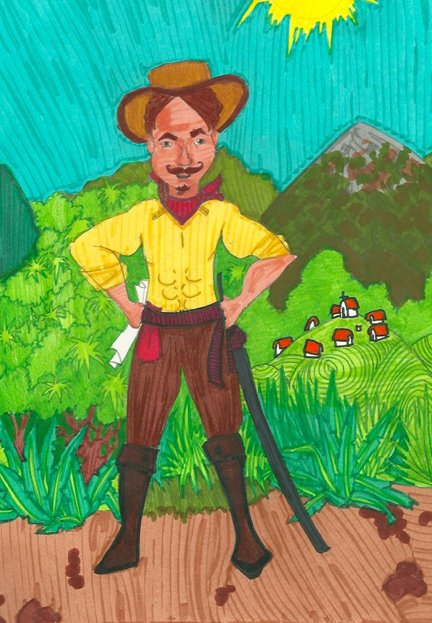
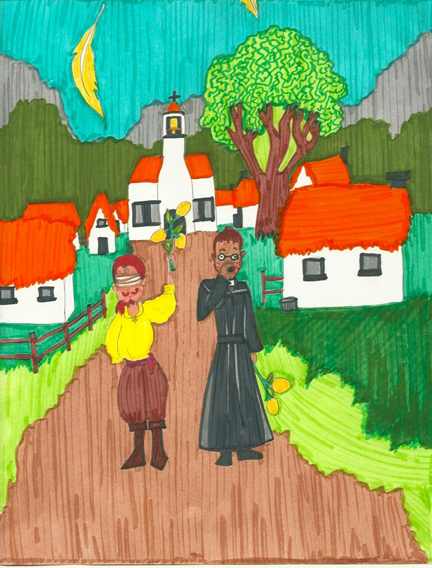
There once was an explorer named Juan Diego Benetiz Jorges Alanzo Perez. He loved to explore the wild and wonderful jungles of the Mexican country side. One day he was walking through a field, eating a mango, when something fell– plop– right on his head. It hit Juan with such a force that the poor man was knocked out cold.

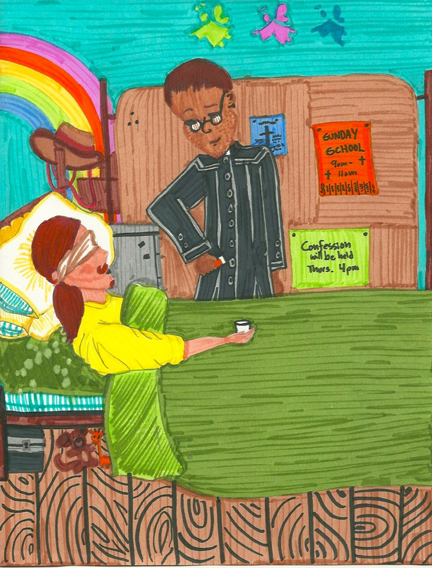
When he woke up there was a bandage across his eyes. He couldn’t see and he had a terrible headache. “Please, Please, where am I?” Juan asked in Spanish.

“Senior, you are in my hospital.” Brother Christos put a gentle hand on the man’s arm. “You had a terrible blow, but you will be all right.”

“All right? I can’t see!”

“That is because your eyes have been bandaged.” Brother Cristos told him, “In a few days we will take off the bandages and you will be all better.”

Brother Christos stayed with Juan for a little while and then he left to go to Mass. But, before he left he promised Juan he would visit him again just before evening prayers.

Juan fell back asleep. He had odd dreams of gigantic flying creatures. He woke with a start. There was a thunderous sound outside. “Bam, Bam! Bam, Bam!” The whole hut shook! But, then a second later a softer “Bam, Bam,” came, and a tiny “Ouch.”

“What is that?” Juan called out, but he was the only one in the hospital that day so there was no one to answer he question.

When the good brother came back that evening he asked Juan if he had gotten any rest.

“I did rest” Juan told him, agitated, “but then I was awaken by a terrible noise.” He described it to Brother Christos.

Because the bandages, Juan could not see Brother Christos smile.

“Did we have an earth quake, Brother?”

“Oh, no.” Brother Christos said calmly, “That was only Mangahoota.”

“What on Earth is Mangahoota?” Juan demanded.

“It is a creature that lives in this area.” Brother explained. “It is usually very sweet and gently, but I’m afraid he lost his control yesterday and he fell from the sky.” There was a note of apology in the holy man’s voice. “That is how you got hurt, you see. Mangahoota fell on you.”

“A bird that is big enough to knock a man cold?”

“Oh, not a bird exactly, but yes, it is quite big.” Brother Christos told him.  “It is a difficult thing to explain.”

The next day, when Juan was sitting in the garden of the hospital, enjoying the warm sun on his bandaged face, it happened again. There was an enormous swooshing sound and then “Bam, Bam!” The Earth shook and the water spilled from his glass, “Bam, Bam!” Then softer “Bam, Bam, ouch”

“Help!” Juan cried in horror. “Help! Help! That Mangahoota is trying to get me! Help!”

The Mangahoota must have been frightened by the tone in Juan’s voice because it flew away again immediately.

Brother Christos came running. “What it is Senior? Are you all right?”

“That beast, that Mangahoota swooped down on me again!” Juan cried. “Take me inside, Brother, please.”

“But, senior, I assure you the Mangahoota is a loving animal. It will not hurt you.”

Juan pointed to his bandages, “It has already hurt me!” He said angrily, “Now, Please, I beg you, take me inside.”

“That was an accident.” Brother Cristos said soothingly, but he obliged Juan and walked him into the hut. “Forgive me Senior,” He said gently,  as he helped the explorer sit down “I am a bit confused.”

“Why is that Brother?” Juan asked. He was much calmer now that they were inside.

“I thought you were an explorer.”

“I am an explorer.”

Brother Cristos fluffed his pillow. “I see.” He said patiently.

“Why?”

The Holy man poured Juan a drink of cool water and put it in his hand. “Humm?”

“Why did you ask me if I was an explorer?”

“It is only that I thought that explorers liked to learn new things.” He said quietly.

“We do.” Juan told him. “We love to learn new things. That is what we live for!”

“Ahhh.” Brother Christos nodded. He sat down in the chair opposite Juan.

“‘Ahhh’ what?” Juan asked. He wished Brother Christos would just come out and say what was on his mind.

“Well… here you are a man who loves to explore new things, and out there is the Mangahoota, a new thing to you, and yet….”

Juan was quiet.

“I understand your hesitation, Senior. It must have been frightening.”

Juan grabbed at the brothers sleeve. “It was! It is a terribly frightening thing to have a Mangahoota land on your head.”

“I’m sure.” Brother Christos patted his arm. “And you just frightened the Mangahoota by shouting so fiercely. So perhaps it would be best if you didn’t meet.” He pushed himself off his chair and went to leave the room. “You are right, Senior. A meeting would be a bad thing.”

Juan thought for a long time about what Brother Christos had said. He was an explorer and this was a new and strange thing. He’s instincts as a man of knowledge kicked in and curiosity replaced his fear. By the time Brother Christos returned after evening prayers Juan had made up his mind to meet the beast.

The next day Brother Christos walked Juan into the bean field by the mission. When they stopped he handed Juan a bunch of mangos. “What is this?” Juan asked.

“Those are mangoes. Mangahoota loves mangoes.” He held Juan’s hand so it was straight out then he brought it in a slow arch above his head and back down again. “You must wave the mangoes like this, Senior.”

Juan did as he was instructed. “Like this Brother?”

“Yes, but a little faster.” Brother Christos told him. “And you must call him to  you, Senior.”

Juan stopped waving. “How?”

“You must wave your mangoes and call in a loud voice ‘Mangahoota, Mangahoota, come and get them, Mangahoota.”

Juan thought he must be joking.

“Please, go on Senior, or he may not come.”

Feeling silly, Juan waved the bouquet of mangoes over his head and called out “Mangahoota, Mangahoota, come and get them, Mangahoota.”

And from high above the mountains came the swoosh, swooshing sound of enormous wings. Then, “Bam, Bam…Bam, Bam…” and more quietly “Bam, Bam,” and just a whisper of a sound “Ouch.”

The Mangahoota clip-clopped over to them and took a nibble of the mangoes. Sweet smelling, sticky, mango juice pored over Juan’s hands as the creature ate. “Does he like them, Brother?”

Brother Christos laughed as the Mangahoota bent over and gave Juan a sticky lick of a kiss. “Oh, yes, Senior, as I say, they are his favorites.”

They spent some time in the field with the Mangahoota. Both Juan and Brother Christos kept their voices calm and soothing. And the Mangahoota let Juan pet his long fur covered body.

Juan could tell that the creature had long legs with big knobby knees. He had enormous wings, of course, which he kept tucked in against his body. And he had a long muscular neck. His neck was so long that Juan couldn’t reach the top unless the Mangahoota bent down.  But Juan couldn’t form a picture of the Mangahoota in his mind’s eye.

As the Mangahoota flew away and the men walked back into the compound of the mission Juan turned to Brother Christos. “I must know what a Mangahoota looks like.”

“Tomorrow,” Brother Christos told him, “We will take the bandages off, and if you are strong enough we will take our walk outside and you can call him again.”

Juan tried to sleep that night, but he couldn’t keep his mind off the Mangahoota. In the morning Brother Christos came to him and, as promised cut away the bandages.

It took a minute for Juan’s eyes to register his surroundings. The simple thatched hut with the crucifix on the wall, the four camp beds made up with white linens, and the kind young man who had been his doctor smiling at him. Juan smiled back. “Lets go.”

Brother Christos nodded to the bedside table. There were two bouquets of mangoes.

“I must warn you Senior,” Brother Christos told him, “the Mangahootas are very unusual creatures.”

“I should say so!” Instead of the monk helping support Juan, he was being pulled by him. They walked to the middle of the field.

“So unusual that you must employ all of your powers of imagination to see him as he is.”

“I understand. Don’t worry Brother, I have a very good imagination.”

Brother Christos smiled at him and gave him some mangoes.

With out hesitation Juan waved them frantically over her head. “Mangahoota, Mangahoota, come and get them Mangahoota!”

No creatures emerged.

“Mangahoota, Mangahoota, come and get them Mangahoota!” Juan looked at the monk. “Perhaps he doesn’t recognize me with out my bandages.

“We will both try, Senior.” And, holding his robes so he wouldn’t trip, he waved his too mangoes in the air.

“Mangahoota, Mangahoota, come and get them Mangahoota!” They both called. “Mangahoota, Mangahoota, come and get them Mangahoota!”

Then they saw him. Flying high over the mountains, so big that for a second he blocked out the Sun.

“Mangahoota, Mangahoota, come and get them Mangahoota!”

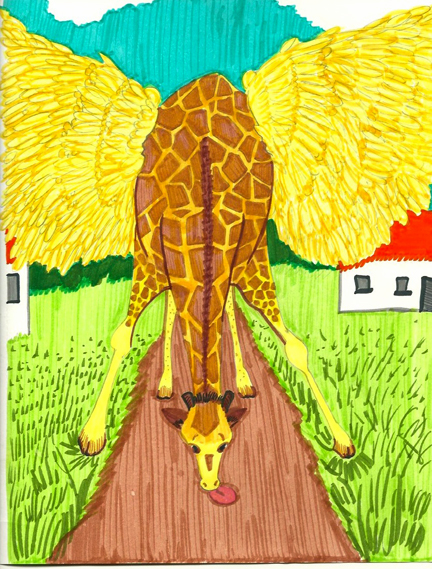
It flew lower over the field. Then with a ground shaking “Bam, Bam” its front hooves hit the ground. “Bam, Bam” the back hooves touched down. Then  a slow unforgiving arch of unstoppable motion bent his long neck and with a  softer, “Bam, Bam” the knobs on the tops of the Mangahoota’s short antlers tapped the ground, and the creature gave a soft, childlike “Ouch.”

It shook away the small pain and  brought its face up to the mangoes. It began to eat, showering Juan and Brother Christos with mango juice. They laughed out loud. When he had devoured the mangoes he eyed them with his big giraffe eyes and lowered his sweet face first to Juan and then to Brother Christos and administered a lick of appreciation.

Later, as the giant animal took flight, Juan turned to Brother Christos. “Why didn’t you tell me a Mangahoota is a flying giraffe?”

“Some times it is better to believe without seeing, Senior, but some things are better believed when seen. The trick,” the young man smiled at Juan, “Is to know which is which.”

The End.

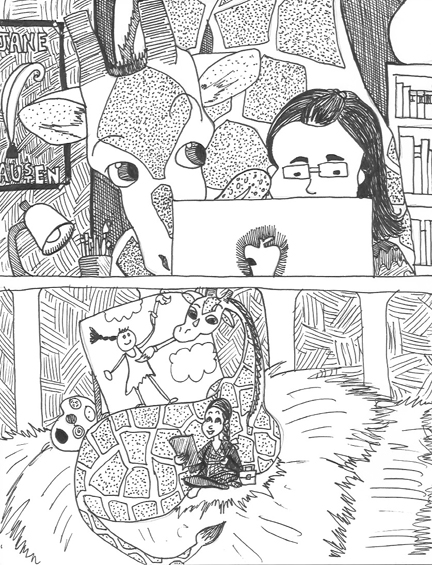
Rita is a writer, designer, musician, animal lover and Austen enthusiast. She thinks her daughter is extra awesome for doing these illustrations. 
 
Maggie is an aspiring educator, perpetual doodler and actress. 

Thought of the Day 10.8.12 B Frank Herbert

Hi — Trying this again as I’m not sure why the top half of this bio got clipped yesterday (or why it was centered?). I also changed the top photo — which I think might have been the problem. 😦

_________________________________________________

“There is no real ending. It’s just the place where you stop the story.”
–Frank Herbert

Cover of "Dune [Blu-ray]"

Cover of Dune [Blu-ray]

Frank Herbert was born on this day in Tacoma, Washington, USA in 1920. Today is the 92nd anniversary of his birth.

Frank’s mother came from a large Irish Catholic family (10 girls; 3 boys) (his invention of the Ben Gesserit for the Dune universe was likely an off shoot of the deep influence this gaggle of Aunts had on young Herbert’s life.) Frank’s father was a bus driver,  security guard, salesman, motorcycle patrolman and farmer. The family did a lot of traveling around before they settled on the farm.

Young Frank knew what he wanted be early in life.

On the morning of his eighth birthday Frank Junior famously announced to his family: “I wanna be a author.” (sic.) That day he wrote his first short story, which he called “Adventures in Darkest Africa.”  [Frank Herbert: The Works]

He was an explorer who thought nothing of paddling solo around Puget Sound to the San Juan Islands and back (200 miles) when he was ten or swimming across the Tacoma Narrows. He was also a great reader. “By the age of 12 he had, incredibly, already read the complete works of Shakespeare and discovered Ezra Pound.” [Frank Herbert: The Works]

Both Herbert’s parents were alcoholics and their drinking worsened as Frank entered his teen years. His sister, Patricia, was born when Frank was 13  and he took on parenting duties. By 1935 his parents were on the verge of a divorce. During high school he worked at his writing. He wrote short stories — he even wrote  novel, a boilerplate western, that he published under a pen name. He got a part-time job at the Tacoma Ledger. But by November of 1938 the situation at home had become too much. He left home with his baby sister and went to live with an aunt and uncle in Salem, Oregon. He graduated from North Salem High School and became a newspaper journalist. After a stint as a Photographer in the US Navy during WWII (he received a medical discharge because of a cranial blood clot he  developed after a fall)  he returned to Oregon and worked as a copy editor for the Oregon Journal in Portland. He worked for a number of west coast newspapers in a variety of cities for next two decades.

Besides his work in journalism: he lectured at University of Washington; he was a social and ecological consultant in Vietnam and Pakistan; and he wrote, directed and produced the documentary “The Tillers” based on the work of Roy Posterman.

[Image courtesy: Poor William’s Almanack]

Success on the fiction front was more difficult to come by. He had short stories published — his first was “The Survival of the Cunning,” a war story published in Esquire magazine.  In 1952 Herbert published his first science fiction story, “Looking For Something,” in Startling Stories. It is about a stage hypnotist who discovers that the entire world is under alien hypnosis. Other short stories followed, but no publishers seemed interested when Herbert showed them Dune.

The Dragon in the Sea
The Dragon in the Sea (Photo credit: Wikipedia)

In 1956  Herbert’s first novel, The Dragon in the Sea was published. It had been serialized in Astounding Magazine as”Under Pressure“.

 “he used the environment of a 21st-century submarine as a way to explore sanity and madness. The book predicted worldwide conflicts over oil consumption and production. It was a critical success, but it was not a major commercial one.”  [Biblio.com]

While working on an article about sand dunes for the US Department of Agriculture in Florence, Oregon he got the idea of a sand dune so big that it could swallow up whole cities. In 1965, Dune was finished, a labor of love more than six years in the making. It was serialized in the magazine Analog then largely revised and expanded into book form. It was rejected 20 times before little Chilton Books — an auto repair manual publisher —  took a chance on it.

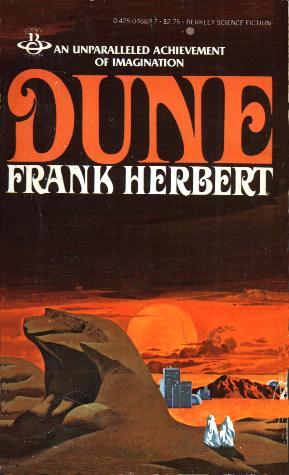
Dune cover art [Image courtesy: Book Wit]

Dune won the very first Nebula Award and was the co-winner of the Hugo Award. Published in 1965 it sets the scene for the Dune Series that follows — a series that is often considered the Lord of the Rings of Science Fiction. “Set on the desert planet Arrakis, Dune is the story of the boy Paul Atreides, who would become the mysterious man known as Muad’Dib. He would avenge the traitorous plot against his noble family–and would bring to fruition humankind’s most ancient and unattainable dream.” [Amazon.com review]

” Dune was the first ecological science fiction novel, containing a multitude of big, inter-relating themes and multiple character viewpoints, a method which ran through all Herbert’s mature work. ” [Biblio.com]

Dune Messiah hit stores in 1969.   Children of Dune (1976)  was the first hardcover science fiction book to reach best-seller status. It was nominated for a Hugo Award.   And the spice kept flowing… God Emperor of Dune,  came out in 1981, followed by Heretics of Dune in 1984 and Chapterhouse: Dune in 1985.

Frank Herbert died of pancreatic cancer in 1986. But the Dune series lives on…Using Frank Herbert’s notes his son  Brian Herbert has co-authored additional Dune sequels with Kevin J. Anderson.

Frank Herbert Books
Frank Herbert Books (Photo credit: cobalt123)

Related articles