Thought of the Day 6.8.12 Frank Lloyd Wright

“I’m all in favor of keeping dangerous weapons out of the hands of fools.
Let’s start with typewriters.”

–Frank Lloyd Wright

Today is Frank Lloyd Wright’s birthday, he would have been 145 years old.English: Frank Lloyd Wright, American architec...

English: Frank Lloyd Wright, American architect, portrait, head and shoulders, facing right. (Photo credit: Wikipedia)

[As a writer all I can say to that quote is “ouch.”]


Thought of the Day 6. 7.12 Nikki Giovanni

Nikki Giovanni

Nikki Giovanni (Photo credit: Tulane Public Relations)

I’m starting to post the Thought of the Day in the main section of the Blog (as opposed to as a Widget). What do you think?

“I really don’t think life is about the I-could-have-beens. Life is only about the I-tried-to-do.I don’t mind the failure but I can’t imagine that I’d forgive myself if I didn’t try.”

Nikki Giovanni
(Today is poet Nikki Giovanni’s birthday)


Will (and Jane) this Summer in B’more

Frankly, when the wonderful Baltimore Shakespeare Festival closed its doors last year I thought it was curtains for live classical theatre in Baltimore.

Then I discovered the Chesapeake Shakespeare Company. Their  summer venue under the stars at the old Patapsco Female Institute in Ellicott City is a bit of a drive, but this is SHAKESPEARE!

The CSC announced this spring that it has found a new indoor facility in downtown Baltimore. The  Merchantile Trust and Deposit Company building on East Redwood will allow for an eight month production schedule as well as extended educational programs. And they’ll continue with their summer tradition of performing alfresco at the PFI.

This summer the troupe will present two of the greatest love stories ever written. Huzzah!

Mass-produced colour photolithography on paper...

Photolithography on paper for Toy Theatre; Romeo and Juliet  (Photo credit: Wikipedia)

Catch the Bard’s star crossed lovers Romeo and Juliet as the CSC open’s its season this weekend (June 8, 9 & 10 is opening weekend). Two R&J has another full weekend then it begins to run in repertory with CSC’s other summer production…

PRIDE AND PREJUDICE

The most famous of Jane Austen’s novel’s Pride and Prejudice takes stage June 22nd. There’s a special REGENCY WEEKEND to launch P&P (June 22, 23 & 24).

There is a strong argument for READING Austen. But when it is performed really well, and really faithfully I love it too. I got to see EMMA performed last winter in PA, and it was delightful. And, of course I’ve seen every Austen film out there from the A&E Pride and Prejudice with Colin Firth to the Bollywood inspired “Bride and Prejudice”. I doubt there will be any wet shirts on stage at the CSC but knowing the caliber of their productions I have very high hopes for this stage version of P&P.

Try and come during Regency Weekend. There will be a costume booth where you can try on period outfits, English Line Dancing, a talk on “Kitty and Lydia” with some  JASNA;MD folks (on Sunday) and Jane Austen trivia with me on Saturday!  (If you can’t make opening weekend the show runs in repertory with Romeo and Juliet until July 29th.

For tickets to the Romeo and Juliet or Pride and Prejudice you can go to http://www.chesapeakeshakespeare.com/tickets.html

English: This diagram, or map, illustrates the...

For anyone who has stumbled upon this post and DOESN’T know the plot of Pride and Prejudice… this might help.  (Photo credit: Wikipedia)

And there’s more good news on the Shakespeare front. The Baltimore Shakespeare Factory, which had been performing in Carroll County has moved to Charm City and taken over the Meadow at Evergreen Museum this summer.

The Baltimore Shakespeare Factory presents the Cannon as it would have been done in Bard’s day, in natural light (so the actors can see the audience as much as the audience can see the actors), minimal sets and contemporary music. We saw their Macbeth this spring and it was nicely done, indeed.

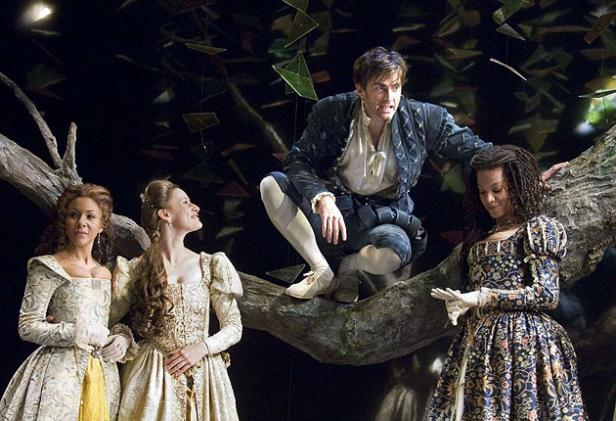
That’s the Doctor up in the tree, btw. He won’t be in the BSF’s performance, but how cool is that?

They will be doing Love’s Labour’s Lost from July 13 – Aug 5, and

the Taming of the Shrew from Aug 2 – Aug 26.

I have yet to see either of these to plays live so I’m very much looking forward to packing a picnic and heading to Charles Street to catch these.

For information on the Baltimore Shakespeare Factory go to  http://theshakespearefactory.com/

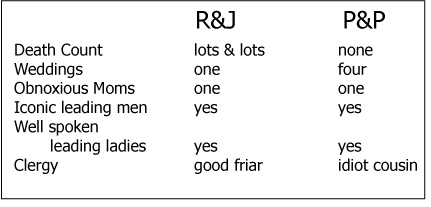
So in summary… Your summer should be filled with lots of great Shakespeare and Austen.

Breakdown:

Hope to see you under the stars this summer.

————————————

BTW here’s my list of must brings to an alfresco theatre production: HAT, Sunscreen & Sunglasses (if its during the day), bug repellant, bottle of cold water, lawn chair or blanket, light sweatshirt/jacket (if its at night)  snack or picnic (optional), wine (optional), chocolate (optional, but always recommended.)


Literary references in Jane Austen’s Persuasion

The following is a talk I gave at the JASNA:MD winter meeting in Baltimore. (JASNA stands for Jane Austen Society or North America). It is written (and was given) in first person, as Jane. I didn’t feel up to presenting in front of a room full of JA scholars as just little ole me. The numbers at the beginning of some of the paras refer to where the allusions fall in novel. 
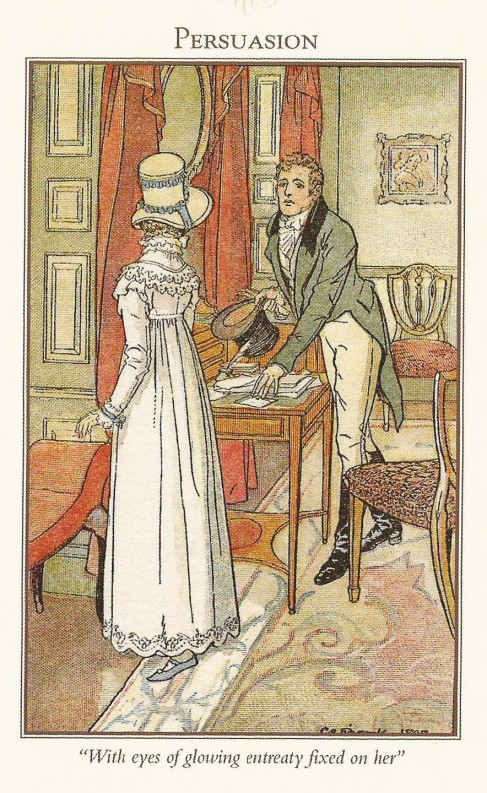
Image


The last novel I completed was Persuasion. It is shorter than my earlier works, and, perhaps because of my illness it is a bit less polished. The pace of Persuasion is uneven with some scenes being tight, brisk and full of information, while, I fear, others lumber along  like a country dance and take pages and pages in getting to the point. And I’m ashamed to admit that subplots and characters are unsatisfactorily deployed.  Alas it was left to my  dear brother Henry to publish it, along with Northanger Abbey, after I left this mortal plane in 1817.

Like many of my novels there’s an touch of the Fairy Tale lurking in the plot. Persuasion and Mansfield Park both owe a bit to Cinderella. Anne Elliot is treated as a “nobody” through out the book by her ridiculously vain father, Sir Walter, and her sisters, Elizabeth and  Mary.  There maybe no pumpkin or glass slipper, but, dear reader, rest assured there is a ‘prince’ at the end.

1.1

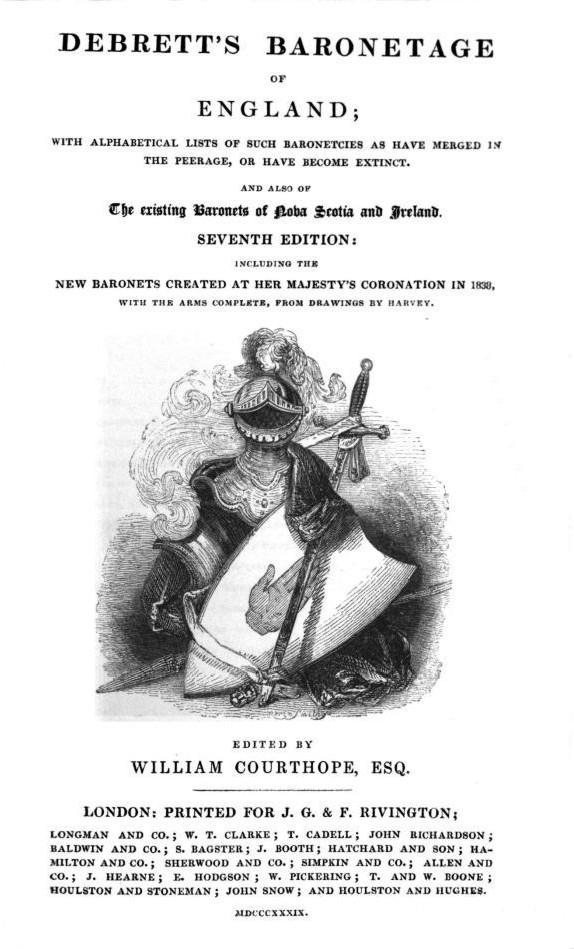
My first literary allusion is to John Debrett’s Baronetage of England. The Baronetage is Sir Walter’s favorite book, indeed it is the only book he ever reads. It is almost always open to page on the Elliot’s of Kellynich Hall.  The book is a genealogical guide to the British Ton, a Regency Who’s Who of the Peerage. Inclusion in the book reinforces Sir Walter’s very high opinion of himself.  And although HE is quite fictional, I am afraid to say there are those of my acquaintance who spend more time turning the leaves of the Baronetage than those of the Good Book.
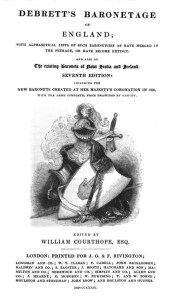
Here’s an ABBREVIATED listing from the REAL Baronetage:

 Barrington, of Barrington-Hall, Essex. Created Baronet, June 29, 1611.

Ti/TR. Camden, in his Britannia, fays, * Barrington-Hall « the feat of that eminent family of the Barringtons, who, in the time of King Stephen, were greatly enriched with the estate of the Lords Montfitchct;  a match with the daughter and co- heir of Henry Pole, Lord Montacute…

By including the book’s fictionalized entry for the Elliot’s I cleverly introduce several of the novels main characters.

1.8 Another reference list appears in Chapter 8. We are at Uppercross. Captain Wentworth is having dinner with the Musgrove’s and Anne. The eldest Musgrove sisters, Louisa and Henrietta pull out the Navy List to find out which ships Captain Wentworth had commanded. It is a calculated move of flirtation on their part. He is looking for a wife, and any pretty girl who shows a passing interest in the Navy will be sure to catch his eye.
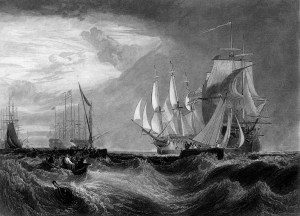
The Royal Fleet

Here’s an example of a real listing from the Navy List:

  • Wallib, Sir P. W. P., Mid. of “Cleopatra” when captured by the French frigate ” Villede Milan,” after a long action, 1805; Lieutenant of “Curieux,” and cut out a vessel in St. Ann’s Bay, Guadeloupe ; subsequently wrecked, in “Curieux” on the enemy’s coast…

So now you have it,  two list, the Baronetage and the Navy List. The  Linked-in and Facebook of the day if you please. By having a character read one verses the other I’m giving you a hint as to where their values lie. The older establishment members of society clung to the Baronetage, while the up and coming youngsters liked to read the Navy List.
1.10

While at Uppercross my characters take a long November walk. Captain Wentworth is deep in conversation with the pretty Miss Musgroves, and pays no attention to Anne. Her goal, as usual, is not to be in any body’s way, and any pleasure she is to get from the walk “must arise from the exercise” and the beautiful autumn day which she describes as “the view of the last smiles of the year upon the tawny leaves and withered hedges.”  You’ll forgive my gentle echos of the romantic poetry of Byron, Wordsworth and Scott, and the sonnets of Shakespeare. Anne is 27, and I wrote it when I was nearly 40, we are both in the Autumn of our lives — caution and reserve in love as young women has lead us to loneliness and regret as we’ve grown older — and it is particularly tender that we find solace from the beauty in a fall day, is it not?

1.11

The Literary Allusions really start sailing when the group travels to Lyme to visit Captain Wentworth’s  friends  Captain Harville and Captain Benwick. Benwick was to marry Harville’s sister Fanny but the young woman died while he was at sea. Benwick, heartbroken takes solace only in long walks along the cobb and in reading depressing poetry.  Anne, no stranger to self punishment, joins him in conversation about literature as they discuss Sir Walter Scott’s “The Lady of the Lake” and  his “Marmion: A Tale of Flooden Field”
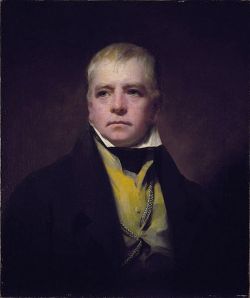
The Lady of the Lake is a narrative poem. Although it enjoys the same name of an Arthurian legioned it doesn’t share the same material as the Once and Future King.

“Marmion” tells how Lord Marmion lusts for the innocent Clara. Marmion  conspires with Constance a fallen nun, to implicate Clara’s fiancé, Sir Ralph De Wilton, in treason. De Wilton looses a duel goes into exile.  Clara takes refuge in a convent to escape Marmion’s advances. Constance is abandoned by Marmion and she ends up being walled – up – alive in the convent for breaking her vows. But she redeems herself by giving witness to De Wilton’s innocence. He returns and seeks his revenge at the Battle of Flooden Field.  Marmion dies in the combat, while De Wilton displays heroism … regains his honor … retrieves his lands … and marries Clara!  

Both poems are long and exciting, and were well known in in my circle, but “Marmion” has the added benefit of being about two lovers unjustly torn apart for years. Sound familiar?

So, Anne hopes to be of some use to her new friend by encouraging a “larger allowance of prose in his daily study.” She suggest works of the best moralists, … “calculated to rouse and fortify the mind.” … Then wonders ironically at her being able to preach patience and resignation when, after so many years of both, she is currently feeling very little of either.

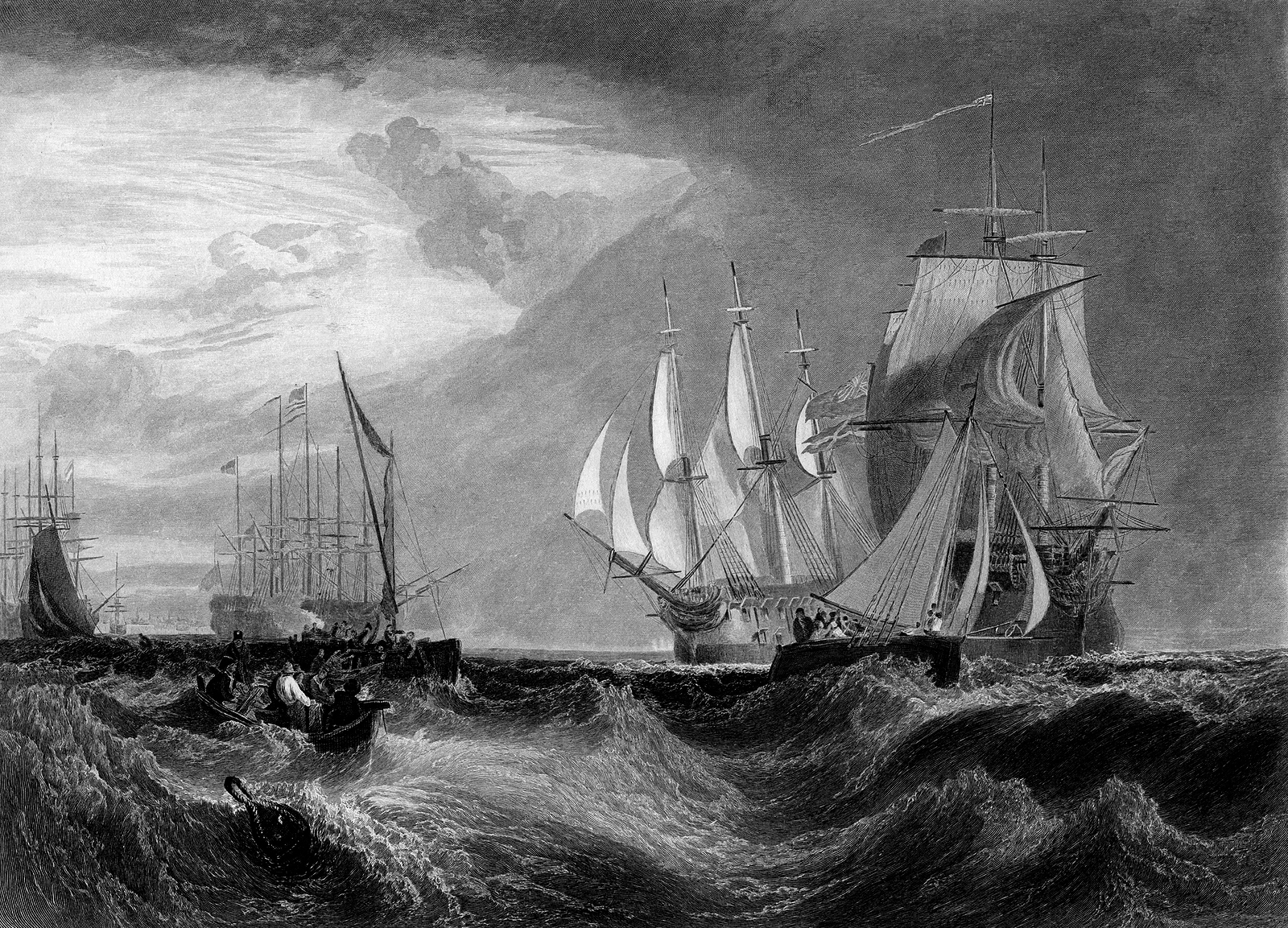
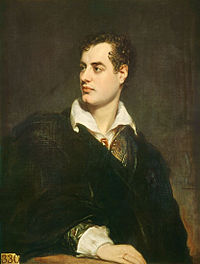
1.12 The next day as their party is taking their last walk along the Cobb, Captain Benwick draws near Anne. When he says “Lord Byron’s ‘dark blue seas’ could not fail of being brought forward by their present view.”  I’m alluding of course to Byron’s poem “Chile Harold’s Pilgrimage” …

He that has sailed upon the dark blue sea,
Has viewed at times, I ween, a full fair sight;
When the fresh breeze is fair as breeze may be,
The white sails set, the gallant frigate tight,
Masts, spires, and strand retiring to the right,
The glorious main expanding o’er the bow,
The convoy spread like wild swans in their flight,
The dullest sailer wearing bravely now,
So gaily curl the waves before each dashing prow.
 

… Anne and Benwick give their full attention to both poem and scenery until it is drawn away when Louisa is injured.
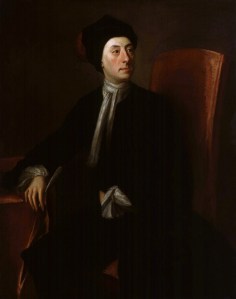
Mathew Prior

Anne attends to the invalid as others loose their heads. Anne, ever anxious to be of use, is ready to stay and nurse Louisa, who is now clearly Captain Wentworth’s favorite. The passage: “Without emulating the feelings of an Emma towards her Henry, she would have attended on Louisa with a zeal above the common claims of regard, for his sake…”  refers to Matthew Prior’s  “Henry and Emma”  a ballad based on the much earlier “The Nut-Brown Maid.”

As Beauty’s Potent Queen, with ev’ry Grace
That once was Emma’s, has adorn’d Thy Face;
And as Her Son has to My Bosom dealt
That constant Flame, which faithful Henry felt:

2.3

In the second volume of the novel I move the action, alas, to Bath. Here my critical eyes are wide open and looking everywhere as I skewer society’s witless and vain. With the Elliots I find easy fodder. In Chapter Three Mr. Elliot, Anne’s Cousin, and heir to Kellynich Hall, pays a late night visit to the family at Camden-place. I neatly set the time of the visit with the phrase “The elegant little clock on the mantle-piece had stuck ‘eleven with its silver sounds” an allusion to Alexander Pope’s “The Rape of the Lock”.

Thrice rung the Bell, the Slipper knock’d the Ground,
And the press’d Watch return’d a silver Sound.

“The Rape of the Lock” is a mock-epic poem. Forgive me if I join Mr. Pope in lampooning Society. In Bath one must fine one’s sources of amusement where one can.

2.8
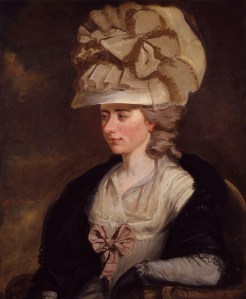
It comes to pass that Captain Wentworth also winds up in Bath. When Anne, her family and Frederick all show up at the same concert Anne attempts to get a seat that will let her both keep an eye on the Captain and allow herself to be seen by him. “She could not do so, without comparing herself with Miss Larolles, the inimitable Miss Larolles …” is a reference to  a character from Fanny Burney’s 1782 novel “Cecilia.”  There is some synergy between the books as both Anne and Cecilia have a parent obsessed with social rank center, and both their families live beyond their means. Miss Larolles, a member of the Ton, takes measures to explain the best place sit at the opera if one is to enjoy oneself.

“Do you know” says Miss Larolles “Mr Meadows has not spoke one word to me all the evening, though I am sure he saw me, for I sat at the outside on purpose to speak to a person or two that I knew would be strolling about; for if one sits on the inside there’s no speaking to a creature; you know so I never do it at the opera… It’s the shockingest thing you can conceive, to be made sit in the middle of these forms one might as well be at home for nobody can speak to one.” 

I just adored “Cecilia.” I mention it in both Persuasion and Northanger Abbey, and even borrowed the title of Pride and Prejudice from a passage near the end of the novel.

2.11

The final Literary Allusion in Persuasion is to The Thousand and One Arabian Nights. Anne’s friend, Mrs. Smith, has informed her of Mr. Elliot’s true nature, but she must wait before she reveals it. “Her faith was plighted, and Mr. Elliot’s character, like the Sultaness Scheherazade’s head, must live another day.” Scheherazade, of course, kept her head by telling a new story to the Sultan every night.  Thus both The Thousand and One Arabian Night and Persuasion are stories of deferral, with Anne’s taking seven years to come to fruition.

In the end the Sultan was so entranced with Scheherazade that he did not kill her…

… His mind had become softened, and he was convinced of the great merit and good sense of the Sultana Scheherazade.  He well recollected the courage with which she voluntarily exposed herself to destruction, in becoming his queen.”

He had become very much PERSUADED, indeed.

If in some small measure I have managed to illuminate the great works that have influenced me I will be most pleased. And I hope that the next time you lift the pages of this novel you will discover the hidden gems in my beloved Persuasion.


Winterthur Museum and Garden

“In beauty may I walk…with beauty before me…with beauty behind me…with beauty above me… with beauty all around me… may I walk…”— Navajo saying

[found on the stones of the labyrinth in the Enchanted Woods]

Winterthur was Henry Francis du Pont’s (HF)  masterpiece. He was born to a live of privilege on the estate in 1880 and began to supervise the gardens when his father, Henry Algemon du Pont (HA), went to Washington to serve as a Senator. HF and his wife Ruth had houses  in South Hampton, Long Island and Boca Grande, Florida, and an apartment in New York City, but he was never away from his beloved Winterthur for more than a few weeks at a time. He died there in 1969.

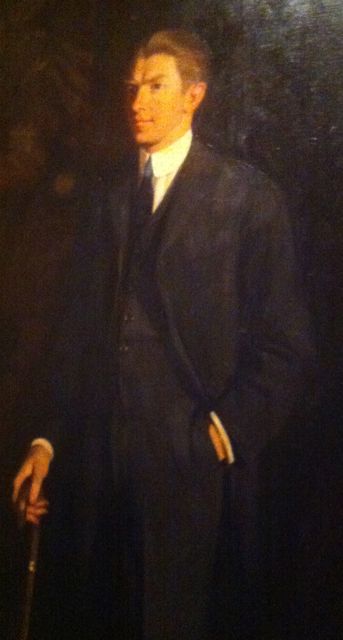
Oil painting of Henry Francis du Pont as a young man.

HF worked with the formal gardens that were already established on the estate and created his own. And he planted the March Bank. The March Bank was designed so guest and family members would see thousands of flowers in bloom from their bedroom windows every morning. As seasons changed from early spring, to late spring, to summer, etc the rooms would be transformed. Rugs, curtains and other color accents would be swapped out to match the show outside.

Du Pont considered the natural topography of the land when planting. He was a naturalistic gardener. His woodlands were composed of ground cover, shrub, small and large trees. When he planted azaleas he didn’t just pick one shade of pink or purple, he used gradations of the colors to create his “masterpiece of color.”

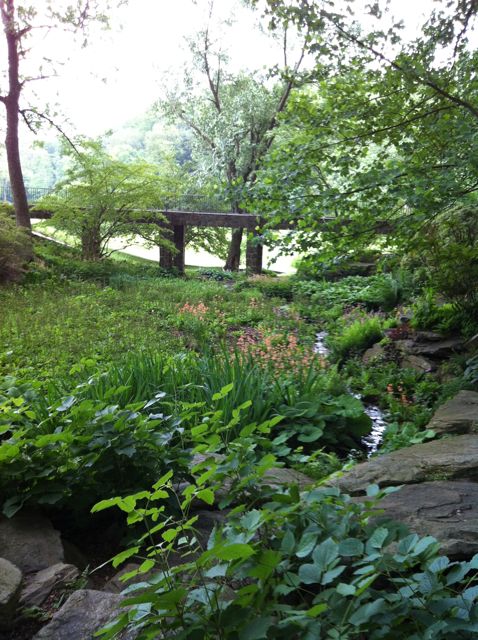
Looking north from the bowl of the Quarry Garden.

HF began his Quarry Garden when he was just 22 years old. A short hike down the slate stairs brings the visitor to a hidden gem of color and cool solitude. It is the perfect place to sit and relax on a hot summer day.

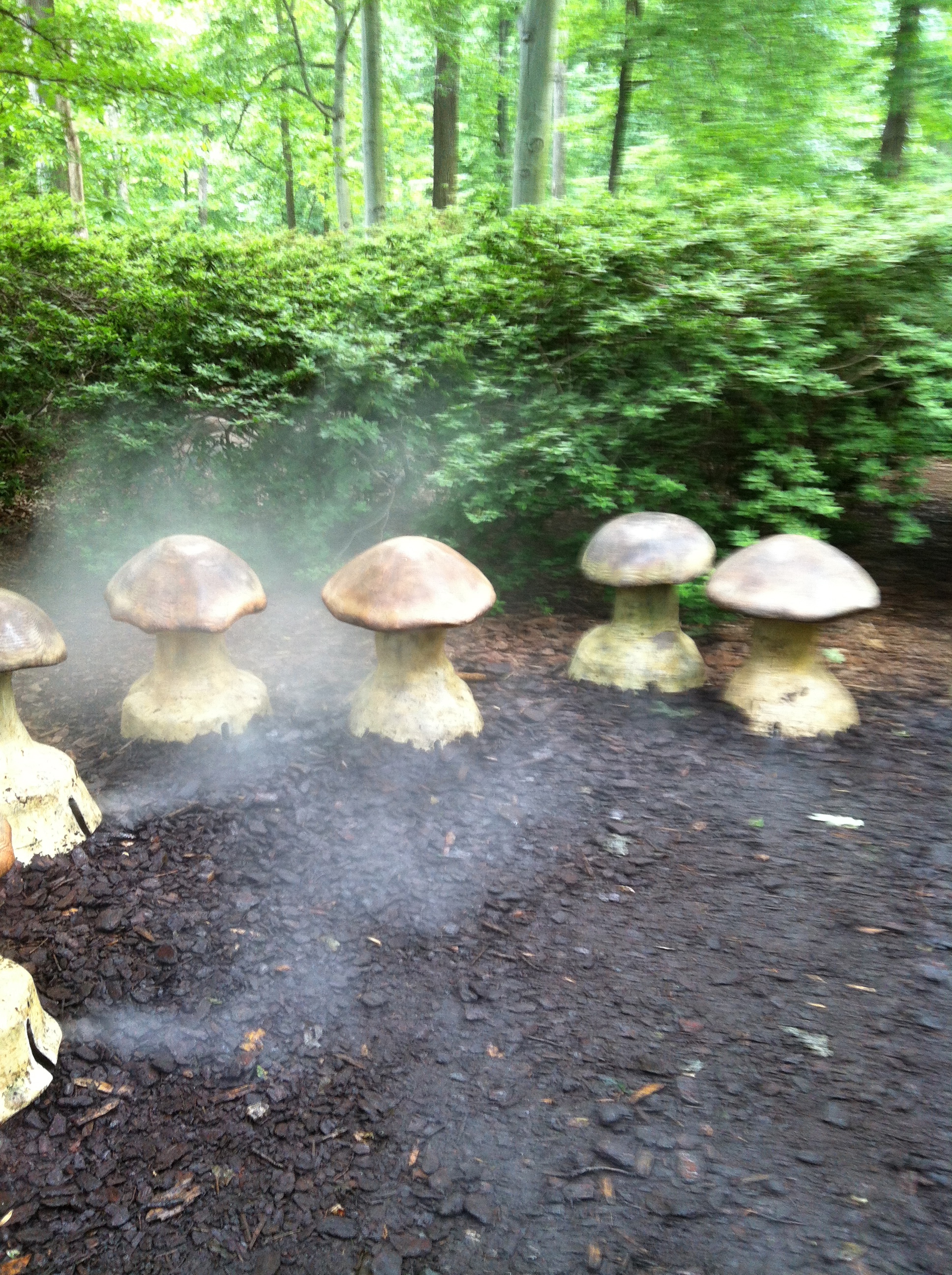
A more recent addition to Winterthur is the Enchanted Wood. This fantasy garden delights children of all ages. This fairy-tale inspired  garden delights children of all ages with its misty mushrooms, troll bridge, thatched roofed Faerie Cottage, tulip poplar house, May pole, labyrinth and a story circle that feels like a miniature Stone Hedge.

The estate was a working farm with a prize winning herd of Holstein-Friesian cows before it became a museum. While on a  trip to Vermont to visit the Webb dairy operation in 1923 HF was smitten with the antique American furniture he saw on display. He was attracted to the color combinations of pink porcelain  against the pine cabinetry. It was an “ah-ha” moment, and it started him on major trek in his life. When he got back to Pennsylvania he went antiquing in Chester County and purchased his first American Antique, a 1730 chest of drawers.

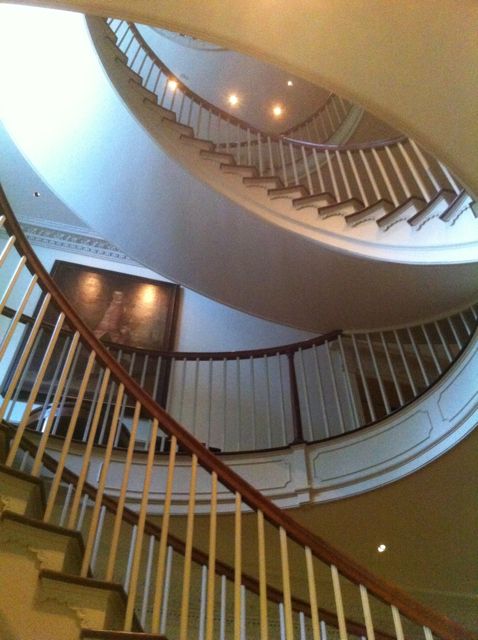
The house at Winterthur was originally built by  HF’s great-aunt and uncle the Bidermanns in 1837. It had a mere 12 rooms. Eventually they sold it to Henry du Pont, HF’s grandfather. Henry gave it to HA who added a wing and upped the room count to 30, brought in the cows, and added a railway station.    But Winterthur really blossomed under HF. At its peak the estate employed around 300 people, and had a post office, fire station and its own baseball team.  The house expanded too.  He needed room for his growing collection of American Antiques. He recycled facades and interiors from houses slated for demolition. The magnificent spiral stair case in the entrance hall was rescued from a Southern Plantation that was about to be torn down.  When he was through the mansion had tripled in size and had 175 rooms.

HF had the spiral staircase installed while the family was on vacation. It was a surprise for them when they got back to Winterthur.

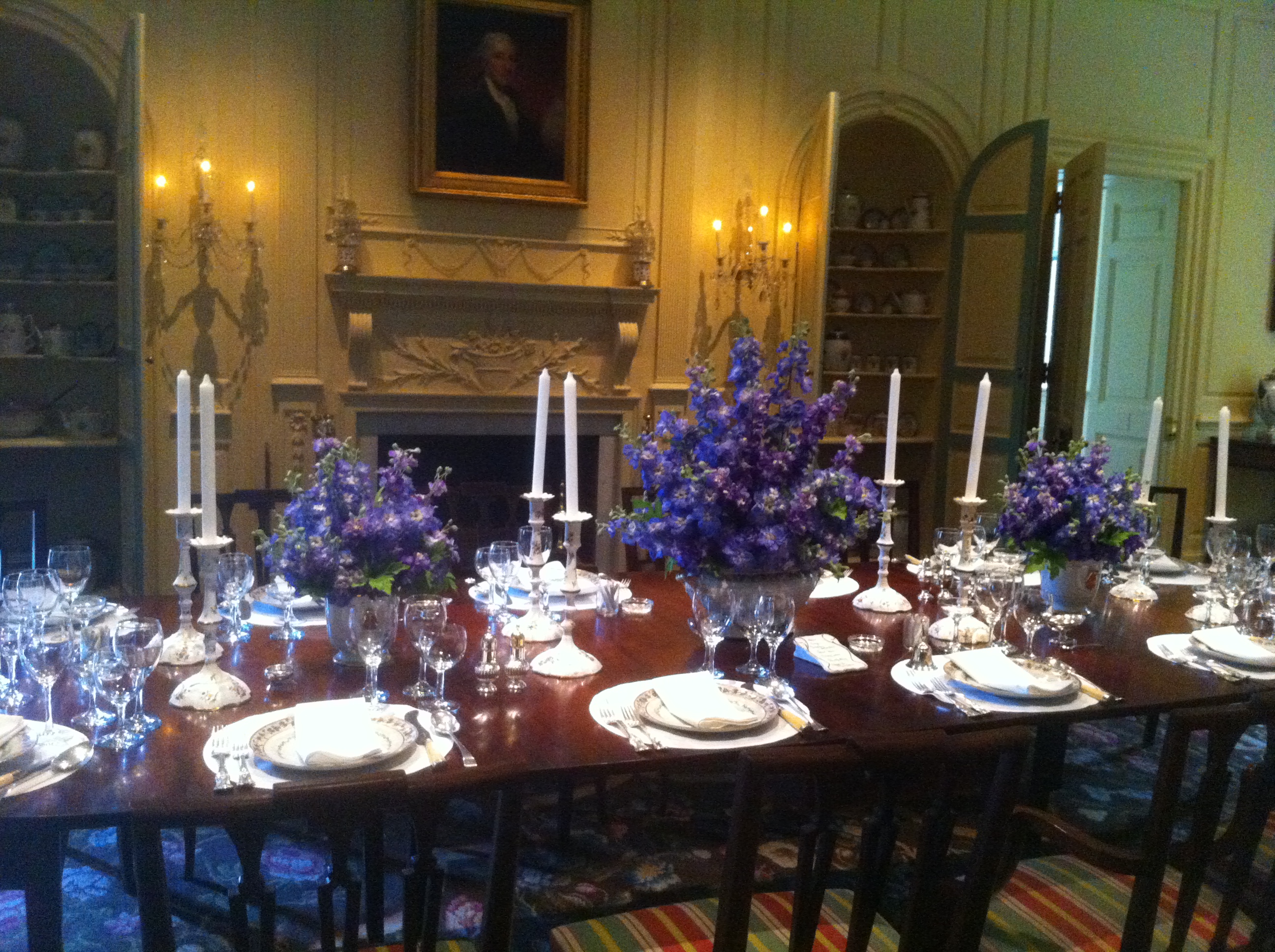
If you were a guest at Winterthur when you pulled your car up to the entrance they (the du Ponts or more likely their staff) threw the front and back doors open so the first thing you’d notice was the gardens.  And They kept meticulous records. Guests never ate off the same china or saw the same flowers on the table.

In the formal dining room guest were expected to only speak to the person to their right or to their left (never across the table) so Mrs. du Pont manipulated the conversation at dinner.

Guest usually arrived in the afternoon in time for tea which was sometimes taken out in one of the gardens and was following by a game of Bridge. The best way to curry favor with Mrs. du Pont was to play bridge with her. In fact if you didn’t play bridge, you probably wouldn’t be invited back anytime soon.

Visiting Winterthur doesn’t require an invitation nowadays. The museum and garden are open to the public Tuesdays thru Sundays from 10-5 excluding Thanksgiving and Christmas. For details on planning your trip go to http://www.winterthur.org

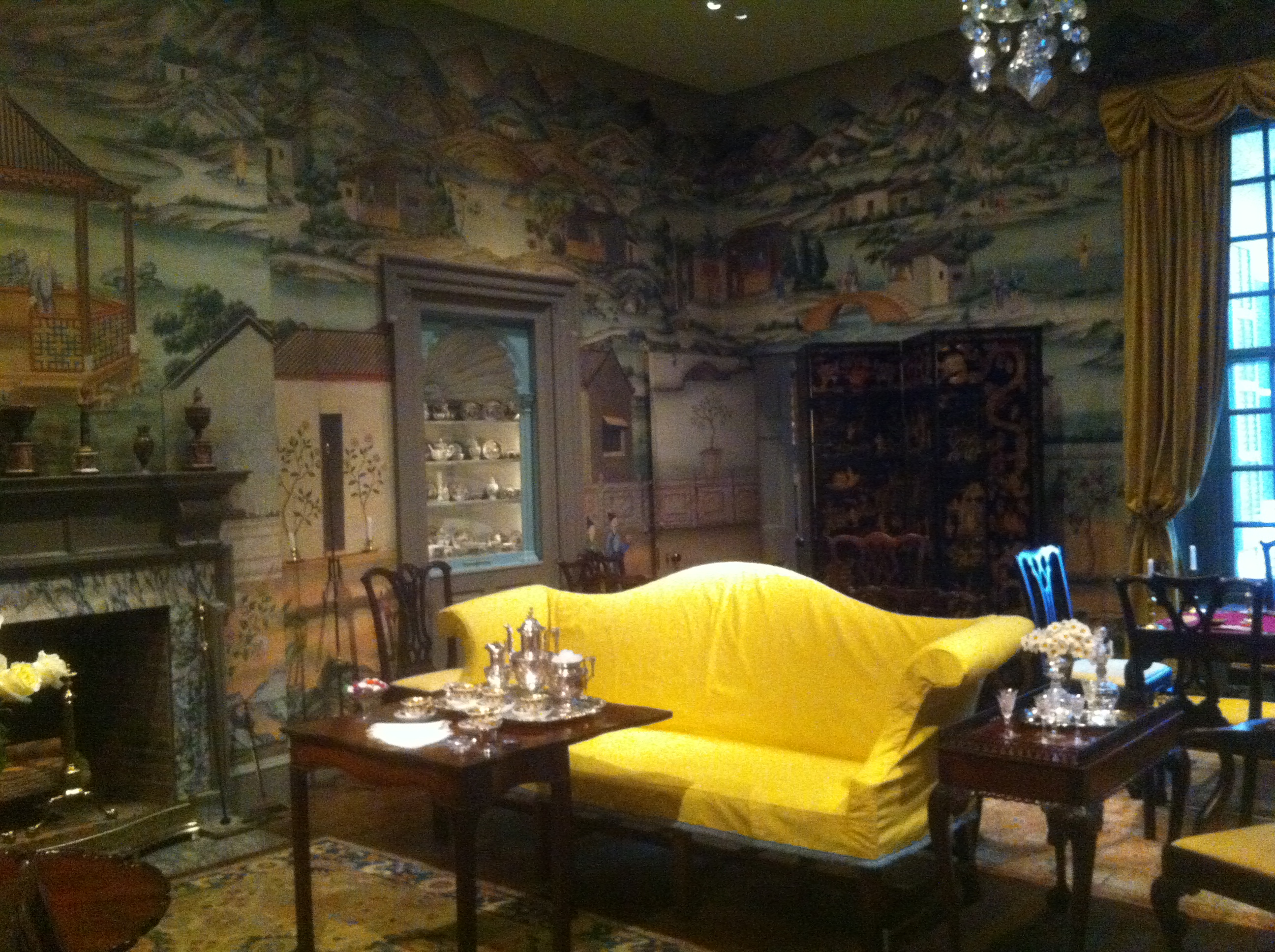
The Chinese Room at Winterthur. HF found rolls of elegant wall paper with a seamless Chinese image (with no repeats) and knew he wanted it for his home. The only problem? When they unrolled it the room wasn’t tall enough. To solve the problem they curved the top of the walls to meet the ceiling and were able to extend the wall paper to its full height.

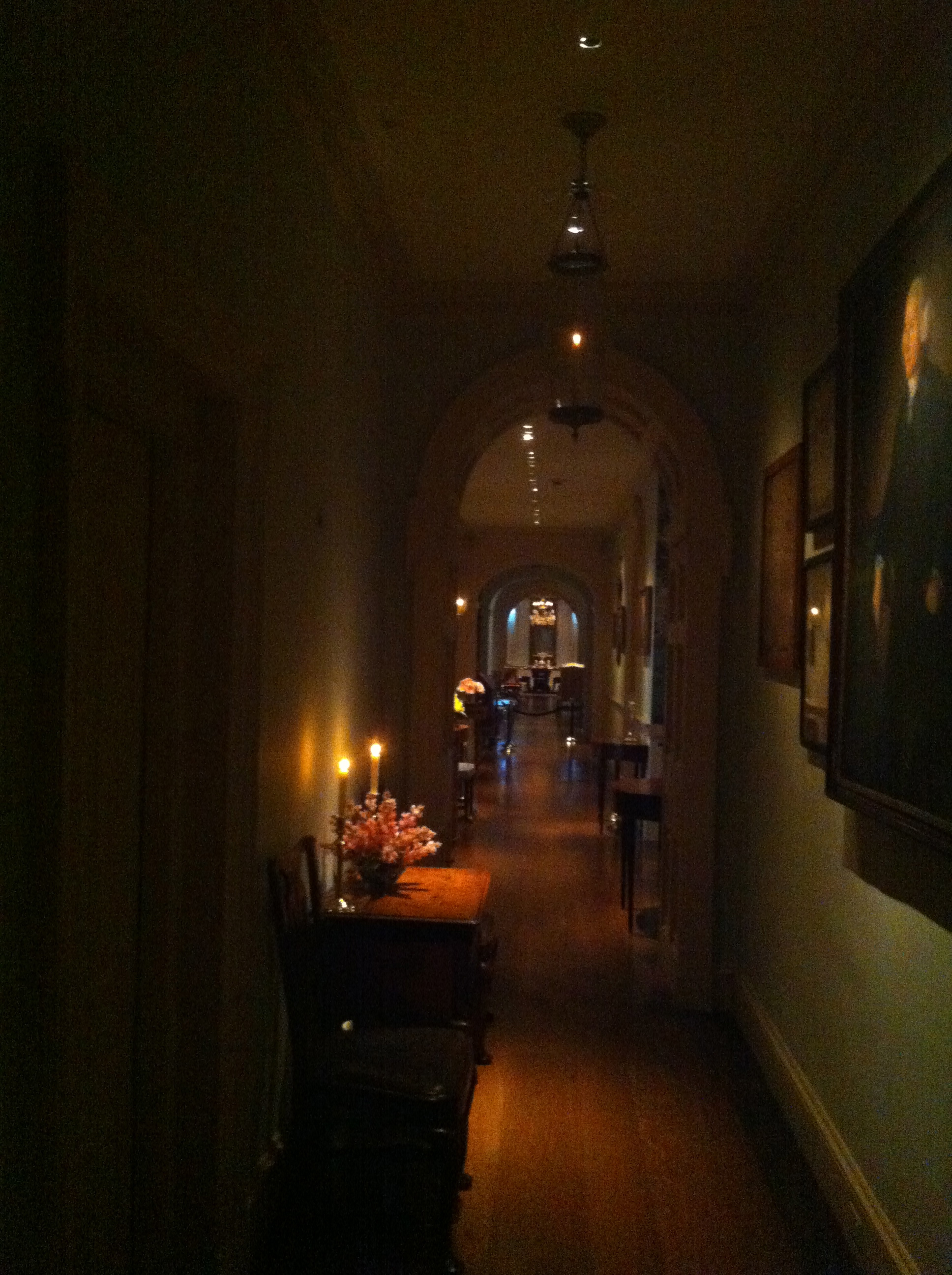
A hallway on the sixth floor of Winterthur.

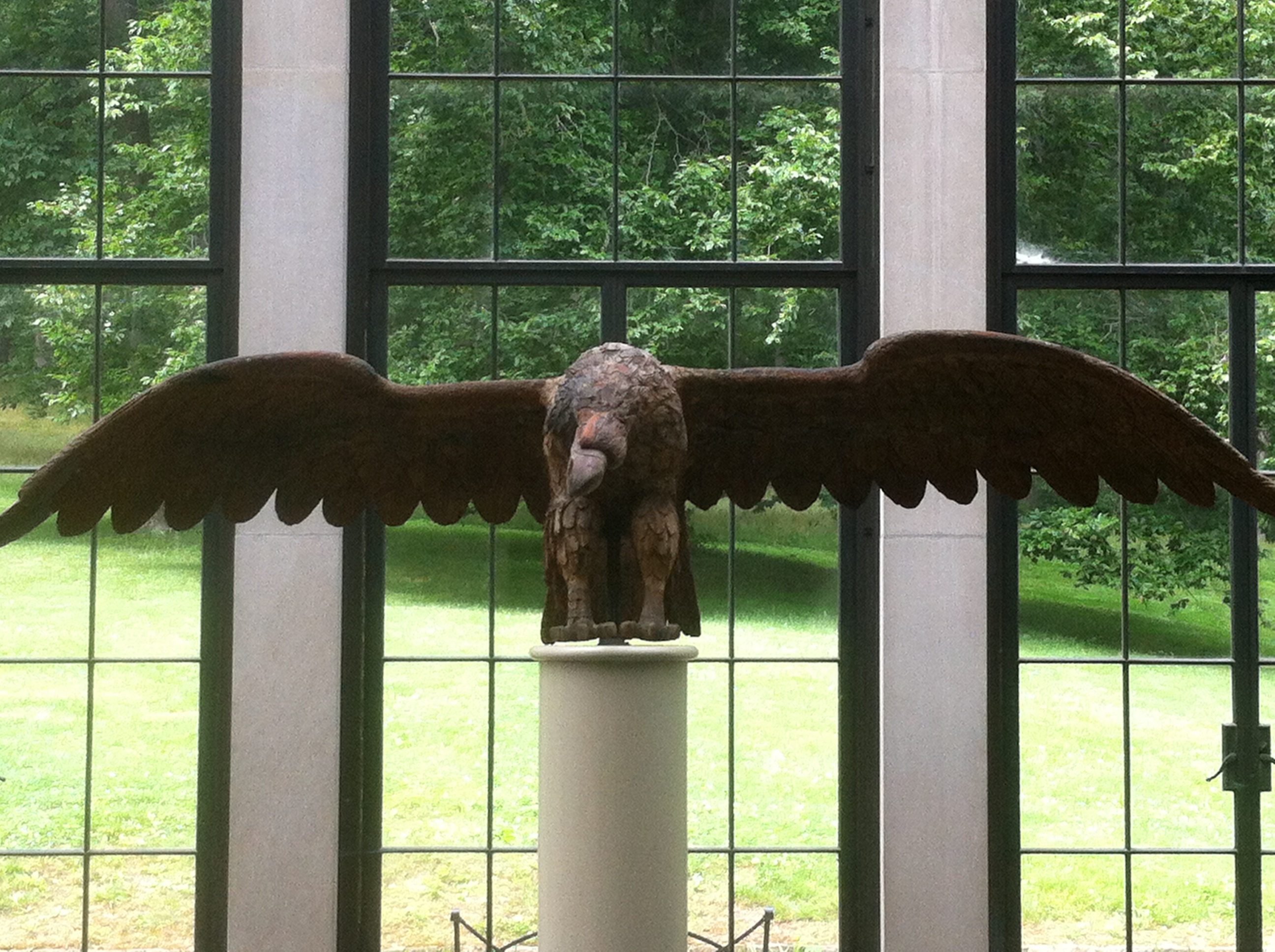
Wooden eagle is one of the thousands of pieces of American Art that graces the halls of Winterthur

RitaLOVEStoWrite and her husband enjoyed their trip to Winterthur. I hope you enjoyed this blog and will be inspired to travel to the Brandywine Valley and see the magnificent house and gardens in person. In the mean time please LIKE the blog or follow me (at the top of the page.) 🙂


Jane Austen’s A-Z

Personally I think this would make an awesome children’s book. Any one want to publish it with me?

A Anne Anxious Heart (Persuasion)

B Captain Benwick’s Buried Beloved (Persuasion)

C Courteous Colonel Brandon (Sense and Sensibility)

D Donwell Abbey’s Drafty Hall (Emma)

E Elinor & Edwards’ Eternal Love (Sense and Sensibility)

F Frank Churchill’s Fancy Hair Cut (Emma)

G The Gardiner’s of Grace Church Street (Pride and Prejudice)

H Harriet’s Humble Beginnings (Emma)

I Ignorant, Idle Mrs. Elton (Emma)

J Jane’s Jade Necklace (Pride and Prejudice)

K Knightly’s Kind Heart (Emma)

L Lizzie’s Lovely Eyes (Pride and Prejudice)

M Margaret’s Marvelous Atlas (Sense and Sensibility)

N Nights at Northanger Abbey (Northanger Abbey)

O Overbearing, Obstinate Lady Catherine(Pride & Prejudice)

P Picking Plump Strawberries (Emma)

Q Quixotically, Quiet Jane Fairfax (Emma)

R Ridiculous, Rotund Mr. Rushworth (Mansfield Park)

S Stupid, Selfish Lydia! (Pride & Prejudice)

T Tiring Teas with Fanny (Sense and Sensibility)

U Emma’s Ubiquitous Umbrella (Emma)

V Vain, Villainous Wickham (Pride & Prejudice)

W Willoughby’s Wayward Ways (Sense and Sensibility)

X Darcy’s Xenophobic View of Society. (Pride & Prejudice)

Y A Year of Yawning in Bath (Persuasion)

Z Zillions of Accolades by  a Rosings Zealot (Pride & Prejudice)


Frank Lloyd Wright

—————————————————–

This article originally ran in Mason-Dixon ARRIVE magazine.

Visit  https://www.facebook.com/mdarrive to learn more about the magazine and community.

—————————————————-

Discovering America’s Architect 

In Our Own Backyard 

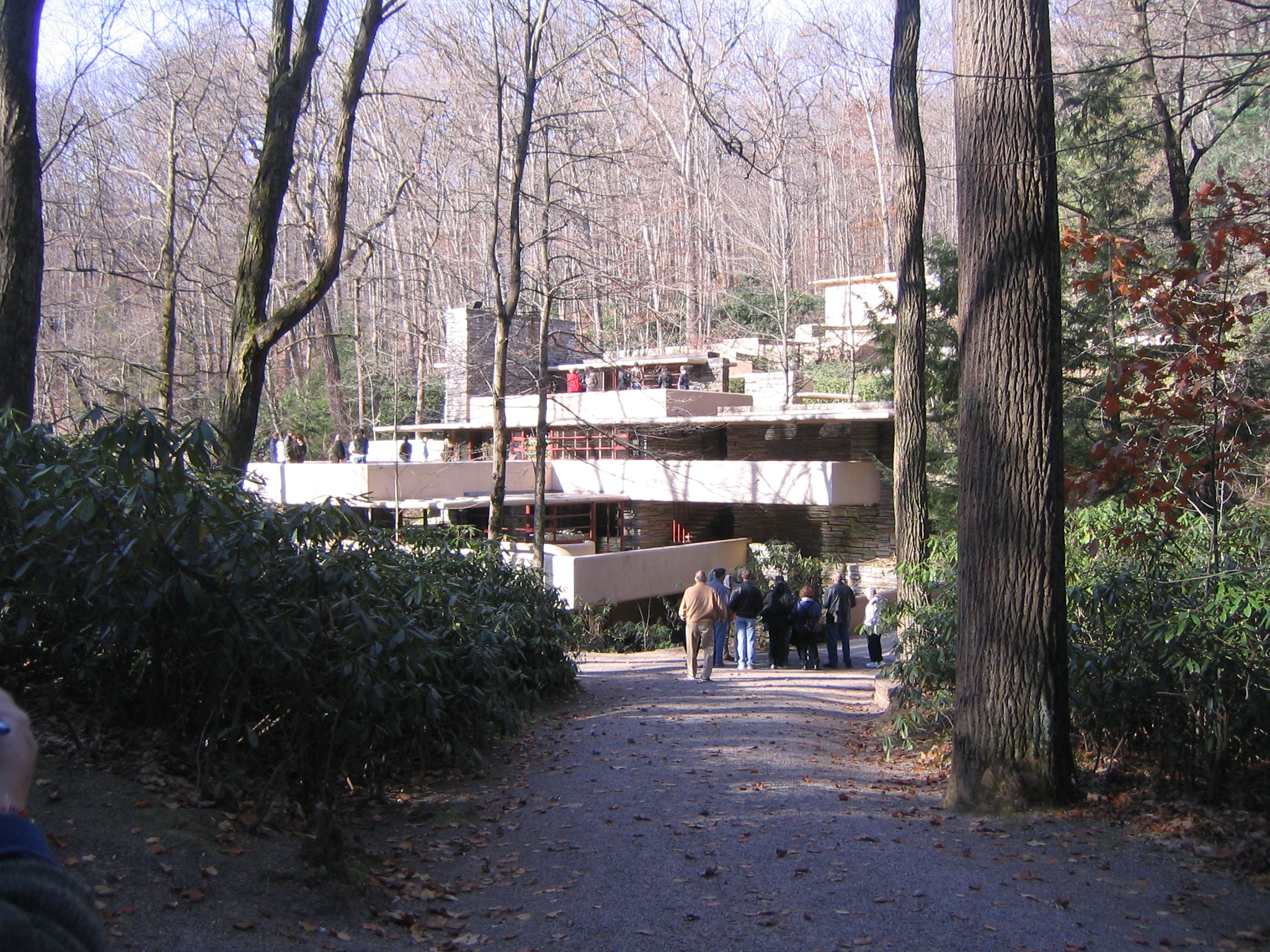
Nestled among the woods and rocks of Western Pennsylvania’s Laurel Highlands are two amazing Frank Lloyd Wright houses. Fallingwater, with its cantilevered balconies and waterfall, is perhaps Wright’s most famous house. Seven miles away and high above the Youghiogheny River Gorge is Kentuck Knob, one of Wright’s Grand USONIAN designs.

When Anna Lloyd Jones Wright came home from the 1876 Centennial Exhibition she brought her young son, Frank, a box of Froebel blocks. Froebel invented the blocks to teach children how big shapes were made up of smaller parts, and Frank learned that these simple geometric shapes could be used to make any thing. A few years later when Frank was sent to help at the family farm he developed a love of nature, and was often amazed to find the simple shapes of his blocks in the lush green landscape. Wright drew on both of those formative experiences when he designed Fallingwater and Kentuck Knob.

In the midst of the Great Depression Frank Lloyd Wright found it difficult to land interesting commissions. The bureaucrats in Washington were the only ones doing any building, and they preferred a more classical approach over Wright’s “Organic Architecture”. So Wright busied himself with his school, Taliesin. One of his students, Edgar Kaufmann, jr. (Edgar, jr. never capitalized the “j”) invited Wright to his family’s vacation cabin in the Laurel Highlands. As they walked along Bear Run Wright was enchanted by a waterfall crashing over the rocky ledges. It was one of the Kaufmanns’ favorite gathering places, and he decided then and there to locate their new home on the spot.

“Fallingwater was built from 1936 to 1939 so Wright was 67 years old. He was in a fallow period in his career. He’d just written his autobiography and he wanted show that he could design something dynamic.” Says Cara Armstrong, Curator of Education at Fallingwater, “He went on to do some of his biggest projects, including the Guggenheim, in the decades after designing Fallingwater.” Armstrong advises visitors to “Keep your eyes open and you’ll be rewarded by seeing things differently. Wright used the same ideas on multiple levels.” For example, he used the concept of the cantilever on both the bookcases and the floors of the house.

Because the house is cantilevered “the support is only on one side. So one side is mostly stone and one side is mostly glass.” The large banks of window offer an amazing vista of the woods surrounding the house. Originally Wright wanted to cover the concrete with gold leaf to reflect the changing landscape and the natural setting. That was considered too extravagant by the Kaufmanns, so he painted the concrete instead. The color of the concrete is based on the back of a fallen rhododendron leaf.

He used two of his favorite architectural tricks, darkness to light and compression to release, to direct occupants to the more public areas of the house, like the living room and the balconies. He would repeat these techniques to make smaller homes feel much larger.

So what about the waterfall? The Kaufmanns were surprised that Wright planned to locate their house, not facing the fall, but on top the fall. A set of steps lead from the living room down to the natural rock platform at the top of the falls. With the windows open the house is filled with the soothing sound of water rushing over the rocks. Fallingwater, says Armstrong, is a “very spatial experience, you’d never get the same feeling from a book or the web site.”

With an annual operating budget of $4 million Fallingwater is a major tourist attraction in South West Pennsylvania. Albert Einstein was a guest of the Kaufmanns and celebs such as Brad Pitt and Angelina Jolie have toured the building. Reservations are strongly encouraged. The House is open mid-March through Thanksgiving, but is closed on Mondays. Beyond the regular tour you can also take a special Family Tour (perfect for children 5 and up), a two hour in-depth Tour, or a Sunset Tour that ends with light hors d’oeuvres served on the pottery terrace. Call 724-329-8501 for more information or to make a reservation.  http://fallingwater.org/

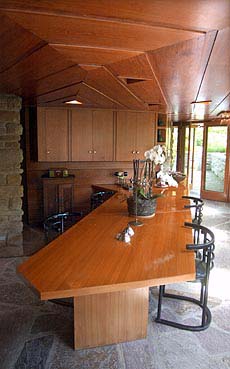
Dining Room at Kentuck Knob

The Kaufmanns were friends with another prominent Western Pennsylvania business family, the Hagans. I. M. Hagan owned Hagan Ice Cream, now a division of Kemps Ice Cream. The Hagans visited Fallingwater several times, and when they purchased an 80 acre parcel of land nearby they hoped that Frank Lloyd Wright would design their home too.

The 86 year old Wright was very busy at the time. He was working on the Guggenheim Museum and the Beth Sholom Synagogue as well as 13 other private residences. The famous architect never stepped foot on Kentuck Knob. He designed the house based on arial photos and detailed land surveys.

What he created was a 2,400 square feet Grand USONIAN. Lee Martin, a Kentuck Knob guide, explained that Wright believed you could have an “ascetically pleasing (house) for a price you could afford.” USONIAN houses were designed to on modest, affordable scale. USONIAN stands for United States of North American Nation (the extra “I” was added to make it easier to say.)

Like the approach to most USONIANs, the “public side” of the house is almost fortress like. The cantilevered roof puts all it’s weight on the stone core. Since Wright didn’t need the walls to bare the roof’s weight, he designed a unique wooden clerestory (a tall wall with a strip of small windows at the top). With the windows open, the wood screen allowed the family ultimate privacy from approaching guests, while still providing a cooling breeze.

The private side of the house is lined with floor to ceiling windows and a cantilevered wrap around terrace. Wright designed hexagonal skylights (the house is built on a hexagonal grid, there are almost no right angles) in the roof overhang to allow light into the sitting and dinning rooms. He carefully considered how the light would hit the top of the mountain during different parts of the year. The skylights let light in all year long, but they also bring a cozy warmth in the winter.

Another Wright innovation is an invisible window in the “corner” of the living room. Wright designed a large window set into the stone surround with out a sill or frame. Matching indoor/outdoor moss gardens create the illusion of a mirror.

“USONIAN houses,” noted Martin, “have a tall central core with a fireplace and kitchen, wings for living areas and sleeping areas go off in different directions.”  The bedroom wing’s hip to ceiling windows allow an up close and personal look at the abundant nature outside. Residents of the master bedroom would some times wake to see a deer nestled into the warm niche outside their window.

Using stone from a local quarry and Tidewater Red Cypress Wright created a warm rich interior that embodied his ideal of organic architecture.

The architect, who had seen too many of his houses burn down, opted to use copper for the roofing. It’s soft patina adds to the home’s welcoming feel.

Bernardine Hagan had both a sense of style and nerves of steel. She got her way with the notoriously rigid Wright several times. As a business woman in the food industry, Ms. Hagan wanted stainless steel countertops, as opposed to the traditional Wright Indian Red Clay. Wright allowed the change IF Mrs. Hagan could design it herself and find some one else to install the countertops. She did. Mrs. Hagan also requested and received a basement (something Wright abhorred) and an expanded dining room.

In 1986 Mrs. Hagan sold the house to Lord Peter Palumbo, an avid art collector and member of the British House of Lords. He opened the house to the public a decade later. The Palumbos have added an extensive Sculpture Garden that houses 35 major works of art. The house is decorated with a mix of original Wright designed furniture, including some pieces rescued from the Imperial Hotel in Japan, and Palumbo’s more modern art.

Kentuck Knob is open daily from March 31st to December 31st. Regular tours run Tuesday through Sunday from 10 to 4 and on Mondays at 12, 2 and 3. Other tours include an In-depth Tour and a special Sunset Tour on selected dates. Call (724) 329-1901 to make a tour reservation. http://www.kentuckknob.com/

Several nearby hotels offer Wright Packages. “The Wright Experience” at Day’s Inn covers admission to both houses, overnight accommodations and a continental breakfast. Mountain View Inn offers the “Classic American Getaway” with stops at the Westmoreland Museum of American Art, Fallingwater, Kentuck Knob and the Christian W. Klay Winery, Dinner, Breakfast and deluxe accommodations. If you are looking for the ultimate Wright weekend consider spending the night IN a Wright house at Polymath Park Resort, 30 miles away. The Resort features Wright’s relocated Duncan House and two houses designed by Wright apprentice, Peter Berndtson.

A weekend discovering America’s Architect will change the way you look at architecture and the world around you.


Memorial Day

Memorial Day

Just a quick note of thanks to every one who serves our Country in big ways and small. And a nod of honor to those who have sacrificed for our freedoms in the past. Happy Memorial Day to you all.


What a wonderful world.


This  is one of my favorite views of the world. It is part of my daily walk with the dog and is one of the farmers’ fields near my house. I love to see it change from day to day, from season to seasons, from year to year. The tree to the left (almost off frame) is big creaking old thing with branches that hang down to form a natural arbor. It is about mid way in our little walk and Honey, the dog, likes to hang out there under the cool welcoming leaves for a few minutes before we race off for the second half of our trek. No one  (human) is ever around out in these fields — don’t worry I always take my cell phone incase I fall and can’t get up — so this is the ideal place to work out lines of pesky dialog that have been pinballing around my brain. Or it’s just a great place to meditate or pray. 14 Steps to each Hail Mary. 15 Steps to each Our Father. Not that I’m counting. One day I’ll know they’ll grow mini mansions here, not corn, and that will break my heart. But for now I’m rejoicing that I live in such a wonderful world.