Category Archives: United States

Rosa Parks 2.4.13 Thought of the Day

“I have learned over the years that when one’s mind is made up, this diminishes fear; knowing what must be done does away with fear.” –Rosa Parks
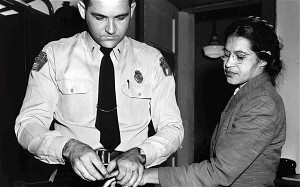
Rosa Parks getting fingerprinted after her arrest.

Rosa Parks getting fingerprinted after her arrest. [Image courtesy  abcnews.go.com]

Rosa Louise McCauley was born on this day in Tuskegee, Alabama in 1913. Today is the 100th anniversary of her birth.

Rosa’s father James was a carpenter and her mother Leona was a teacher. Her parents separated when Rosa was 2, and she moved with her mother a little brother Sylvester to Pine Level, Alabama (just outside the capital, Montgomery) to live with her maternal grandparents. He mother taught her to read. The segregated one room school-house she attended seldom had enough desks  or other supplies. At 11 she went to the Montgomery Industrial School for Girls, an institution a laboratory school set up by the Alabama State Teachers College for Negroes and founded “liberal-minded women from the northern United States. The school’s philosophy of self-worth was …to ‘take advantage of the opportunities, no matter how few they were.'” [Achievement.org] She dropped out of the school to care first for her grandmother then her mother.

At 19 she married Raymond Parks and moved to Montgomery. Raymond encouraged Rosa to finish high school, and she earned her degree in 1933.  The two were active in the National Association for the Advancement of Colored People (Raymond had been an active member when they met.) They worked to raise money to help defend the Scottsboro Boys and were members of the Voter’s League. Mrs. Parks managed to get her voter’s card (it took her three tries because of the Jim Crow laws in Montgomery.)

English: Photograph of Rosa Parks with Dr. Mar...

English: Photograph of Rosa Parks with Dr. Martin Luther King jr. (ca. 1955) Mrs. Rosa Parks altered the negro progress in Montgomery, Alabama, 1955, by the bus boycott she unwillingly began. National Archives record ID: 306-PSD-65-1882 (Box 93). Source: Ebony Magazine Ελληνικά: Φωτογραφία της Rosa Parks με τον Dr. Martin Luther King jr. (περ. 1955.) Español: Fotografía de Rosa Parks con Martin Luther King jr. (aprox. 1955). Français : Photographie Rosa Parks (ca. 1955) (Photo credit: Wikipedia)

Rosa served as the chapter’s youth leader. And in 1944 she became the secretary to NAACP President E.D. Nixon—a post she held until 1957. (She recalls that they needed a secretary, she was the only woman there, and she was too timid to decline.)

“I worked on numerous cases with the NAACP,” Mrs. Parks recalled, “but we did not get the publicity. There were cases of flogging, peonage, murder, and rape. We didn’t seem to have too many successes. It was more a matter of trying to challenge the powers that be, and to let it be known that we did not wish to continue being second-class citizens.” [Rosa Parks quoted on Achievement.org]

On Thursday, December 1, 1955

Rosa Parks boarded the Cleveland Avenue bus for home. She took a seat in the first of several rows designated for “colored” passengers. …As the bus Rosa was riding continued on its route, it began to fill with white passengers. Eventually, the bus was full and the driver noticed that several white passengers were standing in the aisle. He stopped the bus and moved the sign separating the two sections back one row and asked four black passengers to give up their seats. Three complied, but Rosa refused and remained seated. The driver demanded, “Why don’t you stand up?” to which Rosa replied, “I don’t think I should have to stand up.” The driver called the police and had her arrested. …The police arrested Rosa at the scene and charged her with violation of Chapter 6, Section 11, of the Montgomery City Code. She was taken to police headquarters, where, later that night, she was released on bail. [biography.com]

Booking photo of Parks

Booking photo of Parks (Photo credit: Wikipedia)

On the day of her trial the NAACP and the Montgomery Improvement Association (with its new leader Dr. Martin Luther King, Jr.) organized a Bus Boycott.  The

13-month mass protest that ended with the U.S. Supreme Court ruling that segregation on public buses is unconstitutional. …The bus boycott demonstrated the potential for nonviolent mass protest to successfully challenge racial segregation and served as an example for other southern campaigns that followed. In Stride Toward Freedom, King’s 1958 memoir of the boycott, he declared the real meaning of the Montgomery bus boycott to be the power of a growing self-respect to animate the struggle for civil rights. [Stanford.edu]

“At the time I was arrested I had no idea it would turn into this, … It was just a day like any other day. The only thing that made it significant was that the masses of the people joined in.” –Rosa Parks

After her arrest Parks lost her job  as a seamstress in a department store. “her husband was fired after his boss forbade him to talk about his wife or their legal case.” [biography.com] The couple was unable to find work and eventually they moved to Detroit, Michigan with Rosa’s Mother.

In Michigan Rosa Parks worked U.S. House of Representative John Conyer as a secretary and receptionist. In 1987 she helped found the Rosa and Raymond Parks Institute for Self-Development which runs bust tours  to civil rights and Underground Railroad sites for young people.

Rosa Parks receives an award from Bill Clinton.

Rosa Parks receives an award from Bill Clinton. (Photo credit: Wikipedia)

She published a biography, Rosa Parks: My Story and a memoir, Quiet Strength in the 1990s. In 1996 she received the Presidential Medal of Freedom from President Clinton.

Rosa Parks died on October 24, 2005 at the age of 93. She was honored by lying in state at the Capitol Rotunda in Washington, DC.

Today, on the centennial of her birth the US Postal Service is releasing a Forever Stamp with her likeness.

[Image courtesy USPS]

[Image courtesy USPS]

“I would like to be remembered as a person who wanted to be free… and other people would be also free.” –Rosa Parks


W.C. Fields 1.29.13 thought of the Day

“I cook with wine, sometimes I even add it too the food.” — W.C. Fields

Revision rhinoplasty: The American actor W.C. ...

William Claude Dukenfield was born on this day in Darby, Pennsylvania, USA in 1880. Today is the 133rd anniversary of his birth.

His father, James, was an imigrant from Sheffield, England. He fought in the 72nd Pennsylvania Infantry in the American Civil War and was wounded in the war. His mother, Kate, who was of German ancestry, was  15 years younger than James. James was a clerk after the war. He sold vegetables and was a part time hotel-keeper when W.C. came along.

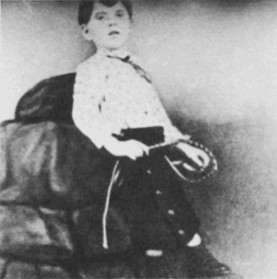
W.C. at 5

It is hard to tell the myth from reality in W.C. Fields’ youth. It depends on where you look. But he seems to have gone to school for about four years before joining his father in selling vegetables on a horse drawn cart. W.C. also worked in a department store and  and oyster house.  His relationship with his father, who was an alcholic, was not good.

At eleven, after many fights with his alcoholic father (who hit him on the head with a shovel), he ran away from home. [IMDB]

Fields told tales of living on the street, sleeping in a whole in the ground and stealing food and clothing to stay alive. In reality, though he did run away it was usually to his grandmothers and return home the next day.

His first regular job was delivering ice. By age thirteen he was a skilled pool player and juggler. …In 1893 he was employed as a juggler at Fortescue’s Pier, Atlantic City. When business was slow he pretended to drown in the ocean (management thought his fake rescue would draw customers). By nineteen he was billed as “The Distinguished Comedian” and began opening bank accounts in every city he played.  [Ibid]

Fields at 15  (Image courtesy wcfields.com]

Fields at 15 (Image courtesy wcfields.com]

By 23 he was opening at the Palace in London and performing with Sarah Bernhardt at Buckingham Palace. Starting in 1915 he was in the Ziegfeld Follies for six years. 1915 was also his first movie, Pool Sharks. In 1923 he was in the musical Poppy. The play was made into a movie, Sally of the Sawdust in 1925 by legendary D.W. Griffith.

Here he is in the Diner Sketch from Never Give a Sucker an Even Break

Other film highlights include David Copperfield (1935), You Can’t Cheat an Honest Man (1939) , My Little Chickadee (1940) and Never Give a Sucker an Even Break (1941).

He made over 37 moves for Paramount before switching to Universal

W.C. Fields was an actor whose flawless timing and humorous cantankerousness made him one of America’s greatest comedians. [Biography]

He died in 1946 on Christmas Day from an alcohol-related stomach hemorrhage. He was 66 years old.

English: W.C. Fields


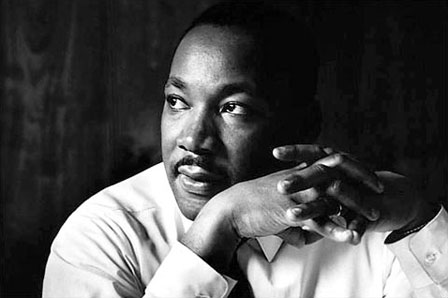
Martin Luther King 1.15.13 Thought of the Day

“I had a dream…” Martin Luther King, Jr.


[Image courtesy the Seattle Times

[Image courtesy the Seattle Times

Michael Luther King, Jr. was born on this day in Atlanta, Georgia, USA in 1929. Today is the 84th anniversary of his birth.


Born to into a “preaching” family. Both his father and grandfather were Baptist ministers. His maternal grandfather, A.D. Williams took over the Ebenezer Baptist church in Atlanta when its congregation numbered only 13. Under his leadership that quickly changed.  King’s father married Alberta Williams (A.D.’s only surviving child) in 1926.


Michael King Sr. stepped in as pastor of Ebenezer Baptist Church upon the death of his father-in-law in 1931. He too became a successful minister, and adopted the name Martin Luther King Sr. in honor of the German Protestant religious leader Martin Luther. In due time, Michael Jr. would follow his father’s lead and adopt the name himself. [Biography]


Martin was the middle of three children in the King household. He grew up in Atlanta attending Booker T. Washington High School. He entered Morehouse College at age fifteen. He graduated from Morehouse in 1948 and went on to get his Bachelor of Divinity degree at Crozer Theological Seminary in Chester, PA. and his Doctor of Philosophy from Boston University.


He emerged as a Civil Rights leader with the Montgomery Bus Boycott in December of 1955. In 1957 he worked with Ralph Abernathy and other ministers to create …


the Southern Christian Leadership Conference to harness the moral authority and organizing power of black churches. They would help conduct non-violent protests to promote civil rights reform. [Ibid]


The SCLC organize voter registration drives in the South. In 1959 King traveled to India


The trip affected him in a deeply profound way, increasing his commitment to America’s civil rights struggle. African-American civil rights activist Bayard Rustin, who had studied Gandhi’s teachings, became one of King’s associates and counseled him to dedicate himself to the principles of non-violence. [Ibid]


The “Sit-In” movement began in 1960. By summer 27 sit-ins had successfully ended lunch counter segregation. King joined an Atlanta lunch-counter sit in and was arrested with 36 others.


King was arrested again in 1963 after he organized a demonstration in Birmingham, Alabama. The demonstration, which included families, ended when the


City police turned dogs and fire hoses on demonstrators. Martin Luther King was jailed along with large numbers of his supporters, but the event drew nationwide attention. …However, King was personally criticized by black and white clergy alike for taking risks and endangering the children who attended the demonstration. From the jail in Birmingham, King eloquently spelled out his theory of non-violence: “Nonviolent direct action seeks to create such a crisis and foster such a tension that a community, which has constantly refused to negotiate, is forced to confront the issue.”[Ibid]


On August 28, 1963 King and his supporters marched peacefully to the Lincoln Memorial in Washington DC and he gave his “I Have a Dream” speech.


The Civil Rights Act passed 1964. The same year King received the Nobel Peace Prize. King continued to advocate for civil rights. He saw the passage of the Voting Rights Act in 1965 and worked to bring the Civil Rights Movement to larger cities.


President Lyndon B. Johnson and Rev. Dr. Marti...

President Lyndon B. Johnson and Rev. Dr. Martin Luther King, Jr. meet at the White House, 1966 (Photo credit: Wikipedia)


He also added his voice to the chorus of protesters against the Vietnam War.


He felt that America’s involvement in Vietnam was politically untenable and the government’s conduct of the war discriminatory to the poor…[Ibid]


In the spring of 1968 King went to Memphis, Tennessee to support sanitation workers who were on strike.


On April 3, in what proved to be an eerily prophetic speech, he told supporters, “I’ve seen the promised land. I may not get there with you. But I want you to know tonight that we, as a people, will get to the promised land.” The next day, while standing on a balcony outside his room at the Lorraine Motel, Martin Luther King Jr. was struck by a sniper’s bullet. [Ibid]


Alexander Hamilton 1.11.13 Thought of the Day

“Those who stand for nothing fall for anything.”
Alexander Hamilton

Oil on canvas portrait of Alexander Hamilton b...

Oil on canvas portrait of Alexander Hamilton by John Trumbull (Photo credit: Wikipedia)

Alexander Hamilton was born on this day in Charlestown, Nevis, British  West Indies in 1755 (or 1757). It is the 258th (255th) anniversary of his birth.

Hamilton was born to humble beginnings. He was conceived during an extramarital affair between Rachel Fawcett Lavine and James Hamilton. When Lavine’s husband threw mother and son out of the house she moved in with James Hamilton. But he abandoned the little family  to return to Scotland for financial reasons. Lavine relied on the kindness of family members and friends to help raise the boy.

English: Source: http://alexanderhamiltonexhib...

English: Source: http://alexanderhamiltonexhibition.com/timeline/timeline1.html, original source stated as Library of congress (Photo credit: Wikipedia)

Because he was illegitimate he was not allowed to enroll at the Church of England school, however he was given some tutoring and private lessons, and had the family library at his disposal  to read both Greek and Latin.

Around the age of ten the family moved to the nearby island of St. Croix where his mother died soon after. Friends and relatives took an interest in the future of the young Hamilton by encouraging him to work as a mercantile clerk and to read and write, activities at which he excelled despite his lack of proper schooling. [Brandywide Battlefield Historic Site — Alexander Hamilton]

He wrote an essay about a hurricane that had hit the island in the summer 1772 for the local paper. Influential readers of the paper were so impressed with the essay that the started a fund to send Hamilton to America for formal education. By late 1773 he was enrolled in King’s College (now Columbia) in New York City. While at King’s College he wrote his first political essays.

With war pending, Hamilton immersed himself in the study of artillery tactics and military maneuvers. In March of 1776, he joined the New York Artillery, and was recommended for an officer’s commission by General Alexander McDougall. He was thereby given the title “Captain of the Provincial Company of Artillery.” [Ibid]

He proved “a conscientious and business-like leader.” After distinguishing himself at the Battle of Trenton Hamilton was appointed as an aide to George Washington. He was a close advisor to the general for the rest of the war.

He wrote Washington’s critical letters, and composed numerous reports on the strategic reform and restructuring of the Continental Army….While serving as an adviser for George Washington, Hamilton had come to realize Congress’ weaknesses, including jealousy and resentment between states, which, Hamilton believed, stemmed from the Articles of Confederation. … Hamilton left his adviser post in 1782, convinced that establishing a strong central government was the key to achieving America’s independence… [Biography.com]

English: US Postage stamp: Alexander Hamilton,...

English: US Postage stamp: Alexander Hamilton, issue of 1956, $5, black (Photo credit: Wikipedia)

Hamilton worked as part of the New York delegation to fix the Articles of Confederation. Among other things, he was a strong advocate for a central source of revenue. Although he didn’t help write the Constitution he did help get it ratified. He wrote 51 of the 85 Federalist Paper.

He was appointed Secretary of the Treasury  when George Washington was elected President. Hamilton served in that post from 1789-1795.

Hamilton was fatally wounded in a duel with Aaron Burr  on July 11, 1804. He died the next day in New York City.

An artistic rendering of the July 11, 1804 due...

An artistic rendering of the July 11, 1804 duel between Aaron Burr and Alexander Hamilton by J. Mund. (Photo credit: Wikipedia)


Sterling Holloway 1.4.13 Thought of the day

“If you do not know where you are going, any road will take you there.”
–Sterling Holloway

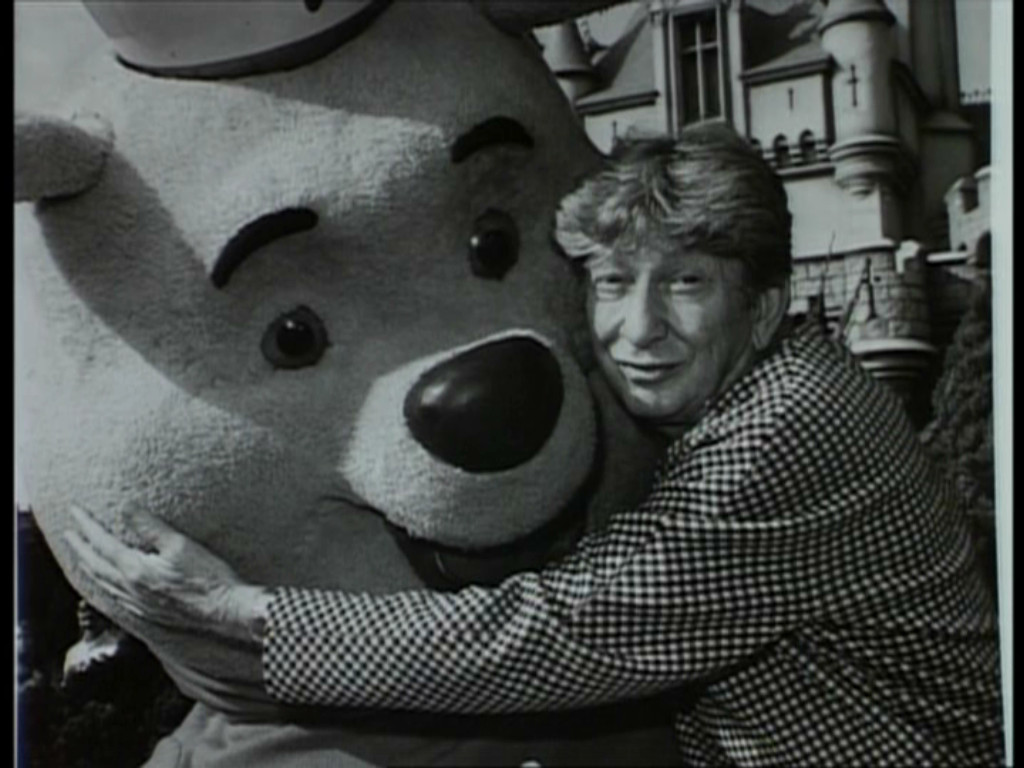
Image courtesy deviantart.com

Image courtesy deviantart.com


Sterling Price Holloway, Jr. was born on this day in Cedartown, Georgia, USA in 1905. Today is the 107th anniversary of his birth.


The Holloways owned a grocery story in Cedartown and were prominent citizens the town. His father was mayor for a while when Sterling was in elementary school. He went to the Georgia Military Academy and got his first taste of acting while performing in school plays there. Upon graduating from the GMA at 15  he went to New York and enrolled in the American Academy of Dramatic Arts. He worked with the Shepherd of the Hills touring stock company.


On stage he worked in musicals, vaudeville shows and reviews. He gained national attention in 1925 when he introduced the song Manhattan (as in “We’ll have Manhattan, The Bronx and Staten Island too…”)  by Rodgers and Hart. The following year he had another hit with “Mountain Greenery” also by the song writing duo.


Primed for success he moved to Hollywood to try his hands at the movies. He started in silent films with The Battling Kangaroo.  He made several silents, but when a director told him he was “too repulsive” for the screen he went back to the stage for a few years. He returned after the stock market crash. The studios were switching to talkies, and the money was good.


His bushy reddish-blond hair and trademark near-falsetto voice made him a natural for sound pictures, and he acted in scores of talkies, although he had made his picture debut in silents. His physical image and voice relegated him almost exclusively to comic roles, [IMDB]


To say he was prolific would be an understatement. Holloway made 19 movies in 1933 alone. He preferred to play in ensemble movies. When Louis B. Mayer offered him a contract at MGM he turned it down because he didn’t want to be a star.


In the 1930s and 40s, the lanky redhead who had a knack for playing country bumpkin roles appeared in such films as “Gold Diggers of 1933,” with Dick Powell, and “Blonde Venus,” with Marlene Dietrich.[Disney.go.com]


Soon his unusual voice came to the attention of Walt Disney and in 1941 Holloway made his first movie  for the Walt Disney company voicing the part of Mr. Stork in Dumbo.


His first Disney performance led to subsequent voice roles including, the adult Flower in “Bambi” and the Cheshire Cat in “Alice in Wonderland.” Sterling also played Kaa, the snake, in “The Jungle Book,” in which he sang the memorable song “Trust in Me.” His most beloved role, however, was as the voice of Winnie the Pooh in such featurettes as the Academy Award-winning “Winnie the Pooh and the Blustery Day.“[Ibid]


He was also featured in The Three Caballeros, the Aristocats and he narrated Peter and the Wolf.


Sterling Holloway

Sterling Holloway (Photo credit: Wikipedia)


Later in his career he work in television, guest starring on a score of episodic and variety shows.


Holloway died at the age of 87 in Los Angeles.


Second Character Saturday — ZuZu Bailey

“Teacher says, every time a bell rings an angel gets his wings.” –ZuZu Bailey’

Who: ZuZu Bailey

From: It’s a Wonderful Life

it's a wonderful life

it’s a wonderful life (Photo credit: rocketlass)

Directed & Produced by: Frank Capra

Written By: Frances Goodrich, Albert Hackett, Frank Capra, Jo Swerling, Philip Van Doren Stern and Michael Wilson. From the 1939 short story “The Greatest Gift” by Philip Van Doren Stern.

Date Released: 1946

Why: ZuZu is the epitome of Christmas innocence.

Pros: Sweet, innocent, adorable.

Cons: Unrealistic. (But come on, she’s only 5!)

Shining Moment: When George realizes that he really IS better off alive then not… he reaches into to his pocket and finds the petals to ZuZu’s flower. He understands that he is back in the real world with his real family waiting for him at home. And no matter what other trouble might befall him, he has that love, and the love of his friends to rely on.

Least Shining Moment: (She really should have buttoned that coat.)

Iconic screen shot from the movie It's a Wonde...

Iconic screen shot from the movie It’s a Wonderful Life. (Photo credit: Wikipedia)

Karolyn Grimes, the actress who played ZuZu in the movie, remembers making the movie 60+ years ago. She remembers Jimmy Stewart lifting her up for endless takes and gently setting her down each time after some one yelled “CUT”.  She remembers Frank Capra squatting down to give her a direction. She only had 6 minutes of screen time in the movie, but it has stayed with her for a lifetime.

… A lifetime that hasn’t always been so wonderful, frankly. Her mother died when Karolyn was 14, her father passed a year later, she went to a an unhappy “bad” home from there. But she got out and went to college and had a family and career as a medical technologist. But then her first husband died in a hunting accident. Her son committed suicide. Her second husband died of cancer. And she lost her life savings in the economic down turn in 2001.

“You have a choice,” she says. “You can drown in your sorrows, be the grumpy old Mr. Potter and be hurt and be in pain … but I think you need to put that behind you because, my gosh, life is a wonderful gift.” [Today Entertainment]

So instead of turning  bitter she remains upbeat. She wrote a cookbook, “ZuZu Bailey’s It’s a Wonderful Life Cookbook” and does personal appearances (especially around the holidays.)

“I’m that little girl and I stand for something those people love,” she says. “… For some reason or other, that little girl embodies the image, or maybe the power to make them happy.” [Ibid]

At one appearance, as Grimes analyzes the movie with the crowd, she asks them if they think ZuZu sees her father, George, hide the petals he can’t paste back on the flower? She thinks ZuZu is on to him.

“I think what Frank Capra is trying to say is she knows her father isn’t perfect,” she said. [Ibid]

And that speaks to LIFE and Christmas too. It isn’t perfect. And it doesn’t have to be, but it can still be WONDERFUL if you let it.

—————————————————-

Some Christmas seasons you can’t swing a candy cane without hitting a showing of It’s a Wonderful Life on television. Sadly this wonderfully done movie has become part of the forced sentiment I like to call “Christmas Sausage” (That’s stuff YOU HAVE TO DO!!! to fulfill some one’s requirement of the Holiday) But this year, thankfully, it looks like the movie is only on once. So catch ZuZu, George, Mary, Uncle Billy and the rest of the gang at 8:00 pm Christmas Eve on NBC.

—————————————————


Samuel Mudd 12.20.12 Thought of the Day

English: Samuel Mudd

English: Samuel Mudd (Photo credit: Wikipedia)

Samuel Alexander Mudd was born on this day in Charles County, Maryland, USA in 1833. Today is the 179th anniversary of his birth.


Mudd grew up on a tobacco plantation about 30 miles southeast of Washington DC. He was the fourth of ten children . He was home schooled until age 15 when he went to St. John’s boarding school in Frederick, MD. He went to college at Georgetown in Washington, and graduated from  the University of Maryland, Baltimore having studied medicine with an emphasis on dysentery. In 1856 he returned to Charles County and began a family with his long time sweetheart Sarah “Frankie” Dyer. Mudd’s father gave the couple a 218 acre tobacco farm called St. Catherine’s. He supplemented his income as a doctor with the sale of tobacco from the farm. (He grew the tobacco with the help of five slaves.)


Dr. Mudd's House

Dr. Mudd’s House (Photo credit: jimmywayne)

When the Civil War began Maryland was a border state. If Washington, with its large number of Union soldiers had not be located in its southern border along the Potomac River the state may have voted to succeed from the Union. When Maryland abolished slavery in 1864 ( a year after the Emancipation Proclamation) Mudd could no longer effectively run his farm. He began looking for a buyer and was introduced to a young, dashing, actor in the market for some property. That actor’s name was John Wilkes Booth.


Booth and Mudd met in November  at St. Mary’s Catholic Church  to discuss the purchase. Booth stayed overnight at the farm before returning to Washington. Unbeknownst to Mudd, Booth wasn’t interested in real estate at all, but was scouting out an escape path from the Nation’s Capital. The actor was planning on kidnapping President Lincoln to bring him to Richmond (the capital of the Confederacy). He would ransom Lincoln for a large number of Confederate POWS.


Portrait of John Wilkes Booth (1838–1865)

Portrait of John Wilkes Booth (1838–1865) (Photo credit: Wikipedia)

Mudd and Booth met again shortly before Christmas 1964, this time in Washington. They met John Surratt and Louis Weichmann for drinks.


Before Booth could pull off his ill-advised and grandiose plan Lee surrendered at Appomatox, Virginia and the War was over. Booth was furious. He altered his plan and decided to kill the president instead of kidnapping him. Booth shot Lincoln in the head five days after Lee surrendered. The President and Ms. Lincoln were watching a play, Our American Cousin at Ford’s Theatre in Washington, DC. After shooting Lincoln at point-blank range he jumped down from the Presidential Box to the stage to escape. He broke his leg in the fall but managed to get out the stage door and onto his horse and escape the city.


English: Interior of Ford's Theatre, Washingto...

English: Interior of Ford’s Theatre, Washington, D.C., where Abraham Lincoln was assassinated. The presidential box is towards the right. The theatre is still in operation and the stage is set up for a current stage play (i.e., it is not set up as it was when Lincoln was shot). (Photo credit: Wikipedia)

About four o’clock on the morning following the Lincoln assassination two men on horseback arrived at the Mudd farm near Bryantown.  The men, it turned out, were John Wilkes Booth–in severe pain with a badly fractured leg that he received from his fall to the stage after shooting the President–and David Herold.  Mudd welcomed the men into his house, first placing Booth on his sofa, then later carrying him upstairs to a bed where he dressed the limb. 

After daybreak, Mudd made arrangements with a nearby carpenter to construct a pair of crutches for Booth and tried, unsuccessfully, to secure a carriage for his two visitors.  Booth (after having shaved off his moustache in Mudd’s home) and Herold left later on the fifteenth, after Mudd pointed the route to their next destination, Parson Wilmer’s. [UMKC.edu]

Military investigators followed Booth’s trail to the Mudd farm and Dr. Mudd admitted to having seen a patient, but claimed…”‘I never saw either of the parties before, nor can I conceive who sent them to my house.” [Historynet.com]  When Lt. Lovett, the lead investigator on the Mudd end of the trail returned again to the farm Sarah “brought down from upstairs a boot that had been cut off the visitor’s leg three days earlier.” [Ibid.] Booth’s initials were in the boot’s cuff, but Mudd still denied knowing who it was.


Booth's boot, found at the Mudd's farm .[Image courtesy]

Booth’s boot, found at the Mudd’s farm . [Image courtesy UMKC.edu]

During the trail Mudd’s lie about not recognizing Booth, compounded by his not coming forward  about “suspicions … aroused by a broken-legged visitor who, during his brief stay the Mudd farm, shaved off his moustache” [Ibid] stained his character far more deeply than the circumstantial evidence of witnesses who claimed he knew of the conspiracy.


Defense Attorney Thomas Ewing argued to the Commission that it is no crime to fix  a broken leg, even if it were the leg of a presidential assassin and even if the doctor knew it was the leg of a presidential assassin. [Ibid}

Mudd was convicted by a Military Commission and sentenced to life in prison.


English: Broadside advertising reward for capt...

English: Broadside advertising reward for capture of Lincoln assassination conspirators, illustrated with photographic prints of John H. Surratt, John Wilkes Booth, and David E. Herold. Français : Avis de recherche avec prime de 100.000 $ pour la capture de John Wilkes Booth, le meurtrier du président Abraham Lincoln, et deux de ses complices, David Edgar Herold et John Harrison Surratt. (Photo credit: Wikipedia)

He, and the other conspirators who escaped the noose were sent to Fort Jefferson in the Dry Tortugas 70 miles west of Key West,  Florida. He tried to escape once, but was quickly discovered. He and other prisoners were transferred to “the dungeon” a ground-level gunroom. They were let out six days a week to work, but were forced to stay inside the dungeon on Sundays and holidays. He wore leg irons while outside the cell.


Dr. Mudd as he appeared when working in the ca...

Dr. Mudd as he appeared when working in the carpenter’s shop in the prison at Fort Jefferson. (Photo credit: Wikipedia)

.


In 1867, an outbreak of yellow fever overtook the Dry Tortugas, claiming the lives of fellow conspirator and inmate Michael O’Lauglin, as well as the prison doctor.  Mudd assumed the role as the new prison doctor. [Ibid]

Mudd was pardoned in March of 1869 by President Andrew Johnson. The Doctor returned to his Maryland farm and his wife (they had 4 more children.) He had always been interested in politics and in 1877 he ran (unsuccessfully) for the Maryland House Delegates. In 1880 his farm was destroyed by a fire. and by 1883, at just 49 years old, Mudd was dead of pneumonia.


———————————————————————–


Lincoln’s death brought on a media circus the likes of which we are only all too familiar with in 2012. But then, when the nation need to be healed from its bloody civil war a swift and definitive trial was essential. Yellow journalism was in full swing. Certainly some of the men (and possible the one woman) on trial were guilty … but what do you think? Did was Dr. Mudd innocent or guilty?


English: John Wilkes Booth's escape route Türk...


Steve Buscemi 12.13.12 Thought of the Day

“My favorite review described me as the cinematic equivalent of junk mail.”
Steve Buscemi


(Image courtesy: fan pop)

(Image courtesy: fanpop.com)


Steven Vincent Buscemi was born on this day in Brooklyn, New York, USA in 1957. He is 55 years old.


Buscemi is part Irish and part Italian, he’s one of four boys born to John Buscemi, a sanitation worker, and Dorthy Buscemi a hostess. He went to Valley Stream Central High School where he wrestled and acted. After graduating in 1975 he attended Nassau Community College then moved Manhattan to attend the Lee Strasberg Institute. He worked on FDNY Engine #55 as a fire fighter. He has worked as a bartender, a stand-up comedian, an ice-cream truck driver before breaking into acting. One of his brothers, Michael, is also an actor.


He made his film debut with a short called Tommy’s (in which he played Tommy), in 1985. He took on the odd ball, character actor roles — often the mafia types and worked in dozens of TV shows and movies. When he hooked up with the Coen Brother’s his off beat sensibilities found a home.


As of 2010, has appeared in six Coen Brothers films (Miller’s Crossing (1990), The Hudsucker Proxy (1994), Barton Fink (1991), Fargo (1996), The Big Lebowski (1998), and Paris, je t’aime (2006)), more than any other actor. [IMDB.com]


He played Mr. Pink in Quentin Tarntino’s Reservoir Dogs. Then paired up with the director again for a bit part in Pulp Fiction.


English: Photo of a young Steve Buscemi (Ameri...

English: Photo of a young Steve Buscemi (American actor). Taken in Silverlake / Los Angeles. (Photo credit: Wikipedia)


Buscemi was brilliant as Carl Showalter, the can’t-catch-a-break smal-time crook in Fargo.


His movie and tv CV is impressive, and he’s the kind of actor where you see a movie title  and you think “Oh, yeah, he WAS in that.”  From Templeton the Rat (in 2006’s Charlotte’s Web) to Donny (in 1998’s The Big Lebowski) to Lenny Wosniak (his recurring guest spot on 30 Rock) Buscemi is wonderful to watch — even when you want to turn away.


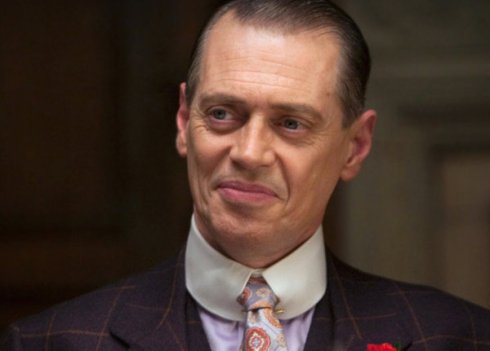
Most recently he’s been the star of HBO’s Boardwalk Empire. As amoral Nucky Thompson he manages to hang on to a thread of inner humanity to keep his character viable. And , oh, yeah, he’s a hoot. (When he’s not killing people.)

Buscemi as Nucky Thompson. (Image courtesy HBO)

Buscemi as Nucky Thompson. (Image courtesy HBO)


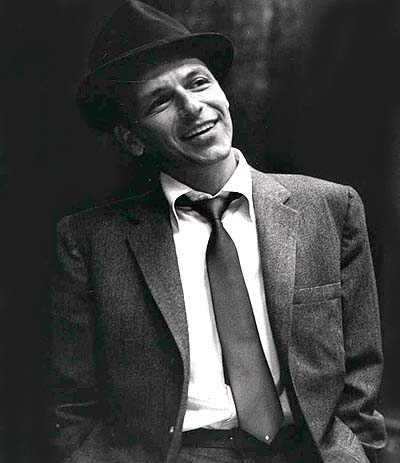
Frank Sinatra 12.12.12 Thought of the Day

“May you live to be 100 and may the last voice you hear be mine.”
— Frank Sinatra

Image courtesy last.fm

Image courtesy last.fm

Francis Albert Sinatra was born on this day in Hoboken, New Jersey, USA in 1915. Today is the 97th anniversary of his birth.

Frank was the only child of Marty and Dolly Sinatra. As a kid he stood on top of the bar at a local nightclub and sang for tips. He dropped (or was kicked) out of high school, and help make ends meet at home by delivering the local paper, the Jersey Observer. He also worked as a riveter at a local shipyard. Although he couldn’t read music he began singing professionally by the mid 1930s when he joined the Three Flashes (they changed their name to the Hoboken Four.)

He worked as a singing waiter in Englewood Cliffs for $15 a week for almost 4 years. Then Henry James signed him for a one year contract at $75 a week. On July 13th, 1939, as the US was emerging from a decade of Depression and the world was on the advent of another great War, 23-year-old  Frank Sinatra recorded his first record, From the Bottom of my Heart, with the Harry James Orchestra.

He released 10 songs with James (none of which charted particularly high in their original pressing.) Sinatra switched to the more popular Tommy Dorsey’s band (with James’ blessing) in November. He recorded over 40 songs on Dorsey. One of his biggest hits with Dorsey was I’ll Never Smile Again.

By 1941 he was at the top of  both the Billboard and Down Beat magazine polls. Not only did he sell records, he opened up an entirely new audience — the bobby soxers (aka teenagers.) [It seems odd today — when so much of a company’s advertising budget goes toward capturing the 12-20 year old’s pocketbook — but prior to 1940 most consumers were adults.  Sinatra appealed to both adult women and bobby sox wearing girls.]

Image courtesy last.fm

Image courtesy last.fm

He went solo in 1943 and in the next three years he charted 17 times.  Sinatra was classified 4-F for military service because of a perforated eardrum, so he did not serve in the military.

He started making films as part of the Dorsey Band  with Las Vegas Nights and  Ship Ahoy, he had a walk on / singing part in the wonderfully named Reveille with Beverly but then had his first real role in Higher and Higher. He teamed with Gene Kelly for the hugely successful Anchors Aweigh in 1945.  It was the first of three Sinatra/Kelly films with Take Me Out to the Ball Game and On the Town coming out in 1949.  He won a special academy award for his work on the (dated) short film The House I Live In. (1945)

At the beginning of the 1950’s Sinatra saw his popularity wane somewhat. The bobby soxers who had screamed out deafening choruses of “FRANKIE” for the thin, blue-eyed singer had found new idols to adore.

He came back with a bang with his next movie, 1953’s From Here to Eternity. He won an Oscar as bad boy Angelo Maggio.

Cover of "From Here to Eternity"

Cover of From Here to Eternity

The same year he signed with Capitol Records. In 1954 his album Swing Easy! was named Album of the Year by Billboard and the single Young At Heart was picked for Song of the year. Swing Easy was arranged by Nelson Riddle. Sinatra and Riddle worked together again for Songs for Swingin’ Lovers! which included I’ve Got You Under My Skin.

He poked fun at his mobster image in the movie version of Guys and Dolls. in 1955 as Nathan Detroit.  In 1956 he played Mike Connor to Grace Kelly’s Tracy Lord in High Society.  The next year he was Joey in Pal Joey.

He started his own record label in 1960, Reprise Records. 

In 1962 he starred in his most dramatic movie the classic political thriller, The Manchurian Candidate. [For my money The Manchurian Candidate is the best movie of the bunch.]

He was a founding member of the Rat Pack and worked alongside Dean Martin, Peter Lawford, Sammy Davis Jr., and Joey Bishop in several movies and countless nightclub acts.

Here he is  having a ton of fun singing Lady Is a Tramp with the incomparable Ella Fitzgerald

Sinatra was a sucker for charities.  He raised over a billion dollars in the course of his life for charities all over the world.

His generosity touched the worlds of education, medicine, science, and children’s needs, his favorite cause. … Sometimes it was a late-night phone call that moved him; sometimes he just caught wind of a hard-luck story on the news or in the paper and did what he could to fix it. [Sinatra.com]

In 1962 he led a 12 country World Tour for Children that raised over a million dollars for children’s charities worldwide. He paid for the entire cost of the tour himself, and recruited other musical luminaries to join him.

He also worked against segregation , taking a major role in the desegregation of Nevada entertainment and hospitality industry in the 1960s. He boycotted venues and hotels where black performers and guest were banned. And he played benefits for Martin Luther King, Jr. and the Equal Right Movement.

Sinatra received the Presidential medal of Freedom from Ronal Reagan in 1985.

Ole’ Blue Eyes faced his final curtain on May 14, 1998. He was 82 years old.

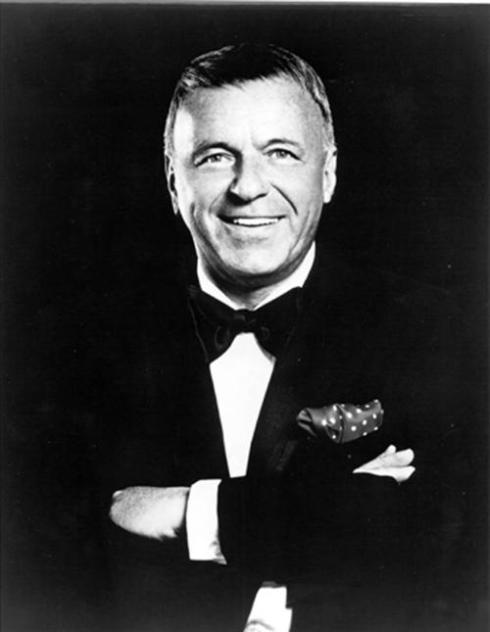
Frank older

Image courtesy last.fm