I’m an instant star. just add water and stir.” —David Bowie
[Image courtesy Fashion Office Buzz) David Robert Jones was born on this day in Brixton, London, England in 1947. He is 66 years old.
He attended local schools in Brixton and Bromley. He took choir– his voice was given a grade of average. — and learned to play the recorder. At home his father bought a stack of American 45s and introduced young David to Rock and Roll. Inspired by Little Richard and Elvis Presley he amped up his music cred by adding ukulele and tea-chest bass to the mix.
At age thirteen, inspired by the jazz of the London West End, he picked up the saxophone and called up Ronnie Ross for lessons. Early bands he played with – The Kon-Rads, The King Bees, the Mannish Boys and the Lower Third –provided him with an introduction into…
It’s most dangerous nowadays for a husband to pay any attention to his wife in public. It always makes people think that he beats her when they’re alone.
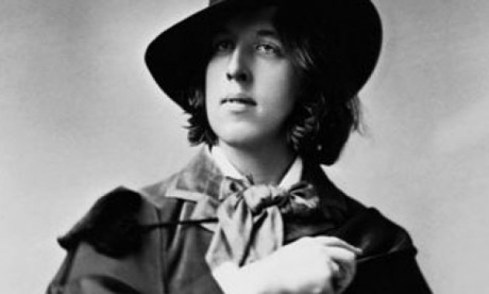
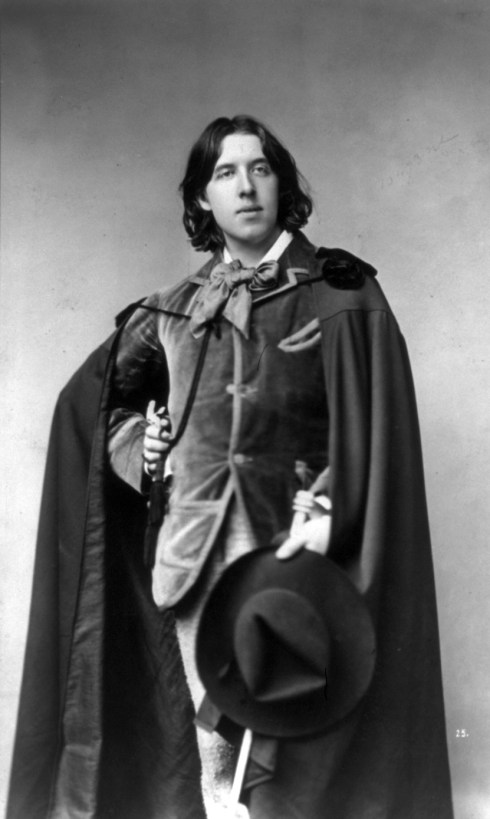
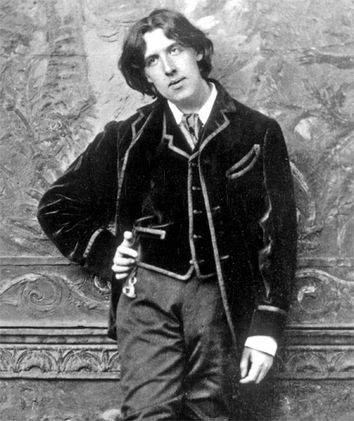
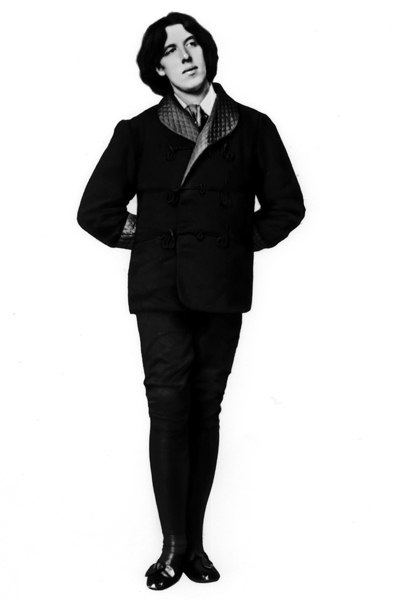
Continuing with Oscar Wilde month here’s a gem about the state of matrimony from Lady Windermere’s Fan. The play premiered on February 22nd, 1892 at London’s St. James’s Theatre.
Our husbands would really forget our existence if we didn’t nag at them from time to time, just to remind them that we have a perfect legal right to do so.
—Lady Windermere’s Fan
(Yes, I’m going to run out of Oscar Wilde images before the month is out. Indulge me while I can still come up with new ones.)
Mr. Wilde is at it again… This one comes from his play, A Woman of No Importance. The play was originally staged at London’s Haymarket Theatre in the Spring of 1893. Wilde wrote it at the urging of the Haymarket’s actor-manager, Herbert Beerbohm Tree, who wanted to duplicate the success of Lady Windermere’s Fan which premiered a the St. James Theatre the previous season.
One should never trust a woman
who tells one her real age. A woman who would tell one that,
would tell one anything.
I’ve already blown one of my New Years Resolutions… to post a quote every day… but I’m giving myself a break and starting today instead.
Since my wonderful friend, Angie, gave me a book of quotes from Oscar Wilde and one of quotes by Charles Dickens I thought I’d start with those fine fellows and continue with a famous author a month. Lets start with Mr. Wilde, shall we…
To get back my youth I would do anything in the world, except take exercise, get up early, or be respectable.{The Picture of Dorian Gray}
December 21st is St. Thomas Day. It was traditionally the day when Regency housewives would begin their Christmas preparations in earnest. With houses cleaned to a spit shine the Holiday baking could begin.
It is also the day when widows and older women would go ‘Thomasing’ at the doors of their more fortunate neighbors and would receive food or money. Wealthier neighbors would often distribute wheat– either in the form of baked goods or uncooked (which the Mumpers would turn into Christmas cakes, breads or frumenty –a dessert made of boiled wheat, milk, sugar and cinnamon). In some parts of England, like Warwickshire the Mumpers would “go a-corning” and would get gifts of corn or cornmeal. Children there would beg for apples.
In turn the benefactors would receive a sprig of holly, a small bunch of mistletoe or a ball of home spun wool in thanks.
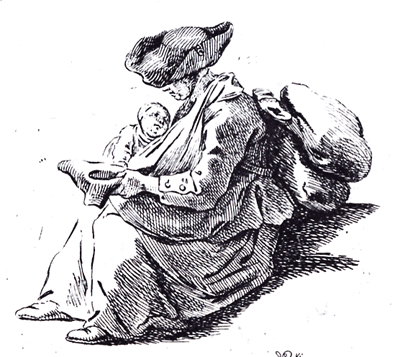
A widow (probably of the Napoleonic War) and her baby go “a-Thomasing” or “a-gooding”[Random Bits of Fascination ]
The day is remembered in Christmas carols such as:
Christmas is coming and the geese are getting fat,
Please spare a penny for the old’s hat,
if you haven’t got a penny, a ha’penny will do,
if you haven’t got a ha’penny, God bless you.
and…
‘ Wassail, wassail, through the town,
If you’ve got any apples, throw them down ;
Up with the stocking, and down with the shoe,
If you’ve got no apples, money will do ;
The jug is white and the ale is brown,
This is the best house in the town.’
“Mumper” is a slang word for “beggar” — presumably because many beggars were often handicapped (from either disease or from wounds they suffered in the War) and hobbled around on crutches… thumping and mumping through the streets.
A parcel of wretches hopping about by the assistance of their crutches, like so many Lincoln’s Inn Fields mumpers, drawing into a body to attack [infest or beset] the coach of some charitable lord.” — Ned Ward: The London Spy, part v. [Info Please ]
And Mumpers Day was ‘celebrated’ either on St. Thomas day (December 21st) or Boxing Day (December 26th) depending on the region.


 [Image courtesy Fashion Office Buzz) David Robert Jones was born on this day in Brixton, London, England in 1947. He is 66 years old.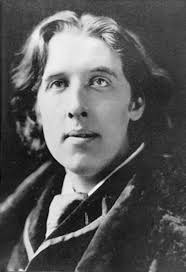



 ritaLOVEStoWRITE