Category Archives: postaday

Williamsburg (part 2)

Textile 3

[This is part two of my What To Do in Williamsburg Blog for part one go HERE.]

Yesterday’s tips included:

  1. Planning your trip in the Fall or Winter to avoid the heat and crowds.
  2. Staying in a Colonial House.
  3. Engaging with the locals.

Today we’ll focus on some [FREE] tours.

4. Visit the Wren Building.

The first State House of Virginia was in Jamestown. But it burned down. Then it burned again. And again. And a fourth time. The governor and the citizens of Jamestown thought they’d better look for a better location for their capital. They chose Williamsburg (then known as the Middle Plantation) because the town already had a market, a church — Burton Parish, and a school — William and Mary. The architectural gem of William and Mary is the Wren Building. It sits at the opposite end of Duke of Gloucester Street from the Capitol and it is definitely worth a visit.

English: The front of the Wren Building at the...

English: The front of the Wren Building at the College of William & Mary in Williamsburg, Virginia, USA. (Photo credit: Wikipedia)

The building began construction in 1695 and was completed in 1699. It is the oldest restored building in Williamsburg. It has suffered three major fires (in 1705, 1859 and 1862) and been rebuilt each time. Between 1928 and 1931 it was restored to its Colonial appearance. Every student at William and Mary has at least one class in the historic Wren Building during their time at the college. The college counts three US presidents among its alumni; Thomas Jefferson, James Monroe and John Tyler. Their portraits hang in the Great Hall.

Free tours of the building are available M-F 1-5 when school is in session. Hint: As you climb the steps to the front door look for a patch of darker red brick to your left. You’ll see the initials of some of the school’s earliest residents carved in the bricks.
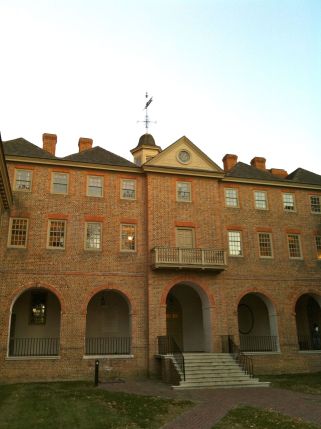
Wren Building from the William and Mary Campus side. (Photo credit: Bill.)

Wren Building from the William and Mary Campus side. (Photo credit: Bill.)

5.) Take the Rubbish, Treasures and Colonial Life Tour.   Rev. W.A.R. Goodwin, the pastor at Bruton Church convinced John D. Rockefeller Jr. to join him in a dream of restoring the sleepy little 1920’s country seat back to  the glorious colonial capital it had once been. That took a lot of money, a lot of research and a lot of digging.  There is no better way to learn about how that transformation took place than on the 90 minute Rubbish, Treasures and Colonial Life tour. Meet members of the staff, learn about how archaeological methods have changed over the years, and see the treasures that await their turn to be cataloged. Tickets are FREE with your Williamsburg Admission Pass, but you must make a reservation prior to the tour.
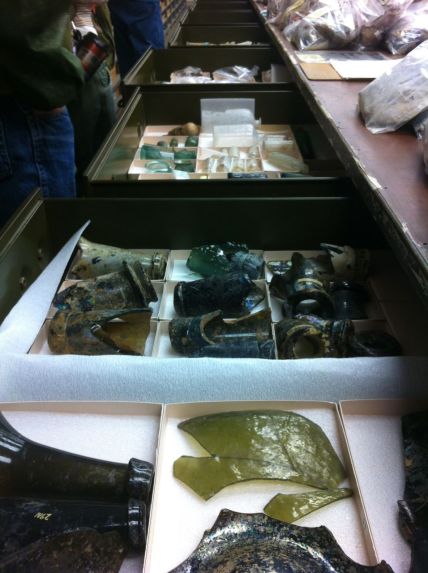
Glass fragments are sorted by type in drawer in the Archeology labs in Williamsburg.

6.) Another great free tour is the Behind the Scenes tour. This tour takes place at the Bruton Heights School and focuses on preservation techniques (as opposed how the objects are found, put together and cataloged.) You’ll see the studio where educational videos, Emmy Award winning broadcasts and blogs are made…
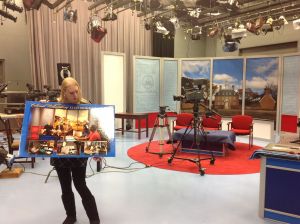
Film Studio at Williamsburg's  Bruton School facility.

…then go to one of the restoration labs to see work being done on an 18th century item. We visited the Textile Lab where they were restoring some quilts for an upcoming show at the De Witt Wallace Museum.
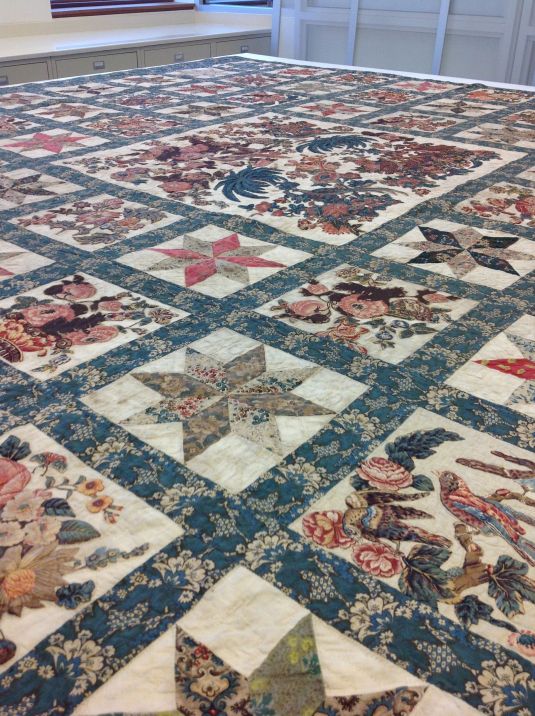
Over sized quilt being restored at the Textile Lab

Over sized quilt being restored at the Textile Lab
Detail from an over sized quilt being restored at the Textile Lab.

Detail of quilt

6.) Go to the De Witt Wallace Decorative Arts Museum and the Abby Aldrich Rockefeller Folk Art Museum. With a substantial permanent exhibit and wonderful traveling exhibits we have never been disappointed by a stop at the twin museums that are accessible through the recreated Public Hospital on Frances Street.
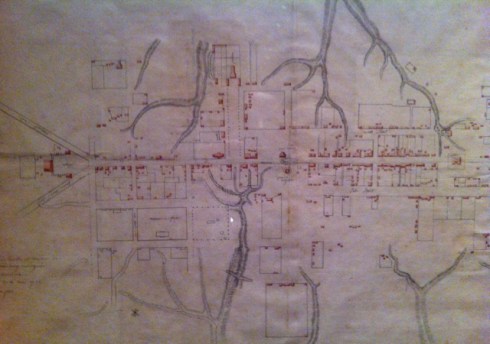
The Frenchman's Map was on display as part of a temporary exhibit on maps and mapmaking. Drawn when the French moved into the city after during the Siege of Yorktown, It is the Rosettastone for Archeologist trying to restore Williamsburg.

The Frenchman’s Map was on display as part of a temporary exhibit on maps and map making. Drawn when the French moved into the city after during the Siege of Yorktown, It is the Rosetta stone for Archeologist trying to restore Williamsburg. The Bodleian Plate, another key to what the Colonial Capital looked like, is also on display.

This is a terrific way to spend a rainy (or cold) afternoon. And if you are traveling with youngsters the Children’s room in the Abby Aldrich Museum is delightful.
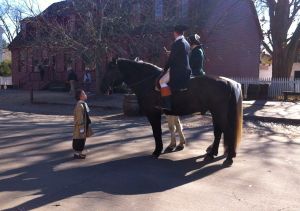
Looking up to the past.<br /><br />A young visitor finds both human and equine re-enactors equally fascinating andfriendly on Duke of Gloucester street.

Looking up to the past.
A young visitor finds both human and equine re-enactors equally fascinating and friendly on Duke of Gloucester street.
  • To read my article on Williamsburg: A Winter Escape in 2011’s Mason-Dixon ARRIVE Magazine click HERE and scroll down == it is the third article on the page.

Georges Seurat 12.2.12 Thought of the Day

“Some say they see poetry in my paintings; I see only science.”
Georges Seurat

Georges Seurat (1859-1891), photo

Georges Seurat (1859-1891), photo (Photo credit: Wikipedia)

George Seurat was born on this day in Paris, France in 1859. Today is the 153rd anniversary of his birth.

He was born to a wealthy family. His father was distant and taciturn.

At every available opportunity, Antoine-Christophe took leave of his family and disappeared to his villa in the suburbs to grow flowers and say mass in the company of his gardener; he was only at home on Tuesdays. Seurat’s mother was quiet and unassuming, but it was she who gave some warmth and continuity to his childhood. [Renoir Fine Art Inc.]

The family lived on the Boulevarde de Magenta near “Le Parc des Butte-Chaumont” and Georges and his mother often strolled through the park together. He revisited the park in his paintings. Seurat was a quite young man with a gentle voice. He always dressed in a dignified manner. Friends teased him that his tall handsome appearance made him look like a department store model. But he “was serious and intense ­ preferring to spend his money on books rather than on food or drink.” [Ibid]

He went to the Ecole des Beaux-Arts in 1878. He preferred pointillism over the soft brushstrokes of impressionism. He took a scientific approach to painting, working “fixed hours and (using a) meticulous systematization of his technique.” [Ibid]

English: Bathers at Asnières, Georges Seurat, ...

English: Bathers at Asnières, Georges Seurat, 1884. (Photo credit: Wikipedia)

He painted six huge canvas paintings that represent the bulk of his artistic output. The first, painted in 1813 (and taking almost the entire year to complete) was Bathing at Asnieres.

Next came La Grande Jatte. He spent two years on La Grande Jatte, going to the same spot every day for months. There he would sketch in the morning, then in the afternoon he would return to his studio and paint on his giant canvas.

A Sunday on La Grande Jatte

A Sunday on La Grande Jatte (Photo credit: Wikipedia)

Le Grande Jatte “made” Seurat.  He took a studio next to fellow pointillist Signac in Montmartre.

Here he was surrounded by artists ranging from the conservative decorator Puvis de Chavannes, whom he greatly admired, to more progressive contempories ­ including Degas, Gauguin, Van Gogh and Toulouse-Lautrec. He was at the center of artistic debates, but he kept aloof from them. [Renoir Fine Art Inc.]

Likewise he keep aloof about pricing his paintings. He didn’t need to worry about money like some of his fellow artists.

He settled into an annual routine of painting large canvas s in his studio during the winter and doing smaller marine paintings at one of the Normandy Ports in the Summer.

Paris - Musée d'Orsay: Georges Seurat's Le Cirque

Paris – Musée d’Orsay: Georges Seurat’s Le Cirque (Photo credit: wallyg)

His other large canvas paintings include Le Cirque (1890), The Models (1888), La Parade (1889), and Le Chahut (1891).

Le Chahut, 1889–1890, Kröller-Müller Museum, O...

Le Chahut, 1889–1890, Kröller-Müller Museum, Otterlo, Netherlands (Photo credit: Wikipedia)

Seurat died at the age of 31 from meningitis in March of 1891.


Secondary Character Saturday — Ron Weasley

Welcome to the next edition of Secondary Character Saturday.

———————————————————————————–

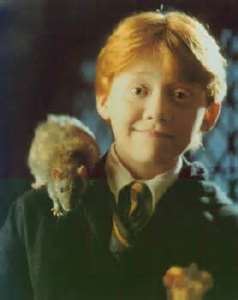
Rupert Grint played Ron in the Harry Potter movies.

Rupert Grint played Ron in the Harry Potter movies.

Name: Ronald Bilius “Ron” Weasley

From: The Harry Potter series

By: J. K. Rowling

Written in: Ron first appeared in Harry Potter and the Philosopher’s Stone which was published in 1997.

Why: Ron is the everyman of the Potter series. In the triumvirate that crowns  the Harry Potter food chain you’ve got the hero (Harry), the brains (Hermione), and the foil (Ron). He is flawed, there’s no doubt about it. As the youngest brothers he’s neither the smartest, nor the bravest, nor the funniest.

I’m the sixth in our family to go to Hogwarts. You could say I got a lot to live up to. Bill and Charlie have already left – Bill was Head Boy and Charlie was captain of Quidditch. Now Percy’s a prefect. Fred and George mess around a lot, but they still get really good marks and everyone thinks they’re really funny. Everyone expects me to do as well as the others, but if I do, it’s no big deal, because they did it first.” [Harry Potter and the Sorcerer’s Stone, by JK Rowling, Scholastic Inc. New York, New York, pg 98]

Throw his little sister Ginny into the mix and he’s not even the cutest. He doesn’t seem to have any special “thing” that he can point to and say “this is what I do best.” So Ron is always searching for his moment in the sun. It doesn’t help that his best mate is the world-famous (at least in the wizarding world) Harry Potter. Ron suffers from insecurity from the start and it gets worse as the books go along. He is also largely clueless when it comes to women. Just ask Hermione. But Ron is loyal, funny, and generous. He’s grounded in a way that neither Harry or Hermione seem to be. And in this way Ron seems the most human of the central characters in the series. (In fact, as a pure blood Wizard he’s the least human. But while other Pure Bloods hold that over mere Mud Bloods it never seems to enter into Ron’s equation of friendship.)

Pros: Loyalty, Nerve, Sense of Humor

Cons: Easily frustrated, occasionally lapses in his loyalty, procrastinates, jealous

Shining moment: Ron’s shining moment (imho) comes in the first book when he plays the game of Wizard’s Chess. It takes both courage and skill to play the game, and Ron willingly sacrifices his piece (and himself) so the others can win the game and advance in their goal to stop Quirell.

“We’re nearly there,” he muttered suddenly. “Let me think… let me think…”
The white queen turned her blank face toward him.
“Yes…” said Ron softly, “it’s the only way…I’ve got to be taken.”
“NO!” Harry and Hermione shouted.
“That’s chess!” snapped Ron. “You’ve got to make some sacrifices! I take one step forward and she’ll take me— that leave you free to checkmate the king, Harry!” [Ibid, pg 283]

Runner up Shining Moment: Working with Harry to save Ginny from the Chamber of Secrets in book two.

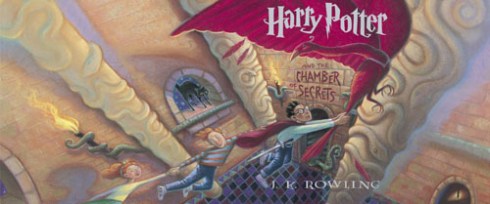
Cover of Harry Potter and the Chamber of Secrets

Cover of Harry Potter and the Chamber of Secrets

Silliest moment: Probably my favorite Ron moment happens in the second book, and it involves belching slugs. ‘Nugh said.

Least shining moment: He is least likeable in the last book when he leaves Harry and Hermione to finish the quest for the Horcurxes on their own. That is pretty weak. It is almost unforgivable. But Ron is human (well, he’s a wizard, but he has very human tendencies) and his weaknesses and failures make him more relatable to us. And Ron realizes his mistake, of course, and comes back.

Lego Ron

Lego Ron

So I know some of you are not going to like the fact that Ron is listed here as secondary character, but before you throw an unspeakable curse my way please consider that the books are named “Harry Potter and the…” Harry is the primary character.  Ron and every one else are, therefore, secondary.

AND lest you Snape or Luna lovers loose heart, just because I picked Ron this time doesn’t mean I wont pick another H.P. character another time. Saturday comes around once a week after all, and, clearly, I’ve got some pretty strong opinions up my sleeves.

Thanks to Ellie, Maggie, Bill and Stevie for their input on this blog post.


Ridley Scott 11.30.12 Thought of the Day

“A hit for me is if I enjoy the movie, if I personally enjoy the movie.”

-Ridley Scott


Cover of "Alien (The Director's Cut)"

Cover of Alien (The Director’s Cut)

Ridley Scott was born on this day in South Shields, Tyme & Wear, England in 1937.  He is 75 years old.

An army brat, Scott moved often as a child. He lived in Northern England, Wales, & Germany. He went to the Royal College of Art. Upon graduation he worked as a trainee  set designer. Later he started Ridley Scott Associates with his brother Tony.

His first feature was  The Duelists, but it was his  second film, ALIEN, that made his name in film. He followed Alien with BLADE RUNNER. Next he named a big budget commercial for Apple Macintosh in 1984. 1991 brought  THELMA AND LOUISE with Susan Sarandon and Geena Davis. GLADIATOR won 5  Academy Awards. He followed that with BLACK HAWK DOWN.

Other  titles by Scott include:

A Good Year

American Gangster

Body of Lies

Robin Hood

G.I. Jane

In June of 2012 Scott released Prometheus, an Alien semi-prequel.


C.S.Lewis 11.29.12 Thought of the Day

The statue of C. S. Lewis in front of the ward...

The statue of C. S. Lewis in front of the wardrobe from his book The Lion, the Witch and the Wardrobe in East Belfast, Northern Ireland (Photo credit: Wikipedia)

“Aim at heaven and you will get earth thrown in. Aim at earth and you get neither”
C.S. Lewis

Clive Staples Lewis was born on this day in Belfast, Ireland in 1898. Today is the 114th anniversary of his birth.

When he was four years old he adopted the nickname “Jack” (short for “Jacksie”) in honor of a beloved neighborhood dog who got hit by a car and died. As a child he and his brother Warren (also known as Warnie) created a fantasy world with talking animals called “Boxen.”

Lewis and Weldon Borland

Lewis and Weldon Borland (Photo credit: Kevin Borland)

When Lewis was nine his mother died of cancer. In 1910 he was sent to Campbell College, a boarding school in Belfast. He withdrew after a year because he developed a respiratory condition. In 1913 he attended Malvern College for a year. There he abandoned his Christian faith and became an atheist.  The following year he left Malvern and was privately tutored.

Lewis received a scholarship to University College Oxford. He started there in 1916, but took a leave of absence to join the Army when World War One broke out. He was injured at the Battle of Arras on April 15, 1918. After his release from the Army in December of 1919 he went back to Oxford. Where he received Firsts in Greek, Latin, Philosophy, Ancient History and English.

He was appointed Fellow and Tutor of English Literature at Oxford University in 1925 (a position he held until 1954 — for 29 years). In 1954 he became chair of Medieval and Renaissance Literature at Cambridge.

In 1931 after an evening of discussing Christianity with J.R.R. Tolkien and Hugo Dawson  Lewis converted to Christianity. The following day he and Warnie took a motorcycle ride to the Whipsnade Zoo. ” I did not believe that us Christ was the Son of God, and when we reached the Zoo I did.” [Surprised by Joy, C.S. Lewis]

At Oxford he was one of the founders of the literary group The Inklings.

He wrote more than 30 books including novels, fantasy literature, Christian literature, literary criticism, and essays. He is best known for The Chronicles of Narnia, The Screwtape Letters, The Four Loves and Mere Christianity.

English: Map of Narnian world as described in ...

English: Map of Narnian world as described in The Chronicles of Narnia by C.S. Lewis (Photo credit: Wikipedia)

C.S. Lewis died on November 22nd, 1963 in England.


Jon Stewart 11.28.12 Thought of the Day

“I always knew I shouldn’t have said that.”
— Jon Stewart

Host Jon Stewart in the studio of The Daily Sh...

Host Jon Stewart in the studio of The Daily Show in 2004 (Photo credit: Wikipedia)

Jonathan Stuart Leibowitz was born on this day in New York City, New York, USA in 1962. He is 50 years old today.

He grew up in Lawrenceville, New Jersey where he went to Lawrence High School. He went to William and Mary College in Williamsburg, Virginia where he majored in Chemistry before changing to Psychology. He graduated in 1984.

He worked in a number of jobs after graduation from contract administrator to bartender to puppeteer. He began stand up in 1987, adapting stage name Jon Stewart. He wrote for Caroline’s Comedy Hour on TV then co-hosted the Short Attention Span Theatre on Comedy Central. MTV’s Jon Stewart Show followed.

When Craig Killborn left The Daily Show Stewart took his place behind the big desk. He has won 16 Emmy Awards for his work on The Daily Show.

Stewart has written 3 best selling comedy books: Naked Pictures of Famous People; America (The Book) and Earth (The Book).

Jon Stewart (detail of original picture)


Charles M. Schultz 11.26.12 Thought of the Day

MSP: Snoopy

MSP: Snoopy (Photo credit: jpellgen)

All you  need is love. But a little chocolate now the doesn’t hurt.

Life is like a ten speed bicycle, most of us have gears we never use.

I love mankind. Its people I can’t stand.

There is no problem so big it can’t be run away from.

A whole sack of memories never equal one hope.

Try not to have a good time this is supposed to be educational.

 “My life has no purpose, no direction, no aim, no meaning, and yet I’m happy. I can’t figure it out. What am I doing right?”

Charles Schultz


Harpo Marx 11.23.12 Thought of the Day

“He looked like something that had gotten loose from Macy’s Thanksgiving Day Parade.”
–Harpo Marx

English: Photograph of Harpo Marx playing the ...

Adolph Marx was born on this day in New York City, New York, USA in 1888. Today is the 124th anniversary of his birth.

The second  of five brothers in the Marx family, Adolph didn’t make it past second grade in school. He was small for his age and he was picked on by the bigger boys because he was Jewish. Two boys literally threw him out of the (first floor) classroom window on several occasions before he gave up and left school.  He joined his brother Chico in doing odd jobs to help the family.

His uncle Al Schoenberg (stage name Al Shean) was in a Vaudeville act. His older brother Chico played piano, and his younger bother Julius (Groucho) was a boy soprano. Adolph joined Julius and Milton (Gummo) to form “the Three Nightingales” in 1910. Lou Levy joined them to make the group “The Four Nightingales.” When their mother, Minnie, and Aunt Hannah joined the act they changed the name to “The Six Mascots.”

The five Marx brothers with their parents in N...

The five Marx brothers with their parents in New York City, 1915. From left to right; Groucho, Gummo, Minnie (mother), Zeppo, Frenchy (father), Chico, and Harpo. (Photo credit: Wikipedia)

In 1911 he changed his name to Arthur because he didn’t like the sound of Adolph. He adopted the stage name of Harpo when his mother sent him a harp. He didn’t know how to tune it or play it. He didn’t even know how to hold it until he found an image of an angel holding a harp at the 5&10 store. He tuned it the best he could and taught himself to play.

At that point Harpo’s two-fold schtick — he “couldn’t talk” so he blew his horn  or whistled to communicate; and he played the harp — was in place. (He could, in fact, talk. And he did so — a lot — off stage/scene. His “speaking career” stopped after he received a bad review for a largely ad-libbed performance in the play Home Again.)

A critic in the local newspaper described the show by saying, in part, “Adolph Marx performed beautiful pantomime which was ruined whenever he spoke.” Harpo then decided he could do a better job of stealing focus by not speaking. [The Marx Brothers; Harpo Marx from an article in Theatre Arts Monthly, October 1939]


The four Marx Brothers stowing away on an ocea...

The four Marx Brothers stowing away on an ocean vessel by hiding in barrels in this promotional still for Monkey Business. Left to right: Harpo, Zeppo, Chico, Groucho. (Photo credit: Wikipedia)

From the Vaudeville stage the Marx Brothers moved on to Hollywood. They made the short, Humor Risk, in 1921. (The film has since been lost.)  Harpo was then in Too Many Kisses as the character “The Village Peter Pan.” He actually has a line in this movie, but, as it’s a silent film, you don’t actually hear him speak it. His brothers did not appear in the film.

In 1929 the brothers put out The Cocoanuts.The film was based on their Broadway play of the same name. In it…

the Marx Brothers run a hotel, auction off some land, thwart a jewel robbery, and generally act like themselves. [IMDB]

They shot during the day and performed in the stage show of Animal Crackers at night. It was an exhausting schedule and the Brothers were not happy with the result. They were “so appalled … that they offered to buy the negative from Paramount so that they could burn it.” [Ibid]

Marx Brothers, head-and-shoulders portrait, fa...

Marx Brothers, head-and-shoulders portrait, facing front. Top to bottom: Chico, Harpo, Groucho and Zeppo. (Photo credit: Wikipedia)

The Brothers made Animal Crackers, Horse Feathers , Duck Soup, A Night at the Opera, A Day at the Races, Room Service, At the Circus, Go West, The Big Store, A Night in Casablanca, and Love Happy in quick succession.

Starting in 1952 Harpo started doing guest spots on Television, most notably on the I Love Lucy Show.

His last film was The Story of Mankind in 1957.  He played Sir Isaac Newton.

Off screen Harpo, the elementary school drop out, rubbed shoulders with some pretty high level literary types. In the 1920’s he held his own at the Algonquin Round Table with writers such as George S. Kaufman and Dorothy Parker. In 1928 he spent the summer on the French Riviera with George Bernard Shaw.

He attributes his welcome hanging out with the fast literary crowd at the Algonquin Round Table in New York in the 1920s to his ability to listen — in fact, to being the one real listener in that set. [Robert Wilfred Franson’s review of Harpo Speaks]

In 1933 Harpo did a 6-week goodwill mission in the Soviet Union. He was the “first American to perform in the Soviet Union after the United States government officially recognized it.” [Harpo’s Place] According to his autobiography, Harpo Speaks, the trip was part performance and part spy caper.  He smuggled papers out of the USSR by taping them to his leg.

Marx died while having open-heart surgery on September 28, 1964.

Here’s a clip of Harpo actually speaking (and honking):


Abigail Adams 11.22.12 Thought of the Day

“We have too many high-sounding words, and too few actions that correspond with them.”
— Abigail Adams

Abigail Adams by Benjamin Blythe, 1766

Abigail Adams by Benjamin Blythe, 1766 (Photo credit: Wikipedia)

Abigail Smith was born on this day in Weymouth, Massachusetts, in 1744. Today is the 268th anniversary of her birth.

Abigail  was literally born in a church. Her father, Reverend William Smith was the pastor at the North Parish Congregational Church, her mother, Elizabeth Quincy Smith was first cousins to Dorothy Quincy Hancock (John Hancock’s wife). Reverend Smith believed in reason and morality and he imparted those lessons to  his daughters Mary, Elizabeth and Abigail. Her mother home schooled the girls with the aid of her extended family’s libraries. The girls studied English and French literature, philosophy, history, and the Bible. Abigail
“was a keen political observer, prolific writer…” [abigailadams.org]

Abigail’s third cousin John Adams visited the Smith’s with his friend Richard Cranch. Cranch was engaged to Mary Smith, the eldest Smith sister. Adam’s was just a country lawer, and Abigail’s mother didn’t approve of him as a suitor, but the couple prevailed.

On October 25, 1764 Abigail married John Adams, a Harvard graduate pursuing a law career.  Their marriage was one of mind and heart, producing three sons and two daughters, and lasting for more than half a century. [Ibid]

As a young married couple they lived on the farm John inherited, Braintree. Later they moved to Boston. She stayed in Massachusetts when John went to Philadelphia  to participate in the Continental Congress (1 & 2), travelled abroad as an envoy, and served in elected office.

Abigail struggled alone with wartime shortages, lack of income, and difficult living conditions.  She ran the household, farm, and educated her children.  Abigail’s letters to John were strong, witty and supportive.  The letters, which have been preserved, detail her life during revolutionary times, and describe the many dangers and challenges she faced as our young country fought to become independent.  Most of all, the letters tell of her loneliness without her “dearest friend,” her husband John. [Ibid]

She joined John in Paris in 1784 and travelled with him to England the following year. In 1800 she became the First Lady to preside over the White House as John Adams became the second President of the United States. (The Capitol had recently been moved to Washington DC).

English: "Abigail Smith Adams," oil ...

English: “Abigail Smith Adams,” oil on canvas, by the American artist Gilbert Stuart. Courtesy of the National Gallery of Art, Washington, D. C. (Photo credit: Wikipedia)

When John Adams lost his bid for a second term he and Abigail moved back to Braintree …”and for 17 years enjoyed the companionship that public life had long denied them.” [Ibid]

Abigail Adams died on October 28, 1818. She was a woman …

often ahead of her time with many of her ideas. She opposed slavery, believed in equal education for boys and girls, and practiced what she learned as a child – the duty of the fortunate is to help those who are less fortunate. [Ibid]