“If I ever write this letter
Bitter words it would contain
Just an unrequited lover
Wishing she had never
Spoken your name
Had never known your name” — Natalie Merchant
MTV Unplugged (10,000 Maniacs album) (Photo credit: Wikipedia)
Natalie Anne Merchant was born on this day in Jamestown, New York, USA in 1963. She is 49 years old.
Merchant is the third of four children. Although her parents never allowed their children to watch television there was always plenty of music in the house. Her mother listened to an eclectic mix of classical music, show tunes, jazz and pop music and it rubbed off on little Natalie. Merchant dropped out of high school at 16 and worked briefly at a health food store. After a stint working at a summer program for handicapped children she considered going back to school become a special education teacher.
…But that changed when she met Robert Buck in 1981 and became the lead singer for 10,000 Maniacs. The band released eight albums together: Human Conflict Number Five (1982), The Secrets of the I Ching (1983), The Wishing Chair (1985), In My Tribe (1987), Blind Man’s Zoo (1989), Hope Chest (1990), Our Time in Eden (1992) and MTV Unplugged (1993). [IMDB]
10,000 Maniacs reached its peak of popularity around 1988. They weren’t “chart driven” and never topped Billboard’s Top 100, but they had a loyal fan base, due in large part to their videos on MTV.
This was another of the off-center, non-mainstream acts that assembled a fine collection of tunes. They were often ignored by head-in-the-sand mainstream radio. But their music was refreshing as well as stimulating. Natalie Merchant certainly was the driving force behind 10,000 Maniacs.[Top Ten Songs by 10,000 Maniacs, Yahoo! Voices]
Here’s Trouble Me from Blind Man’s Zoo:
Merchant left the group shortly after the MTV Unpluggedsession in 1993 and began work writing and producing her first solo effort Tigerlily. The album came out in 1995 to wide acclaim. It sold over 5 million copies and earned her a spot in the top-ten lists with Carnival.
Her second release was Ophelia, with Kind and Generous, and her Live in Concert CD also sold well. In 2000 she went on the road with the alt-country band Wilco in the “American Folk Music Tour”. She produced Motherland the following year with Tell Yourself and Build a Levee. (Here’s the later performed on the David Letterman Show.)
Motherland was her last release on Elektra Records. Merchant started her own label, Myth America Records, to release 2003’s The House of Carpenter’s Daughter. The album has a mix of traditional tunes and covers of contemporary folk songs (like Richard Thompson’s Crazy Man Michael and Florence Reece’s Which Side are You On?)
In 2004 Campfire Songs, a compilation album of “popular, obscure, and unknown” 10,000 Maniac songs, was released. Merchant put out her own Retrospectivealbum the next year.
Leave Your Sleep came out in 2010. This concept album includes songs adapted from poetry about childhood.
…An ambitious double-album that draws upon multiple literary giants for inspiration. The new set, “Leave Your Sleep,” features lyrical tributes to famous poems by e.e. cummings, Christina Rossetti, Robert Louis Stevenson and many others throughout the course of 26 tracks. Despite the elaborate concept and overwhelming length, the album soars with gorgeous folk arrangements and Merchant’s daring creativity. [BillBoard.com]
In June of this year Leave Your Sleep became a 48 page picture book with illustrations by Barbara McClintock. The book includes a CD with 19 songs.
Merchant continues to write and perform. She will be at the Milwaukee Theatre tomorrow night. If you’re lucky enough to snag tickets… be sure to wish her a happy birthday.
Click HERE to see other upcoming Natalie Merchant Shows.
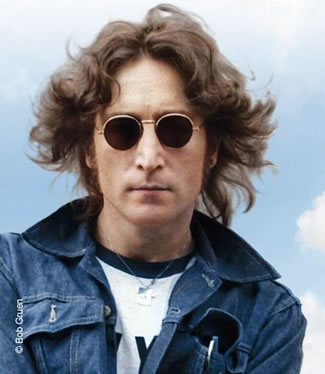
PROGRAMMING NOTE: Switching up the formula a little today as it is NOT John Lennon’s Birthday — that was October 9th — but I was away that day, so I thought I’d retroactively give John the birthday nod.
———————————————————————–
“If someone thinks that love and peace is a cliché that must have been left behind in the Sixties, that’s his problem. Love and peace are eternal.” — John Lennon
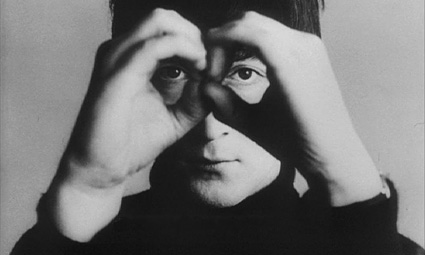
John Winston Lennon was born on October 9th, 1940 in Liverpool, England. He would be 72 years old this year.
John was born during World War II, indeed he was born during an air raid, to Julia and Alfred Lennon. His father worked as a merchant seaman and was often away from home. By the time John was four-years-old his parents were divorced and he went to live with his Aunt Mimi Smith. Although Alfred was largely out of the picture, Julia remained close, she visited John regularly.
She taught John how to play the banjo and the piano and purchased his first guitar. [biography.com]
Julia Lennon died when John was 18, she was stuck by a car.
He did not do well in school, and preferred to be the class clown rather than study. He did love art and music though. John drew unique (almost grotesque) line drawings that quickly and simply captured the image.
John started a ‘skiffle band’ (a band that used the instruments they had at hand) called the Quarry Men when he was 16. The Quarry Men take their name from John’s high school, Quarry Bank High School in Liverpool. The next year he asked Paul McCartney to join the group. George Harrison and Lennon’s art school mate Stu Sutcliffe also joined the band and they later added Pete Best on drums.
The group changed their name to the Beatles and played clubs in Hamburg, Germany and the Cavern Club in Liverpool. Brian Epstein came on board in 1961 as manager, and they got a recording contract with EMI records.
1962 saw huge changes for both Lennon and the group. In April of 1962 Sutcliffe died tragically of a brain aneurysm. In August John married Cynthia Powell, the couple had a son, Julian in April the next year. The band replaced drummer Pete Best with Ringo Starr. The realigned group recorded at EMI with George Martin as their producer, and released Love Me Do in October. The single reached #17 on the British Charts. Please, Please Me the follow-up single, topped the charts. And the Beatles were off.
Beatlemania invaded the US in 1964. They appeared on The Ed Sullivan Show and played sold out concerts.
Still from Hard Day’s Night. [Image courtesy: Cinematical]
Back in the UK they made the movie A Hard Day’s Night. The movie is a delightfully fun, pop romp of a mockumentary. It featured songs from the album of the same name, notably: A Hard Days Night, If I Fell, I’m Happy Just to Dance with You, Tell Me Why, Any Time At All and Can’t Buy Me Love. The popularity of the movie helped keep the album at #1 for 14 weeks on the Billboard chart. The budget was limited so it was shot in black and white, and everything was kept simple. Not so with their second film HELP! which still manages to be charming but not as charming as Hard Day’s Night. It is overproduced and over done. Lennon said that the Beatles felt like extras in their own movie with HELP! and it shows. Still the music was pretty awesome: Help!, You’ve Got to Hide Your Love Away, You’re Going to Lose That Girl! Ticket to Ride, It’s Only Love, I’ve Just Seen a Face, and Yesterday. The Album held the top spot on Billboard for 9 weeks.
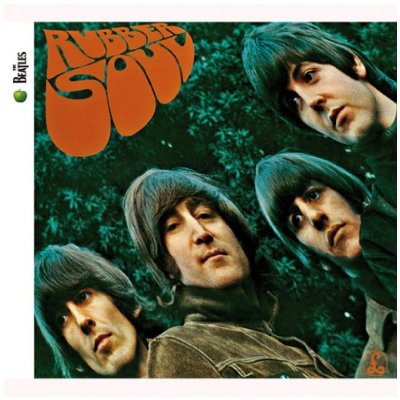
Musically the lads from Liverpool were in top form, releasing the breakthrough album, Rubber Soul in 1965. Their song writing had transformed from the harder R&B influenced Hold My Hand kind of song to lyrical, mature songs like Norwegian Wood, Nowhere Man, Michelle, Girl, In My Life, and If I Needed Someone. It was another #1 Billboard album (6 weeks). [I’m guessing that if you are still reading this blog you are a Beatles fan and already have most of their albums, but if you don’t… I’d put Rubber Soul at the top of the list. For my money Rubber Soul and Revolver are two of the best albums every made.]
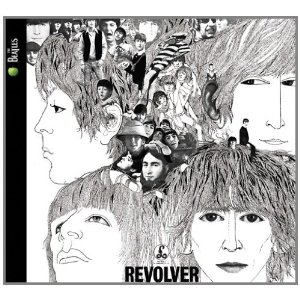
Yesterday…and Today came out in 1966. Stand out songs include: Drive My Car, Nowhere Man, Yesterday, If I Needed Someone, We Can Work It Out and Day Tripper. The album reached #1 for 5 weeks. Revolver also came out in 1966. Taxman, Eleanor Rigby, Here, There and Everywhere, Yellow Submarine, Good Day Sunshine, And Your Bird Can Sing, and Got to Get You Into My Life are some of the hits off the album, which spent 6 weeks at the #1 spot on Billboard’s chart. By 1966 the strain of constant touring, recording, and the hounding fans was weighing on the band. Lennon got in trouble for his “We’re more popular than Jesus now” remark. They played their last concert in Candlestick Park stadium, San Francisco in August.
The following year the Beatles put out their eighth LP, Sgt. Pepper’s Lonely Hearts Club Band. An eclectic mix of pop, rock n roll, and Indian influenced tracks. It won Album of the Year and was #1 on the Billboard charts for a whopping 15 weeks. Hits from the album include: With a Little Help from My Friends, Lucy in the Sky with Diamonds, Getting Better, –the amazing — A Day in the Life, and of course, Lovely Rita. But as good as Pepper was, and it was very good, it was also over produced. All those horns and whistles and animal sounds didn’t quite get in the way enough to ruin the songs, but were they really necessary? Listening back on them now… well, I prefer a simpler production. [It worked somehow in A Day in the Life; not so much in Lovely Rita, but still, the later has such a great title.]
Speaking of over produced…there’s Magical Mystery Tour — a movie that makes absolutely no sense. The LP had some lovely songs though. And even if it was becoming painfully clear that Lennon was writing the “Lennon” songs– which were leaning toward sarcasm — and McCartney was writing the “McCarntney” songs — which were tending to get more nostalgic and saccharine — both came up with some good ones here, like: The Fool on the Hill, Strawberry Fields Forever, Penny Lane, and All You Need Is Love.
1968 brought the animated (and equally bizarre) film Yellow Submarine. In November they release a new album called The Beatles aka The White Album. It was at the top of the charts for 9 weeks. This double album seems almost schizophrenic with some great songs like the hard rock and roll Back in the USSR, Why Don’t We Do It in the Road? Helter Skelter, and Revolution; others that are lovely and lyrical; While My Guitar Gently Weeps, Blackbird, Julia, Long, Long, Long, Good Night; And others that I’m not going to waste my time talking about.
On the personal side John divorced Cynthia Lennon in November of 1968. He and Yoko Ono, who he had been seeing since 1966, and living with since the summer of ’68, put out a collaborative album Two Virgins. The album showed the couple nude on the cover and was banned in most record stores. On March 20, 1969 John and Yoko married in Gibraltar.
The following week, the two master media manipulators used their celebrity for good, hosting a honeymoon “bed-in” for peace in room 902, the presidential suite of the Amsterdam Hilton. The… pajama-clad newlyweds spoke out about world peace. It was the honeymoon as performance art, interlaced with a protest against the Vietnam War. [About.com]
They repeated the “performance” in Montreal the following week and with a bedroom full of musicians, artist, writers and other 1960’s counter-culture dignitaries, they recorded Give Peace a Chance.
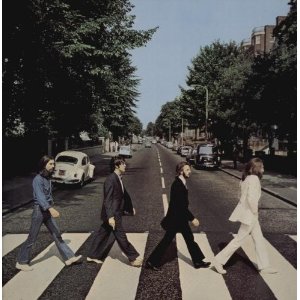
Abbey Road was released in 1969. It is actually the last album the Beatles recorded, but it was released before Let It Be.
Notable songs include: Come Together, Something, Here Comes the Sun, and I Want You. Abbey Road stayed at #1 for 11 weeks.
Recorded largely in January in 1969, Let it Be wasn’t released until 1970 and was #1 for 4 weeks. Lennon had already left the group (September of 1969.) A film of the same name came out the same year. The film was supposed to be a documentary that went behind the scenes to show the world’s most famous rock band making an album. Instead it showed the world’s most famous rock band dissolving. The film culminated in a rooftop concert on January 30th. Songs from the album include: Don’t Let Me Down, Get Back, Two of Us, Let It Be, and The Long and Winding Road.
After the Beatles John released Plastic Ono Band.
The raw, confessional nature of Plastic Ono Band reflected the primal-scream therapy that Lennon and Ono had been undergoing with psychologist Arthur Janov. He dealt with such fundamental issues as “God” and “Mother” and the class system (“Working Class Hero”) on an album as full of naked candor as any in rock has ever been. [Rock & Roll Hall of Fame]
1971 brought Imagine. Rolling Stone Magazine called the title track the third all-time best song ever written.
English: John Lennon and Yoko Ono (Photo credit: Wikipedia)
John and Yoko followed Imagine with an anti-war release Happy Xmas (War is Over). The Nixon administration was not amused. It decided to begin deportation proceeding against Lennon. The stress took its toll on Lennon’s marriage with Ono and the two separated. For 18 months he lived in Los Angeles with another woman, May Pang. It is a period he calls his “Lost weekend” of drinking a partying. He fished Mind Games, and recordedWalls and Bridges.Whatever Gets You Thru the Night, a single off the later album became a number one hit. He co-wrote Fame with David Bowie.
He and Ono were reunited in 1975 shortly before the release of Rock n Roll. The couple celebrated the birth of their son Sean in October of 1975. And, after releasing Shaved Fish, John became a stay at home dad for five years.
In 1980 he came out of retirement and released Double Fantasy with the single Just Like Starting Over.
On December 8, 1980 the music died. As Lennon and Ono were returning home from recording tracks for the following up album, Milk and Honey he was assassinated in front of his New York apartment building, the Dakota.
‘Why am I so soft in the middle when the rest of my life is so hard?”
— Paul Simon
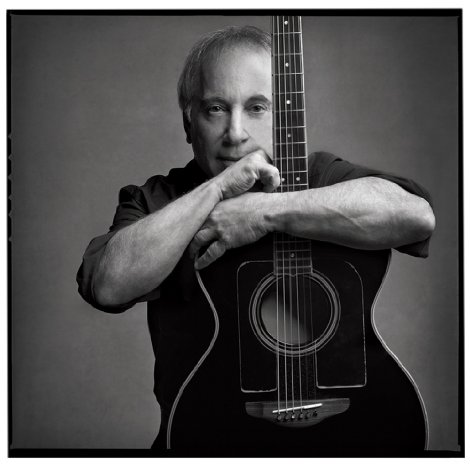
Paul Frederic Simon was born in Newark, New Jersey, USA on this day in 1941. He is 71 years old.
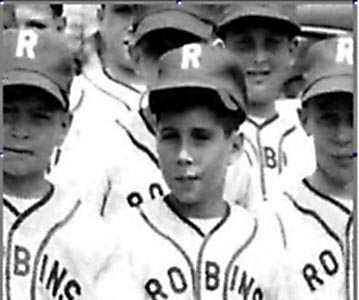
Paul’s other love is baseball. [Image courtesy Paul-Simon.info]
He grew up in Queens, New York loving baseball and music. Simon met Art Garfunkel in middle school. They were the White Rabbit and the Cheshire Cat in their 6th grade production of Alice and Wonderland and attended Forest Hills High School together. He and Garfunkel would use a tape recorder to practice singing together. In 1954 Paul got a guitar for his birthday. They tried to duplicate the tight harmonies of the Everly Brothers, who they idolized. In 1956 Simon wrote their first song “The Girl for Me” which his father, Louis (who was musician and college professor) wrote out and corded for the duo.
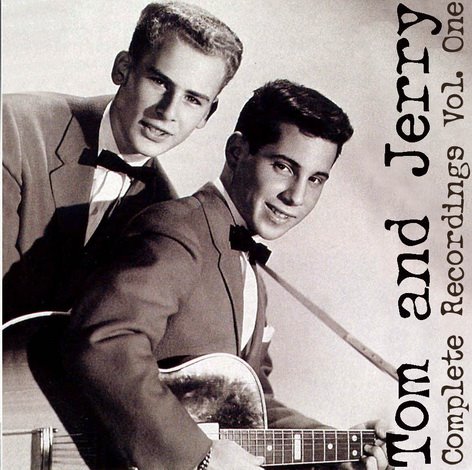
While juniors in high school they started the group Tom and Jerry. (Art was Tom; Paul was Jerry) They released a single, Hey, Schoolgirl. The song reached #49 on the Billboard charts.
After high school Simon went to Queen’s College, New York and studied English. He met singer songwriter Carol King at Queen’s and he did solo work and played with a group called Tico & The Triumphs. Although Tico et al put out a few singles the efforts weren’t very successful.
Worried that Simon and Garfunkel sounded too Jewish the duo opted for the more generic Tom and Jerry. [Image courtesy Paul-Simon.info]
Simon continued to write after graduation. He embraced the changing social climate of the early Sixties and “the burgeoning Greenwich Village folk scene.” [ Paul-Simon.info] His maturing style is reflected in the songs he wrote during this era, especially the Sound of Silence.
´Sound of Silence´ uses imagery of light and darkness to show how ignorance and apathy destroy people´s ability to communicate on even a simple level. The light symbolizes truth and enlightenment. Both music and lyrics are perfectly fitting. [Paul-Simon.info]
Simon reunited with Art Garfunkel in 1963. They began to sing in folk clubs, worked on songs and recorded a few of the songs Simon had earlier penned.
Here is He Was My Brother a song that Paul dedicated to Andrew Goodman, one of three civil rights workers killed in Mississippi in 1964.
They released Wednesday Morning, 3 A.M. as Simon and Garfunkel. A classic now, the album met with tepid response when it first came out. The songs are a mix of original Simon compositions; Bleecker Street, Sparrow, The Sound of Silence, Wednesday Morning, 3 A.M.; traditional tunes the duo arranged to best fit their voices; and covers. Sound of Silence hit #1 and gave Simon and Garfunkel their first gold record.
Simon moved to England and Garfunkel went back to school. Paul worked with the Australian band The Seekers and did some solo recording.
Back in the US Simon and Garfunkel released Sounds of Silence; Parsley, Sage, rosemary and Thyme, Bookends, andBridge Over Troubled Water. They also contributed heavily to the soundtrack for the movie Mrs. Robinson.
America (Simon & Garfunkel song) (Photo credit: Wikipedia)
The duo won GRAMMYs in 1969 and 1971 (plus a GRAMMY: Lifetime Achievement Award in 2003) and were inducted into the Rock and Roll Hall of Fame in 1990.
They split in 1970, again. Simon put out a self title album that was more World Beat inspired. The album featured Mother and Child Reunion and Me and Julio Down by the Schoolyard.
There Goes Rhymin’ Simon came out in 1973 and had the hits Kodachrome and Loves Me Like a Rock.
In 1975 he put out Still Crazy After All These Years with the hits My Little Town and 50 Ways to Leave YourLover. Simon picked up another Grammy for the album.
He switched record labels to Warner Brothers for One-Trick Pony. He starred in a movie of the same name. His next album was Hearts and Bones. That album was written around the famous 1981 Central Park reunion concert for Simon and Garfunkel and Art’s influence can be heard on several songs.
English: Front cover of the Paul Simon music album Graceland. (Photo credit: Wikipedia)
When Simon worked on the We Are the World single to raise money for USA for Africa his interest in world music was rekindled. His Graceland album — which celebrated its 25th anniversary on June 5th — was a
“…melding of South African styles and Simon’s trademark sensibility made for one of the most intriguing albums–not to mention commercial hits–of the ’80s. At once lively, thoughtful, gorgeous, and tough, Graceland acknowledges splits both in South Africa’s social fabric and in Simon’s personal life … Humor is hardly absent from the mix, though; witness the addled “I Know What I Know” and the fable-like “You Can Call Me Al.”[ –Rickey Wright. Amazon.com]
Rhythm of the Saints was recorded in Rio de Janeiro and New York in 1989. This album featured a latin beat, and Simon was quick to point out that the World Sound label was nothing new for his songs. He’d been writing with an international flavor since Julio after all.
Simon lent his talents to the 1998 musical play The Capeman. Although most critics liked his songs, and the production was nominated for several Tony’s the critics panned the effort and it lost millions.
In 2000 he produce a more conventional pop album You’re the One.
He continues to tour — often with other folk and rock icons, and occasionally with Garfunkel. In 2010 he put out So Beautiful or So What.
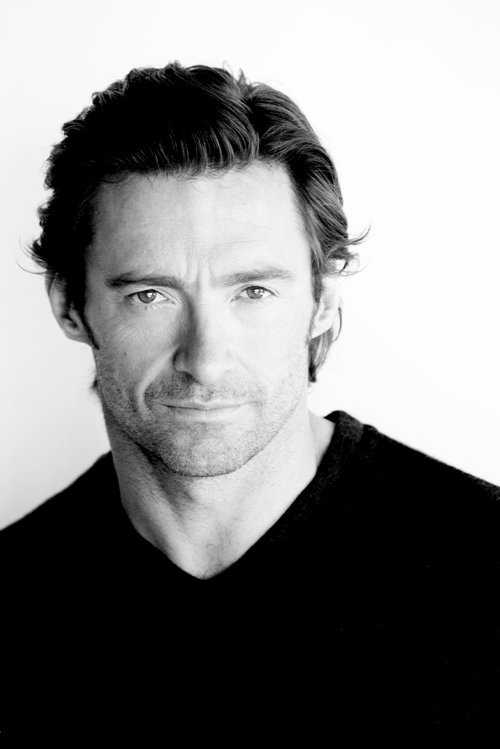
Hugh Michael Jackman was born on this day in Sydney, New South Wales, Australia in 1968. He is 44 years old.
The youngest of five ankle-biters, Jackman was raised by his father when his parents divorced. Jackman was eight-years-old at the time. He grew up with a love of the outdoors and enjoyed camping and playing on the beach. His first brush with acting was in My Fair Lady in Knox Grammar School at 17. He earned a degree in Communications at the University of Technology, Sydney in 1991. To finish up his university work he took some acting classes and found his muse.
After finishing a one-year intensive course called “The Journey” at the Actor’s Center in Sydney he hopped coasts to Perth to attend the Western Australian Academy of Performing Arts at Edith Cowan University.
Promotional still from Correlli . [Image courtesy: IMDb]
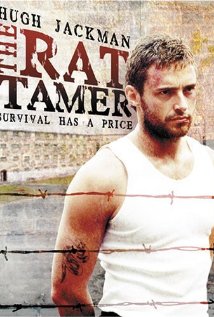
Almost immediately after graduating from ECU he was offered the part of Kevin Jones in a 10-part prison drama on Australian Broadcasting Company’s (ABC) Correlli. Jackman began dating his future wife, the series star, Deborra-Lee Furness on the show’s set.
After Correlli Jackman hit the stage for the Melbourne based productions of Beauty and the Beast (as Gaston) and Sunset Boulevard (as Joe). Back in the cinema he was in the Australian indie films Erskinesville Kings and the rom-com Paperback Hero. He also did a smattering television guest spots on the ABC.
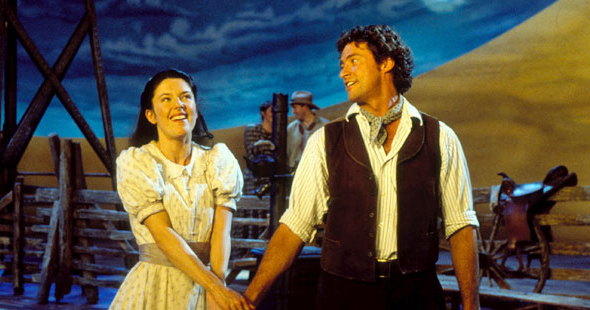
Still from the filmed staged production of Oklahoma! [Image courtesy: Great Performances]
His big international break came as Curley in Trevor Nunn’s reboot of Rodgers & Hammerstein’s “Oklahoma!” Jackman won an Oliver Award for his work in the musical.
Don’t mess with this man! Jackman snagged the #1 spot in the Top Ten Hollywood Heroes List on Netscape Celebrity’s pole, beating out Matt Damon, Tom Cruise and Brad Pitt. [Image courtesy: Netscape Celebrity]
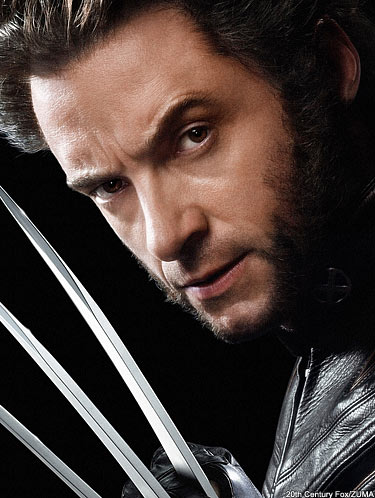
Then came the role that changed everything. Wolverine. He’s played the Clawed One in five movies now (he holds the record for an actor playing the same super ‘hero’ in the most movies.) The X-Menfranchise was hugely popular and found an audience across genres and generations.
Jackman switched gears again, next appearing as a ex-con computer hacker who unwittingly gets involved in John Travolta’s crime circle in Swordfish.
Local advertising for the musical The Boy from Oz starring Hugh Jackman in New York City, 2004. Cropped from original. (Photo credit: Wikipedia)
In 2004 he won a Tony Award for his portrayal of fellow Aussie Peter Allen in The Boy from Oz. He hosted the Tonys for three years running (’03, ’04, and ’05) and won an Emmy Award for his emcee work in ’04.
He reprised Wolverine in X2: X-Men United, then starred as Gabriel Van Helsing in the rather ridiculous (and IMO dismal) Van Helsing.
He fared better as one of a pair of dueling magicians (Christian Bale was the other) in The Prestige in 2006. It didn’t hurt the movie that David Bowie added his talents as Nikola Tesla.
Personally, I liked the weird and romantic The Fountain. It was a big, strange, time traveling ride, and I just went with it. I thought Jackman and co-star Rachel Weisz had a lot of movie charisma and, for me at least, it worked. NOT so much for his next film Scoop.
Scoop should have been good. It starred the equally like able Scarlett Johanson and was written and directed by Woody Allen. It is supposed to be a comedy/ mystery hybrid but it isn’t funny and it isn’t suspenseful, and there was very little chemistry between the stars. So sad.
His star took a mediocre swing up again with X-Men: The Last Stand.He was good again as the muscled, intense Wolverine. But not a lot of new territory was covered character wise in the this, the third installment of the franchise.
Then my Hugh Jack admiration took a real dive. He provided the voice for two animated movies. He adopted a strange (southern?) accent to play Memphis, the father emperor penguin to Elijah Wood’s tap dancing Mumble in Happy Feet. Then he played a rat who gets flushed down the pipes in Flushed Away. Human again he played Wyatt Bose in the “thriller” Deception.
Cover of Australia
Baz Luhrmann’s Australia gave Jackman a chance to star in an epic, big budget, old-fashioned, romantic movie. It is very Luhrmann in style, and the director wisely lets Jackman’s natural Aussie charm shine through the rough and tumble character of the Drover . (Though, for the record, Brandon Walters, as Nullah, steals the show.) With the unforgiving but beautiful outback as the title character, and the nicely filmed attack of Darwin, Australia worked.
He was in the ensemble comedy Butter and played a down on his luck boxer in the heart warming Real Steelboth of which that came out last fall.
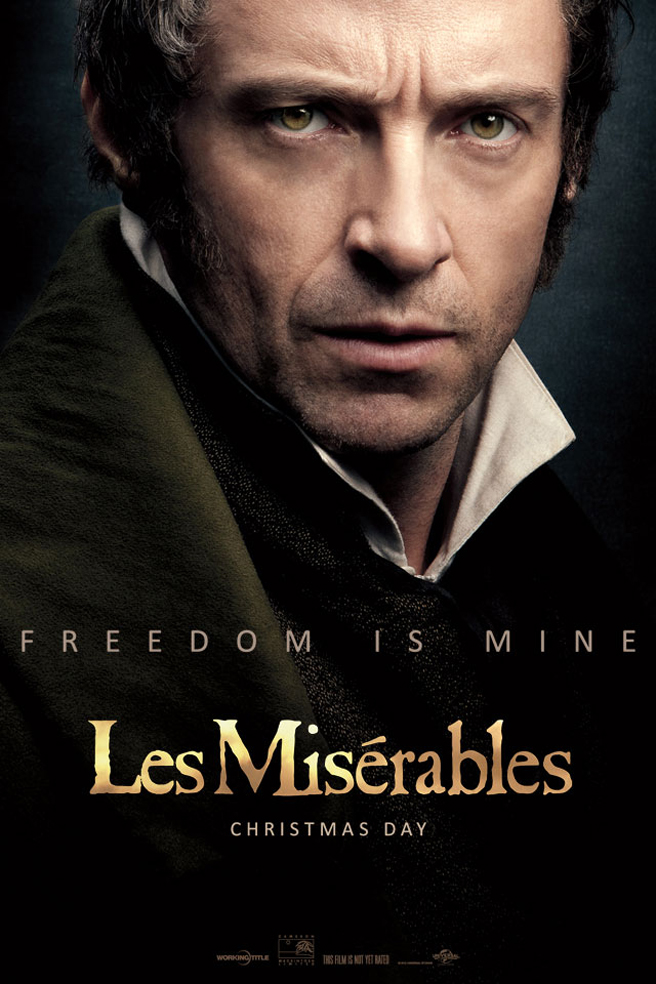
Jackman has several projects upcoming including his role as Jean Valjean in Les Miserables coming out this Christmas.
“Forget all that macho shit, and learn how to play guitar.” –John (Cougar) Mellencamp
Cover of American Fool (Rpkg)
John Mellencamp was born on this day in Seymour, Indiana, USA in 1951. He is 61 years old.
He had spinalbifida as baby. With a growth the size of a man’s fist on the back of his neck that was removed during a day-long operation when he was three weeks old. His house was filled with music growing up, and Mellencamp learned to play guitar. He was troublemaker at school who drank, smoked, cursed and trolled for girls.
Mellencamp is first and foremost an American storyteller. His classic song Jack and Diane starts out “Little ditty about Jack and Diane /Two American kids growin up in the heartland…” He might as well have begun Once upon a time in a small town in the midwest.
“His songs document the joys and struggles of ordinary people seeking to make their way, and he has consistently brought the fresh air of common experience to the typically glamour-addled world of popular music.” [–Anthony DeCurtis]
He played in bands with names like “Crepe Soul,” “Trash,” “Snakepit Banana Barn” and “the Mason Brothers.” He spent more time partying and playing music than studying so he didn’t do well in school. At 18 he eloped with his older pregnant girlfriend while still a Senior in high school.
He worked odd jobs and took classes at community college, Vincennes, University where he binged on drugs and alcohol while listening to Roxy Music. But by 1974 he’d graduated from Vincesse, sobered up, and got serious about his career.
He cut a four song demo tape and moved to New York City. It took 18 months to get a manager, Tony DeFries, and land a record deal, with MCA Records. DeFries is the one who came up with the idea of changing his Mellencamp’s last name to Cougar. It was all part of the pre-packaged “rebel” rock star that DeFries was putting together. And it was something Mellencamp didn’t know about until he saw the proofs for the album art emblazoned with “Johnny Cougar.” No one, DeFries, thought, would buy records from some guy named Mellencamp. Thus Chestnut Street Incident, Johnny Cougar‘s first album was pressed in 1976 by MCA. The album was a mix of cover tunes and originals. It was hardly a chart topping effort and MCA declined to release a second album (The Kid Inside— it was released after Mellencamp made it big.) and “Cougar” and DeFries parted ways.
Mellencamp signed with Billy Gaff and release the album “A Biogrpahy” by Riva Records overseas. The single I Need a Lover became a hit in Australia, and Pat Benatar had a top 40 hit with her cover of the tune. It became the single from his next U.S. album John Cougar.
He embraced his bad boy, rebel reputation with his next album and was rewarded with first top 40 album with Nothing Matters and What if It Did.
In American Fool he stripped away the pre-packaged pop of the Johnny Cougar /Chestnut Street Incident sound and went with two guitars, a bass and a drum to back up his raw, honest vocals. He found his voice as a singer songwriter and Jack and Diane were born. Other cuts from American Fool include: Hurt So Good and Hand to Hold On To.
Here is Hurts Good:
Pink Houses and Crumblin’ Down, two singles of Mellencamp’s 1983 album Uh-Huh hit #8 and #9 on the Billboard Top Ten.
Crumblin’ Down (Photo credit: Wikipedia)
With Scarecrow he began to mix social issues with the music. The album was dedicated to his grandfather and sold 5 million copies. Singles Lonely Ol’ Night, R.O.C.K. in the U.S.A, and Small Town cracked the top 10 charts while Rain on the Scarecrow became an American anthem.
Here’s Lonely Ol’ Night:
Mellencamp became active in helping farmers keep their farms when he worked with Willie Nelson and Neil Young to create FARM AID. Using the LIVE AID (see the 10.5.12 Thought of the Day on Bob Geldof ) Mellencamp et al held concerts to help American farmers who faced foreclosure. The first concert was in Champaign, Illinois on September 25, 1985 and raised over $9 million. Mellencamp and Nelson worked to bring farmers to US Congress to testify about plight of farmers, resulting in the Agricultural Credit Act. The effort continues, with the organizers coming together for annual concerts, and the organization (of which Mellencamp is a board member) establishing an emergency hot line for farm disaster relief when an area is hit with natural disaster.
Here’s Mellencamp performing Rain On The Scarecrow at Farm Aid 2008
For Lonesome Jubileehe added fiddle and backing vocals to his four piece band sound. The album garnered the hit singles Paper in Fire, Check It Out and Cherry Bomb. It reached #1 on the Canadian Charts and #6 on US Billboard 200.
Cover of Lonesome Jubilee (Rpkg)
After Big Daddyhe stepped away from the music industry for three years and took up a different artistic pursuit, painting. He used some of that art on the cover of his next album, Whenever We Want It.
While touring to promote his 1994 Dance Naked album he had a heart attack. Mellencamp smoked 5 packs prior to the attack. He started to eat a heart healthy diet and started to exercise and reduced the number of cigarettes he smokes (but can’t seem to give them up all together.)
Mellencamp sept2000 (Photo credit: Wikipedia)
He has put out 22 albums thus far and was inducted into the Rock and Roll Hall of Fame in 2008
“He’s painted little movies, little stories … a slice of America” Kenny Aronoff, Mellencamp’s Drummer [A&E Biography]
Oh, you didn’t really think I’d leave you with out a little Jack and Diane, did you?
“It’s really very simple, Governor. When people are hungry they die. So spare me your politics and tell me what you need and how you’re going to get it to these people.” —Bob Geldof
[Image courtesy: LastFM]
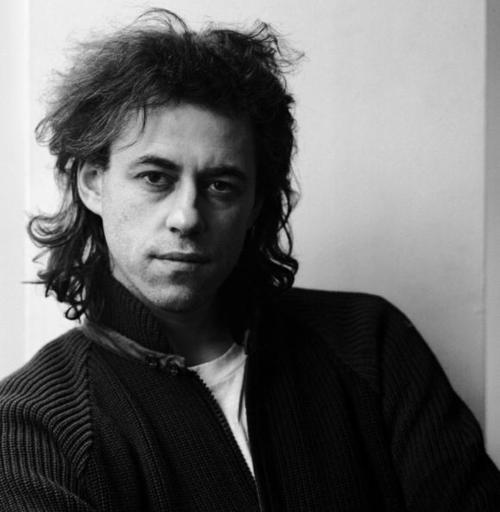
Robert Frederick Zenon Geldof was born on this day in Dun Laoghaire, County Dublin, Irelandin 1951. He is 61 years old.
After graduating from Black Rock College in Ireland, Geldof travelled to Canada to work as a journalist. In 1975 he co-founded the Dublin based punk band The Boomtown Rats for which he was the lead singer. Rat Trap was their first #1 song on the New Wave charts in the UK. I Don’t Like Mondays brought the group international fame.
The band’s video that song and for Up All Night scored high with MTV [Remember when MTV actually was known for introducing new music via music videos?]
Geldof as Pink in a still from Pink Floyd The Wall [Image courtesy: HQRock]
In 1982 Geldof played Pink in the movie Pink Floyd the Wall.
Geldof parted ways with the Rats in 1986 and sent solo. He co-wrote the beautiful This the World Calling with the Eurthmics’ Dave Stewart.
He worked with a variety of artist and continued to collaborate with David Gilmour of Pink Floyd. He sang Too Late God at the Freddie Mercury Tribute Concert (he co-wrote the tune with Mercury.)
Starting in the early 80s he performed in benefits like the Secret Policeman’s Ball for Amenesty International. By 1984 he came up with the idea of bring the pop music industry together for a concert to aid famine relief in Ethiopia. He co-wrote Do They Know It’s Christmas? With Midge Ure of Ultravox and brought together a supergroup of pop artist under the name Band Aid to the Sarm West Studios to record it. The song eventually raised over 8 million pounds.
In July of 1985 Geldof and Ure expanded on the idea of Band Aid with a broadcast concerts, Live Aid. The concerts took place both in the UK, at Wembley Stadium, and in the US, at Philadelphia’s Kennedy Stadium. The BBC carried the whole thing live — all 16 hours of it. Geldof’s passionate, angry plea/demand for money helped the event raise over 150 million pounds in famine relief. Live Aid set the standard for benefit concerts to come.
Geldof was knighted for his efforts.
Along with fellow rocker, Bono, he continues to work toward debt relief for developing countries. He is a member of the African Progress Panel, a watch dog group that keeps world leaders focused on their commitments to the African continent.
Bob Geldof at the Headquarters of the International Monetary Fund in Washington, DC. (Photo credit: Wikipedia)
Donald McLean was born on this day in New Rochelle, NY in 1945. He is 67 years old.
McLean had severe asthma as a child and missed a lot of school. He loved to sit and listen to his father’s large record collection while at home. Consequently his studies didn’t progress very quickly, but his love of music grew. As a teen he bought a guitar and took opera lessons. He worked on his breathing and got a handle on his asthma.
When McLean was 15 he lost his father. It was his father’s death along with President Kennedy’s assassination and death of Buddy Holly that formed the catalyst for his most famous song, American Pie.
As a teen he began to work his way up through the music industry. McLean thought of himself as an American folk Troubadour, and he resisted efforts to be molded into other musical styles. He briefly attended Villanova University in 1963, where he met fellow songwriter Jim Croce, before dropping out to pursue music full-time. He worked the club, cafe, and college circuit appearing along with folk headliners like Arlo Guthrie, Pete Seeger and Janis Ian. McLean continued his education at night at Iona College.
McLean was offered a scholarship to attend Columbia for grad school, but he opted for a resident gig at Caffe Lena in NYC. Photo by Joseph Deuel. [Image courtesy: Don McLean Online.]
He worked with Pete Seeger in the group Sloop Clearwater, then put out his first solo album Tapestry. (1969). The album did well, but didn’t sky-rocket him to success. Singles include Castles in the Air and And I Love You So.
Here’s Castles in the Air [Besides Don’s smooth voice and great guitar playing, just listen and look as that bass player walks the bass line up and down the fret board, I’m impressed.]
His second album, American Pie, was recorded in May of 1972. The title song became a folk/rock anthem (and was voted the #5 Song of the Century by Recording Industry Association of America and the National Endowment for the Arts.) McLean was really a paper boy when he found out about the plane crash that killed Buddy Holly, so the song
:.. is partly biographical and partly the story of America during the idealized 1950s and the bleaker 1960s… “American Pie” presents an abstract story of McLean’s life from the mid-1950s until the end of the 1960s, and at the same time it represents the evolution of popular music and politics over these years… metaphorically the song continues to evolve to the present time…” [Don McLean Online]
[For all the lyrics scroll down to the bottom of this post.]
For Vincent, the second single on American Pie, McLean was inspired by a book he was reading about Vincent Van Gough.
Other McLean hits include:
Crying, his cover the Roy Orbison song.
Wonderful Baby which was not only influenced by Fred Astaire, but was also recorded by Astaire.
McLean has 24 albums to his credit and he continues to tour internationally (and have a great time on stage.) He’s in the UK this month.
Don McLean at Town Hall, NYC (Photo credit: ShellyS)
American Pie
Verse 1 A long long time ago
I can still remember how that music used to make me smile
And I knew if I had my chance
That I could make those people dance
And maybe they’d be happy for a while
But February made me shiver
With every paper I’d deliver
Bad news on the doorstep
I couldn’t take one more step
I can’t remember if I cried
When I read about his widowed bride
But something touched me deep inside
The day the music died
{Refrain}
So, bye-bye, Miss American Pie
Drove my chevy to the levee
But the levee was dry
And them good old boys were drinkin’ whiskey and rye
Singin’ this’ll be the day that I die
This’ll be the day that I die
Verse 2
Did you write the Book of Love
And do you have faith in God above
If the Bible tells you so
Do you believe in rock n’ roll
Can music save your mortal soul
And can you teach me how to dance real slow
Well, I know that you’re in love with him
‘Cause I saw you dancin’ in the gym
You both kicked off your shoes
Man, I dig those rhythm & blues
I was a lonely, teenage broncin’ buck
With a pink carnation and a pickup truck
But I knew I was out of luck
The day the music died
I started singin’
{Refrain}
Verse 3
Now for ten years we’ve been on our own
And moss grows fat on a rollin’ stone
But that’s not how it used to be
When the Jester sang for the King and Queen
In a coat he borrowed from James Dean
In a voice that came from you and me
Oh, and while the King was looking down
The Jester stole his thorny crown
The courtroom was adjourned
No verdict was returned
And while Lenin read a book on Marx
The quartet practiced in the park
And we sang dirges in the dark
The day the music died
We were singin’
{Refrain}
Verse 4
Helter Skelter in a summer swelter
The birds flew off with a fallout shelter
Eight miles high and falling fast
It landed foul on the grass
The players tried for a forward pass
With the Jester on the sidelines in a cast
Now the half-time air was sweet perfume
While the Sergeants played a marching tune
We all got up to dance
Oh but we never got the chance
‘Cause the players tried to take the field
The marching band refused to yield
Do you recall what was revealed
The day the music died
We started singing
{Refrain}
Verse 5
Oh, and there we were, all in one place
A generation lost in space
With no time left to start again
So come on, Jack, be nimble, Jack be quick
Jack Flash sat on a candlestick
‘Cause fire is the devils only friend
Oh, and as I watched him on the stage
My hands were clenched in fists of rage
No angel born in Hell
Could break that Satan’s spell
And as flames climbed high into the night
To light the sacrificial rite
I saw Satan laughing with delight
The day the music died
He was singing
{Refrain}
Verse 6
I met a girl who sang the blues
And I asked her for some happy news
But she just smiled and turned away
I went down to the sacred store
Where I’d heard the music years before
But the man there said the music wouldn’t play
And in the streets the children screamed
The lovers cried, and the poets dreamed
But not a word was spoken
The church bells all were broken
And the three men I admire most
The Father, Son and the Holy Ghost
They caught the last train for the coast
The day the music died
And they were singin’
{Refrain}
Bye-bye, Miss American Pie
Drove my chevy to the levy
But the levy was dry
And them good old boys were drinking whiskey and rye
Singing this’ll be the day that I die
They were singin’
Bye-bye, Miss American Pie
Drove my chevy to the levy
But the levy was dry
And them good old boys were drinking whiskey and rye
Singing this’ll be the day that I die
Julia Elizabeth Wellswas born on this day in Walton-on-Thames, Surrey, England in 1935. She is 77 years old.
Her parents divorced when Julie was a baby. Both parents remarried and Julie lived primarily with her mother and stepfather Ted Andrews, whom she called “Pop.” Julie’s last name was changed to Andrews to make the transition easier. According to Julie they were “very poor and we lived in a bad slum area of London,”
In the movie version of The Sound of Music she sings “Perhaps I had a wicked childhood / Perhaps I had a miserable youth / But somewhere in my wicked, miserable past / There must have been a moment of truth…” While those lyrics were written for her character, Maria, they echo a past that Andrew’s called “a very black period in my life.” Her stepfather was an alcoholic (so was her mother to a lesser degree.) Julie had to put a lock on her bedroom door after Pop tried, drunkenly, to get into bed with her, twice.
Both her mother and her stepfather were entertainers. Her mother, who had trained as a classical pianist, helped to make ends meet by giving lessons and accompanying vaudeville acts. Mom and Pop had their own act and at about 10 Julie began to appear with them on stage. Soon Julie joined the act on a regular basis. She’d have to take a nap in the afternoon so she could be bright and alert on stage late into the night. She took singing lessons and was said to have both perfect pitch and a four octave range. (She denies the perfect pitch.)
During World War II she lived through the Blitz.
She remembers spending some nights on the neighborhood subway platform, listening for unmanned bombers so that she could alert the neighbors of danger. Her parents once awakened to find an unexploded incendiary bomb in the tenement courtyard just outside their kitchen window. They once watched a mid-air dogfight directly above them. [Visions Fantastic]
She performed for King George VI’s family during the 1948 Royal Command Variety Performance in London. (She is the youngest performer ever to do so.) The Andrews act went on radio and TV. She was a cast member on the radio show Educating Archie from 1950-1952.
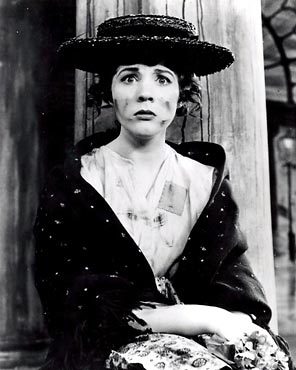
Julie Andrews in a introspective moment [Image courtesy: VisualizeUs]
At 19 she made her Broadway debut as Polly Browne in The Boyfriend. Next she auditioned for the new musical adaptation of George Bernard Shaw’s Pygmalion and created the role of Eliza Doolittle in Lerner and Loewe’s My Fair Lady.
Andrews as Eliza in My Fair Lady circa 1956. [Image courtesy: The Seattle Times]
During her Broadway run of My Fair Lady she transformed from rags to riches again in the 1957 Rodgers and Hammerstein television musical version of Cinderellafor CBS TV.
In 1959 she married set designer Tony Walton.
Her next Broadway triumph was in 1960 as Queen Guinevere to Richard Burton’s King Arthur and Robert Goulet’s Lancelot in Lerner and Loewe’s Camelot.
She was terrific as both Eliza and Guinevere, but when it came time to make major motion pictures of the musicals the producers opted for actresses with more proven box office success. Jack Warner gave Eliza to Audrey Hepburn. Vanessa Redgrave got Guinevere. Andrews returned to England to have her daughter Emma instead.
The Disney company thought Andrews would be Practically Perfect for their adaptation of P.L. Travers’ Mary Poppins and offered her the role in their 1964 film. Andrews won an Oscar for this, her first, major motion picture. In her acceptance speech for the Golden Globe Andrews, with a bit of whimsy, thanked the man who “made all this possible in the first place, Mr. Jack Warner.”
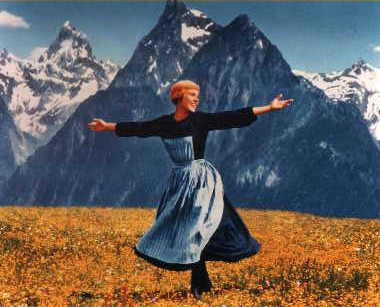
In 1965 Andrews stepped into the role of Maria Von Trapp for the 20th Century Fox movie of The Sound of Music. It went on to become the third highest grossing film ever made. The soundtrack sold more than 11 million copies.
United Artists produced Andrews next movie, Hawaii based on the novel by James A Michener. The film earned more than $6 million, and was 1966’s biggest box office hit.
Also in 1966, she co-starred with Paul Newman in Cold War psychological thriller Torn Curtain for director Alfred Hitchcock.
The 70s were quiet for Andrews. She divorced Warner and married director Blake Edwards. Although she continued to do television work — including a variety show, guest spots and specials — she focused much of her time during the disco decade raising her family.
In Edwards’s 1981 film S.O.B. she rather famously shed her innocent image by barring her breast. The next year she played dual roles in Victor Victoria and earned another Golden Globe Award.
The Princess Diaries gave her career yet another breath of fresh air as she co-starred as Queen Clarisse Renaldi with Anne Hathaway. She put on the crown again for The Princess Diaries 2: Royal Engagementt in 2004. The same year she donned an animated crown was Queen Lillian for Shrek 2 (and the subsequent Shrek sequels) and she narrated Enchanted. She also voiced the character of Marlena in Despicable Mein 2010.
She was given the title Dame Commander of the British Empire by Queen Elizabeth II in 2000 for her work both in the entertainment industry and for her involvement in charitable organizations like Save the Children, the UN’s Fund for Women and the Foundation for Hereditary Disease.
Gwyneth Kate Paltrow was born on this day in Los Angeles, California in 1972. She is 40 years old.
Paltrow has show business in her DNA. Her father, the late Bruce Paltrow, was a film producer and director, and her mother, Blythe Danner, is an Emmy and Tony Award winning actress. Brother, Jake, is following in his father’s footsteps as a director.
Gwyneth grew up in Santa Monica. The family moved to Massachusetts when she was 11 and she split her time there between summer stock at the Williamstown Theatre Festival in the Berkshires and the all girls Spence School in Manhattan during the winter.
“My playground was the theatre. I’d sit and watch my mother pretend for a living. As a young girl, that’s pretty seductive.” [Paltrow]
She flirted with Anthropology at the UC Santa Barbara, but Acting called and she dropped out.
At 19 she made her film debut in the movie Shout in which John Travolta plays a teacher at a West Texas home for boys who helps the kids learn to love music through the magic of Rock and Roll. She was Young Wendy in Steven Spielberg’s Hook. After a slew of made for television movies she returned to the big screen in 1995 in Se7en opposite then love interest Brad Pitt.
In 1996 she sparkled in the title role of Emma. It’s always a good career move to play a Jane Austen heroine in my opinion, and Paltrow did a delightful job with the role of Emma Woodhouse. [Emma is my first pick of Paltrow movies that you should put on your Netflix queue — if you don’t already own it.]
Now a Hollywood a-lister, Paltrow had an impressive run of films in 1998; a modern version of Great Expectationswith Ethan Hawke, Sliding Doors, A Perfect Murder (a remake of Dial M for Murder), Hush, and the magnificent Shakespeare in Love.
Paltrow plays Viola de Lesseps opposite Joseph Finnes’ Shakespeare in a story of mistaken identity, love, comedy and drama worthy the bard. With Geoffrey Rush, Judi Dench and Collin Firth in supporting roles, Shakespeare in Love is fantastic. Paltrow and Dench won Oscars and the movie took home Best Picture. [Shakespeare in Love is my second Paltrow pick for your Netflix queue.]
She was in Anthony Minghella’s The Talented Mr. Ripley opposite Matt Damon and Jude Law in 1999.
In 2000 she showed the world that she could sing in Duetswith Huey Lewis. Then played opposite her long time friend Ben Affleck in Bounce.
She had roles in the ensemble movies Anniversary Party & The Royal Tenenbaums in 2001. And co-starred with Jack Black in the comedy Shallow Hal.
Paltrow and Arron Eckhart played the sexiest literary researchers EVER in an adaptation of A.S. Byatt’s Possession. The pair uncover letters linking two Victorian writers (played by Jeremy Northam and Jennifer Ehle.)
Paltrow and Eckhart in Possession [Image courtesy:buzzsugar.com]
Paltrow rather famously said:
“I don’t really understand the concept of having a career, or what agents mean when they say they’re building one for you. I just do things I think will be interesting and that have integrity.”
which explains the swings from serious/dramatic roles to the campy fun fest that dot her filmography. She took on poet Sylvia Path in Sylvia (Blythe Danner played her mother) then the next year she played reporter Polly Perkins in the highly stylized retro/sci fi Sky Captain and the World of Tommorow. Then it was back to serious Gwyneth for Proof.
She had small roles in Infamous, Love and Other Disasters, and Running With Scissors and a supporting role in The Good Night before landing the role of Pepper Potts in the big budget film Iron Man opposite Robert Downey, Jr.. She reprised the role in Iron Man 2 and in the Avengers. (And because you can never flog a dead horse too much… you can look for Pepper Potts AGAIN inIron Man 3 in 2013)
She brought out the pipes again for Country Strong where she played struggling country singer Kelly Canter. Here’s “Shake That Thing” from the movie:
Paltrow has had three guest spots on the popular television show Glee as substitute teacher Holly Holliday.
She had a small but pivital role in Contagion. The film also stars her Talented Mr. Ripley co stars Matt Damon and Jude Law, and her Possession co-star Jennifer Ehle. [Contagion is another movie you should put in your queue.]
This year you can see her in the romanic comedy Thanks for Sharing with Mark Ruffalo and Tim Robbins.















 ritaLOVEStoWRITE
